
Articles | Volume 17, issue 3
https://doi.org/10.5194/esd-17-829-2026
© Author(s) 2026. This work is distributed under
the Creative Commons Attribution 4.0 License.
the Creative Commons Attribution 4.0 License.
https://doi.org/10.5194/esd-17-829-2026
© Author(s) 2026. This work is distributed under
the Creative Commons Attribution 4.0 License.
the Creative Commons Attribution 4.0 License.
Research article
| 
23 Jun 2026
Research article |
| 23 Jun 2026
| 23 Jun 2026
Emergent constraints on climate sensitivity and recent record-breaking warm years

University of Exeter, Mathematics and Statistics, Exeter, Devon, EX4 4QE, UK
Joseph Clarke
University of Exeter, Mathematics and Statistics, Exeter, Devon, EX4 4QE, UK
Global Systems Institute, University of Exeter, Devon, Exeter, EX4 4QE, UK
Peter M. Cox
University of Exeter, Mathematics and Statistics, Exeter, Devon, EX4 4QE, UK
Global Systems Institute, University of Exeter, Devon, Exeter, EX4 4QE, UK
Chris Huntingford
UK Centre for Ecology and Hydrology, Wallingford, Oxfordshire, OX10 8BB, UK
Chris D. Jones
Met Office, Exeter, Devon, EX1 3PB, UK
School of Geographical Sciences, University of Bristol, Bristol, BS8 1SS, UK
Mark S. Williamson
University of Exeter, Mathematics and Statistics, Exeter, Devon, EX4 4QE, UK
Global Systems Institute, University of Exeter, Devon, Exeter, EX4 4QE, UK
Related authors
No articles found.
Daniel Bampoh, Bartlomiej Arendarczyk, Sam Rabin, Thomas Pugh, Gregory Munday, Chris Huntingford, Garry Hayman, Peter Anthoni, Peter Alexander, Mark Rounsevell, and Almut Arneth
EGUsphere, https://doi.org/10.5194/egusphere-2026-5230, https://doi.org/10.5194/egusphere-2026-5230, 2026
This preprint is open for discussion and under review for Geoscientific Model Development (GMD).
Short summary
Short summary
Agriculture and land use are major sources and sinks of greenhouse gases, yet how these emissions feed back through the climate to reshape ecosystems is rarely traced end-to-end. We built a coupled modelling framework that follows this link from land-management decisions to emissions, to the resulting climate change, and back to the land. It reproduces observed emissions, concentrations and climate, and shows that careful land management could slow global warming by a few tenths of a degree.
Chris Huntingford, Jesse F. Abrams, Peter Ashwin, Niklas Boers, Chris A. Boulton, Joshua E. Buxton, Joseph Clarke, Peter M. Cox, Andrew M. Cunliffe, Henk A. Dijkstra, Bahar Emirzade, Darren Ghent, Daniel Giles, Sneha Kachhara, Timothy M. Lenton, Valerio Lucarini, Helen Millman, Robert J. Parker, Sergei Petrovskii, Paul D. L. Ritchie, Cristina Ruiz Villena, Mark S. Williamson, and Niccolò Zagli
EGUsphere, https://doi.org/10.5194/egusphere-2026-5606, https://doi.org/10.5194/egusphere-2026-5606, 2026
This preprint is open for discussion and under review for Earth System Dynamics (ESD).
Short summary
Short summary
Future tipping of key parts of the Earth system, driven by human-induced climate change, poses serious risks to society. These concerns have spurred the development of Early Warning Systems (EWSs) that use data to show how close we are to tipping. However, existing EWSs are often generic statistical forms. We first review current EWS methods, then present a broad set of hypotheses that may help improve them. We argue strongly for process knowledge to guide more refined EWS forms.
Vivek K. Arora, Chris D. Jones, Pierre Friedlingstein, Tatiana Ilyina, Guilherme L. Torres Mendonça, Benjamin Sanderson, Charles Koven, Heather Graven, Michio Kawamiya, Victor Brovkin, John Dunne, Forrest M. Hoffman, Julia Pongratz, James T. Randerson, Anastasia Romanou, Sönke Zaehle, and Kirsten Zickfeld
EGUsphere, https://doi.org/10.5194/egusphere-2026-5533, https://doi.org/10.5194/egusphere-2026-5533, 2026
This preprint is open for discussion and under review for Geoscientific Model Development (GMD).
Short summary
Short summary
Earth system models (ESM) are important tools for understanding how the Earth’s climate and carbon cycle interact, and how Earth system responds to anthropogenic CO2 emissions. The Coupled Climate-Carbon Cycle Model Intercomparison Project (C4MIP) compares Earth system models from around the world in context of climate and carbon cycle interactions. This manuscript describes the new set of experiments for C4MIP for the seventh phase of the coupled modelling intercomparison project (CMIP7).
Charles Koven, Benjamin M. Sanderson, Abigail L. S. Swann, Victor Brovkin, John Dunne, Rosie A. Fisher, Tomohiro Hajima, Chris D. Jones, Spencer K. Liddicoat, Anastasia Romanou, Roland Séférian, Norman J. Steinert, Jerry Tjiputra, Tilo Ziehn, Tatiana Ilyina, Nancy Y. Kiang, David M. Lawrence, Peter Lawrence, Hongmei Li, Jorg Schwinger, and Lori T. Sentman
EGUsphere, https://doi.org/10.5194/egusphere-2026-5381, https://doi.org/10.5194/egusphere-2026-5381, 2026
This preprint is open for discussion and under review for Earth System Dynamics (ESD).
Short summary
Short summary
We use a set of climate models to ask how aspects of climate beyond global mean temperatures would differ if we first emit, and then remove, a given amount of CO2, compared to a case where the CO2 hadn't been emitted. We show that precipitation increases, and that land cools relative to the ocean. Models disagree on many of the finer-scale regional changes, but they do agree that many of the regional changes that occur under positive and then negative emissions also occur under zero emissions.
Abigail L. S. Swann, Charles D. Koven, Cristian Proistosecu, Rosie A. Fisher, Benjamin M. Sanderson, Victor Brovkin, Tomohiro Hajima, Chris D. Jones, Nancy Y. Kiang, David M. Lawrence, Spencer Liddicoat, Hannah Liddy, Anastasia Romanou, Roland Séférian, Lori T. Sentman, Norman J. Steinert, Jerry Tjiputra, and Tilo Ziehn
Earth Syst. Dynam., 17, 1237–1275, https://doi.org/10.5194/esd-17-1237-2026, https://doi.org/10.5194/esd-17-1237-2026, 2026
Short summary
Short summary
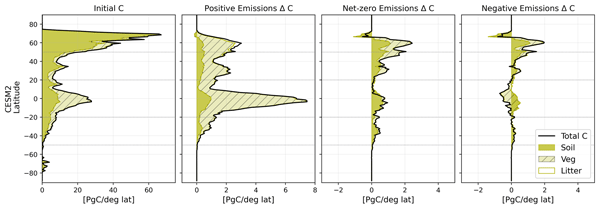
We analyzed simulations from Earth system models (ESM) with a constant rate of emissions, zero emissions, and negative emissions of CO2 to quantify the response of land carbon sinks. We found that under positive emissions vegetation in the tropics gained carbon. Under zero emissions and negative emissions most ESMs lost carbon from vegetation in the tropics but gained carbon in mid- and high-latitudes, mostly in soils. Our findings imply that tropical carbon is vulnerable under zero emissions.
Chris Huntingford, Rebecca J. Oliver, Lina M. Mercado, Stephen A. Sitch, Douglas B. Clark, Annikki Mäkelä, Carolina Mayoral, and Richard J. Norby
EGUsphere, https://doi.org/10.5194/egusphere-2026-4392, https://doi.org/10.5194/egusphere-2026-4392, 2026
This preprint is open for discussion and under review for Biogeosciences (BG).
Short summary
Short summary
Understanding carbon allocation among land-surface components in a changing climate is important, but it remains poorly understood. As a surrogate for missing knowledge and related equations, optimal allocation hypotheses are proposed. Makela et al. (2008) propose foliage nitrogen adjusted to maximise gross primary productivity. We add to that framework models of photosynthesis and respiration, creating an optimal structure that responds to different near-surface meteorological conditions.
Andrew J. Nicoll, Hannah M. Christensen, Chris Huntingford, and Doug Smith
Earth Syst. Dynam., 17, 1061–1079, https://doi.org/10.5194/esd-17-1061-2026, https://doi.org/10.5194/esd-17-1061-2026, 2026
Short summary
Short summary
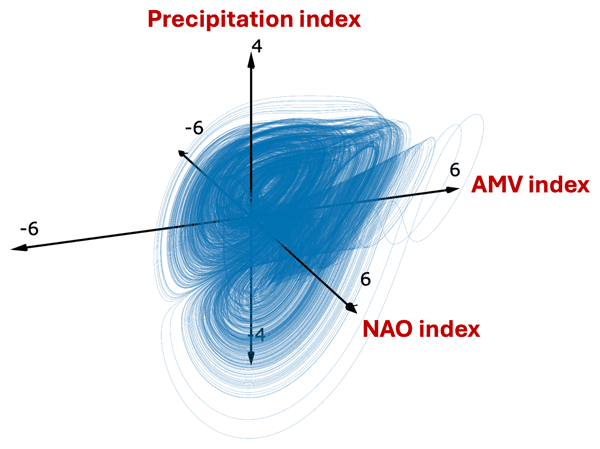
We use artificial intelligence to learn simple equations from historical climate data that describe how North Atlantic ocean temperature, air pressure and rainfall vary and influence each other over decades. Analysing the model's behaviour and equation terms, we find rainfall strongly feeds back on both the ocean and the atmosphere. These interactions are well captured by the models and allow rainfall to be predicted over the ocean, and nearby regions such as Europe over coming decades.
Chris Huntingford, Paul D. L. Ritchie, and Joseph Clarke
Nonlin. Processes Geophys., 33, 385–399, https://doi.org/10.5194/npg-33-385-2026, https://doi.org/10.5194/npg-33-385-2026, 2026
Short summary
Short summary
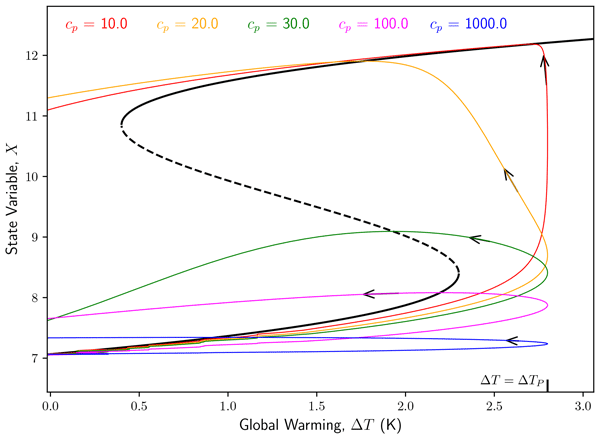
The risk of climate change triggering tipping points is a concern. While Earth System Models (ESMs) predict these points, their timing often varies. Equations of nonlinear dynamical systems can model tipping, hysteresis, and inertia, enabling comparison with ESMs. We propose a method to map tipping timing estimates onto a dynamical system that simulates a full hysteresis loop. We focus on solutions to the equation under overshoot forcing in global temperature and different inertia levels.
Colin Jones, Isaline Bossert, Donovan P. Dennis, Hazel A. Jeffery, Chris D. Jones, Torben Koenigk, Sina Loriani, Benjamin Sanderson, Roland Séférian, Klaus Wyser, Shuting Yang, Manabu Abe, Sebastian Bathiany, Pascale Braconnot, Victor Brovkin, Friedrich A. Burger, Patrica Cadule, Frederic S. Castruccio, Gokhan Danabasoglu, Andrea Dittus, Jonathan F. Donges, Friederike Fröb, Thomas L. Frölicher, Goran Georgievski, Chuncheng Guo, Aixue Hu, Peter Lawrence, Paul Lerner, José Licón-Saláiz, Bette Otto-Bliesner, Anastasia Romanou, Elena Shevliakova, Yona Silvy, Didier Swingedouw, Jerry Tjiputra, Jeremy Walton, Andy Wiltshire, Ricarda Winkelmann, Richard Wood, Tokuta Yokohata, and Tilo Ziehn
Geosci. Model Dev., 19, 6941–6966, https://doi.org/10.5194/gmd-19-6941-2026, https://doi.org/10.5194/gmd-19-6941-2026, 2026
Short summary
Short summary
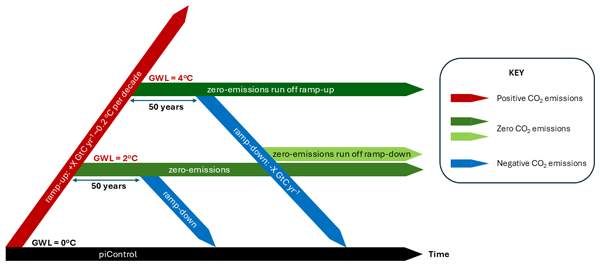
We introduce a new Earth system model experiment protocol to help researchers understand how Earth might respond to positive, zero, and negative carbon emissions. This protocol enables different models to be compared following similar warming and cooling rates. Researchers use the models to explore how the Earth reacts to different climate futures, including the risk of tipping points being exceeded and whether changes can be reversed. The results will support improved long-term climate policy.
Benjamin M. Sanderson, Marit Sandstad, Alejandro Romero-Prieto, Stuart Jenkins, Charles Koven, Glen Peters, Roland Séfèrian, Andrew H. MacDougall, Ashwin Seshadri, Victor Brovkin, John Dunne, Abigail L. S. Swann, Torben Koenigk, Rosie A. Fisher, David Hohn, Tatiana Ilyina, Chris D. Jones, Hongmei Li, Peter Lawrence, Spencer Liddicoat, Nadine Mengis, Anastasia Romanou, Lori T. Sentman, Chris Smith, Norman J. Steinert, Jerry Tjiputra, and Tilo Ziehn
EGUsphere, https://doi.org/10.5194/egusphere-2026-1875, https://doi.org/10.5194/egusphere-2026-1875, 2026
Short summary
Short summary
When humanity stops emitting carbon dioxide, will temperatures keep rising, stabilize, or fall? Our study reveals in most models, temperatures remain nearly stable, but this hides a balance between the warming in response to radiation imbalance, and the cooling due to uptake of carbon in the land and ocean. Understanding this balance helps refine how much more CO2 we can safely emit.
Isobel M. Parry, Paul D. L. Ritchie, Olivier Boucher, Peter M. Cox, James M. Haywood, Ulrike Niemeier, Roland Séférian, Simone Tilmes, and Daniele Visioni
Earth Syst. Dynam., 17, 387–414, https://doi.org/10.5194/esd-17-387-2026, https://doi.org/10.5194/esd-17-387-2026, 2026
Short summary
Short summary
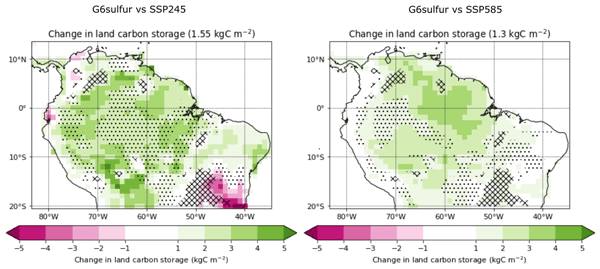
Contrary to some expectations, results from the latest Earth System Models suggest that Solar Radiation Geoengineering could protect the Amazon rainforest from climate-driven dieback. Under Stratospheric Aerosol Injection, carbon storage in Amazonia was projected to increase by a mean of 10.8 % relative to a high CO2 emissions scenario, and even by 8.6% compared to a more conventional medium CO2 emissions scenario.
Richard G. Williams, Philip Goodwin, Paulo Ceppi, Chris D. Jones, and Andrew H. MacDougall
Biogeosciences, 22, 7167–7186, https://doi.org/10.5194/bg-22-7167-2025, https://doi.org/10.5194/bg-22-7167-2025, 2025
Short summary
Short summary
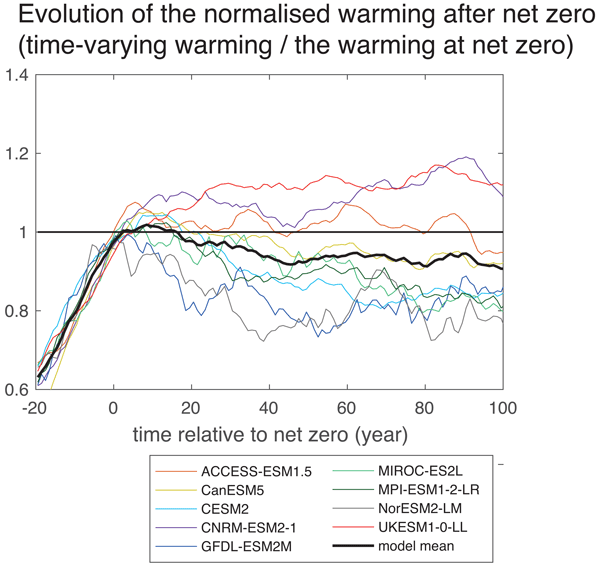
How the climate system responds when carbon emissions cease is an open question: some climate models reveal a slight warming, whereas most models reveal a slight cooling. The temperature response after net zero is connected via a new framework to quantify and compare the opposing thermal and carbon drivers. The climate response after net zero is controlled by how the planet takes up heat and radiates heat back to space, and how the land and ocean sequester carbon from the atmosphere.
Joseph Clarke, Chris Huntingford, Paul D. L. Ritchie, Rebecca Varney, Mark S. Williamson, and Peter Cox
Earth Syst. Dynam., 16, 2087–2100, https://doi.org/10.5194/esd-16-2087-2025, https://doi.org/10.5194/esd-16-2087-2025, 2025
Short summary
Short summary
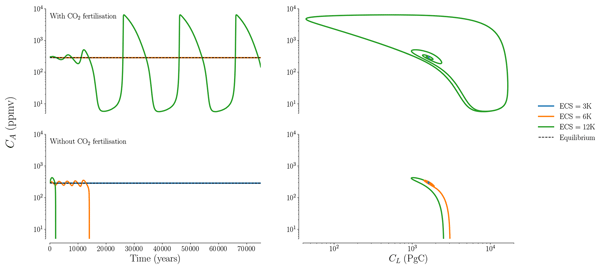
An increase in CO2 in the atmosphere warms the climate through the greenhouse effect, but also leads to uptake of CO2 by the land and ocean. However, the warming is also expected to suppress carbon uptake. If this suppression were strong enough, it could overwhelm the uptake of carbon, leading to a runaway feedback loop causing severe global warming. We find it is possible that this runaway could be relevant in complex climate models and even at the end of the last ice age.
Victor Brovkin, Benjamin M. Sanderson, Noel G. Brizuela, Tomohiro Hajima, Tatiana Ilyina, Chris D. Jones, Charles Koven, David Lawrence, Peter Lawrence, Hongmei Li, Spencer Liddcoat, Anastasia Romanou, Roland Séférian, Lori T. Sentman, Abigail L. S. Swann, Jerry Tjiputra, Tilo Ziehn, and Alexander J. Winkler
Earth Syst. Dynam., 16, 2021–2034, https://doi.org/10.5194/esd-16-2021-2025, https://doi.org/10.5194/esd-16-2021-2025, 2025
Short summary
Short summary
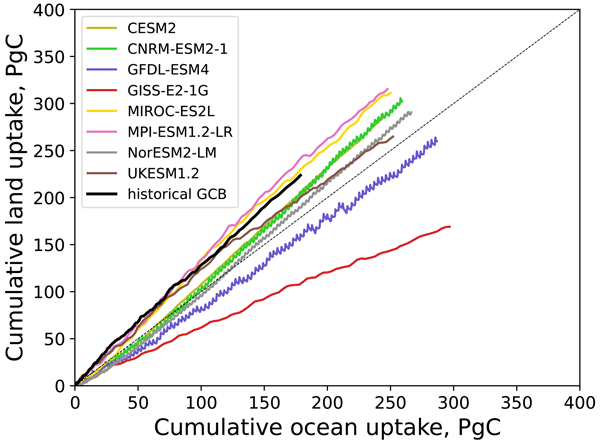
Idealized experiments with Earth system models provide a basis for understanding the response of the carbon cycle to emissions. We show that most models exhibit a quasi-linear relationship between cumulative carbon uptake on land and in the ocean and hypothesize that this relationship does not depend on emission pathways. We reduce the coupled system to only one differential equation, which represents a powerful simplification of the Earth system dynamics as a function of fossil fuel emissions.
Hsi-Kai Chou, Anna B. Harper, Arthur P. K. Argles, Maria Carolina Duran Rojas, Emma W. Littleton, Richard A. Betts, and Peter M. Cox
EGUsphere, https://doi.org/10.5194/egusphere-2025-4536, https://doi.org/10.5194/egusphere-2025-4536, 2025
Short summary
Short summary
Global warming and climate change caused by greenhouse gas emissions will have multiple impacts on forest ecosystems. A core part of the strategy to mitigating these impacts is to use afforestation and forestry management to implement large-scale Greenhouse Gas Removal. Here we use the JULES-RED model to evaluate the afforestation under a changing environmental condition. We project that Sitka Forest afforestation could meet the target of GGR once the plantation locations been selected properly.
Paul D. L. Ritchie, Chris Huntingford, and Peter M. Cox
Earth Syst. Dynam., 16, 1523–1526, https://doi.org/10.5194/esd-16-1523-2025, https://doi.org/10.5194/esd-16-1523-2025, 2025
Short summary
Short summary
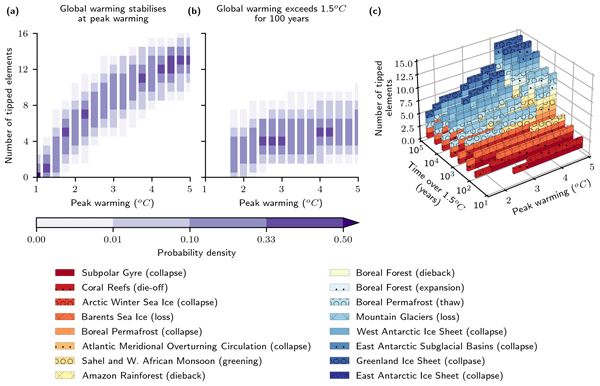
Climate tipping points are not committed upon crossing critical thresholds in global warming, as is often assumed. Instead, it is possible to temporarily overshoot a threshold without causing tipping, provided the duration of the overshoot is short. In this Idea, we demonstrate that restricting the time over 1.5 °C would considerably reduce tipping point risks.
Benjamin M. Sanderson, Victor Brovkin, Rosie A. Fisher, David Hohn, Tatiana Ilyina, Chris D. Jones, Torben Koenigk, Charles Koven, Hongmei Li, David M. Lawrence, Peter Lawrence, Spencer Liddicoat, Andrew H. MacDougall, Nadine Mengis, Zebedee Nicholls, Eleanor O'Rourke, Anastasia Romanou, Marit Sandstad, Jörg Schwinger, Roland Séférian, Lori T. Sentman, Isla R. Simpson, Chris Smith, Norman J. Steinert, Abigail L. S. Swann, Jerry Tjiputra, and Tilo Ziehn
Geosci. Model Dev., 18, 5699–5724, https://doi.org/10.5194/gmd-18-5699-2025, https://doi.org/10.5194/gmd-18-5699-2025, 2025
Short summary
Short summary
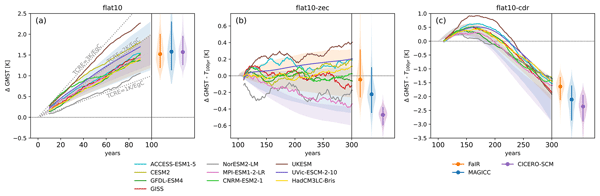
This study investigates how climate models warm in response to simplified carbon emissions trajectories, refining the understanding of climate reversibility and commitment. Metrics are defined for warming response to cumulative emissions and for the cessation of emissions or ramp-down to net-zero and net-negative levels. Results indicate that previous concentration-driven experiments may have overstated the Zero Emissions Commitment due to emissions rates exceeding historical levels.
Gang Tang, Zebedee Nicholls, Chris Jones, Thomas Gasser, Alexander Norton, Tilo Ziehn, Alejandro Romero-Prieto, and Malte Meinshausen
Geosci. Model Dev., 18, 2111–2136, https://doi.org/10.5194/gmd-18-2111-2025, https://doi.org/10.5194/gmd-18-2111-2025, 2025
Short summary
Short summary
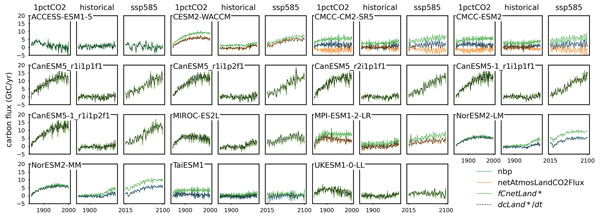
We analyzed carbon and nitrogen mass conservation in data from various Earth system models. Our findings reveal significant discrepancies between flux and pool size data, where cumulative imbalances can reach hundreds of gigatons of carbon or nitrogen. These imbalances appear primarily due to missing or inconsistently reported fluxes – especially for land-use and fire emissions. To enhance data quality, we recommend that future climate data protocols address this issue at the reporting stage.
Chris Huntingford, Andrew J. Nicoll, Cornelia Klein, and Jawairia A. Ahmad
Earth Syst. Dynam., 16, 475–495, https://doi.org/10.5194/esd-16-475-2025, https://doi.org/10.5194/esd-16-475-2025, 2025
Short summary
Short summary
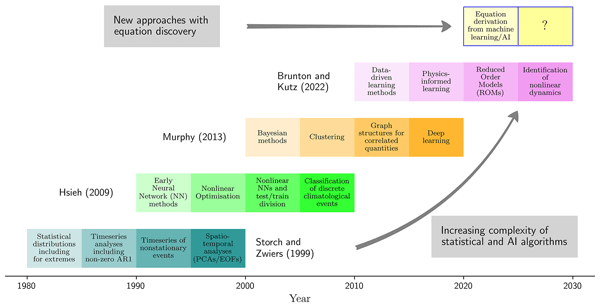
AI is impacting science, providing key data insights, but most algorithms are statistical requiring cautious "out-of-sample" extrapolation. Yet climate research concerns predicting future climatic states. We consider a new method of AI-led equation discovery. Equations offer process interpretation and more robust predictions. We recommend this method for climate analysis, suggesting illustrative application to atmospheric convection, land–atmosphere CO2 flux, and global ocean circulation models.
Tomohiro Hajima, Michio Kawamiya, Akihiko Ito, Kaoru Tachiiri, Chris D. Jones, Vivek Arora, Victor Brovkin, Roland Séférian, Spencer Liddicoat, Pierre Friedlingstein, and Elena Shevliakova
Biogeosciences, 22, 1447–1473, https://doi.org/10.5194/bg-22-1447-2025, https://doi.org/10.5194/bg-22-1447-2025, 2025
Short summary
Short summary
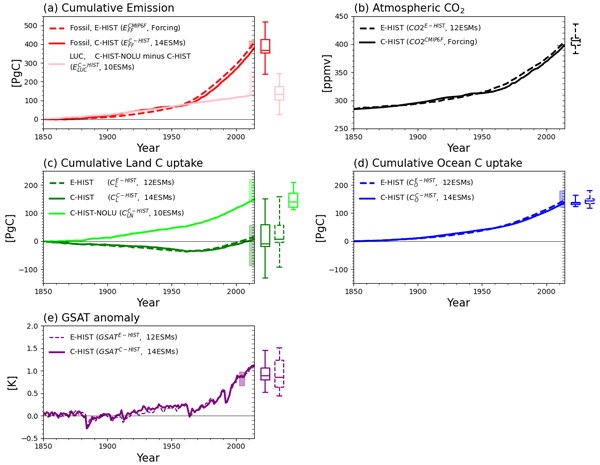
This study analyzes atmospheric CO2 concentrations and global carbon budgets simulated by multiple Earth system models, using several types of simulations (CO2 concentration- and emission-driven experiments). We successfully identified problems with regard to the global carbon budget in each model. We also found urgent issues with regard to land use change CO2 emissions that should be solved in the latest generation of models.
Camilla Mathison, Eleanor J. Burke, Gregory Munday, Chris D. Jones, Chris J. Smith, Norman J. Steinert, Andy J. Wiltshire, Chris Huntingford, Eszter Kovacs, Laila K. Gohar, Rebecca M. Varney, and Douglas McNeall
Geosci. Model Dev., 18, 1785–1808, https://doi.org/10.5194/gmd-18-1785-2025, https://doi.org/10.5194/gmd-18-1785-2025, 2025
Short summary
Short summary
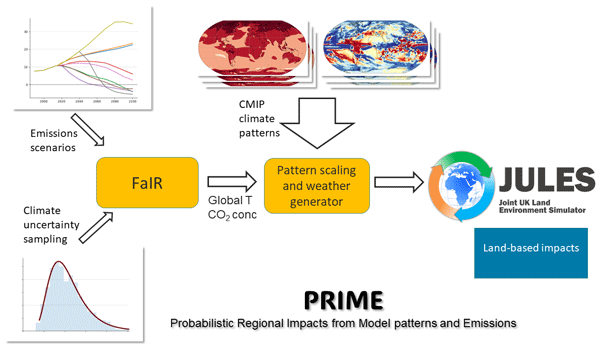
We present PRIME (Probabilistic Regional Impacts from Model patterns and Emissions), which is designed to take new emissions scenarios and rapidly provide regional impact information. PRIME allows large ensembles to be run on multi-centennial timescales, including the analysis of many important variables for impact assessments. Our evaluation shows that PRIME reproduces the climate response for known scenarios, providing confidence in using PRIME for novel scenarios.
Marcos B. Sanches, Manoel Cardoso, Celso von Randow, Chris Jones, and Mathew Williams
EGUsphere, https://doi.org/10.5194/egusphere-2025-942, https://doi.org/10.5194/egusphere-2025-942, 2025
Preprint archived
Short summary
Short summary
This study examines South America's role in the global carbon cycle using flux and stock analyses from CMIP6 Earth System Models. We discuss the continent’s relevance, model-observation agreement, and the impacts of dry and wet years on major biomes. Additionally, we assess model results indicating that parts of South America could shift from carbon sinks to emitters, significantly affecting the global carbon balance.
Bettina K. Gier, Manuel Schlund, Pierre Friedlingstein, Chris D. Jones, Colin Jones, Sönke Zaehle, and Veronika Eyring
Biogeosciences, 21, 5321–5360, https://doi.org/10.5194/bg-21-5321-2024, https://doi.org/10.5194/bg-21-5321-2024, 2024
Short summary
Short summary
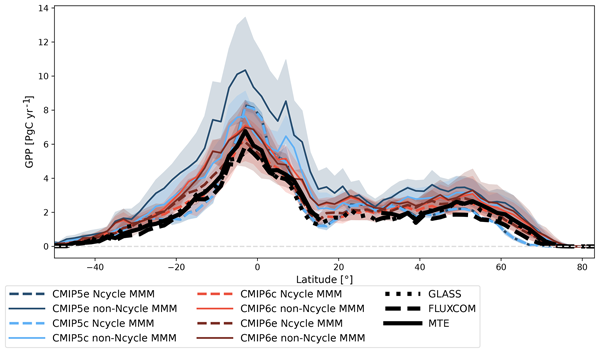
This study investigates present-day carbon cycle variables in CMIP5 and CMIP6 simulations. Overall, CMIP6 models perform better but also show many remaining biases. A significant improvement in the simulation of photosynthesis in models with a nitrogen cycle is found, with only small differences between emission- and concentration-based simulations. Thus, we recommend using emission-driven simulations in CMIP7 by default and including the nitrogen cycle in all future carbon cycle models.
Mark S. Williamson and Timothy M. Lenton
Earth Syst. Dynam., 15, 1483–1508, https://doi.org/10.5194/esd-15-1483-2024, https://doi.org/10.5194/esd-15-1483-2024, 2024
Short summary
Short summary
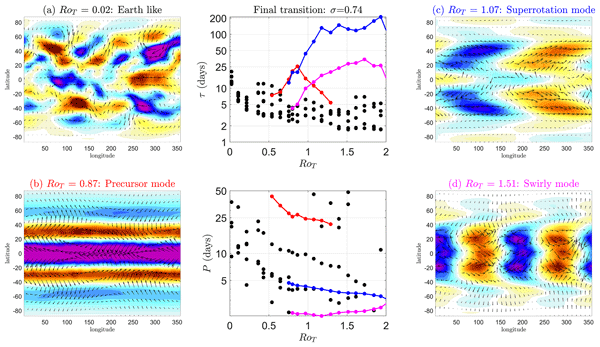
Climate models have transitioned to a superrotating atmospheric state under a broad range of warm climates. Such a transition would change global weather patterns should it occur. Here we simulate this transition using an idealized climate model and look for any early warnings of the superrotating state before it happens. We find several early warning indicators that we attribute to an oscillating pattern in the windfield fluctuations.
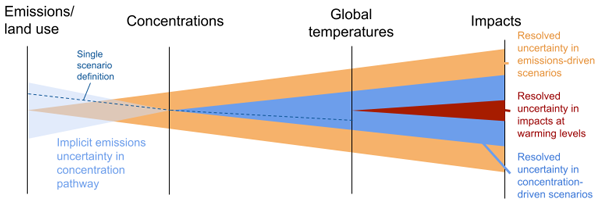
Benjamin M. Sanderson, Ben B. B. Booth, John Dunne, Veronika Eyring, Rosie A. Fisher, Pierre Friedlingstein, Matthew J. Gidden, Tomohiro Hajima, Chris D. Jones, Colin G. Jones, Andrew King, Charles D. Koven, David M. Lawrence, Jason Lowe, Nadine Mengis, Glen P. Peters, Joeri Rogelj, Chris Smith, Abigail C. Snyder, Isla R. Simpson, Abigail L. S. Swann, Claudia Tebaldi, Tatiana Ilyina, Carl-Friedrich Schleussner, Roland Séférian, Bjørn H. Samset, Detlef van Vuuren, and Sönke Zaehle
Geosci. Model Dev., 17, 8141–8172, https://doi.org/10.5194/gmd-17-8141-2024, https://doi.org/10.5194/gmd-17-8141-2024, 2024
Short summary
Short summary
We discuss how, in order to provide more relevant guidance for climate policy, coordinated climate experiments should adopt a greater focus on simulations where Earth system models are provided with carbon emissions from fossil fuels together with land use change instructions, rather than past approaches that have largely focused on experiments with prescribed atmospheric carbon dioxide concentrations. We discuss how these goals might be achieved in coordinated climate modeling experiments.

Colin G. Jones, Fanny Adloff, Ben B. B. Booth, Peter M. Cox, Veronika Eyring, Pierre Friedlingstein, Katja Frieler, Helene T. Hewitt, Hazel A. Jeffery, Sylvie Joussaume, Torben Koenigk, Bryan N. Lawrence, Eleanor O'Rourke, Malcolm J. Roberts, Benjamin M. Sanderson, Roland Séférian, Samuel Somot, Pier Luigi Vidale, Detlef van Vuuren, Mario Acosta, Mats Bentsen, Raffaele Bernardello, Richard Betts, Ed Blockley, Julien Boé, Tom Bracegirdle, Pascale Braconnot, Victor Brovkin, Carlo Buontempo, Francisco Doblas-Reyes, Markus Donat, Italo Epicoco, Pete Falloon, Sandro Fiore, Thomas Frölicher, Neven S. Fučkar, Matthew J. Gidden, Helge F. Goessling, Rune Grand Graversen, Silvio Gualdi, José M. Gutiérrez, Tatiana Ilyina, Daniela Jacob, Chris D. Jones, Martin Juckes, Elizabeth Kendon, Erik Kjellström, Reto Knutti, Jason Lowe, Matthew Mizielinski, Paola Nassisi, Michael Obersteiner, Pierre Regnier, Romain Roehrig, David Salas y Mélia, Carl-Friedrich Schleussner, Michael Schulz, Enrico Scoccimarro, Laurent Terray, Hannes Thiemann, Richard A. Wood, Shuting Yang, and Sönke Zaehle
Earth Syst. Dynam., 15, 1319–1351, https://doi.org/10.5194/esd-15-1319-2024, https://doi.org/10.5194/esd-15-1319-2024, 2024
Short summary
Short summary
We propose a number of priority areas for the international climate research community to address over the coming decade. Advances in these areas will both increase our understanding of past and future Earth system change, including the societal and environmental impacts of this change, and deliver significantly improved scientific support to international climate policy, such as future IPCC assessments and the UNFCCC Global Stocktake.
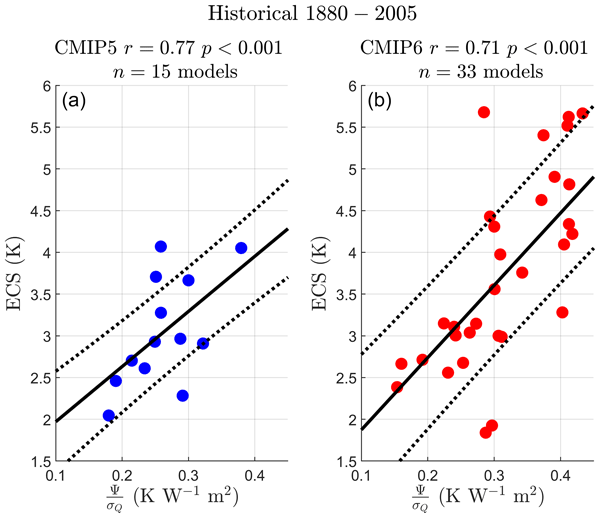
Mark S. Williamson, Peter M. Cox, Chris Huntingford, and Femke J. M. M. Nijsse
Earth Syst. Dynam., 15, 829–852, https://doi.org/10.5194/esd-15-829-2024, https://doi.org/10.5194/esd-15-829-2024, 2024
Short summary
Short summary
Emergent constraints on equilibrium climate sensitivity (ECS) have generally got statistically weaker in the latest set of state-of-the-art climate models (CMIP6) compared to past sets (CMIP5). We look at why this weakening happened for one particular study (Cox et al, 2018) and attribute it to an assumption made in the theory that when corrected for restores there is a stronger relationship between predictor and ECS.
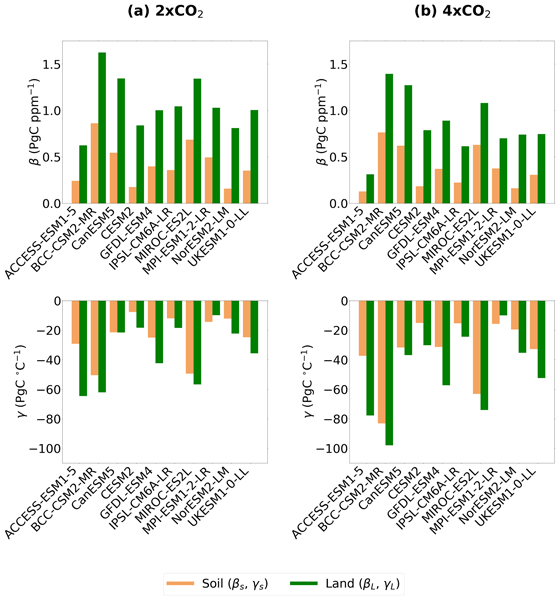
Rebecca M. Varney, Pierre Friedlingstein, Sarah E. Chadburn, Eleanor J. Burke, and Peter M. Cox
Biogeosciences, 21, 2759–2776, https://doi.org/10.5194/bg-21-2759-2024, https://doi.org/10.5194/bg-21-2759-2024, 2024
Short summary
Short summary
Soil carbon is the largest store of carbon on the land surface of Earth and is known to be particularly sensitive to climate change. Understanding this future response is vital to successfully meeting Paris Agreement targets, which rely heavily on carbon uptake by the land surface. In this study, the individual responses of soil carbon are quantified and compared amongst CMIP6 Earth system models used within the most recent IPCC report, and the role of soils in the land response is highlighted.
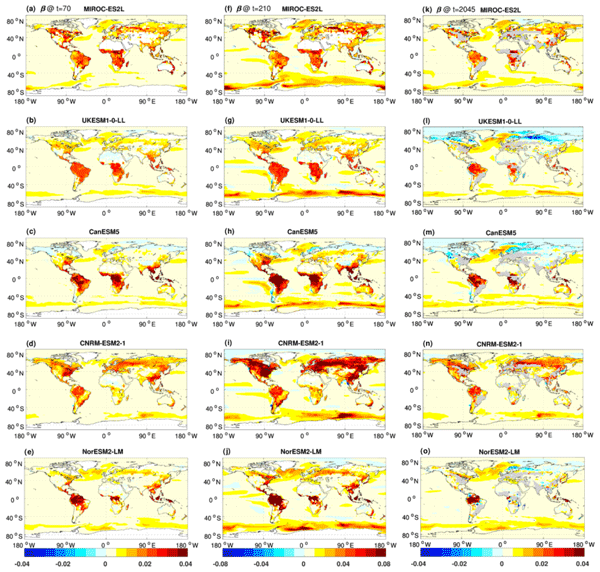
Ali Asaadi, Jörg Schwinger, Hanna Lee, Jerry Tjiputra, Vivek Arora, Roland Séférian, Spencer Liddicoat, Tomohiro Hajima, Yeray Santana-Falcón, and Chris D. Jones
Biogeosciences, 21, 411–435, https://doi.org/10.5194/bg-21-411-2024, https://doi.org/10.5194/bg-21-411-2024, 2024
Short summary
Short summary
Carbon cycle feedback metrics are employed to assess phases of positive and negative CO2 emissions. When emissions become negative, we find that the model disagreement in feedback metrics increases more strongly than expected from the assumption that the uncertainties accumulate linearly with time. The geographical patterns of such metrics over land highlight that differences in response between tropical/subtropical and temperate/boreal ecosystems are a major source of model disagreement.
Lee de Mora, Ranjini Swaminathan, Richard P. Allan, Jerry C. Blackford, Douglas I. Kelley, Phil Harris, Chris D. Jones, Colin G. Jones, Spencer Liddicoat, Robert J. Parker, Tristan Quaife, Jeremy Walton, and Andrew Yool
Earth Syst. Dynam., 14, 1295–1315, https://doi.org/10.5194/esd-14-1295-2023, https://doi.org/10.5194/esd-14-1295-2023, 2023
Short summary
Short summary
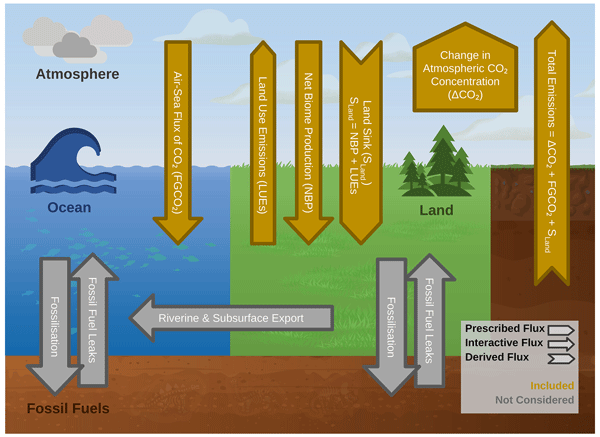
We investigate the flux of carbon from the atmosphere into the land surface and ocean for multiple models and over a range of future scenarios. We did this by comparing simulations after the same change in the global-mean near-surface temperature. Using this method, we show that the choice of scenario can impact the carbon allocation to the land, ocean, and atmosphere. Scenarios with higher emissions reach the same warming levels sooner, but also with relatively more carbon in the atmosphere.
Emma L. Robinson, Chris Huntingford, Valyaveetil Shamsudheen Semeena, and James M. Bullock
Earth Syst. Sci. Data, 15, 5371–5401, https://doi.org/10.5194/essd-15-5371-2023, https://doi.org/10.5194/essd-15-5371-2023, 2023
Short summary
Short summary
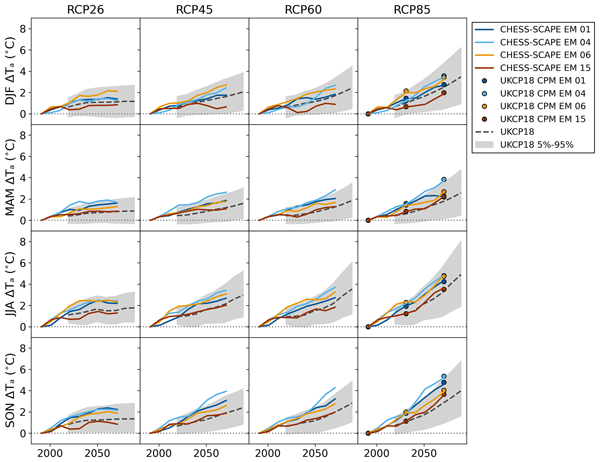
CHESS-SCAPE is a suite of high-resolution climate projections for the UK to 2080, derived from United Kingdom Climate Projections 2018 (UKCP18), designed to support climate impact modelling. It contains four realisations of four scenarios of future greenhouse gas levels (RCP2.6, 4.5, 6.0 and 8.5), with and without bias correction to historical data. The variables are available at 1 km resolution and a daily time step, with monthly, seasonal and annual means and 20-year mean-monthly time slices.
Rebecca M. Varney, Sarah E. Chadburn, Eleanor J. Burke, Simon Jones, Andy J. Wiltshire, and Peter M. Cox
Biogeosciences, 20, 3767–3790, https://doi.org/10.5194/bg-20-3767-2023, https://doi.org/10.5194/bg-20-3767-2023, 2023
Short summary
Short summary
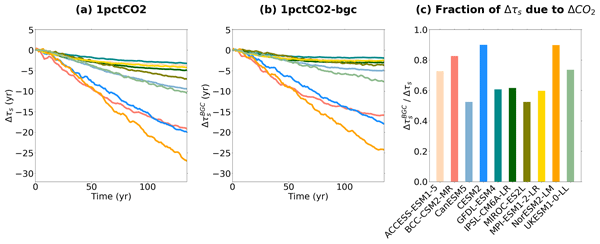
This study evaluates soil carbon projections during the 21st century in CMIP6 Earth system models. In general, we find a reduced spread of changes in global soil carbon in CMIP6 compared to the previous CMIP5 generation. The reduced CMIP6 spread arises from an emergent relationship between soil carbon changes due to change in plant productivity and soil carbon changes due to changes in turnover time. We show that this relationship is consistent with false priming under transient climate change.
Camilla Mathison, Eleanor Burke, Andrew J. Hartley, Douglas I. Kelley, Chantelle Burton, Eddy Robertson, Nicola Gedney, Karina Williams, Andy Wiltshire, Richard J. Ellis, Alistair A. Sellar, and Chris D. Jones
Geosci. Model Dev., 16, 4249–4264, https://doi.org/10.5194/gmd-16-4249-2023, https://doi.org/10.5194/gmd-16-4249-2023, 2023
Short summary
Short summary
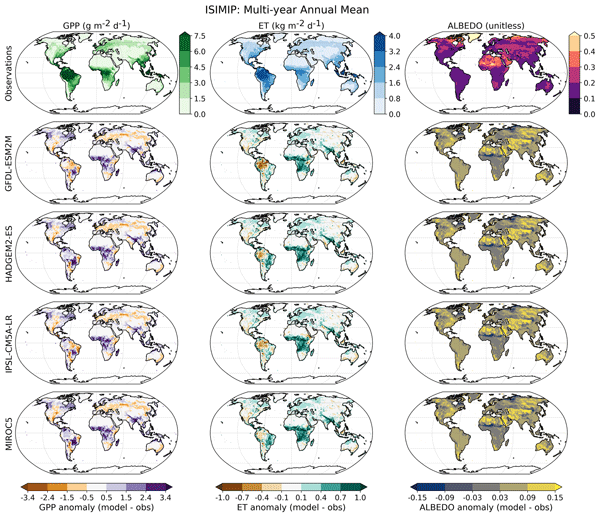
This paper describes and evaluates a new modelling methodology to quantify the impacts of climate change on water, biomes and the carbon cycle. We have created a new configuration and set-up for the JULES-ES land surface model, driven by bias-corrected historical and future climate model output provided by the Inter-Sectoral Impacts Model Intercomparison Project (ISIMIP). This allows us to compare projections of the impacts of climate change across multiple impact models and multiple sectors.
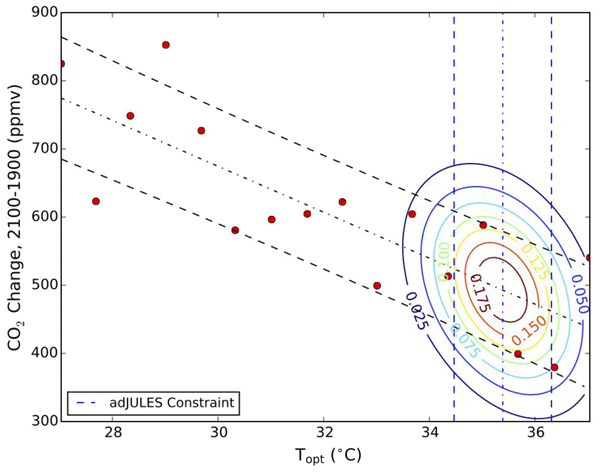
Nina Raoult, Tim Jupp, Ben Booth, and Peter Cox
Earth Syst. Dynam., 14, 723–731, https://doi.org/10.5194/esd-14-723-2023, https://doi.org/10.5194/esd-14-723-2023, 2023
Short summary
Short summary
Climate models are used to predict the impact of climate change. However, poorly constrained parameters used in the physics of the models mean that we simulate a large spread of possible future outcomes. We can use real-world observations to reduce the uncertainty of parameter values, but we do not have observations to reduce the spread of possible future outcomes directly. We present a method for translating the reduction in parameter uncertainty into a reduction in possible model projections.
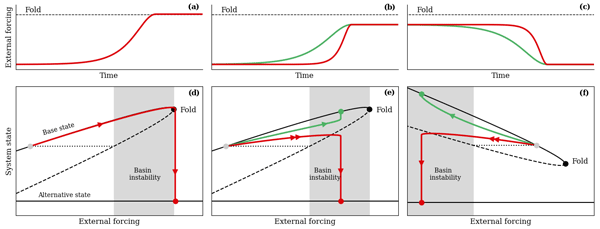
Paul D. L. Ritchie, Hassan Alkhayuon, Peter M. Cox, and Sebastian Wieczorek
Earth Syst. Dynam., 14, 669–683, https://doi.org/10.5194/esd-14-669-2023, https://doi.org/10.5194/esd-14-669-2023, 2023
Short summary
Short summary
Complex systems can undergo abrupt changes or tipping points when external forcing crosses a critical level and are of increasing concern because of their severe impacts. However, tipping points can also occur when the external forcing changes too quickly without crossing any critical levels, which is very relevant for Earth’s systems and contemporary climate. We give an intuitive explanation of such rate-induced tipping and provide illustrative examples from natural and human systems.

Chris Huntingford, Peter M. Cox, Mark S. Williamson, Joseph J. Clarke, and Paul D. L. Ritchie
Earth Syst. Dynam., 14, 433–442, https://doi.org/10.5194/esd-14-433-2023, https://doi.org/10.5194/esd-14-433-2023, 2023
Short summary
Short summary
Emergent constraints (ECs) reduce the spread of projections between climate models. ECs estimate changes to climate features impacting adaptation policy, and with this high profile, the method is under scrutiny. Asking
What is an EC?, we suggest they are often the discovery of parameters that characterise hidden large-scale equations that climate models solve implicitly. We present this conceptually via two examples. Our analysis implies possible new paths to link ECs and physical processes.
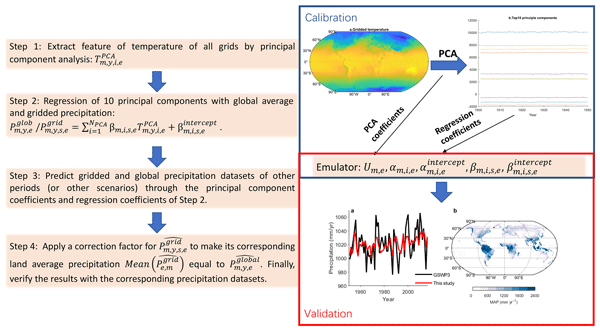
Gang Liu, Shushi Peng, Chris Huntingford, and Yi Xi
Geosci. Model Dev., 16, 1277–1296, https://doi.org/10.5194/gmd-16-1277-2023, https://doi.org/10.5194/gmd-16-1277-2023, 2023
Short summary
Short summary
Due to computational limits, lower-complexity models (LCMs) were developed as a complementary tool for accelerating comprehensive Earth system models (ESMs) but still lack a good precipitation emulator for LCMs. Here, we developed a data-calibrated precipitation emulator (PREMU), a computationally effective way to better estimate historical and simulated precipitation by current ESMs. PREMU has potential applications related to land surface processes and their interactions with climate change.
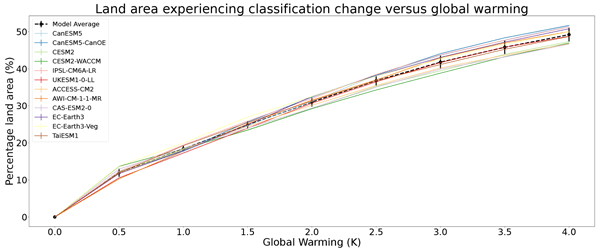
Morgan Sparey, Peter Cox, and Mark S. Williamson
Biogeosciences, 20, 451–488, https://doi.org/10.5194/bg-20-451-2023, https://doi.org/10.5194/bg-20-451-2023, 2023
Short summary
Short summary
Accurate climate models are vital for mitigating climate change; however, projections often disagree. Using Köppen–Geiger bioclimate classifications we show that CMIP6 climate models agree well on the fraction of global land surface that will change classification per degree of global warming. We find that 13 % of land will change climate per degree of warming from 1 to 3 K; thus, stabilising warming at 1.5 rather than 2 K would save over 7.5 million square kilometres from bioclimatic change.
Isobel M. Parry, Paul D. L. Ritchie, and Peter M. Cox
Earth Syst. Dynam., 13, 1667–1675, https://doi.org/10.5194/esd-13-1667-2022, https://doi.org/10.5194/esd-13-1667-2022, 2022
Short summary
Short summary
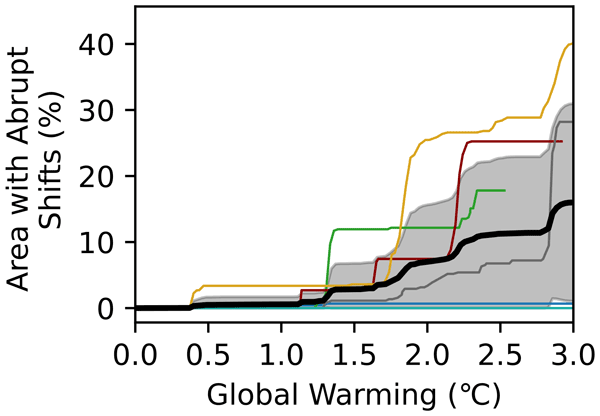
Despite little evidence of regional Amazon rainforest dieback, many localised abrupt dieback events are observed in the latest state-of-the-art global climate models under anthropogenic climate change. The detected dieback events would still cause severe consequences for local communities and ecosystems. This study suggests that 7 ± 5 % of the northern South America region would experience abrupt downward shifts in vegetation carbon for every degree of global warming past 1.5 °C.
Rebecca M. Varney, Sarah E. Chadburn, Eleanor J. Burke, and Peter M. Cox
Biogeosciences, 19, 4671–4704, https://doi.org/10.5194/bg-19-4671-2022, https://doi.org/10.5194/bg-19-4671-2022, 2022
Short summary
Short summary
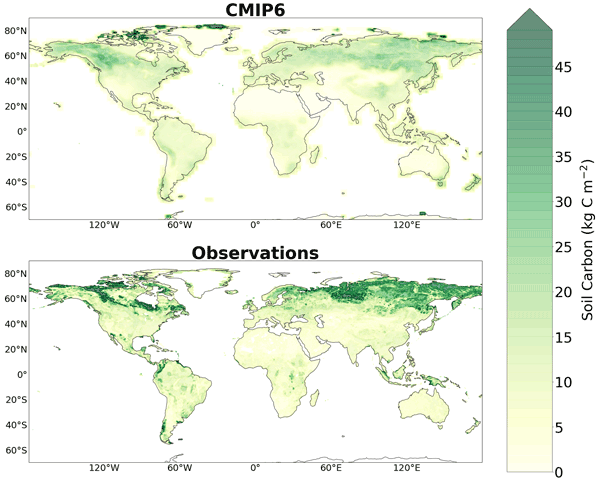
Soil carbon is the Earth’s largest terrestrial carbon store, and the response to climate change represents one of the key uncertainties in obtaining accurate global carbon budgets required to successfully militate against climate change. The ability of climate models to simulate present-day soil carbon is therefore vital. This study assesses soil carbon simulation in the latest ensemble of models which allows key areas for future model development to be identified.

Louise J. Slater, Chris Huntingford, Richard F. Pywell, John W. Redhead, and Elizabeth J. Kendon
Earth Syst. Dynam., 13, 1377–1396, https://doi.org/10.5194/esd-13-1377-2022, https://doi.org/10.5194/esd-13-1377-2022, 2022
Short summary
Short summary
This work considers how wheat yields are affected by weather conditions during the three main wheat growth stages in the UK. Impacts are strongest in years with compound weather extremes across multiple growth stages. Future climate projections are beneficial for wheat yields, on average, but indicate a high risk of unseen weather conditions which farmers may struggle to adapt to and mitigate against.
Rebecca J. Oliver, Lina M. Mercado, Doug B. Clark, Chris Huntingford, Christopher M. Taylor, Pier Luigi Vidale, Patrick C. McGuire, Markus Todt, Sonja Folwell, Valiyaveetil Shamsudheen Semeena, and Belinda E. Medlyn
Geosci. Model Dev., 15, 5567–5592, https://doi.org/10.5194/gmd-15-5567-2022, https://doi.org/10.5194/gmd-15-5567-2022, 2022
Short summary
Short summary
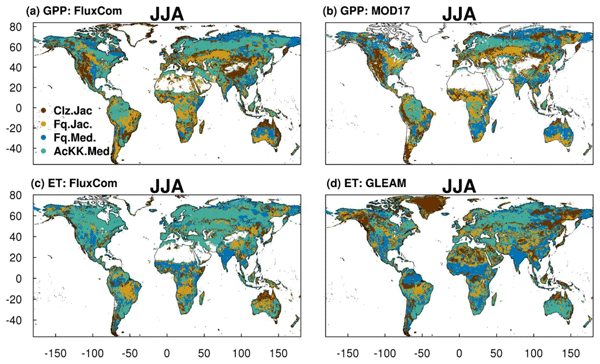
We introduce new representations of plant physiological processes into a land surface model. Including new biological understanding improves modelled carbon and water fluxes for the present in tropical and northern-latitude forests. Future climate simulations demonstrate the sensitivity of photosynthesis to temperature is important for modelling carbon cycle dynamics in a warming world. Accurate representation of these processes in models is necessary for robust predictions of climate change.
Charles D. Koven, Vivek K. Arora, Patricia Cadule, Rosie A. Fisher, Chris D. Jones, David M. Lawrence, Jared Lewis, Keith Lindsay, Sabine Mathesius, Malte Meinshausen, Michael Mills, Zebedee Nicholls, Benjamin M. Sanderson, Roland Séférian, Neil C. Swart, William R. Wieder, and Kirsten Zickfeld
Earth Syst. Dynam., 13, 885–909, https://doi.org/10.5194/esd-13-885-2022, https://doi.org/10.5194/esd-13-885-2022, 2022
Short summary
Short summary
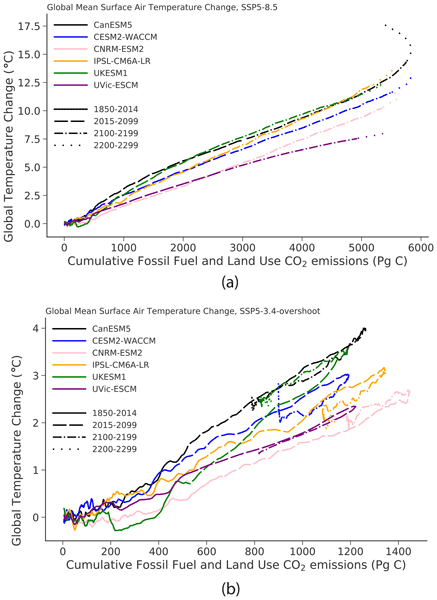
We explore the long-term dynamics of Earth's climate and carbon cycles under a pair of contrasting scenarios to the year 2300 using six models that include both climate and carbon cycle dynamics. One scenario assumes very high emissions, while the second assumes a peak in emissions, followed by rapid declines to net negative emissions. We show that the models generally agree that warming is roughly proportional to carbon emissions but that many other aspects of the model projections differ.
Cited articles
Alessi, M. J. and Rugenstein, M. A.: Surface temperature pattern scenarios suggest higher warming rates than current projections, Geophys. Res. Lett., 50, e2023GL105795, https://doi.org/10.1029/2023GL105795, 2023. a
Andreae, M. O., Jones, C. D., and Cox, P. M.: Strong present-day aerosol cooling implies a hot future, Nature, 435, 1187–1190, https://doi.org/10.1038/nature03671, 2005. a
Andrews, T., Bodas-Salcedo, A., Gregory, J. M., Dong, Y., Armour, K. C., Paynter, D., Lin, P., Modak, A., Mauritsen, T., Cole, J. N. S., Medeiros, B., Benedict, J. J., Douville, H., Roehrig, R., Koshiro, T., Kawai, H., Ogura, T., Dufresne, J.-L., Allan, R. P., and Liu, C.: On the effect of historical SST patterns on radiative feedback, J. Geophys. Res.-Atmos., 127, e2022JD036675, https://doi.org/10.1029/2022JD036675, 2022. a
Armour, K. C., Proistosescu, C., Dong, Y., Hahn, L. C., Blanchard-Wrigglesworth, E., Pauling, A. G., Wills, R. C. J., Andrews, T., Stuecker, M. F., Po-Chedley, S., Mitevski, I., Forster, P. M., and Gregory, J. M.: Sea-surface temperature pattern effects have slowed global warming and biased warming-based constraints on climate sensitivity, P. Natl. Acad. Sci. USA, 121, e2312093121, https://doi.org/10.1073/pnas.2312093121, 2024. a
Bellouin, N., Quaas, J., Gryspeerdt, E., Kinne, S., Stier, P., Watson-Parris, D., Boucher, O., Carslaw, K. S., Christensen, M., Daniau, A.-L., Dufresne, J.-L., Feingold, G., Fiedler, S., Forster, P., Gettelman, A., Haywood, J. M., Lohmann, U., Malavelle, F., Mauritsen, T., McCoy, D. T., Myhre, G., Mülmenstädt, J., Neubauer, D., Possner, A., Rugenstein, M., Sato, Y., Schulz, M., Schwartz, S. E., Sourdeval, O., Storelvmo, T., Toll, V., Winker, D., and Stevens, B.: Bounding global aerosol radiative forcing of climate change, Rev. Geophys., 58, e2019RG000660, https://doi.org/10.1029/2019RG000660, 2020. a
Boardman, P.: PazzyBoardman449/emergent_constraint_climate_sensitivity: Emergent Constraints on Climate Sensitivity and Recent Record-Breaking Warm Years – Code Release (climate_sensitvity_v01), Zenodo [code], https://doi.org/10.5281/zenodo.19815864, 2026. a
Brown, R. M., Chalk, T. B., Crocker, A. J., Wilson, P. A., and Foster, G. L.: Late Miocene cooling coupled to carbon dioxide with Pleistocene-like climate sensitivity, Nat. Geosci., 15, 664–670, https://doi.org/10.1038/s41561-022-00982-7, 2022. a
Caldeira, K. and Myhrvold, N. P.: Projections of the pace of warming following an abrupt increase in atmospheric carbon dioxide concentration, Environ. Res. Lett., 8, 034039, https://doi.org/10.1088/1748-9326/8/3/034039, 2013. a
Cannon, A. J.: Twelve months at 1.5 °C signals earlier than expected breach of Paris Agreement Threshold, Nat. Clim. Change, 15, 266–269, https://doi.org/10.1038/s41558-025-02247-8, 2025. a, b
Cox, P. M., Huntingford, C., and Williamson, M. S.: Emergent constraint on equilibrium climate sensitivity from global temperature variability, Nature, 553, 319–322, https://doi.org/10.1038/nature25450, 2018. a, b
Eyring, V., Bony, S., Meehl, G. A., Senior, C. A., Stevens, B., Stouffer, R. J., and Taylor, K. E.: Overview of the Coupled Model Intercomparison Project Phase 6 (CMIP6) experimental design and organization, Geosci. Model Dev., 9, 1937–1958, https://doi.org/10.5194/gmd-9-1937-2016, 2016. a
Forster, P., Storelvmo, T., Armour, K., Collins, W., Dufresne, J.-L., Frame, D., Lunt, D., Mauritsen, T., Palmer, M., Watanabe, M., Wild, M., and Zhang, H.: The Earth's Energy Budget, Climate Feedbacks, and Climate Sensitivity, in: Climate Change 2021: The Physical Science Basis. Contribution of Working Group I to the Sixth Assessment Report of the Intergovernmental Panel on Climate Change, edited by Masson-Delmotte, V., Zhai, P., Pirani, A., Connors, S. L., Péan, C., Berger, S., Caud, N., Chen, Y., Goldfarb, L., Gomis, M. I., Huang, M., Leitzell, K., Lonnoy, E., Matthews, J. B. R., Maycock, T. K., Waterfield, T., Yelekçi, O., Yu, R., and Zhou, B., book section 7, pp. 923–1054, Cambridge University Press, Cambridge, UK and New York, NY, USA, https://doi.org/10.1017/9781009157896.009, 2021. a, b, c, d
Forster, P. M., Maycock, A. C., McKenna, C. M., and Smith, C. J.: Latest climate models confirm need for urgent mitigation, Nat. Clim. Change, 10, 7–10, https://doi.org/10.1038/s41558-019-0660-0, 2020. a
Friedlingstein, P., O'Sullivan, M., Jones, M. W., Andrew, R. M., Bakker, D. C. E., Hauck, J., Landschützer, P., Le Quéré, C., Li, H., Luijkx, I. T., Peters, G. P., Peters, W., Pongratz, J., Schwingshackl, C., Sitch, S., Canadell, J. G., Ciais, P., Aas, K., Alin, S. R., Anthoni, P., Barbero, L., Bates, N. R., Bellouin, N., Benoit-Cattin, A., Berghoff, C. F., Bernardello, R., Bopp, L., Brasika, I. B. M., Chamberlain, M. A., Chandra, N., Chevallier, F., Chini, L. P., Collier, N. O., Colligan, T. H., Cronin, M., Djeutchouang, L., Dou, X., Enright, M. P., Enyo, K., Erb, M., Evans, W., Feely, R. A., Feng, L., Ford, D. J., Foster, A., Fransner, F., Gasser, T., Gehlen, M., Gkritzalis, T., Goncalves De Souza, J., Grassi, G., Gregor, L., Gruber, N., Guenet, B., Gürses, Ö., Harrington, K., Harris, I., Heinke, J., Hurtt, G. C., Iida, Y., Ilyina, T., Ito, A., Jacobson, A. R., Jain, A. K., Jarníková, T., Jersild, A., Jiang, F., Jones, S. D., Kato, E., Keeling, R. F., Klein Goldewijk, K., Knauer, J., Kong, Y., Korsbakken, J. I., Koven, C., Kunimitsu, T., Lan, X., Liu, J., Liu, Z., Liu, Z., Lo Monaco, C., Ma, L., Marland, G., McGuire, P. C., McKinley, G. A., Melton, J., Monacci, N., Monier, E., Morgan, E. J., Munro, D. R., Müller, J. D., Nakaoka, S.-I., Nayagam, L. R., Niwa, Y., Nutzel, T., Olsen, A., Omar, A. M., Pan, N., Pandey, S., Pierrot, D., Qin, Z., Regnier, P. A. G., Rehder, G., Resplandy, L., Roobaert, A., Rosan, T. M., Rödenbeck, C., Schwinger, J., Skjelvan, I., Smallman, T. L., Spada, V., Sreeush, M. G., Sun, Q., Sutton, A. J., Sweeney, C., Swingedouw, D., Séférian, R., Takao, S., Tatebe, H., Tian, H., Tian, X., Tilbrook, B., Tsujino, H., Tubiello, F., van Ooijen, E., van der Werf, G., van de Velde, S. J., Walker, A., Wanninkhof, R., Yang, X., Yuan, W., Yue, X., and Zeng, J.: Global Carbon Budget 2025, Earth Syst. Sci. Data Discuss. [preprint], https://doi.org/10.5194/essd-2025-659, in review, 2025. a
Geoffroy, O., Saint-Martin, D., Olivié, D. J., Voldoire, A., Bellon, G., and Tytéca, S.: Transient climate response in a two-layer energy-balance model, Part I: Analytical solution and parameter calibration using CMIP5 AOGCM experiments, J. Clim., 26, 1841–1857, https://doi.org/10.1175/JCLI-D-12-00195.1, 2013. a
Gregory, J. M.: Vertical heat transports in the ocean and their effect on time-dependent climate change, Clim. Dynam., 16, 501–515, https://doi.org/10.1007/s003820000059, 2000. a
Hall, A., Cox, P., Huntingford, C., and Klein, S.: Progressing emergent constraints on future climate change, Nat. Clim. Change, 9, 269–278, https://doi.org/10.1038/s41558-019-0436-6, 2019. a, b
Hansen, J. E., Russell, G., Lacis, A., Fung, I., Rind, D., and Stone, P.: Climate response times: Dependence on climate sensitivity and ocean mixing, Science, 229, 857–859, https://doi.org/10.1038/s41558-019-0436-6, 1985. a
Hansen, J. E., Kharecha, P., Sato, M., Tselioudis, G., Kelly, J., Bauer, S. E., Ruedy, R., Jeong, E., Jin, Q., Rignot, E., et al.: Global Warming Has Accelerated: Are the United Nations and the Public Well-Informed?, Environment: Science and Policy for Sustainable Development, 67, 6–44, https://doi.org/10.1080/00139157.2025.2434494, 2025. a, b, c
Huang, B., Yin, X., Menne, M. J., Vose, R., and Zhang, H.-M.: Improvements to the land surface air temperature reconstruction in NOAAGlobalTemp: An artificial neural network approach, Artificial Intelligence for the Earth Systems, 1, e220032, https://doi.org/10.1175/AIES-D-22-0032.1, 2022. a
Kiehl, J. T.: Twentieth century climate model response and climate sensitivity, Geophys. Res. Lett., 34, https://doi.org/10.1029/2007GL031383, 2007. a
Knutti, R., Rugenstein, M. A., and Hegerl, G. C.: Beyond equilibrium climate sensitivity, Nat. Geosci., 10, 727–736, https://doi.org/10.1038/ngeo3017, 2017. a
Lee, J.-Y., Marotzke, J., Bala, G., Cao, L., Corti, S., Dunne, J., Engelbrecht, F., Fischer, E., Fyfe, J., Jones, C., Maycock, A., Mutemi, J., Ndiaye, O., Panickal, S., and Zhou, T.: Future Global Climate: Scenario-Based Projections and Near-Term Information, in: Climate Change 2021: The Physical Science Basis. Contribution of Working Group I to the Sixth Assessment Report of the Intergovernmental Panel on Climate Change, edited by Masson-Delmotte, V., Zhai, P., Pirani, A., Connors, S., Péan, C., Berger, S., Caud, N., Chen, Y., Le, L., and Linter, M., chap. 4, IPCC, Geneva, Switzerland, Geneva, https://doi.org/10.1017/9781009157896.006, 2021. a, b, c, d, e
Lenssen, N. J., Schmidt, G. A., Hansen, J. E., Menne, M. J., Persin, A., Ruedy, R., and Zyss, D.: Improvements in the GISTEMP uncertainty model, J. Geophys. Res.-Atmos., 124, 6307–6326, https://doi.org/10.1029/2018JD029522, 2019. a
Meehl, G. A., Senior, C. A., Eyring, V., Flato, G., Lamarque, J.-F., Stouffer, R. J., Taylor, K. E., and Schlund, M.: Context for interpreting equilibrium climate sensitivity and transient climate response from the CMIP6 Earth system models, Sci. Adv., 6, eaba1981, https://doi.org/10.1126/sciadv.aba1981, 2020. a
Minobe, S., Behrens, E., Findell, K. L., Loeb, N. G., Meyssignac, B., and Sutton, R.: Global and regional drivers for exceptional climate extremes in 2023–2024: beyond the new normal, npj Clim. Atmos. Sci., 8, 138, https://doi.org/10.1038/s41612-025-00996-z, 2025. a
Modak, A. and Mauritsen, T.: Better-constrained climate sensitivity when accounting for dataset dependency on pattern effect estimates, Atmos. Chem. Phys., 23, 7535–7549, https://doi.org/10.5194/acp-23-7535-2023, 2023. a
Morice, C. P., Kennedy, J. J., Rayner, N. A., Winn, J., Hogan, E., Killick, R., Dunn, R., Osborn, T., Jones, P., and Simpson, I.: An updated assessment of near-surface temperature change from 1850: The HadCRUT5 data set, J. Geophys. Res.-Atmos., 126, e2019JD032361, https://doi.org/10.1029/2019JD032361, 2021. a, b
Nijsse, F. J. M. M., Cox, P. M., and Williamson, M. S.: Emergent constraints on transient climate response (TCR) and equilibrium climate sensitivity (ECS) from historical warming in CMIP5 and CMIP6 models, Earth Syst. Dynam., 11, 737–750, https://doi.org/10.5194/esd-11-737-2020, 2020. a, b, c, d, e, f, g, h, i, j, k, l, m, n, o, p, q, r, s, t, u, v
Rohde, R. A. and Hausfather, Z.: The Berkeley Earth Land/Ocean Temperature Record, Earth Syst. Sci. Data, 12, 3469–3479, https://doi.org/10.5194/essd-12-3469-2020, 2020. a
Samset, B. H., Sand, M., Smith, C. J., Bauer, S. E., Forster, P. M., Fuglestvedt, J. S., Osprey, S., and Schleussner, C.-F.: Climate impacts from a removal of anthropogenic aerosol emissions, Geophys. Res. Lett., 45, 1020–1029, 2018. a
Sherwood, S. C., Webb, M. J., Annan, J. D., Armour, K. C., Forster, P. M., Hargreaves, J. C., Hegerl, G., Klein, S. A., Marvel, K. D., Rohling, E. J., et al.: An assessment of Earth's climate sensitivity using multiple lines of evidence, Rev. Geophys., 58, e2019RG000678, https://doi.org/10.1029/2019RG000678, 2020. a, b, c, d
Skeie, R. B., Aldrin, M., Berntsen, T. K., Holden, M., Huseby, R. B., Myhre, G., and Storelvmo, T.: The aerosol pathway is crucial for observationally constraining climate sensitivity and anthropogenic forcing, Earth Syst. Dynam., 15, 1435–1458, https://doi.org/10.5194/esd-15-1435-2024, 2024. a
Taylor, K. E., Stouffer, R. J., and Meehl, G. A.: An overview of CMIP5 and the experiment design, Bull. Am. Meteorol. Soc., 93, 485–498, https://doi.org/10.1175/BAMS-D-11-00094.1, 2012. a
Tokarska, K. B., Stolpe, M. B., Sippel, S., Fischer, E. M., Smith, C. J., Lehner, F., and Knutti, R.: Past warming trend constrains future warming in CMIP6 models, Sci. Adv., 6, eaaz9549, https://doi.org/10.1126/sciadv.aaz9549, 2020. a, b, c, d, e, f, g, h, i, j, k, l, m, n, o, p, q, r, s, t, u, v, w
Williamson, M. S., Thackeray, C. W., Cox, P. M., Hall, A., Huntingford, C., and Nijsse, F. J. M. M.: Emergent constraints on climate sensitivities, Rev. Modern Phys., 93, 025004, https://doi.org/10.1103/RevModPhys.93.025004, 2021. a, b, c
Wills, R. C., Dong, Y., Proistosecu, C., Armour, K. C., and Battisti, D. S.: Systematic climate model biases in the large-scale patterns of recent sea-surface temperature and sea-level pressure change, Geophys. Res. Lett., 49, e2022GL100011, https://doi.org/10.1029/2022GL100011, 2022. a
Winton, M., Takahashi, K., and Held, I. M.: Importance of Ocean Heat Uptake Efficacy to Transient Climate Change, J. Clim., 23, 2333–2344, https://doi.org/10.1175/2009JCLI3139.1, 2010. a
Short summary
Climate sensitivity quantifies how much Earth warms for a given radiative forcing, and is often described by the Transient Climate Response (TCR) value. Although the Intergovernmental Panel on Climate Change (IPCC) estimates the most likely TCR to be 1.8 K, some models predict values >2.4 K. Record warmth in 2023–2024 raises questions as to whether the TCR may be larger than previously suggested. Using up-to-date data, we estimate the TCR to be ~1.8 K. We also show that future warming falls within the low–mid model range, making the 2°C Paris target still feasible.
Climate sensitivity quantifies how much Earth warms for a given radiative forcing, and is often...


Altmetrics
Final-revised paper
Preprint