
Articles | Volume 17, issue 3
https://doi.org/10.5194/esd-17-415-2026
© Author(s) 2026. This work is distributed under
the Creative Commons Attribution 4.0 License.
the Creative Commons Attribution 4.0 License.
https://doi.org/10.5194/esd-17-415-2026
© Author(s) 2026. This work is distributed under
the Creative Commons Attribution 4.0 License.
the Creative Commons Attribution 4.0 License.
Review
| Highlight paper
| 
05 May 2026
Review | Highlight paper |
| 05 May 2026
| 05 May 2026
Large-scale atmospheric circulation and its impact on the Baltic Sea region: controls, predictability and consequences

Leibniz Institute for Baltic Sea Research Warnemünde, Rostock, Germany
Itzel Ruvalcaba Baroni
CORRESPONDING AUTHOR
Department of Research and Development, Swedish Meteorological and Hydrological Institute, Norrköping, Sweden
Leonie Barghorn
Leibniz Institute for Baltic Sea Research Warnemünde, Rostock, Germany
Leonard Borchert
Center for Earth System Research and Sustainability, Universität Hamburg, Hamburg, Germany
Bronwyn Cahill
Leibniz Institute for Baltic Sea Research Warnemünde, Rostock, Germany
Cyril Dutheil
MARBEC, University of Montpellier, CNRS, IFREMER, IRD, Sète, France
Leonie Esters
Institute of Geosciences, University of Bonn, Bonn, Germany
Małgorzata Falarz
Institute of Earth Sciences, Faculty of Natural Sciences, University of Silesia in Katowice, Katowice, Poland
Helena L. Filipsson
Department of Earth and Environmental Sciences, Lund University, Lund, Sweden
Matthias Gröger
Leibniz Institute for Baltic Sea Research Warnemünde, Rostock, Germany
Jari Hänninen
Archipelago Research Institute, Biodiversity Unit, University of Turku, 20014, Finland
Magnus Hieronymus
Department of Research and Development, Swedish Meteorological and Hydrological Institute, Norrköping, Sweden
Erko Jakobson
Tartu Observatory, University of Tartu, Töravere, Estonia
Mehdi Pasha Karami
Department of Research and Development, Swedish Meteorological and Hydrological Institute, Norrköping, Sweden
Karol Kuliński
Institute of Oceanology Polish Academy of Sciences, Sopot, Poland
Taavi Liblik
Department of Marine Systems, Tallinn University of Technology, Tallinn, Estonia
H. E. Markus Meier
Leibniz Institute for Baltic Sea Research Warnemünde, Rostock, Germany
Gabriele Messori
Department of Earth Sciences, Uppsala University, Uppsala, Sweden
Swedish Centre for Impact of Climate Extremes (climes), Uppsala University, Uppsala, Sweden
Department of Meteorology, Stockholm University, Stockholm, Sweden
Lev Naumov
Leibniz Institute for Baltic Sea Research Warnemünde, Rostock, Germany
Thomas Neumann
Leibniz Institute for Baltic Sea Research Warnemünde, Rostock, Germany
Piia Post
Institute of Physics, University of Tartu, Tartu, Estonia
Gregor Rehder
Leibniz Institute for Baltic Sea Research Warnemünde, Rostock, Germany
Anna Rutgersson
Department of Earth Sciences, Uppsala University, Uppsala, Sweden
Georg Sebastian Voelker
Leibniz Institute for Baltic Sea Research Warnemünde, Rostock, Germany
Related authors
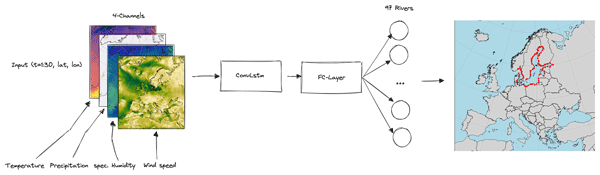
Florian Börgel, Sven Karsten, Karoline Rummel, and Ulf Gräwe
Geosci. Model Dev., 18, 2005–2019, https://doi.org/10.5194/gmd-18-2005-2025, https://doi.org/10.5194/gmd-18-2005-2025, 2025
Short summary
Short summary
Forecasting river runoff, which is crucial for managing water resources and understanding climate impacts, can be challenging. This study introduces a new method using convolutional long short-term memory (ConvLSTM) networks, a machine learning model that processes spatial and temporal data. Focusing on the Baltic Sea region, our model uses weather data as input to predict daily river runoff for 97 rivers.
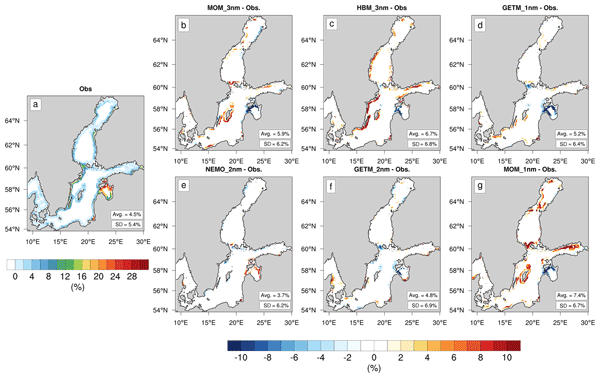
Matthias Gröger, Manja Placke, H. E. Markus Meier, Florian Börgel, Sandra-Esther Brunnabend, Cyril Dutheil, Ulf Gräwe, Magnus Hieronymus, Thomas Neumann, Hagen Radtke, Semjon Schimanke, Jian Su, and Germo Väli
Geosci. Model Dev., 15, 8613–8638, https://doi.org/10.5194/gmd-15-8613-2022, https://doi.org/10.5194/gmd-15-8613-2022, 2022
Short summary
Short summary
Comparisons of oceanographic climate data from different models often suffer from different model setups, forcing fields, and output of variables. This paper provides a protocol to harmonize these elements to set up multidecadal simulations for the Baltic Sea, a marginal sea in Europe. First results are shown from six different model simulations from four different model platforms. Topical studies for upwelling, marine heat waves, and stratification are also assessed.
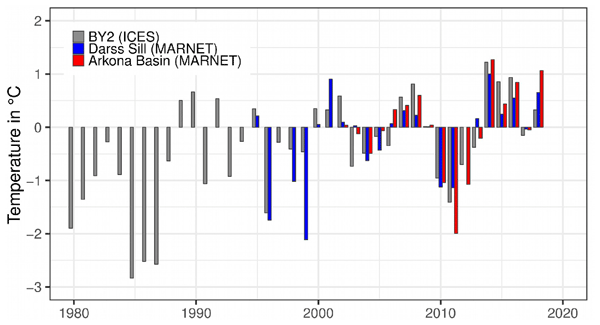
H. E. Markus Meier, Madline Kniebusch, Christian Dieterich, Matthias Gröger, Eduardo Zorita, Ragnar Elmgren, Kai Myrberg, Markus P. Ahola, Alena Bartosova, Erik Bonsdorff, Florian Börgel, Rene Capell, Ida Carlén, Thomas Carlund, Jacob Carstensen, Ole B. Christensen, Volker Dierschke, Claudia Frauen, Morten Frederiksen, Elie Gaget, Anders Galatius, Jari J. Haapala, Antti Halkka, Gustaf Hugelius, Birgit Hünicke, Jaak Jaagus, Mart Jüssi, Jukka Käyhkö, Nina Kirchner, Erik Kjellström, Karol Kulinski, Andreas Lehmann, Göran Lindström, Wilhelm May, Paul A. Miller, Volker Mohrholz, Bärbel Müller-Karulis, Diego Pavón-Jordán, Markus Quante, Marcus Reckermann, Anna Rutgersson, Oleg P. Savchuk, Martin Stendel, Laura Tuomi, Markku Viitasalo, Ralf Weisse, and Wenyan Zhang
Earth Syst. Dynam., 13, 457–593, https://doi.org/10.5194/esd-13-457-2022, https://doi.org/10.5194/esd-13-457-2022, 2022
Short summary
Short summary
Based on the Baltic Earth Assessment Reports of this thematic issue in Earth System Dynamics and recent peer-reviewed literature, current knowledge about the effects of global warming on past and future changes in the climate of the Baltic Sea region is summarised and assessed. The study is an update of the Second Assessment of Climate Change (BACC II) published in 2015 and focuses on the atmosphere, land, cryosphere, ocean, sediments, and the terrestrial and marine biosphere.
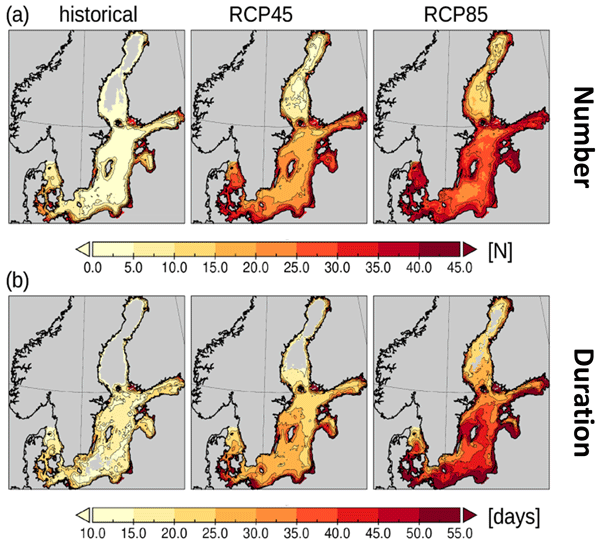
H. E. Markus Meier, Christian Dieterich, Matthias Gröger, Cyril Dutheil, Florian Börgel, Kseniia Safonova, Ole B. Christensen, and Erik Kjellström
Earth Syst. Dynam., 13, 159–199, https://doi.org/10.5194/esd-13-159-2022, https://doi.org/10.5194/esd-13-159-2022, 2022
Short summary
Short summary
In addition to environmental pressures such as eutrophication, overfishing and contaminants, climate change is believed to have an important impact on the marine environment in the future, and marine management should consider the related risks. Hence, we have compared and assessed available scenario simulations for the Baltic Sea and found considerable uncertainties of the projections caused by the underlying assumptions and model biases, in particular for the water and biogeochemical cycles.
Ulrich Löhnert, Maike Ahlgrimm, Felix Ament, Jens Bange, Kjell zum Berge, Birger Bohn, Yann Büchau, Leonie Esters, Lars van Gelder, Yohanes R. S. Ginting, Luise Helmstreit, Tobias Marke, Marcus G. Müller, Patrizia Ney, Anika Obermann-Hellhund, Andreas Platis, Bernhard Pospichal, Alexander Pschera, Anja Rapmund, Mirjana Sakradzija, Martin Schön, Jan H. Schween, Maria Toporov, and Andreas Wieser
Earth Syst. Sci. Data Discuss., https://doi.org/10.5194/essd-2026-784, https://doi.org/10.5194/essd-2026-784, 2026
Preprint under review for ESSD
Short summary
Short summary
Accurate weather forecasts require detailed measurements of temperature, humidity and wind. During a two-week campaign in Germany, we tested innovative instruments against established measurement techniques and satellite observations. Most ground-based instruments met international performance requirements and successfully captured daily atmospheric changes. The publicly available dataset supports improved weather forecasting and the development of future weather observation networks.
Simon F. Hauser, Yuanxu Dong, Anneke ten Doeschate, Kevin McGraw, Brian Ward, and Leonie Esters
EGUsphere, https://doi.org/10.5194/egusphere-2026-4525, https://doi.org/10.5194/egusphere-2026-4525, 2026
This preprint is open for discussion and under review for Atmospheric Chemistry and Physics (ACP).
Short summary
Short summary
The ocean absorbs 25-30% of anthropogenic carbon emissions. Estimates of the global ocean-atmosphere CO2 flux rely on the gas transfer velocity (k) which is normalized to the Schmidt number (Sc). However the Sc number also has an exponent term (n) associated with it, which is typically taken as a constant value of -0.5. Here we characterised n as a function of wind speed and recalculated the global air-sea fluxes with this new transfer velocity term.
Vertti Kettunen, Tuula Aalto, Henry C. Bittig, Jukka-Pekka Jalkanen, Lauri Laakso, Anteneh Mengistu, Gregor Rehder, Maria Tenkanen, and Martti Honkanen
EGUsphere, https://doi.org/10.5194/egusphere-2026-5442, https://doi.org/10.5194/egusphere-2026-5442, 2026
This preprint is open for discussion and under review for Ocean Science (OS).
Short summary
Short summary
The Baltic Sea carbon balance was estimated using two independent observation-based methods during a 3-year period. One method indicated that the Baltic Sea was a carbon dioxide sink, while the other indicated a source. Ship emissions increased the net carbon dioxide flux to the atmosphere. Despite differences in the overall balance, the methods showed similar patterns in several regions. The results show that both shipping and the method used strongly affect the estimated carbon balance.
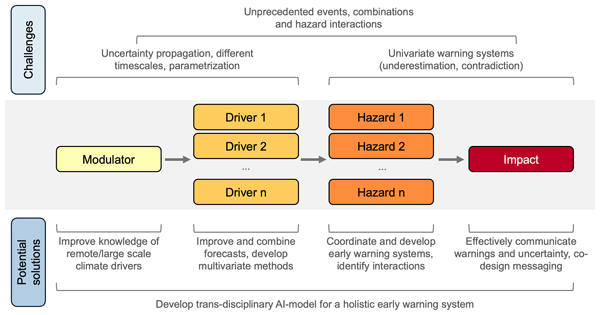
Kai Kornhuber, Emanuele Bevacqua, Mariana Madruga de Brito, Wiebke S. Jäger, Pauline Rivoire, Cassandra D. W. Rogers, Fabiola Banfi, Fulden Batibeniz, James Carruthers, Carlo De Michele, Silvia De Angeli, Cristina Deidda, Marleen C. de Ruiter, Andreas H. Fink, Henrique M. D. Goulart, Katharina Küpfer, Patrick Ludwig, Douglas Maraun, Gabriele Messori, Shruti Nath, Fiachra O'Loughlin, Joaquim G. Pinto, Benjamin Poschlod, Alexandre M. Ramos, Colin Raymond, Andreia F. S. Ribeiro, Deepti Singh, Laura Suarez Gutierrez, Philip J. Ward, and Christopher J. White
Nat. Hazards Earth Syst. Sci., 26, 4309–4334, https://doi.org/10.5194/nhess-26-4309-2026, https://doi.org/10.5194/nhess-26-4309-2026, 2026
Short summary
Short summary
Impacts from extreme weather events may become more severe due to increased likelihood of compounding events under global warming, which challenge present day climate modelling and forecasting capacities. In this perspective we reflect on the usability of compound event research to bridge the gap between academic research and real-world applications.
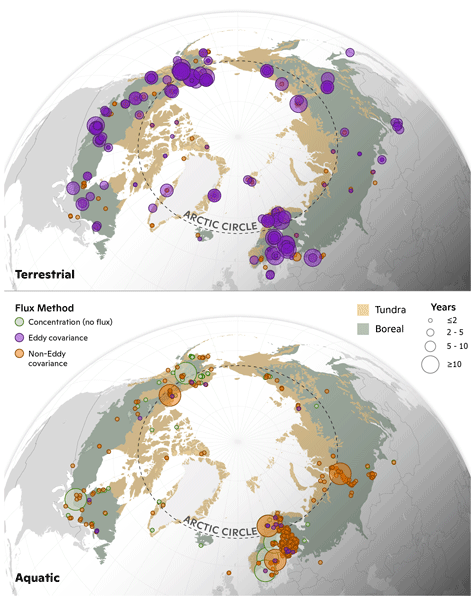
Anna-Maria Virkkala, Isabel Wargowsky, Judith Vogt, McKenzie A. Kuhn, Simran Madaan, Tiffany Windholz, Kyle A. Arndt, Gerard Rocher-Ros, Mathias Göckede, David Olefeldt, Edward A. G. Schuur, David Bastviken, Richard O'Keefe, Brendan M. Rogers, Jennifer D. Watts, Kelcy Kent, Kristoffer Aalstad, Kelly Aho, Joonatan Ala-Könni, Haley Alcock, Inge Althuizen, Christopher D. Arp, Jun Asanuma, Mika Aurela, Sivakiruthika Balathandayuthabani, Katrin Attermeyer, Alan Barr, Maialen Barret, Ochirbat Batkhishig, Christina Biasi, Mats P. Björkman, Andrew Black, Elena Blanc-Betes, Pascal Bodmer, Julia Boike, Abdullah Bolek, Frédéric Bouchard, Ingeborg Bussmann, Lea Cabrol, Eleonora Canfora, Sean Carey, Karel Castro-Morales, Namyi Chae, Andreas Christen, Torben R. Christensen, Casper T. Christiansen, Housen Chu, Graham Clark, Francois Clayer, Patrick Crill, Christopher Cunada, Scott J. Davidson, Joshua F. Dean, Sigrid Dengel, Matteo Detto, Catherine Dieleman, Florent Domine, Egor Dyukarev, Colin Edgar, Bo Elberling, Craig A. Emmerton, Eugenie Euskirchen, Grant Falvo, Thomas Friborg, Michelle Garneau, Mariasilvia Giamberini, Mikhail V. Glagolev, Miquel A. Gonzalez-Meler, Gustaf Granath, Jón Guðmundsson, Konsta Happonen, Yoshinobu Harazono, Lorna Harris, Josh Hashemi, Nicholas Hasson, Janna Heerah, Liam Heffernan, Manuel Helbig, Warren Helgason, Michal Heliasz, Greg Henry, Geert Hensgens, Tetsuya Hiyama, Beth Holmes, Macall Hock, David Holl, Jutta Holst, Thomas Holst, Gabriel Hould-Gosselin, Elyn Humphreys, Jacqueline Hung, Jussi Huotari, Hiroki Ikawa, Danil V. Ilyasov, Mamoru Ishikawa, Go Iwahana, Hiroki Iwata, Marcin Antoni Jackowicz-Korczynski, Joachim Jansen, Järvi Järveoja, Vincent E. J. Jassey, Rasmus Jensen, Katharina Jentzsch, Robert G. Jespersen, Carl-Fredrik Johannesson, Cheristy P. Jones, Anders Jonsson, Ji Young Jung, Sari Juutinen, Evan Kane, Jan Karlsson, Sergey Karsanaev, Kuno Kasak, Julia Kelly, Kasha Kempton, Marcus Klaus, George W. Kling, Natascha Kljun, Jacqueline Knutson, Hideki Kobayashi, John Kochendorfer, Kukka-Maaria Kohonen, Pasi Kolari, Mika Korkiakoski, Aino Korrensalo, Pirkko Kortelainen, Egle Koster, Kajar Koster, Ayumi Kotani, Praveena Krishnan, Juliya Kurbatova, Lars Kutzbach, Min Jung Kwon, Ethan D. Kyzivat, Jessica Lagroix, Theodore Langhorst, Elena Lapshina, Tuula Larmola, Klaus S. Larsen, Isabelle Laurion, Justin Ledman, Hanna Lee, A. Joshua Leffler, Lance Lesack, Anders Lindroth, David Lipson, Annalea Lohila, Efrén López-Blanco, Vincent L. St. Louis, Erik Lundin, Miska Luoto, Takashi Machimura, Marta Magnani, Avni Malhotra, Marja Maljanen, Ivan Mammarella, Elisa Männistö, Luca Belelli Marchesini, Phil Marsh, Pertti J. Martikainen, Maija E. Marushchak, Mikhail Mastepanov, Alex Mavrovic, Trofim Maximov, Christina Minions, Daniel F. Nadeau, Marco Montemayor, Tomoaki Morishita, Patrick Murphy, Erin Nicholls, Mats B. Nilsson, Anastasia Niyazova, Jenni Nordén, Koffi Dodji Noumonvi, Hannu Nykänen, Walter Oechel, Anne Ojala, Tomohiro Okadera, Sujan Pal, Alexey V. Panov, Tim Papakyriakou, Dario Papale, Sang-Jong Park, Frans-Jan W. Parmentier, Gilberto Pastorello, Mike Peacock, Matthias Peichl, Roman Petrov, Kyra St. Pierre, Norbert Pirk, Jessica Plein, Vilmantas Preskienis, Anatoly Prokushkin, Jukka Pumpanen, Hilary A. Rains, Niklas Rakos, Aleksi Räsänen, Helena Rautakoski, Riikka Rinnan, Janne Rinne, Adrian Rocha, Nigel Roulet, Alexandre Roy, Anna Rutgersson, Aleksandr F. Sabrekov, Torsten Sachs, Erik Sahlée, Alejandro Salazar, Henrique Oliveira Sawakuchi, Christopher Schulze, Roger Seco, Armando Sepulveda-Jauregui, Svetlana Serikova, Abbey Serrone, Hanna M. Silvennoinen, Sofie Sjogersten, June Skeeter, Jo Snöälv, Sebastian Sobek, Oliver Sonnentag, Emily H. Stanley, Maria Strack, Lena Strom, Patrick Sullivan, Ryan Sullivan, Anna Sytiuk, Torbern Tagesson, Pierre Taillardat, Julie Talbot, Suzanne E. Tank, Mario Tenuta, Irina Terenteva, Frederic Thalasso, Antoine Thiboult, Halldor Thorgeirsson, Fenix Garcia Tigreros, Margaret Torn, Amy Townsend-Small, Claire Treat, Alain Tremblay, Carlo Trotta, Eeva-Stiina Tuittila, Merritt Turetsky, Masahito Ueyama, Muhammad Umair, Aki Vähä, Lona van Delden, Maarten van Hardenbroek, Andrej Varlagin, Ruth K. Varner, Tarmo Virtanen, Elena Veretennikova, Timo Vesala, Carolina Voigt, Jorien E. Vonk, Robert Wagner, Katey Walter Anthony, Qinxue Wang, Masataka Watanabe, Hailey Webb, Jeffrey M. Welker, Andreas Westergaard-Nielsen, Sebastian Westermann, Jeffrey R. White, Christian Wille, Scott N. Williamson, Scott Zolkos, Donatella Zona, and Susan M. Natali
Earth Syst. Sci. Data, 18, 6357–6409, https://doi.org/10.5194/essd-18-6357-2026, https://doi.org/10.5194/essd-18-6357-2026, 2026
Short summary
Short summary
This dataset includes monthly measurements of carbon dioxide and methane exchange between land, water, and the atmosphere from over 1000 sites in Arctic and boreal regions. It combines measurements from a variety of ecosystems, including wetlands, forests, tundra, lakes, and rivers, gathered by over 260 researchers from 1984–2024. This dataset can be used to improve and reduce uncertainty in carbon budgets in order to strengthen our understanding of climate feedbacks in a warming world.
Anna K. Miesner, Daniel Krieger, and Leonard F. Borchert
EGUsphere, https://doi.org/10.5194/egusphere-2026-5065, https://doi.org/10.5194/egusphere-2026-5065, 2026
This preprint is open for discussion and under review for Natural Hazards and Earth System Sciences (NHESS).
Short summary
Short summary
Seasonal forecasts could help communities prepare for coastal flooding months in advance, but predicting storm surges at these timescales remains difficult. We show that large-scale weather patterns can improve seasonal storm surge forecasts by selecting climate-model predictions that better capture conditions linked to storm surges. This method reveals useful information that is hidden in the forecast and provides a pathway towards earlier and more reliable coastal hazard predictions.
Lukasz Stachnik, Meri Korhonen, Jonathan R. Hawkings, Marlena Szeligowska, Katarzyna Koziorowska, Emilia Trudnowska, Karol Kuliński, Beata Szymczycha, Oskar Głowacki, Małgorzata Kitowska, Katarzyna Dragańska-Deja, Marcin Syczewski, Liane G. Benning, Pablo Forjanes, and Mateusz Moskalik
EGUsphere, https://doi.org/10.5194/egusphere-2026-4466, https://doi.org/10.5194/egusphere-2026-4466, 2026
Short summary
Short summary
By comparing two glacier-fed bays in an Arctic fjord, we found that larger glaciers ending in the sea deliver far more sediment and essential micronutrients (Fe, Mn) to coastal waters than smaller glaciers ending on land. We showed that many of these nutrients are transported in particles that can travel farther offshore. As glaciers continue to shrink and surrounding landscapes become more stable, the supply of these nutrients is likely to decline, potentially affecting productivity.
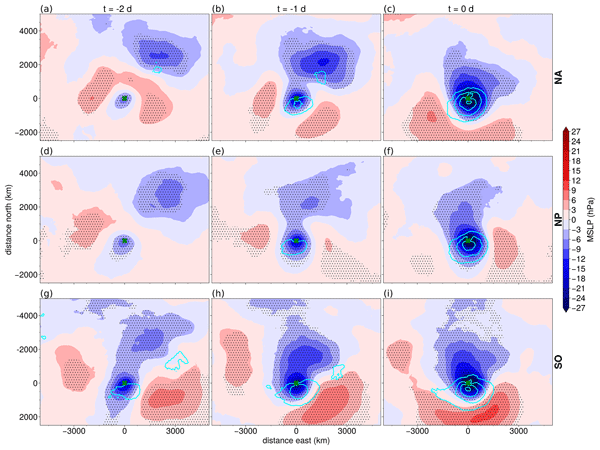
Aleksa Stanković, Rodrigo Caballero, and Gabriele Messori
Weather Clim. Dynam., 7, 1507–1523, https://doi.org/10.5194/wcd-7-1507-2026, https://doi.org/10.5194/wcd-7-1507-2026, 2026
Short summary
Short summary
Most storms occur over ocean where they cause strong surface winds. The storms are strongest over the North Atlantic, North Pacific and Southern Ocean. In each of these basins, the storms that cause the strongest surface winds develop similarly. These storms typically develop together with another, previously existing storm. At the same time, extreme winds are stronger in some basins than in others. Our analysis points that if the storms develop faster, they, on average, cause stronger winds.

Mehdi Pasha Karami, Torben Koenigk, Shiyu Wang, René Navarro Labastida, Tim Kruschke, Aude Carréric, Pablo Ortega, Klaus Wyser, Ramon Fuentes Franco, Agatha M. de Boer, Marie Sicard, and Aitor Aldama Campino
Earth Syst. Dynam., 17, 1151–1176, https://doi.org/10.5194/esd-17-1151-2026, https://doi.org/10.5194/esd-17-1151-2026, 2026
Short summary
Short summary
This study uses a high-resolution global climate model to simulate future climate, with a particular focus on the Arctic and North Atlantic. The model projects a nearly ice-free Arctic by 2040. The paper also introduces a framework to diagnose deep-water formation (DWF) in the Labrador, Irminger, and Greenland Seas and to quantify their regional contributions to the Atlantic Meridional Overturning Circulation (AMOC), revealing how different ocean regions contribute to the weakening of AMOC in a warming climate.
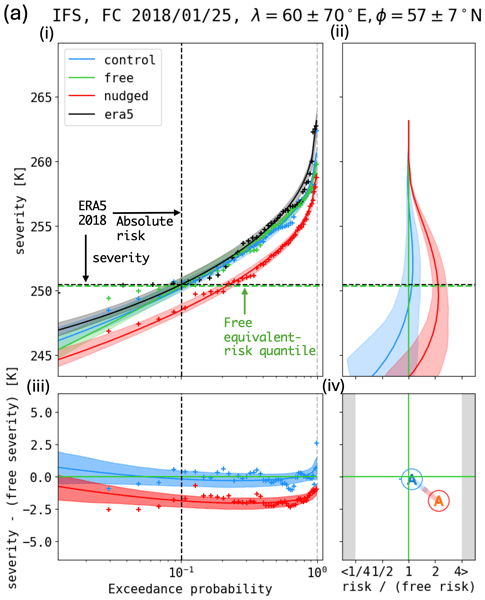
William J. M. Seviour, Justin Finkel, Philip Rupp, Regan Mudhar, Amy H. Butler, Chaim I. Garfinkel, Peter Hitchcock, Blanca Ayarzagüena, Dong-Chan Hong, Yu-Kyung Hyun, Hera Kim, Eun-Pa Lim, Daniel De Maeseneire, Gabriele Messori, Gerbrand Koren, Michael Sigmond, Isla R. Simpson, and Seok-Woo Son
Weather Clim. Dynam., 7, 1405–1423, https://doi.org/10.5194/wcd-7-1405-2026, https://doi.org/10.5194/wcd-7-1405-2026, 2026
Short summary
Short summary
Variability of the stratospheric polar vortex is thought to play a role in driving weather extremes, but quantifying this role for a given event has proved challenging. Using a new set of perturbed subseasonal forecast experiments from 7 modelling centres, we determine the stratospheric contribution to the risk and severity of three recent extreme weather events. The forecast-based methodology that we develop is applicable to understanding a range of other drivers of weather extremes.
Elena Päffgen, Lisa Schielicke, and Leonie Esters
Geosci. Commun., 9, 345–370, https://doi.org/10.5194/gc-9-345-2026, https://doi.org/10.5194/gc-9-345-2026, 2026
Short summary
Short summary
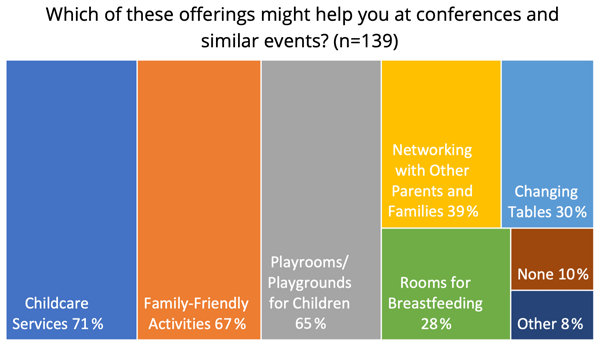
Balancing academic careers and family responsibilities presents significant challenges, particularly for early-career researchers attending conferences. These events are essential for professional development but often create logistical difficulties for parents. Based on a survey of geoscientists, we show that parents require more support and non-parents largely approve of family-friendly measures. We provide practical guidelines to help conference organizers support researchers with families.
Meriem Krouma and Gabriele Messori
Geosci. Model Dev., 19, 6663–6685, https://doi.org/10.5194/gmd-19-6663-2026, https://doi.org/10.5194/gmd-19-6663-2026, 2026
Short summary
Short summary
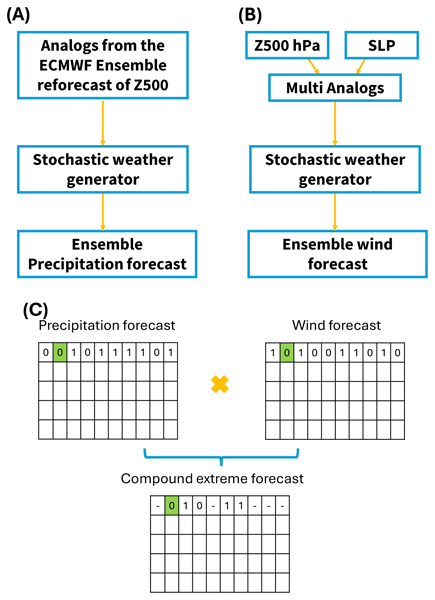
We present two forecasting methods for extreme precipitation and extreme wind in Europe, using stochastic weather generators and past atmospheric patterns. One targets precipitation via weather model reforecasts; the other predicts wind from large-scale patterns. Both outperform standard weather models up to 10 d ahead, offering improved accuracy for both individual and compound extreme events.
Aditya N. Mishra, Gabriele Messori, Lukas Riedel, Athul Rasheeda Satheesh, and Joaquim Pinto
EGUsphere, https://doi.org/10.5194/egusphere-2026-3099, https://doi.org/10.5194/egusphere-2026-3099, 2026
Short summary
Short summary
Windstorms cause billions in damage across Europe every year. In this work, we tune an existing windstorm damage model against new reliable insurance data from Europe. We found that the mathematical method used in the process strongly shapes which storms the model handles best. Our results give scientists and insurers clearer guidance on choosing the right approach when building windstorm risk models, ultimately helping society better prepare for costly extreme weather.
Zuzana Procházková, Erfan Mahmoudi, Ray Chew, Stamen Dolaptchiev, Claudia Christine Stephan, Georg Sebastian Völker, and Ulrich Achatz
Atmos. Chem. Phys., 26, 9541–9558, https://doi.org/10.5194/acp-26-9541-2026, https://doi.org/10.5194/acp-26-9541-2026, 2026
Short summary
Short summary
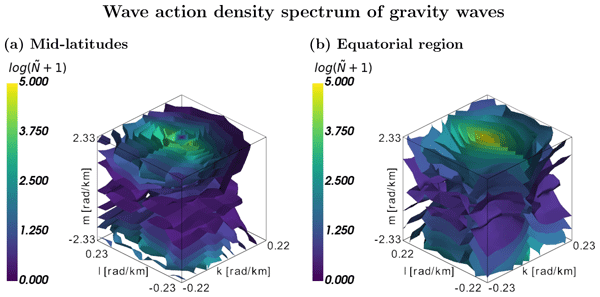
The study analyzes gravity waves in a high-resolution simulation. A unique methodology is applied to compute three-dimensional gravity wave spectra while keeping the data on the original triangular model grid and using linear wave theory. The results show the structure of gravity waves that would remain unresolved by a model with lower horizontal resolution. It is shown that the spectra can be highly simplified, which can help constructing precise but efficient gravity wave parametrisation.
Ines Dillerup, Gabriele Messori, Alexander Lemburg, Sebastian Buschow, and Joaquim G. Pinto
EGUsphere, https://doi.org/10.5194/egusphere-2026-2453, https://doi.org/10.5194/egusphere-2026-2453, 2026
Short summary
Short summary
We study recurrent heatwaves in Europe from 1950–2023 at complementary spatial scales: single locations, larger connected heatwave regions (objects), and continent-wide. Recurrent heatwaves are hotter and linked to drier soils at object and continental scales, but not locally. Objects with strong local heatwave recurrence last longer and are linked to the European blocking weather pattern in June-August. Continental recurrence is distinct from both hot summers and strong local recurrence.
Venugopal Thandlam, Teena Davis, Venkatramana Kaagita, Anna Rutgersson, and Hasibur Rahaman
EGUsphere, https://doi.org/10.22541/au.175571767.72906574/v1, https://doi.org/10.22541/au.175571767.72906574/v1, 2026
Short summary
Short summary
We studied how to improve the accuracy of ocean heat measurements by identifying errors in data from floating weather stations. By comparing twenty-three years of buoy records with satellite data, we developed new ways to filter out false readings caused by sensor issues or environmental interference. Our methods significantly improved the reliability of thermal radiation data. This ensures more precise climate models and better predictions of global warming.

Ni Li, Wim Thiery, Shorouq Zahra, Mariana Madruga de Brito, Koffi Worou, Murathan Kurfalı, Seppe Lampe, Paul Muñoz, Clare Flynn, Camila Trigoso, Joakim Nivre, Jakob Zscheischler, and Gabriele Messori
Nat. Hazards Earth Syst. Sci., 26, 2609–2636, https://doi.org/10.5194/nhess-26-2609-2026, https://doi.org/10.5194/nhess-26-2609-2026, 2026
Short summary
Short summary
Climate extremes threaten society and ecosystems, making impact understanding critical. Wikimpacts 1.0 provides an automated pipeline processing Wikipedia texts with underexploited information on climate impacts, yielding comprehensive socio-economic impact data for 2726 climate events from 1034–2024. It offers broader storm-related impacts and finer spatial resolution than established databases, showcasing natural language processing's potential to advance climate impact data.
Michael Konrad Schutte, Leonardo Olivetti, Flavio Maria Emanuele Pons, and Gabriele Messori
EGUsphere, https://doi.org/10.5194/egusphere-2026-2203, https://doi.org/10.5194/egusphere-2026-2203, 2026
Short summary
Short summary
When testing whether signals on maps are statistically meaningful, scientists must account for multiple testing. Otherwise, some results may appear significant purely by chance. We show that the widely used false discovery rate correction can be misleading: simply changing the geographic region analyzed can make the same data appear far more statistically significant, even though nothing has changed. We recommend transparent reporting and using region-wide averages instead of point-wise testing.
Emilia Trudnowska, Katarzyna Koziorowska, Anna M. Dąbrowska, Rafał Boehnke, Beata Szymczycha, Katarzyna Draganska-Deja, Łukasz Stachnik, Jon Hawkings, Meri Korhonen, Małgorzata Kitowska, Karol Kuliński, and Mateusz Moskalik
EGUsphere, https://doi.org/10.5194/egusphere-2026-2515, https://doi.org/10.5194/egusphere-2026-2515, 2026
Short summary
Short summary
Glacier retreat in Svalbard alters marine ecosystems, with marine snow linking chemistry, particles, and biota while driving carbon export. This study examines fine-scale variability in fjord waters, revealing strong seasonal and local differences in biogeochemistry, nutrients, plankton, and particles. Results highlight local heterogeneity in coupled physical–biogeochemical–ecological processes near retreating glaciers.
Pierre Friedlingstein, Michael O'Sullivan, Matthew W. Jones, Robbie M. Andrew, Dorothee C. E. Bakker, Judith Hauck, Peter Landschützer, Corinne Le Quéré, Hongmei Li, Ingrid T. Luijkx, Glen P. Peters, Wouter Peters, Julia Pongratz, Clemens Schwingshackl, Stephen Sitch, Josep G. Canadell, Philippe Ciais, Kjetil Aas, Simone R. Alin, Peter Anthoni, Leticia Barbero, Nicholas R. Bates, Nicolas Bellouin, Alice Benoit-Cattin, Carla F. Berghoff, Raffaele Bernardello, Laurent Bopp, Ida Bagus Mandhara Brasika, Matthew A. Chamberlain, Naveen Chandra, Frédéric Chevallier, Louise P. Chini, Nathan O. Collier, Thomas H. Colligan, Margot Cronin, Laique M. Djeutchouang, Xinyu Dou, Matt P. Enright, Kazutaka Enyo, Michael Erb, Wiley Evans, Richard A. Feely, Liang Feng, Daniel J. Ford, Adrianna Foster, Filippa Fransner, Thomas Gasser, Marion Gehlen, Thanos Gkritzalis, Jefferson Goncalves De Souza, Giacomo Grassi, Luke Gregor, Nicolas Gruber, Bertrand Guenet, Özgür Gürses, Kirsty Harrington, Ian Harris, Jens Heinke, George C. Hurtt, Yosuke Iida, Tatiana Ilyina, Akihiko Ito, Andrew R. Jacobson, Atul K. Jain, Tereza Jarníková, Annika Jersild, Fei Jiang, Steve D. Jones, Etsushi Kato, Ralph F. Keeling, Kees Klein Goldewijk, Jürgen Knauer, Yawen Kong, Jan Ivar Korsbakken, Charles Koven, Taro Kunimitsu, Xin Lan, Junjie Liu, Zhiqiang Liu, Zhu Liu, Claire Lo Monaco, Lei Ma, Gregg Marland, Patrick C. McGuire, Galen A. McKinley, Joe R. Melton, Natalie Monacci, Erwan Monier, Eric J. Morgan, David R. Munro, Jens D. Müller, Shin-Ichiro Nakaoka, Lorna R. Nayagam, Yosuke Niwa, Tobias Nutzel, Are Olsen, Abdirahman M. Omar, Naiqing Pan, Sudhanshu Pandey, Denis Pierrot, Zhangcai Qin, Pierre Regnier, Gregor Rehder, Laure Resplandy, Alizée Roobaert, Thais M. Rosan, Christian Rödenbeck, Jörg Schwinger, Ingunn Skjelvan, T. Luke Smallman, Victoria Spada, Mohanan G. Sreeush, Qing Sun, Adrienne J. Sutton, Colm Sweeney, Didier Swingedouw, Roland Séférian, Shintaro Takao, Hiroaki Tatebe, Hanqin Tian, Xiangjun Tian, Bronte Tilbrook, Hiroyuki Tsujino, Francesco Tubiello, Erik van Ooijen, Guido R. van der Werf, Sebastiaan J. van de Velde, Anthony P. Walker, Rik Wanninkhof, Xiaojuan Yang, Wenping Yuan, Xu Yue, and Jiye Zeng
Earth Syst. Sci. Data, 18, 3211–3288, https://doi.org/10.5194/essd-18-3211-2026, https://doi.org/10.5194/essd-18-3211-2026, 2026
Short summary
Short summary
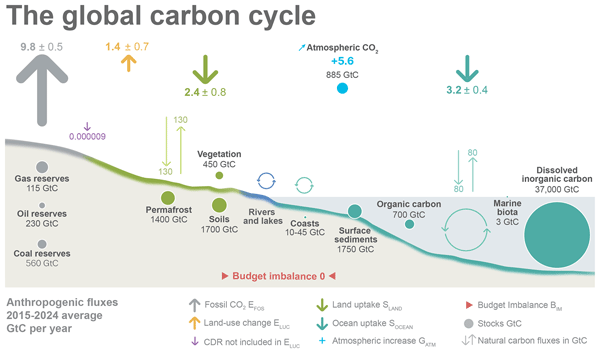
The Global Carbon Budget 2025 describes the methodology, main results, and datasets used to quantify the anthropogenic emissions of carbon dioxide (CO2) and their partitioning among the atmosphere, land ecosystems, and the ocean over the historical period (1750–2025). These living datasets are updated every year to provide the highest transparency and traceability in the reporting of CO2, the key driver of climate change.
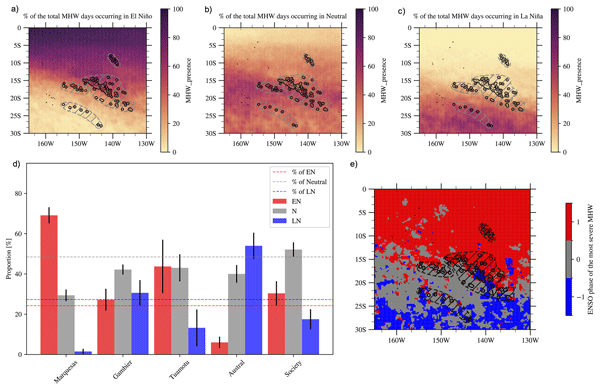
Bastien Pagli, Takeshi Izumo, Alexandre Barboni, Carla Chevillard, Cyril Dutheil, Raphaël Legrand, Christophe Menkes, Claire Rocuet, and Sophie Cravatte
Ocean Sci., 22, 1329–1352, https://doi.org/10.5194/os-22-1329-2026, https://doi.org/10.5194/os-22-1329-2026, 2026
Short summary
Short summary
Marine heatwaves—periods of unusually warm ocean temperatures—are becoming more frequent and intense with climate change. These events can harm marine ecosystems, especially in vulnerable regions like French Polynesia. Here, we used satellite sea surface temperature data and ocean reanalysis to characterize past events. We investigated their characteristics, variability linked to El Niño Southern Oscillation, and the physical mechanisms driving their onset and decay across the region.
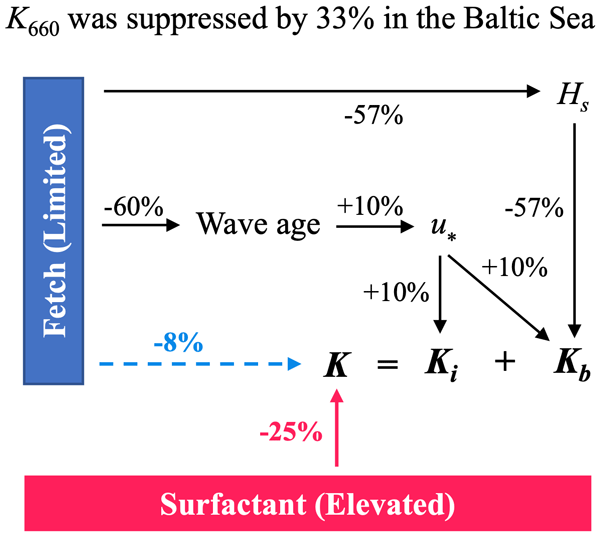
Yuanxu Dong, Christa A. Marandino, Ryo Dobashi, David T. Ho, Gregor Rehder, Henry C. Bittig, Josefine Karnatz, Bita Sabbaghzadeh, Helen Czerski, and Anja Engel
Atmos. Chem. Phys., 26, 5567–5587, https://doi.org/10.5194/acp-26-5567-2026, https://doi.org/10.5194/acp-26-5567-2026, 2026
Short summary
Short summary
Air-sea gas exchange regulates the Earth’s climate. However, the description of the kinetic exchange process only uses wind speed, neglecting other drivers. In this study, we investigate how fetch and natural surfactants modulate air-sea carbon dioxide exchange. Measurements from the central Baltic Sea show that limited fetch and elevated surfactants significantly suppress this exchange. A new parameterisation is provided, improving regional carbon budgets and evaluations of climate solutions.
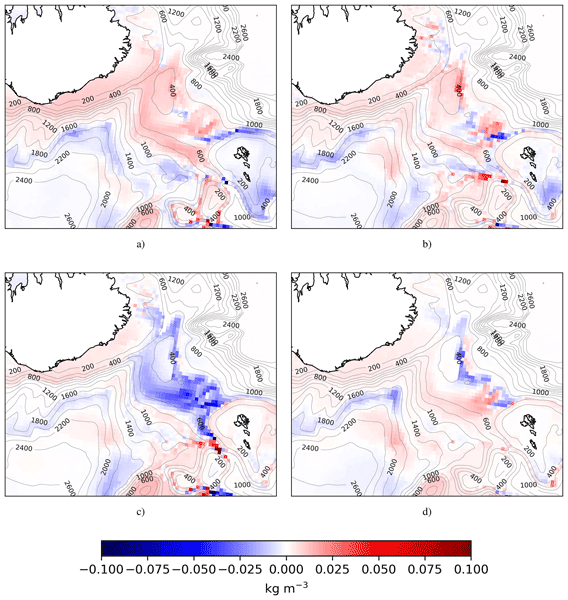
Robinson Hordoir, Jarle Berntsen, Magnus Hieronymus, Per Pemberton, and Hjálmar Hátún
Geosci. Model Dev., 19, 2677–2690, https://doi.org/10.5194/gmd-19-2677-2026, https://doi.org/10.5194/gmd-19-2677-2026, 2026
Short summary
Short summary
Dense water created in high latitude regions flows at the bottom of the ocean, from one basin to the next, and contributes to the global ocean circulation. The flow between shallow and deeper basins occurs at straits such as the Faeroe Bank Channel as underwater streams of dense water. Their representation in ocean models is problematic. In the present article, we use a mathematical formulation of dense water plumes to show that the representation of these dense overflows can be improved.
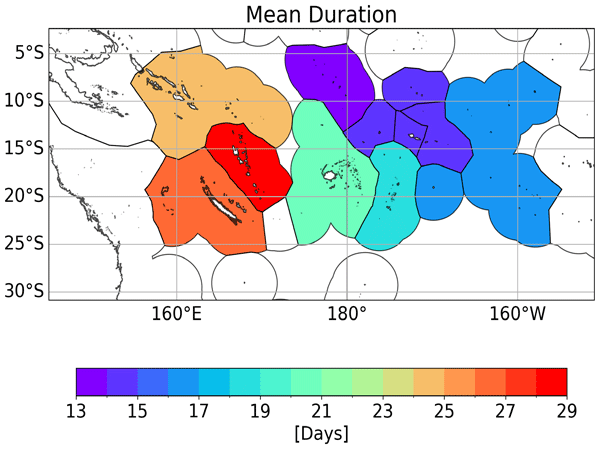
Shilpa Lal, Sophie Cravatte, Christophe Menkes, Jed Macdonald, Romain Le Gendre, Ines Mangolte, Cyril Dutheil, Neil J. Holbrook, and Simon Nicol
Ocean Sci., 22, 1023–1049, https://doi.org/10.5194/os-22-1023-2026, https://doi.org/10.5194/os-22-1023-2026, 2026
Short summary
Short summary
This paper characterizes historical (1981–2023) marine heatwaves in the tropical southwestern Pacific, where they pose a challenge for marine resource dependent Islands. Heatwaves are distinguished as a function of their spatial extent, signature at the coast, and seasonality, to allow a better understanding of their impacts on ecosystems. Marine heatwaves are getting longer and more frequent, with greater spatial extents. Our results aim to inform the Pacific Islands on their vulnerability.
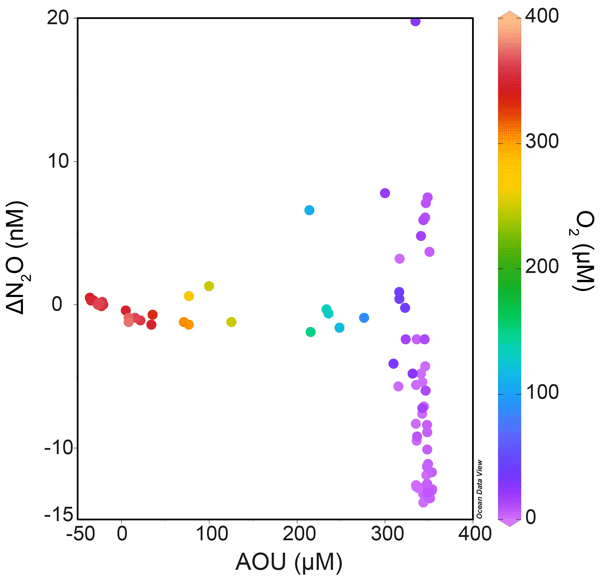
Pratirupa Bardhan, Claudia Frey, Gregor Rehder, and Hermann W. Bange
Biogeosciences, 23, 1987–2002, https://doi.org/10.5194/bg-23-1987-2026, https://doi.org/10.5194/bg-23-1987-2026, 2026
Short summary
Short summary
Nitrous oxide (N2O), a potent greenhouse gas, is released from coastal seas & estuaries, yet we don't fully understand how it is formed and consumed. In this study we collected water from several sites in the central Baltic Sea. N2O came from ammonia in oxic waters. Deep waters with low to no oxygen noted more active N2O cycling. The seafloor was a source in some areas. Typically N2O is produced by bacteria, but our results indicate possibility of other players like fungi or chemical reactions.
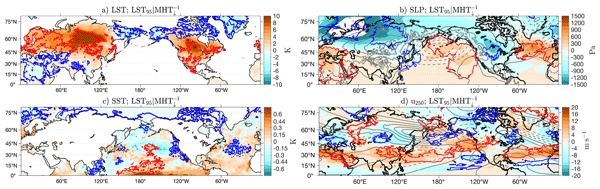
Valerio Lembo, Gabriele Messori, Davide Faranda, Vera Melinda Galfi, Rune Grand Graversen, and Flavio Emanuele Pons
Weather Clim. Dynam., 7, 453–473, https://doi.org/10.5194/wcd-7-453-2026, https://doi.org/10.5194/wcd-7-453-2026, 2026
Short summary
Short summary
Hemispheric heatwaves have fundamental implications for ecosystems and societies. They are studied together with large-scale atmospheric dynamics, through the lens of poleward heat transports by planetary-scale waves. Extremely weak transports of heat towards the North Pole are found to be associated with hemispheric heatwaves in the Northern Hemisphere mid-latitudes. Therefore, we conclude that heat transports are a possible indicator and a precursor of concurrent hemispheric heatwaves.
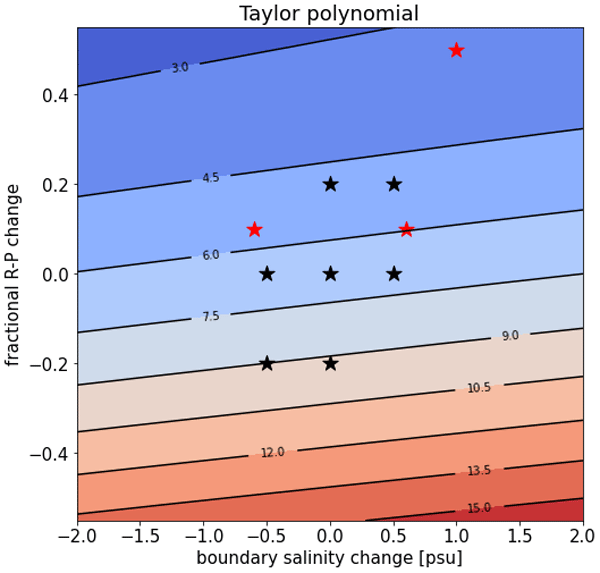
Lars Arneborg, Magnus Hieronymus, Per Pemberton, Ye Liu, and Sam T. Fredriksson
Ocean Sci., 22, 761–775, https://doi.org/10.5194/os-22-761-2026, https://doi.org/10.5194/os-22-761-2026, 2026
Short summary
Short summary
Climate change influences estuaries and their ecosystems not only by rising temperatures but also by salinity changes. This modeling study highlights the magnitude and causes of the Baltic Sea salinity sensitivity to fresh water forcing and changed ocean salinity. The large sensitivity to increased fresh water forcing is shown to be caused by dilution of fresh water within the estuary, recirculation of much of the outflow water back into the estuary, as well as decreasing inflows of ocean water.
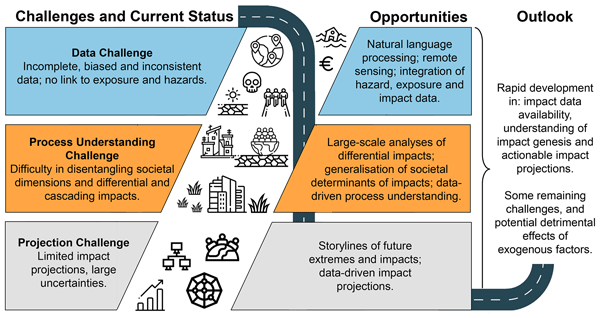
Gabriele Messori, Emily Boyd, Joakim Nivre, and Elena Raffetti
Earth Syst. Dynam., 17, 199–208, https://doi.org/10.5194/esd-17-199-2026, https://doi.org/10.5194/esd-17-199-2026, 2026
Short summary
Short summary
Understanding impacts of climate extremes is very important for society and the economy. We identify three challenges restricting this understanding: limited availability and quality of impact data, difficulties in understanding why given impacts occur and lack of reliable projections of future impacts. We also identify key opportunities, including newly released datasets, recent methodological and technical advances and interdisciplinary collaborations between the social and natural sciences.
Alok Kumar Samantaray and Gabriele Messori
Earth Syst. Sci. Data Discuss., https://doi.org/10.5194/essd-2025-646, https://doi.org/10.5194/essd-2025-646, 2026
Preprint under review for ESSD
Short summary
Short summary
We present a global dataset that links drought events to human and economic exposure and impacts. Using a two-step approach, we first cluster drought events from precipitation and temperature records to track their severity and extent, and then connect them to population and Gross Domestic Product exposure and to impacts reported in disaster databases. The dataset supports risk planning and mitigation efforts.
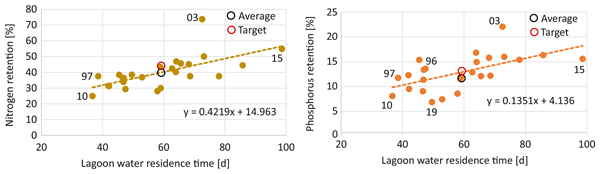
Thomas Neumann, Gerald Schernewski, and René Friedland
Biogeosciences, 22, 7403–7424, https://doi.org/10.5194/bg-22-7403-2025, https://doi.org/10.5194/bg-22-7403-2025, 2025
Short summary
Short summary
We applied a 3D ecosystem model to the Oder Lagoon in the Baltic Sea and found that 40% of nitrogen and 12% of phosphorus are retained in the lagoon before entering the Baltic Sea. This is important for coarse-grained models that do not resolve such coastal structures. Moreover, the coastal filter supports the mitigation of eutrophication in the Baltic Sea.
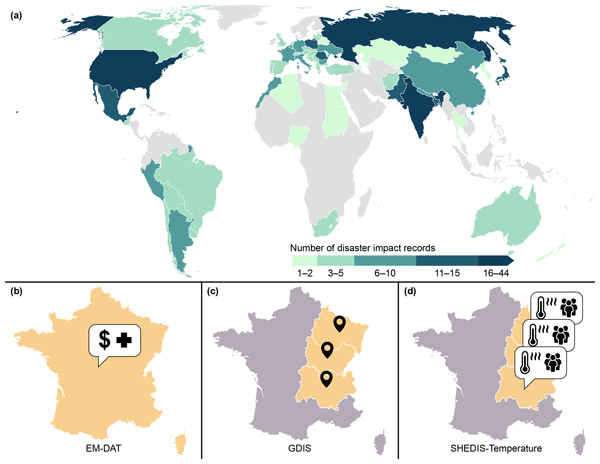
Sara Lindersson and Gabriele Messori
Earth Syst. Sci. Data, 17, 6379–6403, https://doi.org/10.5194/essd-17-6379-2025, https://doi.org/10.5194/essd-17-6379-2025, 2025
Short summary
Short summary
The study of past temperature-related disasters requires information on socioeconomic impacts, hazard intensity and human exposure. This is often lacking in current disaster databases. Our dataset fills this gap by integrating impact records with information on disaster locations, high-resolution meteorological data, and population estimates. Covering 382 disasters in 71 countries (1979–2018), this dataset enables deeper analyses of heat-related risk and vulnerabilities.
Anju Mallissery, Hagen Radtke, Thomas Neumann, and H.E. Markus Meier
EGUsphere, https://doi.org/10.5194/egusphere-2025-4568, https://doi.org/10.5194/egusphere-2025-4568, 2025
Short summary
Short summary
We used a computer model to study how warming affects biological and chemical processes in the Baltic Sea and controls nutrient cycling in its deep basins. We tested changes across the sea and only along the coast. In oxygen-poor waters, a small increase in the processes caused ammonium buildup and enhanced nitrogen removal. In the Bothnian Sea, the coastal zone had an outsized role, sometimes 2 to 4 times greater than basin-wide changes, altering nitrate, phosphate, and productivity.
Natalia Castillo Bautista, Marco Gaetani, Leonard F. Borchert, Benjamin Poschlod, Lukas Brunner, Jana Sillmann, and Mario L. V. Martina
EGUsphere, https://doi.org/10.5194/egusphere-2025-5073, https://doi.org/10.5194/egusphere-2025-5073, 2025
Short summary
Short summary
When hot temperatures and drought occur together (compound events), they can cause harmful impacts on crops and society. Using six decades of climate data, we show that such compound events repeatedly occurred in three breadbaskets of the Northern Hemisphere. These events are linked to atmospheric circulation patterns that favor heat and dryness, which in turn interact to amplify the impact. Our study contributes to understand the drivers of these events to support climate impact assessment.
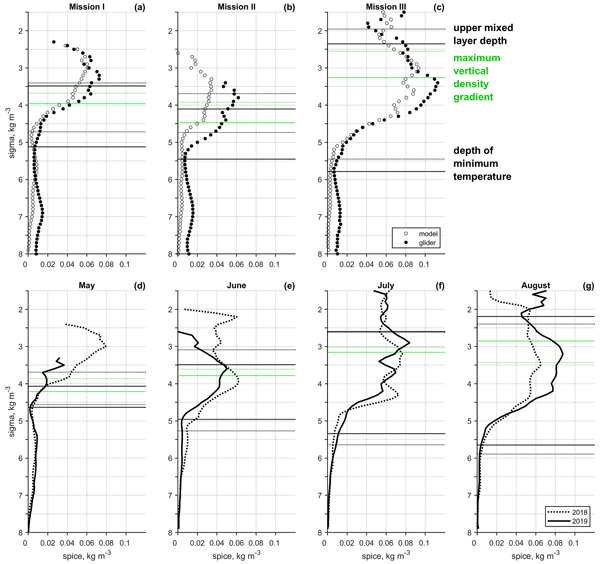
Kai Salm, Germo Väli, Taavi Liblik, and Urmas Lips
Ocean Sci., 21, 2555–2577, https://doi.org/10.5194/os-21-2555-2025, https://doi.org/10.5194/os-21-2555-2025, 2025
Short summary
Short summary
We show that the presence of submesoscale processes depends on atmospheric forcing and is evident in both glider observations and high-resolution numerical simulations. Peak submesoscale variability was found near the base of the upper mixed layer in spring and within the thermocline in summer. Coastal upwelling and topographically induced frontal instabilities likely drove subduction and the downward transport of surface waters and tracers.
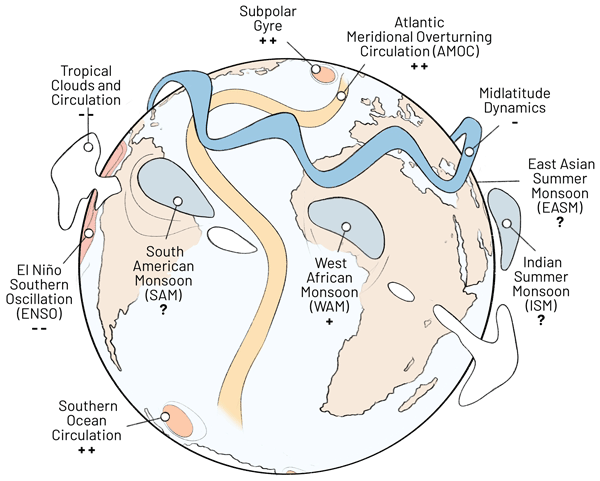
Sina Loriani, Yevgeny Aksenov, David I. Armstrong McKay, Govindasamy Bala, Andreas Born, Cristiano Mazur Chiessi, Henk A. Dijkstra, Jonathan F. Donges, Sybren Drijfhout, Matthew H. England, Alexey V. Fedorov, Laura C. Jackson, Kai Kornhuber, Gabriele Messori, Francesco S. R. Pausata, Stefanie Rynders, Jean-Baptiste Sallée, Bablu Sinha, Steven C. Sherwood, Didier Swingedouw, and Thejna Tharammal
Earth Syst. Dynam., 16, 1611–1653, https://doi.org/10.5194/esd-16-1611-2025, https://doi.org/10.5194/esd-16-1611-2025, 2025
Short summary
Short summary
In this work, we draw on palaeo-records, observations, and modelling studies to review tipping points in the ocean overturning circulations, monsoon systems, and global atmospheric circulations. We find indications for tipping in the ocean overturning circulations and the West African monsoon, with potentially severe impacts on the Earth system and humans. Tipping in the other considered systems is regarded as conceivable but is currently not sufficiently supported by evidence.
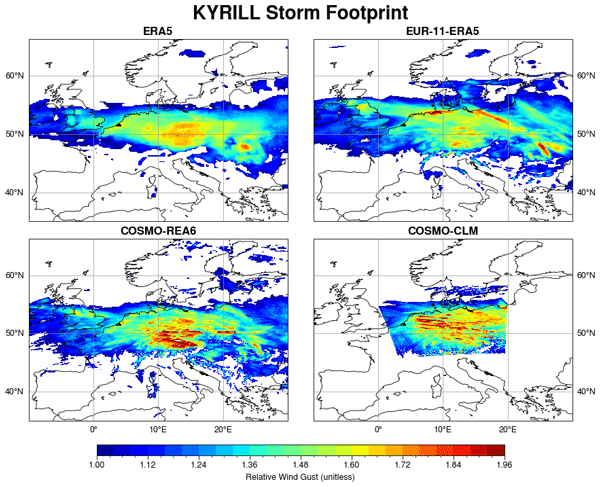
Clare M. Flynn, Julia Moemken, Joaquim G. Pinto, Michael K. Schutte, and Gabriele Messori
Earth Syst. Sci. Data, 17, 4431–4453, https://doi.org/10.5194/essd-17-4431-2025, https://doi.org/10.5194/essd-17-4431-2025, 2025
Short summary
Short summary
We created a new, publicly available, database of the top 50 most extreme European winter windstorms from each of four different meteorological input data sets covering the years 1995–2015. We found variability in all aspects of our database, from which storms were included in the top 50 storms for each input to the storms' spatial variability. We urge users of our database to consider the storms as identified from two or more input sources within our database where possible.
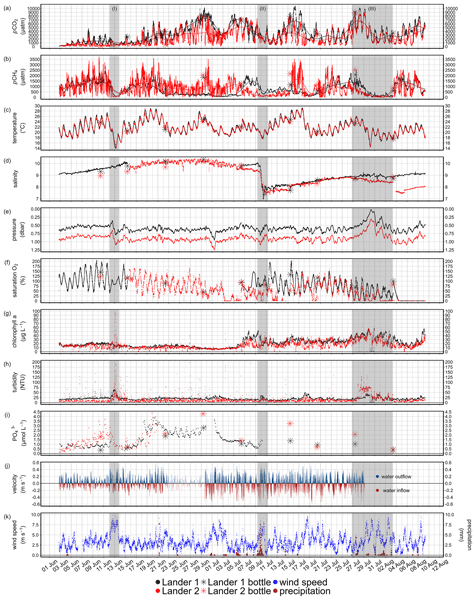
Daniel L. Pönisch, Henry C. Bittig, Martin Kolbe, Ingo Schuffenhauer, Stefan Otto, Peter Holtermann, Kusala Premaratne, and Gregor Rehder
Biogeosciences, 22, 3583–3614, https://doi.org/10.5194/bg-22-3583-2025, https://doi.org/10.5194/bg-22-3583-2025, 2025
Short summary
Short summary
Rewetted peatlands exhibit natural spatiotemporal biogeochemical heterogeneity, influenced by water level and vegetation. This study investigated the variability of greenhouse gas distribution in a peatland rewetted with brackish water. Two innovative sensor-equipped platforms were used to measure a wide range of marine physicochemical variables at high temporal resolution. The measurements revealed strong fluctuations in CO2 and CH4, expressed as multi-day, diurnal, and event-based variability.
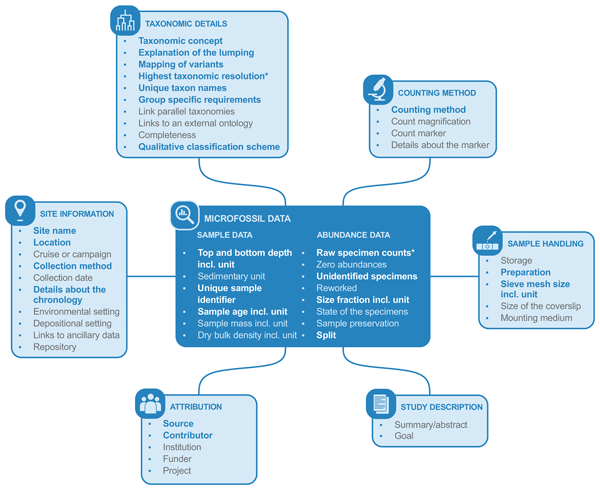
Lukas Jonkers, Tonke Strack, Montserrat Alonso-Garcia, Simon D'haenens, Robert Huber, Michal Kucera, Iván Hernández-Almeida, Chloe L. C. Jones, Brett Metcalfe, Rajeev Saraswat, Lóránd Silye, Sanjay K. Verma, Muhamad Naim Abd Malek, Gerald Auer, Cátia F. Barbosa, Maria A. Barcena, Karl-Heinz Baumann, Flavia Boscolo-Galazzo, Joeven Austine S. Calvelo, Lucilla Capotondi, Martina Caratelli, Jorge Cardich, Humberto Carvajal-Chitty, Markéta Chroustová, Helen K. Coxall, Renata M. de Mello, Anne de Vernal, Paula Diz, Kirsty M. Edgar, Helena L. Filipsson, Ángela Fraguas, Heather L. Furlong, Giacomo Galli, Natalia L. García Chapori, Robyn Granger, Jeroen Groeneveld, Adil Imam, Rebecca Jackson, David Lazarus, Julie Meilland, Marína Molčan Matejová, Raphael Morard, Caterina Morigi, Sven N. Nielsen, Diana Ochoa, Maria Rose Petrizzo, Andrés S. Rigual-Hernández, Marina C. Rillo, Matthew L. Staitis, Gamze Tanık, Raúl Tapia, Nishant Vats, Bridget S. Wade, and Anna E. Weinmann
J. Micropalaeontol., 44, 145–168, https://doi.org/10.5194/jm-44-145-2025, https://doi.org/10.5194/jm-44-145-2025, 2025
Short summary
Short summary
Our study provides guidelines improving the reuse of marine microfossil assemblage data, which are valuable for understanding past ecosystems and environmental change. Based on a survey of 113 researchers, we identified key data attributes required for effective reuse. Analysis of a selection of datasets available online reveals a gap between the attributes scientists consider essential and the data currently available, highlighting the need for clearer data documentation and sharing practices.
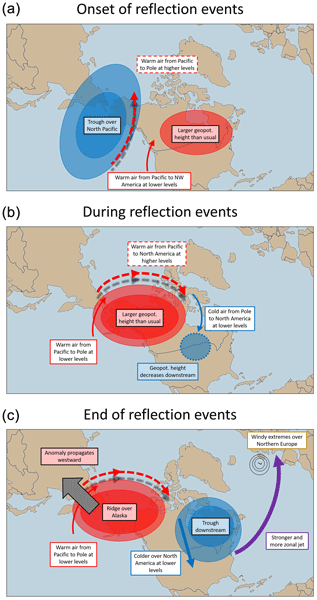
Michael K. Schutte, Alice Portal, Simon H. Lee, and Gabriele Messori
Weather Clim. Dynam., 6, 521–548, https://doi.org/10.5194/wcd-6-521-2025, https://doi.org/10.5194/wcd-6-521-2025, 2025
Short summary
Short summary
Large-scale motions in the atmosphere, namely atmospheric waves, greatly impact the weather that we experience at the Earth's surface. Here we investigate how waves in the troposphere (the lower 10 km of the atmosphere) and the stratosphere (above the troposphere) interact to affect surface weather. We find that tropospheric waves that are reflected back down by the stratosphere change weather patterns and temperatures in North America. These changes can indirectly affect the weather in Europe.
Seuri Basilio Kuosmanen and Magnus Hieronymus
EGUsphere, https://doi.org/10.5194/egusphere-2025-1257, https://doi.org/10.5194/egusphere-2025-1257, 2025
Short summary
Short summary
We studied the annual maximum sea levels for the coastal regions in the Baltic Sea and parts of the North Sea. The study aimed to reduce the quantified uncertainty and produce estimates at locations with no tide gauges data. Comparing four statistical models and a baseline model, we concluded that the spatial hierarchical models, which leverages spatial dependency, reduced the uncertainty for higher/lower probability events compared to the other models for locations with or without observations.
Florian Börgel, Sven Karsten, Karoline Rummel, and Ulf Gräwe
Geosci. Model Dev., 18, 2005–2019, https://doi.org/10.5194/gmd-18-2005-2025, https://doi.org/10.5194/gmd-18-2005-2025, 2025
Short summary
Short summary
Forecasting river runoff, which is crucial for managing water resources and understanding climate impacts, can be challenging. This study introduces a new method using convolutional long short-term memory (ConvLSTM) networks, a machine learning model that processes spatial and temporal data. Focusing on the Baltic Sea region, our model uses weather data as input to predict daily river runoff for 97 rivers.
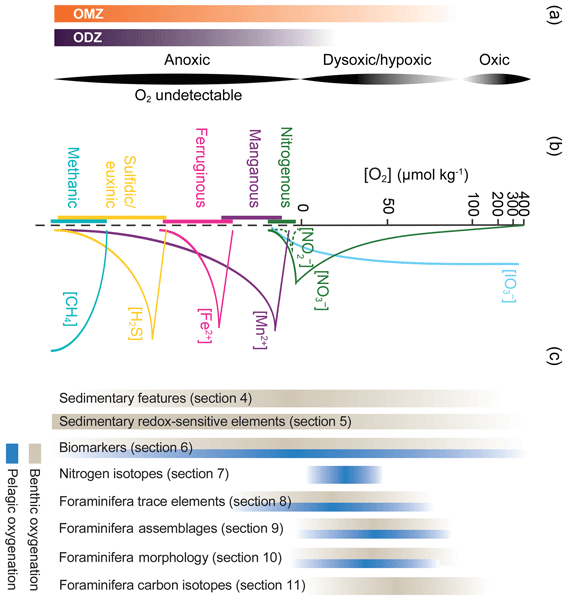
Babette A.A. Hoogakker, Catherine Davis, Yi Wang, Stephanie Kusch, Katrina Nilsson-Kerr, Dalton S. Hardisty, Allison Jacobel, Dharma Reyes Macaya, Nicolaas Glock, Sha Ni, Julio Sepúlveda, Abby Ren, Alexandra Auderset, Anya V. Hess, Katrin J. Meissner, Jorge Cardich, Robert Anderson, Christine Barras, Chandranath Basak, Harold J. Bradbury, Inda Brinkmann, Alexis Castillo, Madelyn Cook, Kassandra Costa, Constance Choquel, Paula Diz, Jonas Donnenfield, Felix J. Elling, Zeynep Erdem, Helena L. Filipsson, Sebastián Garrido, Julia Gottschalk, Anjaly Govindankutty Menon, Jeroen Groeneveld, Christian Hallmann, Ingrid Hendy, Rick Hennekam, Wanyi Lu, Jean Lynch-Stieglitz, Lélia Matos, Alfredo Martínez-García, Giulia Molina, Práxedes Muñoz, Simone Moretti, Jennifer Morford, Sophie Nuber, Svetlana Radionovskaya, Morgan Reed Raven, Christopher J. Somes, Anja S. Studer, Kazuyo Tachikawa, Raúl Tapia, Martin Tetard, Tyler Vollmer, Xingchen Wang, Shuzhuang Wu, Yan Zhang, Xin-Yuan Zheng, and Yuxin Zhou
Biogeosciences, 22, 863–957, https://doi.org/10.5194/bg-22-863-2025, https://doi.org/10.5194/bg-22-863-2025, 2025
Short summary
Short summary
Paleo-oxygen proxies can extend current records, constrain pre-anthropogenic baselines, provide datasets necessary to test climate models under different boundary conditions, and ultimately understand how ocean oxygenation responds on longer timescales. Here we summarize current proxies used for the reconstruction of Cenozoic seawater oxygen levels. This includes an overview of the proxy's history, how it works, resources required, limitations, and future recommendations.
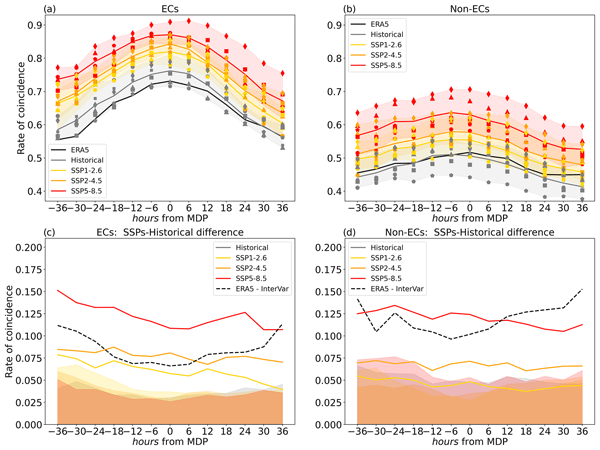
Ferran Lopez-Marti, Mireia Ginesta, Davide Faranda, Anna Rutgersson, Pascal Yiou, Lichuan Wu, and Gabriele Messori
Earth Syst. Dynam., 16, 169–187, https://doi.org/10.5194/esd-16-169-2025, https://doi.org/10.5194/esd-16-169-2025, 2025
Short summary
Short summary
Explosive cyclones and atmospheric rivers are two main drivers of extreme weather in Europe. In this study, we investigate their joint changes in future climates over the North Atlantic. Our results show that both the concurrence of these events and the intensity of atmospheric rivers increase by the end of the century across different future scenarios. Furthermore, explosive cyclones associated with atmospheric rivers last longer and are deeper than those without atmospheric rivers.
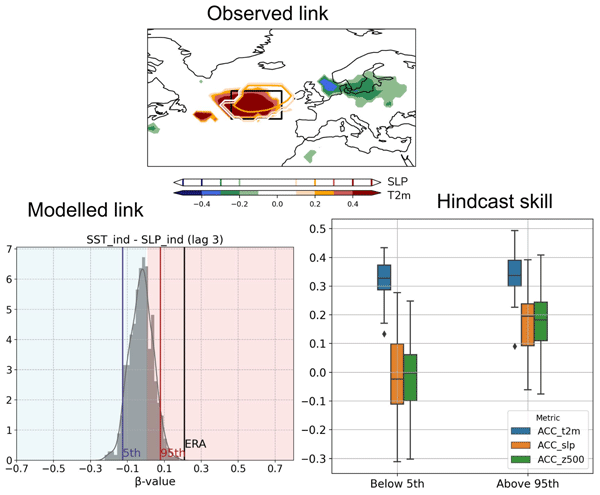
Julianna Carvalho-Oliveira, Giorgia Di Capua, Leonard F. Borchert, Reik V. Donner, and Johanna Baehr
Weather Clim. Dynam., 5, 1561–1578, https://doi.org/10.5194/wcd-5-1561-2024, https://doi.org/10.5194/wcd-5-1561-2024, 2024
Short summary
Short summary
We demonstrate with a causal analysis that an important recurrent summer atmospheric pattern, the so-called East Atlantic teleconnection, was influenced by the extratropical North Atlantic in spring during the second half of the 20th century. This causal link is, however, not well represented by our evaluated seasonal climate prediction system. We show that simulations able to reproduce this link show improved surface climate prediction credibility over those that do not.
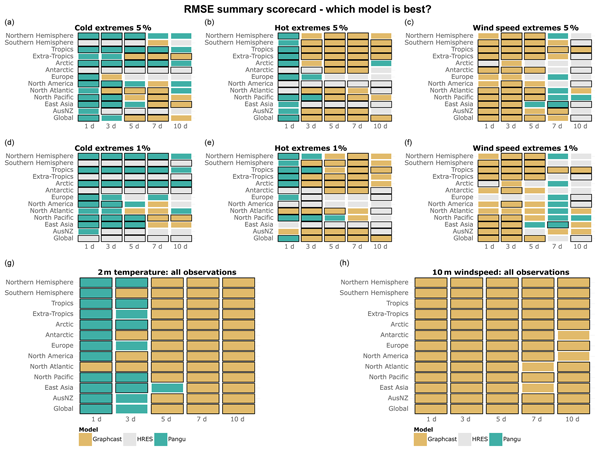
Leonardo Olivetti and Gabriele Messori
Geosci. Model Dev., 17, 7915–7962, https://doi.org/10.5194/gmd-17-7915-2024, https://doi.org/10.5194/gmd-17-7915-2024, 2024
Short summary
Short summary
Data-driven models are becoming a viable alternative to physics-based models for weather forecasting up to 15 d into the future. However, it is unclear whether they are as reliable as physics-based models when forecasting weather extremes. We evaluate their performance in forecasting near-surface cold, hot, and windy extremes globally. We find that data-driven models can compete with physics-based models and that the choice of the best model mainly depends on the region and type of extreme.
José A. Jiménez, Gundula Winter, Antonio Bonaduce, Michael Depuydt, Giulia Galluccio, Bart van den Hurk, H. E. Markus Meier, Nadia Pinardi, Lavinia G. Pomarico, and Natalia Vazquez Riveiros
State Planet, 3-slre1, 3, https://doi.org/10.5194/sp-3-slre1-3-2024, https://doi.org/10.5194/sp-3-slre1-3-2024, 2024
Short summary
Short summary
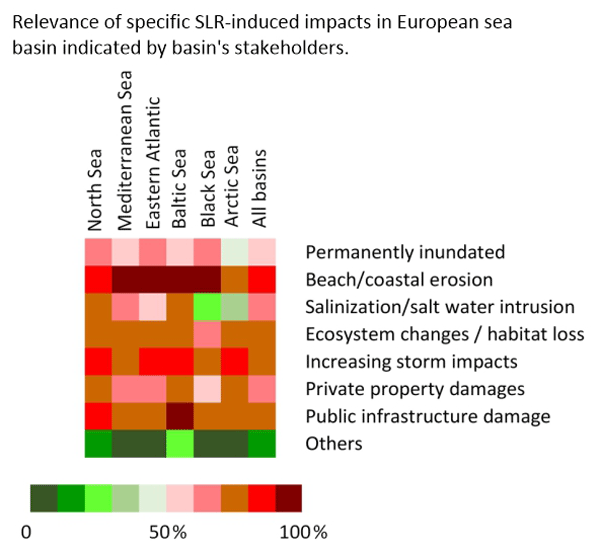
The Knowledge Hub on Sea Level Rise (SLR) has done a scoping study involving stakeholders from government and academia to identify gaps and needs in SLR information, impacts, and policies across Europe. Gaps in regional SLR projections and uncertainties were found, while concerns were raised about shoreline erosion and emerging problems like saltwater intrusion and ineffective adaptation plans. The need for improved communication to make better decisions on SLR adaptation was highlighted.
Angélique Melet, Roderik van de Wal, Angel Amores, Arne Arns, Alisée A. Chaigneau, Irina Dinu, Ivan D. Haigh, Tim H. J. Hermans, Piero Lionello, Marta Marcos, H. E. Markus Meier, Benoit Meyssignac, Matthew D. Palmer, Ronja Reese, Matthew J. R. Simpson, and Aimée B. A. Slangen
State Planet, 3-slre1, 4, https://doi.org/10.5194/sp-3-slre1-4-2024, https://doi.org/10.5194/sp-3-slre1-4-2024, 2024
Short summary
Short summary
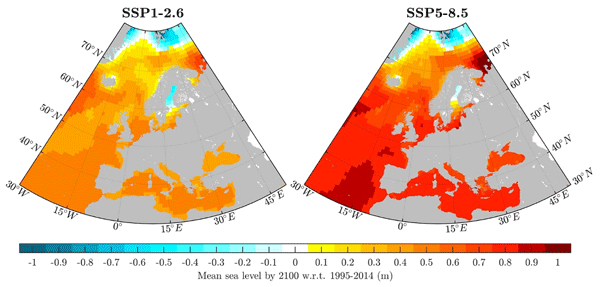
The EU Knowledge Hub on Sea Level Rise’s Assessment Report strives to synthesize the current scientific knowledge on sea level rise and its impacts across local, national, and EU scales to support evidence-based policy and decision-making, primarily targeting coastal areas. This paper complements IPCC reports by documenting the state of knowledge of observed and 21st century projected changes in mean and extreme sea levels with more regional information for EU seas as scoped with stakeholders.
Silvie Lainela, Erik Jacobs, Stella-Theresa Luik, Gregor Rehder, and Urmas Lips
Biogeosciences, 21, 4495–4519, https://doi.org/10.5194/bg-21-4495-2024, https://doi.org/10.5194/bg-21-4495-2024, 2024
Short summary
Short summary
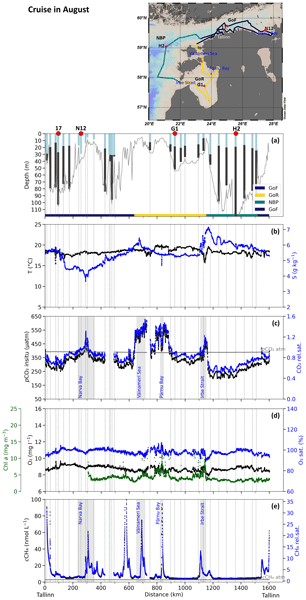
We evaluate the variability of carbon dioxide and methane in the surface layer of the north-eastern basins of the Baltic Sea in 2018. We show that the shallower coastal areas have considerably higher spatial variability and seasonal amplitude of surface layer pCO2 and cCH4 than measured in the offshore areas of the Baltic Sea. Despite this high variability, caused mostly by coastal physical processes, the average annual air–sea CO2 fluxes differed only marginally between the sub-basins.
Kévin Dubois, Morten Andreas Dahl Larsen, Martin Drews, Erik Nilsson, and Anna Rutgersson
Nat. Hazards Earth Syst. Sci., 24, 3245–3265, https://doi.org/10.5194/nhess-24-3245-2024, https://doi.org/10.5194/nhess-24-3245-2024, 2024
Short summary
Short summary
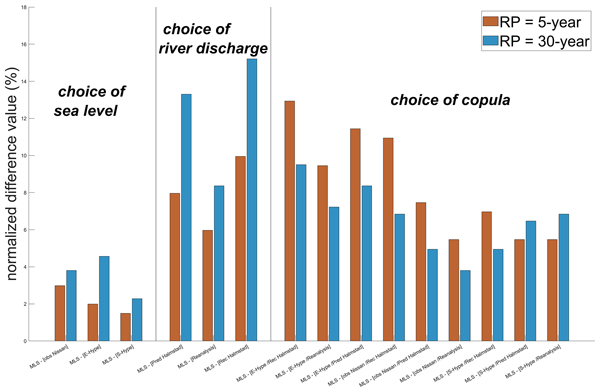
Both extreme river discharge and storm surges can interact at the coast and lead to flooding. However, it is difficult to predict flood levels during such compound events because they are rare and complex. Here, we focus on the quantification of uncertainties and investigate the sources of limitations while carrying out such analyses at Halmstad, Sweden. Based on a sensitivity analysis, we emphasize that both the choice of data source and statistical methodology influence the results.
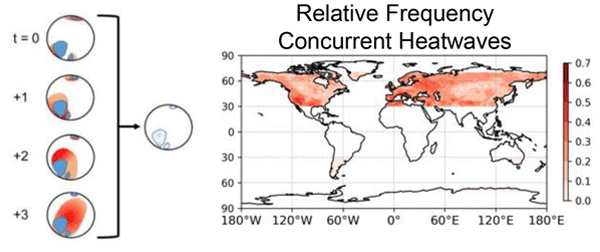
Gabriele Messori, Antonio Segalini, and Alexandre M. Ramos
Earth Syst. Dynam., 15, 1207–1225, https://doi.org/10.5194/esd-15-1207-2024, https://doi.org/10.5194/esd-15-1207-2024, 2024
Short summary
Short summary
Simultaneous heatwaves or cold spells in remote geographical regions have potentially far-reaching impacts on society and the environment. Despite this, we have little knowledge of when and where these extreme events have occurred in the past decades. In this paper, we present a summary of past simultaneous heatwaves or cold spells and provide a computer program to enable other researchers to study them.
Taavi Liblik, Daniel Rak, Enriko Siht, Germo Väli, Johannes Karstensen, Laura Tuomi, Louise C. Biddle, Madis-Jaak Lilover, Māris Skudra, Michael Naumann, Urmas Lips, and Volker Mohrholz
EGUsphere, https://doi.org/10.5194/egusphere-2024-2272, https://doi.org/10.5194/egusphere-2024-2272, 2024
Preprint archived
Short summary
Short summary
Eight current meters were deployed to the seafloor across the Baltic to enhance knowledge about circulation and currents. The experiment was complemented by autonomous vehicles. Stable circulation patterns were observed at the sea when weather was steady. Strong and quite persistent currents were observed at the key passage for the deep-water renewal of the Northern Baltic Sea. Deep water renewal mostly occurs during spring and summer periods in the northern Baltic Sea.
Marco Gaetani, Gabriele Messori, Francesco S. R. Pausata, Shivangi Tiwari, M. Carmen Alvarez Castro, and Qiong Zhang
Clim. Past, 20, 1735–1759, https://doi.org/10.5194/cp-20-1735-2024, https://doi.org/10.5194/cp-20-1735-2024, 2024
Short summary
Short summary
Palaeoclimate reconstructions suggest that, around 6000 years ago, a greening of the Sahara took place, accompanied by climate changes in the Northern Hemisphere at middle to high latitudes. In this study, a climate model is used to investigate how this drastic environmental change in the Sahara impacted remote regions. Specifically, climate simulations reveal significant modifications in atmospheric circulation over the North Atlantic, affecting North American and European climates.
Antonio Segalini, Jacopo Riboldi, Volkmar Wirth, and Gabriele Messori
Weather Clim. Dynam., 5, 997–1012, https://doi.org/10.5194/wcd-5-997-2024, https://doi.org/10.5194/wcd-5-997-2024, 2024
Short summary
Short summary
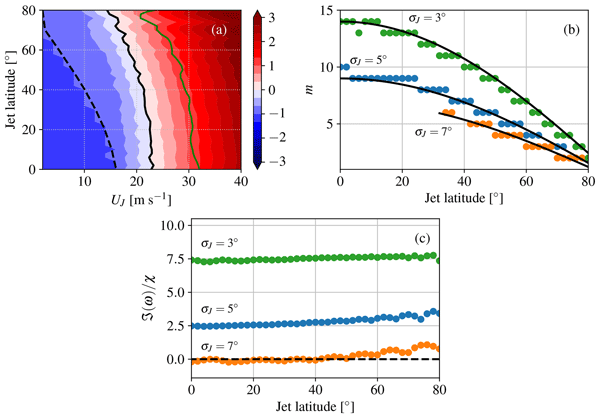
Planetary Rossby waves are created by topography and evolve in time. In this work, an analytical solution of this classical problem is proposed under the approximation of linear wave dynamics. The theory is able to describe reasonably well the evolution of the perturbation and compares well with full nonlinear simulations. Several relevant cases with single and double zonal jets are assessed with the theoretical framework
Seyed Reza Saghravani, Michael Ernst Böttcher, Wei-Li Hong, Karol Kuliński, Aivo Lepland, Arunima Sen, and Beata Szymczycha
Earth Syst. Sci. Data, 16, 3419–3431, https://doi.org/10.5194/essd-16-3419-2024, https://doi.org/10.5194/essd-16-3419-2024, 2024
Short summary
Short summary
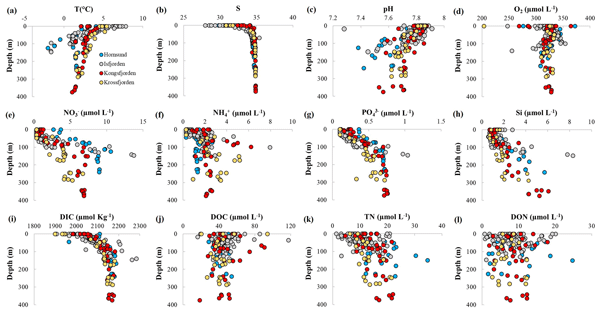
A comprehensive study conducted in 2021 examined the distributions of dissolved nutrients and carbon in the western Spitsbergen fjords during the high-melting season. Significant spatial variability was observed in the water column and pore water concentrations of constituents, highlighting the unique biogeochemical characteristics of each fjord and their potential impact on ecosystem functioning and oceanographic processes.
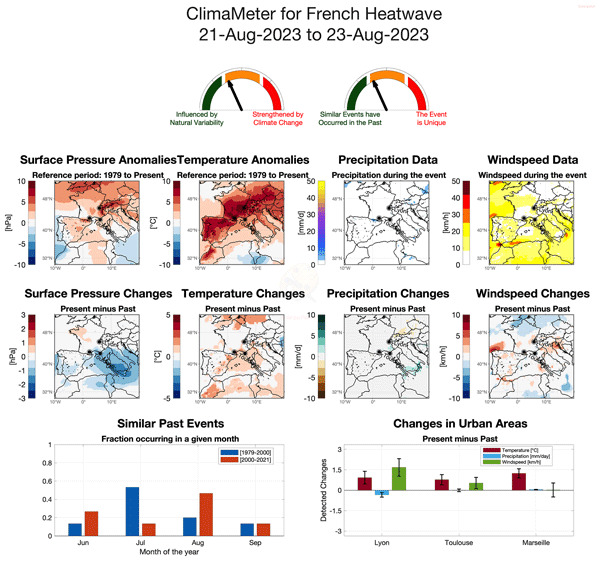
Davide Faranda, Gabriele Messori, Erika Coppola, Tommaso Alberti, Mathieu Vrac, Flavio Pons, Pascal Yiou, Marion Saint Lu, Andreia N. S. Hisi, Patrick Brockmann, Stavros Dafis, Gianmarco Mengaldo, and Robert Vautard
Weather Clim. Dynam., 5, 959–983, https://doi.org/10.5194/wcd-5-959-2024, https://doi.org/10.5194/wcd-5-959-2024, 2024
Short summary
Short summary
We introduce ClimaMeter, a tool offering real-time insights into extreme-weather events. Our tool unveils how climate change and natural variability affect these events, affecting communities worldwide. Our research equips policymakers and the public with essential knowledge, fostering informed decisions and enhancing climate resilience. We analysed two distinct events, showcasing ClimaMeter's global relevance.
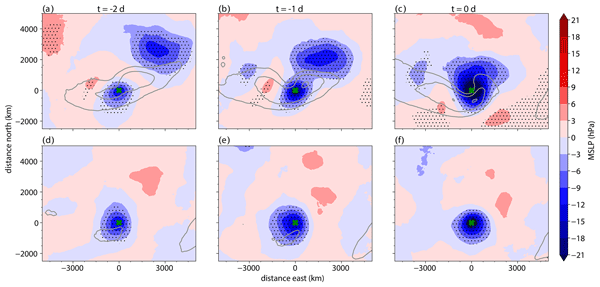
Aleksa Stanković, Gabriele Messori, Joaquim G. Pinto, and Rodrigo Caballero
Weather Clim. Dynam., 5, 821–837, https://doi.org/10.5194/wcd-5-821-2024, https://doi.org/10.5194/wcd-5-821-2024, 2024
Short summary
Short summary
The article studies extreme winds near the surface over the North Atlantic Ocean. These winds are caused by storms that pass through this region. The strongest storms that have occurred in the winters from 1950–2020 are studied in detail and compared to weaker but still strong storms. The analysis shows that the storms associated with the strongest winds are preceded by another older storm that travelled through the same region and made the conditions suitable for development of extreme winds.
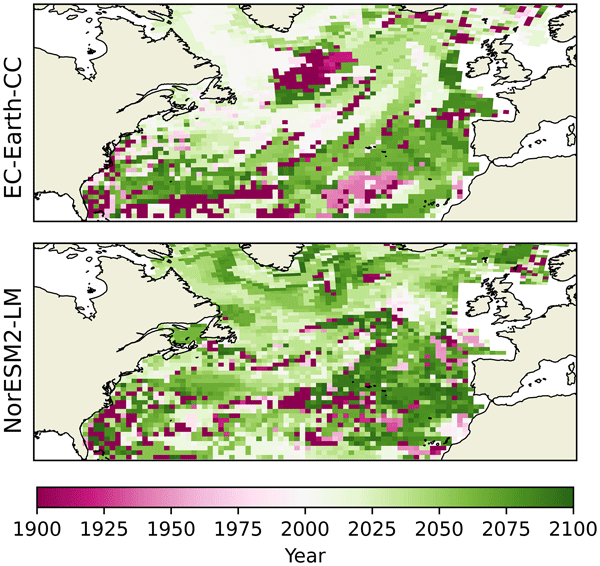
Jenny Hieronymus, Magnus Hieronymus, Matthias Gröger, Jörg Schwinger, Raffaele Bernadello, Etienne Tourigny, Valentina Sicardi, Itzel Ruvalcaba Baroni, and Klaus Wyser
Biogeosciences, 21, 2189–2206, https://doi.org/10.5194/bg-21-2189-2024, https://doi.org/10.5194/bg-21-2189-2024, 2024
Short summary
Short summary
The timing of the net primary production annual maxima in the North Atlantic in the period 1750–2100 is investigated using two Earth system models and the high-emissions scenario SSP5-8.5. It is found that, for most of the region, the annual maxima occur progressively earlier, with the most change occurring after the year 2000. Shifts in the seasonality of the primary production may impact the entire ecosystem, which highlights the need for long-term monitoring campaigns in this area.
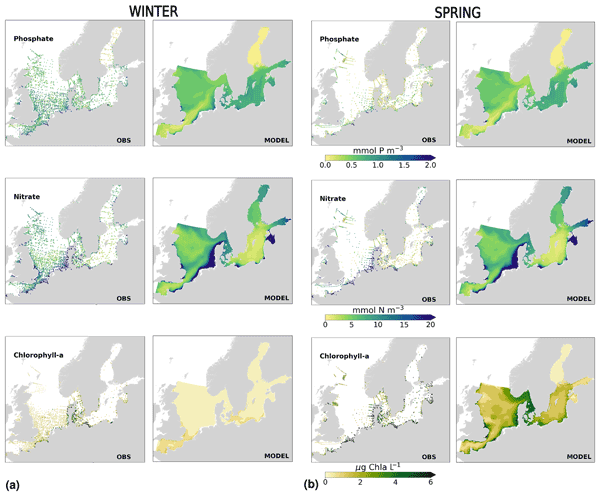
Itzel Ruvalcaba Baroni, Elin Almroth-Rosell, Lars Axell, Sam T. Fredriksson, Jenny Hieronymus, Magnus Hieronymus, Sandra-Esther Brunnabend, Matthias Gröger, Ivan Kuznetsov, Filippa Fransner, Robinson Hordoir, Saeed Falahat, and Lars Arneborg
Biogeosciences, 21, 2087–2132, https://doi.org/10.5194/bg-21-2087-2024, https://doi.org/10.5194/bg-21-2087-2024, 2024
Short summary
Short summary
The health of the Baltic and North seas is threatened due to high anthropogenic pressure; thus, different methods to assess the status of these regions are urgently needed. Here, we validated a novel model simulating the ocean dynamics and biogeochemistry of the Baltic and North seas that can be used to create future climate and nutrient scenarios, contribute to European initiatives on de-eutrophication, and provide water quality advice and support on nutrient load reductions for both seas.
Derrick Muheki, Axel A. J. Deijns, Emanuele Bevacqua, Gabriele Messori, Jakob Zscheischler, and Wim Thiery
Earth Syst. Dynam., 15, 429–466, https://doi.org/10.5194/esd-15-429-2024, https://doi.org/10.5194/esd-15-429-2024, 2024
Short summary
Short summary
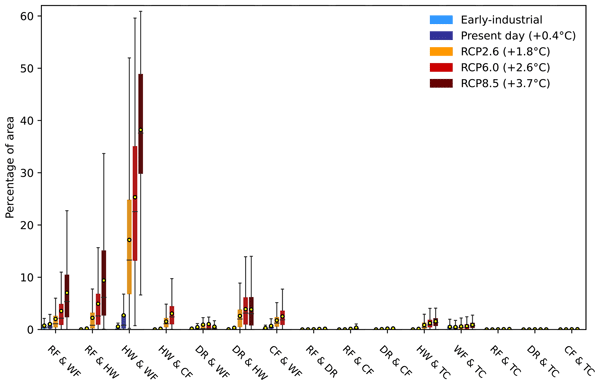
Climate change affects the interaction, dependence, and joint occurrence of climate extremes. Here we investigate the joint occurrence of pairs of river floods, droughts, heatwaves, crop failures, wildfires, and tropical cyclones in East Africa under past and future climate conditions. Our results show that, across all future warming scenarios, the frequency and spatial extent of these co-occurring extremes will increase in this region, particularly in areas close to the Nile and Congo rivers.
Leonardo Olivetti and Gabriele Messori
Geosci. Model Dev., 17, 2347–2358, https://doi.org/10.5194/gmd-17-2347-2024, https://doi.org/10.5194/gmd-17-2347-2024, 2024
Short summary
Short summary
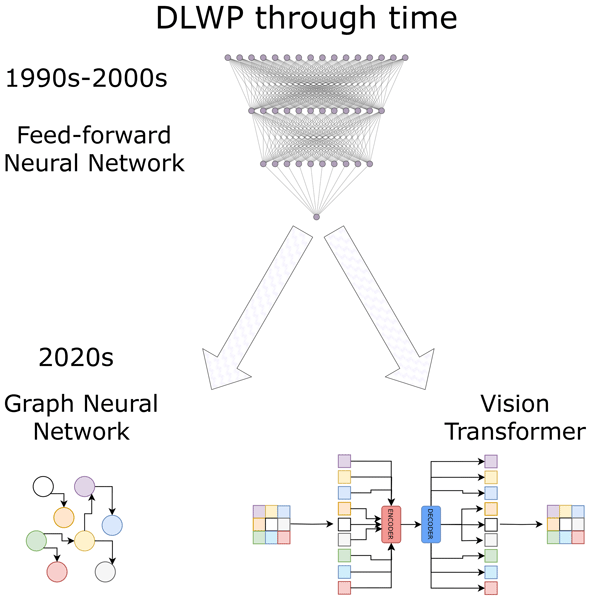
In the last decades, weather forecasting up to 15 d into the future has been dominated by physics-based numerical models. Recently, deep learning models have challenged this paradigm. However, the latter models may struggle when forecasting weather extremes. In this article, we argue for deep learning models specifically designed to handle extreme events, and we propose a foundational framework to develop such models.
Young-Ha Kim, Georg Sebastian Voelker, Gergely Bölöni, Günther Zängl, and Ulrich Achatz
Atmos. Chem. Phys., 24, 3297–3308, https://doi.org/10.5194/acp-24-3297-2024, https://doi.org/10.5194/acp-24-3297-2024, 2024
Short summary
Short summary
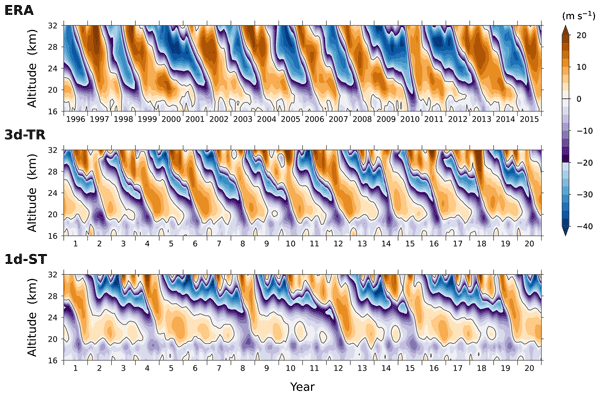
The quasi-biennial oscillation, which governs the tropical stratospheric circulation, is driven primarily by small-scale wave processes. We employ a novel method to realistically represent these wave processes in a global model, thereby revealing an aspect of the oscillation that has not been identified before. We find that the oblique propagation of waves, a process neglected by existing climate models, plays a pivotal role in the stratospheric circulation and its oscillation.
Sven Karsten, Hagen Radtke, Matthias Gröger, Ha T. M. Ho-Hagemann, Hossein Mashayekh, Thomas Neumann, and H. E. Markus Meier
Geosci. Model Dev., 17, 1689–1708, https://doi.org/10.5194/gmd-17-1689-2024, https://doi.org/10.5194/gmd-17-1689-2024, 2024
Short summary
Short summary
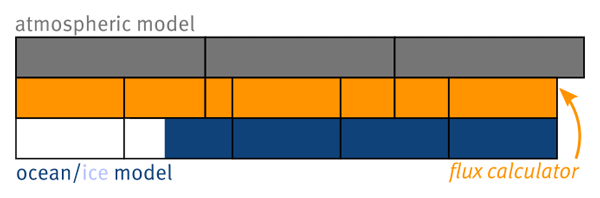
This paper describes the development of a regional Earth System Model for the Baltic Sea region. In contrast to conventional coupling approaches, the presented model includes a flux calculator operating on a common exchange grid. This approach automatically ensures a locally consistent treatment of fluxes and simplifies the exchange of model components. The presented model can be used for various scientific questions, such as studies of natural variability and ocean–atmosphere interactions.
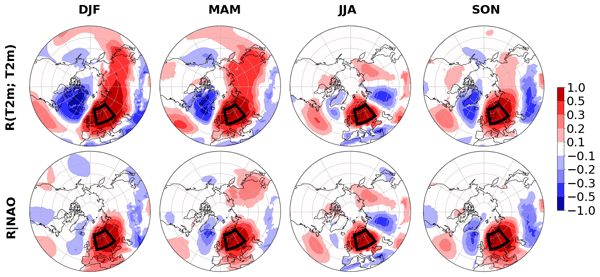
Erko Jakobson and Liisi Jakobson
Earth Syst. Dynam., 15, 155–165, https://doi.org/10.5194/esd-15-155-2024, https://doi.org/10.5194/esd-15-155-2024, 2024
Short summary
Short summary
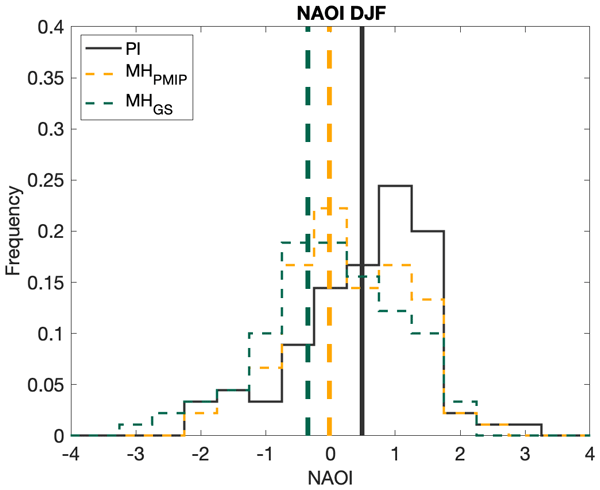
The Baltic Sea region climate has strong teleconnections with the Arctic climate; the strongest connections are with Svalbard and Greenland. The majority of teleconnections can be explained by the North Atlantic Oscillation and Arctic Oscillation. During ongoing climate change, the teleconnection patterns did not show remarkable developments by the end of the 21st century. The whole Arctic's previous month's climate data determine less than 9 % of the Baltic Sea region's seasonal mean.
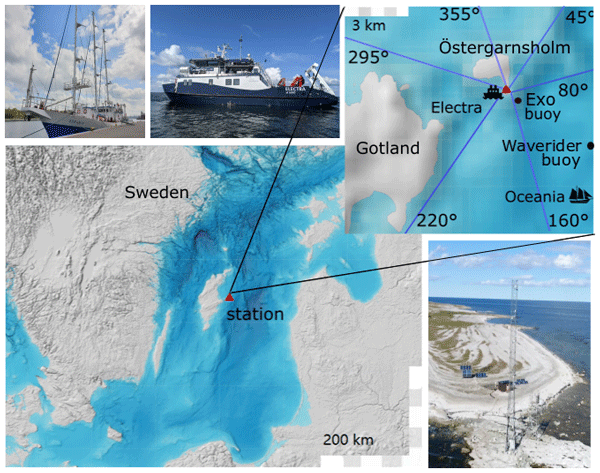
Julika Zinke, Ernst Douglas Nilsson, Piotr Markuszewski, Paul Zieger, Eva Monica Mårtensson, Anna Rutgersson, Erik Nilsson, and Matthew Edward Salter
Atmos. Chem. Phys., 24, 1895–1918, https://doi.org/10.5194/acp-24-1895-2024, https://doi.org/10.5194/acp-24-1895-2024, 2024
Short summary
Short summary
We conducted two research campaigns in the Baltic Sea, during which we combined laboratory sea spray simulation experiments with flux measurements on a nearby island. To combine these two methods, we scaled the laboratory measurements to the flux measurements using three different approaches. As a result, we derived a parameterization that is dependent on wind speed and wave state for particles with diameters 0.015–10 μm. This parameterization is applicable to low-salinity waters.
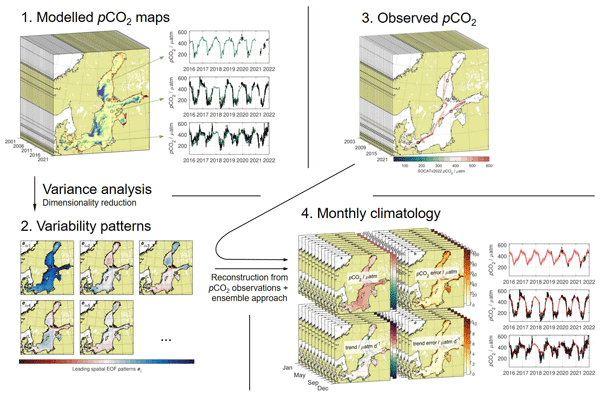
Henry C. Bittig, Erik Jacobs, Thomas Neumann, and Gregor Rehder
Earth Syst. Sci. Data, 16, 753–773, https://doi.org/10.5194/essd-16-753-2024, https://doi.org/10.5194/essd-16-753-2024, 2024
Short summary
Short summary
We present a pCO2 climatology of the Baltic Sea using a new approach to extrapolate from individual observations to the entire Baltic Sea. The extrapolation approach uses (a) a model to inform on how data at one location are connected to data at other locations, together with (b) very accurate pCO2 observations from 2003 to 2021 as the base data. The climatology can be used e.g. to assess uptake and release of CO2 or to identify extreme events.
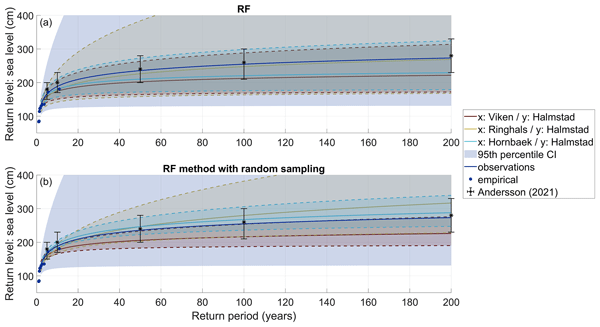
Kévin Dubois, Morten Andreas Dahl Larsen, Martin Drews, Erik Nilsson, and Anna Rutgersson
Ocean Sci., 20, 21–30, https://doi.org/10.5194/os-20-21-2024, https://doi.org/10.5194/os-20-21-2024, 2024
Short summary
Short summary
Coastal floods occur due to extreme sea levels (ESLs) which are difficult to predict because of their rarity. Long records of accurate sea levels at the local scale increase ESL predictability. Here, we apply a machine learning technique to extend sea level observation data in the past based on a neighbouring tide gauge. We compared the results with a linear model. We conclude that both models give reasonable results with a better accuracy towards the extremes for the machine learning model.
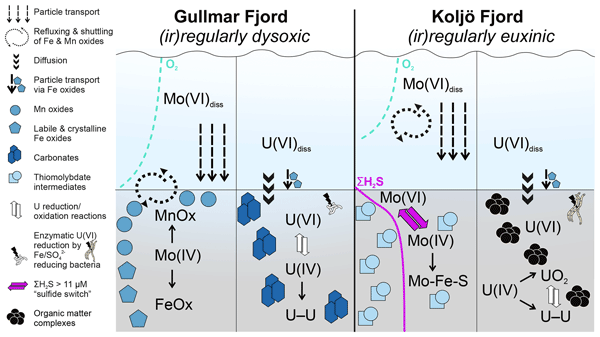
K. Mareike Paul, Martijn Hermans, Sami A. Jokinen, Inda Brinkmann, Helena L. Filipsson, and Tom Jilbert
Biogeosciences, 20, 5003–5028, https://doi.org/10.5194/bg-20-5003-2023, https://doi.org/10.5194/bg-20-5003-2023, 2023
Short summary
Short summary
Seawater naturally contains trace metals such as Mo and U, which accumulate under low oxygen conditions on the seafloor. Previous studies have used sediment Mo and U contents as an archive of changing oxygen concentrations in coastal waters. Here we show that in fjords the use of Mo and U for this purpose may be impaired by additional processes. Our findings have implications for the reliable use of Mo and U to reconstruct oxygen changes in fjords.
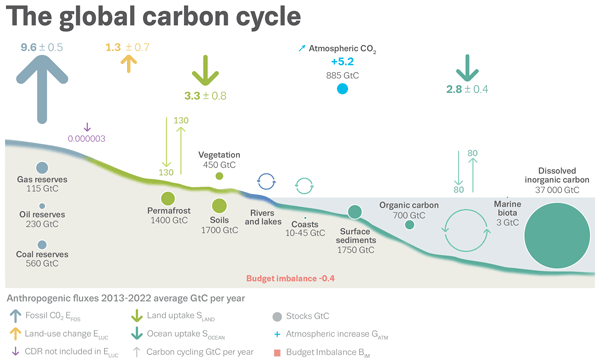
Pierre Friedlingstein, Michael O'Sullivan, Matthew W. Jones, Robbie M. Andrew, Dorothee C. E. Bakker, Judith Hauck, Peter Landschützer, Corinne Le Quéré, Ingrid T. Luijkx, Glen P. Peters, Wouter Peters, Julia Pongratz, Clemens Schwingshackl, Stephen Sitch, Josep G. Canadell, Philippe Ciais, Robert B. Jackson, Simone R. Alin, Peter Anthoni, Leticia Barbero, Nicholas R. Bates, Meike Becker, Nicolas Bellouin, Bertrand Decharme, Laurent Bopp, Ida Bagus Mandhara Brasika, Patricia Cadule, Matthew A. Chamberlain, Naveen Chandra, Thi-Tuyet-Trang Chau, Frédéric Chevallier, Louise P. Chini, Margot Cronin, Xinyu Dou, Kazutaka Enyo, Wiley Evans, Stefanie Falk, Richard A. Feely, Liang Feng, Daniel J. Ford, Thomas Gasser, Josefine Ghattas, Thanos Gkritzalis, Giacomo Grassi, Luke Gregor, Nicolas Gruber, Özgür Gürses, Ian Harris, Matthew Hefner, Jens Heinke, Richard A. Houghton, George C. Hurtt, Yosuke Iida, Tatiana Ilyina, Andrew R. Jacobson, Atul Jain, Tereza Jarníková, Annika Jersild, Fei Jiang, Zhe Jin, Fortunat Joos, Etsushi Kato, Ralph F. Keeling, Daniel Kennedy, Kees Klein Goldewijk, Jürgen Knauer, Jan Ivar Korsbakken, Arne Körtzinger, Xin Lan, Nathalie Lefèvre, Hongmei Li, Junjie Liu, Zhiqiang Liu, Lei Ma, Greg Marland, Nicolas Mayot, Patrick C. McGuire, Galen A. McKinley, Gesa Meyer, Eric J. Morgan, David R. Munro, Shin-Ichiro Nakaoka, Yosuke Niwa, Kevin M. O'Brien, Are Olsen, Abdirahman M. Omar, Tsuneo Ono, Melf Paulsen, Denis Pierrot, Katie Pocock, Benjamin Poulter, Carter M. Powis, Gregor Rehder, Laure Resplandy, Eddy Robertson, Christian Rödenbeck, Thais M. Rosan, Jörg Schwinger, Roland Séférian, T. Luke Smallman, Stephen M. Smith, Reinel Sospedra-Alfonso, Qing Sun, Adrienne J. Sutton, Colm Sweeney, Shintaro Takao, Pieter P. Tans, Hanqin Tian, Bronte Tilbrook, Hiroyuki Tsujino, Francesco Tubiello, Guido R. van der Werf, Erik van Ooijen, Rik Wanninkhof, Michio Watanabe, Cathy Wimart-Rousseau, Dongxu Yang, Xiaojuan Yang, Wenping Yuan, Xu Yue, Sönke Zaehle, Jiye Zeng, and Bo Zheng
Earth Syst. Sci. Data, 15, 5301–5369, https://doi.org/10.5194/essd-15-5301-2023, https://doi.org/10.5194/essd-15-5301-2023, 2023
Short summary
Short summary
The Global Carbon Budget 2023 describes the methodology, main results, and data sets used to quantify the anthropogenic emissions of carbon dioxide (CO2) and their partitioning among the atmosphere, land ecosystems, and the ocean over the historical period (1750–2023). These living datasets are updated every year to provide the highest transparency and traceability in the reporting of CO2, the key driver of climate change.
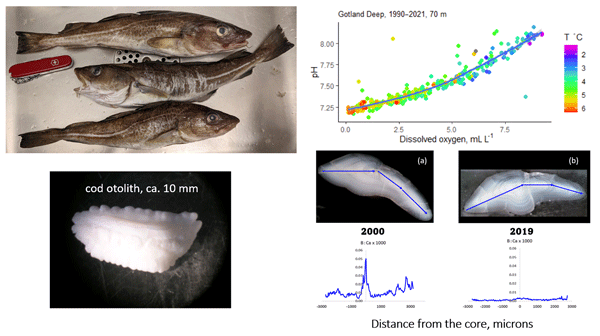
Karin E. Limburg, Yvette Heimbrand, and Karol Kuliński
Biogeosciences, 20, 4751–4760, https://doi.org/10.5194/bg-20-4751-2023, https://doi.org/10.5194/bg-20-4751-2023, 2023
Short summary
Short summary
We found a 3-to-5-fold decline in boron in Baltic cod otoliths between the late 1990s and 2021. The trend correlates with declines in oxygen and pH but not with increased salinity. Otolith B : Ca correlated with phosphorus in a healthy out-group (Icelandic cod) but not in Baltic cod. The otolith biomarkers Mn : Mg (hypoxia proxy) and B : Ca in cod otoliths suggest a general increase in both hypoxia and acidification within Baltic intermediate and deep waters in the last decade.
Sarah Piehl, René Friedland, Thomas Neumann, and Gerald Schernewski
Biogeosciences Discuss., https://doi.org/10.5194/bg-2023-152, https://doi.org/10.5194/bg-2023-152, 2023
Revised manuscript not accepted
Short summary
Short summary
We integrated observations essential for policy decisions with high-resolution 3D model results to improve the reliability of oxygen assessments. Based on our findings, we suggest merging only high temporal and/or vertical resolution station data with model data to increase confidence in oxygen assessments. While showing the strengths and limitations of our approach we show that model simulations are an useful tool for policy-relevant oxygen assessments.
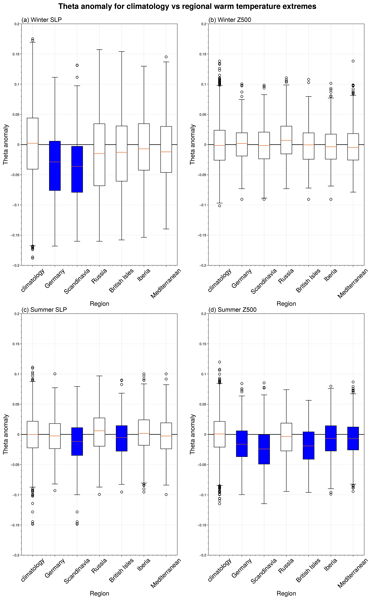
Emma Holmberg, Gabriele Messori, Rodrigo Caballero, and Davide Faranda
Earth Syst. Dynam., 14, 737–765, https://doi.org/10.5194/esd-14-737-2023, https://doi.org/10.5194/esd-14-737-2023, 2023
Short summary
Short summary
We analyse the duration of large-scale patterns of air movement in the atmosphere, referred to as persistence, and whether unusually persistent patterns favour warm-temperature extremes in Europe. We see no clear relationship between summertime heatwaves and unusually persistent patterns. This suggests that heatwaves do not necessarily require the continued flow of warm air over a region and that local effects could be important for their occurrence.
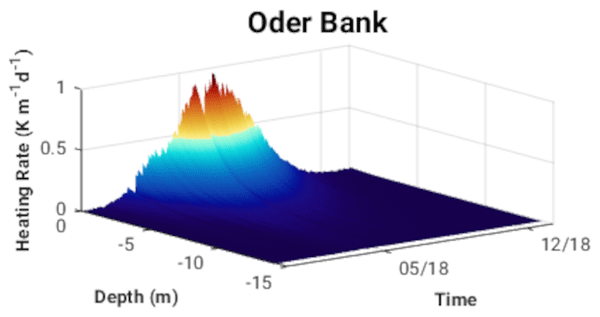
Bronwyn E. Cahill, Piotr Kowalczuk, Lena Kritten, Ulf Gräwe, John Wilkin, and Jürgen Fischer
Biogeosciences, 20, 2743–2768, https://doi.org/10.5194/bg-20-2743-2023, https://doi.org/10.5194/bg-20-2743-2023, 2023
Short summary
Short summary
We quantify the impact of optically significant water constituents on surface heating rates and thermal energy fluxes in the western Baltic Sea. During productive months in 2018 (April to September) we found that the combined effect of coloured
dissolved organic matter and particulate absorption contributes to sea surface heating of between 0.4 and 0.9 K m−1 d−1 and a mean loss of heat (ca. 5 W m−2) from the sea to the atmosphere. This may be important for regional heat balance budgets.
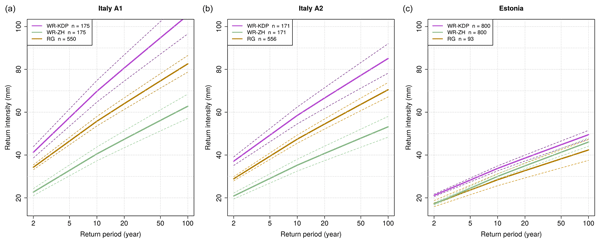
Roberto Cremonini, Tanel Voormansik, Piia Post, and Dmitri Moisseev
Atmos. Meas. Tech., 16, 2943–2956, https://doi.org/10.5194/amt-16-2943-2023, https://doi.org/10.5194/amt-16-2943-2023, 2023
Short summary
Short summary
Extreme rainfall for a specific location is commonly evaluated when designing stormwater management systems. This study investigates the use of quantitative precipitation estimations (QPEs) based on polarimetric weather radar data, without rain gauge corrections, to estimate 1 h rainfall total maxima in Italy and Estonia. We show that dual-polarization weather radar provides reliable QPEs and effective estimations of return periods for extreme rainfall in climatologically homogeneous regions.
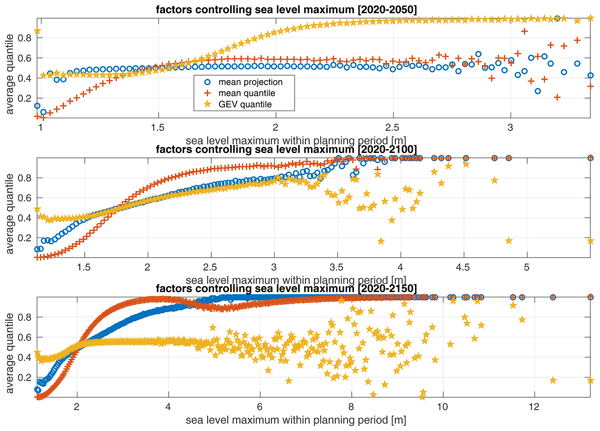
Magnus Hieronymus
Geosci. Model Dev., 16, 2343–2354, https://doi.org/10.5194/gmd-16-2343-2023, https://doi.org/10.5194/gmd-16-2343-2023, 2023
Short summary
Short summary
A statistical model called the sea level simulator is presented and made freely available. The sea level simulator integrates mean sea level rise and sea level extremes into a joint probabilistic framework that is useful for flood risk estimation. These flood risk estimates are contingent on probabilities given to different emission scenarios and the length of the planning period. The model is also useful for uncertainty quantification and in decision and adaptation problems.
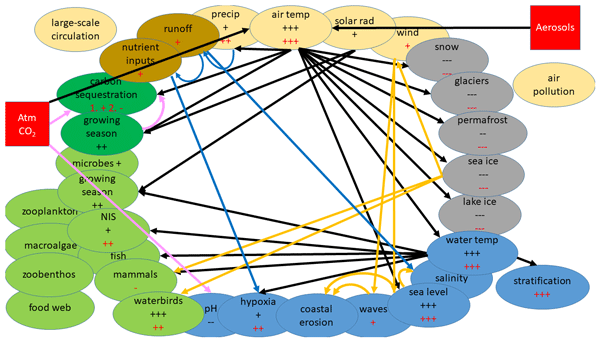
H. E. Markus Meier, Marcus Reckermann, Joakim Langner, Ben Smith, and Ira Didenkulova
Earth Syst. Dynam., 14, 519–531, https://doi.org/10.5194/esd-14-519-2023, https://doi.org/10.5194/esd-14-519-2023, 2023
Short summary
Short summary
The Baltic Earth Assessment Reports summarise the current state of knowledge on Earth system science in the Baltic Sea region. The 10 review articles focus on the regional water, biogeochemical and carbon cycles; extremes and natural hazards; sea-level dynamics and coastal erosion; marine ecosystems; coupled Earth system models; scenario simulations for the regional atmosphere and the Baltic Sea; and climate change and impacts of human use. Some highlights of the results are presented here.
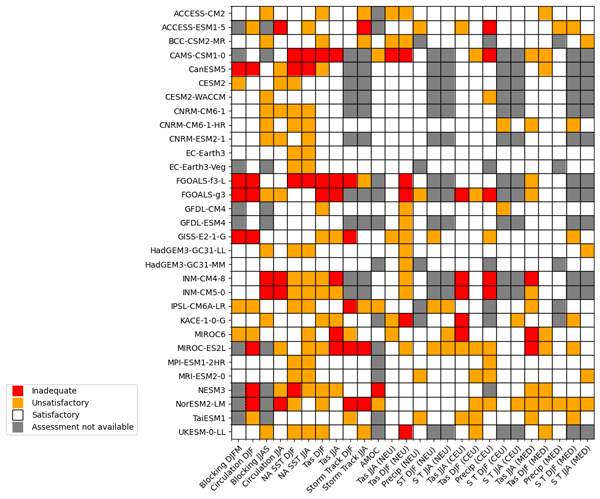
Tamzin E. Palmer, Carol F. McSweeney, Ben B. B. Booth, Matthew D. K. Priestley, Paolo Davini, Lukas Brunner, Leonard Borchert, and Matthew B. Menary
Earth Syst. Dynam., 14, 457–483, https://doi.org/10.5194/esd-14-457-2023, https://doi.org/10.5194/esd-14-457-2023, 2023
Short summary
Short summary
We carry out an assessment of an ensemble of general climate models (CMIP6) based on the ability of the models to represent the key physical processes that are important for representing European climate. Filtering the models with the assessment leads to more models with less global warming being removed, and this shifts the lower part of the projected temperature range towards greater warming. This is in contrast to the affect of weighting the ensemble using global temperature trends.
Axel Kleidon, Gabriele Messori, Somnath Baidya Roy, Ira Didenkulova, and Ning Zeng
Earth Syst. Dynam., 14, 241–242, https://doi.org/10.5194/esd-14-241-2023, https://doi.org/10.5194/esd-14-241-2023, 2023
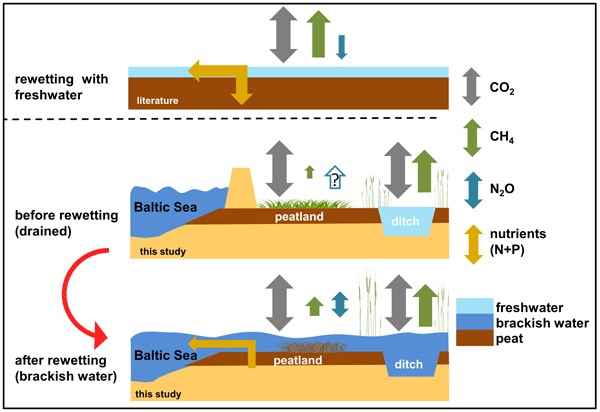
Daniel L. Pönisch, Anne Breznikar, Cordula N. Gutekunst, Gerald Jurasinski, Maren Voss, and Gregor Rehder
Biogeosciences, 20, 295–323, https://doi.org/10.5194/bg-20-295-2023, https://doi.org/10.5194/bg-20-295-2023, 2023
Short summary
Short summary
Peatland rewetting is known to reduce dissolved nutrients and greenhouse gases; however, short-term nutrient leaching and high CH4 emissions shortly after rewetting are likely to occur. We investigated the rewetting of a coastal peatland with brackish water and its effects on nutrient release and greenhouse gas fluxes. Nutrient concentrations were higher in the peatland than in the adjacent bay, leading to an export. CH4 emissions did not increase, which is in contrast to freshwater rewetting.

Patrick Johannes Stoll, Rune Grand Graversen, and Gabriele Messori
Weather Clim. Dynam., 4, 1–17, https://doi.org/10.5194/wcd-4-1-2023, https://doi.org/10.5194/wcd-4-1-2023, 2023
Short summary
Short summary
The atmosphere is in motion and hereby transporting warm, cold, moist, and dry air to different climate zones. In this study, we investigate how this transport of energy organises in different manners. Outside the tropics, atmospheric waves of sizes between 2000 and 8000 km, which we perceive as cyclones from the surface, transport most of the energy and moisture poleward. In the winter, large-scale weather situations become very important for transporting energy into the polar regions.
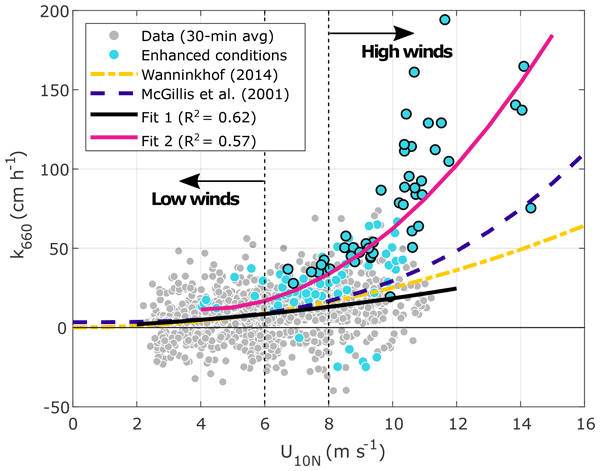
Lucía Gutiérrez-Loza, Erik Nilsson, Marcus B. Wallin, Erik Sahlée, and Anna Rutgersson
Biogeosciences, 19, 5645–5665, https://doi.org/10.5194/bg-19-5645-2022, https://doi.org/10.5194/bg-19-5645-2022, 2022
Short summary
Short summary
The exchange of CO2 between the ocean and the atmosphere is an essential aspect of the global carbon cycle and is highly relevant for the Earth's climate. In this study, we used 9 years of in situ measurements to evaluate the temporal variability in the air–sea CO2 fluxes in the Baltic Sea. Furthermore, using this long record, we assessed the effect of atmospheric and water-side mechanisms controlling the efficiency of the air–sea CO2 exchange under different wind-speed conditions.
Matthias Gröger, Manja Placke, H. E. Markus Meier, Florian Börgel, Sandra-Esther Brunnabend, Cyril Dutheil, Ulf Gräwe, Magnus Hieronymus, Thomas Neumann, Hagen Radtke, Semjon Schimanke, Jian Su, and Germo Väli
Geosci. Model Dev., 15, 8613–8638, https://doi.org/10.5194/gmd-15-8613-2022, https://doi.org/10.5194/gmd-15-8613-2022, 2022
Short summary
Short summary
Comparisons of oceanographic climate data from different models often suffer from different model setups, forcing fields, and output of variables. This paper provides a protocol to harmonize these elements to set up multidecadal simulations for the Baltic Sea, a marginal sea in Europe. First results are shown from six different model simulations from four different model platforms. Topical studies for upwelling, marine heat waves, and stratification are also assessed.
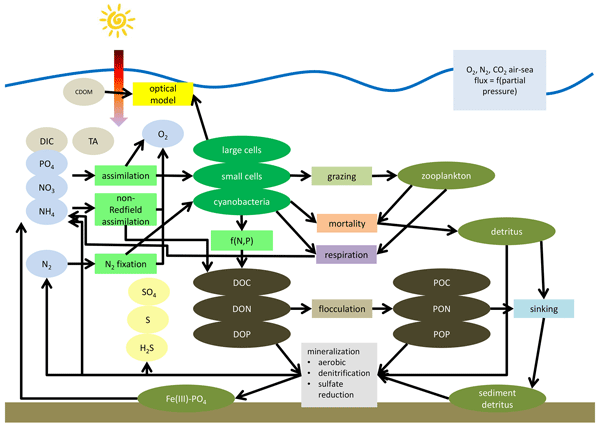
Thomas Neumann, Hagen Radtke, Bronwyn Cahill, Martin Schmidt, and Gregor Rehder
Geosci. Model Dev., 15, 8473–8540, https://doi.org/10.5194/gmd-15-8473-2022, https://doi.org/10.5194/gmd-15-8473-2022, 2022
Short summary
Short summary
Marine ecosystem models are usually constrained by the elements nitrogen and phosphorus and consider carbon in organic matter in a fixed ratio. Recent observations show a substantial deviation from the simulated carbon cycle variables. In this study, we present a marine ecosystem model for the Baltic Sea which allows for a flexible uptake ratio for carbon, nitrogen, and phosphorus. With this extension, the model reflects much more reasonable variables of the marine carbon cycle.
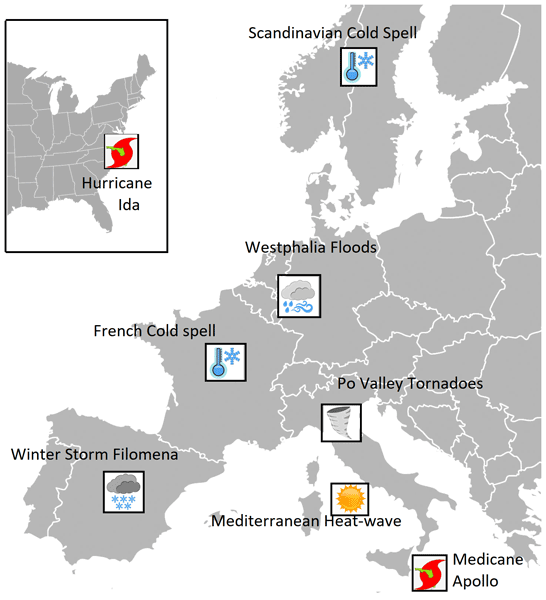
Davide Faranda, Stella Bourdin, Mireia Ginesta, Meriem Krouma, Robin Noyelle, Flavio Pons, Pascal Yiou, and Gabriele Messori
Weather Clim. Dynam., 3, 1311–1340, https://doi.org/10.5194/wcd-3-1311-2022, https://doi.org/10.5194/wcd-3-1311-2022, 2022
Short summary
Short summary
We analyze the atmospheric circulation leading to impactful extreme events for the calendar year 2021 such as the Storm Filomena, Westphalia floods, Hurricane Ida and Medicane Apollo. For some of the events, we find that climate change has contributed to their occurrence or enhanced their intensity; for other events, we find that they are unprecedented. Our approach underscores the importance of considering changes in the atmospheric circulation when performing attribution studies.
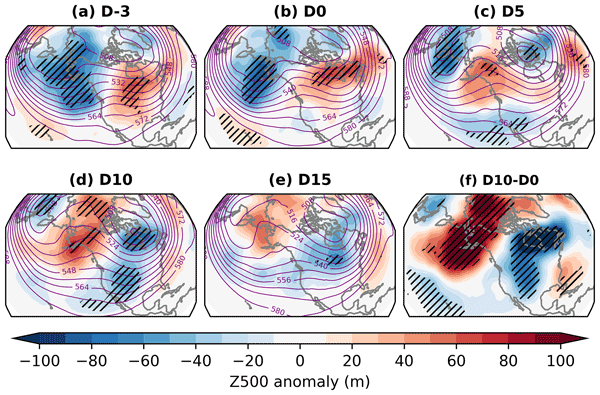
Gabriele Messori, Marlene Kretschmer, Simon H. Lee, and Vivien Wendt
Weather Clim. Dynam., 3, 1215–1236, https://doi.org/10.5194/wcd-3-1215-2022, https://doi.org/10.5194/wcd-3-1215-2022, 2022
Short summary
Short summary
Over 10 km above the ground, there is a region of the atmosphere called the stratosphere. While there is very little air in the stratosphere itself, its interactions with the lower parts of the atmosphere – where we live – can affect the weather. Here we study a specific example of such an interaction, whereby processes occurring at the boundary of the stratosphere can lead to a continent-wide drop in temperatures in North America during winter.
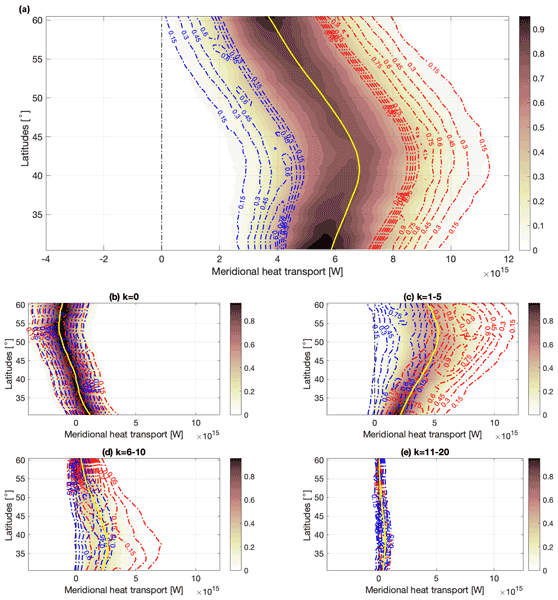
Valerio Lembo, Federico Fabiano, Vera Melinda Galfi, Rune Grand Graversen, Valerio Lucarini, and Gabriele Messori
Weather Clim. Dynam., 3, 1037–1062, https://doi.org/10.5194/wcd-3-1037-2022, https://doi.org/10.5194/wcd-3-1037-2022, 2022
Short summary
Short summary
Eddies in mid-latitudes characterize the exchange of heat between the tropics and the poles. This exchange is largely uneven, with a few extreme events bearing most of the heat transported across latitudes in a season. It is thus important to understand what the dynamical mechanisms are behind these events. Here, we identify recurrent weather regime patterns associated with extreme transports, and we identify scales of mid-latitudinal eddies that are mostly responsible for the transport.
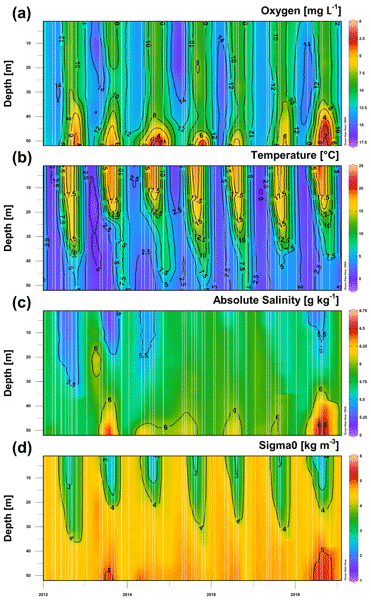
Stella-Theresa Stoicescu, Jaan Laanemets, Taavi Liblik, Māris Skudra, Oliver Samlas, Inga Lips, and Urmas Lips
Biogeosciences, 19, 2903–2920, https://doi.org/10.5194/bg-19-2903-2022, https://doi.org/10.5194/bg-19-2903-2022, 2022
Short summary
Short summary
Coastal basins with high input of nutrients often suffer from oxygen deficiency. In summer 2018, the extent of oxygen depletion was exceptional in the Gulf of Riga. We analyzed observational data and found that extensive oxygen deficiency appeared since the water layer close to the seabed, where oxygen is consumed, was separated from the surface layer. The problem worsens if similar conditions restricting vertical transport of oxygen occur more frequently in the future.
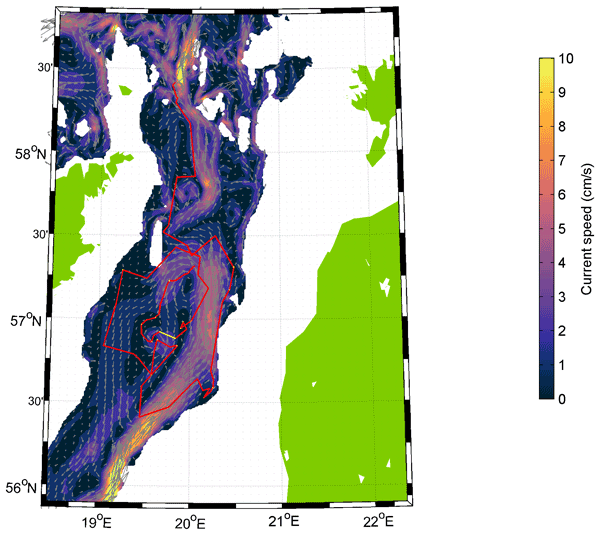
Taavi Liblik, Germo Väli, Kai Salm, Jaan Laanemets, Madis-Jaak Lilover, and Urmas Lips
Ocean Sci., 18, 857–879, https://doi.org/10.5194/os-18-857-2022, https://doi.org/10.5194/os-18-857-2022, 2022
Short summary
Short summary
An extensive measurement campaign and numerical simulations were conducted in the central Baltic Sea. The persistent circulation patterns were detected in steady weather conditions. The patterns included various circulation features. A coastal boundary current was observed along the eastern coast. The deep layer current towards the north was detected as well. This current is an important deeper limb of the overturning circulation of the Baltic Sea. The circulation regime has an annual cycle.
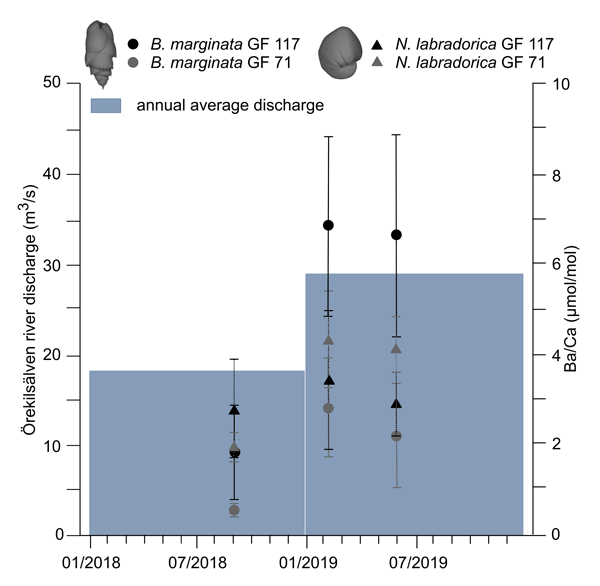
Inda Brinkmann, Christine Barras, Tom Jilbert, Tomas Næraa, K. Mareike Paul, Magali Schweizer, and Helena L. Filipsson
Biogeosciences, 19, 2523–2535, https://doi.org/10.5194/bg-19-2523-2022, https://doi.org/10.5194/bg-19-2523-2022, 2022
Short summary
Short summary
The concentration of the trace metal barium (Ba) in coastal seawater is a function of continental input, such as riverine discharge. Our geochemical records of the severely hot and dry year 2018, and following wet year 2019, reveal that prolonged drought imprints with exceptionally low Ba concentrations in benthic foraminiferal calcium carbonates of coastal sediments. This highlights the potential of benthic Ba / Ca to trace past climate extremes and variability in coastal marine records.
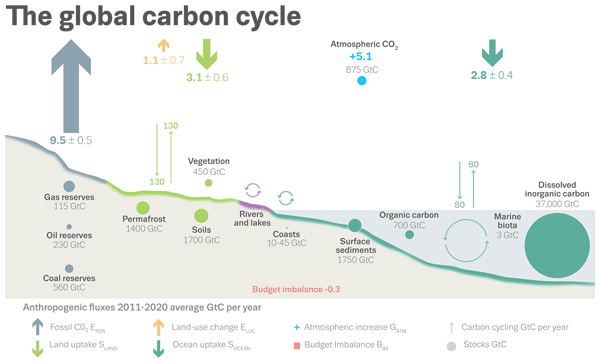
Pierre Friedlingstein, Matthew W. Jones, Michael O'Sullivan, Robbie M. Andrew, Dorothee C. E. Bakker, Judith Hauck, Corinne Le Quéré, Glen P. Peters, Wouter Peters, Julia Pongratz, Stephen Sitch, Josep G. Canadell, Philippe Ciais, Rob B. Jackson, Simone R. Alin, Peter Anthoni, Nicholas R. Bates, Meike Becker, Nicolas Bellouin, Laurent Bopp, Thi Tuyet Trang Chau, Frédéric Chevallier, Louise P. Chini, Margot Cronin, Kim I. Currie, Bertrand Decharme, Laique M. Djeutchouang, Xinyu Dou, Wiley Evans, Richard A. Feely, Liang Feng, Thomas Gasser, Dennis Gilfillan, Thanos Gkritzalis, Giacomo Grassi, Luke Gregor, Nicolas Gruber, Özgür Gürses, Ian Harris, Richard A. Houghton, George C. Hurtt, Yosuke Iida, Tatiana Ilyina, Ingrid T. Luijkx, Atul Jain, Steve D. Jones, Etsushi Kato, Daniel Kennedy, Kees Klein Goldewijk, Jürgen Knauer, Jan Ivar Korsbakken, Arne Körtzinger, Peter Landschützer, Siv K. Lauvset, Nathalie Lefèvre, Sebastian Lienert, Junjie Liu, Gregg Marland, Patrick C. McGuire, Joe R. Melton, David R. Munro, Julia E. M. S. Nabel, Shin-Ichiro Nakaoka, Yosuke Niwa, Tsuneo Ono, Denis Pierrot, Benjamin Poulter, Gregor Rehder, Laure Resplandy, Eddy Robertson, Christian Rödenbeck, Thais M. Rosan, Jörg Schwinger, Clemens Schwingshackl, Roland Séférian, Adrienne J. Sutton, Colm Sweeney, Toste Tanhua, Pieter P. Tans, Hanqin Tian, Bronte Tilbrook, Francesco Tubiello, Guido R. van der Werf, Nicolas Vuichard, Chisato Wada, Rik Wanninkhof, Andrew J. Watson, David Willis, Andrew J. Wiltshire, Wenping Yuan, Chao Yue, Xu Yue, Sönke Zaehle, and Jiye Zeng
Earth Syst. Sci. Data, 14, 1917–2005, https://doi.org/10.5194/essd-14-1917-2022, https://doi.org/10.5194/essd-14-1917-2022, 2022
Short summary
Short summary
The Global Carbon Budget 2021 describes the data sets and methodology used to quantify the emissions of carbon dioxide and their partitioning among the atmosphere, land, and ocean. These living data are updated every year to provide the highest transparency and traceability in the reporting of CO2, the key driver of climate change.
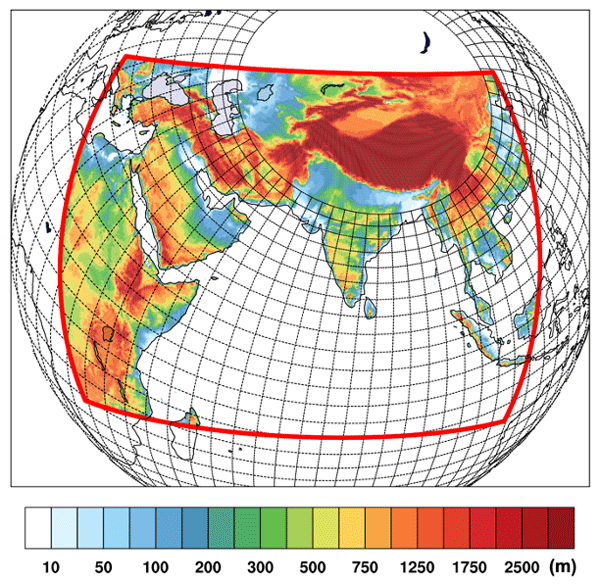
Dmitry V. Sein, Anton Y. Dvornikov, Stanislav D. Martyanov, William Cabos, Vladimir A. Ryabchenko, Matthias Gröger, Daniela Jacob, Alok Kumar Mishra, and Pankaj Kumar
Earth Syst. Dynam., 13, 809–831, https://doi.org/10.5194/esd-13-809-2022, https://doi.org/10.5194/esd-13-809-2022, 2022
Short summary
Short summary
The effect of the marine biogeochemical variability upon the South Asian regional climate has been investigated. In the experiment where its full impact is activated, the average sea surface temperature is lower over most of the ocean. When the biogeochemical coupling is included, the main impacts include the enhanced phytoplankton primary production, a shallower thermocline, decreased SST and water temperature in subsurface layers.
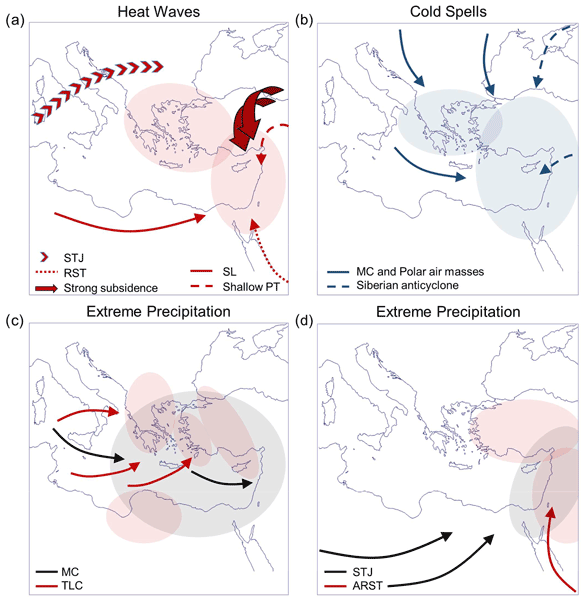
Assaf Hochman, Francesco Marra, Gabriele Messori, Joaquim G. Pinto, Shira Raveh-Rubin, Yizhak Yosef, and Georgios Zittis
Earth Syst. Dynam., 13, 749–777, https://doi.org/10.5194/esd-13-749-2022, https://doi.org/10.5194/esd-13-749-2022, 2022
Short summary
Short summary
Gaining a complete understanding of extreme weather, from its physical drivers to its impacts on society, is important in supporting future risk reduction and adaptation measures. Here, we provide a review of the available scientific literature, knowledge gaps and key open questions in the study of extreme weather events over the vulnerable eastern Mediterranean region.
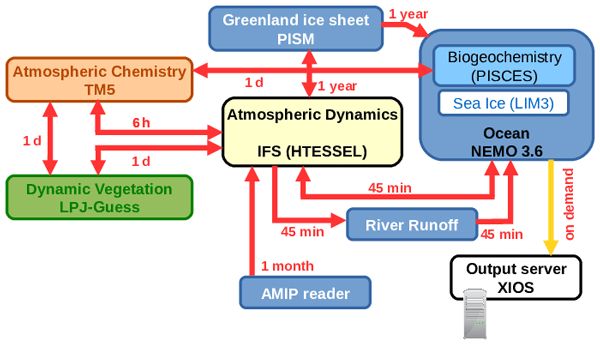
Ralf Döscher, Mario Acosta, Andrea Alessandri, Peter Anthoni, Thomas Arsouze, Tommi Bergman, Raffaele Bernardello, Souhail Boussetta, Louis-Philippe Caron, Glenn Carver, Miguel Castrillo, Franco Catalano, Ivana Cvijanovic, Paolo Davini, Evelien Dekker, Francisco J. Doblas-Reyes, David Docquier, Pablo Echevarria, Uwe Fladrich, Ramon Fuentes-Franco, Matthias Gröger, Jost v. Hardenberg, Jenny Hieronymus, M. Pasha Karami, Jukka-Pekka Keskinen, Torben Koenigk, Risto Makkonen, François Massonnet, Martin Ménégoz, Paul A. Miller, Eduardo Moreno-Chamarro, Lars Nieradzik, Twan van Noije, Paul Nolan, Declan O'Donnell, Pirkka Ollinaho, Gijs van den Oord, Pablo Ortega, Oriol Tintó Prims, Arthur Ramos, Thomas Reerink, Clement Rousset, Yohan Ruprich-Robert, Philippe Le Sager, Torben Schmith, Roland Schrödner, Federico Serva, Valentina Sicardi, Marianne Sloth Madsen, Benjamin Smith, Tian Tian, Etienne Tourigny, Petteri Uotila, Martin Vancoppenolle, Shiyu Wang, David Wårlind, Ulrika Willén, Klaus Wyser, Shuting Yang, Xavier Yepes-Arbós, and Qiong Zhang
Geosci. Model Dev., 15, 2973–3020, https://doi.org/10.5194/gmd-15-2973-2022, https://doi.org/10.5194/gmd-15-2973-2022, 2022
Short summary
Short summary
The Earth system model EC-Earth3 is documented here. Key performance metrics show physical behavior and biases well within the frame known from recent models. With improved physical and dynamic features, new ESM components, community tools, and largely improved physical performance compared to the CMIP5 version, EC-Earth3 represents a clear step forward for the only European community ESM. We demonstrate here that EC-Earth3 is suited for a range of tasks in CMIP6 and beyond.
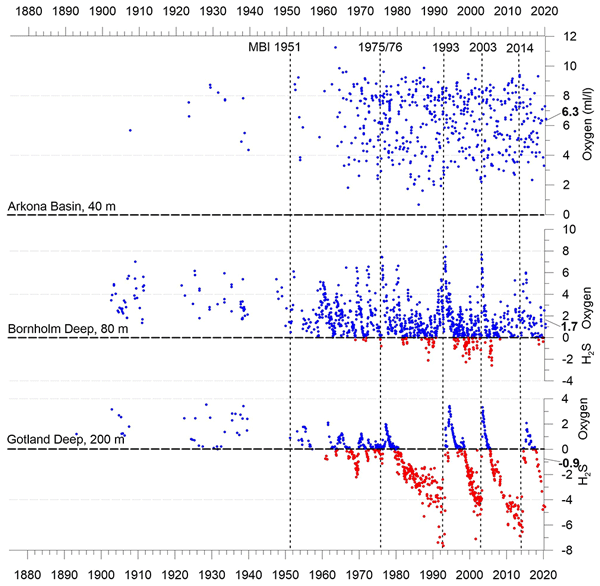
Karol Kuliński, Gregor Rehder, Eero Asmala, Alena Bartosova, Jacob Carstensen, Bo Gustafsson, Per O. J. Hall, Christoph Humborg, Tom Jilbert, Klaus Jürgens, H. E. Markus Meier, Bärbel Müller-Karulis, Michael Naumann, Jørgen E. Olesen, Oleg Savchuk, Andreas Schramm, Caroline P. Slomp, Mikhail Sofiev, Anna Sobek, Beata Szymczycha, and Emma Undeman
Earth Syst. Dynam., 13, 633–685, https://doi.org/10.5194/esd-13-633-2022, https://doi.org/10.5194/esd-13-633-2022, 2022
Short summary
Short summary
The paper covers the aspects related to changes in carbon, nitrogen, and phosphorus (C, N, P) external loads; their transformations in the coastal zone; changes in organic matter production (eutrophication) and remineralization (oxygen availability); and the role of sediments in burial and turnover of C, N, and P. Furthermore, this paper also focuses on changes in the marine CO2 system, the structure of the microbial community, and the role of contaminants for biogeochemical processes.
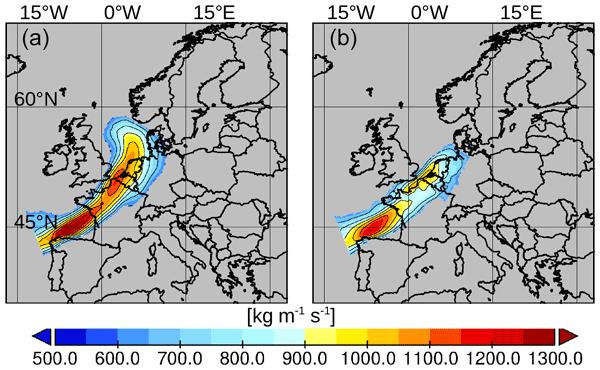
Matthias Gröger, Christian Dieterich, Cyril Dutheil, H. E. Markus Meier, and Dmitry V. Sein
Earth Syst. Dynam., 13, 613–631, https://doi.org/10.5194/esd-13-613-2022, https://doi.org/10.5194/esd-13-613-2022, 2022
Short summary
Short summary
Atmospheric rivers transport high amounts of water from subtropical regions to Europe. They are an important driver of heavy precipitation and flooding. Their response to a warmer future climate in Europe has so far been assessed only by global climate models. In this study, we apply for the first time a high-resolution regional climate model that allow to better resolve and understand the fate of atmospheric rivers over Europe.
H. E. Markus Meier, Madline Kniebusch, Christian Dieterich, Matthias Gröger, Eduardo Zorita, Ragnar Elmgren, Kai Myrberg, Markus P. Ahola, Alena Bartosova, Erik Bonsdorff, Florian Börgel, Rene Capell, Ida Carlén, Thomas Carlund, Jacob Carstensen, Ole B. Christensen, Volker Dierschke, Claudia Frauen, Morten Frederiksen, Elie Gaget, Anders Galatius, Jari J. Haapala, Antti Halkka, Gustaf Hugelius, Birgit Hünicke, Jaak Jaagus, Mart Jüssi, Jukka Käyhkö, Nina Kirchner, Erik Kjellström, Karol Kulinski, Andreas Lehmann, Göran Lindström, Wilhelm May, Paul A. Miller, Volker Mohrholz, Bärbel Müller-Karulis, Diego Pavón-Jordán, Markus Quante, Marcus Reckermann, Anna Rutgersson, Oleg P. Savchuk, Martin Stendel, Laura Tuomi, Markku Viitasalo, Ralf Weisse, and Wenyan Zhang
Earth Syst. Dynam., 13, 457–593, https://doi.org/10.5194/esd-13-457-2022, https://doi.org/10.5194/esd-13-457-2022, 2022
Short summary
Short summary
Based on the Baltic Earth Assessment Reports of this thematic issue in Earth System Dynamics and recent peer-reviewed literature, current knowledge about the effects of global warming on past and future changes in the climate of the Baltic Sea region is summarised and assessed. The study is an update of the Second Assessment of Climate Change (BACC II) published in 2015 and focuses on the atmosphere, land, cryosphere, ocean, sediments, and the terrestrial and marine biosphere.
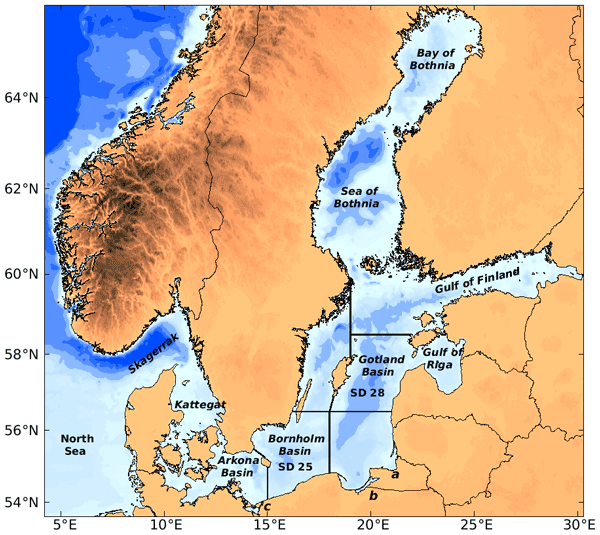
Andreas Lehmann, Kai Myrberg, Piia Post, Irina Chubarenko, Inga Dailidiene, Hans-Harald Hinrichsen, Karin Hüssy, Taavi Liblik, H. E. Markus Meier, Urmas Lips, and Tatiana Bukanova
Earth Syst. Dynam., 13, 373–392, https://doi.org/10.5194/esd-13-373-2022, https://doi.org/10.5194/esd-13-373-2022, 2022
Short summary
Short summary
The salinity in the Baltic Sea is not only an important topic for physical oceanography as such, but it also integrates the complete water and energy cycle. It is a primary external driver controlling ecosystem dynamics of the Baltic Sea. The long-term dynamics are controlled by river runoff, net precipitation, and the water mass exchange between the North Sea and Baltic Sea. On shorter timescales, the ephemeral atmospheric conditions drive a very complex and highly variable salinity regime.
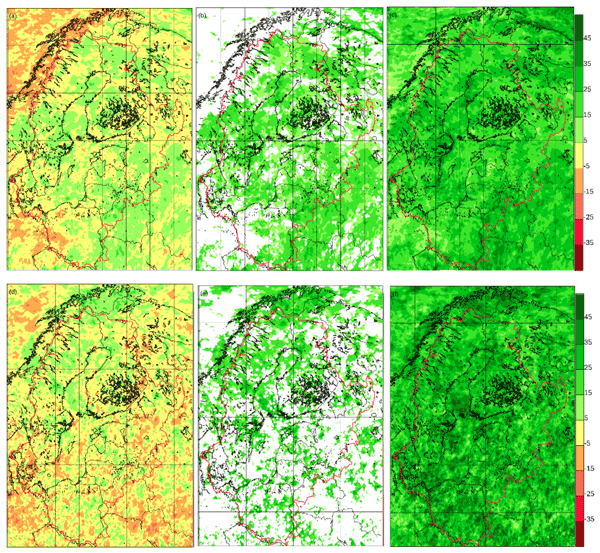
Anna Rutgersson, Erik Kjellström, Jari Haapala, Martin Stendel, Irina Danilovich, Martin Drews, Kirsti Jylhä, Pentti Kujala, Xiaoli Guo Larsén, Kirsten Halsnæs, Ilari Lehtonen, Anna Luomaranta, Erik Nilsson, Taru Olsson, Jani Särkkä, Laura Tuomi, and Norbert Wasmund
Earth Syst. Dynam., 13, 251–301, https://doi.org/10.5194/esd-13-251-2022, https://doi.org/10.5194/esd-13-251-2022, 2022
Short summary
Short summary
A natural hazard is a naturally occurring extreme event with a negative effect on people, society, or the environment; major events in the study area include wind storms, extreme waves, high and low sea level, ice ridging, heavy precipitation, sea-effect snowfall, river floods, heat waves, ice seasons, and drought. In the future, an increase in sea level, extreme precipitation, heat waves, and phytoplankton blooms is expected, and a decrease in cold spells and severe ice winters is anticipated.
H. E. Markus Meier, Christian Dieterich, Matthias Gröger, Cyril Dutheil, Florian Börgel, Kseniia Safonova, Ole B. Christensen, and Erik Kjellström
Earth Syst. Dynam., 13, 159–199, https://doi.org/10.5194/esd-13-159-2022, https://doi.org/10.5194/esd-13-159-2022, 2022
Short summary
Short summary
In addition to environmental pressures such as eutrophication, overfishing and contaminants, climate change is believed to have an important impact on the marine environment in the future, and marine management should consider the related risks. Hence, we have compared and assessed available scenario simulations for the Baltic Sea and found considerable uncertainties of the projections caused by the underlying assumptions and model biases, in particular for the water and biogeochemical cycles.
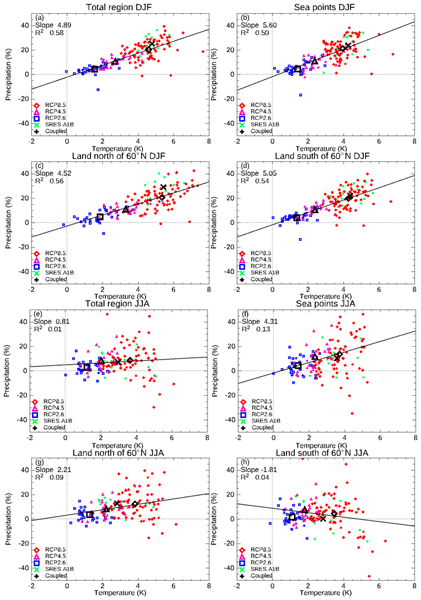
Ole Bøssing Christensen, Erik Kjellström, Christian Dieterich, Matthias Gröger, and Hans Eberhard Markus Meier
Earth Syst. Dynam., 13, 133–157, https://doi.org/10.5194/esd-13-133-2022, https://doi.org/10.5194/esd-13-133-2022, 2022
Short summary
Short summary
The Baltic Sea Region is very sensitive to climate change, whose impacts could easily exacerbate biodiversity stress from society and eutrophication of the Baltic Sea. Therefore, there has been a focus on estimations of future climate change and its impacts in recent research. Models show a strong warming, in particular in the north in winter. Precipitation is projected to increase in the whole region apart from the south during summer. New results improve estimates of future climate change.
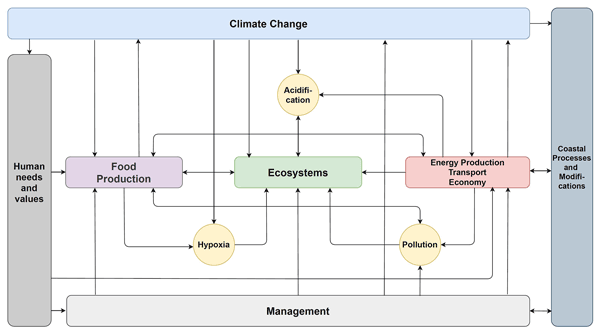
Marcus Reckermann, Anders Omstedt, Tarmo Soomere, Juris Aigars, Naveed Akhtar, Magdalena Bełdowska, Jacek Bełdowski, Tom Cronin, Michał Czub, Margit Eero, Kari Petri Hyytiäinen, Jukka-Pekka Jalkanen, Anders Kiessling, Erik Kjellström, Karol Kuliński, Xiaoli Guo Larsén, Michelle McCrackin, H. E. Markus Meier, Sonja Oberbeckmann, Kevin Parnell, Cristian Pons-Seres de Brauwer, Anneli Poska, Jarkko Saarinen, Beata Szymczycha, Emma Undeman, Anders Wörman, and Eduardo Zorita
Earth Syst. Dynam., 13, 1–80, https://doi.org/10.5194/esd-13-1-2022, https://doi.org/10.5194/esd-13-1-2022, 2022
Short summary
Short summary
As part of the Baltic Earth Assessment Reports (BEAR), we present an inventory and discussion of different human-induced factors and processes affecting the environment of the Baltic Sea region and their interrelations. Some are naturally occurring and modified by human activities, others are completely human-induced, and they are all interrelated to different degrees. The findings from this study can largely be transferred to other comparable marginal and coastal seas in the world.
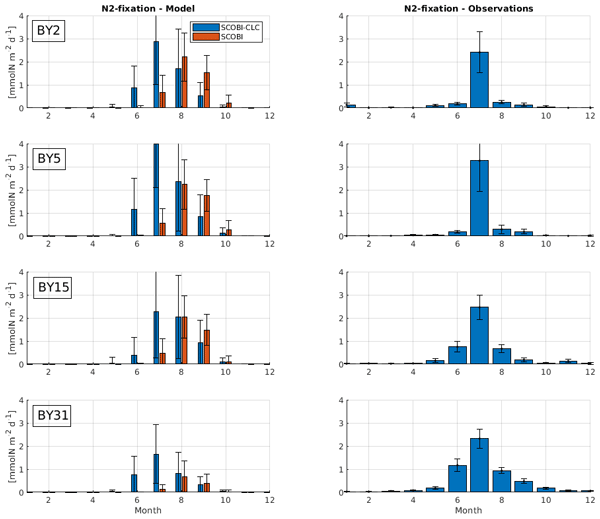
Jenny Hieronymus, Kari Eilola, Malin Olofsson, Inga Hense, H. E. Markus Meier, and Elin Almroth-Rosell
Biogeosciences, 18, 6213–6227, https://doi.org/10.5194/bg-18-6213-2021, https://doi.org/10.5194/bg-18-6213-2021, 2021
Short summary
Short summary
Dense blooms of cyanobacteria occur every summer in the Baltic Proper and can add to eutrophication by their ability to turn nitrogen gas into dissolved inorganic nitrogen. Being able to correctly estimate the size of this nitrogen fixation is important for management purposes. In this work, we find that the life cycle of cyanobacteria plays an important role in capturing the seasonality of the blooms as well as the size of nitrogen fixation in our ocean model.
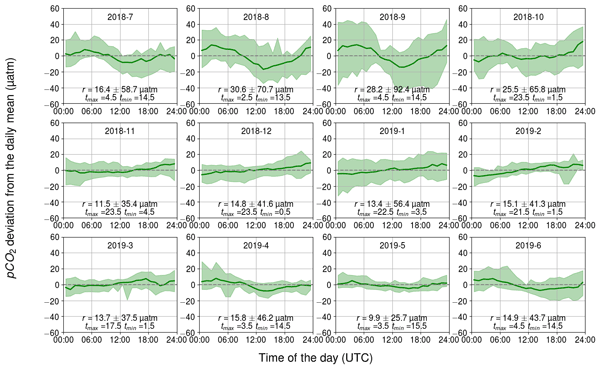
Martti Honkanen, Jens Daniel Müller, Jukka Seppälä, Gregor Rehder, Sami Kielosto, Pasi Ylöstalo, Timo Mäkelä, Juha Hatakka, and Lauri Laakso
Ocean Sci., 17, 1657–1675, https://doi.org/10.5194/os-17-1657-2021, https://doi.org/10.5194/os-17-1657-2021, 2021
Short summary
Short summary
The exchange of carbon dioxide (CO2) between the sea and the atmosphere is regulated by the gradient of CO2 partial pressure (pCO2) between the sea and the air. The daily variation of the seawater pCO2 recorded at the fixed station Utö in the Baltic Sea was found to be mainly biologically driven. Calculation of the annual net exchange of CO2 between the sea and atmosphere based on daily measurements of pCO2 carried out using the same sampling time every day could introduce a bias of up to 12 %.
Cited articles
Achatz, U.: Atmospheric Dynamics, Springer Berlin Heidelberg, 1st edn., https://link.springer.com/book/9783662639429 (last access: 30 April 2026), 2022. a
Adell, A., Almström, B., Kroon, A., Larson, M., Uvo, C. B., and Hallin, C.: Spatial and temporal wave climate variability along the south coast of Sweden during 1959–2021, Regional Studies in Marine Science, 63, 103011, https://doi.org/10.1016/j.rsma.2023.103011, 2023. a
Aigars, J., Poikāne, R., Dalsgaard, T., Eglīte, E., and Jansons, M.: Biogeochemistry of N, P and SI in the Gulf of Riga surface sediments: Implications of seasonally changing factors, Cont. Shelf Res., 105, 112–120, https://doi.org/10.1016/j.csr.2015.06.008, 2015. a
Almroth-Rosell, E., Wåhlström, I., Hansson, M., Väli, G., Eilola, K., Andersson, P., Viktorsson, L., Hieronymus, M., and Arneborg, L.: A Regime Shift Toward a More Anoxic Environment in a Eutrophic Sea in Northern Europe, Frontiers in Marine Science, 8, https://doi.org/10.3389/fmars.2021.799936, 2021. a
Andersson, A., Meier, H. M., Ripszam, M., Rowe, O., Wikner, J., Haglund, P., Eilola, K., Legrand, C., Figueroa, D., Paczkowska, J., Lindehoff, E., Tysklind, M., and Elmgren, R.: Projected future climate change and Baltic Sea ecosystem management, Ambio, 44, 345–356, https://doi.org/10.1007/s13280-015-0654-8, 2015. a
Andersson, H. C.: Influence of long-term regional and large-scale atmospheric circulation on the Baltic sea level, Tellus A, 54, 76–88, https://doi.org/10.3402/tellusa.v54i1.12125, 2002. a, b
Andrén, E., van Wirdum, F., Ivarsson, L. N., Lönn, M., Moros, M., and Andrén, T.: Medieval versus recent environmental conditions in the Baltic Proper, what was different a thousand years ago?, Palaeogeogr. Palaeocl., 555, 109878, https://doi.org/10.1016/j.palaeo.2020.109878, 2020. a
Arias, P., Bellouin, N., Coppola, E., Masson-Delmotte, V., Zhai, P., Pirani, A., Connors, S. L., Péan, C., Berger, S., Caud, N., Chen, Y., Goldfarb, L., Gomis, M. I., Huang, M., Leitzell, K., Lonnoy, E., Matthews, J. B. R., Maycock, T. K., Waterfield, T., Yelekçi, O., Yu, R., and Zhou, B.: Technical Summary, Cambridge University Press, Cambridge, United Kingdom and New York, NY, USA, 33–144, https://doi.org/10.1017/9781009157896.002, 2021. a
Årthun, M., Eldevik, T., Viste, E., Drange, H., Furevik, T., Johnson, H. L., and Keenlyside, N. S.: Skillful prediction of northern climate provided by the ocean, Nat. Commun., 8, 15875, https://doi.org/10.1038/ncomms15875, 2017. a, b, c
Athanasiadis, P. J., Yeager, S., Kwon, Y.-O., Bellucci, A., Smith, D. W., and Tibaldi, S.: Decadal predictability of North Atlantic blocking and the NAO, npj Climate and Atmospheric Science, 3, 20, https://doi.org/10.1038/s41612-020-0120-6, 2020. a, b, c
Barghorn, L., Meier, H. E. M., and Radtke, H.: Changes in Seasonality of Saltwater Inflows Caused Exceptional Warming Trends in the Western Baltic Sea, Geophys. Res. Lett., 50, e2023GL103853, https://doi.org/10.1029/2023GL103853, 2023. a
Barghorn, L., Meier, H. E. M., Radtke, H., Neumann, T., and Naumov, L.: Warm saltwater inflows strengthen oxygen depletion in the western Baltic Sea, Clim. Dynam., 63, 29, https://doi.org/10.1007/s00382-024-07501-x, 2024. a
Barghorn, L., Börgel, F., Gröger, M., and Meier, H. E. M.: Atlantic multidecadal variability control on European sea surface temperatures is mainly externally forced, Environ. Res. Lett., 20, 034044, https://doi.org/10.1088/1748-9326/adb6bf, 2025a. a, b, c
Barghorn, L., Meier, H. E. M., Radtke, H., Neumann, T., and Naumov, L.: Warm saltwater inflows strengthen oxygen depletion in the western Baltic Sea, Clim. Dynam., 63, 29, https://doi.org/10.1007/s00382-024-07501-x, 2025b. a, b
Barrier, N., Cassou, C., Deshayes, J., and Treguier, A.-M.: Response of North Atlantic Ocean Circulation to Atmospheric Weather Regimes, J. Phys. Oceanogr., 44, 179–201, https://doi.org/10.1175/JPO-D-12-0217.1, 2014. a, b
Bashiri, B., Barzandeh, A., Männik, A., and Raudsepp, U.: Variability of marine heatwaves’ characteristics and assessment of their potential drivers in the Baltic Sea over the last 42 years, Sci. Rep.-UK, 14, 22419, https://doi.org/10.1038/s41598-024-74173-2, 2024. a
Bates, N. R., Best, M. H. P., Neely, K., Garley, R., Dickson, A. G., and Johnson, R. J.: Detecting anthropogenic carbon dioxide uptake and ocean acidification in the North Atlantic Ocean, Biogeosciences, 9, 2509–2522, https://doi.org/10.5194/bg-9-2509-2012, 2012. a
Beerli, R. and Grams, C. M.: Stratospheric modulation of the large-scale circulation in the Atlantic-European region and its implications for surface weather events, Q. J. Roy. Meteor. Soc., 145, 3732–3750, https://doi.org/10.1002/qj.3653, 2019. a
Bianchi, T. S., Johansson, B., and Elmgren, R.: Breakdown of phytoplankton pigments in Baltic sediments: effects of anoxia and loss of deposit-feeding macrofauna, J. Exp. Mar. Biol. Ecol., 251, 161–183, https://doi.org/10.1016/S0022-0981(00)00212-4, 2000. a
Borchert, L. F., Pohlmann, H., Baehr, J., Neddermann, N.-C., Suarez-Gutierrez, L., and Müller, W. A.: Decadal Predictions of the Probability of Occurrence for Warm Summer Temperature Extremes, Geophys. Res. Lett., 46, 14042–14051, https://doi.org/10.1029/2019GL085385, 2019. a, b
Borchert, L. F., Menary, M. B., Swingedouw, D., Sgubin, G., Hermanson, L., and Mignot, J.: Improved Decadal Predictions of North Atlantic Subpolar Gyre SST in CMIP6, Geophys. Res. Lett., 48, e2020GL091307, https://doi.org/10.1029/2020GL091307, 2021. a
Börgel, F., Frauen, C., Neumann, T., Schimanke, S., and Meier, H. E. M.: Impact of the Atlantic Multidecadal Oscillation on Baltic Sea Variability, Geophys. Res. Lett., 45, 9880–9888, https://doi.org/10.1029/2018GL078943, 2018. a, b, c
Börgel, F., Frauen, C., Neumann, T., and Markus Meier, H. E.: The Atlantic Multidecadal Oscillation controls the impact of the North Atlantic Oscillation on North European climate, Environ. Res. Lett., 15, 104025, https://doi.org/10.1088/1748-9326/aba925, 2020. a, b, c, d, e, f, g, h, i, j, k, l, m, n
Börgel, F., Meier, H. E. M., Gröger, M., Rhein, M., Dutheil, C., and Kaiser, J. M.: Atlantic multidecadal variability and the implications for North European precipitation, Environ. Res. Lett., 17, 044040, https://doi.org/10.1088/1748-9326/ac5ca1, 2022. a, b, c, d
Börgel, F., Neumann, T., Rooze, J., Radtke, H., Barghorn, L., and Meier, H. E. M.: Deoxygenation of the Baltic Sea during the last millennium, Frontiers in Marine Science, 10, https://doi.org/10.3389/fmars.2023.1174039, 2023b. a, b, c
Brunner, L., Hegerl, G. C., and Steiner, A. K.: Connecting Atmospheric Blocking to European Temperature Extremes in Spring, J. Climate, 30, 585–594, https://doi.org/10.1175/JCLI-D-16-0518.1, 2017. a
Brunner, L., Schaller, N., Anstey, J., Sillmann, J., and Steiner, A. K.: Dependence of Present and Future European Temperature Extremes on the Location of Atmospheric Blocking, Geophys. Res. Lett., 45, 6311–6320, https://doi.org/10.1029/2018GL077837, 2018. a
Bueh, C. and Nakamura, H.: Scandinavian pattern and its climatic impact, Q. J. Roy. Meteor. Soc., 133, 2117–2131, https://doi.org/10.1002/qj.173, 2007. a
Buehler, T., Raible, C. C., and Stocker, T. F.: The relationship of winter season North Atlantic blocking frequencies to extreme cold or dry spells in the ERA-40, Tellus A, 63, 212–222, https://doi.org/10.1111/j.1600-0870.2010.00492.x, 2011. a
Cahill, B., Chrysagi, E., Vortmeyer-Kley, R., and Gräwe, U.: Deconstructing co-occurring marine heatwave and phytoplankton bloom events in the Arkona Sea in 2018, Frontiers in Marine Science, 11, https://doi.org/10.3389/fmars.2024.1323271, 2024. a
Carstensen, J. and Conley, D. J.: Baltic Sea Hypoxia Takes Many Shapes and Sizes, Limnology and Oceanography Bulletin, 28, 125–129, https://doi.org/10.1002/lob.10350, 2019. a, b, c, d
Carstensen, J., Andersen, J. H., Gustafsson, B. G., and Conley, D. J.: Deoxygenation of the Baltic Sea during the last century, P. Natl. Acad. Sci. USA, 111, 5628–5633, https://doi.org/10.1073/pnas.1323156111, 2014. a, b, c
Carvalho-Oliveira, J., Di Capua, G., Borchert, L. F., Donner, R. V., and Baehr, J.: Causal relationships and predictability of the summer East Atlantic teleconnection, Weather Clim. Dynam., 5, 1561–1578, https://doi.org/10.5194/wcd-5-1561-2024, 2024. a, b, c
Cassou, C., Terray, L., Hurrell, J. W., and Deser, C.: North Atlantic Winter Climate Regimes: Spatial Asymmetry, Stationarity with Time, and Oceanic Forcing, J. Climate, 17, 1055–1068, https://doi.org/10.1175/1520-0442(2004)017<1055:NAWCRS>2.0.CO;2, 2004. a, b
Chafik, L., Nilsen, J. E. O., and Dangendorf, S.: Impact of North Atlantic Teleconnection Patterns on Northern European Sea Level, Journal of Marine Science and Engineering, 5, 43, https://doi.org/10.3390/jmse5030043, 2017. a, b
Chen, D. and Li, X.: Scale-dependent relationship between maximum ice extent in the Baltic Sea and atmospheric circulation, Global Planet. Change, 41, 275–283, https://doi.org/10.1016/j.gloplacha.2004.01.012, 2004. a
Chtirkova, B., Folini, D., Ferreira Correa, L., and Wild, M.: Shortwave radiative flux variability through the lens of the Pacific Decadal Oscillation, J. Geophys. Res.-Atmos., 129, e2023JD040520, https://doi.org/10.1029/2023JD040520, 2024. a
Comas-Bru, L. and McDermott, F.: Impacts of the EA and SCA patterns on the European twentieth century NAO–winter climate relationship, Q. J. Roy. Meteor. Soc., 140, 354–363, https://doi.org/10.1002/qj.2158, 2014. a, b, c, d
Conley, D. J., Paerl, H. W., Howarth, R. W., Boesch, D. F., Seitzinger, S. P., Havens, K. E., Lancelot, C., and Likens, G. E.: Controlling Eutrophication: Nitrogen and Phosphorus, Science, 323, 1014–1015, https://doi.org/10.1126/science.1167755, 2009. a
Corti, S., Molteni, F., and Palmer, T. N.: Signature of recent climate change in frequencies of natural atmospheric circulation regimes, Nature, 398, 799–802, https://doi.org/10.1038/19745, 1999. a
Cotovicz Jr., L. C., Cahill, B., Sabbaghzadeh, B., Lencina-Avila, J. M., and Rehder, G.: Increase in marginal sea alkalinity may impact air-sea carbon dioxide exchange and buffer acidification, Limnol. Oceanogr., 69, 2332–2347, https://doi.org/10.1002/lno.12672, 2024. a, b, c
Craig, P. M. and Allan, R. P.: The role of teleconnection patterns in the variability and trends of growing season indices across Europe, Int. J. Climatol., 42, 1072–1091, https://doi.org/10.1002/joc.7290, 2022. a, b
Dabulevičienè, T. and Servaitè, I.: Characteristics of Marine Heatwaves in the Southeastern Baltic Sea Based on Long-Term In Situ and Satellite Observations, Journal of Marine Science and Engineering, 12, 1109, https://doi.org/10.3390/jmse12071109, 2024. a
Davies, T. W. and Smyth, T.: Darkening of the Global Ocean, Glob. Change Biol., 31, e70227, https://doi.org/10.1111/gcb.70227, 2025. a
Degenhardt, L., Leckebusch, G. C., and Scaife, A. A.: Large-scale circulation patterns and their influence on European winter windstorm predictions, Clim. Dynam., 60, 3597–3611, https://doi.org/10.1007/s00382-022-06455-2, 2023. a
Delworth, T. L. and Zeng, F.: The Impact of the North Atlantic Oscillation on Climate through Its Influence on the Atlantic Meridional Overturning Circulation, J. Climate, 29, 941–962, https://doi.org/10.1175/JCLI-D-15-0396.1, 2016. a
Deser, C. and Phillips, A. S.: Defining the Internal Component of Atlantic Multidecadal Variability in a Changing Climate, Geophys. Res. Lett., 48, e2021GL095023, https://doi.org/10.1029/2021GL095023, 2021. a, b
Deser, C., Alexander, M. A., Xie, S.-P., and Phillips, A. S.: Sea Surface Temperature Variability: Patterns and Mechanisms, Annu. Rev. Mar. Sci., 2, 115–143, https://doi.org/10.1146/annurev-marine-120408-151453, 2010. a
Dickson, A. G.: The development of the alkalinity concept in marine chemistry, Mar. Chem., 40, 49–63, https://doi.org/10.1016/0304-4203(92)90047-E, 1992. a
Dietze, H. and Löptien, U.: Retracing hypoxia in Eckernförde Bight (Baltic Sea), Biogeosciences, 18, 4243–4264, https://doi.org/10.5194/bg-18-4243-2021, 2021. a
Dippner, J. W., Fründt, B., and Hammer, C.: Lake or Sea? The Unknown Future of Central Baltic Sea Herring, Frontiers in Ecology and Evolution, 7, https://doi.org/10.3389/fevo.2019.00143, 2019. a
Domeisen, D. I.: Estimating the Frequency of Sudden Stratospheric Warming Events From Surface Observations of the North Atlantic Oscillation, J. Geophys. Res.-Atmos., 124, 3180–3194, https://doi.org/10.1029/2018JD030077, 2019. a
Doney, S. C., Fabry, V. J., Feely, R. A., and Kleypas, J. A.: Ocean Acidification: The Other CO2 Problem, Annu. Rev. Mar. Sci., 1, 169–192, https://doi.org/10.1146/annurev.marine.010908.163834, 2009. a
Dong, B., Sutton, R. T., Woollings, T., and Hodges, K.: Variability of the North Atlantic summer storm track: mechanisms and impacts on European climate, Environ. Res. Lett., 8, 034037, https://doi.org/10.1088/1748-9326/8/3/034037, 2013. a, b
Dupont, N. and Aksnes, D. L.: Centennial changes in water clarity of the Baltic Sea and the North Sea, Estuar. Coast. Shelf S., 131, 282–289, https://doi.org/10.1016/j.ecss.2013.08.010, 2013. a, b
Dutheil, C., Meier, H. E. M., Gröger, M., and Börgel, F.: Warming of Baltic Sea water masses since 1850, Clim. Dynam., 61, 1311–1331, https://doi.org/10.1007/s00382-022-06628-z, 2023. a, b
Ehrnsten, E., Humborg, C., Gustafsson, E., and Gustafsson, B. G.: Disaster avoided: current state of the Baltic Sea without human intervention to reduce nutrient loads, Limnology and Oceanography Letters, 10, 318–328, https://doi.org/10.1002/lol2.10443, 2025. a
Elken, J., Raudsepp, U., and Lips, U.: On the Estuarine Transport Reversal in Deep Layers of the Gulf of Finland, J. Sea. Res., 49, 267–274, https://doi.org/10.1016/S1385-1101(03)00018-2, 2003. a
Enfield, D. B., Mestas-Nuñez, A. M., and Trimble, P. J.: The Atlantic Multidecadal Oscillation and its relation to rainfall and river flows in the continental U.S., Geophys. Res. Lett., 28, 2077–2080, https://doi.org/10.1029/2000GL012745, 2001. a
Eremina, T. R., Maximov, A. A., and Voloshchuk, E. V.: The influence of the climate’s variability on the deep-water oxygen conditions in the east of the Gulf of Finland, Oceanology, 52, 771–779, https://doi.org/10.1134/S0001437012060045, 2012. a, b, c
Fabiano, F., Meccia, V. L., Davini, P., Ghinassi, P., and Corti, S.: A regime view of future atmospheric circulation changes in northern mid-latitudes, Weather Clim. Dynam., 2, 163–180, https://doi.org/10.5194/wcd-2-163-2021, 2021. a
Falkena, S. K., de Wiljes, J., Weisheimer, A., and Shepherd, T. G.: Revisiting the identification of wintertime atmospheric circulation regimes in the Euro-Atlantic sector, Q. J. Roy. Meteor. Soc., 146, 2801–2814, https://doi.org/10.1002/qj.3818, 2020. a, b, c
Fan, H., Borchert, L. F., Brune, S., Koul, V., and Baehr, J.: North Atlantic subpolar gyre provides downstream ocean predictability, npj Climate and Atmospheric Science, 6, 145, https://doi.org/10.1038/s41612-023-00469-1, 2023. a, b, c, d
Ferster, B. S., Borchert, L. F., Mignot, J., Menary, M. B., Cassou, C., and Fedorov, A. V.: Pantropical Indo–Atlantic temperature gradient modulates multi-decadal AMOC variability in models and observations, npj Climate and Atmospheric Science, 6, 165, https://doi.org/10.1038/s41612-023-00489-x, 2023. a
Fletcher, C. G. and Cassou, C.: The Dynamical Influence of Separate Teleconnections from the Pacific and Indian Oceans on the Northern Annular Mode, J. Climate, 28, 7985–8002, https://doi.org/10.1175/JCLI-D-14-00839.1, 2015. a
Folland, C. K., Knight, J., Linderholm, H. W., Fereday, D., Ineson, S., and Hurrell, J. W.: The summer North Atlantic Oscillation: past, present, and future, J. Climate, 22, 1082–1103, https://doi.org/10.1175/2008JCLI2459.1, 2009. a
Franzke, C., Lee, S., and Feldstein, S. B.: Is the North Atlantic Oscillation a Breaking Wave?, J. Atmos. Sci., 61, 145–160, https://doi.org/10.1175/1520-0469(2004)061<0145:ITNAOA>2.0.CO;2, 2004. a
Frigstad, H., Andersen, G. S., Trannum, H. C., McGovern, M., Naustvoll, L.-J., Kaste, Ø., Deininger, A., and Hjermann, D. Ø.: Three decades of change in the Skagerrak coastal ecosystem, shaped by eutrophication and coastal darkening, Estuar. Coast. Shelf S., 283, 108193, https://doi.org/10.1016/j.ecss.2022.108193, 2023. a
Funkey, C. P., Conley, D. J., Reuss, N. S., Humborg, C., Jilbert, T., and Slomp, C. P.: Hypoxia sustains cyanobacteria blooms in the Baltic Sea, Environ. Sci. Technol., 48, 2598–2602, https://doi.org/10.1021/es404395a, 2014. a
Gimeno, L.: Oceanic sources of continental precipitation, Water Resour. Res., 50, 3647–3649, https://doi.org/10.1002/2014WR015477, 2014. a, b
Gimeno, L., Dominguez, F., Nieto, R., Trigo, R., Drumond, A., Reason, C. J. C., Taschetto, A. S., Ramos, A. M., Kumar, R., and Marengo, J.: Major Mechanisms of Atmospheric Moisture Transport and Their Role in Extreme Precipitation Events, Annu. Rev. Env. Resour., 41, 117–141, https://doi.org/10.1146/annurev-environ-110615-085558, 2016. a
Göbeler, N.: The role of marine heatwaves for biodiversity and ecosystem functioning in coastal waters, PhD dissertation, University of Helsinki, http://hdl.handle.net/10138/587464 (last access: 30 April 2026), 2024. a
Golubkov, M. and Golubkov, S.: Relationships Between Northern Hemisphere Teleconnection Patterns and Phytoplankton Productivity in the Neva Estuary (Northeastern Baltic Sea), Frontiers in Marine Science, 8, https://doi.org/10.3389/fmars.2021.735790, 2021. a
Gómara, I., Rodríguez-Fonseca, B., Zurita-Gotor, P., and Pinto, J. G.: On the relation between explosive cyclones affecting Europe and the North Atlantic Oscillation, Geophys. Res. Lett., 41, 2182–2190, https://doi.org/10.1002/2014GL059647, 2014. a
Granskog, M., Kaartokallio, H., Kuosa, H., Thomas, D. N., and Vainio, J.: Sea ice in the Baltic Sea – A review, Estuar. Coast. Shelf S., 70, 145–160, https://doi.org/10.1016/j.ecss.2006.06.001, 2006. a
Gräwe, U., Naumann, M., Mohrholz, V., and Burchard, H.: Anatomizing one of the largest saltwater inflows into the Baltic Sea in December 2014, J. Geophys. Res.-Oceans, 120, 7676–7697, https://doi.org/10.1002/2015JC011269, 2015. a
Gröger, M., Dieterich, C., Meier, M. H. E., and Schimanke, S.: Thermal air-sea coupling in hindcast simulations for the North Sea and Baltic Sea on the NW European shelf, Tellus A, 67, 26911, https://doi.org/10.3402/tellusa.v67.26911, 2015. a
Gröger, M., Dieterich, C., Haapala, J., Ho-Hagemann, H. T. M., Hagemann, S., Jakacki, J., May, W., Meier, H. E. M., Miller, P. A., Rutgersson, A., and Wu, L.: Coupled regional Earth system modeling in the Baltic Sea region, Earth Syst. Dynam., 12, 939–973, https://doi.org/10.5194/esd-12-939-2021, 2021a. a
Gröger, M., Dieterich, C., and Meier, H. E. M.: Is interactive air sea coupling relevant for simulating the future climate of Europe?, Clim. Dynam., 56, 491–514, https://doi.org/10.1007/s00382-020-05489-8, 2021b. a
Gröger, M., Börgel, F., Karsten, S., Meier, H. E. M., Safonova, K., Dutheil, C., Receveur, A., and Polte, P.: Future climate change and marine heatwaves – Projected impact on key habitats for herring reproduction, Sci. Total Environ., 951, 175756, https://doi.org/10.1016/j.scitotenv.2024.175756, 2024a. a
Gustafsson, B. G., Schenk, F., Blenckner, T., Eilola, K., Meier, H. E. M., Müller-Karulis, B., Neumann, T., Ruoho-Airola, T., Savchuk, O. P., and Zorita, E.: Reconstructing the Development of Baltic Sea Eutrophication 1850–2006, Ambio, 41, 534–548, https://doi.org/10.1007/s13280-012-0318-x, 2012. a, b
Gustafsson, E., Wällstedt, T., Humborg, C., Mörth, C.-M., and Gustafsson, B. G.: External total alkalinity loads versus internal generation: The influence of nonriverine alkalinity sources in the Baltic Sea, Global Biogeochem. Cy., 28, 1358–1370, https://doi.org/10.1002/2014GB004888, 2014. a
Gustafsson, E., Hagens, M., Sun, X., Reed, D. C., Humborg, C., Slomp, C. P., and Gustafsson, B. G.: Sedimentary alkalinity generation and long-term alkalinity development in the Baltic Sea, Biogeosciences, 16, 437–456, https://doi.org/10.5194/bg-16-437-2019, 2019. a
Haapala, J. J., Ronkainen, I., Schmelzer, N., and Sztobryn, M.: Recent Change – Sea Ice, in: Second Assessment of Climate Change for the Baltic Sea Basin, edited by: The BACC II Author Team, Springer International Publishing, Cham, 145–153, https://doi.org/10.1007/978-3-319-16006-1_8, 2015. a, b
Hallam, S., Josey, S. A., McCarthy, G. D., and Hirschi, J. J.-M.: A regional (land-ocean) comparison of the seasonal to decadal variability of the Northern Hemisphere jet stream 1871–2011, Clim. Dynam., 59, 1897–1918, https://doi.org/10.1007/s00382-022-06185-5, 2022. a, b
Hammer, K., Schneider, B., Kuliński, K., and Schulz-Bull, D. E.: Acid-base properties of Baltic Sea dissolved organic matter, J. Marine Syst., 173, 114–121, https://doi.org/10.1016/j.jmarsys.2017.04.007, 2017. a
Hänninen, J., Vuorinen, I., and Hjelt, P.: Climatic factors in the Atlantic control the oceanographic and ecological changes in the Baltic Sea, Limnol. Oceanogr., 45, 703–710, https://doi.org/10.4319/lo.2000.45.3.0703, 2000. a
Hansson, D. and Gustafsson, E.: Salinity and hypoxia in the Baltic Sea since AD 1500, J. Geophys. Res.-Oceans, 116, https://doi.org/10.1029/2010JC006676, 2011. a
Hansson, M. and Viktorsson, L.: Oxygen Survey in the Baltic Sea 2023 – Extent of Anoxia and Hypoxia, 1960–2023, SMHI Report Oceanography no. 76, 2024, https://www.smhi.se/publikationer-fran-smhi/sok-publikationer/2024-05-23-oxygen-survey-in-the-
baltic-sea-2023—extent-of-anoxia-and-hypoxia-1960-2023 (last access: 30 April 2026), 2024. a
Hansson, M., Viktorsson, L., and Andersson, L.: Oxygen Survey in the Baltic Sea 2019 – Extent of Anoxia and Hypoxia, 1960–2019, SMHI Report Oceanography no. 67, 2019, https://www.diva-portal.org/smash/record.jsf?pid=diva2%3A1413260&dswid=787 (last access: 30 April 2026), 2020. a
Harnik, N.: Extreme upper level cyclonic vorticity events in relation to the Southern Hemisphere jet stream, Geophys. Res. Lett., 41, 4373–4380, https://doi.org/10.1002/2014GL060009, 2014. a, b
Havenhand, J. N., Filipsson, H. L., Niiranen, S., Troell, M., Crépin, A.-S., Jagers, S., Langlet, D., Matti, S., Turner, D., Winder, M., de Wit, P., and Anderson, L. G.: Ecological and functional consequences of coastal ocean acidification: Perspectives from the Baltic-Skagerrak System, Ambio, 48, 831–854, https://doi.org/10.1007/s13280-018-1110-3, 2019. a, b
HELCOM: State of the Baltic Sea 2023; Third HELCOM holistic assessment 2016–2021 (HOLAS 3), HELCOM ministerial declaration, ISSN: 0357-2994, https://stateofthebalticsea.helcom.fi (last access: 30 April 2026), 2023. a
Hepach, H., Piontek, J., Bange, H. W., Barthelmeß, T., von Jackowski, A., and Engel, A.: Enhanced warming and bacterial biomass production as key factors for coastal hypoxia in the southwestern Baltic Sea, Sci. Rep.-UK, 14, 29442, https://doi.org/10.1038/s41598-024-80451-w, 2024. a
Hieronymus, M. and Kalén, O.: Sea-level rise projections for Sweden based on the new IPCC special report: The ocean and cryosphere in a changing climate, Ambio, 49, 1587–1600, https://doi.org/10.1007/s13280-019-01313-8, 2020. a
Hieronymus, M., Hieronymus, J., and Arneborg, L.: Sea level modelling in the Baltic and the North Sea: The respective role of different parts of the forcing, Ocean Model., 118, 59–72, https://doi.org/10.1016/j.ocemod.2017.08.007, 2017. a
Hieronymus, M., Berg, P., Ashraf, F. B., and Barquet, K.: Compound Flooding in Halmstad: Common Causes, Interannual Variability and the Effects of Climate Change, Tellus A, https://doi.org/10.16993/tellusa.4068, 2024. a
Hilmer, M. and Jung, T.: Evidence for a recent change in the link between the North Atlantic Oscillation and Arctic sea ice export through Fram Strait, Geophys. Res. Lett., 27, 989–992, https://doi.org/10.1029/1999GL010944, 2000. a
Hinrichsen, H.-H., Lehmann, A., Petereit, C., and Schmidt, J.: Correlation analyses of Baltic Sea winter water mass formation and its impact on secondary and tertiary production, 49, https://oceanrep.geomar.de/id/eprint/4661/ (last access: 30 April 2026), 2007. a
Hochman, A., Messori, G., Quinting, J. F., Pinto, J. G., and Grams, C. M.: Do Atlantic-European Weather Regimes Physically Exist?, Geophys. Res. Lett., 48, e2021GL095574, https://doi.org/10.1029/2021GL095574, 2021. a
Holliday, N. P., Bersch, M., Berx, B., Chafik, L., Cunningham, S., Florindo-López, C., Hátún, H., Johns, W., Josey, S. A., Larsen, K. M. H., Mulet, S., Oltmanns, M., Reverdin, G., Rossby, T., Thierry, V., Valdimarsson, H., and Yashayaev, I.: Ocean circulation causes the largest freshening event for 120 years in eastern subpolar North Atlantic, Nat. Commun., 11, 585, https://doi.org/10.1038/s41467-020-14474-y, 2020. a
Holtermann, P., Prien, R., Naumann, M., and Umlauf, L.: Interleaving of oxygenized intrusions into the Baltic Sea redoxcline, Limnol. Oceanogr., 65, 482–503, https://doi.org/10.1002/lno.11317, 2020. a
Hurrell, J. W.: Decadal Trends in the North Atlantic Oscillation: Regional Temperatures and Precipitation, Science, 269, 676–679, https://doi.org/10.1126/science.269.5224.676, 1995. a, b, c
Hurrell, J. W. and Deser, C.: North Atlantic climate variability: The role of the North Atlantic Oscillation, J. Marine Syst., 78, 28–41, https://doi.org/10.1016/j.jmarsys.2008.11.026, 2009. a
Hurrell, J. W., Kushnir, Y., Ottersen, G., and Visbeck, M.: An Overview of the North Atlantic Oscillation, American Geophysical Union (AGU), 1–35, https://doi.org/10.1029/134GM01, 2003. a, b, c
Inácio, M., Karnauskaité, D., Baltranaité, E., Kalinauskas, M., Bogdzevič, K., Gomes, E., and Pereira, P.: Ecosystem services of the Baltic Sea: An assessment and mapping perspective, Geography and Sustainability, 1, 256–265, https://doi.org/10.1016/j.geosus.2020.11.001, 2020. a
Jaanus, A., Andersson, A., Olenina, I., Toming, K., and Kaljurand, K.: Changes in phytoplankton communities along a north-south gradient in the Baltic Sea between 1990 and 2008, Boreal Environ. Res., 16, 191–208, 1990. a
Jakobson, E. and Jakobson, L.: Atmospheric teleconnections between the Arctic and the Baltic Sea region as simulated by CESM1-LE, Earth Syst. Dynam., 15, 155–165, https://doi.org/10.5194/esd-15-155-2024, 2024. a
Jakobsson, M., Stranne, C., O'Regan, M., Greenwood, S. L., Gustafsson, B., Humborg, C., and Weidner, E.: Bathymetric properties of the Baltic Sea, Ocean Sci., 15, 905–924, https://doi.org/10.5194/os-15-905-2019, 2019. a
Jilbert, T. and Slomp, C. P.: Rapid high-amplitude variability in Baltic Sea hypoxia during the Holocene, Geology, 41, 1183–1186, https://doi.org/10.1130/G34804.1, 2013. a
Jilbert, T., Conley, D. J., Gustafsson, B. G., Funkey, C. P., and Slomp, C. P.: Glacio-isostatic control on hypoxia in a high-latitude shelf basin, Geology, 43, 427–430, https://doi.org/10.1130/G36454.1, 2015. a
Jilbert, T., Gustafsson, B. G., Veldhuijzen, S., Reed, D. C., van Helmond, N. A., Hermans, M., and Slomp, C. P.: Iron-phosphorus feedbacks drive multidecadal oscillations in Baltic Sea hypoxia, Geophys. Res. Lett., 48, e2021GL095908, https://doi.org/10.1029/2021GL095908, 2021. a
Johansson, M., Boman, H., Kahma, K. K., and Launiainen, J.: Trends in sea level variability in the Baltic Sea, Boreal Environ. Res., 6, 159–179, 2001. a
Johansson, M. M. and Kahma, K. K.: On the statistical relationship between the geostrophic wind and sea level variations in the Baltic Sea, Boreal Environ. Res., 21, 25–43, https://doi.org/10.60910/28e3-mzf0, 2016. a
Jokinen, S. A., Virtasalo, J. J., Jilbert, T., Kaiser, J., Dellwig, O., Arz, H. W., Hänninen, J., Arppe, L., Collander, M., and Saarinen, T.: A 1500-year multiproxy record of coastal hypoxia from the northern Baltic Sea indicates unprecedented deoxygenation over the 20th century, Biogeosciences, 15, 3975–4001, https://doi.org/10.5194/bg-15-3975-2018, 2018. a
Joyce, T. M., Deser, C., and Spall, M. A.: The Relation between Decadal Variability of Subtropical Mode Water and the North Atlantic Oscillation, J. Climate, https://doi.org/10.1175/1520-0442(2000)013<2550:TRBDVO>2.0.CO;2, 2000. a
Kabel, K., Moros, M., Porsche, C., Neumann, T., Adolphi, F., Andersen, T. J., Siegel, H., Gerth, M., Leipe, T., Jansen, E., and Sinninghe Damsté, J. S.: Impact of climate change on the Baltic Sea ecosystem over the past 1000 years, Nat. Clim. Change, 2, 871–874, https://doi.org/10.1038/nclimate1595, 2012. a
Kahru, M., Elmgren, R., and Savchuk, O. P.: Changing seasonality of the Baltic Sea, Biogeosciences, 13, 1009–1018, https://doi.org/10.5194/bg-13-1009-2016, 2016. a, b
Kahru, M., Jacox, M. G., and Ohman, M. D.: CCE1: Decrease in the frequency of oceanic fronts and surface chlorophyll concentration in the California Current System during the 2014–2016 northeast Pacific warm anomalies, Deep-Sea Res. Pt. I, 140, 4–13, https://doi.org/10.1016/j.dsr.2018.04.007, 2018. a
Karabil, S., Zorita, E., and Hünicke, B.: Mechanisms of variability in decadal sea-level trends in the Baltic Sea over the 20th century, Earth Syst. Dynam., 8, 1031–1046, https://doi.org/10.5194/esd-8-1031-2017, 2017. a
Karabil, S., Zorita, E., and Hünicke, B.: Contribution of atmospheric circulation to recent off-shore sea-level variations in the Baltic Sea and the North Sea, Earth Syst. Dynam., 9, 69–90, https://doi.org/10.5194/esd-9-69-2018, 2018. a, b
Karami, M. P., Koenigk, T., and Tremblay, B.: Variability modes of September Arctic sea ice: drivers and their contributions to sea ice trend and extremes, Environmental Research: Climate, 2, 025005, https://doi.org/10.1088/2752-5295/accbe3, 2023. a
Karlson, B., Andersen, P., Arneborg, L., Cembella, A., Eikrem, W., John, U., West, J. J., Klemm, K., Kobos, J., Lehtinen, S., Lundholm, N., Mazur-Marzec, H., Naustvoll, L., Poelman, M., Provoost, P., De Rijcke, M., and Suikkanen, S.: Harmful algal blooms and their effects in coastal seas of Northern Europe, Harmful Algae, 102, 101989, https://doi.org/10.1016/j.hal.2021.101989, 2021. a
Kauppi, L. and Villnäs, A.: Marine heatwaves of differing intensities lead to distinct patterns in seafloor functioning, P. Roy. Soc. B-Biol. Sci., 289, 20221159, https://doi.org/10.1098/rspb.2022.1159, 2022. a, b, c
Klais, R., Tamminen, T., Kremp, A., Spilling, K., and Olli, K.: Decadal-scale changes of dinoflagellates and diatoms in the anomalous Baltic Sea spring bloom, PloS one, 6, e21567, https://doi.org/10.1371/journal.pone.0021567, 2011. a, b
Kniebusch, M., Meier, H. M., Neumann, T., and Börgel, F.: Temperature Variability of the Baltic Sea Since 1850 and Attribution to Atmospheric Forcing Variables, J. Geophys. Res.-Oceans, 124, 4168–4187, https://doi.org/10.1029/2018JC013948, 2019a. a, b
Knight, J. R., Allan, R. J., Folland, C. K., Vellinga, M., and Mann, M. E.: A signature of persistent natural thermohaline circulation cycles in observed climate, Geophys. Res. Lett., 32, https://doi.org/10.1029/2005GL024233, 2005. a
Knight, J. R., Folland, C. K., and Scaife, A. A.: Climate impacts of the Atlantic Multidecadal Oscillation, Geophys. Res. Lett., 33, https://doi.org/10.1029/2006GL026242, 2006. a
Koul, V., Schrum, C., Düsterhus, A., and Baehr, J.: Atlantic Inflow to the North Sea Modulated by the Subpolar Gyre in a Historical Simulation with MPI-ESM, J. Geophys. Res.-Oceans, 124, 1807–1826, https://doi.org/10.1029/2018JC014738, 2019. a, b
Krapf, K., Naumann, M., Dutheil, C., and Meier, H. E. M.: Investigating Hypoxic and Euxinic Area Changes Based on Various Datasets From the Baltic Sea, Frontiers in Marine Science, 9, https://doi.org/10.3389/fmars.2022.823476, 2022. a, b
Krauss, W. and Brügge, B.: Wind-Produced Water Exchange between the Deep Basins of the Baltic Sea, J. Phys. Oceanogr., 21, 373–384, https://doi.org/10.1175/1520-0485(1991)021<0373:WPWEBT>2.0.CO;2, 1991. a
Kuliński, K., Schneider, B., Szymczycha, B., and Stokowski, M.: Structure and functioning of the acid–base system in the Baltic Sea, Earth Syst. Dynam., 8, 1107–1120, https://doi.org/10.5194/esd-8-1107-2017, 2017. a, b, c, d
Kuliński, K., Rehder, G., Asmala, E., Bartosova, A., Carstensen, J., Gustafsson, B., Hall, P. O. J., Humborg, C., Jilbert, T., Jürgens, K., Meier, H. E. M., Müller-Karulis, B., Naumann, M., Olesen, J. E., Savchuk, O., Schramm, A., Slomp, C. P., Sofiev, M., Sobek, A., Szymczycha, B., and Undeman, E.: Biogeochemical functioning of the Baltic Sea, Earth Syst. Dynam., 13, 633–685, https://doi.org/10.5194/esd-13-633-2022, 2022. a, b, c, d, e, f
Kullenberg, G. and Jacobsen, T.: The Baltic Sea: an outline of its physical oceanography, Mar. Pollut. Bull., 12, 183–186, https://doi.org/10.1016/0025-326X(81)90168-5, 1981. a
Kuosa, H., Fleming-Lehtinen, V., Lehtinen, S., Lehtiniemi, M., Nygård, H., Raateoja, M., Raitaniemi, J., Tuimala, J., Uusitalo, L., and Suikkanen, S.: A retrospective view of the development of the Gulf of Bothnia ecosystem, J. Marine Syst., 167, 78–92, https://doi.org/10.1016/j.jmarsys.2016.11.020, 2017. a
Laine, A. O., Mattila, J., and Lehikoinen, A.: First record of the brackish water dreissenid bivalve Mytilopsis leucophaeta in the northern Baltic Sea, Aquat. Invasions, 1, 38–41, https://doi.org/10.3391/ai.2006.1.1.9, 2006. a
Langehaug, H. R., Ortega, P., Counillon, F., Matei, D., Maroon, E., Keenlyside, N., Mignot, J., Wang, Y., Swingedouw, D., Bethke, I., Yang, S., Danabasoglu, G., Bellucci, A., Ruggieri, P., Nicolì, D., and Årthun, M.: Propagation of Thermohaline Anomalies and Their Predictive Potential along the Atlantic Water Pathway, J. Climate, 35, 2111–2131, https://doi.org/10.1175/JCLI-D-20-1007.1, 2022. a
Lass, H. U. and Matthäus, W.: On temporal wind variations forcing salt water inflows into the Baltic Sea, Tellus A, 48, 663, https://doi.org/10.3402/tellusa.v48i5.12163, 1996. a
Latif, M., Sun, J., Visbeck, M., and Hadi Bordbar, M.: Natural variability has dominated Atlantic Meridional Overturning Circulation since 1900, Nat. Clim. Change, 12, 455–460, https://doi.org/10.1038/s41558-022-01342-4, 2022. a
Laufkötter, C., John, J. G., Stock, C. A., and Dunne, J. P.: Temperature and oxygen dependence of the remineralization of organic matter, Global Biogeochem. Cy., 31, 1038–1050, https://doi.org/10.1002/2017GB005643, 2017. a
Laurila, T. K., Sinclair, V. A., and Gregow, H.: Climatology, variability, and trends in near-surface wind speeds over the North Atlantic and Europe during 1979–2018 based on ERA5, Int. J. Climatol., 41, 2253–2278, https://doi.org/10.1002/joc.6957, 2021. a
Lehmann, A., Krauss, W., and Hinrichsen, H.-H.: Effects of remote and local atmospheric forcing on circulation and upwelling in the Baltic Sea, Tellus, 54, https://doi.org/10.3402/tellusa.v54i3.12138, 2002. a
Lehmann, A., Getzlaff, K., and Harlaß, J.: Detailed assessment of climate variability in the Baltic Sea area for the period 1958 to 2009, Clim. Res., 46, 185–196, https://doi.org/10.3354/cr00876, 2011. a, b, c
Lehmann, A., Höflich, K., Post, P., and Myrberg, K.: Pathways of deep cyclones associated with large volume changes (LVCs) and major Baltic inflows (MBIs), J. Marine Syst., 167, 11–18, https://doi.org/10.1016/j.jmarsys.2016.10.014, 2017. a, b
Lehmann, A., Myrberg, K., Post, P., Chubarenko, I., Dailidiene, I., Hinrichsen, H.-H., Hüssy, K., Liblik, T., Meier, H. E. M., Lips, U., and Bukanova, T.: Salinity dynamics of the Baltic Sea, Earth Syst. Dynam., 13, 373–392, https://doi.org/10.5194/esd-13-373-2022, 2022. a
Lehtoranta, J., Savchuk, O. P., Elken, J., Dahlbo, K., Kuosa, H., Raateoja, M., Kauppila, P., Räike, A., and Pitkänen, H.: Atmospheric forcing controlling inter-annual nutrient dynamics in the open Gulf of Finland, J. Marine Syst., 171, 4–20, https://doi.org/10.1016/j.jmarsys.2017.02.001, 2017. a, b
Lenggenhager, S. and Martius, O.: Quantifying the link between heavy precipitation and Northern Hemisphere blocking – A Lagrangian analysis, Atmos. Sci. Lett., 21, e999, https://doi.org/10.1002/asl.999, 2020. a, b
Lennartz, S. T., Lehmann, A., Herrford, J., Malien, F., Hansen, H.-P., Biester, H., and Bange, H. W.: Long-term trends at the Boknis Eck time series station (Baltic Sea), 1957–2013: does climate change counteract the decline in eutrophication?, Biogeosciences, 11, 6323–6339, https://doi.org/10.5194/bg-11-6323-2014, 2014. a
Liblik, T. and Lips, U.: Characteristics and variability of the vertical thermohaline structure in the Gulf of Finland in summer, https://agris.fao.org/search/en/providers/125344/records/6748a0d97625988a371e97ee (last access: 30 April 2026), 2011. a
Liblik, T., Laanemets, J., Raudsepp, U., Elken, J., and Suhhova, I.: Estuarine circulation reversals and related rapid changes in winter near-bottom oxygen conditions in the Gulf of Finland, Baltic Sea, Ocean Sci., 9, 917–930, https://doi.org/10.5194/os-9-917-2013, 2013. a, b
Liblik, T., Stoicescu, S.-T., Buschmann, F., Lilover, M.-J., and Lips, U.: High-resolution characterization of the development and decay of seasonal hypoxia in the Gulf of Riga, Baltic Sea, Frontiers in Marine Science, 10, https://doi.org/10.3389/fmars.2023.1119515, 2023. a, b, c
Liblik, T., Siht, E., Buschmann, F., Kaljumäe, M., Kikas, V., Lips, U., Luik, S.-T., Maslova, D., Pärt, K., Salm, K., Samlas, O., Siiriä, S.-M., Sildever, S., Skudra, M., Tikka, K., and Tuomi, L.: Recent stagnation period and unprecedented deoxygenation in the Baltic Sea: causes and consequences, Front. Earth Sci., 13, 1638978, https://doi.org/10.3389/feart.2025.1638978, 2025. a
Lindzen, R. A.: Dynamics in Atmospheric Physics, Cambridge University Press, Cambridge, https://doi.org/10.1017/CBO9780511608285, 1990. a
Liné, A., Cassou, C., Msadek, R., and Parey, S.: Modulation of Northern Europe near-term anthropogenic warming and wettening assessed through internal variability storylines, npj Climate and Atmospheric Science, 7, 272, https://doi.org/10.1038/s41612-024-00759-2, 2024. a
Lips, U., Zhurbas, V., Skudra, M., and Väli, G.: A numerical study of circulation in the Gulf of Riga, Baltic Sea. Part II: Mesoscale features and freshwater transport pathways, Cont. Shelf Res., 115, 44–52, https://doi.org/10.1016/j.csr.2015.12.018, 2016. a, b
Liu, Q.: On the definition and persistence of blocking, Tellus A, 46, 286–298, https://doi.org/10.1034/j.1600-0870.1994.t01-2-00004.x, 1994. a
López-Urrutia, A., San Martin, E., Harris, R. P., and Irigoien, X.: Scaling the metabolic balance of the oceans, P. Natl. Acad. Sci. USA, 103, 8739–8744, https://doi.org/10.1073/pnas.0601137103, 2006. a
Löptien, U. and Dietze, H.: Retracing cyanobacteria blooms in the Baltic Sea, Sci. Rep.-UK, 12, 10873, https://doi.org/10.1038/s41598-022-14880-w, 2022. a
Löptien, U., Renz, M., and Dietze, H.: Major Baltic Inflows come in different flavours, Communications Earth & Environment, 6, 232, https://doi.org/10.1038/s43247-025-02209-0, 2025. a
Luo, D. and Gong, T.: A possible mechanism for the eastward shift of interannual NAO action centers in last three decades, Geophys. Res. Lett., 33, L24815, https://doi.org/10.1029/2006GL027860, 2006. a
Luo, D., Zhu, Z., Ren, R., Zhong, L., and Wang, C.: Spatial Pattern and Zonal Shift of the North Atlantic Oscillation. Part I: A Dynamical Interpretation, J. Atmos. Sci., 67, 2805–2826, https://doi.org/10.1175/2010JAS3345.1, 2010a. a
Luo, D., Zhong, L., Ren, R., and Wang, C.: Spatial Pattern and Zonal Shift of the North Atlantic Oscillation. Part II: Numerical Experiments, J. Atmos. Sci., 67, 2827–2853, https://doi.org/10.1175/2010JAS3340.1, 2010b. a
Ma, D., Gregor, L., and Gruber, N.: Four Decades of Trends and Drivers of Global Surface Ocean Acidification, Global Biogeochem. Cy., 37, e2023GB007765, https://doi.org/10.1029/2023GB007765, 2023. a
Łysiak-Pastuszak, E., Drgas, N., and Piątkowska, Z.: Eutrophication in the Polish coastal zone: the past, present status and future scenarios, Mar. Pollut. Bull., 49, 186–195, https://doi.org/10.1016/j.marpolbul.2004.02.007, 2004. a
Madonna, E., Li, C., Grams, C. M., and Woollings, T.: The link between eddy-driven jet variability and weather regimes in the North Atlantic-European sector, Q. J. Roy. Meteor. Soc., 143, 2960–2972, https://doi.org/10.1002/qj.3155, 2017. a, b
Maher, N., Kay, J. E., and Capotondi, A.: Modulation of ENSO teleconnections over North America by the Pacific decadal oscillation, Environ. Res. Lett., 17, 114005, https://doi.org/10.1088/1748-9326/ac9327, 2022. a
Mann, M. E., Steinman, B. A., Brouillette, D. J., and Miller, S. K.: Multidecadal climate oscillations during the past millennium driven by volcanic forcing, Science, 371, 1014–1019, https://doi.org/10.1126/science.abc5810, 2021. a
Mantua, N. J., Hare, S. R., Zhang, Y., Wallace, J. M., and Francis, R. C.: A Pacific interdecadal climate oscillation with impacts on salmon production, B. Am. Meteorol. Soc., 78, 1069–1079, https://doi.org/10.1175/1520-0477(1997)078<1069:APICOW>2.0.CO;2, 1997. a
Marcos, M. and Woodworth, P. L.: Changes in Extreme Sea Levels, CLIVAR Exchanges, 20–24, https://doi.org/10.5065/D6445K82, 2018. a
Matthäus, W.: Mixing across the primary Baltic halocline, Beitr. Meereskd., 61, 21–31, 1990. a
Matthäus, W. and Franck, H.: Characteristics of major Baltic inflows – a statistical analysis, Cont. Shelf Res., 12, 1375–1400, https://doi.org/10.1016/0278-4343(92)90060-W, 1992. a, b, c
McKenna, C. M., Bracegirdle, T. J., Shuckburgh, E. F., Haynes, P. H., and Joshi, M. M.: Arctic Sea Ice Loss in Different Regions Leads to Contrasting Northern Hemisphere Impacts, Geophys. Res. Lett., 45, 945–954, https://doi.org/10.1002/2017GL076433, 2018. a
Meier, H. E. M., Andersson, H. C., Arheimer, B., Blenckner, T., Chubarenko, B., Donnelly, C., Eilola, K., Gustafsson, B. G., Hansson, A., Havenhand, J., Höglund, A., Kuznetsov, I., MacKenzie, B. R., Müller-Karulis, B., Neumann, T., Niiranen, S., Piwowarczyk, J., Raudsepp, U., Reckermann, M., Ruoho-Airola, T., Savchuk, O. P., Schenk, F., Schimanke, S., Väli, G., Weslawski, J.-M., and Zorita, E.: Comparing reconstructed past variations and future projections of the Baltic Sea ecosystem – first results from multi-model ensemble simulations, Environ. Res. Lett., 7, 034005, https://doi.org/10.1088/1748-9326/7/3/034005, 2012. a
Meier, H. E. M., Väli, G., Naumann, M., Eilola, K., and Frauen, C.: Recently Accelerated Oxygen Consumption Rates Amplify Deoxygenation in the Baltic Sea, J. Geophys. Res.-Oceans, 123, 3227–3240, https://doi.org/10.1029/2017JC013686, 2018. a
Meier, H. E. M., Eilola, K., Almroth-Rosell, E., Schimanke, S., Kniebusch, M., Höglund, A., Pemberton, P., Liu, Y., Väli, G., and Saraiva, S.: Disentangling the impact of nutrient load and climate changes on Baltic Sea hypoxia and eutrophication since 1850, Clim. Dynam., 53, 1145–1166, https://doi.org/10.1007/s00382-018-4296-y, 2019. a, b, c
Meier, H. E. M., Kniebusch, M., Dieterich, C., Gröger, M., Zorita, E., Elmgren, R., Myrberg, K., Ahola, M. P., Bartosova, A., Bonsdorff, E., Börgel, F., Capell, R., Carlén, I., Carlund, T., Carstensen, J., Christensen, O. B., Dierschke, V., Frauen, C., Frederiksen, M., Gaget, E., Galatius, A., Haapala, J. J., Halkka, A., Hugelius, G., Hünicke, B., Jaagus, J., Jüssi, M., Käyhkö, J., Kirchner, N., Kjellström, E., Kulinski, K., Lehmann, A., Lindström, G., May, W., Miller, P. A., Mohrholz, V., Müller-Karulis, B., Pavón-Jordán, D., Quante, M., Reckermann, M., Rutgersson, A., Savchuk, O. P., Stendel, M., Tuomi, L., Viitasalo, M., Weisse, R., and Zhang, W.: Climate change in the Baltic Sea region: a summary, Earth Syst. Dynam., 13, 457–593, https://doi.org/10.5194/esd-13-457-2022, 2022. a, b, c, d, e, f
Meier, H. M.: Modeling the age of Baltic Seawater masses: quantification and steady state sensitivity experiments, J. Geophys. Res.-Oceans, 110, https://doi.org/10.1029/2004JC002607, 2005. a, b
Meier, M., Feistel, R., Jan, P., Arneborg, L., Burchard, H., Volker, F., Nikolay, G., Natalia, K., Mohrholz, V., Christian, N., Paka, V., Stips, A., and Zhurbas, V.: Ventilation of the Baltic Sea deep water: A brief review of present knowledge from observations and models, Oceanologia, 48, 133–164, https://agro.icm.edu.pl/agro/element/bwmeta1.element.agro-article-f768b204-36f3-4a43-8f84-4d65f64a1f5c (last acess: 30 April 2026), 2006. a, b
Meier, M. H. E., Barghorn, L., Börgel, F., Gröger, M., Naumov, L., and Radtke, H.: Multidecadal climate variability dominated past trends in the water balance of the Baltic Sea watershed, npj Climate and Atmospheric Science, 6, 58, https://doi.org/10.1038/s41612-023-00380-9, 2023. a, b, c, d, e, f, g
Messori, G., Caballero, R., and Gaetani, M.: On cold spells in North America and storminess in western Europe, Geophys. Res. Lett., 43, 6620–6628, https://doi.org/10.1002/2016GL069392, 2016. a
Messori, G., Wu, M., Vico, G., and Galfi, V. M.: Atmospheric jet stream variability reflects vegetation activity in Europe, Agr. Forest Meteorol., 322, 109008, https://doi.org/10.1016/j.agrformet.2022.109008, 2022. a
Michel, S. L. L., von der Heydt, A. S., van Westen, R. M., Baatsen, M. L. J., and Dijkstra, H. A.: Increased wintertime European atmospheric blocking frequencies in General Circulation Models with an eddy-permitting ocean, npj Climate and Atmospheric Science, 6, 50, https://doi.org/10.1038/s41612-023-00372-9, 2023. a
Mockert, F., Grams, C. M., Brown, T., and Neumann, F.: Meteorological conditions during periods of low wind speed and insolation in Germany: The role of weather regimes, Meteorol. Appl., 30, e2141, https://doi.org/10.1002/met.2141, 2023. a
Mohrholz, V.: Major Baltic Inflow Statistics – Revised, Frontiers in Marine Science, 5, https://doi.org/10.3389/fmars.2018.00384, 2018. a, b
Mohrholz, V., Dutz, J., and Kraus, G.: The impact of exceptionally warm summer inflow events on the environmental conditions in the Bornholm Basin, J. Marine Syst., 60, 285–301, https://doi.org/10.1016/j.jmarsys.2005.10.002, 2006. a
Mohrholz, V., Naumann, M., Nausch, G., Krüger, S., and Gräwe, U.: Fresh oxygen for the Baltic Sea – An exceptional saline inflow after a decade of stagnation, J. Marine Syst., 148, 152–166, https://doi.org/10.1016/j.jmarsys.2015.03.005, 2015. a, b
Monerie, P.-A., Robson, J., Dong, B., and Hodson, D.: Role of the Atlantic Multidecadal Variability in Modulating East Asian Climate, Clim. Dynam., 56, 381–398, https://doi.org/10.1007/s00382-020-05477-y, 2021. a, b
Moros, M., Kotilainen, A. T., Snowball, I., Neumann, T., Perner, K., Meier, H. M., Papenmeier, S., Kolling, H., Leipe, T., Sinninghe Damste, J. S., and Schneider, R.: Giant saltwater inflow in AD 1951 triggered Baltic Sea hypoxia, Boreas, 53, 125–138, https://doi.org/10.1111/bor.12643, 2024. a
Müller, J. D., Schneider, B., and Rehder, G.: Long-term alkalinity trends in the Baltic Sea and their implications for CO2-induced acidification, Limnol. Oceanogr., 61, 1984–2002, https://doi.org/10.1002/lno.10349, 2016. a, b, c, d
Müller, W., Borchert, L., and Ghosh, R.: Observed Subdecadal Variations of European Summer Temperatures, Geophys. Res. Lett., 47, e2019GL086043, https://doi.org/10.1029/2019GL086043, 2020. a, b, c
Müller-Karulis, B., McCrackin, M. L., Dessirier, B., Gustafsson, B. G., and Humborg, C.: Legacy nutrients in the Baltic Sea drainage basin: How past practices affect eutrophication management, J. Environ. Manage., 370, 122478, https://doi.org/10.1016/j.jenvman.2024.122478, 2024. a
Munkes, B., Löptien, U., and Dietze, H.: Cyanobacteria blooms in the Baltic Sea: a review of models and facts, Biogeosciences, 18, 2347–2378, https://doi.org/10.5194/bg-18-2347-2021, 2021. a
Naumov, L., Meier, H. M., and Neumann, T.: Dynamics of oxygen sources and sinks in the Baltic Sea under different nutrient inputs, Frontiers in Marine Science, 10, 1233324, https://doi.org/10.3389/fmars.2023.1233324, 2023. a
Neumann, T. and Schernewski, G.: Eutrophication in the Baltic Sea and shifts in nitrogen fixation analyzed with a 3D ecosystem model, J. Marine Syst., 74, 592–602, https://doi.org/10.1016/j.jmarsys.2008.05.003, 2008. a, b
Newman, M., Alexander, M. A., Ault, T. R., Cobb, K. M., Deser, C., Lorenzo, E. D., Mantua, N. J., Miller, A. J., Minobe, S., Nakamura, H., Schneider, N., Vimont, D. J., Phillips, A. S., Scott, J. D., and Smith, C. A.: The Pacific Decadal Oscillation, Revisited, J. Climate, 29, 4399–4427, https://doi.org/10.1175/JCLI-D-15-0508.1, 2016. a
Ohvril, H., Teral, H., Neiman, L., Kannel, M., Uustare, M., Tee, M., Russak, V., Okulov, O., Jõeveer, A., Kallis, A., Ohvril, T., Terez, E. I., Terez, G. A., Gushchin, G. K., Abakumova, G. M., Gorbarenko, E. V., Tsvetkov, A. V., and Laulainen, N.: Global dimming and brightening versus atmospheric column transparency, Europe, 1906–2007, J. Geophys. Res.-Atmos., 114, https://doi.org/10.1029/2008JD010644, 2009. a, b
Olesen, C., Hald Steffensen, F., Lauge Nielsen, G., Jong-van den Berg, L., Olsen, J., Toft Sørensen, H., and The Euromap group: Drug use in first pregnancy and lactation: a population-based survey among Danish women, Eur. J. Clin. Pharmacol., 55, 139–144, https://doi.org/10.1007/s002280050608, 1999. a
Olli, K., Klais, R., Tamminen, T., Ptacnik, R., and Andersen, T.: Long term changes in the Baltic Sea phytoplankton community, Boreal Environ. Res., 16, 3–14, https://www.proquest.com/openview/65111d9ea27d5d1383e1d86f61859354/1?pq-origsite=gscholar&cbl=5500736 (last access: 30 April 2026) 2011. a
Oltmanns, M., Holliday, N. P., Screen, J., Moat, B. I., Josey, S. A., Evans, D. G., and Bacon, S.: European summer weather linked to North Atlantic freshwater anomalies in preceding years, Weather Clim. Dynam., 5, 109–132, https://doi.org/10.5194/wcd-5-109-2024, 2024. a, b
Omrani, N.-E., Keenlyside, N., Matthes, K., Boljka, L., Zanchettin, D., Jungclaus, J. H., and Lubis, S. W.: Coupled stratosphere-troposphere-Atlantic multidecadal oscillation and its importance for near-future climate projection, npj Climate and Atmospheric Science, 5, 59, https://doi.org/10.1038/s41612-022-00275-1, 2022. a
Opdal, A. F., Lindemann, C., and Aksnes, D. L.: Centennial decline in North Sea water clarity causes strong delay in phytoplankton bloom timing, Glob. Change Biol., 25, 3946–3953, https://doi.org/10.1111/gcb.14810, 2019. a, b
Opdal, A. F., Lindemann, C., Andersen, T., Hessen, D. O., Fiksen, Ø., and Aksnes, D. L.: Land use change and coastal water darkening drive synchronous dynamics in phytoplankton and fish phenology on centennial timescales, Glob. Change Biol., 30, e17308, https://doi.org/10.1111/gcb.17308, 2024. a
O'Reilly, C. H., Woollings, T., and Zanna, L.: The Dynamical Influence of the Atlantic Multidecadal Oscillation on Continental Climate, J. Climate, 30, 7213–7230, https://doi.org/10.1175/JCLI-D-16-0345.1, 2017. a, b
O'Reilly, C. H., Woollings, T., Zanna, L., and Weisheimer, A.: An interdecadal shift of the extratropical teleconnection from the tropical Pacific during boreal summer, Geophys. Res. Lett., 46, 13379–13388, https://doi.org/10.1029/2019GL084079, 2019. a
O'Reilly, C. H., Woollings, T., Zanna, L., Scaife, A. A., Osso, A., Smith, D. M., Dunstone, N., Yeager, S., Ruggieri, P., Deser, C., Lehner, F., Hirschi, J., and Robson, J.: Challenges with interpreting the impact of Atlantic Multidecadal Variability using SST-restoring experiments, npj Climate and Atmospheric Science, 6, 14, https://doi.org/10.1038/s41612-023-00335-0, 2023. a
Ostrowska, M., Ficek, D., Stoltmann, D., Stoń-Egiert, J., Zdun, A., Kowalewski, M., Zapadka, T., Majchrowski, R., Pawlik, M., and Dera, J.: Ten years of remote sensing and analyses of the Baltic Sea primary production (2010–2019), Remote Sensing Applications: Society and Environment, 26, 100715, https://doi.org/10.1016/j.rsase.2022.100715, 2022. a, b, c, d, e, f
Palmer, T. E., McSweeney, C. F., Booth, B. B. B., Priestley, M. D. K., Davini, P., Brunner, L., Borchert, L., and Menary, M. B.: Performance-based sub-selection of CMIP6 models for impact assessments in Europe, Earth Syst. Dynam., 14, 457–483, https://doi.org/10.5194/esd-14-457-2023, 2023. a
Palmer, T. N.: A Nonlinear Dynamical Perspective on Climate Prediction, J. Climate, https://doi.org/10.1175/1520-0442(1999)012<0575:ANDPOC>2.0.CO;2, 1999. a
Paolini, L. F., Athanasiadis, P. J., Ruggieri, P., and Bellucci, A.: The Atmospheric Response to Meridional Shifts of the Gulf Stream SST Front and Its Dependence on Model Resolution, J. Climate, https://doi.org/10.1175/JCLI-D-21-0530.1, 2022. a
Papadomanolaki, N. M., Dijkstra, N., van Helmond, N. A. G. M., Hagens, M., Bauersachs, T., Kotthoff, U., Sangiorgi, F., and Slomp, C. P.: Controls on the onset and termination of past hypoxia in the Baltic Sea, Palaeogeogr. Palaeocl., 490, 347–354, https://doi.org/10.1016/j.palaeo.2017.11.012, 2018. a
Parding, K. M., Liepert, B. G., Hinkelman, L. M., Ackerman, T. P., Dagestad, K.-F., and Olseth, J. A.: Influence of synoptic weather patterns on solar irradiance variability in northern Europe, J. Climate, 29, 4229–4250, https://doi.org/10.1175/JCLI-D-15-0476.1, 2016. a, b
Patrizio, C. R., Athanasiadis, P. J., Frankignoul, C., Iovino, D., Masina, S., Paolini, L. F., and Gualdi, S.: Improved Extratropical North Atlantic Atmosphere-Ocean Variability with Increasing Ocean Model Resolution, J. Climate, https://doi.org/10.1175/JCLI-D-23-0230.1, 2023. a
Patrizio, C. R., Athanasiadis, P. J., Smith, D. M., and Nicolì, D.: Ocean-atmosphere feedbacks key to NAO decadal predictability, npj Climate and Atmospheric Science, 8, 146, https://doi.org/10.1038/s41612-025-01027-7, 2025. a
Perez, J., Maycock, A. C., Griffiths, S. D., Hardiman, S. C., and McKenna, C. M.: A new characterisation of the North Atlantic eddy-driven jet using two-dimensional moment analysis, Weather Clim. Dynam., 5, 1061–1078, https://doi.org/10.5194/wcd-5-1061-2024, 2024. a, b
Peterson, K. A., Greatbatch, R. J., Lu, J., Lin, H., and Derome, J.: Hindcasting the NAO using diabatic forcing of a simple AGCM, Geophys. Res. Lett., 29, 1336, https://doi.org/10.1029/2001GL014502, 2002. a
Peterson, K. A., Lu, J., and Greatbatch, R. J.: Evidence of nonlinear dynamics in the eastward shift of the NAO, Geophys. Res. Lett., 30, 1030, https://doi.org/10.1029/2002GL015585, 2003. a
Pfahl, S. and Wernli, H.: Quantifying the relevance of atmospheric blocking for co-located temperature extremes in the Northern Hemisphere on (sub-)daily time scales, Geophys. Res. Lett., 39, https://doi.org/10.1029/2012GL052261, 2012. a
Polyakov, I. V., Tikka, K., Haapala, J., Alkire, M. B., Alenius, P., and Kuosa, H.: Depletion of oxygen in the Bothnian Sea since the mid-1950s, Frontiers in Marine Science, 9, 917879, https://doi.org/10.3389/fmars.2022.917879, 2022. a, b
Polyakov, I. V., Ingvaldsen, R. B., Pnyushkov, A. V., Bhatt, U. S., Francis, J. A., Janout, M., Kwok, R., and Skagseth, O.: Fluctuating Atlantic inflows modulate Arctic atlantification, Science, https://doi.org/10.1126/science.adh5158, 2023. a, b
Post, P. and Aun, M.: Changes in satellite-based cloud parameters in the Baltic Sea region during spring and summer (1982–2015), Adv. Sci. Res., 17, 219–225, https://doi.org/10.5194/asr-17-219-2020, 2020. a
Post, P. and Aun, M.: Changes in cloudiness contribute to changing seasonality in the Baltic Sea region, Oceanologia, 66, 91–98, https://doi.org/10.1016/j.oceano.2023.11.004, 2024. a, b
Priestley, M. D. K., Stephenson, D. B., Scaife, A. A., Bannister, D., Allen, C. J. T., and Wilkie, D.: Return levels of extreme European windstorms, their dependency on the North Atlantic Oscillation, and potential future risks, Nat. Hazards Earth Syst. Sci., 23, 3845–3861, https://doi.org/10.5194/nhess-23-3845-2023, 2023. a
Radtke, H., Brunnabend, S.-E., Gräwe, U., and Meier, H. E. M.: Investigating interdecadal salinity changes in the Baltic Sea in a 1850–2008 hindcast simulation, Clim. Past, 16, 1617–1642, https://doi.org/10.5194/cp-16-1617-2020, 2020. a, b, c, d
Reintges, A., Latif, M., and Park, W.: Sub-decadal North Atlantic Oscillation variability in observations and the Kiel Climate Model, Clim. Dynam., 48, 3475–3487, https://doi.org/10.1007/s00382-016-3279-0, 2017. a
Reissmann, J. H., Burchard, H., Feistel, R., Hagen, E., Lass, H. U., Mohrholz, V., Nausch, G., Umlauf, L., and Wieczorek, G.: Vertical mixing in the Baltic Sea and consequences for eutrophication – A review, Prog. Oceanogr., 82, 47–80, https://doi.org/10.1016/j.pocean.2007.10.004, 2009. a
Rex, D. F.: Blocking Action in the Middle Troposphere and its Effect upon Regional Climate, Tellus, 2, 275–301, https://doi.org/10.3402/tellusa.v2i4.8603, 1950. a
Rimbu, N., Lohmann, G., and Ionita, M.: Interannual to multidecadal Euro-Atlantic blocking variability during winter and its relationship with extreme low temperatures in Europe, J. Geophys. Res.-Atmos., 119, 13621–13636, https://doi.org/10.1002/2014JD021983, 2014. a
Robson, J., Sutton, R., Menary, M. B., and Lai, M. W. K.: Contrasting internally and externally generated Atlantic Multidecadal Variability and the role for AMOC in CMIP6 historical simulations, Philos. T. Roy. Soc. A, 381, 20220194, https://doi.org/10.1098/rsta.2022.0194, 2023. a
Rodwell, M. J., Rowell, D. P., and Folland, C. K.: Oceanic forcing of the wintertime North Atlantic Oscillation and European climate, Nature, 398, 320–323, https://doi.org/10.1038/18648, 1999. a
Roiha, P., Westerlund, A., Nummelin, A., and Stipa, T.: Ensemble forecasting of harmful algal blooms in the Baltic Sea, J. Marine Syst., 83, 210–220, https://doi.org/10.1016/j.jmarsys.2010.02.015, 2010. a
Rolff, C., Walve, J., Larsson, U., and Elmgren, R.: How oxygen deficiency in the Baltic Sea proper has spread and worsened: The role of ammonium and hydrogen sulphide, Ambio, 51, 2308–2324, https://doi.org/10.1007/s13280-022-01738-8, 2022. a
Röthlisberger, M. and Papritz, L.: A Global Quantification of the Physical Processes Leading to Near-Surface Cold Extremes, Geophys. Res. Lett., 50, e2022GL101670, https://doi.org/10.1029/2022GL101670, 2023a. a
Röthlisberger, M. and Papritz, L.: Quantifying the physical processes leading to atmospheric hot extremes at a global scale, Nat. Geosci., 16, 210–216, https://doi.org/10.1038/s41561-023-01126-1, 2023b. a
Ruggieri, P., Bellucci, A., Nicolí, D., Athanasiadis, P. J., Gualdi, S., Cassou, C., Castruccio, F., Danabasoglu, G., Davini, P., Dunstone, N., Eade, R., Gastineau, G., Harvey, B., Hermanson, L., Qasmi, S., Ruprich-Robert, Y., Sanchez-Gomez, E., Smith, D., Wild, S., and Zampieri, M.: Atlantic Multidecadal Variability and North Atlantic Jet: A Multimodel View from the Decadal Climate Prediction Project, J. Climate, 34, 347–360, https://doi.org/10.1175/JCLI-D-19-0981.1, 2021. a, b, c, d, e, f, g
Ruprich-Robert, Y., Msadek, R., Castruccio, F., Yeager, S. G., Delworth, T. L., and Danabasoglu, G.: Assessing the Climate Impacts of the Observed Atlantic Multidecadal Variability Using the GFDL CM2.1 and NCAR CESM1 Global Coupled Models, J. Climate, 30, 2785–2810, https://doi.org/10.1175/JCLI-D-16-0127.1, 2017. a
Russak, V.: Changes in solar radiation and their influence on temperature trend in Estonia (1955–2007), J. Geophys. Res.-Atmos., 114, https://doi.org/10.1029/2008JD010613, 2009. a
Rutgersson, A., Kjellström, E., Haapala, J., Stendel, M., Danilovich, I., Drews, M., Jylhä, K., Kujala, P., Larsén, X. G., Halsnæs, K., Lehtonen, I., Luomaranta, A., Nilsson, E., Olsson, T., Särkkä, J., Tuomi, L., and Wasmund, N.: Natural hazards and extreme events in the Baltic Sea region, Earth Syst. Dynam., 13, 251–301, https://doi.org/10.5194/esd-13-251-2022, 2022. a, b
Safonova, K., Meier, H. E. M., and Gröger, M.: Summer Heatwaves on the Baltic Sea Seabed Contribute to Oxygen Deficiency in Shallow Areas, Communications Earth & Environment, 5, 106, https://doi.org/10.1038/s43247-024-01268-z, 2024. a, b, c, d
Samuelsson, M. and Stigebrandt, A.: Main characteristics of the long-term sea level variability in the Baltic sea, Tellus A, https://doi.org/10.3402/tellusa.v48i5.12165, 1996. a
Sanchez-Lorenzo, A., Wild, M., Brunetti, M., Guijarro, J. A., Hakuba, M. Z., Calbó, J., Mystakidis, S., and Bartok, B.: Reassessment and update of long-term trends in downward surface shortwave radiation over Europe (1939–2012), J. Geophys. Res.-Atmos., 120, 9555–9569, https://doi.org/10.1002/2015JD023321, 2015. a
Santos, J. A., Woollings, T., and Pinto, J. G.: Are the Winters 2010 and 2012 Archetypes Exhibiting Extreme Opposite Behavior of the North Atlantic Jet Stream?, Mon. Weather Rev., https://doi.org/10.1175/MWR-D-13-00024.1, 2013. a
Savchuk, O. P.: Large-Scale Nutrient Dynamics in the Baltic Sea, 1970–2016, Frontiers in Marine Science, 5, https://doi.org/10.3389/fmars.2018.00095, 2018. a, b, c
Schaller, N., Sillmann, J., Anstey, J., Fischer, E. M., Grams, C. M., and Russo, S.: Influence of blocking on Northern European and Western Russian heatwaves in large climate model ensembles, Environ. Res. Lett., 13, 054015, https://doi.org/10.1088/1748-9326/aaba55, 2018. a
Schielicke, L. and Pfahl, S.: European heatwaves in present and future climate simulations: a Lagrangian analysis, Weather Clim. Dynam., 3, 1439–1459, https://doi.org/10.5194/wcd-3-1439-2022, 2022. a
Schilliger, L., Tetzlaff, A., Bourgeois, Q., Correa, L. F., and Wild, M.: An investigation on causes of the detected surface solar radiation brightening in Europe using satellite data, J. Geophys. Res.-Atmos., 129, e2024JD041101, https://doi.org/10.1029/2024JD041101, 2024. a
Schimanke, S. and Meier, H. E. M.: Decadal-to-Centennial Variability of Salinity in the Baltic Sea, J. Climate, 29, 7173–7188, https://doi.org/10.1175/JCLI-D-15-0443.1, 2016. a
Schinke, H. and Matthäus, W.: On the causes of major Baltic inflows – an analysis of long time series, Cont. Shelf Res., 18, 67–97, https://doi.org/10.1016/S0278-4343(97)00071-X, 1998. a, b
Schmidt, B., Wodzinowski, T., and Bulczak, A. I.: Long-term variability of near-bottom oxygen, temperature, and salinity in the Southern Baltic, J. Marine Syst., 213, 103462, https://doi.org/10.1016/j.jmarsys.2020.103462, 2021. a
Schmidt, J., Petereit, C., Lehmann, A., and Hinrichsen, H.-H.: Correlation analyses of Baltic Sea winter water mass formation and its impact on secondary and tertiary production, Oceanologia, 49, 381–395, 2007. a
Schneider, B. and Müller, J. D.: Biogeochemical Transformations in the Baltic Sea: Observations Through Carbon Dioxide Glasses, Springer Oceanography, Springer Cham, XII + 110 pp., https://doi.org/10.1007/978-3-319-61699-5, 2018. a
Screen, J. A., Deser, C., Simmonds, I., and Tomas, R.: Atmospheric impacts of Arctic sea-ice loss, 1979–2009: separating forced change from atmospheric internal variability, Clim. Dynam., 43, 333–344, https://doi.org/10.1007/s00382-013-1830-9, 2014. a
Simon, A., Gastineau, G., Frankignoul, C., Lapin, V., and Ortega, P.: Pacific Decadal Oscillation modulates the Arctic sea-ice loss influence on the midlatitude atmospheric circulation in winter, Weather Clim. Dynam., 3, 845–861, https://doi.org/10.5194/wcd-3-845-2022, 2022. a
Simpson, I. R., Yeager, S. G., McKinnon, K. A., and Deser, C.: Decadal predictability of late winter precipitation in western Europe through an ocean-jet stream connection, Nat. Geosci., 12, 613–619, https://doi.org/10.1038/s41561-019-0391-x, 2019. a, b
Skeie, P.: Meridional flow variability over the Nordic Seas in the Arctic Oscillation framework, Geophys. Res. Lett., 27, 2569–2572, https://doi.org/10.1029/2000GL011529, 2000. a
Smith, D. M., Scaife, A. A., Eade, R., Athanasiadis, P., Bellucci, A., Bethke, I., Bilbao, R., Borchert, L. F., Caron, L.-P., Counillon, F., Danabasoglu, G., DelSole, T., Dunstone, N., Estella-Perez, V., Hermanson, L., Keenlyside, N., Kharin, V., Kimoto, M., Merryfield, W. J., Ortega, P., Pankatz, K., Sospedra-Alfonso, R., Swingedouw, D., Wild, S., and Yeager, S. G.: North Atlantic climate far more predictable than models imply, Nature, 583, 796–800, https://doi.org/10.1038/s41586-020-2525-0, 2020. a
Steinfeld, D., Sprenger, M., Beyerle, U., and Pfahl, S.: Response of moist and dry processes in atmospheric blocking to climate change, Environ. Res. Lett., 17, 084020, https://doi.org/10.1088/1748-9326/ac81af, 2022. a
Stigebrandt, A. and Gustafsson, B. G.: Response of the Baltic Sea to climate change – theory and observations, J. Sea Res., 49, 243–256, https://doi.org/10.1016/S1385-1101(03)00021-2, 2003. a
Stockmayer, V. and Lehmann, A.: Variations of temperature, salinity and oxygen of the Baltic Sea for the period 1950 to 2020, Oceanologia, 65, 466–483, https://doi.org/10.1016/j.oceano.2023.02.002, 2023. a, b, c, d
Stoicescu, S.-T., Laanemets, J., Liblik, T., Skudra, M., Samlas, O., Lips, I., and Lips, U.: Causes of the extensive hypoxia in the Gulf of Riga in 2018, Biogeosciences, 19, 2903–2920, https://doi.org/10.5194/bg-19-2903-2022, 2022. a, b, c, d
Stoń-Egiert, J. and Ostrowska, M.: Long-term changes in phytoplankton pigment contents in the Baltic Sea: Trends and spatial variability during 20 years of investigations, Cont. Shelf Res., 236, 104666, https://doi.org/10.1016/j.csr.2022.104666, 2022. a
Stramska, M.: Temporal variability of the Baltic Sea level based on satellite observations, Estuar. Coast. Shelf S., 133, 244–250, https://doi.org/10.1016/j.ecss.2013.09.002, 2013. a
Strommen, K., Woollings, T., Davini, P., Ruggieri, P., and Simpson, I. R.: Predictable decadal forcing of the North Atlantic jet speed by sub-polar North Atlantic sea surface temperatures, Weather Clim. Dynam., 4, 853–874, https://doi.org/10.5194/wcd-4-853-2023, 2023. a
Teubler, F., Riemer, M., Polster, C., Grams, C. M., Hauser, S., and Wirth, V.: Similarity and variability of blocked weather-regime dynamics in the Atlantic–European region, Weather Clim. Dynam., 4, 265–285, https://doi.org/10.5194/wcd-4-265-2023, 2023. a
Thor, P. and Dupont, S.: Ocean Acidification, in: Handbook on Marine Environment Protection: Science, Impacts and Sustainable Management, edited by: Salomon, M. and Markus, T., Springer International Publishing, Cham, 375–394, https://doi.org/10.1007/978-3-319-60156-4_19, 2018. a
Thor, P. and Oliva, E. O.: Ocean acidification elicits different energetic responses in an Arctic and a boreal population of the copepod Pseudocalanus acuspes, Mar. Biol., 162, 799–807, https://doi.org/10.1007/s00227-015-2625-9, 2015. a
Tinz, B.: On the Relation Between Annual Maximum Extent of Ice Cover in the Baltic Sea and Sea Level Pressure as Well as Air Temperature Field, Geophysica, 32, 319–341, 1996. a
Tremblay, L.-B.: Can we consider the Arctic Oscillation independently from the Barents Oscillation?, Geophys. Res. Lett., 28, 4227–4230, https://doi.org/10.1029/2001GL013740, 2001. a
Ulfsbo, A., Hulth, S., and Anderson, L. G.: pH and biogeochemical processes in the Gotland Basin of the Baltic Sea, Mar. Chem., 20, 20–30, https://doi.org/10.1016/j.marchem.2011.07.004, 2011. a
Uotila, P., Vihma, T., and Haapala, J.: Atmospheric and oceanic conditions and the extremely low Bothnian Bay sea ice extent in 2014/2015, Geophys. Res. Lett., 42, 7740–7749, https://doi.org/10.1002/2015GL064901, 2015. a, b
Vajedsamiei, J., Warlo, N., Meier, H. E. M., and Melzner, F.: Predicting key ectotherm population mortality in response to dynamic marine heatwaves: A Bayesian-enhanced thermal tolerance landscape approach, Funct. Ecol., 38, 1875–1887, https://doi.org/10.1111/1365-2435.14620, 2024. a
Väli, G., Meier, H. E. M., and Elken, J.: Simulated halocline variability in the Baltic Sea and its impact on hypoxia during 1961–2007, J. Geophys. Res.-Oceans, 118, 6982–7000, https://doi.org/10.1002/2013JC009192, 2013. a
Vihma, T.: Effects of Arctic Sea Ice Decline on Weather and Climate: A Review, Surv. Geophys., 35, 1175–1214, https://doi.org/10.1007/s10712-014-9284-0, 2014. a, b
Vihma, T. and Haapala, J.: Geophysics of sea ice in the Baltic Sea: A review, Prog. Oceanogr., 80, 129–148, https://doi.org/10.1016/j.pocean.2009.02.002, 2009. a, b
Viitasalo, M. and Bonsdorff, E.: Global climate change and the Baltic Sea ecosystem: direct and indirect effects on species, communities and ecosystem functioning, Earth Syst. Dynam., 13, 711–747, https://doi.org/10.5194/esd-13-711-2022, 2022. a, b, c
Wallmann, K., Diesing, M., Scholz, F., Rehder, G., Dale, A. W., Fuhr, M., and Suess, E.: Erosion of carbonate-bearing sedimentary rocks may close the alkalinity budget of the Baltic Sea and support atmospheric CO2 uptake in coastal seas, Frontiers in Marine Science, 9, https://doi.org/10.3389/fmars.2022.968069, 2022. a
Walz, M. A., Befort, D. J., Kirchner-Bossi, N. O., Ulbrich, U., and Leckebusch, G. C.: Modelling serial clustering and inter-annual variability of European winter windstorms based on large-scale drivers, Int. J. Climatol., 38, 3044–3057, https://doi.org/10.1002/joc.5481, 2018. a
Wang, S., Huang, J., He, Y., and Guan, Y.: Combined effects of the Pacific Decadal Oscillation and El Niño–Southern Oscillation on global land dry–wet changes, Sci. Rep., 4, 6651, https://doi.org/10.1038/srep06651, 2014. a
Wasmund, N., Göbel, J., and Bodungen, B. v.: 100 years-changes in the phytoplankton community of Kiel Bight (Baltic Sea), J. Marine Syst., 73, 300–322, https://doi.org/10.1016/j.jmarsys.2006.09.009, 2008. a
Wasmund, N., Tuimala, J., Suikkanen, S., Vandepitte, L., and Kraberg, A.: Long-term trends in phytoplankton composition in the western and central Baltic Sea, J. Marine Syst., 87, 145–159, https://doi.org/10.1016/j.jmarsys.2011.03.010, 2011. a
Wasmund, N., Nausch, G., Gerth, M., Busch, S., Burmeister, C., Hansen, R., and Sadkowiak, B.: Extension of the growing season of phytoplankton in the western Baltic Sea in response to climate change, Mar. Ecol. Prog. Ser., 622, 1–16, https://doi.org/10.3354/meps12994, 2019. a
Weisse, R., Dailidienė, I., Hünicke, B., Kahma, K., Madsen, K., Omstedt, A., Parnell, K., Schöne, T., Soomere, T., Zhang, W., and Zorita, E.: Sea level dynamics and coastal erosion in the Baltic Sea region, Earth Syst. Dynam., 12, 871–898, https://doi.org/10.5194/esd-12-871-2021, 2021. a
Wild, M., Gilgen, H., Roesch, A., Ohmura, A., Long, C. N., Dutton, E. G., Forgan, B., Kallis, A., Russak, V., and Tsvetkov, A.: From dimming to brightening: Decadal changes in solar radiation at Earth's surface, Science, 308, 847–850, http://www.jstor.org/stable/3841939 (last access: 30 April 2026), 2005. a
Wild, M., Trüssel, B., Ohmura, A., Long, C. N., König-Langlo, G., Dutton, E. G., and Tsvetkov, A.: Global dimming and brightening: An update beyond 2000, J. Geophys. Res.-Atmos., 114, https://doi.org/10.1029/2008JD011382, 2009. a
Wills, R. C. J., Armour, K. C., Battisti, D. S., and Hartmann, D. L.: Ocean–Atmosphere Dynamical Coupling Fundamental to the Atlantic Multidecadal Oscillation, J. Climate, 32, 251–272, https://doi.org/10.1175/JCLI-D-18-0269.1, 2019. a
Woollings, T. and Blackburn, M.: The North Atlantic Jet Stream under Climate Change and Its Relation to the NAO and EA Patterns, J. Climate, 25, 886–902, https://doi.org/10.1175/JCLI-D-11-00087.1, 2012. a, b
Woollings, T., Hannachi, A., and Hoskins, B.: Variability of the North Atlantic eddy-driven jet stream, Q. J. Roy. Meteor. Soc., 136, 856–868, https://doi.org/10.1002/qj.625, 2010a. a, b, c, d
Woollings, T., Hannachi, A., Hoskins, B., and Turner, A.: A Regime View of the North Atlantic Oscillation and Its Response to Anthropogenic Forcing, J. Climate, 23, 1291–1307, https://doi.org/10.1175/2009JCLI3087.1, 2010b. a, b
Woollings, T., Czuchnicki, C., and Franzke, C.: Twentieth century North Atlantic jet variability, Q. J. Roy. Meteor. Soc., 140, 783–791, https://doi.org/10.1002/qj.2197, 2014. a, b
Woollings, T., Franzke, C., Hodson, D. L. R., Dong, B., Barnes, E. A., Raible, C. C., and Pinto, J. G.: Contrasting interannual and multidecadal NAO variability, Clim. Dynam., 45, 539–556, https://doi.org/10.1007/s00382-014-2237-y, 2015. a, b, c
Wrzesiński, D. and Paluszkiewicz, R.: Spatial differences in the impact of the North Atlantic Oscillation on the flow of rivers in Europe, Hydrol. Res., 42, 30–39, https://doi.org/10.2166/nh.2010.077, 2011. a, b
Yan, X., Zhang, R., and Knutson, T. R.: Underestimated AMOC Variability and Implications for AMV and Predictability in CMIP Models, Geophys. Res. Lett., 45, 4319–4328, https://doi.org/10.1029/2018GL077378, 2018. a
Yeager, S. G. and Robson, J. I.: Recent Progress in Understanding and Predicting Atlantic Decadal Climate Variability, Current Climate Change Reports, 3, 112–127, https://doi.org/10.1007/s40641-017-0064-z, 2017. a
Zappa, G. and Shepherd, T. G.: Storylines of Atmospheric Circulation Change for European Regional Climate Impact Assessment, J. Climate, https://doi.org/10.1175/JCLI-D-16-0807.1, 2017. a
Zdun, A., Stoń-Egiert, J., Ficek, D., and Ostrowska, M.: Seasonal and Spatial Changes of Primary Production in the Baltic Sea (Europe) Based on in situ Measurements in the Period of 1993–2018, Frontiers in Marine Science, 7, https://doi.org/10.3389/fmars.2020.604532, 2021. a, b
Zillén, L., Conley, D. J., Andrén, T., Andrén, E., and Björck, S.: Past occurrences of hypoxia in the Baltic Sea and the role of climate variability, environmental change and human impact, Earth-Sci. Rev., 91, 77–92, https://doi.org/10.1016/j.earscirev.2008.10.001, 2008. a
Zorita, E. and Laine, A.: Dependence of salinity and oxygen concentrations in the Baltic Sea on large-scale atmospheric circulation, Clim. Res., 14, 25–41, https://doi.org/10.3354/cr014025, 2000. a
Editorial statement
This review is of interest to the whole Baltic Sea community and beyond as it can motivate future studies using the proposed framework to systematically investigate the impact of teleconnections across multiple time scales as well as analyzing both physical and biogeochemical processes hand in hand.
This review is of interest to the whole Baltic Sea community and beyond as it can motivate...
Short summary
This review explains how weather patterns, guided by the polar jet stream, influence the Baltic Sea’s climate and ecosystem. It covers the North Atlantic Oscillation, blocking events and other processes and discusses how they affect temperature, rainfall, and storms from days to decades. These shifts then impact oxygen levels, productivity, and acidification in the Baltic Sea. Physical links are fairly well known, but biogeochemical pathways remain uncertain.
This review explains how weather patterns, guided by the polar jet stream, influence the Baltic...


Altmetrics
Final-revised paper
Preprint