
Articles | Volume 17, issue 2
https://doi.org/10.5194/esd-17-353-2026
© Author(s) 2026. This work is distributed under
the Creative Commons Attribution 4.0 License.
the Creative Commons Attribution 4.0 License.
https://doi.org/10.5194/esd-17-353-2026
© Author(s) 2026. This work is distributed under
the Creative Commons Attribution 4.0 License.
the Creative Commons Attribution 4.0 License.
Research article
| 
16 Apr 2026
Research article |
| 16 Apr 2026
| 16 Apr 2026
The global climate response to High-Latitude Low-Altitude Stratospheric Aerosol Injection (HiLLA-SAI)
Alistair Duffey
CORRESPONDING AUTHOR

Department of Earth Sciences, University College London, London, UK
Reflective, San Francisco, USA
Walker Lee
Climate & Global Dynamics Division, National Science Foundation's National Center for Atmospheric Research, Boulder, CO, USA
Lauren Wheeler
Atmospheric Sciences Department, Sandia National Laboratories, Albuquerque, NM, USA
Peter Irvine
Department of Geophysical Sciences, University of Chicago, Chicago, Illinois, 60637, USA
Benjamin Wagman
Earth Systems Analysis Department, Sandia National Laboratories, Albuquerque, NM, USA
Matthew Henry
Department of Mathematics, University of Exeter, Exeter, UK
Daniele Visioni
Department of Earth and Atmospheric Sciences, Cornell University, Ithaca, NY, USA
Michel Tsamados
Department of Earth Sciences, University College London, London, UK
Douglas MacMartin
Sibley School of Mechanical and Aerospace Engineering, Cornell University, Ithaca, NY, USA
Related authors

Juliette Lavoie, Aude Carreric, Alistair Duffey, Giovanni Chellini, and Elisa Ziegler
Geosci. Model Dev., 19, 8977–8994, https://doi.org/10.5194/gmd-19-8977-2026, https://doi.org/10.5194/gmd-19-8977-2026, 2026
Short summary
Short summary
The Coupled Model Intercomparison Project (CMIP) is a large collaborative project to better understand the Earth’s climate system. The data produced through this project is downloaded by users around the world. In this paper, we analyze the patterns of downloads and the usage of this massive dataset. From this analysis, we make some recommendations for future data production and usage tracking.
Anthony C. Jones, James M. Haywood, Matthew Henry, and Alistair Duffey
Atmos. Chem. Phys., 26, 7589–7605, https://doi.org/10.5194/acp-26-7589-2026, https://doi.org/10.5194/acp-26-7589-2026, 2026
Short summary
Short summary
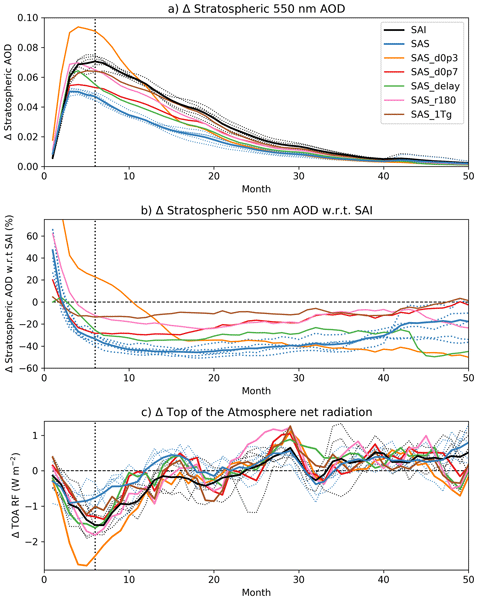
Injecting aerosol into the stratosphere has been suggested to rapidly cool the planet and counter climate change. Rival actors who oppose deployment may seek to counter stratospheric aerosol injection. Using a climate model, we investigate whether stratospheric aerosol removal could be hastened by injecting coarse aerosol which promote aerosol growth and gravitational settling. We find that this could be effective, reducing aerosol impacts by 30 % in simulations, and warrants further research.
Jared Farley, Douglas G. MacMartin, Daniele Visioni, Ben Kravitz, Ewa M. Bednarz, Alistair Duffey, Matthew Henry, and Ali Akherati
Geosci. Model Dev., 19, 1809–1831, https://doi.org/10.5194/gmd-19-1809-2026, https://doi.org/10.5194/gmd-19-1809-2026, 2026
Short summary
Short summary
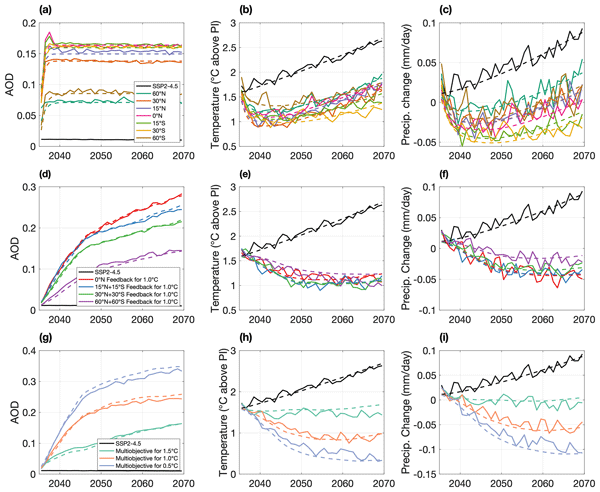
As the climate changes, many are studying sunlight reflection as a potential method of cooling. Such climate intervention could be deployed in many possible ways, including in scenarios where not every actor agrees on the strategy of cooling. These scenarios are so diverse that to explore all of them using earth system models proves to be too costly. In this paper, we develop a simplified climate model that allows users to easily explore climate intervention scenarios of their choice.
Gideon Futerman, Mira Adhikari, Alistair Duffey, Yuanchao Fan, Jessica Gurevitch, Peter Irvine, and Claudia Wieners
Earth Syst. Dynam., 16, 939–978, https://doi.org/10.5194/esd-16-939-2025, https://doi.org/10.5194/esd-16-939-2025, 2025
Short summary
Short summary
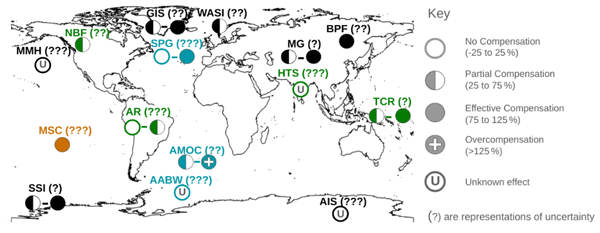
This review assesses the interaction of solar radiation modification (SRM), a technology to reduce the impacts of climate change by reflecting sunlight and earth system tipping elements. We find that SRM at least partially reduces the risk of hitting most (9 out of 15) of the tipping points we studied relative to the same emission pathway and did not overall worsen the risk for any. Uncertainties for all tipping elements studied were high, so we also lay out suggestions for future research.
Alistair Duffey, Robbie Mallett, Peter J. Irvine, Michel Tsamados, and Julienne Stroeve
Earth Syst. Dynam., 14, 1165–1169, https://doi.org/10.5194/esd-14-1165-2023, https://doi.org/10.5194/esd-14-1165-2023, 2023
Short summary
Short summary
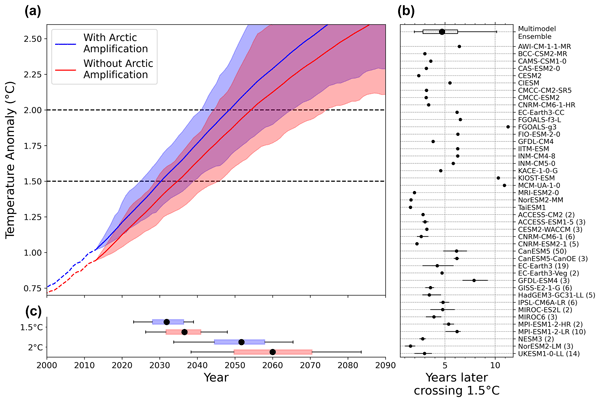
The Arctic is warming several times faster than the rest of the planet. Here, we use climate model projections to quantify for the first time how this faster warming in the Arctic impacts the timing of crossing the 1.5 °C and 2 °C thresholds defined in the Paris Agreement. We show that under plausible emissions scenarios that fail to meet the Paris 1.5 °C target, a hypothetical world without faster warming in the Arctic would breach that 1.5 °C target around 5 years later.
Brendan Clark and Daniele Visioni
EGUsphere, https://doi.org/10.5194/egusphere-2026-6174, https://doi.org/10.5194/egusphere-2026-6174, 2026
This preprint is open for discussion and under review for Earth System Dynamics (ESD).
Short summary
Short summary
Reflective aerosols have been proposed as a way to temporarily cool Earth. Assessing potential impacts of this usually focuses on temperature and precipitation, but radiation may be a primary driver of vegetation responses. We compare simulations from two land models with different complexities. The big leaf model shows negligible radiation effects from aerosols, while the model with canopy structure identifies radiation as a primary driver of plant response to atmospheric aerosols.
Juliette Lavoie, Aude Carreric, Alistair Duffey, Giovanni Chellini, and Elisa Ziegler
Geosci. Model Dev., 19, 8977–8994, https://doi.org/10.5194/gmd-19-8977-2026, https://doi.org/10.5194/gmd-19-8977-2026, 2026
Short summary
Short summary
The Coupled Model Intercomparison Project (CMIP) is a large collaborative project to better understand the Earth’s climate system. The data produced through this project is downloaded by users around the world. In this paper, we analyze the patterns of downloads and the usage of this massive dataset. From this analysis, we make some recommendations for future data production and usage tracking.
Haruki Hirasawa, Knut von Salzen, Matthew Henry, Josh Smith, Frida A.-M. Bender, Cindy Wang, Sarah Doherty, Robert Wood, Philip J. Rasch, and James Haywood
EGUsphere, https://doi.org/10.5194/egusphere-2026-5460, https://doi.org/10.5194/egusphere-2026-5460, 2026
This preprint is open for discussion and under review for Atmospheric Chemistry and Physics (ACP).
Short summary
Short summary
Marine cloud brightening (MCB) is a solar climate intervention proposal to spray sea salt aerosol (SSA) to increase sunlight reflection by low marine clouds. Earth System Models (ESMs) are our main tool for studying potential MCB climate impacts, but there is a large range across ESMs in the MCB sunlight reflection. Comparing MCB in ten ESMs, we find that much of this range is from the size of the SSA and cloud droplet formation from the SSA, both relatively well understood processes.
Alek Petty, Christopher Cardinale, Michel Tsamados, William Gregory, and Alex Cabaj
Earth Syst. Sci. Data Discuss., https://doi.org/10.5194/essd-2026-700, https://doi.org/10.5194/essd-2026-700, 2026
Preprint under review for ESSD
Short summary
Short summary
We combine laser-altimeter measurements with daily passive-microwave estimates of thin ice using Gaussian-process regression. The resulting dataset provides complete daily Arctic sea ice thickness maps across seven winter growth seasons, substantially improving spatial and temporal coverage, particularly during autumn freeze-up. It also better represents thin ice and enables consistent estimates of Arctic sea ice volume.

Daniele Visioni, Alan Robock, Alistair Duffey, Matthew Henry, Haruki Hirasawa, Walker Raymond Lee, Cindy Wang, Kelsey Roberts, Shingo Watanabe, Michelle Simões Reboita, Masahiro Sugiyama, Ben Kravitz, Jim Haywood, Simone Tilmes, Frédéric K. Bonou, Jack Chen, Timofei Sukhodolov, Sandro Vattioni, Andrin Jörimann, Diego Villanueva, Ryan Vella, Paul Farron, Ewa Bednarz, Ulrike Niemeier, Colleen Golja, and Juan A. Añel
Geosci. Model Dev., 19, 8469–8499, https://doi.org/10.5194/gmd-19-8469-2026, https://doi.org/10.5194/gmd-19-8469-2026, 2026
Short summary
Short summary
The Geoengineering Model Intercomparison Project is a coordinated international model intercomparison effort aiming to provide robust experimental protocols for simulations of various Solar Radiation Modification (SRM) methods. In this manuscript, we describe a list of novel experiments decided by the community, to be run by climate models to better understand sources of uncertainty in SRM. We also show and discuss some preliminary results from a few climate models.
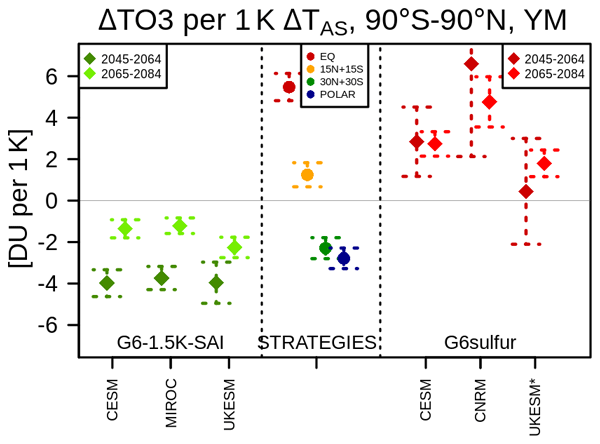
Ewa M. Bednarz, Amy H. Butler, James M. Haywood, Matthew Henry, Andy Jones, Ben Kravitz, Walker R. Lee, Douglas G. MacMartin, Amanda C. Maycock, Takashi Sekiya, Shingo Watanabe, and Daniele Visioni
Atmos. Chem. Phys., 26, 12751–12770, https://doi.org/10.5194/acp-26-12751-2026, https://doi.org/10.5194/acp-26-12751-2026, 2026
Short summary
Short summary
An assessment of the potential impacts of Stratospheric Aerosol Injection, a proposed method to offset global warming, on stratospheric ozone projections over the 21st century using the new multi-model GeoMIP (Geoengineering Model Intercomparison Project) G6-1.5K-SAI (Stratospheric Aerosol Injection) experiment. We discuss drivers of the responses, identify areas of model agreement and disagreement and sources of uncertainty. Our results highlight the need to assess any projected SAI impacts in wider strategy and scenario dimension using a multi-model framework.
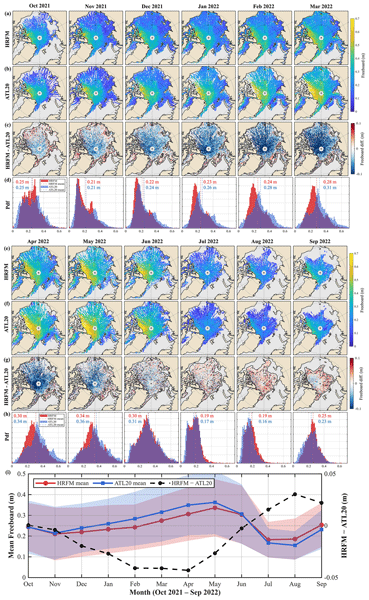
Wenxuan Liu, Ruibo Lei, Taoyong Jin, Heyang Sun, Michel Tsamados, Isolde A. Glissenaar, Jack Christopher Landy, and Yi Zhou
The Cryosphere, 20, 4839–4876, https://doi.org/10.5194/tc-20-4839-2026, https://doi.org/10.5194/tc-20-4839-2026, 2026
Short summary
Short summary
Arctic sea ice is thinning, but its height above the ocean is still hard to measure, especially in summer when melt ponds can look like open water from space. We developed a method that uses laser measurements from the Ice, Cloud, and land Elevation Satellite-2 and nearby satellite images to better separate ice from open water. It captures small ridges more clearly, improves lead detection, and provides year-round freeboard maps that can support better estimates of ice thickness.
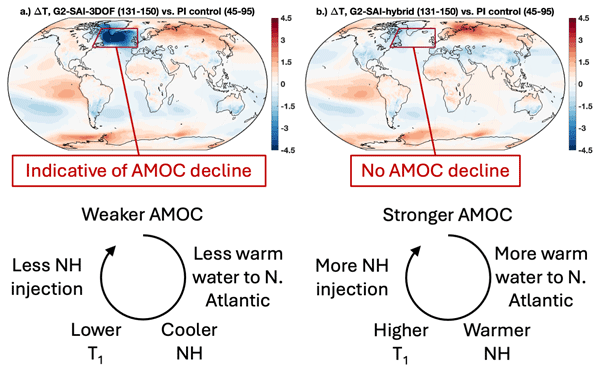
Walker Raymond Lee, Simone Tilmes, and Ewa M. Bednarz
Earth Syst. Dynam., 17, 1117–1134, https://doi.org/10.5194/esd-17-1117-2026, https://doi.org/10.5194/esd-17-1117-2026, 2026
Short summary
Short summary
We present climate model simulation of stratospheric aerosol injection, a proposed method of climate intervention where reflective particles are placed in the stratosphere to cool the planet. We design our simulated interventions to maintain certain surface temperature patterns, and show that the same temperatures can be maintained in different ways because of how the ocean transports heat. This has implications for how climate intervention model experiments are designed in the future.
Anna Lange, Ilaria Quaglia, Daniele Visioni, Alexei Rozanov, and Christian von Savigny
EGUsphere, https://doi.org/10.5194/egusphere-2026-3347, https://doi.org/10.5194/egusphere-2026-3347, 2026
This preprint is open for discussion and under review for Atmospheric Chemistry and Physics (ACP).
Short summary
Short summary
What happens to the colours of the sky when a volcano erupts during an ongoing stratospheric aerosol injection deployment? This study is the first to tackle this question, combining climate model simulations, radiative transfer calculations, and colour modelling. The results show several optical phenomena, including Bishop's Rings, unusual greenish twilight colours, and purple light.
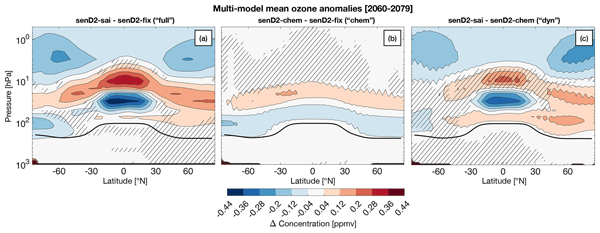
Andrin Jörimann, Timofei Sukhodolov, Simone Tilmes, David Plummer, Shingo Watanabe, Hideharu Akiyoshi, Gabriel Chiodo, Daniele Visioni, Sandro Vattioni, Eugene Rozanov, Ewa Monika Bednarz, Béatrice Josse, Yousuke Yamashita, and Thomas Peter
Atmos. Chem. Phys., 26, 11207–11234, https://doi.org/10.5194/acp-26-11207-2026, https://doi.org/10.5194/acp-26-11207-2026, 2026
Short summary
Short summary
We study a future scenario where artificial stratospheric aerosol injections counter medium climate change, to understand possible negative side effects like ozone depletion. The injected aerosol layer is implemented uniformly in five climate models, which eliminates some uncertainty from model-specific aerosol evolution. The models agree well on where and how key thermodynamical (heating, circulation) and chemical processes change, however, the strength of the changes varies considerably.
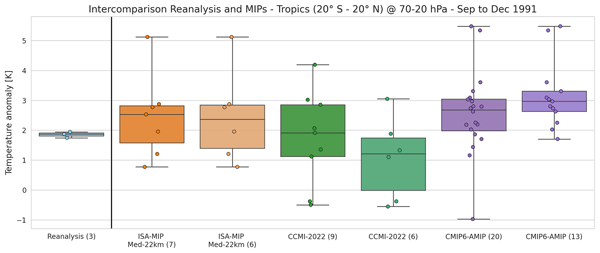
Katharina Perny, Timofei Sukhodolov, Ales Kuchar, Pavle Arsenovic, Bernadette Rosati, Christoph Brühl, Sandip S. Dhomse, Andrin Jörimann, Anton Laakso, Graham Mann, Ulrike Niemeier, Giovanni Pitari, Ilaria Quaglia, Takashi Sekiya, Kengo Sudo, Claudia Timmreck, Simone Tilmes, Daniele Visioni, and Harald E. Rieder
Atmos. Chem. Phys., 26, 10997–11025, https://doi.org/10.5194/acp-26-10997-2026, https://doi.org/10.5194/acp-26-10997-2026, 2026
Short summary
Short summary
Major volcanic eruptions, such as the one of Mt. Pinatubo in 1991, can inject large amounts of sulfur dioxide into the stratosphere. The resulting aerosol cloud affects stratospheric temperature and thereby middle atmospheric dynamics and chemistry. Here we investigate similarities and differences across an ensemble of climate models in reproducing the stratospheric temperature signal following the Mt. Pinatubo eruption.
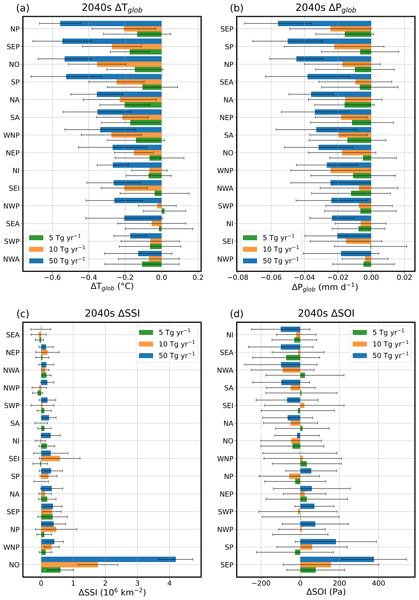
Alex M. Mason, Matthew Henry, Haruki Hirasawa, Fiona M. O'Connor, and James Haywood
Atmos. Chem. Phys., 26, 10861–10879, https://doi.org/10.5194/acp-26-10861-2026, https://doi.org/10.5194/acp-26-10861-2026, 2026
Short summary
Short summary
Marine Cloud Brightening (MCB) proposes the spraying of sea salt particles into marine clouds to cool the planet. MCB in midlatitude regions in models gave a relatively even climate response. We use 42 simulations of MCB to target several climate responses. Two optimised combinations are compared to a midlatitude MCB simulation, which improved sea ice restoration and the temperature response pattern, highlighting the importance of high latitude MCB for MCB optimisation in this model.
Colleen Marie Golja, Marianna Linz, Ewa Monika Bednarz, Daniele Visioni, Ben Kravitz, John A. Dykema, Michelle E. Frazer, Anthony C. Jones, Isla R. Simpson, and Shingo Watanabe
EGUsphere, https://doi.org/10.5194/egusphere-2026-4200, https://doi.org/10.5194/egusphere-2026-4200, 2026
Short summary
Short summary
Adding reflective particles to the stratosphere has been proposed to cool the planet, but how the resulting lower-stratospheric heating affects the broader climate remains unclear. This study simulates idealized lower-stratospheric heating across five climate models finding large inter-model differences in the stratospheric and surface response. The results highlight ways in which these differences may be explained by biases in the stratospheric climatological mean state.
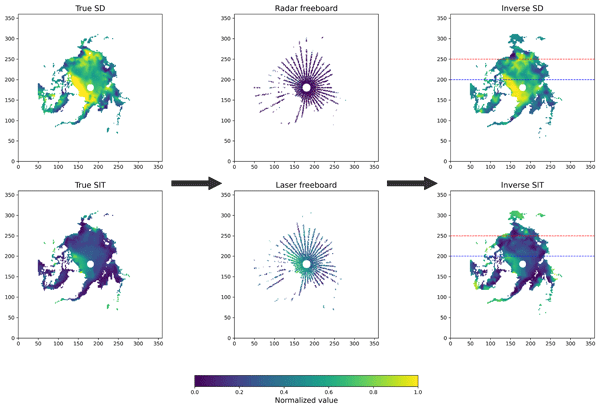
Elie René-Bazin, Michel Tsamados, Sabrina Sofea Binti Aliff Raziuddin, Joel Perez Ferrer, Tudor Suciu, Carmen Nab, Chamkaur Ghag, Harry Heorton, Rosemary Willatt, Jack Landy, Matthew Fox, and Thomas Bodin
The Cryosphere, 20, 3913–3932, https://doi.org/10.5194/tc-20-3913-2026, https://doi.org/10.5194/tc-20-3913-2026, 2026
Short summary
Short summary
This paper introduces a new statistical approach to retrieve ice and snow depth over the Arctic Ocean, using satellite altimeters measurements. We demonstrate the ability of this method to compute efficiently the sea ice thickness and the snow depth over the Arctic, without major assumptions on the snow. In addition to the ice and snow depth, this approach is efficient to study the penetration of radar and laser pulses, paving the way for further research in satellite altimetry.
Azfar Hussain, Huizing Liu, Abolfazl Rezaei, Ping Zhu, Daniele Visioni, Guanglang Xu, Chao Yang, Yan Ma, Tianye Cao, and Qingquan Li
EGUsphere, https://doi.org/10.5194/egusphere-2026-3008, https://doi.org/10.5194/egusphere-2026-3008, 2026
Short summary
Short summary
Central–South Asia and the Tibetan Plateau depend on fragile water systems shaped by rain, snow, ice, and heat. We used future climate model results to test how warming and sunlight-reflecting climate intervention could affect water, plants, snow, and seasonal timing. Warming greatly increases water extremes and shifts seasons earlier. Intervention reduces heat and some extremes, but cannot fully prevent water stress, and its effects vary strongly by region and design.
Temitope S. Egbebiyi, Temitope S. Fafure, Daniele Visioni, Romaric C. Odoulami, Babatunde J. Abiodun, Simone Tilmes, Chris Lennard, and Mark G. New
EGUsphere, https://doi.org/10.5194/egusphere-2026-3436, https://doi.org/10.5194/egusphere-2026-3436, 2026
Short summary
Short summary
Exceeding the global warming thresholds of 1.5 & 2.0 °C before potential mitigation efforts and Carbon dioxide removal are possible future trajectories. While Climate Intervention could reduce peak warming in future, however, their impact in Africa is unknown. We show this intervention may reduce temperature extremes while its impact on precipitation varies across Africa. The result has implications for agricultural planning and water resource management during potential overshoot periods.
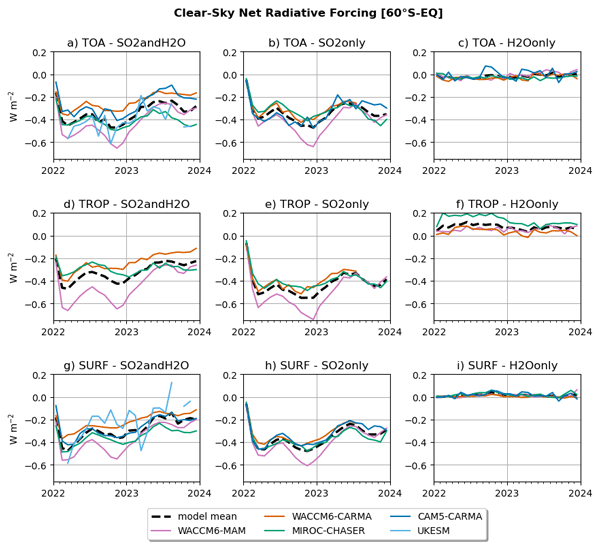
Ilaria Quaglia, Daniele Visioni, Ewa M. Bednarz, Yunqian Zhu, Georgiy Stenchikov, Valentina Aquila, Cheng-Cheng Liu, Graham W. Mann, Yifeng Peng, Takashi Sekiya, Simone Tilmes, Xinyue Wang, Shingo Watanabe, Pengfei Yu, Jun Zhang, Wandi Yu, and Zhihong Zhuo
Atmos. Chem. Phys., 26, 7677–7704, https://doi.org/10.5194/acp-26-7677-2026, https://doi.org/10.5194/acp-26-7677-2026, 2026
Short summary
Short summary
On January 15, 2022, the Hunga volcano eruption released unprecedented amounts of water vapor into the atmosphere alongside a modest amount of SO2. In this work we analyse results from multiple Earth system models. The models agree that the eruption led to small negative radiative forcing from sulfate aerosols and that the contribution from water vapor was minimal. Therefore, the Hunga eruption cannot explain the exceptional surface warming observed in 2023.
Anthony C. Jones, James M. Haywood, Matthew Henry, and Alistair Duffey
Atmos. Chem. Phys., 26, 7589–7605, https://doi.org/10.5194/acp-26-7589-2026, https://doi.org/10.5194/acp-26-7589-2026, 2026
Short summary
Short summary
Injecting aerosol into the stratosphere has been suggested to rapidly cool the planet and counter climate change. Rival actors who oppose deployment may seek to counter stratospheric aerosol injection. Using a climate model, we investigate whether stratospheric aerosol removal could be hastened by injecting coarse aerosol which promote aerosol growth and gravitational settling. We find that this could be effective, reducing aerosol impacts by 30 % in simulations, and warrants further research.
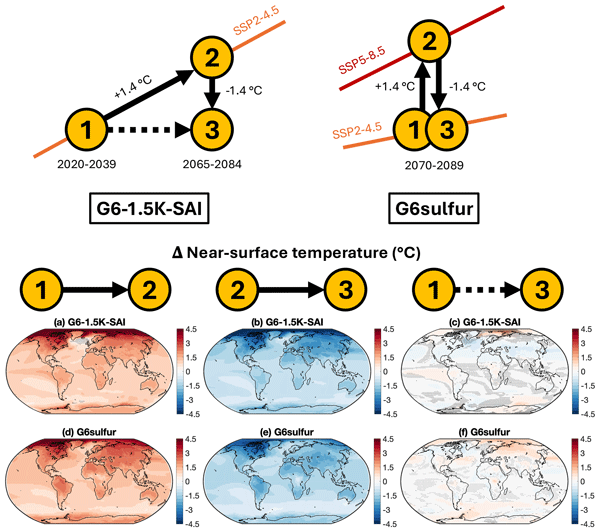
Walker Raymond Lee, Daniele Visioni, Benjamin Moore Wagman, Christopher Robert Wentland, Ben Kravitz, Shingo Watanabe, Takashi Sekiya, Andy Jones, Jim Haywood, Matthew Henry, and Ewa Monika Bednarz
Atmos. Chem. Phys., 26, 7463–7483, https://doi.org/10.5194/acp-26-7463-2026, https://doi.org/10.5194/acp-26-7463-2026, 2026
Short summary
Short summary
Stratospheric aerosol injection (SAI) is a proposed method of cooling the planet by introducing reflective particles called aerosols into the middle atmosphere to reflect sunlight back into space. We consider recent simulations of SAI from four different climate models. SAI cools the planet effectively in all four models; we examine the impacts on temperature and precipitation in each model and compare to previous experiments. Our simulations will help inform future research and policy.
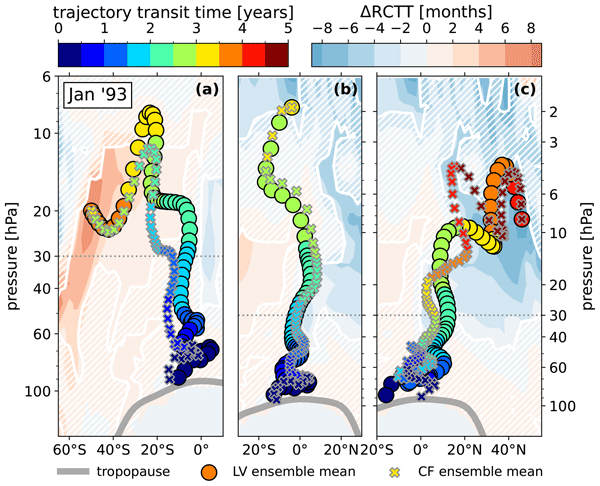
Joseph P. Hollowed, Christiane Jablonowski, Thomas Ehrmann, Diana Bull, Benjamin Wagman, and Benjamin Hillman
Atmos. Chem. Phys., 26, 6889–6908, https://doi.org/10.5194/acp-26-6889-2026, https://doi.org/10.5194/acp-26-6889-2026, 2026
Short summary
Short summary
Large volcanic eruptions introduce huge quantities of aerosols into the stratosphere. Volcanic aerosols heat the stratosphere, thereby altering the global circulation of air. This research uses simulations of the 1991 Mt. Pinatubo eruption to study the resulting circulation changes, and the dynamical processes which govern them. We find that stratospheric composition is altered by increased tropical vertical motion, and that the seasonal cycle of the global circulation is significantly dampened.
Josh Smith, Matthew Henry, Masaru Yoshioka, Ben Johnson, and Jim Haywood
EGUsphere, https://doi.org/10.5194/egusphere-2026-2654, https://doi.org/10.5194/egusphere-2026-2654, 2026
Short summary
Short summary
In 2020, new international rules cut sulphur in shipping fuels by roughly eighty percent, removing particles that had been brightening clouds over the oceans and reflecting sunlight. Using a climate model, we tested how this loss of cooling has been calculated and found that recent studies have
likely underestimated the resulting warming by a factor of two to four. This means cleaner shipping fuels may be contributing more to recent global warming than previously recognised.
likely underestimated the resulting warming by a factor of two to four. This means cleaner shipping fuels may be contributing more to recent global warming than previously recognised.
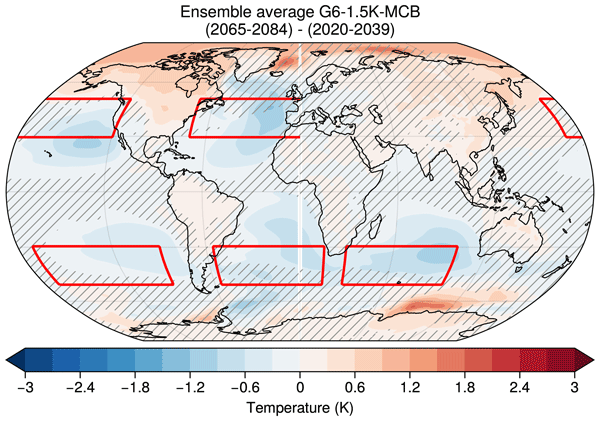
Haruki Hirasawa, Matthew Henry, Philip J. Rasch, Robert Wood, Sarah J. Doherty, James Haywood, Alex Wong, Jean-Francois Lamarque, Ezra Brody, and Hailong Wang
Geosci. Model Dev., 19, 3257–3283, https://doi.org/10.5194/gmd-19-3257-2026, https://doi.org/10.5194/gmd-19-3257-2026, 2026
Short summary
Short summary
Marine cloud brightening (MCB) is a proposal to emit sea salt aerosols to make clouds more reflective and cool the climate. Here, we use three climate models to study a hypothetical future where MCB is used to maintain temperatures near 2020–2039 conditions. The simulation results indicate that using MCB in midlatitude ocean regions can keep the climate close to present day conditions. This reduces many of the negative impacts shown in previous studies, informing future modeling efforts.
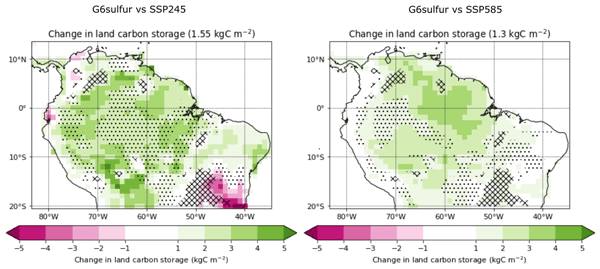
Isobel M. Parry, Paul D. L. Ritchie, Olivier Boucher, Peter M. Cox, James M. Haywood, Ulrike Niemeier, Roland Séférian, Simone Tilmes, and Daniele Visioni
Earth Syst. Dynam., 17, 387–414, https://doi.org/10.5194/esd-17-387-2026, https://doi.org/10.5194/esd-17-387-2026, 2026
Short summary
Short summary
Contrary to some expectations, results from the latest Earth System Models suggest that Solar Radiation Geoengineering could protect the Amazon rainforest from climate-driven dieback. Under Stratospheric Aerosol Injection, carbon storage in Amazonia was projected to increase by a mean of 10.8 % relative to a high CO2 emissions scenario, and even by 8.6% compared to a more conventional medium CO2 emissions scenario.
Jared Farley, Douglas G. MacMartin, Daniele Visioni, Ben Kravitz, Ewa M. Bednarz, Alistair Duffey, Matthew Henry, and Ali Akherati
Geosci. Model Dev., 19, 1809–1831, https://doi.org/10.5194/gmd-19-1809-2026, https://doi.org/10.5194/gmd-19-1809-2026, 2026
Short summary
Short summary
As the climate changes, many are studying sunlight reflection as a potential method of cooling. Such climate intervention could be deployed in many possible ways, including in scenarios where not every actor agrees on the strategy of cooling. These scenarios are so diverse that to explore all of them using earth system models proves to be too costly. In this paper, we develop a simplified climate model that allows users to easily explore climate intervention scenarios of their choice.
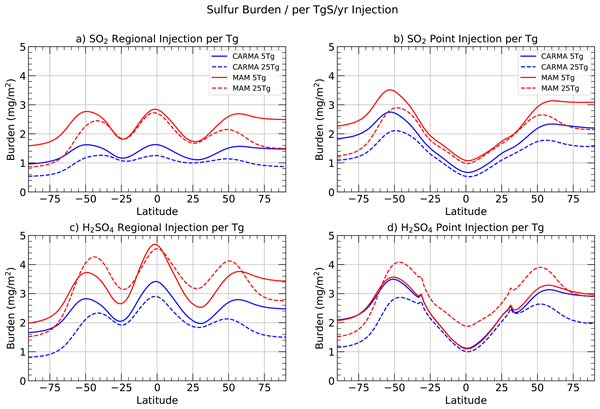
Simone Tilmes, Daniele Visioni, Ilaria Quaglia, Yunqian Zhu, Charles G. Bardeen, Francis Vitt, and Pengfei Yu
Atmos. Chem. Phys., 26, 2649–2666, https://doi.org/10.5194/acp-26-2649-2026, https://doi.org/10.5194/acp-26-2649-2026, 2026
Short summary
Short summary
This study compares two sets of stratospheric aerosol injection (SAI) experiments using the same modeling framework, differing only in their aerosol microphysical schemes. Results show that these two schemes can yield substantially different aerosol burdens, radiative changes, and impacts when simulating the same injection scenarios. These findings suggest that more sophisticated aerosol models may be necessary to accurately assess the efficacy, side effects, and climate impacts of SAI.
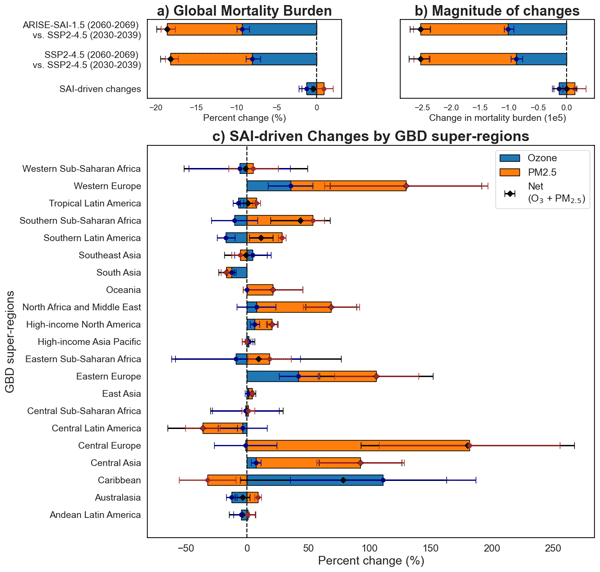
Cindy Wang, Daniele Visioni, Glen Chua, and Ewa M. Bednarz
Atmos. Chem. Phys., 26, 1339–1357, https://doi.org/10.5194/acp-26-1339-2026, https://doi.org/10.5194/acp-26-1339-2026, 2026
Short summary
Short summary
Stratospheric aerosol injection is a proposed method to slow global warming by adding tiny reflective particles high up in the atmosphere to cool the planet. We study how this proposed method might affect air quality and human health using climate models. We find that the health impacts would likely be small and are mainly driven by changes in climate, not by the particles themselves.
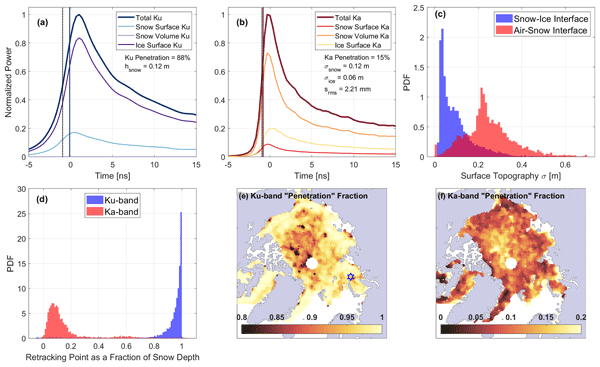
Jack C. Landy, Claude de Rijke-Thomas, Carmen Nab, Isobel Lawrence, Isolde A. Glissenaar, Robbie D. C. Mallett, Renée M. Fredensborg Hansen, Alek Petty, Michel Tsamados, Amy R. Macfarlane, and Anne Braakmann-Folgmann
The Cryosphere, 20, 183–208, https://doi.org/10.5194/tc-20-183-2026, https://doi.org/10.5194/tc-20-183-2026, 2026
Short summary
Short summary
In this study, we use three satellites to test the planned remote sensing approach of the upcoming mission Copernicus Polar Ice and Snow Topography Altimeter (CRISTAL) over sea ice and that its dual radars will accurately measure the heights of the top and base of snow sitting atop floating sea ice floes. Our results suggest that CRISTAL's dual radars will not necessarily measure the snow top and base under all conditions. We find that accurate height measurements depend more on surface roughness than on snow properties, as is commonly assumed.
Valentin Ludwig, Caroline Ribere, Sara Fleury, Christian Haas, Michel Tsamados, Mahmoud El Hajj, Jerome Bouffard, Michele Scagliola, Marion Bocquet, Eric de Boisseson, Vincent Boulenger, Guillaume Boutin, Laurence Connor, Léo Edel, Stefan Hendricks, Ferran Hernández Macià, Marcus Huntemann, Lars Kaleschke, Frank Kauker, Jack Landy, Tom Megain, Alek Petty, Till Soya Rasmussen, Mads Hvid Ribergaard, Robert Ricker, Axel Schweiger, Hoyeon Shi, Xiangshan Tian-Kunze, Donghui Yi, and Alessandro Di Bella
EGUsphere, https://doi.org/10.5194/egusphere-2025-6201, https://doi.org/10.5194/egusphere-2025-6201, 2026
Short summary
Short summary
Our paper compares Arctic sea-ice thickness datasets from models, reanalyses, satellite-only, and multi-product sources. We validate them against Beaufort Sea reference data, compare large-scale products, and analyse time series. Cross-product biases range from 0.2–0.4 m, RMSDs from 0.4–0.9 m, and correlations from 0.5–0.8. We find no 2010–2023 trend, but 1995–2023 thinning of ~ 0.5 m in November and ~ 0.3 m in March.
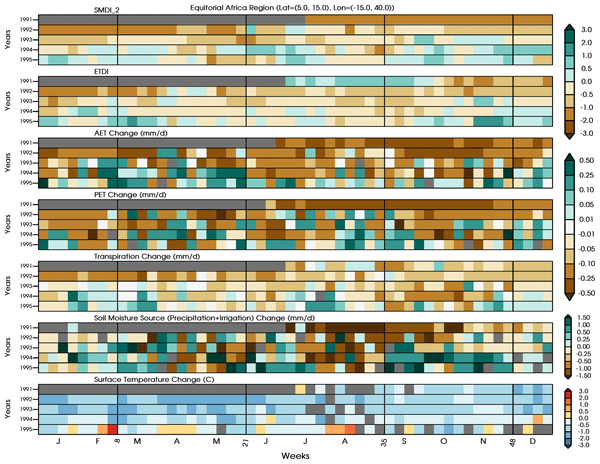
Ram Singh, Kostas Tsigaridis, Diana Bull, Laura P. Swiler, Benjamin M. Wagman, and Kate Marvel
Atmos. Chem. Phys., 25, 16511–16532, https://doi.org/10.5194/acp-25-16511-2025, https://doi.org/10.5194/acp-25-16511-2025, 2025
Short summary
Short summary
Analysis of post-eruption climate conditions using the impact metrics is crucial for understanding the hydroclimatic responses. We used NASA’s Earth system model to perform the experiments and utilized the moisture-based impact metrics and hydrological variables to investigate the effect of volcanically induced conditions that govern plant productivity. This study highlights Mt. Pinatubo's impact on the drivers of plant productivity and regional and seasonal dependence of these drivers.
Allen Hu, Ziming Ke, Xiaohong Liu, Benjamin Wagman, Hunter Brown, Zheng Lu, Mingxuan Wu, Hailong Wang, Qi Tang, Diana Bull, Kara Peterson, and Shaocheng Xie
Atmos. Chem. Phys., 25, 12137–12157, https://doi.org/10.5194/acp-25-12137-2025, https://doi.org/10.5194/acp-25-12137-2025, 2025
Short summary
Short summary
Volcanic eruptions have major effects on atmospheric temperature and can be studied as a proxy for geo-engineering. The original aerosol module in the Energy Exascale Earth System Model v2 (E3SMv2) has problems simulating volcanic aerosols. We alter the aerosol module to simulate the 1991 Pinatubo eruption and implement a more complex chemistry scheme, producing results that better agree with observations. Process analyses of the volcanic aerosols help explain how they grow in the stratosphere.
Joseph P. Hollowed, Christiane Jablonowski, Thomas Ehrmann, Diana Bull, Benjamin Wagman, and Benjamin Hillman
Atmos. Chem. Phys., 25, 11025–11049, https://doi.org/10.5194/acp-25-11025-2025, https://doi.org/10.5194/acp-25-11025-2025, 2025
Short summary
Short summary
Simulations of the 1991 Mt. Pinatubo eruption are used to study how radiative heating by volcanic aerosols alters stratospheric winds. We found that heating of the tropical stratosphere by volcanic aerosols drives increased wind speeds in the midlatitude vortex region. A theoretical framework is then used to identify the dynamical origin of these enhanced winds, which we find to be a combination of a strengthened global circulation and a modification of large-scale atmospheric waves.
Yunqian Zhu, Hideharu Akiyoshi, Valentina Aquila, Elizabeth Asher, Ewa M. Bednarz, Slimane Bekki, Christoph Brühl, Amy H. Butler, Parker Case, Simon Chabrillat, Gabriel Chiodo, Margot Clyne, Peter R. Colarco, Sandip Dhomse, Lola Falletti, Eric Fleming, Ben Johnson, Andrin Jörimann, Mahesh Kovilakam, Gerbrand Koren, Ales Kuchar, Nicolas Lebas, Qing Liang, Cheng-Cheng Liu, Graham Mann, Michael Manyin, Marion Marchand, Olaf Morgenstern, Paul Newman, Luke D. Oman, Freja F. Østerstrøm, Yifeng Peng, David Plummer, Ilaria Quaglia, William Randel, Samuel Rémy, Takashi Sekiya, Stephen Steenrod, Timofei Sukhodolov, Simone Tilmes, Kostas Tsigaridis, Rei Ueyama, Daniele Visioni, Xinyue Wang, Shingo Watanabe, Yousuke Yamashita, Pengfei Yu, Wandi Yu, Jun Zhang, and Zhihong Zhuo
Geosci. Model Dev., 18, 5487–5512, https://doi.org/10.5194/gmd-18-5487-2025, https://doi.org/10.5194/gmd-18-5487-2025, 2025
Short summary
Short summary
To understand the climate impact of the 2022 Hunga volcanic eruption, we developed a climate model–observation comparison project. The paper describes the protocols and models that participate in the experiments. We designed several experiments to achieve our goals of this activity: (1) to evaluate the climate model performance and (2) to understand the Earth system responses to this eruption.
Ezra Brody, Yan Zhang, Douglas G. MacMartin, Daniele Visioni, Ben Kravitz, and Ewa M. Bednarz
Earth Syst. Dynam., 16, 1325–1341, https://doi.org/10.5194/esd-16-1325-2025, https://doi.org/10.5194/esd-16-1325-2025, 2025
Short summary
Short summary
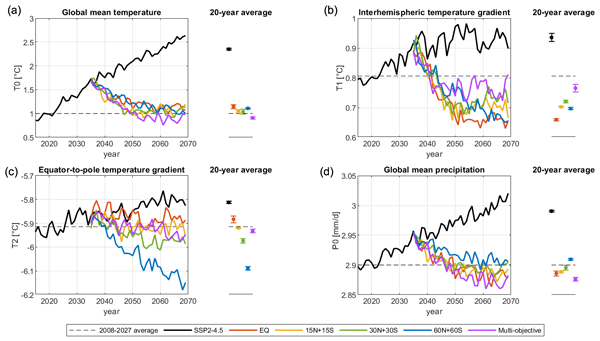
Stratospheric aerosol injection (SAI) is being studied as a possible supplement to emission reduction to temporarily mitigate some of the risks associated with climate change. The latitudes at which SAI is done determine the effect on the climate. We try to find if there are combinations of latitudes that do a better job of counteracting climate change than existing strategies. We found that there are, but just how significant these improvements are depends on the amount of cooling.
Gideon Futerman, Mira Adhikari, Alistair Duffey, Yuanchao Fan, Jessica Gurevitch, Peter Irvine, and Claudia Wieners
Earth Syst. Dynam., 16, 939–978, https://doi.org/10.5194/esd-16-939-2025, https://doi.org/10.5194/esd-16-939-2025, 2025
Short summary
Short summary
This review assesses the interaction of solar radiation modification (SRM), a technology to reduce the impacts of climate change by reflecting sunlight and earth system tipping elements. We find that SRM at least partially reduces the risk of hitting most (9 out of 15) of the tipping points we studied relative to the same emission pathway and did not overall worsen the risk for any. Uncertainties for all tipping elements studied were high, so we also lay out suggestions for future research.
Simone Tilmes, Ewa M. Bednarz, Andrin Jörimann, Daniele Visioni, Douglas E. Kinnison, Gabriel Chiodo, and David Plummer
Atmos. Chem. Phys., 25, 6001–6023, https://doi.org/10.5194/acp-25-6001-2025, https://doi.org/10.5194/acp-25-6001-2025, 2025
Short summary
Short summary
In this paper, we describe the details of a new multi-model intercomparison experiment to assess the effects of Stratospheric Aerosol Intervention (SAI) on stratospheric chemistry and dynamics and, therefore, ozone. Second, we discuss the advantages and differences of the more constrained experiment compared to fully interactive model experiments. This way, we advance the process-level understanding of the drivers of SAI-induced atmospheric responses.
Martin Juckes, Karl E. Taylor, Fabrizio Antonio, David Brayshaw, Carlo Buontempo, Jian Cao, Paul J. Durack, Michio Kawamiya, Hyungjun Kim, Tomas Lovato, Chloe Mackallah, Matthew Mizielinski, Alessandra Nuzzo, Martina Stockhause, Daniele Visioni, Jeremy Walton, Briony Turner, Eleanor O'Rourke, and Beth Dingley
Geosci. Model Dev., 18, 2639–2663, https://doi.org/10.5194/gmd-18-2639-2025, https://doi.org/10.5194/gmd-18-2639-2025, 2025
Short summary
Short summary
The Baseline Climate Variables for Earth System Modelling (ESM-BCVs) are defined as a list of 135 variables which have high utility for the evaluation and exploitation of climate simulations. The list reflects the most frequently used variables from Earth system models based on an assessment of data publication and download records from the largest archive of global climate projects.
Matthew Henry, Ewa M. Bednarz, and Jim Haywood
Atmos. Chem. Phys., 24, 13253–13268, https://doi.org/10.5194/acp-24-13253-2024, https://doi.org/10.5194/acp-24-13253-2024, 2024
Short summary
Short summary
Stratospheric aerosol injection (SAI) refers to a climate intervention by which aerosols are intentionally added to the high atmosphere to increase the amount of reflected sunlight and reduce Earth's temperature. The climate outcomes of SAI depend on the latitude of injection. While injecting aerosols at the Equator has undesirable side effects, injecting away from the Equator has different effects on temperature, rainfall, ozone, and atmospheric circulation, which are analysed in this work.
Ilaria Quaglia and Daniele Visioni
Earth Syst. Dynam., 15, 1527–1541, https://doi.org/10.5194/esd-15-1527-2024, https://doi.org/10.5194/esd-15-1527-2024, 2024
Short summary
Short summary
On 1 January 2020, international shipping vessels were required to substantially reduce the amount of particulate they emit to improve air quality. In this work we demonstrate how this regulatory change contributed to the anomalous warming observed in recent months using climate model simulations that include such a change. Future policies should also perhaps consider their impact on climate, and climate modelers should promptly include those changes in future modeling efforts.
Hunter York Brown, Benjamin Wagman, Diana Bull, Kara Peterson, Benjamin Hillman, Xiaohong Liu, Ziming Ke, and Lin Lin
Geosci. Model Dev., 17, 5087–5121, https://doi.org/10.5194/gmd-17-5087-2024, https://doi.org/10.5194/gmd-17-5087-2024, 2024
Short summary
Short summary
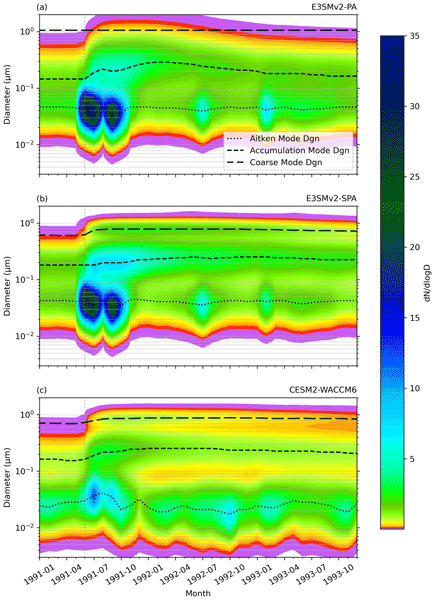
Explosive volcanic eruptions lead to long-lived, microscopic particles in the upper atmosphere which act to cool the Earth's surface by reflecting the Sun's light back to space. We include and test this process in a global climate model, E3SM. E3SM is tested against satellite and balloon observations of the 1991 eruption of Mt. Pinatubo, showing that with these particles in the model we reasonably recreate Pinatubo and its global effects. We also explore how particle size leads to these effects.

Christina V. Brodowsky, Timofei Sukhodolov, Gabriel Chiodo, Valentina Aquila, Slimane Bekki, Sandip S. Dhomse, Michael Höpfner, Anton Laakso, Graham W. Mann, Ulrike Niemeier, Giovanni Pitari, Ilaria Quaglia, Eugene Rozanov, Anja Schmidt, Takashi Sekiya, Simone Tilmes, Claudia Timmreck, Sandro Vattioni, Daniele Visioni, Pengfei Yu, Yunqian Zhu, and Thomas Peter
Atmos. Chem. Phys., 24, 5513–5548, https://doi.org/10.5194/acp-24-5513-2024, https://doi.org/10.5194/acp-24-5513-2024, 2024
Short summary
Short summary
The aerosol layer is an essential part of the climate system. We characterize the sulfur budget in a volcanically quiescent (background) setting, with a special focus on the sulfate aerosol layer using, for the first time, a multi-model approach. The aim is to identify weak points in the representation of the atmospheric sulfur budget in an intercomparison of nine state-of-the-art coupled global circulation models.
Anton Laakso, Daniele Visioni, Ulrike Niemeier, Simone Tilmes, and Harri Kokkola
Earth Syst. Dynam., 15, 405–427, https://doi.org/10.5194/esd-15-405-2024, https://doi.org/10.5194/esd-15-405-2024, 2024
Short summary
Short summary
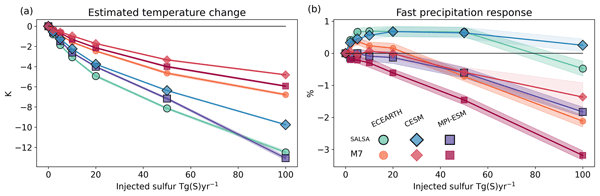
This study is the second in a two-part series in which we explore the dependency of the impacts of stratospheric sulfur injections on both the model employed and the strategy of injection utilized. The study uncovers uncertainties associated with these techniques to cool climate, highlighting how the simulated climate impacts are dependent on both the selected model and the magnitude of the injections. We also show that estimating precipitation impacts of aerosol injection is a complex task.
Daniele Visioni, Alan Robock, Jim Haywood, Matthew Henry, Simone Tilmes, Douglas G. MacMartin, Ben Kravitz, Sarah J. Doherty, John Moore, Chris Lennard, Shingo Watanabe, Helene Muri, Ulrike Niemeier, Olivier Boucher, Abu Syed, Temitope S. Egbebiyi, Roland Séférian, and Ilaria Quaglia
Geosci. Model Dev., 17, 2583–2596, https://doi.org/10.5194/gmd-17-2583-2024, https://doi.org/10.5194/gmd-17-2583-2024, 2024
Short summary
Short summary
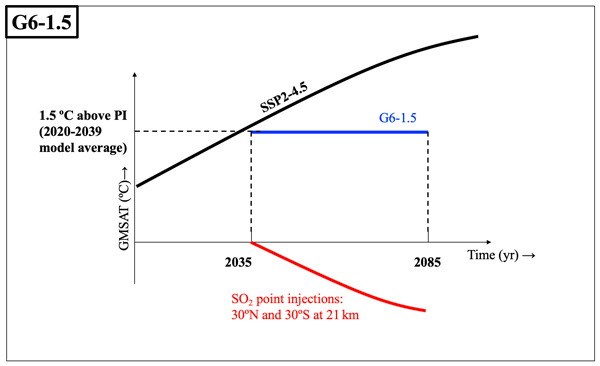
This paper describes a new experimental protocol for the Geoengineering Model Intercomparison Project (GeoMIP). In it, we describe the details of a new simulation of sunlight reflection using the stratospheric aerosols that climate models are supposed to run, and we explain the reasons behind each choice we made when defining the protocol.
Yan Zhang, Douglas G. MacMartin, Daniele Visioni, Ewa M. Bednarz, and Ben Kravitz
Earth Syst. Dynam., 15, 191–213, https://doi.org/10.5194/esd-15-191-2024, https://doi.org/10.5194/esd-15-191-2024, 2024
Short summary
Short summary
Injecting SO2 into the lower stratosphere can temporarily reduce global mean temperature and mitigate some risks associated with climate change, but injecting it at different latitudes and seasons would have different impacts. This study introduces new stratospheric aerosol injection (SAI) strategies and explores the importance of the choice of SAI strategy, demonstrating that it notably affects the distribution of aerosol cloud, injection efficiency, and various surface climate impacts.
Alistair Duffey, Robbie Mallett, Peter J. Irvine, Michel Tsamados, and Julienne Stroeve
Earth Syst. Dynam., 14, 1165–1169, https://doi.org/10.5194/esd-14-1165-2023, https://doi.org/10.5194/esd-14-1165-2023, 2023
Short summary
Short summary
The Arctic is warming several times faster than the rest of the planet. Here, we use climate model projections to quantify for the first time how this faster warming in the Arctic impacts the timing of crossing the 1.5 °C and 2 °C thresholds defined in the Paris Agreement. We show that under plausible emissions scenarios that fail to meet the Paris 1.5 °C target, a hypothetical world without faster warming in the Arctic would breach that 1.5 °C target around 5 years later.
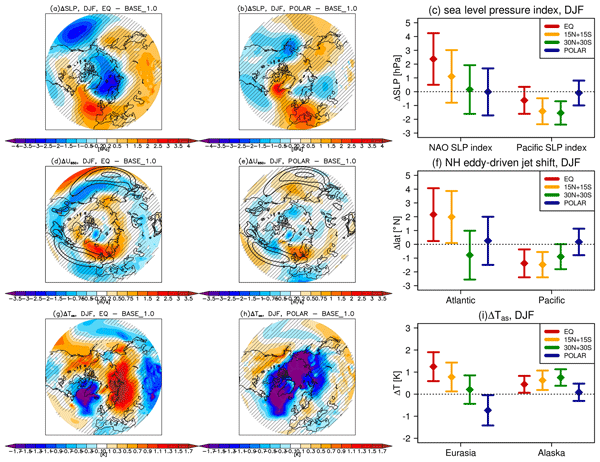
Ewa M. Bednarz, Amy H. Butler, Daniele Visioni, Yan Zhang, Ben Kravitz, and Douglas G. MacMartin
Atmos. Chem. Phys., 23, 13665–13684, https://doi.org/10.5194/acp-23-13665-2023, https://doi.org/10.5194/acp-23-13665-2023, 2023
Short summary
Short summary
We use a state-of-the-art Earth system model and a set of stratospheric aerosol injection (SAI) strategies to achieve the same level of global mean surface cooling through different combinations of location and/or timing of the injection. We demonstrate that the choice of SAI strategy can lead to contrasting impacts on stratospheric and tropospheric temperatures, circulation, and chemistry (including stratospheric ozone), thereby leading to different impacts on regional surface climate.
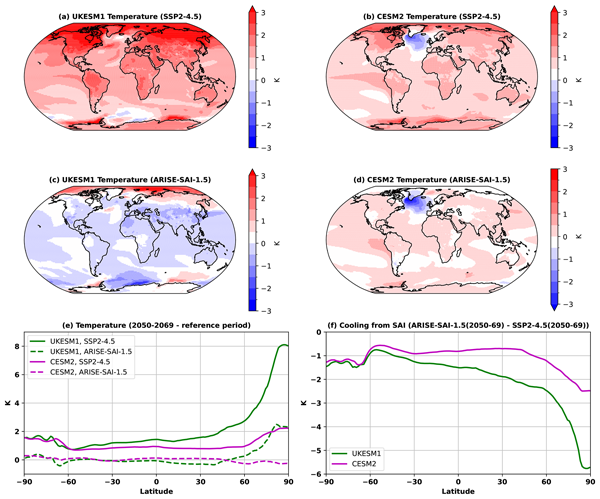
Matthew Henry, Jim Haywood, Andy Jones, Mohit Dalvi, Alice Wells, Daniele Visioni, Ewa M. Bednarz, Douglas G. MacMartin, Walker Lee, and Mari R. Tye
Atmos. Chem. Phys., 23, 13369–13385, https://doi.org/10.5194/acp-23-13369-2023, https://doi.org/10.5194/acp-23-13369-2023, 2023
Short summary
Short summary
Solar climate interventions, such as injecting sulfur in the stratosphere, may be used to offset some of the adverse impacts of global warming. We use two independently developed Earth system models to assess the uncertainties around stratospheric sulfur injections. The injection locations and amounts are optimized to maintain the same pattern of surface temperature. While both models show reduced warming, the change in rainfall patterns (even without sulfur injections) is uncertain.
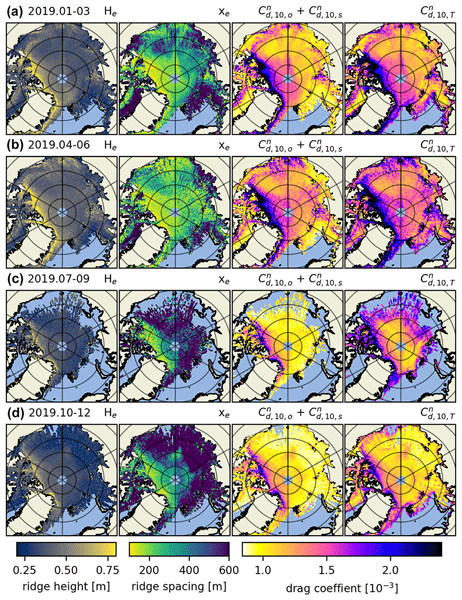
Alexander Mchedlishvili, Christof Lüpkes, Alek Petty, Michel Tsamados, and Gunnar Spreen
The Cryosphere, 17, 4103–4131, https://doi.org/10.5194/tc-17-4103-2023, https://doi.org/10.5194/tc-17-4103-2023, 2023
Short summary
Short summary
In this study we looked at sea ice–atmosphere drag coefficients, quantities that help with characterizing the friction between the atmosphere and sea ice, and vice versa. Using ICESat-2, a laser altimeter that measures elevation differences by timing how long it takes for photons it sends out to return to itself, we could map the roughness, i.e., how uneven the surface is. From roughness we then estimate drag force, the frictional force between sea ice and the atmosphere, across the Arctic.

Vishnu Nandan, Rosemary Willatt, Robbie Mallett, Julienne Stroeve, Torsten Geldsetzer, Randall Scharien, Rasmus Tonboe, John Yackel, Jack Landy, David Clemens-Sewall, Arttu Jutila, David N. Wagner, Daniela Krampe, Marcus Huntemann, Mallik Mahmud, David Jensen, Thomas Newman, Stefan Hendricks, Gunnar Spreen, Amy Macfarlane, Martin Schneebeli, James Mead, Robert Ricker, Michael Gallagher, Claude Duguay, Ian Raphael, Chris Polashenski, Michel Tsamados, Ilkka Matero, and Mario Hoppmann
The Cryosphere, 17, 2211–2229, https://doi.org/10.5194/tc-17-2211-2023, https://doi.org/10.5194/tc-17-2211-2023, 2023
Short summary
Short summary
We show that wind redistributes snow on Arctic sea ice, and Ka- and Ku-band radar measurements detect both newly deposited snow and buried snow layers that can affect the accuracy of snow depth estimates on sea ice. Radar, laser, meteorological, and snow data were collected during the MOSAiC expedition. With frequent occurrence of storms in the Arctic, our results show that
wind-redistributed snow needs to be accounted for to improve snow depth estimates on sea ice from satellite radars.
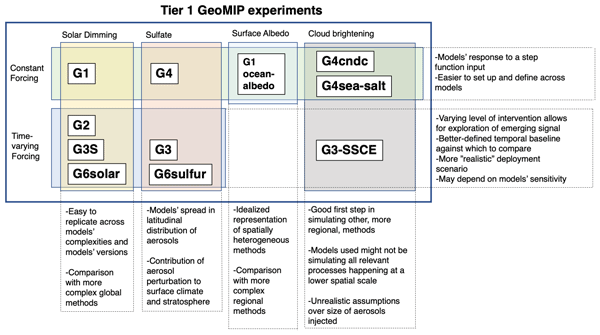
Daniele Visioni, Ben Kravitz, Alan Robock, Simone Tilmes, Jim Haywood, Olivier Boucher, Mark Lawrence, Peter Irvine, Ulrike Niemeier, Lili Xia, Gabriel Chiodo, Chris Lennard, Shingo Watanabe, John C. Moore, and Helene Muri
Atmos. Chem. Phys., 23, 5149–5176, https://doi.org/10.5194/acp-23-5149-2023, https://doi.org/10.5194/acp-23-5149-2023, 2023
Short summary
Short summary
Geoengineering indicates methods aiming to reduce the temperature of the planet by means of reflecting back a part of the incoming radiation before it reaches the surface or allowing more of the planetary radiation to escape into space. It aims to produce modelling experiments that are easy to reproduce and compare with different climate models, in order to understand the potential impacts of these techniques. Here we assess its past successes and failures and talk about its future.
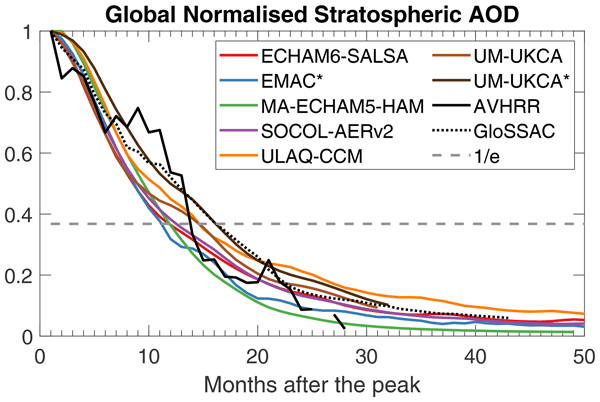
Ilaria Quaglia, Claudia Timmreck, Ulrike Niemeier, Daniele Visioni, Giovanni Pitari, Christina Brodowsky, Christoph Brühl, Sandip S. Dhomse, Henning Franke, Anton Laakso, Graham W. Mann, Eugene Rozanov, and Timofei Sukhodolov
Atmos. Chem. Phys., 23, 921–948, https://doi.org/10.5194/acp-23-921-2023, https://doi.org/10.5194/acp-23-921-2023, 2023
Short summary
Short summary
The last very large explosive volcanic eruption we have measurements for is the eruption of Mt. Pinatubo in 1991. It is therefore often used as a benchmark for climate models' ability to reproduce these kinds of events. Here, we compare available measurements with the results from multiple experiments conducted with climate models interactively simulating the aerosol cloud formation.
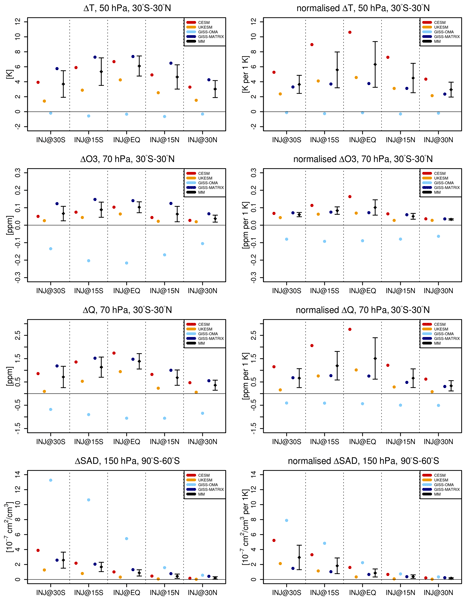
Ewa M. Bednarz, Daniele Visioni, Ben Kravitz, Andy Jones, James M. Haywood, Jadwiga Richter, Douglas G. MacMartin, and Peter Braesicke
Atmos. Chem. Phys., 23, 687–709, https://doi.org/10.5194/acp-23-687-2023, https://doi.org/10.5194/acp-23-687-2023, 2023
Short summary
Short summary
Building on Part 1 of this two-part study, we demonstrate the role of biases in climatological circulation and specific aspects of model microphysics in driving the differences in simulated sulfate distributions amongst three Earth system models. We then characterize the simulated changes in stratospheric and free-tropospheric temperatures, ozone, water vapor, and large-scale circulation, elucidating the role of the above aspects in the surface responses discussed in Part 1.

Daniele Visioni, Ewa M. Bednarz, Walker R. Lee, Ben Kravitz, Andy Jones, Jim M. Haywood, and Douglas G. MacMartin
Atmos. Chem. Phys., 23, 663–685, https://doi.org/10.5194/acp-23-663-2023, https://doi.org/10.5194/acp-23-663-2023, 2023
Short summary
Short summary
The paper constitutes Part 1 of a study performing a first systematic inter-model comparison of the atmospheric responses to stratospheric sulfate aerosol injections (SAIs) at various latitudes as simulated by three state-of-the-art Earth system models. We identify similarities and differences in the modeled aerosol burden, investigate the differences in the aerosol approaches between the models, and ultimately show the differences produced in surface climate, temperature and precipitation.
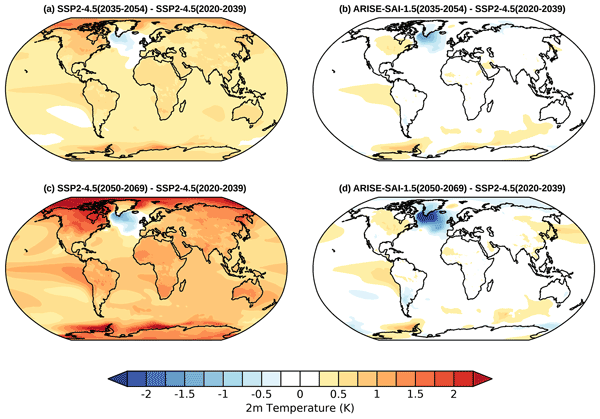
Jadwiga H. Richter, Daniele Visioni, Douglas G. MacMartin, David A. Bailey, Nan Rosenbloom, Brian Dobbins, Walker R. Lee, Mari Tye, and Jean-Francois Lamarque
Geosci. Model Dev., 15, 8221–8243, https://doi.org/10.5194/gmd-15-8221-2022, https://doi.org/10.5194/gmd-15-8221-2022, 2022
Short summary
Short summary
Solar climate intervention using stratospheric aerosol injection is a proposed method of reducing global mean temperatures to reduce the worst consequences of climate change. We present a new modeling protocol aimed at simulating a plausible deployment of stratospheric aerosol injection and reproducibility of simulations using other Earth system models: Assessing Responses and Impacts of Solar climate intervention on the Earth system with stratospheric aerosol injection (ARISE-SAI).
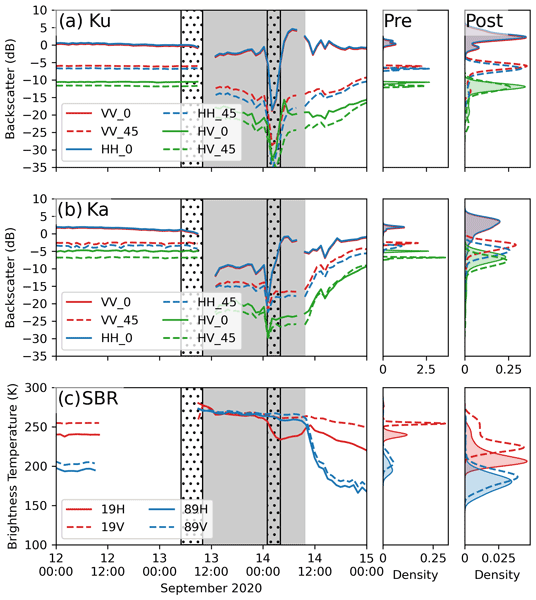
Julienne Stroeve, Vishnu Nandan, Rosemary Willatt, Ruzica Dadic, Philip Rostosky, Michael Gallagher, Robbie Mallett, Andrew Barrett, Stefan Hendricks, Rasmus Tonboe, Michelle McCrystall, Mark Serreze, Linda Thielke, Gunnar Spreen, Thomas Newman, John Yackel, Robert Ricker, Michel Tsamados, Amy Macfarlane, Henna-Reetta Hannula, and Martin Schneebeli
The Cryosphere, 16, 4223–4250, https://doi.org/10.5194/tc-16-4223-2022, https://doi.org/10.5194/tc-16-4223-2022, 2022
Short summary
Short summary
Impacts of rain on snow (ROS) on satellite-retrieved sea ice variables remain to be fully understood. This study evaluates the impacts of ROS over sea ice on active and passive microwave data collected during the 2019–20 MOSAiC expedition. Rainfall and subsequent refreezing of the snowpack significantly altered emitted and backscattered radar energy, laying important groundwork for understanding their impacts on operational satellite retrievals of various sea ice geophysical variables.
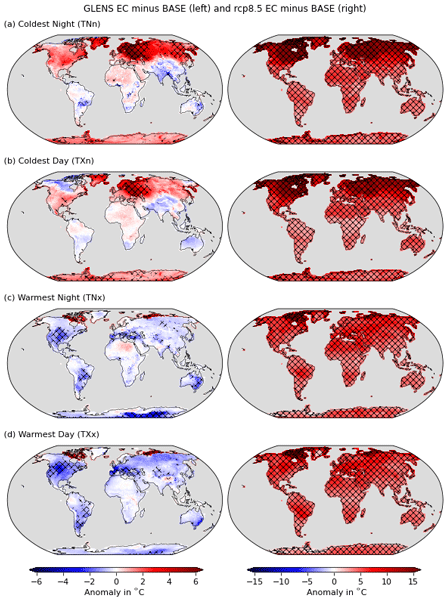
Mari R. Tye, Katherine Dagon, Maria J. Molina, Jadwiga H. Richter, Daniele Visioni, Ben Kravitz, and Simone Tilmes
Earth Syst. Dynam., 13, 1233–1257, https://doi.org/10.5194/esd-13-1233-2022, https://doi.org/10.5194/esd-13-1233-2022, 2022
Short summary
Short summary
We examined the potential effect of stratospheric aerosol injection (SAI) on extreme temperature and precipitation. SAI may cause daytime temperatures to cool but nighttime to warm. Daytime cooling may occur in all seasons across the globe, with the largest decreases in summer. In contrast, nighttime warming may be greatest at high latitudes in winter. SAI may reduce the frequency and intensity of extreme rainfall. The combined changes may exacerbate drying over parts of the global south.
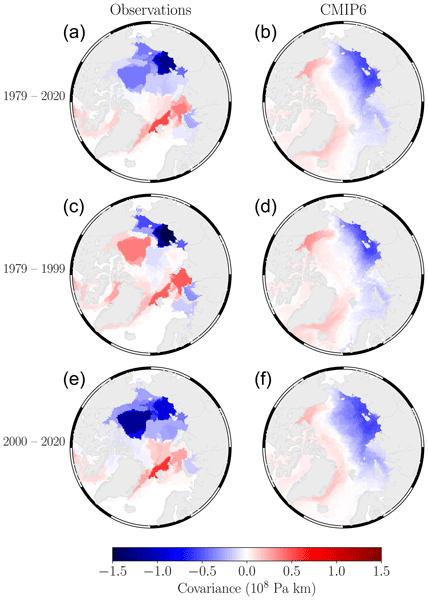
William Gregory, Julienne Stroeve, and Michel Tsamados
The Cryosphere, 16, 1653–1673, https://doi.org/10.5194/tc-16-1653-2022, https://doi.org/10.5194/tc-16-1653-2022, 2022
Short summary
Short summary
This research was conducted to better understand how coupled climate models simulate one of the large-scale interactions between the atmosphere and Arctic sea ice that we see in observational data, the accurate representation of which is important for producing reliable forecasts of Arctic sea ice on seasonal to inter-annual timescales. With network theory, this work shows that models do not reflect this interaction well on average, which is likely due to regional biases in sea ice thickness.
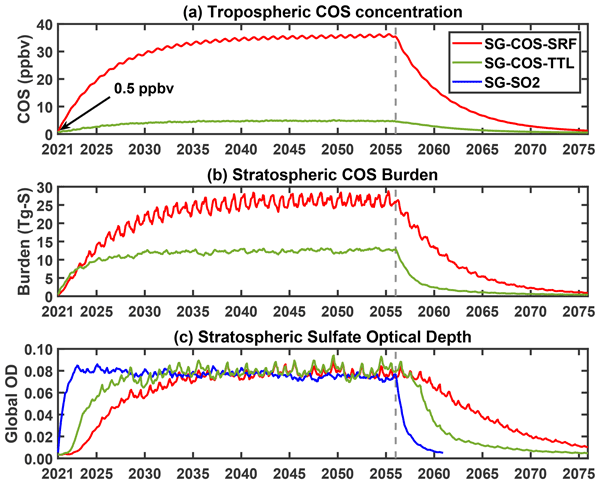
Ilaria Quaglia, Daniele Visioni, Giovanni Pitari, and Ben Kravitz
Atmos. Chem. Phys., 22, 5757–5773, https://doi.org/10.5194/acp-22-5757-2022, https://doi.org/10.5194/acp-22-5757-2022, 2022
Short summary
Short summary
Carbonyl sulfide is a gas that mixes very well in the atmosphere and can reach the stratosphere, where it reacts with sunlight and produces aerosol. Here we propose that, by increasing surface fluxes by an order of magnitude, the number of stratospheric aerosols produced may be enough to partially offset the warming produced by greenhouse gases. We explore what effect this would have on the atmospheric composition.
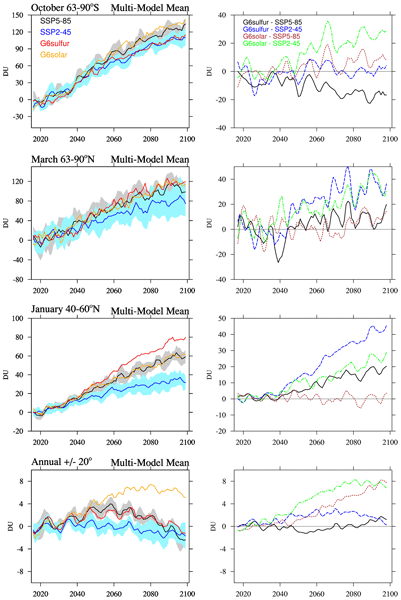
Simone Tilmes, Daniele Visioni, Andy Jones, James Haywood, Roland Séférian, Pierre Nabat, Olivier Boucher, Ewa Monica Bednarz, and Ulrike Niemeier
Atmos. Chem. Phys., 22, 4557–4579, https://doi.org/10.5194/acp-22-4557-2022, https://doi.org/10.5194/acp-22-4557-2022, 2022
Short summary
Short summary
This study assesses the impacts of climate interventions, using stratospheric sulfate aerosol and solar dimming on stratospheric ozone, based on three Earth system models with interactive stratospheric chemistry. The climate interventions have been applied to a high emission (baseline) scenario in order to reach global surface temperatures of a medium emission scenario. We find significant increases and decreases in total column ozone, depending on regions and seasons.
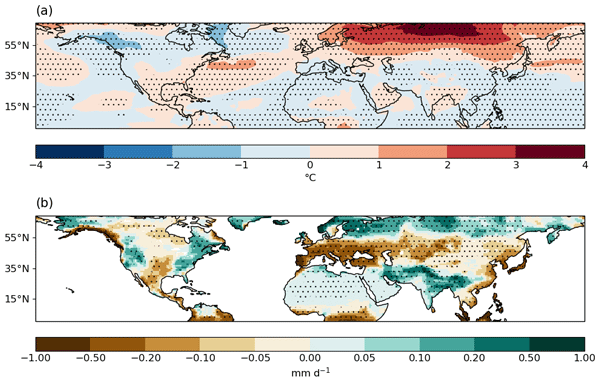
Andy Jones, Jim M. Haywood, Adam A. Scaife, Olivier Boucher, Matthew Henry, Ben Kravitz, Thibaut Lurton, Pierre Nabat, Ulrike Niemeier, Roland Séférian, Simone Tilmes, and Daniele Visioni
Atmos. Chem. Phys., 22, 2999–3016, https://doi.org/10.5194/acp-22-2999-2022, https://doi.org/10.5194/acp-22-2999-2022, 2022
Short summary
Short summary
Simulations by six Earth-system models of geoengineering by introducing sulfuric acid aerosols into the tropical stratosphere are compared. A robust impact on the northern wintertime North Atlantic Oscillation is found, exacerbating precipitation reduction over parts of southern Europe. In contrast, the models show no consistency with regard to impacts on the Quasi-Biennial Oscillation, although results do indicate a risk that the oscillation could become locked into a permanent westerly phase.
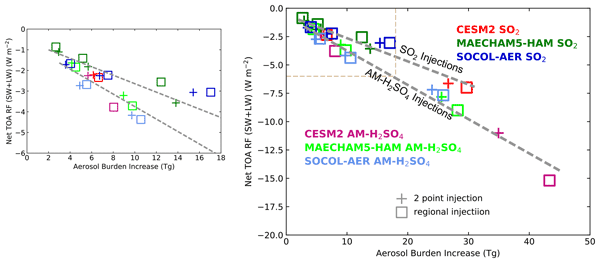
Debra K. Weisenstein, Daniele Visioni, Henning Franke, Ulrike Niemeier, Sandro Vattioni, Gabriel Chiodo, Thomas Peter, and David W. Keith
Atmos. Chem. Phys., 22, 2955–2973, https://doi.org/10.5194/acp-22-2955-2022, https://doi.org/10.5194/acp-22-2955-2022, 2022
Short summary
Short summary
This paper explores a potential method of geoengineering that could be used to slow the rate of change of climate over decadal scales. We use three climate models to explore how injections of accumulation-mode sulfuric acid aerosol change the large-scale stratospheric particle size distribution and radiative forcing response for the chosen scenarios. Radiative forcing per unit sulfur injected and relative to the change in aerosol burden is larger with particulate than with SO2 injections.
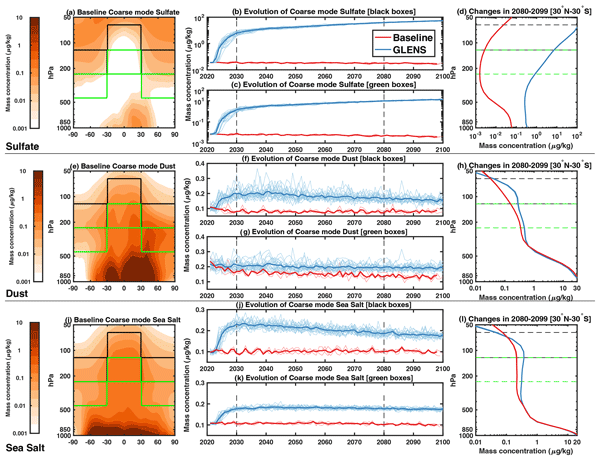
Daniele Visioni, Simone Tilmes, Charles Bardeen, Michael Mills, Douglas G. MacMartin, Ben Kravitz, and Jadwiga H. Richter
Atmos. Chem. Phys., 22, 1739–1756, https://doi.org/10.5194/acp-22-1739-2022, https://doi.org/10.5194/acp-22-1739-2022, 2022
Short summary
Short summary
Aerosols are simulated in a simplified way in climate models: in the model analyzed here, they are represented in every grid as described by three simple logarithmic distributions, mixing all different species together. The size can evolve when new particles are formed, particles merge together to create a larger one or particles are deposited to the surface. This approximation normally works fairly well. Here we show however that when large amounts of sulfate are simulated, there are problems.
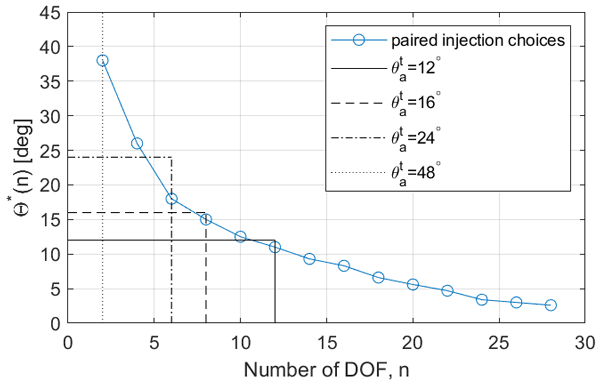
Yan Zhang, Douglas G. MacMartin, Daniele Visioni, and Ben Kravitz
Earth Syst. Dynam., 13, 201–217, https://doi.org/10.5194/esd-13-201-2022, https://doi.org/10.5194/esd-13-201-2022, 2022
Short summary
Short summary
Adding SO2 to the stratosphere could temporarily cool the planet by reflecting more sunlight back to space. However, adding SO2 at different latitude(s) and season(s) leads to significant differences in regional surface climate. This study shows that, to cool the planet by 1–1.5 °C, there are likely six to eight choices of injection latitude(s) and season(s) that lead to meaningfully different distributions of climate impacts.

Anton Laakso, Ulrike Niemeier, Daniele Visioni, Simone Tilmes, and Harri Kokkola
Atmos. Chem. Phys., 22, 93–118, https://doi.org/10.5194/acp-22-93-2022, https://doi.org/10.5194/acp-22-93-2022, 2022
Short summary
Short summary
The use of different spatio-temporal sulfur injection strategies with different magnitudes to create an artificial reflective aerosol layer to cool the climate is studied using sectional and modal aerosol schemes in a climate model. There are significant differences in the results depending on the aerosol microphysical module used. Different spatio-temporal injection strategies have a significant impact on the magnitude and zonal distribution of radiative forcing and atmospheric dynamics.
Florent Garnier, Sara Fleury, Gilles Garric, Jérôme Bouffard, Michel Tsamados, Antoine Laforge, Marion Bocquet, Renée Mie Fredensborg Hansen, and Frédérique Remy
The Cryosphere, 15, 5483–5512, https://doi.org/10.5194/tc-15-5483-2021, https://doi.org/10.5194/tc-15-5483-2021, 2021
Short summary
Short summary
Snow depth data are essential to monitor the impacts of climate change on sea ice volume variations and their impacts on the climate system. For that purpose, we present and assess the altimetric snow depth product, computed in both hemispheres from CryoSat-2 and SARAL satellite data. The use of these data instead of the common climatology reduces the sea ice thickness by about 30 cm over the 2013–2019 period. These data are also crucial to argue for the launch of the CRISTAL satellite mission.
Cited articles
Archibald, A. T., O'Connor, F. M., Abraham, N. L., Archer-Nicholls, S., Chipperfield, M. P., Dalvi, M., Folberth, G. A., Dennison, F., Dhomse, S. S., Griffiths, P. T., Hardacre, C., Hewitt, A. J., Hill, R. S., Johnson, C. E., Keeble, J., Köhler, M. O., Morgenstern, O., Mulcahy, J. P., Ordóñez, C., Pope, R. J., Rumbold, S. T., Russo, M. R., Savage, N. H., Sellar, A., Stringer, M., Turnock, S. T., Wild, O., and Zeng, G.: Description and evaluation of the UKCA stratosphere–troposphere chemistry scheme (StratTrop vn 1.0) implemented in UKESM1, Geosci. Model Dev., 13, 1223–1266, https://doi.org/10.5194/gmd-13-1223-2020, 2020. a
Armstrong McKay, D. I., Staal, A., Abrams, J. F., Winkelmann, R., Sakschewski, B., Loriani, S., Fetzer, I., Cornell, S. E., Rockström, J., and Lenton, T. M.: Exceeding 1.5 °C global warming could trigger multiple climate tipping points, Science, 377, eabn7950, https://doi.org/10.1126/science.abn7950, 2022. a
Bednarz, E. M., Butler, A. H., Visioni, D., Zhang, Y., Kravitz, B., and MacMartin, D. G.: Injection strategy – a driver of atmospheric circulation and ozone response to stratospheric aerosol geoengineering, Atmos. Chem. Phys., 23, 13665–13684, https://doi.org/10.5194/acp-23-13665-2023, 2023a. a, b, c, d
Bednarz, E. M., Visioni, D., Kravitz, B., Jones, A., Haywood, J. M., Richter, J., MacMartin, D. G., and Braesicke, P.: Climate response to off-equatorial stratospheric sulfur injections in three Earth system models – Part 2: Stratospheric and free-tropospheric response, Atmos. Chem. Phys., 23, 687–709, https://doi.org/10.5194/acp-23-687-2023, 2023b. a
Berdahl, M., Robock, A., Ji, D., Moore, J. C., Jones, A., Kravitz, B., and Watanabe, S.: Arctic cryosphere response in the Geoengineering Model Intercomparison Project G3 and G4 scenarios, J. Geophys. Res.-Atmos., 119, 1308–1321, https://doi.org/10.1002/2013JD020627, 2014. a
Blanchard-Wrigglesworth, E., Roach, L. A., Donohoe, A., and Ding, Q.: Impact of Winds and Southern Ocean SSTs on Antarctic Sea Ice Trends and Variability, J. Climate, 34, 949–965, https://doi.org/10.1175/JCLI-D-20-0386.1, 2021. a
Bonan, D. B., Schneider, T., Eisenman, I., and Wills, R. C. J.: Constraining the Date of a Seasonally Ice-Free Arctic Using a Simple Model, Geophys. Res. Lett., 48, e2021GL094309, https://doi.org/10.1029/2021GL094309, 2021. a
Bracegirdle, T. J., Krinner, G., Tonelli, M., Haumann, F. A., Naughten, K. A., Rackow, T., Roach, L. A., and Wainer, I.: Twenty first century changes in Antarctic and Southern Ocean surface climate in CMIP6, Atmos. Sci. Lett., 21, e984, https://doi.org/10.1002/asl.984, 2020. a
Brown, H. Y., Wagman, B., Bull, D., Peterson, K., Hillman, B., Liu, X., Ke, Z., and Lin, L.: Validating a microphysical prognostic stratospheric aerosol implementation in E3SMv2 using observations after the Mount Pinatubo eruption, Geosci. Model Dev., 17, 5087–5121, https://doi.org/10.5194/gmd-17-5087-2024, 2024. a, b
Crutzen, P. J.: Albedo Enhancement by Stratospheric Sulfur Injections: A Contribution to Resolve a Policy Dilemma?, Clim. Change, 77, 211, https://doi.org/10.1007/s10584-006-9101-y, 2006. a
Danabasoglu, G., Bates, S. C., Briegleb, B. P., Jayne, S. R., Jochum, M., Large, W. G., Peacock, S., and Yeager, S. G.: The CCSM4 Ocean Component, J. Climate, 25, 1361–1389, https://doi.org/10.1175/JCLI-D-11-00091.1, 2012. a
Danabasoglu, G., Lamarque, J.-F., Bacmeister, J., Bailey, D. A., DuVivier, A. K., Edwards, J., Emmons, L. K., Fasullo, J., Garcia, R., Gettelman, A., Hannay, C., Holland, M. M., Large, W. G., Lauritzen, P. H., Lawrence, D. M., Lenaerts, J. T. M., Lindsay, K., Lipscomb, W. H., Mills, M. J., Neale, R., Oleson, K. W., Otto-Bliesner, B., Phillips, A. S., Sacks, W., Tilmes, S., van Kampenhout, L., Vertenstein, M., Bertini, A., Dennis, J., Deser, C., Fischer, C., Fox-Kemper, B., Kay, J. E., Kinnison, D., Kushner, P. J., Larson, V. E., Long, M. C., Mickelson, S., Moore, J. K., Nienhouse, E., Polvani, L., Rasch, P. J., and Strand, W. G.: The Community Earth System Model Version 2 (CESM2), J. Adv. Model. Earth Sy., 12, e2019MS001916, https://doi.org/10.1029/2019MS001916, 2020. a, b
Duffey, A.: alistairduffey/GeoMIP_G6-1.5K_cloud_data: v1.0, Zenodo [code], https://doi.org/10.5281/zenodo.18715711, 2026a. a
Duffey, A.: alistairduffey/HiLLA_MM: v3, Zenodo [code], https://doi.org/10.5281/zenodo.19453163, 2026b. a
Duffey, A., Mallett, R., Dutch, V. R., Steckling, J., Hermant, A., Day, J., and Pithan, F.: Representation of Arctic Winter Atmospheric Boundary Layer Stability Over Sea Ice in CMIP6 Models, J. Geophys. Res.-Atmos., 130, e2024JD041412, https://doi.org/10.1029/2024JD041412, 2025b. a
Duffey, A., Wheeler, L., and Lee, W.: HiLLA-SAI simulations in UKESM1, CESM2-WACCM and E3SMv3, Zenodo [data set], https://doi.org/10.5281/zenodo.19452349, 2026. a
Dykema, J. A., Keith, D. W., and Keutsch, F. N.: Improved aerosol radiative properties as a foundation for solar geoengineering risk assessment, Geophys. Res. Lett., 43, 7758–7766, https://doi.org/10.1002/2016GL069258, 2016. a
E3SM Project, DOE: Energy Exascale Earth System Model v3.0.0, DOE CODE [software], https://doi.org/10.11578/E3SM/dc.20240301.3, 4 March 2024. a
Eyring, V., Bony, S., Meehl, G. A., Senior, C. A., Stevens, B., Stouffer, R. J., and Taylor, K. E.: Overview of the Coupled Model Intercomparison Project Phase 6 (CMIP6) experimental design and organization, Geosci. Model Dev., 9, 1937–1958, https://doi.org/10.5194/gmd-9-1937-2016, 2016. a
Fetterer, F., Knowles, K., Meier, W. N., Savoie, M., Windnagel, A., and Stafford, T.: Sea Ice Index, Version 4, Boulder, Colorado USA, National Snow and Ice Data Center [data set], https://doi.org/10.7265/A98X-0F50, 2025. a
Futerman, G., Adhikari, M., Duffey, A., Fan, Y., Gurevitch, J., Irvine, P., and Wieners, C.: The interaction of solar radiation modification with Earth system tipping elements, Earth Syst. Dynam., 16, 939–978, https://doi.org/10.5194/esd-16-939-2025, 2025. a
Gettelman, A., Mills, M. J., Kinnison, D. E., Garcia, R. R., Smith, A. K., Marsh, D. R., Tilmes, S., Vitt, F., Bardeen, C. G., McInerny, J., Liu, H.-L., Solomon, S. C., Polvani, L. M., Emmons, L. K., Lamarque, J.-F., Richter, J. H., Glanville, A. S., Bacmeister, J. T., Phillips, A. S., Neale, R. B., Simpson, I. R., DuVivier, A. K., Hodzic, A., and Randel, W. J.: The Whole Atmosphere Community Climate Model Version 6 (WACCM6), J. Geophys. Res.-Atmos., 124, 12380–12403, https://doi.org/10.1029/2019JD030943, 2019. a
Goddard, P. B., Kravitz, B., MacMartin, D. G., Visioni, D., Bednarz, E. M., and Lee, W. R.: Stratospheric Aerosol Injection Can Reduce Risks to Antarctic Ice Loss Depending on Injection Location and Amount, J. Geophys. Res.-Atmos., 128, e2023JD039434, https://doi.org/10.1029/2023JD039434, 2023. a, b
Golaz, J.-C., Van Roekel, L. P., Zheng, X., Roberts, A. F., Wolfe, J. D., Lin, W., Bradley, A. M., Tang, Q., Maltrud, M. E., Forsyth, R. M., Zhang, C., Zhou, T., Zhang, K., Zender, C. S., Wu, M., Wang, H., Turner, A. K., Singh, B., Richter, J. H., Qin, Y., Petersen, M. R., Mametjanov, A., Ma, P.-L., Larson, V. E., Krishna, J., Keen, N. D., Jeffery, N., Hunke, E. C., Hannah, W. M., Guba, O., Griffin, B. M., Feng, Y., Engwirda, D., Di Vittorio, A. V., Dang, C., Conlon, L. M., Chen, C.-C.-J., Brunke, M. A., Bisht, G., Benedict, J. J., Asay-Davis, X. S., Zhang, Y., Zhang, M., Zeng, X., Xie, S., Wolfram, P. J., Vo, T., Veneziani, M., Tesfa, T. K., Sreepathi, S., Salinger, A. G., Reeves Eyre, J. E. J., Prather, M. J., Mahajan, S., Li, Q., Jones, P. W., Jacob, R. L., Huebler, G. W., Huang, X., Hillman, B. R., Harrop, B. E., Foucar, J. G., Fang, Y., Comeau, D. S., Caldwell, P. M., Bartoletti, T., Balaguru, K., Taylor, M. A., McCoy, R. B., Leung, L. R., and Bader, D. C.: The DOE E3SM Model Version 2: Overview of the Physical Model and Initial Model Evaluation, J. Adv. Model. Earth Sy., 14, e2022MS003156, https://doi.org/10.1029/2022MS003156, 2022. a
Golaz, J.-C., Lin, W., Zheng, X., Xie, S., Roberts, A., Roekel, L. P. V., Thornton, P. E., Barthel, A., Bradley, A., Wolfe, J. D., Zhang, C., Zhang, K., Zhang, S., Asay-Davis, X. S., Begeman, C. B., Bisht, G., Burrows, S. M., Chen, C.-C., Feng, Y., Hunke, E. C., Jacob, R. L., Ke, Z., Mahajan, S., Mahfouz, N., Maltrud, M. E., Shi, X., Tang, Q., Terai, C. R., Thomas, E. E., Wang, H., Xie, J., Zhou, T., Bartoletti, T., Benedict, J. J., Brunke, M., Comeau, D., Fan, J., Forsyth, R. M., Foucar, J. G., Guba, O., Hannah, W. M., Hao, D., Huang, X., Jeffery, N., Kang, H.-G., Keen, N. D., Lee, H.-H., Lee, J., Liu, X., Mametjanov, A., Mülmenstädt, J., Petersen, M. R., Prather, M. J., Price, S., Qian, Y., Salinger, A. G., Santos, S. P., Shan, Y., Singh, B., Smith, K., Song, X., Sreepathi, S., Turner, A. K., Vo, T., Wan, H., Wu, M., Yu, W., Zender, C. S., Zeng, X., Zhang, G. J., Zhang, M., Zhang, T., Yuying, Z., McCoy, R., Taylor, M. A., Leung, L. R., Caldwell, P. M., and Bader, D. C.: The Energy Exascale Earth System Model version 3: 2. Overview of the coupled system, J. Adv. Model. Earth Sy., 18, e2025MS005302, https://doi.org/10.1029/2025MS005302, 2026. a, b, c, d
Hahn, L. C., Armour, K. C., Zelinka, M. D., Bitz, C. M., and Donohoe, A.: Contributions to Polar Amplification in CMIP5 and CMIP6 Models, Front. Earth Sci., 9, 710036, https://doi.org/10.3389/feart.2021.710036, 2021. a
Hausfather, Z.: An assessment of current policy scenarios over the 21st century and the reduced plausibility of high-emissions pathways, Dialogues on Clim. Change, 2, 26–32, https://doi.org/10.1177/29768659241304854, 2025. a
Haywood, J. M., Jones, A., Bellouin, N., and Stephenson, D.: Asymmetric forcing from stratospheric aerosols impacts Sahelian rainfall, Nat. Clim. Change, 3, 660–665, https://doi.org/10.1038/nclimate1857, 2013. a
Henry, M., Haywood, J., Jones, A., Dalvi, M., Wells, A., Visioni, D., Bednarz, E. M., MacMartin, D. G., Lee, W., and Tye, M. R.: Comparison of UKESM1 and CESM2 simulations using the same multi-target stratospheric aerosol injection strategy, Atmos. Chem. Phys., 23, 13369–13385, https://doi.org/10.5194/acp-23-13369-2023, 2023. a, b, c, d, e
Henry, M., Bednarz, E. M., and Haywood, J.: How does the latitude of stratospheric aerosol injection affect the climate in UKESM1?, Atmos. Chem. Phys., 24, 13253–13268, https://doi.org/10.5194/acp-24-13253-2024, 2024. a, b
Hersbach, H., Bell, B., Berrisford, P., Hirahara, S., Horányi, A., Muñoz-Sabater, J., Nicolas, J., Peubey, C., Radu, R., Schepers, D., Simmons, A., Soci, C., Abdalla, S., Abellan, X., Balsamo, G., Bechtold, P., Biavati, G., Bidlot, J., Bonavita, M., De Chiara, G., Dahlgren, P., Dee, D., Diamantakis, M., Dragani, R., Flemming, J., Forbes, R., Fuentes, M., Geer, A., Haimberger, L., Healy, S., Hogan, R. J., Hólm, E., Janisková, M., Keeley, S., Laloyaux, P., Lopez, P., Lupu, C., Radnoti, G., de Rosnay, P., Rozum, I., Vamborg, F., Villaume, S., and Thépaut, J.-N.: The ERA5 global reanalysis, Q. J. Roy. Meteor. Soc., 146, 1999–2049, https://doi.org/10.1002/qj.3803, 2020. a
Hoffmann, L. and Spang, R.: An assessment of tropopause characteristics of the ERA5 and ERA-Interim meteorological reanalyses, Atmos. Chem. Phys., 22, 4019–4046, https://doi.org/10.5194/acp-22-4019-2022, 2022. a
Hu, A., Ke, Z., Liu, X., Wagman, B., Brown, H., Lu, Z., Wu, M., Wang, H., Tang, Q., Bull, D., Peterson, K., and Xie, S.: Size-resolved process understanding of stratospheric sulfate aerosol following the Pinatubo eruption, Atmos. Chem. Phys., 25, 12137–12157, https://doi.org/10.5194/acp-25-12137-2025, 2025. a, b
Intrieri, J. M., Shupe, M. D., Uttal, T., and McCarty, B. J.: An annual cycle of Arctic cloud characteristics observed by radar and lidar at SHEBA, J. Geophys. Res.-Oceans, 107, SHE 5–1–SHE 5–15, https://doi.org/10.1029/2000JC000423, 2002. a
Jiang, J., Cao, L., MacMartin, D. G., Simpson, I. R., Kravitz, B., Cheng, W., Visioni, D., Tilmes, S., Richter, J. H., and Mills, M. J.: Stratospheric Sulfate Aerosol Geoengineering Could Alter the High-Latitude Seasonal Cycle, Geophys. Res. Lett., 46, 14153–14163, https://doi.org/10.1029/2019GL085758, 2019. a, b
Jones, A.: MOHC UKESM1.0-LL model output prepared for CMIP6 GeoMIP G6sulfur, Earth System Grid Federation [data set], https://doi.org/10.22033/ESGF/CMIP6.5822, 2019. a
Jones, A., Haywood, J. M., Jones, A. C., Tilmes, S., Kravitz, B., and Robock, A.: North Atlantic Oscillation response in GeoMIP experiments G6solar and G6sulfur: why detailed modelling is needed for understanding regional implications of solar radiation management, Atmos. Chem. Phys., 21, 1287–1304, https://doi.org/10.5194/acp-21-1287-2021, 2021. a
Jones, A. C., Hawcroft, M. K., Haywood, J. M., Jones, A., Guo, X., and Moore, J. C.: Regional Climate Impacts of Stabilizing Global Warming at 1.5 K Using Solar Geoengineering, Earth's Future, 6, 230–251, https://doi.org/10.1002/2017EF000720, 2018. a
Kleinschmitt, C., Boucher, O., and Platt, U.: Sensitivity of the radiative forcing by stratospheric sulfur geoengineering to the amount and strategy of the SO2 injection studied with the LMDZ-S3A model, Atmos. Chem. Phys., 18, 2769–2786, https://doi.org/10.5194/acp-18-2769-2018, 2018. a, b
Kravitz, B., Caldeira, K., Boucher, O., Robock, A., Rasch, P. J., Alterskjær, K., Karam, D. B., Cole, J. N. S., Curry, C. L., Haywood, J. M., Irvine, P. J., Ji, D., Jones, A., Kristjánsson, J. E., Lunt, D. J., Moore, J. C., Niemeier, U., Schmidt, H., Schulz, M., Singh, B., Tilmes, S., Watanabe, S., Yang, S., and Yoon, J.-H.: Climate model response from the Geoengineering Model Intercomparison Project (GeoMIP), J. Geophys. Res.-Atmos., 118, 8320–8332, https://doi.org/10.1002/jgrd.50646, 2013. a, b
Kuhlbrodt, T., Jones, C. G., Sellar, A., Storkey, D., Blockley, E., Stringer, M., Hill, R., Graham, T., Ridley, J., Blaker, A., Calvert, D., Copsey, D., Ellis, R., Hewitt, H., Hyder, P., Ineson, S., Mulcahy, J., Siahaan, A., and Walton, J.: The Low-Resolution Version of HadGEM3 GC3.1: Development and Evaluation for Global Climate, J. Adv. Model. Earth Sy., 10, 2865–2888, https://doi.org/10.1029/2018MS001370, 2018. a
Lawrence, D. M., Fisher, R. A., Koven, C. D., Oleson, K. W., Swenson, S. C., Bonan, G., Collier, N., Ghimire, B., van Kampenhout, L., Kennedy, D., Kluzek, E., Lawrence, P. J., Li, F., Li, H., Lombardozzi, D., Riley, W. J., Sacks, W. J., Shi, M., Vertenstein, M., Wieder, W. R., Xu, C., Ali, A. A., Badger, A. M., Bisht, G., van den Broeke, M., Brunke, M. A., Burns, S. P., Buzan, J., Clark, M., Craig, A., Dahlin, K., Drewniak, B., Fisher, J. B., Flanner, M., Fox, A. M., Gentine, P., Hoffman, F., Keppel-Aleks, G., Knox, R., Kumar, S., Lenaerts, J., Leung, L. R., Lipscomb, W. H., Lu, Y., Pandey, A., Pelletier, J. D., Perket, J., Randerson, J. T., Ricciuto, D. M., Sanderson, B. M., Slater, A., Subin, Z. M., Tang, J., Thomas, R. Q., Val Martin, M., and Zeng, X.: The Community Land Model Version 5: Description of New Features, Benchmarking, and Impact of Forcing Uncertainty, J. Adv. Model. Earth Sy., 11, 4245–4287, https://doi.org/10.1029/2018MS001583, 2019. a
Lee, W. R., Visioni, D., Bednarz, E. M., MacMartin, D. G., Kravitz, B., and Tilmes, S.: Quantifying the Efficiency of Stratospheric Aerosol Geoengineering at Different Altitudes, Geophys. Res. Lett., 50, e2023GL104417, https://doi.org/10.1029/2023GL104417, 2023b. a, b
Lee, W. R., Visioni, D., Wagman, B. M., Wentland, C. R., Kravitz, B., Watanabe, S., Sekiya, T., Jones, A., Haywood, J., Henry, M., and Bednarz, E. M.: G6-1.5K-SAI and G6sulfur: changes in impacts and uncertainty depending on stratospheric aerosol injection strategy in the Geoengineering Model Intercomparison Project, EGUsphere [preprint], https://doi.org/10.5194/egusphere-2025-5742, 2025. a
Liu, X., Ma, P.-L., Wang, H., Tilmes, S., Singh, B., Easter, R. C., Ghan, S. J., and Rasch, P. J.: Description and evaluation of a new four-mode version of the Modal Aerosol Module (MAM4) within version 5.3 of the Community Atmosphere Model, Geosci. Model Dev., 9, 505–522, https://doi.org/10.5194/gmd-9-505-2016, 2016. a
Mann, G. W., Carslaw, K. S., Spracklen, D. V., Ridley, D. A., Manktelow, P. T., Chipperfield, M. P., Pickering, S. J., and Johnson, C. E.: Description and evaluation of GLOMAP-mode: a modal global aerosol microphysics model for the UKCA composition-climate model, Geosci. Model Dev., 3, 519–551, https://doi.org/10.5194/gmd-3-519-2010, 2010. a, b
McCrystall, M. R., Stroeve, J., Serreze, M., Forbes, B. C., and Screen, J. A.: New climate models reveal faster and larger increases in Arctic precipitation than previously projected, Nat. Commun., 12, 6765, https://doi.org/10.1038/s41467-021-27031-y, 2021. a
McCusker, K. E., Battisti, D. S., and Bitz, C. M.: Inability of stratospheric sulfate aerosol injections to preserve the West Antarctic Ice Sheet, Geophys. Res. Lett., 42, 4989–4997, https://doi.org/10.1002/2015GL064314, 2015. a
Mulcahy, J. P., Jones, C., Sellar, A., Johnson, B., Boutle, I. A., Jones, A., Andrews, T., Rumbold, S. T., Mollard, J., Bellouin, N., Johnson, C. E., Williams, K. D., Grosvenor, D. P., and McCoy, D. T.: Improved Aerosol Processes and Effective Radiative Forcing in HadGEM3 and UKESM1, J. Adv. Model. Earth Sy., 10, 2786–2805, https://doi.org/10.1029/2018MS001464, 2018. a
Mulcahy, J. P., Johnson, C., Jones, C. G., Povey, A. C., Scott, C. E., Sellar, A., Turnock, S. T., Woodhouse, M. T., Abraham, N. L., Andrews, M. B., Bellouin, N., Browse, J., Carslaw, K. S., Dalvi, M., Folberth, G. A., Glover, M., Grosvenor, D. P., Hardacre, C., Hill, R., Johnson, B., Jones, A., Kipling, Z., Mann, G., Mollard, J., O'Connor, F. M., Palmiéri, J., Reddington, C., Rumbold, S. T., Richardson, M., Schutgens, N. A. J., Stier, P., Stringer, M., Tang, Y., Walton, J., Woodward, S., and Yool, A.: Description and evaluation of aerosol in UKESM1 and HadGEM3-GC3.1 CMIP6 historical simulations, Geosci. Model Dev., 13, 6383–6423, https://doi.org/10.5194/gmd-13-6383-2020, 2020. a
NASEM: Reflecting Sunlight: Recommendations for Solar Geoengineering Research and Research Governance, The National Academies Press, Washington, DC, ISBN 978-0-309-67605-2, https://doi.org/10.17226/25762, 2021. a
Niemeier, U., Schmidt, H., and Timmreck, C.: The dependency of geoengineered sulfate aerosol on the emission strategy, Atmos. Sci. Lett., 12, 189–194, https://doi.org/10.1002/asl.304, 2011. a
North, G. R., Cahalan, R. F., and Coakley Jr., J. A.: Energy balance climate models, Rev. Geophys., 19, 91–121, https://doi.org/10.1029/RG019i001p00091, 1981. a
Notz, D. and Community, S.: Arctic Sea Ice in CMIP6, Geophys. Res. Lett., 47, e2019GL086749, https://doi.org/10.1029/2019GL086749, 2020. a, b
Notz, D. and Stroeve, J.: The Trajectory Towards a Seasonally Ice-Free Arctic Ocean, Current Climate Change Reports, 4, 407–416, https://doi.org/10.1007/s40641-018-0113-2, 2018. a, b
O'Neill, B. C., Tebaldi, C., van Vuuren, D. P., Eyring, V., Friedlingstein, P., Hurtt, G., Knutti, R., Kriegler, E., Lamarque, J.-F., Lowe, J., Meehl, G. A., Moss, R., Riahi, K., and Sanderson, B. M.: The Scenario Model Intercomparison Project (ScenarioMIP) for CMIP6, Geosci. Model Dev., 9, 3461–3482, https://doi.org/10.5194/gmd-9-3461-2016, 2016. a
Pithan, F. and Mauritsen, T.: Arctic amplification dominated by temperature feedbacks in contemporary climate models, Nat. Geosci., 7, 181–184, https://doi.org/10.1038/ngeo2071, 2014. a, b, c
Rantanen, M., Karpechko, A. Y., Lipponen, A., Nordling, K., Hyvärinen, O., Ruosteenoja, K., Vihma, T., and Laaksonen, A.: The Arctic has warmed nearly four times faster than the globe since 1979, Commun. Earth Environ., 3, 1–10, https://doi.org/10.1038/s43247-022-00498-3, 2022. a, b
Richter, J. H., Visioni, D., MacMartin, D. G., Bailey, D. A., Rosenbloom, N., Dobbins, B., Lee, W. R., Tye, M., and Lamarque, J.-F.: Assessing Responses and Impacts of Solar climate intervention on the Earth system with stratospheric aerosol injection (ARISE-SAI): protocol and initial results from the first simulations, Geosci. Model Dev., 15, 8221–8243, https://doi.org/10.5194/gmd-15-8221-2022, 2022. a, b, c, d, e, f
Ridley, J. K., Lowe, J. A., and Hewitt, H. T.: How reversible is sea ice loss?, The Cryosphere, 6, 193–198, https://doi.org/10.5194/tc-6-193-2012, 2012. a
Robock, A.: Volcanic eruptions and climate, Rev. Geophys., 38, 191–219, https://doi.org/10.1029/1998RG000054, 2000. a, b
Robock, A.: The Latest on Volcanic Eruptions and Climate, Eos, Transactions American Geophysical Union, 94, 305–306, https://doi.org/10.1002/2013EO350001, 2013. a
Robock, A. and Mao, J.: Winter warming from large volcanic eruptions, Geophys. Res. Lett., 19, 2405–2408, https://doi.org/10.1029/92GL02627, 1992. a
Robock, A., Oman, L., and Stenchikov, G. L.: Regional climate responses to geoengineering with tropical and Arctic SO2 injections, J. Geophys. Res.-Atmos., 113, https://doi.org/10.1029/2008JD010050, 2008. a, b
Schneider, D. P., Ammann, C. M., Otto-Bliesner, B. L., and Kaufman, D. S.: Climate response to large, high-latitude and low-latitude volcanic eruptions in the Community Climate System Model, J. Geophys. Res.-Atmos., 114, https://doi.org/10.1029/2008JD011222, 2009. a, b
Sellar, A. A., Jones, C. G., Mulcahy, J. P., Tang, Y., Yool, A., Wiltshire, A., O'Connor, F. M., Stringer, M., Hill, R., Palmieri, J., Woodward, S., de Mora, L., Kuhlbrodt, T., Rumbold, S. T., Kelley, D. I., Ellis, R., Johnson, C. E., Walton, J., Abraham, N. L., Andrews, M. B., Andrews, T., Archibald, A. T., Berthou, S., Burke, E., Blockley, E., Carslaw, K., Dalvi, M., Edwards, J., Folberth, G. A., Gedney, N., Griffiths, P. T., Harper, A. B., Hendry, M. A., Hewitt, A. J., Johnson, B., Jones, A., Jones, C. D., Keeble, J., Liddicoat, S., Morgenstern, O., Parker, R. J., Predoi, V., Robertson, E., Siahaan, A., Smith, R. S., Swaminathan, R., Woodhouse, M. T., Zeng, G., and Zerroukat, M.: UKESM1: Description and Evaluation of the U.K. Earth System Model, J. Adv. Model. Earth Sy., 11, 4513–4558, https://doi.org/10.1029/2019MS001739, 2019. a, b
Serreze, M. C. and Francis, J. A.: The Arctic Amplification Debate, Clim. Change, 76, 241–264, https://doi.org/10.1007/s10584-005-9017-y, 2006. a
Sjolte, J., Adolphi, F., Guðlaugsdòttir, H., and Muscheler, R.: Major Differences in Regional Climate Impact Between High- and Low-Latitude Volcanic Eruptions, Geophys. Res. Lett., 48, e2020GL092017, https://doi.org/10.1029/2020GL092017, 2021. a, b
Smith, K. M., Barthel, A. M., Conlon, L. M., Van Roekel, L. P., Bartoletti, A., Golaz, J.-C., Zhang, C., Begeman, C. B., Benedict, J. J., Bisht, G., Feng, Y., Hannah, W., Harrop, B. E., Jeffery, N., Lin, W., Ma, P.-L., Maltrud, M. E., Petersen, M. R., Singh, B., Tang, Q., Tesfa, T., Wolfe, J. D., Xie, S., Zheng, X., Balaguru, K., Garuba, O., Gleckler, P., Hu, A., Lee, J., Moore-Maley, B., and Ordoñez, A. C.: The DOE E3SM version 2.1: overview and assessment of the impacts of parameterized ocean submesoscales, Geosci. Model Dev., 18, 1613–1633, https://doi.org/10.5194/gmd-18-1613-2025, 2025. a
Smith, R., Jones, P., Briegleb, B., Bryan, F., Danabasoglu, G., Dennis, J., Dukowicz, J., Eden, C., Fox-Kemper, B., Gent, P., Hecht, M., Jayne, S., Jochum, M., Large, W., Lindsay, K., Maltrud, M., Norton, N., Peacock, S., Vertenstein, M., and Yeager, S.: The Parallel Ocean Program (POP) reference manual: Ocean component of the Community Climate System Model (CCSM), https://n2t.org/ark:/85065/d70g3j4h, 2010. a
Smith, W.: An assessment of the infrastructural and temporal barriers constraining a near-term implementation of a global stratospheric aerosol injection program, Environ. Res. Commun., 6, 061007, https://doi.org/10.1088/2515-7620/ad4f5c, 2024. a
Stenchikov, G., Robock, A., Ramaswamy, V., Schwarzkopf, M. D., Hamilton, K., and Ramachandran, S.: Arctic Oscillation response to the 1991 Mount Pinatubo eruption: Effects of volcanic aerosols and ozone depletion, J. Geophys. Res.-Atmos., 107, ACL 28–1–ACL 28–16, https://doi.org/10.1029/2002JD002090, 2002. a
Taylor, P. C., Boeke, R. C., Boisvert, L. N., Feldl, N., Henry, M., Huang, Y., Langen, P. L., Liu, W., Pithan, F., Sejas, S. A., and Tan, I.: Process Drivers, Inter-Model Spread, and the Path Forward: A Review of Amplified Arctic Warming, Front. Earth Sci., 9, https://doi.org/10.3389/feart.2021.758361, 2022. a
Tilmes, S., Richter, J. H., Mills, M. J., Kravitz, B., MacMartin, D. G., Vitt, F., Tribbia, J. J., and Lamarque, J.-F.: Sensitivity of Aerosol Distribution and Climate Response to Stratospheric SO2 Injection Locations, J. Geophys. Res.-Atmos., 122, 12591–12615, https://doi.org/10.1002/2017JD026888, 2017. a
Tilmes, S., Richter, J. H., Mills, M. J., Kravitz, B., MacMartin, D. G., Garcia, R. R., Kinnison, D. E., Lamarque, J.-F., Tribbia, J., and Vitt, F.: Effects of Different Stratospheric SO2 Injection Altitudes on Stratospheric Chemistry and Dynamics, J. Geophys. Res.-Atmos., 123, 4654–4673, https://doi.org/10.1002/2017JD028146, 2018. a, b
Tilmes, S., MacMartin, D. G., Lenaerts, J. T. M., van Kampenhout, L., Muntjewerf, L., Xia, L., Harrison, C. S., Krumhardt, K. M., Mills, M. J., Kravitz, B., and Robock, A.: Reaching 1.5 and 2.0 °C global surface temperature targets using stratospheric aerosol geoengineering, Earth Syst. Dynam., 11, 579–601, https://doi.org/10.5194/esd-11-579-2020, 2020. a
Tilmes, S., Richter, J. H., Kravitz, B., MacMartin, D. G., Glanville, A. S., Visioni, D., Kinnison, D. E., and Müller, R.: Sensitivity of Total Column Ozone to Stratospheric Sulfur Injection Strategies, Geophys. Res. Lett., 48, e2021GL094058, https://doi.org/10.1029/2021GL094058, 2021. a
UNEP: One Atmosphere: An Independent Expert Review on Solar Radiation Modification Research and Deployment, https://wedocs.unep.org/20.500.11822/41903 (last access: 13 April 2026), 2023. a
Visioni, D., Slessarev, E., MacMartin, D. G., Mahowald, N. M., Goodale, C. L., and Xia, L.: What goes up must come down: impacts of deposition in a sulfate geoengineering scenario, Environ. Res. Lett., 15, 094063, https://doi.org/10.1088/1748-9326/ab94eb, 2020. a
Visioni, D., Bednarz, E. M., Lee, W. R., Kravitz, B., Jones, A., Haywood, J. M., and MacMartin, D. G.: Climate response to off-equatorial stratospheric sulfur injections in three Earth system models – Part 1: Experimental protocols and surface changes, Atmos. Chem. Phys., 23, 663–685, https://doi.org/10.5194/acp-23-663-2023, 2023. a, b, c, d
Visioni, D., Robock, A., Haywood, J., Henry, M., Tilmes, S., MacMartin, D. G., Kravitz, B., Doherty, S. J., Moore, J., Lennard, C., Watanabe, S., Muri, H., Niemeier, U., Boucher, O., Syed, A., Egbebiyi, T. S., Séférian, R., and Quaglia, I.: G6-1.5K-SAI: a new Geoengineering Model Intercomparison Project (GeoMIP) experiment integrating recent advances in solar radiation modification studies, Geosci. Model Dev., 17, 2583–2596, https://doi.org/10.5194/gmd-17-2583-2024, 2024. a, b
Visioni, D., Robock, A., Roberts, K. E., Lee, W., Henry, M., Duffey, A., Hirasawa, H., Chegwidden, O., and Sipra, H.: Finalizing experimental protocols for the Geoengineering Model Intercomparison Project (GeoMIP) contribution to CMIP7, B. Am. Meteorol. Soc., 106, E2029–E2035, https://doi.org/10.1175/BAMS-D-25-0191.1, 2025. a, b, c
Walters, D., Baran, A. J., Boutle, I., Brooks, M., Earnshaw, P., Edwards, J., Furtado, K., Hill, P., Lock, A., Manners, J., Morcrette, C., Mulcahy, J., Sanchez, C., Smith, C., Stratton, R., Tennant, W., Tomassini, L., Van Weverberg, K., Vosper, S., Willett, M., Browse, J., Bushell, A., Carslaw, K., Dalvi, M., Essery, R., Gedney, N., Hardiman, S., Johnson, B., Johnson, C., Jones, A., Jones, C., Mann, G., Milton, S., Rumbold, H., Sellar, A., Ujiie, M., Whitall, M., Williams, K., and Zerroukat, M.: The Met Office Unified Model Global Atmosphere 7.0/7.1 and JULES Global Land 7.0 configurations, Geosci. Model Dev., 12, 1909–1963, https://doi.org/10.5194/gmd-12-1909-2019, 2019. a
Wheeler, L., Wagman, B., Smith, W., Davies, P., Cook, B., Brunell, S., Glen, A., Hackenburg, D., Lien, J., Shand, L., and Zeitler, T.: Design and simulation of a logistically constrained high-latitude, low-altitude stratospheric aerosol injection scenario in the Energy Exascale Earth System Model (E3SM), Environ. Res. Lett., 20, 044011, https://doi.org/10.1088/1748-9326/adba01, 2025. a, b, c
Xie, S., Terai, C. R., Wang, H., Tang, Q., Fan, J., Burrows, S. M., Lin, W., Wu, M., Song, X., Zhang, Y., Taylor, M. A., Golaz, J.-C., Benedict, J. J., Chen, C.-C., Feng, Y., Hannah, W. M., Ke, Z., Shan, Y., Larson, V. E., Liu, X., Prather, M. J., Richter, J. H., Shrivastava, M., Wan, H., Zhang, G. J., Zhang, K., Bradley, A., Cameron-Smith, P. J., Damiano, L., Debusschere, B., Donahue, A. S., Easter, R. C., Eldred, M. S., Griffin, B. M., Guba, O., Guo, Z., Huang, X., Lee, J., Lee, H.-H., Lou, S., Mahfouz, N., Moncrieff, M. W., Mülmenstädt, J., Qian, Y., Rasool, Q. Z., Roberts, A., Santos, S. P., Sargsyan, K., Shpund, J., Singh, B., Tao, C., Xie, J., Yang, Y., Zeng, X., Zhang, C., Zhang, M., Zhang, S., Zhang, T., Zheng, X., Jacob, R. L., Leung, L. R., McCoy, R., and Bader, D. C.: The Energy Exascale Earth System Model version 3: 1. Overview of the atmospheric component, J. Adv. Model. Earth Sy., 17, e2025MS005120, https://doi.org/10.1029/2025MS005120, 2025. a
Zambri, B. and Robock, A.: Winter warming and summer monsoon reduction after volcanic eruptions in Coupled Model Intercomparison Project 5 (CMIP5) simulations, Geophys. Res. Lett., 43, 10920–10928, https://doi.org/10.1002/2016GL070460, 2016. a
Zhang, Y., MacMartin, D. G., Visioni, D., Bednarz, E. M., and Kravitz, B.: Hemispherically symmetric strategies for stratospheric aerosol injection, Earth Syst. Dynam., 15, 191–213, https://doi.org/10.5194/esd-15-191-2024, 2024. a, b
Short summary
Adding a layer of reflective particles high in the atmosphere is one suggested way of cooling the planet and reducing the impacts of climate change. This technique might be less logistically difficult in the high latitudes, because the material could be released at lower altitude there. Here, we use new simulations in three earth system models to assess how this form of intervention, High-Latitude Low-Altitude Stratospheric Aerosol Injection (HiLLA-SAI), would impact the global climate.
Adding a layer of reflective particles high in the atmosphere is one suggested way of cooling...


Altmetrics
Final-revised paper
Preprint