
Articles | Volume 17, issue 4
https://doi.org/10.5194/esd-17-1007-2026
© Author(s) 2026. This work is distributed under
the Creative Commons Attribution 4.0 License.
the Creative Commons Attribution 4.0 License.
https://doi.org/10.5194/esd-17-1007-2026
© Author(s) 2026. This work is distributed under
the Creative Commons Attribution 4.0 License.
the Creative Commons Attribution 4.0 License.
Research article
| 
22 Jul 2026
Research article |
| 22 Jul 2026
| 22 Jul 2026
Predictability of European summer climate: the influence of competing mechanisms related to Atlantic Multidecadal Variability
Ned C. Williams
CORRESPONDING AUTHOR

Max Planck Institute for Meteorology, Hamburg, Germany
Met Office Hadley Centre, Exeter, UK
Wolfgang A. Müller
Max Planck Institute for Meteorology, Hamburg, Germany
Joaquim G. Pinto
Institute of Meteorology and Climate Research – Troposphere Research (IMKTRO), Karlsruhe Institute of Technology (KIT), Karlsruhe, Germany
Related authors
No articles found.
Tiago M. Ferreira, Ricardo M. Trigo, Joaquim G. Pinto, Julian Quinting, Svenja Christ, and Alexandre M. Ramos
Weather Clim. Dynam., 7, 2043–2063, https://doi.org/10.5194/wcd-7-2043-2026, https://doi.org/10.5194/wcd-7-2043-2026, 2026
Short summary
Short summary
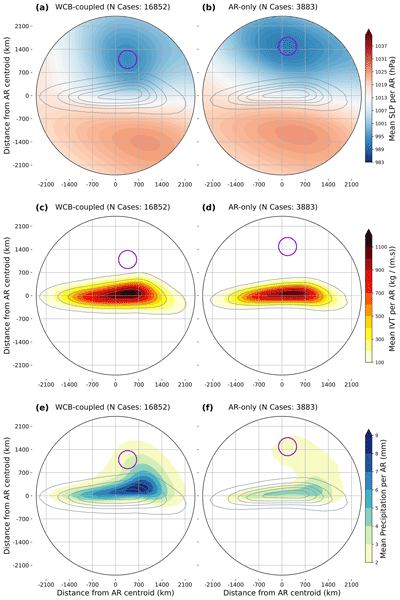
The study analyses how atmospheric river characteristics change in relation to warm conveyor belt ascent and how these changes evolve over the extratropical cyclone lifecycle. Using reanalysis data, we show that the ascent intensifies both the moisture content and precipitation values within the atmospheric river, and that this intensification occurs around the maximum deepening point of the extratropical cyclone. These can improve weather forecasts and early warnings for floods in Europe.
Axel Lauer, Manuel Schlund, Lisa Bock, Birgit Hassler, Gunnar Behrens, Bettina Gier, Lukas Lindenlaub, Stephan Lorenz, Jan-Hendrik Malles, Wolfgang A. Müller, Trang van Pham, Katja Weigel, Guang Zeng, and Veronika Eyring
Geosci. Model Dev., 19, 8731–8754, https://doi.org/10.5194/gmd-19-8731-2026, https://doi.org/10.5194/gmd-19-8731-2026, 2026
Short summary
Short summary
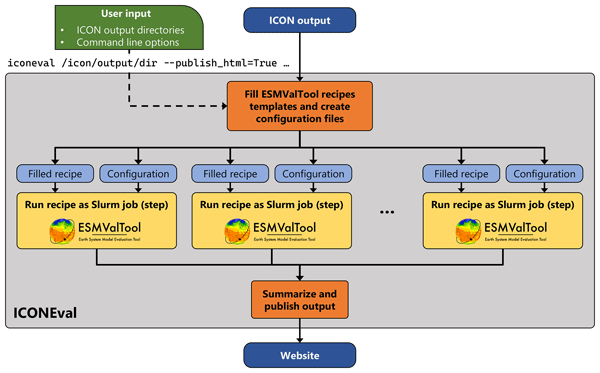
ICONEval is a new framework to facilitate researchers to continuously monitor and check their climate models during the development phase. It builds on the ESMValTool software package to run tests verifying that the results are plausible, follow physical laws, and that the model has sufficient skill in reproducing the observed climate. An important aim is to make it easier to spot model errors early, for example when implementing new model components that use machine learning.
Kai Kornhuber, Emanuele Bevacqua, Mariana Madruga de Brito, Wiebke S. Jäger, Pauline Rivoire, Cassandra D. W. Rogers, Fabiola Banfi, Fulden Batibeniz, James Carruthers, Carlo De Michele, Silvia De Angeli, Cristina Deidda, Marleen C. de Ruiter, Andreas H. Fink, Henrique M. D. Goulart, Katharina Küpfer, Patrick Ludwig, Douglas Maraun, Gabriele Messori, Shruti Nath, Fiachra O'Loughlin, Joaquim G. Pinto, Benjamin Poschlod, Alexandre M. Ramos, Colin Raymond, Andreia F. S. Ribeiro, Deepti Singh, Laura Suarez Gutierrez, Philip J. Ward, and Christopher J. White
Nat. Hazards Earth Syst. Sci., 26, 4309–4334, https://doi.org/10.5194/nhess-26-4309-2026, https://doi.org/10.5194/nhess-26-4309-2026, 2026
Short summary
Short summary
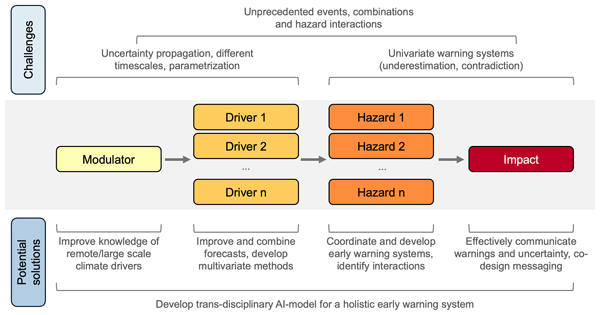
Impacts from extreme weather events may become more severe due to increased likelihood of compounding events under global warming, which challenge present day climate modelling and forecasting capacities. In this perspective we reflect on the usability of compound event research to bridge the gap between academic research and real-world applications.
Svenja Christ, Tyler C. Leicht, Jennifer L. Catto, Jacob Maddison, Julian Quinting, and Joaquim G. Pinto
EGUsphere, https://doi.org/10.5194/egusphere-2026-4772, https://doi.org/10.5194/egusphere-2026-4772, 2026
This preprint is open for discussion and under review for Weather and Climate Dynamics (WCD).
Short summary
Short summary
This study compares the pressure tendency equation (PTE) and piecewise potential vorticity (PV) inversion to assess methodological uncertainty in quantifying diabatic contributions to extratropical cyclone intensification for four high-impact European cyclones. For most cyclones, PTE and PV inversion yield consistent results regarding the role of diabatic processes, with cyclones with strong diabatic heating contributions tending to be associated with enhanced low- to mid-level PV forcing.
Aditya N. Mishra, Gabriele Messori, Lukas Riedel, Athul Rasheeda Satheesh, and Joaquim Pinto
EGUsphere, https://doi.org/10.5194/egusphere-2026-3099, https://doi.org/10.5194/egusphere-2026-3099, 2026
Short summary
Short summary
Windstorms cause billions in damage across Europe every year. In this work, we tune an existing windstorm damage model against new reliable insurance data from Europe. We found that the mathematical method used in the process strongly shapes which storms the model handles best. Our results give scientists and insurers clearer guidance on choosing the right approach when building windstorm risk models, ultimately helping society better prepare for costly extreme weather.
A. Serkan Bayar, Joaquim G. Pinto, Célia M. Gouveia, and Alexandre M. Ramos
Earth Syst. Dynam., 17, 929–954, https://doi.org/10.5194/esd-17-929-2026, https://doi.org/10.5194/esd-17-929-2026, 2026
Short summary
Short summary
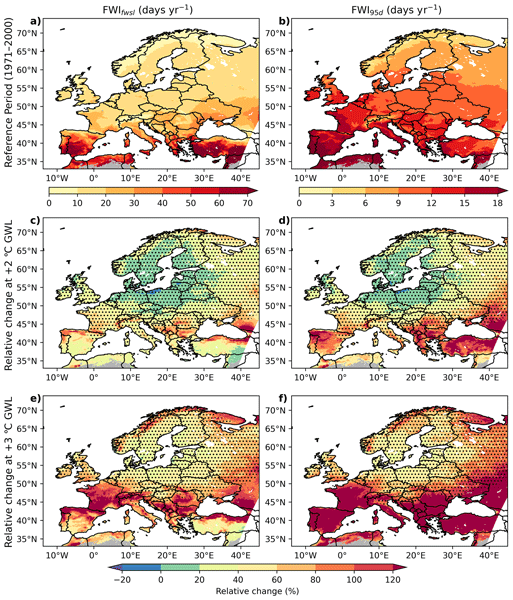
Europe is warming faster than the global average, raising concerns about future wildfire risks. Using regional climate models, we find that extreme fire weather is projected to become more severe, more frequent, and more widespread across the continent, especially if global warming reaches 3 °C. The projected increase is mainly linked to a drier atmosphere. Our findings highlight the need to limit warming and strengthen adaptation practices to protect vulnerable ecosystems and communities.
Dakuan Yu, Dietmar Dommenget, Holger Pohlmann, and Wolfgang A. Müller
Geosci. Model Dev., 19, 5531–5552, https://doi.org/10.5194/gmd-19-5531-2026, https://doi.org/10.5194/gmd-19-5531-2026, 2026
Short summary
Short summary
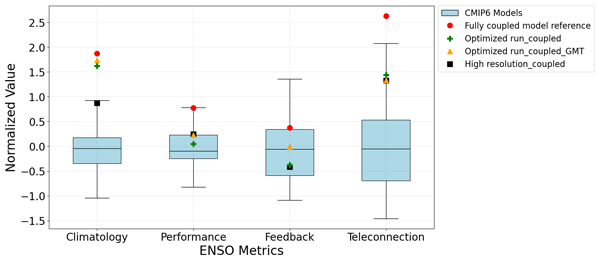
We developed a new method to improve how a leading climate model simulates El Niño, a major driver of global weather extremes. By testing how the model responds to small changes in key atmospheric settings, we identified which processes matter most and adjusted them systematically. This approach makes the model’s behavior closer to observations and shows a promising path for building more reliable climate predictions.
Andreas Hense, Christoph Kottmeier, Petra Friederichs, Sebastian Buschow, Svenja Szemkus, Uwe Ulbrich, Jens Grieger, Joaquim G. Pinto, Hendrik Feldmann, Frank Kaspar, Deborah Niermann, Rike Lorenz, Florian Ruff, and Etor E. Lucio Eceiza
EGUsphere, https://doi.org/10.5194/egusphere-2026-2697, https://doi.org/10.5194/egusphere-2026-2697, 2026
Short summary
Short summary
The extreme events heatwaves, droughts, heavy precipitation, floods and wind storms affect socio-economic systems and generate strong public attention. They are embedded into atmospheric dynamics and are statistically rare events. Here we compile the contributions of twenty one articles of the inter-journal NHESS/ASCMO/WCD special issue by project ClimXtreme parallel to results from thirty three more publication. The conclusions underline the complexity of the results.
Ines Dillerup, Gabriele Messori, Alexander Lemburg, Sebastian Buschow, and Joaquim G. Pinto
EGUsphere, https://doi.org/10.5194/egusphere-2026-2453, https://doi.org/10.5194/egusphere-2026-2453, 2026
Short summary
Short summary
We study recurrent heatwaves in Europe from 1950–2023 at complementary spatial scales: single locations, larger connected heatwave regions (objects), and continent-wide. Recurrent heatwaves are hotter and linked to drier soils at object and continental scales, but not locally. Objects with strong local heatwave recurrence last longer and are linked to the European blocking weather pattern in June-August. Continental recurrence is distinct from both hot summers and strong local recurrence.
Christoph Braun, Florian Ehmele, Christian Beier, Edgar Fabián Espitia-Sarmiento, Hendrik Feldmann, Thomas Frisius, Beate Geyer, Marie Hundhausen, Klaus Keuler, Jürg Luterbacher, Kevin Sieck, Katja Trachte, Elena Xoplaki, and Joaquim G. Pinto
EGUsphere, https://doi.org/10.5194/egusphere-2026-2517, https://doi.org/10.5194/egusphere-2026-2517, 2026
Short summary
Short summary
Adaptation to future climatic changes requires robust climate information. Here, a newly produced set of high-resolution climate simulations using multiple regional climate models over Germany is compared to observation-based datasets over the period 1961 to 1990. Overall, the simulations represent the observed climate well and, together with their future counterparts considering global warming, expand our knowledge about projected climatic changes to inform climate adaptation measures.
Kevin Sieck, Joaquim G. Pinto, Beate Geyer, Klaus Keuler, Christian Beier, Christoph Braun, Florian Ehmele, Hendrik Feldmann, Thomas Frisius, Philipp Heinrich, Marie Hundhausen, Ronny Petrik, and Katja Trachte
EGUsphere, https://doi.org/10.5194/egusphere-2026-1024, https://doi.org/10.5194/egusphere-2026-1024, 2026
Short summary
Short summary
In this study we present the evaluation of a new generation of user informed climate simulations at scales of typical weather forecasts. It provides detailed information that are vital for climate impact studies at municipal level. Besides typical short comings of climate models in terms of deviations compared to reference data, the simulations show good agreement with observed climate especially in terms of regional patterns.
Sheena Loeffel, Philip Rupp, Selina Kiefer, Joaquim G. Pinto, Thomas Birner, and Hella Garny
Weather Clim. Dynam., 7, 895–913, https://doi.org/10.5194/wcd-7-895-2026, https://doi.org/10.5194/wcd-7-895-2026, 2026
Short summary
Short summary
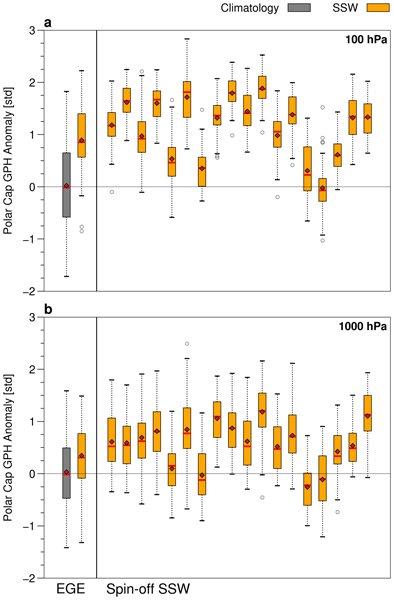
We use a dedicated simulation setup to shed light on the question whether, and why, some sudden stratospheric warming events are more likely than others to develop a surface response. We find that the propensity for downward coupling is unique to each event, and that from day one, the chance of a lower-stratospheric response can be predicted – a key step toward anticipating the surface response, moving beyond 'random' surface outcomes to quantified likelihoods of the ensuing surface response.
Dalena León-FonFay, Alexander Lemburg, Andreas H. Fink, Joaquim G. Pinto, and Frauke Feser
Weather Clim. Dynam., 7, 597–613, https://doi.org/10.5194/wcd-7-597-2026, https://doi.org/10.5194/wcd-7-597-2026, 2026
Short summary
Short summary
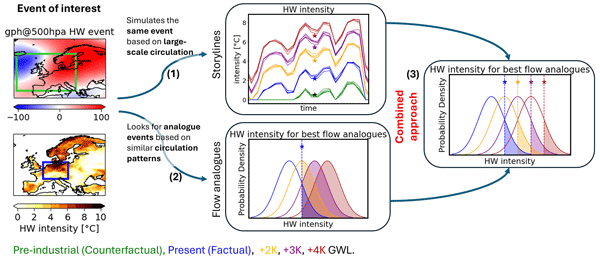
We combine physical (spectrally nudged storylines) and statistical (flow-analogue) approaches to assess how global warming alters the intensity and likelihood of past extreme events. Conditioning on circulation reduces dynamical uncertainty. For the 2018 Central European heatwave, the pattern stays equally likely but analogue events increase in frequency and intensity with warming, highlighting additional mechanisms influencing future heatwaves beyond circulation and background thermodynamics.

Ines Dillerup, Alexander Lemburg, Sebastian Buschow, and Joaquim G. Pinto
Earth Syst. Dynam., 17, 265–289, https://doi.org/10.5194/esd-17-265-2026, https://doi.org/10.5194/esd-17-265-2026, 2026
Short summary
Short summary
We analyze the duration of large-scale weather patterns and their link to near-surface temperatures during heatwaves in Central Europe for 1950–2023. Compared to non-heatwave days, a stronger link between them is found on heatwave days from May to September. We relate our results to typical long-lasting weather patterns known as weather regimes. In July and August, weather patterns last longer as west winds are often blocked by Scandinavian and European blocking regimes, inducing hot extremes.
Wolfgang A. Müller, Stephan Lorenz, Trang V. Pham, Andrea Schneidereit, Renate Brokopf, Victor Brovkin, Nils Brüggemann, Fatemeh Chegini, Dietmar Dommenget, Kristina Fröhlich, Barbara Früh, Veronika Gayler, Helmuth Haak, Stefan Hagemann, Moritz Hanke, Tatiana Ilyina, Johann Jungclaus, Martin Köhler, Peter Korn, Luis Kornblueh, Clarissa A. Kroll, Julian Krüger, Karel Castro-Morales, Ulrike Niemeier, Holger Pohlmann, Iuliia Polkova, Roland Potthast, Thomas Riddick, Manuel Schlund, Tobias Stacke, Roland Wirth, Dakuan Yu, and Jochem Marotzke
Geosci. Model Dev., 18, 9385–9415, https://doi.org/10.5194/gmd-18-9385-2025, https://doi.org/10.5194/gmd-18-9385-2025, 2025
Short summary
Short summary
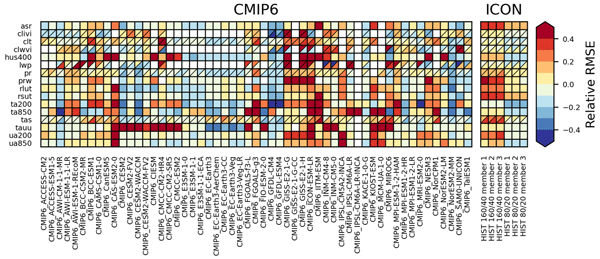
We provide a new Earth System model configuration framed into the ICON architecture, which provides the baseline for the next generation of climate predictions and projections (hereafter ICON XPP). Two resolutions of ICON XPP are presented that show high runtime performances making it suitable to run long integrations and large-ensemble experiments. ICON XPP similarly perform to CMIP6-class of climate models making it a good basis for climate forecasts and projections, and climate research.
Andrea L. Campoverde, Uwe Ehret, Patrick Ludwig, and Joaquim G. Pinto
EGUsphere, https://doi.org/10.5194/egusphere-2025-3988, https://doi.org/10.5194/egusphere-2025-3988, 2025
Short summary
Short summary
Droughts are becoming more common in Europe. Our study used vast climate data to uncover extreme unseen low-water events. These simulations show the potential droughts becoming more severe and lasting longer than the damaging 2018 event, which impacted shipping and industry. This research highlights the urgent need for adaptation measures to prevent costly economic and ecological consequences for the Rhine's waterway.
Clare M. Flynn, Julia Moemken, Joaquim G. Pinto, Michael K. Schutte, and Gabriele Messori
Earth Syst. Sci. Data, 17, 4431–4453, https://doi.org/10.5194/essd-17-4431-2025, https://doi.org/10.5194/essd-17-4431-2025, 2025
Short summary
Short summary
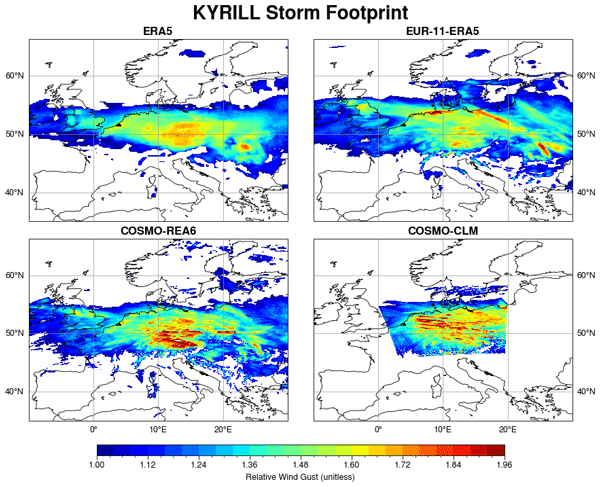
We created a new, publicly available, database of the top 50 most extreme European winter windstorms from each of four different meteorological input data sets covering the years 1995–2015. We found variability in all aspects of our database, from which storms were included in the top 50 storms for each input to the storms' spatial variability. We urge users of our database to consider the storms as identified from two or more input sources within our database where possible.
Tiago M. Ferreira, Ricardo M. Trigo, Tomás H. Gaspar, Joaquim G. Pinto, and Alexandre M. Ramos
Nat. Hazards Earth Syst. Sci., 25, 609–623, https://doi.org/10.5194/nhess-25-609-2025, https://doi.org/10.5194/nhess-25-609-2025, 2025
Short summary
Short summary
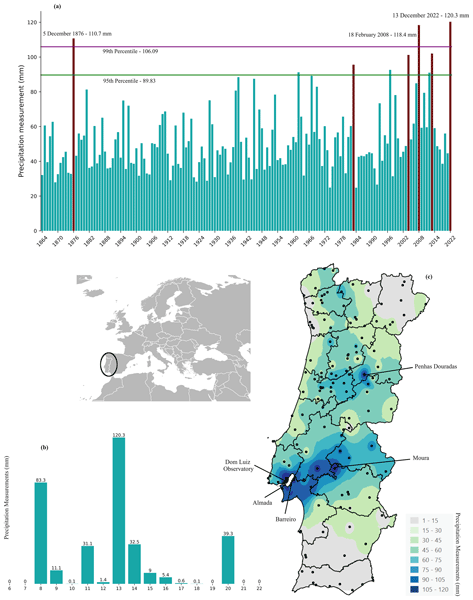
We investigate the synoptic evolution associated with the occurrence of an atmospheric river that led to a 24 h record-breaking extreme precipitation event (120.3 mm) in Lisbon, Portugal, on 13 December 2022. The synoptic background allowed the formation, on 10 December, of an atmospheric river associated with a deep extratropical cyclone and with a high moisture content and an inflow of moisture, due to the warm conveyor belt, throughout its life cycle. The system made landfall on 12 December.
Elena Xoplaki, Florian Ellsäßer, Jens Grieger, Katrin M. Nissen, Joaquim G. Pinto, Markus Augenstein, Ting-Chen Chen, Hendrik Feldmann, Petra Friederichs, Daniel Gliksman, Laura Goulier, Karsten Haustein, Jens Heinke, Lisa Jach, Florian Knutzen, Stefan Kollet, Jürg Luterbacher, Niklas Luther, Susanna Mohr, Christoph Mudersbach, Christoph Müller, Efi Rousi, Felix Simon, Laura Suarez-Gutierrez, Svenja Szemkus, Sara M. Vallejo-Bernal, Odysseas Vlachopoulos, and Frederik Wolf
Nat. Hazards Earth Syst. Sci., 25, 541–564, https://doi.org/10.5194/nhess-25-541-2025, https://doi.org/10.5194/nhess-25-541-2025, 2025
Short summary
Short summary
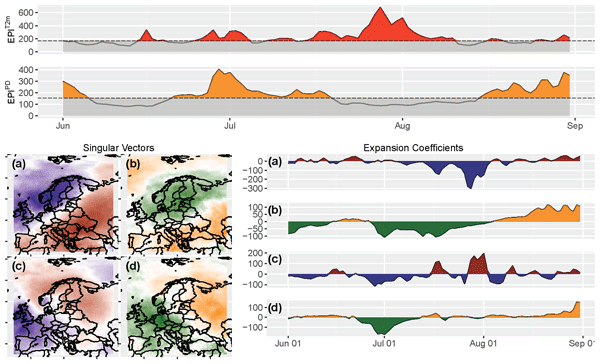
Europe frequently experiences compound events, with major impacts. We investigate these events’ interactions, characteristics, and changes over time, focusing on socio-economic impacts in Germany and central Europe. Highlighting 2018’s extreme events, this study reveals impacts on water, agriculture, and forests and stresses the need for impact-focused definitions and better future risk quantification to support adaptation planning.
Tatiana Klimiuk, Patrick Ludwig, Antonio Sanchez-Benitez, Helge F. Goessling, Peter Braesicke, and Joaquim G. Pinto
Earth Syst. Dynam., 16, 239–255, https://doi.org/10.5194/esd-16-239-2025, https://doi.org/10.5194/esd-16-239-2025, 2025
Short summary
Short summary
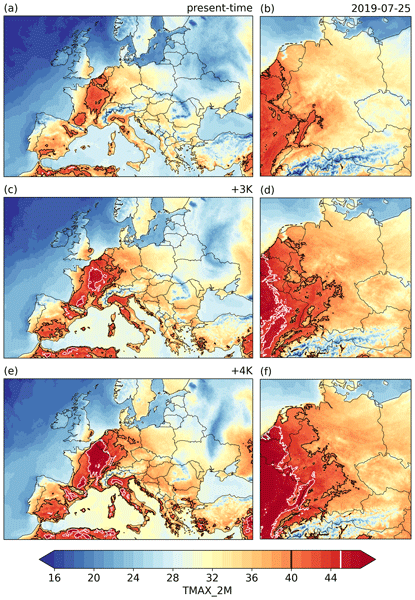
Our study examines potential changes in heatwaves in central Europe due to global warming, using the 2019 summer heatwave as an example. By producing high-resolution storylines, we provide insights into how future heatwaves might spread, how they might persist for longer, and where stronger or weaker temperature increases may occur. This research helps us understand regional thermodynamic responses and highlights the importance of local strategies to protect communities from future heat events.
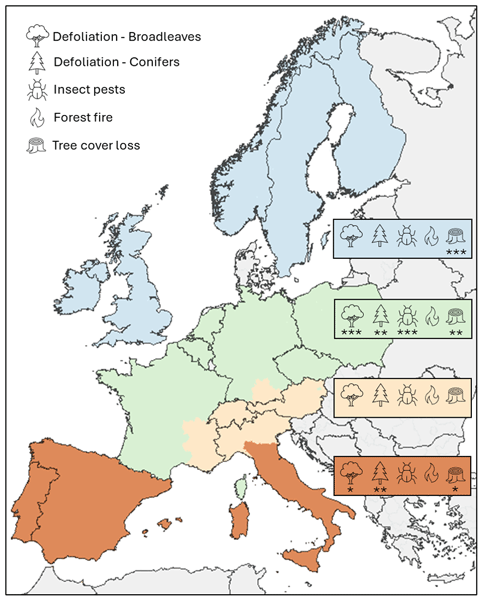
Florian Knutzen, Paul Averbeck, Caterina Barrasso, Laurens M. Bouwer, Barry Gardiner, José M. Grünzweig, Sabine Hänel, Karsten Haustein, Marius Rohde Johannessen, Stefan Kollet, Mortimer M. Müller, Joni-Pekka Pietikäinen, Karolina Pietras-Couffignal, Joaquim G. Pinto, Diana Rechid, Efi Rousi, Ana Russo, Laura Suarez-Gutierrez, Sarah Veit, Julian Wendler, Elena Xoplaki, and Daniel Gliksman
Nat. Hazards Earth Syst. Sci., 25, 77–117, https://doi.org/10.5194/nhess-25-77-2025, https://doi.org/10.5194/nhess-25-77-2025, 2025
Short summary
Short summary
Our research, involving 22 European scientists, investigated drought and heat impacts on forests in 2018–2022. Findings reveal that climate extremes are intensifying, with central Europe being most severely impacted. The southern region showed resilience due to historical drought exposure, while northern and Alpine areas experienced emerging or minimal impacts. The study highlights the need for region-specific strategies, improved data collection, and sustainable practices to safeguard forests.
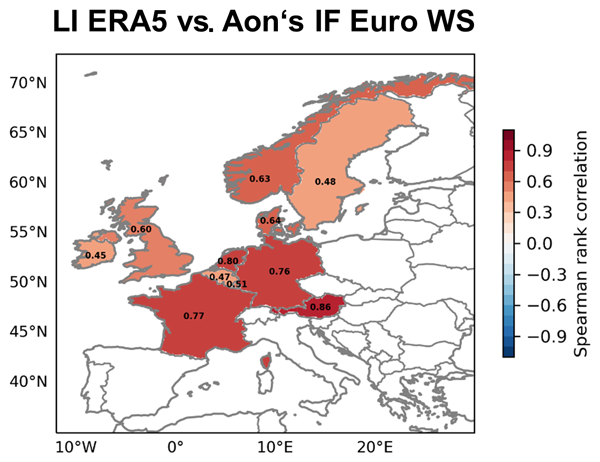
Julia Moemken, Inovasita Alifdini, Alexandre M. Ramos, Alexandros Georgiadis, Aidan Brocklehurst, Lukas Braun, and Joaquim G. Pinto
Nat. Hazards Earth Syst. Sci., 24, 3445–3460, https://doi.org/10.5194/nhess-24-3445-2024, https://doi.org/10.5194/nhess-24-3445-2024, 2024
Short summary
Short summary
European windstorms regularly cause damage to natural and human-made environments, leading to high socio-economic losses. For the first time, we compare estimates of these losses using a meteorological loss index (LI) and the insurance loss (catastrophe) model of Aon Impact Forecasting. We find that LI underestimates high-impact windstorms compared to the insurance model. Nonetheless, due to its simplicity, LI is an effective index, suitable for estimating impacts and ranking storm events.
Selina M. Kiefer, Patrick Ludwig, Sebastian Lerch, Peter Knippertz, and Joaquim G. Pinto
EGUsphere, https://doi.org/10.5194/egusphere-2024-2955, https://doi.org/10.5194/egusphere-2024-2955, 2024
Preprint withdrawn
Short summary
Short summary
Weather forecasts 14 days in advance generally have a low skill but not always. We identify reasons thereof depending on the atmospheric flow, shown by Weather Regimes (WRs). If the WRs during the forecasts follow climatological patterns, forecast skill is increased. The forecast of a cold-wave day is better when the European Blocking WR (high pressure around the British Isles) is present a few days before a cold-wave day. These results can be used to assess the reliability of predictions.
Andrea L. Campoverde, Uwe Ehret, Patrick Ludwig, and Joaquim G. Pinto
Geosci. Model Dev. Discuss., https://doi.org/10.5194/gmd-2024-134, https://doi.org/10.5194/gmd-2024-134, 2024
Revised manuscript not accepted
Short summary
Short summary
We looked at how well the model WRF-Hydro performed during the 2018 drought event in the River Rhine basin, even though it is typically used for floods. We used the meteorological ERA5 reanalysis dataset to simulate River Rhine’s streamflow and adjusted the model using parameters and actual discharge measurements. We focused on Lake Constance, a key part of the basin, but found issues with the model’s lake outflow simulation. By removing the lake module, we obtained more accurate results.
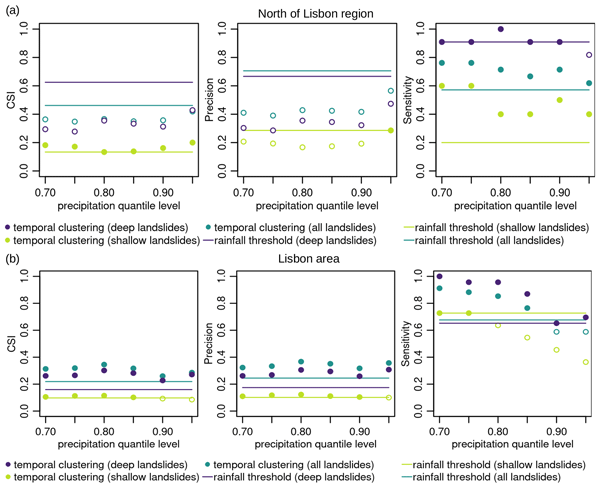
Fabiola Banfi, Emanuele Bevacqua, Pauline Rivoire, Sérgio C. Oliveira, Joaquim G. Pinto, Alexandre M. Ramos, and Carlo De Michele
Nat. Hazards Earth Syst. Sci., 24, 2689–2704, https://doi.org/10.5194/nhess-24-2689-2024, https://doi.org/10.5194/nhess-24-2689-2024, 2024
Short summary
Short summary
Landslides are complex phenomena causing important impacts in vulnerable areas, and they are often triggered by rainfall. Here, we develop a new approach that uses information on the temporal clustering of rainfall, i.e. multiple events close in time, to detect landslide events and compare it with the use of classical empirical rainfall thresholds, considering as a case study the region of Lisbon, Portugal. The results could help to improve the prediction of rainfall-triggered landslides.
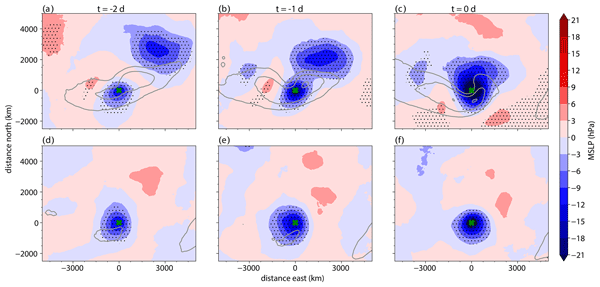
Aleksa Stanković, Gabriele Messori, Joaquim G. Pinto, and Rodrigo Caballero
Weather Clim. Dynam., 5, 821–837, https://doi.org/10.5194/wcd-5-821-2024, https://doi.org/10.5194/wcd-5-821-2024, 2024
Short summary
Short summary
The article studies extreme winds near the surface over the North Atlantic Ocean. These winds are caused by storms that pass through this region. The strongest storms that have occurred in the winters from 1950–2020 are studied in detail and compared to weaker but still strong storms. The analysis shows that the storms associated with the strongest winds are preceded by another older storm that travelled through the same region and made the conditions suitable for development of extreme winds.
Marcus Breil, Vanessa K. M. Schneider, and Joaquim G. Pinto
Biogeosciences, 21, 811–824, https://doi.org/10.5194/bg-21-811-2024, https://doi.org/10.5194/bg-21-811-2024, 2024
Short summary
Short summary
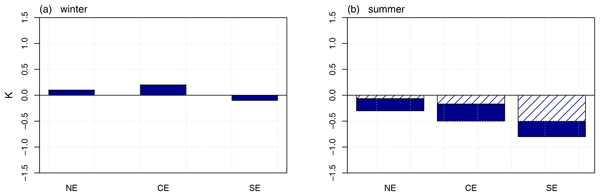
The general impact of afforestation on the regional climate conditions in Europe during the period 1986–2015 is investigated. For this purpose, a regional climate model simulation is performed, in which afforestation during this period is considered, and results are compared to a simulation in which this is not the case. Results show that afforestation had discernible impacts on the climate change signal in Europe, which may have mitigated the local warming trend, especially in summer in Europe.
Lara Wallberg, Laura Suarez-Gutierrez, Daniela Matei, and Wolfgang A. Müller
Earth Syst. Dynam., 15, 1–14, https://doi.org/10.5194/esd-15-1-2024, https://doi.org/10.5194/esd-15-1-2024, 2024
Short summary
Short summary
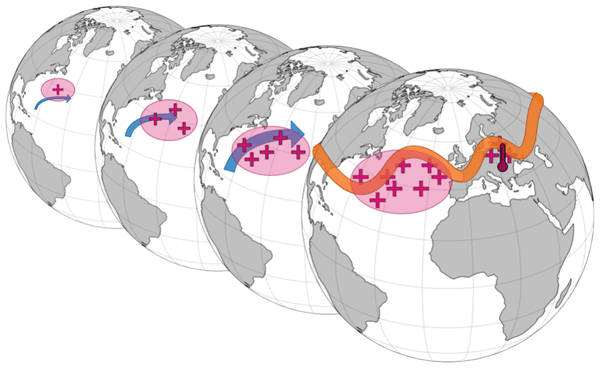
European summer temperatures are influenced by mechanisms on different timescales. We find that timescales of 5 to 10 years dominate the changes in summer temperature over large parts of the continent. Further, we find that specific processes within the North Atlantic, affecting the storage and transport of heat, cause changes in the atmosphere and extremely warm European summers. Our findings could be used for better forecasts of extremely warm European summers several years ahead.
Lea Eisenstein, Benedikt Schulz, Joaquim G. Pinto, and Peter Knippertz
Weather Clim. Dynam., 4, 981–999, https://doi.org/10.5194/wcd-4-981-2023, https://doi.org/10.5194/wcd-4-981-2023, 2023
Short summary
Short summary
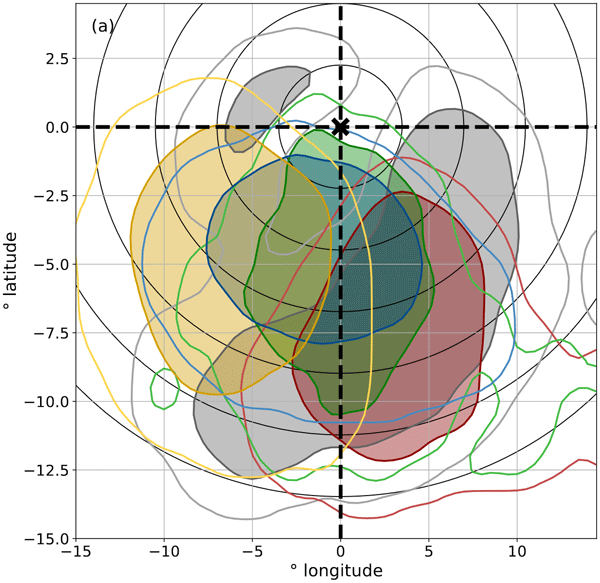
Mesoscale high-wind features within extratropical cyclones can cause immense damage. In Part 1 of this work, we introduced RAMEFI (RAndom-forest-based MEsoscale wind Feature Identification), an objective, flexible identification tool for these wind features based on a probabilistic random forest. Here, we use RAMEFI to compile a climatology of the features over 19 extended winter seasons over western and central Europe, focusing on relative occurrence, affected areas and further characteristics.
Marie Hundhausen, Hendrik Feldmann, Natalie Laube, and Joaquim G. Pinto
Nat. Hazards Earth Syst. Sci., 23, 2873–2893, https://doi.org/10.5194/nhess-23-2873-2023, https://doi.org/10.5194/nhess-23-2873-2023, 2023
Short summary
Short summary
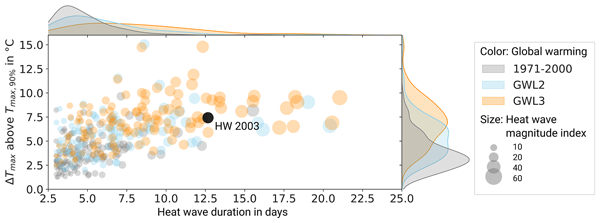
Using a convection-permitting regional climate ensemble, the magnitude of heat waves (HWs) over Germany is projected to increase by 26 % (100 %) in a 2 °C (3 °C) warmer world. The increase is strongest in late summer, relatively homogeneous in space, and accompanied by increasing variance in HW length. Tailored parameters to climate adaptation to heat revealed dependency on major landscapes, and a nonlinear, exponential increase for parameters characterizing strong heat stress is expected.
Alberto Caldas-Alvarez, Hendrik Feldmann, Etor Lucio-Eceiza, and Joaquim G. Pinto
Weather Clim. Dynam., 4, 543–565, https://doi.org/10.5194/wcd-4-543-2023, https://doi.org/10.5194/wcd-4-543-2023, 2023
Short summary
Short summary
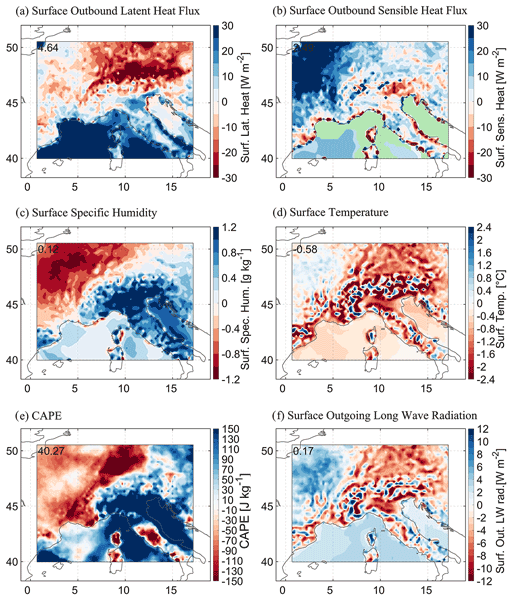
We evaluate convection-permitting modelling (CPM) simulations for the greater Alpine area to assess its added value compared to a 25 km resolution. A new method for severe precipitation detection is used, and the associated synoptic weather types are considered. Our results document the added value of CPM for precipitation representation with higher intensities, better rank correlation, better hit rates, and an improved amount and structure, but with an overestimation of the rates.
Marcus Breil, Annabell Weber, and Joaquim G. Pinto
Biogeosciences, 20, 2237–2250, https://doi.org/10.5194/bg-20-2237-2023, https://doi.org/10.5194/bg-20-2237-2023, 2023
Short summary
Short summary
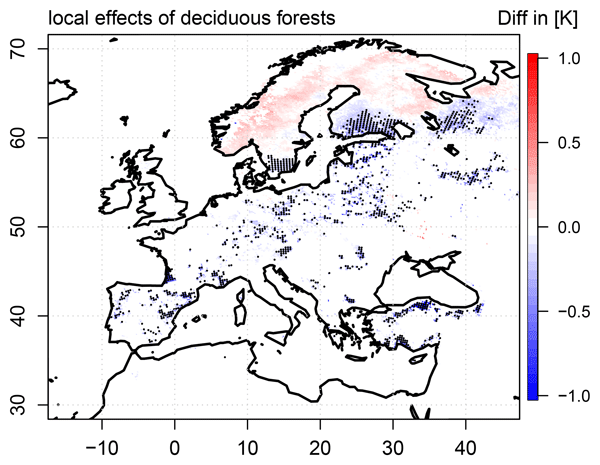
A promising strategy for mitigating burdens of heat extremes in Europe is to replace dark coniferous forests with brighter deciduous forests. The consequence of this would be reduced absorption of solar radiation, which should reduce the intensities of heat periods. In this study, we show that deciduous forests have a certain cooling effect on heat period intensities in Europe. However, the magnitude of the temperature reduction is quite small.
Daniel Gliksman, Paul Averbeck, Nico Becker, Barry Gardiner, Valeri Goldberg, Jens Grieger, Dörthe Handorf, Karsten Haustein, Alexia Karwat, Florian Knutzen, Hilke S. Lentink, Rike Lorenz, Deborah Niermann, Joaquim G. Pinto, Ronald Queck, Astrid Ziemann, and Christian L. E. Franzke
Nat. Hazards Earth Syst. Sci., 23, 2171–2201, https://doi.org/10.5194/nhess-23-2171-2023, https://doi.org/10.5194/nhess-23-2171-2023, 2023
Short summary
Short summary
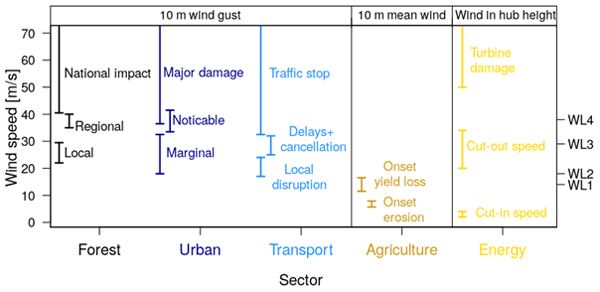
Wind and storms are a major natural hazard and can cause severe economic damage and cost human lives. Hence, it is important to gauge the potential impact of using indices, which potentially enable us to estimate likely impacts of storms or other wind events. Here, we review basic aspects of wind and storm generation and provide an extensive overview of wind impacts and available indices. This is also important to better prepare for future climate change and corresponding changes to winds.
Efi Rousi, Andreas H. Fink, Lauren S. Andersen, Florian N. Becker, Goratz Beobide-Arsuaga, Marcus Breil, Giacomo Cozzi, Jens Heinke, Lisa Jach, Deborah Niermann, Dragan Petrovic, Andy Richling, Johannes Riebold, Stella Steidl, Laura Suarez-Gutierrez, Jordis S. Tradowsky, Dim Coumou, André Düsterhus, Florian Ellsäßer, Georgios Fragkoulidis, Daniel Gliksman, Dörthe Handorf, Karsten Haustein, Kai Kornhuber, Harald Kunstmann, Joaquim G. Pinto, Kirsten Warrach-Sagi, and Elena Xoplaki
Nat. Hazards Earth Syst. Sci., 23, 1699–1718, https://doi.org/10.5194/nhess-23-1699-2023, https://doi.org/10.5194/nhess-23-1699-2023, 2023
Short summary
Short summary
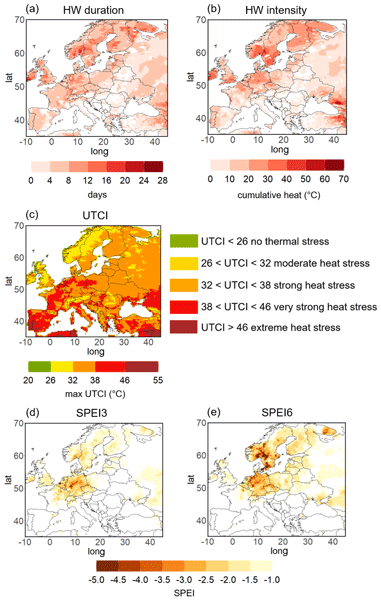
The objective of this study was to perform a comprehensive, multi-faceted analysis of the 2018 extreme summer in terms of heat and drought in central and northern Europe, with a particular focus on Germany. A combination of favorable large-scale conditions and locally dry soils were related with the intensity and persistence of the events. We also showed that such extremes have become more likely due to anthropogenic climate change and might occur almost every year under +2 °C of global warming.

Patrick Ludwig, Florian Ehmele, Mário J. Franca, Susanna Mohr, Alberto Caldas-Alvarez, James E. Daniell, Uwe Ehret, Hendrik Feldmann, Marie Hundhausen, Peter Knippertz, Katharina Küpfer, Michael Kunz, Bernhard Mühr, Joaquim G. Pinto, Julian Quinting, Andreas M. Schäfer, Frank Seidel, and Christina Wisotzky
Nat. Hazards Earth Syst. Sci., 23, 1287–1311, https://doi.org/10.5194/nhess-23-1287-2023, https://doi.org/10.5194/nhess-23-1287-2023, 2023
Short summary
Short summary
Heavy precipitation in July 2021 led to widespread floods in western Germany and neighboring countries. The event was among the five heaviest precipitation events of the past 70 years in Germany, and the river discharges exceeded by far the statistical 100-year return values. Simulations of the event under future climate conditions revealed a strong and non-linear effect on flood peaks: for +2 K global warming, an 18 % increase in rainfall led to a 39 % increase of the flood peak in the Ahr river.
Marcus Breil, Felix Krawczyk, and Joaquim G. Pinto
Earth Syst. Dynam., 14, 243–253, https://doi.org/10.5194/esd-14-243-2023, https://doi.org/10.5194/esd-14-243-2023, 2023
Short summary
Short summary
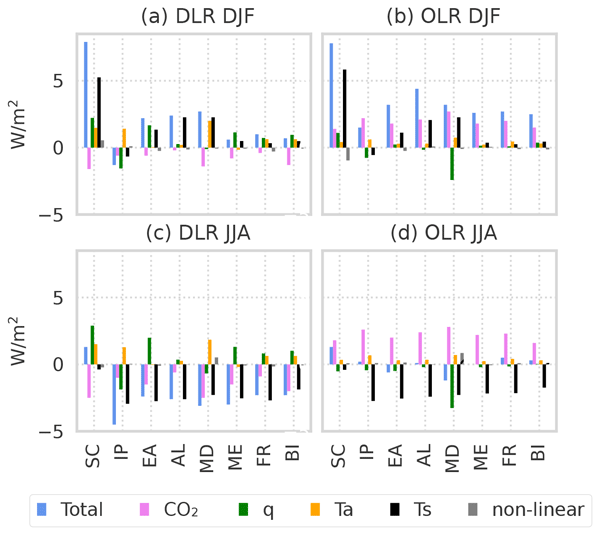
We provide evidence that biogeophysical effects of afforestation can counteract the favorable biogeochemical climate effect of reduced CO2 concentrations. By changing the land surface characteristics, afforestation reduces vegetation surface temperatures, resulting in a reduced outgoing longwave radiation in summer, although CO2 concentrations are reduced. Since forests additionally absorb a lot of solar radiation due to their dark surfaces, afforestation has a total warming effect.
Susanna Mohr, Uwe Ehret, Michael Kunz, Patrick Ludwig, Alberto Caldas-Alvarez, James E. Daniell, Florian Ehmele, Hendrik Feldmann, Mário J. Franca, Christian Gattke, Marie Hundhausen, Peter Knippertz, Katharina Küpfer, Bernhard Mühr, Joaquim G. Pinto, Julian Quinting, Andreas M. Schäfer, Marc Scheibel, Frank Seidel, and Christina Wisotzky
Nat. Hazards Earth Syst. Sci., 23, 525–551, https://doi.org/10.5194/nhess-23-525-2023, https://doi.org/10.5194/nhess-23-525-2023, 2023
Short summary
Short summary
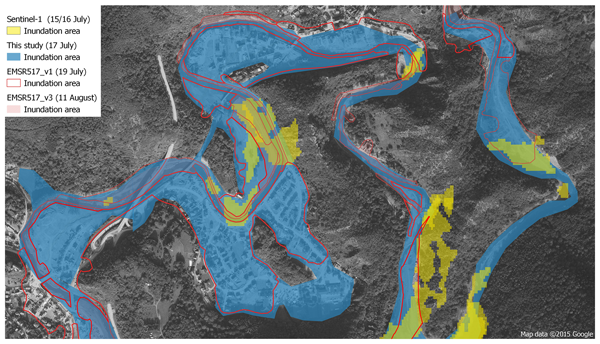
The flood event in July 2021 was one of the most severe disasters in Europe in the last half century. The objective of this two-part study is a multi-disciplinary assessment that examines the complex process interactions in different compartments, from meteorology to hydrological conditions to hydro-morphological processes to impacts on assets and environment. In addition, we address the question of what measures are possible to generate added value to early response management.
Lea Eisenstein, Benedikt Schulz, Ghulam A. Qadir, Joaquim G. Pinto, and Peter Knippertz
Weather Clim. Dynam., 3, 1157–1182, https://doi.org/10.5194/wcd-3-1157-2022, https://doi.org/10.5194/wcd-3-1157-2022, 2022
Short summary
Short summary
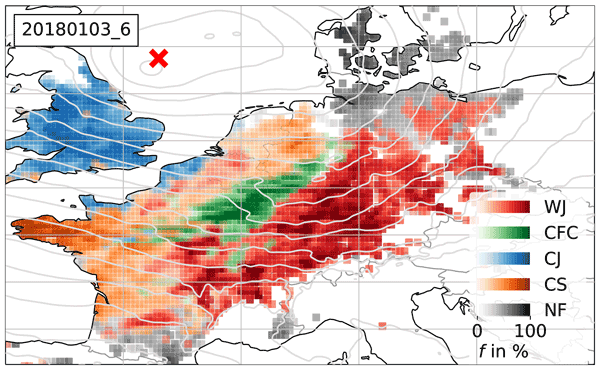
Mesoscale high-wind features within extratropical cyclones can cause immense damage. Here, we present RAMEFI, a novel approach to objectively identify the wind features based on a probabilistic random forest. RAMEFI enables a wide range of applications such as probabilistic predictions for the occurrence or a multi-decadal climatology of these features, which will be the focus of Part 2 of the study, with the goal of improving wind and, specifically, wind gust forecasts in the long run.
Assaf Hochman, Francesco Marra, Gabriele Messori, Joaquim G. Pinto, Shira Raveh-Rubin, Yizhak Yosef, and Georgios Zittis
Earth Syst. Dynam., 13, 749–777, https://doi.org/10.5194/esd-13-749-2022, https://doi.org/10.5194/esd-13-749-2022, 2022
Short summary
Short summary
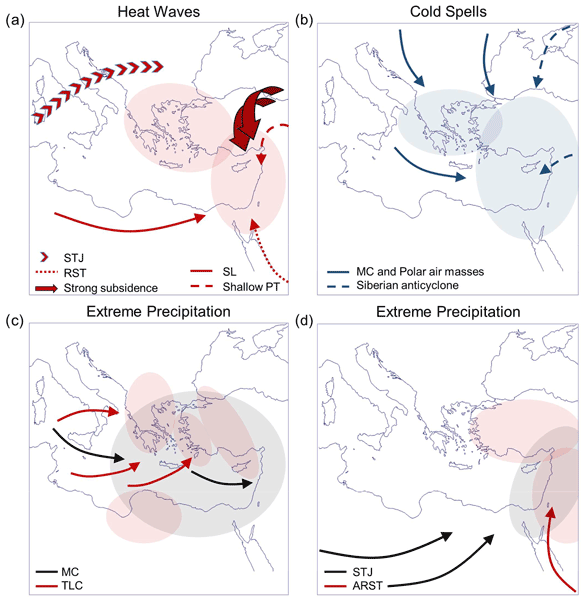
Gaining a complete understanding of extreme weather, from its physical drivers to its impacts on society, is important in supporting future risk reduction and adaptation measures. Here, we provide a review of the available scientific literature, knowledge gaps and key open questions in the study of extreme weather events over the vulnerable eastern Mediterranean region.
Lisa-Ann Kautz, Olivia Martius, Stephan Pfahl, Joaquim G. Pinto, Alexandre M. Ramos, Pedro M. Sousa, and Tim Woollings
Weather Clim. Dynam., 3, 305–336, https://doi.org/10.5194/wcd-3-305-2022, https://doi.org/10.5194/wcd-3-305-2022, 2022
Short summary
Short summary
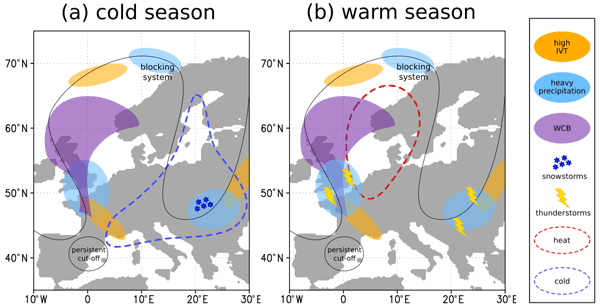
Atmospheric blocking is associated with stationary, self-sustaining and long-lasting high-pressure systems. They can cause or at least influence surface weather extremes, such as heat waves, cold spells, heavy precipitation events, droughts or wind extremes. The location of the blocking determines where and what type of extreme event will occur. These relationships are also important for weather prediction and may change due to global warming.
Animesh K. Gain, Yves Bühler, Pascal Haegeli, Daniela Molinari, Mario Parise, David J. Peres, Joaquim G. Pinto, Kai Schröter, Ricardo M. Trigo, María Carmen Llasat, and Heidi Kreibich
Nat. Hazards Earth Syst. Sci., 22, 985–993, https://doi.org/10.5194/nhess-22-985-2022, https://doi.org/10.5194/nhess-22-985-2022, 2022
Short summary
Short summary
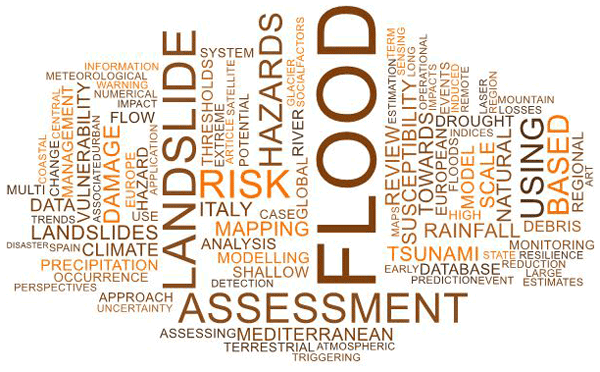
To mark the 20th anniversary of Natural Hazards and Earth System Sciences (NHESS), an interdisciplinary and international journal dedicated to the public discussion and open-access publication of high-quality studies and original research on natural hazards and their consequences, we highlight 11 key publications covering major subject areas of NHESS that stood out within the past 20 years.
Florian Ehmele, Lisa-Ann Kautz, Hendrik Feldmann, Yi He, Martin Kadlec, Fanni D. Kelemen, Hilke S. Lentink, Patrick Ludwig, Desmond Manful, and Joaquim G. Pinto
Nat. Hazards Earth Syst. Sci., 22, 677–692, https://doi.org/10.5194/nhess-22-677-2022, https://doi.org/10.5194/nhess-22-677-2022, 2022
Short summary
Short summary
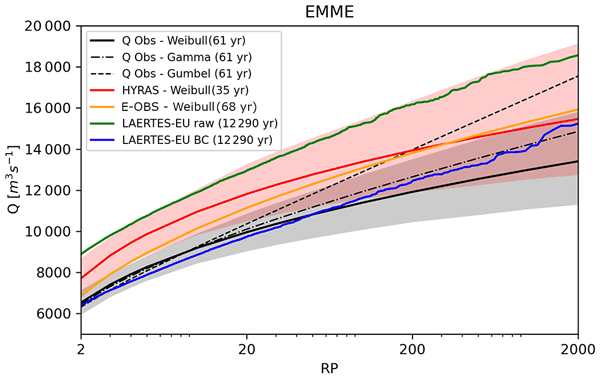
For various applications, it is crucial to have profound knowledge of the frequency, severity, and risk of extreme flood events. Such events are characterized by very long return periods which observations can not cover. We use a large ensemble of regional climate model simulations as input for a hydrological model. Precipitation data were post-processed to reduce systematic errors. The representation of precipitation and discharge is improved, and estimates of long return periods become robust.
Kim H. Stadelmaier, Patrick Ludwig, Pascal Bertran, Pierre Antoine, Xiaoxu Shi, Gerrit Lohmann, and Joaquim G. Pinto
Clim. Past, 17, 2559–2576, https://doi.org/10.5194/cp-17-2559-2021, https://doi.org/10.5194/cp-17-2559-2021, 2021
Short summary
Short summary
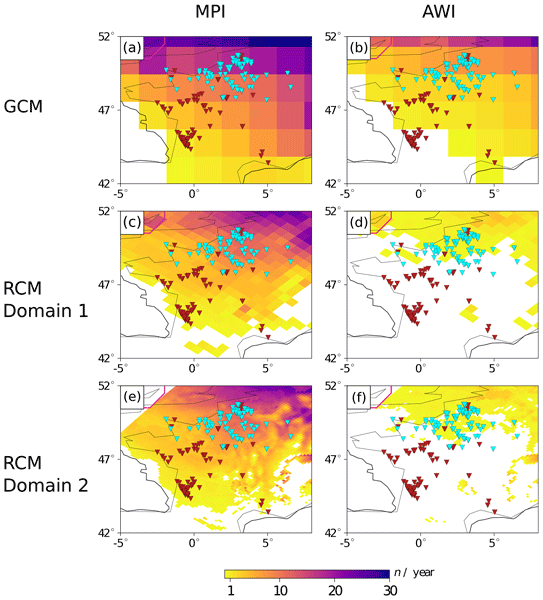
We use regional climate simulations for the Last Glacial Maximum to reconstruct permafrost and to identify areas of thermal contraction cracking of the ground in western Europe. We find ground cracking, a precondition for the development of permafrost proxies, south of the probable permafrost border, implying that permafrost was not the limiting factor for proxy development. A good agreement with permafrost and climate proxy data is achieved when easterly winds are modelled more frequently.
Cited articles
Allan, R. and Ansell, T.: A New Globally Complete Monthly Historical Gridded Mean Sea Level Pressure Dataset (HadSLP2): 1850–2004, J. Climate, 19, 5816–5842, https://doi.org/10.1175/JCLI3937.1, 2006. a
Athanasiadis, P. J., Bellucci, A., Scaife, A. A., Hermanson, L., Materia, S., Sanna, A., Borrelli, A., MacLachlan, C., and Gualdi, S.: A Multisystem View of Wintertime NAO Seasonal Predictions, J. Climate, 30, 1461–1475, https://doi.org/10.1175/JCLI-D-16-0153.1, 2017. a
Barnston, A. G. and Livezey, R. E.: Classification, Seasonality and Persistence of Low-Frequency Atmospheric Circulation Patterns, Mon. Weather Rev., 115, 1083–1126, https://doi.org/10.1175/1520-0493(1987)115<1083:CSAPOL>2.0.CO;2, 1987. a
Blackport, R. and Fyfe, J. C.: Climate models fail to capture strengthening wintertime North Atlantic jet and impacts on Europe, Sci. Adv., 8, eabn3112, https://doi.org/10.1126/sciadv.abn3112, 2022. a
Boer, G. J., Smith, D. M., Cassou, C., Doblas-Reyes, F., Danabasoglu, G., Kirtman, B., Kushnir, Y., Kimoto, M., Meehl, G. A., Msadek, R., Mueller, W. A., Taylor, K. E., Zwiers, F., Rixen, M., Ruprich-Robert, Y., and Eade, R.: The Decadal Climate Prediction Project (DCPP) contribution to CMIP6, Geosci. Model Dev., 9, 3751–3777, https://doi.org/10.5194/gmd-9-3751-2016, 2016. a
Borchert, L. F., Menary, M. B., Swingedouw, D., Sgubin, G., Hermanson, L., and Mignot, J.: Improved decadal predictions of North Atlantic subpolar gyre SST in CMIP6, Geophys. Res. Lett., 48, e2020GL091307, https://doi.org/10.1029/2020GL091307, 2021. a
Brown, P. T., Lozier, M. S., Zhang, R., and Li, W.: The necessity of cloud feedback for a basin-scale Atlantic Multidecadal Oscillation, Geophys. Res. Lett., 43, 3955–3963, https://doi.org/10.1002/2016GL068303, 2016. a
Brune, S. and Baehr, J.: Preserving the coupled atmosphere–ocean feedback in initializations of decadal climate predictions, Wiley Interdisciplinary Reviews: Climate Change, 11, e637, https://doi.org/10.1002/wcc.637, 2020. a, b, c
Brune, S., Pohlmann, H., Müller, W., Nielsen, D. M., Hövel, L., and Baehr, J.: MPI-ESM-LR_1.2.01p5 decadal predictions localEnKF: monthly mean values, DOKU at DKRZ [data set], https://hdl.handle.net/21.14106/098c6104e3d89943248aa61ff69db972adb3baf6 (last access: 21 July 2026), 2021. a
Brune, S., Pohlmann, H., Müller, W., Nielsen, D. M., Hövel, L., Koul, V., and Baehr, J.: MPI-ESM-LR_1.2.01p5 decadal predictions localEnKF large ensemble: monthly mean values members 17 to 80, DOKU at DKRZ [data set], https://hdl.handle.net/21.14106/c69ceecb1584cc50247ae6e492fb1ef33e65ac37 (last access: 21 July 2026), 2022. a
Cai, W., Wu, L., Lengaigne, M., Li, T., McGregor, S., Kug, J.-S., Yu, J.-Y., Stuecker, M. F., Santoso, A., Li, X., Ham, Y.-G., Chikamoto, Y., Ng, B., McPhaden, M. J., Du, Y., Dommenget, D., Jia, F., Kajtar, J. B., Keenlyside, N., Lin, X., Luo, J.-J., Martín-Rey, M., Ruprich-Robert, Y., Wang, G., Xie, S.-P., Yang, Y., Kang, S. M., Choi, J.-Y., Gan, B., Kim, G.-I., Kim, C.-E., Kim, S., Kim, J.-H., and Chang, P.: Pantropical climate interactions, Science, 363, eaav4236, https://doi.org/10.1126/science.aav4236, 2019. a, b
Cassou, C., Terray, L., and Phillips, A. S.: Tropical Atlantic Influence on European Heat Waves, J. Climate, 18, 2805–2811, https://doi.org/10.1175/JCLI3506.1, 2005. a
Deser, C. and Phillips, A. S.: Defining the Internal Component of Atlantic Multidecadal Variability in a Changing Climate, Geophys. Res. Lett., 48, e2021GL095023, https://doi.org/10.1029/2021GL095023, 2021. a
Deser, C. and Phillips, A. S.: Spurious Indo-Pacific Connections to Internal Atlantic Multidecadal Variability Introduced by the Global Temperature Residual Method, Geophys. Res. Lett., 50, e2022GL100574, https://doi.org/10.1029/2022GL100574, 2023. a, b
Drews, A. and Greatbatch, R. J.: Evolution of the Atlantic Multidecadal Variability in a Model with an Improved North Atlantic Current, J. Climate, 30, 5491–5512, https://doi.org/10.1175/JCLI-D-16-0790.1, 2017. a
Dunstone, N., Smith, D. M., Hardiman, S. C., Hermanson, L., Ineson, S., Kay, G., Li, C., Lockwood, J. F., Scaife, A. A., Thornton, H., Ting, M., and Wang, L.: Skilful predictions of the Summer North Atlantic Oscillation, Commun. Earth Environ., 4, 409, https://doi.org/10.1038/s43247-023-01063-2, 2023. a, b
Düsterhus, A. and Brune, S.: The effect of initialisation on 20 year multi-decadal climate predictions, Clim. Dynam., 62, 831–840, https://doi.org/10.1007/s00382-023-06941-1, 2024. a
Eade, R., Smith, D. M., Scaife, A. A., Wallace, E., Dunstone, N. J., Hermanson, L., and Robinson, N.: Do seasonal-to-decadal climate predictions underestimate the predictability of the real world?, Geophys. Res. Lett., 41, 5620–5628, https://doi.org/10.1002/2014GL061146, 2014. a
Enfield, D. B., Mestas-Nuñez, A. M., and Trimble, P. J.: The Atlantic Multidecadal Oscillation and its relation to rainfall and river flows in the continental U.S., Geophys. Res. Lett., 28, 2077–2080, https://doi.org/10.1029/2000GL012745, 2001. a
Folland, C. K., Knight, J., Linderholm, H. W., Fereday, D., Ineson, S., and Hurrell, J. W.: The Summer North Atlantic Oscillation: Past, Present, and Future, J. Climate, 22, 1082–1103, https://doi.org/10.1175/2008JCLI2459.1, 2009. a
Gastineau, G. and Frankignoul, C.: Influence of the North Atlantic SST Variability on the Atmospheric Circulation during the Twentieth Century, J. Climate, 28, 1396–1416, https://doi.org/10.1175/JCLI-D-14-00424.1, 2015. a
Good, S. A., Martin, M. J., and Rayner, N. A.: EN4: Quality controlled ocean temperature and salinity profiles and monthly objective analyses with uncertainty estimates, J. Geophys. Res.-Oceans, 118, 6704–6716, https://doi.org/10.1002/2013JC009067, 2013. a
Guemas, V., Auger, L., and Doblas-Reyes, F. J.: Hypothesis Testing for Autocorrelated Short Climate Time Series, J. Appl. Meteorol. Climatol., 53, 637–651, https://doi.org/10.1175/JAMC-D-13-064.1, 2014. a
Hardiman, S. C., Dunstone, N. J., Scaife, A. A., Smith, D. M., Comer, R., Nie, Y., and Ren, H.-L.: Missing eddy feedback may explain weak signal-to-noise ratios in climate predictions, npj Climate and Atmospheric Science, 5, https://doi.org/10.1038/s41612-022-00280-4, 2022. a
Hermanson, L., Ren, H.-L., Vellinga, M., Dunstone, N., Hyder, P., Ineson, S., Scaife, A., Smith, D., Thompson, V., Tian, B., and Williams, K.: Different types of drifts in two seasonal forecast systems and their dependence on ENSO, Clim. Dynam., 51, 1411–1426, https://doi.org/10.1007/s00382-017-3962-9, 2018. a
Hersbach, H., Bell, B., Berrisford, P., Hirahara, S., Horányi, A., Muñoz-Sabater, J., Nicolas, J., Peubey, C., Radu, R., Schepers, D., Simmons, A., Soci, C., Abdalla, S., Abellan, X., Balsamo, G., Bechtold, P., Biavati, G., Bidlot, J., Bonavita, M., De Chiara, G., Dahlgren, P., Dee, D., Diamantakis, M., Dragani, R., Flemming, J., Forbes, R., Fuentes, M., Geer, A., Haimberger, L., Healy, S., Hogan, R. J., Hólm, E., Janisková, M., Keely, S., Laloyaux, P., Lopez, P., Lupu, C., Radnoti, G., de Rosnay, P., Rozum, I., Vamborg, F., Villaume, S., and Thépaut, J.-N.: The ERA5 global reanalysis, Q. J. Roy. Meteor. Soc., 146, 1999–2049, https://doi.org/10.1002/qj.3803, 2020. a
Hersbach, H., Bell, B., Berrisford, P., Biavati, G., Horányi, A., Muñoz Sabater, J., Nicolas, J., Peubey, C., Radu, R., Rozum, I., Schepers, D., Simmons, A., Soci, C., Dee, D., and Thépaut, J.-N.: ERA5 monthly averaged data on single levels from 1940 to present, Copernicus Climate Change Service (C3S) Climate Data Store (CDS) [data set], https://doi.org/10.24381/cds.f17050d7, 2023a. a
Hersbach, H., Bell, B., Berrisford, P., Biavati, G., Horányi, A., Muñoz Sabater, J., Nicolas, J., Peubey, C., Radu, R., Rozum, I., Schepers, D., Simmons, A., Soci, C., Dee, D., and Thépaut, J.-N.: ERA5 monthly averaged data on pressure levels from 1940 to present, Copernicus Climate Change Service (C3S) Climate Data Store (CDS) [data set], https://doi.org/10.24381/cds.6860a573, 2023b. a
Hoskins, B. J. and Karoly, D. J.: The Steady Linear Response of a Spherical Atmosphere to Thermal and Orographic Forcing, J. Atmos. Sci., 38, 1179–1196, https://doi.org/10.1175/1520-0469(1981)038<1179:TSLROA>2.0.CO;2, 1981. a, b, c
Hövel, L., Brune, S., and Baehr, J.: Decadal Prediction of Marine Heatwaves in MPI-ESM, Geophys. Res. Lett., 49, e2022GL099347, https://doi.org/10.1029/2022GL099347, 2022. a
Klavans, J. M., Cane, M. A., Clement, A. C., and Murphy, L. N.: NAO predictability from external forcing in the late 20th century, NPJ Climate and Atmospheric Science, 4, 22, https://doi.org/10.1038/s41612-021-00177-8, 2021. a
Knight, J. R., Folland, C. K., and Scaife, A. A.: Climate impacts of the Atlantic multidecadal oscillation, Geophys. Res. Lett., 33, https://doi.org/10.1029/2006GL026242, 2006. a
Krieger, D., Brune, S., Pieper, P., Weisse, R., and Baehr, J.: Skillful decadal prediction of German Bight storm activity, Nat. Hazards Earth Syst. Sci., 22, 3993–4009, https://doi.org/10.5194/nhess-22-3993-2022, 2022. a
Krüger, J., Kjellsson, J., Lohmann, K., Matei, D., and Kedzierski, R. P.: Improved European heat event simulation in eddy-resolving climate models, Commun. Earth Environ., 7, 123, https://doi.org/10.1038/s43247-025-03145-9, 2026. a
Maher, N., Milinski, S., Suarez-Gutierrez, L., Botzet, M., Dobrynin, M., Kornblueh, L., Kröger, J., Takano, Y., Ghosh, R., Hedemann, C., Li, C., Li, H., Manzini, E., Notz, D., Putrasahan, D., Boysen, L., Claussen, M., Ilyina, T., Olonscheck, D., Raddatz, T., Stevens, B., and Marotzke, J.: The Max Planck Institute Grand Ensemble: Enabling the Exploration of Climate System Variability, J. Adv. Model. Earth Sy., 11, 2050–2069, https://doi.org/10.1029/2019MS001639, 2019. a, b
Mauritsen, T., Bader, J., Becker, T., Behrens, J., Bittner, M., Brokopf, R., Brovkin, V., Claussen, M., Crueger, T., Esch, M., Fast, I., Fiedler, S., Fläschner, D., Gayler, V., Giorgetta, M., Goll, D. S., Haak, H., Hagemann, S., Hedemann, C., Hohenegger, C., Ilyina, T., Jahns, T., Jimenéz-de-la Cuesta, D., Jungclaus, J., Kleinen, T., Kloster, S., Kracher, D., Kinne, S., Kleberg, D., Lasslop, G., Kornblueh, L., Marotzke, J., Matei, D., Meraner, K., Mikolajewicz, U., Modali, K., Möbis, B., Müller, W. A., Nabel, J. E., Nam, C. C., Notz, D., Nyawira, S.-S., Paulsen, H., Peters, K., Pincus, R., Pohlmann, H., Pongratz, J., Popp, M., Raddatz, T. J., Rast, S., Redler, R., Reick, C. H., Rohrschneider, T., Schemann, V., Schmidt, H., Schnur, R., Schulzweida, U., Six, K. D., Stein, L., Stemmler, I., Stevens, B., von Storch, J.-S., Tian, F., Voigt, A., Vrese, P., Wieners, K.-H., Wilkenskjeld, S., Winkler, A., and Roeckner, E.: Developments in the MPI-M Earth System Model version 1.2 (MPI-ESM1. 2) and its response to increasing CO2, J. Adv. Model. Earth Sy., 11, 998–1038, https://doi.org/10.1029/2018MS001400, 2019. a
Meehl, G. A., Goddard, L., Murphy, J., Stouffer, R. J., Boer, G., Danabasoglu, G., Dixon, K., Giorgetta, M. A., Greene, A. M., Hawkins, E., Hegerl, G., Karoly, D., Keenlyside, N., Kimoto, M., Kirtman, B., Navarra, A., Pulwarty, R., Smith, D., Stammer, D., and Stockdale, T.: Decadal Prediction: Can It Be Skillful?, B. Am. Meteorol. Soc., 90, 1467–1486, https://doi.org/10.1175/2009BAMS2778.1, 2009. a
Meehl, G. A., Goddard, L., Boer, G., Burgman, R., Branstator, G., Cassou, C., Corti, S., Danabasoglu, G., Doblas-Reyes, F., Hawkins, E., Karspeck, A., Kimoto, M., Kumar, A., Matei, D., Mignot, J., Msadek, R., Navarra, A., Pohlmann, H., Rienecker, M., Rosati, T., Schneider, E., Smith, D., Sutton, R., Teng, H., van Oldenborgh, G. J., Vecchi, G., and Yeager, S.: Decadal Climate Prediction: An Update from the Trenches, B. Am. Meteorol. Soc., 95, 243–267, https://doi.org/10.1175/BAMS-D-12-00241.1, 2014. a
Moemken, J., Feldmann, H., Pinto, J. G., Buldmann, B., Laube, N., Kadow, C., Paxian, A., Tiedje, B., Kottmeier, C., and Marotzke, J.: The regional MiKlip decadal prediction system for Europe: Hindcast skill for extremes and user-oriented variables, Int. J. Climatol., 41, E1944–E1958, https://doi.org/10.1002/joc.6824, 2021. a
Müller, W. A., Jungclaus, J. H., Mauritsen, T., Baehr, J., Bittner, M., Budich, R., Bunzel, F., Esch, M., Ghosh, R., Haak, H., Ilyana, T., Kleine, T., Kornblueh, L., Li, H., Modali, K., Notz, D., Pohlmann, H., Roeckner, E., Stemmler, I., Tian, F., and Marotzke, J.: A Higher-resolution Version of the Max Planck Institute Earth System Model (MPI-ESM1.2-HR), J. Adv. Model. Earth Sy., 10, 1383–1413, https://doi.org/10.1029/2017MS001217, 2018. a
Olonscheck, D., Suarez-Gutierrez, L., Milinski, S., Beobide-Arsuaga, G., Baehr, J., Fröb, F., Ilyina, T., Kadow, C., Krieger, D., Li, H., Marotzke, J., Plésiat, É., Schupfner, M., Wachsmann, F., Wallberg, L., Wieners, K.-H., and Brune, S.: The New Max Planck Institute Grand Ensemble With CMIP6 Forcing and High-Frequency Model Output, J. Adv. Model. Earth Sy., 15, e2023MS003790, https://doi.org/10.1029/2023MS003790, 2023. a
O'Reilly, C. H. and Czaja, A.: The response of the Pacific storm track and atmospheric circulation to Kuroshio Extension variability, Q. J. Roy. Meteor. Soc., 141, 52–66, https://doi.org/10.1002/qj.2334, 2015. a
Ossó, A., Sutton, R., Shaffrey, L., and Dong, B.: Development, Amplification, and Decay of Atlantic/European Summer Weather Patterns Linked to Spring North Atlantic Sea Surface Temperatures, J. Climate, 33, 5939–5951, https://doi.org/10.1175/JCLI-D-19-0613.1, 2020. a, b
Polkova, I., Swingedouw, D., Hermanson, L., Köhl, A., Stammer, D., Smith, D., Kröger, J., Bethke, I., Yang, X., Zhang, L., Nicolì, D., Athanasiadis, P. J., Karami, M. P., Pankatz, K., Pohlmann, H., Wu, B., Bilbao, R., Ortega, P., Yang, S., Sospedra-Alfonso, R., Merryfield, W., Kataoka, T., Tatebe, H., Imada, Y., Ishii, M., and Matear, R. J.: Initialization shock in the ocean circulation reduces skill in decadal predictions of the North Atlantic subpolar gyre, Front. Climate, 5, 1273770, https://doi.org/10.3389/fclim.2023.1273770, 2023. a, b
Rayner, N., Parker, D. E., Horton, E., Folland, C. K., Alexander, L. V., Rowell, D., Kent, E. C., and Kaplan, A.: Global analyses of sea surface temperature, sea ice, and night marine air temperature since the late nineteenth century, J. Geophys. Res.-Atmos., 108, https://doi.org/10.1029/2002JD002670, 2003. a
Rousi, E., Fink, A. H., Andersen, L. S., Becker, F. N., Beobide-Arsuaga, G., Breil, M., Cozzi, G., Heinke, J., Jach, L., Niermann, D., Petrovic, D., Richling, A., Riebold, J., Steidl, S., Suarez-Gutierrez, L., Tradowsky, J. S., Coumou, D., Düsterhus, A., Ellsäßer, F., Fragkoulidis, G., Gliksman, D., Handorf, D., Haustein, K., Kornhuber, K., Kunstmann, H., Pinto, J. G., Warrach-Sagi, K., and Xoplaki, E.: The extremely hot and dry 2018 summer in central and northern Europe from a multi-faceted weather and climate perspective, Nat. Hazards Earth Syst. Sci., 23, 1699–1718, https://doi.org/10.5194/nhess-23-1699-2023, 2023. a
Sanchez-Gomez, E., Cassou, C., Ruprich-Robert, Y., Fernandez, E., and Terray, L.: Drift dynamics in a coupled model initialized for decadal forecasts, Clim. Dynam., 46, 1819–1840, https://doi.org/10.1007/s00382-015-2678-y, 2016. a
Scaife, A. A. and Smith, D. M.: A signal-to-noise paradox in climate science, npj Climate and Atmospheric Science, 1, 1–8, https://doi.org/10.1038/s41612-018-0038-4, 2018. a, b, c, d
Scaife, A. A., Arribas, A., Blockley, E., Brookshaw, A., Clark, R., Dunstone, N. J., Eade, R., Fereday, D., Folland, C., Gordon, M., Knight, J., Lea, D., MacLachlan, C., Maidens, A., M, M., Peterson, K., Smith, D., Vellinga, M., Wallace, E., Waters, J., and Williams, A.: Skillful long-range prediction of European and North American winters, Geophys. Res. Lett., 41, 2514–2519, https://doi.org/10.1002/2014GL059637, 2014. a
Scaife, A. A., Camp, J., Comer, R., Davis, P., Dunstone, N., Gordon, M., MacLachlan, C., Martin, N., Nie, Y., Ren, H.-L., Roberts, M., Robinson, W., Smith, D., and Vidale, P. L.: Does increased atmospheric resolution improve seasonal climate predictions?, Atmos. Sci. Lett., 20, e922, https://doi.org/10.1002/asl.922, 2019. a
Senapati, B., O’Reilly, C. H., and Robson, J.: Pivotal Role of Mixed-Layer Depth in Tropical Atlantic Multidecadal Variability, Geophys. Res. Lett., 51, e2024GL110057, https://doi.org/10.1029/2024GL110057, 2024. a
Seneviratne, S. I., Zhang, X., Adnan, M., Badi, W., Dereczynski, C., Luca, A. D., Ghosh, S., Iskandar, I., Kossin, J., Lewis, S., Otto, F., Pinto, I., Satoh, M., Vicente-Serrano, S. M., Wehner, M., and Zhou, B.: Weather and climate extreme events in a changing climate, Climate Change 2021: The Physical Science Basis: Working Group I contribution to the Sixth Assessment Report of the Intergovernmental Panel on Climate Change, https://doi.org/10.1017/9781009157896.013, 2021. a
Slivinski, L. C., Compo, G. P., Whitaker, J. S., Sardeshmukh, P. D., Giese, B. S., McColl, C., Allan, R., Yin, X., Vose, R., Titchner, H., Kennedy, J., Spencer, L. J., Ashcroft, L., Brönnimann, S., Brunet, M., Camuffo, D., Cornes, R., Cram, T. A., Crouthamel, R., Domínguez-Castro, F., Freeman, J. E., Gergis, J., Hawkins, E., Jones, P. D., Jourdain, S., Kaplan, A., Kubota, H., Le Blancq, F., Lee, T.-C., Lorrey, A., Luterbacher, J., Maugeri, M., Mock, C. J., Moore, G. K., Przybylak, R., Pudmenzky, C., Reason, C., Slonosky, V. C., Smith, C. A., Tinz, B., Trewin, B., Valente, M. A., Wang, X. L., Wilkinson, C., Wood, K., and Wyszyński, P.: Towards a more reliable historical reanalysis: Improvements for version 3 of the Twentieth Century Reanalysis system, Q. J. Roy. Meteor. Soc., 145, 2876–2908, https://doi.org/10.1002/qj.3598, 2019. a
Smith, D. M., Scaife, A. A., Eade, R., Athanasiadis, P., Bellucci, A., Bethke, I., Bilbao, R., Borchert, L., Caron, L.-P., Counillon, F., Danabasoglu, G., Delworth, T., Doblas-Reyes, F., Dunstone, N., Estella-Perez, V., Flavoni, S., Hermanson, L., Keenlyside, N., Kharin, V., Kimoto, M., Merryfield, W., Mignot, J., Mochizuki, T., Modali, K., Monerie, P.-A., WA, M., Nicoli, D., Ortega, P., Pankatz, K., Pohlmann, H., Robson, J., Ruggieri, P., Sospedra-Alfonso, R., Swingedouw, D., Wang, Y., Wild, S., Yeager, S., Yang, X., and Zhang, L.: North Atlantic climate far more predictable than models imply, Nature, 583, 796–800, https://doi.org/10.1038/s41586-020-2525-0, 2020. a, b, c, d
Stephenson, D. B., Pavan, V., and Bojariu, R.: Is the North Atlantic Oscillation a random walk?, Int. J. Climatol., 20, 1–18, https://doi.org/10.1002/(SICI)1097-0088(200001)20:1<1::AID-JOC456>3.0.CO;2-P, 2000. a
Suarez-Gutierrez, L., Müller, W. A., Li, C., and Marotzke, J.: Dynamical and thermodynamical drivers of variability in European summer heat extremes, Clim. Dynam., 54, 4351–4366, https://doi.org/10.1007/s00382-020-05233-2, 2020. a
Sutton, R. T. and Hodson, D. L.: Atlantic Ocean forcing of North American and European summer climate, Science, 309, 115–118, https://doi.org/10.1126/science.1109496, 2005. a, b, c
Sutton, R. T. and Hodson, D. L.: Climate Response to Basin-Scale Warming and Cooling of the North Atlantic Ocean, J. Climate, 20, 891–907, https://doi.org/10.1175/JCLI4038.1, 2007. a
Terray, L. and Cassou, C.: Tropical Atlantic Sea Surface Temperature Forcing of Quasi-Decadal Climate Variability over the North Atlantic–European region, J. Climate, 15, 3170–3187, https://doi.org/10.1175/1520-0442(2002)015<3170:TASSTF>2.0.CO;2, 2002. a
Trenberth, K. E.: Some Effects of Finite Sample Size and Persistence on Meteorological Statistics. Part I: Autocorrelations, Mon. Weather Rev., 112, 2359–2368, https://doi.org/10.1175/1520-0493(1984)112<2359:SEOFSS>2.0.CO;2, 1984. a
Wallberg, L., Suarez-Gutierrez, L., Matei, D., and Müller, W. A.: Extremely warm European summers preceded by sub-decadal North Atlantic ocean heat accumulation, Earth Syst. Dynam., 15, 1–14, https://doi.org/10.5194/esd-15-1-2024, 2024. a
Weigel, A. P., Liniger, M., and Appenzeller, C.: Can multi-model combination really enhance the prediction skill of probabilistic ensemble forecasts?, Q. J. Roy. Meteor. Soc., 134, 241–260, https://doi.org/10.1002/qj.210, 2008. a
Wilks, D. S.: Statistical Methods in the Atmospheric Sciences, vol. 100, Elsevier, https://doi.org/10.1016/C2017-0-03921-6, 2011. a
Wills, R. C., Herrington, A. R., Simpson, I. R., and Battisti, D. S.: Resolving Weather Fronts Increases the Large-Scale Circulation Response to Gulf Stream SST Anomalies in Variable-Resolution CESM2 Simulations, J. Adv. Model. Earth Sy., 16, e2023MS004123, https://doi.org/10.1029/2023MS004123, 2024. a
Wulff, C. O., Greatbatch, R. J., Domeisen, D. I., Gollan, G., and Hansen, F.: Tropical Forcing of the Summer East Atlantic Pattern, Geophys. Res. Lett., 44, 11–166, https://doi.org/10.1002/2017GL075493, 2017. a
Yeager, S. G., Chang, P., Danabasoglu, G., Rosenbloom, N., Zhang, Q., Castruccio, F. S., Gopal, A., Cameron Rencurrel, M., and Simpson, I. R.: Reduced Southern Ocean warming enhances global skill and signal-to-noise in an eddy-resolving decadal prediction system, Npj Climate and Atmospheric Science, 6, 107, https://doi.org/10.1038/s41612-023-00434-y, 2023. a
Zhang, R., Sutton, R., Danabasoglu, G., Kwon, Y.-O., Marsh, R., Yeager, S. G., Amrhein, D. E., and Little, C. M.: A Review of the Role of the Atlantic Meridional Overturning Circulation in Atlantic Multidecadal Variability and Associated Climate Impacts, Rev. Geophys., 57, 316–375, https://doi.org/10.1029/2019RG000644, 2019. a, b, c, d
Zhang, W., Kirtman, B., Siqueira, L., Clement, A., and Xia, J.: Understanding the signal-to-noise paradox in decadal climate predictability from CMIP5 and an eddying global coupled model, Clim. Dynam., 56, 2895–2913, https://doi.org/10.1007/s00382-020-05621-8, 2021. a
Short summary
Decadal forecasts use models to predict near-term natural and human-induced climate changes. Large scale pressure patterns affect surface impacts, but in summer they are hard to predict. North Atlantic surface temperatures are known to influence these patterns in summer. We find that a large set of retrospective decadal forecasts can predict this ocean-atmosphere interaction but also underestimates it, consistent with other predictable North Atlantic pressure patterns in climate forecasts.
Decadal forecasts use models to predict near-term natural and human-induced climate changes....


Altmetrics
Final-revised paper
Preprint