
Articles | Volume 16, issue 6
https://doi.org/10.5194/esd-16-2273-2025
© Author(s) 2025. This work is distributed under
the Creative Commons Attribution 4.0 License.
the Creative Commons Attribution 4.0 License.
https://doi.org/10.5194/esd-16-2273-2025
© Author(s) 2025. This work is distributed under
the Creative Commons Attribution 4.0 License.
the Creative Commons Attribution 4.0 License.
Research article
| 
18 Dec 2025
Research article |
| 18 Dec 2025
| 18 Dec 2025
The effect of noise on the stability of convection in a conceptual model of the North Atlantic subpolar gyre
Koen J. van der Heijden
CORRESPONDING AUTHOR

Department of Physics, Institute for Marine and Atmospheric research Utrecht, Utrecht University, Utrecht, the Netherlands
now at: Geophysical Institute, University of Bergen and Bjerknes Institute for Climate Research, Bergen, Norway
Swinda K. J. Falkena
Department of Physics, Institute for Marine and Atmospheric research Utrecht, Utrecht University, Utrecht, the Netherlands
Anna S. von der Heydt
Department of Physics, Institute for Marine and Atmospheric research Utrecht, Utrecht University, Utrecht, the Netherlands
Centre for Complex Systems Studies, Utrecht University, Utrecht, the Netherlands
Related authors
No articles found.
Alejandro Hermoso, Lucas Ferreira Correa, Casey R. Patrizio, Henk Dijkstra, Anna von der Heydt, and Christoph C. Raible
EGUsphere, https://doi.org/10.5194/egusphere-2026-5619, https://doi.org/10.5194/egusphere-2026-5619, 2026
This preprint is open for discussion and under review for Earth System Dynamics (ESD).
Short summary
Short summary
The North Atlantic jet stream strongly influences European weather variability. We investigate how it may change under global warming and a collapse of the Atlantic Meridional Overturning Circulation. Using two climate models and higher-resolution regional simulations, we find that the jet stream response is strongly model dependent. The regional simulations retain the large-scale response of the global models, while also introducing regional differences in the jet stream response.
Natalie J. Burls, Nicky M. Wright, R. Paul Acosta, Catherine D. Bradshaw, Edward Gasson, Lennert B. Stap, Gilles Ramstein, Anna Ruth W. Halberstadt, Agatha M. De Boer, Funda Akgün, David J. Cantrill, Manuel Casas-Gallego, Nela Doláková, Boglarka Erdei, Alex Farnsworth, Sarah Feakins, Ran Feng, Tamara Fletcher, Frédéric Fluteau, J. A. Mattias Green, Anna S. von der Heydt, Matthew Huber, David K. Hutchinson, Dimiter Ivanov, Mine Sezgül Kayseri-Özer, Gregor Knorr, Marianna Kováčová, Caroline H. Lear, Allegra N. LeGrande, Shufeng Li, Xiaoqing Liu, Daniel J. Lunt, Katrin Meissner, Yunfa Miao, Trusha J. Naik, Javier B. Navarro, Joseph B. Novak, Diana Ochoa, Guy J.G. Paxman, Matthew J. Pound, James W. B. Rae, Tammo Reichgelt, Martin Renoult, Francesca Sangiorgi, Anta-Clarisse Sarr, Diane Segalla, Pierre Sepulchre, Amelia Shevenell, Sebastian Steinig, Eivind Straume, Caroline A. E. Strömberg, Clay Tabor, Torsten Utescher, Julia E. Weiffenbach, Elżbieta Worobiec, Yurui Zhang, Feng Zhu, Jiang Zhu, Alexandra Auderset, Florence Colleoni, Aisling Dolan, Rachel Havranek, Ann Holbourn, Nicholas Herold, Daeun Lee, James W. Marschalek, Bryce Mitsunaga, Sevi Modestou, Lina Perez-Angel, Mae Saslaw, Sinda Sosdian, Elena Stiles, Yong Sun, Ning Tan, Zhongshi Zhang, and Yan Zhao
EGUsphere, https://doi.org/10.5194/egusphere-2026-3595, https://doi.org/10.5194/egusphere-2026-3595, 2026
This preprint is open for discussion and under review for Geoscientific Model Development (GMD).
Short summary
Short summary
Simulating warm paleoclimates increases our understanding of the mechanisms that drive climatic change and tipping points. The Miocene Epoch, specifically the Miocene Climatic Optimum, has been identified as a particularly valuable past warm climate to simulate, meriting the design of a coordinated Miocene Model Intercomparison Project. Here we synthesize the latest available literature and present the experimental design for coordinated Miocene simulations and sensitivity studies.
René M. van Westen, Karin van der Wiel, Swinda K. J. Falkena, and Frank Selten
Hydrol. Earth Syst. Sci., 29, 6607–6630, https://doi.org/10.5194/hess-29-6607-2025, https://doi.org/10.5194/hess-29-6607-2025, 2025
Short summary
Short summary
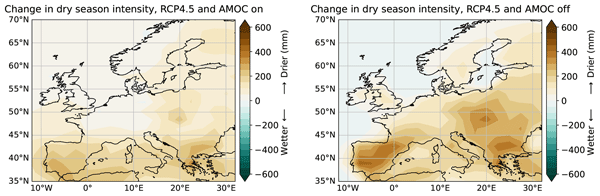
The Atlantic Meridional Overturning Circulation (AMOC) moderates the European climate. The AMOC is a tipping element and may collapse to a substantially weaker state under climate change. Such an event induces global and regional climate shifts. The European hydroclimate becomes drier under an AMOC collapse, this response is not considered in the
standardhydroclimate projections. Our results indicate a considerable influence of the AMOC on the European hydroclimate.
Swinda K. J. Falkena, Henk A. Dijkstra, and Anna S. von der Heydt
Earth Syst. Dynam., 16, 1833–1844, https://doi.org/10.5194/esd-16-1833-2025, https://doi.org/10.5194/esd-16-1833-2025, 2025
Short summary
Short summary
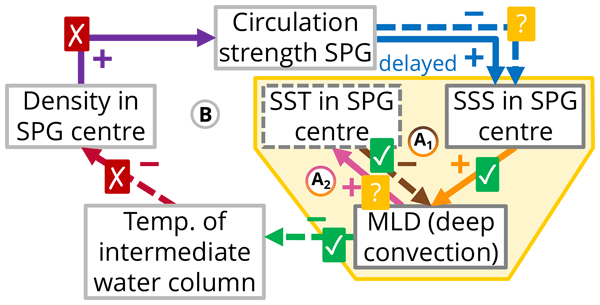
The subpolar gyre is a wind-driven circulation in the North Atlantic Ocean that enables the mixing of water between the surface and deeper layers. We investigate the interactions between the strength of the gyre circulation, salinity, temperature, and mixing in climate models. We find that most models capture an increase in salinity or a decrease in temperature, leading to mixing. However, the feedback from the density in the gyre centre to the strength of its circulation is poorly represented.
Dennis H. A. Vermeulen, Michiel L. J. Baatsen, and Anna S. von der Heydt
Clim. Past, 21, 95–114, https://doi.org/10.5194/cp-21-95-2025, https://doi.org/10.5194/cp-21-95-2025, 2025
Short summary
Short summary
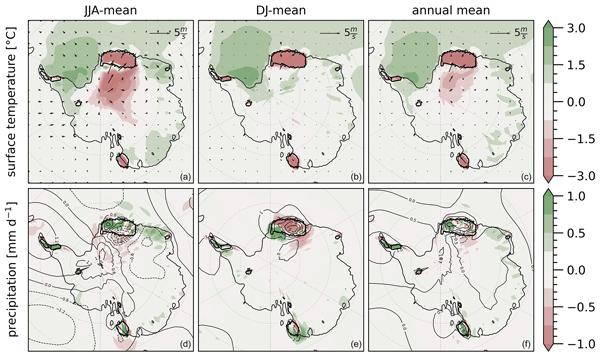
Late Eocene summers, 34 million years ago, were hot on Antarctica, with temperatures up to 30 °C. We also know that during this period the first Antarctic ice sheet formed. Since climate models do not show the transition from this warm climate to ice sheet formation accurately, we imposed regional ice sheets onto the continent in a realistic climate and show that these ice sheets do not melt away. This suggests that the initiation of ice sheet growth might have happened during warmer periods.
Amber A. Boot, Anna S. von der Heydt, and Henk A. Dijkstra
Earth Syst. Dynam., 15, 1567–1590, https://doi.org/10.5194/esd-15-1567-2024, https://doi.org/10.5194/esd-15-1567-2024, 2024
Short summary
Short summary
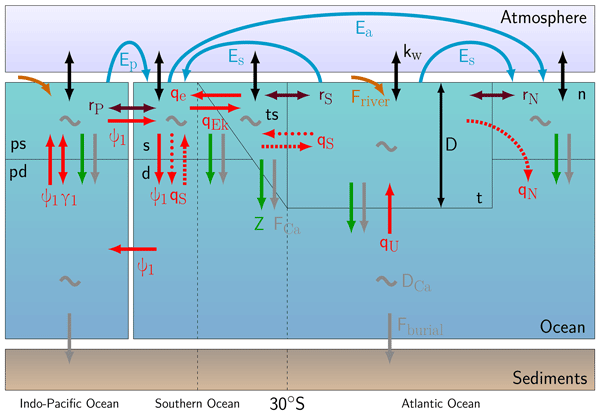
We investigate the multiple equilibria window (MEW) of the Atlantic Meridional Overturning Circulation (AMOC) within a box model. We find that increasing the total carbon content of the system widens the MEW of the AMOC. The important mechanisms at play are the balance between the source and sink of carbon and the sensitivity of the AMOC to freshwater forcing over the Atlantic Ocean. Our results suggest that changes in the marine carbon cycle can influence AMOC stability in future climates.
Arthur Merlijn Oldeman, Michiel L. J. Baatsen, Anna S. von der Heydt, Frank M. Selten, and Henk A. Dijkstra
Earth Syst. Dynam., 15, 1037–1054, https://doi.org/10.5194/esd-15-1037-2024, https://doi.org/10.5194/esd-15-1037-2024, 2024
Short summary
Short summary
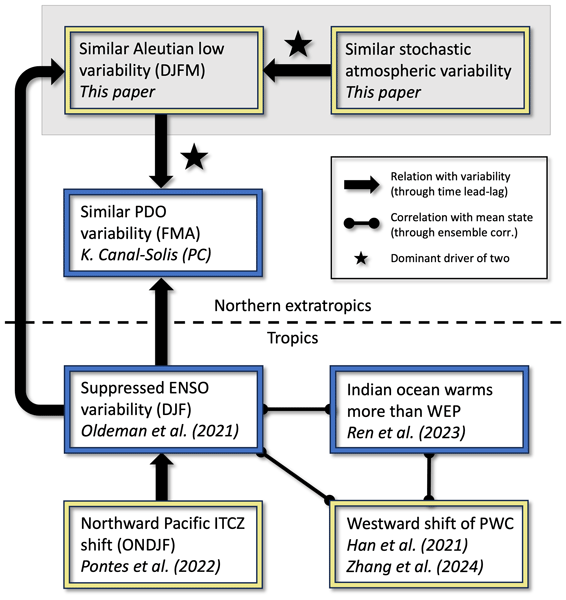
We might be able to constrain uncertainty in future climate projections by investigating variations in the climate of the past. In this study, we investigate the interactions of climate variability between the tropical Pacific (El Niño) and the North Pacific in a warm past climate – the mid-Pliocene, a period roughly 3 million years ago. Using model simulations, we find that, although the variability in El Niño was reduced, the variability in the North Pacific atmosphere was not.
Sacha Sinet, Peter Ashwin, Anna S. von der Heydt, and Henk A. Dijkstra
Earth Syst. Dynam., 15, 859–873, https://doi.org/10.5194/esd-15-859-2024, https://doi.org/10.5194/esd-15-859-2024, 2024
Short summary
Short summary
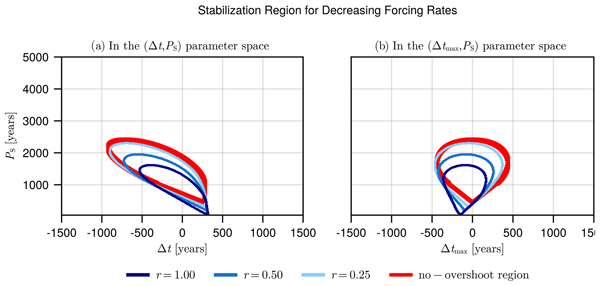
Some components of the Earth system may irreversibly collapse under global warming. Among them, the Atlantic Meridional Overturning Circulation (AMOC), the Greenland Ice Sheet, and West Antarctica Ice Sheet are of utmost importance for maintaining the present-day climate. In a simplified model, we show that both the rate of ice melting and the natural variability linked to freshwater fluxes over the Atlantic Ocean drastically affect how an ice sheet collapse impacts the AMOC stability.
Julia E. Weiffenbach, Henk A. Dijkstra, Anna S. von der Heydt, Ayako Abe-Ouchi, Wing-Le Chan, Deepak Chandan, Ran Feng, Alan M. Haywood, Stephen J. Hunter, Xiangyu Li, Bette L. Otto-Bliesner, W. Richard Peltier, Christian Stepanek, Ning Tan, Julia C. Tindall, and Zhongshi Zhang
Clim. Past, 20, 1067–1086, https://doi.org/10.5194/cp-20-1067-2024, https://doi.org/10.5194/cp-20-1067-2024, 2024
Short summary
Short summary
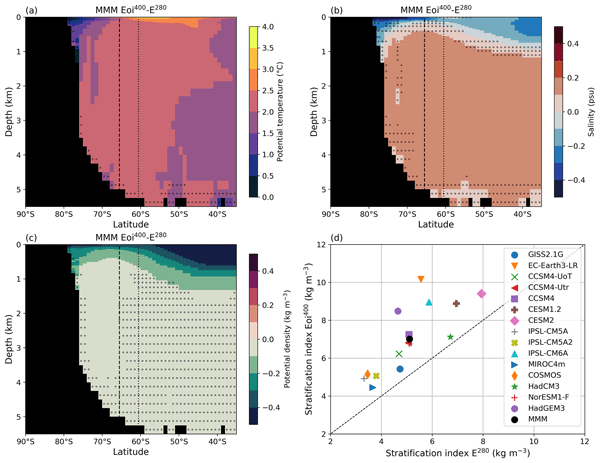
Elevated atmospheric CO2 concentrations and a smaller Antarctic Ice Sheet during the mid-Pliocene (~ 3 million years ago) cause the Southern Ocean surface to become fresher and warmer, which affects the global ocean circulation. The CO2 concentration and the smaller Antarctic Ice Sheet both have a similar and approximately equal impact on the Southern Ocean. The conditions of the Southern Ocean in the mid-Pliocene could therefore be analogous to those in a future climate with smaller ice sheets.
Arthur Merlijn Oldeman, Michiel L. J. Baatsen, Anna S. von der Heydt, Aarnout J. van Delden, and Henk A. Dijkstra
Weather Clim. Dynam., 5, 395–417, https://doi.org/10.5194/wcd-5-395-2024, https://doi.org/10.5194/wcd-5-395-2024, 2024
Short summary
Short summary
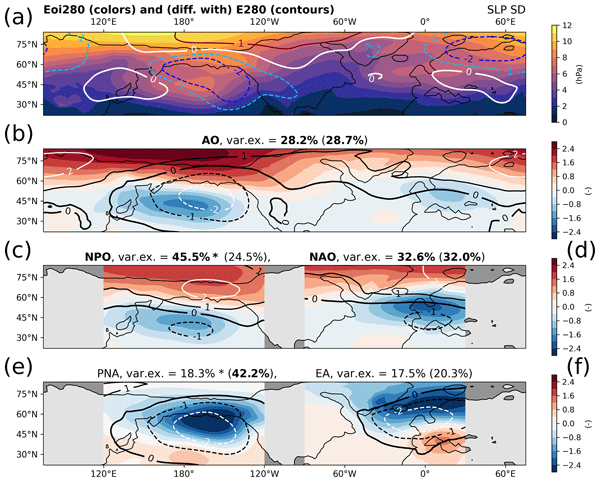
The mid-Pliocene, a geological period around 3 million years ago, is sometimes considered the best analogue for near-future climate. It saw similar CO2 concentrations to the present-day but also a slightly different geography. In this study, we use climate model simulations and find that the Northern Hemisphere winter responds very differently to increased CO2 or to the mid-Pliocene geography. Our results weaken the potential of the mid-Pliocene as a future climate analogue.
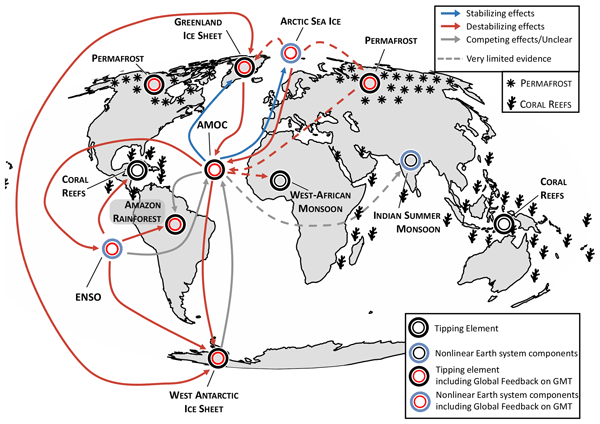
Nico Wunderling, Anna S. von der Heydt, Yevgeny Aksenov, Stephen Barker, Robbin Bastiaansen, Victor Brovkin, Maura Brunetti, Victor Couplet, Thomas Kleinen, Caroline H. Lear, Johannes Lohmann, Rosa Maria Roman-Cuesta, Sacha Sinet, Didier Swingedouw, Ricarda Winkelmann, Pallavi Anand, Jonathan Barichivich, Sebastian Bathiany, Mara Baudena, John T. Bruun, Cristiano M. Chiessi, Helen K. Coxall, David Docquier, Jonathan F. Donges, Swinda K. J. Falkena, Ann Kristin Klose, David Obura, Juan Rocha, Stefanie Rynders, Norman Julius Steinert, and Matteo Willeit
Earth Syst. Dynam., 15, 41–74, https://doi.org/10.5194/esd-15-41-2024, https://doi.org/10.5194/esd-15-41-2024, 2024
Short summary
Short summary
This paper maps out the state-of-the-art literature on interactions between tipping elements relevant for current global warming pathways. We find indications that many of the interactions between tipping elements are destabilizing. This means that tipping cascades cannot be ruled out on centennial to millennial timescales at global warming levels between 1.5 and 2.0 °C or on shorter timescales if global warming surpasses 2.0 °C.
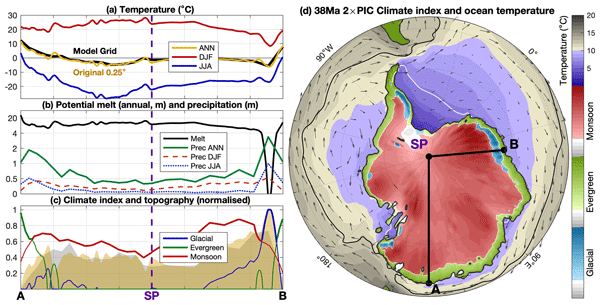
Michiel Baatsen, Peter Bijl, Anna von der Heydt, Appy Sluijs, and Henk Dijkstra
Clim. Past, 20, 77–90, https://doi.org/10.5194/cp-20-77-2024, https://doi.org/10.5194/cp-20-77-2024, 2024
Short summary
Short summary
This work introduces the possibility and consequences of monsoons on Antarctica in the warm Eocene climate. We suggest that such a monsoonal climate can be important to understand conditions in Antarctica prior to large-scale glaciation. We can explain seemingly contradictory indications of ice and vegetation on the continent through regional variability. In addition, we provide a new mechanism through which most of Antarctica remained ice-free through a wide range of global climatic changes.
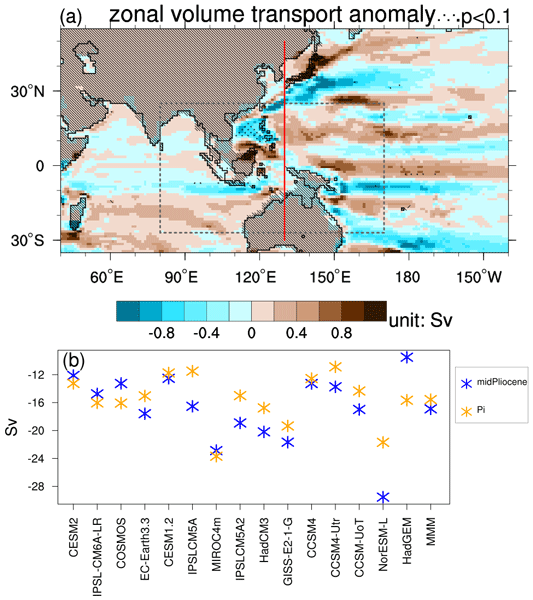
Xin Ren, Daniel J. Lunt, Erica Hendy, Anna von der Heydt, Ayako Abe-Ouchi, Bette Otto-Bliesner, Charles J. R. Williams, Christian Stepanek, Chuncheng Guo, Deepak Chandan, Gerrit Lohmann, Julia C. Tindall, Linda E. Sohl, Mark A. Chandler, Masa Kageyama, Michiel L. J. Baatsen, Ning Tan, Qiong Zhang, Ran Feng, Stephen Hunter, Wing-Le Chan, W. Richard Peltier, Xiangyu Li, Youichi Kamae, Zhongshi Zhang, and Alan M. Haywood
Clim. Past, 19, 2053–2077, https://doi.org/10.5194/cp-19-2053-2023, https://doi.org/10.5194/cp-19-2053-2023, 2023
Short summary
Short summary
We investigate the Maritime Continent climate in the mid-Piacenzian warm period and find it is warmer and wetter and the sea surface salinity is lower compared with preindustrial period. Besides, the fresh and warm water transfer through the Maritime Continent was stronger. In order to avoid undue influence from closely related models in the multimodel results, we introduce a new metric, the multi-cluster mean, which could reveal spatial signals that are not captured by the multimodel mean.
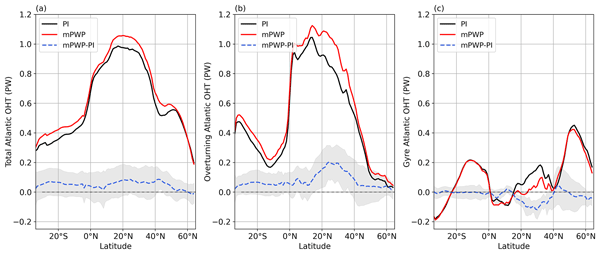
Julia E. Weiffenbach, Michiel L. J. Baatsen, Henk A. Dijkstra, Anna S. von der Heydt, Ayako Abe-Ouchi, Esther C. Brady, Wing-Le Chan, Deepak Chandan, Mark A. Chandler, Camille Contoux, Ran Feng, Chuncheng Guo, Zixuan Han, Alan M. Haywood, Qiang Li, Xiangyu Li, Gerrit Lohmann, Daniel J. Lunt, Kerim H. Nisancioglu, Bette L. Otto-Bliesner, W. Richard Peltier, Gilles Ramstein, Linda E. Sohl, Christian Stepanek, Ning Tan, Julia C. Tindall, Charles J. R. Williams, Qiong Zhang, and Zhongshi Zhang
Clim. Past, 19, 61–85, https://doi.org/10.5194/cp-19-61-2023, https://doi.org/10.5194/cp-19-61-2023, 2023
Short summary
Short summary
We study the behavior of the Atlantic Meridional Overturning Circulation (AMOC) in the mid-Pliocene. The mid-Pliocene was about 3 million years ago and had a similar CO2 concentration to today. We show that the stronger AMOC during this period relates to changes in geography and that this has a significant influence on ocean temperatures and heat transported northwards by the Atlantic Ocean. Understanding the behavior of the mid-Pliocene AMOC can help us to learn more about our future climate.
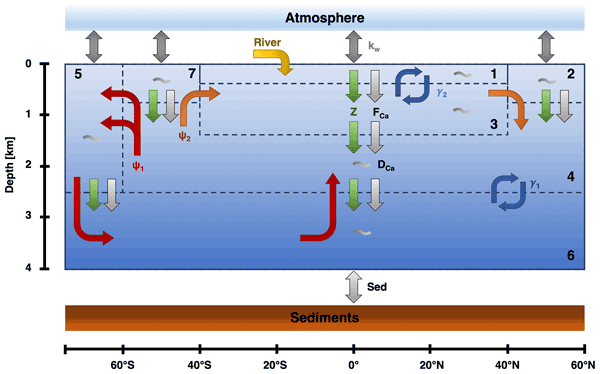
Amber Boot, Anna S. von der Heydt, and Henk A. Dijkstra
Earth Syst. Dynam., 13, 1041–1058, https://doi.org/10.5194/esd-13-1041-2022, https://doi.org/10.5194/esd-13-1041-2022, 2022
Short summary
Short summary
Atmospheric pCO2 of the past shows large variability on different timescales. We focus on the effect of the strength of Atlantic Meridional Overturning Circulation (AMOC) on this variability and on the AMOC–pCO2 relationship. We find that climatic boundary conditions and the representation of biology in our model are most important for this relationship. Under certain conditions, we find internal oscillations, which can be relevant for atmospheric pCO2 variability during glacial cycles.
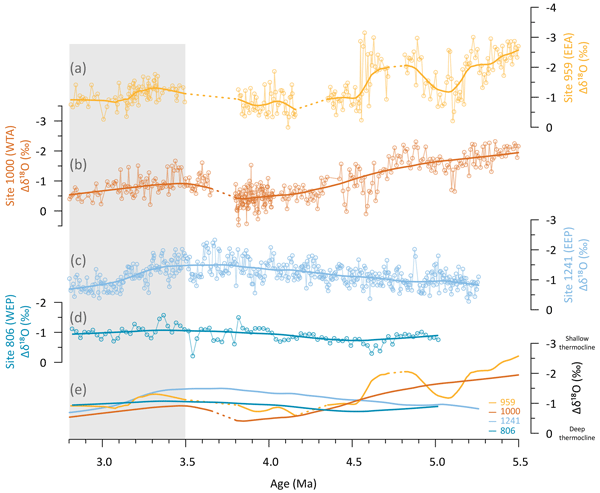
Carolien M. H. van der Weijst, Josse Winkelhorst, Wesley de Nooijer, Anna von der Heydt, Gert-Jan Reichart, Francesca Sangiorgi, and Appy Sluijs
Clim. Past, 18, 961–973, https://doi.org/10.5194/cp-18-961-2022, https://doi.org/10.5194/cp-18-961-2022, 2022
Short summary
Short summary
A hypothesized link between Pliocene (5.3–2.5 million years ago) global climate and tropical thermocline depth is currently only backed up by data from the Pacific Ocean. In our paper, we present temperature, salinity, and thermocline records from the tropical Atlantic Ocean. Surprisingly, the Pliocene thermocline evolution was remarkably different in the Atlantic and Pacific. We need to reevaluate the mechanisms that drive thermocline depth, and how these are tied to global climate change.
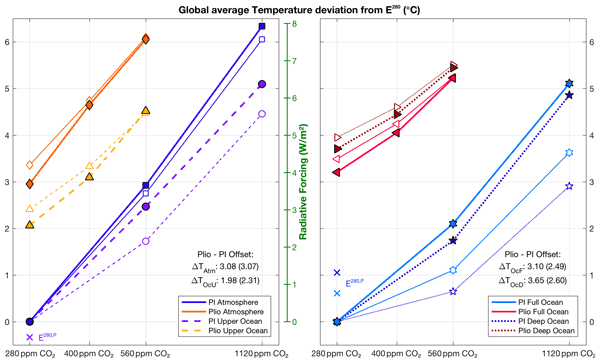
Michiel L. J. Baatsen, Anna S. von der Heydt, Michael A. Kliphuis, Arthur M. Oldeman, and Julia E. Weiffenbach
Clim. Past, 18, 657–679, https://doi.org/10.5194/cp-18-657-2022, https://doi.org/10.5194/cp-18-657-2022, 2022
Short summary
Short summary
The Pliocene was a period during which atmospheric CO2 was similar to today (i.e. ~ 400 ppm). We present the results of model simulations carried out within the Pliocene Model Intercomparison Project Phase 2 (PlioMIP2) using the CESM 1.0.5. We find a climate that is much warmer than today, with augmented polar warming, increased precipitation, and strongly reduced sea ice cover. In addition, several leading modes of variability in temperature show an altered behaviour.
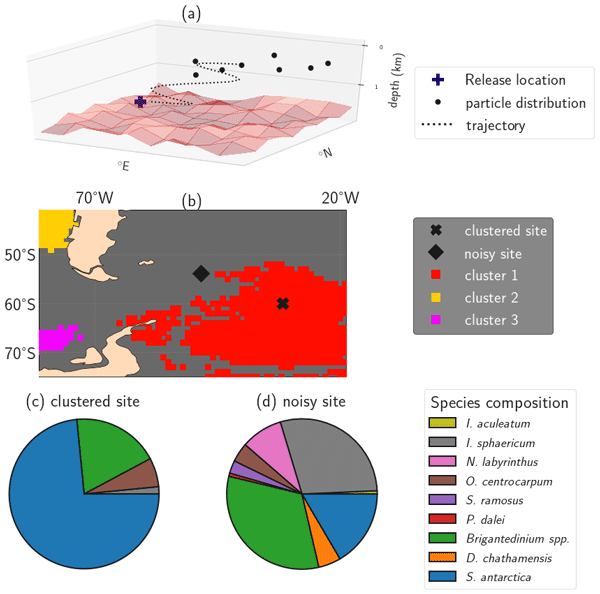
Peter D. Nooteboom, Peter K. Bijl, Christian Kehl, Erik van Sebille, Martin Ziegler, Anna S. von der Heydt, and Henk A. Dijkstra
Earth Syst. Dynam., 13, 357–371, https://doi.org/10.5194/esd-13-357-2022, https://doi.org/10.5194/esd-13-357-2022, 2022
Short summary
Short summary
Having descended through the water column, microplankton in ocean sediments represents the ocean surface environment and is used as an archive of past and present surface oceanographic conditions. However, this microplankton is advected by turbulent ocean currents during its sinking journey. We use simulations of sinking particles to define ocean bottom provinces and detect these provinces in datasets of sedimentary microplankton, which has implications for palaeoclimate reconstructions.
Zixuan Han, Qiong Zhang, Qiang Li, Ran Feng, Alan M. Haywood, Julia C. Tindall, Stephen J. Hunter, Bette L. Otto-Bliesner, Esther C. Brady, Nan Rosenbloom, Zhongshi Zhang, Xiangyu Li, Chuncheng Guo, Kerim H. Nisancioglu, Christian Stepanek, Gerrit Lohmann, Linda E. Sohl, Mark A. Chandler, Ning Tan, Gilles Ramstein, Michiel L. J. Baatsen, Anna S. von der Heydt, Deepak Chandan, W. Richard Peltier, Charles J. R. Williams, Daniel J. Lunt, Jianbo Cheng, Qin Wen, and Natalie J. Burls
Clim. Past, 17, 2537–2558, https://doi.org/10.5194/cp-17-2537-2021, https://doi.org/10.5194/cp-17-2537-2021, 2021
Short summary
Short summary
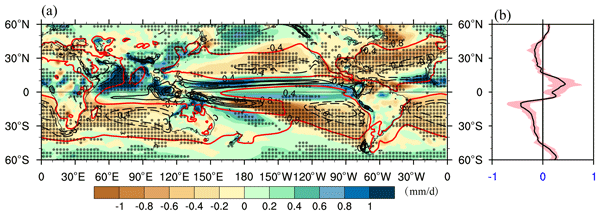
Understanding the potential processes responsible for large-scale hydrological cycle changes in a warmer climate is of great importance. Our study implies that an imbalance in interhemispheric atmospheric energy during the mid-Pliocene could have led to changes in the dynamic effect, offsetting the thermodynamic effect and, hence, altering mid-Pliocene hydroclimate cycling. Moreover, a robust westward shift in the Pacific Walker circulation can moisten the northern Indian Ocean.
Arthur M. Oldeman, Michiel L. J. Baatsen, Anna S. von der Heydt, Henk A. Dijkstra, Julia C. Tindall, Ayako Abe-Ouchi, Alice R. Booth, Esther C. Brady, Wing-Le Chan, Deepak Chandan, Mark A. Chandler, Camille Contoux, Ran Feng, Chuncheng Guo, Alan M. Haywood, Stephen J. Hunter, Youichi Kamae, Qiang Li, Xiangyu Li, Gerrit Lohmann, Daniel J. Lunt, Kerim H. Nisancioglu, Bette L. Otto-Bliesner, W. Richard Peltier, Gabriel M. Pontes, Gilles Ramstein, Linda E. Sohl, Christian Stepanek, Ning Tan, Qiong Zhang, Zhongshi Zhang, Ilana Wainer, and Charles J. R. Williams
Clim. Past, 17, 2427–2450, https://doi.org/10.5194/cp-17-2427-2021, https://doi.org/10.5194/cp-17-2427-2021, 2021
Short summary
Short summary
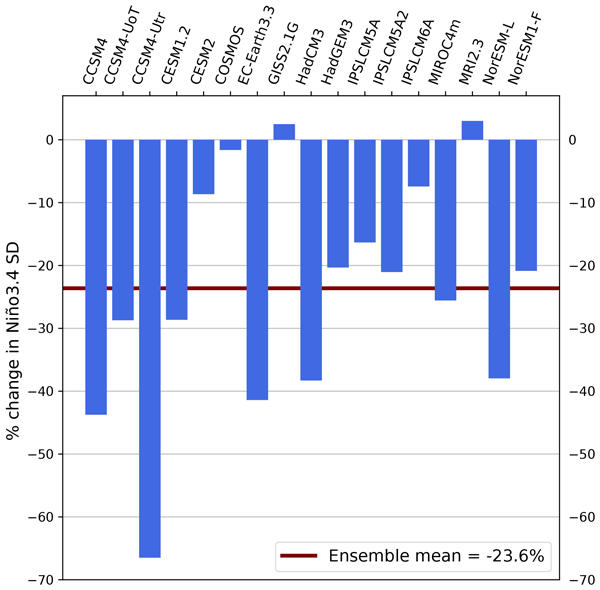
In this work, we have studied the behaviour of El Niño events in the mid-Pliocene, a period of around 3 million years ago, using a collection of 17 climate models. It is an interesting period to study, as it saw similar atmospheric carbon dioxide levels to the present day. We find that the El Niño events were less strong in the mid-Pliocene simulations, when compared to pre-industrial climate. Our results could help to interpret El Niño behaviour in future climate projections.
Cited articles
Alkhayuon, H., Ashwin, P., Jackson, L. C., Quinn, C., and Wood, R. A.: Basin bifurcations, oscillatory instability and rate-induced thresholds for Atlantic meridional overturning circulation in a global oceanic box model, Proceedings of the Royal Society A: Mathematical, Physical and Engineering Sciences, 475, 20190051, https://doi.org/10.1098/rspa.2019.0051, 2019. a, b
Allan, D. and Allan, R. P.: Odden Ice Melt Linked to Labrador Sea Ice Expansions and the Great Salinity Anomalies of 1970–1995, Journal of Geophysical Research: Oceans, 129, e2023JC019988, https://doi.org/10.1029/2023JC019988, 2024. a
Armstrong McKay, D. I., Staal, A., Abrams, J. F., Winkelmann, R., Sakschewski, B., Loriani, S., Fetzer, I., Cornell, S. E., Rockström, J., and Lenton, T. M.: Exceeding 1.5 °C global warming could trigger multiple climate tipping points, Science, 377, https://doi.org/10.1126/science.abn7950, 2022. a
Belkin, I. M., Levitus, S., Antonov, J., and Malmberg, S.-A.: “Great Salinity Anomalies” in the North Atlantic, Progress in Oceanography, 41, 1–68, https://doi.org/10.1016/S0079-6611(98)00015-9, 1998. a, b
Biló, T. C., Straneo, F., Holte, J., and Le Bras, I. A.-A.: Arrival of New Great Salinity Anomaly Weakens Convection in the Irminger Sea, Geophysical Research Letters, 49, e2022GL098857, https://doi.org/10.1029/2022GL098857, 2022. a, b
Boers, N., Ghil, M., and Stocker, T. F.: Theoretical and paleoclimatic evidence for abrupt transitions in the Earth system, Environmental Research Letters, 17, https://doi.org/10.1088/1748-9326/ac8944, 2022. a
Born, A. and Mignot, J.: Dynamics of decadal variability in the Atlantic subpolar gyre: a stochastically forced oscillator, Climate Dynamics, 39, 461–474, https://doi.org/10.1007/s00382-011-1180-4, 2012. a
Born, A. and Stocker, T. F.: Two Stable Equilibria of the Atlantic Subpolar Gyre, Journal of Physical Oceanography, 44, 246–264, https://doi.org/10.1175/JPO-D-13-073.1, 2014. a, b, c
Born, A., Mignot, J., and Stocker, T.: Multiple Equilibria as a Possible Mechanism for Decadal Variability in the North Atlantic Ocean, Journal of Climate, 28, 8907–8922, https://doi.org/10.1175/JCLI-D-14-00813.1, 2015. a
Bouchet, F. and Reygner, J.: Generalisation of the Eyring–Kramers transition rate formula to irreversible diffusion processes, Annales Henri Poincaré, 17, 3499–3532, https://doi.org/10.1007/s00023-016-0507-4, 2016. a
Brodeau, L. and Koenigk, T.: Extinction of the northern oceanic deep convection in an ensemble of climate model simulations of the 20th and 21st centuries, Climate Dynamics, 46, 2863–2882, https://doi.org/10.1007/s00382-015-2736-5, 2016. a
Byrne, S.: KernelDensity.jl, GitHub [code], https://github.com/JuliaStats/KernelDensity.jl (last access: 16 December 2025), 2024. a
Cessi, P.: A Simple Box Model of Stochastically Forced Thermohaline Flow, Journal of Physical Oceanography, 24, 1911–1920, https://doi.org/10.1175/1520-0485(1994)024<1911:ASBMOS>2.0.CO;2, 1994. a
Danabasoglu, G., Yeager, S. G., Kim, W. M., Behrens, E., Bentsen, M., Bi, D., Biastoch, A., Bleck, R., Böning, C., Bozec, A., Canuto, V. M., Cassou, C., Chassignet, E., Coward, A. C., Danilov, S., Diansky, N., Drange, H., Farneti, R., Fernandez, E., Fogli, P. G., Forget, G., Fujii, Y., Griffies, S. M., Gusev, A., Heimbach, P., Howard, A., Ilicak, M., Jung, T., Karspeck, A. R., Kelley, M., Large, W. G., Leboissetier, A., Lu, J., Madec, G., Marsland, S. J., Masina, S., Navarra, A., Nurser, A. J. G., Pirani, A., Romanou, A., Salas y Mélia, D., Samuels, B. L., Scheinert, M., Sidorenko, D., Sun, S., Treguier, A.-M., Tsujino, H., Uotila, P., Valcke, S., Voldoire, A., Wang, Q., and Yashayaev, I.: North Atlantic Simulations in Coordinated Ocean-ice Reference Experiments phase II (CORE-II). Part II: Inter-annual to decadal variability, Ocean Modeling, 96, 65–90, https://doi.org/10.1016/j.ocemod.2015.11.007, 2016. a
de Steur, L., Peralta-Ferriz, C., and Pavlova, O.: Freshwater Export in the East Greenland Current Freshens the North Atlantic, Geophysical Research Letters, 45, 13,359–13,366, https://doi.org/10.1029/2018GL080207, 2018. a
Deshayes, J., Straneo, F., and Spall, M.: Mechanisms of variability in a convective basin, Journal of Marine Research, 67, 273–303, https://elischolar.library.yale.edu/journal_of_marine_research/232 (last access: 16 December 2025), 2009. a
Dickson, R. R., Meincke, J., Malmberg, S.-A., and Lee, A. J.: The “great salinity anomaly” in the Northern North Atlantic 1968–1982, Progress in Oceanography, 20, 103–151, https://doi.org/10.1016/0079-6611(88)90049-3, 1988. a, b
Dijkstra, H. A.: Nonlinear Physical Oceanography, Springer Dordrecht, 2 edn., ISBN: 978-1-4020-2262-3, https://doi.org/10.1007/1-4020-2263-8, 2005. a
Dijkstra, H. A.: The role of conceptual models in climate research, Physica D: Nonlinear Phenomena, 457, 133984, https://doi.org/10.1016/j.physd.2023.133984, 2024. a
Ditlevsen, P. D. and Johnsen, S. J.: Tipping points: Early warning and wishful thinking, Geophysical Research Letters, 37, 2–5, https://doi.org/10.1029/2010GL044486, 2010. a
Drijfhout, S., Angevaare, J. R., Mecking, J., van Westen, R. M., and Rahmstorf, S.: Shutdown of northern Atlantic overturning after 2100 following deep mixing collapse in CMIP6 projections, Environmental Research Letters, 20, 094062, https://doi.org/10.1088/1748-9326/adfa3b, 2025. a
Dukhovskoy, D. S., Yashayaev, I., Chassignet, E. P., Myers, P. G., Platov, G., and Proshutinsky, A.: Time Scales of the Greenland Freshwater Anomaly in the Subpolar North Atlantic, Journal of Climate, 34, 8971–8987, https://doi.org/10.1175/JCLI-D-20-0610.1, 2021. a
Freidlin, M. I. and Wentzell, A. D.: Random perturbations of Dynamical Systems, Springer, 3 edn., ISBN: 978-3-642-25846-6, https://doi.org/10.1007/978-3-642-25847-3, 2012. a
Fried, N., Biló, T. C., Johns, W. E., Katsman, C. A., Fogaren, K. E., Yoder, M., Palevsky, H. I., Straneo, F., and de Jong, M. F.: Recent Freshening of the Subpolar North Atlantic Increased the Transport of Lighter Waters of the Irminger Current From 2014 to 2022, Journal of Geophysical Research: Oceans, 129, e2024JC021184, https://doi.org/10.1029/2024JC021184, 2024. a
Gelderloos, R., Straneo, F., and Katsman, C. A.: Mechanisms behind the Temporary Shutdown of Deep Convection in the Labrador Sea: Lessons from the Great Salinity Anomaly Years 1968–71, Journal of Climate, 25, 6743–6755, https://doi.org/10.1175/JCLI-D-11-00549.1, 2012. a, b, c
Gu, Q., Gervais, M., Danabasoglu, G., Kim, W. M., Castruccio, F., Maroon, E., and Xie, S. P.: Wide range of possible trajectories of North Atlantic climate in a warming world, Nature Communications, 15, 1–13, https://doi.org/10.1038/s41467-024-48401-2, 2024. a
Kim, W. M., Yeager, S., and Danabasoglu, G.: Revisiting the Causal Connection between the Great Salinity Anomaly of the 1970s and the Shutdown of Labrador Sea Deep Convection, Journal of Climate, 34, 675–696, https://doi.org/10.1175/JCLI-D-20-0327.1, 2021. a
Klockmann, M., Mikolajewicz, U., Kleppin, H., and Marotzke, J.: Coupling of the Subpolar Gyre and the Overturning Circulation During Abrupt Glacial Climate Transitions, Geophysical Research Letters, 47, e2020GL090361, https://doi.org/10.1029/2020GL090361, 2020. a, b
Kuhlbrodt, T. and Monahan, A. H.: Stochastic Stability of Open-Ocean Deep Convection, Journal of Physical Oceanography, 33, 2764–2780, https://doi.org/10.1175/1520-0485(2003)033<2764:SSOODC>2.0.CO;2, 2003. a
Kuhlbrodt, T., Titz, S., Feudel, U., and Rahmstorf, S.: A simple model of seasonal open ocean convection. Part II: Labrador Sea stability and stochastic forcing, Ocean Dynamics, 52, 36–49, https://doi.org/10.1007/s10236-001-8175-3, 2001. a
Lazier, J. R.: Oceanographic conditions at Ocean Weather Ship Bravo, 1964–1974, Atmosphere-Ocean, 18, 227–238, https://doi.org/10.1080/07055900.1980.9649089, 1980. a, b
Li, C. and Born, A.: Coupled atmosphere-ice-ocean dynamics in Dansgaard-Oeschger events, Quaternary Science Reviews, 203, 1–20, https://doi.org/10.1016/j.quascirev.2018.10.031, 2019. a, b, c
Loriani, S., Aksenov, Y., Armstrong McKay, D. I., Bala, G., Born, A., Chiessi, C. M., Dijkstra, H. A., Donges, J. F., Drijfhout, S., England, M. H., Fedorov, A. V., Jackson, L. C., Kornhuber, K., Messori, G., Pausata, F. S. R., Rynders, S., Sallée, J.-B., Sinha, B., Sherwood, S. C., Swingedouw, D., and Tharammal, T.: Tipping points in ocean and atmosphere circulations, Earth Syst. Dynam., 16, 1611–1653, https://doi.org/10.5194/esd-16-1611-2025, 2025. a, b
Lozier, M. S., Li, F., Bacon, S., Bahr, F., Bower, A. S., Cunningham, S. A., de Jong, M. F., de Steur, L., deYoung, B., Fischer, J., Gary, S. F., Greenan, B. J. W., Holliday, N. P., Houk, A., Houpert, L., Inall, M. E., Johns, W. E., Johnson, H. L., Johnson, C., Karstensen, J., Koman, G., Bras, I. A. L., Lin, X., Mackay, N., Marshall, D. P., Mercier, H., Oltmanns, M., Pickart, R. S., Ramsey, A. L., Rayner, D., Straneo, F., Thierry, V., Torres, D. J., Williams, R. G., Wilson, C., Yang, J., Yashayaev, I., and Zhao, J.: A sea change in our view of overturning in the subpolar North Atlantic, Science, 363, 516–521, https://doi.org/10.1126/science.aau6592, 2019. a
Malles, J.-H., Marzeion, B., and Myers, P. G.: Freshwater input from glacier melt outside Greenland alters modeled northern high-latitude ocean circulation, Earth Syst. Dynam., 16, 347–377, https://doi.org/10.5194/esd-16-347-2025, 2025. a
Neff, A., Keane, A., Dijkstra, H. A., and Krauskopf, B.: Bifurcation analysis of a North Atlantic Ocean box model with two deep-water formation sites, Physica D: Nonlinear Phenomena, 456, 133907, https://doi.org/10.1016/j.physd.2023.133907, 2023. a, b, c
Penland, C. and Ewald, B. D.: On modelling physical systems with stochastic models: Diffusion versus Lévy processes, Philosophical Transactions of the Royal Society A: Mathematical, Physical and Engineering Sciences, 366, 2457–2474, https://doi.org/10.1098/rsta.2008.0051, 2008. a
Prange, M., Jonkers, L., Merkel, U., Schulz, M., and Bakker, P.: A multicentennial mode of North Atlantic climate variability throughout the Last Glacial Maximum, Science Advances, 9, 1–13, https://doi.org/10.1126/SCIADV.ADH1106, 2023. a
Rackauckas, C. and Nie, Q.: Adaptive methods for stochastic differential equations via natural embeddings and rejection sampling with memory, Discrete and Continuous Dynamical Systems, Series B, 22, 2731, https://doi.org/10.3934/dcdsb.2017133, 2017a. a
Rackauckas, C. and Nie, Q.: Differentialequations.jl–a performant and feature-rich ecosystem for solving differential equations in Julia, Journal of Open Research Software, 5, 15, https://doi.org/10.5334/jors.151, 2017b. a
Rahmstorf, S.: On the freshwater forcing and transport of the Atlantic thermohaline circulation, Climate Dynamics, 12, 799–811, https://doi.org/10.1007/s003820050144, 1996. a
Rahmstorf, S.: A simple model of seasonal open ocean convection – Part I: Theory, Ocean Dynamics, 52, 26–35, https://doi.org/10.1007/s10236-001-8174-4, 2001. a, b, c
Sgubin, G., Swingedouw, D., Drijfhout, S., Mary, Y., and Bennabi, A.: Abrupt cooling over the North Atlantic in modern climate models, Nature Communications, 8, 14375, https://doi.org/10.1038/ncomms14375, 2017. a, b
Spall, M. A.: Boundary currents and watermass transformation in marginal seas, Journal of Physical Oceanography, 34, 1197–1213, https://doi.org/10.1175/1520-0485(2004)034<1197:BCAWTI>2.0.CO;2, 2004. a
Spall, M. A.: Influences of precipitation on water mass transformation and deep convection, Journal of Physical Oceanography, 42, 1684–1700, https://doi.org/10.1175/JPO-D-11-0230.1, 2012. a, b
Spooner, P., Thornalley, D. J. R., Oppo, D. W., Fox, A. D., Radionovskaya, S., Rose, N. L., Mallett, R., Cooper, E., and Roberts, J. M.: Exceptional 20th Century Ocean Circulation in the Northeast Atlantic, Geophysical Research Letters, 47, https://doi.org/10.1029/2020GL087577, 2020. a
Steinsland, K., Grant, D. M., Ninnemann, U. S., Fahl, K., Stein, R., and De Schepper, S.: Sea ice variability in the North Atlantic subpolar gyre throughout the Last Interglacial, Quaternary Science Reviews, 313, 108198, https://doi.org/10.1016/j.quascirev.2023.108198, 2023. a
Straneo, F.: On the connection between dense water formation, overturning, and poleward heat transport in a convective basin, Journal of Physical Oceanography, 36, 1822–1840, https://doi.org/10.1175/JPO2932.1, 2006. a
Swingedouw, D., Bily, A., Esquerdo, C., Borchert, L. F., Sgubin, G., Mignot, J., and Menary, M.: On the risk of abrupt changes in the North Atlantic subpolar gyre in CMIP6 models, Annals of the New York Academy of Sciences, 1504, 187–201, https://doi.org/10.1111/nyas.14659, 2021. a, b, c, d
Titz, S., Kuhlbrodt, T., and Feudel, U.: Homoclinic Bifurcation in an Ocean Circulation Box Model, International Journal of Bifurcation and Chaos, 12, 869–875, https://doi.org/10.1142/S0218127402004759, 2002a. a
Titz, S., Kuhlbrodt, T., Rahmstorf, S., and Feudel, U.: On freshwater-dependent bifurcations in box models of the interhemispheric thermohaline circulation, Tellus A: Dynamic Meteorology and Oceanography, 54, 89–98, https://doi.org/10.3402/tellusa.v54i1.12126, 2002b. a, b
van der Heijden, K. J.: SPG-convection, Zenodo [code], https://doi.org/10.5281/zenodo.17641425, 2025. a, b
van Westen, R. M., Jacques-Dumas, V., Boot, A. A., and Dijkstra, H. A.: The Role of Sea-ice Processes on the Probability of AMOC Transitions, Journal of Climate, 37, 6269–6284, https://doi.org/10.1175/JCLI-D-24-0060.1, 2024. a
Veltz, R.: BifurcationKit.jl, HAL [code], https://hal.archives-ouvertes.fr/hal-02902346 (last access: 16 December 2025), 2020. a
Welander, P.: A simple heat-salt oscillator, Dynamics of Atmospheres and Oceans, 6, 233–242, https://doi.org/10.1016/0377-0265(82)90030-6, 1982. a
Wood, R., Rodríguez, J., Smith, R., Jackson, L., and Hawkins, E.: Observable, low-order dynamical controls on thresholds of the Atlantic meridional overturning circulation, Climate Dynamics, 53, 6815–6834, https://doi.org/10.1007/s00382-019-04956-1, 2019. a
Short summary
The North Atlantic subpolar gyre is a counter-clockwise flowing ocean current that is partly driven by convection. There are indications that the convection in the subpolar gyre region can stop under climate change, with potentially large consequences for the wider North Atlantic. Here, we study a simple model of the subpolar gyre and find that in the scenarios we study, convection never stops permanently. This provides useful context for interpreting more complex models and observations.
The North Atlantic subpolar gyre is a counter-clockwise flowing ocean current that is partly...


Altmetrics
Final-revised paper
Preprint