
Articles | Volume 16, issue 6
https://doi.org/10.5194/esd-16-2161-2025
© Author(s) 2025. This work is distributed under
the Creative Commons Attribution 4.0 License.
the Creative Commons Attribution 4.0 License.
https://doi.org/10.5194/esd-16-2161-2025
© Author(s) 2025. This work is distributed under
the Creative Commons Attribution 4.0 License.
the Creative Commons Attribution 4.0 License.
Research article
| 
05 Dec 2025
Research article |
| 05 Dec 2025
| 05 Dec 2025
Regional climate imprints of recent historical changes in anthropogenic Near Term Climate Forcers

Barcelona Supercomputing Center, Barcelona, Spain
Universitat Politècnica de Catalunya, Barcelona, Spain
María Gonçalves Ageitos
Barcelona Supercomputing Center, Barcelona, Spain
Universitat Politècnica de Catalunya, Barcelona, Spain
Pablo Ortega
Barcelona Supercomputing Center, Barcelona, Spain
Carlos Pérez García-Pando
Barcelona Supercomputing Center, Barcelona, Spain
ICREA, Catalan Institution for Research and Advanced Studies, Barcelona, Spain
Markus G. Donat
Barcelona Supercomputing Center, Barcelona, Spain
ICREA, Catalan Institution for Research and Advanced Studies, Barcelona, Spain
Margarida Samso Cabré
Barcelona Supercomputing Center, Barcelona, Spain
Saskia Loosveldt Tomas
Barcelona Supercomputing Center, Barcelona, Spain
Related authors
No articles found.
Jesús Yus-Díez, Jeronimo Escribano, Marco Pandolfi, Andrés Alastuey, Cristina González-Flórez, Adolfo Gonzalez-Romero, María Gonçalves Ageitos, Matic Ivančič, Martina Klose, Konrad Kandler, Vincenzo Obiso, Agnesh Panta, Cristina Reche, Martin Rigler, Xavier Querol, and Carlos Perez García-Pando
Atmos. Chem. Phys., 26, 14531–14557, https://doi.org/10.5194/acp-26-14531-2026, https://doi.org/10.5194/acp-26-14531-2026, 2026
Short summary
Short summary
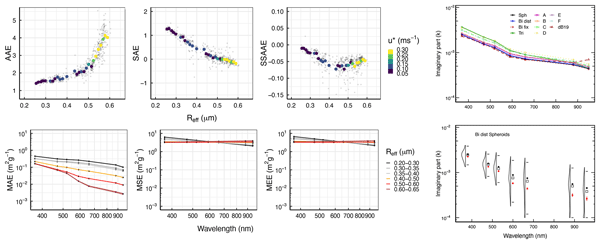
Here we present measurements of dust optical properties during active emissions at a source region in the Moroccan Sahara. We present results on its single scattering albedo, absorption and scattering wavelength dependence and mass efficiency. Furthermore, we have performed imaginary refractive index (k) retrieval under varying assumptions of the refractive index real part, and particle sphericity. We also provide a comparison between the k retrievals and estimations on dust k from AERONET.
Tabea Unser, Rumeng Li, Peter Knippertz, Francesco Benincasa, Miguel Castrillo, Oriol Jorba, Carlos Pérez García-Pando, and Martina Klose
EGUsphere, https://doi.org/10.5194/egusphere-2026-5004, https://doi.org/10.5194/egusphere-2026-5004, 2026
This preprint is open for discussion and under review for Geoscientific Model Development (GMD).
Short summary
Short summary
Haboobs are dust storms formed when cold air from thunderstorms spreads outward near the surface, but their characteristics and contribution to dust emissions are poorly quantified. We developed an automated algorithm to identify and track haboobs in a high-resolution model with an interactive dust cycle. Applied over North Africa and the Middle East, the algorithm enables estimates of when and where haboobs occur and how much dust they emit, with the model reproducing their key characteristics.
Arnau Garcia Mesa, Lluís Palma, Markus Donat, Stefano Materia, Bruna Gràvalos Talló, and Raül Marcos Matamoros
Weather Clim. Dynam., 7, 1709–1731, https://doi.org/10.5194/wcd-7-1709-2026, https://doi.org/10.5194/wcd-7-1709-2026, 2026
Short summary
Short summary
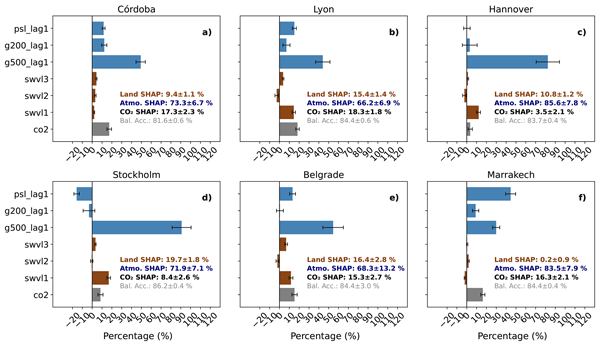
Explainable Artificial Intelligence was used to quantify and disentangle the role of the drivers of summer heat extremes at six sites in Europe and North Africa. Large-scale atmospheric circulation, especially mid-tropospheric geopotential, dominates, while soil drying amplifies heat in temperate and northern regions, and rising carbon dioxide contributes to long-term trends. Results were robust across data sources and help target climate risk and model improvements.

Mehdi Pasha Karami, Torben Koenigk, Shiyu Wang, René Navarro Labastida, Tim Kruschke, Aude Carréric, Pablo Ortega, Klaus Wyser, Ramon Fuentes Franco, Agatha M. de Boer, Marie Sicard, and Aitor Aldama Campino
Earth Syst. Dynam., 17, 1151–1176, https://doi.org/10.5194/esd-17-1151-2026, https://doi.org/10.5194/esd-17-1151-2026, 2026
Short summary
Short summary
This study uses a high-resolution global climate model to simulate future climate, with a particular focus on the Arctic and North Atlantic. The model projects a nearly ice-free Arctic by 2040. The paper also introduces a framework to diagnose deep-water formation (DWF) in the Labrador, Irminger, and Greenland Seas and to quantify their regional contributions to the Atlantic Meridional Overturning Circulation (AMOC), revealing how different ocean regions contribute to the weakening of AMOC in a warming climate.
Ramiro I. Saurral, Anna Martín-Perellón, Diego A. Campos, Juan Jesús González-Alemán, Saskia Loosveldt-Tomas, and Pablo Ortega
EGUsphere, https://doi.org/10.5194/egusphere-2026-4187, https://doi.org/10.5194/egusphere-2026-4187, 2026
This preprint is open for discussion and under review for Earth System Dynamics (ESD).
Short summary
Short summary
The Mediterranean region is frequently affected by very intense precipitation events caused by cyclones. In this study, we analyze a new dataset of climate change experiments built using a more detailed representation of the Earth surface compared with typical simulations of the global climate. In particular, we assess whether this finer representation provides more reliable simulations of how extreme precipitation evolves in the present and might evolve in the future.
Eneko Martin-Martinez, Eduardo Moreno-Chamarro, Fraser William Goldsworth, Jin-Song von Storch, Cristina Arumi, Daria Kuznetsova, Saskia Loosveldt-Tomas, Pierre-Antoine Bretonnière, and Pablo Ortega
Ocean Sci., 22, 2307–2331, https://doi.org/10.5194/os-22-2307-2026, https://doi.org/10.5194/os-22-2307-2026, 2026
Short summary
Short summary
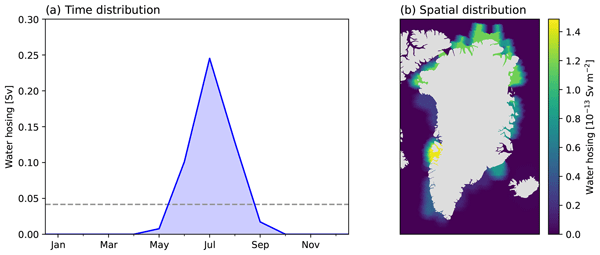
We investigate the impact of Greenland meltwaters on the ocean circulation and the North Atlantic region. To this end, we impose a quasi-realistic distribution of freshwater fluxes in a global climate model with 8-km horizontal resolution, much finer than the standard 100-km scale. The study reveals that the meltwaters disperse unevenly across the North Atlantic, guided by boundary currents and modulated by gradual changes in the large-scale circulation, which undergoes a progressive weakening.
Marc Guevara, Carles Tena, Paula Camps, Kevin Oliveira, Johanna Gehlen, Angie Albarracin, Paula Castesana, Oscar Collado, Laura Herrero, Oliver Legarreta, Ivan Lombardich, Carmen Piñero-Megías, Luca Rizza, Jessica Slater, Artur Viñas, Francesca Macchia, Gilbert Montane, Oriol Jorba, and Carlos Pérez García-Pando
EGUsphere, https://doi.org/10.5194/egusphere-2026-4146, https://doi.org/10.5194/egusphere-2026-4146, 2026
This preprint is open for discussion and under review for Geoscientific Model Development (GMD).
Short summary
Short summary
We present the High-Elective Resolution Modelling Emission System delta version (HERMES_Δ), an open-source and flexible emission processing tool that allows making official national inventories fit for air quality and greenhouse gas modelling needs. HERMES_Δ converts raw inventories into gridded, vertically discretised, hourly and speciated emission numerical datasets to make them usable for model simulations. The use of HERMES_Δ is exemplified by processing the Spanish official inventories.
Monalisa Sahoo, Stefano Materia, and Markus G. Donat
EGUsphere, https://doi.org/10.5194/egusphere-2026-3206, https://doi.org/10.5194/egusphere-2026-3206, 2026
Short summary
Short summary
This study compares several gridded observation-based datasets of soil moisture, evapotranspiration, potential evapotranspiration, and air temperature during summer across Europe from 2003–2022. It shows that datasets differ in actual values and seasonal variations, but most datasets show coherent temporal variations and coupling relationships. However, timeseries differences found for some datasets also affect their representation of land-atmosphere coupling relationships.
Sebastian Vergara-Palacio, Alexei Kiselev, Franziska Vogel, Adolfo González-Romero, Romy Fösig, Xavier Querol, Corinna Hoose, Nsikanabasi Silas Umo, Ottmar Möhler, Konrad Kandler, Carlos Pérez García-Pando, and Martina Klose
Atmos. Chem. Phys., 26, 9113–9147, https://doi.org/10.5194/acp-26-9113-2026, https://doi.org/10.5194/acp-26-9113-2026, 2026
Short summary
Short summary
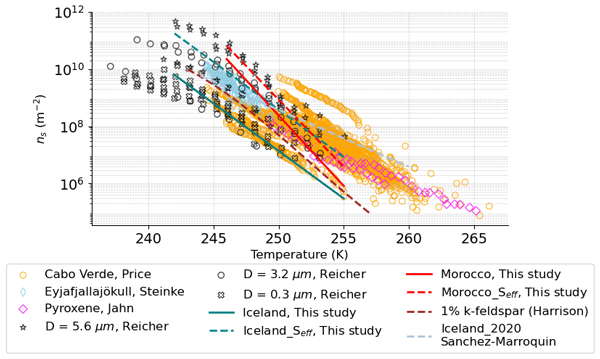
Atmospheric mineral dust can help clouds form ice, changing cloud properties and affecting weather and climate. We tested dust from Morocco and Iceland in more than 300 controlled laboratory experiments. Icelandic samples were up to 100 times less able to promote ice formation than Moroccan samples, and showed mineral-composition dependence. The results show the role of larger dust particles in ice nucleation and their relationship with mineralogy and size for low- and high-latitude sources.
Bernardo Maraldi, Nuno Rocha Monteiro, Marvin Axness, Daria Kuznetsova, Pablo Ortega, and Francisco Doblas-Reyes
EGUsphere, https://doi.org/10.5194/egusphere-2026-3251, https://doi.org/10.5194/egusphere-2026-3251, 2026
Short summary
Short summary
We investigate the impact of model resolution on the representation of the Madden Julian Oscillation (MJO) in a global climate model run at 25 km and 9 km of resolution. We evaluate the model representation of the intensity, propagation and variability of the MJO. This study reveals that resolution only partially improves the simulated MJO. It also shows how biases in the underlying ocean and atmosphere prevent the model from capturing the right MJO long-term variability
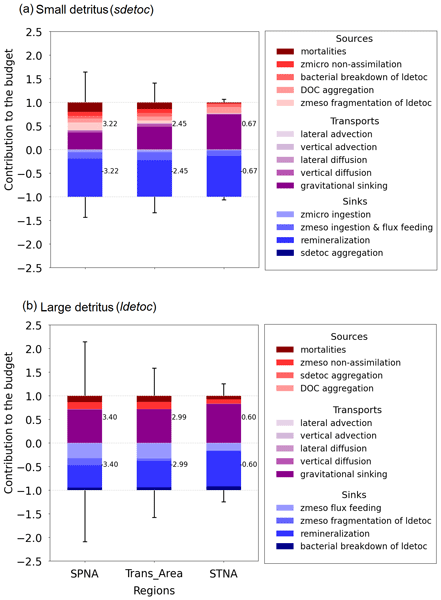
M. Andrea Orihuela-García, Yohan Ruprich-Robert, Vladimir Lapin, Saskia Loosveldt Tomas, Raffaele Bernardello, Margarida Samsó-Cabré, Pierre-Antoine Bretonnière, Miguel Castrillo, and Martí Galí
Biogeosciences, 23, 4083–4112, https://doi.org/10.5194/bg-23-4083-2026, https://doi.org/10.5194/bg-23-4083-2026, 2026
Short summary
Short summary
We use a biogeochemical model to examine how particulate organic carbon (POC) is produced, transformed and transported to the deep ocean. Vertical flux attenuation arises from several interacting processes: export pathways, particle lability, temperature-dependent degradation, and zooplankton transformations, leading to strongest attenuation in the most productive region. Together with extensive comparison to observations, such a budgeting approach can help constrain model projections.
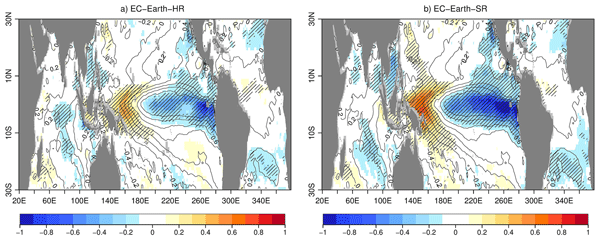
Aude Carréric, Pablo Ortega, Roberto Bilbao, Carlos Delgado-Torres, Vladimir Lapin, Ferran Lopez-Marti, Markus Donat, and Francisco Doblas-Reyes
Earth Syst. Dynam., 17, 717–737, https://doi.org/10.5194/esd-17-717-2026, https://doi.org/10.5194/esd-17-717-2026, 2026
Short summary
Short summary
The paper assesses the impact of horizontal resolution of the EC-Earth climate model on its ability to predict El Nino Southern Oscillation (ENSO). The high-resolution simulations show better forecast skill linked to improved simulation of ENSO-related variability and ENSO teleconnections with the equatorial Atlantic. However, the remaining poor skill in the western Pacific highlights the importance of better understanding ENSO simulation errors and mean state biases to improve forecasts.
Hugues Goosse, Cecile Davrinche, Benjamin Richaud, Dániel Topál, Stephy Libera, Alberto C. Naveira Garabato, Alessandro Silvano, Martin Vancoppenolle, and Pablo Ortega
EGUsphere, https://doi.org/10.5194/egusphere-2026-1823, https://doi.org/10.5194/egusphere-2026-1823, 2026
Short summary
Short summary
The variability of the winter sea ice edge is much higher in regions close to the main topographic features of the Southern Ocean than over the smoother abyssal plain. The oceanic bathymetry influences mesoscale eddy activity and the Antarctic Circumpolar Current jets, affecting both oceanic heat transport and sea ice velocity and subsequently sea ice variability.
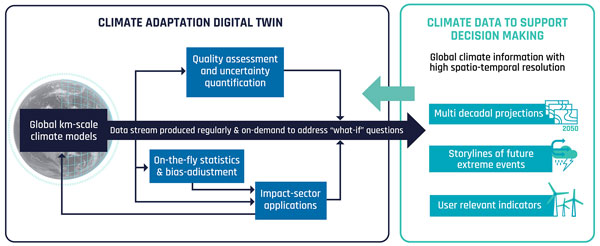
Francisco J. Doblas-Reyes, Jenni Kontkanen, Irina Sandu, Mario Acosta, Mohammed Hussam Al Turjmam, Ivan Alsina-Ferrer, Miguel Andrés-Martínez, Costanza Anerdi, Leo Arriola, Marvin Axness, Marc Batlle Martín, Peter Bauer, Tobias Becker, Daniel Beltrán, Sebastian Beyer, Hendryk Bockelmann, Pierre-Antoine Bretonnière, Sebastien Cabaniols, Silvia Caprioli, Miguel Castrillo, Aparna Chandrasekar, Suvarchal Cheedela, Victor Correal, Emanuele Danovaro, Paolo Davini, Jussi Enkovaara, Claudia Frauen, Barbara Früh, Aina Gaya Àvila, Paolo Ghinassi, Rohit Ghosh, Supriyo Ghosh, Iker González, Katherine Grayson, Matthew Griffith, Ioan Hadade, Christopher Haine, Carl Hartick, Utz-Uwe Haus, Shane Hearne, Heikki Järvinen, Bernat Jiménez, Amal John, Marlin Juchem, Thomas Jung, Jessica Kegel, Matthias Kelbling, Kai Keller, Bruno Kinoshita, Theresa Kiszler, Daniel Klocke, Lukas Kluft, Nikolay Koldunov, Tobias Kölling, Joonas Kolstela, Luis Kornblueh, Sergey Kosukhin, Aleksander Lacima-Nadolnik, Jeisson Javier Leal Rojas, Jonni Lehtiranta, Tuomas Lunttila, Anna Luoma, Pekka Manninen, Alexey Medvedev, Sebastian Milinski, Ali Mohammed, Sebastian Müller, Devaraju Naryanappa, Natalia Nazarova, Sami Niemelä, Bimochan Niraula, Henrik Nortamo, Aleksi Nummelin, Matteo Nurisso, Pablo Ortega, Stella Paronuzzi, Xabier Pedruzo-Bagazgoitia, Charles Pelletier, Carlos Peña, Suraj Polade, Himansu Kesari Pradhan, Rommel Quintanilla, Tiago Quintino, Thomas Rackow, Jouni Räisänen, Maqsood Mubarak Rajput, René Redler, Balthasar Reuter, Nuno Rocha Monteiro, Francesc Roura-Adserias, Silva Ruppert, Susan Sayed, Reiner Schnur, Tanvi Sharma, Dmitry Sidorenko, Outi Sievi-Korte, Albert Soret, Christian Steger, Bjorn Stevens, Jan Streffing, Jaleena Sunny, Luiggi Tenorio, Stephan Thober, Ulf Tigerstedt, Oriol Tinto, Juha Tonttila, Heikki Tuomenvirta, Lauri Tuppi, Ginka Van Thielen, Emanuele Vitali, Jost von Hardenberg, Ingo Wagner, Nils Wedi, Jan Wehner, Sven Willner, Xavier Yepes-Arbós, Florian Ziemen, and Janos Zimmermann
Geosci. Model Dev., 19, 2821–2848, https://doi.org/10.5194/gmd-19-2821-2026, https://doi.org/10.5194/gmd-19-2821-2026, 2026
Short summary
Short summary
The Climate Change Adaptation Digital Twin (Climate DT) pioneers the operationalisation of global climate projections. It produces global simulations with local granularity for adaptation decision-making. Applications are embedded to generate tailored indicators. A unified workflow orchestrates all components in several supercomputers. Data management ensures consistency and streaming enables real-time use. It is a complementary innovation to initiatives like CMIP, CORDEX, and climate services.
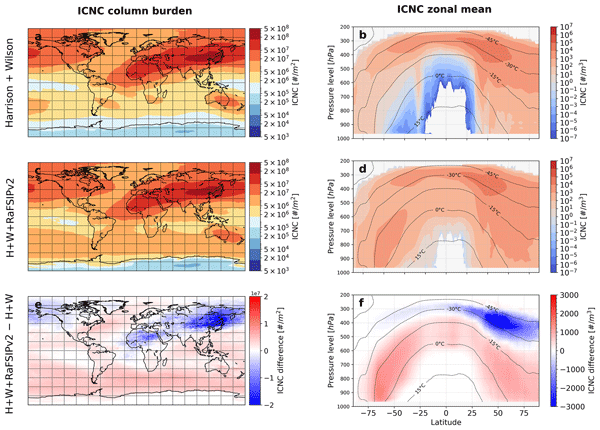
Montserrat Costa-Surós, María Gonçalves Ageitos, Marios Chatziparaschos, Paraskevi Georgakaki, Manu Anna Thomas, Gilbert Montané Pinto, Stelios Myriokefalitakis, Twan van Noije, Philippe Le Sager, Maria Kanakidou, Athanasios Nenes, and Carlos Pérez García-Pando
Atmos. Chem. Phys., 26, 2667–2690, https://doi.org/10.5194/acp-26-2667-2026, https://doi.org/10.5194/acp-26-2667-2026, 2026
Short summary
Short summary
Mixed-phase clouds play a key role in Earth’s climate but remain poorly represented in climate models. We improved their representation in the EC-Earth model by introducing an aerosol-sensitive scheme for ice formation and a machine-learning approach for secondary ice production. These advances produce more realistic cloud properties and radiative effects, highlighting that both processes are essential for reliable climate projections.
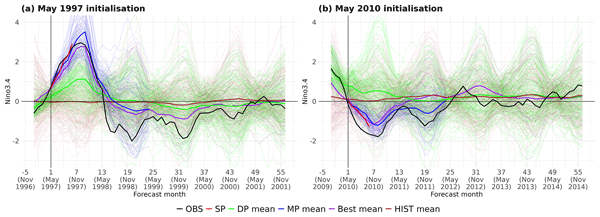
Carlos Delgado-Torres, Markus G. Donat, Núria Pérez-Zanón, Verónica Torralba, Roberto Bilbao, Pierre-Antoine Bretonnière, Margarida Samsó-Cabré, Albert Soret, and Francisco J. Doblas-Reyes
Earth Syst. Dynam., 17, 41–56, https://doi.org/10.5194/esd-17-41-2026, https://doi.org/10.5194/esd-17-41-2026, 2026
Short summary
Short summary
Many decisions require consistent climate information from seasonal to multi-year timescales. We assess seamless forecasts created by constraining seasonal and decadal predictions and compare them with initialised multi-annual forecasts. Multi-annual predictions provide the highest skill, but constrained forecasts still perform well and offer a low-cost, regularly updatable solution for delivering coherent climate information.
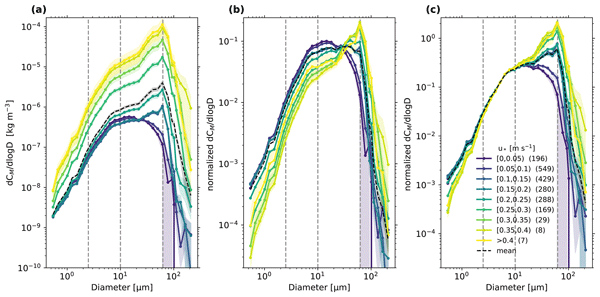
Hannah Meyer, Konrad Kandler, Sylvain Dupont, Jerónimo Escribano, Jessica Girdwood, George Nikolich, Andrés Alastuey, Vicken Etyemezian, Cristina González-Flórez, Adolfo González-Romero, Tareq Hussein, Mark Irvine, Peter Knippertz, Ottmar Möhler, Xavier Querol, Chris Stopford, Franziska Vogel, Frederik Weis, Andreas Wieser, Carlos Pérez García-Pando, and Martina Klose
Atmos. Meas. Tech., 19, 21–61, https://doi.org/10.5194/amt-19-21-2026, https://doi.org/10.5194/amt-19-21-2026, 2026
Short summary
Short summary
Mineral dust particles emitted from dry soils are of various sizes, yet the abundance of very large particles is not well understood. Here we measured the dust size distribution from fine to giant particles at an emission source during a field campaign in Jordan (J-WADI) using multiple instruments. Our findings show that large particles make up a significant part of the total dust mass. This knowledge is essential to improve climate models and to predict dust impacts on climate and environment.
Gerard Marcet-Carbonell, Markus G. Donat, and Carlos Delgado-Torres
EGUsphere, https://doi.org/10.5194/egusphere-2025-6277, https://doi.org/10.5194/egusphere-2025-6277, 2026
Short summary
Short summary
The causes behind changes in the circulation of air in the northern hemisphere during summer are currently not well understood. These changes have been associated with accelerated warming and extreme weather events. In this work we explore the effect of natural and human-caused emissions and find evidence suggesting that the changes are related to changes in aerosol emissions. We find no evidence of these changes being related to greenhouse-gas emissions or ocean variability.
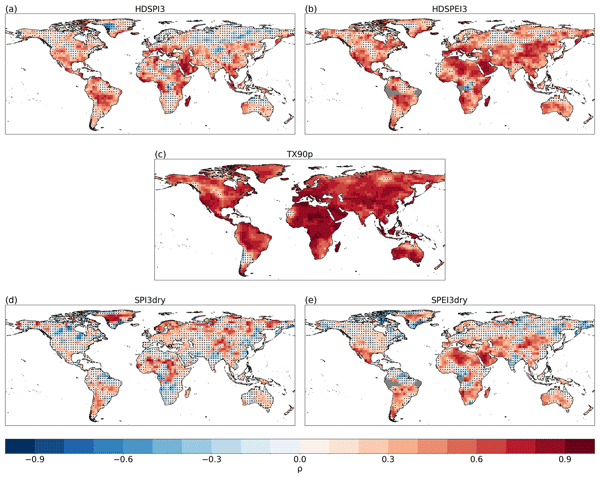
Alvise Aranyossy, Paolo De Luca, Carlos Delgado-Torres, Balakrishnan Solaraju-Murali, Margarida Samso Cabre, and Markus G. Donat
Earth Syst. Dynam., 16, 2225–2251, https://doi.org/10.5194/esd-16-2225-2025, https://doi.org/10.5194/esd-16-2225-2025, 2025
Short summary
Short summary
We investigate multi-year predictability of hot, dry and hot-dry compound events, using the Coupled Model Intercomparison Project Phase 6 decadal hindcast experiments, focusing on the forecast years 2–5. We find that hot-dry compound and hot extremes are skillfully predicted in many regions, but lower skill is found for dry extremes. The skill is largely due to long-term trends in response to external forcing, while added skill from initialisation is limited to a few regions.
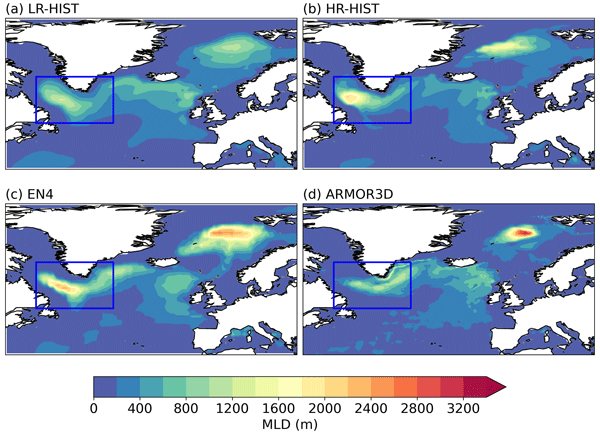
Amanda Frigola, Eneko Martin-Martinez, Eduardo Moreno-Chamarro, Margarida Samsó, Saskia Loosvelt-Tomas, Pierre-Antoine Bretonnière, Daria Kuznetsova, Xia Lin, and Pablo Ortega
Ocean Sci., 21, 3507–3540, https://doi.org/10.5194/os-21-3507-2025, https://doi.org/10.5194/os-21-3507-2025, 2025
Short summary
Short summary
Compared to standard resolution models, mesoscale eddy-resolving models present a more realistic stratification in the subpolar North Atlantic, an Atlantic overturning profile closer to RAPID observations, and an improved structure of the subpolar gyre and Gulf Stream. Although surface biases in the Central North Atlantic are reduced, the representation of the North Atlantic Current path and strength in mesoscale-resolving models requires further improvement.
Rashed Mahmood, Markus G. Donat, Roberto Bilbao, Pablo Ortega, Vladimir Lapin, Etienne Tourigny, and Francisco Doblas-Reyes
Earth Syst. Dynam., 16, 1923–1934, https://doi.org/10.5194/esd-16-1923-2025, https://doi.org/10.5194/esd-16-1923-2025, 2025
Short summary
Short summary
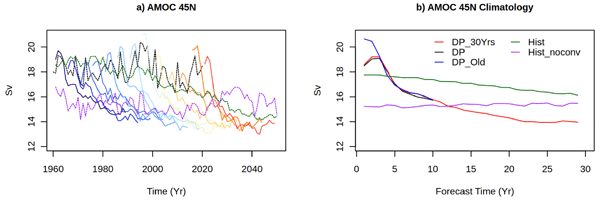
We present 30 year long initialized climate predictions run with the EC-Earth3 model. The predictions show high skill in most regions for near-surface temperatures, with some added skill from initialization for the first decade, but only very limited added skill beyond. The predictions exhibit drift associated with a persistent slowdown in Atlantic Meridonial Overturning Circulation , leaving the initialised predictions in a different climate state than the historical climate simulations.
Marc Guevara, Augustin Colette, Antoine Guion, Valentin Petiot, Mario Adani, Joaquim Arteta, Anna Benedictow, Robert Bergström, Andrea Bolignano, Paula Camps, Ana C. Carvalho, Jesper Heile Christensen, Florian Couvidat, Ilaria D'Elia, Hugo Denier van der Gon, Gaël Descombes, John Douros, Hilde Fagerli, Yalda Fatahi, Elmar Friese, Lise Frohn, Michael Gauss, Camilla Geels, Risto Hänninen, Kaj Hansen, Oriol Jorba, Jacek W. Kaminski, Rostislav Kouznetsov, Richard Kranenburg, Jeroen Kuenen, Victor Lannuque, Frédérik Meleux, Agnes Nyíri, Yuliia Palamarchuk, Carlos Pérez García-Pando, Lennard Robertson, Felicita Russo, Arjo Segers, Mikhail Sofiev, Joanna Struzewska, Renske Timmermans, Andreas Uppstu, Alvaro Valdebenito, and Zhuyun Ye
Atmos. Chem. Phys., 25, 13245–13278, https://doi.org/10.5194/acp-25-13245-2025, https://doi.org/10.5194/acp-25-13245-2025, 2025
Short summary
Short summary
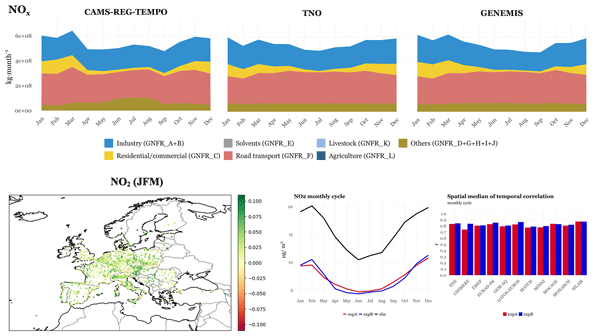
Air quality models require hourly emissions to accurately represent dispersion and physico-chemical processes in the atmosphere. Since emission inventories are typically provided at the annual level, emissions are downscaled to a refined temporal resolution using temporal profiles. This study quantifies the impact of using new anthropogenic temporal profiles on the performance of an European air quality multi-model ensemble. Overall, the findings indicate an improvement of the modelling results.
Juan C. Acosta Navarro, Alvise Aranyossy, Paolo De Luca, Markus G. Donat, Arthur Hrast Essenfelder, Rashed Mahmood, Andrea Toreti, and Danila Volpi
Earth Syst. Dynam., 16, 1723–1737, https://doi.org/10.5194/esd-16-1723-2025, https://doi.org/10.5194/esd-16-1723-2025, 2025
Short summary
Short summary
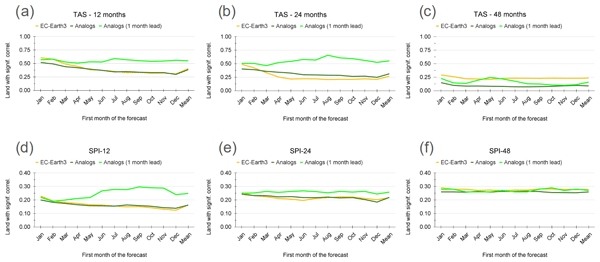
A computationally inexpensive climate model analog method yields skillful climate predictions across timescales, from seasons to multiple years, complementing existing climate prediction systems and potentially providing valuable information for sectors like agriculture and energy.
Pedro José Roldán-Gómez, Pablo Ortega, and Markus G. Donat
Ocean Sci., 21, 2283–2303, https://doi.org/10.5194/os-21-2283-2025, https://doi.org/10.5194/os-21-2283-2025, 2025
Short summary
Short summary
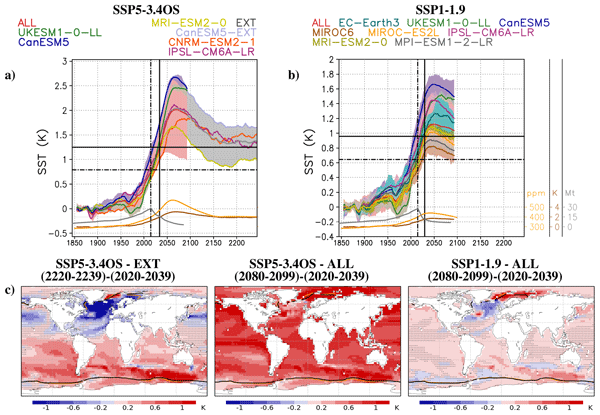
The overshoot scenarios, in which temperatures exceed the targets of the Paris Agreement and are brought back afterwards with a net-negative emission strategy, are known to activate irreversible processes in the climate system. This work analyses in detail the impact of some of these mechanisms, with a particular focus on those associated with ocean circulation and sea ice changes.
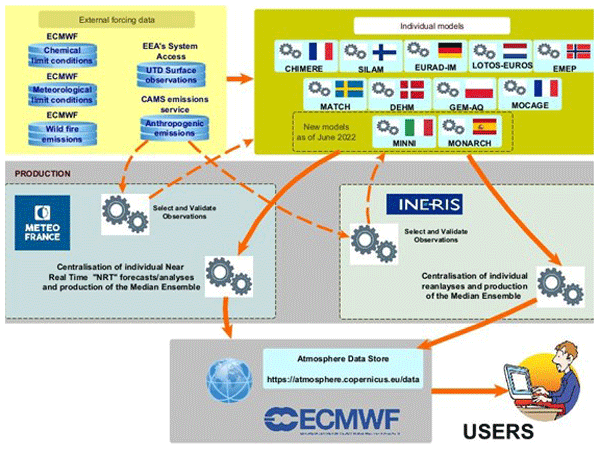
Augustin Colette, Gaëlle Collin, François Besson, Etienne Blot, Vincent Guidard, Frédérik Meleux, Adrien Royer, Valentin Petiot, Claire Miller, Oihana Fermond, Alizé Jeant, Mario Adani, Joaquim Arteta, Anna Benedictow, Robert Bergström, Dene Bowdalo, Jorgen Brandt, Gino Briganti, Ana C. Carvalho, Jesper Heile Christensen, Florian Couvidat, Ilaria D'Elia, Massimo D'Isidoro, Hugo Denier van der Gon, Gaël Descombes, Enza Di Tomaso, John Douros, Jeronimo Escribano, Henk Eskes, Hilde Fagerli, Yalda Fatahi, Johannes Flemming, Elmar Friese, Lise Frohn, Michael Gauss, Camilla Geels, Guido Guarnieri, Marc Guevara, Antoine Guion, Jonathan Guth, Risto Hänninen, Kaj Hansen, Ulas Im, Ruud Janssen, Marine Jeoffrion, Mathieu Joly, Luke Jones, Oriol Jorba, Evgeni Kadantsev, Michael Kahnert, Jacek W. Kaminski, Rostislav Kouznetsov, Richard Kranenburg, Jeroen Kuenen, Anne Caroline Lange, Joachim Langner, Victor Lannuque, Francesca Macchia, Astrid Manders, Mihaela Mircea, Agnes Nyiri, Miriam Olid, Carlos Pérez García-Pando, Yuliia Palamarchuk, Antonio Piersanti, Blandine Raux, Miha Razinger, Lennard Robertson, Arjo Segers, Martijn Schaap, Pilvi Siljamo, David Simpson, Mikhail Sofiev, Anders Stangel, Joanna Struzewska, Carles Tena, Renske Timmermans, Thanos Tsikerdekis, Svetlana Tsyro, Svyatoslav Tyuryakov, Anthony Ung, Andreas Uppstu, Alvaro Valdebenito, Peter van Velthoven, Lina Vitali, Zhuyun Ye, Vincent-Henri Peuch, and Laurence Rouïl
Geosci. Model Dev., 18, 6835–6883, https://doi.org/10.5194/gmd-18-6835-2025, https://doi.org/10.5194/gmd-18-6835-2025, 2025
Short summary
Short summary
The Copernicus Atmosphere Monitoring Service – Regional Production delivers daily forecasts, analyses, and reanalyses of air quality in Europe. The service relies on a distributed modelling production by 11 leading European modelling teams following stringent requirements with an operational design that has no equivalent in the world. All the products are free, open, and quality-assured and disseminated with a high level of reliability.
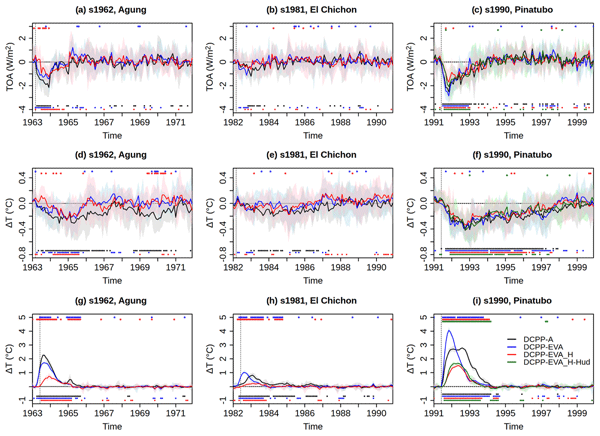
Roberto Bilbao, Thomas J. Aubry, Matthew Toohey, Pablo Ortega, Vladimir Lapin, and Etienne Tourigny
Geosci. Model Dev., 18, 6239–6254, https://doi.org/10.5194/gmd-18-6239-2025, https://doi.org/10.5194/gmd-18-6239-2025, 2025
Short summary
Short summary
Large volcanic eruptions are unpredictable and can have significant climatic impacts. If one occurs, operational decadal forecasts will become invalid and must be rerun including the volcanic forcing. By analyzing the climate response in EC-Earth3 retrospective predictions, we show that idealised forcings produced with two simple models could be used in operational decadal forecasts to account for the radiative impacts of the next major volcanic eruption.
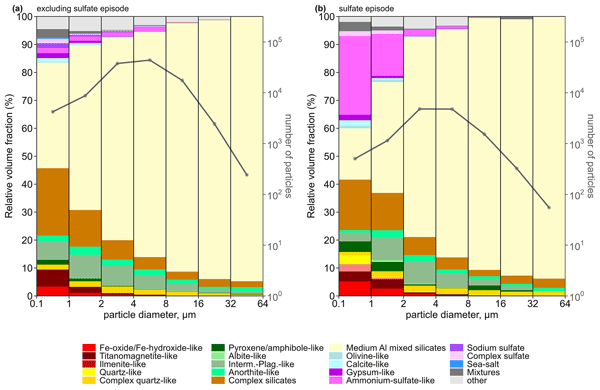
Agnesh Panta, Konrad Kandler, Kerstin Schepanski, Andres Alastuey, Pavla Dagsson Waldhauserova, Sylvain Dupont, Melanie Eknayan, Cristina González-Flórez, Adolfo González-Romero, Martina Klose, Mara Montag, Xavier Querol, Jesús Yus-Díez, and Carlos Pérez García-Pando
Atmos. Chem. Phys., 25, 10457–10478, https://doi.org/10.5194/acp-25-10457-2025, https://doi.org/10.5194/acp-25-10457-2025, 2025
Short summary
Short summary
Iceland is among the most active dust source areas in the world. Dust properties are influenced by particle size, mineralogy, shape, and mixing state. This work characterizes freshly emitted individual aerosol particles of Icelandic dust using electron microscopy. Our study provides insights into critical particle-specific information and will contribute to better constraining climate models that consider mineralogical variations in their representation of the dust cycle.

Emmanouil Proestakis, Vassilis Amiridis, Carlos Pérez García-Pando, Svetlana Tsyro, Jan Griesfeller, Antonis Gkikas, Thanasis Georgiou, María Gonçalves Ageitos, Jeronimo Escribano, Stelios Myriokefalitakis, Elisa Bergas Masso, Enza Di Tomaso, Sara Basart, Jan-Berend W. Stuut, and Angela Benedetti
Earth Syst. Sci. Data, 17, 4351–4395, https://doi.org/10.5194/essd-17-4351-2025, https://doi.org/10.5194/essd-17-4351-2025, 2025
Short summary
Short summary
Quantification of dust deposition into the broader Atlantic Ocean is provided, with the estimates established based on Earth observations. The dataset is considered unique with respect to a range of applications, including compensating for spatiotemporal gaps of sediment-trap measurements, assessments of model simulations, shedding light on physical processes related to the dust cycle, and improving the understanding of dust biogeochemical impacts on oceanic ecosystems, weather, and climate.
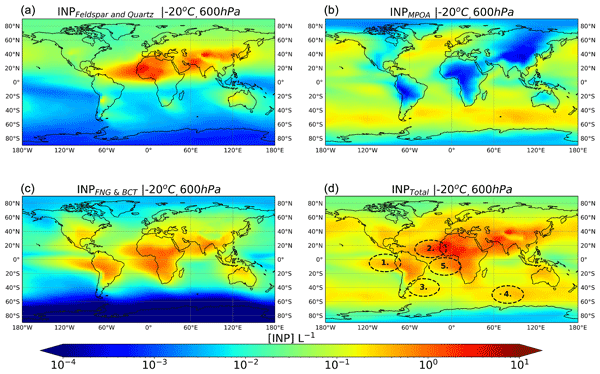
Marios Chatziparaschos, Stelios Myriokefalitakis, Nikos Kalivitis, Nikos Daskalakis, Athanasios Nenes, María Gonçalves Ageitos, Montserrat Costa-Surós, Carlos Pérez García-Pando, Mihalis Vrekoussis, and Maria Kanakidou
Atmos. Chem. Phys., 25, 9085–9111, https://doi.org/10.5194/acp-25-9085-2025, https://doi.org/10.5194/acp-25-9085-2025, 2025
Short summary
Short summary
We show distinct seasonal and geographical patterns in the contributions of mineral dust, marine aerosol, and terrestrial biological particles to ice-nucleating particle (INP) concentrations that lead to atmospheric ice formation, a major source of uncertainty in climate projections. Bioaerosols are the major source of INPs at high temperatures, while mineral dust influences the global INP population at lower temperatures. These particles can satisfactorily reproduce INPs in a climate model.
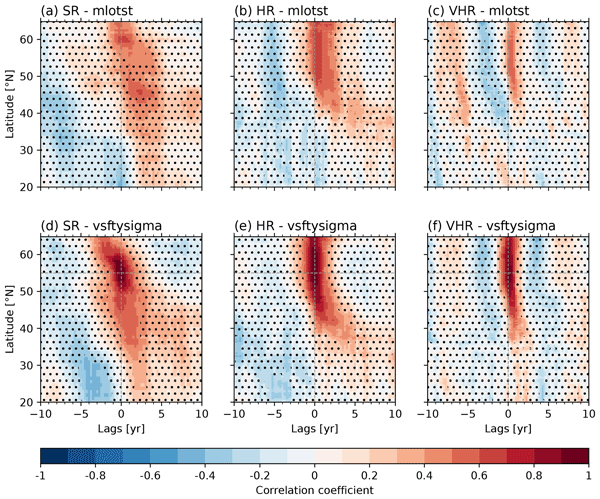
Eneko Martin-Martinez, Amanda Frigola, Eduardo Moreno-Chamarro, Daria Kuznetsova, Saskia Loosveldt-Tomas, Margarida Samsó Cabré, Pierre-Antoine Bretonnière, and Pablo Ortega
Earth Syst. Dynam., 16, 1343–1364, https://doi.org/10.5194/esd-16-1343-2025, https://doi.org/10.5194/esd-16-1343-2025, 2025
Short summary
Short summary
We investigate the impact of model resolution on different processes in the North Atlantic using three different resolutions of the same climate model. The higher resolutions allow for the explicit simulation of smaller-scale processes. We found differences across resolutions in how denser waters are formed and transported southward, impacting the large-scale circulation of the Atlantic Ocean.
Florian Sauerland, Pierre-Vincent Huot, Sylvain Marchi, Thierry Fichefet, Hugues Goosse, Konstanze Haubner, François Klein, François Massonnet, Bianca Mezzina, Eduardo Moreno-Chamarro, Pablo Ortega, Frank Pattyn, Charles Pelletier, Deborah Verfaillie, Lars Zipf, and Nicole van Lipzig
EGUsphere, https://doi.org/10.5194/egusphere-2025-2889, https://doi.org/10.5194/egusphere-2025-2889, 2025
Short summary
Short summary
We simulated the Antarctic climate from 1985 to 2014. Our model is driven using the ERA-5 reanalysis for one simulation and the EC-Earth global climate model for three others. Most of the simulated trends, such as sea ice extent and precipitation over land, have opposite signs for the two drivers, but agree between the three EC-Earth driven simulations. We conclude that these opposing trends must be due to the different drivers, and that the climate over land is less predictable than over sea.
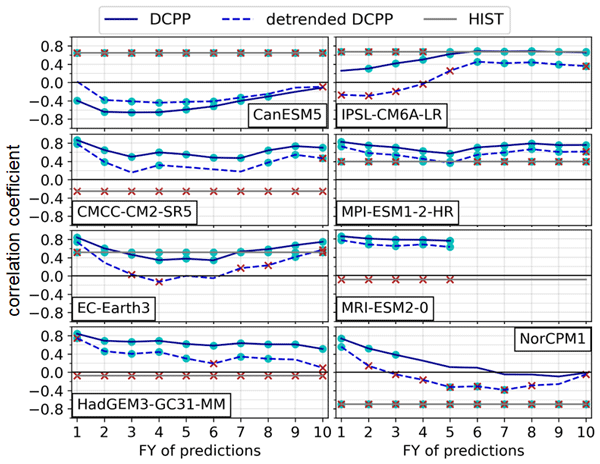
Teresa Carmo-Costa, Roberto Bilbao, Jon Robson, Ana Teles-Machado, and Pablo Ortega
Earth Syst. Dynam., 16, 1001–1028, https://doi.org/10.5194/esd-16-1001-2025, https://doi.org/10.5194/esd-16-1001-2025, 2025
Short summary
Short summary
Climate models can be used to skilfully predict decadal changes in North Atlantic ocean heat content. However, significant regional differences among these models reveal large uncertainties in the influence of external forcings. This study examines eight climate models to understand the differences in their predictive capacity for the North Atlantic, investigating the importance of external forcings and key model characteristics such as ocean stratification and the local atmospheric forcing.
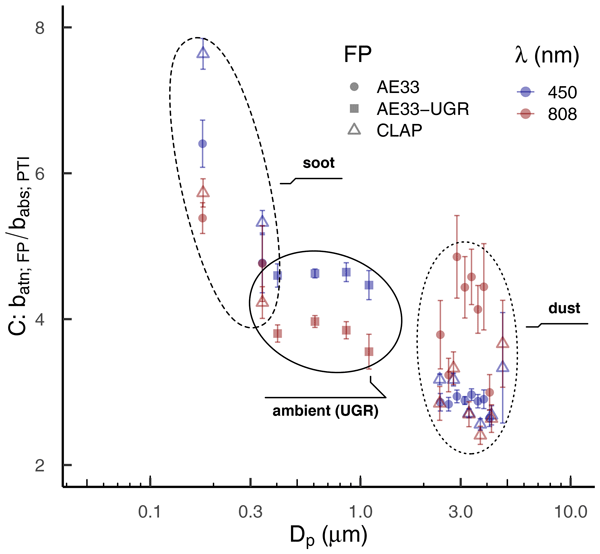
Jesús Yus-Díez, Luka Drinovec, Lucas Alados-Arboledas, Gloria Titos, Elena Bazo, Andrea Casans, Diego Patrón, Xavier Querol, Adolfo Gonzalez-Romero, Carlos Perez García-Pando, and Griša Močnik
Atmos. Meas. Tech., 18, 3073–3093, https://doi.org/10.5194/amt-18-3073-2025, https://doi.org/10.5194/amt-18-3073-2025, 2025
Short summary
Short summary
We have used absorption from a photothermal interferometer and scattering measurements to evaluate the most deployed filter photometers used to measure absorption for monitoring networks. We used soot- and dust-dominated aerosol samples in both laboratory and ambient settings. Our results indicated that one of these filter photometers, the MAAP (Multiangle Absorption Photometer), usually used as a pseudo-reference instrument, had 47 % higher absorption values than our reference measurements.
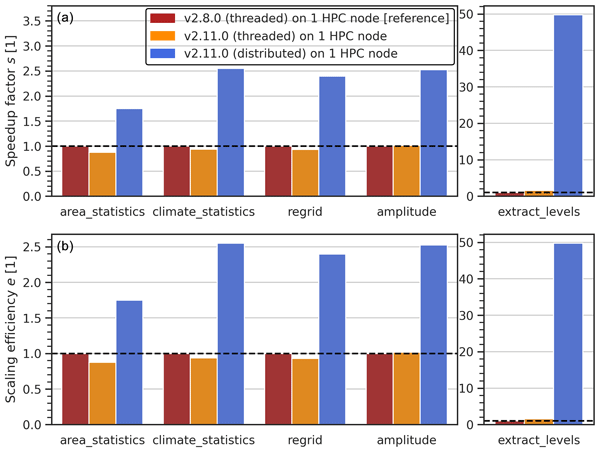
Manuel Schlund, Bouwe Andela, Jörg Benke, Ruth Comer, Birgit Hassler, Emma Hogan, Peter Kalverla, Axel Lauer, Bill Little, Saskia Loosveldt Tomas, Francesco Nattino, Patrick Peglar, Valeriu Predoi, Stef Smeets, Stephen Worsley, Martin Yeo, and Klaus Zimmermann
Geosci. Model Dev., 18, 4009–4021, https://doi.org/10.5194/gmd-18-4009-2025, https://doi.org/10.5194/gmd-18-4009-2025, 2025
Short summary
Short summary
The Earth System Model Evaluation Tool (ESMValTool) is a community diagnostics and performance metrics tool for the evaluation of Earth system models. Here, we describe recent significant improvements of ESMValTool’s computational efficiency including parallel, out-of-core, and distributed computing. Evaluations with the enhanced version of ESMValTool are faster, use less computational resources, and can handle input data larger than the available memory.
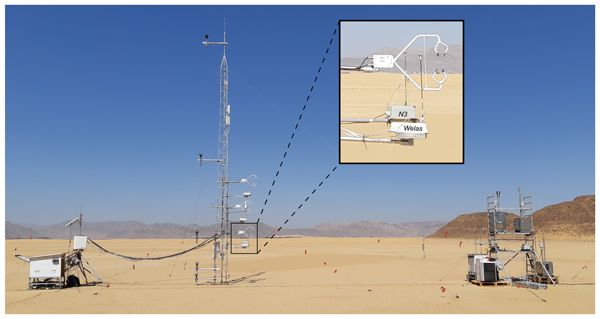
Sylvain Dupont, Eric Lamaud, Mark R. Irvine, Jean-Marc Bonnefond, Adolfo González-Romero, Andrés Alastuey, Cristina González-Flórez, Xavier Querol, Konrad Kandler, Martina Klose, and Carlos Pérez García-Pando
Atmos. Meas. Tech., 18, 2183–2200, https://doi.org/10.5194/amt-18-2183-2025, https://doi.org/10.5194/amt-18-2183-2025, 2025
Short summary
Short summary
Low-cost optical particle counters (OPCs) offer new opportunities to monitor dust particles from wind soil erosion. Their price, size, and power consumption are lower than those of traditional OPCs. We tested the ability of the low-cost OPC-N3 from Alphasense to estimate dust emission flux during erosion events in Jordan. N3 estimated the dust flux well, with differences of less than 30 % compared to a traditional OPC. Our results confirm the potential of low-cost OPCs for dust erosion research.
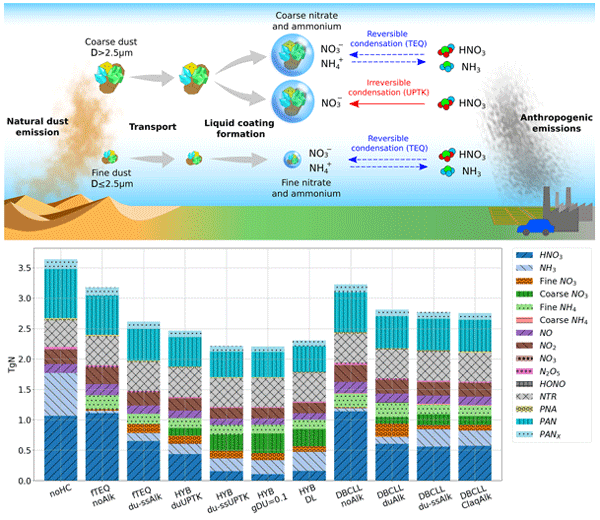
Rubén Soussé Villa, Oriol Jorba, María Gonçalves Ageitos, Dene Bowdalo, Marc Guevara, and Carlos Pérez García-Pando
Atmos. Chem. Phys., 25, 4719–4753, https://doi.org/10.5194/acp-25-4719-2025, https://doi.org/10.5194/acp-25-4719-2025, 2025
Short summary
Short summary
Desert dust forms nitrate coatings as it travels through the atmosphere. However, current models that predict this process vary greatly due to different methods and inaccuracies. We examined how nitrate forms in a global model, focusing on how gases condense on dust, the lifespan of different particles, and the impact of alkalinity. Our findings show that models work best when they consider reversible gas condensation with alkalinity. This should lead to better estimates of climate impacts.
Malcolm J. Roberts, Kevin A. Reed, Qing Bao, Joseph J. Barsugli, Suzana J. Camargo, Louis-Philippe Caron, Ping Chang, Cheng-Ta Chen, Hannah M. Christensen, Gokhan Danabasoglu, Ivy Frenger, Neven S. Fučkar, Shabeh ul Hasson, Helene T. Hewitt, Huanping Huang, Daehyun Kim, Chihiro Kodama, Michael Lai, Lai-Yung Ruby Leung, Ryo Mizuta, Paulo Nobre, Pablo Ortega, Dominique Paquin, Christopher D. Roberts, Enrico Scoccimarro, Jon Seddon, Anne Marie Treguier, Chia-Ying Tu, Paul A. Ullrich, Pier Luigi Vidale, Michael F. Wehner, Colin M. Zarzycki, Bosong Zhang, Wei Zhang, and Ming Zhao
Geosci. Model Dev., 18, 1307–1332, https://doi.org/10.5194/gmd-18-1307-2025, https://doi.org/10.5194/gmd-18-1307-2025, 2025
Short summary
Short summary
HighResMIP2 is a model intercomparison project focusing on high-resolution global climate models, that is, those with grid spacings of 25 km or less in the atmosphere and ocean, using simulations of decades to a century in length. We are proposing an update of our simulation protocol to make the models more applicable to key questions for climate variability and hazard in present-day and future projections and to build links with other communities to provide more robust climate information.
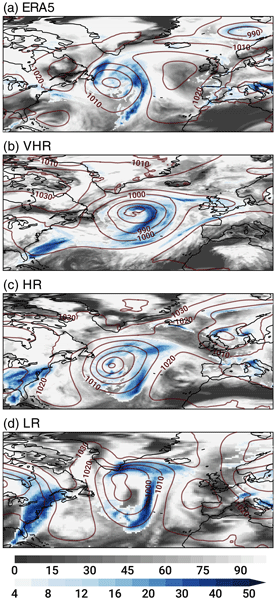
Eduardo Moreno-Chamarro, Thomas Arsouze, Mario Acosta, Pierre-Antoine Bretonnière, Miguel Castrillo, Eric Ferrer, Amanda Frigola, Daria Kuznetsova, Eneko Martin-Martinez, Pablo Ortega, and Sergi Palomas
Geosci. Model Dev., 18, 461–482, https://doi.org/10.5194/gmd-18-461-2025, https://doi.org/10.5194/gmd-18-461-2025, 2025
Short summary
Short summary
We present the high-resolution model version of the EC-Earth global climate model to contribute to HighResMIP. The combined model resolution is about 10–15 km in both the ocean and atmosphere, which makes it one of the finest ever used to complete historical and scenario simulations. This model is compared with two lower-resolution versions, with a 100 km and a 25 km grid. The three models are compared with observations to study the improvements thanks to the increased resolution.
Pedro José Roldán-Gómez, Paolo De Luca, Raffaele Bernardello, and Markus G. Donat
Earth Syst. Dynam., 16, 1–27, https://doi.org/10.5194/esd-16-1-2025, https://doi.org/10.5194/esd-16-1-2025, 2025
Short summary
Short summary
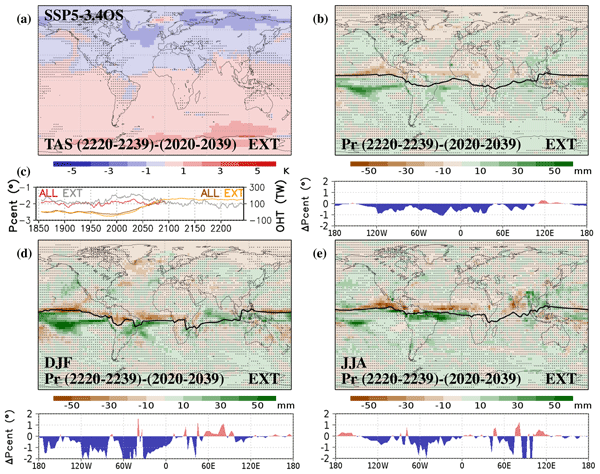
Current trends in CO2 emissions increase the probability of an overshoot scenario in which temperatures exceed the targets of the Paris Agreement and are brought back afterwards with a net-negative emission strategy. This work analyses how the climate after the overshoot would differ from the climate before, linking large scale non-reversibility mechanisms to changes in regional climates and identifying those regions more impacted by changes in temperature and precipitation extremes.

Colin G. Jones, Fanny Adloff, Ben B. B. Booth, Peter M. Cox, Veronika Eyring, Pierre Friedlingstein, Katja Frieler, Helene T. Hewitt, Hazel A. Jeffery, Sylvie Joussaume, Torben Koenigk, Bryan N. Lawrence, Eleanor O'Rourke, Malcolm J. Roberts, Benjamin M. Sanderson, Roland Séférian, Samuel Somot, Pier Luigi Vidale, Detlef van Vuuren, Mario Acosta, Mats Bentsen, Raffaele Bernardello, Richard Betts, Ed Blockley, Julien Boé, Tom Bracegirdle, Pascale Braconnot, Victor Brovkin, Carlo Buontempo, Francisco Doblas-Reyes, Markus Donat, Italo Epicoco, Pete Falloon, Sandro Fiore, Thomas Frölicher, Neven S. Fučkar, Matthew J. Gidden, Helge F. Goessling, Rune Grand Graversen, Silvio Gualdi, José M. Gutiérrez, Tatiana Ilyina, Daniela Jacob, Chris D. Jones, Martin Juckes, Elizabeth Kendon, Erik Kjellström, Reto Knutti, Jason Lowe, Matthew Mizielinski, Paola Nassisi, Michael Obersteiner, Pierre Regnier, Romain Roehrig, David Salas y Mélia, Carl-Friedrich Schleussner, Michael Schulz, Enrico Scoccimarro, Laurent Terray, Hannes Thiemann, Richard A. Wood, Shuting Yang, and Sönke Zaehle
Earth Syst. Dynam., 15, 1319–1351, https://doi.org/10.5194/esd-15-1319-2024, https://doi.org/10.5194/esd-15-1319-2024, 2024
Short summary
Short summary
We propose a number of priority areas for the international climate research community to address over the coming decade. Advances in these areas will both increase our understanding of past and future Earth system change, including the societal and environmental impacts of this change, and deliver significantly improved scientific support to international climate policy, such as future IPCC assessments and the UNFCCC Global Stocktake.
Dene Bowdalo, Sara Basart, Marc Guevara, Oriol Jorba, Carlos Pérez García-Pando, Monica Jaimes Palomera, Olivia Rivera Hernandez, Melissa Puchalski, David Gay, Jörg Klausen, Sergio Moreno, Stoyka Netcheva, and Oksana Tarasova
Earth Syst. Sci. Data, 16, 4417–4495, https://doi.org/10.5194/essd-16-4417-2024, https://doi.org/10.5194/essd-16-4417-2024, 2024
Short summary
Short summary
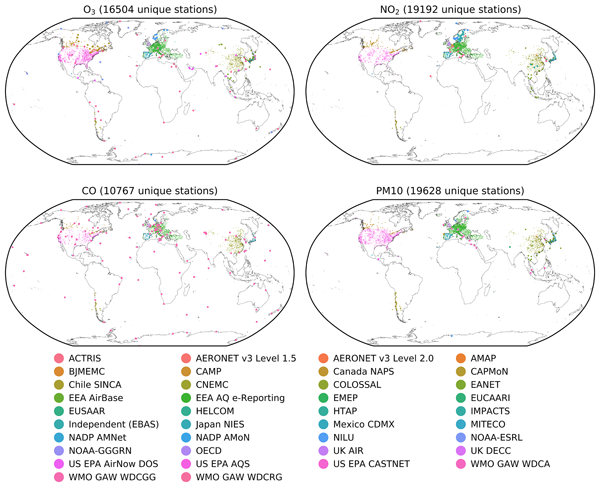
GHOST (Globally Harmonised Observations in Space and Time) represents one of the biggest collections of harmonised measurements of atmospheric composition at the surface. In total, 7 275 148 646 measurements from 1970 to 2023, from 227 different components, and from 38 reporting networks are compiled, parsed, and standardised. Components processed include gaseous species, total and speciated particulate matter, and aerosol optical properties.
Raffaele Bernardello, Valentina Sicardi, Vladimir Lapin, Pablo Ortega, Yohan Ruprich-Robert, Etienne Tourigny, and Eric Ferrer
Earth Syst. Dynam., 15, 1255–1275, https://doi.org/10.5194/esd-15-1255-2024, https://doi.org/10.5194/esd-15-1255-2024, 2024
Short summary
Short summary
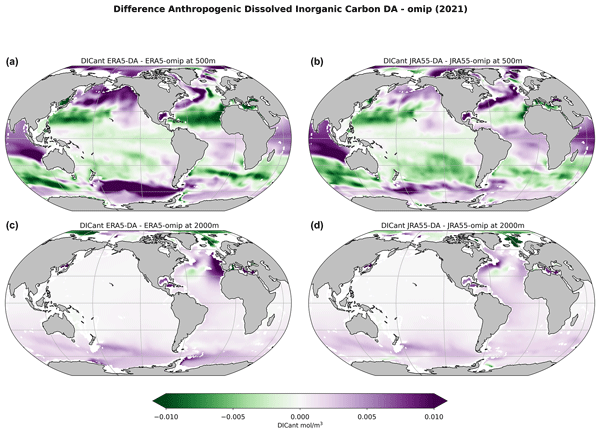
The ocean mitigates climate change by absorbing about 25 % of the carbon that is emitted to the atmosphere. However, ocean CO2 uptake is not constant in time, and improving our understanding of the mechanisms regulating this variability can potentially lead to a better predictive capability of its future behavior. In this study, we compare two ocean modeling practices that are used to reconstruct the historical ocean carbon uptake, demonstrating the abilities of one over the other.
Manu Anna Thomas, Klaus Wyser, Shiyu Wang, Marios Chatziparaschos, Paraskevi Georgakaki, Montserrat Costa-Surós, Maria Gonçalves Ageitos, Maria Kanakidou, Carlos Pérez García-Pando, Athanasios Nenes, Twan van Noije, Philippe Le Sager, and Abhay Devasthale
Geosci. Model Dev., 17, 6903–6927, https://doi.org/10.5194/gmd-17-6903-2024, https://doi.org/10.5194/gmd-17-6903-2024, 2024
Short summary
Short summary
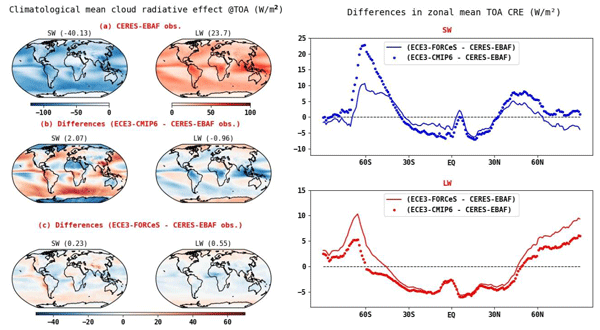
Aerosol–cloud interactions occur at a range of spatio-temporal scales. While evaluating recent developments in EC-Earth3-AerChem, this study aims to understand the extent to which the Twomey effect manifests itself at larger scales. We find a reduction in the warm bias over the Southern Ocean due to model improvements. While we see footprints of the Twomey effect at larger scales, the negative relationship between cloud droplet number and liquid water drives the shortwave radiative effect.
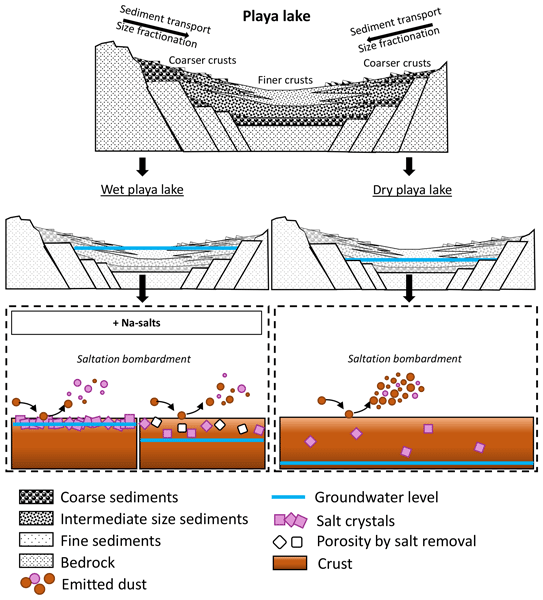
Adolfo González-Romero, Cristina González-Flórez, Agnesh Panta, Jesús Yus-Díez, Patricia Córdoba, Andres Alastuey, Natalia Moreno, Melani Hernández-Chiriboga, Konrad Kandler, Martina Klose, Roger N. Clark, Bethany L. Ehlmann, Rebecca N. Greenberger, Abigail M. Keebler, Phil Brodrick, Robert Green, Paul Ginoux, Xavier Querol, and Carlos Pérez García-Pando
Atmos. Chem. Phys., 24, 9155–9176, https://doi.org/10.5194/acp-24-9155-2024, https://doi.org/10.5194/acp-24-9155-2024, 2024
Short summary
Short summary
In this research, we studied the dust-emitting properties of crusts and aeolian ripples from the Mojave Desert. These properties are key to understanding the effect of dust upon climate. We found two different playa lakes according to the groundwater regime, which implies differences in crusts' cohesion state and mineralogy, which can affect the dust emission potential and properties. We also compare them with Moroccan Sahara crusts and Icelandic top sediments.
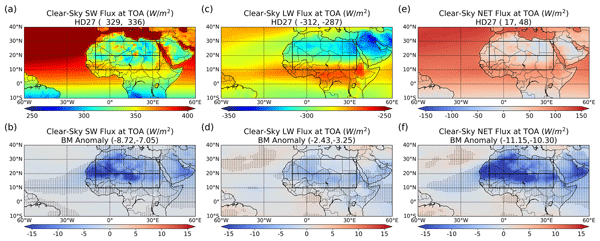
Qianqian Song, Paul Ginoux, María Gonçalves Ageitos, Ron L. Miller, Vincenzo Obiso, and Carlos Pérez García-Pando
Atmos. Chem. Phys., 24, 7421–7446, https://doi.org/10.5194/acp-24-7421-2024, https://doi.org/10.5194/acp-24-7421-2024, 2024
Short summary
Short summary
We implement and simulate the distribution of eight dust minerals in the GFDL AM4.0 model. We found that resolving the eight minerals reduces dust absorption compared to the homogeneous dust used in the standard GFDL AM4.0 model that assumes a globally uniform hematite content of 2.7 % by volume. Resolving dust mineralogy results in significant impacts on radiation, land surface temperature, surface winds, and precipitation over North Africa in summer.
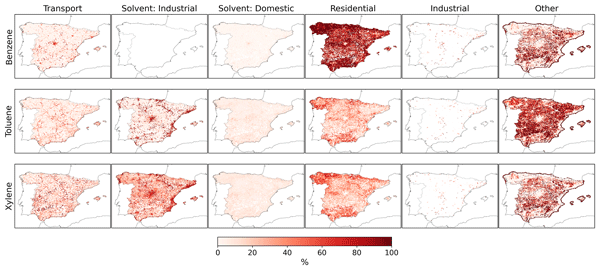
Kevin Oliveira, Marc Guevara, Oriol Jorba, Hervé Petetin, Dene Bowdalo, Carles Tena, Gilbert Montané Pinto, Franco López, and Carlos Pérez García-Pando
Atmos. Chem. Phys., 24, 7137–7177, https://doi.org/10.5194/acp-24-7137-2024, https://doi.org/10.5194/acp-24-7137-2024, 2024
Short summary
Short summary
In this work, we assess and evaluate benzene, toluene, and xylene primary emissions and air quality levels in Spain by combining observations, emission inventories, and air quality modelling techniques. The comparison between modelled and observed levels allows identifying uncertainty sources within the emission input. This contributes to improving air quality models' performance when simulating these compounds, leading to better support for the design of effective pollution control strategies.
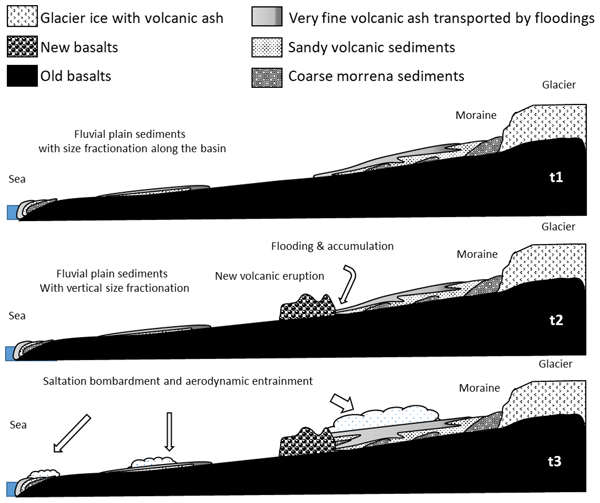
Adolfo González-Romero, Cristina González-Flórez, Agnesh Panta, Jesús Yus-Díez, Patricia Córdoba, Andres Alastuey, Natalia Moreno, Konrad Kandler, Martina Klose, Roger N. Clark, Bethany L. Ehlmann, Rebecca N. Greenberger, Abigail M. Keebler, Phil Brodrick, Robert O. Green, Xavier Querol, and Carlos Pérez García-Pando
Atmos. Chem. Phys., 24, 6883–6910, https://doi.org/10.5194/acp-24-6883-2024, https://doi.org/10.5194/acp-24-6883-2024, 2024
Short summary
Short summary
The knowledge of properties from dust emitted in high latitudes such as in Iceland is scarce. This study focuses on the particle size, mineralogy, cohesion, and iron mode of occurrence and reflectance spectra of dust-emitting sediments. Icelandic top sediments have lower cohesion state, coarser particle size, distinctive mineralogy, and 3-fold bulk Fe content, with a large presence of magnetite compared to Saharan crusts.
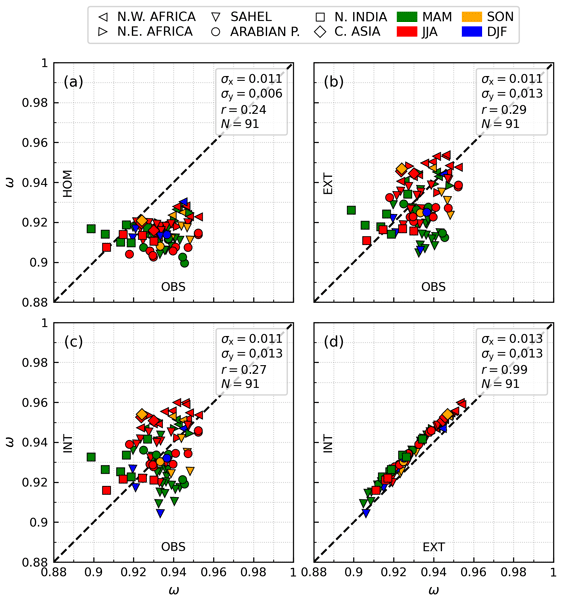
Vincenzo Obiso, María Gonçalves Ageitos, Carlos Pérez García-Pando, Jan P. Perlwitz, Gregory L. Schuster, Susanne E. Bauer, Claudia Di Biagio, Paola Formenti, Kostas Tsigaridis, and Ron L. Miller
Atmos. Chem. Phys., 24, 5337–5367, https://doi.org/10.5194/acp-24-5337-2024, https://doi.org/10.5194/acp-24-5337-2024, 2024
Short summary
Short summary
We calculate the dust direct radiative effect (DRE) in an Earth system model accounting for regionally varying soil mineralogy through a new observationally constrained method. Linking dust absorption at solar wavelengths to the varying amount of specific minerals (i.e., iron oxides) improves the modeled range of dust single scattering albedo compared to observations and increases the global cooling by dust. Our results may contribute to improved estimates of the dust DRE and its climate impact.
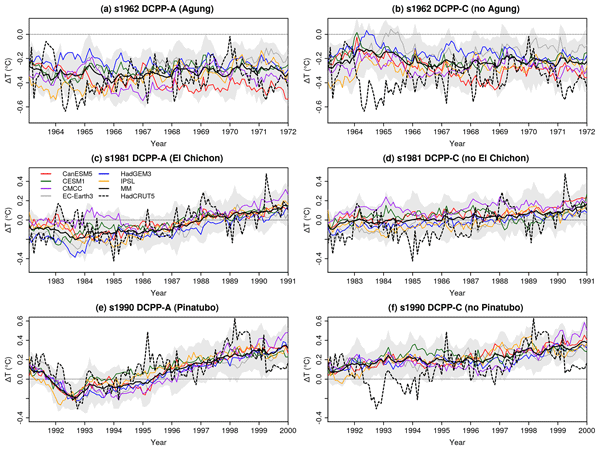
Roberto Bilbao, Pablo Ortega, Didier Swingedouw, Leon Hermanson, Panos Athanasiadis, Rosie Eade, Marion Devilliers, Francisco Doblas-Reyes, Nick Dunstone, An-Chi Ho, William Merryfield, Juliette Mignot, Dario Nicolì, Margarida Samsó, Reinel Sospedra-Alfonso, Xian Wu, and Stephen Yeager
Earth Syst. Dynam., 15, 501–525, https://doi.org/10.5194/esd-15-501-2024, https://doi.org/10.5194/esd-15-501-2024, 2024
Short summary
Short summary
In recent decades three major volcanic eruptions have occurred: Mount Agung in 1963, El Chichón in 1982 and Mount Pinatubo in 1991. In this article we explore the climatic impacts of these volcanic eruptions with a purposefully designed set of simulations from six CMIP6 decadal prediction systems. We analyse the radiative and dynamical responses and show that including the volcanic forcing in these predictions is important to reproduce the observed surface temperature variations.
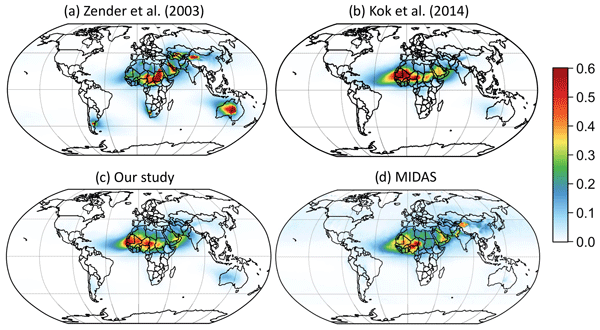
Danny M. Leung, Jasper F. Kok, Longlei Li, Natalie M. Mahowald, David M. Lawrence, Simone Tilmes, Erik Kluzek, Martina Klose, and Carlos Pérez García-Pando
Atmos. Chem. Phys., 24, 2287–2318, https://doi.org/10.5194/acp-24-2287-2024, https://doi.org/10.5194/acp-24-2287-2024, 2024
Short summary
Short summary
This study uses a premier Earth system model to evaluate a new desert dust emission scheme proposed in our companion paper. We show that our scheme accounts for more dust emission physics, hence matching better against observations than other existing dust emission schemes do. Our scheme's dust emissions also couple tightly with meteorology, hence likely improving the modeled dust sensitivity to climate change. We believe this work is vital for improving dust representation in climate models.
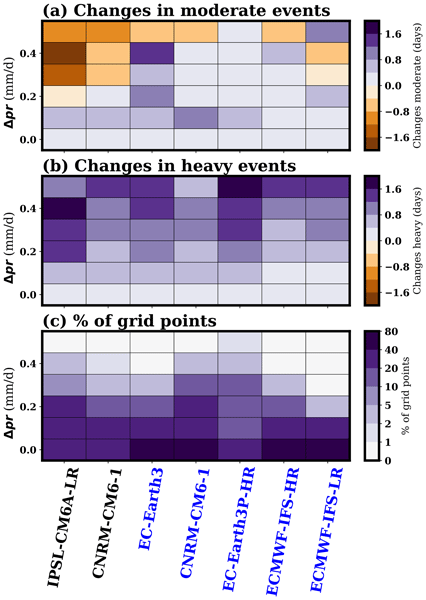
Elsa Mohino, Paul-Arthur Monerie, Juliette Mignot, Moussa Diakhaté, Markus Donat, Christopher David Roberts, and Francisco Doblas-Reyes
Earth Syst. Dynam., 15, 15–40, https://doi.org/10.5194/esd-15-15-2024, https://doi.org/10.5194/esd-15-15-2024, 2024
Short summary
Short summary
The impact of the Atlantic multidecadal variability (AMV) on the rainfall distribution and timing of the West African monsoon is not well known. Analysing model output, we find that a positive AMV enhances the number of wet days, daily rainfall intensity, and extremes over the Sahel and tends to prolong the monsoon length through later demise. Heavy rainfall events increase all over the Sahel, while moderate ones only occur in the north. Model biases affect the skill in simulating AMV impact.
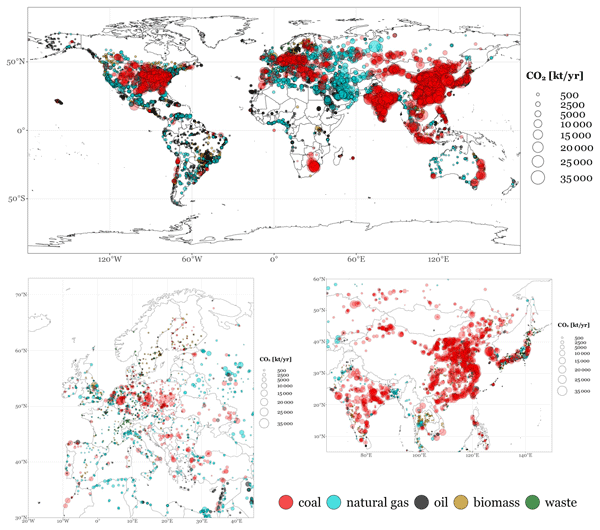
Marc Guevara, Santiago Enciso, Carles Tena, Oriol Jorba, Stijn Dellaert, Hugo Denier van der Gon, and Carlos Pérez García-Pando
Earth Syst. Sci. Data, 16, 337–373, https://doi.org/10.5194/essd-16-337-2024, https://doi.org/10.5194/essd-16-337-2024, 2024
Short summary
Short summary
A global dataset of emissions from thermal power plants was created for the year 2018. The resulting catalogue reports annual emissions of CO2 and co-emitted species (NOx, CO, SO2 and CH4) for more than 16000 individual facilities at their exact geographical locations. Information on the temporal and vertical distributions of the emissions is also provided at the facility level. The dataset is intended to support current and future satellite emission monitoring and inverse modelling efforts.
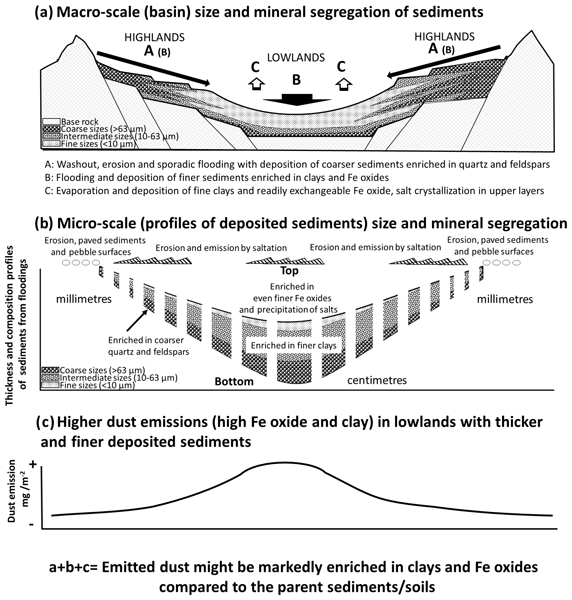
Adolfo González-Romero, Cristina González-Flórez, Agnesh Panta, Jesús Yus-Díez, Cristina Reche, Patricia Córdoba, Natalia Moreno, Andres Alastuey, Konrad Kandler, Martina Klose, Clarissa Baldo, Roger N. Clark, Zongbo Shi, Xavier Querol, and Carlos Pérez García-Pando
Atmos. Chem. Phys., 23, 15815–15834, https://doi.org/10.5194/acp-23-15815-2023, https://doi.org/10.5194/acp-23-15815-2023, 2023
Short summary
Short summary
The effect of dust emitted from desertic surfaces upon climate and ecosystems depends on size and mineralogy, but data from soil mineral atlases of desert soils are scarce. We performed particle-size distribution, mineralogy, and Fe speciation in southern Morocco. Results show coarser particles with high quartz proportion are near the elevated areas, while in depressed areas, sizes are finer, and proportions of clays and nano-Fe oxides are higher. This difference is important for dust modelling.
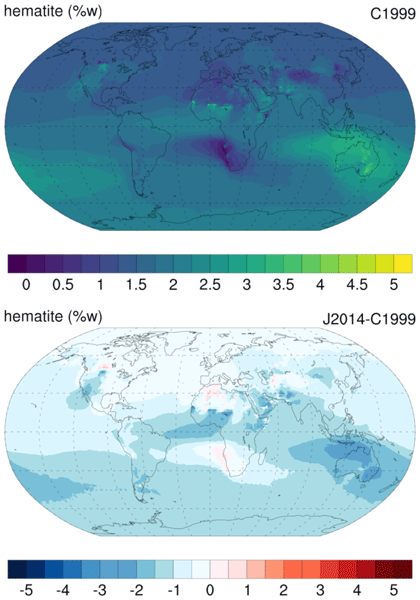
María Gonçalves Ageitos, Vincenzo Obiso, Ron L. Miller, Oriol Jorba, Martina Klose, Matt Dawson, Yves Balkanski, Jan Perlwitz, Sara Basart, Enza Di Tomaso, Jerónimo Escribano, Francesca Macchia, Gilbert Montané, Natalie M. Mahowald, Robert O. Green, David R. Thompson, and Carlos Pérez García-Pando
Atmos. Chem. Phys., 23, 8623–8657, https://doi.org/10.5194/acp-23-8623-2023, https://doi.org/10.5194/acp-23-8623-2023, 2023
Short summary
Short summary
Dust aerosols affect our climate differently depending on their mineral composition. We include dust mineralogy in an atmospheric model considering two existing soil maps, which still have large associated uncertainties. The soil data and the distribution of the minerals in different aerosol sizes are key to our model performance. We find significant regional variations in climate-relevant variables, which supports including mineralogy in our current models and the need for improved soil maps.
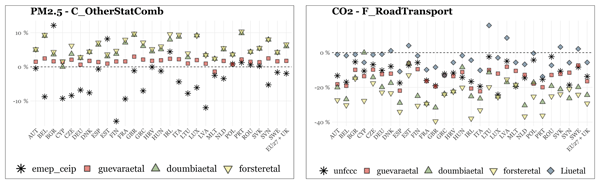
Marc Guevara, Hervé Petetin, Oriol Jorba, Hugo Denier van der Gon, Jeroen Kuenen, Ingrid Super, Claire Granier, Thierno Doumbia, Philippe Ciais, Zhu Liu, Robin D. Lamboll, Sabine Schindlbacher, Bradley Matthews, and Carlos Pérez García-Pando
Atmos. Chem. Phys., 23, 8081–8101, https://doi.org/10.5194/acp-23-8081-2023, https://doi.org/10.5194/acp-23-8081-2023, 2023
Short summary
Short summary
This study provides an intercomparison of European 2020 emission changes derived from official inventories, which are reported by countries under the framework of several international conventions and directives, and non-official near-real-time estimates, the use of which has significantly grown since the COVID-19 outbreak. The results of the work are used to produce recommendations on how best to approach and make use of near-real-time emissions for modelling and monitoring applications.
Cristina González-Flórez, Martina Klose, Andrés Alastuey, Sylvain Dupont, Jerónimo Escribano, Vicken Etyemezian, Adolfo Gonzalez-Romero, Yue Huang, Konrad Kandler, George Nikolich, Agnesh Panta, Xavier Querol, Cristina Reche, Jesús Yus-Díez, and Carlos Pérez García-Pando
Atmos. Chem. Phys., 23, 7177–7212, https://doi.org/10.5194/acp-23-7177-2023, https://doi.org/10.5194/acp-23-7177-2023, 2023
Short summary
Short summary
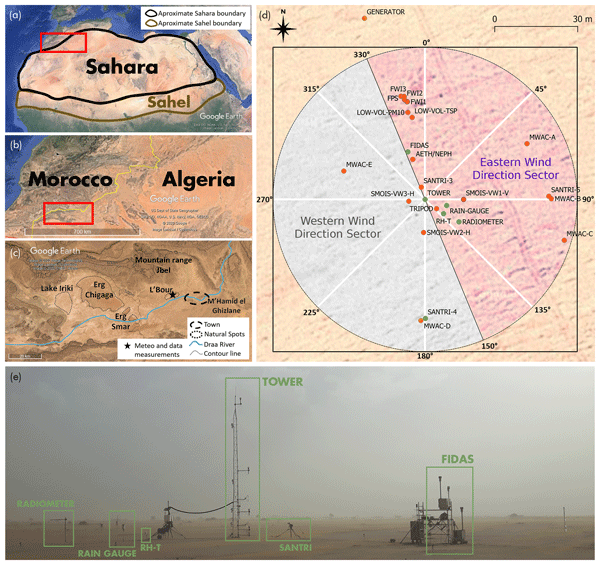
Atmospheric mineral dust consists of tiny mineral particles that are emitted by wind erosion from arid regions. Its particle size distribution (PSD) affects its impact on the Earth's system. Nowadays, there is an incomplete understanding of the emitted dust PSD and a lot of debate about its variability. Here, we try to address these issues based on the measurements performed during a wind erosion and dust emission field campaign in the Moroccan Sahara within the framework of FRAGMENT project.
Danny M. Leung, Jasper F. Kok, Longlei Li, Gregory S. Okin, Catherine Prigent, Martina Klose, Carlos Pérez García-Pando, Laurent Menut, Natalie M. Mahowald, David M. Lawrence, and Marcelo Chamecki
Atmos. Chem. Phys., 23, 6487–6523, https://doi.org/10.5194/acp-23-6487-2023, https://doi.org/10.5194/acp-23-6487-2023, 2023
Short summary
Short summary
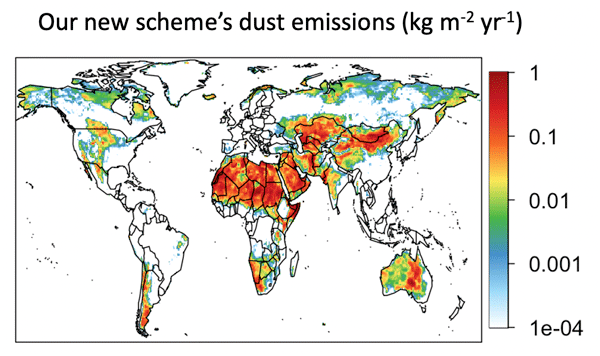
Desert dust modeling is important for understanding climate change, as dust regulates the atmosphere's greenhouse effect and radiation. This study formulates and proposes a more physical and realistic desert dust emission scheme for global and regional climate models. By considering more aeolian processes in our emission scheme, our simulations match better against dust observations than existing schemes. We believe this work is vital in improving dust representation in climate models.
Aleksander Lacima, Hervé Petetin, Albert Soret, Dene Bowdalo, Oriol Jorba, Zhaoyue Chen, Raúl F. Méndez Turrubiates, Hicham Achebak, Joan Ballester, and Carlos Pérez García-Pando
Geosci. Model Dev., 16, 2689–2718, https://doi.org/10.5194/gmd-16-2689-2023, https://doi.org/10.5194/gmd-16-2689-2023, 2023
Short summary
Short summary
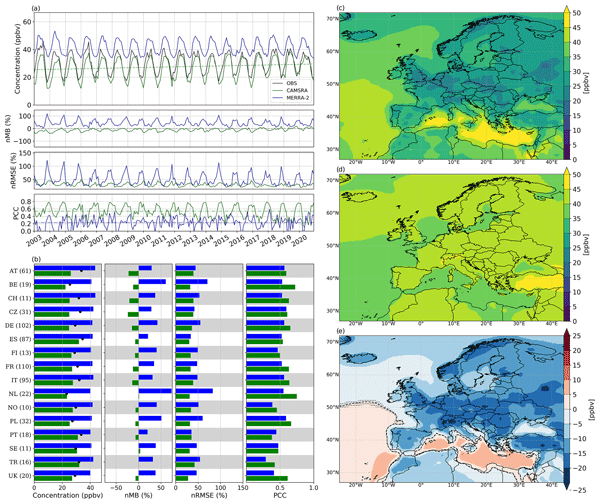
Understanding how air pollution varies across space and time is of key importance for the safeguarding of human health. This work arose in the context of the project EARLY-ADAPT, for which the Barcelona Supercomputing Center developed an air pollution database covering all of Europe. Through different statistical methods, we compared two global pollution models against measurements from ground stations and found significant discrepancies between the observed and the modeled surface pollution.
Michail Mytilinaios, Sara Basart, Sergio Ciamprone, Juan Cuesta, Claudio Dema, Enza Di Tomaso, Paola Formenti, Antonis Gkikas, Oriol Jorba, Ralph Kahn, Carlos Pérez García-Pando, Serena Trippetta, and Lucia Mona
Atmos. Chem. Phys., 23, 5487–5516, https://doi.org/10.5194/acp-23-5487-2023, https://doi.org/10.5194/acp-23-5487-2023, 2023
Short summary
Short summary
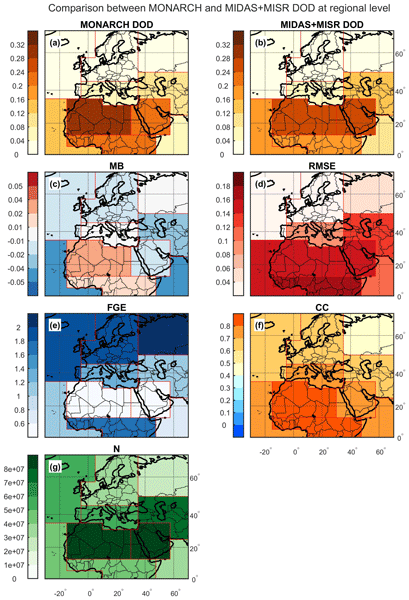
Multiscale Online Non-hydrostatic AtmospheRe CHemistry model (MONARCH) dust reanalysis provides a high-resolution 3D reconstruction of past dust conditions, allowing better quantification of climate and socioeconomic dust impacts. We assess the performance of the reanalysis needed to reproduce dust optical depth using dust-related products retrieved from satellite and ground-based observations and show that it reproduces the spatial distribution and seasonal variability of atmospheric dust well.
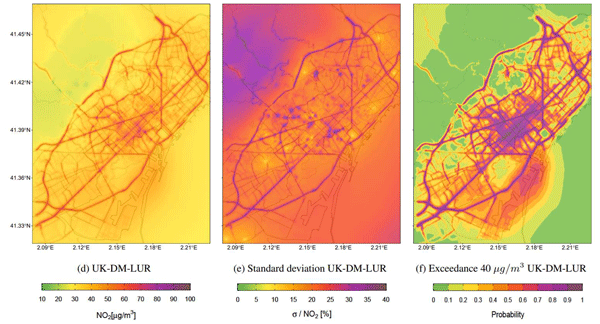
Alvaro Criado, Jan Mateu Armengol, Hervé Petetin, Daniel Rodriguez-Rey, Jaime Benavides, Marc Guevara, Carlos Pérez García-Pando, Albert Soret, and Oriol Jorba
Geosci. Model Dev., 16, 2193–2213, https://doi.org/10.5194/gmd-16-2193-2023, https://doi.org/10.5194/gmd-16-2193-2023, 2023
Short summary
Short summary
This work aims to derive and evaluate a general statistical post-processing tool specifically designed for the street scale that can be applied to any urban air quality system. Our data fusion methodology corrects NO2 fields based on continuous hourly observations and experimental campaigns. This study enables us to obtain exceedance probability maps of air quality standards. In 2019, 13 % of the Barcelona area had a 70 % or higher probability of exceeding the annual legal NO2 limit of 40 µg/m3.

Hervé Petetin, Marc Guevara, Steven Compernolle, Dene Bowdalo, Pierre-Antoine Bretonnière, Santiago Enciso, Oriol Jorba, Franco Lopez, Albert Soret, and Carlos Pérez García-Pando
Atmos. Chem. Phys., 23, 3905–3935, https://doi.org/10.5194/acp-23-3905-2023, https://doi.org/10.5194/acp-23-3905-2023, 2023
Short summary
Short summary
This study analyses the potential of the TROPOMI space sensor for monitoring the variability of NO2 pollution over the Iberian Peninsula. A reduction of NO2 levels is observed during the weekend and in summer, especially over most urbanized areas, in agreement with surface observations. An enhancement of NO2 is found during summer with TROPOMI over croplands, potentially related to natural soil NO emissions, which illustrates the outstanding value of TROPOMI for complementing surface networks.
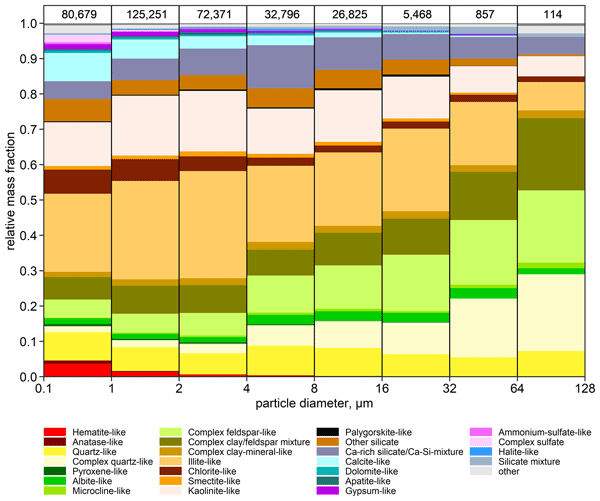
Agnesh Panta, Konrad Kandler, Andres Alastuey, Cristina González-Flórez, Adolfo González-Romero, Martina Klose, Xavier Querol, Cristina Reche, Jesús Yus-Díez, and Carlos Pérez García-Pando
Atmos. Chem. Phys., 23, 3861–3885, https://doi.org/10.5194/acp-23-3861-2023, https://doi.org/10.5194/acp-23-3861-2023, 2023
Short summary
Short summary
Desert dust is a major aerosol component of the Earth system and affects the climate. Dust properties are influenced by particle size, mineralogy, shape, and mixing state. This work characterizes freshly emitted individual mineral dust particles from a major source region using electron microscopy. Our new insights into critical particle-specific information will contribute to better constraining climate models that consider mineralogical variations in their representation of the dust cycle.
Zhao-Yue Chen, Raul Méndez, Hervé Petetin, Aleksander Lacima, Carlos Pérez García-Pando, and Joan Ballester
Earth Syst. Sci. Data Discuss., https://doi.org/10.5194/essd-2023-104, https://doi.org/10.5194/essd-2023-104, 2023
Preprint withdrawn
Short summary
Short summary
Given in the limitations of existing AOD and its size fraction information, a new 18-year daily Aerosol Optical Depth (AOD) dataset over Europe has been developed based on quantile machine learning (QML) models. This dataset improves the ability to monitor and analyse fine-mode and coarse-mode aerosols. They provide better tools to investigate negatively affect human health and have impacts on climate, visibility, and biogeochemical cycling.
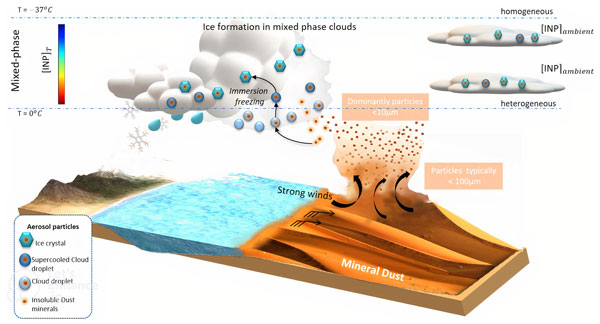
Marios Chatziparaschos, Nikos Daskalakis, Stelios Myriokefalitakis, Nikos Kalivitis, Athanasios Nenes, María Gonçalves Ageitos, Montserrat Costa-Surós, Carlos Pérez García-Pando, Medea Zanoli, Mihalis Vrekoussis, and Maria Kanakidou
Atmos. Chem. Phys., 23, 1785–1801, https://doi.org/10.5194/acp-23-1785-2023, https://doi.org/10.5194/acp-23-1785-2023, 2023
Short summary
Short summary
Ice formation is enabled by ice-nucleating particles (INP) at higher temperatures than homogeneous formation and can profoundly affect the properties of clouds. Our global model results show that K-feldspar is the most important contributor to INP concentrations globally, affecting mid-level mixed-phase clouds. However, quartz can significantly contribute and dominates the lowest and the highest altitudes of dust-derived INP, affecting mainly low-level and high-level mixed-phase clouds.
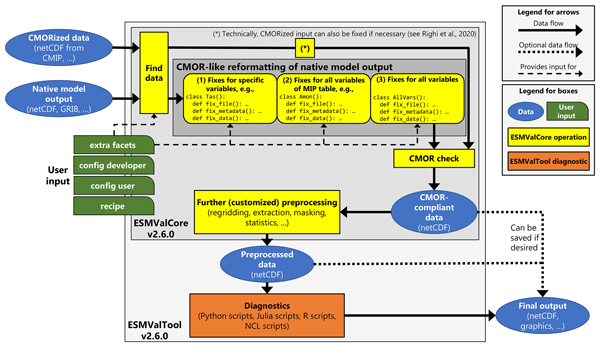
Manuel Schlund, Birgit Hassler, Axel Lauer, Bouwe Andela, Patrick Jöckel, Rémi Kazeroni, Saskia Loosveldt Tomas, Brian Medeiros, Valeriu Predoi, Stéphane Sénési, Jérôme Servonnat, Tobias Stacke, Javier Vegas-Regidor, Klaus Zimmermann, and Veronika Eyring
Geosci. Model Dev., 16, 315–333, https://doi.org/10.5194/gmd-16-315-2023, https://doi.org/10.5194/gmd-16-315-2023, 2023
Short summary
Short summary
The Earth System Model Evaluation Tool (ESMValTool) is a community diagnostics and performance metrics tool for routine evaluation of Earth system models. Originally, ESMValTool was designed to process reformatted output provided by large model intercomparison projects like the Coupled Model Intercomparison Project (CMIP). Here, we describe a new extension of ESMValTool that allows for reading and processing native climate model output, i.e., data that have not been reformatted before.
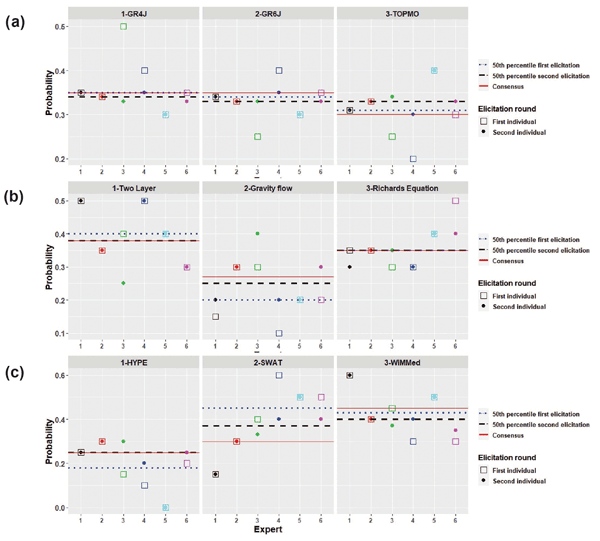
Eva Sebok, Hans Jørgen Henriksen, Ernesto Pastén-Zapata, Peter Berg, Guillaume Thirel, Anthony Lemoine, Andrea Lira-Loarca, Christiana Photiadou, Rafael Pimentel, Paul Royer-Gaspard, Erik Kjellström, Jens Hesselbjerg Christensen, Jean Philippe Vidal, Philippe Lucas-Picher, Markus G. Donat, Giovanni Besio, María José Polo, Simon Stisen, Yvan Caballero, Ilias G. Pechlivanidis, Lars Troldborg, and Jens Christian Refsgaard
Hydrol. Earth Syst. Sci., 26, 5605–5625, https://doi.org/10.5194/hess-26-5605-2022, https://doi.org/10.5194/hess-26-5605-2022, 2022
Short summary
Short summary
Hydrological models projecting the impact of changing climate carry a lot of uncertainty. Thus, these models usually have a multitude of simulations using different future climate data. This study used the subjective opinion of experts to assess which climate and hydrological models are the most likely to correctly predict climate impacts, thereby easing the computational burden. The experts could select more likely hydrological models, while the climate models were deemed equally probable.
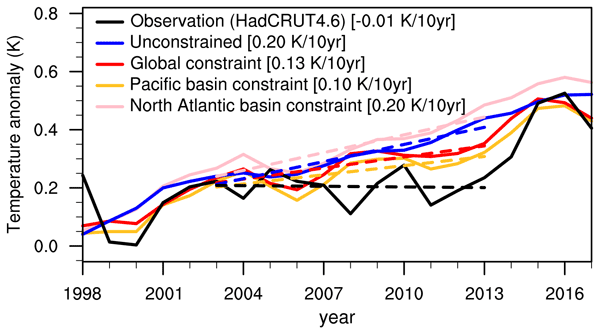
Rashed Mahmood, Markus G. Donat, Pablo Ortega, Francisco J. Doblas-Reyes, Carlos Delgado-Torres, Margarida Samsó, and Pierre-Antoine Bretonnière
Earth Syst. Dynam., 13, 1437–1450, https://doi.org/10.5194/esd-13-1437-2022, https://doi.org/10.5194/esd-13-1437-2022, 2022
Short summary
Short summary
Near-term climate change projections are strongly affected by the uncertainty from internal climate variability. Here we present a novel approach to reduce such uncertainty by constraining decadal-scale variability in the projections using observations. The constrained ensembles show significant added value over the unconstrained ensemble in predicting global climate 2 decades ahead. We also show the applicability of regional constraints for attributing predictability to certain ocean regions.
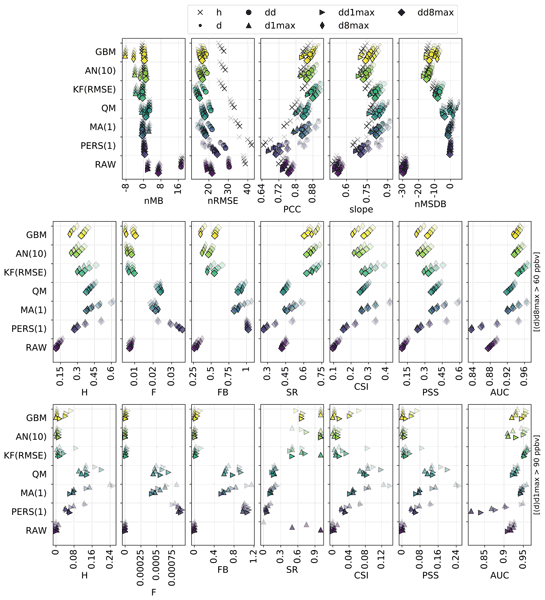
Hervé Petetin, Dene Bowdalo, Pierre-Antoine Bretonnière, Marc Guevara, Oriol Jorba, Jan Mateu Armengol, Margarida Samso Cabre, Kim Serradell, Albert Soret, and Carlos Pérez Garcia-Pando
Atmos. Chem. Phys., 22, 11603–11630, https://doi.org/10.5194/acp-22-11603-2022, https://doi.org/10.5194/acp-22-11603-2022, 2022
Short summary
Short summary
This study investigates the extent to which ozone forecasts provided by the Copernicus Atmospheric Monitoring Service (CAMS) can be improved using surface observations and state-of-the-art statistical methods. Through a case study over the Iberian Peninsula in 2018–2019, it unambiguously demonstrates the value of these methods for improving the raw CAMS O3 forecasts while at the same time highlighting the complexity of improving the detection of the highest O3 concentrations.
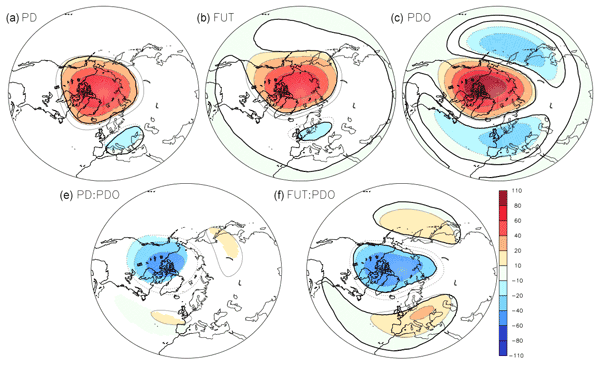
Amélie Simon, Guillaume Gastineau, Claude Frankignoul, Vladimir Lapin, and Pablo Ortega
Weather Clim. Dynam., 3, 845–861, https://doi.org/10.5194/wcd-3-845-2022, https://doi.org/10.5194/wcd-3-845-2022, 2022
Short summary
Short summary
The influence of the Arctic sea-ice loss on atmospheric circulation in midlatitudes depends on persistent sea surface temperatures in the North Pacific. In winter, Arctic sea-ice loss and a warm North Pacific Ocean both induce depressions over the North Pacific and North Atlantic, an anticyclone over Greenland, and a stratospheric anticyclone over the Arctic. However, the effects are not additive as the interaction between both signals is slightly destructive.
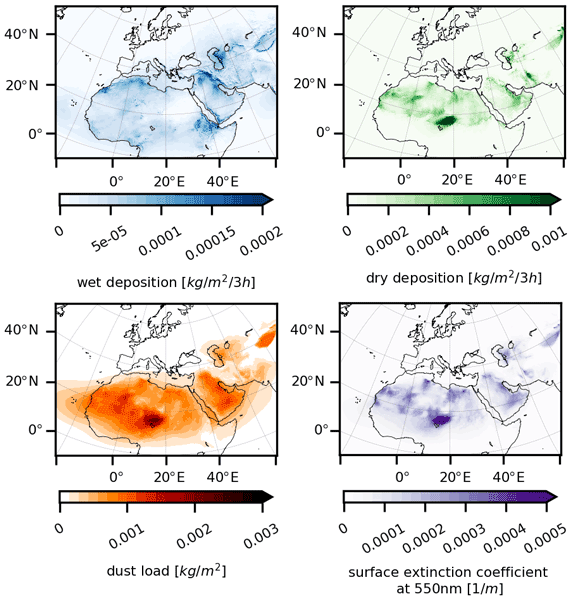
Enza Di Tomaso, Jerónimo Escribano, Sara Basart, Paul Ginoux, Francesca Macchia, Francesca Barnaba, Francesco Benincasa, Pierre-Antoine Bretonnière, Arnau Buñuel, Miguel Castrillo, Emilio Cuevas, Paola Formenti, María Gonçalves, Oriol Jorba, Martina Klose, Lucia Mona, Gilbert Montané Pinto, Michail Mytilinaios, Vincenzo Obiso, Miriam Olid, Nick Schutgens, Athanasios Votsis, Ernest Werner, and Carlos Pérez García-Pando
Earth Syst. Sci. Data, 14, 2785–2816, https://doi.org/10.5194/essd-14-2785-2022, https://doi.org/10.5194/essd-14-2785-2022, 2022
Short summary
Short summary
MONARCH reanalysis of desert dust aerosols extends the existing observation-based information for mineral dust monitoring by providing 3-hourly upper-air, surface and total column key geophysical variables of the dust cycle over Northern Africa, the Middle East and Europe, at a 0.1° horizontal resolution in a rotated grid, from 2007 to 2016. This work provides evidence of the high accuracy of this data set and its suitability for air quality and health and climate service applications.
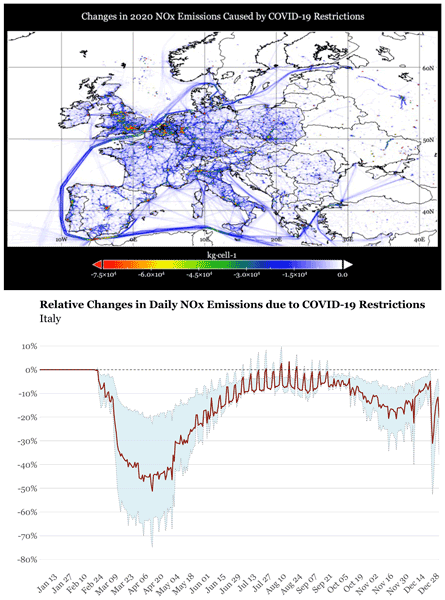
Marc Guevara, Hervé Petetin, Oriol Jorba, Hugo Denier van der Gon, Jeroen Kuenen, Ingrid Super, Jukka-Pekka Jalkanen, Elisa Majamäki, Lasse Johansson, Vincent-Henri Peuch, and Carlos Pérez García-Pando
Earth Syst. Sci. Data, 14, 2521–2552, https://doi.org/10.5194/essd-14-2521-2022, https://doi.org/10.5194/essd-14-2521-2022, 2022
Short summary
Short summary
To control the spread of the COVID-19 disease, European governments implemented mobility restriction measures that resulted in an unprecedented drop in anthropogenic emissions. This work presents a dataset of emission adjustment factors that allows quantifying changes in 2020 European primary emissions per country and pollutant sector at the daily scale. The resulting dataset can be used as input in modelling studies aiming at quantifying the impact of COVID-19 on air quality levels.
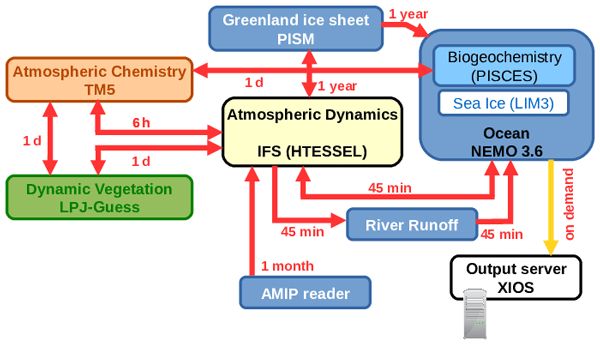
Ralf Döscher, Mario Acosta, Andrea Alessandri, Peter Anthoni, Thomas Arsouze, Tommi Bergman, Raffaele Bernardello, Souhail Boussetta, Louis-Philippe Caron, Glenn Carver, Miguel Castrillo, Franco Catalano, Ivana Cvijanovic, Paolo Davini, Evelien Dekker, Francisco J. Doblas-Reyes, David Docquier, Pablo Echevarria, Uwe Fladrich, Ramon Fuentes-Franco, Matthias Gröger, Jost v. Hardenberg, Jenny Hieronymus, M. Pasha Karami, Jukka-Pekka Keskinen, Torben Koenigk, Risto Makkonen, François Massonnet, Martin Ménégoz, Paul A. Miller, Eduardo Moreno-Chamarro, Lars Nieradzik, Twan van Noije, Paul Nolan, Declan O'Donnell, Pirkka Ollinaho, Gijs van den Oord, Pablo Ortega, Oriol Tintó Prims, Arthur Ramos, Thomas Reerink, Clement Rousset, Yohan Ruprich-Robert, Philippe Le Sager, Torben Schmith, Roland Schrödner, Federico Serva, Valentina Sicardi, Marianne Sloth Madsen, Benjamin Smith, Tian Tian, Etienne Tourigny, Petteri Uotila, Martin Vancoppenolle, Shiyu Wang, David Wårlind, Ulrika Willén, Klaus Wyser, Shuting Yang, Xavier Yepes-Arbós, and Qiong Zhang
Geosci. Model Dev., 15, 2973–3020, https://doi.org/10.5194/gmd-15-2973-2022, https://doi.org/10.5194/gmd-15-2973-2022, 2022
Short summary
Short summary
The Earth system model EC-Earth3 is documented here. Key performance metrics show physical behavior and biases well within the frame known from recent models. With improved physical and dynamic features, new ESM components, community tools, and largely improved physical performance compared to the CMIP5 version, EC-Earth3 represents a clear step forward for the only European community ESM. We demonstrate here that EC-Earth3 is suited for a range of tasks in CMIP6 and beyond.
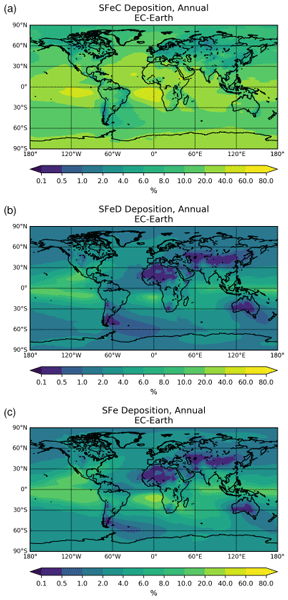
Stelios Myriokefalitakis, Elisa Bergas-Massó, María Gonçalves-Ageitos, Carlos Pérez García-Pando, Twan van Noije, Philippe Le Sager, Akinori Ito, Eleni Athanasopoulou, Athanasios Nenes, Maria Kanakidou, Maarten C. Krol, and Evangelos Gerasopoulos
Geosci. Model Dev., 15, 3079–3120, https://doi.org/10.5194/gmd-15-3079-2022, https://doi.org/10.5194/gmd-15-3079-2022, 2022
Short summary
Short summary
We here describe the implementation of atmospheric multiphase processes in the EC-Earth Earth system model. We provide global budgets of oxalate, sulfate, and iron-containing aerosols, along with an analysis of the links among atmospheric composition, aqueous-phase processes, and aerosol dissolution, supported by comparison to observations. This work is a first step towards an interactive calculation of the deposition of bioavailable atmospheric iron coupled to the model’s ocean component.
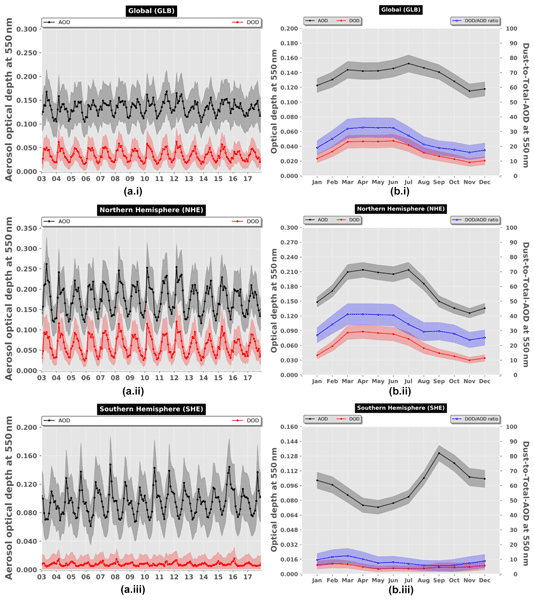
Antonis Gkikas, Emmanouil Proestakis, Vassilis Amiridis, Stelios Kazadzis, Enza Di Tomaso, Eleni Marinou, Nikos Hatzianastassiou, Jasper F. Kok, and Carlos Pérez García-Pando
Atmos. Chem. Phys., 22, 3553–3578, https://doi.org/10.5194/acp-22-3553-2022, https://doi.org/10.5194/acp-22-3553-2022, 2022
Short summary
Short summary
We present a comprehensive climatological analysis of dust optical depth (DOD) relying on the MIDAS dataset. MIDAS provides columnar mid-visible (550 nm) DOD at fine spatial resolution (0.1° × 0.1°) over a 15-year period (2003–2017). In the current study, the analysis is performed at various spatial (from regional to global) and temporal (from months to years) scales. More specifically, focus is given to specific regions hosting the major dust sources as well as downwind areas of the planet.
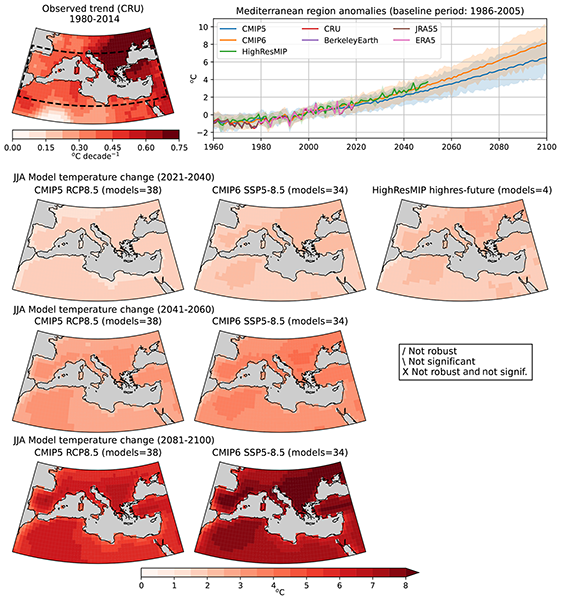
Josep Cos, Francisco Doblas-Reyes, Martin Jury, Raül Marcos, Pierre-Antoine Bretonnière, and Margarida Samsó
Earth Syst. Dynam., 13, 321–340, https://doi.org/10.5194/esd-13-321-2022, https://doi.org/10.5194/esd-13-321-2022, 2022
Short summary
Short summary
The Mediterranean has been identified as being more affected by climate change than other regions. We find that amplified warming during summer and annual precipitation declines are expected for the 21st century and that the magnitude of the changes will mainly depend on greenhouse gas emissions. By applying a method giving more importance to models with greater performance and independence, we find that the differences between the last two community modelling efforts are reduced in the region.

Charles Pelletier, Thierry Fichefet, Hugues Goosse, Konstanze Haubner, Samuel Helsen, Pierre-Vincent Huot, Christoph Kittel, François Klein, Sébastien Le clec'h, Nicole P. M. van Lipzig, Sylvain Marchi, François Massonnet, Pierre Mathiot, Ehsan Moravveji, Eduardo Moreno-Chamarro, Pablo Ortega, Frank Pattyn, Niels Souverijns, Guillian Van Achter, Sam Vanden Broucke, Alexander Vanhulle, Deborah Verfaillie, and Lars Zipf
Geosci. Model Dev., 15, 553–594, https://doi.org/10.5194/gmd-15-553-2022, https://doi.org/10.5194/gmd-15-553-2022, 2022
Short summary
Short summary
We present PARASO, a circumpolar model for simulating the Antarctic climate. PARASO features five distinct models, each covering different Earth system subcomponents (ice sheet, atmosphere, land, sea ice, ocean). In this technical article, we describe how this tool has been developed, with a focus on the
coupling interfacesrepresenting the feedbacks between the distinct models used for contribution. PARASO is stable and ready to use but is still characterized by significant biases.
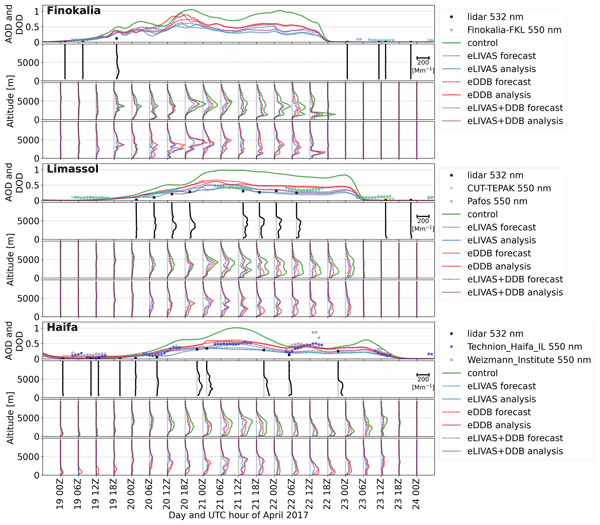
Jerónimo Escribano, Enza Di Tomaso, Oriol Jorba, Martina Klose, Maria Gonçalves Ageitos, Francesca Macchia, Vassilis Amiridis, Holger Baars, Eleni Marinou, Emmanouil Proestakis, Claudia Urbanneck, Dietrich Althausen, Johannes Bühl, Rodanthi-Elisavet Mamouri, and Carlos Pérez García-Pando
Atmos. Chem. Phys., 22, 535–560, https://doi.org/10.5194/acp-22-535-2022, https://doi.org/10.5194/acp-22-535-2022, 2022
Short summary
Short summary
We explore the benefits and consistency in adding lidar dust observations in a dust optical depth assimilation. We show that adding lidar data to a dust optical depth assimilation has valuable benefits and the dust analysis improves. We discuss the impact of the narrow satellite footprint of the lidar dust observations on the assimilation.
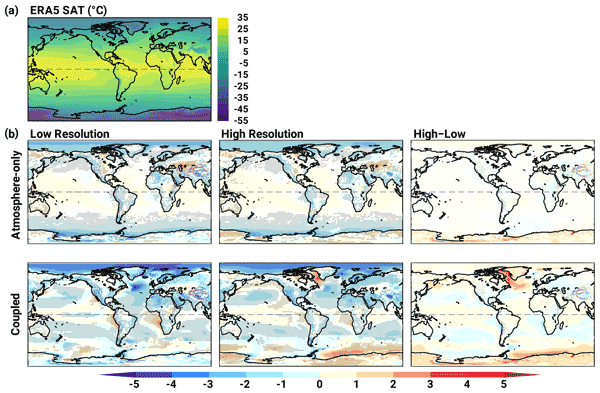
Eduardo Moreno-Chamarro, Louis-Philippe Caron, Saskia Loosveldt Tomas, Javier Vegas-Regidor, Oliver Gutjahr, Marie-Pierre Moine, Dian Putrasahan, Christopher D. Roberts, Malcolm J. Roberts, Retish Senan, Laurent Terray, Etienne Tourigny, and Pier Luigi Vidale
Geosci. Model Dev., 15, 269–289, https://doi.org/10.5194/gmd-15-269-2022, https://doi.org/10.5194/gmd-15-269-2022, 2022
Short summary
Short summary
Climate models do not fully reproduce observations: they show differences (biases) in regional temperature, precipitation, or cloud cover. Reducing model biases is important to increase our confidence in their ability to reproduce present and future climate changes. Model realism is set by its resolution: the finer it is, the more physical processes and interactions it can resolve. We here show that increasing resolution of up to ~ 25 km can help reduce model biases but not remove them entirely.
Martina Klose, Oriol Jorba, María Gonçalves Ageitos, Jeronimo Escribano, Matthew L. Dawson, Vincenzo Obiso, Enza Di Tomaso, Sara Basart, Gilbert Montané Pinto, Francesca Macchia, Paul Ginoux, Juan Guerschman, Catherine Prigent, Yue Huang, Jasper F. Kok, Ron L. Miller, and Carlos Pérez García-Pando
Geosci. Model Dev., 14, 6403–6444, https://doi.org/10.5194/gmd-14-6403-2021, https://doi.org/10.5194/gmd-14-6403-2021, 2021
Short summary
Short summary
Mineral soil dust is a major atmospheric airborne particle type. We present and evaluate MONARCH, a model used for regional and global dust-weather prediction. An important feature of the model is that it allows different approximations to represent dust, ranging from more simplified to more complex treatments. Using these different treatments, MONARCH can help us better understand impacts of dust in the Earth system, such as its interactions with radiation.
Cited articles
Aas, W., Mortier, A., Bowersox, V., Cherian, R., Faluvegi, G., Fagerli, H., Hand, J., Klimont, Z., Galy-Lacaux, C., Lehmann, C. M. B., Myhre, C. L., Myhre, G., Olivié, D., Sato, K., Quaas, J., Rao, P. S. P., Schulz, M., Shindell, D., Skeie, R. B., Stein, A., Takemura, T., Tsyro, S., Vet, R., and Xu, X.: Global and regional trends of atmospheric sulfur, Scientific Reports, 9, 953, https://doi.org/10.1038/s41598-018-37304-0, 2019. a
Acosta Navarro, J. C., Varma, V., Riipinen, I., Seland, Ø., Kirkevåg, A., Struthers, H., Iversen, T., Hansson, H.-C., and Ekman, A. M. L.: Amplification of Arctic warming by past air pollution reductions in Europe, Nature Geoscience, 9, 277–281, https://doi.org/10.1038/ngeo2673, 2016. a
Allen, R. J. and Sherwood, S. C.: The impact of natural versus anthropogenic aerosols on atmospheric circulation in the Community Atmosphere Model, Climate Dynamics, 36, 1959–1978, https://doi.org/10.1007/s00382-010-0898-8, 2011. a, b, c
Allen, R. J., Sherwood, S. C., Norris, J. R., and Zender, C. S.: Recent Northern Hemisphere tropical expansion primarily driven by black carbon and tropospheric ozone, Nature, 485, 350–354, https://doi.org/10.1038/nature11097, 2012. a, b
Andersen, H., Cermak, J., Douglas, A., Myers, T. A., Nowack, P., Stier, P., Wall, C. J., and Wilson Kemsley, S.: Sensitivities of cloud radiative effects to large-scale meteorology and aerosols from global observations, Atmos. Chem. Phys., 23, 10775–10794, https://doi.org/10.5194/acp-23-10775-2023, 2023. a
Bauer, S. E., Tsigaridis, K., Faluvegi, G., Kelley, M., Lo, K. K., Miller, R. L., Nazarenko, L., Schmidt, G. A., and Wu, J.: Historical (1850–2014) Aerosol Evolution and Role on Climate Forcing Using the GISS ModelE2.1 Contribution to CMIP6, Journal of Advances in Modeling Earth Systems, 12, e2019MS001978, https://doi.org/10.1029/2019MS001978, 2020. a
Bauer, S. E., Tsigaridis, K., Faluvegi, G., Nazarenko, L., Miller, R. L., Kelley, M., and Schmidt, G.: The Turning Point of the Aerosol Era, Journal of Advances in Modeling Earth Systems, 14, e2022MS003070, https://doi.org/10.1029/2022MS003070, 2022. a
Bilbao, R., Wild, S., Ortega, P., Acosta-Navarro, J., Arsouze, T., Bretonnière, P.-A., Caron, L.-P., Castrillo, M., Cruz-García, R., Cvijanovic, I., Doblas-Reyes, F. J., Donat, M., Dutra, E., Echevarría, P., Ho, A.-C., Loosveldt-Tomas, S., Moreno-Chamarro, E., Pérez-Zanon, N., Ramos, A., Ruprich-Robert, Y., Sicardi, V., Tourigny, E., and Vegas-Regidor, J.: Assessment of a full-field initialized decadal climate prediction system with the CMIP6 version of EC-Earth, Earth Syst. Dynam., 12, 173–196, https://doi.org/10.5194/esd-12-173-2021, 2021. a, b
Boeke, R. C., Taylor, P. C., and Sejas, S. A.: On the Nature of the Arctic's Positive Lapse-Rate Feedback, Geophysical Research Letters, 48, e2020GL091109, https://doi.org/10.1029/2020GL091109, 2021. a
Collins, W. J., Lamarque, J.-F., Schulz, M., Boucher, O., Eyring, V., Hegglin, M. I., Maycock, A., Myhre, G., Prather, M., Shindell, D., and Smith, S. J.: AerChemMIP: quantifying the effects of chemistry and aerosols in CMIP6, Geosci. Model Dev., 10, 585–607, https://doi.org/10.5194/gmd-10-585-2017, 2017. a, b, c
Colman, R. and Soden, B. J.: Water vapor and lapse rate feedbacks in the climate system, Reviews of Modern Physics, 93, 045002, https://doi.org/10.1103/RevModPhys.93.045002, 2021. a
Cowan, T. and Cai, W.: The response of the large-scale ocean circulation to 20th century Asian and non-Asian aerosols, Geophysical Research Letters, 40, 2761–2767, https://doi.org/10.1002/grl.50587, 2013. a
Delworth, T. L. and Dixon, K. W.: Have anthropogenic aerosols delayed a greenhouse gas-induced weakening of the North Atlantic thermohaline circulation?, Geophysical Research Letters, 33, https://doi.org/10.1029/2005GL024980, 2006. a
Deser, C., Tomas, R., Alexander, M., and Lawrence, D.: The Seasonal Atmospheric Response to Projected Arctic Sea Ice Loss in the Late Twenty-First Century, Journal of Climate, 23, 333–351, https://doi.org/10.1175/2009JCLI3053.1, 2010. a
Donohoe, A., Atwood, A. R., and Byrne, M. P.: Controls on the Width of Tropical Precipitation and Its Contraction Under Global Warming, Geophysical Research Letters, 46, 9958–9967, https://doi.org/10.1029/2019GL082969, 2019. a
Döscher, R., Acosta, M., Alessandri, A., Anthoni, P., Arsouze, T., Bergman, T., Bernardello, R., Boussetta, S., Caron, L.-P., Carver, G., Castrillo, M., Catalano, F., Cvijanovic, I., Davini, P., Dekker, E., Doblas-Reyes, F. J., Docquier, D., Echevarria, P., Fladrich, U., Fuentes-Franco, R., Gröger, M., v. Hardenberg, J., Hieronymus, J., Karami, M. P., Keskinen, J.-P., Koenigk, T., Makkonen, R., Massonnet, F., Ménégoz, M., Miller, P. A., Moreno-Chamarro, E., Nieradzik, L., van Noije, T., Nolan, P., O'Donnell, D., Ollinaho, P., van den Oord, G., Ortega, P., Prims, O. T., Ramos, A., Reerink, T., Rousset, C., Ruprich-Robert, Y., Le Sager, P., Schmith, T., Schrödner, R., Serva, F., Sicardi, V., Sloth Madsen, M., Smith, B., Tian, T., Tourigny, E., Uotila, P., Vancoppenolle, M., Wang, S., Wårlind, D., Willén, U., Wyser, K., Yang, S., Yepes-Arbós, X., and Zhang, Q.: The EC-Earth3 Earth system model for the Coupled Model Intercomparison Project 6, Geosci. Model Dev., 15, 2973–3020, https://doi.org/10.5194/gmd-15-2973-2022, 2022. a
Efron, B.: Bootstrap Methods: Another Look at the Jackknife, The Annals of Statistics, 7, 1–26, https://doi.org/10.1214/aos/1176344552, 1979. a
England, M. R., Polvani, L. M., Sun, L., and Deser, C.: Tropical climate responses to projected Arctic and Antarctic sea-ice loss, Nature Geoscience, 13, 275–281, https://doi.org/10.1038/s41561-020-0546-9, 2020. a
Evans, S., Dawson, E., and Ginoux, P.: Linear Relation Between Shifting ITCZ and Dust Hemispheric Asymmetry, Geophysical Research Letters, 47, e2020GL090499, https://doi.org/10.1029/2020GL090499, 2020. a
Eyring, V., Bony, S., Meehl, G. A., Senior, C. A., Stevens, B., Stouffer, R. J., and Taylor, K. E.: Overview of the Coupled Model Intercomparison Project Phase 6 (CMIP6) experimental design and organization, Geosci. Model Dev., 9, 1937–1958, https://doi.org/10.5194/gmd-9-1937-2016, 2016. a, b
Feldl, N., Po-Chedley, S., Singh, H. K. A., Hay, S., and Kushner, P. J.: Sea ice and atmospheric circulation shape the high-latitude lapse rate feedback, npj Climate and Atmospheric Science, 3, 1–9, https://doi.org/10.1038/s41612-020-00146-7, 2020. a
Forster, P., Storelvmo, T., Armour, K., Collins, W., Dufresne, J.-L., Frame, D., Lunt, D., Mauritsen, T., Palmer, M., Watanabe, M., Wild, M., and Zhang, H.: The Earth's Energy Budget, Climate Feedbacks, and Climate Sensitivity, in: Climate Change 2021: The Physical Science Basis. Contribution of Working Group I to the Sixth Assessment Report of the Intergovernmental Panel on Climate Change, 923–1054, Cambridge University Press, Cambridge, United Kingdom and New York, NY, USA, https://doi.org/10.1017/9781009157896.009, 2021. a
Frierson, D. M. W. and Hwang, Y.-T.: Extratropical Influence on ITCZ Shifts in Slab Ocean Simulations of Global Warming, Journal of Climate, 25, 720–733, https://doi.org/10.1175/JCLI-D-11-00116.1, 2012. a
Goosse, H., Kay, J. E., Armour, K. C., Bodas-Salcedo, A., Chepfer, H., Docquier, D., Jonko, A., Kushner, P. J., Lecomte, O., Massonnet, F., Park, H.-S., Pithan, F., Svensson, G., and Vancoppenolle, M.: Quantifying climate feedbacks in polar regions, Nature Communications, 9, 1919, https://doi.org/10.1038/s41467-018-04173-0, 2018. a
Griffiths, P. T., Murray, L. T., Zeng, G., Shin, Y. M., Abraham, N. L., Archibald, A. T., Deushi, M., Emmons, L. K., Galbally, I. E., Hassler, B., Horowitz, L. W., Keeble, J., Liu, J., Moeini, O., Naik, V., O'Connor, F. M., Oshima, N., Tarasick, D., Tilmes, S., Turnock, S. T., Wild, O., Young, P. J., and Zanis, P.: Tropospheric ozone in CMIP6 simulations, Atmos. Chem. Phys., 21, 4187–4218, https://doi.org/10.5194/acp-21-4187-2021, 2021. a
Griffiths, P. T., Wilcox, L. J., Allen, R. J., Naik, V., O'Connor, F. M., Prather, M., Archibald, A., Brown, F., Deushi, M., Collins, W., Fiedler, S., Oshima, N., Murray, L. T., Samset, B. H., Smith, C., Turnock, S., Watson-Parris, D., and Young, P. J.: Opinion: The role of AerChemMIP in advancing climate and air quality research, Atmos. Chem. Phys., 25, 8289–8328, https://doi.org/10.5194/acp-25-8289-2025, 2025. a
Hallberg, R.: Using a resolution function to regulate parameterizations of oceanic mesoscale eddy effects, Ocean Modelling, 72, 92–103, https://doi.org/10.1016/j.ocemod.2013.08.007, 2013. a
Hassan, T., Allen, R. J., Liu, W., and Randles, C. A.: Anthropogenic aerosol forcing of the Atlantic meridional overturning circulation and the associated mechanisms in CMIP6 models, Atmos. Chem. Phys., 21, 5821–5846, https://doi.org/10.5194/acp-21-5821-2021, 2021. a
Hassan, T., Allen, R. J., Liu, W., Shim, S., van Noije, T., Le Sager, P., Oshima, N., Deushi, M., Randles, C. A., and O'Connor, F. M.: Air quality improvements are projected to weaken the Atlantic meridional overturning circulation through radiative forcing effects, Communications Earth & Environment, 3, 1–12, https://doi.org/10.1038/s43247-022-00476-9, 2022. a
Held, I. M. and Soden, B. J.: Robust Responses of the Hydrological Cycle to Global Warming, Journal of Climate, 19, 5686–5699, https://doi.org/10.1175/JCLI3990.1, 2006. a
Hoesly, R. M., Smith, S. J., Feng, L., Klimont, Z., Janssens-Maenhout, G., Pitkanen, T., Seibert, J. J., Vu, L., Andres, R. J., Bolt, R. M., Bond, T. C., Dawidowski, L., Kholod, N., Kurokawa, J.-I., Li, M., Liu, L., Lu, Z., Moura, M. C. P., O'Rourke, P. R., and Zhang, Q.: Historical (1750–2014) anthropogenic emissions of reactive gases and aerosols from the Community Emissions Data System (CEDS), Geosci. Model Dev., 11, 369–408, https://doi.org/10.5194/gmd-11-369-2018, 2018. a, b
Huijnen, V., Williams, J., van Weele, M., van Noije, T., Krol, M., Dentener, F., Segers, A., Houweling, S., Peters, W., de Laat, J., Boersma, F., Bergamaschi, P., van Velthoven, P., Le Sager, P., Eskes, H., Alkemade, F., Scheele, R., Nédélec, P., and Pätz, H.-W.: The global chemistry transport model TM5: description and evaluation of the tropospheric chemistry version 3.0, Geosci. Model Dev., 3, 445–473, https://doi.org/10.5194/gmd-3-445-2010, 2010. a
Iwi, A. M., Hermanson, L., Haines, K., and Sutton, R. T.: Mechanisms Linking Volcanic Aerosols to the Atlantic Meridional Overturning Circulation, Journal of Climate, 25, 3039–3051, https://doi.org/10.1175/2011JCLI4067.1, 2012. a, b
Klimont, Z., Kupiainen, K., Heyes, C., Purohit, P., Cofala, J., Rafaj, P., Borken-Kleefeld, J., and Schöpp, W.: Global anthropogenic emissions of particulate matter including black carbon, Atmos. Chem. Phys., 17, 8681–8723, https://doi.org/10.5194/acp-17-8681-2017, 2017. a
Krishnan, S., Ekman, A. M. L., Hansson, H.-C., Riipinen, I., Lewinschal, A., Wilcox, L. J., and Dallafior, T.: The Roles of the Atmosphere and Ocean in Driving Arctic Warming Due to European Aerosol Reductions, Geophysical Research Letters, 47, e2019GL086681, https://doi.org/10.1029/2019GL086681, 2020. a
Lenderink, G. and Haarsma, R. J.: Variability and Multiple Equilibria of the Thermohaline Circulation Associated with Deep-Water Formation, Journal of Physical Oceanography, https://doi.org/10.1175/1520-0485(1994)024<1480:VAMEOT>2.0.CO;2, 1994. a
Lewinschal, A., Ekman, A. M. L., Hansson, H.-C., Sand, M., Berntsen, T. K., and Langner, J.: Local and remote temperature response of regional SO2 emissions, Atmos. Chem. Phys., 19, 2385–2403, https://doi.org/10.5194/acp-19-2385-2019, 2019. a
Liu, F., Li, X., Luo, Y., Cai, W., Lu, J., Zheng, X.-T., Kang, S. M., Wang, H., and Zhou, L.: Increased Asian aerosols drive a slowdown of Atlantic Meridional Overturning Circulation, Nature Communications, 15, 18, https://doi.org/10.1038/s41467-023-44597-x, 2024. a, b
Meccia, V. L., Fuentes-Franco, R., Davini, P., Bellomo, K., Fabiano, F., Yang, S., and von Hardenberg, J.: Internal multi-centennial variability of the Atlantic Meridional Overturning Circulation simulated by EC-Earth3, Climate Dynamics, 60, 3695–3712, https://doi.org/10.1007/s00382-022-06534-4, 2023. a
Menary, M. B., Robson, J., Allan, R. P., Booth, B. B. B., Cassou, C., Gastineau, G., Gregory, J., Hodson, D., Jones, C., Mignot, J., Ringer, M., Sutton, R., Wilcox, L., and Zhang, R.: Aerosol-Forced AMOC Changes in CMIP6 Historical Simulations, Geophysical Research Letters, 47, e2020GL088166, https://doi.org/10.1029/2020GL088166, 2020. a, b, c, d
Mudelsee, M. and Alkio, M.: Quantifying effects in two-sample environmental experiments using bootstrap confidence intervals, Environmental Modelling & Software, 22, 84–96, https://doi.org/10.1016/j.envsoft.2005.12.001, 2007. a
Mulcahy, J. P., Johnson, C., Jones, C. G., Povey, A. C., Scott, C. E., Sellar, A., Turnock, S. T., Woodhouse, M. T., Abraham, N. L., Andrews, M. B., Bellouin, N., Browse, J., Carslaw, K. S., Dalvi, M., Folberth, G. A., Glover, M., Grosvenor, D. P., Hardacre, C., Hill, R., Johnson, B., Jones, A., Kipling, Z., Mann, G., Mollard, J., O'Connor, F. M., Palmiéri, J., Reddington, C., Rumbold, S. T., Richardson, M., Schutgens, N. A. J., Stier, P., Stringer, M., Tang, Y., Walton, J., Woodward, S., and Yool, A.: Description and evaluation of aerosol in UKESM1 and HadGEM3-GC3.1 CMIP6 historical simulations, Geosci. Model Dev., 13, 6383–6423, https://doi.org/10.5194/gmd-13-6383-2020, 2020. a
Myhre, G., Shindell, D., Breéon, F.-M., Collins, W., Fuglestvedt, J., Huang, J., Koch, D., Lamarque, J.-F., Lee, D., Mendoza, B., Nakajima, T., Robock, A., Stephens, G., Takemura, T., and Zhang, H.: Anthropogenic and Natural Radiative Forcing. In Climate Change 2013: The Physical Science Basis. Contribution of Working Group I to the Fifth Assessment Report of the Intergovernmental Panel on Climate Change, 659–740, Cambridge University Press, Cambridge, United Kingdom and New York, NY, USA, ISBN 978-1-107-66182-0, https://doi.org/10.1017/CBO9781107415324.018, 2013. a
Needham, M. R. and Randall, D. A.: Anomalous Northward Energy Transport due to Anthropogenic Aerosols during the Twentieth Century, Journal of Climate, 36, 6713–6728, https://doi.org/10.1175/JCLI-D-22-0798.1, 2023. a
Pausata, F. S. R., Zanchettin, D., Karamperidou, C., Caballero, R., and Battisti, D. S.: ITCZ shift and extratropical teleconnections drive ENSO response to volcanic eruptions, Science Advances, 6, eaaz5006, https://doi.org/10.1126/sciadv.aaz5006, 2020. a, b
Pithan, F. and Mauritsen, T.: Arctic amplification dominated by temperature feedbacks in contemporary climate models, Nature Geoscience, 7, 181–184, https://doi.org/10.1038/ngeo2071, 2014. a
Previdi, M., Smith, K. L., and Polvani, L. M.: Arctic amplification of climate change: a review of underlying mechanisms, Environmental Research Letters, 16, 093003, https://doi.org/10.1088/1748-9326/ac1c29, 2021. a, b, c, d
Quinn, P. K., Bates, T. S., Baum, E., Doubleday, N., Fiore, A. M., Flanner, M., Fridlind, A., Garrett, T. J., Koch, D., Menon, S., Shindell, D., Stohl, A., and Warren, S. G.: Short-lived pollutants in the Arctic: their climate impact and possible mitigation strategies, Atmos. Chem. Phys., 8, 1723–1735, https://doi.org/10.5194/acp-8-1723-2008, 2008. a
Rieke, O., Årthun, M., and Dörr, J. S.: Rapid sea ice changes in the future Barents Sea, The Cryosphere, 17, 1445–1456, https://doi.org/10.5194/tc-17-1445-2023, 2023. a
Righi, M., Andela, B., Eyring, V., Lauer, A., Predoi, V., Schlund, M., Vegas-Regidor, J., Bock, L., Brötz, B., de Mora, L., Diblen, F., Dreyer, L., Drost, N., Earnshaw, P., Hassler, B., Koldunov, N., Little, B., Loosveldt Tomas, S., and Zimmermann, K.: Earth System Model Evaluation Tool (ESMValTool) v2.0 – technical overview, Geosci. Model Dev., 13, 1179–1199, https://doi.org/10.5194/gmd-13-1179-2020, 2020. a
Robson, J., Menary, M. B., Sutton, R. T., Mecking, J., Gregory, J. M., Jones, C., Sinha, B., Stevens, D. P., and Wilcox, L. J.: The Role of Anthropogenic Aerosol Forcing in the 1850–1985 Strengthening of the AMOC in CMIP6 Historical Simulations, Journal of Climate, 35, 6843–6863, https://doi.org/10.1175/JCLI-D-22-0124.1, 2022. a, b, c, d
Roquet, F., Madec, G., McDougall, T. J., and Barker, P. M.: Accurate polynomial expressions for the density and specific volume of seawater using the TEOS-10 standard, Ocean Modelling, 90, 29–43, https://doi.org/10.1016/j.ocemod.2015.04.002, 2015. a
Sand, M., Berntsen, T. K., von Salzen, K., Flanner, M. G., Langner, J., and Victor, D. G.: Response of Arctic temperature to changes in emissions of short-lived climate forcers, Nature Climate Change, 6, 286–289, https://doi.org/10.1038/nclimate2880, 2016. a, b
Santos Espeso, A.: NTCF Historical Impacts Code, Zenodo [code], https://doi.org/10.5281/zenodo.17698021, 2025. a
Sellar, A. A., Jones, C. G., Mulcahy, J. P., Tang, Y., Yool, A., Wiltshire, A., O'Connor, F. M., Stringer, M., Hill, R., Palmieri, J., Woodward, S., de Mora, L., Kuhlbrodt, T., Rumbold, S. T., Kelley, D. I., Ellis, R., Johnson, C. E., Walton, J., Abraham, N. L., Andrews, M. B., Andrews, T., Archibald, A. T., Berthou, S., Burke, E., Blockley, E., Carslaw, K., Dalvi, M., Edwards, J., Folberth, G. A., Gedney, N., Griffiths, P. T., Harper, A. B., Hendry, M. A., Hewitt, A. J., Johnson, B., Jones, A., Jones, C. D., Keeble, J., Liddicoat, S., Morgenstern, O., Parker, R. J., Predoi, V., Robertson, E., Siahaan, A., Smith, R. S., Swaminathan, R., Woodhouse, M. T., Zeng, G., and Zerroukat, M.: UKESM1: Description and Evaluation of the U.K. Earth System Model, Journal of Advances in Modeling Earth Systems, 11, 4513–4558, https://doi.org/10.1029/2019MS001739, 2019. a
Siew, P. Y. F., Wu, Y., Ting, M., Zheng, C., Ding, Q., and Seager, R.: Significant contribution of internal variability to recent Barents–Kara sea ice loss in winter, Communications Earth & Environment, 5, 411, https://doi.org/10.1038/s43247-024-01582-6, 2024. a
Szopa, S., Naik, V., Adhikary, B., Artaxo, P., Berntsen, T., Collins, W. D., Fuzzi, S., Gallardo, L., Kiendler-Scharr, A., Klimont, Z., Liao, H., Unger, N., and Zanis, P.: Short-Lived Climate Forcers. In Climate Change 2021: The Physical Science Basis. Contribution of Working Group I to the Sixth Assessment Report of the Intergovernmental Panel on Climate Change, 817–922, Cambridge University Press, Cambridge, United Kingdom and New York, NY, USA, https://doi.org/10.1017/9781009157896.008, 2021. a, b, c, d, e, f
Tebaldi, C. and Knutti, R.: The use of the multi-model ensemble in probabilistic climate projections, Philosophical Transactions of the Royal Society A: Mathematical, Physical and Engineering Sciences, 365, 2053–2075, https://doi.org/10.1098/rsta.2007.2076, 2007. a
Thornhill, G. D., Collins, W. J., Kramer, R. J., Olivié, D., Skeie, R. B., O'Connor, F. M., Abraham, N. L., Checa-Garcia, R., Bauer, S. E., Deushi, M., Emmons, L. K., Forster, P. M., Horowitz, L. W., Johnson, B., Keeble, J., Lamarque, J.-F., Michou, M., Mills, M. J., Mulcahy, J. P., Myhre, G., Nabat, P., Naik, V., Oshima, N., Schulz, M., Smith, C. J., Takemura, T., Tilmes, S., Wu, T., Zeng, G., and Zhang, J.: Effective radiative forcing from emissions of reactive gases and aerosols – a multi-model comparison, Atmos. Chem. Phys., 21, 853–874, https://doi.org/10.5194/acp-21-853-2021, 2021. a
Tian, B. and Dong, X.: The Double-ITCZ Bias in CMIP3, CMIP5, and CMIP6 Models Based on Annual Mean Precipitation, Geophysical Research Letters, 47, e2020GL087232, https://doi.org/10.1029/2020GL087232, 2020. a
Tørseth, K., Aas, W., Breivik, K., Fjæraa, A. M., Fiebig, M., Hjellbrekke, A. G., Lund Myhre, C., Solberg, S., and Yttri, K. E.: Introduction to the European Monitoring and Evaluation Programme (EMEP) and observed atmospheric composition change during 1972–2009, Atmos. Chem. Phys., 12, 5447–5481, https://doi.org/10.5194/acp-12-5447-2012, 2012. a
van Noije, T., Bergman, T., Le Sager, P., O'Donnell, D., Makkonen, R., Gonçalves-Ageitos, M., Döscher, R., Fladrich, U., von Hardenberg, J., Keskinen, J.-P., Korhonen, H., Laakso, A., Myriokefalitakis, S., Ollinaho, P., Pérez García-Pando, C., Reerink, T., Schrödner, R., Wyser, K., and Yang, S.: EC-Earth3-AerChem: a global climate model with interactive aerosols and atmospheric chemistry participating in CMIP6, Geosci. Model Dev., 14, 5637–5668, https://doi.org/10.5194/gmd-14-5637-2021, 2021. a
Wall, C. J., Norris, J. R., Possner, A., McCoy, D. T., McCoy, I. L., and Lutsko, N. J.: Assessing effective radiative forcing from aerosol–cloud interactions over the global ocean, Proceedings of the National Academy of Sciences, 119, e2210481119, https://doi.org/10.1073/pnas.2210481119, 2022. a
Wang, Z., Lin, L., Xu, Y., Che, H., Zhang, X., Zhang, H., Dong, W., Wang, C., Gui, K., and Xie, B.: Incorrect Asian aerosols affecting the attribution and projection of regional climate change in CMIP6 models, npj Climate and Atmospheric Science, 4, 1–8, https://doi.org/10.1038/s41612-020-00159-2, 2021. a
Westervelt, D. M., Mascioli, N. R., Fiore, A. M., Conley, A. J., Lamarque, J.-F., Shindell, D. T., Faluvegi, G., Previdi, M., Correa, G., and Horowitz, L. W.: Local and remote mean and extreme temperature response to regional aerosol emissions reductions, Atmos. Chem. Phys., 20, 3009–3027, https://doi.org/10.5194/acp-20-3009-2020, 2020. a
Wu, T., Zhang, F., Zhang, J., Jie, W., Zhang, Y., Wu, F., Li, L., Yan, J., Liu, X., Lu, X., Tan, H., Zhang, L., Wang, J., and Hu, A.: Beijing Climate Center Earth System Model version 1 (BCC-ESM1): model description and evaluation of aerosol simulations, Geosci. Model Dev., 13, 977–1005, https://doi.org/10.5194/gmd-13-977-2020, 2020. a, b
Yang, W., John, V. O., Zhao, X., Lu, H., and Knapp, K. R.: Satellite Climate Data Records: Development, Applications, and Societal Benefits, Remote Sensing, 8, 331, https://doi.org/10.3390/rs8040331, 2016. a
Yukimoto, S., Kawai, H., Koshiro, T., Oshima, N., Yoshida, K., Urakawa, S., Tsujino, H., Deushi, M., Tanaka, T., Hosaka, M., Yabu, S., Yoshimura, H., Shindo, E., Mizuta, R., Obata, A., Adachi, Y., and Ishii, M.: The Meteorological Research Institute Earth System Model Version 2.0, MRI-ESM2.0: Description and Basic Evaluation of the Physical Component, Journal of the Meteorological Society of Japan. Ser. II, 97, 931–965, https://doi.org/10.2151/jmsj.2019-051, 2019. a, b
Zhang, J., Furtado, K., Turnock, S. T., Mulcahy, J. P., Wilcox, L. J., Booth, B. B., Sexton, D., Wu, T., Zhang, F., and Liu, Q.: The role of anthropogenic aerosols in the anomalous cooling from 1960 to 1990 in the CMIP6 Earth system models, Atmos. Chem. Phys., 21, 18609–18627, https://doi.org/10.5194/acp-21-18609-2021, 2021. a, b, c, d
Zhao, S. and Suzuki, K.: Exploring the Impacts of Aerosols on ITCZ Position Through Altering Different Autoconversion Schemes and Cumulus Parameterizations, Journal of Geophysical Research: Atmospheres, 126, e2021JD034803, https://doi.org/10.1029/2021JD034803, 2021. a
Short summary
Short-lived air pollutants (e.g., aerosols and ozone) affect climate differently than greenhouse gases. Using climate models, we found that during 1950–2014, these pollutants caused global cooling, stronger in the Arctic, increased vertical mixing in the Labrador Sea, and southward displacement of the tropical rain belt. These regional impacts oppose those of greenhouse gases. Hence, future reductions in pollution for better air quality must be accompanied by stricter greenhouse gas mitigation.
Short-lived air pollutants (e.g., aerosols and ozone) affect climate differently than greenhouse...


Altmetrics
Final-revised paper
Preprint