
Articles | Volume 17, issue 3
https://doi.org/10.5194/esd-17-893-2026
© Author(s) 2026. This work is distributed under
the Creative Commons Attribution 4.0 License.
the Creative Commons Attribution 4.0 License.
https://doi.org/10.5194/esd-17-893-2026
© Author(s) 2026. This work is distributed under
the Creative Commons Attribution 4.0 License.
the Creative Commons Attribution 4.0 License.
Research article
| 
29 Jun 2026
Research article |
| 29 Jun 2026
| 29 Jun 2026
Overshoot and (ir)reversibility to 2300 in two CO2-emissions driven Earth System models

Department of Water and Climate, Vrije Universiteit Brussel, Brussels, Belgium
Energy, Climate and Environment Program, International Institute for Applied Systems Analysis (IIASA), Laxenburg, Austria
School of Earth and Environment, University of Leeds, Leeds, UK
Lennart Ramme
Max Planck Institute for Meteorology, Hamburg, Germany
Christopher D. Wells
School of Earth and Environment, University of Leeds, Leeds, UK
Ada Gjermundsen
Department of Geosciences, University of Oslo, Oslo, Norway
Hongmei Li
Helmholtz-Zentrum Hereon, Geesthacht, Germany
Max Planck Institute for Meteorology, Hamburg, Germany
Tatiana Ilyina
Max Planck Institute for Meteorology, Hamburg, Germany
Helmholtz-Zentrum Hereon, Geesthacht, Germany
Adakudlu Muralidhar
Norwegian Meteorological Institute, Oslo, Norway
Timothée Bourgeois
NORCE Climate & Environment and Bjerknes Centre for Climate Research, Bergen, Norway
Jörg Schwinger
NORCE Climate & Environment and Bjerknes Centre for Climate Research, Bergen, Norway
Alejandro Romero-Prieto
School of Earth and Environment, University of Leeds, Leeds, UK
Max Planck Institute for Meteorology, Hamburg, Germany
Cecilie Mauritzen
Norwegian Meteorological Institute, Oslo, Norway
Related authors
Alexander Nauels, Tessa Möller, Victor Couplet, Robert E. Kopp, Praveen Kumar, Matthias Mengel, Gregory Munday, Zebedee R. J. Nicholls, Lennart Ramme, Aimée B. A. Slangen, Chris Smith, Jennifer H. Weeks, and Tony E. Wong
EGUsphere, https://doi.org/10.5194/egusphere-2026-3874, https://doi.org/10.5194/egusphere-2026-3874, 2026
This preprint is open for discussion and under review for Geoscientific Model Development (GMD).
Short summary
Short summary
Sea levels will keep rising for centuries, so coastal planning needs long-term outlooks. For the first time, we brought together seven simplified models, called emulators, and combined their estimates of future sea level rise to year 2300, including a scenario with strong temperature overshoot before returning to 1.5 °C of warming. The emulators differ most over how much ice Antarctica will lose. Even if global temperatures fall again, extra sea level rise stays locked in for centuries.
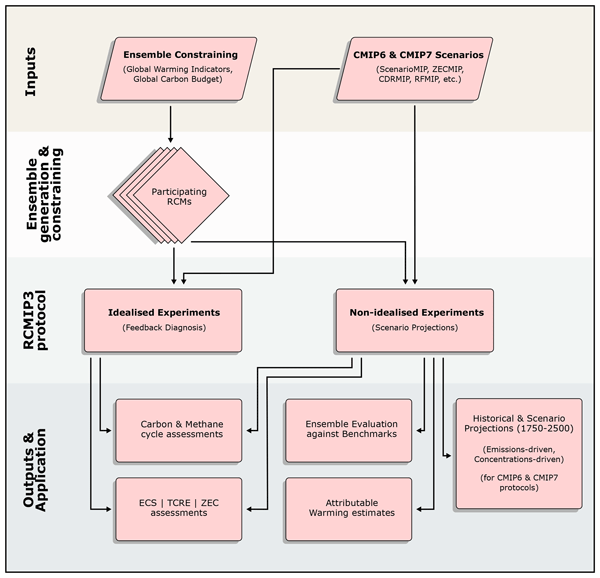
Alejandro Romero-Prieto, Marit Sandstad, Benjamin M. Sanderson, Zebedee R. J. Nicholls, Norman J. Steinert, Thomas Gasser, Camilla Mathison, Jarmo Kikstra, Thomas J. Aubry, Katsumasa Tanaka, Konstantin Weber, and Chris Smith
Geosci. Model Dev., 19, 7111–7133, https://doi.org/10.5194/gmd-19-7111-2026, https://doi.org/10.5194/gmd-19-7111-2026, 2026
Short summary
Short summary
Reduced-complexity models are an important tool in climate science, helping us understand and estimate future climate change. We present the experimental protocol for the next phase of the reduced-complexity model intercomparison project, which aims to compare results from many such models to better understand their behaviour. This knowledge will guide how these models are developed and used in the future, including in the upcoming Intergovernmental Panel on Climate Change (IPCC) assessment report (AR7).
Amen Al-Yaari, Chris Smith, Yi Yao, Kjetil S. Aas, L. Ruby Leung, Min-Hui Lo, Sonali McDermid, Larissa Nazarenko, Yadu Pokhrel, Yusuke Satoh, Tokuta Yokohata, and Wim Thiery
EGUsphere, https://doi.org/10.5194/egusphere-2026-4199, https://doi.org/10.5194/egusphere-2026-4199, 2026
Short summary
Short summary
In this study, we use the Irrigation Model Intercomparison Project (IRRMIP) to provide the first multi-model quantification of irrigation-induced effective radiative forcing (ERF) across seven Earth system models over 1902–2014. We find that the global multi-model mean ERF is positive but small (~0.023 W m⁻²). This small global signal masks regional heterogeneity: South Asia and West Central Asia show higher positive ERF (~0.25 W m⁻²), while East Asia shows a negative signal (−0.03 W m⁻²).

Cristina Deidda, Arpita Asha Khanna, Wolfgang Schade, Chris Smith, and Wim Thiery
Nat. Hazards Earth Syst. Sci., 26, 3345–3394, https://doi.org/10.5194/nhess-26-3345-2026, https://doi.org/10.5194/nhess-26-3345-2026, 2026
Short summary
Short summary
Climate extremes like floods, heatwaves, droughts, and wildfires are disrupting Europe’s transport. This study combines a review of past events and future projections to assess current losses and the future exposure of transport infrastructure. Exposure to extremes is projected to rise, but lower emissions can reduce it. Urgent action is needed to reduce emissions and adapt the Trans-European Transport Network to a changing climate.
Adakudlu Muralidhar, Cecilie Mauritzen, Christopher D. Wells, Benjamin Blanz, William Schoenberg, Beniamino Callegari, Jannes Breier, Jefferson K. Rajah, Lennart Ramme, Andreas Nicolaidis Lindqvist, Alexandre C. Köberle, Axel E. Eriksson, and Chris Smith
EGUsphere, https://doi.org/10.5194/egusphere-2026-3072, https://doi.org/10.5194/egusphere-2026-3072, 2026
This preprint is open for discussion and under review for Earth System Dynamics (ESD).
Short summary
Short summary
Using the integrated assessment model FRIDA v2.1, we examine how climate impacts spread through interconnected human and Earth systems, including the economy, energy, food, water, finance, and behaviour. We find that interacting climate impacts can reduce economic growth strongly than models assuming isolated effects. Financial feedbacks are especially important, and nonlinear climate–society interactions can amplify risks across sectors even without explicit climate tipping points.
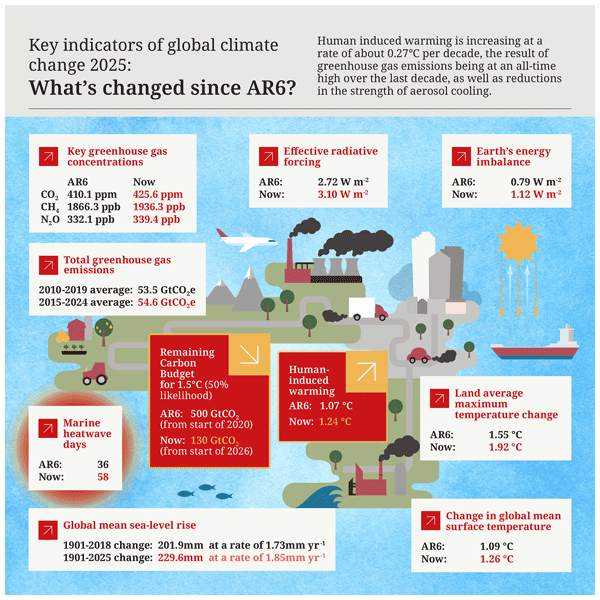
Piers M. Forster, Tristram Walsh, Chris Smith, William F. Lamb, Robin Lamboll, Christophe Cassou, Mathias Hauser, Zeke Hausfather, June-Yi Lee, Matthew D. Palmer, Karina von Schuckmann, Aimée B. A. Slangen, Sophie Szopa, Blair Trewin, Jeongeun Yun, Nathan P. Gillett, Stuart Jenkins, H. Damon Matthews, Krishnan Raghavan, Aurélien Ribes, Joeri Rogelj, Debbie Rosen, Xuebin Zhang, Myles Allen, Robbie M. Andrew, Chris Atkinson, Richard A. Betts, Antonio Bombelli, Samantha N. Burgess, Lijing Cheng, Helen E. Claxton, Pierre Friedlingstein, Thomas L. Frölicher, Catia M. Domingues, Thomas Gasser, Catherine H. Gregory, Rachel M. Hoesly, Daniel Huppmann, Masayoshi Ishii, Christopher Kadow, Alexia Karwat, John Kennedy, Rachel E. Killick, Mahesh V. M. Kovilakam, Paul B. Krummel, Xin Lan, Jean-François Lamarque, Aurélien Liné, Belén Martín-Míguez, Didier P. Monselesan, Colin Morice, Jens Mühle, Pino Mussak, Glen P. Peters, Anna Pirani, Julia Pongratz, Matthew Rigby, Robert Rohde, Abhishek Savita, Sonia I. Seneviratne, Steven J. Smith, Ghassan Taha, Caterina Tassone, Peter Thorne, Christopher Wells, Luke M. Western, Guido R. van der Werf, Susan E. Wijffels, Marco Zecchetto, Junting Zhong, Xiao-Ye Zhang, Valérie Masson-Delmotte, and Panmao Zhai
Earth Syst. Sci. Data, 18, 3889–3933, https://doi.org/10.5194/essd-18-3889-2026, https://doi.org/10.5194/essd-18-3889-2026, 2026
Short summary
Short summary
We give our annual update of key climate indicators. Our work quantifies the human contribution to global warming and the pace of climate change. This represents a large effort by the international community akin to an Intergovernmental Panel on Climate Change (IPCC) report.
Michael Gregory Windisch, Yann Quilcaille, Camilla Mathison, Claudia Tebaldi, Eleanor Burke, Laila Gohar, Chris Smith, Sarah Schöngart, Abigail Snyder, Siddarth Durga, Kalyn Dorheim, and Sonia Seneviratne
EGUsphere, https://doi.org/10.5194/egusphere-2026-2253, https://doi.org/10.5194/egusphere-2026-2253, 2026
Short summary
Short summary
Creating consistent climate scenarios remains challenging. The computational cost of comprehensive climate models leaves most scenarios without spatial climate outcomes, limiting feedback between climate consequences and scenario assumptions. We apply three spatial emulators to test their potential and current limitations in rapidly translating scenarios into spatial outcomes to identify regional risks, fill gaps in scenario coverage, and feed climate consequences back into scenario assumptions.
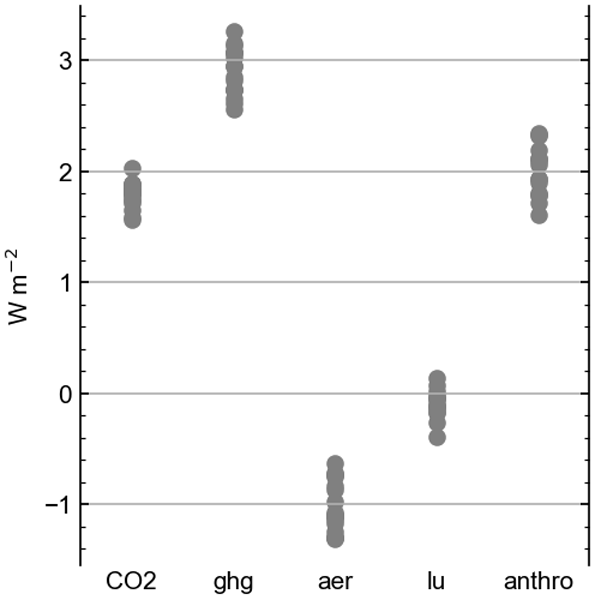
Ryan J. Kramer, Chris Smith, and Timothy Andrews
Geosci. Model Dev., 19, 4447–4466, https://doi.org/10.5194/gmd-19-4447-2026, https://doi.org/10.5194/gmd-19-4447-2026, 2026
Short summary
Short summary
Natural or anthropogenic activities can cause a perturbation in Earth's radiative energy budget known as a radiative forcing, which induces a climate response. Diagnosing radiative forcing and its uncertainty is foundational to understanding past and future climate change. Here we outline the protocol for the second iteration of the Radiative Forcing Model Intercomparison Project (RFMIP2.0), which provides a standardized method for diagnosing radiative forcing across Global Climate Models.
Benjamin M. Sanderson, Marit Sandstad, Alejandro Romero-Prieto, Stuart Jenkins, Charles Koven, Glen Peters, Roland Séfèrian, Andrew H. MacDougall, Ashwin Seshadri, Victor Brovkin, John Dunne, Abigail L. S. Swann, Torben Koenigk, Rosie A. Fisher, David Hohn, Tatiana Ilyina, Chris D. Jones, Hongmei Li, Peter Lawrence, Spencer Liddicoat, Nadine Mengis, Anastasia Romanou, Lori T. Sentman, Chris Smith, Norman J. Steinert, Jerry Tjiputra, and Tilo Ziehn
EGUsphere, https://doi.org/10.5194/egusphere-2026-1875, https://doi.org/10.5194/egusphere-2026-1875, 2026
Short summary
Short summary
When humanity stops emitting carbon dioxide, will temperatures keep rising, stabilize, or fall? Our study reveals in most models, temperatures remain nearly stable, but this hides a balance between the warming in response to radiation imbalance, and the cooling due to uptake of carbon in the land and ocean. Understanding this balance helps refine how much more CO2 we can safely emit.
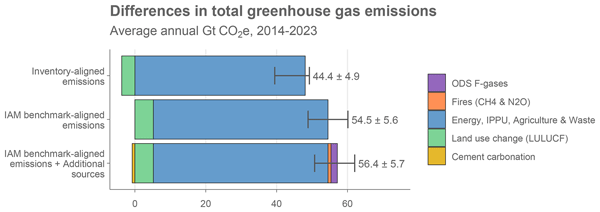
William F. Lamb, Robbie M. Andrew, Matthew Jones, Zebedee Nicholls, Glen P. Peters, Chris Smith, Marielle Saunois, Giacomo Grassi, Julia Pongratz, Steven J. Smith, Francesco N. Tubiello, Monica Crippa, Matthew Gidden, Pierre Friedlingstein, Jan Minx, and Piers M. Forster
Earth Syst. Sci. Data, 18, 2549–2572, https://doi.org/10.5194/essd-18-2549-2026, https://doi.org/10.5194/essd-18-2549-2026, 2026
Short summary
Short summary
This study explores why global greenhouse gas (GHG) emissions estimates vary. Key reasons include different coverage of gases and sectors, varying definitions of anthropogenic land use change emissions, and the Paris Agreement not covering all emission sources. The study highlights three main ways emissions data is reported, each with different objectives and resulting in varying global emission totals. It emphasizes the need for transparency in choosing datasets and setting assessment scopes.
Detlef P. Van Vuuren, Brian C. O'Neill, Claudia Tebaldi, Benjamin M. Sanderson, Louise P. Chini, Pierre Friedlingstein, Tomoko Hasegawa, Keywan Riahi, Bala Govindasamy, Nico Bauer, Veronika Eyring, Cheikh M. N. Fall, Katja Frieler, Matthew J. Gidden, Laila K. Gohar, Annika Högner, Andrew D. Jones, Jarmo Kikstra, Andrew King, Reto Knutti, Elmar Kriegler, Peter Lawrence, Chris Lennard, Jason Lowe, Camilla Mathison, Shahbaz Mehmood, Zebedee Nicholls, Luciana F. Prado, Qiang Zhang, Steven K. Rose, Alex C. Ruane, Marit Sandstad, Carl-Friedrich Schleussner, Roland Seferian, Jana Sillmann, Chris Smith, Anna A. Sörensson, Swapna Panickal, Kaoru Tachiiri, Naomi Vaughan, Saritha S. Vishwanathan, Tokuta Yokohata, Marco Zecchetto, and Tilo Ziehn
Geosci. Model Dev., 19, 2627–2656, https://doi.org/10.5194/gmd-19-2627-2026, https://doi.org/10.5194/gmd-19-2627-2026, 2026
Short summary
Short summary
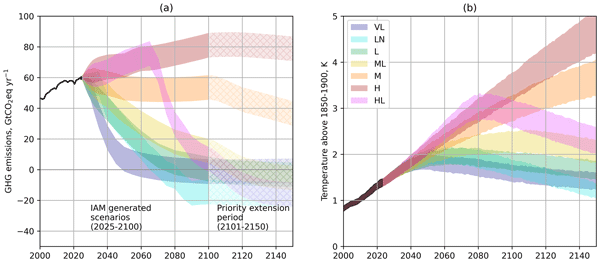
We propose a set of seven plausible 21st century emission scenarios, and their multi-century extensions, that will be used by the international community of climate modeling centers to produce the next generation of climate projections. These projections will support climate, impact and mitigation researchers, provide information to practitioners to address future risks from climate change, and contribute to policymakers’ considerations of the trade-offs among various levels of mitigation.
Christopher D. Wells, Lennart Ramme, Chris Smith, Jannes Breier, Adakudlu Muralidhar, Chao Li, Ada Gjermundsen, William Alexander Schoenberg, Benjamin Blanz, and Cecilie Mauritzen
Geosci. Model Dev., 19, 1429–1453, https://doi.org/10.5194/gmd-19-1429-2026, https://doi.org/10.5194/gmd-19-1429-2026, 2026
Short summary
Short summary
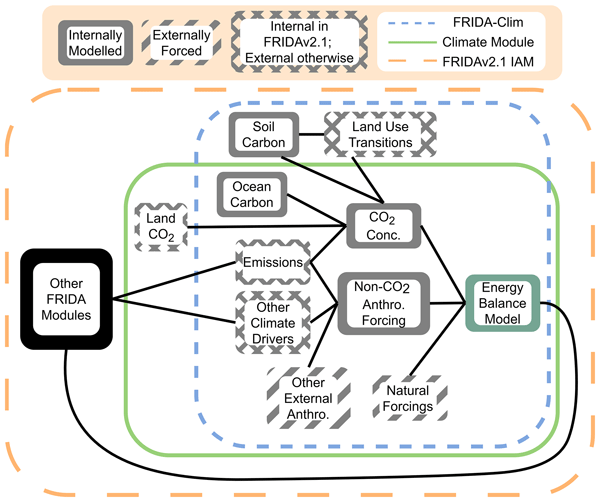
Understanding the change in climate that would occur under different future pathways of greenhouse gas emissions and changes in land use is crucial. Here, we develop a new simple climate model to help study this. We reduce the number of inputs so that our model can be connected to a model of the human causes of climate change. This way, we can study the interaction between climate change and society, including climate impacts. Our model broadly agrees with historical observations.
Christopher D. Wells, Benjamin Blanz, Lennart Ramme, Jannes Breier, Beniamino Callegari, Adakudlu Muralidhar, Jefferson K. Rajah, Andreas Nicolaidis Lindqvist, Axel E. Eriksson, William Alexander Schoenberg, Alexandre C. Köberle, Lan Wang-Erlandsson, Cecilie Mauritzen, Martin B. Grimeland, and Chris Smith
Geosci. Model Dev., 19, 1229–1260, https://doi.org/10.5194/gmd-19-1229-2026, https://doi.org/10.5194/gmd-19-1229-2026, 2026
Short summary
Short summary
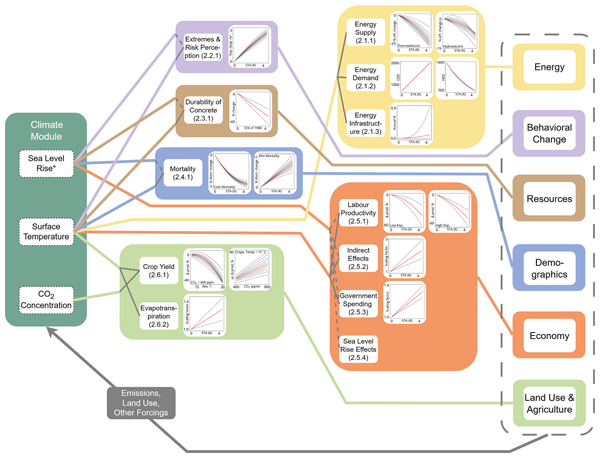
Computer models built to study future developments of human activity and climate change often exclude the impacts of climate change. Here, we include these effects in a new model. We create functions connecting changes in global temperature, carbon dioxide, and sea level to energy supply and demand, food systems, mortality, economic damages, and other important quantities. Including these effects will allow us to explore their impact on future changes in the human and climate realms.
Peter W. Thorne, John M. Nicklas, John J. Kennedy, Bruce Calvert, Baylor Fox-Kemper, Mark T. Richardson, Adrian Simmons, Ed Hawkins, Robert Rhode, Kathryn Cowtan, Nerilie J. Abram, Axel Andersson, Simon Noone, Phillipe Marbaix, Nathan Lenssen, Dirk Olonscheck, Tristram Walsh, Stephen Outten, Ingo Bethke, Bjorn H. Samset, Chris Smith, Anna Pirani, Jan Fuglestvedt, Lavanya Rajamani, Richard A. Betts, Elizabeth C. Kent, Blair Trewin, Colin Morice, Tim Osborn, Samantha N. Burgess, Oliver Geden, Andrew Parnell, Piers M. Forster, Chris Hewitt, Zeke Hausfather, Valerie Masson-Delmotte, Jochem Marotzke, Nathan Gillett, Sonia I. Seneviratne, Gavin A. Schmidt, Duo Chan, Stefan Brönnimann, Andy Reisinger, Matthew Menne, Maisa Rojas Corradi, Christopher Kadow, Peter Huybers, David B. Stephenson, Emily Wallis, Joeri Rogelj, Andrew Schurer, Karen McKinnon, Panmao Zhai, Fatima Driouech, Wilfran Moufouma Okia, Saeed Vazifehkhah, Sophie Szopa, Christopher J. Merchant, Shoji Hirahara, Masayoshi Ishii, Francois A. Engelbrecht, Qingxiang Li, June-Yi Lee, Alex J. Cannon, Christophe Cassou, Karina von Schuckmann, Amir H. Delju, and Ellie Murtagh
Earth Syst. Sci. Data Discuss., https://doi.org/10.5194/essd-2025-825, https://doi.org/10.5194/essd-2025-825, 2026
Preprint under review for ESSD
Short summary
Short summary
We reassess the basis for determining the present level of long-term global warming. Unbiased estimates of both realised warming and anthropogenic warming are possible that approximate a 20-year retrospective mean. Our resulting estimates of 1.40 [1.23–1.58] °C (realised) and 1.34 [1.18–1.50] °C (anthropogenic) as at end of 2024 highlight the urgency of immediate, far-reaching and sustained climate mitigation actions if we are to meet the long term temperature goal of the Paris Agreement.
Benjamin M. Sanderson, Susanne Baur, Carl-Freidrich Schleussner, Glen P. Peters, Shivika Mittal, Marit Sandstad, Steffen Kallbekken, Chris Smith, Sabine Fuss, Bas van Ruijven, Rosie A. Fisher, Joeri Rogelj, Roland Séférian, Bjørn Samset, Norman J. Steinert, Laurent Terray, and Jan Fuglestvedt
EGUsphere, https://doi.org/10.5194/egusphere-2026-28, https://doi.org/10.5194/egusphere-2026-28, 2026
Preprint archived
Short summary
Short summary
Solar Radiation Modification by adding aerosols to the stratosphere could rapidly and temporarily cool the Earth, but this speed creates unprecedented risks. Fast climate responses coupled with political instability create risks of failure to decarbonise, super-rapid climate change, and conflict. Idealized scenarios or conventional modeling tools could lead to systematic ignorance of these risks. We thus introduce a framework outlining what must be represented in future modeling and assessment.
Alejandro Romero-Prieto, Camilla Mathison, and Chris Smith
Geosci. Model Dev., 19, 115–165, https://doi.org/10.5194/gmd-19-115-2026, https://doi.org/10.5194/gmd-19-115-2026, 2026
Short summary
Short summary
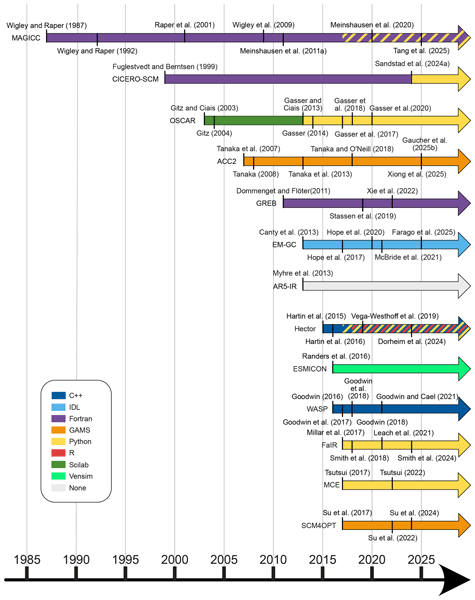
Simple Climate Models (SCMs) are widely used tools to explore how Earth's climate may change in the future. In recent decades, the number and types of SCMs have increased significantly, hindering efforts to understand cross-model differences. In this study, we provide an overview of the main principles guiding climate simulation by SCMs, as well as a description of most high-profile SCMs. This work offers a clear reference to support the informed use of these important tools.
Lennart Ramme, Benjamin Blanz, Christopher Wells, Tony E. Wong, William Schoenberg, Chris Smith, and Chao Li
Geosci. Model Dev., 18, 10017–10052, https://doi.org/10.5194/gmd-18-10017-2025, https://doi.org/10.5194/gmd-18-10017-2025, 2025
Short summary
Short summary
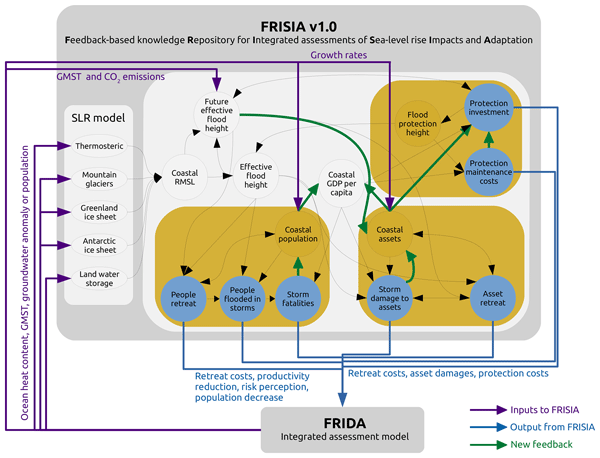
We present FRISIA version 1.0, a model for emulating sea level rise (SLR) and representing SLR impacts and adaptation in integrated assessment models (IAMs). FRISIA includes previously uncaptured coastal socio-economic feedback and a diverse set of impact strains, thereby improving the represenation of SLR impacts in IAMs. Here we describe the baseline behaviour of FRISIA, explore the effects of the additional feedback and showcase the coupling of FRISIA to an IAM.
William Schoenberg, Benjamin Blanz, Jefferson K. Rajah, Beniamino Callegari, Christopher Wells, Jannes Breier, Martin B. Grimeland, Andreas Nicolaidis Lindqvist, Lennart Ramme, Chris Smith, Chao Li, Sarah Mashhadi, Adakudlu Muralidhar, and Cecilie Mauritzen
Geosci. Model Dev., 18, 8047–8069, https://doi.org/10.5194/gmd-18-8047-2025, https://doi.org/10.5194/gmd-18-8047-2025, 2025
Short summary
Short summary
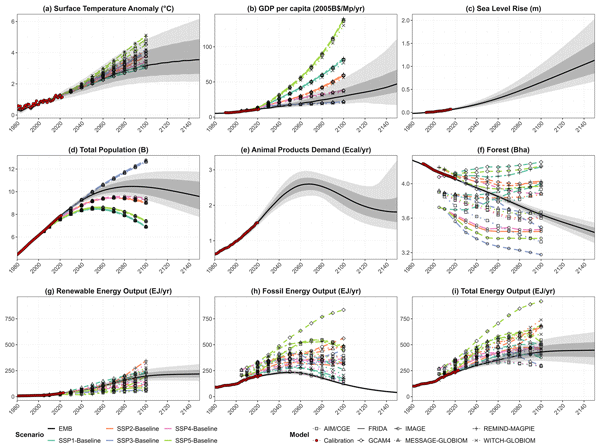
The current crop of models assessed by the Intergovernmental Panel on Climate Change to produce their assessment reports lack endogenous process-based representations of climate-driven changes to human activities, limiting understanding of the feedback between climate and humans. FRIDA (Feedback-based knowledge Repository for IntegrateD Assessments) v2.1 integrates these systems and generate results that suggest standard scenarios the shared socioeconomic pathways baseline scenarios may overestimate economic growth, highlighting the importance of feedbacks for realistic projections and informed policymaking.
Magali Verkerk, Thomas J. Aubry, Chris Smith, Peter O. Hopcroft, Michael Sigl, Jessica E. Tierney, Kevin Anchukaitis, Matthew Osman, Anja Schmidt, and Matthew Toohey
Clim. Past, 21, 1755–1778, https://doi.org/10.5194/cp-21-1755-2025, https://doi.org/10.5194/cp-21-1755-2025, 2025
Short summary
Short summary
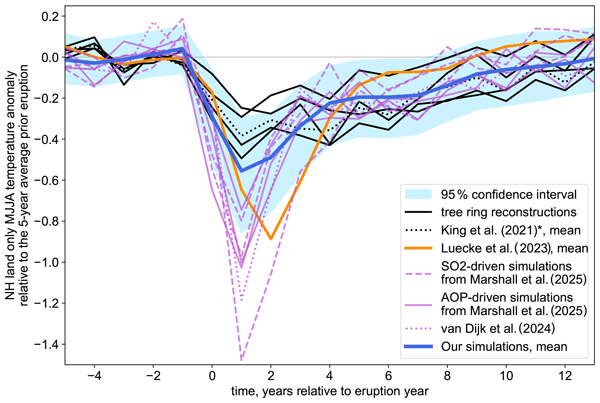
Large volcanic eruptions can trigger global cooling, affecting human societies. Using ice-core records and simple climate model to simulate volcanic effect over the last 8500 years, we show that volcanic eruptions cool the climate by 0.12 °C on average. By comparing model results with temperature recorded by tree rings over the last 1000 years, we demonstrate that our models can predict the large-scale cooling caused by volcanic eruptions and can be used in cases of large eruptions in the future.
Benjamin M. Sanderson, Victor Brovkin, Rosie A. Fisher, David Hohn, Tatiana Ilyina, Chris D. Jones, Torben Koenigk, Charles Koven, Hongmei Li, David M. Lawrence, Peter Lawrence, Spencer Liddicoat, Andrew H. MacDougall, Nadine Mengis, Zebedee Nicholls, Eleanor O'Rourke, Anastasia Romanou, Marit Sandstad, Jörg Schwinger, Roland Séférian, Lori T. Sentman, Isla R. Simpson, Chris Smith, Norman J. Steinert, Abigail L. S. Swann, Jerry Tjiputra, and Tilo Ziehn
Geosci. Model Dev., 18, 5699–5724, https://doi.org/10.5194/gmd-18-5699-2025, https://doi.org/10.5194/gmd-18-5699-2025, 2025
Short summary
Short summary
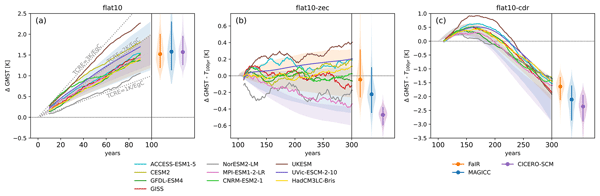
This study investigates how climate models warm in response to simplified carbon emissions trajectories, refining the understanding of climate reversibility and commitment. Metrics are defined for warming response to cumulative emissions and for the cessation of emissions or ramp-down to net-zero and net-negative levels. Results indicate that previous concentration-driven experiments may have overstated the Zero Emissions Commitment due to emissions rates exceeding historical levels.
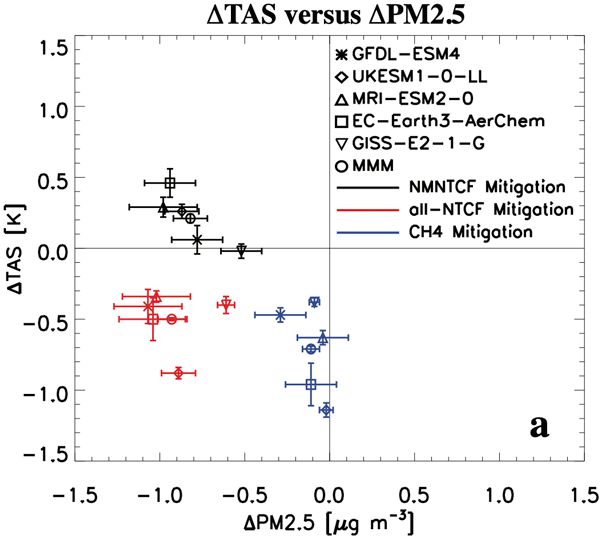
Paul T. Griffiths, Laura J. Wilcox, Robert J. Allen, Vaishali Naik, Fiona M. O'Connor, Michael Prather, Alex Archibald, Florence Brown, Makoto Deushi, William Collins, Stephanie Fiedler, Naga Oshima, Lee T. Murray, Bjørn H. Samset, Chris Smith, Steven Turnock, Duncan Watson-Parris, and Paul J. Young
Atmos. Chem. Phys., 25, 8289–8328, https://doi.org/10.5194/acp-25-8289-2025, https://doi.org/10.5194/acp-25-8289-2025, 2025
Short summary
Short summary
The Aerosol Chemistry Model Intercomparison Project (AerChemMIP) aimed to quantify the climate and air quality impacts of aerosols and chemically reactive gases. We review its contribution to AR6 (Sixth Assessment Report of the Intergovernmental Panel on Climate Change) and the wider understanding of the role of these species in climate and climate change. We identify challenges and provide recommendations to improve the utility and uptake of climate model data, detailed summary tables of CMIP6 models, experiments, and emergent diagnostics.
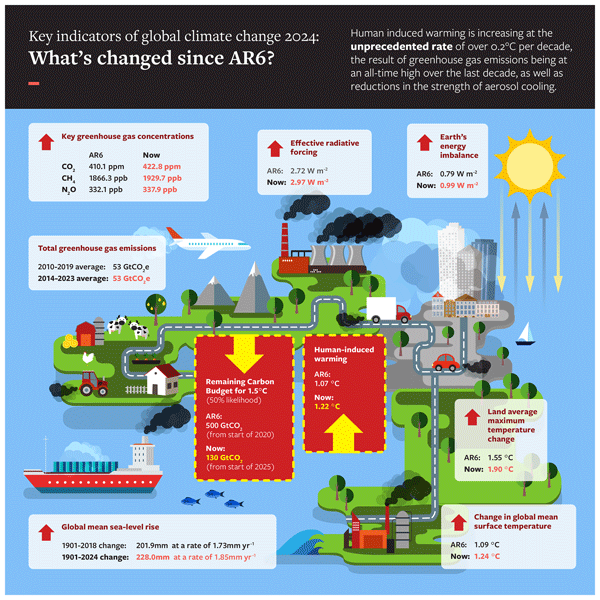
Piers M. Forster, Chris Smith, Tristram Walsh, William F. Lamb, Robin Lamboll, Christophe Cassou, Mathias Hauser, Zeke Hausfather, June-Yi Lee, Matthew D. Palmer, Karina von Schuckmann, Aimée B. A. Slangen, Sophie Szopa, Blair Trewin, Jeongeun Yun, Nathan P. Gillett, Stuart Jenkins, H. Damon Matthews, Krishnan Raghavan, Aurélien Ribes, Joeri Rogelj, Debbie Rosen, Xuebin Zhang, Myles Allen, Lara Aleluia Reis, Robbie M. Andrew, Richard A. Betts, Alex Borger, Jiddu A. Broersma, Samantha N. Burgess, Lijing Cheng, Pierre Friedlingstein, Catia M. Domingues, Marco Gambarini, Thomas Gasser, Johannes Gütschow, Masayoshi Ishii, Christopher Kadow, John Kennedy, Rachel E. Killick, Paul B. Krummel, Aurélien Liné, Didier P. Monselesan, Colin Morice, Jens Mühle, Vaishali Naik, Glen P. Peters, Anna Pirani, Julia Pongratz, Jan C. Minx, Matthew Rigby, Robert Rohde, Abhishek Savita, Sonia I. Seneviratne, Peter Thorne, Christopher Wells, Luke M. Western, Guido R. van der Werf, Susan E. Wijffels, Valérie Masson-Delmotte, and Panmao Zhai
Earth Syst. Sci. Data, 17, 2641–2680, https://doi.org/10.5194/essd-17-2641-2025, https://doi.org/10.5194/essd-17-2641-2025, 2025
Short summary
Short summary
In a rapidly changing climate, evidence-based decision-making benefits from up-to-date and timely information. Here we compile monitoring datasets to track real-world changes over time. To make our work relevant to policymakers, we follow methods from the Intergovernmental Panel on Climate Change (IPCC). Human activities are increasing the Earth's energy imbalance and driving faster sea-level rise compared to the IPCC assessment.
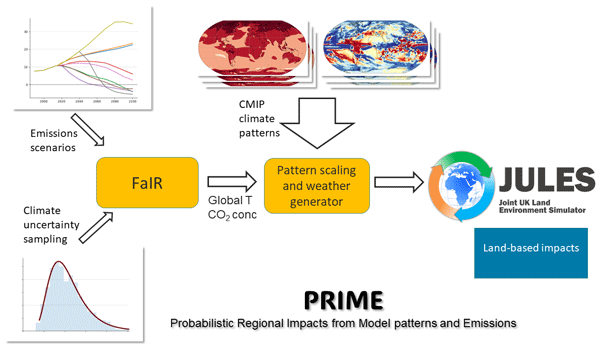
Camilla Mathison, Eleanor J. Burke, Gregory Munday, Chris D. Jones, Chris J. Smith, Norman J. Steinert, Andy J. Wiltshire, Chris Huntingford, Eszter Kovacs, Laila K. Gohar, Rebecca M. Varney, and Douglas McNeall
Geosci. Model Dev., 18, 1785–1808, https://doi.org/10.5194/gmd-18-1785-2025, https://doi.org/10.5194/gmd-18-1785-2025, 2025
Short summary
Short summary
We present PRIME (Probabilistic Regional Impacts from Model patterns and Emissions), which is designed to take new emissions scenarios and rapidly provide regional impact information. PRIME allows large ensembles to be run on multi-centennial timescales, including the analysis of many important variables for impact assessments. Our evaluation shows that PRIME reproduces the climate response for known scenarios, providing confidence in using PRIME for novel scenarios.
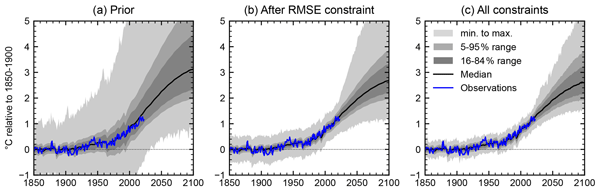
Chris Smith, Donald P. Cummins, Hege-Beate Fredriksen, Zebedee Nicholls, Malte Meinshausen, Myles Allen, Stuart Jenkins, Nicholas Leach, Camilla Mathison, and Antti-Ilari Partanen
Geosci. Model Dev., 17, 8569–8592, https://doi.org/10.5194/gmd-17-8569-2024, https://doi.org/10.5194/gmd-17-8569-2024, 2024
Short summary
Short summary
Climate projections are only useful if the underlying models that produce them are well calibrated and can reproduce observed climate change. We formalise a software package that calibrates the open-source FaIR simple climate model to full-complexity Earth system models. Observations, including historical warming, and assessments of key climate variables such as that of climate sensitivity are used to constrain the model output.
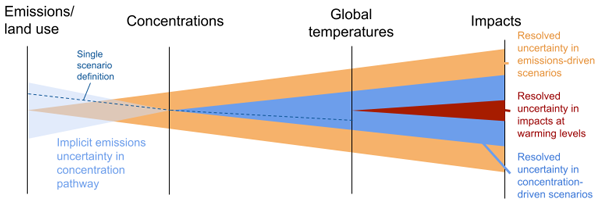
Benjamin M. Sanderson, Ben B. B. Booth, John Dunne, Veronika Eyring, Rosie A. Fisher, Pierre Friedlingstein, Matthew J. Gidden, Tomohiro Hajima, Chris D. Jones, Colin G. Jones, Andrew King, Charles D. Koven, David M. Lawrence, Jason Lowe, Nadine Mengis, Glen P. Peters, Joeri Rogelj, Chris Smith, Abigail C. Snyder, Isla R. Simpson, Abigail L. S. Swann, Claudia Tebaldi, Tatiana Ilyina, Carl-Friedrich Schleussner, Roland Séférian, Bjørn H. Samset, Detlef van Vuuren, and Sönke Zaehle
Geosci. Model Dev., 17, 8141–8172, https://doi.org/10.5194/gmd-17-8141-2024, https://doi.org/10.5194/gmd-17-8141-2024, 2024
Short summary
Short summary
We discuss how, in order to provide more relevant guidance for climate policy, coordinated climate experiments should adopt a greater focus on simulations where Earth system models are provided with carbon emissions from fossil fuels together with land use change instructions, rather than past approaches that have largely focused on experiments with prescribed atmospheric carbon dioxide concentrations. We discuss how these goals might be achieved in coordinated climate modeling experiments.
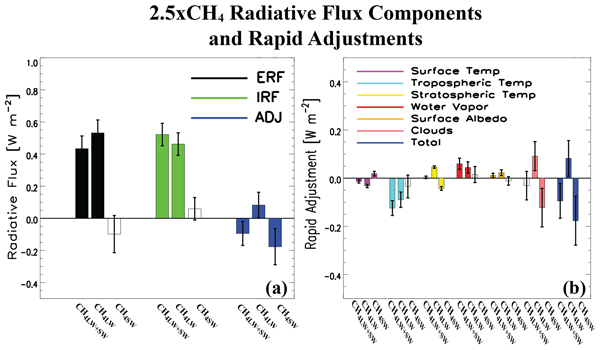
Robert J. Allen, Xueying Zhao, Cynthia A. Randles, Ryan J. Kramer, Bjørn H. Samset, and Christopher J. Smith
Atmos. Chem. Phys., 24, 11207–11226, https://doi.org/10.5194/acp-24-11207-2024, https://doi.org/10.5194/acp-24-11207-2024, 2024
Short summary
Short summary
Present-day methane shortwave absorption mutes 28% (7–55%) of the surface warming associated with its longwave absorption. The precipitation increase associated with the longwave radiative effects of the present-day methane perturbation is also muted by shortwave absorption but not significantly so. Methane shortwave absorption also impacts the magnitude of its climate feedback parameter, largely through the cloud feedback.
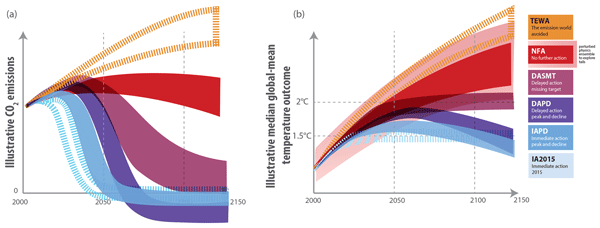
Malte Meinshausen, Carl-Friedrich Schleussner, Kathleen Beyer, Greg Bodeker, Olivier Boucher, Josep G. Canadell, John S. Daniel, Aïda Diongue-Niang, Fatima Driouech, Erich Fischer, Piers Forster, Michael Grose, Gerrit Hansen, Zeke Hausfather, Tatiana Ilyina, Jarmo S. Kikstra, Joyce Kimutai, Andrew D. King, June-Yi Lee, Chris Lennard, Tabea Lissner, Alexander Nauels, Glen P. Peters, Anna Pirani, Gian-Kasper Plattner, Hans Pörtner, Joeri Rogelj, Maisa Rojas, Joyashree Roy, Bjørn H. Samset, Benjamin M. Sanderson, Roland Séférian, Sonia Seneviratne, Christopher J. Smith, Sophie Szopa, Adelle Thomas, Diana Urge-Vorsatz, Guus J. M. Velders, Tokuta Yokohata, Tilo Ziehn, and Zebedee Nicholls
Geosci. Model Dev., 17, 4533–4559, https://doi.org/10.5194/gmd-17-4533-2024, https://doi.org/10.5194/gmd-17-4533-2024, 2024
Short summary
Short summary
The scientific community is considering new scenarios to succeed RCPs and SSPs for the next generation of Earth system model runs to project future climate change. To contribute to that effort, we reflect on relevant policy and scientific research questions and suggest categories for representative emission pathways. These categories are tailored to the Paris Agreement long-term temperature goal, high-risk outcomes in the absence of further climate policy and worlds “that could have been”.
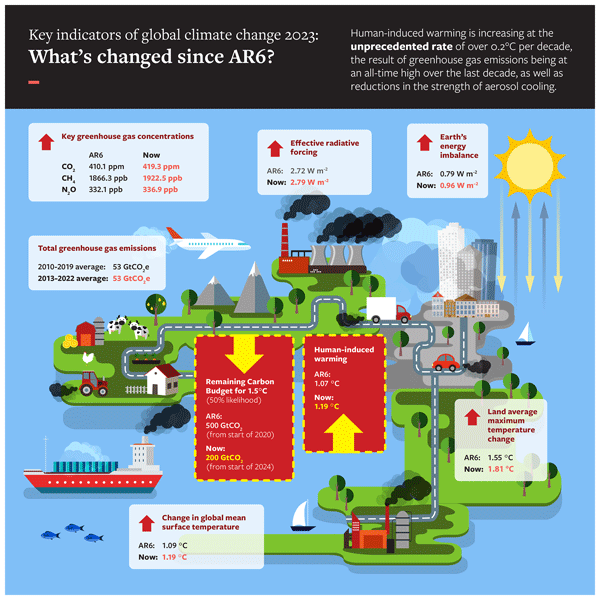
Piers M. Forster, Chris Smith, Tristram Walsh, William F. Lamb, Robin Lamboll, Bradley Hall, Mathias Hauser, Aurélien Ribes, Debbie Rosen, Nathan P. Gillett, Matthew D. Palmer, Joeri Rogelj, Karina von Schuckmann, Blair Trewin, Myles Allen, Robbie Andrew, Richard A. Betts, Alex Borger, Tim Boyer, Jiddu A. Broersma, Carlo Buontempo, Samantha Burgess, Chiara Cagnazzo, Lijing Cheng, Pierre Friedlingstein, Andrew Gettelman, Johannes Gütschow, Masayoshi Ishii, Stuart Jenkins, Xin Lan, Colin Morice, Jens Mühle, Christopher Kadow, John Kennedy, Rachel E. Killick, Paul B. Krummel, Jan C. Minx, Gunnar Myhre, Vaishali Naik, Glen P. Peters, Anna Pirani, Julia Pongratz, Carl-Friedrich Schleussner, Sonia I. Seneviratne, Sophie Szopa, Peter Thorne, Mahesh V. M. Kovilakam, Elisa Majamäki, Jukka-Pekka Jalkanen, Margreet van Marle, Rachel M. Hoesly, Robert Rohde, Dominik Schumacher, Guido van der Werf, Russell Vose, Kirsten Zickfeld, Xuebin Zhang, Valérie Masson-Delmotte, and Panmao Zhai
Earth Syst. Sci. Data, 16, 2625–2658, https://doi.org/10.5194/essd-16-2625-2024, https://doi.org/10.5194/essd-16-2625-2024, 2024
Short summary
Short summary
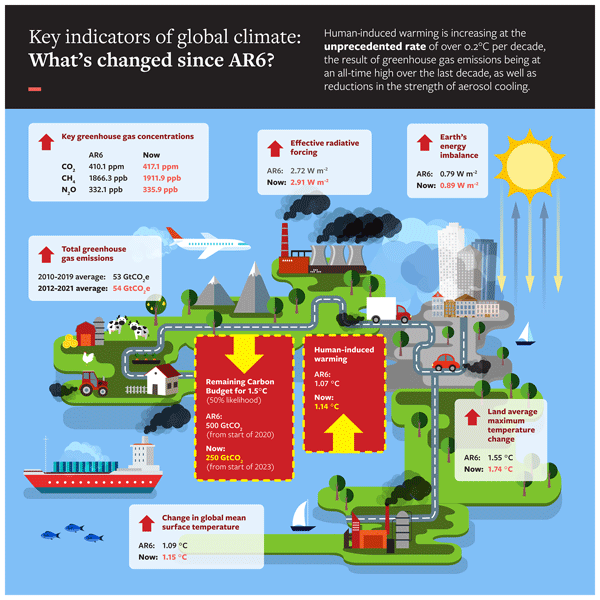
This paper tracks some key indicators of global warming through time, from 1850 through to the end of 2023. It is designed to give an authoritative estimate of global warming to date and its causes. We find that in 2023, global warming reached 1.3 °C and is increasing at over 0.2 °C per decade. This is caused by all-time-high greenhouse gas emissions.
Stephanie Fiedler, Vaishali Naik, Fiona M. O'Connor, Christopher J. Smith, Paul Griffiths, Ryan J. Kramer, Toshihiko Takemura, Robert J. Allen, Ulas Im, Matthew Kasoar, Angshuman Modak, Steven Turnock, Apostolos Voulgarakis, Duncan Watson-Parris, Daniel M. Westervelt, Laura J. Wilcox, Alcide Zhao, William J. Collins, Michael Schulz, Gunnar Myhre, and Piers M. Forster
Geosci. Model Dev., 17, 2387–2417, https://doi.org/10.5194/gmd-17-2387-2024, https://doi.org/10.5194/gmd-17-2387-2024, 2024
Short summary
Short summary
Climate scientists want to better understand modern climate change. Thus, climate model experiments are performed and compared. The results of climate model experiments differ, as assessed in the latest Intergovernmental Panel on Climate Change (IPCC) assessment report. This article gives insights into the challenges and outlines opportunities for further improving the understanding of climate change. It is based on views of a group of experts in atmospheric composition–climate interactions.
Robert E. Kopp, Gregory G. Garner, Tim H. J. Hermans, Shantenu Jha, Praveen Kumar, Alexander Reedy, Aimée B. A. Slangen, Matteo Turilli, Tamsin L. Edwards, Jonathan M. Gregory, George Koubbe, Anders Levermann, Andre Merzky, Sophie Nowicki, Matthew D. Palmer, and Chris Smith
Geosci. Model Dev., 16, 7461–7489, https://doi.org/10.5194/gmd-16-7461-2023, https://doi.org/10.5194/gmd-16-7461-2023, 2023
Short summary
Short summary
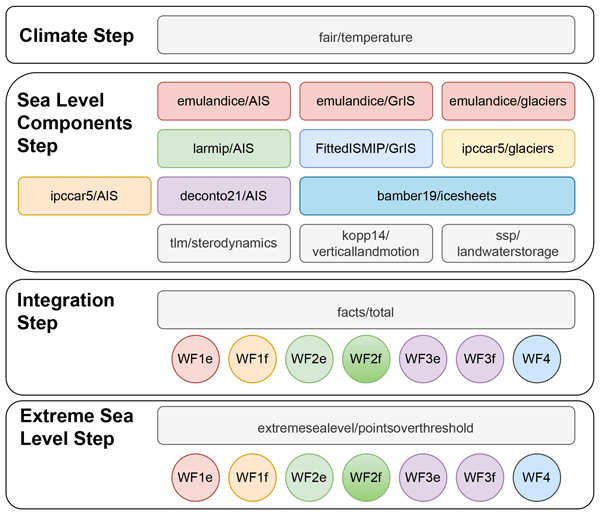
Future sea-level rise projections exhibit multiple forms of uncertainty, all of which must be considered by scientific assessments intended to inform decision-making. The Framework for Assessing Changes To Sea-level (FACTS) is a new software package intended to support assessments of global mean, regional, and extreme sea-level rise. An early version of FACTS supported the development of the IPCC Sixth Assessment Report sea-level projections.
Olivia Linke, Johannes Quaas, Finja Baumer, Sebastian Becker, Jan Chylik, Sandro Dahlke, André Ehrlich, Dörthe Handorf, Christoph Jacobi, Heike Kalesse-Los, Luca Lelli, Sina Mehrdad, Roel A. J. Neggers, Johannes Riebold, Pablo Saavedra Garfias, Niklas Schnierstein, Matthew D. Shupe, Chris Smith, Gunnar Spreen, Baptiste Verneuil, Kameswara S. Vinjamuri, Marco Vountas, and Manfred Wendisch
Atmos. Chem. Phys., 23, 9963–9992, https://doi.org/10.5194/acp-23-9963-2023, https://doi.org/10.5194/acp-23-9963-2023, 2023
Short summary
Short summary
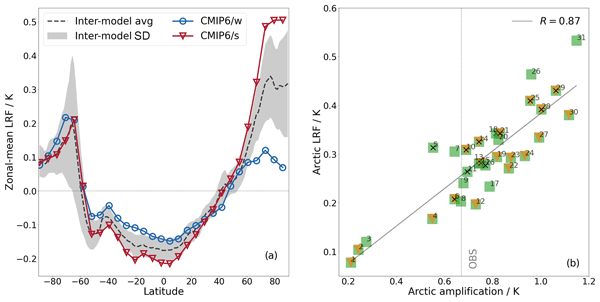
Lapse rate feedback (LRF) is a major driver of the Arctic amplification (AA) of climate change. It arises because the warming is stronger at the surface than aloft. Several processes can affect the LRF in the Arctic, such as the omnipresent temperature inversion. Here, we compare multimodel climate simulations to Arctic-based observations from a large research consortium to broaden our understanding of these processes, find synergy among them, and constrain the Arctic LRF and AA.
Mark D. Zelinka, Christopher J. Smith, Yi Qin, and Karl E. Taylor
Atmos. Chem. Phys., 23, 8879–8898, https://doi.org/10.5194/acp-23-8879-2023, https://doi.org/10.5194/acp-23-8879-2023, 2023
Short summary
Short summary
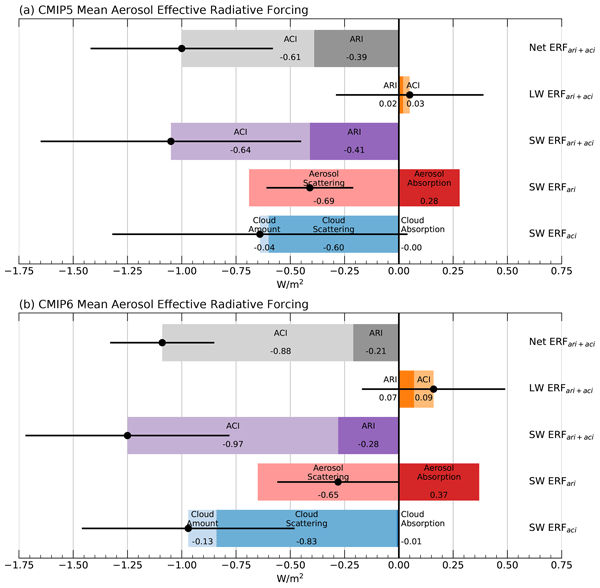
The primary uncertainty in how strongly Earth's climate has been perturbed by human activities comes from the unknown radiative impact of aerosol changes. Accurately quantifying these forcings – and their sub-components – in climate models is crucial for understanding the past and future simulated climate. In this study we describe biases in previously published estimates of aerosol radiative forcing in climate models and provide corrected estimates along with code for users to compute them.
Piers M. Forster, Christopher J. Smith, Tristram Walsh, William F. Lamb, Robin Lamboll, Mathias Hauser, Aurélien Ribes, Debbie Rosen, Nathan Gillett, Matthew D. Palmer, Joeri Rogelj, Karina von Schuckmann, Sonia I. Seneviratne, Blair Trewin, Xuebin Zhang, Myles Allen, Robbie Andrew, Arlene Birt, Alex Borger, Tim Boyer, Jiddu A. Broersma, Lijing Cheng, Frank Dentener, Pierre Friedlingstein, José M. Gutiérrez, Johannes Gütschow, Bradley Hall, Masayoshi Ishii, Stuart Jenkins, Xin Lan, June-Yi Lee, Colin Morice, Christopher Kadow, John Kennedy, Rachel Killick, Jan C. Minx, Vaishali Naik, Glen P. Peters, Anna Pirani, Julia Pongratz, Carl-Friedrich Schleussner, Sophie Szopa, Peter Thorne, Robert Rohde, Maisa Rojas Corradi, Dominik Schumacher, Russell Vose, Kirsten Zickfeld, Valérie Masson-Delmotte, and Panmao Zhai
Earth Syst. Sci. Data, 15, 2295–2327, https://doi.org/10.5194/essd-15-2295-2023, https://doi.org/10.5194/essd-15-2295-2023, 2023
Short summary
Short summary
This is a critical decade for climate action, but there is no annual tracking of the level of human-induced warming. We build on the Intergovernmental Panel on Climate Change assessment reports that are authoritative but published infrequently to create a set of key global climate indicators that can be tracked through time. Our hope is that this becomes an important annual publication that policymakers, media, scientists and the public can refer to.
Jarmo S. Kikstra, Zebedee R. J. Nicholls, Christopher J. Smith, Jared Lewis, Robin D. Lamboll, Edward Byers, Marit Sandstad, Malte Meinshausen, Matthew J. Gidden, Joeri Rogelj, Elmar Kriegler, Glen P. Peters, Jan S. Fuglestvedt, Ragnhild B. Skeie, Bjørn H. Samset, Laura Wienpahl, Detlef P. van Vuuren, Kaj-Ivar van der Wijst, Alaa Al Khourdajie, Piers M. Forster, Andy Reisinger, Roberto Schaeffer, and Keywan Riahi
Geosci. Model Dev., 15, 9075–9109, https://doi.org/10.5194/gmd-15-9075-2022, https://doi.org/10.5194/gmd-15-9075-2022, 2022
Short summary
Short summary
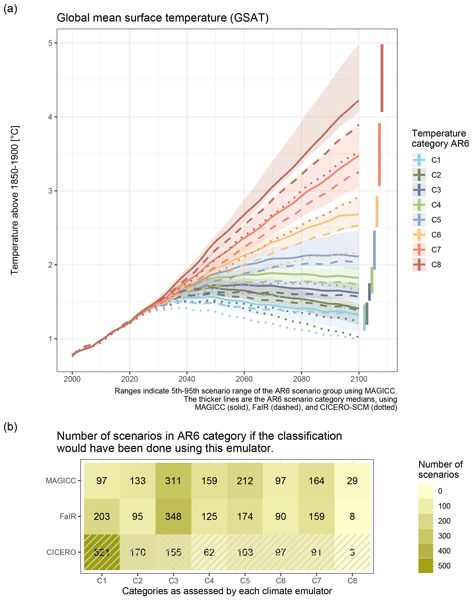
Assessing hundreds or thousands of emission scenarios in terms of their global mean temperature implications requires standardised procedures of infilling, harmonisation, and probabilistic temperature assessments. We here present the open-source
climate-assessmentworkflow that was used in the IPCC AR6 Working Group III report. The paper provides key insight for anyone wishing to understand the assessment of climate outcomes of mitigation pathways in the context of the Paris Agreement.
Johannes Quaas, Hailing Jia, Chris Smith, Anna Lea Albright, Wenche Aas, Nicolas Bellouin, Olivier Boucher, Marie Doutriaux-Boucher, Piers M. Forster, Daniel Grosvenor, Stuart Jenkins, Zbigniew Klimont, Norman G. Loeb, Xiaoyan Ma, Vaishali Naik, Fabien Paulot, Philip Stier, Martin Wild, Gunnar Myhre, and Michael Schulz
Atmos. Chem. Phys., 22, 12221–12239, https://doi.org/10.5194/acp-22-12221-2022, https://doi.org/10.5194/acp-22-12221-2022, 2022
Short summary
Short summary
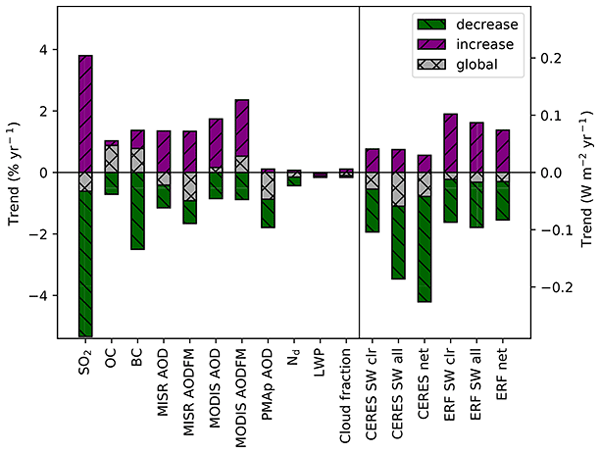
Pollution particles cool climate and offset part of the global warming. However, they are washed out by rain and thus their effect responds quickly to changes in emissions. We show multiple datasets to demonstrate that aerosol emissions and their concentrations declined in many regions influenced by human emissions, as did the effects on clouds. Consequently, the cooling impact on the Earth energy budget became smaller. This change in trend implies a relative warming.
Norman Julius Steinert, Kirsten Zickfeld, Benjamin Mark Sanderson, Charles D. Koven, Nadine Mengis, Pia Rethmeier, and Jörg Schwinger
EGUsphere, https://doi.org/10.5194/egusphere-2026-5338, https://doi.org/10.5194/egusphere-2026-5338, 2026
This preprint is open for discussion and under review for Earth System Dynamics (ESD).
Short summary
Short summary
As 1.5°C pathways increasingly rely on temperature overshoot, this Perspective examines whether climate overshoot-induced effects can be reversed. We synthesize what drives climate reversibility in positive and negative emission pathways, proposing a typology of temperature responses beyond simple (ir)reversible categories. Current climate models suggest irreversible responses cannot be ruled out, underscoring the need for more nuanced assessment of overshoot-based mitigation risks.
Jens Terhaar, Laurent Bopp, Pierre Friedlingstein, Thomas Frölicher, Helene Hollitzer, Tatiana Ilyina, Lester Kwiatkowski, Paul Lerner, Hongmei Li, Anastasia Romanou, Jörg Schwinger, Roland Séférian, and Aaron Wienkers
EGUsphere, https://doi.org/10.5194/egusphere-2026-5757, https://doi.org/10.5194/egusphere-2026-5757, 2026
This preprint is open for discussion and under review for Biogeosciences (BG).
Short summary
Short summary
The ocean absorbs about 30% of CO2 emissions, but how much it will keep absorbing as CO2 levels rise and the climate warms is highly uncertain. Combining climate models with observations, we show models underestimate both the ocean CO2 uptake with increasing atmospheric CO2 and how strongly this uptake weakens with warming, and that the two are linked. Our tighter estimate reduces uncertainty in how much emitted CO2 stays in the atmosphere, and in the warming caused by future emissions.
Jörg Schwinger, Leon Merfort, Nico Bauer, Raffaele Bernardello, Momme Butenschön, Timothée Bourgeois, Matthew J. Gidden, Shraddha Gupta, Hanna Lee, Nadine Mengis, Yiannis Moustakis, Helene Muri, Lars Nieradzik, Daniele Peano, Julia Pongratz, Pascal Sauer, Etienne Tourigny, and David Wårlind
Earth Syst. Dynam., 17, 1341–1363, https://doi.org/10.5194/esd-17-1341-2026, https://doi.org/10.5194/esd-17-1341-2026, 2026
Short summary
Short summary
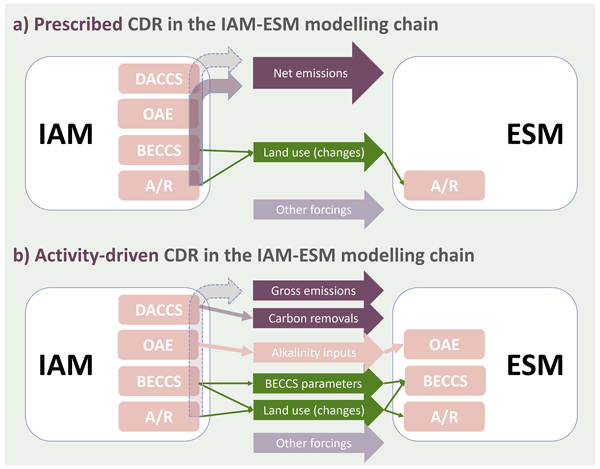
Earth system models can simulate CO2 removal by representing the activity that draws down atmospheric CO2, e.g. growing bioenergy crops for energy production with carbon capture and storage or enhancing the oceans’ alkalinity. We describe a simulation framework, spanning the modeling chain from integrated assessment to Earth system models, that allows separating the intrinsic efficiency of CO2 removal and the overall atmospheric CO2 reduction, the latter being affected by Earth system feedbacks.
Jerry F. Tjiputra, Dirk Olivié, Jörg Schwinger, Nadine Goris, Norman J. Steinert, Rosie Fisher, and Huiji Lee
EGUsphere, https://doi.org/10.5194/egusphere-2026-5188, https://doi.org/10.5194/egusphere-2026-5188, 2026
This preprint is open for discussion and under review for Earth System Dynamics (ESD).
Short summary
Short summary
Without radical changes in anthropogenic CO2 emissions, global warming will likely exceed 2 degrees. This study uses an Earth system model to investigate the physical and biogeochemical responses to stratospheric aerosol injection (SAI) to limit global warming. Depending on the deployment location, SAI influences the evolution of the Atlantic Meridional Overturning Circulation, which induces long-term spatially heterogeneous projected temperature and other climatic changes.
Alexander Nauels, Tessa Möller, Victor Couplet, Robert E. Kopp, Praveen Kumar, Matthias Mengel, Gregory Munday, Zebedee R. J. Nicholls, Lennart Ramme, Aimée B. A. Slangen, Chris Smith, Jennifer H. Weeks, and Tony E. Wong
EGUsphere, https://doi.org/10.5194/egusphere-2026-3874, https://doi.org/10.5194/egusphere-2026-3874, 2026
This preprint is open for discussion and under review for Geoscientific Model Development (GMD).
Short summary
Short summary
Sea levels will keep rising for centuries, so coastal planning needs long-term outlooks. For the first time, we brought together seven simplified models, called emulators, and combined their estimates of future sea level rise to year 2300, including a scenario with strong temperature overshoot before returning to 1.5 °C of warming. The emulators differ most over how much ice Antarctica will lose. Even if global temperatures fall again, extra sea level rise stays locked in for centuries.
Alejandro Romero-Prieto, Marit Sandstad, Benjamin M. Sanderson, Zebedee R. J. Nicholls, Norman J. Steinert, Thomas Gasser, Camilla Mathison, Jarmo Kikstra, Thomas J. Aubry, Katsumasa Tanaka, Konstantin Weber, and Chris Smith
Geosci. Model Dev., 19, 7111–7133, https://doi.org/10.5194/gmd-19-7111-2026, https://doi.org/10.5194/gmd-19-7111-2026, 2026
Short summary
Short summary
Reduced-complexity models are an important tool in climate science, helping us understand and estimate future climate change. We present the experimental protocol for the next phase of the reduced-complexity model intercomparison project, which aims to compare results from many such models to better understand their behaviour. This knowledge will guide how these models are developed and used in the future, including in the upcoming Intergovernmental Panel on Climate Change (IPCC) assessment report (AR7).
Amen Al-Yaari, Chris Smith, Yi Yao, Kjetil S. Aas, L. Ruby Leung, Min-Hui Lo, Sonali McDermid, Larissa Nazarenko, Yadu Pokhrel, Yusuke Satoh, Tokuta Yokohata, and Wim Thiery
EGUsphere, https://doi.org/10.5194/egusphere-2026-4199, https://doi.org/10.5194/egusphere-2026-4199, 2026
Short summary
Short summary
In this study, we use the Irrigation Model Intercomparison Project (IRRMIP) to provide the first multi-model quantification of irrigation-induced effective radiative forcing (ERF) across seven Earth system models over 1902–2014. We find that the global multi-model mean ERF is positive but small (~0.023 W m⁻²). This small global signal masks regional heterogeneity: South Asia and West Central Asia show higher positive ERF (~0.25 W m⁻²), while East Asia shows a negative signal (−0.03 W m⁻²).
Cristina Deidda, Arpita Asha Khanna, Wolfgang Schade, Chris Smith, and Wim Thiery
Nat. Hazards Earth Syst. Sci., 26, 3345–3394, https://doi.org/10.5194/nhess-26-3345-2026, https://doi.org/10.5194/nhess-26-3345-2026, 2026
Short summary
Short summary
Climate extremes like floods, heatwaves, droughts, and wildfires are disrupting Europe’s transport. This study combines a review of past events and future projections to assess current losses and the future exposure of transport infrastructure. Exposure to extremes is projected to rise, but lower emissions can reduce it. Urgent action is needed to reduce emissions and adapt the Trans-European Transport Network to a changing climate.
Adakudlu Muralidhar, Cecilie Mauritzen, Christopher D. Wells, Benjamin Blanz, William Schoenberg, Beniamino Callegari, Jannes Breier, Jefferson K. Rajah, Lennart Ramme, Andreas Nicolaidis Lindqvist, Alexandre C. Köberle, Axel E. Eriksson, and Chris Smith
EGUsphere, https://doi.org/10.5194/egusphere-2026-3072, https://doi.org/10.5194/egusphere-2026-3072, 2026
This preprint is open for discussion and under review for Earth System Dynamics (ESD).
Short summary
Short summary
Using the integrated assessment model FRIDA v2.1, we examine how climate impacts spread through interconnected human and Earth systems, including the economy, energy, food, water, finance, and behaviour. We find that interacting climate impacts can reduce economic growth strongly than models assuming isolated effects. Financial feedbacks are especially important, and nonlinear climate–society interactions can amplify risks across sectors even without explicit climate tipping points.
Suki C. K. Wong, Galen A. McKinley, Richard Seager, Tess Wei-Ping Jacobson, Amanda Fay, Özgür Gürses, Nicolas Gruber, Tatiana Ilyina, Tereza Jarnikova, Laure Resplandy, Jörg Schwinger, and Roland Séférian
EGUsphere, https://doi.org/10.5194/egusphere-2026-3104, https://doi.org/10.5194/egusphere-2026-3104, 2026
Short summary
Short summary
The ocean absorbs nearly a third of human-made carbon dioxide, slowing climate change. This uptake varies from decade to decade for reasons we do not fully understand. Using a 66-year ocean carbon dataset, we found that the tropical Pacific and Southern Ocean drive this variability, in step with broader climate patterns across the Pacific. But these patterns cannot fully explain the recent weakening of the Southern Ocean sink, suggesting biological processes may also play an important role.
Piers M. Forster, Tristram Walsh, Chris Smith, William F. Lamb, Robin Lamboll, Christophe Cassou, Mathias Hauser, Zeke Hausfather, June-Yi Lee, Matthew D. Palmer, Karina von Schuckmann, Aimée B. A. Slangen, Sophie Szopa, Blair Trewin, Jeongeun Yun, Nathan P. Gillett, Stuart Jenkins, H. Damon Matthews, Krishnan Raghavan, Aurélien Ribes, Joeri Rogelj, Debbie Rosen, Xuebin Zhang, Myles Allen, Robbie M. Andrew, Chris Atkinson, Richard A. Betts, Antonio Bombelli, Samantha N. Burgess, Lijing Cheng, Helen E. Claxton, Pierre Friedlingstein, Thomas L. Frölicher, Catia M. Domingues, Thomas Gasser, Catherine H. Gregory, Rachel M. Hoesly, Daniel Huppmann, Masayoshi Ishii, Christopher Kadow, Alexia Karwat, John Kennedy, Rachel E. Killick, Mahesh V. M. Kovilakam, Paul B. Krummel, Xin Lan, Jean-François Lamarque, Aurélien Liné, Belén Martín-Míguez, Didier P. Monselesan, Colin Morice, Jens Mühle, Pino Mussak, Glen P. Peters, Anna Pirani, Julia Pongratz, Matthew Rigby, Robert Rohde, Abhishek Savita, Sonia I. Seneviratne, Steven J. Smith, Ghassan Taha, Caterina Tassone, Peter Thorne, Christopher Wells, Luke M. Western, Guido R. van der Werf, Susan E. Wijffels, Marco Zecchetto, Junting Zhong, Xiao-Ye Zhang, Valérie Masson-Delmotte, and Panmao Zhai
Earth Syst. Sci. Data, 18, 3889–3933, https://doi.org/10.5194/essd-18-3889-2026, https://doi.org/10.5194/essd-18-3889-2026, 2026
Short summary
Short summary
We give our annual update of key climate indicators. Our work quantifies the human contribution to global warming and the pace of climate change. This represents a large effort by the international community akin to an Intergovernmental Panel on Climate Change (IPCC) report.
Michael Gregory Windisch, Yann Quilcaille, Camilla Mathison, Claudia Tebaldi, Eleanor Burke, Laila Gohar, Chris Smith, Sarah Schöngart, Abigail Snyder, Siddarth Durga, Kalyn Dorheim, and Sonia Seneviratne
EGUsphere, https://doi.org/10.5194/egusphere-2026-2253, https://doi.org/10.5194/egusphere-2026-2253, 2026
Short summary
Short summary
Creating consistent climate scenarios remains challenging. The computational cost of comprehensive climate models leaves most scenarios without spatial climate outcomes, limiting feedback between climate consequences and scenario assumptions. We apply three spatial emulators to test their potential and current limitations in rapidly translating scenarios into spatial outcomes to identify regional risks, fill gaps in scenario coverage, and feed climate consequences back into scenario assumptions.
Ryan J. Kramer, Chris Smith, and Timothy Andrews
Geosci. Model Dev., 19, 4447–4466, https://doi.org/10.5194/gmd-19-4447-2026, https://doi.org/10.5194/gmd-19-4447-2026, 2026
Short summary
Short summary
Natural or anthropogenic activities can cause a perturbation in Earth's radiative energy budget known as a radiative forcing, which induces a climate response. Diagnosing radiative forcing and its uncertainty is foundational to understanding past and future climate change. Here we outline the protocol for the second iteration of the Radiative Forcing Model Intercomparison Project (RFMIP2.0), which provides a standardized method for diagnosing radiative forcing across Global Climate Models.
Cecilie Mauritzen
Geosci. Model Dev., 19, 4439–4446, https://doi.org/10.5194/gmd-19-4439-2026, https://doi.org/10.5194/gmd-19-4439-2026, 2026
Short summary
Short summary
This brief paper provides the context for a collection in GMD called
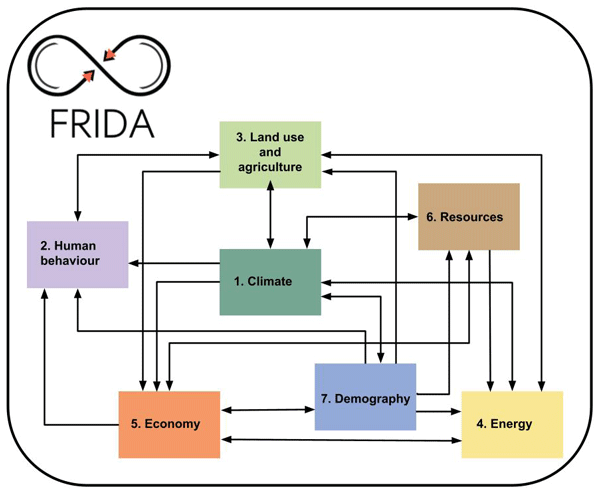
The FRIDA model. FRIDA integrates climate forcing, human behavior, land use, energy, resources, demography, and the economy on equal footing. It is computationally light, transparent in design, and accessible to both expert and non-expert users. The model captures cascading socioeconomic risks and systemic feedbacks, which have been identified by the IPCC (Intergovernmental Panel on Climate Change) as among the most urgent and uncertain climate research issues.
Benjamin M. Sanderson, Marit Sandstad, Alejandro Romero-Prieto, Stuart Jenkins, Charles Koven, Glen Peters, Roland Séfèrian, Andrew H. MacDougall, Ashwin Seshadri, Victor Brovkin, John Dunne, Abigail L. S. Swann, Torben Koenigk, Rosie A. Fisher, David Hohn, Tatiana Ilyina, Chris D. Jones, Hongmei Li, Peter Lawrence, Spencer Liddicoat, Nadine Mengis, Anastasia Romanou, Lori T. Sentman, Chris Smith, Norman J. Steinert, Jerry Tjiputra, and Tilo Ziehn
EGUsphere, https://doi.org/10.5194/egusphere-2026-1875, https://doi.org/10.5194/egusphere-2026-1875, 2026
Short summary
Short summary
When humanity stops emitting carbon dioxide, will temperatures keep rising, stabilize, or fall? Our study reveals in most models, temperatures remain nearly stable, but this hides a balance between the warming in response to radiation imbalance, and the cooling due to uptake of carbon in the land and ocean. Understanding this balance helps refine how much more CO2 we can safely emit.
Pierre Friedlingstein, Michael O'Sullivan, Matthew W. Jones, Robbie M. Andrew, Dorothee C. E. Bakker, Judith Hauck, Peter Landschützer, Corinne Le Quéré, Hongmei Li, Ingrid T. Luijkx, Glen P. Peters, Wouter Peters, Julia Pongratz, Clemens Schwingshackl, Stephen Sitch, Josep G. Canadell, Philippe Ciais, Kjetil Aas, Simone R. Alin, Peter Anthoni, Leticia Barbero, Nicholas R. Bates, Nicolas Bellouin, Alice Benoit-Cattin, Carla F. Berghoff, Raffaele Bernardello, Laurent Bopp, Ida Bagus Mandhara Brasika, Matthew A. Chamberlain, Naveen Chandra, Frédéric Chevallier, Louise P. Chini, Nathan O. Collier, Thomas H. Colligan, Margot Cronin, Laique M. Djeutchouang, Xinyu Dou, Matt P. Enright, Kazutaka Enyo, Michael Erb, Wiley Evans, Richard A. Feely, Liang Feng, Daniel J. Ford, Adrianna Foster, Filippa Fransner, Thomas Gasser, Marion Gehlen, Thanos Gkritzalis, Jefferson Goncalves De Souza, Giacomo Grassi, Luke Gregor, Nicolas Gruber, Bertrand Guenet, Özgür Gürses, Kirsty Harrington, Ian Harris, Jens Heinke, George C. Hurtt, Yosuke Iida, Tatiana Ilyina, Akihiko Ito, Andrew R. Jacobson, Atul K. Jain, Tereza Jarníková, Annika Jersild, Fei Jiang, Steve D. Jones, Etsushi Kato, Ralph F. Keeling, Kees Klein Goldewijk, Jürgen Knauer, Yawen Kong, Jan Ivar Korsbakken, Charles Koven, Taro Kunimitsu, Xin Lan, Junjie Liu, Zhiqiang Liu, Zhu Liu, Claire Lo Monaco, Lei Ma, Gregg Marland, Patrick C. McGuire, Galen A. McKinley, Joe R. Melton, Natalie Monacci, Erwan Monier, Eric J. Morgan, David R. Munro, Jens D. Müller, Shin-Ichiro Nakaoka, Lorna R. Nayagam, Yosuke Niwa, Tobias Nutzel, Are Olsen, Abdirahman M. Omar, Naiqing Pan, Sudhanshu Pandey, Denis Pierrot, Zhangcai Qin, Pierre Regnier, Gregor Rehder, Laure Resplandy, Alizée Roobaert, Thais M. Rosan, Christian Rödenbeck, Jörg Schwinger, Ingunn Skjelvan, T. Luke Smallman, Victoria Spada, Mohanan G. Sreeush, Qing Sun, Adrienne J. Sutton, Colm Sweeney, Didier Swingedouw, Roland Séférian, Shintaro Takao, Hiroaki Tatebe, Hanqin Tian, Xiangjun Tian, Bronte Tilbrook, Hiroyuki Tsujino, Francesco Tubiello, Erik van Ooijen, Guido R. van der Werf, Sebastiaan J. van de Velde, Anthony P. Walker, Rik Wanninkhof, Xiaojuan Yang, Wenping Yuan, Xu Yue, and Jiye Zeng
Earth Syst. Sci. Data, 18, 3211–3288, https://doi.org/10.5194/essd-18-3211-2026, https://doi.org/10.5194/essd-18-3211-2026, 2026
Short summary
Short summary
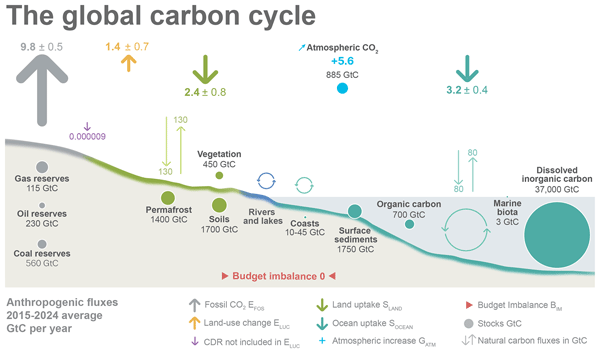
The Global Carbon Budget 2025 describes the methodology, main results, and datasets used to quantify the anthropogenic emissions of carbon dioxide (CO2) and their partitioning among the atmosphere, land ecosystems, and the ocean over the historical period (1750–2025). These living datasets are updated every year to provide the highest transparency and traceability in the reporting of CO2, the key driver of climate change.
William F. Lamb, Robbie M. Andrew, Matthew Jones, Zebedee Nicholls, Glen P. Peters, Chris Smith, Marielle Saunois, Giacomo Grassi, Julia Pongratz, Steven J. Smith, Francesco N. Tubiello, Monica Crippa, Matthew Gidden, Pierre Friedlingstein, Jan Minx, and Piers M. Forster
Earth Syst. Sci. Data, 18, 2549–2572, https://doi.org/10.5194/essd-18-2549-2026, https://doi.org/10.5194/essd-18-2549-2026, 2026
Short summary
Short summary
This study explores why global greenhouse gas (GHG) emissions estimates vary. Key reasons include different coverage of gases and sectors, varying definitions of anthropogenic land use change emissions, and the Paris Agreement not covering all emission sources. The study highlights three main ways emissions data is reported, each with different objectives and resulting in varying global emission totals. It emphasizes the need for transparency in choosing datasets and setting assessment scopes.
Detlef P. Van Vuuren, Brian C. O'Neill, Claudia Tebaldi, Benjamin M. Sanderson, Louise P. Chini, Pierre Friedlingstein, Tomoko Hasegawa, Keywan Riahi, Bala Govindasamy, Nico Bauer, Veronika Eyring, Cheikh M. N. Fall, Katja Frieler, Matthew J. Gidden, Laila K. Gohar, Annika Högner, Andrew D. Jones, Jarmo Kikstra, Andrew King, Reto Knutti, Elmar Kriegler, Peter Lawrence, Chris Lennard, Jason Lowe, Camilla Mathison, Shahbaz Mehmood, Zebedee Nicholls, Luciana F. Prado, Qiang Zhang, Steven K. Rose, Alex C. Ruane, Marit Sandstad, Carl-Friedrich Schleussner, Roland Seferian, Jana Sillmann, Chris Smith, Anna A. Sörensson, Swapna Panickal, Kaoru Tachiiri, Naomi Vaughan, Saritha S. Vishwanathan, Tokuta Yokohata, Marco Zecchetto, and Tilo Ziehn
Geosci. Model Dev., 19, 2627–2656, https://doi.org/10.5194/gmd-19-2627-2026, https://doi.org/10.5194/gmd-19-2627-2026, 2026
Short summary
Short summary
We propose a set of seven plausible 21st century emission scenarios, and their multi-century extensions, that will be used by the international community of climate modeling centers to produce the next generation of climate projections. These projections will support climate, impact and mitigation researchers, provide information to practitioners to address future risks from climate change, and contribute to policymakers’ considerations of the trade-offs among various levels of mitigation.

Joeran Maerz, Katharina D. Six, Soeren Ahmerkamp, and Tatiana Ilyina
Biogeosciences, 23, 1897–1929, https://doi.org/10.5194/bg-23-1897-2026, https://doi.org/10.5194/bg-23-1897-2026, 2026
Short summary
Short summary
CO2 taken up by marine algae can escape ocean surface waters through subsequent particle formation and sinking. Representing this biological carbon pump (BCP) in Earth system models remains challenging and poses uncertainties for future projections. We show that an advanced BCP representation regionally buffers ocean biogeochemistry compared to a classical approach while both respond globally similar to climate warming. Particle microstructure turns out as a key uncertainty for sinking fluxes.
Christopher D. Wells, Lennart Ramme, Chris Smith, Jannes Breier, Adakudlu Muralidhar, Chao Li, Ada Gjermundsen, William Alexander Schoenberg, Benjamin Blanz, and Cecilie Mauritzen
Geosci. Model Dev., 19, 1429–1453, https://doi.org/10.5194/gmd-19-1429-2026, https://doi.org/10.5194/gmd-19-1429-2026, 2026
Short summary
Short summary
Understanding the change in climate that would occur under different future pathways of greenhouse gas emissions and changes in land use is crucial. Here, we develop a new simple climate model to help study this. We reduce the number of inputs so that our model can be connected to a model of the human causes of climate change. This way, we can study the interaction between climate change and society, including climate impacts. Our model broadly agrees with historical observations.
Christopher D. Wells, Benjamin Blanz, Lennart Ramme, Jannes Breier, Beniamino Callegari, Adakudlu Muralidhar, Jefferson K. Rajah, Andreas Nicolaidis Lindqvist, Axel E. Eriksson, William Alexander Schoenberg, Alexandre C. Köberle, Lan Wang-Erlandsson, Cecilie Mauritzen, Martin B. Grimeland, and Chris Smith
Geosci. Model Dev., 19, 1229–1260, https://doi.org/10.5194/gmd-19-1229-2026, https://doi.org/10.5194/gmd-19-1229-2026, 2026
Short summary
Short summary
Computer models built to study future developments of human activity and climate change often exclude the impacts of climate change. Here, we include these effects in a new model. We create functions connecting changes in global temperature, carbon dioxide, and sea level to energy supply and demand, food systems, mortality, economic damages, and other important quantities. Including these effects will allow us to explore their impact on future changes in the human and climate realms.
Lucas Carnier Casaroli, Nuno Serra, Fatemeh Chegini, and Tatiana Ilyina
EGUsphere, https://doi.org/10.5194/egusphere-2026-504, https://doi.org/10.5194/egusphere-2026-504, 2026
Short summary
Short summary
This study shows that vortices in the equatorial Pacific strongly influence how the ocean absorbs and releases carbon dioxide. Using a 30-year high-resolution ocean biogeochemical model, we found that these vortices reshape carbon transport and primary production differently during El Niño and La Niña. The vortices can even reverse the role of the ocean from releasing to absorbing carbon, showing that motions hundreds of kilometers wide can shape basin-scale carbon patterns.
Peter W. Thorne, John M. Nicklas, John J. Kennedy, Bruce Calvert, Baylor Fox-Kemper, Mark T. Richardson, Adrian Simmons, Ed Hawkins, Robert Rhode, Kathryn Cowtan, Nerilie J. Abram, Axel Andersson, Simon Noone, Phillipe Marbaix, Nathan Lenssen, Dirk Olonscheck, Tristram Walsh, Stephen Outten, Ingo Bethke, Bjorn H. Samset, Chris Smith, Anna Pirani, Jan Fuglestvedt, Lavanya Rajamani, Richard A. Betts, Elizabeth C. Kent, Blair Trewin, Colin Morice, Tim Osborn, Samantha N. Burgess, Oliver Geden, Andrew Parnell, Piers M. Forster, Chris Hewitt, Zeke Hausfather, Valerie Masson-Delmotte, Jochem Marotzke, Nathan Gillett, Sonia I. Seneviratne, Gavin A. Schmidt, Duo Chan, Stefan Brönnimann, Andy Reisinger, Matthew Menne, Maisa Rojas Corradi, Christopher Kadow, Peter Huybers, David B. Stephenson, Emily Wallis, Joeri Rogelj, Andrew Schurer, Karen McKinnon, Panmao Zhai, Fatima Driouech, Wilfran Moufouma Okia, Saeed Vazifehkhah, Sophie Szopa, Christopher J. Merchant, Shoji Hirahara, Masayoshi Ishii, Francois A. Engelbrecht, Qingxiang Li, June-Yi Lee, Alex J. Cannon, Christophe Cassou, Karina von Schuckmann, Amir H. Delju, and Ellie Murtagh
Earth Syst. Sci. Data Discuss., https://doi.org/10.5194/essd-2025-825, https://doi.org/10.5194/essd-2025-825, 2026
Preprint under review for ESSD
Short summary
Short summary
We reassess the basis for determining the present level of long-term global warming. Unbiased estimates of both realised warming and anthropogenic warming are possible that approximate a 20-year retrospective mean. Our resulting estimates of 1.40 [1.23–1.58] °C (realised) and 1.34 [1.18–1.50] °C (anthropogenic) as at end of 2024 highlight the urgency of immediate, far-reaching and sustained climate mitigation actions if we are to meet the long term temperature goal of the Paris Agreement.
Benjamin M. Sanderson, Susanne Baur, Carl-Freidrich Schleussner, Glen P. Peters, Shivika Mittal, Marit Sandstad, Steffen Kallbekken, Chris Smith, Sabine Fuss, Bas van Ruijven, Rosie A. Fisher, Joeri Rogelj, Roland Séférian, Bjørn Samset, Norman J. Steinert, Laurent Terray, and Jan Fuglestvedt
EGUsphere, https://doi.org/10.5194/egusphere-2026-28, https://doi.org/10.5194/egusphere-2026-28, 2026
Preprint archived
Short summary
Short summary
Solar Radiation Modification by adding aerosols to the stratosphere could rapidly and temporarily cool the Earth, but this speed creates unprecedented risks. Fast climate responses coupled with political instability create risks of failure to decarbonise, super-rapid climate change, and conflict. Idealized scenarios or conventional modeling tools could lead to systematic ignorance of these risks. We thus introduce a framework outlining what must be represented in future modeling and assessment.
Alejandro Romero-Prieto, Camilla Mathison, and Chris Smith
Geosci. Model Dev., 19, 115–165, https://doi.org/10.5194/gmd-19-115-2026, https://doi.org/10.5194/gmd-19-115-2026, 2026
Short summary
Short summary
Simple Climate Models (SCMs) are widely used tools to explore how Earth's climate may change in the future. In recent decades, the number and types of SCMs have increased significantly, hindering efforts to understand cross-model differences. In this study, we provide an overview of the main principles guiding climate simulation by SCMs, as well as a description of most high-profile SCMs. This work offers a clear reference to support the informed use of these important tools.
Lennart Ramme, Benjamin Blanz, Christopher Wells, Tony E. Wong, William Schoenberg, Chris Smith, and Chao Li
Geosci. Model Dev., 18, 10017–10052, https://doi.org/10.5194/gmd-18-10017-2025, https://doi.org/10.5194/gmd-18-10017-2025, 2025
Short summary
Short summary
We present FRISIA version 1.0, a model for emulating sea level rise (SLR) and representing SLR impacts and adaptation in integrated assessment models (IAMs). FRISIA includes previously uncaptured coastal socio-economic feedback and a diverse set of impact strains, thereby improving the represenation of SLR impacts in IAMs. Here we describe the baseline behaviour of FRISIA, explore the effects of the additional feedback and showcase the coupling of FRISIA to an IAM.
Philip J. Wallhead, Jörg Schwinger, Jerry Tjiputra, Trond Kristiansen, and Richard G. J. Bellerby
Earth Syst. Sci. Data, 17, 6763–6805, https://doi.org/10.5194/essd-17-6763-2025, https://doi.org/10.5194/essd-17-6763-2025, 2025
Short summary
Short summary
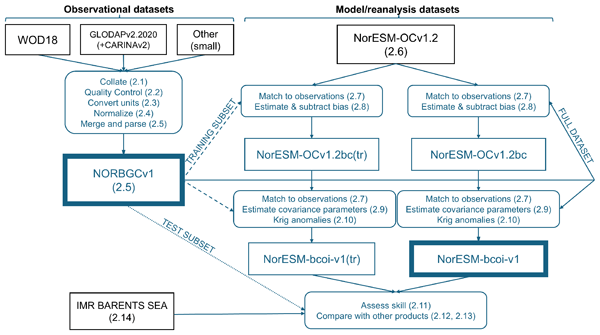
We developed a novel method to combine ocean data from observations and models, and applied it to produce gridded estimates of nutrients, oxygen, dissolved inorganic carbon and total alkalinity concentrations at latitudes >40° N and years 1980–2020. The new estimates showed improved accuracy and coverage relative to previous estimates, but highlighted remaining uncertainty in some poorly sampled regions. The work was largely motivated by a need for accurate input data for regional ocean models.
Wolfgang A. Müller, Stephan Lorenz, Trang V. Pham, Andrea Schneidereit, Renate Brokopf, Victor Brovkin, Nils Brüggemann, Fatemeh Chegini, Dietmar Dommenget, Kristina Fröhlich, Barbara Früh, Veronika Gayler, Helmuth Haak, Stefan Hagemann, Moritz Hanke, Tatiana Ilyina, Johann Jungclaus, Martin Köhler, Peter Korn, Luis Kornblueh, Clarissa A. Kroll, Julian Krüger, Karel Castro-Morales, Ulrike Niemeier, Holger Pohlmann, Iuliia Polkova, Roland Potthast, Thomas Riddick, Manuel Schlund, Tobias Stacke, Roland Wirth, Dakuan Yu, and Jochem Marotzke
Geosci. Model Dev., 18, 9385–9415, https://doi.org/10.5194/gmd-18-9385-2025, https://doi.org/10.5194/gmd-18-9385-2025, 2025
Short summary
Short summary
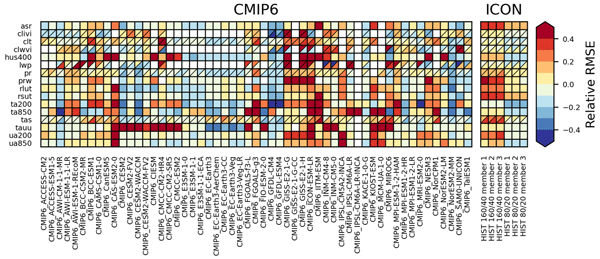
We provide a new Earth System model configuration framed into the ICON architecture, which provides the baseline for the next generation of climate predictions and projections (hereafter ICON XPP). Two resolutions of ICON XPP are presented that show high runtime performances making it suitable to run long integrations and large-ensemble experiments. ICON XPP similarly perform to CMIP6-class of climate models making it a good basis for climate forecasts and projections, and climate research.
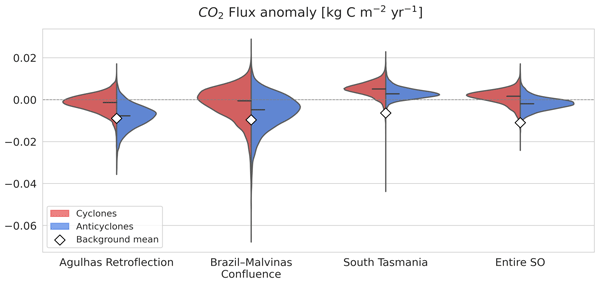
Mariana Salinas-Matus, Nuno Serra, Fatemeh Chegini, and Tatiana Ilyina
Biogeosciences, 22, 7519–7534, https://doi.org/10.5194/bg-22-7519-2025, https://doi.org/10.5194/bg-22-7519-2025, 2025
Short summary
Short summary
We use a 27-year eddy-resolving ocean-biogeochemical simulation to assess how mesoscale eddies modulate air–sea CO2 fluxes in the Southern Ocean. Eddies act as persistent carbon sinks, with anticyclones showing enhanced carbon uptake efficiency. Mesoscale features account for ~10 % of the total carbon uptake in the Southern Ocean and about 1 % of the anomalous carbon uptake.
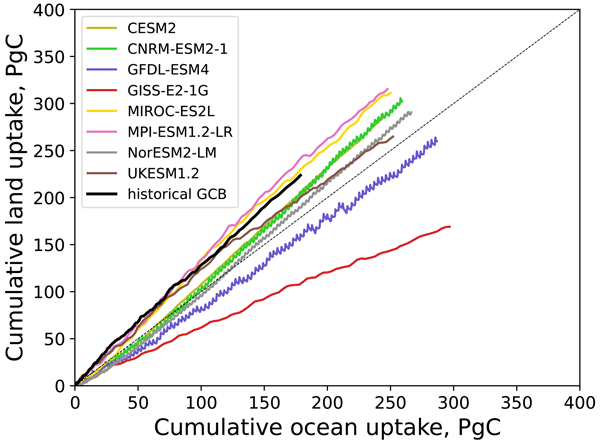
Victor Brovkin, Benjamin M. Sanderson, Noel G. Brizuela, Tomohiro Hajima, Tatiana Ilyina, Chris D. Jones, Charles Koven, David Lawrence, Peter Lawrence, Hongmei Li, Spencer Liddcoat, Anastasia Romanou, Roland Séférian, Lori T. Sentman, Abigail L. S. Swann, Jerry Tjiputra, Tilo Ziehn, and Alexander J. Winkler
Earth Syst. Dynam., 16, 2021–2034, https://doi.org/10.5194/esd-16-2021-2025, https://doi.org/10.5194/esd-16-2021-2025, 2025
Short summary
Short summary
Idealized experiments with Earth system models provide a basis for understanding the response of the carbon cycle to emissions. We show that most models exhibit a quasi-linear relationship between cumulative carbon uptake on land and in the ocean and hypothesize that this relationship does not depend on emission pathways. We reduce the coupled system to only one differential equation, which represents a powerful simplification of the Earth system dynamics as a function of fossil fuel emissions.
William Schoenberg, Benjamin Blanz, Jefferson K. Rajah, Beniamino Callegari, Christopher Wells, Jannes Breier, Martin B. Grimeland, Andreas Nicolaidis Lindqvist, Lennart Ramme, Chris Smith, Chao Li, Sarah Mashhadi, Adakudlu Muralidhar, and Cecilie Mauritzen
Geosci. Model Dev., 18, 8047–8069, https://doi.org/10.5194/gmd-18-8047-2025, https://doi.org/10.5194/gmd-18-8047-2025, 2025
Short summary
Short summary
The current crop of models assessed by the Intergovernmental Panel on Climate Change to produce their assessment reports lack endogenous process-based representations of climate-driven changes to human activities, limiting understanding of the feedback between climate and humans. FRIDA (Feedback-based knowledge Repository for IntegrateD Assessments) v2.1 integrates these systems and generate results that suggest standard scenarios the shared socioeconomic pathways baseline scenarios may overestimate economic growth, highlighting the importance of feedbacks for realistic projections and informed policymaking.
Magali Verkerk, Thomas J. Aubry, Chris Smith, Peter O. Hopcroft, Michael Sigl, Jessica E. Tierney, Kevin Anchukaitis, Matthew Osman, Anja Schmidt, and Matthew Toohey
Clim. Past, 21, 1755–1778, https://doi.org/10.5194/cp-21-1755-2025, https://doi.org/10.5194/cp-21-1755-2025, 2025
Short summary
Short summary
Large volcanic eruptions can trigger global cooling, affecting human societies. Using ice-core records and simple climate model to simulate volcanic effect over the last 8500 years, we show that volcanic eruptions cool the climate by 0.12 °C on average. By comparing model results with temperature recorded by tree rings over the last 1000 years, we demonstrate that our models can predict the large-scale cooling caused by volcanic eruptions and can be used in cases of large eruptions in the future.
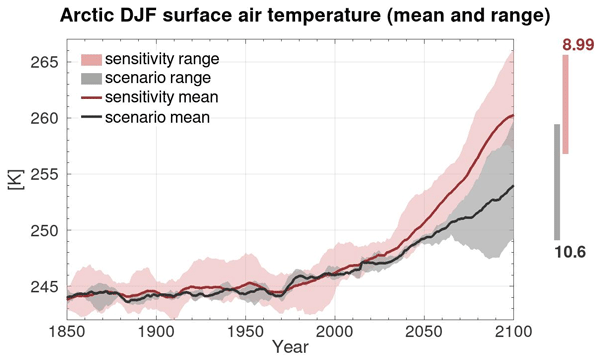
Lise Seland Graff, Jerry Tjiputra, Ada Gjermundsen, Andreas Born, Jens Boldingh Debernard, Heiko Goelzer, Yan-Chun He, Petra Margaretha Langebroek, Aleksi Nummelin, Dirk Olivié, Øyvind Seland, Trude Storelvmo, Mats Bentsen, Chuncheng Guo, Andrea Rosendahl, Dandan Tao, Thomas Toniazzo, Camille Li, Stephen Outten, and Michael Schulz
Earth Syst. Dynam., 16, 1671–1698, https://doi.org/10.5194/esd-16-1671-2025, https://doi.org/10.5194/esd-16-1671-2025, 2025
Short summary
Short summary
The magnitude of future Arctic amplification is highly uncertain. Using the Norwegian Earth System Model, we explore the effect of improving the representation of clouds, ocean eddies, the Greenland ice sheet, sea ice, and ozone on the projected Arctic winter warming in a coordinated experiment set. These improvements all lead to enhanced projected Arctic warming, with the largest changes found in the sea ice retreat regions and the largest uncertainty found on the Atlantic side.
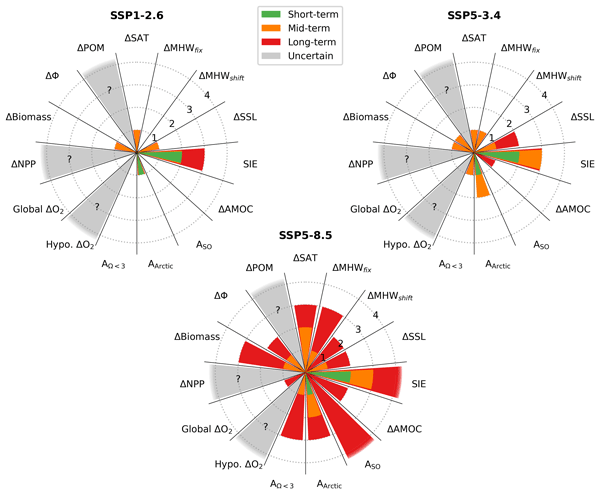
Timothée Bourgeois, Giang T. Tran, Aurich Jeltsch-Thömmes, Jörg Schwinger, Friederike Fröb, Thomas L. Frölicher, Thorsten Blenckner, Olivier Torres, Jean Negrel, David P. Keller, Andreas Oschlies, Laurent Bopp, and Fortunat Joos
Biogeosciences, 22, 5435–5462, https://doi.org/10.5194/bg-22-5435-2025, https://doi.org/10.5194/bg-22-5435-2025, 2025
Short summary
Short summary
Anthropogenic greenhouse gas emissions significantly impact ocean ecosystems through climate change and acidification, leading to either progressive or abrupt changes. This study maps the crossing of physical and ecological limits for various ocean impact metrics under three emission scenarios. Using Earth system models, we identify when these limits are exceeded, highlighting the urgent need for ambitious climate action to safeguard the world's oceans and ecosystems.
Yohei Takano and Tatiana Ilyina
EGUsphere, https://doi.org/10.5194/egusphere-2025-3757, https://doi.org/10.5194/egusphere-2025-3757, 2025
Short summary
Short summary
Ocean oxygen levels are changing, but we have limited observations to track these changes over time. Natural fluctuations in climate systems, called internal climate variability, make it challenging to detect long-term changes. This study uses model simulations and new observational data to understand how these factors affect our view of past and future oxygen loss. The findings highlight the need to maintain global ocean monitoring to track oxygen loss and evaluate future changes.
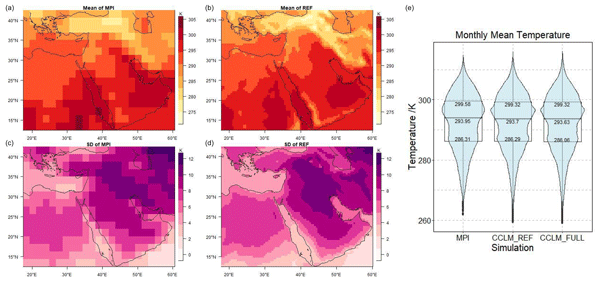
Eva Hartmann, Mingyue Zhang, Sebastian Wagner, Muralidhar Adakudlu, Jürg Luterbacher, and Elena Xoplaki
Clim. Past, 21, 1699–1724, https://doi.org/10.5194/cp-21-1699-2025, https://doi.org/10.5194/cp-21-1699-2025, 2025
Short summary
Short summary
For the first time, we provide a regional climate model with past climate forcings. The model's sensitivity to each forcing is tested in a case study around the large Samalas volcanic eruption in 1257. The orbital forcing shows the largest effect with an amplification of the seasons in the past compared with the standard model. The volcanic forcing has a strong short-term cooling effect after the volcanic eruption. This model is later used for a transient simulation of the last 2500 years.
Benjamin M. Sanderson, Victor Brovkin, Rosie A. Fisher, David Hohn, Tatiana Ilyina, Chris D. Jones, Torben Koenigk, Charles Koven, Hongmei Li, David M. Lawrence, Peter Lawrence, Spencer Liddicoat, Andrew H. MacDougall, Nadine Mengis, Zebedee Nicholls, Eleanor O'Rourke, Anastasia Romanou, Marit Sandstad, Jörg Schwinger, Roland Séférian, Lori T. Sentman, Isla R. Simpson, Chris Smith, Norman J. Steinert, Abigail L. S. Swann, Jerry Tjiputra, and Tilo Ziehn
Geosci. Model Dev., 18, 5699–5724, https://doi.org/10.5194/gmd-18-5699-2025, https://doi.org/10.5194/gmd-18-5699-2025, 2025
Short summary
Short summary
This study investigates how climate models warm in response to simplified carbon emissions trajectories, refining the understanding of climate reversibility and commitment. Metrics are defined for warming response to cumulative emissions and for the cessation of emissions or ramp-down to net-zero and net-negative levels. Results indicate that previous concentration-driven experiments may have overstated the Zero Emissions Commitment due to emissions rates exceeding historical levels.
Paul T. Griffiths, Laura J. Wilcox, Robert J. Allen, Vaishali Naik, Fiona M. O'Connor, Michael Prather, Alex Archibald, Florence Brown, Makoto Deushi, William Collins, Stephanie Fiedler, Naga Oshima, Lee T. Murray, Bjørn H. Samset, Chris Smith, Steven Turnock, Duncan Watson-Parris, and Paul J. Young
Atmos. Chem. Phys., 25, 8289–8328, https://doi.org/10.5194/acp-25-8289-2025, https://doi.org/10.5194/acp-25-8289-2025, 2025
Short summary
Short summary
The Aerosol Chemistry Model Intercomparison Project (AerChemMIP) aimed to quantify the climate and air quality impacts of aerosols and chemically reactive gases. We review its contribution to AR6 (Sixth Assessment Report of the Intergovernmental Panel on Climate Change) and the wider understanding of the role of these species in climate and climate change. We identify challenges and provide recommendations to improve the utility and uptake of climate model data, detailed summary tables of CMIP6 models, experiments, and emergent diagnostics.
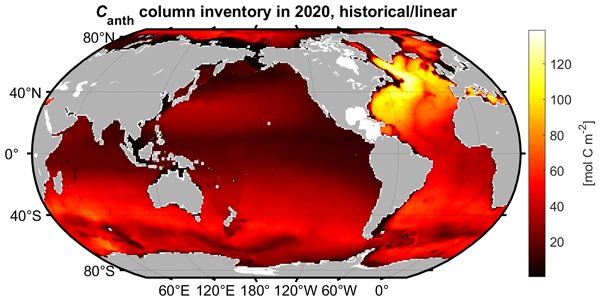
Brendan R. Carter, Jörg Schwinger, Rolf Sonnerup, Andrea J. Fassbender, Jonathan D. Sharp, Larissa M. Dias, and Daniel E. Sandborn
Earth Syst. Sci. Data, 17, 3073–3088, https://doi.org/10.5194/essd-17-3073-2025, https://doi.org/10.5194/essd-17-3073-2025, 2025
Short summary
Short summary
We infer ocean gas exchange and circulation from ocean tracer measurements and use this to create code to estimate the amount of carbon dioxide dissolved in the ocean that is there due to human emissions of CO2 into the atmosphere. The code works across the ocean depths for the past, present, or future from information about the location, temperature, and salinity of the seawater. We produce a data product with estimates throughout the ocean throughout the last ~300 and the next ~500 years.
Piers M. Forster, Chris Smith, Tristram Walsh, William F. Lamb, Robin Lamboll, Christophe Cassou, Mathias Hauser, Zeke Hausfather, June-Yi Lee, Matthew D. Palmer, Karina von Schuckmann, Aimée B. A. Slangen, Sophie Szopa, Blair Trewin, Jeongeun Yun, Nathan P. Gillett, Stuart Jenkins, H. Damon Matthews, Krishnan Raghavan, Aurélien Ribes, Joeri Rogelj, Debbie Rosen, Xuebin Zhang, Myles Allen, Lara Aleluia Reis, Robbie M. Andrew, Richard A. Betts, Alex Borger, Jiddu A. Broersma, Samantha N. Burgess, Lijing Cheng, Pierre Friedlingstein, Catia M. Domingues, Marco Gambarini, Thomas Gasser, Johannes Gütschow, Masayoshi Ishii, Christopher Kadow, John Kennedy, Rachel E. Killick, Paul B. Krummel, Aurélien Liné, Didier P. Monselesan, Colin Morice, Jens Mühle, Vaishali Naik, Glen P. Peters, Anna Pirani, Julia Pongratz, Jan C. Minx, Matthew Rigby, Robert Rohde, Abhishek Savita, Sonia I. Seneviratne, Peter Thorne, Christopher Wells, Luke M. Western, Guido R. van der Werf, Susan E. Wijffels, Valérie Masson-Delmotte, and Panmao Zhai
Earth Syst. Sci. Data, 17, 2641–2680, https://doi.org/10.5194/essd-17-2641-2025, https://doi.org/10.5194/essd-17-2641-2025, 2025
Short summary
Short summary
In a rapidly changing climate, evidence-based decision-making benefits from up-to-date and timely information. Here we compile monitoring datasets to track real-world changes over time. To make our work relevant to policymakers, we follow methods from the Intergovernmental Panel on Climate Change (IPCC). Human activities are increasing the Earth's energy imbalance and driving faster sea-level rise compared to the IPCC assessment.
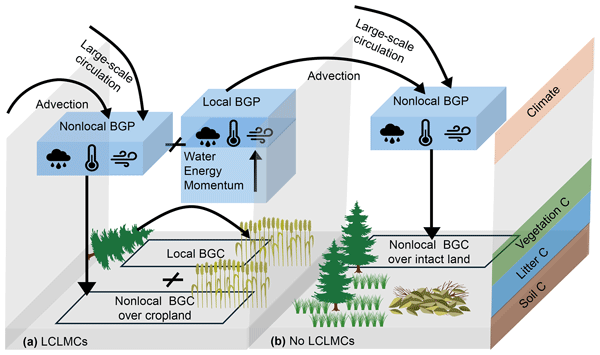
Suqi Guo, Felix Havermann, Steven J. De Hertog, Fei Luo, Iris Manola, Thomas Raddatz, Hongmei Li, Wim Thiery, Quentin Lejeune, Carl-Friedrich Schleussner, David Wårlind, Lars Nieradzik, and Julia Pongratz
Earth Syst. Dynam., 16, 631–666, https://doi.org/10.5194/esd-16-631-2025, https://doi.org/10.5194/esd-16-631-2025, 2025
Short summary
Short summary
Land cover and land management changes (LCLMCs) can alter climate even in intact areas, causing carbon changes in remote areas. This study is the first to assess these effects, finding they substantially alter global carbon dynamics, changing terrestrial stocks by up to dozens of gigatonnes. These results are vital for scientific and policy assessments, given the expected role of LCLMCs in achieving the Paris Agreement's goal to limit global warming below 1.5 °C.
Gang Tang, Zebedee Nicholls, Chris Jones, Thomas Gasser, Alexander Norton, Tilo Ziehn, Alejandro Romero-Prieto, and Malte Meinshausen
Geosci. Model Dev., 18, 2111–2136, https://doi.org/10.5194/gmd-18-2111-2025, https://doi.org/10.5194/gmd-18-2111-2025, 2025
Short summary
Short summary
We analyzed carbon and nitrogen mass conservation in data from various Earth system models. Our findings reveal significant discrepancies between flux and pool size data, where cumulative imbalances can reach hundreds of gigatons of carbon or nitrogen. These imbalances appear primarily due to missing or inconsistently reported fluxes – especially for land-use and fire emissions. To enhance data quality, we recommend that future climate data protocols address this issue at the reporting stage.
Camilla Mathison, Eleanor J. Burke, Gregory Munday, Chris D. Jones, Chris J. Smith, Norman J. Steinert, Andy J. Wiltshire, Chris Huntingford, Eszter Kovacs, Laila K. Gohar, Rebecca M. Varney, and Douglas McNeall
Geosci. Model Dev., 18, 1785–1808, https://doi.org/10.5194/gmd-18-1785-2025, https://doi.org/10.5194/gmd-18-1785-2025, 2025
Short summary
Short summary
We present PRIME (Probabilistic Regional Impacts from Model patterns and Emissions), which is designed to take new emissions scenarios and rapidly provide regional impact information. PRIME allows large ensembles to be run on multi-centennial timescales, including the analysis of many important variables for impact assessments. Our evaluation shows that PRIME reproduces the climate response for known scenarios, providing confidence in using PRIME for novel scenarios.
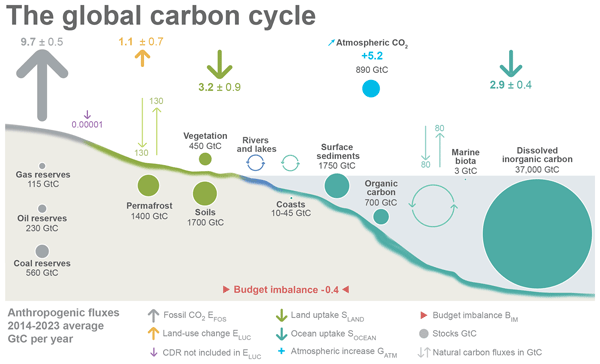
Pierre Friedlingstein, Michael O'Sullivan, Matthew W. Jones, Robbie M. Andrew, Judith Hauck, Peter Landschützer, Corinne Le Quéré, Hongmei Li, Ingrid T. Luijkx, Are Olsen, Glen P. Peters, Wouter Peters, Julia Pongratz, Clemens Schwingshackl, Stephen Sitch, Josep G. Canadell, Philippe Ciais, Robert B. Jackson, Simone R. Alin, Almut Arneth, Vivek Arora, Nicholas R. Bates, Meike Becker, Nicolas Bellouin, Carla F. Berghoff, Henry C. Bittig, Laurent Bopp, Patricia Cadule, Katie Campbell, Matthew A. Chamberlain, Naveen Chandra, Frédéric Chevallier, Louise P. Chini, Thomas Colligan, Jeanne Decayeux, Laique M. Djeutchouang, Xinyu Dou, Carolina Duran Rojas, Kazutaka Enyo, Wiley Evans, Amanda R. Fay, Richard A. Feely, Daniel J. Ford, Adrianna Foster, Thomas Gasser, Marion Gehlen, Thanos Gkritzalis, Giacomo Grassi, Luke Gregor, Nicolas Gruber, Özgür Gürses, Ian Harris, Matthew Hefner, Jens Heinke, George C. Hurtt, Yosuke Iida, Tatiana Ilyina, Andrew R. Jacobson, Atul K. Jain, Tereza Jarníková, Annika Jersild, Fei Jiang, Zhe Jin, Etsushi Kato, Ralph F. Keeling, Kees Klein Goldewijk, Jürgen Knauer, Jan Ivar Korsbakken, Xin Lan, Siv K. Lauvset, Nathalie Lefèvre, Zhu Liu, Junjie Liu, Lei Ma, Shamil Maksyutov, Gregg Marland, Nicolas Mayot, Patrick C. McGuire, Nicolas Metzl, Natalie M. Monacci, Eric J. Morgan, Shin-Ichiro Nakaoka, Craig Neill, Yosuke Niwa, Tobias Nützel, Lea Olivier, Tsuneo Ono, Paul I. Palmer, Denis Pierrot, Zhangcai Qin, Laure Resplandy, Alizée Roobaert, Thais M. Rosan, Christian Rödenbeck, Jörg Schwinger, T. Luke Smallman, Stephen M. Smith, Reinel Sospedra-Alfonso, Tobias Steinhoff, Qing Sun, Adrienne J. Sutton, Roland Séférian, Shintaro Takao, Hiroaki Tatebe, Hanqin Tian, Bronte Tilbrook, Olivier Torres, Etienne Tourigny, Hiroyuki Tsujino, Francesco Tubiello, Guido van der Werf, Rik Wanninkhof, Xuhui Wang, Dongxu Yang, Xiaojuan Yang, Zhen Yu, Wenping Yuan, Xu Yue, Sönke Zaehle, Ning Zeng, and Jiye Zeng
Earth Syst. Sci. Data, 17, 965–1039, https://doi.org/10.5194/essd-17-965-2025, https://doi.org/10.5194/essd-17-965-2025, 2025
Short summary
Short summary
The Global Carbon Budget 2024 describes the methodology, main results, and datasets used to quantify the anthropogenic emissions of carbon dioxide (CO2) and their partitioning among the atmosphere, land ecosystems, and the ocean over the historical period (1750–2024). These living datasets are updated every year to provide the highest transparency and traceability in the reporting of CO2, the key driver of climate change.
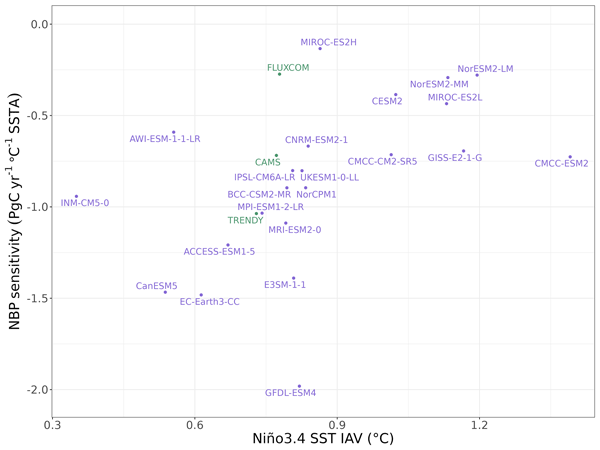
István Dunkl, Ana Bastos, and Tatiana Ilyina
Earth Syst. Dynam., 16, 151–167, https://doi.org/10.5194/esd-16-151-2025, https://doi.org/10.5194/esd-16-151-2025, 2025
Short summary
Short summary
While the El Niño–Southern Oscillation, a climate mode, has a similar impact on CO2 growth rates across Earth system models, there is significant uncertainty in the processes behind this relationship. We found a compensatory effect that masks differences in the sensitivity of carbon fluxes to climate anomalies and observed that the carbon fluxes contributing to global CO2 anomalies originate from different regions and are caused by different drivers.
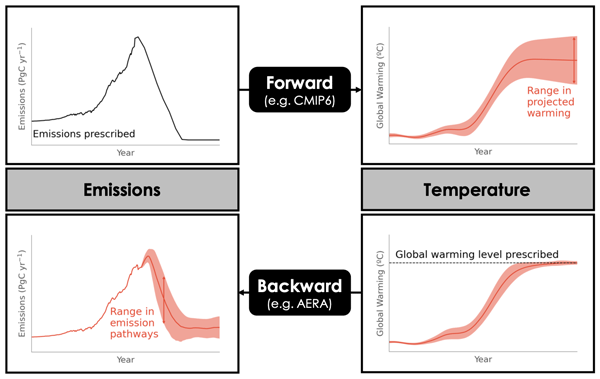
Yona Silvy, Thomas L. Frölicher, Jens Terhaar, Fortunat Joos, Friedrich A. Burger, Fabrice Lacroix, Myles Allen, Raffaele Bernardello, Laurent Bopp, Victor Brovkin, Jonathan R. Buzan, Patricia Cadule, Martin Dix, John Dunne, Pierre Friedlingstein, Goran Georgievski, Tomohiro Hajima, Stuart Jenkins, Michio Kawamiya, Nancy Y. Kiang, Vladimir Lapin, Donghyun Lee, Paul Lerner, Nadine Mengis, Estela A. Monteiro, David Paynter, Glen P. Peters, Anastasia Romanou, Jörg Schwinger, Sarah Sparrow, Eric Stofferahn, Jerry Tjiputra, Etienne Tourigny, and Tilo Ziehn
Earth Syst. Dynam., 15, 1591–1628, https://doi.org/10.5194/esd-15-1591-2024, https://doi.org/10.5194/esd-15-1591-2024, 2024
Short summary
Short summary
The adaptive emission reduction approach is applied with Earth system models to generate temperature stabilization simulations. These simulations provide compatible emission pathways and budgets for a given warming level, uncovering uncertainty ranges previously missing in the Coupled Model Intercomparison Project scenarios. These target-based emission-driven simulations offer a more coherent assessment across models for studying both the carbon cycle and its impacts under climate stabilization.
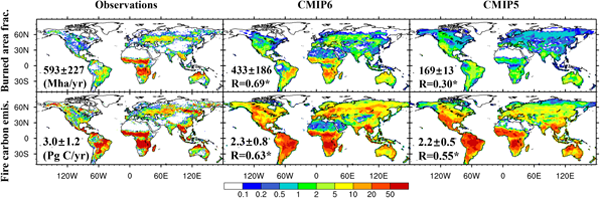
Fang Li, Xiang Song, Sandy P. Harrison, Jennifer R. Marlon, Zhongda Lin, L. Ruby Leung, Jörg Schwinger, Virginie Marécal, Shiyu Wang, Daniel S. Ward, Xiao Dong, Hanna Lee, Lars Nieradzik, Sam S. Rabin, and Roland Séférian
Geosci. Model Dev., 17, 8751–8771, https://doi.org/10.5194/gmd-17-8751-2024, https://doi.org/10.5194/gmd-17-8751-2024, 2024
Short summary
Short summary
This study provides the first comprehensive assessment of historical fire simulations from 19 Earth system models in phase 6 of the Coupled Model Intercomparison Project (CMIP6). Most models reproduce global totals, spatial patterns, seasonality, and regional historical changes well but fail to simulate the recent decline in global burned area and underestimate the fire response to climate variability. CMIP6 simulations address three critical issues of phase-5 models.
Chris Smith, Donald P. Cummins, Hege-Beate Fredriksen, Zebedee Nicholls, Malte Meinshausen, Myles Allen, Stuart Jenkins, Nicholas Leach, Camilla Mathison, and Antti-Ilari Partanen
Geosci. Model Dev., 17, 8569–8592, https://doi.org/10.5194/gmd-17-8569-2024, https://doi.org/10.5194/gmd-17-8569-2024, 2024
Short summary
Short summary
Climate projections are only useful if the underlying models that produce them are well calibrated and can reproduce observed climate change. We formalise a software package that calibrates the open-source FaIR simple climate model to full-complexity Earth system models. Observations, including historical warming, and assessments of key climate variables such as that of climate sensitivity are used to constrain the model output.
Benjamin M. Sanderson, Ben B. B. Booth, John Dunne, Veronika Eyring, Rosie A. Fisher, Pierre Friedlingstein, Matthew J. Gidden, Tomohiro Hajima, Chris D. Jones, Colin G. Jones, Andrew King, Charles D. Koven, David M. Lawrence, Jason Lowe, Nadine Mengis, Glen P. Peters, Joeri Rogelj, Chris Smith, Abigail C. Snyder, Isla R. Simpson, Abigail L. S. Swann, Claudia Tebaldi, Tatiana Ilyina, Carl-Friedrich Schleussner, Roland Séférian, Bjørn H. Samset, Detlef van Vuuren, and Sönke Zaehle
Geosci. Model Dev., 17, 8141–8172, https://doi.org/10.5194/gmd-17-8141-2024, https://doi.org/10.5194/gmd-17-8141-2024, 2024
Short summary
Short summary
We discuss how, in order to provide more relevant guidance for climate policy, coordinated climate experiments should adopt a greater focus on simulations where Earth system models are provided with carbon emissions from fossil fuels together with land use change instructions, rather than past approaches that have largely focused on experiments with prescribed atmospheric carbon dioxide concentrations. We discuss how these goals might be achieved in coordinated climate modeling experiments.

Colin G. Jones, Fanny Adloff, Ben B. B. Booth, Peter M. Cox, Veronika Eyring, Pierre Friedlingstein, Katja Frieler, Helene T. Hewitt, Hazel A. Jeffery, Sylvie Joussaume, Torben Koenigk, Bryan N. Lawrence, Eleanor O'Rourke, Malcolm J. Roberts, Benjamin M. Sanderson, Roland Séférian, Samuel Somot, Pier Luigi Vidale, Detlef van Vuuren, Mario Acosta, Mats Bentsen, Raffaele Bernardello, Richard Betts, Ed Blockley, Julien Boé, Tom Bracegirdle, Pascale Braconnot, Victor Brovkin, Carlo Buontempo, Francisco Doblas-Reyes, Markus Donat, Italo Epicoco, Pete Falloon, Sandro Fiore, Thomas Frölicher, Neven S. Fučkar, Matthew J. Gidden, Helge F. Goessling, Rune Grand Graversen, Silvio Gualdi, José M. Gutiérrez, Tatiana Ilyina, Daniela Jacob, Chris D. Jones, Martin Juckes, Elizabeth Kendon, Erik Kjellström, Reto Knutti, Jason Lowe, Matthew Mizielinski, Paola Nassisi, Michael Obersteiner, Pierre Regnier, Romain Roehrig, David Salas y Mélia, Carl-Friedrich Schleussner, Michael Schulz, Enrico Scoccimarro, Laurent Terray, Hannes Thiemann, Richard A. Wood, Shuting Yang, and Sönke Zaehle
Earth Syst. Dynam., 15, 1319–1351, https://doi.org/10.5194/esd-15-1319-2024, https://doi.org/10.5194/esd-15-1319-2024, 2024
Short summary
Short summary
We propose a number of priority areas for the international climate research community to address over the coming decade. Advances in these areas will both increase our understanding of past and future Earth system change, including the societal and environmental impacts of this change, and deliver significantly improved scientific support to international climate policy, such as future IPCC assessments and the UNFCCC Global Stocktake.
Robert J. Allen, Xueying Zhao, Cynthia A. Randles, Ryan J. Kramer, Bjørn H. Samset, and Christopher J. Smith
Atmos. Chem. Phys., 24, 11207–11226, https://doi.org/10.5194/acp-24-11207-2024, https://doi.org/10.5194/acp-24-11207-2024, 2024
Short summary
Short summary
Present-day methane shortwave absorption mutes 28% (7–55%) of the surface warming associated with its longwave absorption. The precipitation increase associated with the longwave radiative effects of the present-day methane perturbation is also muted by shortwave absorption but not significantly so. Methane shortwave absorption also impacts the magnitude of its climate feedback parameter, largely through the cloud feedback.
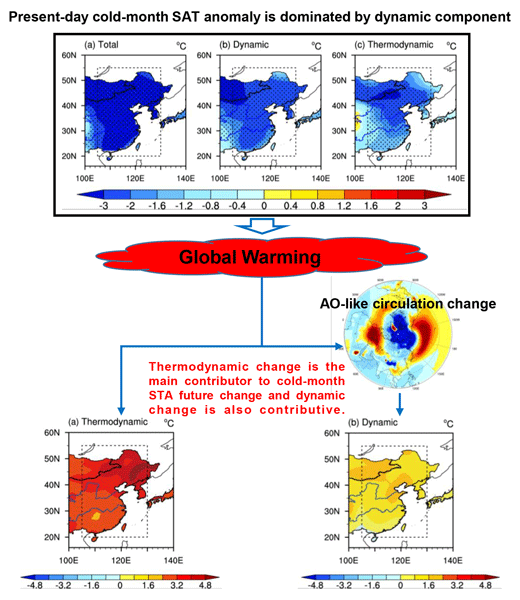
Donghuan Li, Tianjun Zhou, Youcun Qi, Liwei Zou, Chao Li, Wenxia Zhang, and Xiaolong Chen
Atmos. Chem. Phys., 24, 7347–7358, https://doi.org/10.5194/acp-24-7347-2024, https://doi.org/10.5194/acp-24-7347-2024, 2024
Short summary
Short summary
Two sets of climate model simulations are used to investigate the dynamic and thermodynamic factors of future change in cold extremes in East Asia. Dynamic factor accounted for over 80 % of cold-month temperature anomalies in past 50 years. The intensity of cold extreme is expected to decrease by 5 ℃, with thermodynamic factor contributing ~ 75 % by the end of the 21st century. Changes in dynamic factor are driven by an upward trend of positive Arctic Oscillation-like sea level pressure pattern.
Piers M. Forster, Chris Smith, Tristram Walsh, William F. Lamb, Robin Lamboll, Bradley Hall, Mathias Hauser, Aurélien Ribes, Debbie Rosen, Nathan P. Gillett, Matthew D. Palmer, Joeri Rogelj, Karina von Schuckmann, Blair Trewin, Myles Allen, Robbie Andrew, Richard A. Betts, Alex Borger, Tim Boyer, Jiddu A. Broersma, Carlo Buontempo, Samantha Burgess, Chiara Cagnazzo, Lijing Cheng, Pierre Friedlingstein, Andrew Gettelman, Johannes Gütschow, Masayoshi Ishii, Stuart Jenkins, Xin Lan, Colin Morice, Jens Mühle, Christopher Kadow, John Kennedy, Rachel E. Killick, Paul B. Krummel, Jan C. Minx, Gunnar Myhre, Vaishali Naik, Glen P. Peters, Anna Pirani, Julia Pongratz, Carl-Friedrich Schleussner, Sonia I. Seneviratne, Sophie Szopa, Peter Thorne, Mahesh V. M. Kovilakam, Elisa Majamäki, Jukka-Pekka Jalkanen, Margreet van Marle, Rachel M. Hoesly, Robert Rohde, Dominik Schumacher, Guido van der Werf, Russell Vose, Kirsten Zickfeld, Xuebin Zhang, Valérie Masson-Delmotte, and Panmao Zhai
Earth Syst. Sci. Data, 16, 2625–2658, https://doi.org/10.5194/essd-16-2625-2024, https://doi.org/10.5194/essd-16-2625-2024, 2024
Short summary
Short summary
This paper tracks some key indicators of global warming through time, from 1850 through to the end of 2023. It is designed to give an authoritative estimate of global warming to date and its causes. We find that in 2023, global warming reached 1.3 °C and is increasing at over 0.2 °C per decade. This is caused by all-time-high greenhouse gas emissions.
Malte Meinshausen, Carl-Friedrich Schleussner, Kathleen Beyer, Greg Bodeker, Olivier Boucher, Josep G. Canadell, John S. Daniel, Aïda Diongue-Niang, Fatima Driouech, Erich Fischer, Piers Forster, Michael Grose, Gerrit Hansen, Zeke Hausfather, Tatiana Ilyina, Jarmo S. Kikstra, Joyce Kimutai, Andrew D. King, June-Yi Lee, Chris Lennard, Tabea Lissner, Alexander Nauels, Glen P. Peters, Anna Pirani, Gian-Kasper Plattner, Hans Pörtner, Joeri Rogelj, Maisa Rojas, Joyashree Roy, Bjørn H. Samset, Benjamin M. Sanderson, Roland Séférian, Sonia Seneviratne, Christopher J. Smith, Sophie Szopa, Adelle Thomas, Diana Urge-Vorsatz, Guus J. M. Velders, Tokuta Yokohata, Tilo Ziehn, and Zebedee Nicholls
Geosci. Model Dev., 17, 4533–4559, https://doi.org/10.5194/gmd-17-4533-2024, https://doi.org/10.5194/gmd-17-4533-2024, 2024
Short summary
Short summary
The scientific community is considering new scenarios to succeed RCPs and SSPs for the next generation of Earth system model runs to project future climate change. To contribute to that effort, we reflect on relevant policy and scientific research questions and suggest categories for representative emission pathways. These categories are tailored to the Paris Agreement long-term temperature goal, high-risk outcomes in the absence of further climate policy and worlds “that could have been”.
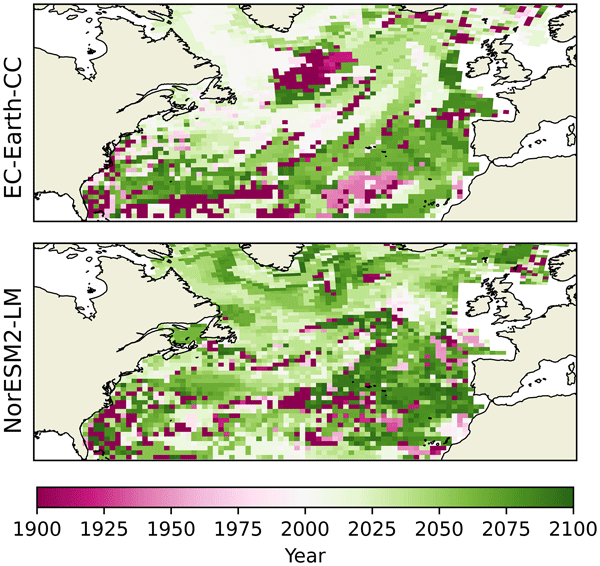
Jenny Hieronymus, Magnus Hieronymus, Matthias Gröger, Jörg Schwinger, Raffaele Bernadello, Etienne Tourigny, Valentina Sicardi, Itzel Ruvalcaba Baroni, and Klaus Wyser
Biogeosciences, 21, 2189–2206, https://doi.org/10.5194/bg-21-2189-2024, https://doi.org/10.5194/bg-21-2189-2024, 2024
Short summary
Short summary
The timing of the net primary production annual maxima in the North Atlantic in the period 1750–2100 is investigated using two Earth system models and the high-emissions scenario SSP5-8.5. It is found that, for most of the region, the annual maxima occur progressively earlier, with the most change occurring after the year 2000. Shifts in the seasonality of the primary production may impact the entire ecosystem, which highlights the need for long-term monitoring campaigns in this area.
Bjorn Stevens, Stefan Adami, Tariq Ali, Hartwig Anzt, Zafer Aslan, Sabine Attinger, Jaana Bäck, Johanna Baehr, Peter Bauer, Natacha Bernier, Bob Bishop, Hendryk Bockelmann, Sandrine Bony, Guy Brasseur, David N. Bresch, Sean Breyer, Gilbert Brunet, Pier Luigi Buttigieg, Junji Cao, Christelle Castet, Yafang Cheng, Ayantika Dey Choudhury, Deborah Coen, Susanne Crewell, Atish Dabholkar, Qing Dai, Francisco Doblas-Reyes, Dale Durran, Ayoub El Gaidi, Charlie Ewen, Eleftheria Exarchou, Veronika Eyring, Florencia Falkinhoff, David Farrell, Piers M. Forster, Ariane Frassoni, Claudia Frauen, Oliver Fuhrer, Shahzad Gani, Edwin Gerber, Debra Goldfarb, Jens Grieger, Nicolas Gruber, Wilco Hazeleger, Rolf Herken, Chris Hewitt, Torsten Hoefler, Huang-Hsiung Hsu, Daniela Jacob, Alexandra Jahn, Christian Jakob, Thomas Jung, Christopher Kadow, In-Sik Kang, Sarah Kang, Karthik Kashinath, Katharina Kleinen-von Königslöw, Daniel Klocke, Uta Kloenne, Milan Klöwer, Chihiro Kodama, Stefan Kollet, Tobias Kölling, Jenni Kontkanen, Steve Kopp, Michal Koran, Markku Kulmala, Hanna Lappalainen, Fakhria Latifi, Bryan Lawrence, June Yi Lee, Quentin Lejeun, Christian Lessig, Chao Li, Thomas Lippert, Jürg Luterbacher, Pekka Manninen, Jochem Marotzke, Satoshi Matsouoka, Charlotte Merchant, Peter Messmer, Gero Michel, Kristel Michielsen, Tomoki Miyakawa, Jens Müller, Ramsha Munir, Sandeep Narayanasetti, Ousmane Ndiaye, Carlos Nobre, Achim Oberg, Riko Oki, Tuba Özkan-Haller, Tim Palmer, Stan Posey, Andreas Prein, Odessa Primus, Mike Pritchard, Julie Pullen, Dian Putrasahan, Johannes Quaas, Krishnan Raghavan, Venkatachalam Ramaswamy, Markus Rapp, Florian Rauser, Markus Reichstein, Aromar Revi, Sonakshi Saluja, Masaki Satoh, Vera Schemann, Sebastian Schemm, Christina Schnadt Poberaj, Thomas Schulthess, Cath Senior, Jagadish Shukla, Manmeet Singh, Julia Slingo, Adam Sobel, Silvina Solman, Jenna Spitzer, Philip Stier, Thomas Stocker, Sarah Strock, Hang Su, Petteri Taalas, John Taylor, Susann Tegtmeier, Georg Teutsch, Adrian Tompkins, Uwe Ulbrich, Pier-Luigi Vidale, Chien-Ming Wu, Hao Xu, Najibullah Zaki, Laure Zanna, Tianjun Zhou, and Florian Ziemen
Earth Syst. Sci. Data, 16, 2113–2122, https://doi.org/10.5194/essd-16-2113-2024, https://doi.org/10.5194/essd-16-2113-2024, 2024
Short summary
Short summary
To manage Earth in the Anthropocene, new tools, new institutions, and new forms of international cooperation will be required. Earth Virtualization Engines is proposed as an international federation of centers of excellence to empower all people to respond to the immense and urgent challenges posed by climate change.
Stephanie Fiedler, Vaishali Naik, Fiona M. O'Connor, Christopher J. Smith, Paul Griffiths, Ryan J. Kramer, Toshihiko Takemura, Robert J. Allen, Ulas Im, Matthew Kasoar, Angshuman Modak, Steven Turnock, Apostolos Voulgarakis, Duncan Watson-Parris, Daniel M. Westervelt, Laura J. Wilcox, Alcide Zhao, William J. Collins, Michael Schulz, Gunnar Myhre, and Piers M. Forster
Geosci. Model Dev., 17, 2387–2417, https://doi.org/10.5194/gmd-17-2387-2024, https://doi.org/10.5194/gmd-17-2387-2024, 2024
Short summary
Short summary
Climate scientists want to better understand modern climate change. Thus, climate model experiments are performed and compared. The results of climate model experiments differ, as assessed in the latest Intergovernmental Panel on Climate Change (IPCC) assessment report. This article gives insights into the challenges and outlines opportunities for further improving the understanding of climate change. It is based on views of a group of experts in atmospheric composition–climate interactions.
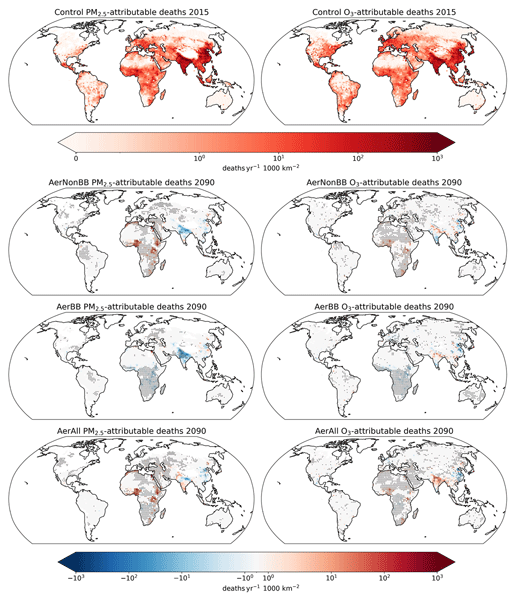
Christopher D. Wells, Matthew Kasoar, Majid Ezzati, and Apostolos Voulgarakis
Atmos. Chem. Phys., 24, 1025–1039, https://doi.org/10.5194/acp-24-1025-2024, https://doi.org/10.5194/acp-24-1025-2024, 2024
Short summary
Short summary
Human-driven emissions of air pollutants, mostly caused by burning fossil fuels, impact both the climate and human health. Millions of deaths each year are caused by air pollution globally, and the future trends are uncertain. Here, we use a global climate model to study the effect of African pollutant emissions on surface level air pollution, and resultant impacts on human health, in several future emission scenarios. We find much lower health impacts under cleaner, lower-emission futures.
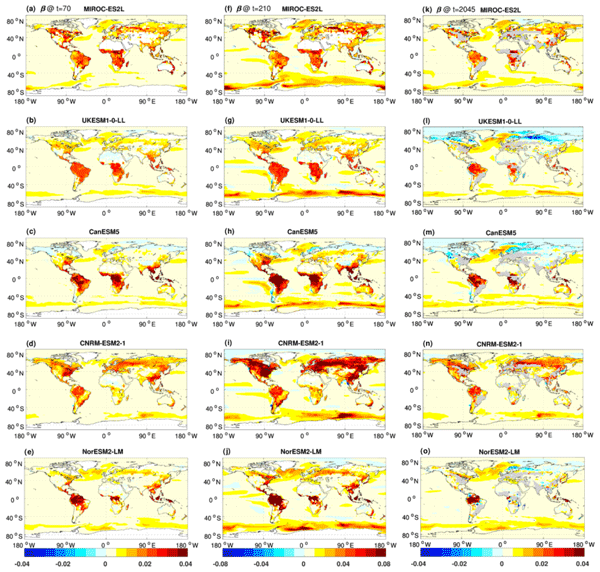
Ali Asaadi, Jörg Schwinger, Hanna Lee, Jerry Tjiputra, Vivek Arora, Roland Séférian, Spencer Liddicoat, Tomohiro Hajima, Yeray Santana-Falcón, and Chris D. Jones
Biogeosciences, 21, 411–435, https://doi.org/10.5194/bg-21-411-2024, https://doi.org/10.5194/bg-21-411-2024, 2024
Short summary
Short summary
Carbon cycle feedback metrics are employed to assess phases of positive and negative CO2 emissions. When emissions become negative, we find that the model disagreement in feedback metrics increases more strongly than expected from the assumption that the uncertainties accumulate linearly with time. The geographical patterns of such metrics over land highlight that differences in response between tropical/subtropical and temperate/boreal ecosystems are a major source of model disagreement.
Robert E. Kopp, Gregory G. Garner, Tim H. J. Hermans, Shantenu Jha, Praveen Kumar, Alexander Reedy, Aimée B. A. Slangen, Matteo Turilli, Tamsin L. Edwards, Jonathan M. Gregory, George Koubbe, Anders Levermann, Andre Merzky, Sophie Nowicki, Matthew D. Palmer, and Chris Smith
Geosci. Model Dev., 16, 7461–7489, https://doi.org/10.5194/gmd-16-7461-2023, https://doi.org/10.5194/gmd-16-7461-2023, 2023
Short summary
Short summary
Future sea-level rise projections exhibit multiple forms of uncertainty, all of which must be considered by scientific assessments intended to inform decision-making. The Framework for Assessing Changes To Sea-level (FACTS) is a new software package intended to support assessments of global mean, regional, and extreme sea-level rise. An early version of FACTS supported the development of the IPCC Sixth Assessment Report sea-level projections.
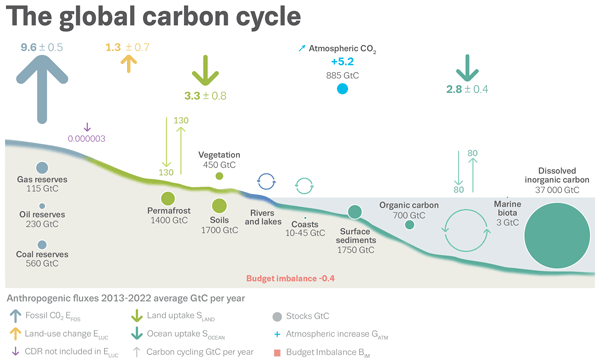
Pierre Friedlingstein, Michael O'Sullivan, Matthew W. Jones, Robbie M. Andrew, Dorothee C. E. Bakker, Judith Hauck, Peter Landschützer, Corinne Le Quéré, Ingrid T. Luijkx, Glen P. Peters, Wouter Peters, Julia Pongratz, Clemens Schwingshackl, Stephen Sitch, Josep G. Canadell, Philippe Ciais, Robert B. Jackson, Simone R. Alin, Peter Anthoni, Leticia Barbero, Nicholas R. Bates, Meike Becker, Nicolas Bellouin, Bertrand Decharme, Laurent Bopp, Ida Bagus Mandhara Brasika, Patricia Cadule, Matthew A. Chamberlain, Naveen Chandra, Thi-Tuyet-Trang Chau, Frédéric Chevallier, Louise P. Chini, Margot Cronin, Xinyu Dou, Kazutaka Enyo, Wiley Evans, Stefanie Falk, Richard A. Feely, Liang Feng, Daniel J. Ford, Thomas Gasser, Josefine Ghattas, Thanos Gkritzalis, Giacomo Grassi, Luke Gregor, Nicolas Gruber, Özgür Gürses, Ian Harris, Matthew Hefner, Jens Heinke, Richard A. Houghton, George C. Hurtt, Yosuke Iida, Tatiana Ilyina, Andrew R. Jacobson, Atul Jain, Tereza Jarníková, Annika Jersild, Fei Jiang, Zhe Jin, Fortunat Joos, Etsushi Kato, Ralph F. Keeling, Daniel Kennedy, Kees Klein Goldewijk, Jürgen Knauer, Jan Ivar Korsbakken, Arne Körtzinger, Xin Lan, Nathalie Lefèvre, Hongmei Li, Junjie Liu, Zhiqiang Liu, Lei Ma, Greg Marland, Nicolas Mayot, Patrick C. McGuire, Galen A. McKinley, Gesa Meyer, Eric J. Morgan, David R. Munro, Shin-Ichiro Nakaoka, Yosuke Niwa, Kevin M. O'Brien, Are Olsen, Abdirahman M. Omar, Tsuneo Ono, Melf Paulsen, Denis Pierrot, Katie Pocock, Benjamin Poulter, Carter M. Powis, Gregor Rehder, Laure Resplandy, Eddy Robertson, Christian Rödenbeck, Thais M. Rosan, Jörg Schwinger, Roland Séférian, T. Luke Smallman, Stephen M. Smith, Reinel Sospedra-Alfonso, Qing Sun, Adrienne J. Sutton, Colm Sweeney, Shintaro Takao, Pieter P. Tans, Hanqin Tian, Bronte Tilbrook, Hiroyuki Tsujino, Francesco Tubiello, Guido R. van der Werf, Erik van Ooijen, Rik Wanninkhof, Michio Watanabe, Cathy Wimart-Rousseau, Dongxu Yang, Xiaojuan Yang, Wenping Yuan, Xu Yue, Sönke Zaehle, Jiye Zeng, and Bo Zheng
Earth Syst. Sci. Data, 15, 5301–5369, https://doi.org/10.5194/essd-15-5301-2023, https://doi.org/10.5194/essd-15-5301-2023, 2023
Short summary
Short summary
The Global Carbon Budget 2023 describes the methodology, main results, and data sets used to quantify the anthropogenic emissions of carbon dioxide (CO2) and their partitioning among the atmosphere, land ecosystems, and the ocean over the historical period (1750–2023). These living datasets are updated every year to provide the highest transparency and traceability in the reporting of CO2, the key driver of climate change.
Mingyue Zhang, Eva Hartmann, Sebastian Wagner, Muralidhar Adakudlu, Niklas Luther, Christos Zerefos, and Elena Xoplaki
Clim. Past Discuss., https://doi.org/10.5194/cp-2023-77, https://doi.org/10.5194/cp-2023-77, 2023
Manuscript not accepted for further review
Short summary
Short summary
A transient regional paleoclimate simulation with all external forcings (solar, orbital, volcanic, GHG, and land use), at 0.44° resolution is presented. The mean climate between Early Roman Period and pre-industrial over Eastern Mediterranean & Nile River basin is compared. The availability of this modelling data enables us to compare the simulated output with proxy records, further link the climate events with societal change and provide insights into their impact on societal and human history.
Christoph Heinze, Thorsten Blenckner, Peter Brown, Friederike Fröb, Anne Morée, Adrian L. New, Cara Nissen, Stefanie Rynders, Isabel Seguro, Yevgeny Aksenov, Yuri Artioli, Timothée Bourgeois, Friedrich Burger, Jonathan Buzan, B. B. Cael, Veli Çağlar Yumruktepe, Melissa Chierici, Christopher Danek, Ulf Dieckmann, Agneta Fransson, Thomas Frölicher, Giovanni Galli, Marion Gehlen, Aridane G. González, Melchor Gonzalez-Davila, Nicolas Gruber, Örjan Gustafsson, Judith Hauck, Mikko Heino, Stephanie Henson, Jenny Hieronymus, I. Emma Huertas, Fatma Jebri, Aurich Jeltsch-Thömmes, Fortunat Joos, Jaideep Joshi, Stephen Kelly, Nandini Menon, Precious Mongwe, Laurent Oziel, Sólveig Ólafsdottir, Julien Palmieri, Fiz F. Pérez, Rajamohanan Pillai Ranith, Juliano Ramanantsoa, Tilla Roy, Dagmara Rusiecka, J. Magdalena Santana Casiano, Yeray Santana-Falcón, Jörg Schwinger, Roland Séférian, Miriam Seifert, Anna Shchiptsova, Bablu Sinha, Christopher Somes, Reiner Steinfeldt, Dandan Tao, Jerry Tjiputra, Adam Ulfsbo, Christoph Völker, Tsuyoshi Wakamatsu, and Ying Ye
Biogeosciences Discuss., https://doi.org/10.5194/bg-2023-182, https://doi.org/10.5194/bg-2023-182, 2023
Revised manuscript not accepted
Short summary
Short summary
For assessing the consequences of human-induced climate change for the marine realm, it is necessary to not only look at gradual changes but also at abrupt changes of environmental conditions. We summarise abrupt changes in ocean warming, acidification, and oxygen concentration as the key environmental factors for ecosystems. Taking these abrupt changes into account requires greenhouse gas emissions to be reduced to a larger extent than previously thought to limit respective damage.
Olivia Linke, Johannes Quaas, Finja Baumer, Sebastian Becker, Jan Chylik, Sandro Dahlke, André Ehrlich, Dörthe Handorf, Christoph Jacobi, Heike Kalesse-Los, Luca Lelli, Sina Mehrdad, Roel A. J. Neggers, Johannes Riebold, Pablo Saavedra Garfias, Niklas Schnierstein, Matthew D. Shupe, Chris Smith, Gunnar Spreen, Baptiste Verneuil, Kameswara S. Vinjamuri, Marco Vountas, and Manfred Wendisch
Atmos. Chem. Phys., 23, 9963–9992, https://doi.org/10.5194/acp-23-9963-2023, https://doi.org/10.5194/acp-23-9963-2023, 2023
Short summary
Short summary
Lapse rate feedback (LRF) is a major driver of the Arctic amplification (AA) of climate change. It arises because the warming is stronger at the surface than aloft. Several processes can affect the LRF in the Arctic, such as the omnipresent temperature inversion. Here, we compare multimodel climate simulations to Arctic-based observations from a large research consortium to broaden our understanding of these processes, find synergy among them, and constrain the Arctic LRF and AA.
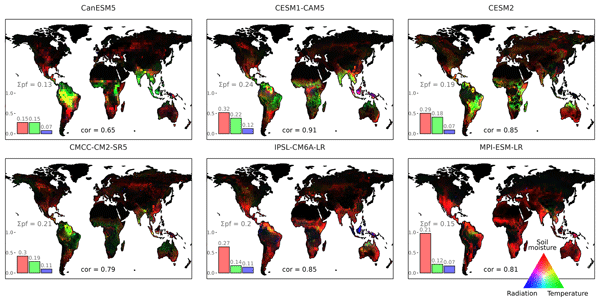
István Dunkl, Nicole Lovenduski, Alessio Collalti, Vivek K. Arora, Tatiana Ilyina, and Victor Brovkin
Biogeosciences, 20, 3523–3538, https://doi.org/10.5194/bg-20-3523-2023, https://doi.org/10.5194/bg-20-3523-2023, 2023
Short summary
Short summary
Despite differences in the reproduction of gross primary productivity (GPP) by Earth system models (ESMs), ESMs have similar predictability of the global carbon cycle. We found that, although GPP variability originates from different regions and is driven by different climatic variables across the ESMs, the ESMs rely on the same mechanisms to predict their own GPP. This shows that the predictability of the carbon cycle is limited by our understanding of variability rather than predictability.
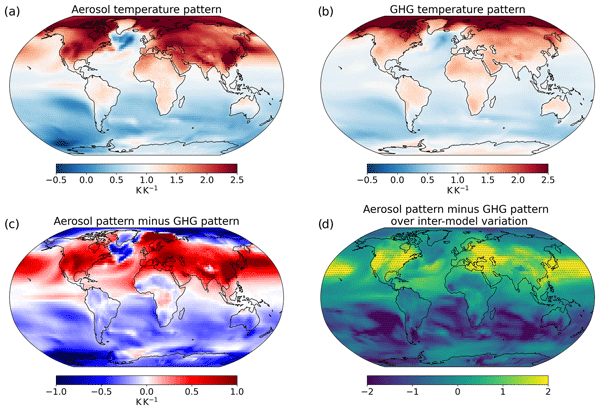
Christopher D. Wells, Lawrence S. Jackson, Amanda C. Maycock, and Piers M. Forster
Earth Syst. Dynam., 14, 817–834, https://doi.org/10.5194/esd-14-817-2023, https://doi.org/10.5194/esd-14-817-2023, 2023
Short summary
Short summary
There are many possibilities for future emissions, with different impacts in different places. Complex models can study these impacts but take a long time to run, even on powerful computers. Simple methods can be used to reduce this time by estimating the complex model output, but these are not perfect. This study looks at the accuracy of one of these techniques, showing that there are limitations to its use, especially for low-emission future scenarios.
Mark D. Zelinka, Christopher J. Smith, Yi Qin, and Karl E. Taylor
Atmos. Chem. Phys., 23, 8879–8898, https://doi.org/10.5194/acp-23-8879-2023, https://doi.org/10.5194/acp-23-8879-2023, 2023
Short summary
Short summary
The primary uncertainty in how strongly Earth's climate has been perturbed by human activities comes from the unknown radiative impact of aerosol changes. Accurately quantifying these forcings – and their sub-components – in climate models is crucial for understanding the past and future simulated climate. In this study we describe biases in previously published estimates of aerosol radiative forcing in climate models and provide corrected estimates along with code for users to compute them.
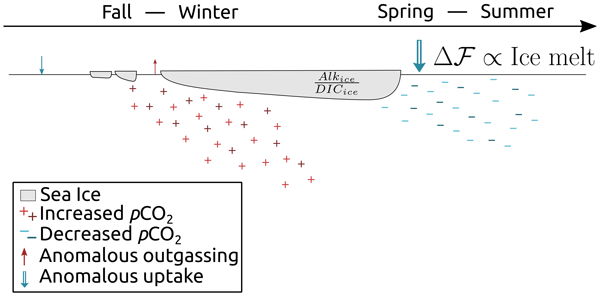
Benjamin Richaud, Katja Fennel, Eric C. J. Oliver, Michael D. DeGrandpre, Timothée Bourgeois, Xianmin Hu, and Youyu Lu
The Cryosphere, 17, 2665–2680, https://doi.org/10.5194/tc-17-2665-2023, https://doi.org/10.5194/tc-17-2665-2023, 2023
Short summary
Short summary
Sea ice is a dynamic carbon reservoir. Its seasonal growth and melt modify the carbonate chemistry in the upper ocean, with consequences for the Arctic Ocean carbon sink. Yet, the importance of this process is poorly quantified. Using two independent approaches, this study provides new methods to evaluate the error in air–sea carbon flux estimates due to the lack of biogeochemistry in ice in earth system models. Those errors range from 5 % to 30 %, depending on the model and climate projection.
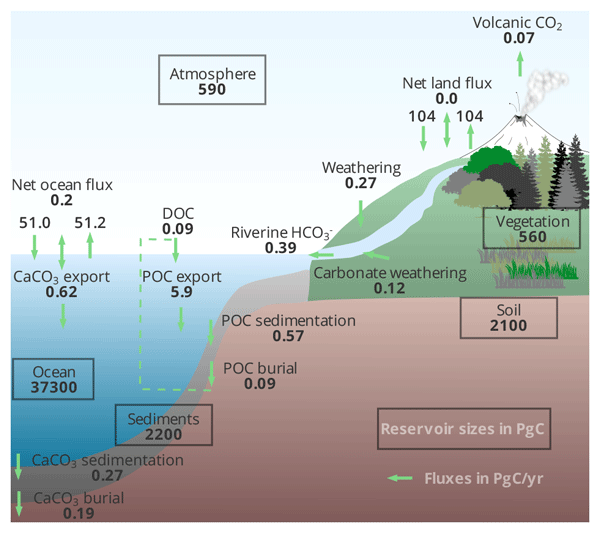
Matteo Willeit, Tatiana Ilyina, Bo Liu, Christoph Heinze, Mahé Perrette, Malte Heinemann, Daniela Dalmonech, Victor Brovkin, Guy Munhoven, Janine Börker, Jens Hartmann, Gibran Romero-Mujalli, and Andrey Ganopolski
Geosci. Model Dev., 16, 3501–3534, https://doi.org/10.5194/gmd-16-3501-2023, https://doi.org/10.5194/gmd-16-3501-2023, 2023
Short summary
Short summary
In this paper we present the carbon cycle component of the newly developed fast Earth system model CLIMBER-X. The model can be run with interactive atmospheric CO2 to investigate the feedbacks between climate and the carbon cycle on temporal scales ranging from decades to > 100 000 years. CLIMBER-X is expected to be a useful tool for studying past climate–carbon cycle changes and for the investigation of the long-term future evolution of the Earth system.
Piers M. Forster, Christopher J. Smith, Tristram Walsh, William F. Lamb, Robin Lamboll, Mathias Hauser, Aurélien Ribes, Debbie Rosen, Nathan Gillett, Matthew D. Palmer, Joeri Rogelj, Karina von Schuckmann, Sonia I. Seneviratne, Blair Trewin, Xuebin Zhang, Myles Allen, Robbie Andrew, Arlene Birt, Alex Borger, Tim Boyer, Jiddu A. Broersma, Lijing Cheng, Frank Dentener, Pierre Friedlingstein, José M. Gutiérrez, Johannes Gütschow, Bradley Hall, Masayoshi Ishii, Stuart Jenkins, Xin Lan, June-Yi Lee, Colin Morice, Christopher Kadow, John Kennedy, Rachel Killick, Jan C. Minx, Vaishali Naik, Glen P. Peters, Anna Pirani, Julia Pongratz, Carl-Friedrich Schleussner, Sophie Szopa, Peter Thorne, Robert Rohde, Maisa Rojas Corradi, Dominik Schumacher, Russell Vose, Kirsten Zickfeld, Valérie Masson-Delmotte, and Panmao Zhai
Earth Syst. Sci. Data, 15, 2295–2327, https://doi.org/10.5194/essd-15-2295-2023, https://doi.org/10.5194/essd-15-2295-2023, 2023
Short summary
Short summary
This is a critical decade for climate action, but there is no annual tracking of the level of human-induced warming. We build on the Intergovernmental Panel on Climate Change assessment reports that are authoritative but published infrequently to create a set of key global climate indicators that can be tracked through time. Our hope is that this becomes an important annual publication that policymakers, media, scientists and the public can refer to.
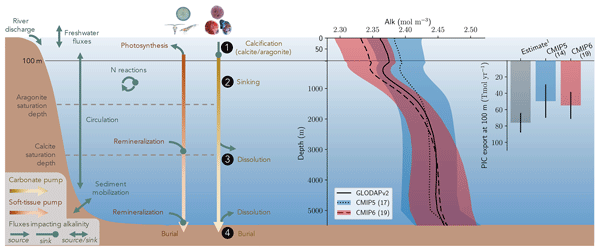
Alban Planchat, Lester Kwiatkowski, Laurent Bopp, Olivier Torres, James R. Christian, Momme Butenschön, Tomas Lovato, Roland Séférian, Matthew A. Chamberlain, Olivier Aumont, Michio Watanabe, Akitomo Yamamoto, Andrew Yool, Tatiana Ilyina, Hiroyuki Tsujino, Kristen M. Krumhardt, Jörg Schwinger, Jerry Tjiputra, John P. Dunne, and Charles Stock
Biogeosciences, 20, 1195–1257, https://doi.org/10.5194/bg-20-1195-2023, https://doi.org/10.5194/bg-20-1195-2023, 2023
Short summary
Short summary
Ocean alkalinity is critical to the uptake of atmospheric carbon and acidification in surface waters. We review the representation of alkalinity and the associated calcium carbonate cycle in Earth system models. While many parameterizations remain present in the latest generation of models, there is a general improvement in the simulated alkalinity distribution. This improvement is related to an increase in the export of biotic calcium carbonate, which closer resembles observations.

Christopher D. Wells, Matthew Kasoar, Nicolas Bellouin, and Apostolos Voulgarakis
Atmos. Chem. Phys., 23, 3575–3593, https://doi.org/10.5194/acp-23-3575-2023, https://doi.org/10.5194/acp-23-3575-2023, 2023
Short summary
Short summary
The climate is altered by greenhouse gases and air pollutant particles, and such emissions are likely to change drastically in the future over Africa. Air pollutants do not travel far, so their climate effect depends on where they are emitted. This study uses a climate model to find the climate impacts of future African pollutant emissions being either high or low. The particles absorb and scatter sunlight, causing the ground nearby to be cooler, but elsewhere the increased heat causes warming.
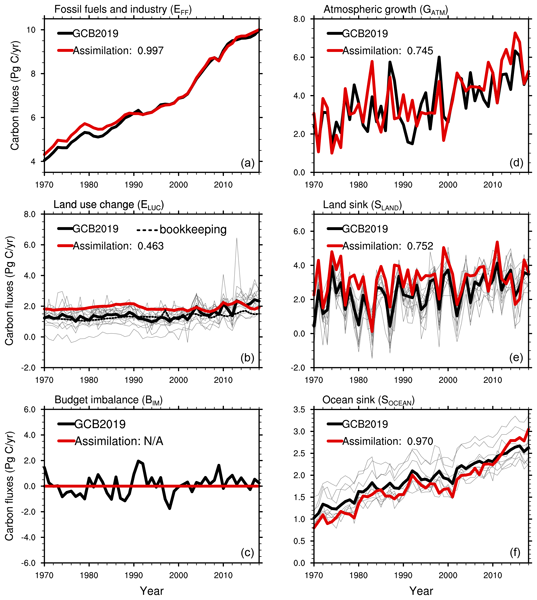
Hongmei Li, Tatiana Ilyina, Tammas Loughran, Aaron Spring, and Julia Pongratz
Earth Syst. Dynam., 14, 101–119, https://doi.org/10.5194/esd-14-101-2023, https://doi.org/10.5194/esd-14-101-2023, 2023
Short summary
Short summary
For the first time, our decadal prediction system based on Max Planck Institute Earth System Model enables prognostic atmospheric CO2 with an interactive carbon cycle. The evolution of CO2 fluxes and atmospheric CO2 growth is reconstructed well by assimilating data products; retrospective predictions show high confidence in predicting changes in the next year. The Earth system predictions provide valuable inputs for understanding the global carbon cycle and informing climate-relevant policy.
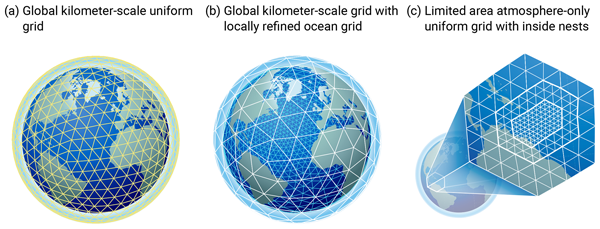
Cathy Hohenegger, Peter Korn, Leonidas Linardakis, René Redler, Reiner Schnur, Panagiotis Adamidis, Jiawei Bao, Swantje Bastin, Milad Behravesh, Martin Bergemann, Joachim Biercamp, Hendryk Bockelmann, Renate Brokopf, Nils Brüggemann, Lucas Casaroli, Fatemeh Chegini, George Datseris, Monika Esch, Geet George, Marco Giorgetta, Oliver Gutjahr, Helmuth Haak, Moritz Hanke, Tatiana Ilyina, Thomas Jahns, Johann Jungclaus, Marcel Kern, Daniel Klocke, Lukas Kluft, Tobias Kölling, Luis Kornblueh, Sergey Kosukhin, Clarissa Kroll, Junhong Lee, Thorsten Mauritsen, Carolin Mehlmann, Theresa Mieslinger, Ann Kristin Naumann, Laura Paccini, Angel Peinado, Divya Sri Praturi, Dian Putrasahan, Sebastian Rast, Thomas Riddick, Niklas Roeber, Hauke Schmidt, Uwe Schulzweida, Florian Schütte, Hans Segura, Radomyra Shevchenko, Vikram Singh, Mia Specht, Claudia Christine Stephan, Jin-Song von Storch, Raphaela Vogel, Christian Wengel, Marius Winkler, Florian Ziemen, Jochem Marotzke, and Bjorn Stevens
Geosci. Model Dev., 16, 779–811, https://doi.org/10.5194/gmd-16-779-2023, https://doi.org/10.5194/gmd-16-779-2023, 2023
Short summary
Short summary
Models of the Earth system used to understand climate and predict its change typically employ a grid spacing of about 100 km. Yet, many atmospheric and oceanic processes occur on much smaller scales. In this study, we present a new model configuration designed for the simulation of the components of the Earth system and their interactions at kilometer and smaller scales, allowing an explicit representation of the main drivers of the flow of energy and matter by solving the underlying equations.

Shuang Gao, Jörg Schwinger, Jerry Tjiputra, Ingo Bethke, Jens Hartmann, Emilio Mayorga, and Christoph Heinze
Biogeosciences, 20, 93–119, https://doi.org/10.5194/bg-20-93-2023, https://doi.org/10.5194/bg-20-93-2023, 2023
Short summary
Short summary
We assess the impact of riverine nutrients and carbon (C) on projected marine primary production (PP) and C uptake using a fully coupled Earth system model. Riverine inputs alleviate nutrient limitation and thus lessen the projected PP decline by up to 0.7 Pg C yr−1 globally. The effect of increased riverine C may be larger than the effect of nutrient inputs in the future on the projected ocean C uptake, while in the historical period increased nutrient inputs are considered the largest driver.
Leonidas Linardakis, Irene Stemmler, Moritz Hanke, Lennart Ramme, Fatemeh Chegini, Tatiana Ilyina, and Peter Korn
Geosci. Model Dev., 15, 9157–9176, https://doi.org/10.5194/gmd-15-9157-2022, https://doi.org/10.5194/gmd-15-9157-2022, 2022
Short summary
Short summary
In Earth system modelling, we are facing the challenge of making efficient use of very large machines, with millions of cores. To meet this challenge we will need to employ multi-level and multi-dimensional parallelism. Component concurrency, being a function parallel technique, offers an additional dimension to the traditional data-parallel approaches. In this paper we examine the behaviour of component concurrency and identify the conditions for its optimal application.
Jarmo S. Kikstra, Zebedee R. J. Nicholls, Christopher J. Smith, Jared Lewis, Robin D. Lamboll, Edward Byers, Marit Sandstad, Malte Meinshausen, Matthew J. Gidden, Joeri Rogelj, Elmar Kriegler, Glen P. Peters, Jan S. Fuglestvedt, Ragnhild B. Skeie, Bjørn H. Samset, Laura Wienpahl, Detlef P. van Vuuren, Kaj-Ivar van der Wijst, Alaa Al Khourdajie, Piers M. Forster, Andy Reisinger, Roberto Schaeffer, and Keywan Riahi
Geosci. Model Dev., 15, 9075–9109, https://doi.org/10.5194/gmd-15-9075-2022, https://doi.org/10.5194/gmd-15-9075-2022, 2022
Short summary
Short summary
Assessing hundreds or thousands of emission scenarios in terms of their global mean temperature implications requires standardised procedures of infilling, harmonisation, and probabilistic temperature assessments. We here present the open-source
climate-assessmentworkflow that was used in the IPCC AR6 Working Group III report. The paper provides key insight for anyone wishing to understand the assessment of climate outcomes of mitigation pathways in the context of the Paris Agreement.
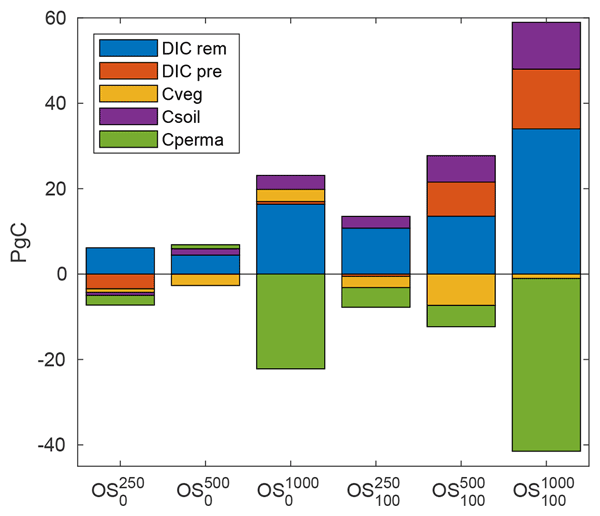
Jörg Schwinger, Ali Asaadi, Norman Julius Steinert, and Hanna Lee
Earth Syst. Dynam., 13, 1641–1665, https://doi.org/10.5194/esd-13-1641-2022, https://doi.org/10.5194/esd-13-1641-2022, 2022
Short summary
Short summary
We test whether climate change can be partially reversed if CO2 is removed from the atmosphere to compensate for too large past and near-term emissions by using idealized model simulations of overshoot pathways. On a timescale of 100 years, we find a high degree of reversibility if the overshoot size remains small, and we do not find tipping points even for intense overshoots. We caution that current Earth system models are most likely not able to skilfully model tipping points in ecosystems.
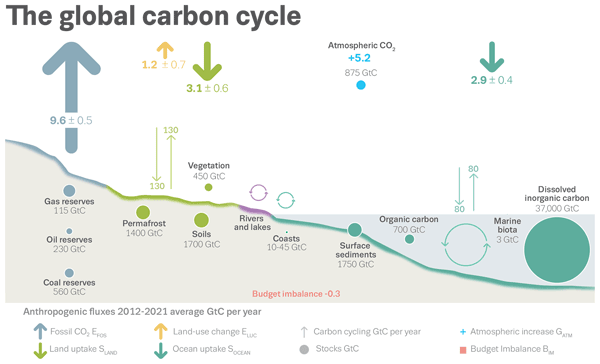
Pierre Friedlingstein, Michael O'Sullivan, Matthew W. Jones, Robbie M. Andrew, Luke Gregor, Judith Hauck, Corinne Le Quéré, Ingrid T. Luijkx, Are Olsen, Glen P. Peters, Wouter Peters, Julia Pongratz, Clemens Schwingshackl, Stephen Sitch, Josep G. Canadell, Philippe Ciais, Robert B. Jackson, Simone R. Alin, Ramdane Alkama, Almut Arneth, Vivek K. Arora, Nicholas R. Bates, Meike Becker, Nicolas Bellouin, Henry C. Bittig, Laurent Bopp, Frédéric Chevallier, Louise P. Chini, Margot Cronin, Wiley Evans, Stefanie Falk, Richard A. Feely, Thomas Gasser, Marion Gehlen, Thanos Gkritzalis, Lucas Gloege, Giacomo Grassi, Nicolas Gruber, Özgür Gürses, Ian Harris, Matthew Hefner, Richard A. Houghton, George C. Hurtt, Yosuke Iida, Tatiana Ilyina, Atul K. Jain, Annika Jersild, Koji Kadono, Etsushi Kato, Daniel Kennedy, Kees Klein Goldewijk, Jürgen Knauer, Jan Ivar Korsbakken, Peter Landschützer, Nathalie Lefèvre, Keith Lindsay, Junjie Liu, Zhu Liu, Gregg Marland, Nicolas Mayot, Matthew J. McGrath, Nicolas Metzl, Natalie M. Monacci, David R. Munro, Shin-Ichiro Nakaoka, Yosuke Niwa, Kevin O'Brien, Tsuneo Ono, Paul I. Palmer, Naiqing Pan, Denis Pierrot, Katie Pocock, Benjamin Poulter, Laure Resplandy, Eddy Robertson, Christian Rödenbeck, Carmen Rodriguez, Thais M. Rosan, Jörg Schwinger, Roland Séférian, Jamie D. Shutler, Ingunn Skjelvan, Tobias Steinhoff, Qing Sun, Adrienne J. Sutton, Colm Sweeney, Shintaro Takao, Toste Tanhua, Pieter P. Tans, Xiangjun Tian, Hanqin Tian, Bronte Tilbrook, Hiroyuki Tsujino, Francesco Tubiello, Guido R. van der Werf, Anthony P. Walker, Rik Wanninkhof, Chris Whitehead, Anna Willstrand Wranne, Rebecca Wright, Wenping Yuan, Chao Yue, Xu Yue, Sönke Zaehle, Jiye Zeng, and Bo Zheng
Earth Syst. Sci. Data, 14, 4811–4900, https://doi.org/10.5194/essd-14-4811-2022, https://doi.org/10.5194/essd-14-4811-2022, 2022
Short summary
Short summary
The Global Carbon Budget 2022 describes the datasets and methodology used to quantify the anthropogenic emissions of carbon dioxide (CO2) and their partitioning among the atmosphere, the land ecosystems, and the ocean. These living datasets are updated every year to provide the highest transparency and traceability in the reporting of CO2, the key driver of climate change.
Johannes Quaas, Hailing Jia, Chris Smith, Anna Lea Albright, Wenche Aas, Nicolas Bellouin, Olivier Boucher, Marie Doutriaux-Boucher, Piers M. Forster, Daniel Grosvenor, Stuart Jenkins, Zbigniew Klimont, Norman G. Loeb, Xiaoyan Ma, Vaishali Naik, Fabien Paulot, Philip Stier, Martin Wild, Gunnar Myhre, and Michael Schulz
Atmos. Chem. Phys., 22, 12221–12239, https://doi.org/10.5194/acp-22-12221-2022, https://doi.org/10.5194/acp-22-12221-2022, 2022
Short summary
Short summary
Pollution particles cool climate and offset part of the global warming. However, they are washed out by rain and thus their effect responds quickly to changes in emissions. We show multiple datasets to demonstrate that aerosol emissions and their concentrations declined in many regions influenced by human emissions, as did the effects on clouds. Consequently, the cooling impact on the Earth energy budget became smaller. This change in trend implies a relative warming.
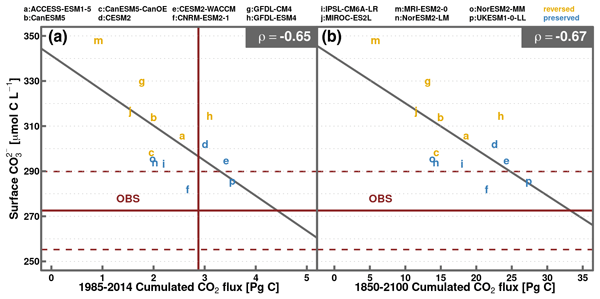
Pradeebane Vaittinada Ayar, Laurent Bopp, Jim R. Christian, Tatiana Ilyina, John P. Krasting, Roland Séférian, Hiroyuki Tsujino, Michio Watanabe, Andrew Yool, and Jerry Tjiputra
Earth Syst. Dynam., 13, 1097–1118, https://doi.org/10.5194/esd-13-1097-2022, https://doi.org/10.5194/esd-13-1097-2022, 2022
Short summary
Short summary
The El Niño–Southern Oscillation is the main driver for the natural variability of global atmospheric CO2. It modulates the CO2 fluxes in the tropical Pacific with anomalous CO2 influx during El Niño and outflux during La Niña. This relationship is projected to reverse by half of Earth system models studied here under the business-as-usual scenario. This study shows models that simulate a positive bias in surface carbonate concentrations simulate a shift in the ENSO–CO2 flux relationship.
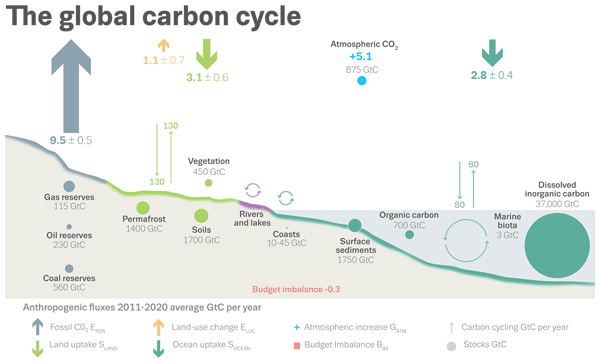
Pierre Friedlingstein, Matthew W. Jones, Michael O'Sullivan, Robbie M. Andrew, Dorothee C. E. Bakker, Judith Hauck, Corinne Le Quéré, Glen P. Peters, Wouter Peters, Julia Pongratz, Stephen Sitch, Josep G. Canadell, Philippe Ciais, Rob B. Jackson, Simone R. Alin, Peter Anthoni, Nicholas R. Bates, Meike Becker, Nicolas Bellouin, Laurent Bopp, Thi Tuyet Trang Chau, Frédéric Chevallier, Louise P. Chini, Margot Cronin, Kim I. Currie, Bertrand Decharme, Laique M. Djeutchouang, Xinyu Dou, Wiley Evans, Richard A. Feely, Liang Feng, Thomas Gasser, Dennis Gilfillan, Thanos Gkritzalis, Giacomo Grassi, Luke Gregor, Nicolas Gruber, Özgür Gürses, Ian Harris, Richard A. Houghton, George C. Hurtt, Yosuke Iida, Tatiana Ilyina, Ingrid T. Luijkx, Atul Jain, Steve D. Jones, Etsushi Kato, Daniel Kennedy, Kees Klein Goldewijk, Jürgen Knauer, Jan Ivar Korsbakken, Arne Körtzinger, Peter Landschützer, Siv K. Lauvset, Nathalie Lefèvre, Sebastian Lienert, Junjie Liu, Gregg Marland, Patrick C. McGuire, Joe R. Melton, David R. Munro, Julia E. M. S. Nabel, Shin-Ichiro Nakaoka, Yosuke Niwa, Tsuneo Ono, Denis Pierrot, Benjamin Poulter, Gregor Rehder, Laure Resplandy, Eddy Robertson, Christian Rödenbeck, Thais M. Rosan, Jörg Schwinger, Clemens Schwingshackl, Roland Séférian, Adrienne J. Sutton, Colm Sweeney, Toste Tanhua, Pieter P. Tans, Hanqin Tian, Bronte Tilbrook, Francesco Tubiello, Guido R. van der Werf, Nicolas Vuichard, Chisato Wada, Rik Wanninkhof, Andrew J. Watson, David Willis, Andrew J. Wiltshire, Wenping Yuan, Chao Yue, Xu Yue, Sönke Zaehle, and Jiye Zeng
Earth Syst. Sci. Data, 14, 1917–2005, https://doi.org/10.5194/essd-14-1917-2022, https://doi.org/10.5194/essd-14-1917-2022, 2022
Short summary
Short summary
The Global Carbon Budget 2021 describes the data sets and methodology used to quantify the emissions of carbon dioxide and their partitioning among the atmosphere, land, and ocean. These living data are updated every year to provide the highest transparency and traceability in the reporting of CO2, the key driver of climate change.
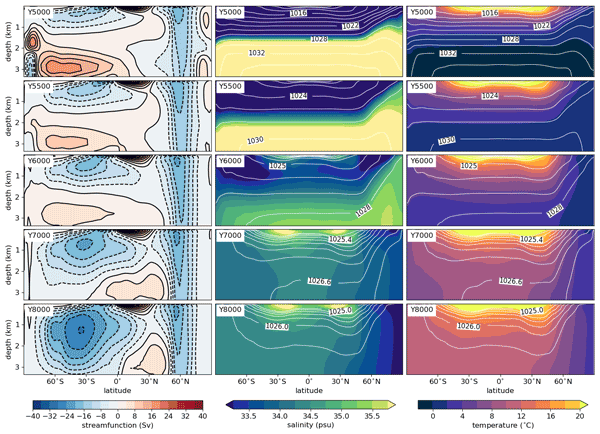
Lennart Ramme and Jochem Marotzke
Clim. Past, 18, 759–774, https://doi.org/10.5194/cp-18-759-2022, https://doi.org/10.5194/cp-18-759-2022, 2022
Short summary
Short summary
After the Marinoan snowball Earth, the climate warmed rapidly due to enhanced greenhouse conditions, and the freshwater inflow of melting glaciers caused a strong stratification of the ocean. Our climate simulations reveal a potentially only moderate global temperature increase and a break-up of the stratification within just a few thousand years. The findings give insights into the environmental conditions relevant for the geological and biological evolution during that time.
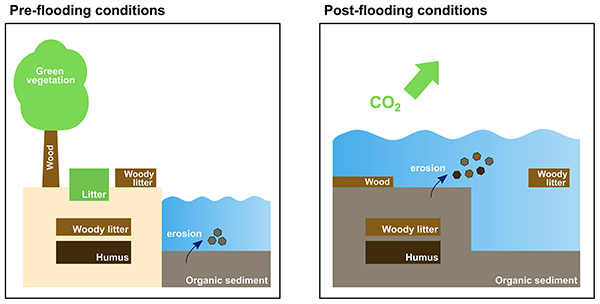
Thomas Extier, Katharina D. Six, Bo Liu, Hanna Paulsen, and Tatiana Ilyina
Clim. Past, 18, 273–292, https://doi.org/10.5194/cp-18-273-2022, https://doi.org/10.5194/cp-18-273-2022, 2022
Short summary
Short summary
The role of land–sea fluxes during deglacial flooding in ocean biogeochemistry and CO2 exchange remains poorly constrained due to the lack of climate models that consider such fluxes. We implement the terrestrial organic matter fluxes into the ocean at a transiently changing land–sea interface in MPI-ESM and investigate their effect during the last deglaciation. Most of the terrestrial carbon goes to the ocean during flooding events of Meltwater Pulse 1a, which leads to regional CO2 outgassing.
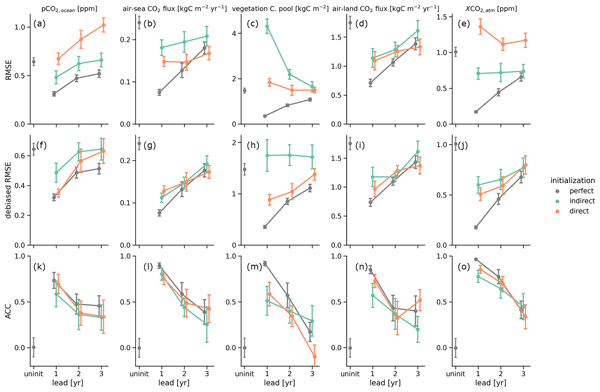
Aaron Spring, István Dunkl, Hongmei Li, Victor Brovkin, and Tatiana Ilyina
Earth Syst. Dynam., 12, 1139–1167, https://doi.org/10.5194/esd-12-1139-2021, https://doi.org/10.5194/esd-12-1139-2021, 2021
Short summary
Short summary
Numerical carbon cycle prediction models usually do not start from observed carbon states due to sparse observations. Instead, only physical climate is reconstructed, assuming that the carbon cycle follows indirectly. Here, we test in an idealized framework how well this indirect and direct reconstruction with perfect observations works. We find that indirect reconstruction works quite well and that improvements from the direct method are limited, strengthening the current indirect use.
Cited articles
Allen, M. R., Frame, D. J., Huntingford, C., Jones, C. D., Lowe, J. A., Meinshausen, M., and Meinshausen, N.: Warming caused by cumulative carbon emissions towards the trillionth tonne, Nature, 458, 1163, 2009. a
Andrews, T., Forster, P. M., Boucher, O., Bellouin, N., and Jones, A.: Precipitation, radiative forcing and global temperature change, Geophys. Res. Lett., 37, 2010GL043991, https://doi.org/10.1029/2010GL043991, 2010. a
Cassidy, L. J., King, A. D., Brown, J. R., MacDougall, A. H., Ziehn, T., Min, S.-K., and Jones, C. D.: Regional temperature extremes and vulnerability under net zero CO2 emissions, Environ. Res. Lett., 19, 014051, https://doi.org/10.1088/1748-9326/ad114a, 2024. a
Douglas, H. C., Revell, L. E., King, A., Harrington, L. J., and Frame, D. J.: Effects of temperature overshoot amplitude on regional climate, Environ. Res. Lett., 20, 114043, https://doi.org/10.1088/1748-9326/ae114f, 2025. a
Eyring, V., Bony, S., Meehl, G. A., Senior, C. A., Stevens, B., Stouffer, R. J., and Taylor, K. E.: Overview of the Coupled Model Intercomparison Project Phase 6 (CMIP6) experimental design and organization, Geosci. Model Dev., 9, 1937–1958, https://doi.org/10.5194/gmd-9-1937-2016, 2016. a
Forster, P. M., Smith, C., Walsh, T., Lamb, W. F., Lamboll, R., Cassou, C., Hauser, M., Hausfather, Z., Lee, J.-Y., Palmer, M. D., von Schuckmann, K., Slangen, A. B. A., Szopa, S., Trewin, B., Yun, J., Gillett, N. P., Jenkins, S., Matthews, H. D., Raghavan, K., Ribes, A., Rogelj, J., Rosen, D., Zhang, X., Allen, M., Aleluia Reis, L., Andrew, R. M., Betts, R. A., Borger, A., Broersma, J. A., Burgess, S. N., Cheng, L., Friedlingstein, P., Domingues, C. M., Gambarini, M., Gasser, T., Gütschow, J., Ishii, M., Kadow, C., Kennedy, J., Killick, R. E., Krummel, P. B., Liné, A., Monselesan, D. P., Morice, C., Mühle, J., Naik, V., Peters, G. P., Pirani, A., Pongratz, J., Minx, J. C., Rigby, M., Rohde, R., Savita, A., Seneviratne, S. I., Thorne, P., Wells, C., Western, L. M., van der Werf, G. R., Wijffels, S. E., Masson-Delmotte, V., and Zhai, P.: Indicators of Global Climate Change 2024: annual update of key indicators of the state of the climate system and human influence, Earth Syst. Sci. Data, 17, 2641–2680, https://doi.org/10.5194/essd-17-2641-2025, 2025. a
Frenger, I., Frey, S., Oschlies, A., Getzlaff, J., Martin, T., and Koeve, W.: Southern Ocean heat burp in a cooling world, AGU Advances, 6, e2025AV001700, https://doi.org/10.1029/2025AV001700, 2025. a
Friedlingstein, P., Cox, P., Betts, R., Bopp, L., Von Bloh, W., Brovkin, V., Cadule, P., Doney, S., Eby, M., Fung, I., Bala, G., John, J., Jones, C., Joos, F., Kato, T., Kawamiya, M., Knorr, W., Lindsay, K., Matthews, H. D., Raddatz, T., Rayner, P., Reick, C., Roeckner, E., Schnitzler, K.-G., Schnur, R., Strassmann, K., Weaver, A. J., Yoshikawa, C., and Zeng, N.: Climate–carbon cycle feedback analysis: results from the C4MIP model intercomparison, J. Climate, 19, 3337–3353, https://doi.org/10.1175/JCLI3800.1, 2006. a
Fyfe, J. C., Kharin, V. V., Swart, N., Flato, G. M., Sigmond, M., and Gillett, N. P.: Quantifying the influence of short-term emission reductions on climate, Science Advances, 7, eabf7133, https://doi.org/10.1126/sciadv.abf7133, 2021. a
Gjermundsen, A., Nummelin, A., Olivié, D., Bentsen, M., Seland, Ø., and Schulz, M.: Shutdown of Southern Ocean convection controls long-term greenhouse gas-induced warming, Nat. Geosci., 14, 724–731, https://doi.org/10.1038/s41561-021-00825-x, 2021. a, b
Hausfather, Z.: An assessment of current policy scenarios over the 21st century and the reduced plausibility of high-emissions pathways, Dialogues on Climate Change, 29768659241304854, https://doi.org/10.1177/29768659241304854, 2025. a
Hausfather, Z. and Peters, G. P.: Emissions – the `business as usual' story is misleading, Nature, 577, 618–620, https://doi.org/10.1038/d41586-020-00177-3, 2020. a
Jones, C. D., Arora, V., Friedlingstein, P., Bopp, L., Brovkin, V., Dunne, J., Graven, H., Hoffman, F., Ilyina, T., John, J. G., Jung, M., Kawamiya, M., Koven, C., Pongratz, J., Raddatz, T., Randerson, J. T., and Zaehle, S.: C4MIP – The Coupled Climate–Carbon Cycle Model Intercomparison Project: experimental protocol for CMIP6, Geosci. Model Dev., 9, 2853–2880, https://doi.org/10.5194/gmd-9-2853-2016, 2016. a, b
Keller, D. P., Lenton, A., Scott, V., Vaughan, N. E., Bauer, N., Ji, D., Jones, C. D., Kravitz, B., Muri, H., and Zickfeld, K.: The Carbon Dioxide Removal Model Intercomparison Project (CDRMIP): rationale and experimental protocol for CMIP6, Geosci. Model Dev., 11, 1133–1160, https://doi.org/10.5194/gmd-11-1133-2018, 2018. a, b
King, A. D., Ziehn, T., Chamberlain, M., Borowiak, A. R., Brown, J. R., Cassidy, L., Dittus, A. J., Grose, M., Maher, N., Paik, S., Perkins-Kirkpatrick, S. E., and Sengupta, A.: Exploring climate stabilisation at different global warming levels in ACCESS-ESM-1.5, Earth Syst. Dynam., 15, 1353–1383, https://doi.org/10.5194/esd-15-1353-2024, 2024. a
Koven, C. D., Arora, V. K., Cadule, P., Fisher, R. A., Jones, C. D., Lawrence, D. M., Lewis, J., Lindsay, K., Mathesius, S., Meinshausen, M., Mills, M., Nicholls, Z., Sanderson, B. M., Séférian, R., Swart, N. C., Wieder, W. R., and Zickfeld, K.: Multi-century dynamics of the climate and carbon cycle under both high and net negative emissions scenarios, Earth Syst. Dynam., 13, 885–909, https://doi.org/10.5194/esd-13-885-2022, 2022. a
Koven, C. D., Sanderson, B. M., and Swann, A. L. S.: Much of zero emissions commitment occurs before reaching net zero emissions, Environ. Res. Lett., 18, 014017, https://doi.org/10.1088/1748-9326/acab1a, 2023. a
Kug, J.-S., Oh, J.-H., An, S.-I., Yeh, S.-W., Min, S.-K., Son, S.-W., Kam, J., Ham, Y.-G., and Shin, J.: Hysteresis of the intertropical convergence zone to CO2 forcing, Nat. Clim. Change, 12, 47–53, https://doi.org/10.1038/s41558-021-01211-6, 2022. a
Lacroix, F., Burger, F. A., Silvy, Y., Schleussner, C., and Frölicher, T. L.: Persistently elevated high latitude ocean temperatures and global sea level following temporary temperature overshoots, Earths Future, 12, e2024EF004862, https://doi.org/10.1029/2024EF004862, 2024. a
Lee, J.-Y., Marotzke, J., Bala, G., Cao, L., Corti, S., Dunne, J., Engelbrecht, F., Fischer, E., Fyfe, J., Jones, C., Maycock, A., Mutemi, J., Ndiaye, O., Panickal, S., and Zhou, T.: Future global climate: scenario-based projections and near-term information, in: Climate Change 2021: The Physical Science Basis. Contribution of Working Group I to the Sixth Assessment Report of the Intergovernmental Panel on Climate Change, edited by: Masson-Delmotte, V., Zhai, P., Pirani, A., Connors, S. L., Péan, C., Berger, S., Caud, N., Chen, Y., Goldfarb, L., Gomis, M. I., Huang, M., Leitzell, K., Lonnoy, E., Matthews, J. B. R., Maycock, T. K., Waterfield, T., Yelekçi, O., Yu, R., and Zhou, B., Sect. 4, Cambridge University Press, Cambridge, UK and New York, NY, USA, https://doi.org/10.1017/9781009157896.006, 553–672, 2021. a, b
Lyon, C., Saupe, E. E., Smith, C. J., Hill, D. J., Beckerman, A. P., Stringer, L. C., Marchant, R., McKay, J., Burke, A., O'Higgins, P., Dunhill, A. M., Allen, B. J., Riel Salvatore, J., and Aze, T.: Climate change research and action must look beyond 2100, Glob. Change Biol., 28, 349–361, https://doi.org/10.1111/gcb.15871, 2022. a
MacDougall, A. H., Frölicher, T. L., Jones, C. D., Rogelj, J., Matthews, H. D., Zickfeld, K., Arora, V. K., Barrett, N. J., Brovkin, V., Burger, F. A., Eby, M., Eliseev, A. V., Hajima, T., Holden, P. B., Jeltsch-Thömmes, A., Koven, C., Mengis, N., Menviel, L., Michou, M., Mokhov, I. I., Oka, A., Schwinger, J., Séférian, R., Shaffer, G., Sokolov, A., Tachiiri, K., Tjiputra , J., Wiltshire, A., and Ziehn, T.: Is there warming in the pipeline? A multi-model analysis of the Zero Emissions Commitment from CO2, Biogeosciences, 17, 2987–3016, https://doi.org/10.5194/bg-17-2987-2020, 2020. a, b, c
MacDougall, A. H., Mallett, J., Hohn, D., and Mengis, N.: Substantial regional climate change expected following cessation of CO2 emissions, Environ. Res. Lett., 17, 114046, https://doi.org/10.1088/1748-9326/ac9f59, 2022. a
Matthews, H. D., Gillett, N. P., Stott, P. A., and Zickfeld, K.: The proportionality of global warming to cumulative carbon emissions, Nature, 459, 829–832, https://doi.org/10.1038/nature08047, 2009. a
Mauritsen, T., Bader, J., Becker, T., Behrens, J., Bittner, M., Brokopf, R., Brovkin, V., Claussen, M., Crueger, T., Esch, M., Fast, I., Fiedler, S., Fläschner, D., Gayler, V., Giorgetta, M., Goll, D. S., Haak, H., Hagemann, S., Hedemann, C., Hohenegger, C., Ilyina, T., Jahns, T., Jimenéz de la Cuesta, D., Jungclaus, J., Kleinen, T., Kloster, S., Kracher, D., Kinne, S., Kleberg, D., Lasslop, G., Kornblueh, L., Marotzke, J., Matei, D., Meraner, K., Mikolajewicz, U., Modali, K., Möbis, B., Müller, W. A., Nabel, J. E. M. S., Nam, C. C. W., Notz, D., Nyawira, S., Paulsen, H., Peters, K., Pincus, R., Pohlmann, H., Pongratz, J., Popp, M., Raddatz, T. J., Rast, S., Redler, R., Reick, C. H., Rohrschneider, T., Schemann, V., Schmidt, H., Schnur, R., Schulzweida, U., Six, K. D., Stein, L., Stemmler, I., Stevens, B., Von Storch, J., Tian, F., Voigt, A., Vrese, P., Wieners, K., Wilkenskjeld, S., Winkler, A., and Roeckner, E.: Developments in the MPI M Earth system model version 1.2 (MPI ESM1.2) and its response to increasing CO2, J. Adv. Model. Earth Sy., 11, 998–1038, https://doi.org/10.1029/2018MS001400, 2019. a
Meinshausen, M., Raper, S. C. B., and Wigley, T. M. L.: Emulating coupled atmosphere-ocean and carbon cycle models with a simpler model, MAGICC6 – Part 1: Model description and calibration, Atmos. Chem. Phys., 11, 1417–1456, https://doi.org/10.5194/acp-11-1417-2011, 2011. a
Meinshausen, M., Vogel, E., Nauels, A., Lorbacher, K., Meinshausen, N., Etheridge, D. M., Fraser, P. J., Montzka, S. A., Rayner, P. J., Trudinger, C. M., Krummel, P. B., Beyerle, U., Canadell, J. G., Daniel, J. S., Enting, I. G., Law, R. M., Lunder, C. R., O'Doherty, S., Prinn, R. G., Reimann, S., Rubino, M., Velders, G. J. M., Vollmer, M. K., Wang, R. H. J., and Weiss, R.: Historical greenhouse gas concentrations for climate modelling (CMIP6), Geosci. Model Dev., 10, 2057–2116, https://doi.org/10.5194/gmd-10-2057-2017, 2017. a, b
Meinshausen, M., Nicholls, Z. R. J., Lewis, J., Gidden, M. J., Vogel, E., Freund, M., Beyerle, U., Gessner, C., Nauels, A., Bauer, N., Canadell, J. G., Daniel, J. S., John, A., Krummel, P. B., Luderer, G., Meinshausen, N., Montzka, S. A., Rayner, P. J., Reimann, S., Smith, S. J., van den Berg, M., Velders, G. J. M., Vollmer, M. K., and Wang, R. H. J.: The shared socio-economic pathway (SSP) greenhouse gas concentrations and their extensions to 2500, Geosci. Model Dev., 13, 3571–3605, https://doi.org/10.5194/gmd-13-3571-2020, 2020. a, b, c, d, e
Moreno-Chamarro, E., Marshall, J., and Delworth, T. L.: Linking ITCZ migrations to the AMOC and North Atlantic/Pacific SST decadal variability, J. Climate, 33, 893–905, https://doi.org/10.1175/JCLI-D-19-0258.1, 2020. a
Murphy, J. M., Booth, B. B. B., Boulton, C. A., Clark, R. T., Harris, G. R., Lowe, J. A., and Sexton, D. M. H.: Transient climate changes in a perturbed parameter ensemble of emissions-driven earth system model simulations, Clim. Dynam., 43, 2855–2885, https://doi.org/10.1007/s00382-014-2097-5, 2014. a
Nauels, A., Nicholls, Z., Möller, T., Hermans, T. H. J., Mengel, M., Kloenne, U., Smith, C., Slangen, A. B. A., and Palmer, M. D.: Multi-century global and regional sea-level rise commitments from cumulative greenhouse gas emissions in the coming decades, Nat. Clim. Change, https://doi.org/10.1038/s41558-025-02452-5, 2025. a
O'Neill, B. C., Tebaldi, C., van Vuuren, D. P., Eyring, V., Friedlingstein, P., Hurtt, G., Knutti, R., Kriegler, E., Lamarque, J.-F., Lowe, J., Meehl, G. A., Moss, R., Riahi, K., and Sanderson, B. M.: The Scenario Model Intercomparison Project (ScenarioMIP) for CMIP6, Geosci. Model Dev., 9, 3461–3482, https://doi.org/10.5194/gmd-9-3461-2016, 2016. a, b, c
Oschlies, A., Brandt, P., Stramma, L., and Schmidtko, S.: Drivers and mechanisms of ocean deoxygenation, Nat. Geosci., 11, 467–473, https://doi.org/10.1038/s41561-018-0152-2, 2018. a
Pfleiderer, P., Schleussner, C.-F., and Sillmann, J.: Limited reversal of regional climate signals in overshoot scenarios, Environmental Research: Climate, 3, 015005, https://doi.org/10.1088/2752-5295/ad1c45, 2024. a, b
Rahmstorf, S.: Bifurcations of the Atlantic thermohaline circulation in response to changes in the hydrological cycle, Nature, 378, 145–149, https://doi.org/10.1038/378145a0, 1995. a
Riahi, K., Schaeffer, R., Arango, J., Calvin, K., Guivarch, C., Hasegawa, T., Jiang, K., Kriegler, E., Matthews, R., Peters, G. P., Rao, A., Robertson, S., Sebbit, A. M., Steinberger, J., Tavoni, M., and Van Vuuren, D. P.: Mitigation pathways compatible with long-term goals., in: IPCC, 2022: Climate Change 2022: Mitigation of Climate Change. Contribution of Working Group III to the Sixth Assessment Report of the Intergovernmental Panel on Climate Change, edited by: Shukla, P. R., Skea, J., Slade, R., Khourdajie, A. A., van Diemen, R., McCollum, D., Pathak, M., Some, S., Vyas, P., Fradera, R., Belkacemi, M., Hasija, A., Lisboa, G., Luz, S., and Malley, J., Cambridge University Press, Cambridge, UK and New York, NY, USA, https://doi.org/10.1017/9781009157926.005, 2022. a
Rogelj, J., Popp, A., Calvin, K. V., Luderer, G., Emmerling, J., Gernaat, D., Fujimori, S., Strefler, J., Hasegawa, T., Marangoni, G., Krey, V., Kriegler, E., Riahi, K., van Vuuren, D. P., Doelman, J., Drouet, L., Edmonds, J., Fricko, O., Harmsen, M., Havlík, P., Humpenöder, F., Stehfest, E., and Tavoni, M.: Scenarios towards limiting global mean temperature increase below 1.5 °C, Nat. Clim. Change, 8, 325–332, https://doi.org/10.1038/s41558-018-0091-3, 2018. a
Roldán-Gómez, P. J., De Luca, P., Bernardello, R., and Donat, M. G.: Regional irreversibility of mean and extreme surface air temperature and precipitation in CMIP6 overshoot scenarios associated with interhemispheric temperature asymmetries, Earth Syst. Dynam., 16, 1–27, https://doi.org/10.5194/esd-16-1-2025, 2025a. a, b, c
Roldán-Gómez, P. J., Ortega, P., and Donat, M. G.: Contribution of meridional overturning circulation and sea ice changes to large-scale temperature asymmetries in CMIP6 overshoot scenarios, Ocean Sci., 21, 2283–2303, https://doi.org/10.5194/os-21-2283-2025, 2025b. a, b
Rosenzweig, C., Arnell, N. W., Ebi, K. L., Lotze-Campen, H., Raes, F., Rapley, C., Smith, M. S., Cramer, W., Frieler, K., Reyer, C. P. O., Schewe, J., Van Vuuren, D., and Warszawski, L.: Assessing inter-sectoral climate change risks: the role of ISIMIP, Environ. Res. Lett., 12, 010301, https://doi.org/10.1088/1748-9326/12/1/010301, 2017. a
Sanderson, B. M., Booth, B. B. B., Dunne, J., Eyring, V., Fisher, R. A., Friedlingstein, P., Gidden, M. J., Hajima, T., Jones, C. D., Jones, C. G., King, A., Koven, C. D., Lawrence, D. M., Lowe, J., Mengis, N., Peters, G. P., Rogelj, J., Smith, C., Snyder, A. C., Simpson, I. R., Swann, A. L. S., Tebaldi, C., Ilyina, T., Schleussner, C.-F., Séférian, R., Samset, B. H., van Vuuren, D., and Zaehle, S.: The need for carbon-emissions-driven climate projections in CMIP7, Geosci. Model Dev., 17, 8141–8172, https://doi.org/10.5194/gmd-17-8141-2024, 2024. a, b, c
Sarofim, M. C., Smith, C. J., Malek, P., McDuffie, E. E., Hartin, C. A., Lay, C. R., and McGrath, S.: High radiative forcing climate scenario relevance analyzed with a ten-million-member ensemble, Nat. Commun., 15, 8185, https://doi.org/10.1038/s41467-024-52437-9, 2024. a
Schleussner, C.-F., Ganti, G., Lejeune, Q., Zhu, B., Pfleiderer, P., Prütz, R., Ciais, P., Frölicher, T. L., Fuss, S., Gasser, T., Gidden, M. J., Kropf, C. M., Lacroix, F., Lamboll, R., Martyr, R., Maussion, F., McCaughey, J. W., Meinshausen, M., Mengel, M., Nicholls, Z., Quilcaille, Y., Sanderson, B., Seneviratne, S. I., Sillmann, J., Smith, C. J., Steinert, N. J., Theokritoff, E., Warren, R., Price, J., and Rogelj, J.: Overconfidence in climate overshoot, Nature, 634, 366–373, https://doi.org/10.1038/s41586-024-08020-9, 2024. a, b, c
Schoenberg, W., Blanz, B., Rajah, J. K., Callegari, B., Wells, C., Breier, J., Grimeland, M. B., Lindqvist, A. N., Ramme, L., Smith, C., Li, C., Mashhadi, S., Muralidhar, A., and Mauritzen, C.: An overview of FRIDA v2.1: a feedback-based, fully coupled, global integrated assessment model of climate and humans, Geosci. Model Dev., 18, 8047–8069, https://doi.org/10.5194/gmd-18-8047-2025, 2025. a
Schwinger, J., Asaadi, A., Goris, N., and Lee, H.: Possibility for strong northern hemisphere high-latitude cooling under negative emissions, Nat. Commun., 13, 1095, https://doi.org/10.1038/s41467-022-28573-5, 2022a. a, b, c
Schwinger, J., Asaadi, A., Steinert, N. J., and Lee, H.: Emit now, mitigate later? Earth system reversibility under overshoots of different magnitudes and durations, Earth Syst. Dynam., 13, 1641–1665, https://doi.org/10.5194/esd-13-1641-2022, 2022b. a, b, c
Seland, Ø., Bentsen, M., Olivié, D., Toniazzo, T., Gjermundsen, A., Graff, L. S., Debernard, J. B., Gupta, A. K., He, Y.-C., Kirkevåg, A., Schwinger, J., Tjiputra, J., Aas, K. S., Bethke, I., Fan, Y., Griesfeller, J., Grini, A., Guo, C., Ilicak, M., Karset, I. H. H., Landgren, O., Liakka, J., Moseid, K. O., Nummelin, A., Spensberger, C., Tang, H., Zhang, Z., Heinze, C., Iversen, T., and Schulz, M.: Overview of the Norwegian Earth System Model (NorESM2) and key climate response of CMIP6 DECK, historical, and scenario simulations, Geosci. Model Dev., 13, 6165–6200, https://doi.org/10.5194/gmd-13-6165-2020, 2020. a, b
Sigmond, M., Fyfe, J. C., Saenko, O. A., and Swart, N. C.: Ongoing AMOC and related sea-level and temperature changes after achieving the Paris targets, Nat. Clim. Change, 10, 672–677, https://doi.org/10.1038/s41558-020-0786-0, 2020. a
Smith, C., Nicholls, Z. R. J., Armour, K., Collins, W., Forster, P., Meinshausen, M., Palmer, M. D., and Watanabe, M.: The Earth's energy budget, climate feedbacks, and climate sensitivity supplementary material, in: Climate Change 2021: The Physical Science Basis. Contribution of Working Group I to the Sixth Assessment Report of the Intergovernmental Panel on Climate Change, edited by: Masson-Delmotte, V., Zhai, P., Pirani, A., Connors, S. L., Péan, C., Berger, S., Caud, N., Chen, Y., Goldfarb, L., Gomis, M. I., Huang, M., Leitzell, K., Lonnoy, E., Matthews, J. B. R., Maycock, T. K., Waterfield, T., Yelekçi, O., Yu, R., and Zhou, B., Sect. 7.SM, Cambridge University Press, Cambridge, UK and New York, NY, USA, https://www.ipcc.ch/report/ar6/wg1/downloads/report/IPCC_AR6_WGI_Chapter07_SM.pdf (last access: 22 June 2026), 1–35, 2021. a
Solomon, S., Plattner, G.-K., Knutti, R., and Friedlingstein, P.: Irreversible climate change due to carbon dioxide emissions, P. Natl. Acad. Sci. USA, 106, 1704–1709, https://doi.org/10.1073/pnas.0812721106, 2009. a
Steinert, N. J., Schwinger, J., Chadwick, R., Kug, J., and Lee, H.: Irreversible land water availability changes from a potential ITCZ shift during temperature overshoot, Earths Future, 13, e2024EF005787, https://doi.org/10.1029/2024EF005787, 2025. a
Stevens, B., Fiedler, S., Kinne, S., Peters, K., Rast, S., Müsse, J., Smith, S. J., and Mauritsen, T.: MACv2-SP: a parameterization of anthropogenic aerosol optical properties and an associated Twomey effect for use in CMIP6, Geosci. Model Dev., 10, 433–452, https://doi.org/10.5194/gmd-10-433-2017, 2017. a
Tang, G., Nicholls, Z., Jones, C., Gasser, T., Norton, A., Ziehn, T., Romero-Prieto, A., and Meinshausen, M.: Investigating carbon and nitrogen conservation in reported CMIP6 Earth system model data, Geosci. Model Dev., 18, 2111–2136, https://doi.org/10.5194/gmd-18-2111-2025, 2025. a
Taylor, K. E., Stouffer, R. J., and Meehl, G. A.: An Overview of CMIP5 and the experiment design, B. Am. Meteorol. Soc., 93, 485–498, https://doi.org/10.1175/BAMS-D-11-00094.1, 2012. a
Tebaldi, C., Debeire, K., Eyring, V., Fischer, E., Fyfe, J., Friedlingstein, P., Knutti, R., Lowe, J., O'Neill, B., Sanderson, B., van Vuuren, D., Riahi, K., Meinshausen, M., Nicholls, Z., Tokarska, K. B., Hurtt, G., Kriegler, E., Lamarque, J.-F., Meehl, G., Moss, R., Bauer, S. E., Boucher, O., Brovkin, V., Byun, Y.-H., Dix, M., Gualdi, S., Guo, H., John, J. G., Kharin, S., Kim, Y., Koshiro, T., Ma, L., Olivié, D., Panickal, S., Qiao, F., Rong, X., Rosenbloom, N., Schupfner, M., Séférian, R., Sellar, A., Semmler, T., Shi, X., Song, Z., Steger, C., Stouffer, R., Swart, N., Tachiiri, K., Tang, Q., Tatebe, H., Voldoire, A., Volodin, E., Wyser, K., Xin, X., Yang, S., Yu, Y., and Ziehn, T.: Climate model projections from the Scenario Model Intercomparison Project (ScenarioMIP) of CMIP6, Earth Syst. Dynam., 12, 253–293, https://doi.org/10.5194/esd-12-253-2021, 2021. a, b
Tjiputra, J. F., Schwinger, J., Bentsen, M., Morée, A. L., Gao, S., Bethke, I., Heinze, C., Goris, N., Gupta, A., He, Y.-C., Olivié, D., Seland, Ø., and Schulz, M.: Ocean biogeochemistry in the Norwegian Earth System Model version 2 (NorESM2), Geosci. Model Dev., 13, 2393–2431, https://doi.org/10.5194/gmd-13-2393-2020, 2020. a
Tokarska, K. B. and Zickfeld, K.: The effectiveness of net negative carbon dioxide emissions in reversing anthropogenic climate change, Environ. Res. Lett., 10, 094013, https://doi.org/10.1088/1748-9326/10/9/094013, 2015. a
Van Vuuren, D. P., O'Neill, B. C., Tebaldi, C., Sanderson, B. M., Chini, L. P., Friedlingstein, P., Hasegawa, T., Riahi, K., Govindasamy, B., Bauer, N., Eyring, V., Fall, C. M. N., Frieler, K., Gidden, M. J., Gohar, L. K., Högner, A., Jones, A. D., Kikstra, J., King, A., Knutti, R., Kriegler, E., Lawrence, P., Lennard, C., Lowe, J., Mathison, C., Mehmood, S., Nicholls, Z., Prado, L. F., Zhang, Q., Rose, S. K., Ruane, A. C., Sandstad, M., Schleussner, C.-F., Seferian, R., Sillmann, J., Smith, C., Sörensson, A. A., Panickal, S., Tachiiri, K., Vaughan, N., Vishwanathan, S. S., Yokohata, T., Zecchetto, M., and Ziehn, T.: The Scenario Model Intercomparison Project for CMIP7 (ScenarioMIP-CMIP7), Geosci. Model Dev., 19, 2627–2656, https://doi.org/10.5194/gmd-19-2627-2026, 2026. a, b
Wells, C. D., Blanz, B., Ramme, L., Breier, J., Callegari, B., Muralidhar, A., Rajah, J. K., Lindqvist, A. N., Eriksson, A. E., Schoenberg, W. A., Köberle, A. C., Wang-Erlandsson, L., Mauritzen, C., Grimeland, M. B., and Smith, C.: The representation of climate impacts in the FRIDAv2.1 Integrated Assessment Model, Geosci. Model Dev., 19, 1229–1260, https://doi.org/10.5194/gmd-19-1229-2026, 2026a. a
Wells, C. D., Cummins, D. P., He, H., and Smith, C.: Long run emulator calibration increases warming and sea-level rise projections, Environ. Res. Lett., 21, 034008, https://doi.org/10.1088/1748-9326/ae3847, 2026b. a
Wigley, T. M. L. and Raper, S. C. B.: Thermal expansion of sea water associated with global warming, Nature, 330, 127–131, https://doi.org/10.1038/330127a0, 1987. a
Woodard, D. L., Davis, S. J., and Randerson, J. T.: Economic carbon cycle feedbacks may offset additional warming from natural feedbacks, P. Natl. Acad. Sci. USA, 116, 759–764, https://doi.org/10.1073/pnas.1805187115, 2019. a
Wunderling, N., von der Heydt, A. S., Aksenov, Y., Barker, S., Bastiaansen, R., Brovkin, V., Brunetti, M., Couplet, V., Kleinen, T., Lear, C. H., Lohmann, J., Roman-Cuesta, R. M., Sinet, S., Swingedouw, D., Winkelmann, R., Anand, P., Barichivich, J., Bathiany, S., Baudena, M., Bruun, J. T., Chiessi, C. M., Coxall, H. K., Docquier, D., Donges, J. F., Falkena, S. K. J., Klose, A. K., Obura, D., Rocha, J., Rynders, S., Steinert, N. J., and Willeit, M.: Climate tipping point interactions and cascades: a review, Earth Syst. Dynam., 15, 41–74, https://doi.org/10.5194/esd-15-41-2024, 2024. a
Short summary
We run two Earth System Models models in CO2 emissions-driven mode to 2300 for three climate scenarios. For climate overshoot scenarios, there is a large residual warming in the 22nd century in one model, despite negative CO2 emissions, related to Southern Ocean heat release. In both models, while global mean surface temperature is largely reversible, other global and regional climate models exhibit hysteresis and irreversibility.
We run two Earth System Models models in CO2 emissions-driven mode to 2300 for three climate...


Altmetrics
Final-revised paper
Preprint