
Articles | Volume 16, issue 6
https://doi.org/10.5194/esd-16-2225-2025
© Author(s) 2025. This work is distributed under
the Creative Commons Attribution 4.0 License.
the Creative Commons Attribution 4.0 License.
https://doi.org/10.5194/esd-16-2225-2025
© Author(s) 2025. This work is distributed under
the Creative Commons Attribution 4.0 License.
the Creative Commons Attribution 4.0 License.
Research article
| 
17 Dec 2025
Research article |
| 17 Dec 2025
| 17 Dec 2025
Multi-annual predictions of hot, dry and hot-dry compound extremes

Barcelona Supercomputing Center (BSC), Barcelona, Spain
Universitat de Barcelona, Barcelona, Spain
Paolo De Luca
Barcelona Supercomputing Center (BSC), Barcelona, Spain
Carlos Delgado-Torres
Barcelona Supercomputing Center (BSC), Barcelona, Spain
Balakrishnan Solaraju-Murali
Barcelona Supercomputing Center (BSC), Barcelona, Spain
Zurich Insurance, Via Augusta 200, 08021, Barcelona
Margarida Samso Cabre
Barcelona Supercomputing Center (BSC), Barcelona, Spain
Markus G. Donat
Barcelona Supercomputing Center (BSC), Barcelona, Spain
Institució Catalana de Recerca i Estudis Avançats (ICREA), Barcelona, Spain
Related authors
Juan C. Acosta Navarro, Alvise Aranyossy, Paolo De Luca, Markus G. Donat, Arthur Hrast Essenfelder, Rashed Mahmood, Andrea Toreti, and Danila Volpi
Earth Syst. Dynam., 16, 1723–1737, https://doi.org/10.5194/esd-16-1723-2025, https://doi.org/10.5194/esd-16-1723-2025, 2025
Short summary
Short summary
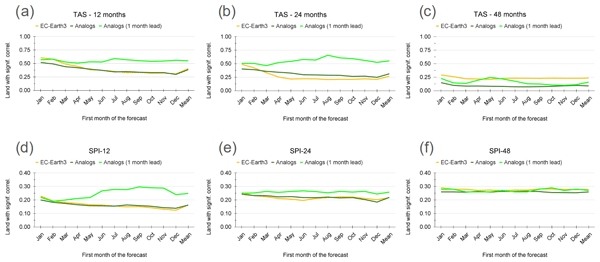
A computationally inexpensive climate model analog method yields skillful climate predictions across timescales, from seasons to multiple years, complementing existing climate prediction systems and potentially providing valuable information for sectors like agriculture and energy.
Sara Moreno-Montes, Carlos Delgado-Torres, Matías Olmo, Sushovan Ghosh, Verónica Torralba, and Albert Soret
Earth Syst. Dynam., 17, 1435–1454, https://doi.org/10.5194/esd-17-1435-2026, https://doi.org/10.5194/esd-17-1435-2026, 2026
Short summary
Short summary
Wind and solar power depend on weather conditions that can vary over the next few years. This study assesses whether climate forecasts for the next three years can help anticipate renewable energy production across Europe. Solar energy is generally more predictable than wind, with skill varying by season and region. We also assess compound energy droughts, when low wind and solar resources occur simultaneously, showing where near-term climate information can support energy planning.
Arnau Garcia Mesa, Lluís Palma, Markus Donat, Stefano Materia, Bruna Gràvalos Talló, and Raül Marcos Matamoros
Weather Clim. Dynam., 7, 1709–1731, https://doi.org/10.5194/wcd-7-1709-2026, https://doi.org/10.5194/wcd-7-1709-2026, 2026
Short summary
Short summary
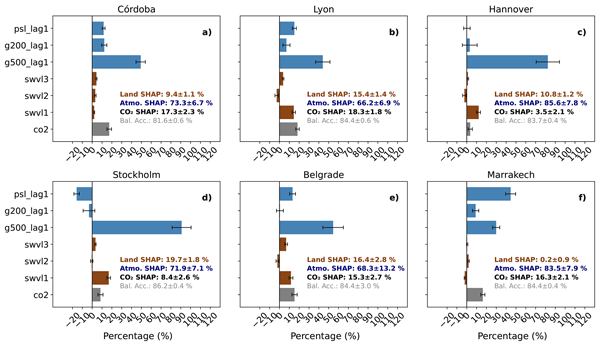
Explainable Artificial Intelligence was used to quantify and disentangle the role of the drivers of summer heat extremes at six sites in Europe and North Africa. Large-scale atmospheric circulation, especially mid-tropospheric geopotential, dominates, while soil drying amplifies heat in temperate and northern regions, and rising carbon dioxide contributes to long-term trends. Results were robust across data sources and help target climate risk and model improvements.
Monalisa Sahoo, Stefano Materia, and Markus G. Donat
EGUsphere, https://doi.org/10.5194/egusphere-2026-3206, https://doi.org/10.5194/egusphere-2026-3206, 2026
Short summary
Short summary
This study compares several gridded observation-based datasets of soil moisture, evapotranspiration, potential evapotranspiration, and air temperature during summer across Europe from 2003–2022. It shows that datasets differ in actual values and seasonal variations, but most datasets show coherent temporal variations and coupling relationships. However, timeseries differences found for some datasets also affect their representation of land-atmosphere coupling relationships.
M. Andrea Orihuela-García, Yohan Ruprich-Robert, Vladimir Lapin, Saskia Loosveldt Tomas, Raffaele Bernardello, Margarida Samsó-Cabré, Pierre-Antoine Bretonnière, Miguel Castrillo, and Martí Galí
Biogeosciences, 23, 4083–4112, https://doi.org/10.5194/bg-23-4083-2026, https://doi.org/10.5194/bg-23-4083-2026, 2026
Short summary
Short summary
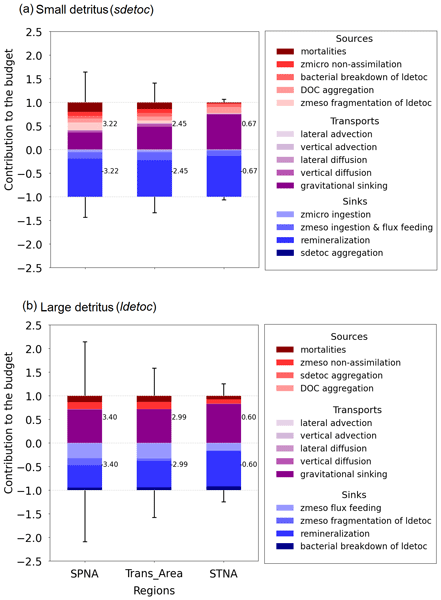
We use a biogeochemical model to examine how particulate organic carbon (POC) is produced, transformed and transported to the deep ocean. Vertical flux attenuation arises from several interacting processes: export pathways, particle lability, temperature-dependent degradation, and zooplankton transformations, leading to strongest attenuation in the most productive region. Together with extensive comparison to observations, such a budgeting approach can help constrain model projections.
Aude Carréric, Pablo Ortega, Roberto Bilbao, Carlos Delgado-Torres, Vladimir Lapin, Ferran Lopez-Marti, Markus Donat, and Francisco Doblas-Reyes
Earth Syst. Dynam., 17, 717–737, https://doi.org/10.5194/esd-17-717-2026, https://doi.org/10.5194/esd-17-717-2026, 2026
Short summary
Short summary
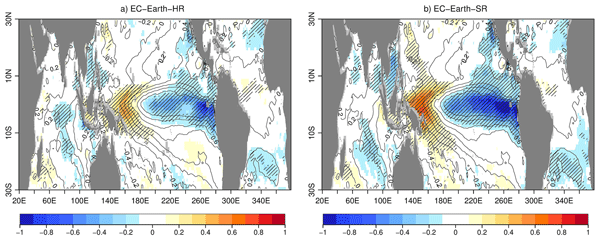
The paper assesses the impact of horizontal resolution of the EC-Earth climate model on its ability to predict El Nino Southern Oscillation (ENSO). The high-resolution simulations show better forecast skill linked to improved simulation of ENSO-related variability and ENSO teleconnections with the equatorial Atlantic. However, the remaining poor skill in the western Pacific highlights the importance of better understanding ENSO simulation errors and mean state biases to improve forecasts.
Carlos Delgado-Torres, Markus G. Donat, Núria Pérez-Zanón, Verónica Torralba, Roberto Bilbao, Pierre-Antoine Bretonnière, Margarida Samsó-Cabré, Albert Soret, and Francisco J. Doblas-Reyes
Earth Syst. Dynam., 17, 41–56, https://doi.org/10.5194/esd-17-41-2026, https://doi.org/10.5194/esd-17-41-2026, 2026
Short summary
Short summary
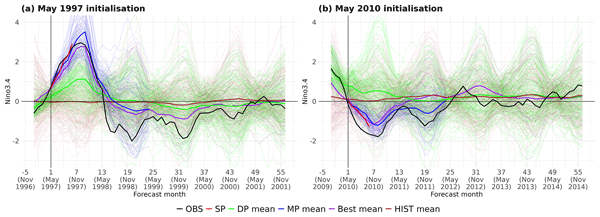
Many decisions require consistent climate information from seasonal to multi-year timescales. We assess seamless forecasts created by constraining seasonal and decadal predictions and compare them with initialised multi-annual forecasts. Multi-annual predictions provide the highest skill, but constrained forecasts still perform well and offer a low-cost, regularly updatable solution for delivering coherent climate information.
Gerard Marcet-Carbonell, Markus G. Donat, and Carlos Delgado-Torres
EGUsphere, https://doi.org/10.5194/egusphere-2025-6277, https://doi.org/10.5194/egusphere-2025-6277, 2026
Short summary
Short summary
The causes behind changes in the circulation of air in the northern hemisphere during summer are currently not well understood. These changes have been associated with accelerated warming and extreme weather events. In this work we explore the effect of natural and human-caused emissions and find evidence suggesting that the changes are related to changes in aerosol emissions. We find no evidence of these changes being related to greenhouse-gas emissions or ocean variability.
Amanda Frigola, Eneko Martin-Martinez, Eduardo Moreno-Chamarro, Margarida Samsó, Saskia Loosvelt-Tomas, Pierre-Antoine Bretonnière, Daria Kuznetsova, Xia Lin, and Pablo Ortega
Ocean Sci., 21, 3507–3540, https://doi.org/10.5194/os-21-3507-2025, https://doi.org/10.5194/os-21-3507-2025, 2025
Short summary
Short summary
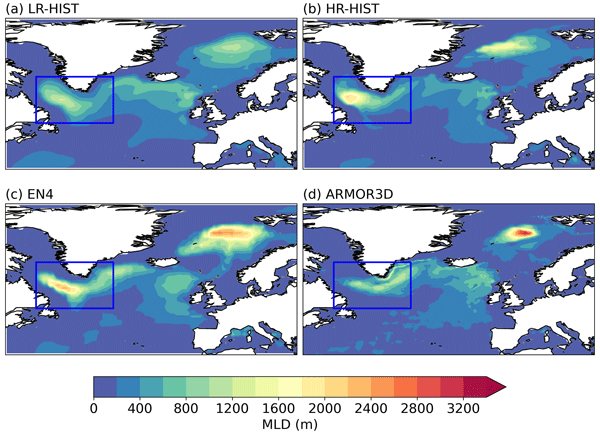
Compared to standard resolution models, mesoscale eddy-resolving models present a more realistic stratification in the subpolar North Atlantic, an Atlantic overturning profile closer to RAPID observations, and an improved structure of the subpolar gyre and Gulf Stream. Although surface biases in the Central North Atlantic are reduced, the representation of the North Atlantic Current path and strength in mesoscale-resolving models requires further improvement.
Alba Santos-Espeso, María Gonçalves Ageitos, Pablo Ortega, Carlos Pérez García-Pando, Markus G. Donat, Margarida Samso Cabré, and Saskia Loosveldt Tomas
Earth Syst. Dynam., 16, 2161–2186, https://doi.org/10.5194/esd-16-2161-2025, https://doi.org/10.5194/esd-16-2161-2025, 2025
Short summary
Short summary
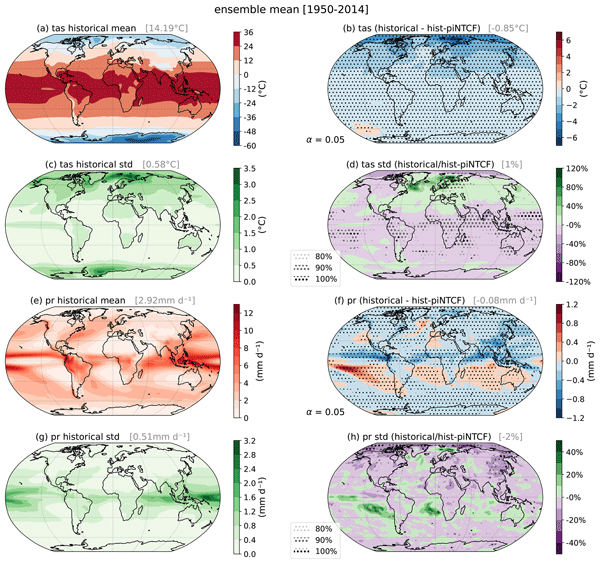
Short-lived air pollutants (e.g., aerosols and ozone) affect climate differently than greenhouse gases. Using climate models, we found that during 1950–2014, these pollutants caused global cooling, stronger in the Arctic, increased vertical mixing in the Labrador Sea, and southward displacement of the tropical rain belt. These regional impacts oppose those of greenhouse gases. Hence, future reductions in pollution for better air quality must be accompanied by stricter greenhouse gas mitigation.
Rashed Mahmood, Markus G. Donat, Roberto Bilbao, Pablo Ortega, Vladimir Lapin, Etienne Tourigny, and Francisco Doblas-Reyes
Earth Syst. Dynam., 16, 1923–1934, https://doi.org/10.5194/esd-16-1923-2025, https://doi.org/10.5194/esd-16-1923-2025, 2025
Short summary
Short summary
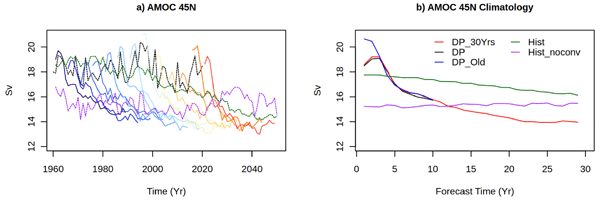
We present 30 year long initialized climate predictions run with the EC-Earth3 model. The predictions show high skill in most regions for near-surface temperatures, with some added skill from initialization for the first decade, but only very limited added skill beyond. The predictions exhibit drift associated with a persistent slowdown in Atlantic Meridonial Overturning Circulation , leaving the initialised predictions in a different climate state than the historical climate simulations.
Juan C. Acosta Navarro, Alvise Aranyossy, Paolo De Luca, Markus G. Donat, Arthur Hrast Essenfelder, Rashed Mahmood, Andrea Toreti, and Danila Volpi
Earth Syst. Dynam., 16, 1723–1737, https://doi.org/10.5194/esd-16-1723-2025, https://doi.org/10.5194/esd-16-1723-2025, 2025
Short summary
Short summary
A computationally inexpensive climate model analog method yields skillful climate predictions across timescales, from seasons to multiple years, complementing existing climate prediction systems and potentially providing valuable information for sectors like agriculture and energy.
Pedro José Roldán-Gómez, Pablo Ortega, and Markus G. Donat
Ocean Sci., 21, 2283–2303, https://doi.org/10.5194/os-21-2283-2025, https://doi.org/10.5194/os-21-2283-2025, 2025
Short summary
Short summary
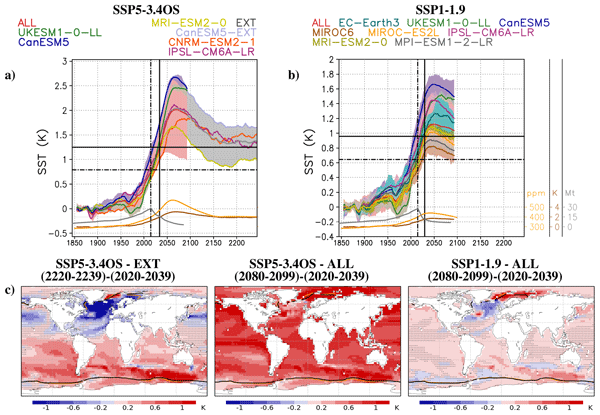
The overshoot scenarios, in which temperatures exceed the targets of the Paris Agreement and are brought back afterwards with a net-negative emission strategy, are known to activate irreversible processes in the climate system. This work analyses in detail the impact of some of these mechanisms, with a particular focus on those associated with ocean circulation and sea ice changes.
Eneko Martin-Martinez, Amanda Frigola, Eduardo Moreno-Chamarro, Daria Kuznetsova, Saskia Loosveldt-Tomas, Margarida Samsó Cabré, Pierre-Antoine Bretonnière, and Pablo Ortega
Earth Syst. Dynam., 16, 1343–1364, https://doi.org/10.5194/esd-16-1343-2025, https://doi.org/10.5194/esd-16-1343-2025, 2025
Short summary
Short summary
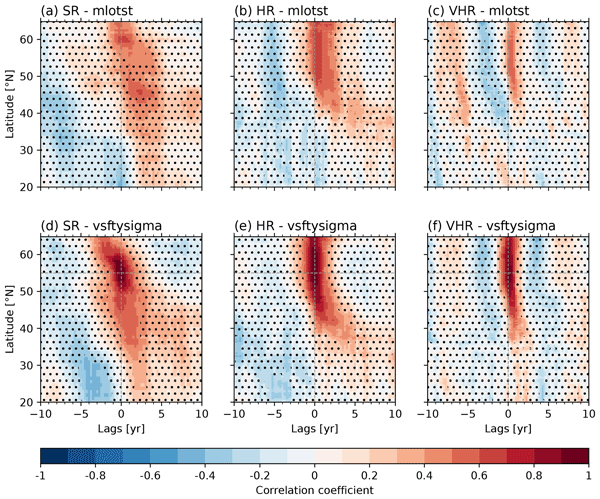
We investigate the impact of model resolution on different processes in the North Atlantic using three different resolutions of the same climate model. The higher resolutions allow for the explicit simulation of smaller-scale processes. We found differences across resolutions in how denser waters are formed and transported southward, impacting the large-scale circulation of the Atlantic Ocean.
Pedro José Roldán-Gómez, Paolo De Luca, Raffaele Bernardello, and Markus G. Donat
Earth Syst. Dynam., 16, 1–27, https://doi.org/10.5194/esd-16-1-2025, https://doi.org/10.5194/esd-16-1-2025, 2025
Short summary
Short summary
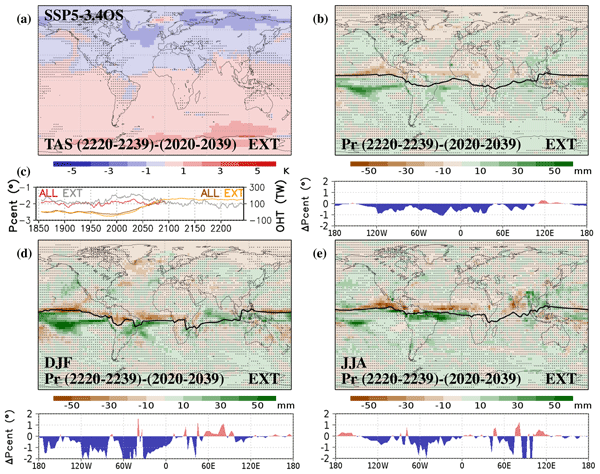
Current trends in CO2 emissions increase the probability of an overshoot scenario in which temperatures exceed the targets of the Paris Agreement and are brought back afterwards with a net-negative emission strategy. This work analyses how the climate after the overshoot would differ from the climate before, linking large scale non-reversibility mechanisms to changes in regional climates and identifying those regions more impacted by changes in temperature and precipitation extremes.

Colin G. Jones, Fanny Adloff, Ben B. B. Booth, Peter M. Cox, Veronika Eyring, Pierre Friedlingstein, Katja Frieler, Helene T. Hewitt, Hazel A. Jeffery, Sylvie Joussaume, Torben Koenigk, Bryan N. Lawrence, Eleanor O'Rourke, Malcolm J. Roberts, Benjamin M. Sanderson, Roland Séférian, Samuel Somot, Pier Luigi Vidale, Detlef van Vuuren, Mario Acosta, Mats Bentsen, Raffaele Bernardello, Richard Betts, Ed Blockley, Julien Boé, Tom Bracegirdle, Pascale Braconnot, Victor Brovkin, Carlo Buontempo, Francisco Doblas-Reyes, Markus Donat, Italo Epicoco, Pete Falloon, Sandro Fiore, Thomas Frölicher, Neven S. Fučkar, Matthew J. Gidden, Helge F. Goessling, Rune Grand Graversen, Silvio Gualdi, José M. Gutiérrez, Tatiana Ilyina, Daniela Jacob, Chris D. Jones, Martin Juckes, Elizabeth Kendon, Erik Kjellström, Reto Knutti, Jason Lowe, Matthew Mizielinski, Paola Nassisi, Michael Obersteiner, Pierre Regnier, Romain Roehrig, David Salas y Mélia, Carl-Friedrich Schleussner, Michael Schulz, Enrico Scoccimarro, Laurent Terray, Hannes Thiemann, Richard A. Wood, Shuting Yang, and Sönke Zaehle
Earth Syst. Dynam., 15, 1319–1351, https://doi.org/10.5194/esd-15-1319-2024, https://doi.org/10.5194/esd-15-1319-2024, 2024
Short summary
Short summary
We propose a number of priority areas for the international climate research community to address over the coming decade. Advances in these areas will both increase our understanding of past and future Earth system change, including the societal and environmental impacts of this change, and deliver significantly improved scientific support to international climate policy, such as future IPCC assessments and the UNFCCC Global Stocktake.
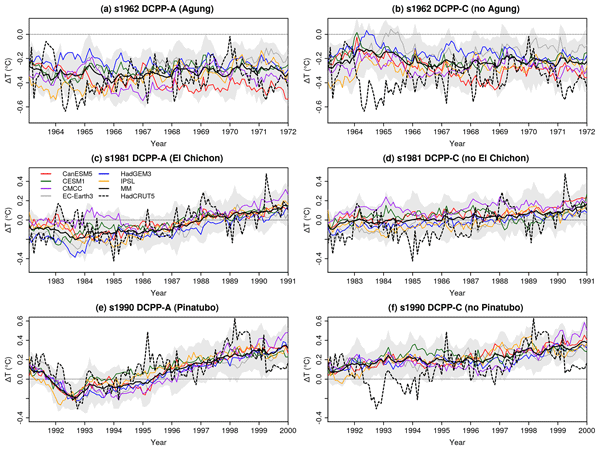
Roberto Bilbao, Pablo Ortega, Didier Swingedouw, Leon Hermanson, Panos Athanasiadis, Rosie Eade, Marion Devilliers, Francisco Doblas-Reyes, Nick Dunstone, An-Chi Ho, William Merryfield, Juliette Mignot, Dario Nicolì, Margarida Samsó, Reinel Sospedra-Alfonso, Xian Wu, and Stephen Yeager
Earth Syst. Dynam., 15, 501–525, https://doi.org/10.5194/esd-15-501-2024, https://doi.org/10.5194/esd-15-501-2024, 2024
Short summary
Short summary
In recent decades three major volcanic eruptions have occurred: Mount Agung in 1963, El Chichón in 1982 and Mount Pinatubo in 1991. In this article we explore the climatic impacts of these volcanic eruptions with a purposefully designed set of simulations from six CMIP6 decadal prediction systems. We analyse the radiative and dynamical responses and show that including the volcanic forcing in these predictions is important to reproduce the observed surface temperature variations.
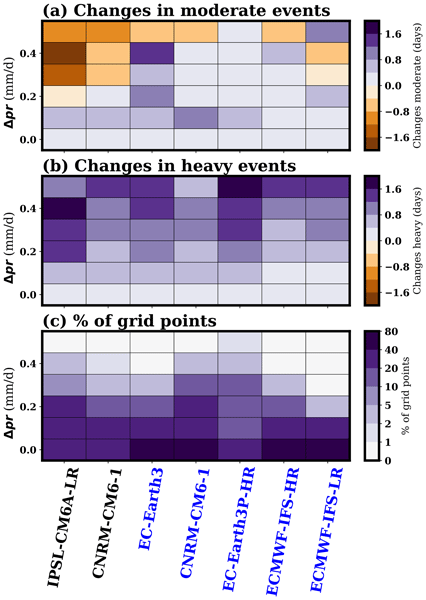
Elsa Mohino, Paul-Arthur Monerie, Juliette Mignot, Moussa Diakhaté, Markus Donat, Christopher David Roberts, and Francisco Doblas-Reyes
Earth Syst. Dynam., 15, 15–40, https://doi.org/10.5194/esd-15-15-2024, https://doi.org/10.5194/esd-15-15-2024, 2024
Short summary
Short summary
The impact of the Atlantic multidecadal variability (AMV) on the rainfall distribution and timing of the West African monsoon is not well known. Analysing model output, we find that a positive AMV enhances the number of wet days, daily rainfall intensity, and extremes over the Sahel and tends to prolong the monsoon length through later demise. Heavy rainfall events increase all over the Sahel, while moderate ones only occur in the north. Model biases affect the skill in simulating AMV impact.
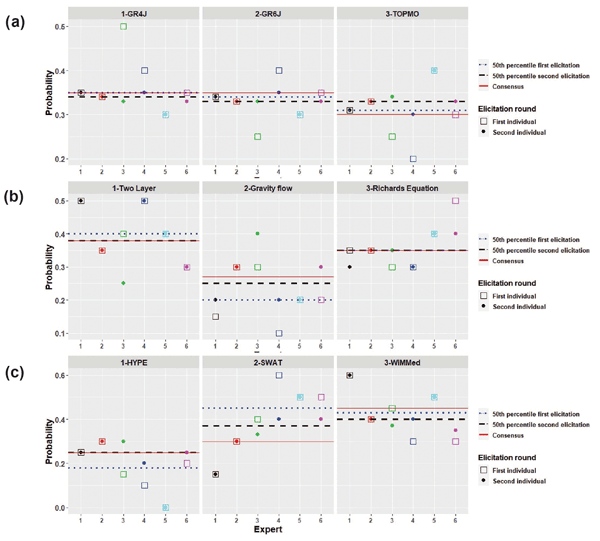
Eva Sebok, Hans Jørgen Henriksen, Ernesto Pastén-Zapata, Peter Berg, Guillaume Thirel, Anthony Lemoine, Andrea Lira-Loarca, Christiana Photiadou, Rafael Pimentel, Paul Royer-Gaspard, Erik Kjellström, Jens Hesselbjerg Christensen, Jean Philippe Vidal, Philippe Lucas-Picher, Markus G. Donat, Giovanni Besio, María José Polo, Simon Stisen, Yvan Caballero, Ilias G. Pechlivanidis, Lars Troldborg, and Jens Christian Refsgaard
Hydrol. Earth Syst. Sci., 26, 5605–5625, https://doi.org/10.5194/hess-26-5605-2022, https://doi.org/10.5194/hess-26-5605-2022, 2022
Short summary
Short summary
Hydrological models projecting the impact of changing climate carry a lot of uncertainty. Thus, these models usually have a multitude of simulations using different future climate data. This study used the subjective opinion of experts to assess which climate and hydrological models are the most likely to correctly predict climate impacts, thereby easing the computational burden. The experts could select more likely hydrological models, while the climate models were deemed equally probable.
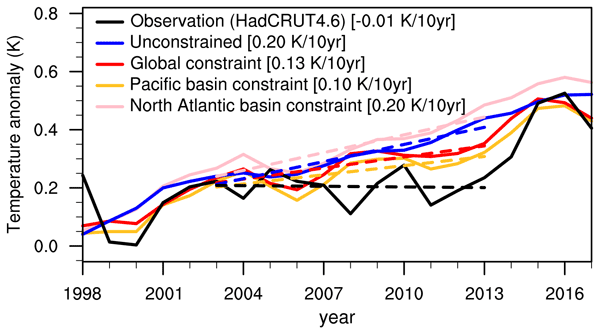
Rashed Mahmood, Markus G. Donat, Pablo Ortega, Francisco J. Doblas-Reyes, Carlos Delgado-Torres, Margarida Samsó, and Pierre-Antoine Bretonnière
Earth Syst. Dynam., 13, 1437–1450, https://doi.org/10.5194/esd-13-1437-2022, https://doi.org/10.5194/esd-13-1437-2022, 2022
Short summary
Short summary
Near-term climate change projections are strongly affected by the uncertainty from internal climate variability. Here we present a novel approach to reduce such uncertainty by constraining decadal-scale variability in the projections using observations. The constrained ensembles show significant added value over the unconstrained ensemble in predicting global climate 2 decades ahead. We also show the applicability of regional constraints for attributing predictability to certain ocean regions.
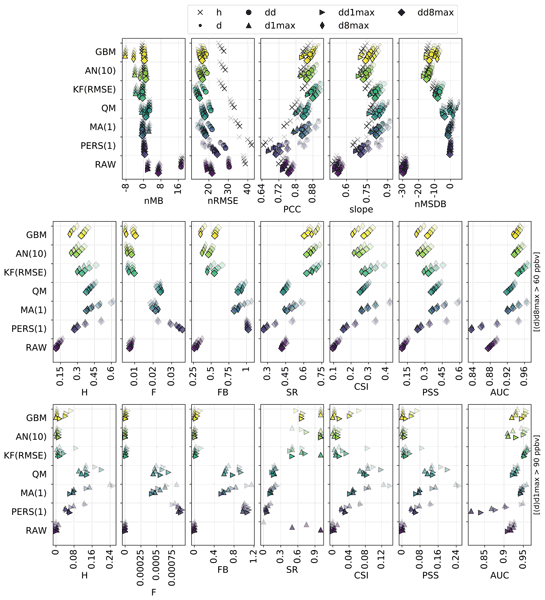
Hervé Petetin, Dene Bowdalo, Pierre-Antoine Bretonnière, Marc Guevara, Oriol Jorba, Jan Mateu Armengol, Margarida Samso Cabre, Kim Serradell, Albert Soret, and Carlos Pérez Garcia-Pando
Atmos. Chem. Phys., 22, 11603–11630, https://doi.org/10.5194/acp-22-11603-2022, https://doi.org/10.5194/acp-22-11603-2022, 2022
Short summary
Short summary
This study investigates the extent to which ozone forecasts provided by the Copernicus Atmospheric Monitoring Service (CAMS) can be improved using surface observations and state-of-the-art statistical methods. Through a case study over the Iberian Peninsula in 2018–2019, it unambiguously demonstrates the value of these methods for improving the raw CAMS O3 forecasts while at the same time highlighting the complexity of improving the detection of the highest O3 concentrations.
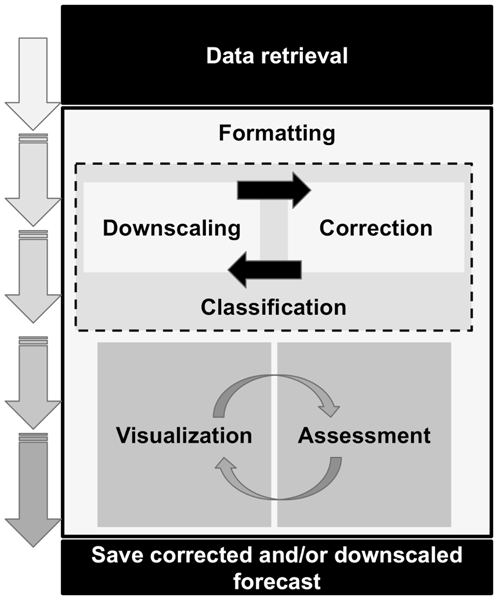
Núria Pérez-Zanón, Louis-Philippe Caron, Silvia Terzago, Bert Van Schaeybroeck, Llorenç Lledó, Nicolau Manubens, Emmanuel Roulin, M. Carmen Alvarez-Castro, Lauriane Batté, Pierre-Antoine Bretonnière, Susana Corti, Carlos Delgado-Torres, Marta Domínguez, Federico Fabiano, Ignazio Giuntoli, Jost von Hardenberg, Eroteida Sánchez-García, Verónica Torralba, and Deborah Verfaillie
Geosci. Model Dev., 15, 6115–6142, https://doi.org/10.5194/gmd-15-6115-2022, https://doi.org/10.5194/gmd-15-6115-2022, 2022
Short summary
Short summary
CSTools (short for Climate Service Tools) is an R package that contains process-based methods for climate forecast calibration, bias correction, statistical and stochastic downscaling, optimal forecast combination, and multivariate verification, as well as basic and advanced tools to obtain tailored products. In addition to describing the structure and methods in the package, we also present three use cases to illustrate the seasonal climate forecast post-processing for specific purposes.
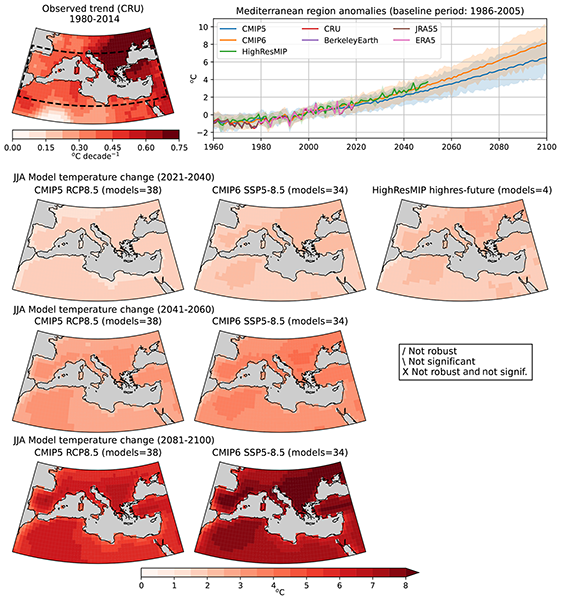
Josep Cos, Francisco Doblas-Reyes, Martin Jury, Raül Marcos, Pierre-Antoine Bretonnière, and Margarida Samsó
Earth Syst. Dynam., 13, 321–340, https://doi.org/10.5194/esd-13-321-2022, https://doi.org/10.5194/esd-13-321-2022, 2022
Short summary
Short summary
The Mediterranean has been identified as being more affected by climate change than other regions. We find that amplified warming during summer and annual precipitation declines are expected for the 21st century and that the magnitude of the changes will mainly depend on greenhouse gas emissions. By applying a method giving more importance to models with greater performance and independence, we find that the differences between the last two community modelling efforts are reduced in the region.
Cited articles
Aranyossy, A.: Multi-annual predictions of hot, dry and hot-dry compound extremes, Zenodo [code], https://doi.org/10.5281/zenodo.17867448, 2025. a
Beguería, S., Vicente-Serrano, S. M., Reig, F., and Latorre, B.: Standardized precipitation evapotranspiration index (SPEI) revisited: parameter fitting, evapotranspiration models, tools, datasets and drought monitoring, International Journal of Climatology, 34, 3001–3023, 2014. a
Bellucci, A., Haarsma, R., Gualdi, S., Athanasiadis, P. J., Caian, M., Cassou, C., Fernandez, E., Germe, A., Jungclaus, J., Kröger, J., Matei, D., Müller, W., Pohlmann, H., Melia, D. S. Y., Sanchez, E., Smith, D., Terray, L., Wyser, K., and Yang, S.: An assessment of a multi-model ensemble of decadal climate predictions, Climate Dynamics, 44, 2787–2806, 2015. a
Bethke, I., Wang, Y., Counillon, F., Keenlyside, N., Kimmritz, M., Fransner, F., Samuelsen, A., Langehaug, H., Svendsen, L., Chiu, P.-G., Passos, L., Bentsen, M., Guo, C., Gupta, A., Tjiputra, J., Kirkevåg, A., Olivié, D., Seland, Ø., Solsvik Vågane, J., Fan, Y., and Eldevik, T.: NorCPM1 and its contribution to CMIP6 DCPP, Geosci. Model Dev., 14, 7073–7116, https://doi.org/10.5194/gmd-14-7073-2021, 2021. a, b
Bevacqua, E., De Michele, C., Manning, C., Couasnon, A., Ribeiro, A. F. S., Ramos, A. M., Vignotto, E., Bastos, A., Blesić, S., Durante, F., Hillier, J., Oliveira, S. C., Pinto, J. G., Ragno, E., Rivoire, P., Saunders, K., Van Der Wiel, K., Wu, W., Zhang, T., and Zscheischler, J.: Guidelines for studying diverse types of compound weather and climate events, Earth's Future, 9, e2021EF002340, https://doi.org/10.1029/2021EF002340, 2021. a
Bevacqua, E., Zappa, G., Lehner, F., and Zscheischler, J.: Precipitation trends determine future occurrences of compound hot–dry events, Nature Climate Change, 12, 350–355, 2022. a
Bilbao, R., Wild, S., Ortega, P., Acosta-Navarro, J., Arsouze, T., Bretonnière, P.-A., Caron, L.-P., Castrillo, M., Cruz-García, R., Cvijanovic, I., Doblas-Reyes, F. J., Donat, M., Dutra, E., Echevarría, P., Ho, A.-C., Loosveldt-Tomas, S., Moreno-Chamarro, E., Pérez-Zanon, N., Ramos, A., Ruprich-Robert, Y., Sicardi, V., Tourigny, E., and Vegas-Regidor, J.: Assessment of a full-field initialized decadal climate prediction system with the CMIP6 version of EC-Earth, Earth Syst. Dynam., 12, 173–196, https://doi.org/10.5194/esd-12-173-2021, 2021. a
Boer, G. J., Smith, D. M., Cassou, C., Doblas-Reyes, F., Danabasoglu, G., Kirtman, B., Kushnir, Y., Kimoto, M., Meehl, G. A., Msadek, R., Mueller, W. A., Taylor, K. E., Zwiers, F., Rixen, M., Ruprich-Robert, Y., and Eade, R.: The Decadal Climate Prediction Project (DCPP) contribution to CMIP6, Geosci. Model Dev., 9, 3751–3777, https://doi.org/10.5194/gmd-9-3751-2016, 2016. a, b
Boucher, O., Servonnat, J., Albright, A. L., Aumont, O., Balkanski, Y., Bastrikov, V., Bekki, S., Bonnet, R., Bony, S., Bopp, L., Braconnot, P., Brockmann, P., Cadule, P., Caubel, A., Cheruy, F., Codron, F., Cozic, A., Cugnet, D., D’Andrea, F., Davini, P., de Lavergne, C., Denvil, S., Deshayes, J., Devilliers, M., Ducharne, A., Dufresne, J., Dupont, E., Éthé, C., Fairhead, L., Falletti, L., Flavoni, S., Foujols, M., Gardoll, S., Gastineau, G., Ghattas, J., Grandpeix, J., Guenet, B., Guez, L. E, Guilyardi, E., Guimberteau, M., Hauglustaine, D., Hourdin, F., Idelkadi, A., Joussaume, S., Kageyama, M., Khodri, M., Krinner, G., Lebas, N., Levavasseur, G., Lévy, C., Li, L., Lott, F., Lurton, T., Luyssaert, S., Madec, G., Madeleine, J., Maignan, F., Marchand, M., Marti, O., Mellul, L., Meurdesoif, Y., Mignot, J., Musat, I., Ottlé, C., Peylin, P., Planton, Y., Polcher, J., Rio, C., Rochetin, N., Rousset, C., Sepulchre, P., Sima, A., Swingedouw, D., Thiéblemont, R., Traore, A. K., Vancoppenolle, M., Vial, J., Vialard, J., Viovy, N., and Vuichard, N.: Presentation and evaluation of the IPSL-CM6A-LR climate model, Journal of Advances in Modeling Earth Systems, 12, e2019MS002010, https://doi.org/10.1029/2019ms002010, 2020. a
Brunner, L. and Voigt, A.: Pitfalls in diagnosing temperature extremes, Nature Communications, 15, 2087, https://doi.org/10.1038/s41467-024-46349-x, 2024. a
Delgado-Torres, C., Donat, M. G., Gonzalez-Reviriego, N., Caron, L., Athanasiadis, P. J., Bretonnière, P., Dunstone, N. J., Ho, A., Nicoli, D., Pankatz, K., Paxian, A., Pérez-Zanón, N., Cabré, M. S., Solaraju-Murali, B., Soret, A., and Doblas-Reyes, F. J.: Multi-model forecast quality assessment of CMIP6 decadal predictions, Journal of Climate, 35, 4363–4382, 2022. a
Delgado-Torres, C., Donat, M. G., Soret, A., González-Reviriego, N., Bretonnière, P.-A., Ho, A.-C., Pérez-Zanón, N., Cabré, M. S., and Doblas-Reyes, F. J.: Multi-annual predictions of the frequency and intensity of daily temperature and precipitation extremes, Environmental Research Letters, 18, 034031, https://doi.org/10.1088/1748-9326/acbbe1, 2023. a, b, c, d
Delgado-Torres, C., Octenjak, S., Marcos-Matamoros, R., Pérez-Zanón, N., Baulenas, E., Doblas-Reyes, F. J., Donat, M. G., Lwiza, L. M., Milders, N., Soret, A., Whittlesey, S., and Bojovic, D.: Supporting food security with multi-annual climate information: Co-production of climate services for the Southern African Development Community, Science of The Total Environment, 975, 179259, https://doi.org/10.1016/j.scitotenv.2025.179259, 2025. a
Donat, M. G., Delgado-Torres, C., De Luca, P., Mahmood, R., Ortega, P., and Doblas-Reyes, F. J.: How credibly do CMIP6 simulations capture historical mean and extreme precipitation changes?, Geophysical Research Letters, 50, e2022GL102466, https://doi.org/10.1029/2022GL102466, 2023. a, b
Dunstone, N., Lockwood, J., Solaraju-Murali, B., Reinhardt, K., Tsartsali, E. E., Athanasiadis, P. J., Bellucci, A., Brookshaw, A., Caron, L., Doblas-Reyes, F. J., Früh, B., González-Reviriego, N., Gualdi, S., Hermanson, L., Materia, S., Nicodemou, A., Nicolì, D., Pankatz, K., Paxian, A., Scaife, A., Smith, D. and Thornton, H. E.: Towards useful decadal climate services, Bulletin of the American Meteorological Society, 103, E1705–E1719, 2022. a
Eade, R., Smith, D., Scaife, A., Wallace, E., Dunstone, N., Hermanson, L., and Robinson, N.: Do seasonal-to-decadal climate predictions underestimate the predictability of the real world?, Geophysical Research Letters, 41, 5620–5628, 2014. a
Eyring, V., Bony, S., Meehl, G. A., Senior, C. A., Stevens, B., Stouffer, R. J., and Taylor, K. E.: Overview of the Coupled Model Intercomparison Project Phase 6 (CMIP6) experimental design and organization, Geosci. Model Dev., 9, 1937–1958, https://doi.org/10.5194/gmd-9-1937-2016, 2016. a, b
Grumm, R. H.: The central European and Russian heat event of July–August 2010, Bulletin of the American Meteorological Society, 92, 1285–1296, 2011. a
Hargreaves, G. H.: Defining and using reference evapotranspiration, Journal of Irrigation and Drainage Engineering, 120, 1132–1139, 1994. a
Hassler, B. and Lauer, A.: Comparison of reanalysis and observational precipitation datasets including ERA5 and WFDE5, Atmosphere, 12, 1462, https://doi.org/10.3390/atmos12111462, 2021. a
Hersbach, H., Bell, B., Berrisford, P., Hirahara, S., Horányi, A., Muñoz‐Sabater, J., Nicolas, J., Peubey, C., Radu, R., Schepers, D., Simmons, A., Soci, C., Abdalla, S., Abellan, X., Balsamo, G., Bechtold, P., Biavati, G., Bidlot, J., Bonavita, M., De Chiara, G., Dahlgren, P., Dee, D., Diamantakis, M., Dragani, R., Flemming, J., Forbes, R., Fuentes, M., Geer, A., Haimberger, L., Healy, S., Hogan, R. J., Hólm, E., Janisková, M., Keeley, S., Laloyaux, P., Lopez, P., Lupu, C., Radnoti, G., de Rosnay, P., Rozum, I., Vamborg, F., Villaume, S., and Thépaut, J.: The ERA5 global reanalysis, Quarterly Journal of the Royal Meteorological Society, 146, 1999–2049, 2020. a
Ionita, M., Tallaksen, L. M., Kingston, D. G., Stagge, J. H., Laaha, G., Van Lanen, H. A. J., Scholz, P., Chelcea, S. M., and Haslinger, K.: The European 2015 drought from a climatological perspective, Hydrol. Earth Syst. Sci., 21, 1397–1419, https://doi.org/10.5194/hess-21-1397-2017, 2017. a
Kataoka, T., Tatebe, H., Koyama, H., Mochizuki, T., Ogochi, K., Naoe, H., Imada, Y., Shiogama, H., Kimoto, M., and Watanabe, M.: Seasonal to decadal predictions with MIROC6: Description and basic evaluation, Journal of Advances in Modeling Earth Systems, 12, e2019MS002035, https://doi.org/10.1029/2019ms002035, 2020. a
Kushnir, Y., Scaife, A. A., Arritt, R., Balsamo, G., Boer, G., Doblas-Reyes, F., Hawkins, E., Kimoto, M., Kolli, R. K., Kumar, A., Matei, D., Matthes, K., Müller, W. A., O'Kane, T., Perlwitz, J., Power, S., Raphael, M., Shimpo, A., Smith, D., Tuma, M., and Wu, B.: Towards operational predictions of the near-term climate, Nature Climate Change, 9, 94–101, 2019. a
Leonard, M., Westra, S., Phatak, A., Lambert, M., van den Hurk, B., McInnes, K., Risbey, J., Schuster, S., Jakob, D., and Stafford-Smith, M.: A compound event framework for understanding extreme impacts, Wiley Interdisciplinary Reviews: Climate Change, 5, 113–128, 2014. a
Mahmood, R., Donat, M. G., Bilbao, R., Ortega, P., Lapin, V., Tourigny, E., and Doblas-Reyes, F.: Multi-decadal initialized climate predictions using the EC-Earth3 global climate model, Earth Syst. Dynam., 16, 1923–1934, https://doi.org/10.5194/esd-16-1923-2025, 2025. a
McKee, T. B., Doesken, N. J., and Kleist, J.: The relationship of drought frequency and duration to time scales, in: Proceedings of the 8th Conference on Applied Climatology, Boston, vol. 17, 179–183, https://climate.colostate.edu/pdfs/relationshipofdroughtfrequency.pdf (last access: 4 December 2025), 1993. a
Meehl, G. A., Richter, J. H., Teng, H., Capotondi, A., Cobb, K., Doblas-Reyes, F., Donat, M. G., England, M. H., Fyfe, J. C., Han, W., Kim, H., Kirtman, B. P., Kushnir, Y., Lovenduski, N. S., Mann, M. E., Merryfield, W. E., Nieves, V., Pegion, K., Rosenbloom, N., Sanchez, S. C., Scaife, A. A., Smith, D., Subramanian, A. C., Sun, L., Thompson, D., Ummenhofer, C. C., and Xie, S. P.: Initialized Earth System prediction from subseasonal to decadal timescales, Nature Reviews Earth & Environment, 2, 340–357, 2021. a
Müller, W. A., Jungclaus, J. H., Mauritsen, T., Baehr, J., Bittner, M., Budich, R., Bunzel, F., Esch, M., Ghosh, R., Haak, H., Ilyina, T., Kleine, T., Kornblueh, L., Li, H., Modali, K., Notz, D., Pohlmann, H., Roeckner, E., Stemmler, I., Tian, F., and Marotzke, J.: A higher-resolution version of the max planck institute earth system model (MPI-ESM1. 2-HR), Journal of Advances in Modeling Earth Systems, 10, 1383–1413, 2018. a
Nicolì, D., Bellucci, A., Ruggieri, P., Athanasiadis, P. J., Materia, S., Peano, D., Fedele, G., Hénin, R., and Gualdi, S.: The Euro-Mediterranean Center on Climate Change (CMCC) decadal prediction system, Geosci. Model Dev., 16, 179–197, https://doi.org/10.5194/gmd-16-179-2023, 2023. a
O'Kane, T. J., Scaife, A. A., Kushnir, Y., Brookshaw, A., Buontempo, C., Carlin, D., Connell, R. K., Doblas-Reyes, F., Dunstone, N., Förster, K., Graça, A., Hobday, A. J., Kitsios, V., Van Der Laan, L., Lockwood, J., Merryfield, W. J., Paxian, A., Payne, M. R., Reader, M. C., Saville, G. R., Smith, D., Solaraju-Murali, B., Caltabiano, N., Carman, J., Hawkins, E., Keenlyside, N., Kumar, A., Matei, D., Pohlmann, H., Power, S., Raphael, M., Sparrow, M., and Wu, B.: Recent applications and potential of near-term (interannual to decadal) climate predictions, Frontiers in Climate, 5, 1121626, https://doi.org/10.3389/fclim.2023.1121626, 2023. a
Ridder, N. N., Pitman, A. J., and Ukkola, A. M.: Do CMIP6 climate models simulate global or regional compound events skillfully?, Geophysical Research Letters, 48, e2020GL091152, https://doi.org/10.1029/2020gl091152, 2021. a
Rohde, R. A. and Hausfather, Z.: The Berkeley Earth Land/Ocean Temperature Record, Earth Syst. Sci. Data, 12, 3469–3479, https://doi.org/10.5194/essd-12-3469-2020, 2020. a
Schneider, U., Becker, A., Finger, P., Meyer-Christoffer, A., Rudolf, B., and Ziese, M.: GPCC full data reanalysis version 7.0: Monthly land-surface precipitation from rain gauges built on GTS based and historic data, Geoscience Data Exchange (GDEX) [data set], https://doi.org/10.5065/d6000072, 2016. a
Sellar, A. A., Walton, J., Jones, C. G., Wood, R., Abraham, N. L., Andrejczuk, M., Andrews, M. B., Andrews, T., Archibald, A. T., De Mora, L., Dyson, H., Elkington, M., Ellis, R., Florek, P., Good, P., Gohar, L., Haddad, S., Hardiman, S. C., Hogan, E., Iwi, A., Jones, C. D., Johnson, B., Kelley, D. I., Kettleborough, J., Knight, J. R., Köhler, M. O., Kuhlbrodt, T., Liddicoat, S., Linova-Pavlova, I., Mizielinski, M. S., Morgenstern, O., Mulcahy, J., Neininger, E., O'Connor, F. M., Petrie, R., Ridley, J., Rioual, J., Roberts, M., Robertson, E., Rumbold, S., Seddon, J., Shepherd, H., Shim, S., Stephens, A., Teixiera, J. C., Tang, Y., Williams, J., Wiltshire, A., and Griffiths, P. T.: Implementation of UK Earth system models for CMIP6, Journal of Advances in Modeling Earth Systems, 12, e2019MS001946, https://doi.org/10.1029/2019MS001946, 2020. a
Smith, D. M., Eade, R., Scaife, A. A., Caron, L., Danabasoglu, G., DelSole, T. M., Delworth, T., Doblas-Reyes, F. J., Dunstone, N. J., Hermanson, L., Kharin, V., Kimoto, M., Merryfield, W. J., Mochizuki, T., Müller, W. A., Pohlmann, H., Yeager, S., and Yang, X.: Robust skill of decadal climate predictions, Npj Climate and Atmospheric Science, 2, https://doi.org/10.1038/s41612-019-0071-y, 2019. a, b, c, d
Solaraju-Murali, B., Caron, L.-P., Gonzalez-Reviriego, N., and Doblas-Reyes, F. J.: Multi-year prediction of European summer drought conditions for the agricultural sector, Environmental Research Letters, 14, 124014, https://doi.org/10.1088/1748-9326/ab5043, 2019. a, b, c
Sospedra-Alfonso, R., Merryfield, W. J., Boer, G. J., Kharin, V. V., Lee, W.-S., Seiler, C., and Christian, J. R.: Decadal climate predictions with the Canadian Earth System Model version 5 (CanESM5), Geosci. Model Dev., 14, 6863–6891, https://doi.org/10.5194/gmd-14-6863-2021, 2021. a
Stagge, J. H., Tallaksen, L. M., Gudmundsson, L., Van Loon, A. F., and Stahl, K.: Candidate distributions for climatological drought indices (SPI and SPEI), International Journal of Climatology, 35, 4027–4040, 2015. a
Sutanto, S. J., Vitolo, C., Di Napoli, C., D’Andrea, M., and Van Lanen, H. A.: Heatwaves, droughts, and fires: Exploring compound and cascading dry hazards at the pan-European scale, Environment international, 134, 105276, https://doi.org/10.1016/j.envint.2019.105276, 2020. a
Svoboda, M., Hayes, M., and Wood, D.: Standardized precipitation index: user guide, https://www.droughtmanagement.info/literature/WMO_standardized_precipitation_index_user_guide_en_2012.pdf (last access: 04 December 2025), 2012. a
Taylor, K. E., Stouffer, R. J., and Meehl, G. A.: An overview of CMIP5 and the experiment design, Bulletin of the American meteorological Society, 93, 485–498, 2012. a
Tian, T., Yang, S., Karami, M. P., Massonnet, F., Kruschke, T., and Koenigk, T.: Benefits of sea ice initialization for the interannual-to-decadal climate prediction skill in the Arctic in EC-Earth3, Geosci. Model Dev., 14, 4283–4305, https://doi.org/10.5194/gmd-14-4283-2021, 2021. a
Vicente-Serrano, S. M., Beguería, S., and López-Moreno, J. I.: A multiscalar drought index sensitive to global warming: the standardized precipitation evapotranspiration index, Journal of Climate, 23, 1696–1718, 2010. a
Vogel, M. M., Hauser, M., and Seneviratne, S. I.: Projected changes in hot, dry and wet extreme events’ clusters in CMIP6 multi-model ensemble, Environmental Research Letters, 15, 094021, https://doi.org/10.1088/1748-9326/ab90a7, 2020. a
Wilks, D. S.: Statistical methods in the atmospheric sciences, Academic Press, https://doi.org/10.1016/c2010-0-65519-2, 2011. a
Yukimoto, S., Kawai, H., Koshiro, T., Oshima, N., Yoshida, K., Urakawa, S., Tsujino, H., Deushi, M., Tanaka, T., Hosaka, M., Yabu, S., Yoshimura, H., Shindo, E., Mizuta, R., Obata, A., Adachi, Y., and Ishii, M.: The Meteorological Research Institute Earth System Model version 2.0, MRI-ESM2. 0: Description and basic evaluation of the physical component, Journal of the Meteorological Society of Japan. Ser. II, 97, 931–965, 2019. a
Zhang, X., Alexander, L., Hegerl, G. C., Jones, P., Tank, A. K., Peterson, T. C., Trewin, B., and Zwiers, F. W.: Indices for monitoring changes in extremes based on daily temperature and precipitation data, Wiley Interdisciplinary Reviews: Climate Change, 2, 851–870, 2011. a
Zscheischler, J. and Fischer, E. M.: The record-breaking compound hot and dry 2018 growing season in Germany, Weather and Climate Extremes, 29, 100270, https://doi.org/10.1016/j.wace.2020.100270, 2020. a, b
Zscheischler, J. and Seneviratne, S. I.: Dependence of drivers affects risks associated with compound events, Science Advances, 3, e1700263, https://doi.org/10.1126/sciadv.1700263, 2017. a
Zscheischler, J., Westra, S., Van Den Hurk, B. J. J. M., Seneviratne, S. I., Ward, P. J., Pitman, A., AghaKouchak, A., Bresch, D. N., Leonard, M., Wahl, T., and Zhang, X.: Future climate risk from compound events, Nature Climate Change, 8, 469–477, 2018. a
Short summary
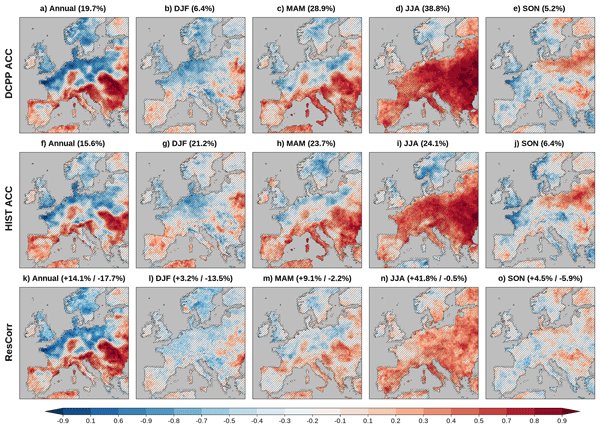
We investigate multi-year predictability of hot, dry and hot-dry compound events, using the Coupled Model Intercomparison Project Phase 6 decadal hindcast experiments, focusing on the forecast years 2–5. We find that hot-dry compound and hot extremes are skillfully predicted in many regions, but lower skill is found for dry extremes. The skill is largely due to long-term trends in response to external forcing, while added skill from initialisation is limited to a few regions.
We investigate multi-year predictability of hot, dry and hot-dry compound events, using the...


Altmetrics
Final-revised paper
Preprint