the Creative Commons Attribution 4.0 License.
the Creative Commons Attribution 4.0 License.
 | 06 May 2026
Response of ice sheets, sea-ice and sea level in climate stabilisation and reversibility simulations using a state-of-the-art Earth System Model

Tarkan A. Bilge
Thomas J. Bracegirdle
Paul R. Holland
Till Kuhlbrodt
Charlotte Lang
Spencer Liddicoat
Tom Mitcham
Jane Mulcahy
Kaitlin A. Naughten
Andrew Orr
Julien Palmieri
Antony J. Payne
Steven Rumbold
Marc Stringer
Ranjini Swaminathan
Sarah Taylor
Jeremy Walton
Colin Jones
Related authors
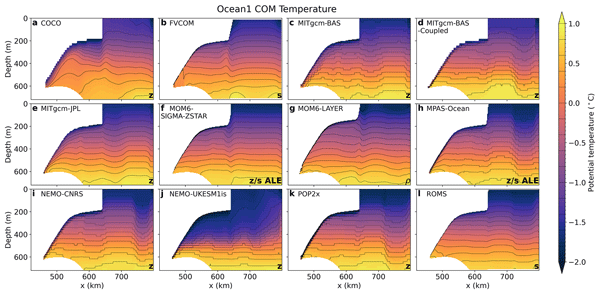
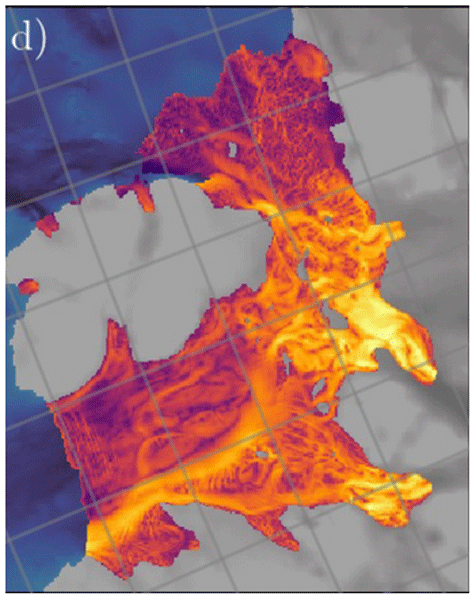
The second Ice Shelf-Ocean Model Intercomparison Project, ISOMIP+, compares 12 ice shelf-ocean models with a common, idealised, static configuration, aiming to assess inter-model variability. Models show similar basal melt rate patterns, ocean profiles and circulation but differ in ice-ocean boundary layer properties. Ice-ocean boundary layer representation is a key area for future work, as are realistic-domain ice sheet-ocean model intercomparisons.
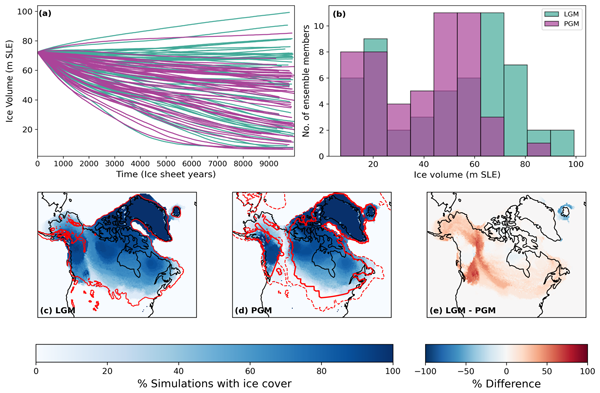
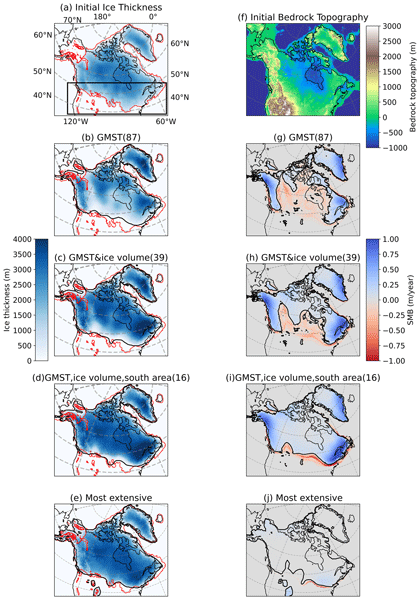
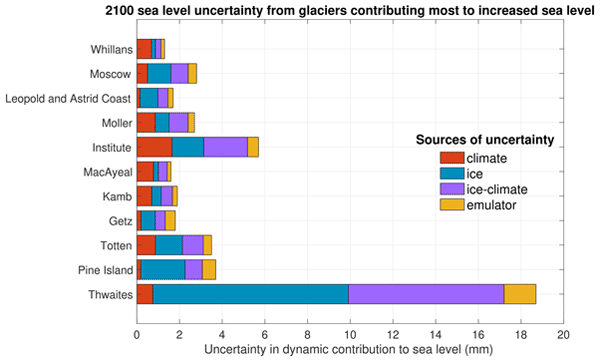
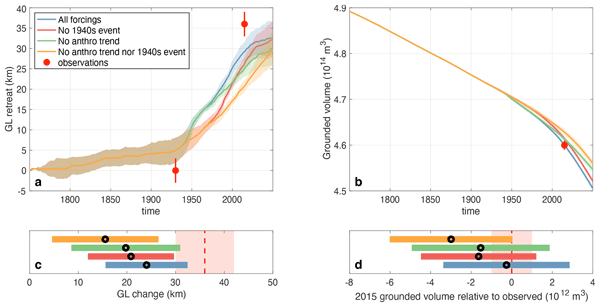
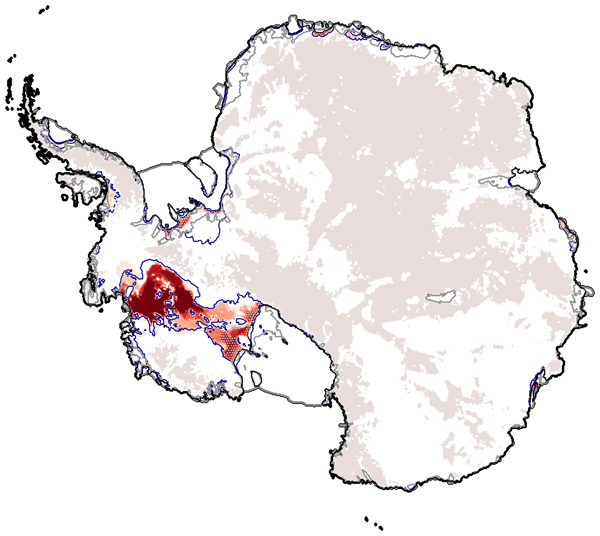
At least since we began measuring in detail, the West Antarctic Ice Sheet has lost a lot of ice, but we don't know precisely how important climate change is in this. Here, we put a number on the role of climate change in retreat of a glacier in this ice sheet, for the first time. We show that climate change made the shrinking of this glacier much worse. Our work also suggests that what happened on very long timescales (the last 10,000 years) might also matter for retreat of the ice sheets today.
The second Ice Shelf-Ocean Model Intercomparison Project, ISOMIP+, compares 12 ice shelf-ocean models with a common, idealised, static configuration, aiming to assess inter-model variability. Models show similar basal melt rate patterns, ocean profiles and circulation but differ in ice-ocean boundary layer properties. Ice-ocean boundary layer representation is a key area for future work, as are realistic-domain ice sheet-ocean model intercomparisons.
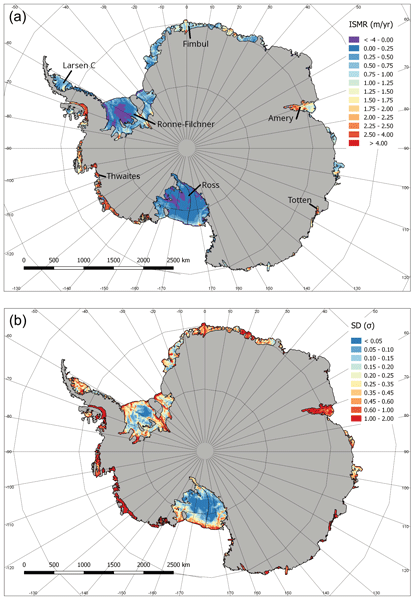
Quantifying melt and freeze beneath Antarctica’s floating ice shelves is vital to understanding present-day ice-sheet behavior and its potential to contribute to future sea-level rise. We compare 10 ice-shelf/ocean computer simulations with satellite data, providing the first multi-model estimate of melting and refreezing driven by the ocean. This new estimate offers a valuable tool for assessing ice-shelf roles in current and future ice-sheet changes, informing coastal adaptation strategies.