Articles | Volume 17, issue 1
https://doi.org/10.5194/esd-17-23-2026
© Author(s) 2026. This work is distributed under
the Creative Commons Attribution 4.0 License.
Special issue:
https://doi.org/10.5194/esd-17-23-2026
© Author(s) 2026. This work is distributed under
the Creative Commons Attribution 4.0 License.
Enhanced climate reproducibility testing with false discovery rate correction
Computational Hydrology and Atmospheric Sciences Group, Oak Ridge National Laboratory, 1 Bethel Valley Rd, Oak Ridge TN, USA
Salil Mahajan
Computational Hydrology and Atmospheric Sciences Group, Oak Ridge National Laboratory, 1 Bethel Valley Rd, Oak Ridge TN, USA
Related authors
No articles found.
Pratapaditya Ghosh, Ian Boutle, Paul Field, Adrian Hill, Anthony Jones, Marie Mazoyer, Katherine J. Evans, Salil Mahajan, Hyun-Gyu Kang, Min Xu, Wei Zhang, Noah Asch, and Hamish Gordon
Atmos. Chem. Phys., 25, 11129–11156, https://doi.org/10.5194/acp-25-11129-2025, https://doi.org/10.5194/acp-25-11129-2025, 2025
Short summary
Short summary
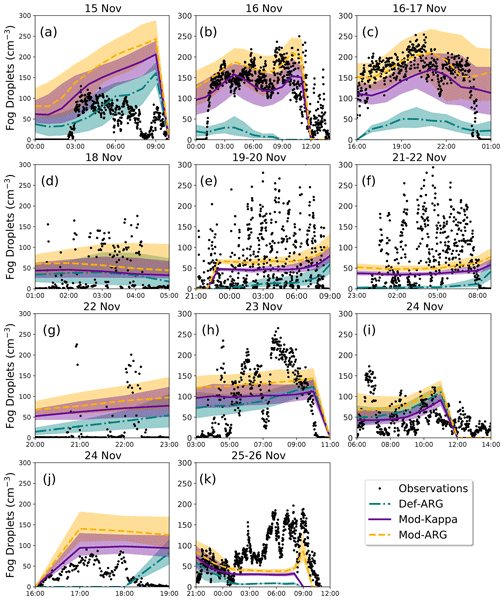
We study aerosol–fog interactions near Paris using a weather and climate model with high spatial resolution. We show that our model can simulate the fog life cycle effectively. We find that the fog droplet number concentrations, the amount of liquid water in the fog, and the vertical structure of the fog are highly sensitive to the parameterization that simulates droplet formation and growth. The changes we propose could improve fog forecasts significantly without increasing computational costs.
Pratapaditya Ghosh, Ian Boutle, Paul Field, Adrian Hill, Marie Mazoyer, Katherine J. Evans, Salil Mahajan, Hyun-Gyu Kang, Min Xu, Wei Zhang, and Hamish Gordon
Atmos. Chem. Phys., 25, 11157–11182, https://doi.org/10.5194/acp-25-11157-2025, https://doi.org/10.5194/acp-25-11157-2025, 2025
Short summary
Short summary
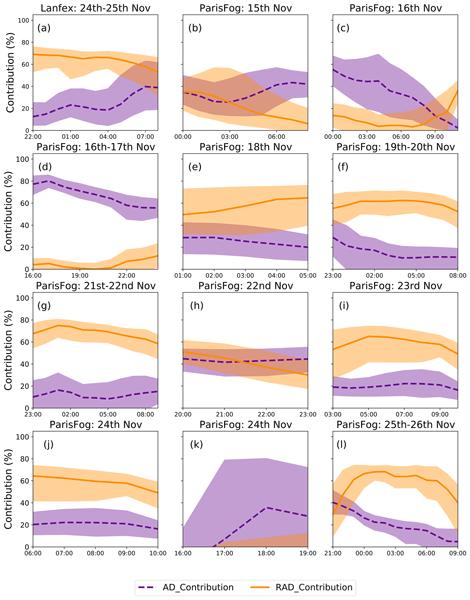
We study the life cycle of fog events in Europe using a weather and climate model. By incorporating droplet formation and growth driven by radiative cooling, our model better simulates the total liquid water in foggy atmospheric columns. We show that both adiabatic and radiative cooling play significant, often equally important, roles in driving droplet formation and growth. We discuss strategies to address droplet number overpredictions by improving model physics and addressing model artifacts.
Pratapaditya Ghosh, Katherine J. Evans, Daniel P. Grosvenor, Hyun-Gyu Kang, Salil Mahajan, Min Xu, Wei Zhang, and Hamish Gordon
Geosci. Model Dev., 18, 4899–4913, https://doi.org/10.5194/gmd-18-4899-2025, https://doi.org/10.5194/gmd-18-4899-2025, 2025
Short summary
Short summary
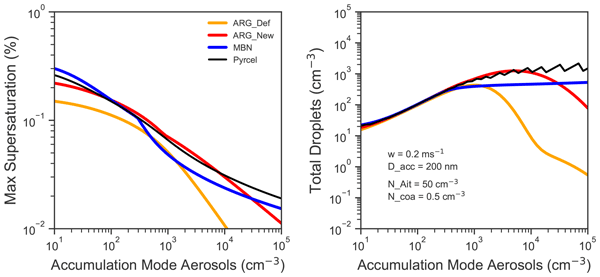
The most popular algorithm for calculating cloud droplet number concentrations in climate models is sensitive to parameters that control simulated aerosol particle number concentrations at different sizes. We recommend small modifications to functions in the algorithm to improve its performance. Implementing the changes in the UK Met Office climate model reduced average bias in simulated global droplet number concentrations, leading to more reflected solar radiation and a net cooling effect.
Chengzhu Zhang, Jean-Christophe Golaz, Ryan Forsyth, Tom Vo, Shaocheng Xie, Zeshawn Shaheen, Gerald L. Potter, Xylar S. Asay-Davis, Charles S. Zender, Wuyin Lin, Chih-Chieh Chen, Chris R. Terai, Salil Mahajan, Tian Zhou, Karthik Balaguru, Qi Tang, Cheng Tao, Yuying Zhang, Todd Emmenegger, Susannah Burrows, and Paul A. Ullrich
Geosci. Model Dev., 15, 9031–9056, https://doi.org/10.5194/gmd-15-9031-2022, https://doi.org/10.5194/gmd-15-9031-2022, 2022
Short summary
Short summary
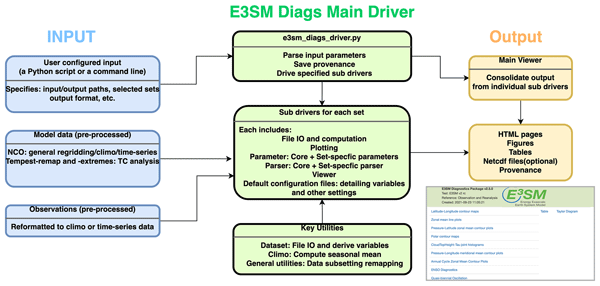
Earth system model (ESM) developers run automated analysis tools on data from candidate models to inform model development. This paper introduces a new Python package, E3SM Diags, that has been developed to support ESM development and use routinely in the development of DOE's Energy Exascale Earth System Model. This tool covers a set of essential diagnostics to evaluate the mean physical climate from simulations, as well as several process-oriented and phenomenon-based evaluation diagnostics.
Cited articles
Anderson, T. W.: On the Distribution of the Two-Sample Cramer-von Mises Criterion, Ann. Math. Statist., 33, 1148–1159, https://doi.org/10.1214/aoms/1177704477, 1962. a
Baker, A. H., Hammerling, D. M., Levy, M. N., Xu, H., Dennis, J. M., Eaton, B. E., Edwards, J., Hannay, C., Mickelson, S. A., Neale, R. B., Nychka, D., Shollenberger, J., Tribbia, J., Vertenstein, M., and Williamson, D.: A new ensemble-based consistency test for the Community Earth System Model (pyCECT v1.0), Geosci. Model Dev., 8, 2829–2840, https://doi.org/10.5194/gmd-8-2829-2015, 2015. a, b, c, d
Benjamini, Y. and Yekutieli, D.: The control of the false discovery rate in multiple testing under dependency, The Annals of Statistics, 29, 1165–1188, https://doi.org/10.1214/aos/1013699998, 2001. a, b
Bi, K., Xie, L., Zhang, H., Chen, X., Gu, X., and Tian, Q.: Accurate medium-range global weather forecasting with 3D neural networks, Nature, 610, 87–93, 2022. a
Burrell, A. L., Evans, J. P., and De Kauwe, M. G.: Anthropogenic climate change has driven over 5 million km2 of drylands towards desertification, Nature Communications, 11, 3853, https://doi.org/10.1038/s41467-020-17710-7, 2020. a
Büttner, M., Alt, C., Kenter, T., Köstler, H., Plessl, C., and Aizinger, V.: Enabling Performance Portability for Shallow Water Equations on CPUs, GPUs, and FPGAs with SYCL, in: Proceedings of the Platform for Advanced Scientific Computing Conference, PASC '24, Association for Computing Machinery, New York, NY, USA, ISBN 9798400706394, https://doi.org/10.1145/3659914.3659925, 2024. a
Dask Development Team: Dask: Library for dynamic task scheduling, http://dask.pydata.org (last access: 24 October 2025), 2016. a
Dueben, P. D. and Bauer, P.: Challenges and design choices for global weather and climate models based on machine learning, Geosci. Model Dev., 11, 3999–4009, https://doi.org/10.5194/gmd-11-3999-2018, 2018. a
E3SM Project, D.: Energy Exascale Earth System Model v2.1.0, DOE Code [software], https://doi.org/10.11578/E3SM/dc.20230110.5, 2023. a
Eidhammer, T., Gettelman, A., Thayer-Calder, K., Watson-Parris, D., Elsaesser, G., Morrison, H., van Lier-Walqui, M., Song, C., and McCoy, D.: An extensible perturbed parameter ensemble for the Community Atmosphere Model version 6, Geosci. Model Dev., 17, 7835–7853, https://doi.org/10.5194/gmd-17-7835-2024, 2024. a
Gentle, J. E.: Random Number Generation and Monte Carlo Methods, Springer-Verlag, ISBN 0387001786, https://doi.org/10.1007/b97336, 2003. a
Golaz, J.-C., Van Roekel, L. P., Zheng, X., Roberts, A. F., Wolfe, J. D., Lin, W., Bradley, A. M., Tang, Q., Maltrud, M. E., Forsyth, R. M., Zhang, C., Zhou, T., Zhang, K., Zender, C. S., Wu, M., Wang, H., Turner, A. K., Singh, B., Richter, J. H., Qin, Y., Petersen, M. R., Mametjanov, A., Ma, P.-L., Larson, V. E., Krishna, J., Keen, N. D., Jeffery, N., Hunke, E. C., Hannah, W. M., Guba, O., Griffin, B. M., Feng, Y., Engwirda, D., Di Vittorio, A. V., Dang, C., Conlon, L. M., Chen, C.-C.-J., Brunke, M. A., Bisht, G., Benedict, J. J., Asay-Davis, X. S., Zhang, Y., Zhang, M., Zeng, X., Xie, S., Wolfram, P. J., Vo, T., Veneziani, M., Tesfa, T. K., Sreepathi, S., Salinger, A. G., Reeves Eyre, J. E. J., Prather, M. J., Mahajan, S., Li, Q., Jones, P. W., Jacob, R. L., Huebler, G. W., Huang, X., Hillman, B. R., Harrop, B. E., Foucar, J. G., Fang, Y., Comeau, D. S., Caldwell, P. M., Bartoletti, T., Balaguru, K., Taylor, M. A., McCoy, R. B., Leung, L. R., and Bader, D. C.: The DOE E3SM Model Version 2: Overview of the Physical Model and Initial Model Evaluation, Journal of Advances in Modeling Earth Systems, 14, e2022MS003156, https://doi.org/10.1029/2022MS003156, 2022. a, b, c
Harris, C. R., Millman, K. J., van der Walt, S. J., Gommers, R., Virtanen, P., Cournapeau, D., Wieser, E., Taylor, J., Berg, S., Smith, N. J., Kern, R., Picus, M., Hoyer, S., van Kerkwijk, M. H., Brett, M., Haldane, A., del Río, J. F., Wiebe, M., Peterson, P., Gérard-Marchant, P., Sheppard, K., Reddy, T., Weckesser, W., Abbasi, H., Gohlke, C., and Oliphant, T. E.: Array programming with NumPy, Nature, 585, 357–362, https://doi.org/10.1038/s41586-020-2649-2, 2020. a
Hoyer, S. and Hamman, J.: xarray: N-D labeled arrays and datasets in Python, Journal of Open Research Software, 5, https://doi.org/10.5334/jors.148, 2017. a
Hunter, J. D.: Matplotlib: A 2D graphics environment, Computing in Science & Engineering, 9, 90–95, https://doi.org/10.1109/MCSE.2007.55, 2007. a
Intel Corporation: Intel Fortran Compiler Developer Guide and Reference, https://www.intel.com/content/www/us/en/docs/fortran-compiler/developer-guide-reference/2023-0/compiler-options-001.html (last access: 1 May 2025), 2023. a
Kelleher, M. and Mahajan, S.: Detectable Climate (v1.1.0), Zenodo [code], https://doi.org/10.5281/zenodo.17438094, 2025a. a
Kelleher, M. and Mahajan, S.: Detectable Climate Bootstrap Data (Version v2), Zenodo [data set], https://doi.org/10.5281/zenodo.17438071, 2025b. a
Mahajan, S.: Ensuring statistical reproducibility of ocean model simulations in the age of hybrid computing, in: Proceedings of the Platform for Advanced Scientific Computing Conference, PASC '21, Association for Computing Machinery, New York, NY, USA, ISBN 9781450385633, https://doi.org/10.1145/3468267.3470572, 2021. a, b, c, d, e, f
Mahajan, S., Gaddis, A. L., Evans, K. J., and Norman, M. R.: Exploring an Ensemble-Based Approach to Atmospheric Climate Modeling and Testing at Scale, international Conference on Computational Science, ICCS 2017, 12-14 June 2017, Zurich, Switzerland, Procedia Computer Science, 108, 735–744, https://doi.org/10.1016/j.procs.2017.05.259, 2017. a, b, c, d, e, f, g, h, i, j
Mahajan, S., Evans, K. J., Kennedy, J. H., Xu, M., and Norman, M. R.: A multivariate approach to ensure statistical reproducibility of climate model simulations, in: Proceedings of the Platform for Advanced Scientific Computing Conference, 1–10, 2019a. a
Mahajan, S., Evans, K. J., Kennedy, J. H., Xu, M., Norman, M. R., and Branstetter, M. L.: Ongoing solution reproducibility of earth system models as they progress toward exascale computing, The International Journal of High Performance Computing Applications, 33, 784–790, https://doi.org/10.1177/1094342019837341, 2019b. a, b, c, d, e, f
Mahajan, S., Tang, Q., Keen, N. D., Golaz, J.-C., and van Roekel, L. P.: Simulation of ENSO teleconnections to precipitation extremes over the United States in the high-resolution version of E3SM, Journal of Climate, 35, 3371–3393, 2022. a
Mann, H. and Whitney, D. R.: On a Test of Whether one of Two Random Variables is Stochastically Larger than the Other., Ann. Math. Statist., 18, 50–60, https://doi.org/10.1214/aoms/1177730491, 1947. a
McKinney, W.: Data Structures for Statistical Computing in Python, in: Proceedings of the 9th Python in Science Conference, edited by: van der Walt, S. and Millman, J., 56–61, https://doi.org/10.25080/Majora-92bf1922-00a, 2010. a
Mielikainen, J., Price, E., Huang, B., Huang, H.-L. A., and Lee, T.: GPU Compute Unified Device Architecture (CUDA)-based Parallelization of the RRTMG Shortwave Rapid Radiative Transfer Model, IEEE Journal of Selected Topics in Applied Earth Observations and Remote Sensing, 9, 921–931, https://doi.org/10.1109/JSTARS.2015.2427652, 2016. a
Milroy, D. J., Baker, A. H., Hammerling, D. M., and Jessup, E. R.: Nine time steps: ultra-fast statistical consistency testing of the Community Earth System Model (pyCECT v3.0), Geosci. Model Dev., 11, 697–711, https://doi.org/10.5194/gmd-11-697-2018, 2018. a, b
Pathak, J., Subramanian, S., Harrington, P., Raja, S., Chattopadhyay, A., Mardani, M., Kurth, T., Hall, D., Li, Z., Azizzadenesheli, K., Hassanzadeh, P., Kashinath, K., and Anandkumar, A.: FourCastNet: A Global Data-driven High-resolution Weather Model using Adaptive Fourier Neural Operators, arXiv [preprint], https://doi.org/10.48550/arXiv.2202.11214, 2022. a
Qian, Y., Wan, H., Yang, B., Golaz, J.-C., Harrop, B., Hou, Z., Larson, V. E., Leung, L. R., Lin, G., Lin, W., Ma, P.-L., Ma, H.-Y., Rasch, P., Singh, B., Wang, H., Xie, S., and Zhang, K.: Parametric Sensitivity and Uncertainty Quantification in the Version 1 of E3SM Atmosphere Model Based on Short Perturbed Parameter Ensemble Simulations, Journal of Geophysical Research: Atmospheres, 123, 13046–13073, https://doi.org/10.1029/2018JD028927, 2018. a, b
Rasp, S., Dueben, P. D., Scher, S., Weyn, J. A., Mouatadid, S., and Thuerey, N.: WeatherBench: A benchmark dataset for data-driven weather forecasting, Journal of Advances in Modeling Earth Systems, 12, e2020MS002203, https://doi.org/10.1029/2020MS002203, 2020. a
Renard, B., Lang, M., Bois, P., Dupeyrat, A., Mestre, O., Niel, H., Sauquet, E., Prudhomme, C., Parey, S., Paquet, E., Neppel, L., and Gailhard, J.: Regional methods for trend detection: Assessing field significance and regional consistency, Water Resources Research, 44, https://doi.org/10.1029/2007WR006268, 2008. a, b, c
Rosinski, J. M. and Williamson, D. L.: The Accumulation of Rounding Errors and Port Validation for Global Atmospheric Models, SIAM Journal on Scientific Computing, 18, 552–564, https://doi.org/10.1137/S1064827594275534, 1997. a
Seabold, S. and Perktold, J.: statsmodels: Econometric and statistical modeling with Python, in: 9th Python in Science Conference, 28 June–3 July 2010, Austin, TX, USA, https://doi.org/10.25080/Majora-92bf1922-012, 2010. a, b
Virtanen, P., Gommers, R., Oliphant, T. E., Haberland, M., Reddy, T., Cournapeau, D., Burovski, E., Peterson, P., Weckesser, W., Bright, J., van der Walt, S. J., Brett, M., Wilson, J., Millman, K. J., Mayorov, N., Nelson, A. R. J., Jones, E., Kern, R., Larson, E., Carey, C. J., Polat, İ., Feng, Y., Moore, E. W., VanderPlas, J., Laxalde, D., Perktold, J., Cimrman, R., Henriksen, I., Quintero, E. A., Harris, C. R., Archibald, A. M., Ribeiro, A. H., Pedregosa, F., van Mulbregt, P., and SciPy 1.0 Contributors: SciPy 1.0: Fundamental Algorithms for Scientific Computing in Python, Nature Methods, 17, 261–272, https://doi.org/10.1038/s41592-019-0686-2, 2020. a
Wan, H., Zhang, K., Rasch, P. J., Singh, B., Chen, X., and Edwards, J.: A new and inexpensive non-bit-for-bit solution reproducibility test based on time step convergence (TSC1.0), Geosci. Model Dev., 10, 537–552, https://doi.org/10.5194/gmd-10-537-2017, 2017. a, b, c
Waskom, M. L.: seaborn: statistical data visualization, Journal of Open Source Software, 6, 3021, https://doi.org/10.21105/joss.03021, 2021. a
Watson-Parris, D., Rao, Y., Olivié, D., Seland, Ø., Nowack, P., Camps-Valls, G., Stier, P., Bouabid, S., Dewey, M., Fons, E., Gonzalez, J., Harder, P., Jeggle, K., Lenhardt, J., Manshausen, P., Novitasari, M., Ricard, L., and Roesch, C.: ClimateBench v1.0: A Benchmark for Data-Driven Climate Projections, Journal of Advances in Modeling Earth Systems, 14, https://doi.org/10.1029/2021MS002954, 2022. a
Whan, K. and Zwiers, F.: The impact of ENSO and the NAO on extreme winter precipitation in North America in observations and regional climate models, Climate Dynamics, 48, 1401–1411, 2017. a
Wilks, D. S.: “The Stippling Shows Statistically Significant Grid Points”: How Research Results are Routinely Overstated and Overinterpreted, and What to Do about It, Bulletin of the American Meteorological Society, 97, 2263–2273, https://doi.org/10.1175/BAMS-D-15-00267.1, 2016. a, b
Zeman, C. and Schär, C.: An ensemble-based statistical methodology to detect differences in weather and climate model executables, Geosci. Model Dev., 15, 3183–3203, https://doi.org/10.5194/gmd-15-3183-2022, 2022. a, b
Short summary
Building numerical models of the Earth is a complex task that scientists and engineers around the world work on. It is important that results are repeatable accurately to help advance science. This study uses a statistical method to reduce errors when comparing two sets of simulations to see if they agree with each other. This approach helps identify if changes made to the model's code result in unexpected or unintended effects.
Building numerical models of the Earth is a complex task that scientists and engineers around...
Altmetrics
Final-revised paper
Preprint