
Articles | Volume 17, issue 3
https://doi.org/10.5194/esd-17-739-2026
© Author(s) 2026. This work is distributed under
the Creative Commons Attribution 4.0 License.
the Creative Commons Attribution 4.0 License.
https://doi.org/10.5194/esd-17-739-2026
© Author(s) 2026. This work is distributed under
the Creative Commons Attribution 4.0 License.
the Creative Commons Attribution 4.0 License.
Research article
| 
19 Jun 2026
Research article |
| 19 Jun 2026
| 19 Jun 2026
Assessing the impact of the Human Development Index on historical trends in the INFERNO fire model
João C. M. Teixeira
CORRESPONDING AUTHOR

Met Office, Fitzroy Road, Exeter EX1 3PB, UK
Global Systems Institute, Department of Mathematics & Statistics, University of Exeter, Exeter EX4 4QE, UK
Leverhulme Centre for Wildfires, Environment and Society, Department of Physics, Imperial College London, SW7 2AZ London, UK
Chantelle Burton
Met Office, Fitzroy Road, Exeter EX1 3PB, UK
Douglas I. Kelley
UK Centre for Ecology and Hydrology, Wallingford OX10 8BB, UK
Gerd A. Folberth
Met Office, Fitzroy Road, Exeter EX1 3PB, UK
Fiona M. O'Connor
Met Office, Fitzroy Road, Exeter EX1 3PB, UK
Global Systems Institute, Department of Mathematics & Statistics, University of Exeter, Exeter EX4 4QE, UK
Richard A. Betts
Met Office, Fitzroy Road, Exeter EX1 3PB, UK
Global Systems Institute, Department of Mathematics & Statistics, University of Exeter, Exeter EX4 4QE, UK
Apostolos Voulgarakis
Leverhulme Centre for Wildfires, Environment and Society, Department of Physics, Imperial College London, SW7 2AZ London, UK
School of Environmental Engineering, Technical University of Crete, 73100 Chania, Greece
Related authors
Eliza K. Duncan, George Jordan, Paul Kim, James M. Haywood, Duncan Watson-Parris, Ben Johnson, Alistair Sellar, Zak Kipling, João Teixeira, Florent Malavelle, and Daniel G. Partridge
EGUsphere, https://doi.org/10.5194/egusphere-2026-1043, https://doi.org/10.5194/egusphere-2026-1043, 2026
Short summary
Short summary
The 2014–15 Holuhraun eruption offers a natural experiment to assess how well climate models can capture the changes in aerosol associated with the plume. We investigate the aerosol lifecycle during transport to identify key differences in climate models' representation of aerosol processes, which could affect the models’ ability to capture changes in cloud properties. Our study highlights the importance of the representation of boundary layer nucleation processes in climate models.
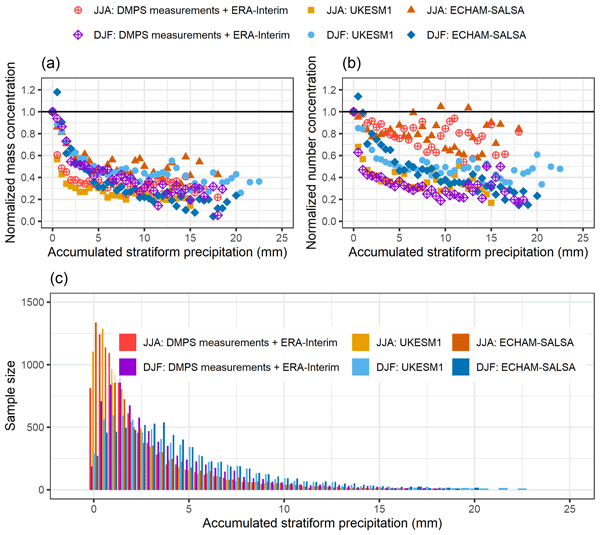
Sini Talvinen, Paul Kim, Emanuele Tovazzi, Eemeli Holopainen, Roxana Cremer, Thomas Kühn, Harri Kokkola, Zak Kipling, David Neubauer, João C. Teixeira, Alistair Sellar, Duncan Watson-Parris, Yang Yang, Jialei Zhu, Srinath Krishnan, Annele Virtanen, and Daniel G. Partridge
Atmos. Chem. Phys., 25, 14449–14478, https://doi.org/10.5194/acp-25-14449-2025, https://doi.org/10.5194/acp-25-14449-2025, 2025
Short summary
Short summary
Climate models struggle to predict how clouds and aerosols interact, affecting Earth’s energy balance. This study compares models to observations to see how they describe effects of clouds and rain on aerosols. While both models show similar overall trends, seasonal differences emerged. These, however, align with differences in key variables participating in cloud formation. The study provides insights on how to improve the representation of aerosol-cloud interactions in climate models.
Joao Carlos Martins Teixeira, Chantelle Burton, Douglas I. Kelly, Gerd A. Folberth, Fiona M. O'Connor, Richard A. Betts, and Apostolos Voulgarakis
Biogeosciences Discuss., https://doi.org/10.5194/bg-2023-136, https://doi.org/10.5194/bg-2023-136, 2023
Revised manuscript not accepted
Short summary
Short summary
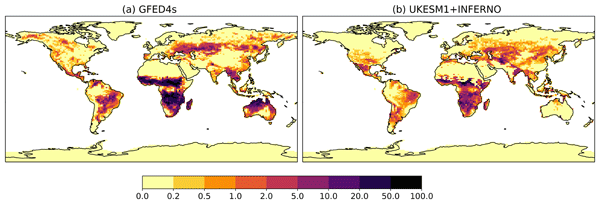
Representing socio-economic impacts on fires is crucial to underpin the confidence in global fire models. Introducing these into INFERNO, reduces biases and improves the modelled burnt area (BA) trends when compared to observations. Including socio-economic factors in the representation of fires in Earth System Models is important for realistically simulating BA, quantifying trends in the recent past, and for understanding the main drivers of those at regional scales.
Jonny Williams, Erik Behrens, Olaf Morgenstern, Peter Gibson, and Joao Teixeira
EGUsphere, https://doi.org/10.5194/egusphere-2023-1694, https://doi.org/10.5194/egusphere-2023-1694, 2023
Preprint withdrawn
Short summary
Short summary
We use open-source cyclone tracking software and state-of-the-art climate models to characterise present-day tropical cyclones – TCs – in the South Pacific before moving on to estimate how they may change in the future. A robust result of this work is the projection of future intensification of TCs. However, the question of their future occurrence frequency is less clear. Under extreme future warming scenarios, we postulate a possible increase in power dissipation per TC of up to 25 %.
João C. Teixeira, Gerd A. Folberth, Fiona M. O'Connor, Nadine Unger, and Apostolos Voulgarakis
Geosci. Model Dev., 14, 6515–6539, https://doi.org/10.5194/gmd-14-6515-2021, https://doi.org/10.5194/gmd-14-6515-2021, 2021
Short summary
Short summary
Fire constitutes a key process in the Earth system, being driven by climate as well as affecting climate. However, studies on the effects of fires on atmospheric composition and climate have been limited to date. This work implements and assesses the coupling of an interactive fire model with atmospheric composition, comparing it to an offline approach. This approach shows good performance at a global scale. However, regional-scale limitations lead to a bias in modelling fire emissions.
Chrysanthi Elpida Zervaki, Manolis Grillakis, and Apostolos Voulgarakis
EGUsphere, https://doi.org/10.5194/egusphere-2026-4576, https://doi.org/10.5194/egusphere-2026-4576, 2026
This preprint is open for discussion and under review for Natural Hazards and Earth System Sciences (NHESS).
Short summary
Short summary
This study compares burned area estimates from satellite MODIS MCD64A1 with Hellenic Fire Service records for 2002–2023. Results show strong overall agreement, though satellites overestimate burned areas by 41% overall, which drops to 12% for natural land covers due to cropland burning detections in specific regions. Satellites also underdetect small fires, proving that combining satellite data with ground records is vital for effective fire management.
Inika Taylor, Douglas I. Kelley, Camilla Mathison, Karina E. Bett-Williams, Andrew J. Hartley, Richard A. Betts, Chantelle Burton, and Maria L. F. Barbosa
Nat. Hazards Earth Syst. Sci., 26, 4257–4289, https://doi.org/10.5194/nhess-26-4257-2026, https://doi.org/10.5194/nhess-26-4257-2026, 2026
Short summary
Short summary
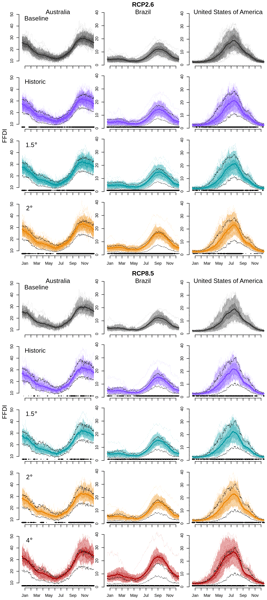
We present future climate change projections that show increasing fire danger worldwide. Focusing on Australia, Brazil, and the USA, we show that limiting warming to 2 °C reduces the increase in fire danger. However, fire seasons still lengthen and intensify even at 1.5 °C, demonstrating the need for mitigation to limit impacts and adaptation to manage residual risk. Low-fire danger periods persist, but we show their timing and duration will shift and must be considered in fire management.
Theodore R. Keeping, Mariam Zachariah, Olivia Haas, Manolis Grillakis, Clair Barnes, Gareth D. Clay, Bikem Ekberzade, Orjeta Jaupaj, Andreia Ribeiro, Ricardo Trigo, Apostolos Voulgarakis, and Friederike E. L. Otto
Nat. Hazards Earth Syst. Sci., 26, 3761–3813, https://doi.org/10.5194/nhess-26-3761-2026, https://doi.org/10.5194/nhess-26-3761-2026, 2026
Short summary
Short summary
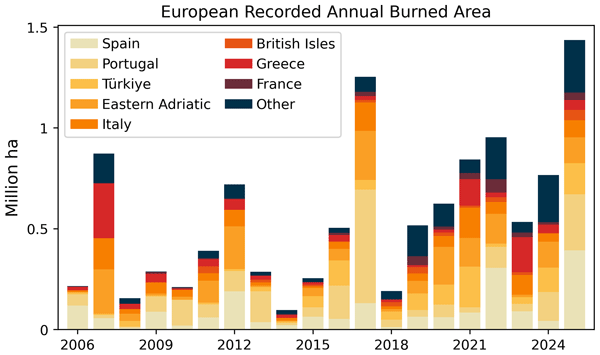
2025 broke wildfire records across European regions. For five regions, we identify the weather, vegetation and management conditions that drove these extreme fires. We found the change in the likelihood and intensity of similar driving “fire weather”, from before human-caused warming to present, and from now to a likely future climate. Summer drought and hot, dry and windy conditions have shifted rapidly, with 2025’s conditions no longer rare in some regions despite devastating fires.
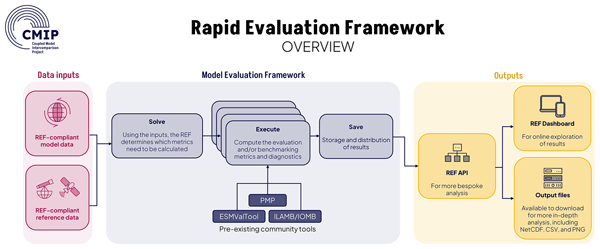
Forrest M. Hoffman, Birgit Hassler, Ranjini Swaminathan, Jared Lewis, Bouwe Andela, Nathan Collier, Dóra Hegedűs, Jiwoo Lee, Charlotte Pascoe, Mika Pflüger, Martina Stockhause, Paul Ullrich, Min Xu, Lisa Bock, Felicity Chun, Bettina K. Gier, Douglas I. Kelley, Axel Lauer, Julien Lenhardt, Manuel Schlund, Mohanan G. Sreeush, Katja Weigel, Ed Blockley, Rebecca Beadling, Romain Beucher, Demiso D. Dugassa, Valerio Lembo, Jianhua Lu, Swen Brands, Jerry Tjiputra, Elizaveta Malinina, Brian Medeiros, Enrico Scoccimarro, Jeremy Walton, Phil Kershaw, André Lanfer Marquez, Malcolm J. Roberts, Eleanor O'Rourke, Beth Dingley, Briony Turner, Helene Hewitt, and John P. Dunne
Geosci. Model Dev., 19, 7415–7455, https://doi.org/10.5194/gmd-19-7415-2026, https://doi.org/10.5194/gmd-19-7415-2026, 2026
Short summary
Short summary
The Rapid Evaluation Framework (REF) is a community-driven platform for benchmarking and performance assessment of Earth system models. Built upon four disparate community evaluation tools, the REF is designed to provide model-data comparisons for the Assessment Fast Track for the Seventh Phase of the Coupled Model Intercomparison Project. The REF will be run at the Earth System Grid Federation to enable model devleopers and scientists to quickly identify model biases and performance issues.
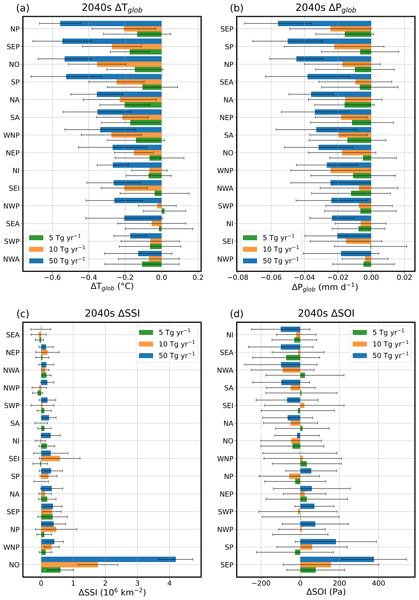
Alex M. Mason, Matthew Henry, Haruki Hirasawa, Fiona M. O'Connor, and James Haywood
Atmos. Chem. Phys., 26, 10861–10879, https://doi.org/10.5194/acp-26-10861-2026, https://doi.org/10.5194/acp-26-10861-2026, 2026
Short summary
Short summary
Marine Cloud Brightening (MCB) proposes the spraying of sea salt particles into marine clouds to cool the planet. MCB in midlatitude regions in models gave a relatively even climate response. We use 42 simulations of MCB to target several climate responses. Two optimised combinations are compared to a midlatitude MCB simulation, which improved sea ice restoration and the temperature response pattern, highlighting the importance of high latitude MCB for MCB optimisation in this model.
Chantelle Burton, Francesca Di Giuseppe, Matthew W. Jones, Douglas I. Kelley, Maria L. F. Barbosa, Joe McNorton, Robert Potts, Carlota Segura-Garcia, John T. Abatzoglou, Iulian Alin Rosu, Niels Andela, Liana O. Anderson, Sally Archibald, Esther Brambleby, Emilio Chuvieco, Andy Ciavarella, Hamish Clarke, Francisco de la Barrera, Carlos M. Di Bella, Enza Di Tomaso, Kebonye Dintwe, Tim S. Doherty, Victoria M. Donovan, Jonathan M. Eden, Paulo M. Fernandes, Lukas Fiedler, Louis Giglio, Olivia Haas, Douglas Hamilton, Stijn Hantson, Sarah Harris, Andrew J. Hartley, Theodore R. Keeping, Crystal A. Kolden, Jean-Luc Kouassi, Elena Kukavskaya, Seppe Lampe, Zhongwei Liu, Guilherme Mataveli, Sarah Meier, Duarte Oom, Mark Parrington, Yuquan Qu, Victor Resco de Dios, Julien Ruffault, Mojtaba Sadegh, Cristina Santín, Fernando Sedano, Jacquelyn K. Shuman, Patrícia S. Silva, Fiona R. Spuler, Carmen B. Steinmann, Veerachai Tanpipat, Miguel Ángel Torres-Vazquez, Marco Turco, Guido R. van der Werf, Dave van Wees, Sander Veraverbeke, Jakob B. Wessel, and Bo Zheng
Earth Syst. Sci. Data Discuss., https://doi.org/10.5194/essd-2026-587, https://doi.org/10.5194/essd-2026-587, 2026
Revised manuscript accepted for ESSD
Short summary
Short summary
The third State of Wildfires report examines extreme wildfire events from 2025 to early 2026. It analyses key regional events in Midwestern Canadian Shield Forests, Northwest Iberia, and Chilean Temperate Forests and Matorral, assessing their impacts, drivers, and attributing them to climate change. Climate change greatly increased the likelihood of these fires, and without strong mitigation, such events will become more frequent.
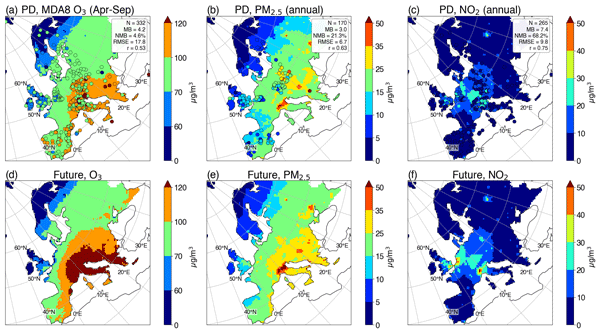
Ruth M. Doherty, Zhenze Liu, Massimo Vieno, Oliver Wild, Fiona M. O'Connor, Steven T. Turnock, Christina M. Hood, Jenny R. Stocker, Mathew R. Heal, Dwayne E. Heard, Emma G. Sands, David J. Carruthers, and Lisa K. Whalley
Atmos. Chem. Phys., 26, 10115–10147, https://doi.org/10.5194/acp-26-10115-2026, https://doi.org/10.5194/acp-26-10115-2026, 2026
Short summary
Short summary
We use innovative coupled modelling to quantify how natural emissions, chemistry, deposition and transport influence climate change responses of air pollutants from continental to urban scales across Europe. We highlight uncertainties in climate-sensitive biogenic emissions as key to future projections of ozone and fine particulate matter. High resolution modelling is essential for evaluating the benefits and trade-offs of climate change for achieving WHO air quality targets and guidelines.
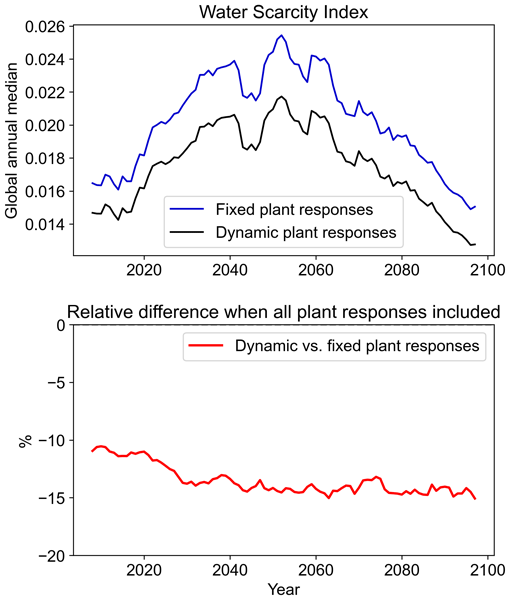
Jessica Stacey, Richard A. Betts, Andrew Hartley, Lina M. Mercado, and Nicola Gedney
Hydrol. Earth Syst. Sci., 30, 4225–4243, https://doi.org/10.5194/hess-30-4225-2026, https://doi.org/10.5194/hess-30-4225-2026, 2026
Short summary
Short summary
Plants typically transpire less with rising atmospheric carbon dioxide, leaving more water in the ground for human use, but many future water scarcity assessments ignore this effect. We use a land surface model to examine how plant responses to carbon dioxide and climate change affect future water scarcity. Our results suggest that including these plant responses increases overall water availability for most people, highlighting the importance of their inclusion in future water scarcity studies.
Emma Sands, Fiona M. O'Connor, James Weber, Ruth M. Doherty, and Richard J. Pope
Atmos. Chem. Phys., 26, 8553–8573, https://doi.org/10.5194/acp-26-8553-2026, https://doi.org/10.5194/acp-26-8553-2026, 2026
Short summary
Short summary
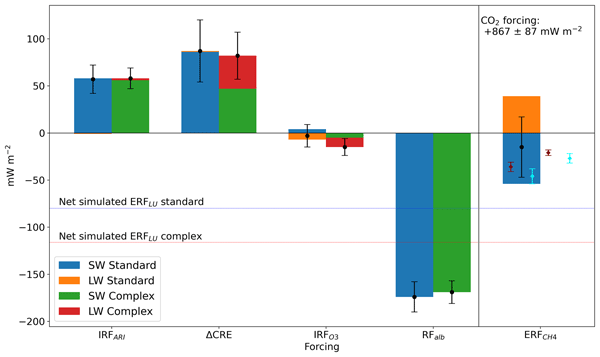
Land use impacts climate through changes in atmospheric composition but the relative importance of various pathways is uncertain. We use a model to separate the forcing from pre-industrial to present-day land use change into contributions from various greenhouse gases, aerosol effects, and surface albedo change. The inclusion of updated processes highlights the role of changes in cloud properties. The carbon dioxide forcing dominates, but other processes have substantial regional impacts.
Rafaila-Nikola Mourgela, Iulian-Alin Rosu, and Apostolos Voulgarakis
EGUsphere, https://doi.org/10.5194/egusphere-2026-3239, https://doi.org/10.5194/egusphere-2026-3239, 2026
Short summary
Short summary
This study investigates the global radiative and climate impacts of present-day wildfire emissions. Using EC-Earth3 and CMIP6 emissions, we performed atmosphere-only and ocean-atmosphere coupled simulations to study the local and remote impacts. Our results show a net negative radiative effect dominated by aerosol-cloud interactions. The climate response is mainly driven by the slow ocean-mediated response, producing global cooling and strong regional precipitation changes.
Piers M. Forster, Tristram Walsh, Chris Smith, William F. Lamb, Robin Lamboll, Christophe Cassou, Mathias Hauser, Zeke Hausfather, June-Yi Lee, Matthew D. Palmer, Karina von Schuckmann, Aimée B. A. Slangen, Sophie Szopa, Blair Trewin, Jeongeun Yun, Nathan P. Gillett, Stuart Jenkins, H. Damon Matthews, Krishnan Raghavan, Aurélien Ribes, Joeri Rogelj, Debbie Rosen, Xuebin Zhang, Myles Allen, Robbie M. Andrew, Chris Atkinson, Richard A. Betts, Antonio Bombelli, Samantha N. Burgess, Lijing Cheng, Helen E. Claxton, Pierre Friedlingstein, Thomas L. Frölicher, Catia M. Domingues, Thomas Gasser, Catherine H. Gregory, Rachel M. Hoesly, Daniel Huppmann, Masayoshi Ishii, Christopher Kadow, Alexia Karwat, John Kennedy, Rachel E. Killick, Mahesh V. M. Kovilakam, Paul B. Krummel, Xin Lan, Jean-François Lamarque, Aurélien Liné, Belén Martín-Míguez, Didier P. Monselesan, Colin Morice, Jens Mühle, Pino Mussak, Glen P. Peters, Anna Pirani, Julia Pongratz, Matthew Rigby, Robert Rohde, Abhishek Savita, Sonia I. Seneviratne, Steven J. Smith, Ghassan Taha, Caterina Tassone, Peter Thorne, Christopher Wells, Luke M. Western, Guido R. van der Werf, Susan E. Wijffels, Marco Zecchetto, Junting Zhong, Xiao-Ye Zhang, Valérie Masson-Delmotte, and Panmao Zhai
Earth Syst. Sci. Data, 18, 3889–3933, https://doi.org/10.5194/essd-18-3889-2026, https://doi.org/10.5194/essd-18-3889-2026, 2026
Short summary
Short summary
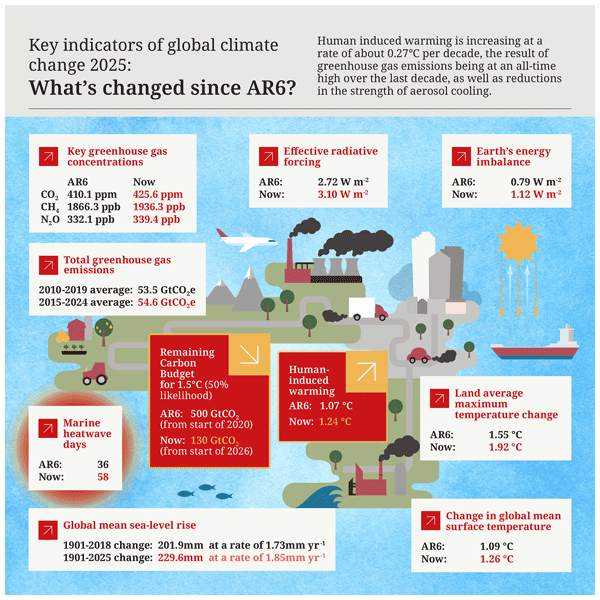
We give our annual update of key climate indicators. Our work quantifies the human contribution to global warming and the pace of climate change. This represents a large effort by the international community akin to an Intergovernmental Panel on Climate Change (IPCC) report.
Katja Frieler, Stefan Lange, Jacob Schewe, Matthias Mengel, Simon Treu, Christian Otto, Jan Volkholz, Christopher P. O. Reyer, Stefanie Heinicke, Colin Jones, Julia L. Blanchard, Cheryl S. Harrison, Colleen M. Petrik, Tyler D. Eddy, Kelly Ortega-Cisneros, Camilla Novaglio, Ryan Heneghan, Derek P. Tittensor, Olivier Maury, Matthias Büchner, Thomas Vogt, Dánnell Quesada-Chacón, Kerry Emanuel, Chia-Ying Lee, Suzana J. Camargo, Linn Hamester, Jonas Jägermeyr, Sam Rabin, Jochen Klar, Iliusi D. Vega del Valle, Lisa Novak, Inga J. Sauer, Gitta Lasslop, Sarah Chadburn, Eleanor Burke, Angela Gallego-Sala, Noah Smith, Jinfeng Chang, Stijn Hantson, Chantelle Burton, Anne Gädeke, Fang Li, Simon N. Gosling, Hannes Müller Schmied, Fred Hattermann, Thomas Hickler, Rafael Marcé, Don Pierson, Wim Thiery, Daniel Mercado-Bettín, Robert Ladwig, Ana Isabel Ayala, Matthew Forrest, Michel Bechtold, Robert Reinecke, Inge de Graaf, Jed O. Kaplan, Alexander Koch, Matthieu Lengaigne, Rohini Kumar, and Maryna Strokal
Geosci. Model Dev., 19, 4095–4135, https://doi.org/10.5194/gmd-19-4095-2026, https://doi.org/10.5194/gmd-19-4095-2026, 2026
Short summary
Short summary
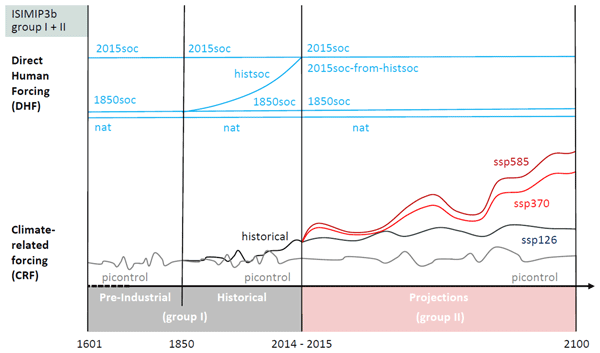
This paper describes the experiments and data sets necessary to run historic and future impact projections, and the underlying assumptions of future climate change as defined by the 3rd round of the ISIMIP Project (Inter-sectoral Impactmodel Intercomparison Project, isimip.org). ISIMIP provides a framework for cross-sectorally consistent climate impact simulations to contribute to a comprehensive and consistent picture of the world under different climate-change scenarios.
Fang Li, David M. Lawrence, Brendan M. Rogers, Chantelle Burton, Huilin Huang, Yiquan Jiang, Johannes W. Kaiser, Matthew Kasoar, Hanna Lee, Ruby Leung, Lars Nieradzik, Aihui Wang, Daniel S. Ward, Ligeer Ce, Yangchun Li, Zhongda Lin, Apostolos Voulgarakis, and Yongkang Xue
Geosci. Model Dev., 19, 3989–4007, https://doi.org/10.5194/gmd-19-3989-2026, https://doi.org/10.5194/gmd-19-3989-2026, 2026
Short summary
Short summary
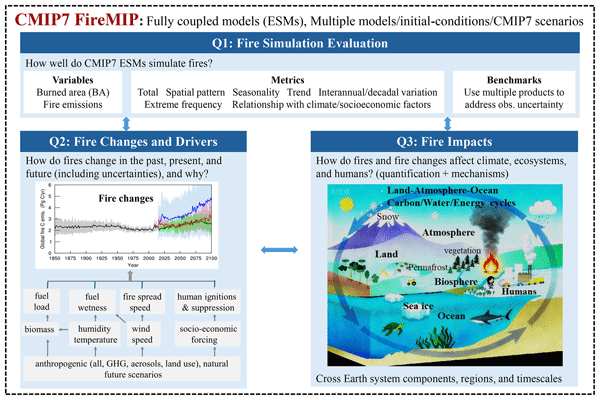
Extreme fire events are increasing, and fires are projected to rise across most regions, posing growing risks to ecosystems and society. As a key Earth system process, fire is now modeled in most Earth System Models (ESMs). FireMIP (Fire Modeling Intercomparison Project) within CMIP7 will evaluate fire simulations in state‑of‑the‑art ESMs, project future fire changes, and provide quantitative, process‑based understanding of fire's role in the Earth system.
Eliza K. Duncan, George Jordan, Paul Kim, James M. Haywood, Duncan Watson-Parris, Ben Johnson, Alistair Sellar, Zak Kipling, João Teixeira, Florent Malavelle, and Daniel G. Partridge
EGUsphere, https://doi.org/10.5194/egusphere-2026-1043, https://doi.org/10.5194/egusphere-2026-1043, 2026
Short summary
Short summary
The 2014–15 Holuhraun eruption offers a natural experiment to assess how well climate models can capture the changes in aerosol associated with the plume. We investigate the aerosol lifecycle during transport to identify key differences in climate models' representation of aerosol processes, which could affect the models’ ability to capture changes in cloud properties. Our study highlights the importance of the representation of boundary layer nucleation processes in climate models.
Stephanie Fiedler, Fiona M. O'Connor, Duncan Watson-Parris, Robert J. Allen, William J. Collins, Paul T. Griffiths, Matthew Kasoar, Jarmo Kikstra, Jasper F. Kok, Lee T. Murray, Fabien Paulot, Maria Sand, Steven T. Turnock, James Weber, Laura J. Wilcox, and Vaishali Naik
Geosci. Model Dev., 19, 3477–3508, https://doi.org/10.5194/gmd-19-3477-2026, https://doi.org/10.5194/gmd-19-3477-2026, 2026
Short summary
Short summary
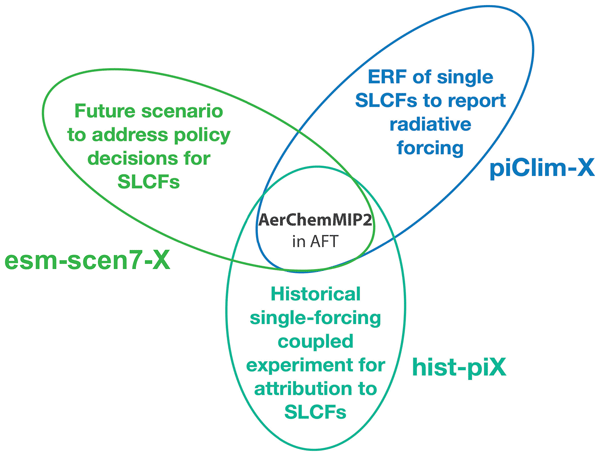
The Aerosol and Chemistry Model Intercomparison Project phase two (AerChemMIP2) allows the community to compare results from contemporary Earth system models. AerChemMIP2 is asking modelling centres to perform experiments following the same protocol. It includes experiments for enabling new science and for tracking progress. Model output will be used for addressing research and policy questions about anthropogenic and natural drivers of climate change, and the impacts on air quality.
Jianing Guo, Xiaoning Xie, Gunnar Myhre, Drew Shindell, Alf Kirkevåg, Trond Iversen, Apostolos Voulgarakis, Toshihiko Takemura, Ke Shang, Xinzhou Li, Zhengguo Shi, Yangang Liu, Xiaodong Liu, and Hong Yan
Atmos. Chem. Phys., 26, 5169–5184, https://doi.org/10.5194/acp-26-5169-2026, https://doi.org/10.5194/acp-26-5169-2026, 2026
Short summary
Short summary
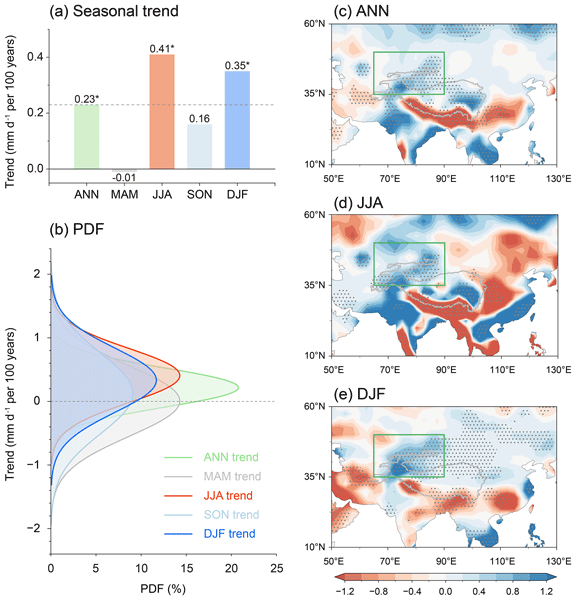
Central Asia has grown wetter in recent decades, but the drivers differ by season. We analyzed observations and climate model experiments to understand these changes and their future. Our analysis reveals that greenhouse gases from human activities drive winter wetting, whereas aerosol from Asia urbanization and industrialization enhances summer precipitation. As future reductions in air pollution, the region may experience drier summers and create new risks for regional water resources.
Beth Dingley, James A. Anstey, Marta Abalos, Carsten Abraham, Tommi Bergman, Lisa Bock, Sonya Fiddes, Birgit Hassler, Ryan J. Kramer, Fei Luo, Fiona M. O'Connor, Petr Šácha, Isla R. Simpson, Laura J. Wilcox, and Mark D. Zelinka
Geosci. Model Dev., 19, 2945–2984, https://doi.org/10.5194/gmd-19-2945-2026, https://doi.org/10.5194/gmd-19-2945-2026, 2026
Short summary
Short summary
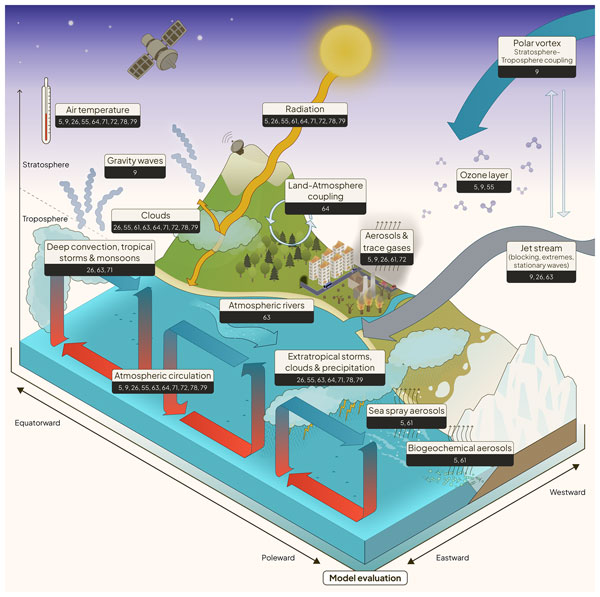
This manuscript defines as a list of variables and scientific opportunities which are requested from the Coupled Model Intercomparison Project Phase 7 (CMIP7) Assessment Fast Track to address open atmospheric science questions. The list reflects the output of a large public community engagement effort, coordinated across autumn 2025 through to summer 2025.
Megan A. J. Brown, Nicola J. Warwick, Nathan Luke Abraham, Paul T. Griffiths, Steve T. Rumbold, Gerd A. Folberth, Fiona M. O'Connor, Hannah Bryant, and Alex T. Archibald
Geosci. Model Dev., 19, 1537–1557, https://doi.org/10.5194/gmd-19-1537-2026, https://doi.org/10.5194/gmd-19-1537-2026, 2026
Short summary
Short summary
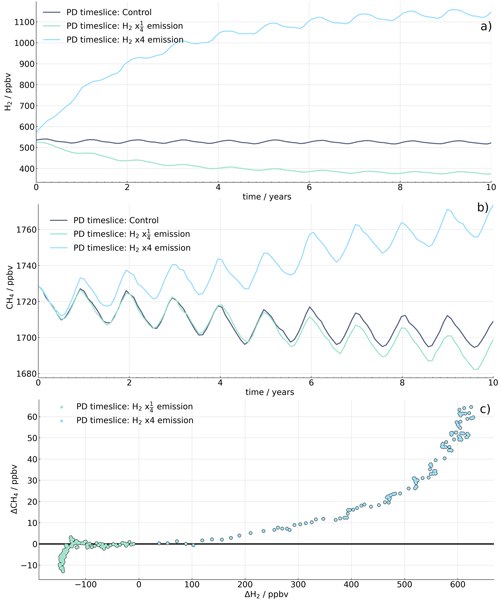
Hydrogen (H2) is an indirect greenhouse gas by increasing methane (CH4) lifetime. Interaction between H2 and CH4 is important for hydrogen’s global warming potential (GWP). Global models do not represent this interaction well; H2 or CH4 are prescribed at the surface. We implement an interactive H2 scheme into a global model coupled with interactive CH4. We simulate scenarios demonstrating its capability, improving model performance and more accurately representing H2-CH4 interaction.
Seppe Lampe, Lukas Gudmundsson, Basil Kraft, Stijn Hantson, Douglas Kelley, Vincent Humphrey, Bertrand Le Saux, Emilio Chuvieco, and Wim Thiery
Geosci. Model Dev., 19, 955–988, https://doi.org/10.5194/gmd-19-955-2026, https://doi.org/10.5194/gmd-19-955-2026, 2026
Short summary
Short summary
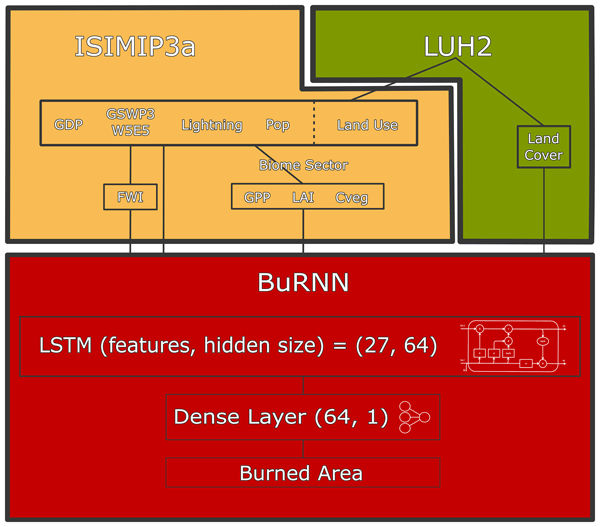
We introduce BuRNN (BUrned area modelling by Recurrent Neural Networks), a model which estimates monthly burned area based on satellite observations and climate, vegetation, and socio-economic data using machine learning. BuRNN outperforms existing process-based fire models, which improves our capabilities of modelling past and future burned areas.
Peter W. Thorne, John M. Nicklas, John J. Kennedy, Bruce Calvert, Baylor Fox-Kemper, Mark T. Richardson, Adrian Simmons, Ed Hawkins, Robert Rhode, Kathryn Cowtan, Nerilie J. Abram, Axel Andersson, Simon Noone, Phillipe Marbaix, Nathan Lenssen, Dirk Olonscheck, Tristram Walsh, Stephen Outten, Ingo Bethke, Bjorn H. Samset, Chris Smith, Anna Pirani, Jan Fuglestvedt, Lavanya Rajamani, Richard A. Betts, Elizabeth C. Kent, Blair Trewin, Colin Morice, Tim Osborn, Samantha N. Burgess, Oliver Geden, Andrew Parnell, Piers M. Forster, Chris Hewitt, Zeke Hausfather, Valerie Masson-Delmotte, Jochem Marotzke, Nathan Gillett, Sonia I. Seneviratne, Gavin A. Schmidt, Duo Chan, Stefan Brönnimann, Andy Reisinger, Matthew Menne, Maisa Rojas Corradi, Christopher Kadow, Peter Huybers, David B. Stephenson, Emily Wallis, Joeri Rogelj, Andrew Schurer, Karen McKinnon, Panmao Zhai, Fatima Driouech, Wilfran Moufouma Okia, Saeed Vazifehkhah, Sophie Szopa, Christopher J. Merchant, Shoji Hirahara, Masayoshi Ishii, Francois A. Engelbrecht, Qingxiang Li, June-Yi Lee, Alex J. Cannon, Christophe Cassou, Karina von Schuckmann, Amir H. Delju, and Ellie Murtagh
Earth Syst. Sci. Data Discuss., https://doi.org/10.5194/essd-2025-825, https://doi.org/10.5194/essd-2025-825, 2026
Revised manuscript under review for ESSD
Short summary
Short summary
We reassess the basis for determining the present level of long-term global warming. Unbiased estimates of both realised warming and anthropogenic warming are possible that approximate a 20-year retrospective mean. Our resulting estimates of 1.40 [1.23–1.58] °C (realised) and 1.34 [1.18–1.50] °C (anthropogenic) as at end of 2024 highlight the urgency of immediate, far-reaching and sustained climate mitigation actions if we are to meet the long term temperature goal of the Paris Agreement.
William J. Collins, John S. Daniel, Martyn P. Chipperfield, Martin Cussac, Makoto Deushi, Gregory Faluvegi, Paul Griffiths, Øivind Hodnebrog, Larry W. Horowitz, James Keeble, Douglas Kinnison, Vaishali Naik, Fiona M. O'Connor, Drew Shindell, Simone Tilmes, Kostas Tsigaridis, Zihao Wang, and James Weber
EGUsphere, https://doi.org/10.5194/egusphere-2025-6033, https://doi.org/10.5194/egusphere-2025-6033, 2026
Short summary
Short summary
Ozone depleting substances (ODSs) are also greenhouse gases that cause global warming. However, their destruction of ozone contributes a global cooling. We have used results from climate models that include atmospheric chemistry and found that the cooling effect of the ozone depletion diagnosed in the models was larger than that calculated using a standard method. We find that some ODSs have a net cooling effect whereas for others the warming effect is significantly reduced.
Laura A. Mansfield, Peer J. Nowack, Edmund M. Ryan, Oliver Wild, and Apostolos Voulgarakis
EGUsphere, https://doi.org/10.5194/egusphere-2025-6046, https://doi.org/10.5194/egusphere-2025-6046, 2025
Short summary
Short summary
We present a fast machine learning emulator that predicts how Earth’s surface temperature reacts within the first five years to changes in greenhouse gases and aerosol pollutants. It is trained on carefully designed simulations from a complex climate model, but can be run much faster. Our emulator can be used to show where the climate is most sensitive to different emissions and can help explore many possible future paths, making it easier to assess the climate effects of policy choices.
Zhenze Liu, Ke Li, Oliver Wild, Ruth M. Doherty, Fiona M. O’Connor, and Steven T. Turnock
Atmos. Chem. Phys., 25, 16969–16981, https://doi.org/10.5194/acp-25-16969-2025, https://doi.org/10.5194/acp-25-16969-2025, 2025
Short summary
Short summary
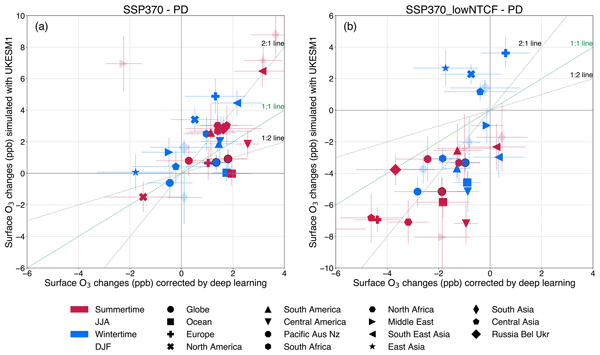
Chemistry-climate models have advanced substantially over the decades, yet they still exhibit substantial systematic biases in simulating atmospheric composition due to gaps in our understanding of underlying processes. We improve the predictions of an Earth system model using deep learning, and evaluate the performance of difference types of statistical models. We find that simulations of future surface ozone are likely to become less accurate under a warmer climate.
Sini Talvinen, Paul Kim, Emanuele Tovazzi, Eemeli Holopainen, Roxana Cremer, Thomas Kühn, Harri Kokkola, Zak Kipling, David Neubauer, João C. Teixeira, Alistair Sellar, Duncan Watson-Parris, Yang Yang, Jialei Zhu, Srinath Krishnan, Annele Virtanen, and Daniel G. Partridge
Atmos. Chem. Phys., 25, 14449–14478, https://doi.org/10.5194/acp-25-14449-2025, https://doi.org/10.5194/acp-25-14449-2025, 2025
Short summary
Short summary
Climate models struggle to predict how clouds and aerosols interact, affecting Earth’s energy balance. This study compares models to observations to see how they describe effects of clouds and rain on aerosols. While both models show similar overall trends, seasonal differences emerged. These, however, align with differences in key variables participating in cloud formation. The study provides insights on how to improve the representation of aerosol-cloud interactions in climate models.
Douglas I. Kelley, Chantelle Burton, Francesca Di Giuseppe, Matthew W. Jones, Maria L. F. Barbosa, Esther Brambleby, Joe R. McNorton, Zhongwei Liu, Anna S. I. Bradley, Katie Blackford, Eleanor Burke, Andrew Ciavarella, Enza Di Tomaso, Jonathan Eden, Igor José M. Ferreira, Lukas Fiedler, Andrew J. Hartley, Theodore R. Keeping, Seppe Lampe, Anna Lombardi, Guilherme Mataveli, Yuquan Qu, Patrícia S. Silva, Fiona R. Spuler, Carmen B. Steinmann, Miguel Ángel Torres-Vázquez, Renata Veiga, Dave van Wees, Jakob B. Wessel, Emily Wright, Bibiana Bilbao, Mathieu Bourbonnais, Cong Gao, Carlos M. Di Bella, Kebonye Dintwe, Victoria M. Donovan, Sarah Harris, Elena A. Kukavskaya, Aya Brigitte N'Dri, Cristina Santín, Galia Selaya, Johan Sjöström, John T. Abatzoglou, Niels Andela, Rachel Carmenta, Emilio Chuvieco, Louis Giglio, Douglas S. Hamilton, Stijn Hantson, Sarah Meier, Mark Parrington, Mojtaba Sadegh, Jesus San-Miguel-Ayanz, Fernando Sedano, Marco Turco, Guido R. van der Werf, Sander Veraverbeke, Liana O. Anderson, Hamish Clarke, Paulo M. Fernandes, and Crystal A. Kolden
Earth Syst. Sci. Data, 17, 5377–5488, https://doi.org/10.5194/essd-17-5377-2025, https://doi.org/10.5194/essd-17-5377-2025, 2025
Short summary
Short summary
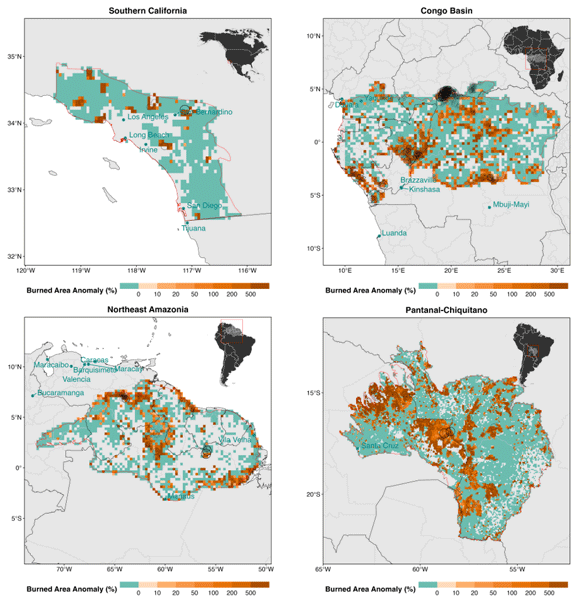
The second State of Wildfires report examines extreme wildfire events from 2024 to early 2025. It analyses key regional events in Southern California, Northeast Amazonia, Pantanal–Chiquitano, and the Congo Basin, assessing their drivers and predictability and attributing them to climate change and land use. Seasonal outlooks and decadal projections are provided. Climate change greatly increased the likelihood of these fires, and without strong mitigation, such events will become more frequent.
Hsi-Kai Chou, Anna B. Harper, Arthur P. K. Argles, Maria Carolina Duran Rojas, Emma W. Littleton, Richard A. Betts, and Peter M. Cox
EGUsphere, https://doi.org/10.5194/egusphere-2025-4536, https://doi.org/10.5194/egusphere-2025-4536, 2025
Short summary
Short summary
Global warming and climate change caused by greenhouse gas emissions will have multiple impacts on forest ecosystems. A core part of the strategy to mitigating these impacts is to use afforestation and forestry management to implement large-scale Greenhouse Gas Removal. Here we use the JULES-RED model to evaluate the afforestation under a changing environmental condition. We project that Sitka Forest afforestation could meet the target of GGR once the plantation locations been selected properly.
Renata Moura da Veiga, Celso von Randow, Chantelle Burton, Douglas I. Kelley, Manoel Cardoso, and Fabiano Morelli
Nat. Hazards Earth Syst. Sci., 25, 3581–3601, https://doi.org/10.5194/nhess-25-3581-2025, https://doi.org/10.5194/nhess-25-3581-2025, 2025
Short summary
Short summary
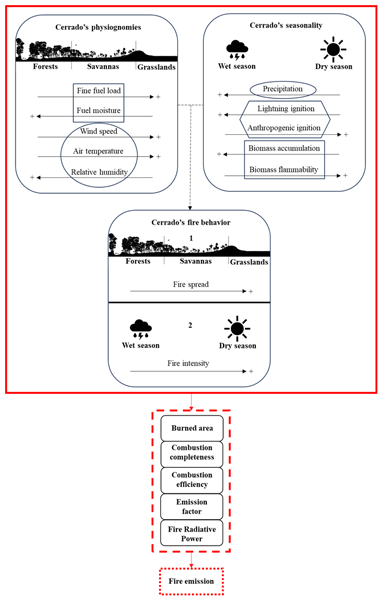
We systematically reviewed 77 papers to understand the Cerrado’s fire emissions within the global carbon budget by evaluating how fire parameters can inform emission estimates and mitigation strategies. Estimating fire emissions in the Cerrado requires a holistic approach, combining fire carbon emission estimates, fire dynamic parameters, and fire management and policy. We highlight key research gaps that could provide more comprehensive insights into accounting for fire emissions in the Cerrado.
Anastasios Rovithakis, Eleanor Burke, Chantelle Burton, Matthew Kasoar, Manolis G. Grillakis, Konstantinos D. Seiradakis, and Apostolos Voulgarakis
Nat. Hazards Earth Syst. Sci., 25, 3185–3200, https://doi.org/10.5194/nhess-25-3185-2025, https://doi.org/10.5194/nhess-25-3185-2025, 2025
Short summary
Short summary
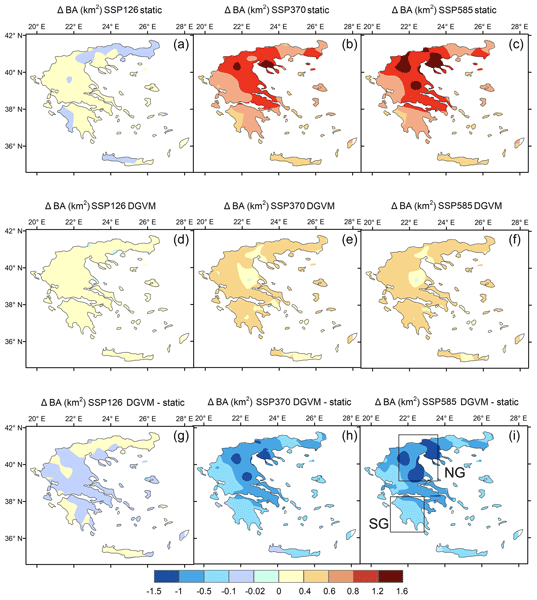
We used a land surface computer model to forecast how climate change will impact wildfires in Greece. Our results show a significant increase in future burnt area due to hotter, drier climate. Allowing vegetation to change with the climate lessens this increase overall, since fire is no longer igniting in areas already burnt, and it even led to projected decreases in the agricultural areas in the north of the country.
William J. Collins, Fiona M. O'Connor, Rachael E. Byrom, Øivind Hodnebrog, Patrick Jöckel, Mariano Mertens, Gunnar Myhre, Matthias Nützel, Dirk Olivié, Ragnhild Bieltvedt Skeie, Laura Stecher, Larry W. Horowitz, Vaishali Naik, Gregory Faluvegi, Ulas Im, Lee T. Murray, Drew Shindell, Kostas Tsigaridis, Nathan Luke Abraham, and James Keeble
Atmos. Chem. Phys., 25, 9031–9060, https://doi.org/10.5194/acp-25-9031-2025, https://doi.org/10.5194/acp-25-9031-2025, 2025
Short summary
Short summary
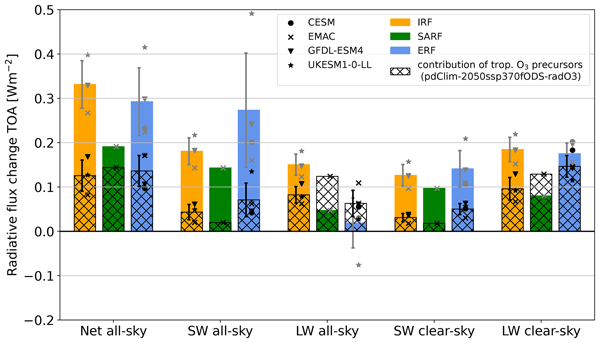
We used 7 climate models that include atmospheric chemistry and find that in a scenario with weak controls on air quality, the warming effects (over 2015 to 2050) of decreases in ozone-depleting substances and increases in air quality pollutants are approximately equal and would make ozone the second highest contributor to warming over this period. We find that for stratospheric ozone recovery, the standard measure of climate effects underestimates a more comprehensive measure.
Oliver Perkins, Olivia Haas, Matthew Kasoar, Apostolos Voulgarakis, and James D. A. Millington
EGUsphere, https://doi.org/10.5194/egusphere-2025-3728, https://doi.org/10.5194/egusphere-2025-3728, 2025
Short summary
Short summary
Humans impact fire indirectly through climate change, but also directly through land use and different fire management strategies. We compare two recently-developed models of global burned area with very different assumptions about the role of direct human impacts on fire. We contrast their future projections and explore the implications of differences between them for climate change adaptation and fire science more broadly.
Paul T. Griffiths, Laura J. Wilcox, Robert J. Allen, Vaishali Naik, Fiona M. O'Connor, Michael Prather, Alex Archibald, Florence Brown, Makoto Deushi, William Collins, Stephanie Fiedler, Naga Oshima, Lee T. Murray, Bjørn H. Samset, Chris Smith, Steven Turnock, Duncan Watson-Parris, and Paul J. Young
Atmos. Chem. Phys., 25, 8289–8328, https://doi.org/10.5194/acp-25-8289-2025, https://doi.org/10.5194/acp-25-8289-2025, 2025
Short summary
Short summary
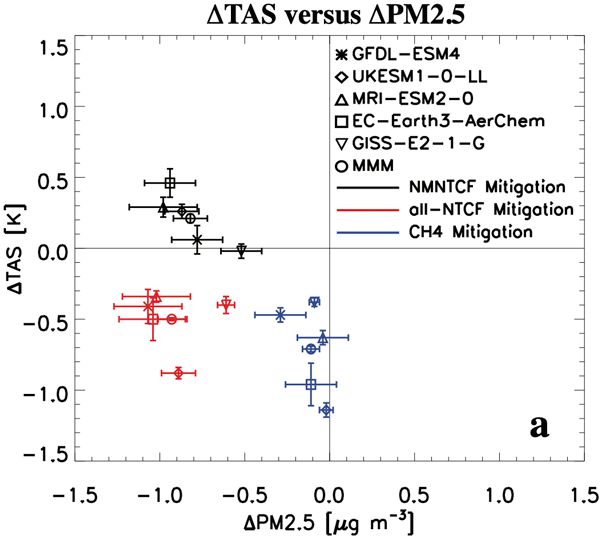
The Aerosol Chemistry Model Intercomparison Project (AerChemMIP) aimed to quantify the climate and air quality impacts of aerosols and chemically reactive gases. We review its contribution to AR6 (Sixth Assessment Report of the Intergovernmental Panel on Climate Change) and the wider understanding of the role of these species in climate and climate change. We identify challenges and provide recommendations to improve the utility and uptake of climate model data, detailed summary tables of CMIP6 models, experiments, and emergent diagnostics.
Emma Sands, Ruth M. Doherty, Fiona M. O'Connor, Richard J. Pope, James Weber, and Daniel P. Grosvenor
Atmos. Chem. Phys., 25, 7269–7297, https://doi.org/10.5194/acp-25-7269-2025, https://doi.org/10.5194/acp-25-7269-2025, 2025
Short summary
Short summary
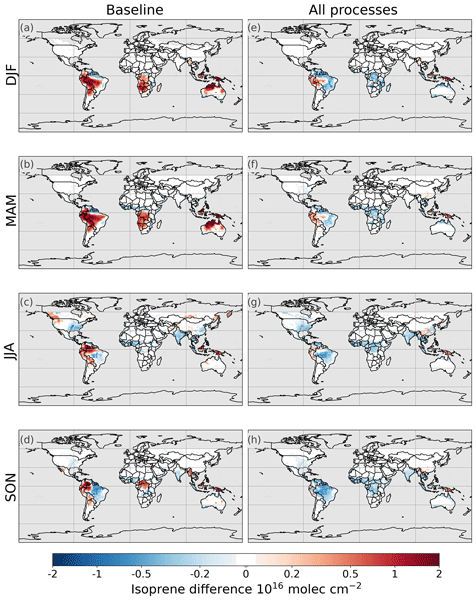
We perform a detailed satellite–model comparison for isoprene, formaldehyde and aerosol optical depth in an Earth system model. We quantify the impacts of several processes that affect how biosphere–atmosphere interactions influence atmospheric chemistry and aerosols. Our findings highlight that the aerosol direct effect is sensitive to the processes studied. These results can inform future investigations of how the biosphere can affect atmospheric composition and climate.
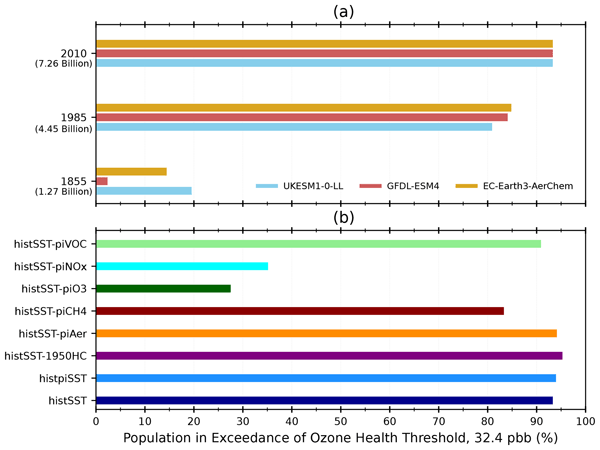
Steven T. Turnock, Dimitris Akritidis, Larry Horowitz, Mariano Mertens, Andrea Pozzer, Carly L. Reddington, Hantao Wang, Putian Zhou, and Fiona O'Connor
Atmos. Chem. Phys., 25, 7111–7136, https://doi.org/10.5194/acp-25-7111-2025, https://doi.org/10.5194/acp-25-7111-2025, 2025
Short summary
Short summary
We assess the drivers behind changes in peak-season surface ozone concentrations and risks to human health between 1850 and 2014. Substantial increases in surface ozone have occurred over this period, resulting in an increased risk to human health, driven mainly by increases in anthropogenic NOx emissions and global CH4 concentrations. Fixing anthropogenic NOx emissions at 1850 values in the near-present-day period can eliminate the risk to human health associated with exposure to surface ozone.
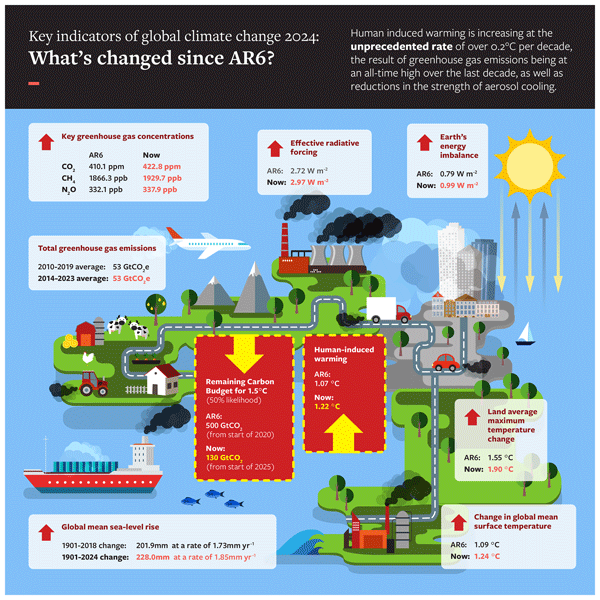
Piers M. Forster, Chris Smith, Tristram Walsh, William F. Lamb, Robin Lamboll, Christophe Cassou, Mathias Hauser, Zeke Hausfather, June-Yi Lee, Matthew D. Palmer, Karina von Schuckmann, Aimée B. A. Slangen, Sophie Szopa, Blair Trewin, Jeongeun Yun, Nathan P. Gillett, Stuart Jenkins, H. Damon Matthews, Krishnan Raghavan, Aurélien Ribes, Joeri Rogelj, Debbie Rosen, Xuebin Zhang, Myles Allen, Lara Aleluia Reis, Robbie M. Andrew, Richard A. Betts, Alex Borger, Jiddu A. Broersma, Samantha N. Burgess, Lijing Cheng, Pierre Friedlingstein, Catia M. Domingues, Marco Gambarini, Thomas Gasser, Johannes Gütschow, Masayoshi Ishii, Christopher Kadow, John Kennedy, Rachel E. Killick, Paul B. Krummel, Aurélien Liné, Didier P. Monselesan, Colin Morice, Jens Mühle, Vaishali Naik, Glen P. Peters, Anna Pirani, Julia Pongratz, Jan C. Minx, Matthew Rigby, Robert Rohde, Abhishek Savita, Sonia I. Seneviratne, Peter Thorne, Christopher Wells, Luke M. Western, Guido R. van der Werf, Susan E. Wijffels, Valérie Masson-Delmotte, and Panmao Zhai
Earth Syst. Sci. Data, 17, 2641–2680, https://doi.org/10.5194/essd-17-2641-2025, https://doi.org/10.5194/essd-17-2641-2025, 2025
Short summary
Short summary
In a rapidly changing climate, evidence-based decision-making benefits from up-to-date and timely information. Here we compile monitoring datasets to track real-world changes over time. To make our work relevant to policymakers, we follow methods from the Intergovernmental Panel on Climate Change (IPCC). Human activities are increasing the Earth's energy imbalance and driving faster sea-level rise compared to the IPCC assessment.
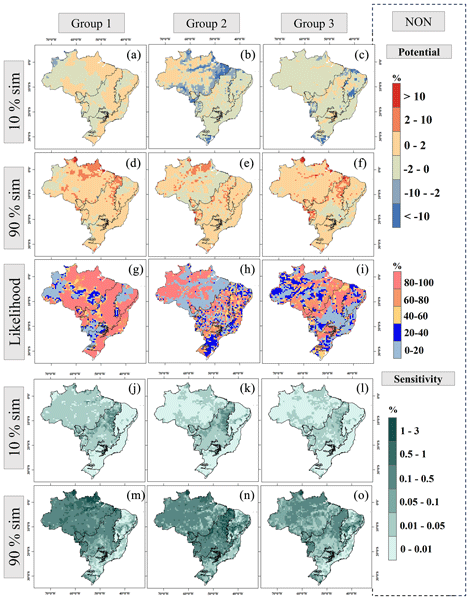
Maria Lucia Ferreira Barbosa, Douglas I. Kelley, Chantelle A. Burton, Igor J. M. Ferreira, Renata Moura da Veiga, Anna Bradley, Paulo Guilherme Molin, and Liana O. Anderson
Geosci. Model Dev., 18, 3533–3557, https://doi.org/10.5194/gmd-18-3533-2025, https://doi.org/10.5194/gmd-18-3533-2025, 2025
Short summary
Short summary
As fire seasons in Brazil become increasingly severe, confidently understanding the factors driving fires is more critical than ever. To address this challenge, we developed FLAME (Fire Landscape Analysis using Maximum Entropy), a new model designed to predict fires and to analyse the spatial influence of both environmental and human factors while accounting for uncertainties. By adapting the model to different regions, we can enhance fire management strategies, making FLAME a powerful tool for protecting landscapes in Brazil and beyond.
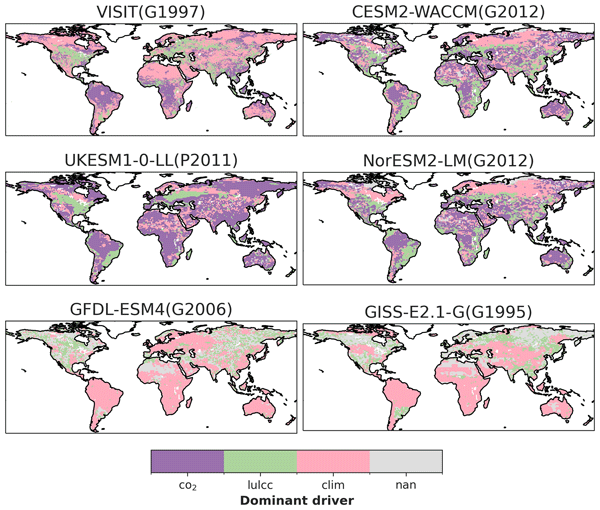
Ngoc Thi Nhu Do, Kengo Sudo, Akihiko Ito, Louisa K. Emmons, Vaishali Naik, Kostas Tsigaridis, Øyvind Seland, Gerd A. Folberth, and Douglas I. Kelley
Geosci. Model Dev., 18, 2079–2109, https://doi.org/10.5194/gmd-18-2079-2025, https://doi.org/10.5194/gmd-18-2079-2025, 2025
Short summary
Short summary
Understanding historical isoprene emission changes is important for predicting future climate, but trends and their controlling factors remain uncertain. This study shows that long-term isoprene trends vary among Earth system models mainly due to partially incorporating CO2 effects and land cover changes rather than to climate. Future models that refine these factors’ effects on isoprene emissions, along with long-term observations, are essential for better understanding plant–climate interactions.
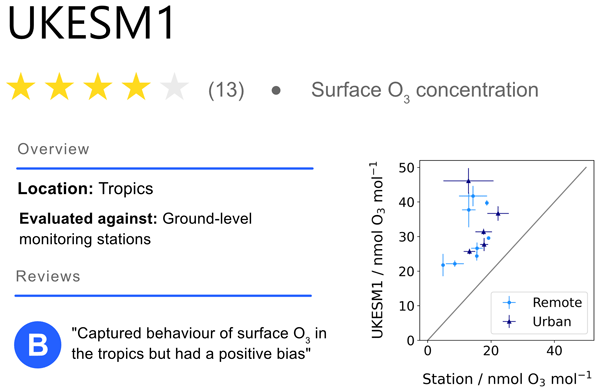
Flossie Brown, Gerd Folberth, Stephen Sitch, Paulo Artaxo, Marijn Bauters, Pascal Boeckx, Alexander W. Cheesman, Matteo Detto, Ninong Komala, Luciana Rizzo, Nestor Rojas, Ines dos Santos Vieira, Steven Turnock, Hans Verbeeck, and Alfonso Zambrano
Atmos. Chem. Phys., 24, 12537–12555, https://doi.org/10.5194/acp-24-12537-2024, https://doi.org/10.5194/acp-24-12537-2024, 2024
Short summary
Short summary
Ozone is a pollutant that is detrimental to human and plant health. Ozone monitoring sites in the tropics are limited, so models are often used to understand ozone exposure. We use measurements from the tropics to evaluate ozone from the UK Earth system model, UKESM1. UKESM1 is able to capture the pattern of ozone in the tropics, except in southeast Asia, although it systematically overestimates it at all sites. This work highlights that UKESM1 can capture seasonal and hourly variability.

Colin G. Jones, Fanny Adloff, Ben B. B. Booth, Peter M. Cox, Veronika Eyring, Pierre Friedlingstein, Katja Frieler, Helene T. Hewitt, Hazel A. Jeffery, Sylvie Joussaume, Torben Koenigk, Bryan N. Lawrence, Eleanor O'Rourke, Malcolm J. Roberts, Benjamin M. Sanderson, Roland Séférian, Samuel Somot, Pier Luigi Vidale, Detlef van Vuuren, Mario Acosta, Mats Bentsen, Raffaele Bernardello, Richard Betts, Ed Blockley, Julien Boé, Tom Bracegirdle, Pascale Braconnot, Victor Brovkin, Carlo Buontempo, Francisco Doblas-Reyes, Markus Donat, Italo Epicoco, Pete Falloon, Sandro Fiore, Thomas Frölicher, Neven S. Fučkar, Matthew J. Gidden, Helge F. Goessling, Rune Grand Graversen, Silvio Gualdi, José M. Gutiérrez, Tatiana Ilyina, Daniela Jacob, Chris D. Jones, Martin Juckes, Elizabeth Kendon, Erik Kjellström, Reto Knutti, Jason Lowe, Matthew Mizielinski, Paola Nassisi, Michael Obersteiner, Pierre Regnier, Romain Roehrig, David Salas y Mélia, Carl-Friedrich Schleussner, Michael Schulz, Enrico Scoccimarro, Laurent Terray, Hannes Thiemann, Richard A. Wood, Shuting Yang, and Sönke Zaehle
Earth Syst. Dynam., 15, 1319–1351, https://doi.org/10.5194/esd-15-1319-2024, https://doi.org/10.5194/esd-15-1319-2024, 2024
Short summary
Short summary
We propose a number of priority areas for the international climate research community to address over the coming decade. Advances in these areas will both increase our understanding of past and future Earth system change, including the societal and environmental impacts of this change, and deliver significantly improved scientific support to international climate policy, such as future IPCC assessments and the UNFCCC Global Stocktake.
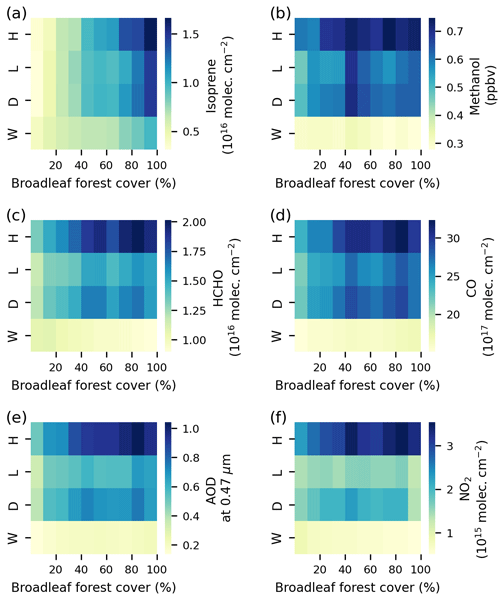
Emma Sands, Richard J. Pope, Ruth M. Doherty, Fiona M. O'Connor, Chris Wilson, and Hugh Pumphrey
Atmos. Chem. Phys., 24, 11081–11102, https://doi.org/10.5194/acp-24-11081-2024, https://doi.org/10.5194/acp-24-11081-2024, 2024
Short summary
Short summary
Changes in vegetation alongside biomass burning impact regional atmospheric composition and air quality. Using satellite remote sensing, we find a clear linear relationship between forest cover and isoprene and a pronounced non-linear relationship between burned area and nitrogen dioxide in the southern Amazon, a region of substantial deforestation. These quantified relationships can be used for model evaluation and further exploration of biosphere-atmosphere interactions in Earth System Models.
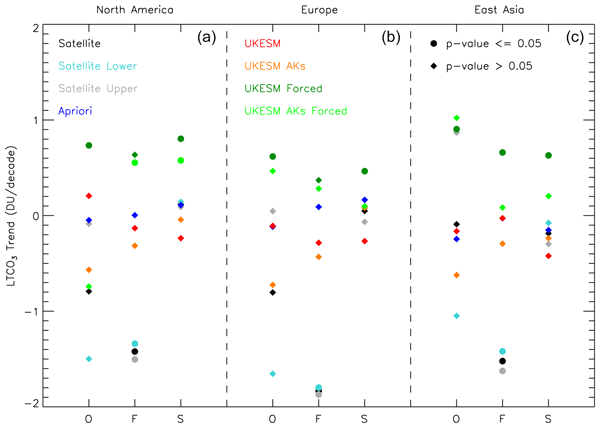
Richard J. Pope, Fiona M. O'Connor, Mohit Dalvi, Brian J. Kerridge, Richard Siddans, Barry G. Latter, Brice Barret, Eric Le Flochmoen, Anne Boynard, Martyn P. Chipperfield, Wuhu Feng, Matilda A. Pimlott, Sandip S. Dhomse, Christian Retscher, Catherine Wespes, and Richard Rigby
Atmos. Chem. Phys., 24, 9177–9195, https://doi.org/10.5194/acp-24-9177-2024, https://doi.org/10.5194/acp-24-9177-2024, 2024
Short summary
Short summary
Ozone is a potent air pollutant in the lower troposphere, with adverse impacts on human health. Satellite records of tropospheric ozone currently show large-scale inconsistencies in long-term trends. Our detailed study of the potential factors (e.g. satellite errors, where the satellite can observe ozone) potentially driving these inconsistencies found that, in North America, Europe, and East Asia, the underlying trends are typically small with large uncertainties.
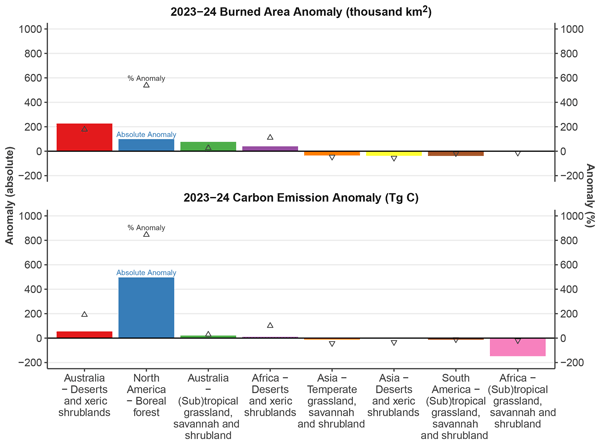
Matthew W. Jones, Douglas I. Kelley, Chantelle A. Burton, Francesca Di Giuseppe, Maria Lucia F. Barbosa, Esther Brambleby, Andrew J. Hartley, Anna Lombardi, Guilherme Mataveli, Joe R. McNorton, Fiona R. Spuler, Jakob B. Wessel, John T. Abatzoglou, Liana O. Anderson, Niels Andela, Sally Archibald, Dolors Armenteras, Eleanor Burke, Rachel Carmenta, Emilio Chuvieco, Hamish Clarke, Stefan H. Doerr, Paulo M. Fernandes, Louis Giglio, Douglas S. Hamilton, Stijn Hantson, Sarah Harris, Piyush Jain, Crystal A. Kolden, Tiina Kurvits, Seppe Lampe, Sarah Meier, Stacey New, Mark Parrington, Morgane M. G. Perron, Yuquan Qu, Natasha S. Ribeiro, Bambang H. Saharjo, Jesus San-Miguel-Ayanz, Jacquelyn K. Shuman, Veerachai Tanpipat, Guido R. van der Werf, Sander Veraverbeke, and Gavriil Xanthopoulos
Earth Syst. Sci. Data, 16, 3601–3685, https://doi.org/10.5194/essd-16-3601-2024, https://doi.org/10.5194/essd-16-3601-2024, 2024
Short summary
Short summary
This inaugural State of Wildfires report catalogues extreme fires of the 2023–2024 fire season. For key events, we analyse their predictability and drivers and attribute them to climate change and land use. We provide a seasonal outlook and decadal projections. Key anomalies occurred in Canada, Greece, and western Amazonia, with other high-impact events catalogued worldwide. Climate change significantly increased the likelihood of extreme fires, and mitigation is required to lessen future risk.
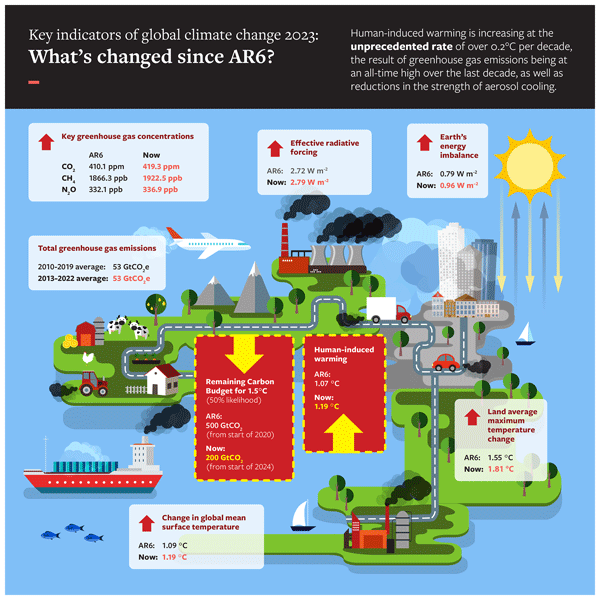
Piers M. Forster, Chris Smith, Tristram Walsh, William F. Lamb, Robin Lamboll, Bradley Hall, Mathias Hauser, Aurélien Ribes, Debbie Rosen, Nathan P. Gillett, Matthew D. Palmer, Joeri Rogelj, Karina von Schuckmann, Blair Trewin, Myles Allen, Robbie Andrew, Richard A. Betts, Alex Borger, Tim Boyer, Jiddu A. Broersma, Carlo Buontempo, Samantha Burgess, Chiara Cagnazzo, Lijing Cheng, Pierre Friedlingstein, Andrew Gettelman, Johannes Gütschow, Masayoshi Ishii, Stuart Jenkins, Xin Lan, Colin Morice, Jens Mühle, Christopher Kadow, John Kennedy, Rachel E. Killick, Paul B. Krummel, Jan C. Minx, Gunnar Myhre, Vaishali Naik, Glen P. Peters, Anna Pirani, Julia Pongratz, Carl-Friedrich Schleussner, Sonia I. Seneviratne, Sophie Szopa, Peter Thorne, Mahesh V. M. Kovilakam, Elisa Majamäki, Jukka-Pekka Jalkanen, Margreet van Marle, Rachel M. Hoesly, Robert Rohde, Dominik Schumacher, Guido van der Werf, Russell Vose, Kirsten Zickfeld, Xuebin Zhang, Valérie Masson-Delmotte, and Panmao Zhai
Earth Syst. Sci. Data, 16, 2625–2658, https://doi.org/10.5194/essd-16-2625-2024, https://doi.org/10.5194/essd-16-2625-2024, 2024
Short summary
Short summary
This paper tracks some key indicators of global warming through time, from 1850 through to the end of 2023. It is designed to give an authoritative estimate of global warming to date and its causes. We find that in 2023, global warming reached 1.3 °C and is increasing at over 0.2 °C per decade. This is caused by all-time-high greenhouse gas emissions.
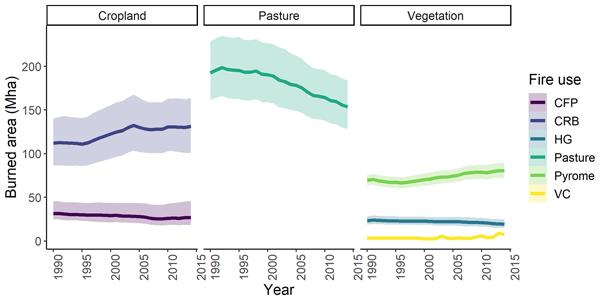
Oliver Perkins, Matthew Kasoar, Apostolos Voulgarakis, Cathy Smith, Jay Mistry, and James D. A. Millington
Geosci. Model Dev., 17, 3993–4016, https://doi.org/10.5194/gmd-17-3993-2024, https://doi.org/10.5194/gmd-17-3993-2024, 2024
Short summary
Short summary
Wildfire is often presented in the media as a danger to human life. Yet globally, millions of people’s livelihoods depend on using fire as a tool. So, patterns of fire emerge from interactions between humans, land use, and climate. This complexity means scientists cannot yet reliably say how fire will be impacted by climate change. So, we developed a new model that represents globally how people use and manage fire. The model reveals the extent and diversity of how humans live with and use fire.
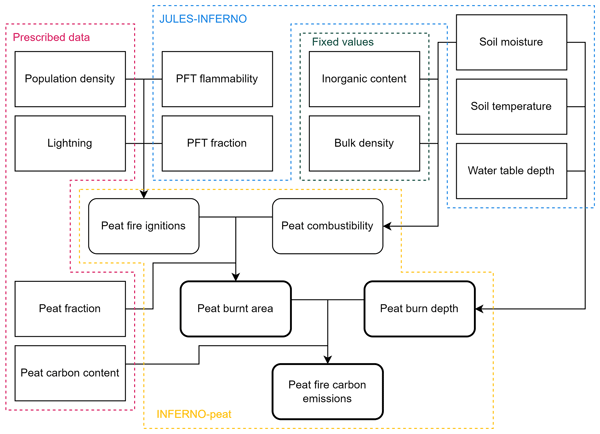
Katie R. Blackford, Matthew Kasoar, Chantelle Burton, Eleanor Burke, Iain Colin Prentice, and Apostolos Voulgarakis
Geosci. Model Dev., 17, 3063–3079, https://doi.org/10.5194/gmd-17-3063-2024, https://doi.org/10.5194/gmd-17-3063-2024, 2024
Short summary
Short summary
Peatlands are globally important stores of carbon which are being increasingly threatened by wildfires with knock-on effects on the climate system. Here we introduce a novel peat fire parameterization in the northern high latitudes to the INFERNO global fire model. Representing peat fires increases annual burnt area across the high latitudes, alongside improvements in how we capture year-to-year variation in burning and emissions.
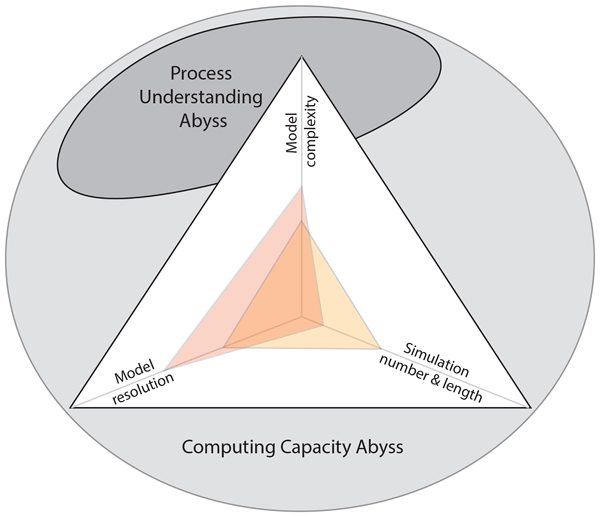
Stephanie Fiedler, Vaishali Naik, Fiona M. O'Connor, Christopher J. Smith, Paul Griffiths, Ryan J. Kramer, Toshihiko Takemura, Robert J. Allen, Ulas Im, Matthew Kasoar, Angshuman Modak, Steven Turnock, Apostolos Voulgarakis, Duncan Watson-Parris, Daniel M. Westervelt, Laura J. Wilcox, Alcide Zhao, William J. Collins, Michael Schulz, Gunnar Myhre, and Piers M. Forster
Geosci. Model Dev., 17, 2387–2417, https://doi.org/10.5194/gmd-17-2387-2024, https://doi.org/10.5194/gmd-17-2387-2024, 2024
Short summary
Short summary
Climate scientists want to better understand modern climate change. Thus, climate model experiments are performed and compared. The results of climate model experiments differ, as assessed in the latest Intergovernmental Panel on Climate Change (IPCC) assessment report. This article gives insights into the challenges and outlines opportunities for further improving the understanding of climate change. It is based on views of a group of experts in atmospheric composition–climate interactions.
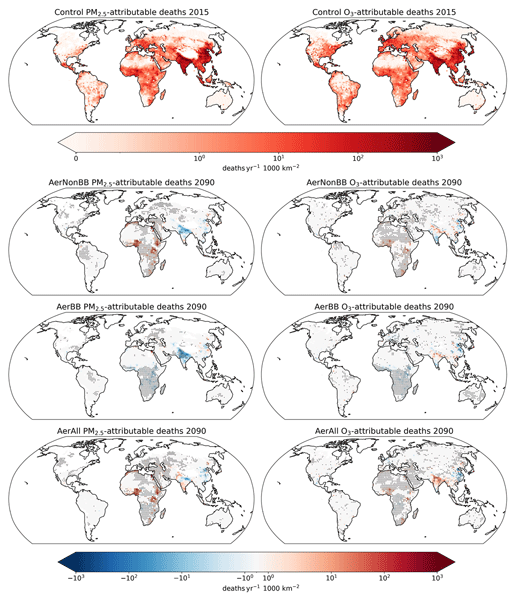
Christopher D. Wells, Matthew Kasoar, Majid Ezzati, and Apostolos Voulgarakis
Atmos. Chem. Phys., 24, 1025–1039, https://doi.org/10.5194/acp-24-1025-2024, https://doi.org/10.5194/acp-24-1025-2024, 2024
Short summary
Short summary
Human-driven emissions of air pollutants, mostly caused by burning fossil fuels, impact both the climate and human health. Millions of deaths each year are caused by air pollution globally, and the future trends are uncertain. Here, we use a global climate model to study the effect of African pollutant emissions on surface level air pollution, and resultant impacts on human health, in several future emission scenarios. We find much lower health impacts under cleaner, lower-emission futures.
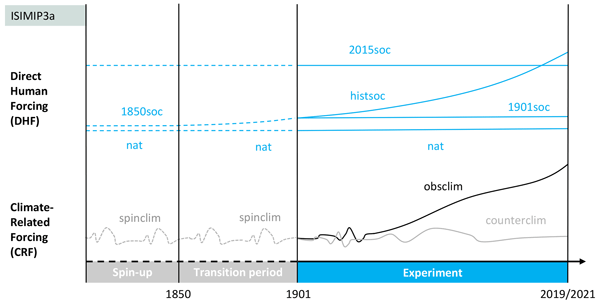
Katja Frieler, Jan Volkholz, Stefan Lange, Jacob Schewe, Matthias Mengel, María del Rocío Rivas López, Christian Otto, Christopher P. O. Reyer, Dirk Nikolaus Karger, Johanna T. Malle, Simon Treu, Christoph Menz, Julia L. Blanchard, Cheryl S. Harrison, Colleen M. Petrik, Tyler D. Eddy, Kelly Ortega-Cisneros, Camilla Novaglio, Yannick Rousseau, Reg A. Watson, Charles Stock, Xiao Liu, Ryan Heneghan, Derek Tittensor, Olivier Maury, Matthias Büchner, Thomas Vogt, Tingting Wang, Fubao Sun, Inga J. Sauer, Johannes Koch, Inne Vanderkelen, Jonas Jägermeyr, Christoph Müller, Sam Rabin, Jochen Klar, Iliusi D. Vega del Valle, Gitta Lasslop, Sarah Chadburn, Eleanor Burke, Angela Gallego-Sala, Noah Smith, Jinfeng Chang, Stijn Hantson, Chantelle Burton, Anne Gädeke, Fang Li, Simon N. Gosling, Hannes Müller Schmied, Fred Hattermann, Jida Wang, Fangfang Yao, Thomas Hickler, Rafael Marcé, Don Pierson, Wim Thiery, Daniel Mercado-Bettín, Robert Ladwig, Ana Isabel Ayala-Zamora, Matthew Forrest, and Michel Bechtold
Geosci. Model Dev., 17, 1–51, https://doi.org/10.5194/gmd-17-1-2024, https://doi.org/10.5194/gmd-17-1-2024, 2024
Short summary
Short summary
Our paper provides an overview of all observational climate-related and socioeconomic forcing data used as input for the impact model evaluation and impact attribution experiments within the third round of the Inter-Sectoral Impact Model Intercomparison Project. The experiments are designed to test our understanding of observed changes in natural and human systems and to quantify to what degree these changes have already been induced by climate change.
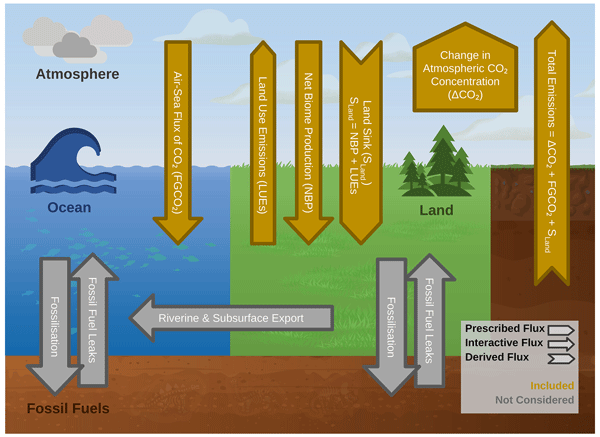
Lee de Mora, Ranjini Swaminathan, Richard P. Allan, Jerry C. Blackford, Douglas I. Kelley, Phil Harris, Chris D. Jones, Colin G. Jones, Spencer Liddicoat, Robert J. Parker, Tristan Quaife, Jeremy Walton, and Andrew Yool
Earth Syst. Dynam., 14, 1295–1315, https://doi.org/10.5194/esd-14-1295-2023, https://doi.org/10.5194/esd-14-1295-2023, 2023
Short summary
Short summary
We investigate the flux of carbon from the atmosphere into the land surface and ocean for multiple models and over a range of future scenarios. We did this by comparing simulations after the same change in the global-mean near-surface temperature. Using this method, we show that the choice of scenario can impact the carbon allocation to the land, ocean, and atmosphere. Scenarios with higher emissions reach the same warming levels sooner, but also with relatively more carbon in the atmosphere.
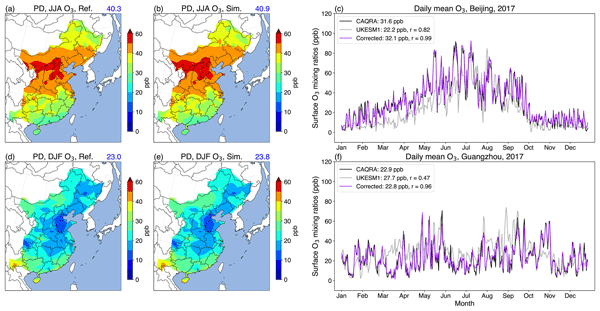
Zhenze Liu, Oliver Wild, Ruth M. Doherty, Fiona M. O'Connor, and Steven T. Turnock
Atmos. Chem. Phys., 23, 13755–13768, https://doi.org/10.5194/acp-23-13755-2023, https://doi.org/10.5194/acp-23-13755-2023, 2023
Short summary
Short summary
We investigate the impact of net-zero policies on surface ozone pollution in China. A chemistry–climate model is used to simulate ozone changes driven by local and external emissions, methane, and warmer climates. A deep learning model is applied to generate more robust ozone projection, and we find that the benefits of net-zero policies may be overestimated with the chemistry–climate model. Nevertheless, it is clear that the policies can still substantially reduce ozone pollution in future.
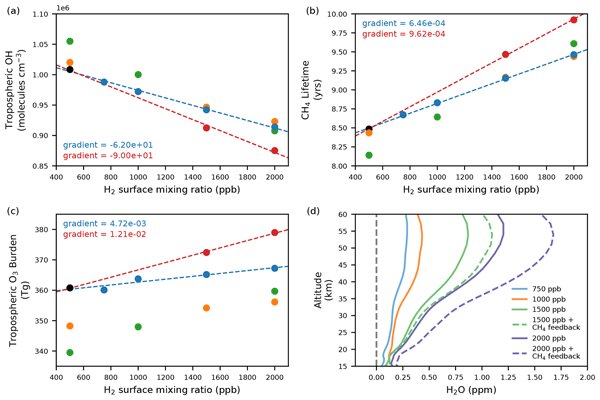
Nicola J. Warwick, Alex T. Archibald, Paul T. Griffiths, James Keeble, Fiona M. O'Connor, John A. Pyle, and Keith P. Shine
Atmos. Chem. Phys., 23, 13451–13467, https://doi.org/10.5194/acp-23-13451-2023, https://doi.org/10.5194/acp-23-13451-2023, 2023
Short summary
Short summary
A chemistry–climate model has been used to explore the atmospheric response to changes in emissions of hydrogen and other species associated with a shift from fossil fuel to hydrogen use. Leakage of hydrogen results in indirect global warming, offsetting greenhouse gas emission reductions from reduced fossil fuel use. To maximise the benefit of hydrogen as an energy source, hydrogen leakage and emissions of methane, carbon monoxide and nitrogen oxides should be minimised.
Joao Carlos Martins Teixeira, Chantelle Burton, Douglas I. Kelly, Gerd A. Folberth, Fiona M. O'Connor, Richard A. Betts, and Apostolos Voulgarakis
Biogeosciences Discuss., https://doi.org/10.5194/bg-2023-136, https://doi.org/10.5194/bg-2023-136, 2023
Revised manuscript not accepted
Short summary
Short summary
Representing socio-economic impacts on fires is crucial to underpin the confidence in global fire models. Introducing these into INFERNO, reduces biases and improves the modelled burnt area (BA) trends when compared to observations. Including socio-economic factors in the representation of fires in Earth System Models is important for realistically simulating BA, quantifying trends in the recent past, and for understanding the main drivers of those at regional scales.
Jonny Williams, Erik Behrens, Olaf Morgenstern, Peter Gibson, and Joao Teixeira
EGUsphere, https://doi.org/10.5194/egusphere-2023-1694, https://doi.org/10.5194/egusphere-2023-1694, 2023
Preprint withdrawn
Short summary
Short summary
We use open-source cyclone tracking software and state-of-the-art climate models to characterise present-day tropical cyclones – TCs – in the South Pacific before moving on to estimate how they may change in the future. A robust result of this work is the projection of future intensification of TCs. However, the question of their future occurrence frequency is less clear. Under extreme future warming scenarios, we postulate a possible increase in power dissipation per TC of up to 25 %.
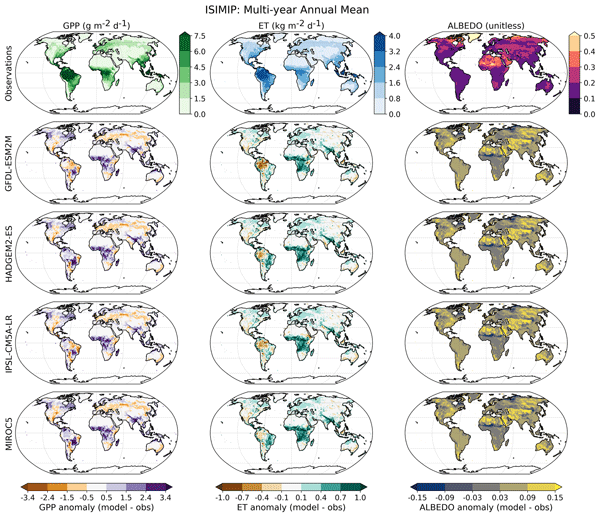
Camilla Mathison, Eleanor Burke, Andrew J. Hartley, Douglas I. Kelley, Chantelle Burton, Eddy Robertson, Nicola Gedney, Karina Williams, Andy Wiltshire, Richard J. Ellis, Alistair A. Sellar, and Chris D. Jones
Geosci. Model Dev., 16, 4249–4264, https://doi.org/10.5194/gmd-16-4249-2023, https://doi.org/10.5194/gmd-16-4249-2023, 2023
Short summary
Short summary
This paper describes and evaluates a new modelling methodology to quantify the impacts of climate change on water, biomes and the carbon cycle. We have created a new configuration and set-up for the JULES-ES land surface model, driven by bias-corrected historical and future climate model output provided by the Inter-Sectoral Impacts Model Intercomparison Project (ISIMIP). This allows us to compare projections of the impacts of climate change across multiple impact models and multiple sectors.

Christopher D. Wells, Matthew Kasoar, Nicolas Bellouin, and Apostolos Voulgarakis
Atmos. Chem. Phys., 23, 3575–3593, https://doi.org/10.5194/acp-23-3575-2023, https://doi.org/10.5194/acp-23-3575-2023, 2023
Short summary
Short summary
The climate is altered by greenhouse gases and air pollutant particles, and such emissions are likely to change drastically in the future over Africa. Air pollutants do not travel far, so their climate effect depends on where they are emitted. This study uses a climate model to find the climate impacts of future African pollutant emissions being either high or low. The particles absorb and scatter sunlight, causing the ground nearby to be cooler, but elsewhere the increased heat causes warming.
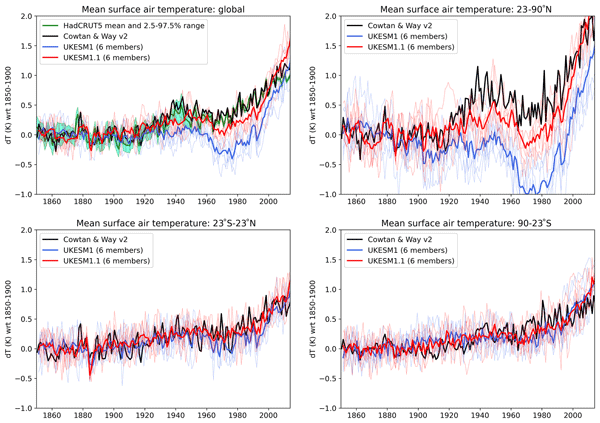
Jane P. Mulcahy, Colin G. Jones, Steven T. Rumbold, Till Kuhlbrodt, Andrea J. Dittus, Edward W. Blockley, Andrew Yool, Jeremy Walton, Catherine Hardacre, Timothy Andrews, Alejandro Bodas-Salcedo, Marc Stringer, Lee de Mora, Phil Harris, Richard Hill, Doug Kelley, Eddy Robertson, and Yongming Tang
Geosci. Model Dev., 16, 1569–1600, https://doi.org/10.5194/gmd-16-1569-2023, https://doi.org/10.5194/gmd-16-1569-2023, 2023
Short summary
Short summary
Recent global climate models simulate historical global mean surface temperatures which are too cold, possibly to due to excessive aerosol cooling. This raises questions about the models' ability to simulate important climate processes and reduces confidence in future climate predictions. We present a new version of the UK Earth System Model, which has an improved aerosols simulation and a historical temperature record. Interestingly, the long-term response to CO2 remains largely unchanged.
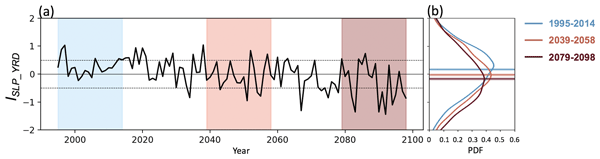
Zixuan Jia, Carlos Ordóñez, Ruth M. Doherty, Oliver Wild, Steven T. Turnock, and Fiona M. O'Connor
Atmos. Chem. Phys., 23, 2829–2842, https://doi.org/10.5194/acp-23-2829-2023, https://doi.org/10.5194/acp-23-2829-2023, 2023
Short summary
Short summary
This study investigates the influence of the winter large-scale circulation on daily concentrations of PM2.5 and their sensitivity to emissions. The new proposed circulation index can effectively distinguish different levels of air pollution and explain changes in PM2.5 sensitivity to emissions from local and surrounding regions. We then project future changes in PM2.5 concentrations using this index and find an increase in PM2.5 concentrations over the region due to climate change.
Ville Leinonen, Harri Kokkola, Taina Yli-Juuti, Tero Mielonen, Thomas Kühn, Tuomo Nieminen, Simo Heikkinen, Tuuli Miinalainen, Tommi Bergman, Ken Carslaw, Stefano Decesari, Markus Fiebig, Tareq Hussein, Niku Kivekäs, Radovan Krejci, Markku Kulmala, Ari Leskinen, Andreas Massling, Nikos Mihalopoulos, Jane P. Mulcahy, Steffen M. Noe, Twan van Noije, Fiona M. O'Connor, Colin O'Dowd, Dirk Olivie, Jakob B. Pernov, Tuukka Petäjä, Øyvind Seland, Michael Schulz, Catherine E. Scott, Henrik Skov, Erik Swietlicki, Thomas Tuch, Alfred Wiedensohler, Annele Virtanen, and Santtu Mikkonen
Atmos. Chem. Phys., 22, 12873–12905, https://doi.org/10.5194/acp-22-12873-2022, https://doi.org/10.5194/acp-22-12873-2022, 2022
Short summary
Short summary
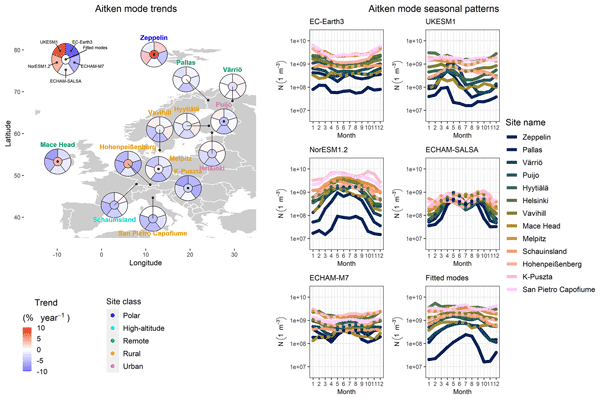
We provide the first extensive comparison of detailed aerosol size distribution trends between in situ observations from Europe and five different earth system models. We investigated aerosol modes (nucleation, Aitken, and accumulation) separately and were able to show the differences between measured and modeled trends and especially their seasonal patterns. The differences in model results are likely due to complex effects of several processes instead of certain specific model features.
Zhenze Liu, Ruth M. Doherty, Oliver Wild, Fiona M. O'Connor, and Steven T. Turnock
Atmos. Chem. Phys., 22, 12543–12557, https://doi.org/10.5194/acp-22-12543-2022, https://doi.org/10.5194/acp-22-12543-2022, 2022
Short summary
Short summary
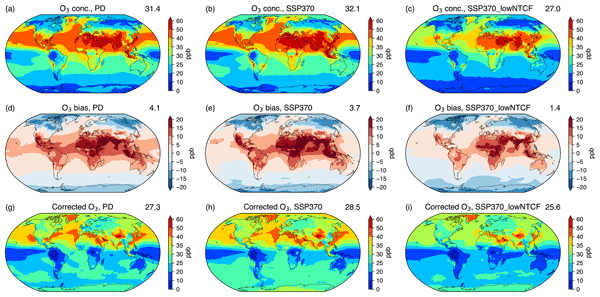
Weaknesses in process representation in chemistry–climate models lead to biases in simulating surface ozone and to uncertainty in projections of future ozone change. We develop a deep learning model to demonstrate the feasibility of ozone bias correction and show its capability in providing improved assessments of the impacts of climate and emission changes on future air quality, along with valuable information to guide future model development.
Flossie Brown, Gerd A. Folberth, Stephen Sitch, Susanne Bauer, Marijn Bauters, Pascal Boeckx, Alexander W. Cheesman, Makoto Deushi, Inês Dos Santos Vieira, Corinne Galy-Lacaux, James Haywood, James Keeble, Lina M. Mercado, Fiona M. O'Connor, Naga Oshima, Kostas Tsigaridis, and Hans Verbeeck
Atmos. Chem. Phys., 22, 12331–12352, https://doi.org/10.5194/acp-22-12331-2022, https://doi.org/10.5194/acp-22-12331-2022, 2022
Short summary
Short summary
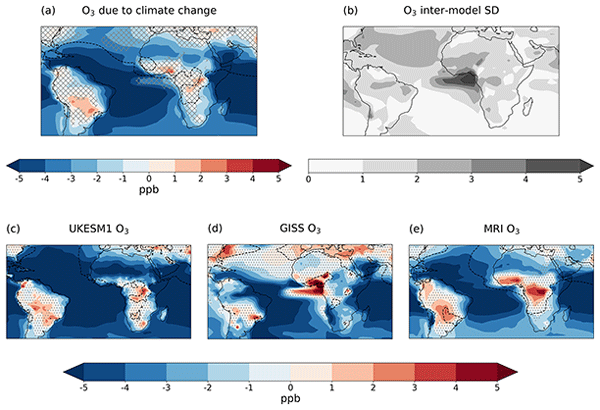
Surface ozone can decrease plant productivity and impair human health. In this study, we evaluate the change in surface ozone due to climate change over South America and Africa using Earth system models. We find that if the climate were to change according to the worst-case scenario used here, models predict that forested areas in biomass burning locations and urban populations will be at increasing risk of ozone exposure, but other areas will experience a climate benefit.

Henry Bowman, Steven Turnock, Susanne E. Bauer, Kostas Tsigaridis, Makoto Deushi, Naga Oshima, Fiona M. O'Connor, Larry Horowitz, Tongwen Wu, Jie Zhang, Dagmar Kubistin, and David D. Parrish
Atmos. Chem. Phys., 22, 3507–3524, https://doi.org/10.5194/acp-22-3507-2022, https://doi.org/10.5194/acp-22-3507-2022, 2022
Short summary
Short summary
A full understanding of ozone in the troposphere requires investigation of its temporal variability over all timescales. Model simulations show that the northern midlatitude ozone seasonal cycle shifted with industrial development (1850–2014), with an increasing magnitude and a later summer peak. That shift reached a maximum in the mid-1980s, followed by a reversal toward the preindustrial cycle. The few available observations, beginning in the 1970s, are consistent with the model simulations.
Rahayu Adzhar, Douglas I. Kelley, Ning Dong, Charles George, Mireia Torello Raventos, Elmar Veenendaal, Ted R. Feldpausch, Oliver L. Phillips, Simon L. Lewis, Bonaventure Sonké, Herman Taedoumg, Beatriz Schwantes Marimon, Tomas Domingues, Luzmila Arroyo, Gloria Djagbletey, Gustavo Saiz, and France Gerard
Biogeosciences, 19, 1377–1394, https://doi.org/10.5194/bg-19-1377-2022, https://doi.org/10.5194/bg-19-1377-2022, 2022
Short summary
Short summary
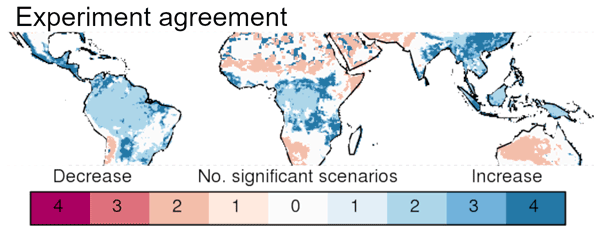
The MODIS Vegetation Continuous Fields (VCF) product underestimates tree cover compared to field data and could be underestimating tree cover significantly across the tropics. VCF is used to represent land cover or validate model performance in many land surface and global vegetation models and to train finer-scaled Earth observation products. Because underestimation in VCF may render it unsuitable for training data and bias model predictions, it should be calibrated before use in the tropics.
Matthew C. Perry, Emilie Vanvyve, Richard A. Betts, and Erika J. Palin
Nat. Hazards Earth Syst. Sci., 22, 559–575, https://doi.org/10.5194/nhess-22-559-2022, https://doi.org/10.5194/nhess-22-559-2022, 2022
Short summary
Short summary
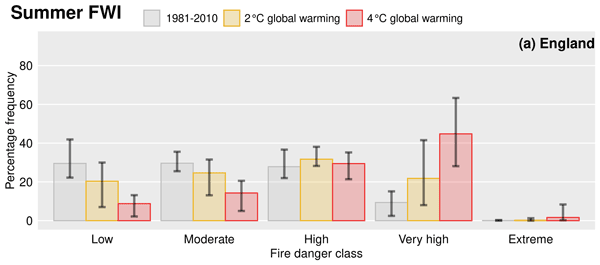
In the past, wildfires in the UK have occurred mainly in spring, with occasional events during hot, dry summers. Climate models predict a large future increase in hazardous fire weather conditions in summer. Wildfire can be considered an
emergent riskfor the UK, as past events have not had widespread major impacts, but this could change. The large increase in risk between the 2 °C and 4 °C levels of global warming highlights the importance of global efforts to keep warming below 2 °C.

Zhenze Liu, Ruth M. Doherty, Oliver Wild, Fiona M. O'Connor, and Steven T. Turnock
Atmos. Chem. Phys., 22, 1209–1227, https://doi.org/10.5194/acp-22-1209-2022, https://doi.org/10.5194/acp-22-1209-2022, 2022
Short summary
Short summary
Tropospheric ozone is important to future air quality and climate, and changing emissions and climate influence ozone. We investigate the evolution of ozone and ozone sensitivity from the present day (2004–2014) to the future (2045–2055) and explore the main drivers of ozone changes from global and regional perspectives. This helps guide suitable emission control strategies to mitigate ozone pollution.
João C. Teixeira, Gerd A. Folberth, Fiona M. O'Connor, Nadine Unger, and Apostolos Voulgarakis
Geosci. Model Dev., 14, 6515–6539, https://doi.org/10.5194/gmd-14-6515-2021, https://doi.org/10.5194/gmd-14-6515-2021, 2021
Short summary
Short summary
Fire constitutes a key process in the Earth system, being driven by climate as well as affecting climate. However, studies on the effects of fires on atmospheric composition and climate have been limited to date. This work implements and assesses the coupling of an interactive fire model with atmospheric composition, comparing it to an offline approach. This approach shows good performance at a global scale. However, regional-scale limitations lead to a bias in modelling fire emissions.
Cited articles
Abatzoglou, J. T. and Williams, A. P.: Impact of anthropogenic climate change on wildfire across western US forests, P. Natl. Acad. Sci. USA, 113, 11770–11775, 2016. a
Abatzoglou, J. T., Williams, A. P., Boschetti, L., Zubkova, M., and Kolden, C. A.: Global patterns of interannual climate–fire relationships, Glob. Change Biol., 24, 5164–5175, 2018. a
Andela, N., Morton, D. C., Giglio, L., Chen, Y., van der Werf, G. R., Kasibhatla, P. S., DeFries, R. S., Collatz, G. J., Hantson, S., Kloster, S., Bachelet, D., Forrest, M., Lasslop, G., Li, F., Mangeon, S., Melton, J. R., Yue, C., and Randerson, J. T.: A human-driven decline in global burned area, Science, 356, 1356–1362, 2017. a, b, c, d, e, f, g
Andela, N., Morton, D. C., Giglio, L., Paugam, R., Chen, Y., Hantson, S., van der Werf, G. R., and Randerson, J. T.: The Global Fire Atlas of individual fire size, duration, speed and direction, Earth Syst. Sci. Data, 11, 529–552, https://doi.org/10.5194/essd-11-529-2019, 2019. a, b, c, d
Aragão, L. E. O. C., Anderson, L. O., Fonseca, M. G., Rosan, T. M., Vedovato, L. B., Wagner, F. H., Silva, C. V. J., Silva Junior, C. H. L., Arai, E., Aguiar, A. P., Barlow, J., Berenguer, E., Deeter, M. N., Domingues, L. G., Gatti, L., Gloor, M., Malhi, Y., Marengo, J. A., Miller, J. B., Phillips, O. L., and Saatchi, S.: 21st Century drought-related fires counteract the decline of Amazon deforestation carbon emissions, Nat. Commun., 9, 536, https://doi.org/10.1038/s41467-017-02771-y, 2018. a
Benjamini, Y. and Yekutieli, D.: The control of the false discovery rate in multiple testing under dependency, Ann. Stat., 29, 1165–1188, 2001. a
Best, M. J., Pryor, M., Clark, D. B., Rooney, G. G., Essery, R. L. H., Ménard, C. B., Edwards, J. M., Hendry, M. A., Porson, A., Gedney, N., Mercado, L. M., Sitch, S., Blyth, E., Boucher, O., Cox, P. M., Grimmond, C. S. B., and Harding, R. J.: The Joint UK Land Environment Simulator (JULES), model description – Part 1: Energy and water fluxes, Geosci. Model Dev., 4, 677–699, https://doi.org/10.5194/gmd-4-677-2011, 2011. a
Blackford, K. R., Kasoar, M., Burton, C., Burke, E., Prentice, I. C., and Voulgarakis, A.: INFERNO-peat v1.0.0: a representation of northern high-latitude peat fires in the JULES-INFERNO global fire model, Geosci. Model Dev., 17, 3063–3079, https://doi.org/10.5194/gmd-17-3063-2024, 2024. a
Bowman, D. M., Kolden, C. A., Abatzoglou, J. T., Johnston, F. H., van der Werf, G. R., and Flannigan, M.: Vegetation fires in the Anthropocene, Nat. Rev. Earth Environ., 1, 500–515, 2020. a
Burton, C., Betts, R., Cardoso, M., Feldpausch, T. R., Harper, A., Jones, C. D., Kelley, D. I., Robertson, E., and Wiltshire, A.: Representation of fire, land-use change and vegetation dynamics in the Joint UK Land Environment Simulator vn4.9 (JULES), Geosci. Model Dev., 12, 179–193, https://doi.org/10.5194/gmd-12-179-2019, 2019. a, b, c, d, e
Burton, C., Betts, R. A., Jones, C. D., Feldpausch, T. R., Cardoso, M., and Anderson, L. O.: El Niño Driven Changes in Global Fire 2015/16, Front. Earth Sci., 8, 199, https://doi.org/10.3389/feart.2020.00199, 2020. a
Burton, C. A., Kelley, D. I., Burke, E., Mathison, C., Jones, C. D., Betts, R. A., Robertson, E., Teixeira, J. C., Cardoso, M., and Anderson, L. O.: Fire weakens land carbon sinks before 1.5 °C, Nat. Geosci., 17, 1108–1114, 2024. a
Cecil, D.: LIS/OTD 0.5 Degree High Resolution Monthly Climatology (HRMC) V2.3.2015, NASA Global Hydrometeorology Resource Center DAAC [data set], https://doi.org/10.5067/LIS/LIS-OTD/DATA303, 2006. a
Chergui, B., Fahd, S., Santos, X., and Pausas, J. G.: Socioeconomic factors drive fire-regime variability in the Mediterranean Basin, Ecosystems, 21, 619–628, 2018. a
Christian, H. J., Blakeslee, R. J., Boccippio, D. J., Boeck, W. L., Buechler, D. E., Driscoll, K. T., Goodman, S. J., Hall, J. M., Koshak, W. J., Mach, D. M., and Stewart, M. F.: Global frequency and distribution of lightning as observed from space by the Optical Transient Detector, J. Geophys. Res.-Atmos., 108, 4-1–4-15, 2003. a
Chuvieco, E., Pettinari, M. L., Koutsias, N., Forkel, M., Hantson, S., and Turco, M.: Human and climate drivers of global biomass burning variability, Sci. Total Environ., 779, 146361, https://doi.org/10.1016/j.scitotenv.2021.146361, 2021. a, b
Clark, D. B., Mercado, L. M., Sitch, S., Jones, C. D., Gedney, N., Best, M. J., Pryor, M., Rooney, G. G., Essery, R. L. H., Blyth, E., Boucher, O., Harding, R. J., Huntingford, C., and Cox, P. M.: The Joint UK Land Environment Simulator (JULES), model description – Part 2: Carbon fluxes and vegetation dynamics, Geosci. Model Dev., 4, 701–722, https://doi.org/10.5194/gmd-4-701-2011, 2011. a
Cox, P.: Description of the “TRIFFID” Dynamic Global Vegetation Mode, Met Office, https://www.paleo.bristol.ac.uk/UM_Docs/UM_Technical_Documents/HCTN_24_TRIFFID.pdf (last access: 16 June 2026), 2001. a
Cox, P., Betts, R., Jones, C., Spall, S., and Totterdell, I.: Acceleration of global warming due to carbon-cycle feedbacks in a coupled climate model, Nature, 408, 184–187, 2000. a
Eyring, V., Bony, S., Meehl, G. A., Senior, C. A., Stevens, B., Stouffer, R. J., and Taylor, K. E.: Overview of the Coupled Model Intercomparison Project Phase 6 (CMIP6) experimental design and organization, Geosci. Model Dev., 9, 1937–1958, https://doi.org/10.5194/gmd-9-1937-2016, 2016. a
Field, R. D., Spessa, A. C., Aziz, N. A., Camia, A., Cantin, A., Carr, R., de Groot, W. J., Dowdy, A. J., Flannigan, M. D., Manomaiphiboon, K., Pappenberger, F., Tanpipat, V., and Wang, X.: Development of a Global Fire Weather Database, Nat. Hazards Earth Syst. Sci., 15, 1407–1423, https://doi.org/10.5194/nhess-15-1407-2015, 2015. a
Ford, A. E., Harrison, S. P., Kountouris, Y., Millington, J. D., Mistry, J., Perkins, O., Rabin, S. S., Rein, G., Schreckenberg, K., Smith, C. and Smith, T. E.: Modelling human-fire interactions: combining alternative perspectives and approaches, Frontiers in Environmental Science, 9, 649835, https://doi.org/10.3389/fenvs.2021.649835, 2021. a, b, c
Forkel, M., Andela, N., Harrison, S. P., Lasslop, G., van Marle, M., Chuvieco, E., Dorigo, W., Forrest, M., Hantson, S., Heil, A., Li, F., Melton, J., Sitch, S., Yue, C., and Arneth, A.: Emergent relationships with respect to burned area in global satellite observations and fire-enabled vegetation models, Biogeosciences, 16, 57–76, https://doi.org/10.5194/bg-16-57-2019, 2019. a, b, c
Goldewijk, K. K., Dekker, S. C., and van Zanden, J. L.: Per-capita estimations of long-term historical land use and the consequences for global change research, J. Land Use Sci., 12, 313–337, https://doi.org/10.1080/1747423X.2017.1354938, 2017. a
Goss, M., Swain, D. L., Abatzoglou, J. T., Sarhadi, A., Kolden, C. A., Williams, A. P., and Diffenbaugh, N. S.: Climate change is increasing the likelihood of extreme autumn wildfire conditions across California, Environ. Res. Lett., 15, 094016, https://doi.org/10.1088/1748-9326/ab83a7, 2020. a
Haas, O., Prentice, I. C., and Harrison, S. P.: Global environmental controls on wildfire burnt area, size, and intensity, Environ. Res. Lett., 17, 065004, https://doi.org/10.1088/1748-9326/ac6a69, 2022. a
Haas, O., Prentice, I. C., and Harrison, S. P.: Wildfires on a changing planet, Nat. Commun., 17, 1599, https://doi.org/10.1038/s41467-025-68176-4, 2026. a
Harris, I., Jones, P. D., Osborn, T. J., and Lister, D. H.: Updated high-resolution grids of monthly climatic observations – the CRU TS3. 10 Dataset, Int. J. Climatol., 34, 623–642, 2014. a
Hickel, J.: The sustainable development index: Measuring the ecological efficiency of human development in the anthropocene, Ecol. Econ., 167, 106331, https://doi.org/10.1016/j.ecolecon.2019.05.011, 2020. a, b
Jones, M. W., Abatzoglou, J. T., Veraverbeke, S., Andela, N., Lasslop, G., Forkel, M., Smith, A. J., Burton, C., Betts, R. A., van der Werf, G. R., and Sitch, S.: Global and regional trends and drivers of fire under climate change, Rev. Geophys., 3, e2020RG000726, https://doi.org/10.1029/2020RG000726, 2022. a, b
Jones, M. W., Kelley, D. I., Burton, C. A., Di Giuseppe, F., Barbosa, M. L. F., Brambleby, E., Hartley, A. J., Lombardi, A., Mataveli, G., McNorton, J. R., Spuler, F. R., Wessel, J. B., Abatzoglou, J. T., Anderson, L. O., Andela, N., Archibald, S., Armenteras, D., Burke, E., Carmenta, R., Chuvieco, E., Clarke, H., Doerr, S. H., Fernandes, P. M., Giglio, L., Hamilton, D. S., Hantson, S., Harris, S., Jain, P., Kolden, C. A., Kurvits, T., Lampe, S., Meier, S., New, S., Parrington, M., Perron, M. M. G., Qu, Y., Ribeiro, N. S., Saharjo, B. H., San-Miguel-Ayanz, J., Shuman, J. K., Tanpipat, V., van der Werf, G. R., Veraverbeke, S., and Xanthopoulos, G.: State of Wildfires 2023–2024, Earth Syst. Sci. Data, 16, 3601–3685, https://doi.org/10.5194/essd-16-3601-2024, 2024. a, b
Kasischke, E. S. and Turetsky, M. R.: Recent changes in the fire regime across the North American boreal region – Spatial and temporal patterns of burning across Canada and Alaska, Geophys. Res. Lett., 33, https://doi.org/10.1029/2006GL025677, 2006. a
Kirillina, K., Shvetsov, E. G., Protopopova, V. V., Thiesmeyer, L., and Yan, W.: Consideration of anthropogenic factors in boreal forest fire regime changes during rapid socio-economic development: case study of forestry districts with increasing burnt area in the Sakha Republic, Russia, Environ. Res. Lett., 15, 035009, https://doi.org/10.1088/1748-9326/ab6c6e, 2020. a
Klauenberg, K., Wübbeler, G., Mickan, B., Harris, P., and Elster, C.: A tutorial on Bayesian normal linear regression, Metrologia, 52, 878, https://doi.org/10.1088/0026-1394/52/6/878, 2015. a
Klein Goldewijk, K., Beusen, A., Doelman, J., and Stehfest, E.: Anthropogenic land use estimates for the Holocene – HYDE 3.2, Earth Syst. Sci. Data, 9, 927–953, https://doi.org/10.5194/essd-9-927-2017, 2017. a
Kummu, M., Taka, M., and Guillaume, J. H.: Gridded global datasets for gross domestic product and Human Development Index over 1990–2015, Sci. Data, 5, 180004, https://doi.org/10.1038/sdata.2018.4, 2018. a, b, c
Li, F., Levis, S., and Ward, D. S.: Quantifying the role of fire in the Earth system – Part 1: Improved global fire modeling in the Community Earth System Model (CESM1), Biogeosciences, 10, 2293–2314, https://doi.org/10.5194/bg-10-2293-2013, 2013. a
Li, F., Song, X., Harrison, S. P., Marlon, J. R., Lin, Z., Leung, L. R., Schwinger, J., Marécal, V., Wang, S., Ward, D. S., Dong, X., Lee, H., Nieradzik, L., Rabin, S. S., and Séférian, R.: Evaluation of global fire simulations in CMIP6 Earth system models, Geosci. Model Dev., 17, 8751–8771, https://doi.org/10.5194/gmd-17-8751-2024, 2024. a, b
Marlon, J. R., Bartlein, P. J., Carcaillet, C., Gavin, D. G., Harrison, S. P., Higuera, P. E., Joos, F., Power, M., and Prentice, I.: Climate and human influences on global biomass burning over the past two millennia, Nat. Geosci., 1, 697–702, 2008. a
Mathison, C., Burke, E., Hartley, A. J., Kelley, D. I., Burton, C., Robertson, E., Gedney, N., Williams, K., Wiltshire, A., Ellis, R. J., Sellar, A. A., and Jones, C. D.: Description and evaluation of the JULES-ES set-up for ISIMIP2b, Geosci. Model Dev., 16, 4249–4264, https://doi.org/10.5194/gmd-16-4249-2023, 2023. a
MetOffice: Rose suite engine, https://metomi.github.io/rose/doc/html/index.html (last access: 16 June 2026), 2022. a
Miranda-Lescano, R., Muinelo-Gallo, L., and Roca-Sagalés, O.: Human development and decentralization: The importance of public health expenditure, Ann. Public Coop. Econ., 94, 191–219, 2023. a
Nepstad, D., McGrath, D., Stickler, C., Alencar, A., Azevedo, A., Swette, B., Bezerra, T., DiGiano, M., Shimada, J., Seroa da Motta, R., and Armijo, E.: Slowing Amazon deforestation through public policy and interventions in beef and soy supply chains, Science, 344, 1118–1123, 2014. a
Oliver, H., Shin, M., Matthews, D., Sanders, O., Bartholomew, S., Clark, A., Fitzpatrick, B., van Haren, R., Hut, R., and Drost, N.: Workflow automation for cycling systems, Comput. Sci. Eng., 21, 7–21, 2019. a
Pandey, P., Huidobro, G., Lopes, L. F., Ganteaume, A., Ascoli, D., Colaco, C., Xanthopoulos, G., Giannaros, T. M., Gazzard, R., Boustras, G., and Steelman, T.: A global outlook on increasing wildfire risk: Current policy situation and future pathways, Trees For. People, 14, 100431, https://doi.org/10.1016/j.tfp.2023.100431, 2023. a
Pechony, O. and Shindell, D.: Fire parameterization on a global scale, J. Geophys. Res.-Atmos., 114, D16115, https://doi.org/10.1029/2009JD011927, 2009. a, b
Perkins, O., Kasoar, M., Voulgarakis, A., Smith, C., Mistry, J., and Millington, J. D. A.: A global behavioural model of human fire use and management: WHAM! v1.0, Geosci. Model Dev., 17, 3993–4016, https://doi.org/10.5194/gmd-17-3993-2024, 2024. a, b
Prestemon, J. P., Butry, D. T., Abt, K. L., and Sutphen, R.: Net benefits of wildfire prevention education efforts, Forest Sci., 56, 181–192, 2010. a
Rabin, S. S., Melton, J. R., Lasslop, G., Bachelet, D., Forrest, M., Hantson, S., Kaplan, J. O., Li, F., Mangeon, S., Ward, D. S., Yue, C., Arora, V. K., Hickler, T., Kloster, S., Knorr, W., Nieradzik, L., Spessa, A., Folberth, G. A., Sheehan, T., Voulgarakis, A., Kelley, D. I., Prentice, I. C., Sitch, S., Harrison, S., and Arneth, A.: The Fire Modeling Intercomparison Project (FireMIP), phase 1: experimental and analytical protocols with detailed model descriptions, Geosci. Model Dev., 10, 1175–1197, https://doi.org/10.5194/gmd-10-1175-2017, 2017. a, b, c
Ramdas, A., García Trillos, N., and Cuturi, M.: On wasserstein two-sample testing and related families of nonparametric tests, Entropy, 19, 47, https://doi.org/10.3390/e19020047, 2017. a
Randerson, J., Chen, Y., Van Der Werf, G., Rogers, B., and Morton, D.: Global burned area and biomass burning emissions from small fires, J. Geophys. Res.-Biogeo., 117, G04012, https://doi.org/10.1029/2012JG002128, 2012. a
Rideout, D. B., Wei, Y., Kirsch, A., and Kernohan, N.: STARFire: Strategic budgeting and planning for wildland fire management, Park Sci., 32, 34–41, 2017. a
Rizzo, L. V. and Rizzo, M. C. F.: Wildfire smoke and health impacts: a narrative review, Jornal de Pediatria, https://doi.org/10.1016/j.jped.2024.11.006, 2024. a
Sellar, A. A., Jones, C. G., Mulcahy, J. P., Tang, Y., Yool, A., Wiltshire, A., O'Connor, F. M., Stringer, M., Hill, R., Palmieri, J., Woodward, S., de Mora, L., Kuhlbrodt, T., Rumbold, S. T., Kelley, D. I., Ellis, R., Johnson, C. E., Walton, J., Abraham, N. L., Andrews, M. B., Andrews, T., Archibald, A. T., Berthou, S., Burke, E., Blockley, E., Carslaw, K., Dalvi, M., Edwards, J., Folberth, G. A., Gedney, N., Griffiths, P. T., Harper, A. B., Hendry, M. A., Hewitt, A. J., Johnson, B., Jones, A., Jones, C. D., Keeble, J., Liddicoat, S., Morgenstern, O., Parker, R. J., Predoi, V., Robertson, E., Siahaan, A., Smith, R. S., Swaminathan, R., Woodhouse, M. T., Zeng, G., and Zerroukat, M.: UKESM1: Description and Evaluation of the U.K. Earth System Model, J. Adv. Model. Earth Sy., 11, 4513–4558, https://doi.org/10.1029/2019MS001739, 2019a. a
Sellar, A. A., Jones, C. G., Mulcahy, J. P., Tang, Y., Yool, A., Wiltshire, A., O'Connor, F. M., Stringer, M., Hill, R., Palmieri, J., Woodward, S., de Mora, L., Kuhlbrodt, T., Rumbold, S. T., Kelley, D. I., Ellis, R., Johnson, C. E., Walton, J., Abraham, N. L., Andrews, M. B., Andrews, T., Archibald, A. T., Berthou, S., Burke, E., Blockley, E., Carslaw, K., Dalvi, M., Edwards, J., Folberth, G. A., Gedney, N., Griffiths, P. T., Harper, A. B., Hendry, M. A., Hewitt, A. J., Johnson, B., Jones, A., Jones, C. D., Keeble, J., Liddicoat, S., Morgenstern, O., Parker, R. J., Predoi, V., Robertson, E., Siahaan, A., Smith, R. S., Swaminathan, R., Woodhouse, M. T., Zeng, G., and Zerroukat, M.: UKESM1: Description and evaluation of the UK Earth System Model, J. Adv. Model. Earth Sy., 11, 4513–4558, 2019b. a
Silva Junior, C. H., Pessôa, A. C., Carvalho, N. S., Reis, J. B., Anderson, L. O., and Aragão, L. E.: The Brazilian Amazon deforestation rate in 2020 is the greatest of the decade, Nat. Ecol. Evol., 5, 144–145, 2021. a
Stocks, B. J., Mason, J. A., Todd, J. B., Bosch, E. M., Wotton, B. M., Amiro, B. D., Flannigan, M. D., Hirsch, K. G., Logan, K. A., Martell, D. L., and Skinner, W. R: Large forest fires in Canada, 1959–1997, J. Geophys. Res.-Atmos., 107, FFR 5-1–FFR 5-12, https://doi.org/10.1029/2001JD000484, 2002. a
Teckentrup, L., Harrison, S. P., Hantson, S., Heil, A., Melton, J. R., Forrest, M., Li, F., Yue, C., Arneth, A., Hickler, T., Sitch, S., and Lasslop, G.: Response of simulated burned area to historical changes in environmental and anthropogenic factors: a comparison of seven fire models, Biogeosciences, 16, 3883–3910, https://doi.org/10.5194/bg-16-3883-2019, 2019. a
Teixeira, J. C., Folberth, G. A., O'Connor, F. M., Unger, N., and Voulgarakis, A.: Coupling interactive fire with atmospheric composition and climate in the UK Earth System Model, Geosci. Model Dev., 14, 6515–6539, https://doi.org/10.5194/gmd-14-6515-2021, 2021. a, b, c
Veraverbeke, S., Rogers, B. M., Goulden, M. L., Jandt, R. R., Miller, C. E., Wiggins, E. B., and Randerson, J. T.: Lightning as a major driver of recent large fire years in North American boreal forests, Nat. Clim. Change, 7, 529–534, 2017. a
Verjans, V., Franzke, C. L., Lee, S.-S., Kim, I.-W., Tilmes, S., Lawrence, D. M., Vitt, F., and Li, F.: Quantifying CO2 forcing effects on lightning, wildfires, and climate interactions, Sci. Adv., 11, eadt5088, https://doi.org/10.1126/sciadv.adt5088, 2025. a
Viovy, N.: CRUNCEP version 7-atmospheric forcing data for the community land model, Research Data Archive at the National Center for Atmospheric Research, Computational and Information Systems Laboratory [data set], https://doi.org/10.5065/PZ8F-F017, 2018. a
Vitolo, C., Di Giuseppe, F., Barnard, C., Coughlan, R., San-Miguel-Ayanz, J., Libertá, G., and Krzeminski, B.: ERA5-based global meteorological wildfire danger maps, Sci. Data, 7, 216, https://doi.org/10.1038/s41597-020-0554-z, 2020. a
Williams, A. P., Abatzoglou, J. T., Gershunov, A., Guzman-Morales, J., Bishop, D. A., Balch, J. K., and Lettenmaier, D. P.: Observed impacts of anthropogenic climate change on wildfire in California, Earth's Future, 7, 892–910, 2019. a
Williams, K. D., Copsey, D., Blockley, E. W., Bodas-Salcedo, A., Calvert, D., Comer, R., Davis, P., Graham, T., Hewitt, H. T., Hill, R., Hyder, P., Ineson, S., Johns, T. C., Keen, A. B., Lee, R. W., Megann, A., Milton, S. F., Rae, J. G. L., Roberts, M. J., Scaife, A. A., Schiemann, R., Storkey, D., Thorpe, L., Watterson, I. G., Walters, D. N., West, A., Wood, R. A., Woollings, T., and Xavier, P. K.: The Met Office global coupled model 3.0 and 3.1 (GC3.0 and GC3.1) configurations, J. Adv. Model. Earth Syst., 10, 357–380, 2018. a
Yue, C., Ciais, P., Cadule, P., Thonicke, K., Archibald, S., Poulter, B., Hao, W. M., Hantson, S., Mouillot, F., Friedlingstein, P., Maignan, F., and Viovy, N.: Modelling the role of fires in the terrestrial carbon balance by incorporating SPITFIRE into the global vegetation model ORCHIDEE – Part 1: simulating historical global burned area and fire regimes, Geosci. Model Dev., 7, 2747–2767, https://doi.org/10.5194/gmd-7-2747-2014, 2014. a
Zou, Y., Wang, Y., Ke, Z., Tian, H., Yang, J., and Liu, Y.: Development of a REgion-specific ecosystem feedback fire (RESFire) model in the Community Earth System Model, J. Adv. Model. Earth Sy., 11, 417–445, 2019. a
Short summary
Burned area has declined globally since the late 1990s, especially in tropical savannas, yet many climate models miss this trend because they poorly represent human fire use and suppression. We tested whether adding a simple link to human development improves a fire model. This reduced large regional errors and better captured downward trends in several areas, though it increased global underestimation and reduced variability. Human influence is key, but simple assumptions have trade-offs.
Burned area has declined globally since the late 1990s, especially in tropical savannas, yet...


Altmetrics
Final-revised paper
Preprint