
Articles | Volume 17, issue 3
https://doi.org/10.5194/esd-17-607-2026
© Author(s) 2026. This work is distributed under
the Creative Commons Attribution 4.0 License.
the Creative Commons Attribution 4.0 License.
https://doi.org/10.5194/esd-17-607-2026
© Author(s) 2026. This work is distributed under
the Creative Commons Attribution 4.0 License.
the Creative Commons Attribution 4.0 License.
Research article
| 
22 May 2026
Research article |
| 22 May 2026
| 22 May 2026
Assessing the performance of LPJmL-5 in simulating vegetation responses to normal and multi-year droughts

Department of Physical Geography, Utrecht University, Princetonlaan 8a, Utrecht, the Netherlands
Sandra Margrit Hauswirth
Department of Physical Geography, Utrecht University, Princetonlaan 8a, Utrecht, the Netherlands
Hester Biemans
Water Systems and Global Change, Department of Environmental Sciences, Wageningen University & Research, Droevendaalsesteeg 4, Wageningen, the Netherlands
Niko Wanders
Department of Physical Geography, Utrecht University, Princetonlaan 8a, Utrecht, the Netherlands
Related authors
Saskia Salwey, Sandra Hauswirth, Denise Ruijsch, Barry van Jaarsveld, Jonna van Mourik, and Niko Wanders
EGUsphere, https://doi.org/10.5194/egusphere-2026-2335, https://doi.org/10.5194/egusphere-2026-2335, 2026
Short summary
Short summary
This paper investigates how weather conditions influence droughts in groundwater. We focus on understanding why some groundwater droughts last for several years, since these long events can be difficult to manage and have particularly bad impacts. We find that some features of the groundwater system can worsen the effects of dry weather, making long groundwater droughts more likely. We categorize global groundwater data into three groups to describe how it is impacted by the weather.
Barry van Jaarsveld, Niko Wanders, Nicole Gyakowah Otoo, Edwin H. Sutanudjaja, Jarno Verkaik, Daniel Zamrsky, and Marc F. P. Bierkens
Earth Syst. Dynam., 17, 1201–1236, https://doi.org/10.5194/esd-17-1201-2026, https://doi.org/10.5194/esd-17-1201-2026, 2026
Short summary
Short summary
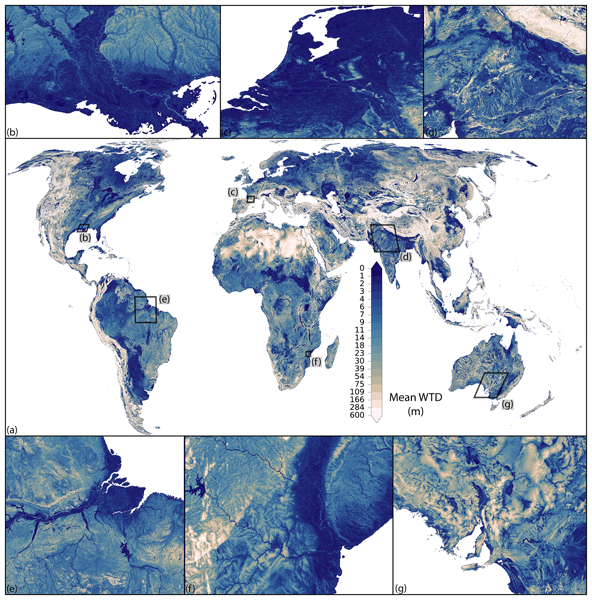
We simulated how global groundwater levels have changed in the past and how they might change in the future. By improving model accuracy and using hyper-resolution data, we can now see where water tables are falling or rising across the world at 1km resolution. These results help communities and decision-makers plan for more sustainable water use in a changing climate.
Xueying Li, Yan Sun, Xihui Gu, Niko Wanders, Bridget R. Scanlon, and Louise J. Slater
Earth Syst. Sci. Data Discuss., https://doi.org/10.5194/essd-2026-282, https://doi.org/10.5194/essd-2026-282, 2026
Preprint under review for ESSD
Short summary
Short summary
Existing datasets of terrestrial water storage anomalies are too coarse to capture sub-regional variations, limiting understanding of fine-scale water processes. Here we use physically guided deep learning to produce a higher-resolution dataset across China for 2002–2023, increasing spatial detail from 3° to 0.1° resolution. The dataset preserves large-scale satellite observations and shows good consistency in process-based evaluations, supporting sub-regional hydrologic analysis.
Saskia Salwey, Sandra Hauswirth, Denise Ruijsch, Barry van Jaarsveld, Jonna van Mourik, and Niko Wanders
EGUsphere, https://doi.org/10.5194/egusphere-2026-2335, https://doi.org/10.5194/egusphere-2026-2335, 2026
Short summary
Short summary
This paper investigates how weather conditions influence droughts in groundwater. We focus on understanding why some groundwater droughts last for several years, since these long events can be difficult to manage and have particularly bad impacts. We find that some features of the groundwater system can worsen the effects of dry weather, making long groundwater droughts more likely. We categorize global groundwater data into three groups to describe how it is impacted by the weather.
Ehsan Modiri, Oldrich Rakovec, Pallav Kumar Shrestha, Almudena García-García, Leandro Avila, Katie Blackford, Elizabeth Cooper, Bram Droppers, Paolo Filippucci, Milan Fischer, Matěj Orság, Pietro Stradiotti, Luca Brocca, Douglas B. Clark, Wouter Dorigo, Stefan Kollet, Jian Peng, Niko Wanders, and Luis Samaniego
EGUsphere, https://doi.org/10.5194/egusphere-2026-1012, https://doi.org/10.5194/egusphere-2026-1012, 2026
Short summary
Short summary
Drought impacts water supply, agriculture, and ecosystems, yet hydrological models often disagree on when and where drought occurs. This study tested whether satellite observations can improve how models represent soil moisture drought in the Rhine River basin. Using several models and major drought events, we show that satellite data improve spatial realism and reveal important differences among models, helping to better understand uncertainty in drought monitoring and early warning.
Joren Janzing, Niko Wanders, Marit van Tiel, Barry van Jaarsveld, Dirk N. Karger, and Manuela I. Brunner
Hydrol. Earth Syst. Sci., 29, 7041–7071, https://doi.org/10.5194/hess-29-7041-2025, https://doi.org/10.5194/hess-29-7041-2025, 2025
Short summary
Short summary
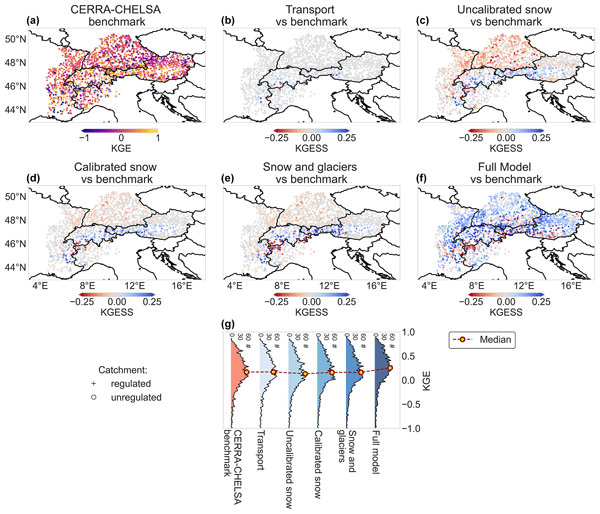
Process representation in hyper-resolution large-scale hydrological models (LHMs) limits model performance, particularly in mountain regions. Here, we update mountain process representation in an LHM and compare different meteorological forcing products. Structural and parametric changes in snow, glacier, and soil processes improve discharge simulations, while meteorological forcing remains a major control on model performance. Our work can guide future development of LHMs.
Jennie C. Steyaert, Edwin H. Sutanudjaja, Marc Bierkens, and Niko Wanders
Hydrol. Earth Syst. Sci., 29, 6499–6527, https://doi.org/10.5194/hess-29-6499-2025, https://doi.org/10.5194/hess-29-6499-2025, 2025
Short summary
Short summary
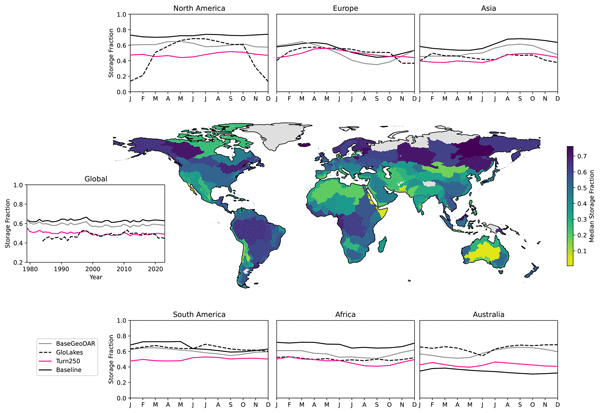
Using machine learning techniques and remotely sensed reservoir data, we develop a workflow to derive reservoir storage bounds. We put these bounds in a global hydrologic model, PCR-GLOBWB 2, and evaluate the difference between generalized operations (the schemes typically in global models) and this data derived method. We find that modelled storage is more accurate in the data derived operations. We also find that generalized operations over estimate storage and can underestimate water gaps.
Riccardo Biella, Anastasiya Shyrokaya, Monica Ionita, Raffaele Vignola, Samuel J. Sutanto, Andrijana Todorovic, Claudia Teutschbein, Daniela Cid, Maria Carmen Llasat, Pedro Alencar, Alessia Matanó, Elena Ridolfi, Benedetta Moccia, Ilias Pechlivanidis, Anne van Loon, Doris E. Wendt, Elin Stenfors, Fabio Russo, Jean-Philippe Vidal, Lucy Barker, Mariana Madruga de Brito, Marleen Lam, Monika Bláhová, Patricia Trambauer, Raed Hamed, Scott J. McGrane, Serena Ceola, Sigrid J. Bakke, Svitlana Krakovska, Viorica Nagavciuc, Faranak Tootoonchi, Giuliano Di Baldassarre, Sandra Hauswirth, Shreedhar Maskey, Svitlana Zubkovych, Marthe Wens, and Lena M. Tallaksen
Nat. Hazards Earth Syst. Sci., 25, 4475–4501, https://doi.org/10.5194/nhess-25-4475-2025, https://doi.org/10.5194/nhess-25-4475-2025, 2025
Short summary
Short summary
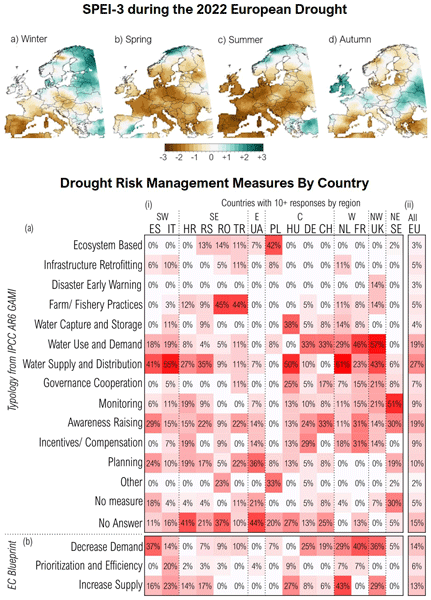
The DitA (Drought in the Anthropocene) network's study on the 2022 European drought reveals growing risks, varied impacts, and fragmented, short-term management. Based on a survey of water managers, it explores risk, impacts, strategies, and their evolution. While challenges persist, signs of improvement show readiness for change. The authors call for a European Drought Directive to unify and guide future drought risk management.
Hannes Müller Schmied, Simon Newland Gosling, Marlo Garnsworthy, Laura Müller, Camelia-Eliza Telteu, Atiq Kainan Ahmed, Lauren Seaby Andersen, Julien Boulange, Peter Burek, Jinfeng Chang, He Chen, Lukas Gudmundsson, Manolis Grillakis, Luca Guillaumot, Naota Hanasaki, Aristeidis Koutroulis, Rohini Kumar, Guoyong Leng, Junguo Liu, Xingcai Liu, Inga Menke, Vimal Mishra, Yadu Pokhrel, Oldrich Rakovec, Luis Samaniego, Yusuke Satoh, Harsh Lovekumar Shah, Mikhail Smilovic, Tobias Stacke, Edwin Sutanudjaja, Wim Thiery, Athanasios Tsilimigkras, Yoshihide Wada, Niko Wanders, and Tokuta Yokohata
Geosci. Model Dev., 18, 2409–2425, https://doi.org/10.5194/gmd-18-2409-2025, https://doi.org/10.5194/gmd-18-2409-2025, 2025
Short summary
Short summary
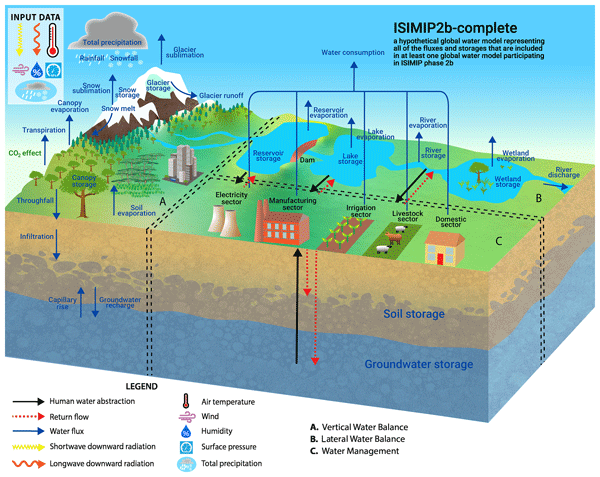
Global water models contribute to the evaluation of important natural and societal issues but are – as all models – simplified representation of reality. So, there are many ways to calculate the water fluxes and storages. This paper presents a visualization of 16 global water models using a standardized visualization and the pathway towards this common understanding. Next to academic education purposes, we envisage that these diagrams will help researchers, model developers, and data users.
Barry van Jaarsveld, Niko Wanders, Edwin H. Sutanudjaja, Jannis Hoch, Bram Droppers, Joren Janzing, Rens L. P. H. van Beek, and Marc F. P. Bierkens
Earth Syst. Dynam., 16, 29–54, https://doi.org/10.5194/esd-16-29-2025, https://doi.org/10.5194/esd-16-29-2025, 2025
Short summary
Short summary
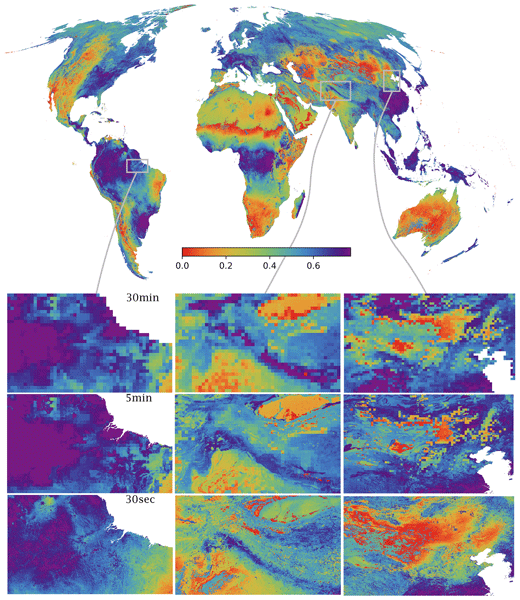
Policy makers use global hydrological models to develop water management strategies and policies. However, it would be better if these models provided information at higher resolution. We present a first-of-its-kind, truly global hyper-resolution model and show that hyper-resolution brings about better estimates of river discharge, and this is especially true for smaller catchments. Our results also suggest that future hyper-resolution models need to include more detailed land cover information.
Barry van Jaarsveld, Sandra M. Hauswirth, and Niko Wanders
Hydrol. Earth Syst. Sci., 28, 2357–2374, https://doi.org/10.5194/hess-28-2357-2024, https://doi.org/10.5194/hess-28-2357-2024, 2024
Short summary
Short summary
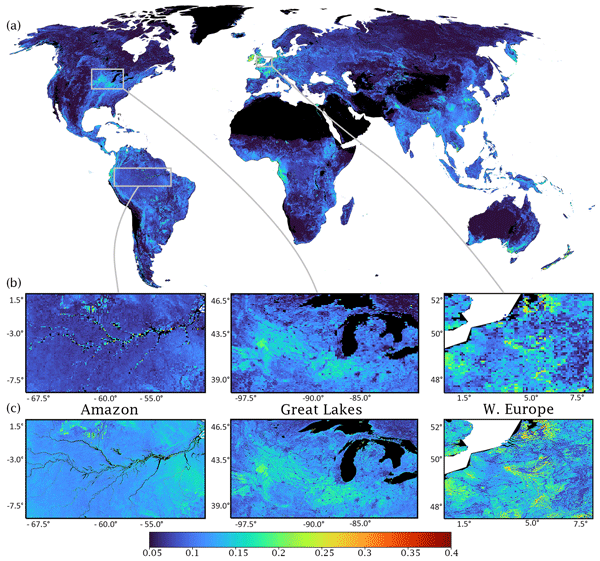
Drought often manifests itself in vegetation; however, obtaining high-resolution remote-sensing products that are spatially and temporally consistent is difficult. In this study, we show that machine learning (ML) can fill data gaps in existing products. We also demonstrate that ML can be used as a downscaling tool. By relying on ML for gap filling and downscaling, we can obtain a more holistic view of the impacts of drought on vegetation.
Edward R. Jones, Marc F. P. Bierkens, Niko Wanders, Edwin H. Sutanudjaja, Ludovicus P. H. van Beek, and Michelle T. H. van Vliet
Geosci. Model Dev., 16, 4481–4500, https://doi.org/10.5194/gmd-16-4481-2023, https://doi.org/10.5194/gmd-16-4481-2023, 2023
Short summary
Short summary
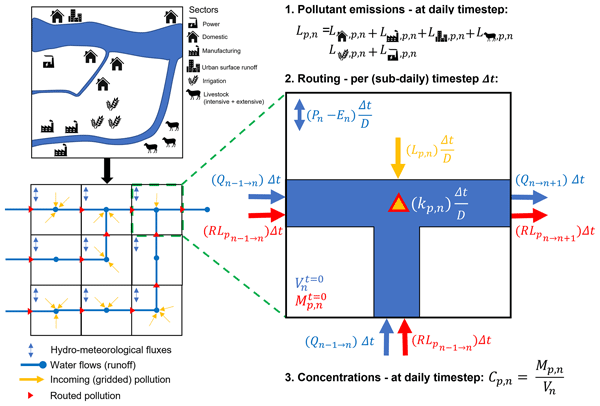
DynQual is a new high-resolution global water quality model for simulating total dissolved solids, biological oxygen demand and fecal coliform as indicators of salinity, organic pollution and pathogen pollution, respectively. Output data from DynQual can supplement the observational record of water quality data, which is highly fragmented across space and time, and has the potential to inform assessments in a broad range of fields including ecological, human health and water scarcity studies.
Jannis M. Hoch, Edwin H. Sutanudjaja, Niko Wanders, Rens L. P. H. van Beek, and Marc F. P. Bierkens
Hydrol. Earth Syst. Sci., 27, 1383–1401, https://doi.org/10.5194/hess-27-1383-2023, https://doi.org/10.5194/hess-27-1383-2023, 2023
Short summary
Short summary
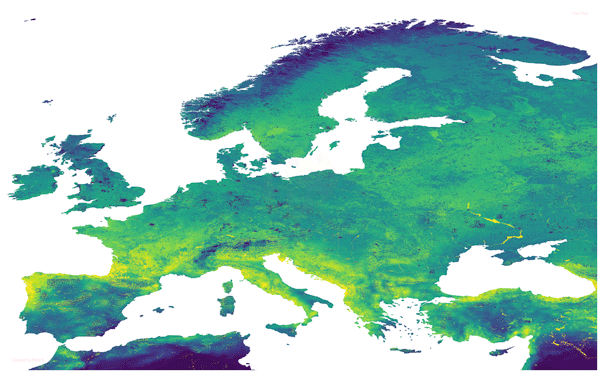
To facilitate locally relevant simulations over large areas, global hydrological models (GHMs) have moved towards ever finer spatial resolutions. After a decade-long quest for hyper-resolution (i.e. equal to or smaller than 1 km), the presented work is a first application of a GHM at 1 km resolution over Europe. This not only shows that hyper-resolution can be achieved but also allows for a thorough evaluation of model results at unprecedented detail and the formulation of future research.
Sandra M. Hauswirth, Marc F. P. Bierkens, Vincent Beijk, and Niko Wanders
Hydrol. Earth Syst. Sci., 27, 501–517, https://doi.org/10.5194/hess-27-501-2023, https://doi.org/10.5194/hess-27-501-2023, 2023
Short summary
Short summary
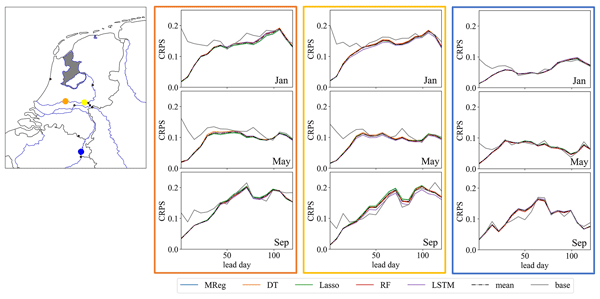
Forecasts on water availability are important for water managers. We test a hybrid framework based on machine learning models and global input data for generating seasonal forecasts. Our evaluation shows that our discharge and surface water level predictions are able to create reliable forecasts up to 2 months ahead. We show that a hybrid framework, developed for local purposes and combined and rerun with global data, can create valuable information similar to large-scale forecasting models.
Sigrid Jørgensen Bakke, Niko Wanders, Karin van der Wiel, and Lena Merete Tallaksen
Nat. Hazards Earth Syst. Sci., 23, 65–89, https://doi.org/10.5194/nhess-23-65-2023, https://doi.org/10.5194/nhess-23-65-2023, 2023
Short summary
Short summary
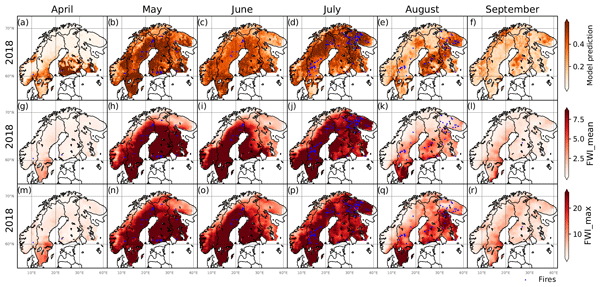
In this study, we developed a machine learning model to identify dominant controls of wildfire in Fennoscandia and produce monthly fire danger probability maps. The dominant control was shallow-soil water anomaly, followed by air temperature and deep soil water. The model proved skilful with a similar performance as the existing Canadian Forest Fire Weather Index (FWI). We highlight the benefit of using data-driven models jointly with other fire models to improve fire monitoring and prediction.
Vili Virkki, Elina Alanärä, Miina Porkka, Lauri Ahopelto, Tom Gleeson, Chinchu Mohan, Lan Wang-Erlandsson, Martina Flörke, Dieter Gerten, Simon N. Gosling, Naota Hanasaki, Hannes Müller Schmied, Niko Wanders, and Matti Kummu
Hydrol. Earth Syst. Sci., 26, 3315–3336, https://doi.org/10.5194/hess-26-3315-2022, https://doi.org/10.5194/hess-26-3315-2022, 2022
Short summary
Short summary
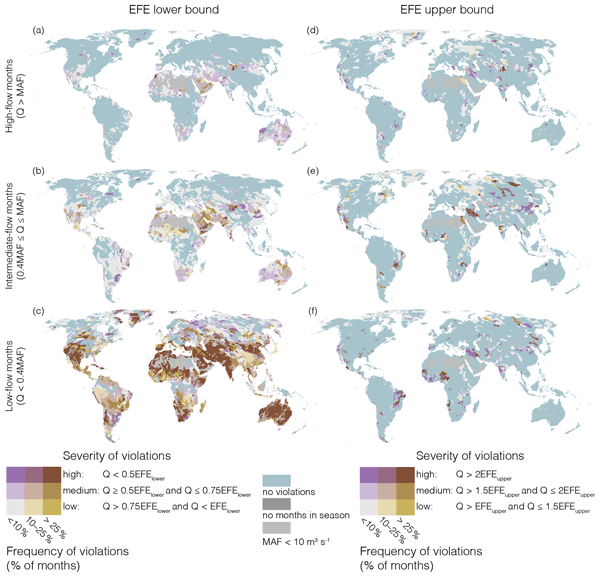
Direct and indirect human actions have altered streamflow across the world since pre-industrial times. Here, we apply a method of environmental flow envelopes (EFEs) that develops the existing global environmental flow assessments by methodological advances and better consideration of uncertainty. By assessing the violations of the EFE, we comprehensively quantify the frequency, severity, and trends of flow alteration during the past decades, illustrating anthropogenic effects on streamflow.
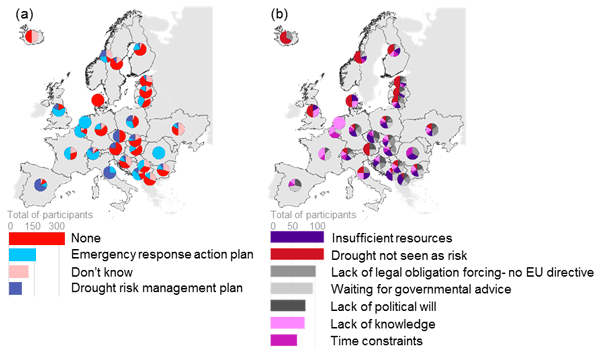
Veit Blauhut, Michael Stoelzle, Lauri Ahopelto, Manuela I. Brunner, Claudia Teutschbein, Doris E. Wendt, Vytautas Akstinas, Sigrid J. Bakke, Lucy J. Barker, Lenka Bartošová, Agrita Briede, Carmelo Cammalleri, Ksenija Cindrić Kalin, Lucia De Stefano, Miriam Fendeková, David C. Finger, Marijke Huysmans, Mirjana Ivanov, Jaak Jaagus, Jiří Jakubínský, Svitlana Krakovska, Gregor Laaha, Monika Lakatos, Kiril Manevski, Mathias Neumann Andersen, Nina Nikolova, Marzena Osuch, Pieter van Oel, Kalina Radeva, Renata J. Romanowicz, Elena Toth, Mirek Trnka, Marko Urošev, Julia Urquijo Reguera, Eric Sauquet, Aleksandra Stevkov, Lena M. Tallaksen, Iryna Trofimova, Anne F. Van Loon, Michelle T. H. van Vliet, Jean-Philippe Vidal, Niko Wanders, Micha Werner, Patrick Willems, and Nenad Živković
Nat. Hazards Earth Syst. Sci., 22, 2201–2217, https://doi.org/10.5194/nhess-22-2201-2022, https://doi.org/10.5194/nhess-22-2201-2022, 2022
Short summary
Short summary
Recent drought events caused enormous damage in Europe. We therefore questioned the existence and effect of current drought management strategies on the actual impacts and how drought is perceived by relevant stakeholders. Over 700 participants from 28 European countries provided insights into drought hazard and impact perception and current management strategies. The study concludes with an urgent need to collectively combat drought risk via a European macro-level drought governance approach.
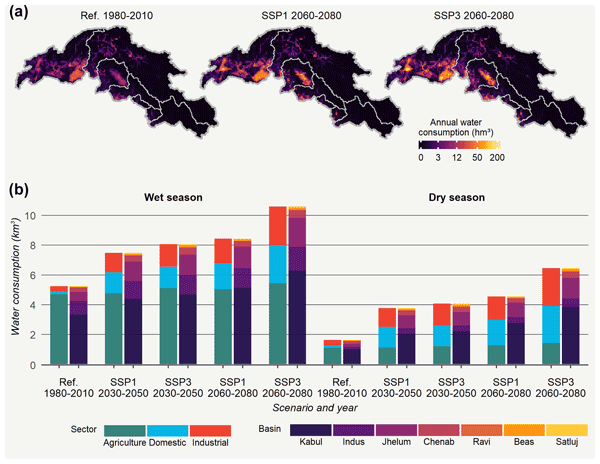
Wouter J. Smolenaars, Sanita Dhaubanjar, Muhammad K. Jamil, Arthur Lutz, Walter Immerzeel, Fulco Ludwig, and Hester Biemans
Hydrol. Earth Syst. Sci., 26, 861–883, https://doi.org/10.5194/hess-26-861-2022, https://doi.org/10.5194/hess-26-861-2022, 2022
Short summary
Short summary
The arid plains of the lower Indus Basin rely heavily on the water provided by the mountainous upper Indus. Rapid population growth in the upper Indus is expected to increase the water that is consumed there. This will subsequently reduce the water that is available for the downstream plains, where the population and water demand are also expected to grow. In future, this may aggravate tensions over the division of water between the countries that share the Indus Basin.
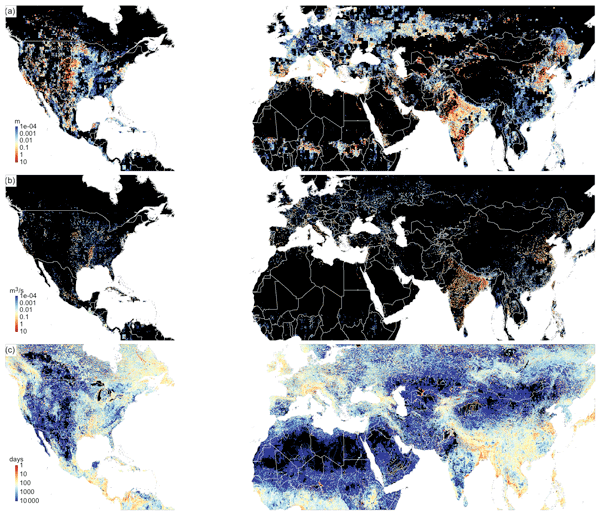
Marc F. P. Bierkens, Edwin H. Sutanudjaja, and Niko Wanders
Hydrol. Earth Syst. Sci., 25, 5859–5878, https://doi.org/10.5194/hess-25-5859-2021, https://doi.org/10.5194/hess-25-5859-2021, 2021
Short summary
Short summary
We introduce a simple analytical framework that allows us to estimate to what extent large-scale groundwater withdrawal affects groundwater levels and streamflow. It also calculates which part of the groundwater withdrawal comes out of groundwater storage and which part from a reduction in streamflow. Global depletion rates obtained with the framework are compared with estimates from satellites, from global- and continental-scale groundwater models, and from in situ datasets.
Cited articles
Allen, C. D., Macalady, A. K., Chenchouni, H., Bachelet, D., McDowell, N., Vennetier, M., Kitzberger, T., Rigling, A., Breshears, D. D., Hogg, E. T., Gonzalez, P., Fensham, R., Zhang, Z., Castro, J., Demidova, N., Lim, J.-H., Allard, G., Running, S. W., Semerci, A., and Cobb, N.: A global overview of drought and heat-induced tree mortality reveals emerging climate change risks for forests, Forest Ecol. Manag., 259, 660–684, https://doi.org/10.1016/j.foreco.2009.09.001, 2010. a
Beck, H., McVicar, T., Vergopolan, N., Berg, A., Lutsko, N., Dufour, A., Zeng, Z., Jiang, X., van Dijk, A., and Miralles, D.: High-resolution (1 km) Köppen-Geiger maps for 1901–2099 based on constrained CMIP6 projections, Sci. Data, 10, https://doi.org/10.1038/s41597-023-02549-6, 2023. a
Beer, C., Reichstein, M., Tomelleri, E., Ciais, P., Jung, M., Carvalhais, N., Rödenbeck, C., Arain, M. A., Baldocchi, D., Bonan, G. B., Bondeau, A., Cescatti, A., Lasslop, G., Lindroth, A., Lomas, M., Luyssaert, S., Margolis, H., Oleson, K. W., Roupsard, O., Veenendaal, E., Viovy, N., Williams, C., Woodward, F. I., and Papale, D.: Terrestrial Gross Carbon Dioxide Uptake: Global Distribution and Covariation with Climate, Science, 329, 834–838, https://doi.org/10.1126/science.1184984, 2010. a, b
Büchner, M. and Reyer, C. P.: ISIMIP3a atmospheric composition input data, ISIMIP Repository [data set], https://doi.org/10.48364/ISIMIP.664235.2, 2022. a, b
Češljar, G., Baković, Z., Đorđević, I., Eremija, S., Lučić, A., Živanović, I., and Konatar, B.: Impact of Short-Term and Prolonged (Multi-Year) Droughts on Tree Mortality at the Individual Tree and Stand Levels, Plants, 14, 1904, https://doi.org/10.3390/plants14131904, 2025. a
Chikoore, H. and Jury, M.: South African drought, deconstructed, Weather and Climate Extremes, 33, 100334, https://doi.org/10.1016/j.wace.2021.100334, 2021. a
Choat, B., Brodribb, T. J., Brodersen, C. R., Duursma, R. A., López, R., and Medlyn, B. E.: Triggers of tree mortality under drought, Nature, 558, 531–539, https://doi.org/10.1038/s41586-018-0240-x, 2018. a
Cooley, H., Donnelly, K., Phurisamban, R., and Subramanian, M.: Impacts of California's ongoing drought: agriculture, Pac. Inst., 2015. a
Deng, Y., Wu, D., Wang, X., and Xie, Z.: Responding time scales of vegetation production to extreme droughts over China, Ecol. Indic., 136, 108630, https://doi.org/10.1016/j.ecolind.2022.108630, 2022. a
DeSoto, L., Cailleret, M., Sterck, F., Jansen, S., Kramer, K., Robert, E. M. R., Aakala, T., Amoroso, M. M., Bigler, C., Camarero, J. J., Čufar, K., Gea-Izquierdo, G., Gillner, S., Haavik, L. J., Hereş, A.-M., Kane, J. M., Kharuk, V. I., Kitzberger, T., Klein, T., Levanič, T., Linares, J. C., Mäkinen, H., Oberhuber, W., Papadopoulos, A., Rohner, B., Sangüesa-Barreda, G., Stojanovic, D. B., Suárez, M. L., Villalba, R., and Martínez-Vilalta, J.: Low growth resilience to drought is related to future mortality risk in trees, Nat. Commun., 11, 545, https://doi.org/10.1038/s41467-020-14300-5, 2020. a
Didan, K.: MYD13A2 MODIS/Aqua Vegetation Indices 16-Day L3 Global 1km SIN Grid V006, NASA EOSDIS Land Processes Distributed Active Archive Center [data set], https://doi.org/10.5067/MODIS/MYD13A2.006 (last access: 19 March 2024), 2015a. a, b, c
Didan, K.: MOD13A2 MODIS/Terra Vegetation Indices 16-Day L3 Global 1km SIN Grid V006, NASA EOSDIS Land Processes Distributed Active Archive Center [data set], https://doi.org/10.5067/MODIS/MOD13A2.006 (last access: 19 March 2024), 2015b. a, b, c
Dong, C., MacDonald, G., Willis, K., Gillespie, T., Okin, G., and Williams, A.: Vegetation Responses to 2012–2016 Drought in Northern and Southern California, Geophys. Res. Lett., 46, 3810–3821, https://doi.org/10.1029/2019GL082137, 2019. a, b, c
Forkel, M., Drüke, M., Thurner, M., Dorigo, W., Schaphoff, S., Thonicke, K., Von Bloh, W., and Carvalhais, N.: Constraining modelled global vegetation dynamics and carbon turnover using multiple satellite observations, Sci. Rep., 9, 18757, https://doi.org/10.1038/s41598-019-55187-7, 2019. a, b
Gerten, D., Lucht, W., Ostberg, S., Heinke, J., Kowarsch, M., Kreft, H., Zbigniew, K., Rastgooy, J., Warren, R., and Schellnhuber, H.: Asynchronous exposure to global warming: Freshwater resources and terrestrial ecosystems, Environ. Res. Lett., 8, 2013, https://doi.org/10.1088/1748-9326/8/3/034032, 2013. a
Gessler, A., Bottero, A., Marshall, J., and Arend, M.: The way back: recovery of trees from drought and its implication for acclimation, New Phytologist, 228, https://doi.org/10.1111/nph.16703, 2020. a
Gupta, H., Kling, H., Yilmaz, K., and Martinez, G.: Decomposition of the Mean Squared Error and NSE Performance Criteria: Implications for Improving Hydrological Modelling, J. Hydrol., 377, 80–91, https://doi.org/10.1016/j.jhydrol.2009.08.003, 2009. a
Harper, K. L., Lamarche, C., Hartley, A., Peylin, P., Ottlé, C., Bastrikov, V., San Martín, R., Bohnenstengel, S. I., Kirches, G., Boettcher, M., Shevchuk, R., Brockmann, C., and Defourny, P.: A 29-year time series of annual 300 m resolution plant-functional-type maps for climate models, Earth Syst. Sci. Data, 15, 1465–1499, https://doi.org/10.5194/essd-15-1465-2023, 2023. a, b, c
Hersbach, H., Bell, B., Berrisford, P., Biavati, G., Horányi, A., Muñoz Sabater, J., Nicolas, J., Peubey, C., Radu, R., Rozum, I., Schepers, D., Simmons, A., Soci, C., Dee, D., and Thépaut, J.-N.: ERA5 hourly data on single levels from 1940 to present, Copernicus Climate Change Service (C3S) Climate Data Store (CDS) [data set], https://doi.org/10.24381/cds.adbb2d47 (last access: 4 November 2024), 2023. a
Huang, K. and Xia, J.: High ecosystem stability of evergreen broadleaf forests under severe droughts, Glob. Change Biol., 25, 3494–3503, https://doi.org/10.1111/gcb.14748, 2019. a
Hughes, N., Galeano, D., and Hattfield-Dodds, S.: The effects of drought and climate variability on Australian farms, Australian Bureau of Agricultural and Resource Economics and Sciences, Canberra, ISBN 978-1-74323-459-4, https://doi.org/10.25814/5de84714f6e08, 2019. a
International Food Policy Research Institute (IFPRI): Global Spatially-Disaggregated Crop Production Statistics Data for 2020 Version 1.0, Geospatial Data, version 1.0, Harvard Dataverse [data set], https://doi.org/10.7910/DVN/SWPENT, 2024. a, b
Jiao, T., Williams, C., Rogan, J., De Kauwe, M., and Medlyn, B.: Drought Impacts on Australian Vegetation During the Millennium Drought Measured With Multisource Spaceborne Remote Sensing, J. Geophys. Res.-Biogeo., 125, https://doi.org/10.1029/2019JG005145, 2020. a
Knoben, W. J. M.: Global USDA-NRCS Soil Texture Class Map, HydroShare [data set], https://doi.org/10.4211/hs.1361509511e44adfba814f6950c6e742, 2021. a, b
Knoben, W. J. M., Freer, J. E., and Woods, R. A.: Technical note: Inherent benchmark or not? Comparing Nash–Sutcliffe and Kling–Gupta efficiency scores, Hydrol. Earth Syst. Sci., 23, 4323–4331, https://doi.org/10.5194/hess-23-4323-2019, 2019. a, b
Kolus, H. R., Huntzinger, D. N., Schwalm, C. R., Fisher, J. B., McKay, N., Fang, Y., Michalak, A. M., Schaefer, K., Wei, Y., Poulter, B., Mao, J., Parazoo, N. C., and Shi, X.: Land carbon models underestimate the severity and duration of drought's impact on plant productivity, Sci. Rep., 9, 2758, https://doi.org/10.1038/s41598-019-39373-1, 2019. a, b
Krause, A., Papastefanou, P., Gregor, K., Layritz, L. S., Zang, C. S., Buras, A., Li, X., Xiao, J., and Rammig, A.: Quantifying the impacts of land cover change on gross primary productivity globally, Sci. Rep., 12, 18398, https://doi.org/10.1038/s41598-022-23120-0, 2022. a
Liu, P.-W., Famiglietti, J., Purdy, A., Adams, K. H., McEvoy, A., Reager, J., Bindlish, R., Wiese, D., David, C., and Rodell, M.: Groundwater depletion in California's Central Valley accelerates during megadrought, Nat. Commun., 13, https://doi.org/10.1038/s41467-022-35582-x, 2022. a
Luo, L., Apps, D., Arcand, S., Xu, H., Pan, M., and Hoerling, M.: Contribution of Temperature and Precipitation Anomalies to the California Drought During 2012-2015: contribution of T and P to CA drought, Geophys. Res. Lett., 44, https://doi.org/10.1002/2016GL072027, 2017. a
McDowell, N., Rosie, F., Xu, C., Domec, J.-C., Hölttä, T., Mackay, D., Sperry, J., Boutz, A., Dickman, L. T., Gehres, N., Limousin, J., Macalady, A., Martinez Vilalta, J., Mencuccini, M., Plaut, J., Ogée, J., Rasse, D., Ryan, M., and Pockman, W.: Evaluating theories of drought-induced vegetation mortality using a multimodel-experiment framework, The New Phytologist, 200, https://doi.org/10.1111/nph.12465, 2013. a
Meyer, B. F., Darela-Filho, J. P., Gregor, K., Buras, A., Gu, Q.-L., Krause, A., Liu, D., Papastefanou, P., Asuk, S., Grams, T. E. E., Zang, C. S., and Rammig, A.: Simulating the drought response of European tree species with the dynamic vegetation model LPJ-GUESS (v4.1, 97c552c5), Geosci. Model Dev., 18, 4643–4666, https://doi.org/10.5194/gmd-18-4643-2025, 2025. a
Moravec, V., Markonis, Y., Rakovec, O., Svoboda, M., Trnka, M., Kumar, R., and Hanel, M.: Europe under multi-year droughts: How severe was the 2014–2018 drought period?, Environ. Res. Lett., 16, https://doi.org/10.1088/1748-9326/abe828, 2021. a
Müller, C. and Robertson, R. D.: Projecting future crop productivity for global economic modeling, Agr. Econ., 45, 37–50, https://doi.org/10.1111/agec.12088, 2014. a
Naumann, G., Podesta, G., Marengo, J., Luterbacher, J., Bavera, D., Acosta Navarro, J., Arias-Muñoz, C., Barbosa, P., Cammalleri, C., Cuartas, L. A., De Estrada, M., De Felice, M., De Jager, A., Escobar, C., Fioravanti, G., Giordano, L., Hrast Essenfelder, A., Hidalgo, C., Leal De Moraes, O. L., Maetens, W., Magni, D., Masante, D., Mazzeschi, M., Osman, M., Rossi, L., Seluchi, M., De Los Milagros Skansi, M., Spennemann, P., Spinoni, J., Toreti, A., and Vera, C.: Extreme and long-term drought in the La Plata Basin: event evolution and impact assessment until September 2022, Publications Office of the European Union, ISBN 978-92-76-61614-6, https://doi.org/10.2760/62557, 2023. a
Pivovaroff, A., Pasquini, S., De Guzman, M., Alstad, K., Stemke, J., and Santiago, L.: Multiple strategies for drought survival among woody plant species, Funct. Ecol., 30, https://doi.org/10.1111/1365-2435.12518, 2016. a
Powell, T., Galbraith, D., Christoffersen, B., Harper, A., Imbuzeiro, H., Rowland, L., Almeida, S., Brando, P., Costa, A. C., Costa, M., Levine, N., Malhi, Y., Saleska, S., Sotta, E., Williams, M., Meir, P., and Moorcroft, P.: Confronting model predictions of carbon fluxes with measurements of Amazon forests subjected to experimental drought, The New Phytologist, 200, https://doi.org/10.1111/nph.12390, 2013. a
Rahman, F., Sims, D., Cordova, V., and El Masri, B.: Potential of MODIS EVI and Surface Temperature for Directly Estimating Per-Pixel Ecosystem C Fluxes, Geophys. Res. Lett., 32, https://doi.org/10.1029/2005GL024127, 2005. a
Ruijsch, D.: deniseruijsch/MultiDry-Chapter2: v1, Zenodo [code], https://doi.org/10.5281/zenodo.17085725, 2025. a
Ruijsch, D. and Wanders, N.: Multi-Dry Chapter 2; Exploring the Potential of LPJmL-5 to Simulate Vegetation Responses to (Multi-Year) Droughts, Utrecht University [data set], https://doi.org/10.24416/UU01-U97GDE, 2026. a
Running, S. W. and Zhao, M.: User's Guide: Daily GPP and Annual NPP (MOD17A2H/A3H) and Year-end Gap-Filled (MOD17A2HGF/A3HGF) Products: NASA Earth Observing System MODIS Land Algorithm (Collection 6.1), Numerical Terradynamic Simulation Group, University of Montana, https://www.umt.edu/numerical-terradynamic-simulation-group/project/modis/user-guides/mod17c61usersguidev11mar112021.pdf (last access: 8 January 2026), 2021. a
Santiago, L., Bonal, D., De Guzman, M., and Ávila-Lovera, E.: Drought Survival Strategies of Tropical Trees, in: Tropical Tree Physiology, Springer, 6, 243–258, ISBN 978-3-319-27422-5, https://doi.org/10.1007/978-3-319-27422-5_11, 2016. a
Schaefer, K., Schwalm, C. R., Williams, C., Arain, M. A., Barr, A., Chen, J. M., Davis, K. J., Dimitrov, D., Hilton, T. W., Hollinger, D. Y., Humphreys, E., Poulter, B., Raczka, B. M., Richardson, A. D., Sahoo, A., Thornton, P., Vargas, R., Verbeeck, H., Anderson, R., Baker, I., Black, T. A., Bolstad, P., Chen, J., Curtis, P. S., Desai, A. R., Dietze, M., Dragoni, D., Gough, C., Grant, R. F., Gu, L., Jain, A., Kucharik, C., Law, B., Liu, S., Lokipitiya, E., Margolis, H. A., Matamala, R., McCaughey, J. H., Monson, R., Munger, J. W., Oechel, W., Peng, C., Price, D. T., Ricciuto, D., Riley, W. J., Roulet, N., Tian, H., Tonitto, C., Torn, M., Weng, E., and Zhou, X.: A model-data comparison of gross primary productivity: Results from the North American Carbon Program site synthesis, J. Geophys. Res.-Biogeo., 117, https://doi.org/10.1029/2012JG001960, 2012. a
Schaphoff, S., Forkel, M., Müller, C., Knauer, J., von Bloh, W., Gerten, D., Jägermeyr, J., Lucht, W., Rammig, A., Thonicke, K., and Waha, K.: LPJmL4 – a dynamic global vegetation model with managed land – Part 2: Model evaluation, Geosci. Model Dev., 11, 1377–1403, https://doi.org/10.5194/gmd-11-1377-2018, 2018a. a, b, c, d
Schaphoff, S., von Bloh, W., Rammig, A., Thonicke, K., Biemans, H., Forkel, M., Gerten, D., Heinke, J., Jägermeyr, J., Knauer, J., Langerwisch, F., Lucht, W., Müller, C., Rolinski, S., and Waha, K.: LPJmL4 – a dynamic global vegetation model with managed land – Part 1: Model description, Geosci. Model Dev., 11, 1343–1375, https://doi.org/10.5194/gmd-11-1343-2018, 2018b. a, b, c, d, e, f, g, h, i, j, k, l, m
Sims, D., Rahman, F., Cordova, V., El Masri, B., Baldocchi, D., Flanagan, L., Goldstein, A., Hollinger, D., Misson, L., Monson, R., Oechel, W., Schmid, H., Wofsy, S., and Xu, L.: On the use of MODIS EVI to assess gross primary productivity of North American ecosystems, J. Geophys. Res., 111, https://doi.org/10.1029/2006JG000162, 2006. a
Tang, X., Li, H., Huang, N., Li, X., Xu, X., Ding, Z., and Xie, J.: A comprehensive assessment of MODIS-derived GPP for forest ecosystems using the site-level FLUXNET database, Environ. Earth Sci., 74, 5907–5918, https://doi.org/10.1007/s12665-015-4615-0, 2015. a
van der Wiel, K., Batelaan, T. J., and Wanders, N.: Large increases of multi-year droughts in north-western Europe in a warmer climate, Clim. Dynam., 60, 1781–1800, https://doi.org/10.1007/s00382-022-06373-3, 2023. a
van Dijk, A., Beck, H., Crosbie, R., Jeu, R., Liu, Y., Podger, G., Timbal, B., and Viney, N.: The Millennium Drought in southeast Australia (2001–2009): Natural and human causes and implications for water resources, ecosystems, economy, and society, Water Resour. Res., 49, https://doi.org/10.1002/wrcr.20123, 2013. a
van Hateren, T. C., Chini, M., Matgen, P., and Teuling, A. J.: Ambiguous Agricultural Drought: Characterising Soil Moisture and Vegetation Droughts in Europe from Earth Observation, Remote Sens., 13, https://doi.org/10.3390/rs13101990, 2021. a, b
van Mourik, J., Ruijsch, D., van der Wiel, K., Hazeleger, W., and Wanders, N.: Regional drivers and characteristics of multi-year droughts, Weather and Climate Extremes, 48, 100748, https://doi.org/10.1016/j.wace.2025.100748, 2025. a, b, c
Vicente-Serrano, S., Beguería, S., and López-Moreno, J.: A Multiscalar Drought Index Sensitive to Global Warming: The Standardized Precipitation Evapotranspiration Index, J. Climate, 23, 1696–1718, https://doi.org/10.1175/2009JCLI2909.1, 2010. a, b
Volkholz, J. and Müller, C.: ISIMIP3 soil input data, ISIMIP Repository [data set], https://doi.org/10.48364/ISIMIP.942125, 2020. a, b
von Bloh, W., Schaphoff, S., Müller, C., Rolinski, S., Waha, K., and Zaehle, S.: Implementing the nitrogen cycle into the dynamic global vegetation, hydrology, and crop growth model LPJmL (version 5.0), Geosci. Model Dev., 11, 2789–2812, https://doi.org/10.5194/gmd-11-2789-2018, 2018. a, b, c, d, e, f, g, h
Wang, L., Zhu, H., Lin, A., Zou, L., Qin, W., and Du, Q.: Evaluation of the Latest MODIS GPP Products across Multiple Biomes Using Global Eddy Covariance Flux Data, Remote Sens., 9, https://doi.org/10.3390/rs9050418, 2017. a
Wang, S. and Zhang, Y.: Temporally corrected long-term satellite solar-induced chlorophyll fluorescence (SIF) dataset (1995–2018), figshare [data set], https://doi.org/10.6084/m9.figshare.21546066.v1, 2023. a
Wiel, K., Batelaan, T., and Wanders, N.: Large increases of multi-year droughts in north-western Europe in a warmer climate, Clim. Dynam., 60, 1–20, https://doi.org/10.1007/s00382-022-06373-3, 2022. a, b, c, d
Wirth, S. B., Rolinski, S., Schaphoff, S., von Bloh, W., and Müller, C.: Model code for LPJmL5.7.9-ccostly-bnf, Zenodo [code], https://doi.org/10.5281/zenodo.10257030, 2023. a
Wittwer, G. and Waschik, R.: Estimating the economic impacts of the 2017–2019 drought and 2019–2020 bushfires on regional NSW and the rest of Australia, Aust. J. Agr. Resour. Ec., 65, https://doi.org/10.1111/1467-8489.12441, 2021. a
Wu, X., Liu, H., Li, X., Ciais, P., Babst, F., Guo, W., Zhang, C., Magliulo, V., Pavelka, M., Liu, S., Huang, Y., Wang, P., Shi, C., and Ma, Y.: Differentiating drought legacy effects on vegetation growth over the temperate Northern Hemisphere, Glob. Change Biol., 24, 504–516, https://doi.org/10.1111/gcb.13920, 2018. a
Yang, J. and Tian, H.: ISIMIP3a N-deposition input data (v1.3), iSIMIP Repository [data set], https://doi.org/10.48364/ISIMIP.759077.3, 2023. a, b, c
Yang, M., He, Z., Pi, G., and You, M.: Spatiotemporal Variations in MODIS EVI and MODIS LAI and the Responses to Meteorological Drought across Different Slope Conditions in Karst Mountain Regions, Sustainability, 16, https://doi.org/10.3390/su16177870, 2024. a
Yang, X., Xu, X., Stovall, A., Chen, M., and Lee, J.: Recovery: Fast and Slow—Vegetation Response During the 2012–2016 California Drought, J. Geophys. Res.-Biogeo., 126, https://doi.org/10.1029/2020JG005976, 2021. a, b
Zang, C., Buras, A., Esquivel Muelbert, A., Jump, A., Rigling, A., and Rammig, A.: Standardized drought indices in ecological research: Why one size does not fit all, Glob. Change Biol., 26, 322–324, https://doi.org/10.1111/gcb.14809, 2019. a
Zhou, S., Duursma, R., Medlyn, B., Kelly, J., and Prentice, I.: How should we model plant responses to drought? An analysis of stomatal and non-stomatal responses to water stress, Agr. Forest Meteorol., 182–183, 204–214, https://doi.org/10.1016/j.agrformet.2013.05.009, 2013. a
Zhu, X., Pei, Y., Zheng, Z., Dong, J., Zhang, Y., Wang, J., Chen, L., Doughty, R. B., Zhang, G., and Xiao, X.: Underestimates of Grassland Gross Primary Production in MODIS Standard Products, Remote Sens., 10, https://doi.org/10.3390/rs10111771, 2018. a
Short summary
We studied how plants respond to long droughts using model simulations and satellite data. The model reproduces drought impacts fairly well but tends to show plants recovering too quickly. Improving how the model represents plant stress and recovery will help predict how ecosystems respond to more frequent and severe droughts in the future.
We studied how plants respond to long droughts using model simulations and satellite data. The...


Altmetrics
Final-revised paper
Preprint