
Articles | Volume 17, issue 6
https://doi.org/10.5194/esd-17-1819-2026
© Author(s) 2026. This work is distributed under
the Creative Commons Attribution 4.0 License.
Special issue:
https://doi.org/10.5194/esd-17-1819-2026
© Author(s) 2026. This work is distributed under
the Creative Commons Attribution 4.0 License.
Research article
| 
27 Nov 2026
Research article |
| 27 Nov 2026
Respecting the boundaries: balancing climate adaptation and Earth system resilience

Earth Resilience Science Unit, Potsdam Institute for Climate Impact Research (PIK), Member of the Leibniz Association, Potsdam, Germany
Institute of Earth and Environmental Science, University of Potsdam, Potsdam, Germany
Jonathan F. Donges
Earth Resilience Science Unit, Potsdam Institute for Climate Impact Research (PIK), Member of the Leibniz Association, Potsdam, Germany
Integrative Earth System Science, Max Planck Institute of Geoanthropology, Jena, Germany
Stockholm Resilience Centre, Stockholm University, Stockholm, Sweden
Johan Rockström
Earth Resilience Science Unit, Potsdam Institute for Climate Impact Research (PIK), Member of the Leibniz Association, Potsdam, Germany
Institute of Earth and Environmental Science, University of Potsdam, Potsdam, Germany
Stockholm Resilience Centre, Stockholm University, Stockholm, Sweden
Related authors
No articles found.
Jakob Harteg, Colin Jones, Jonathan F. Donges, Manabu Abe, Patricia Cadule, Frederic Castruccio, Gokhan Danabasoglu, Friederike Fröb, Thomas L. Frölicher, Chuncheng Guo, Eike Köhn, Spencer Liddicoat, Anastasia Romanou, Yona Silvy, Tomas Torsvik, Klaus Wyser, Tokuta Yokohata, Tilo Ziehn, Ricarda Winkelmann, and Sina Loriani
EGUsphere, https://doi.org/10.5194/egusphere-2026-5162, https://doi.org/10.5194/egusphere-2026-5162, 2026
This preprint is open for discussion and under review for Geoscientific Model Development (GMD).
Short summary
Short summary
The Tipping Points Modelling Intercomparison Project studies risks of abrupt climate changes across multiple models, but these models warm at different rates, so the same simulation year means different temperatures. We built a standard method to align them by how warm they have gotten, not by when. Tested on nine models, it is insensitive to its technical choices. The method and results are freely available so all studies using this project share one common reference.
Hannah Prawitz, Luana Schwarz, Wolfram Barfuss, Sibel Eker, Johannes Halbe, and Jonathan Friedemann Donges
EGUsphere, https://doi.org/10.5194/egusphere-2026-3862, https://doi.org/10.5194/egusphere-2026-3862, 2026
Short summary
Short summary
Human societies and the natural environment constantly shape one another, yet researchers usually study and model them separately. We reviewed 314 studies on global, two-way coupled social-environmental models and propose a typology to structure the field. While we find clear differences between the groups, models overall could be improved by better representing social-cultural dynamics, agent heterogeneity, diverse feedback loops, endogenous tipping dynamics, and cross-scale interactions.
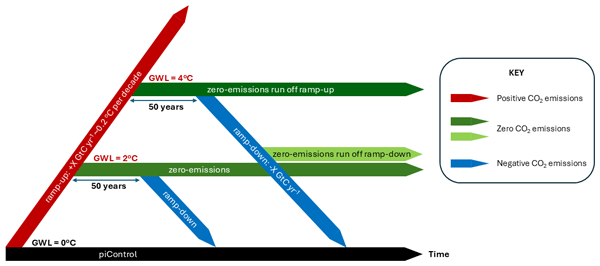
Colin Jones, Isaline Bossert, Donovan P. Dennis, Hazel A. Jeffery, Chris D. Jones, Torben Koenigk, Sina Loriani, Benjamin Sanderson, Roland Séférian, Klaus Wyser, Shuting Yang, Manabu Abe, Sebastian Bathiany, Pascale Braconnot, Victor Brovkin, Friedrich A. Burger, Patrica Cadule, Frederic S. Castruccio, Gokhan Danabasoglu, Andrea Dittus, Jonathan F. Donges, Friederike Fröb, Thomas L. Frölicher, Goran Georgievski, Chuncheng Guo, Aixue Hu, Peter Lawrence, Paul Lerner, José Licón-Saláiz, Bette Otto-Bliesner, Anastasia Romanou, Elena Shevliakova, Yona Silvy, Didier Swingedouw, Jerry Tjiputra, Jeremy Walton, Andy Wiltshire, Ricarda Winkelmann, Richard Wood, Tokuta Yokohata, and Tilo Ziehn
Geosci. Model Dev., 19, 6941–6966, https://doi.org/10.5194/gmd-19-6941-2026, https://doi.org/10.5194/gmd-19-6941-2026, 2026
Short summary
Short summary
We introduce a new Earth system model experiment protocol to help researchers understand how Earth might respond to positive, zero, and negative carbon emissions. This protocol enables different models to be compared following similar warming and cooling rates. Researchers use the models to explore how the Earth reacts to different climate futures, including the risk of tipping points being exceeded and whether changes can be reversed. The results will support improved long-term climate policy.
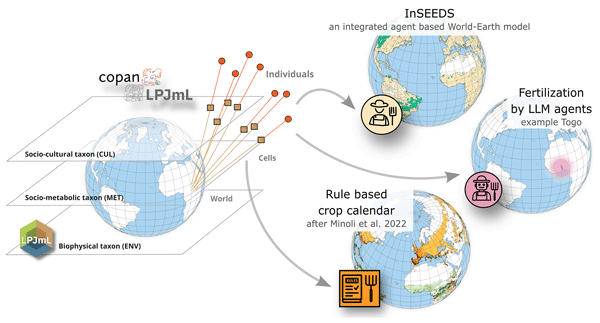
Jannes Breier, Luana Schwarz, Hannah Prawitz, Werner von Bloh, Christoph Müller, Stephen Björn Wirth, Max Bechthold, Dieter Gerten, and Jonathan F. Donges
Geosci. Model Dev., 19, 6829–6855, https://doi.org/10.5194/gmd-19-6829-2026, https://doi.org/10.5194/gmd-19-6829-2026, 2026
Short summary
Short summary
We present a new modelling framework that combines simulations of environmental change and human decision-making in an integrated approach. It allows researchers to explore how farming decisions affect land, water, and climate, and how these environmental changes influence future decisions. By connecting people and nature, it helps investigate food security, climate adaptation, and sustainability challenges, and supports the development of more realistic scenarios of future environmental change.
Kobe De Maeyer, Jakob Harteg, Jonathan F. Donges, Ricarda Winkelmann, and Sina Loriani
EGUsphere, https://doi.org/10.5194/egusphere-2026-3389, https://doi.org/10.5194/egusphere-2026-3389, 2026
Short summary
Short summary
Understanding Earth system dynamics requires comparing outputs from many models and variables. Yet identifying where and when datasets agree on significant changes remains a challenge. We developed methods that combine detected signals across models and variables into shared patterns in space and time, providing robust signals from large model ensembles. Applied to Amazon rainforest simulations, we show that conclusions about Earth system change depend critically on how evidence is synthesised.
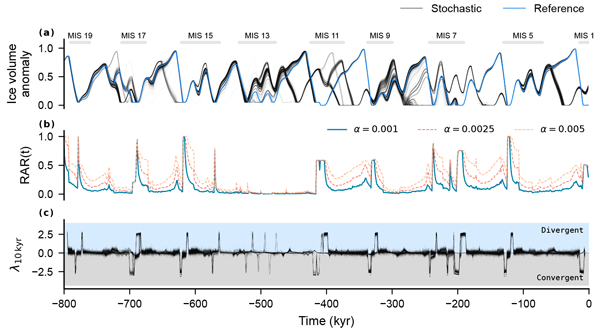
Jakob Harteg, Nico Wunderling, and Jonathan F. Donges
Earth Syst. Dynam., 17, 673–686, https://doi.org/10.5194/esd-17-673-2026, https://doi.org/10.5194/esd-17-673-2026, 2026
Short summary
Short summary
We investigate how resilient Earth’s climate system is to disturbances by analysing glacial-interglacial cycles using a simple climate model. By simulating small and large shocks to ice volume, we show that Earth’s climate more easily returns to its natural path during warm periods. These results improve our understanding of how Earth resilience varies over time in systems driven by external forces.
Didier Swingedouw, Laura Jackson, Aixue Hu, Anastasia Romanou, Nicole C. Laureanti, Wilbert Weijer, Sina Loriani, Bette Otto-Bliesner, Ayako Abe-Ouchi, Lucas Almeida, Alessio Bellucci, Reyk Börner, Gokhan Danabasoglu, Donovan P. Dennis, Marion Devilliers, Sybren Drijfhout, Jonathan Donges, Friederike Fröb, Thomas L. Frölicher, Guillaume Gastineau, Heiko Goelzer, Chuncheng Guo, Urs Hofmann, Anna Höse, Colin Jones, Torben Koenigk, Ann Kristin Klose, Valerio Lembo, Jose Licon-Salaiz, Ken Mankoff, Virna Meccia, Irina Melnikova, Oliver Mehling, Laurie Menviel, Juliette Mignot, Jon I. Robson, Gavin A. Schmidt, Robin Smith, Yuchen Sun, Irene Trombini, Matteo Willeit, Richard Wood, Fanghua Wu, Lin Zhaohui, and Ricarda Winkelmann
EGUsphere, https://doi.org/10.5194/egusphere-2026-1698, https://doi.org/10.5194/egusphere-2026-1698, 2026
Short summary
Short summary
This study presents a plan for climate model experiments to better understand how changes in freshwater in the North Atlantic affect major ocean currents. We designed coordinated simulations to test their response to warming, added freshwater, and possible recovery after weakening. Comparing results across models and past climate evidence helps improve confidence in projections and assess risks of large ocean circulation changes.
John M. Anderies, Max Bechthold, Jonathan F. Donges, Ingo Fetzer, Nico Wunderling, Wolfram Barfuss, and Johan Rockström
EGUsphere, https://doi.org/10.5194/egusphere-2025-6345, https://doi.org/10.5194/egusphere-2025-6345, 2026
Short summary
Short summary
This paper explores a new approach to understanding human-Earth system resilience. It introduces a measure that estimates how likely a system is to reach a safe and just state. Available knowledge about how the system works, its boundaries, and potential disruptions centrally constrain the measure. It could help decision-makers strike a balance between gaining knowledge, building capacity to act, and taking practical measures to improve resilience in many different types of systems.
Jakob Harteg, Lukas Röhrich, Kobe De Maeyer, Julius Garbe, Boris Sakschewski, Ann Kristin Klose, Jonathan F. Donges, Ricarda Winkelmann, and Sina Loriani
EGUsphere, https://doi.org/10.5194/egusphere-2026-356, https://doi.org/10.5194/egusphere-2026-356, 2026
Short summary
Short summary
Climate systems can undergo abrupt, potentially irreversible changes with major impacts on ecosystems and societies, yet consistent tools to detect these transitions across different models are lacking. We present an open-source software package for systematically detecting where and when such changes occur in climate simulations and quantifying variation in transition timing. This enables robust comparison of abrupt changes across models and contributes to assessing climate-tipping risks.
E. Keith Smith, Carl Folke, Niklas Kitzmann, Manjana Milkoreit, Per Olsson, Ricarda Winkelmann, Anne-Sophie Crépin, Christina Eder, Niklas Harring, Jobst Heitzig, Alexia Katsanidou, Timothy M. Lenton, Franz Mauelshagen, Kelton Minor, Ilona M. Otto, Armon Rezai, Jürgen Scheffran, Isabelle Stadelmann-Steffen, Rick van der Ploeg, Nico Wunderling, and Jonathan F. Donges
EGUsphere, https://doi.org/10.5194/egusphere-2026-177, https://doi.org/10.5194/egusphere-2026-177, 2026
This preprint is open for discussion and under review for Geoscientific Model Development (GMD).
Short summary
Short summary
Achieving climate and sustainability goals requires rapid, large-scale change. We introduce criticality – the likelihood a system is near a social tipping point – and critical agency – the capacity to shape those conditions. Our framework shows how coalitions and policies can trigger desired shifts and avoid harmful ones, linking complex systems theory with evidence to guide policymakers and practitioners.
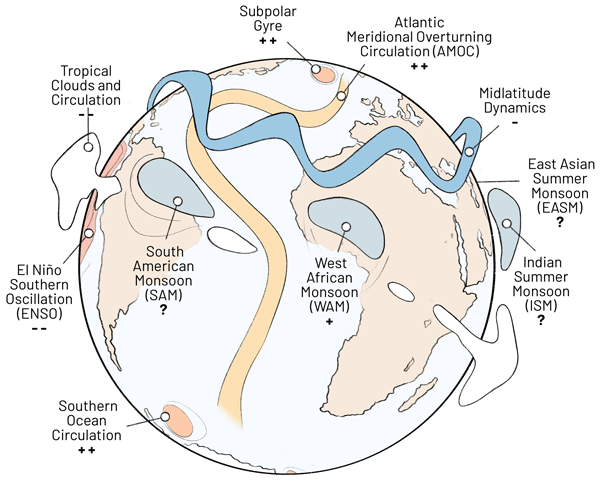
Sina Loriani, Yevgeny Aksenov, David I. Armstrong McKay, Govindasamy Bala, Andreas Born, Cristiano Mazur Chiessi, Henk A. Dijkstra, Jonathan F. Donges, Sybren Drijfhout, Matthew H. England, Alexey V. Fedorov, Laura C. Jackson, Kai Kornhuber, Gabriele Messori, Francesco S. R. Pausata, Stefanie Rynders, Jean-Baptiste Sallée, Bablu Sinha, Steven C. Sherwood, Didier Swingedouw, and Thejna Tharammal
Earth Syst. Dynam., 16, 1611–1653, https://doi.org/10.5194/esd-16-1611-2025, https://doi.org/10.5194/esd-16-1611-2025, 2025
Short summary
Short summary
In this work, we draw on palaeo-records, observations, and modelling studies to review tipping points in the ocean overturning circulations, monsoon systems, and global atmospheric circulations. We find indications for tipping in the ocean overturning circulations and the West African monsoon, with potentially severe impacts on the Earth system and humans. Tipping in the other considered systems is regarded as conceivable but is currently not sufficiently supported by evidence.
Luana Schwarz, Jannes Breier, Hannah Prawitz, Max Bechthold, Werner von Bloh, Sara M. Constantino, Dieter Gerten, Jobst Heitzig, Ronja Hotz, Leander John, Christoph Müller, Johan Rockström, and Jonathan F. Donges
EGUsphere, https://doi.org/10.5194/egusphere-2025-4079, https://doi.org/10.5194/egusphere-2025-4079, 2025
Short summary
Short summary
We present a novel global model that links farmer decisions with ecological processes to explore how agricultural systems co-evolve. Unlike previous tools, it captures feedbacks between society and nature at up-to planetary scale. We find that conservation practices can restore soil health and support stable harvests. Adoption spreads through learning and norms, showing how regeneration at the farm scale can ripple outward, contributing to global sustainability and Earth system resilience.
Max Bechthold, Wolfram Barfuss, André Butz, Jannes Breier, Sara M. Constantino, Jobst Heitzig, Luana Schwarz, Sanam N. Vardag, and Jonathan F. Donges
Earth Syst. Dynam., 16, 1365–1390, https://doi.org/10.5194/esd-16-1365-2025, https://doi.org/10.5194/esd-16-1365-2025, 2025
Short summary
Short summary
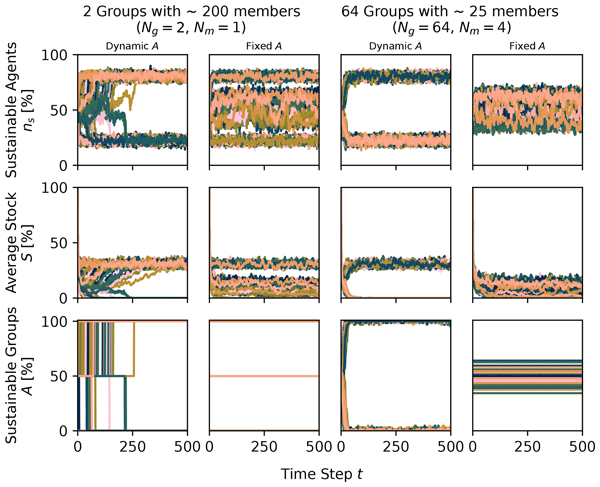
Social norms are a major influence on human behaviour. In natural resource use models, norms are often included in a simplistic way leading to “black or white” sustainability outcomes. We find that a dynamic representation of norms, including social groups, determines more nuanced states of the environment in a stylised model of resource use while also defining the success of attempts to manage the system, suggesting the importance of representing both aspects well in coupled models.
Ricarda Winkelmann, Donovan P. Dennis, Jonathan F. Donges, Sina Loriani, Ann Kristin Klose, Jesse F. Abrams, Jorge Alvarez-Solas, Torsten Albrecht, David Armstrong McKay, Sebastian Bathiany, Javier Blasco Navarro, Victor Brovkin, Eleanor Burke, Gokhan Danabasoglu, Reik V. Donner, Markus Drüke, Goran Georgievski, Heiko Goelzer, Anna B. Harper, Gabriele Hegerl, Marina Hirota, Aixue Hu, Laura C. Jackson, Colin Jones, Hyungjun Kim, Torben Koenigk, Peter Lawrence, Timothy M. Lenton, Hannah Liddy, José Licón-Saláiz, Maxence Menthon, Marisa Montoya, Jan Nitzbon, Sophie Nowicki, Bette Otto-Bliesner, Francesco Pausata, Stefan Rahmstorf, Karoline Ramin, Alexander Robinson, Johan Rockström, Anastasia Romanou, Boris Sakschewski, Christina Schädel, Steven Sherwood, Robin S. Smith, Norman J. Steinert, Didier Swingedouw, Matteo Willeit, Wilbert Weijer, Richard Wood, Klaus Wyser, and Shuting Yang
EGUsphere, https://doi.org/10.5194/egusphere-2025-1899, https://doi.org/10.5194/egusphere-2025-1899, 2025
Short summary
Short summary
The Tipping Points Modelling Intercomparison Project (TIPMIP) is an international collaborative effort to systematically assess tipping point risks in the Earth system using state-of-the-art coupled and stand-alone domain models. TIPMIP will provide a first global atlas of potential tipping dynamics, respective critical thresholds and key uncertainties, generating an important building block towards a comprehensive scientific basis for policy- and decision-making.
E. Keith Smith, Marc Wiedermann, Jonathan F. Donges, Jobst Heitzig, and Ricarda Winkelmann
Earth Syst. Dynam., 16, 545–564, https://doi.org/10.5194/esd-16-545-2025, https://doi.org/10.5194/esd-16-545-2025, 2025
Short summary
Short summary
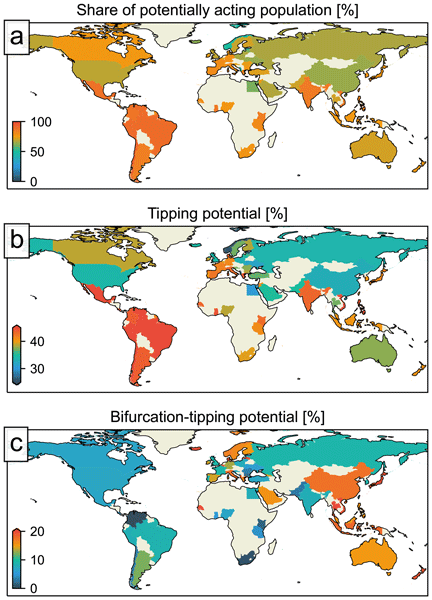
Social tipping dynamics have received recent attention as a potential mechanism for effective climate actions – yet how such tipping dynamics could unfold remains largely unquantified. We explore how social tipping processes can develop by enabling necessary conditions (exemplified by climate change concern) and increased perceptions of localized impacts (sea level rise). The likelihood of social tipping varies regionally, mostly along areas with the highest exposure to persistent risks.
Jordan P. Everall, Fabian Tschofenig, Jonathan F. Donges, and Ilona M. Otto
Earth Syst. Dynam., 16, 189–214, https://doi.org/10.5194/esd-16-189-2025, https://doi.org/10.5194/esd-16-189-2025, 2025
Short summary
Short summary
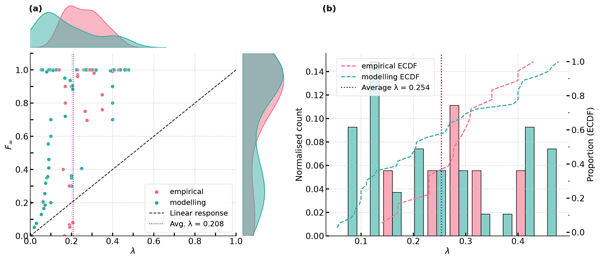
A social tipping process is a large change in a social group that can be started by few people. Does the 80/20 rule apply here? We see if this is the case for human social groups. We find that, if the social conditions allow, change occurs when around 25 % of people engage. While tipping can happen between 10 % and 43 %, most cases tip by 40 %. However, tipping is not guaranteed: when people are resistant, trusted friend groups and context-appropriate messaging help the process along.
Viktoria Spaiser, Sirkku Juhola, Sara M. Constantino, Weisi Guo, Tabitha Watson, Jana Sillmann, Alessandro Craparo, Ashleigh Basel, John T. Bruun, Krishna Krishnamurthy, Jürgen Scheffran, Patricia Pinho, Uche T. Okpara, Jonathan F. Donges, Avit Bhowmik, Taha Yasseri, Ricardo Safra de Campos, Graeme S. Cumming, Hugues Chenet, Florian Krampe, Jesse F. Abrams, James G. Dyke, Stefanie Rynders, Yevgeny Aksenov, and Bryan M. Spears
Earth Syst. Dynam., 15, 1179–1206, https://doi.org/10.5194/esd-15-1179-2024, https://doi.org/10.5194/esd-15-1179-2024, 2024
Short summary
Short summary
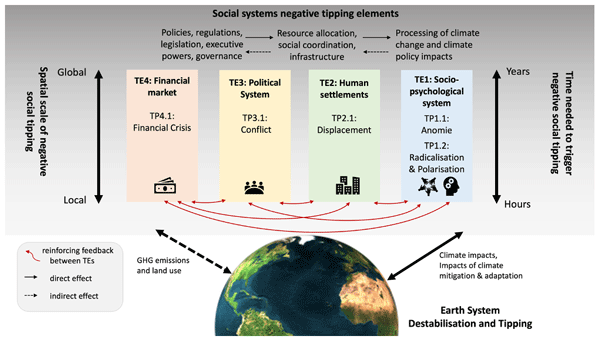
In this paper, we identify potential negative social tipping points linked to Earth system destabilization and draw on related research to understand the drivers and likelihood of these negative social tipping dynamics, their potential effects on human societies and the Earth system, and the potential for cascading interactions and contribution to systemic risks.
Ann Kristin Klose, Jonathan F. Donges, Ulrike Feudel, and Ricarda Winkelmann
Earth Syst. Dynam., 15, 635–652, https://doi.org/10.5194/esd-15-635-2024, https://doi.org/10.5194/esd-15-635-2024, 2024
Short summary
Short summary
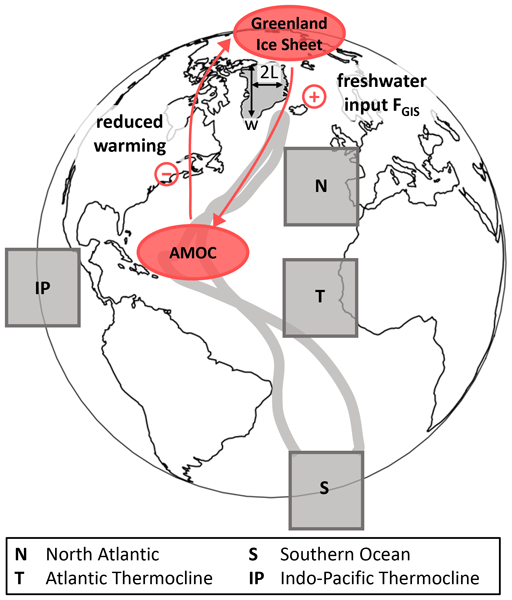
We qualitatively study the long-term stability of the Greenland Ice Sheet and AMOC as tipping elements in the Earth system, which is largely unknown given their interaction in a positive–negative feedback loop. Depending on the timescales of ice loss and the position of the AMOC’s state relative to its critical threshold, we find distinct dynamic regimes of cascading tipping. These suggest that respecting safe rates of environmental change is necessary to mitigate potential domino effects.
Nico Wunderling, Anna S. von der Heydt, Yevgeny Aksenov, Stephen Barker, Robbin Bastiaansen, Victor Brovkin, Maura Brunetti, Victor Couplet, Thomas Kleinen, Caroline H. Lear, Johannes Lohmann, Rosa Maria Roman-Cuesta, Sacha Sinet, Didier Swingedouw, Ricarda Winkelmann, Pallavi Anand, Jonathan Barichivich, Sebastian Bathiany, Mara Baudena, John T. Bruun, Cristiano M. Chiessi, Helen K. Coxall, David Docquier, Jonathan F. Donges, Swinda K. J. Falkena, Ann Kristin Klose, David Obura, Juan Rocha, Stefanie Rynders, Norman Julius Steinert, and Matteo Willeit
Earth Syst. Dynam., 15, 41–74, https://doi.org/10.5194/esd-15-41-2024, https://doi.org/10.5194/esd-15-41-2024, 2024
Short summary
Short summary
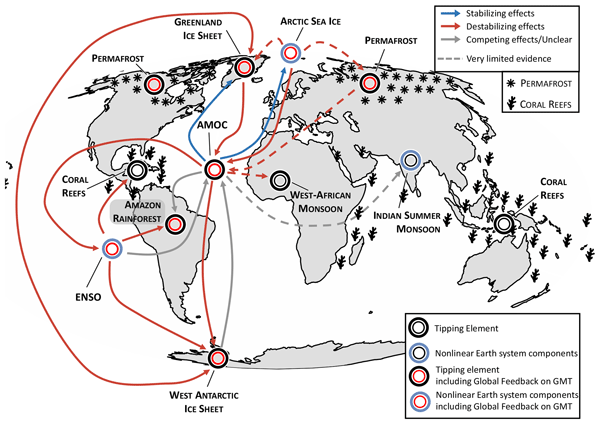
This paper maps out the state-of-the-art literature on interactions between tipping elements relevant for current global warming pathways. We find indications that many of the interactions between tipping elements are destabilizing. This means that tipping cascades cannot be ruled out on centennial to millennial timescales at global warming levels between 1.5 and 2.0 °C or on shorter timescales if global warming surpasses 2.0 °C.
Maria Zeitz, Jan M. Haacker, Jonathan F. Donges, Torsten Albrecht, and Ricarda Winkelmann
Earth Syst. Dynam., 13, 1077–1096, https://doi.org/10.5194/esd-13-1077-2022, https://doi.org/10.5194/esd-13-1077-2022, 2022
Short summary
Short summary
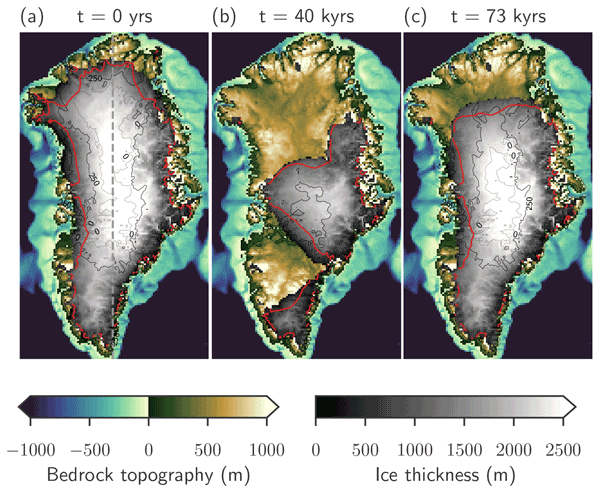
The stability of the Greenland Ice Sheet under global warming is crucial. Here, using PISM, we study how the interplay of feedbacks between the ice sheet, the atmosphere and solid Earth affects the long-term response of the Greenland Ice Sheet under constant warming. Our findings suggest four distinct dynamic regimes of the Greenland Ice Sheet on the route to destabilization under global warming – from recovery via quasi-periodic oscillations in ice volume to ice sheet collapse.
Cited articles
Abajian, A. C., Carleton, T., Meng, K. C., and Deschênes, O.: Quantifying the global climate feedback from energy-based adaptation, Nat. Commun., 16, 3928, https://doi.org/10.1038/s41467-025-59201-7, 2025.
Adger, W. N., Eakin, H., and Winkels, A.: Nested and teleconnected vulnerabilities to environmental change, Front. Ecol. Environ., 7, 150–157, https://doi.org/10.1890/070148, 2009.
Amonkar, Y., Doss-Gollin, J., Farnham, D. J., Modi, V., and Lall, U.: Differential effects of climate change on average and peak demand for heating and cooling across the contiguous USA, Commun. Earth Environ., 4, 402, https://doi.org/10.1038/s43247-023-01048-1, 2023.
Andrijevic, M., Schleussner, C.-F., Crespo Cuaresma, J., Lissner, T., Muttarak, R., Riahi, K., Theokritoff, E., Thomas, A., Van Maanen, N., and Byers, E.: Towards scenario representation of adaptive capacity for global climate change assessments, Nat. Clim. Change, 13, 778–787, https://doi.org/10.1038/s41558-023-01725-1, 2023.
Asadieh, B. and Krakauer, N. Y.: Global change in streamflow extremes under climate change over the 21st century, Hydrol. Earth Syst. Sci., 21, 5863–5874, https://doi.org/10.5194/hess-21-5863-2017, 2017.
Barbier, E. B., Hacker, S. D., Kennedy, C., Koch, E. W., Stier, A. C., and Silliman, B. R.: The value of estuarine and coastal ecosystem services, Ecol. Monogr., 81, 169–193, https://doi.org/10.1890/10-1510.1, 2011.
Beck, M. W., Losada, I. J., Menéndez, P., Reguero, B. G., Díaz-Simal, P., and Fernández, F.: The global flood protection savings provided by coral reefs, Nat. Commun., 9, 2186, https://doi.org/10.1038/s41467-018-04568-z, 2018.
Becken, S.: Water equity – Contrasting tourism water use with that of the local community, Water Resour. Ind., 7–8, 9–22, https://doi.org/10.1016/j.wri.2014.09.002, 2014.
Berrang-Ford, L., Siders, A. R., Lesnikowski, A., et al.: A systematic global stocktake of evidence on human adaptation to climate change, Nat. Clim. Change, 11, 989–1000, https://doi.org/10.1038/s41558-021-01170-y, 2021.
Best, J.: Anthropogenic stresses on the world's big rivers, Nat. Geosci., 12, 7–21, https://doi.org/10.1038/s41561-018-0262-x, 2019.
Biemans, H., Haddeland, I., Kabat, P., Ludwig, F., Hutjes, R. W. A., Heinke, J., Von Bloh, W., and Gerten, D.: Impact of reservoirs on river discharge and irrigation water supply during the 20th century, Water Resour. Res., 47, 1–15, https://doi.org/10.1029/2009WR008929, 2011.
Bullister, J. L. and Warner, M. J.: Atmospheric Histories (1765–2022) for CFC-11, CFC-12, CFC-113, CCl4, SF6 and N2O, NOAA National Centers for Environmental Information [data set], https://doi.org/10.3334/cdiac/otg.cfc_atm_hist_2015, 2017.
Campbell, B. M., Beare, D. J., Bennett, E. M., Hall-Spencer, J. M., Ingram, J. S. I., Jaramillo, F., Ortiz, R., Ramankutty, N., Sayer, J. A., and Shindell, D.: Agriculture production as a major driver of the Earth system exceeding planetary boundaries, Ecol. Soc., 22, https://doi.org/10.5751/es-09595-220408, 2017.
Chávez García Silva, R., Reinecke, R., Copty, N. K., Barry, D. A., Heggy, E., Labat, D., Roggero, P. P., Borchardt, D., Rode, M., Gómez-Hernández, J. J., and Jomaa, S.: Multi-decadal groundwater observations reveal surprisingly stable levels in southwestern Europe, Commun. Earth Environ., 5, 387, https://doi.org/10.1038/s43247-024-01554-w, 2024.
Chmura, G. L., Anisfeld, S. C., Cahoon, D. R., and Lynch, J. C.: Global carbon sequestration in tidal, saline wetland soils, Global Biogeochem. Cy., 17, 1111, https://doi.org/10.1029/2002GB001917, 2003.
Citrini, A., Sangiorgio, M., and Rosa, L.: Global multi-model trends of unsustainable irrigation under climate change scenarios, Environ. Res. Lett., 20, 104011, https://doi.org/10.1088/1748-9326/adfcee, 2025.
Climate-ADAPT: Climate-ADAPT, https://climate-adapt.eea.europa.eu/en/data-and-downloads (last access: 24 July 2026), 2026.
Colelli, F. P. and Cian, E. D.: Cooling demand in integrated assessment models: a methodological review, Environ. Res. Lett., 15, 113005, https://doi.org/10.1088/1748-9326/abb90a, 2020.
Colelli, F. P., Emmerling, J., Marangoni, G., Mistry, M. N., and De Cian, E.: Increased energy use for adaptation significantly impacts mitigation pathways, Nat. Commun., 13, 4964, https://doi.org/10.1038/s41467-022-32471-1, 2022.
Convention on Wetlands: Global Wetland Outlook 2025: Valuing, conserving, restoring and financing wetlands, First Edn., Secretariat of the Convention on Wetlands, Gland, Switzerland, https://doi.org/10.69556/GWO-2025-eng, 2025.
Costanza, J. K. and Terando, A. J.: Landscape Connectivity Planning for Adaptation to Future Climate and Land-Use Change, Curr. Landsc. Ecol. Rep., 4, 1–13, https://doi.org/10.1007/s40823-019-0035-2, 2019.
Daniel, J. S., Velders, G. J. M., Solomon, S., McFarland, M., and Montzka, S. A.: Present and future sources and emissions of halocarbons: Toward new constraints, J. Geophys. Res., 112, D02301, https://doi.org/10.1029/2006JD007275, 2007.
Davis, L. W. and Gertler, P. J.: Contribution of air conditioning adoption to future energy use under global warming, P. Natl. Acad. Sci. USA, 112, 5962–5967, https://doi.org/10.1073/pnas.1423558112, 2015.
Davis, L. W. and Gertler, P. J.: Why Did Air Conditioning Adoption Accelerate Faster Than Predicted? Evidence from Mexico, w34101, National Bureau of Economic Research, Cambridge, MA, https://doi.org/10.3386/w34101, 2025.
deMenocal, P. B.: Climate and Human Evolution, Science, 331, 540–542, https://doi.org/10.1126/science.1190683, 2011.
Dixit, M. K. and Pradeep Kumar, P.: Embodied impacts of buildings from energy-carbon-water nexus perspective: A case study of university buildings, Clean. Energy Syst., 7, 100108, https://doi.org/10.1016/j.cles.2024.100108, 2024.
Donges, J. F., Heitzig, J., Barfuss, W., Wiedermann, M., Kassel, J. A., Kittel, T., Kolb, J. J., Kolster, T., Müller-Hansen, F., Otto, I. M., Zimmerer, K. B., and Lucht, W.: Earth system modeling with endogenous and dynamic human societies: the copan:CORE open World–Earth modeling framework, Earth Syst. Dynam., 11, 395–413, https://doi.org/10.5194/esd-11-395-2020, 2020.
Duan, H., Ming, X., Zhang, X.-B., Sterner, T., and Wang, S.: China's adaptive response to climate change through air-conditioning, iScience, 26, 106178, https://doi.org/10.1016/j.isci.2023.106178, 2023.
Ellis, E. C.: Ecology in an anthropogenic biosphere, Ecol. Monogr., 85, 287–331, https://doi.org/10.1890/14-2274.1, 2015.
Ember Climate: Countries and Regions, https://ember-climate.org/countries-and-regions/ (last access: 19 July 2024), 2024.
Eriksen, S., Aldunce, P., Bahinipati, C. S., Martins, R. D., Molefe, J. I., Nhemachena, C., O'Brien, K., Olorunfemi, F., Park, J., Sygna, L., and Ulsrud, K.: When not every response to climate change is a good one: Identifying principles for sustainable adaptation, Clim. Dev., 3, 7–20, https://doi.org/10.3763/cdev.2010.0060, 2011.
FAO: Pesticides use and trade – 1990–2023, FAO, Rome, https://doi.org/10.4060/cd5968en, 2025.
Friess, D. A., Rogers, K., Lovelock, C. E., Krauss, K. W., Hamilton, S. E., Lee, S. Y., Lucas, R., Primavera, J., Rajkaran, A., and Shi, S.: The State of the World's Mangrove Forests: Past, Present, and Future, Annu. Rev. Env. Resour., 44, 89–115, https://doi.org/10.1146/annurev-environ-101718-033302, 2019.
Galbraith, E. D., Faisal, A. A., Matitia, T., Fajzel, W., Hatton, I., Haberl, H., Krausmann, F., and Wiedenhofer, D.: Delineating the technosphere: definition, categorization, and characteristics, Earth Syst. Dynam., 16, 979–999, https://doi.org/10.5194/esd-16-979-2025, 2025.
Global Climate Observing System: Essential Climate Variables, https://gcos.wmo.int/en/essential-climate-variables/about (last access: 18 July 2024), 2024.
Green Cooling Initiative: Global greenhouse gas emissions from the RAC sector, https://www.green-cooling-initiative.org/country-data#!appliances-in-use/all-sectors/absolute (last access: 5 January 2026), 2024.
Gudmundsson, L., Boulange, J., Do, H. X., Gosling, S. N., Grillakis, M. G., Koutroulis, A. G., Leonard, M., Liu, J., Müller Schmied, H., Papadimitriou, L., Pokhrel, Y., Seneviratne, S. I., Satoh, Y., Thiery, W., Westra, S., Zhang, X., and Zhao, F.: Globally observed trends in mean and extreme river flow attributed to climate change, Science, 371, 1159–1162, https://doi.org/10.1126/science.aba3996, 2021.
Holman, I. P., Brown, C., Carter, T. R., Harrison, P. A., and Rounsevell, M.: Improving the representation of adaptation in climate change impact models, Reg. Environ. Change, 19, 711–721, https://doi.org/10.1007/s10113-018-1328-4, 2019.
IEA: The Future of Cooling, IEA, Paris, https://doi.org/10.1787/9789264301993-en, 2018.
IEA: Clean energy can help to ease the water crisis, https://www.iea.org/commentaries/clean-energy-can-help-to-ease-the-water-crisis (last access: 22 August 2024), 2023a.
IEA: Space Cooling: Net Zero Emissions Guide, https://www.iea.org/reports/space-cooling-2 (last access: 21 August 2024), 2023b.
IEA: Buildings, https://www.iea.org/energy-system/buildings/space-cooling#tracking (last access: 21 August 2024), 2024a.
IEA: Energy demand for desalination in the Stated Policies Scenario, 1990–2030, https://www.iea.org/data-and-statistics/charts/energy-demand-for-desalination-in-the-stated-policies-scenario-1990-2030 (last access: 19 July 2024), 2024b.
IEA: Heating, https://www.iea.org/energy-system/buildings/heating#tracking (last access: 13 July 2024), 2024c.
IEA: World Energy Outlook 2024, IEA, Paris, https://www.iea.org/reports/world-energy-outlook-2024 (last access: 20 March 2025), 2024d.
IPCC: Climate Change 2022: Impacts, Adaptation, and Vulnerability. Contribution of Working Group II to the Sixth Assessment Report of the Intergovernmental Panel on Climate Change, edited by: Pörtner, H.-O., Roberts, D. C., Tignor, M., Poloczanska, E. S., Mintenbeck, K., Alegría, A., Craig, M., Langsdorf, S., Löschke, S., Möller, V., Okem, A., and Rama, B., Cambridge University Press, Cambridge, ISBN 978-1-009-32583-7, 2022a.
IPCC: Climate Change 2022: Mitigation of Climate Change. Contribution of Working Group III to the Sixth Assessment Report of the Intergovernmental Panel on Climate Change, edited by: Shukla, P. R., Skea, J., Slade, R., Al Khourdajie, A., van Diemen, R., McCollum, D., Pathak, M., Some, S., Vyas, P., Fradera, R., Belkacemi, M., Hasija, A., Lisboa, G., Luz, S., and Malley, J., Cambridge University Press, Cambridge, ISBN 978-92-9169-160-9, 2022b.
IPCC: Summary for Policymakers, in: Climate Change 2022: Impacts, Adaptation, and Vulnerability. Contribution of Working Group II to the Sixth Assessment Report of the Intergovernmental Panel on Climate Change, edited by: Pörtner, H.-O., Roberts, D. C., Tignor, M., Poloczanska, E. S., Mintenbeck, K., Alegría, A., Craig, M., Langsdorf, S., Löschke, S., Möller, V., Okem, A., and Rama, B., Cambridge University Press, Cambridge, ISBN 978-1-009-32583-7, 2022c.
IPCC and TEAP: Safeguarding the Ozone Layer and the Global Climate System: Issues Related to Hydrofluorocarbons and Perfluorocarbons, Cambridge University Press, Cambridge, ISBN 978-0-521-86336-0, 2005.
Jägermeyr, J., Gerten, D., Heinke, J., Schaphoff, S., Kummu, M., and Lucht, W.: Water savings potentials of irrigation systems: global simulation of processes and linkages, Hydrol. Earth Syst. Sci., 19, 3073–3091, https://doi.org/10.5194/hess-19-3073-2015, 2015.
Jaramillo, F. and Destouni, G.: Local flow regulation and irrigation raise global human water consumption and footprint, Science, 350, 1248–1251, https://doi.org/10.1126/science.aad1010, 2015.
Jarvis, A. J., Jarvis, S. J., and Hewitt, C. N.: Resource acquisition, distribution and end-use efficiencies and the growth of industrial society, Earth Syst. Dynam., 6, 689–702, https://doi.org/10.5194/esd-6-689-2015, 2015.
Jasechko, S., Seybold, H., Perrone, D., Fan, Y., Shamsudduha, M., Taylor, R. G., Fallatah, O., and Kirchner, J. W.: Rapid groundwater decline and some cases of recovery in aquifers globally, Nature, 625, 715–721, https://doi.org/10.1038/s41586-023-06879-8, 2024.
Jones, E., Qadir, M., Van Vliet, M. T. H., Smakhtin, V., and Kang, S.: The state of desalination and brine production: A global outlook, Sci. Total Environ., 657, 1343–1356, https://doi.org/10.1016/j.scitotenv.2018.12.076, 2019.
Kassam, A., Derpsch, R., and Friedrich, T.: Global achievements in soil and water conservation: The case of Conservation Agriculture, Int. Soil Water Conserv. Res., 2, 5–13, https://doi.org/10.1016/S2095-6339(15)30009-5, 2014.
Keller, P. S., Marcé, R., Obrador, B., and Koschorreck, M.: Global carbon budget of reservoirs is overturned by the quantification of drawdown areas, Nat. Geosci., 14, 402–408, https://doi.org/10.1038/s41561-021-00734-z, 2021.
Kennard, H., Oreszczyn, T., Mistry, M., and Hamilton, I.: Population-weighted degree-days: The global shift between heating and cooling, Energy Build., 271, 1–9, https://doi.org/10.1016/j.enbuild.2022.112315, 2022.
Klimont, Z., Kupiainen, K., Heyes, C., Purohit, P., Cofala, J., Rafaj, P., Borken-Kleefeld, J., and Schöpp, W.: Global anthropogenic emissions of particulate matter including black carbon, Atmos. Chem. Phys., 17, 8681–8723, https://doi.org/10.5194/acp-17-8681-2017, 2017.
Laybourn, L., Evans, J., and Dyke, J.: Derailment risk: A systems analysis that identifies risks which could derail the sustainability transition, Earth Syst. Dynam., 14, 1171–1182, https://doi.org/10.5194/esd-14-1171-2023, 2023.
Lenton, T. M., Xu, C., Abrams, J. F., Ghadiali, A., Loriani, S., Sakschewski, B., Zimm, C., Ebi, K. L., Dunn, R. R., Svenning, J.-C., and Scheffer, M.: Quantifying the human cost of global warming, Nat. Sustain., 6, 1237–1247, https://doi.org/10.1038/s41893-023-01132-6, 2023.
Levia, D. F., Creed, I. F., Hannah, D. M., Nanko, K., Boyer, E. W., Carlyle-Moses, D. E., Van De Giesen, N., Grasso, D., Guswa, A. J., Hudson, J. E., Hudson, S. A., Iida, S., Jackson, R. B., Katul, G. G., Kumagai, T., Llorens, P., Ribeiro, F. L., Pataki, D. E., Peters, C. A., Carretero, D. S., Selker, J. S., Tetzlaff, D., Zalewski, M., and Bruen, M.: Homogenization of the terrestrial water cycle, Nat. Geosci., 13, 656–658, https://doi.org/10.1038/s41561-020-0641-y, 2020.
Lickley, M., Solomon, S., Fletcher, S., Velders, G. J. M., Daniel, J., Rigby, M., Montzka, S. A., Kuijpers, L. J. M., and Stone, K.: Quantifying contributions of chlorofluorocarbon banks to emissions and impacts on the ozone layer and climate, Nat. Commun., 11, 1380, https://doi.org/10.1038/s41467-020-15162-7, 2020.
Littlefield, C. E., Krosby, M., Michalak, J. L., and Lawler, J. J.: Connectivity for species on the move: supporting climate-driven range shifts, Front. Ecol. Environ., 17, 270–278, https://doi.org/10.1002/fee.2043, 2019.
Lobell, D. B., Bonfils, C., and Faurès, J.-M.: The Role of Irrigation Expansion in Past and Future Temperature Trends, Earth Interact., 12, 1–11, https://doi.org/10.1175/2007ei241.1, 2008.
Lovelock, J. E.: Gaia as seen through the atmosphere, Atmos. Environ., 6, 579–580, https://doi.org/10.1016/0004-6981(72)90076-5, 1972.
Lovelock, J. E. and Margulis, L.: Atmospheric homeostasis by and for the biosphere: the gaia hypothesis, Tellus, 26, 2–10, https://doi.org/10.1111/j.2153-3490.1974.tb01946.x, 1974.
Lu, C. and Tian, H.: Global nitrogen and phosphorus fertilizer use for agriculture production in the past half century: shifted hot spots and nutrient imbalance, Earth Syst. Sci. Data, 9, 181–192, https://doi.org/10.5194/essd-9-181-2017, 2017.
Magni, M., Jones, E. R., Bierkens, M. F. P., and Van Vliet, M. T. H.: Global energy consumption of water treatment technologies, Water Res., 277, 123245, https://doi.org/10.1016/j.watres.2025.123245, 2025.
McDermid, S., Nocco, M., Lawston-Parker, P., Keune, J., Pokhrel, Y., Jain, M., Jägermeyr, J., Brocca, L., Massari, C., Jones, A. D., Vahmani, P., Thiery, W., Yao, Y., Bell, A., Chen, L., Dorigo, W., Hanasaki, N., Jasechko, S., Lo, M.-H., Mahmood, R., Mishra, V., Mueller, N. D., Niyogi, D., Rabin, S. S., Sloat, L., Wada, Y., Zappa, L., Chen, F., Cook, B. I., Kim, H., Lombardozzi, D., Polcher, J., Ryu, D., Santanello, J., Satoh, Y., Seneviratne, S., Singh, D., and Yokohata, T.: Irrigation in the Earth system, Nat. Rev. Earth Environ., 4, 435–453, https://doi.org/10.1038/s43017-023-00438-5, 2023.
McGuire, J. L., Lawler, J. J., McRae, B. H., Nuñez, T. A., and Theobald, D. M.: Achieving climate connectivity in a fragmented landscape, P. Natl. Acad. Sci. USA, 113, 7195–7200, https://doi.org/10.1073/pnas.1602817113, 2016.
Mehta, P., Siebert, S., Kummu, M., Deng, Q., Ali, T., Marston, L., Xie, W., and Davis, K. F.: Half of twenty-first century global irrigation expansion has been in water-stressed regions, Nat. Water, 2, 254–261, https://doi.org/10.1038/s44221-024-00206-9, 2024.
Merschroth, S., Miatto, A., Weyand, S., Tanikawa, H., and Schebek, L.: Lost Material Stock in Buildings due to Sea Level Rise from Global Warming: The Case of Fiji Islands, Sustainability, 12, 834, https://doi.org/10.3390/su12030834, 2020.
Midgley Jr., T. and Henne, A. L.: Organic Fluorides as Refrigerants, Ind. Eng. Chem., 22, 542–545, https://doi.org/10.1021/ie50245a031, 1930.
Möhring, N., Ba, M. N., Braga, A. R. C., Gaba, S., Gagic, V., Kudsk, P., Larsen, A., Mesnage, R., Niggli, U., Qaim, M., Schreinemachers, P., Stamm, C., de Vries, W., and Finger, R.: Expected effects of a global transformation of agricultural pest management, Nat. Commun., 16, 10901, https://doi.org/10.1038/s41467-025-66982-4, 2025.
Molina, M. J. and Rowland, F. S.: Stratospheric sink for chlorofluoromethanes: chlorine atom-catalysed destruction of ozone, Nature, 249, 810–812, https://doi.org/10.1038/249810a0, 1974.
Morelli, T. L., Barrows, C. W., Ramirez, A. R., Cartwright, J. M., Ackerly, D. D., Eaves, T. D., Ebersole, J. L., Krawchuk, M. A., Letcher, B. H., Mahalovich, M. F., Meigs, G. W., Michalak, J. L., Millar, C. I., Quiñones, R. M., Stralberg, D., and Thorne, J. H.: Climate-change refugia: biodiversity in the slow lane, Front. Ecol. Environ., 18, 228–234, https://doi.org/10.1002/fee.2189, 2020.
Morris, R. L., Konlechner, T. M., Ghisalberti, M., and Swearer, S. E.: From grey to green: Efficacy of eco-engineering solutions for nature-based coastal defence, Glob. Change Biol., 24, 1827–1842, https://doi.org/10.1111/gcb.14063, 2018.
Nieuwkamer, R., Kox, M., Fiselier, J., van Wieringen, D. R. G., Tonneijck, F., Cronin, K., and ten Bosch, W.: Reducing the ecosystem-based carbon footprint of coastal engineering, Wetlands International, https://www.wetlands.org/download/5521/?tmstv=1790857139 (last access: 19 July 2024), 2022.
Niinimäki, K., Peters, G., Dahlbo, H., Perry, P., Rissanen, T., and Gwilt, A.: The environmental price of fast fashion, Nat. Rev. Earth Environ., 1, 189–200, https://doi.org/10.1038/s43017-020-0039-9, 2020.
Nordhaus, W. D.: To Slow or Not to Slow: The Economics of The Greenhouse Effect, Econ. J., 101, 920–937, https://doi.org/10.2307/2233864, 1991.
Obradovich, N. and Rahwan, I.: Risk of a feedback loop between climatic warming and human mobility, J. R. Soc. Interface, 16, 20190058, https://doi.org/10.1098/rsif.2019.0058, 2019.
Ott, B., Donges, J. F., and Rockström, J.: Climate Adaptation in the Anthropocene: Towards an Earth System-Based Perspective, Anthr. Rev., in press, 2026.
Ou, Z., He, F., Zhu, Y., Lu, P., and Wang, L.: Analysis of driving factors of water demand based on explainable artificial intelligence, J. Hydrol. Reg. Stud., 47, 101396, https://doi.org/10.1016/j.ejrh.2023.101396, 2023.
Pavanello, F., De Cian, E., Davide, M., Mistry, M., Cruz, T., Bezerra, P., Jagu, D., Renner, S., Schaeffer, R., and Lucena, A. F. P.: Air-conditioning and the adaptation cooling deficit in emerging economies, Nat. Commun., 12, 6460, https://doi.org/10.1038/s41467-021-26592-2, 2021.
PBScience: Planetary Health Check 2025, Potsdam Institute for Climate Impact Research (PIK), Potsdam, https://doi.org/10.48485/pik.2025.017, 2025.
Piemontese, L., Castelli, G., Fetzer, I., Barron, J., Liniger, H., Harari, N., Bresci, E., and Jaramillo, F.: Estimating the global potential of water harvesting from successful case studies, Global Environ. Chang., 63, 102121, https://doi.org/10.1016/j.gloenvcha.2020.102121, 2020.
Porkka, M., Virkki, V., Wang-Erlandsson, L., Gerten, D., Gleeson, T., Mohan, C., Fetzer, I., Jaramillo, F., Staal, A., Te Wierik, S., Tobian, A., Van Der Ent, R., Döll, P., Flörke, M., Gosling, S. N., Hanasaki, N., Satoh, Y., Müller Schmied, H., Wanders, N., Famiglietti, J. S., Rockström, J., and Kummu, M.: Notable shifts beyond pre-industrial streamflow and soil moisture conditions transgress the planetary boundary for freshwater change, Nat. Water, 2, 262–273, https://doi.org/10.1038/s44221-024-00208-7, 2024.
Puy, A., Sheikholeslami, R., Gupta, H. V., Hall, J. W., Lankford, B., Lo Piano, S., Meier, J., Pappenberger, F., Porporato, A., Vico, G., and Saltelli, A.: The delusive accuracy of global irrigation water withdrawal estimates, Nat. Commun., 13, 3183, https://doi.org/10.1038/s41467-022-30731-8, 2022.
Puy, A., Linga, S. N., Wei, N., Flinders, S., Callow, B., Allen, G., Cross, B., Aguiló-Rivera, C., and Lankford, B.: Widely cited global irrigation statistics lack empirical support, PNAS Nexus, 4, pgaf323, https://doi.org/10.1093/pnasnexus/pgaf323, 2025.
Qin, J., Duan, W., Zou, S., Chen, Y., Huang, W., and Rosa, L.: Global energy use and carbon emissions from irrigated agriculture, Nat. Commun., 15, 3084, https://doi.org/10.1038/s41467-024-47383-5, 2024.
Rahman, M. A., Pawijit, Y., Xu, C., Moser-Reischl, A., Pretzsch, H., Rötzer, T., and Pauleit, S.: A comparative analysis of urban forests for storm-water management, Sci. Rep., 13, 1451, https://doi.org/10.1038/s41598-023-28629-6, 2023.
Ravishankara, A. R., Daniel, J. S., and Portmann, R. W.: Nitrous Oxide (N2O): The Dominant Ozone-Depleting Substance Emitted in the 21st Century, Science, 326, 123–125, https://doi.org/10.1126/science.1176985, 2009.
Richards, D. R., Thompson, B. S., and Wijedasa, L.: Quantifying net loss of global mangrove carbon stocks from 20 years of land cover change, Nat. Commun., 11, 4260, https://doi.org/10.1038/s41467-020-18118-z, 2020.
Richardson, K., Steffen, W., Lucht, W., Bendtsen, J., Cornell, S. E., Donges, J. F., Drüke, M., Fetzer, I., Bala, G., Feulner, G., Fiedler, S., Gerten, D., Gleeson, T., Hofmann, M., Huiskamp, W., Kummu, M., Mohan, C., Nogués-Bravo, D., Petri, S., Porkka, M., Rahmstorf, S., Schaphoff, S., Thonicke, K., Tobian, A., Virkki, V., Wang-Erlandsson, L., Weber, L., and Rockström, J.: Earth beyond six of nine planetary boundaries, Sci. Adv., 9, eadh2458, https://doi.org/10.1126/sciadv.adh2458, 2023.
Rockström, J., Steffen, W., Noone, K., Persson, Å., Chapin, F. S., Lambin, E. F., Lenton, T. M., Scheffer, M., Folke, C., Schellnhuber, H. J., Nykvist, B., de Wit, C. A., Hughes, T., van der Leeuw, S., Rodhe, H., Sörlin, S., Snyder, P. K., Costanza, R., Svedin, U., Falkenmark, M., Karlberg, L., Corell, R. W., Fabry, V. J., Hansen, J., Walker, B., Liverman, D., Richardson, K., Crutzen, P., and Foley, J. A.: A safe operating space for humanity, Nature, 461, 472–475, https://doi.org/10.1038/461472a, 2009.
Rockström, J., Thilsted, S. H., Willett, W. C., Gordon, L. J., Herrero, M., Hicks, C. C., Mason-D'Croz, D., Rao, N., Springmann, M., Wright, E. C., Agustina, R., Bajaj, S., Bunge, A. C., Carducci, B., Conti, C., Covic, N., Fanzo, J., Forouhi, N. G., Gibson, M. F., Gu, X., Kebreab, E., Kremen, C., Laila, A., Laxminarayan, R., Marteau, T. M., Monteiro, C. A., Norberg, A., Njuki, J., Oliveira, T. D., Pan, W.-H., Rivera, J. A., Robinson, J. P. W., Sundiang, M., te Wierik, S., van Vuuren, D. P., Vermeulen, S., Webb, P., Alqodmani, L., Ambikapathi, R., Barnhill, A., Baudish, I., Beier, F., Beillouin, D., Beusen, A. H. W., Breier, J., Chemarin, C., Chepeliev, M., Clapp, J., de Vries, W., Pérez-Domínguez, I., Estrada-Carmona, N., Gerten, D., Golden, C. D., Jones, S. K., Jørgensen, P. S., Kozicka, M., Lotze-Campen, H., Maggi, F., Marzi, E., Mishra, A., Orduna-Cabrera, F., Popp, A., Schulte-Uebbing, L., Stehfest, E., Tang, F. H. M., Tsuchiya, K., Van Zanten, H. H. E., van Zeist, W.-J., Zhao, X., and DeClerck, F.: The EAT–Lancet Commission on healthy, sustainable, and just food systems, The Lancet, 406, 1625–1700, https://doi.org/10.1016/S0140-6736(25)01201-2, 2025.
Rosa, L.: Adapting agriculture to climate change via sustainable irrigation: biophysical potentials and feedbacks, Environ. Res. Lett., 17, 063008, https://doi.org/10.1088/1748-9326/ac7408, 2022.
Rosa, L., Gabrielli, P., and Sangiorgio, M.: Global energy, costs, and emissions from reverse osmosis desalination under future water scarcity, Water Res., 289, 124825, https://doi.org/10.1016/j.watres.2025.124825, 2026.
Salamanca, F., Georgescu, M., Mahalov, A., Moustaoui, M., and Wang, M.: Anthropogenic heating of the urban environment due to air conditioning, J. Geophys. Res.-Atmos., 119, 5949–5965, https://doi.org/10.1002/2013JD021225, 2014.
Saura, S., Bertzky, B., Bastin, L., Battistella, L., Mandrici, A., and Dubois, G.: Protected area connectivity: Shortfalls in global targets and country-level priorities, Biol. Conserv., 219, 53–67, https://doi.org/10.1016/j.biocon.2017.12.020, 2018.
Saura, S., Bertzky, B., Bastin, L., Battistella, L., Mandrici, A., and Dubois, G.: Global trends in protected area connectivity from 2010 to 2018, Biol. Conserv., 238, 108183, https://doi.org/10.1016/j.biocon.2019.07.028, 2019.
Scanlon, B. R., Fakhreddine, S., Rateb, A., de Graaf, I., Famiglietti, J., Gleeson, T., Grafton, R. Q., Jobbagy, E., Kebede, S., Kolusu, S. R., Konikow, L. F., Long, D., Mekonnen, M., Schmied, H. M., Mukherjee, A., MacDonald, A., Reedy, R. C., Shamsudduha, M., Simmons, C. T., Sun, A., Taylor, R. G., Villholth, K. G., Vörösmarty, C. J., and Zheng, C.: Global water resources and the role of groundwater in a resilient water future, Nat. Rev. Earth Environ., 4, 87–101, https://doi.org/10.1038/s43017-022-00378-6, 2023.
Siebert, S., Kummu, M., Porkka, M., Döll, P., Ramankutty, N., and Scanlon, B. R.: A global data set of the extent of irrigated land from 1900 to 2005, Hydrol. Earth Syst. Sci., 19, 1521–1545, https://doi.org/10.5194/hess-19-1521-2015, 2015.
Sims, M. J., Stanimirova, R., Raichuk, A., Neumann, M., Richter, J., Follett, F., MacCarthy, J., Lister, K., Randle, C., Sloat, L., Esipova, E., Jupiter, J., Stanton, C., Morris, D., Melhart Slay, C., Purves, D., and Harris, N.: Global drivers of forest loss at 1 km resolution, Environ. Res. Lett., 20, 074027, https://doi.org/10.1088/1748-9326/add606, 2025.
Smith, S. J., van Aardenne, J., Klimont, Z., Andres, R. J., Volke, A., and Delgado Arias, S.: Anthropogenic sulfur dioxide emissions: 1850–2005, Atmos. Chem. Phys., 11, 1101–1116, https://doi.org/10.5194/acp-11-1101-2011, 2011.
Song, C., Gardner, K. H., Klein, S. J. W., Souza, S. P., and Mo, W.: Cradle-to-grave greenhouse gas emissions from dams in the United States of America, Renew. Sust. Energ. Rev., 90, 945–956, https://doi.org/10.1016/j.rser.2018.04.014, 2018.
Song, S., Ding, Y., Li, W., Meng, Y., Zhou, J., Gou, R., Zhang, C., Ye, S., Saintilan, N., Krauss, K. W., Crooks, S., Lv, S., and Lin, G.: Mangrove reforestation provides greater blue carbon benefit than afforestation for mitigating global climate change, Nat. Commun., 14, 756, https://doi.org/10.1038/s41467-023-36477-1, 2023.
Statt, T. G.: Use of chlorofluorocarbons in refrigeration, insulation and mobile air conditioning in the USA, Int. J. Refrig., 11, 224–228, https://doi.org/10.1016/0140-7007(88)90077-1, 1988.
Steffen, W., Crutzen, P. J., and McNeill, J. R.: The Anthropocene: Are Humans Now Overwhelming the Great Forces of Nature, AMBIO J. Hum. Environ., 36, 614–621, 2007.
Steffen, W., Richardson, K., Rockström, J., Cornell, S. E., Fetzer, I., Bennett, E. M., Biggs, R., Carpenter, S. R., De Vries, W., De Wit, C. A., Folke, C., Gerten, D., Heinke, J., Mace, G. M., Persson, L. M., Ramanathan, V., Reyers, B., and Sörlin, S.: Planetary boundaries: Guiding human development on a changing planet, Science, 347, 1259855, https://doi.org/10.1126/science.1259855, 2015a.
Steffen, W., Broadgate, W., Deutsch, L., Gaffney, O., and Ludwig, C.: The trajectory of the anthropocene: The great acceleration, Anthr. Rev., 2, 81–98, https://doi.org/10.1177/2053019614564785, 2015b.
Stern, N.: The Economics of Climate Change: The Stern Review, Cambridge University Press, Cambridge, ISBN 978-0-521-70080-1, 2007.
Su, Q., Kambale, R. D., Tzeng, J.-H., Amy, G. L., Ladner, D. A., and Karthikeyan, R.: The growing trend of saltwater intrusion and its impact on coastal agriculture: Challenges and opportunities, Sci. Total Environ., 966, 178701, https://doi.org/10.1016/j.scitotenv.2025.178701, 2025.
Sun, Y.-Y., Faturay, F., Lenzen, M., Gössling, S., and Higham, J.: Drivers of global tourism carbon emissions, Nat. Commun., 15, 10384, https://doi.org/10.1038/s41467-024-54582-7, 2024.
Symmes, R., Fishman, T., Telesford, J. N., Singh, S. J., Tan, S., and De Kroon, K.: The weight of islands: Leveraging Grenada's material stocks to adapt to climate change, J. Ind. Ecol., 24, 369–382, https://doi.org/10.1111/jiec.12853, 2020.
Tanikawa, H., Managi, S., and Lwin, C. M.: Estimates of Lost Material Stock of Buildings and Roads Due to the Great East Japan Earthquake and Tsunami, J. Ind. Ecol., 18, 421–431, https://doi.org/10.1111/jiec.12126, 2014.
Teo, H. C., Zeng, Y., Sarira, T. V., Fung, T. K., Zheng, Q., Song, X. P., Chong, K. Y., and Koh, L. P.: Global urban reforestation can be an important natural climate solution, Environ. Res. Lett., 16, 034059, https://doi.org/10.1088/1748-9326/abe783, 2021.
UNEP: 2022 Global Status Report for Buildings and Construction: Towards a Zero-emission, Efficient and Resilient Buildings and Construction Sector, United Nations Environment Programme, Nairobi, ISBN 978-92-807-3984-8, 2022.
UNEP: Global Cooling Watch 2023: Keeping it Chill: How to meet cooling demands while cutting emissions, United Nations Environment Programme, Nairobi, https://doi.org/10.59117/20.500.11822/44243, 2023.
UNEP: Adaptation Gap Report 2024: Come hell and high water – As fires and floods hit the poor hardest, it is time for the world to step up adaptation actions, United Nations Environment Programme, Nairobi, https://doi.org/10.59117/20.500.11822/46497, 2024.
UNEP: Adaptation Gap Report 2025: Running on Empty – The World is Gearing up for Climate Resilience – without the Money to get there, United Nations Environment Programme, Nairobi, https://doi.org/10.59117/20.500.11822/48798, 2025a.
UNEP: Global Cooling Watch 2025: The Free Degrees, United Nations Environment Programme, Nairobi, https://doi.org/10.59117/20.500.11822/48926, 2025b.
UNEP: Global Status Report for Buildings and Construction 2024/25: Not just another brick in the wall, United Nations Environment Programme, Nairobi, https://doi.org/10.59117/20.500.11822/47214, 2025c.
UN-Habitat and WHO: Progress on the proportion of domestic and industrial wastewater flows safely treated – Mid-term status of SDG Indicator 6.3.1 and acceleration needs, with a special focus on climate change, wastewater reuse and health, UN-Habitat and WHO, ISBN 978-92-4-009908-1, 2024.
Van Maanen, N., Lissner, T., Harmsen, M., Piontek, F., Andrijevic, M., and Van Vuuren, D. P.: Representation of adaptation in quantitative climate assessments, Nat. Clim. Change, 13, 309–311, https://doi.org/10.1038/s41558-023-01644-1, 2023.
Van Ruijven, B. J., De Cian, E., and Sue Wing, I.: Amplification of future energy demand growth due to climate change, Nat. Commun., 10, 2762, https://doi.org/10.1038/s41467-019-10399-3, 2019.
Vattioni, S., Peter, T., Weber, R., Dykema, J. A., Luo, B., Stenke, A., Feinberg, A., Sukhodolov, T., Keutsch, F. N., Ammann, M., Vockenhuber, C., Döbeli, M., Kelesidis, G. A., and Chiodo, G.: Injecting solid particles into the stratosphere could mitigate global warming but currently entails great uncertainties, Commun. Earth Environ., 6, 132, https://doi.org/10.1038/s43247-025-02038-1, 2025.
Velders, G. J. M., Andersen, S. O., Daniel, J. S., Fahey, D. W., and McFarland, M.: The importance of the Montreal Protocol in protecting climate, P. Natl. Acad. Sci. USA, 104, 4814–4819, https://doi.org/10.1073/pnas.0610328104, 2007.
Velders, G. J. M., Daniel, J. S., Montzka, S. A., Vimont, I., Rigby, M., Krummel, P. B., Muhle, J., O'Doherty, S., Prinn, R. G., Weiss, R. F., and Young, D.: Projections of hydrofluorocarbon (HFC) emissions and the resulting global warming based on recent trends in observed abundances and current policies, Atmos. Chem. Phys., 22, 6087–6101, https://doi.org/10.5194/acp-22-6087-2022, 2022.
Viguié, V., Juhel, S., Ben-Ari, T., Colombert, M., Ford, J. D., Giraudet, L. G., and Reckien, D.: When adaptation increases energy demand: A systematic map of the literature, Environ. Res. Lett., 16, 033004, https://doi.org/10.1088/1748-9326/abc044, 2021.
Virkki, V., Andersen, L. S., Te Wierik, S., Gerten, D., and Porkka, M.: Regionally divergent drivers behind transgressions of the freshwater change planetary boundary, Nat. Commun., 17, 5132, https://doi.org/10.1038/s41467-026-73051-x, 2026.
Wada, Y. and Bierkens, M. F. P.: Sustainability of global water use: past reconstruction and future projections, Environ. Res. Lett., 9, 104003, https://doi.org/10.1088/1748-9326/9/10/104003, 2014.
Wada, Y., Wisser, D., Eisner, S., Flörke, M., Gerten, D., Haddeland, I., Hanasaki, N., Masaki, Y., Portmann, F. T., Stacke, T., Tessler, Z., and Schewe, J.: Multimodel projections and uncertainties of irrigation water demand under climate change, Geophys. Res. Lett., 40, 4626–4632, https://doi.org/10.1002/grl.50686, 2013.
WMO: Scientific Assessment of Ozone Depletion 2022, WMO, Geneva, ISBN 978-9914-733-97-6, 2022.
Young, M. D., Ros, G. H., and de Vries, W.: Impacts of agronomic measures on crop, soil, and environmental indicators: A review and synthesis of meta-analysis, Agr. Ecosyst. Environ., 319, 107551, https://doi.org/10.1016/j.agee.2021.107551, 2021.
Yuan, Q., Liu, Y., Qie, Y., Hu, C., Meng, Y., and Luan, F.: Unlocking global rainwater harvesting potential for safe drinking water access, Nat. Commun., 16, 11320, https://doi.org/10.1038/s41467-025-66429-w, 2025.
Yücel, S. G., Liang, Y., Wang, D., and Schwanen, T.: Adapting everyday activities to summer heatwaves: a multi-country analysis of mobile phone location data, Environ. Res. Clim., 5, 025007, https://doi.org/10.1088/2752-5295/ae4cc2, 2026.
Zhong, X., Hu, M., Deetman, S., Steubing, B., Lin, H. X., Hernandez, G. A., Harpprecht, C., Zhang, C., Tukker, A., and Behrens, P.: Global greenhouse gas emissions from residential and commercial building materials and mitigation strategies to 2060, Nat. Commun., 12, 6126, https://doi.org/10.1038/s41467-021-26212-z, 2021.
Short summary
Climate adaptation is crucial but its impacts on the Earth system are not well understood. Our study finds climate adaptation contributes ~26 % of annual greenhouse gas emissions, ~74 % of human freshwater withdrawals, and even affects the ozone layer. While some of these impacts are driven by climate change, the majority is likely fuelled by economic, demographic, and technological developments. These findings highlight the need to balance adaptation with respect for Earth system resilience.
Climate adaptation is crucial but its impacts on the Earth system are not well understood. Our...


Special issue
Altmetrics
Final-revised paper
Preprint