
Articles | Volume 17, issue 6
https://doi.org/10.5194/esd-17-1671-2026
© Author(s) 2026. This work is distributed under
the Creative Commons Attribution 4.0 License.
the Creative Commons Attribution 4.0 License.
https://doi.org/10.5194/esd-17-1671-2026
© Author(s) 2026. This work is distributed under
the Creative Commons Attribution 4.0 License.
the Creative Commons Attribution 4.0 License.
Perspective
| Highlight paper
| 
16 Nov 2026
Perspective | Highlight paper |
| 16 Nov 2026
| 16 Nov 2026
To tip or not to tip

Institute for Marine and Atmospheric research Utrecht, Department of Physics, Utrecht University, Utrecht, the Netherlands
Centre for Complex Systems Studies, Department of Physics, Utrecht University, Utrecht, the Netherlands
Henk A. Dijkstra
Institute for Marine and Atmospheric research Utrecht, Department of Physics, Utrecht University, Utrecht, the Netherlands
Centre for Complex Systems Studies, Department of Physics, Utrecht University, Utrecht, the Netherlands
Related authors
Didier Swingedouw, Laura Jackson, Aixue Hu, Anastasia Romanou, Nicole C. Laureanti, Wilbert Weijer, Sina Loriani, Bette Otto-Bliesner, Ayako Abe-Ouchi, Lucas Almeida, Alessio Bellucci, Reyk Börner, Gokhan Danabasoglu, Donovan P. Dennis, Marion Devilliers, Sybren Drijfhout, Jonathan Donges, Friederike Fröb, Thomas L. Frölicher, Guillaume Gastineau, Heiko Goelzer, Chuncheng Guo, Urs Hofmann, Anna Höse, Colin Jones, Torben Koenigk, Ann Kristin Klose, Valerio Lembo, Jose Licon-Salaiz, Ken Mankoff, Virna Meccia, Irina Melnikova, Oliver Mehling, Laurie Menviel, Juliette Mignot, Jon I. Robson, Gavin A. Schmidt, Robin Smith, Yuchen Sun, Irene Trombini, Matteo Willeit, Richard Wood, Fanghua Wu, Lin Zhaohui, and Ricarda Winkelmann
EGUsphere, https://doi.org/10.5194/egusphere-2026-1698, https://doi.org/10.5194/egusphere-2026-1698, 2026
Short summary
Short summary
This study presents a plan for climate model experiments to better understand how changes in freshwater in the North Atlantic affect major ocean currents. We designed coordinated simulations to test their response to warming, added freshwater, and possible recovery after weakening. Comparing results across models and past climate evidence helps improve confidence in projections and assess risks of large ocean circulation changes.
Reyk Börner, Jan O. Haerter, and Romain Fiévet
Geosci. Model Dev., 18, 1333–1356, https://doi.org/10.5194/gmd-18-1333-2025, https://doi.org/10.5194/gmd-18-1333-2025, 2025
Short summary
Short summary
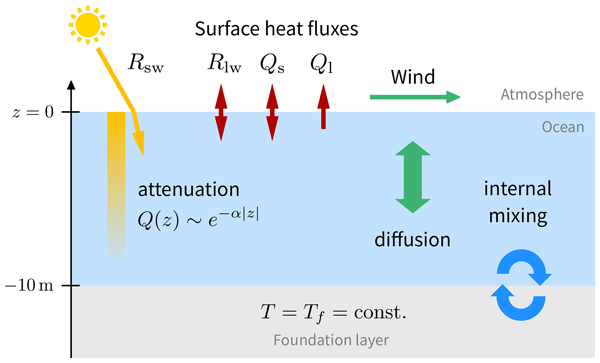
The daily cycle of sea surface temperature (SST) impacts clouds above the ocean and could influence the clustering of thunderstorms linked to extreme rainfall and hurricanes. However, daily SST variability is often poorly represented in modeling studies of how clouds cluster. We present a simple, wind-responsive model of upper-ocean temperature for use in atmospheric simulations. Evaluating the model against observations, we show that it performs significantly better than common slab models.
Nireas Vasileiadis, Oliver Mehling, René M. van Westen, and Henk A. Dijkstra
EGUsphere, https://doi.org/10.5194/egusphere-2026-5755, https://doi.org/10.5194/egusphere-2026-5755, 2026
This preprint is open for discussion and under review for Earth System Dynamics (ESD).
Short summary
Short summary
A major slowdown of Atlantic Ocean currents could disrupt climate and livelihoods. We developed a warning system that combines observations with computer models to estimate the chance of a severe decline. Tests using simulated observations showed better predictions than assuming conditions stay unchanged, with warnings decades to over a century ahead in one model. This prototype could help societies prepare, but further testing is needed before it can provide reliable warnings in the real world.
Chris Huntingford, Jesse F. Abrams, Peter Ashwin, Niklas Boers, Chris A. Boulton, Joshua E. Buxton, Joseph Clarke, Peter M. Cox, Andrew M. Cunliffe, Henk A. Dijkstra, Bahar Emirzade, Darren Ghent, Daniel Giles, Sneha Kachhara, Timothy M. Lenton, Valerio Lucarini, Helen Millman, Robert J. Parker, Sergei Petrovskii, Paul D. L. Ritchie, Cristina Ruiz Villena, Mark S. Williamson, and Niccolò Zagli
EGUsphere, https://doi.org/10.5194/egusphere-2026-5606, https://doi.org/10.5194/egusphere-2026-5606, 2026
This preprint is open for discussion and under review for Earth System Dynamics (ESD).
Short summary
Short summary
Future tipping of key parts of the Earth system, driven by human-induced climate change, poses serious risks to society. These concerns have spurred the development of Early Warning Systems (EWSs) that use data to show how close we are to tipping. However, existing EWSs are often generic statistical forms. We first review current EWS methods, then present a broad set of hypotheses that may help improve them. We argue strongly for process knowledge to guide more refined EWS forms.
Shruti Setty, Henk A. Dijkstra, Lucas J. Lourens, Egbert H. van Nes, Marlow J. Cramwinckel, Ingrid A. van de Leemput, and Appy Sluijs
EGUsphere, https://doi.org/10.5194/egusphere-2026-5433, https://doi.org/10.5194/egusphere-2026-5433, 2026
This preprint is open for discussion and under review for Earth System Dynamics (ESD).
Short summary
Short summary
We studied the dynamic causal relationship in the climate-carbon cycle system in the past 66 million years using machine learning approaches in continuous high-resolution deep ocean climate and carbon cycle proxies. Our study suggests strong causality during warm climate states and insignificant causality in others. Our study also points towards an orbital influence and strengthening positive feedbacks towards both abrupt warming and cooling events hypothesized to be due to tipping points.
Alejandro Hermoso, Lucas Ferreira Correa, Casey R. Patrizio, Henk Dijkstra, Anna von der Heydt, and Christoph C. Raible
EGUsphere, https://doi.org/10.5194/egusphere-2026-5619, https://doi.org/10.5194/egusphere-2026-5619, 2026
This preprint is open for discussion and under review for Earth System Dynamics (ESD).
Short summary
Short summary
The North Atlantic jet stream strongly influences European weather variability. We investigate how it may change under global warming and a collapse of the Atlantic Meridional Overturning Circulation. Using two climate models and higher-resolution regional simulations, we find that the jet stream response is strongly model dependent. The regional simulations retain the large-scale response of the global models, while also introducing regional differences in the jet stream response.
Emma J. V. Smolders, René M. van Westen, and Henk A. Dijkstra
Ocean Sci., 22, 1965–1985, https://doi.org/10.5194/os-22-1965-2026, https://doi.org/10.5194/os-22-1965-2026, 2026
Short summary
Short summary
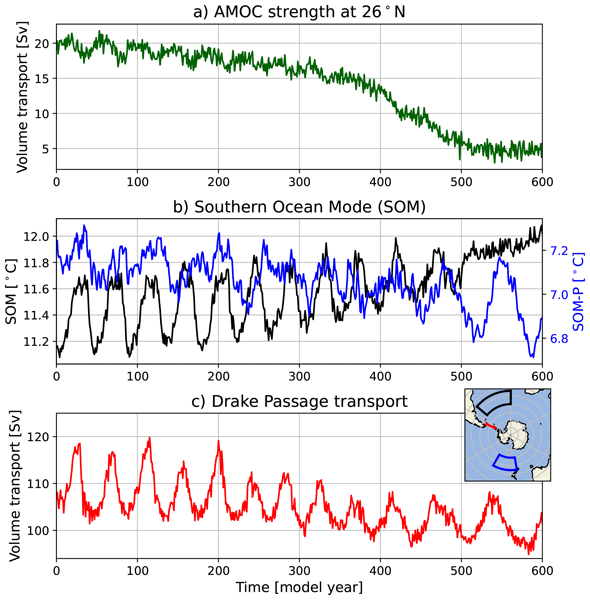
The Southern Ocean shows strong natural variability on multi-decadal time scales, known as the Southern Ocean Mode (SOM). Using high-resolution ocean simulations, we show that a collapse of the Atlantic Meridional Overturning Circulation (AMOC) strongly weakens the SOM. This weakening is linked to changes in ocean density, a slowdown of the Antarctic Circumpolar Current, and shifts in deep convection across the Southern Ocean.
Aleksandr M. Fedorov, M. Femke De Jong, Claudia E. Wieners, Elodie Duyck, and Henk A. Dijkstra
Ocean Sci., 22, 1819–1834, https://doi.org/10.5194/os-22-1819-2026, https://doi.org/10.5194/os-22-1819-2026, 2026
Short summary
Short summary
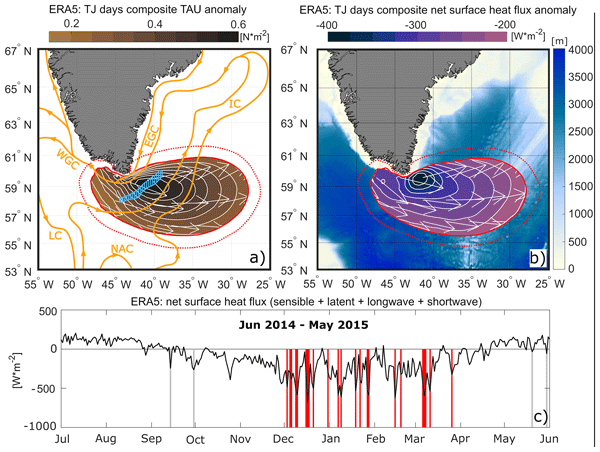
Deep ocean mixing in the North Atlantic helps power major currents, but it is weakening as the surface warms. We used a high-resolution ocean model and separate experiments that added either extra heat loss, extra wind, or both during Greenland storm events. Extra heat loss caused most of the deep mixing, but strong winds also helped by mixing salty water upward and removing the fresh surface layer early in winter. This wind effect may modulate the future decline of deep mixing.
Toon Bense, Henk A. Dijkstra, and Pepijn Bakker
EGUsphere, https://doi.org/10.5194/egusphere-2026-2794, https://doi.org/10.5194/egusphere-2026-2794, 2026
Short summary
Short summary
We propose a framework that connects models and geological data to increase our understanding of the natural variability of the climate on (multi-)centennial timescales. We use a climate model simulation as testing bed to show Multi-channel Singular Spectrum Analysis can be a suitable method in this context, even when applied to data constrained by relatively sparse locations where geological data is available. This motivates development and application of the method to geological archives.
Oliver Mehling, Elian Vanderborght, and Henk A. Dijkstra
Earth Syst. Dynam., 17, 563–579, https://doi.org/10.5194/esd-17-563-2026, https://doi.org/10.5194/esd-17-563-2026, 2026
Short summary
Short summary
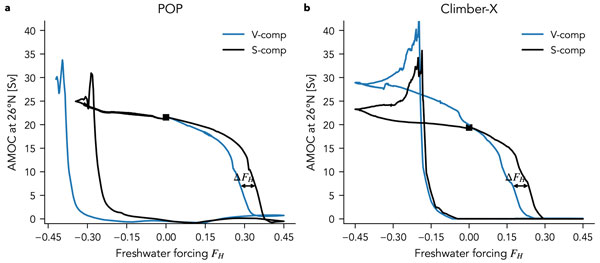
This study revisits how critical thresholds for tipping of the Atlantic Meridional Overturning Circulation (AMOC) are derived from comprehensive climate models. It is shown that the method for keeping the global salinity constant – by compensating salinity either at the surface or throughout the ocean volume – matters for AMOC tipping: with surface compensation, the tipping point shifts to larger freshwater forcing values, mainly due to (artificial) salt input in the North Atlantic and Arctic.
Francesco Guardamagna, Sacha Sinet, and Henk A. Dijkstra
EGUsphere, https://doi.org/10.5194/egusphere-2026-1872, https://doi.org/10.5194/egusphere-2026-1872, 2026
Short summary
Short summary
The Atlantic Meridional Overturning Circulation (AMOC) is an ocean current that redistributes heat in the Atlantic Ocean and may abruptly weaken under climate change, with impacts including cooling in Europe and sea-level rise along the North American East Coast. Freshwater input from melting ice into the North Atlantic can push the system toward a tipping point. We introduce an artificial intelligence-based method to estimate the distance to this tipping point in terms of freshwater forcing.
Didier Swingedouw, Laura Jackson, Aixue Hu, Anastasia Romanou, Nicole C. Laureanti, Wilbert Weijer, Sina Loriani, Bette Otto-Bliesner, Ayako Abe-Ouchi, Lucas Almeida, Alessio Bellucci, Reyk Börner, Gokhan Danabasoglu, Donovan P. Dennis, Marion Devilliers, Sybren Drijfhout, Jonathan Donges, Friederike Fröb, Thomas L. Frölicher, Guillaume Gastineau, Heiko Goelzer, Chuncheng Guo, Urs Hofmann, Anna Höse, Colin Jones, Torben Koenigk, Ann Kristin Klose, Valerio Lembo, Jose Licon-Salaiz, Ken Mankoff, Virna Meccia, Irina Melnikova, Oliver Mehling, Laurie Menviel, Juliette Mignot, Jon I. Robson, Gavin A. Schmidt, Robin Smith, Yuchen Sun, Irene Trombini, Matteo Willeit, Richard Wood, Fanghua Wu, Lin Zhaohui, and Ricarda Winkelmann
EGUsphere, https://doi.org/10.5194/egusphere-2026-1698, https://doi.org/10.5194/egusphere-2026-1698, 2026
Short summary
Short summary
This study presents a plan for climate model experiments to better understand how changes in freshwater in the North Atlantic affect major ocean currents. We designed coordinated simulations to test their response to warming, added freshwater, and possible recovery after weakening. Comparing results across models and past climate evidence helps improve confidence in projections and assess risks of large ocean circulation changes.
Jelle Soons, Elian Vanderborght, and Henk A. Dijkstra
EGUsphere, https://doi.org/10.5194/egusphere-2025-6565, https://doi.org/10.5194/egusphere-2025-6565, 2026
Short summary
Short summary
The Atlantic Meridional Overturning Circulation (AMOC) is a major ocean circulation that regulates the global climate and could potentially collapse under climate change. Previously it has been shown that constructing a closure of the Bering Strait could prevent this collapse. In this study we use a box model to represent the global ocean circulation, and show that closing this Strait can either weaken or protect the AMOC, depending on background conditions and the rate of temperature increase.
René M. van Westen, Elian Vanderborght, and Henk A. Dijkstra
Earth Syst. Dynam., 16, 2063–2085, https://doi.org/10.5194/esd-16-2063-2025, https://doi.org/10.5194/esd-16-2063-2025, 2025
Short summary
Short summary
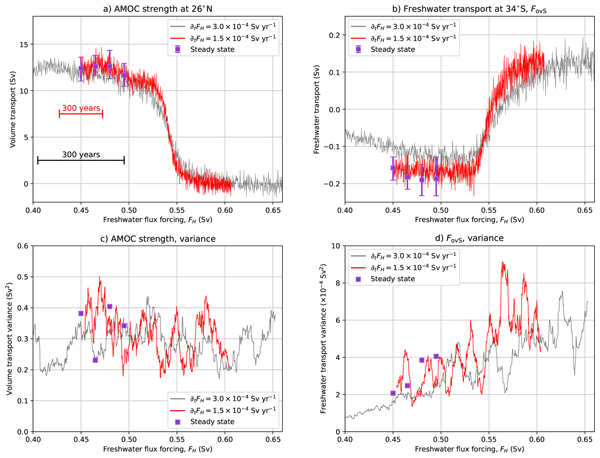
The Atlantic Meridional Overturning Circulation (AMOC) is a tipping element in the fully-coupled Community Earth System Model (CESM). Under varying freshwater flux forcing parameters or climate change, the AMOC may collapse from a relatively strong state to a substantially weaker state. It is important to understand the dynamics of the AMOC collapse in the CESM. We show that the stability of the AMOC in the CESM is controlled by only a few feedback processes.
Swinda K. J. Falkena, Henk A. Dijkstra, and Anna S. von der Heydt
Earth Syst. Dynam., 16, 1833–1844, https://doi.org/10.5194/esd-16-1833-2025, https://doi.org/10.5194/esd-16-1833-2025, 2025
Short summary
Short summary
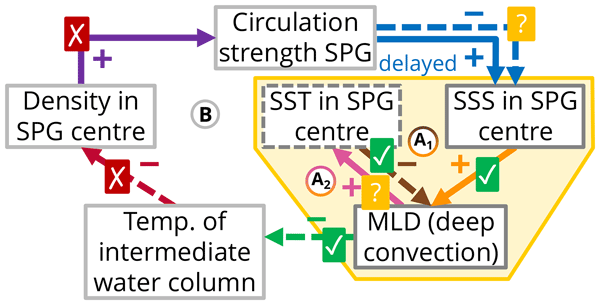
The subpolar gyre is a wind-driven circulation in the North Atlantic Ocean that enables the mixing of water between the surface and deeper layers. We investigate the interactions between the strength of the gyre circulation, salinity, temperature, and mixing in climate models. We find that most models capture an increase in salinity or a decrease in temperature, leading to mixing. However, the feedback from the density in the gyre centre to the strength of its circulation is poorly represented.
Sina Loriani, Yevgeny Aksenov, David I. Armstrong McKay, Govindasamy Bala, Andreas Born, Cristiano Mazur Chiessi, Henk A. Dijkstra, Jonathan F. Donges, Sybren Drijfhout, Matthew H. England, Alexey V. Fedorov, Laura C. Jackson, Kai Kornhuber, Gabriele Messori, Francesco S. R. Pausata, Stefanie Rynders, Jean-Baptiste Sallée, Bablu Sinha, Steven C. Sherwood, Didier Swingedouw, and Thejna Tharammal
Earth Syst. Dynam., 16, 1611–1653, https://doi.org/10.5194/esd-16-1611-2025, https://doi.org/10.5194/esd-16-1611-2025, 2025
Short summary
Short summary
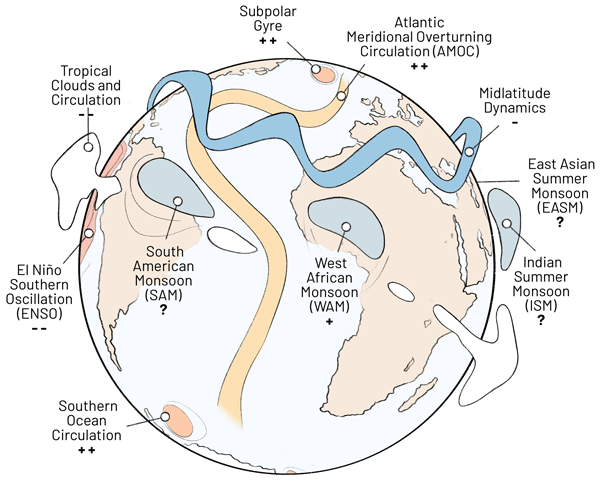
In this work, we draw on palaeo-records, observations, and modelling studies to review tipping points in the ocean overturning circulations, monsoon systems, and global atmospheric circulations. We find indications for tipping in the ocean overturning circulations and the West African monsoon, with potentially severe impacts on the Earth system and humans. Tipping in the other considered systems is regarded as conceivable but is currently not sufficiently supported by evidence.
Aurora Faure Ragani and Henk A. Dijkstra
Earth Syst. Dynam., 16, 1287–1301, https://doi.org/10.5194/esd-16-1287-2025, https://doi.org/10.5194/esd-16-1287-2025, 2025
Short summary
Short summary
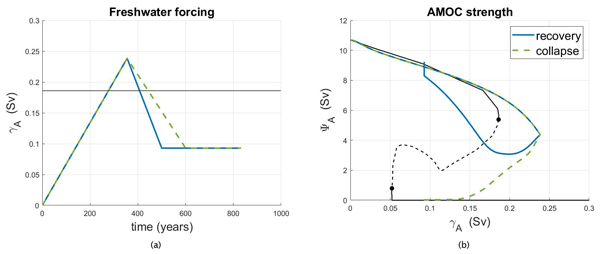
The Atlantic Meridional Overturning Circulation (AMOC) is sensitive to changing surface forcing conditions. Under future greenhouse gas emission reductions, it was shown in a conceptual model that it may be possible to avoid a collapse of the AMOC. Using a detailed global ocean model, we clarify the physics of the collapse and recovery behaviour of the AMOC. The potential to avoid an AMOC collapse is tightly linked to a delicate balance of salt fluxes in the northern North Atlantic.
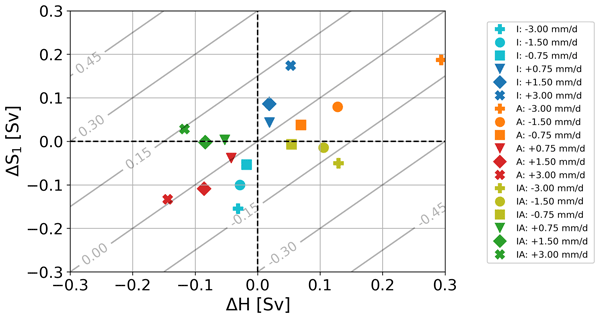
Amber A. Boot and Henk A. Dijkstra
Earth Syst. Dynam., 16, 1221–1235, https://doi.org/10.5194/esd-16-1221-2025, https://doi.org/10.5194/esd-16-1221-2025, 2025
Short summary
Short summary
The Atlantic Meridional Overturning Circulation (AMOC) is a tipping element in the Earth system that affects the global climate. We often use models to understand how the AMOC tips. However, these models are flawed. Here we study the effect of these flaws on the AMOC multistable regime in a climate model. We artificially add additional flaws to the model. We find that AMOC stability can be affected by such flaws, and a reduction in such flaws in climate models is therefore thought to be essential.
Francesco Guardamagna, Claudia Wieners, and Henk A. Dijkstra
Nonlin. Processes Geophys., 32, 201–224, https://doi.org/10.5194/npg-32-201-2025, https://doi.org/10.5194/npg-32-201-2025, 2025
Short summary
Short summary
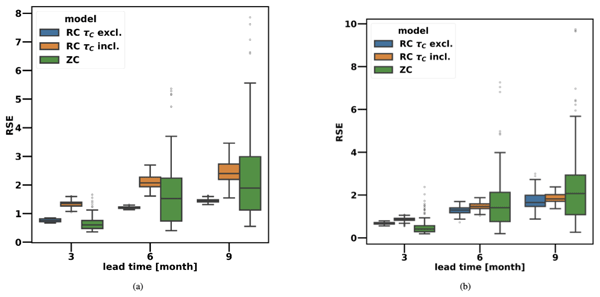
Artificial intelligence (AI) has recently shown promising results in ENSO (El Niño–Southern Oscillation) forecasting, outperforming traditional models. Yet AI models deliver accurate predictions without showing the underlying mechanisms. Our study examines a specific AI model, the reservoir computer (RC). Our results show that the RC is less sensitive to initial perturbations than the traditional Zebiak–Cane (ZC) model. This reduced sensitivity can explain the RC's superior skills.
Woosok Moon, Seung Pyo Lee, Elian Vanderborght, Georgy Manucharyan, and Henk Dijkstra
EGUsphere, https://doi.org/10.5194/egusphere-2025-1004, https://doi.org/10.5194/egusphere-2025-1004, 2025
Preprint archived
Short summary
Short summary
As the climate warms, extreme weather is becoming more frequent in mid-latitudes. A key factor is the jet stream, shaped by atmospheric waves that influence wind and storm patterns. This study presents a simplified model showing how swirling air currents (eddies) maintain the jet stream and impact weather. As global warming alters these patterns, this research helps improve predictions of future weather changes.
Reyk Börner, Jan O. Haerter, and Romain Fiévet
Geosci. Model Dev., 18, 1333–1356, https://doi.org/10.5194/gmd-18-1333-2025, https://doi.org/10.5194/gmd-18-1333-2025, 2025
Short summary
Short summary
The daily cycle of sea surface temperature (SST) impacts clouds above the ocean and could influence the clustering of thunderstorms linked to extreme rainfall and hurricanes. However, daily SST variability is often poorly represented in modeling studies of how clouds cluster. We present a simple, wind-responsive model of upper-ocean temperature for use in atmospheric simulations. Evaluating the model against observations, we show that it performs significantly better than common slab models.
Bouke Biemond, Wouter M. Kranenburg, Ymkje Huismans, Huib E. de Swart, and Henk A. Dijkstra
Ocean Sci., 21, 261–281, https://doi.org/10.5194/os-21-261-2025, https://doi.org/10.5194/os-21-261-2025, 2025
Short summary
Short summary
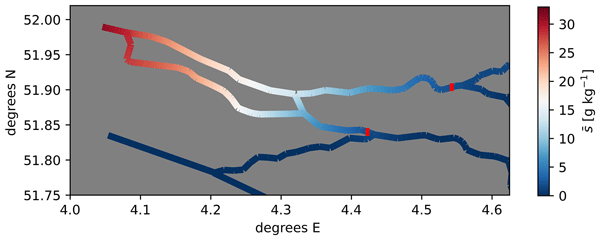
We study salinity in estuaries consisting of a network of channels. To this end, we develop a model that computes the flow and salinity in such systems. We use the model to quantify the mechanisms by which salt is transported into estuarine networks, the response to changes in river discharge, and the impact of depth changes. Results show that when changing the depth of channels, the effects on salt intrusion into other channels in the network can be larger than the effect on the channel itself.

Amber A. Boot and Henk A. Dijkstra
Earth Syst. Dynam., 16, 115–150, https://doi.org/10.5194/esd-16-115-2025, https://doi.org/10.5194/esd-16-115-2025, 2025
Short summary
Short summary
The ocean is forced at the surface by a heat flux and a freshwater flux. This noise can influence long-term ocean variability and large-scale circulation. Here we study noise characteristics in reanalysis data for these fluxes. We try to capture the noise characteristics by using several noise models and compare these to state-of-the-art climate models. A pointwise noise model performs better than the climate models and can be used as forcing in ocean-only models.
Amber A. Boot, Anna S. von der Heydt, and Henk A. Dijkstra
Earth Syst. Dynam., 15, 1567–1590, https://doi.org/10.5194/esd-15-1567-2024, https://doi.org/10.5194/esd-15-1567-2024, 2024
Short summary
Short summary
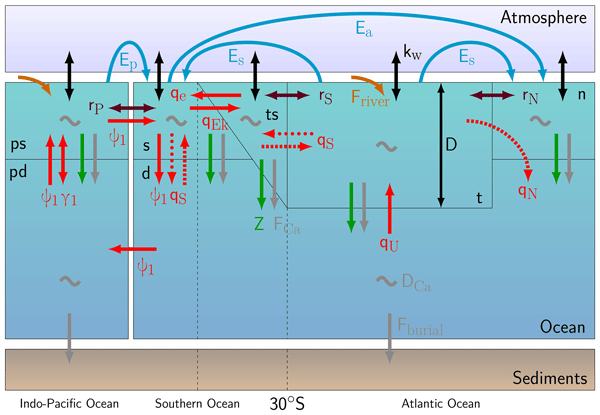
We investigate the multiple equilibria window (MEW) of the Atlantic Meridional Overturning Circulation (AMOC) within a box model. We find that increasing the total carbon content of the system widens the MEW of the AMOC. The important mechanisms at play are the balance between the source and sink of carbon and the sensitivity of the AMOC to freshwater forcing over the Atlantic Ocean. Our results suggest that changes in the marine carbon cycle can influence AMOC stability in future climates.
Arthur Merlijn Oldeman, Michiel L. J. Baatsen, Anna S. von der Heydt, Frank M. Selten, and Henk A. Dijkstra
Earth Syst. Dynam., 15, 1037–1054, https://doi.org/10.5194/esd-15-1037-2024, https://doi.org/10.5194/esd-15-1037-2024, 2024
Short summary
Short summary
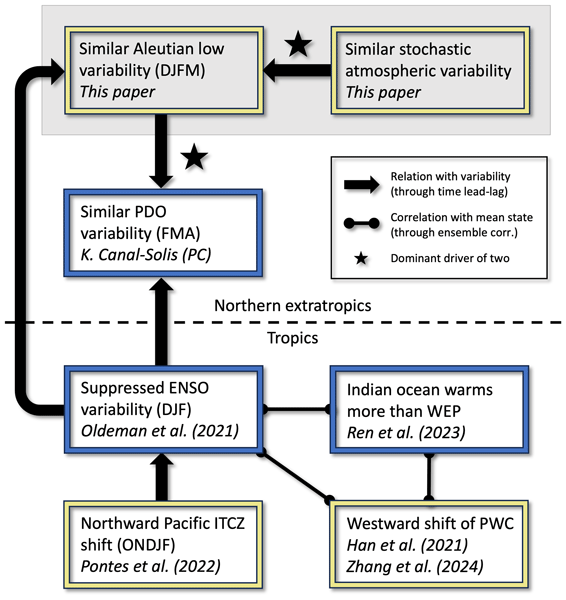
We might be able to constrain uncertainty in future climate projections by investigating variations in the climate of the past. In this study, we investigate the interactions of climate variability between the tropical Pacific (El Niño) and the North Pacific in a warm past climate – the mid-Pliocene, a period roughly 3 million years ago. Using model simulations, we find that, although the variability in El Niño was reduced, the variability in the North Pacific atmosphere was not.
Sacha Sinet, Peter Ashwin, Anna S. von der Heydt, and Henk A. Dijkstra
Earth Syst. Dynam., 15, 859–873, https://doi.org/10.5194/esd-15-859-2024, https://doi.org/10.5194/esd-15-859-2024, 2024
Short summary
Short summary
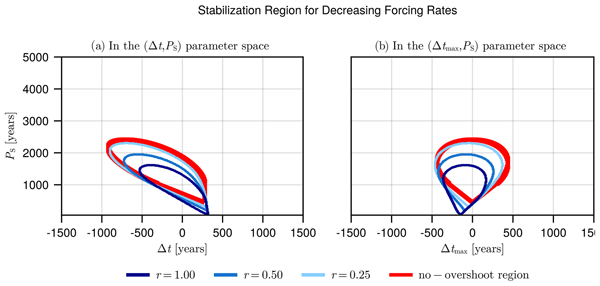
Some components of the Earth system may irreversibly collapse under global warming. Among them, the Atlantic Meridional Overturning Circulation (AMOC), the Greenland Ice Sheet, and West Antarctica Ice Sheet are of utmost importance for maintaining the present-day climate. In a simplified model, we show that both the rate of ice melting and the natural variability linked to freshwater fluxes over the Atlantic Ocean drastically affect how an ice sheet collapse impacts the AMOC stability.
Julia E. Weiffenbach, Henk A. Dijkstra, Anna S. von der Heydt, Ayako Abe-Ouchi, Wing-Le Chan, Deepak Chandan, Ran Feng, Alan M. Haywood, Stephen J. Hunter, Xiangyu Li, Bette L. Otto-Bliesner, W. Richard Peltier, Christian Stepanek, Ning Tan, Julia C. Tindall, and Zhongshi Zhang
Clim. Past, 20, 1067–1086, https://doi.org/10.5194/cp-20-1067-2024, https://doi.org/10.5194/cp-20-1067-2024, 2024
Short summary
Short summary
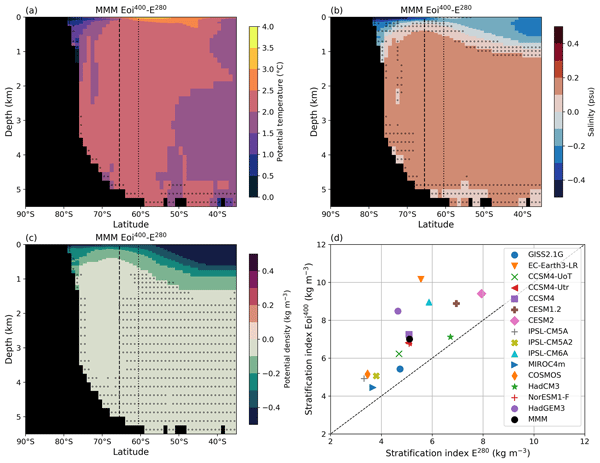
Elevated atmospheric CO2 concentrations and a smaller Antarctic Ice Sheet during the mid-Pliocene (~ 3 million years ago) cause the Southern Ocean surface to become fresher and warmer, which affects the global ocean circulation. The CO2 concentration and the smaller Antarctic Ice Sheet both have a similar and approximately equal impact on the Southern Ocean. The conditions of the Southern Ocean in the mid-Pliocene could therefore be analogous to those in a future climate with smaller ice sheets.
René M. van Westen and Henk A. Dijkstra
Ocean Sci., 20, 549–567, https://doi.org/10.5194/os-20-549-2024, https://doi.org/10.5194/os-20-549-2024, 2024
Short summary
Short summary
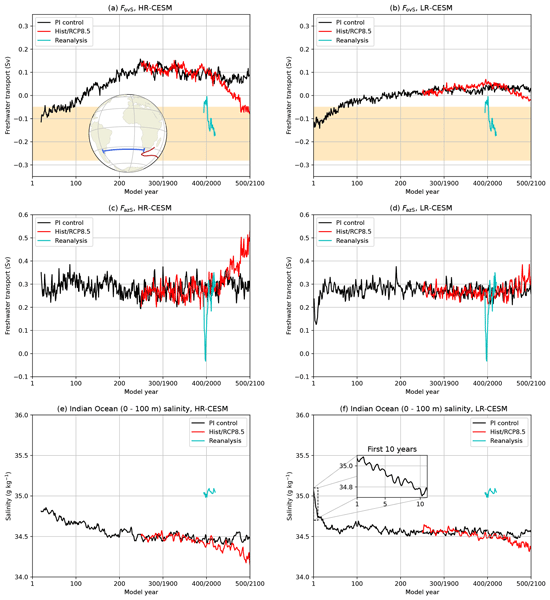
The Atlantic Meridional Overturning Circulation (AMOC) is an important component in the global climate system. Observations of the present-day AMOC indicate that it may weaken or collapse under global warming, with profound disruptive effects on future climate. However, AMOC weakening is not correctly represented because an important feedback is underestimated due to biases in the Atlantic's freshwater budget. Here we address these biases in several state-of-the-art climate model simulations.
Arthur Merlijn Oldeman, Michiel L. J. Baatsen, Anna S. von der Heydt, Aarnout J. van Delden, and Henk A. Dijkstra
Weather Clim. Dynam., 5, 395–417, https://doi.org/10.5194/wcd-5-395-2024, https://doi.org/10.5194/wcd-5-395-2024, 2024
Short summary
Short summary
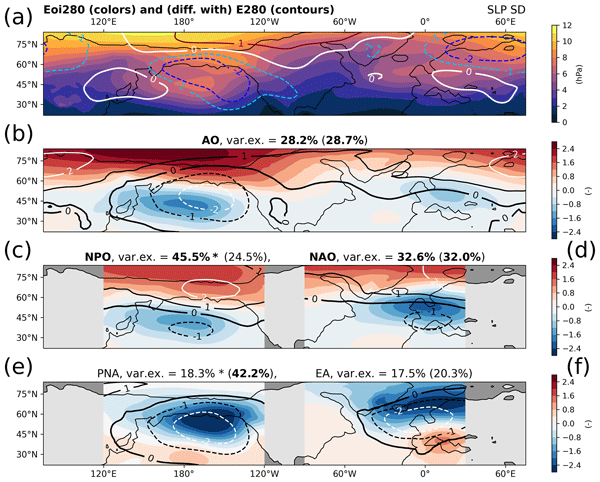
The mid-Pliocene, a geological period around 3 million years ago, is sometimes considered the best analogue for near-future climate. It saw similar CO2 concentrations to the present-day but also a slightly different geography. In this study, we use climate model simulations and find that the Northern Hemisphere winter responds very differently to increased CO2 or to the mid-Pliocene geography. Our results weaken the potential of the mid-Pliocene as a future climate analogue.
Michiel Baatsen, Peter Bijl, Anna von der Heydt, Appy Sluijs, and Henk Dijkstra
Clim. Past, 20, 77–90, https://doi.org/10.5194/cp-20-77-2024, https://doi.org/10.5194/cp-20-77-2024, 2024
Short summary
Short summary
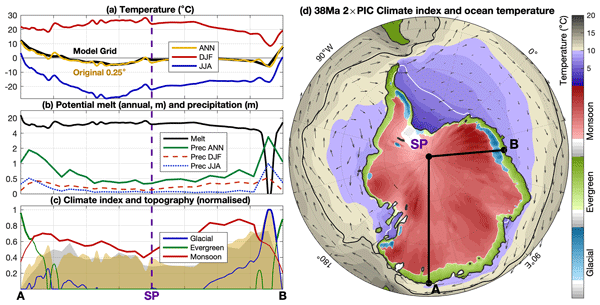
This work introduces the possibility and consequences of monsoons on Antarctica in the warm Eocene climate. We suggest that such a monsoonal climate can be important to understand conditions in Antarctica prior to large-scale glaciation. We can explain seemingly contradictory indications of ice and vegetation on the continent through regional variability. In addition, we provide a new mechanism through which most of Antarctica remained ice-free through a wide range of global climatic changes.
Valérian Jacques-Dumas, René M. van Westen, Freddy Bouchet, and Henk A. Dijkstra
Nonlin. Processes Geophys., 30, 195–216, https://doi.org/10.5194/npg-30-195-2023, https://doi.org/10.5194/npg-30-195-2023, 2023
Short summary
Short summary
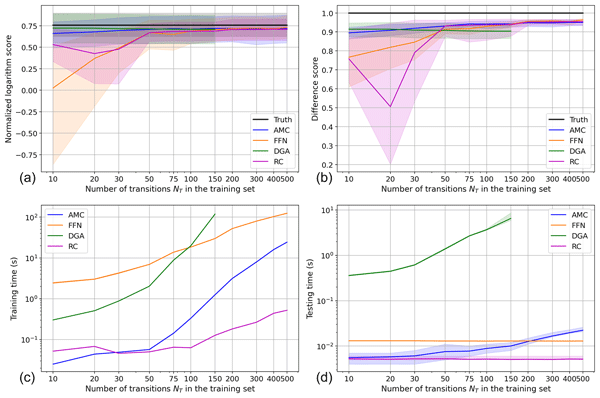
Computing the probability of occurrence of rare events is relevant because of their high impact but also difficult due to the lack of data. Rare event algorithms are designed for that task, but their efficiency relies on a score function that is hard to compute. We compare four methods that compute this function from data and measure their performance to assess which one would be best suited to be applied to a climate model. We find neural networks to be most robust and flexible for this task.
Julia E. Weiffenbach, Michiel L. J. Baatsen, Henk A. Dijkstra, Anna S. von der Heydt, Ayako Abe-Ouchi, Esther C. Brady, Wing-Le Chan, Deepak Chandan, Mark A. Chandler, Camille Contoux, Ran Feng, Chuncheng Guo, Zixuan Han, Alan M. Haywood, Qiang Li, Xiangyu Li, Gerrit Lohmann, Daniel J. Lunt, Kerim H. Nisancioglu, Bette L. Otto-Bliesner, W. Richard Peltier, Gilles Ramstein, Linda E. Sohl, Christian Stepanek, Ning Tan, Julia C. Tindall, Charles J. R. Williams, Qiong Zhang, and Zhongshi Zhang
Clim. Past, 19, 61–85, https://doi.org/10.5194/cp-19-61-2023, https://doi.org/10.5194/cp-19-61-2023, 2023
Short summary
Short summary
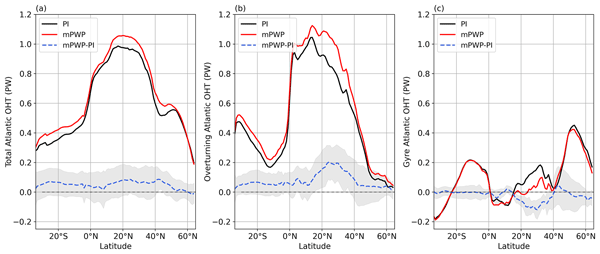
We study the behavior of the Atlantic Meridional Overturning Circulation (AMOC) in the mid-Pliocene. The mid-Pliocene was about 3 million years ago and had a similar CO2 concentration to today. We show that the stronger AMOC during this period relates to changes in geography and that this has a significant influence on ocean temperatures and heat transported northwards by the Atlantic Ocean. Understanding the behavior of the mid-Pliocene AMOC can help us to learn more about our future climate.
Amber Boot, Anna S. von der Heydt, and Henk A. Dijkstra
Earth Syst. Dynam., 13, 1041–1058, https://doi.org/10.5194/esd-13-1041-2022, https://doi.org/10.5194/esd-13-1041-2022, 2022
Short summary
Short summary
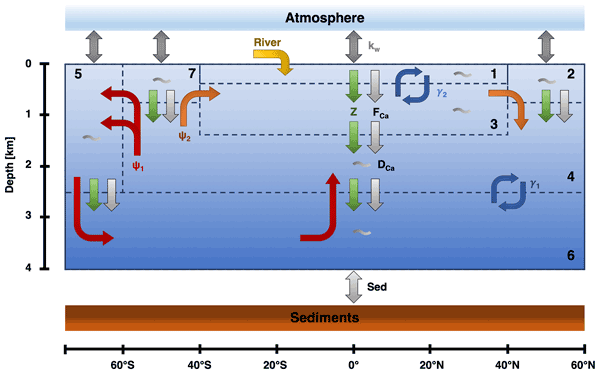
Atmospheric pCO2 of the past shows large variability on different timescales. We focus on the effect of the strength of Atlantic Meridional Overturning Circulation (AMOC) on this variability and on the AMOC–pCO2 relationship. We find that climatic boundary conditions and the representation of biology in our model are most important for this relationship. Under certain conditions, we find internal oscillations, which can be relevant for atmospheric pCO2 variability during glacial cycles.

Mikael L. A. Kaandorp, Stefanie L. Ypma, Marijke Boonstra, Henk A. Dijkstra, and Erik van Sebille
Ocean Sci., 18, 269–293, https://doi.org/10.5194/os-18-269-2022, https://doi.org/10.5194/os-18-269-2022, 2022
Short summary
Short summary
A large amount of marine litter, such as plastics, is located on or around beaches. Both the total amount of this litter and its transport are poorly understood. We investigate this by training a machine learning model with data of cleanup efforts on Dutch beaches between 2014 and 2019, obtained by about 14 000 volunteers. We find that Dutch beaches contain up to 30 000 kg of litter, largely depending on tides, oceanic transport, and how exposed the beaches are.
Peter D. Nooteboom, Peter K. Bijl, Christian Kehl, Erik van Sebille, Martin Ziegler, Anna S. von der Heydt, and Henk A. Dijkstra
Earth Syst. Dynam., 13, 357–371, https://doi.org/10.5194/esd-13-357-2022, https://doi.org/10.5194/esd-13-357-2022, 2022
Short summary
Short summary
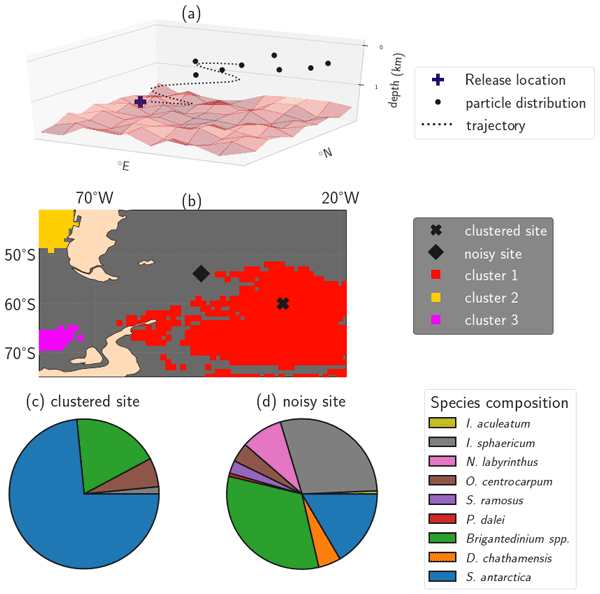
Having descended through the water column, microplankton in ocean sediments represents the ocean surface environment and is used as an archive of past and present surface oceanographic conditions. However, this microplankton is advected by turbulent ocean currents during its sinking journey. We use simulations of sinking particles to define ocean bottom provinces and detect these provinces in datasets of sedimentary microplankton, which has implications for palaeoclimate reconstructions.
Arthur M. Oldeman, Michiel L. J. Baatsen, Anna S. von der Heydt, Henk A. Dijkstra, Julia C. Tindall, Ayako Abe-Ouchi, Alice R. Booth, Esther C. Brady, Wing-Le Chan, Deepak Chandan, Mark A. Chandler, Camille Contoux, Ran Feng, Chuncheng Guo, Alan M. Haywood, Stephen J. Hunter, Youichi Kamae, Qiang Li, Xiangyu Li, Gerrit Lohmann, Daniel J. Lunt, Kerim H. Nisancioglu, Bette L. Otto-Bliesner, W. Richard Peltier, Gabriel M. Pontes, Gilles Ramstein, Linda E. Sohl, Christian Stepanek, Ning Tan, Qiong Zhang, Zhongshi Zhang, Ilana Wainer, and Charles J. R. Williams
Clim. Past, 17, 2427–2450, https://doi.org/10.5194/cp-17-2427-2021, https://doi.org/10.5194/cp-17-2427-2021, 2021
Short summary
Short summary
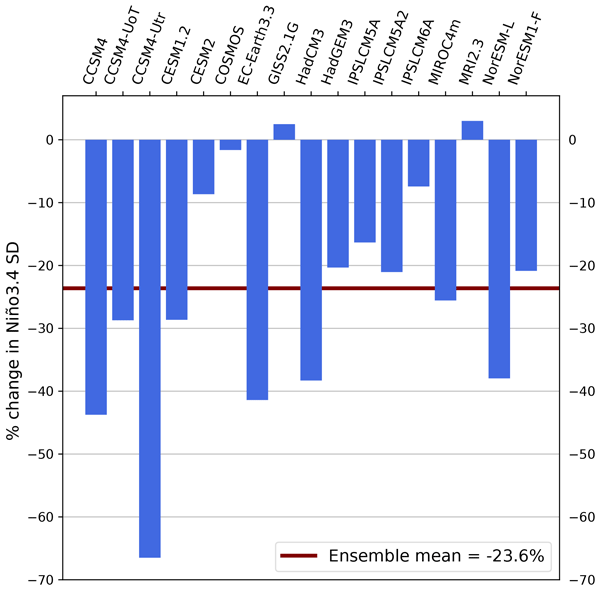
In this work, we have studied the behaviour of El Niño events in the mid-Pliocene, a period of around 3 million years ago, using a collection of 17 climate models. It is an interesting period to study, as it saw similar atmospheric carbon dioxide levels to the present day. We find that the El Niño events were less strong in the mid-Pliocene simulations, when compared to pre-industrial climate. Our results could help to interpret El Niño behaviour in future climate projections.
Cited articles
Abrams, J. F., Pereira, L. M., Spaiser, V., Wunderling, N., Villasante, S., Tàbara, J. D., Biggs, R., Armstrong McKay, D. I., Zimm, C., Milkoreit, M., Constantino, S. M., Debnath, R., Dakos, V., Ritchie, P. D. L., Smith, S. R., Rocha, J. C., Kéfi, S., Buxton, J. E., Boulton, C. A., Greenlees, K., Juhola, S., Bhowmik, A., Fesenfeld, L. P., Clarke, J., Dyke, J. G., Laybourn, L., Lade, S. J., Marjanović-Abrams, M., Dickenson Bampton, B., and Lenton, T. M.: Integrating Tipping Point Concepts across Diverse Systems, Commun. Sustain., 1, 68, https://doi.org/10.1038/s44458-026-00063-5, 2026. a, b, c, d, e
Aengenheyster, M., Feng, Q. Y., van der Ploeg, F., and Dijkstra, H. A.: The point of no return for climate action: effects of climate uncertainty and risk tolerance, Earth Syst. Dynam., 9, 1085–1095, https://doi.org/10.5194/esd-9-1085-2018, 2018. a
Armstrong McKay, D. I., Staal, A., Abrams, J. F., Winkelmann, R., Sakschewski, B., Loriani, S., Fetzer, I., Cornell, S. E., Rockström, J., and Lenton, T. M.: Exceeding 1.5 °C Global Warming Could Trigger Multiple Climate Tipping Points, Science, 377, eabn7950, https://doi.org/10.1126/science.abn7950, 2022. a, b, c, d
Arnol'd, V. I. and Gamkrelidze, R. V. (Eds.): Dynamical Systems V: Bifurcation Theory and Catastrophe Theory, vol. 5 of Encyclopaedia of Mathematical Sciences, Springer, Berlin, Heidelberg, ISBN 978-3-540-65379-0 978-3-642-57884-7, https://doi.org/10.1007/978-3-642-57884-7, 1994. a
Åström, K. J. and Murray, R. M.: Feedback Systems: An Introduction for Scientists and Engineers, Princeton University Press, ISBN 978-0-691-13576-2, https://doi.org/10.2307/j.ctvcm4gdk, 2008. a
Bastiaansen, R., Ashwin, P., and von der Heydt, A. S.: Climate Response and Sensitivity: Time Scales and Late Tipping Points, Proc. A, 479, 20220483, https://doi.org/10.1098/rspa.2022.0483, 2023. a, b
Bell, T. L.: Climate Sensitivity from Fluctuation Dissipation: Some Simple Model Tests, J. Atmos. Sci., 37, 1700–1707, https://doi.org/10.1175/1520-0469(1980)037<1700:CSFFDS>2.0.CO;2, 1980. a
Boers, N., Kopp, R. E., Ashwin, P., Bathiany, S., Ben-Yami, M., Börner, R., Carnicer, J., Dijkstra, H., Frölicher, T. L., Ghil, M., Gilmore, E., Hegerl, G. C., Jackson, L., Jain, S., Lapola, D., Lenton, T. M., Lucarini, V., Liu, T., Meccia, V. L., Morr, A., Romanou, A., Stocker, T. F., Yang, S., and Xiao, C.: Clarifying Tipping Terminology, arXiv [preprint], https://doi.org/10.48550/arXiv.2610.14930, 2026. a, b, c
Börner, R.: TippingTest.jl v0.3.1, Zenodo [software], https://doi.org/10.5281/zenodo.24206610, 2026. a
Börner, R., Mehling, O., von Hardenberg, J., and Lucarini, V.: Global Stability of the Atlantic Overturning Circulation: Edge State, Long Transients and Boundary Crisis under CO2 Forcing, Philos. T. A, 384, 20250087, https://doi.org/10.1098/rsta.2025.0087, 2026. a, b
Branicki, M. and Uda, K.: Time-Periodic Measures, Random Periodic Orbits, and the Linear Response for Dissipative Non-Autonomous Stochastic Differential Equations, Res. Math. Sci., 8, 42, https://doi.org/10.1007/s40687-021-00256-5, 2021. a
Broner, F., Goldsztein, G. H., and Strogatz, S. H.: Dynamical Hysteresis without Static Hysteresis: Scaling Laws and Asymptotic Expansions, SIAM J. Appl. Math., 57, 1163–1187, https://doi.org/10.1137/S0036139995290733, 1997. a
Brovkin, V., Brook, E., Williams, J. W., Bathiany, S., Lenton, T. M., Barton, M., DeConto, R. M., Donges, J. F., Ganopolski, A., McManus, J., Praetorius, S., de Vernal, A., Abe-Ouchi, A., Cheng, H., Claussen, M., Crucifix, M., Gallopín, G., Iglesias, V., Kaufman, D. S., Kleinen, T., Lambert, F., van der Leeuw, S., Liddy, H., Loutre, M.-F., McGee, D., Rehfeld, K., Rhodes, R., Seddon, A. W. R., Trauth, M. H., Vanderveken, L., and Yu, Z.: Past Abrupt Changes, Tipping Points and Cascading Impacts in the Earth System, Nat. Geosci., 14, 550–558, https://doi.org/10.1038/s41561-021-00790-5, 2021. a
Brovkin, V., Bartsch, A., Hugelius, G., Calamita, E., Lever, J. J., Goo, E., Kim, H., Stacke, T., and de Vrese, P.: Permafrost and Freshwater Systems in the Arctic as Tipping Elements of the Climate System, Surv. Geophys., 46, 303–326, https://doi.org/10.1007/s10712-025-09885-9, 2025. a
Buhr, L., Lenzi, D. S., Pols, A. J. K., Brunner, C. E., Fischer, A., Staal, A., Hofbauer, B. P., and Bovenkerk, B.: The Concepts of Irreversibility and Reversibility in Research on Anthropogenic Environmental Changes, PNAS Nexus, 4, pgae577, https://doi.org/10.1093/pnasnexus/pgae577, 2025. a
Caraballo, T. and Han, X.: Applied Nonautonomous and Random Dynamical Systems, SpringerBriefs in Mathematics, Springer International Publishing, Cham, ISBN 978-3-319-49246-9 978-3-319-49247-6, https://doi.org/10.1007/978-3-319-49247-6, 2016. a
Chekroun, M. D. and Lucarini, V.: Ruelle–Pollicott Theory for Metastable Systems: A Unified Framework for Tipping Transitions, arXiv [preprint], https://doi.org/10.48550/arXiv.2609.02614, 2026. a
Crucifix, M.: Oscillators and Relaxation Phenomena in Pleistocene Climate Theory, Philos. T. A, 370, 1140–1165, https://doi.org/10.1098/rsta.2011.0315, 2012. a, b
Dakos, V., Scheffer, M., van Nes, E. H., Brovkin, V., Petoukhov, V., and Held, H.: Slowing down as an Early Warning Signal for Abrupt Climate Change, P. Natl. Acad. Sci. USA, 105, 14308–14312, https://doi.org/10.1073/pnas.0802430105, 2008. a
DeAngelis, D. L. and Waterhouse, J. C.: Equilibrium and Nonequilibrium Concepts in Ecological Models, Ecol. Monogr., 57, 1–21, https://doi.org/10.2307/1942636, 1987. a
DeAngelis, D. L., Post, W. M., and Travis, C. C.: Positive Feedback in Natural Systems, vol. 15 of Biomathematics, Springer, Berlin, Heidelberg, ISBN 978-3-642-82627-6 978-3-642-82625-2, https://doi.org/10.1007/978-3-642-82625-2, 1986. a
Dijkstra, H. A.: The Role of Conceptual Models in Climate Research, Physica D, 457, 133984, https://doi.org/10.1016/j.physd.2023.133984, 2024. a
Dijkstra, H. A., Krauskopf, B., Börner, R., and van Westen, R. M.: Transitions of the Atlantic Ocean Circulation, Nat. Rev. Phys., 8, 410–424, https://doi.org/10.1038/s42254-026-00945-6, 2026. a, b, c
Feudel, U.: Complex Dynamics in Multistable Systems, Int. J. Bifurcation Chaos, 18, 1607–1626, https://doi.org/10.1142/S0218127408021233, 2008. a
Feudel, U.: Rate-induced tipping in ecosystems and climate: the role of unstable states, basin boundaries and transient dynamics, Nonlin. Processes Geophys., 30, 481–502, https://doi.org/10.5194/npg-30-481-2023, 2023. a
Freidlin, M. I. and Wentzell, A. D.: Random Perturbations of Dynamical Systems, Springer, https://doi.org/10.1007/978-1-4612-0611-8, 1998. a
Galatolo, S. and Lucarini, V.: A Mathematical Framework for Linear Response Theory for Nonautonomous Systems, arXiv [preprint], https://doi.org/10.48550/arXiv.2603.19509, 2026. a, b
Ghil, M. and Lucarini, V.: The Physics of Climate Variability and Climate Change, Rev. Mod. Phys., 92, 035002, https://doi.org/10.1103/RevModPhys.92.035002, 2020. a, b, c
Gladwell, M.: The Tipping Point: How Little Things Can Make a Big Difference, Little, Brown, Boston, ISBN 0-316-31696-2, 2000. a
Global Tipping Points: The Global Tipping Points Report 2023, Report, University of Exeter, Exeter, UK, 2023. a
Grebogi, C., Ott, E., and Yorke, J. A.: Crises, Sudden Changes in Chaotic Attractors, and Transient Chaos, Physica D, 7, 181–200, https://doi.org/10.1016/0167-2789(83)90126-4, 1983. a
Hairer, M. and Majda, A. J.: A Simple Framework to Justify Linear Response Theory, Nonlinearity, 23, 909, https://doi.org/10.1088/0951-7715/23/4/008, 2010. a
Halekotte, L. and Feudel, U.: Minimal Fatal Shocks in Multistable Complex Networks, Sci. Rep., 10, 11783, https://doi.org/10.1038/s41598-020-68805-6, 2020. a
Hankel, C.: The Effect of CO2 Ramping Rate on the Transient Weakening of the Atlantic Meridional Overturning Circulation, P. Natl. Acad. Sci. USA, 122, e2411357121, https://doi.org/10.1073/pnas.2411357121, 2025. a
Hankel, C. and Tziperman, E.: An approach for projecting the timing of abrupt winter Arctic sea ice loss, Nonlin. Processes Geophys., 30, 299–309, https://doi.org/10.5194/npg-30-299-2023, 2023. a
Hansson, A., Anshelm, J., and Haikola, S.: Navigating Climate Change: A Narrative Analysis of the Public Tipping Point Discourse, Climate and Development, 0, 1–12, https://doi.org/10.1080/17565529.2026.2655961, 2026. a
Hasselmann, K.: Optimal Fingerprints for the Detection of Time-Dependent Climate Change, J. Climate, 6, 1957–1971, https://doi.org/10.1175/1520-0442(1993)006<1957:OFFTDO>2.0.CO;2, 1993. a
Hastings, A., Abbott, K. C., Cuddington, K., Francis, T., Gellner, G., Lai, Y.-C., Morozov, A., Petrovskii, S., Scranton, K., and Zeeman, M. L.: Transient Phenomena in Ecology, Science, 361, eaat6412, https://doi.org/10.1126/science.aat6412, 2018. a
Hastings, A., Petrovskii, S., Lucarini, V., and Morozov, A.: Tipping Points in Complex Ecological Systems, Nat. Rev. Phys., 1–16, https://doi.org/10.1038/s42254-026-00987-w, 2026. a, b
Hegerl, G., Abba Omar, S., Al Khourdajie, A., Bartsch, A., Brovkin, V., Colleoni, F., Frölicher, T. L., Koenigk, T., Liddy, H. M., Liu, L., Moyer, J. D., Naish, T., Otto-Bliesner, B. L., Romanou, A., Teckentrup, L., van der Wel, N., Winkelmann, R., Abbott, P., Abe-Ouchi, A., Abram, N. J., Adefisan, E. A., Alexander, P., Ashwin, P., Bathiany, S., Betts, R., Braconnot, P., Bradley, R. S., Cheung, W., Chiessi, C. M., DeConto, R. M., Ebi, K. L., Edwards, T., Friedlingstein, P., Gaupp, F., Goelzer, H., Golledge, N. R., Gwinneth, B., Haasnoot, M., Heil, P., Hirota, M., Hugelius, G., Inogwabini, B.-I., Jones, C., Kawamiya, M., Klose, A. K., Kopp, R. E., Lamboll, R. D., Langebroek, P., Lapola, D. M. L., Lawrence, J., Lawrence, D. M., Lenton, T. M., Lipscomb, W. H., Lucarini, V., Majszak, M., Marotzke, J., Marzeion, B., Maussion, F., Macneill, K., Meier, W. N., Morlighem, M., Nieradzik, L. P., Nitzbon, J., Nowicki, S., Otosaka, I. N., Pathak, M., Rodrigues, R. R., Roy, J., Schaedel, C., Schuster, L., Seneviratne, S. I., Seroussi, H., Sherwood, S., Siegert, M. J., Sierra, J. P., Silvano, A., Staal, A., Stocker, T. F., Swingedouw, D., van de Wal, R. S. W., Vargo, L., Wille, J. D., Yang, S., Zekollari, H., and Zimm, C.: High-Impact Climate Events and Tipping Dynamics: Assessing Scientific Understanding and Future Challenges, ESS Open Archive [preprint], https://doi.org/10.22541/essoar.15008733/v1, 2026. a
Hillebrand, H., Donohue, I., Harpole, W. S., Hodapp, D., Kucera, M., Lewandowska, A. M., Merder, J., Montoya, J. M., and Freund, J. A.: Thresholds for Ecological Responses to Global Change Do Not Emerge from Empirical Data, Nat. Ecol. Evol., 4, 1502–1509, https://doi.org/10.1038/s41559-020-1256-9, 2020. a
Horsthemke, W. and Lefever, R.: Noise-Induced Transitions in Physics, Chemistry, and Biology, in: Noise-Induced Transitions: Theory and Applications in Physics, Chemistry, and Biology, pp. 164–200, Springer, Berlin, Heidelberg, ISBN 978-3-540-36852-6, https://doi.org/10.1007/3-540-36852-3_7, 1984. a
Hurrell, J. W., Holland, M. M., Gent, P. R., Ghan, S., Kay, J. E., Kushner, P. J., Lamarque, J.-F., Large, W. G., Lawrence, D., Lindsay, K., Lipscomb, W. H., Long, M. C., Mahowald, N., Marsh, D. R., Neale, R. B., Rasch, P., Vavrus, S., Vertenstein, M., Bader, D., Collins, W. D., Hack, J. J., Kiehl, J., and Marshall, S.: The Community Earth System Model: A Framework for Collaborative Research, B. Am. Meteorol. Soc., 94, 1339–1360, https://doi.org/10.1175/BAMS-D-12-00121.1, 2013. a
Johns, W. E., Elipot, S., Smeed, D. A., Moat, B., King, B., Volkov, D. L., and Smith, R. H.: Towards Two Decades of Atlantic Ocean Mass and Heat Transports at 26.5° N, Philos. T. R. Soc. A, 381, 20220188, https://doi.org/10.1098/rsta.2022.0188, 2023. a
Klinshov, V. V., Nekorkin, V. I., and Kurths, J.: Stability Threshold Approach for Complex Dynamical Systems, New J. Phys., 18, 013004, https://doi.org/10.1088/1367-2630/18/1/013004, 2015. a
Koch, D., Nandan, A., Ramesan, G., and Koseska, A.: Biological Computations: Limitations of Attractor-Based Formalisms and the Need for Transients, Biochem. Bioph. Res. Co., 720, 150069, https://doi.org/10.1016/j.bbrc.2024.150069, 2024a. a
Koch, D., Nandan, A., Ramesan, G., Tyukin, I., Gorban, A., and Koseska, A.: Ghost Channels and Ghost Cycles Guiding Long Transients in Dynamical Systems, Phys. Rev. Lett., 133, 047202, https://doi.org/10.1103/PhysRevLett.133.047202, 2024b. a
Kolata, G. B.: Catastrophe Theory: The Emperor Has No Clothes, Science, 196, 287–351, https://doi.org/10.1126/science.196.4287.287, 1977. a
Kopp, R., Gilmore, E., and Shwom, R.: Climate Change Will Surprise Us, but so-Called “Tipping Points” May Lead Us Astray, B. Atom. Sci., 81, 121–125, https://doi.org/10.1080/00963402.2025.2464445, 2025a. a, b
Kopp, R. E., Gilmore, E. A., Shwom, R. L., Adams, H., Adler, C., Oppenheimer, M., Patwardhan, A., Russill, C., Schmidt, D. N., and York, R.: “Tipping Points” Confuse and Can Distract from Urgent Climate Action, Nat. Clim. Chang., 15, 29–36, https://doi.org/10.1038/s41558-024-02196-8, 2025b. a
Kubo, R.: The Fluctuation-Dissipation Theorem, Rep. Prog. Phys., 29, 255, https://doi.org/10.1088/0034-4885/29/1/306, 1966. a
Kuehn, C.: A Mathematical Framework for Critical Transitions: Bifurcations, Fast–Slow Systems and Stochastic Dynamics, Physica D, 240, 1020–1035, https://doi.org/10.1016/j.physd.2011.02.012, 2011. a
Kuhlbrodt, T., Griesel, A., Montoya, M., Levermann, A., Hofmann, M., and Rahmstorf, S.: On the Driving Processes of the Atlantic Meridional Overturning Circulation, Rev. Geophys., 45, https://doi.org/10.1029/2004RG000166, 2007. a
Lai, Y.-C. and Tél, T.: Transient Chaos: Complex Dynamics on Finite Time Scales, vol. 173, Springer New York, NY, ISBN 978-1-4419-6986-6, https://doi.org/10.1007/978-1-4419-6987-3, 2011. a, b
Leith, C. E.: Climate Response and Fluctuation Dissipation, J. Atmos. Sci., 32, 2022–2026, https://doi.org/10.1175/1520-0469(1975)032<2022:CRAFD>2.0.CO;2, 1975. a
Lenton, T. M., Held, H., Kriegler, E., Hall, J. W., Lucht, W., Rahmstorf, S., and Schellnhuber, H. J.: Tipping Elements in the Earth's Climate System, P. Natl. Acad. Sci. USA, 105, 1786–1793, https://doi.org/10.1073/pnas.0705414105, 2008. a, b, c, d
Lenton, T. M., Milkoreit, M., Willcock, S., Abrams, J. F., Armstrong McKay, D. I., Buxton, J. E., Donges, J. F., Loriani, S., Wunderling, N., Alkemade, F., Barrett, M., Constantino, S., Powell, T., Smith, S. R., Boulton, C. A., Pinho, P., Dijkstra, H. A., Pearce-Kelly, P., Roman-Cuesta, R. M., and Dennis, D. (Eds.): The Global Tipping Points Report 2025. University of Exeter, Exeter, UK. © The Global Tipping Points Report 2025, University of Exeter, UK, https://global-tipping-points.org (last access: 9 November 2026), 2025. a, b, c, d, e, f, g
Levermann, A., Bamber, J. L., Drijfhout, S., Ganopolski, A., Haeberli, W., Harris, N. R. P., Huss, M., Krüger, K., Lenton, T. M., Lindsay, R. W., Notz, D., Wadhams, P., and Weber, S.: Potential Climatic Transitions with Profound Impact on Europe, Clim. Change, 110, 845–878, https://doi.org/10.1007/s10584-011-0126-5, 2012. a
Li, C., Notz, D., Tietsche, S., and Marotzke, J.: The Transient versus the Equilibrium Response of Sea Ice to Global Warming, J. Climate, 26, 5624–5636, https://doi.org/10.1175/JCLI-D-12-00492.1, 2013. a
Lohmann, G.: Models and Metaphors for Interdisciplinarity and Communication in Earth System Science, Ocean-Land-Atmos. Res., 5, 0140, https://doi.org/10.34133/olar.0140, 2026a. a
Lohmann, J.: Predicting Tipping Points: The Many Shades of Non-Equilibrium and Catch-22s of Early-Warning, arXiv [preprint], https://doi.org/10.48550/arXiv.2609.10378, 2026b. a
Lucarini, V.: Interpretable and Equation-Free Response Theory for Complex Systems, Philos. T. R. Soc. A, 384, 20250081, https://doi.org/10.1098/rsta.2025.0081, 2026. a
Lucarini, V. and Chekroun, M. D.: Theoretical Tools for Understanding the Climate Crisis from Hasselmann's Programme and beyond, Nat. Rev. Phys., 5, 744–765, https://doi.org/10.1038/s42254-023-00650-8, 2023. a, b
Lucarini, V. and Chekroun, M. D.: Detecting and Attributing Change in Climate and Complex Systems: Foundations, Green's Functions, and Nonlinear Fingerprints, Phys. Rev. Lett., 133, 244201, https://doi.org/10.1103/PhysRevLett.133.244201, 2024. a, b, c, d
Lucarini, V., Blender, R., Herbert, C., Ragone, F., Pascale, S., and Wouters, J.: Mathematical and Physical Ideas for Climate Science, Rev. Geophys., 52, 809–859, https://doi.org/10.1002/2013RG000446, 2014. a
Majda, A. J., Abramov, R., and Gershgorin, B.: High Skill in Low-Frequency Climate Response through Fluctuation Dissipation Theorems despite Structural Instability, P. Natl. Acad. Sci. USA, 107, 581–586, https://doi.org/10.1073/pnas.0912997107, 2010. a
Milkoreit, M.: Social Tipping Points Everywhere? – Patterns and Risks of Overuse, WIREs Climate Change, 14, e813, https://doi.org/10.1002/wcc.813, 2023. a
Milkoreit, M., Hodbod, J., Baggio, J., Benessaiah, K., Calderón-Contreras, R., Donges, J. F., Mathias, J.-D., Rocha, J. C., Schoon, M., and Werners, S. E.: Defining Tipping Points for Social-Ecological Systems Scholarship – an Interdisciplinary Literature Review, Environ. Res. Lett., 13, 033005, https://doi.org/10.1088/1748-9326/aaaa75, 2018. a, b, c
Morozov, A., Abbott, K., Cuddington, K., Francis, T., Gellner, G., Hastings, A., Lai, Y.-C., Petrovskii, S., Scranton, K., and Zeeman, M. L.: Long Transients in Ecology: Theory and Applications, Phys. Life Rev., 32, 1–40, https://doi.org/10.1016/j.plrev.2019.09.004, 2020. a
Nathaniel, J., Roesch, C., DeSantis, D., Kooloth, P., Fan, H., Lucarini, V., Romanou, A., and Gentine, P.: Koopman Early Warning Signals for Bifurcation and Rate-Induced Tipping, arXiv [preprint], https://doi.org/10.48550/arXiv.2608.14716, 2026. a
Notz, D.: The Future of Ice Sheets and Sea Ice: Between Reversible Retreat and Unstoppable Loss, P. Natl. Acad. Sci. USA, 106, 20590–20595, https://doi.org/10.1073/pnas.0902356106, 2009. a
Oh, J.-H., Kug, J.-S., Shin, Y., Geng, X., Wang, S., Jin, F.-F., An, S.-I., Xie, S.-P., and Liu, W.: Noise-Induced Tipping of Atlantic Meridional Overturning Circulation under Climate Mitigation Scenarios, Nat. Commun., 16, 11515, https://doi.org/10.1038/s41467-025-66494-1, 2025. a, b
O'Keeffe, P. E. and Wieczorek, S.: Tipping Phenomena and Points of No Return in Ecosystems: Beyond Classical Bifurcations, SIAM J. Appl. Dyn. Syst., 19, 2371–2402, https://doi.org/10.1137/19M1242884, 2020. a
Palmer, T. N.: A Nonlinear Dynamical Perspective on Climate Prediction, J. Climate, 12, 575–591, https://doi.org/10.1175/1520-0442(1999)012<0575:ANDPOC>2.0.CO;2, 1999. a
Pierini, S. and Ghil, M.: Tipping Points Induced by Parameter Drift in an Excitable Ocean Model, Sci. Rep., 11, 11126, https://doi.org/10.1038/s41598-021-90138-1, 2021. a
Ragone, F., Lucarini, V., and Lunkeit, F.: A New Framework for Climate Sensitivity and Prediction: A Modelling Perspective, Clim. Dynam., 46, 1459–1471, https://doi.org/10.1007/s00382-015-2657-3, 2016. a
Rietkerk, M., Haasnoot, M., and van Vuuren, D. P.: Warning for Climate Tipping without Compromising Credibility, Clim. Change, 179, 122, https://doi.org/10.1007/s10584-026-04197-2, 2026. a
Ritchie, P. D. L., Clarke, J. J., Cox, P. M., and Huntingford, C.: Overshooting Tipping Point Thresholds in a Changing Climate, Nature, 592, 517–523, https://doi.org/10.1038/s41586-021-03263-2, 2021. a, b
Ritchie, P. D. L., Alkhayuon, H., Cox, P. M., and Wieczorek, S.: Rate-induced tipping in natural and human systems, Earth Syst. Dynam., 14, 669–683, https://doi.org/10.5194/esd-14-669-2023, 2023. a, b
Rosser, J. B.: The Rise and Fall of Catastrophe Theory Applications in Economics: Was the Baby Thrown out with the Bathwater?, Journal of Economic Dynamics and Control, 31, 3255–3280, https://doi.org/10.1016/j.jedc.2006.09.013, 2007. a
Rossi, K. L., Budzinski, R. C., Medeiros, E. S., Boaretto, B. R. R., Muller, L., and Feudel, U.: Dynamical Properties and Mechanisms of Metastability: A Perspective in Neuroscience, Phys. Rev. E, 111, 021001, https://doi.org/10.1103/PhysRevE.111.021001, 2025. a
Ruelle, D.: A Review of Linear Response Theory for General Differentiable Dynamical Systems, Nonlinearity, 22, 855, https://doi.org/10.1088/0951-7715/22/4/009, 2009. a, b
Russill, C.: Climate Change Tipping Points: Origins, Precursors, and Debates, WIREs Climate Change, 6, 427–434, https://doi.org/10.1002/wcc.344, 2015. a
Russill, C. and Nyssa, Z.: The Tipping Point Trend in Climate Change Communication, Global Environ. Chang., 19, 336–344, https://doi.org/10.1016/j.gloenvcha.2009.04.001, 2009. a
Santos Gutiérrez, M. and Lucarini, V.: On Some Aspects of the Response to Stochastic and Deterministic Forcings, J. Phys. A, 55, 425002, https://doi.org/10.1088/1751-8121/ac90fd, 2022. a
Scheffer, M., Carpenter, S., Foley, J. A., Folke, C., and Walker, B.: Catastrophic Shifts in Ecosystems, Nature, 413, 591–596, https://doi.org/10.1038/35098000, 2001. a
Shaw, T. A. and Stevens, B.: The Other Climate Crisis, Nature, 639, 877–887, https://doi.org/10.1038/s41586-025-08680-1, 2025. a, b
Stewart, I. N. and Peregoy, P. L.: Catastrophe Theory Modeling in Psychology, Psychol. B., 94, 336–362, https://doi.org/10.1037/0033-2909.94.2.336, 1983. a
Stocker, T. F. and Schmittner, A.: Influence of CO2 Emission Rates on the Stability of the Thermohaline Circulation, Nature, 388, 862–865, https://doi.org/10.1038/42224, 1997. a
Thom, R.: Topological Models in Biology, Topology, 8, 313–335, https://doi.org/10.1016/0040-9383(69)90018-4, 1969. a
Thom, R.: Stabilité Structurelle et Morphogenèse, Poetics, 3, 7–19, https://doi.org/10.1016/0304-422X(74)90010-2, 1974. a
Thomas, R. and d'Ari, R.: Biological Feedback, 1st edn., CRC Press, https://doi.org/10.1201/9781003574842, 1990. a
Torres Mendonça, G. L., Pongratz, J., and Reick, C. H.: Identification of linear response functions from arbitrary perturbation experiments in the presence of noise – Part 1: Method development and toy model demonstration, Nonlin. Processes Geophys., 28, 501–532, https://doi.org/10.5194/npg-28-501-2021, 2021. a
Vanderborght, E., van Westen, R. M., and Dijkstra, H. A.: Feedback Processes Causing an AMOC Collapse in the Community Earth System Model, J. Climate, 38, 5083–5102, https://doi.org/10.1175/JCLI-D-24-0570.1, 2025. a
van der Hel, S., Hellsten, I., and Steen, G.: Tipping Points and Climate Change: Metaphor Between Science and the Media, Environ. Commun., 12, 605–620, https://doi.org/10.1080/17524032.2017.1410198, 2018. a
van Nes, E. H., Arani, B. M. S., Staal, A., van der Bolt, B., Flores, B. M., Bathiany, S., and Scheffer, M.: What Do You Mean, “Tipping Point”?, Trends Ecol. Evol., 31, 902–904, https://doi.org/10.1016/j.tree.2016.09.011, 2016. a, b, c, d
van Vuuren, D. P., Edmonds, J., Kainuma, M., Riahi, K., Thomson, A., Hibbard, K., Hurtt, G. C., Kram, T., Krey, V., Lamarque, J.-F., Masui, T., Meinshausen, M., Nakicenovic, N., Smith, S. J., and Rose, S. K.: The Representative Concentration Pathways: An Overview, Clim. Change, 109, 5, https://doi.org/10.1007/s10584-011-0148-z, 2011. a
van Westen, R. M., Vanderborght, E., Kliphuis, M., and Dijkstra, H. A.: Physics-Based Indicators for the Onset of an AMOC Collapse Under Climate Change, J. Geophys. Res.-Oceans, 130, e2025JC022651, https://doi.org/10.1029/2025JC022651, 2025a. a, b, c
van Westen, R. M., Vanderborght, E., and Dijkstra, H. A.: RenevanWesten/AMOC-Saddle-Node: AMOC-Saddle-Node, Zenodo [data set], https://doi.org/10.5281/zenodo.14510336, 2025b. a
van Westen, R., Börner, R., and Dijkstra, H.: AMOC Tracking under Climate Change, Zenodo [data set], https://doi.org/10.5281/zenodo.18599844, 2026b. a
Wagner, T. J. W. and Eisenman, I.: How Climate Model Complexity Influences Sea Ice Stability, J. Climate, 28, 3998–4014, https://doi.org/10.1175/JCLI-D-14-00654.1, 2015. a
Wieczorek, S., Ashwin, P., Luke, C. M., and Cox, P. M.: Excitability in Ramped Systems: The Compost-Bomb Instability, Proceedings: Mathematical, Physical and Engineering Sciences, 467, 1243–1269, 2011. a
Wieczorek, S., Xie, C., and Ashwin, P.: Rate-Induced Tipping: Thresholds, Edge States and Connecting Orbits, Nonlinearity, 36, 3238, https://doi.org/10.1088/1361-6544/accb37, 2023. a, b
Wildgen, W.: Archetypal Dynamics in Word Semantics: An Application of Catastrophe Theory, in: Words, Worlds, and Contexts, edited by: Eikmeyer, H. J. and Rieser, H., DE GRUYTER, Berlin, Boston, ISBN 978-3-11-084252-4, https://doi.org/10.1515/9783110842524-013, 1981. a
Winkelmann, R., Dennis, D. P., Donges, J. F., Loriani, S., Klose, A. K., Abrams, J. F., Alvarez-Solas, J., Albrecht, T., Armstrong McKay, D., Bathiany, S., Blasco Navarro, J., Brovkin, V., Burke, E., Danabasoglu, G., Donner, R. V., Drüke, M., Georgievski, G., Goelzer, H., Harper, A. B., Hegerl, G., Hirota, M., Hu, A., Jackson, L. C., Jones, C., Kim, H., Koenigk, T., Lawrence, P., Lenton, T. M., Liddy, H., Licón-Saláiz, J., Menthon, M., Montoya, M., Nitzbon, J., Nowicki, S., Otto-Bliesner, B., Pausata, F., Rahmstorf, S., Ramin, K., Robinson, A., Rockström, J., Romanou, A., Sakschewski, B., Schädel, C., Sherwood, S., Smith, R. S., Steinert, N. J., Swingedouw, D., Willeit, M., Weijer, W., Wood, R., Wyser, K., and Yang, S.: The Tipping Points Modelling Intercomparison Project (TIPMIP): Assessing tipping point risks in the Earth system, EGUsphere [preprint], https://doi.org/10.5194/egusphere-2025-1899, 2025. a, b
Wormell, C. L. and Gottwald, G. A.: Linear Response for Macroscopic Observables in High-Dimensional Systems, Chaos, 29, 113127, https://doi.org/10.1063/1.5122740, 2019. a, b
Zagli, N., Colbrook, M. J., Lucarini, V., Mezić, I., and Moroney, J.: Bridging the Gap Between Koopmanism and Response Theory: Using Natural Variability to Predict Forced Response, SIAM J. Appl. Dyn. Syst., 25, 196–229, https://doi.org/10.1137/24M1699206, 2026. a
Zahler, R. S. and Sussmann, H. J.: Claims and Accomplishments of Applied Catastrophe Theory, Nature, 269, 759–763, https://doi.org/10.1038/269759a0, 1977. a
Zeeman, E. C.: On the Unstable Behaviour of Stock Exchanges, J. Math. Econ., 1, 39–49, https://doi.org/10.1016/0304-4068(74)90034-2, 1974. a
Zeeman, E. C.: Catastrophe Theory, Sci. Am., 234, 65–83, 1976. a
Editorial statement
The literature adopts the term "tipping" in a variety of meanings, often accompanied by ambiguous definitions. Agreeing on a shared definition of what tipping means, would be an important step forward for several fields within the geosciences. This paper proposes a general definition of tipping as a persistent nonlinear transition in forced systems. This definition is both compatible with existing mathematical formulations and applicable to diverse complex systems of relevance to the geosciences.
The literature adopts the term "tipping" in a variety of meanings, often accompanied by...
Short summary
Tipping points have become a popular concept in earth sciences and for communicating climate risk. However, we identify three issues with existing tipping definitions that cause confusion about what "tipping" means. We propose to define a tipping event as a persistent nonlinear transition, shifting focus from abruptness and irreversibility to nonlinear response and self-amplifying feedback. We illustrate how our definition can be applied in practice to determine whether tipping occurs or not.
Tipping points have become a popular concept in earth sciences and for communicating climate...


Altmetrics
Final-revised paper
Preprint