
Articles | Volume 17, issue 5
https://doi.org/10.5194/esd-17-1573-2026
© Author(s) 2026. This work is distributed under
the Creative Commons Attribution 4.0 License.
the Creative Commons Attribution 4.0 License.
https://doi.org/10.5194/esd-17-1573-2026
© Author(s) 2026. This work is distributed under
the Creative Commons Attribution 4.0 License.
the Creative Commons Attribution 4.0 License.
Research article
| 
23 Oct 2026
Research article |
| 23 Oct 2026
| 23 Oct 2026
Unexpected land-surface warming following a relatively limited-forcing hypothetical nuclear war
Anson Ka Hei Cheung
CORRESPONDING AUTHOR

Department of Physics, University of Toronto, 60 St. George St., Toronto, ON, M5S 1A7, Canada
Department of Physics, University of Toronto, 60 St. George St., Toronto, ON, M5S 1A7, Canada
Francesco S. R. Pausata
Department of Earth and Atmospheric Sciences, University of Quebec in Montreal, 201 President-Kennedy Avenue, Montreal, QC, H2X 3Y7, Canada
Zhihong Zhuo
Department of Earth and Atmospheric Sciences, University of Quebec in Montreal, 201 President-Kennedy Avenue, Montreal, QC, H2X 3Y7, Canada
Marguerite L. Brown
Department of Earth and Atmospheric Sciences, University of Quebec in Montreal, 201 President-Kennedy Avenue, Montreal, QC, H2X 3Y7, Canada
Related authors
No articles found.
Ewa M. Bednarz, Valentina Aquila, Amy H. Butler, Peter Colarco, Eric Fleming, Freja F. Østerstrøm, David Plummer, Ilaria Quaglia, William Randel, Michelle L. Santee, Takashi Sekiya, Simone Tilmes, Xinyue Wang, Shingo Watanabe, Wandi Yu, Jun Zhang, Yunqian Zhu, and Zhihong Zhuo
Atmos. Chem. Phys., 26, 11355–11370, https://doi.org/10.5194/acp-26-11355-2026, https://doi.org/10.5194/acp-26-11355-2026, 2026
Short summary
Short summary
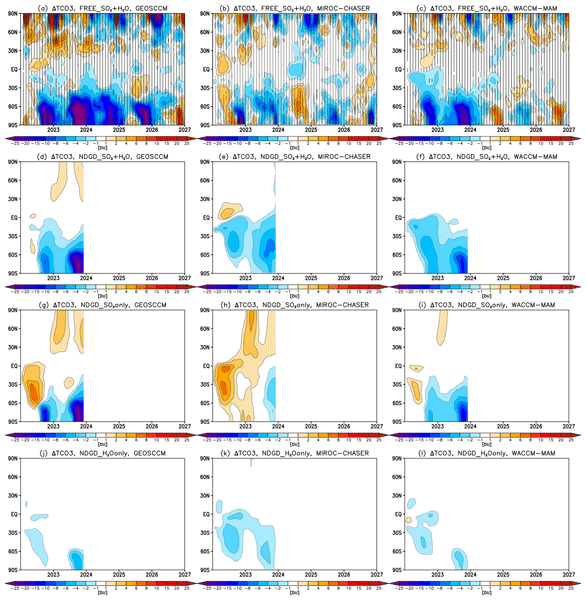
The 2022 Hunga eruption injected unprecedented quantities of water vapor into the stratosphere, alongside modest amounts of aerosol precursors. We assess its impacts on stratospheric ozone layer using a multi-model ensemble of chemistry-climate simulations. The results confirm the eruption's role in modulating SH (Southern Hemisphere) mid and high latitudes ozone abundances in the short term, and discuss the different chemical and dynamical processes driving those changes as well as the role of natural variability.
Ilaria Quaglia, Daniele Visioni, Ewa M. Bednarz, Yunqian Zhu, Georgiy Stenchikov, Valentina Aquila, Cheng-Cheng Liu, Graham W. Mann, Yifeng Peng, Takashi Sekiya, Simone Tilmes, Xinyue Wang, Shingo Watanabe, Pengfei Yu, Jun Zhang, Wandi Yu, and Zhihong Zhuo
Atmos. Chem. Phys., 26, 7677–7704, https://doi.org/10.5194/acp-26-7677-2026, https://doi.org/10.5194/acp-26-7677-2026, 2026
Short summary
Short summary
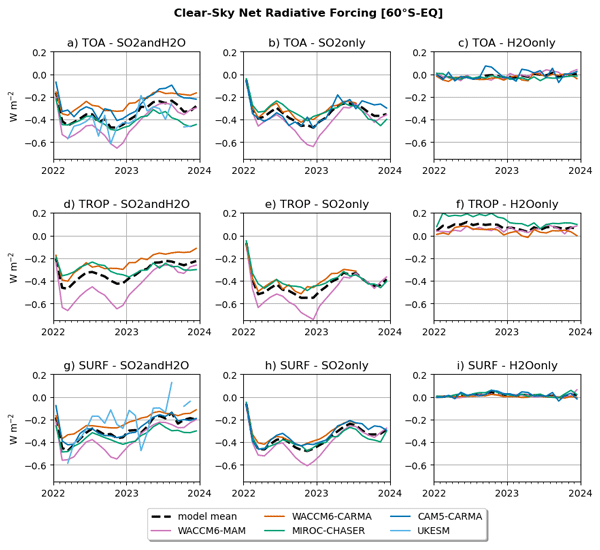
On January 15, 2022, the Hunga volcano eruption released unprecedented amounts of water vapor into the atmosphere alongside a modest amount of SO2. In this work we analyse results from multiple Earth system models. The models agree that the eruption led to small negative radiative forcing from sulfate aerosols and that the contribution from water vapor was minimal. Therefore, the Hunga eruption cannot explain the exceptional surface warming observed in 2023.
Iuri Gorenstein, Ilana Wainer, Francesco S. R. Pausata, Luciana F. Prado, Pedro L. Silva Dias, Allegra N. LeGrande, Clay R. Tabor, and William R. Peltier
Geosci. Model Dev., 19, 3689–3707, https://doi.org/10.5194/gmd-19-3689-2026, https://doi.org/10.5194/gmd-19-3689-2026, 2026
Short summary
Short summary
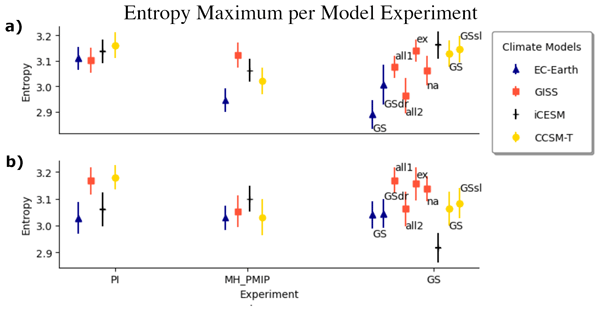
We introduce a new approach based on information theory to study climate variability using observational and model data. To showcase our methodology, we study the tropical and South Atlantic by examining broad patterns in ocean and rainfall data at decadal scales in four climate models under mid‐Holocene and pre‐industrial conditions and observations. Our findings show that large-scale patterns help explain long-term climate behavior.
Ewa M. Bednarz, Amy H. Butler, Xinyue Wang, Zhihong Zhuo, Wandi Yu, Georgiy Stenchikov, Matthew Toohey, and Yunqian Zhu
Atmos. Chem. Phys., 26, 197–215, https://doi.org/10.5194/acp-26-197-2026, https://doi.org/10.5194/acp-26-197-2026, 2026
Short summary
Short summary
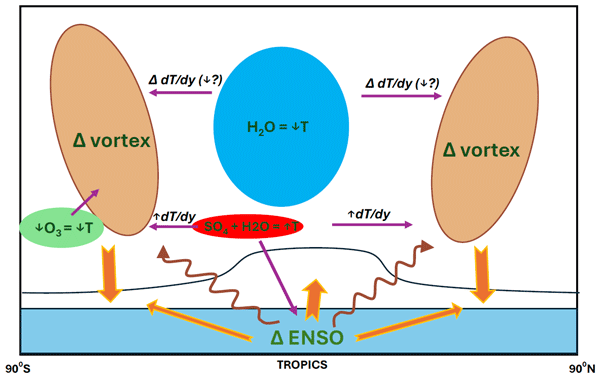
We investigate whether the 2022 Hunga eruption could affect surface climate via indirect pathways using large ensembles of Earth System Model simulations. These suggest that the eruption could have a non-negligible influence on regional surface climate, and we discuss the mechanisms via which such an influence could occur but also highlight that the forcing is relatively weak compared to natural climate variability which significantly hinders the detection of such impacts in the real world.
Aude Garin, Francesco S. R. Pausata, Mathieu Boudreault, and Roberto Ingrosso
Weather Clim. Dynam., 6, 1379–1397, https://doi.org/10.5194/wcd-6-1379-2025, https://doi.org/10.5194/wcd-6-1379-2025, 2025
Short summary
Short summary
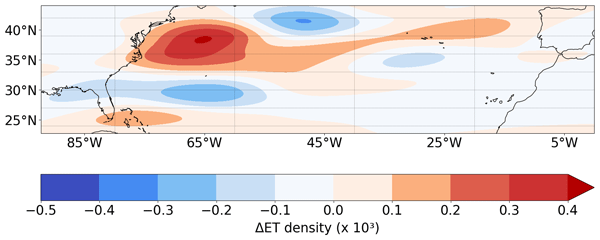
As tropical cyclones move poleward, they can transform into extratropical cyclones, a process known as extratropical transition. These storms can pose serious risks to human lives and cause damage to infrastructure along the northeastern coasts of the US and Canada. Our study investigates the impacts of climate change on the frequency, intensity, and location of extratropical transitions, revealing that transitioning storms may become more destructive in the future but may not be more frequent.
Zhihong Zhuo, Xinyue Wang, Yunqian Zhu, Wandi Yu, Ewa M. Bednarz, Eric Fleming, Peter R. Colarco, Shingo Watanabe, David Plummer, Georgiy Stenchikov, William Randel, Adam Bourassa, Valentina Aquila, Takashi Sekiya, Mark R. Schoeberl, Simone Tilmes, Jun Zhang, Paul J. Kushner, and Francesco S. R. Pausata
Atmos. Chem. Phys., 25, 13161–13176, https://doi.org/10.5194/acp-25-13161-2025, https://doi.org/10.5194/acp-25-13161-2025, 2025
Short summary
Short summary
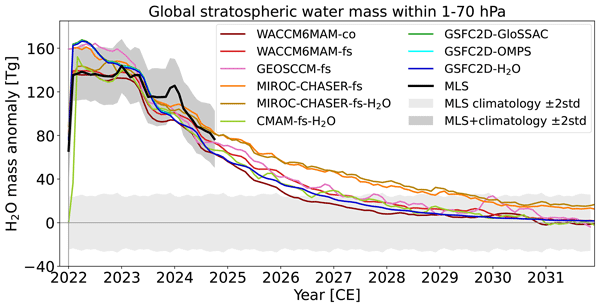
The 2022 Hunga eruption caused unprecedented stratospheric water injection, triggering unique atmospheric impacts. This study combines observations and model simulations, projecting a stratospheric water vapor anomaly lasting 4–7 years, with significant temperature variations and ozone depletion in the upper atmosphere lasting 7–10 years. These findings offer critical insights into the role of stratospheric water vapor in shaping climate and atmospheric chemistry.
Sina Loriani, Yevgeny Aksenov, David I. Armstrong McKay, Govindasamy Bala, Andreas Born, Cristiano Mazur Chiessi, Henk A. Dijkstra, Jonathan F. Donges, Sybren Drijfhout, Matthew H. England, Alexey V. Fedorov, Laura C. Jackson, Kai Kornhuber, Gabriele Messori, Francesco S. R. Pausata, Stefanie Rynders, Jean-Baptiste Sallée, Bablu Sinha, Steven C. Sherwood, Didier Swingedouw, and Thejna Tharammal
Earth Syst. Dynam., 16, 1611–1653, https://doi.org/10.5194/esd-16-1611-2025, https://doi.org/10.5194/esd-16-1611-2025, 2025
Short summary
Short summary
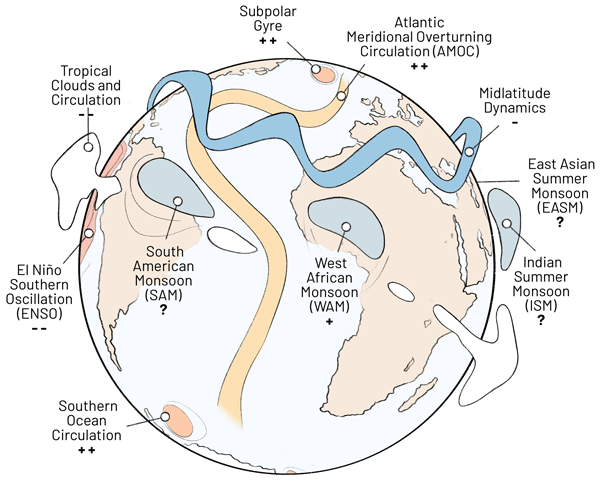
In this work, we draw on palaeo-records, observations, and modelling studies to review tipping points in the ocean overturning circulations, monsoon systems, and global atmospheric circulations. We find indications for tipping in the ocean overturning circulations and the West African monsoon, with potentially severe impacts on the Earth system and humans. Tipping in the other considered systems is regarded as conceivable but is currently not sufficiently supported by evidence.
Yunqian Zhu, Hideharu Akiyoshi, Valentina Aquila, Elizabeth Asher, Ewa M. Bednarz, Slimane Bekki, Christoph Brühl, Amy H. Butler, Parker Case, Simon Chabrillat, Gabriel Chiodo, Margot Clyne, Peter R. Colarco, Sandip Dhomse, Lola Falletti, Eric Fleming, Ben Johnson, Andrin Jörimann, Mahesh Kovilakam, Gerbrand Koren, Ales Kuchar, Nicolas Lebas, Qing Liang, Cheng-Cheng Liu, Graham Mann, Michael Manyin, Marion Marchand, Olaf Morgenstern, Paul Newman, Luke D. Oman, Freja F. Østerstrøm, Yifeng Peng, David Plummer, Ilaria Quaglia, William Randel, Samuel Rémy, Takashi Sekiya, Stephen Steenrod, Timofei Sukhodolov, Simone Tilmes, Kostas Tsigaridis, Rei Ueyama, Daniele Visioni, Xinyue Wang, Shingo Watanabe, Yousuke Yamashita, Pengfei Yu, Wandi Yu, Jun Zhang, and Zhihong Zhuo
Geosci. Model Dev., 18, 5487–5512, https://doi.org/10.5194/gmd-18-5487-2025, https://doi.org/10.5194/gmd-18-5487-2025, 2025
Short summary
Short summary
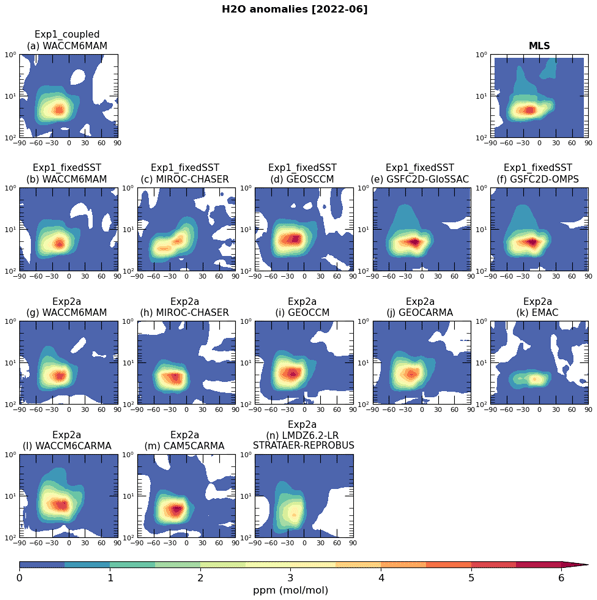
To understand the climate impact of the 2022 Hunga volcanic eruption, we developed a climate model–observation comparison project. The paper describes the protocols and models that participate in the experiments. We designed several experiments to achieve our goals of this activity: (1) to evaluate the climate model performance and (2) to understand the Earth system responses to this eruption.
Alex Cabaj, Paul J. Kushner, and Alek A. Petty
The Cryosphere, 19, 3033–3064, https://doi.org/10.5194/tc-19-3033-2025, https://doi.org/10.5194/tc-19-3033-2025, 2025
Short summary
Short summary
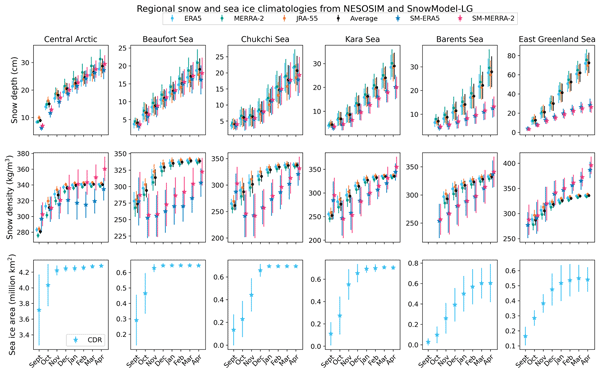
The output of snow-on-sea-ice models is influenced by the choice of snowfall input used. We ran such a model with different snowfall inputs and calibrated it to observations, produced a new calibrated snow product, and regionally compared the model outputs to outputs from another snow-on-sea-ice model. The two models agree best on the seasonal cycle of snow in the central Arctic Ocean. Observational comparisons highlight ongoing challenges in estimating the depth and density of snow on Arctic sea ice.
Ricarda Winkelmann, Donovan P. Dennis, Jonathan F. Donges, Sina Loriani, Ann Kristin Klose, Jesse F. Abrams, Jorge Alvarez-Solas, Torsten Albrecht, David Armstrong McKay, Sebastian Bathiany, Javier Blasco Navarro, Victor Brovkin, Eleanor Burke, Gokhan Danabasoglu, Reik V. Donner, Markus Drüke, Goran Georgievski, Heiko Goelzer, Anna B. Harper, Gabriele Hegerl, Marina Hirota, Aixue Hu, Laura C. Jackson, Colin Jones, Hyungjun Kim, Torben Koenigk, Peter Lawrence, Timothy M. Lenton, Hannah Liddy, José Licón-Saláiz, Maxence Menthon, Marisa Montoya, Jan Nitzbon, Sophie Nowicki, Bette Otto-Bliesner, Francesco Pausata, Stefan Rahmstorf, Karoline Ramin, Alexander Robinson, Johan Rockström, Anastasia Romanou, Boris Sakschewski, Christina Schädel, Steven Sherwood, Robin S. Smith, Norman J. Steinert, Didier Swingedouw, Matteo Willeit, Wilbert Weijer, Richard Wood, Klaus Wyser, and Shuting Yang
EGUsphere, https://doi.org/10.5194/egusphere-2025-1899, https://doi.org/10.5194/egusphere-2025-1899, 2025
Short summary
Short summary
The Tipping Points Modelling Intercomparison Project (TIPMIP) is an international collaborative effort to systematically assess tipping point risks in the Earth system using state-of-the-art coupled and stand-alone domain models. TIPMIP will provide a first global atlas of potential tipping dynamics, respective critical thresholds and key uncertainties, generating an important building block towards a comprehensive scientific basis for policy- and decision-making.
Lawrence Mudryk, Colleen Mortimer, Chris Derksen, Aleksandra Elias Chereque, and Paul Kushner
The Cryosphere, 19, 201–218, https://doi.org/10.5194/tc-19-201-2025, https://doi.org/10.5194/tc-19-201-2025, 2025
Short summary
Short summary
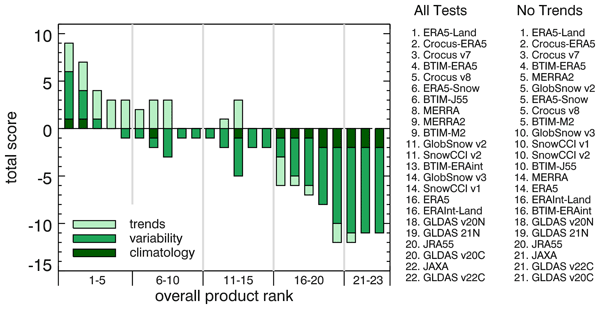
We evaluate and rank 23 different datasets on their ability to accurately estimate historical snow amounts. The evaluation uses new a set of surface snow measurements with improved spatial coverage, enabling evaluation across both mountainous and nonmountainous regions. Performance measures vary tremendously across the products: while most perform reasonably in nonmountainous regions, accurate representation of snow amounts in mountainous regions and of historical trends is much more variable.

Aleksandra Elias Chereque, Paul J. Kushner, Lawrence Mudryk, Chris Derksen, and Colleen Mortimer
The Cryosphere, 18, 4955–4969, https://doi.org/10.5194/tc-18-4955-2024, https://doi.org/10.5194/tc-18-4955-2024, 2024
Short summary
Short summary
We look at three commonly used snow depth datasets that are produced through a combination of snow modelling and historical measurements (reanalysis). When compared with each other, these datasets have differences that arise for various reasons. We show that a simple snow model can be used to examine these inconsistencies and highlight issues. This method indicates that one of the complex datasets should be excluded from further studies.
Marco Gaetani, Gabriele Messori, Francesco S. R. Pausata, Shivangi Tiwari, M. Carmen Alvarez Castro, and Qiong Zhang
Clim. Past, 20, 1735–1759, https://doi.org/10.5194/cp-20-1735-2024, https://doi.org/10.5194/cp-20-1735-2024, 2024
Short summary
Short summary
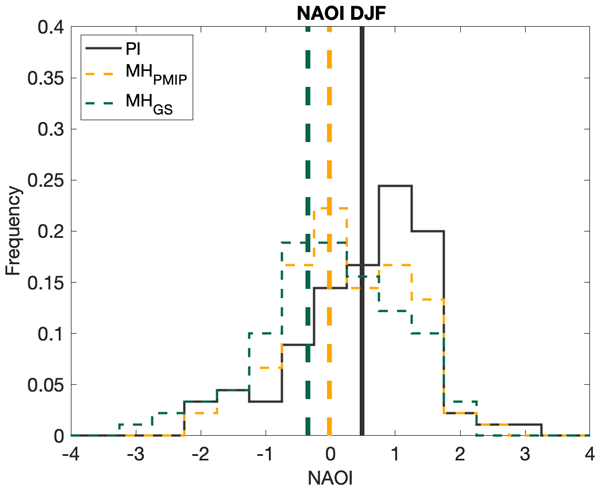
Palaeoclimate reconstructions suggest that, around 6000 years ago, a greening of the Sahara took place, accompanied by climate changes in the Northern Hemisphere at middle to high latitudes. In this study, a climate model is used to investigate how this drastic environmental change in the Sahara impacted remote regions. Specifically, climate simulations reveal significant modifications in atmospheric circulation over the North Atlantic, affecting North American and European climates.
Zhihong Zhuo, Herman F. Fuglestvedt, Matthew Toohey, and Kirstin Krüger
Atmos. Chem. Phys., 24, 6233–6249, https://doi.org/10.5194/acp-24-6233-2024, https://doi.org/10.5194/acp-24-6233-2024, 2024
Short summary
Short summary
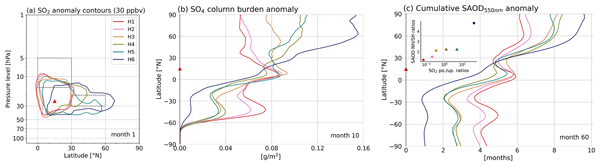
This work simulated volcanic eruptions with varied eruption source parameters under different initial conditions with a fully coupled Earth system model. We show that initial atmospheric conditions control the meridional distribution of volcanic volatiles and modulate volcanic forcing and subsequent climate and environmental impacts of tropical and Northern Hemisphere extratropical eruptions. This highlights the potential for predicting these impacts as early as the first post-eruption month.
Zhihong Zhuo, Ingo Kirchner, and Ulrich Cubasch
Clim. Past, 19, 835–849, https://doi.org/10.5194/cp-19-835-2023, https://doi.org/10.5194/cp-19-835-2023, 2023
Short summary
Short summary
Precipitation distribution is uneven in monsoon and westerlies-dominated subregions of Asia. Multi-model data from PMIP3 and CMIP5 show a distinct inverse pattern of climatological conditions after NHVAI, with an intensified aridity in the relatively wettest area but a weakened aridity in the relatively driest area of the AMR. The hydrological impacts relate to the dynamical response of the climate system to the radiative effect of volcanic aerosol and the subsequent local physical feedbacks.

Alek A. Petty, Nicole Keeney, Alex Cabaj, Paul Kushner, and Marco Bagnardi
The Cryosphere, 17, 127–156, https://doi.org/10.5194/tc-17-127-2023, https://doi.org/10.5194/tc-17-127-2023, 2023
Short summary
Short summary
We present upgrades to winter Arctic sea ice thickness estimates from NASA's ICESat-2. Our new thickness results show better agreement with independent data from ESA's CryoSat-2 compared to our first data release, as well as new, very strong comparisons with data collected by moorings in the Beaufort Sea. We analyse three winters of thickness data across the Arctic, including 50 cm thinning of the multiyear ice over this 3-year period.

Chih-Chun Chou, Paul J. Kushner, Stéphane Laroche, Zen Mariani, Peter Rodriguez, Stella Melo, and Christopher G. Fletcher
Atmos. Meas. Tech., 15, 4443–4461, https://doi.org/10.5194/amt-15-4443-2022, https://doi.org/10.5194/amt-15-4443-2022, 2022
Short summary
Short summary
Aeolus is the first satellite that provides global wind profile measurements. The mission aims to improve the weather forecasts in the tropics, but also, potentially, in the polar regions. We evaluate the performance of the instrument over the Canadian North and the Arctic by comparing its measured winds in both cloudy and non-cloudy layers to wind data from forecasts, reanalysis, and ground-based instruments. Overall, good agreement was seen, but Aeolus winds have greater dispersion.
Cited articles
Bardeen, C. G., Kinnison, D. E., Toon, O. B., Mills, M. J., Vitt, F., Xia, L., Jägermeyr, J., Lovenduski, N. S., Scherrer, K. J. N., Clyne, M., and Robock, A.: Extreme ozone loss following nuclear war results in enhanced surface ultraviolet radiation, J. Geophys. Res.-Atmos., 126, https://doi.org/10.1029/2021JD035079, 2021.
Bond, T. C., Doherty, S. J., Fahey, D. W., Forster, P. M., Berntsen, T., DeAngelo, B. J., Flanner, M. G., Ghan, S., Kärcher, B., Koch, D., Kinne, S., Kondo, Y., Quinn, P. K., Sarofim, M. C., Schultz, M. G., Schulz, M., Venkataraman, C., Zhang, H., Zhang, S., Bellouin, N., Guttikunda, S. K., Hopke, P. K., Jacobson, M. Z., Kaiser, J. W., Klimont, Z., Lohmann, U., Schwarz, J. P., Shindell, D., Storelvmo, T., Warren, S. G., and Zender, C. S.: Bounding the role of black carbon in the climate system: A scientific assessment. J. Geophys. Res.-Atmos., 118, 5380–5552, https://doi.org/10.1002/jgrd.50171, 2013.
Butchart, N.: The Brewer-Dobson circulation, Rev. Geophys., 52, 157–184, https://doi.org/10.1002/2013RG000448, 2014.
Byrne, B., Liu, J., Bowman, K. W., Pascolini-Campbell, M., Chatterjee, A., Pandey, S., Miyazaki, K., van der Werf, G. R., Wunch, D., Wennberg, P. O., Roehl, C. M., and Sinha, S.: Carbon emissions from the 2023 Canadian wildfires, Nature, 633, 835–839, https://doi.org/10.1038/s41586-024-07878-z, 2024.
Cheung, A.: Dataset for “Unexpected land-surface warming following a relatively limited-forcing hypothetical nuclear war”, Borealis, V3 [data set], https://doi.org/10.5683/SP3/UG2598, 2025.
Cole, J. N. S., von Salzen, K., Li, J., Scinocca, J., Plummer, D., Arora, V., McFarlane, N., Lazare, M., MacKay, M., and Verseghy, D.: The Canadian Atmospheric Model version 5 (CanAM5.0.3), Geosci. Model Dev., 16, 5427–5448, https://doi.org/10.5194/gmd-16-5427-2023, 2023.
Coupe, J., Bardeen, C. G., Robock, A., and Toon, O. B.: Nuclear Winter Responses to Nuclear War Between the United States and Russia in the Whole Atmosphere Community Climate Model Version 4 and the Goddard Institute for Space Studies ModelE, J. Geophys. Res.-Atmos., 124, 8522–8543, https://doi.org/10.1029/2019JD030509, 2019.
Croft, B., Lohmann, U., and von Salzen, K.: Black carbon ageing in the Canadian Centre for Climate modelling and analysis atmospheric general circulation model, Atmos. Chem. Phys., 5, 1931–1949, https://doi.org/10.5194/acp-5-1931-2005, 2005.
Dai, Y., Hitchcock, P., and Simpson, I. R.: What Drives the Spread and Bias in the Surface Impact of Sudden Stratospheric Warmings in CMIP6 Models? J. Climate, 37, 3917–3942, https://doi.org/10.1175/JCLI-D-23-0622.1, 2024.
Eyring, V., Bony, S., Meehl, G. A., Senior, C. A., Stevens, B., Stouffer, R. J., and Taylor, K. E.: Overview of the Coupled Model Intercomparison Project Phase 6 (CMIP6) experimental design and organization, Geosci. Model Dev., 9, 1937–1958, https://doi.org/10.5194/gmd-9-1937-2016, 2016.
Forrister, H., Liu, J., Scheuer, E., Dibb, J., Ziemba, L., Thornhill, K. L., Anderson, B., Diskin, G., Perring, A. E., Schwarz, J. P., Campuzano-Jost, P., Day, D. A., Palm, B. B., Jimenez, J. L., Nenes, A., and Weber, R. J.: Evolution of brown carbon in wildfire plumes, Geophys. Res. Lett., 42, 4623–4630, https://doi.org/10.1002/2015GL063897, 2015.
Gettelman, A., Mills, M. J., Kinnison, D. E., Garcia, R. R., Smith, A. K., Marsh, D. R., Tilmes, S., Vitt, F., Bardeen, C. G., McInerny, J., Liu, H.-L., Solomon, S. C., Polvani, L. M., Emmons, L. K., Lamarque, J.-F., Richter, J. H., Glanville, A. S., Bacmeister, J. T., Phillips, A. S., Neale, R. B., Simpson, I. R., DuVivier, A. K., Hodzic, A., and Randel, W. J.: The whole atmosphere community climate model version 6 (WACCM6), J. Geophys. Res.-Atmos., 124, 12380–12403, https://doi.org/10.1029/2019JD030943, 2019.
Ghan, S. J., Smith, S. J., Wang, M., Zhang, K., Pringle, K., Carslaw, K., Pierce, J., Bauer, S., and Adams, P.: A simple model of global aerosol indirect effects, J. Geophys. Res.-Atmos., 118, 6688–6707, https://doi.org/10.1002/jgrd.50567, 2013.
Glasstone, S. and Dolan, P. J. (Eds.): The Effects of Nuclear Weapons, 3rd edn., The United States Department of Defense and the Energy Research and Development Administration, ISBN 10: 0160020360, ISBN 13: 9780160020360, 1977.
Holton, J. R., Haynes, P. R., McIntyre, M. E., and Douglass, A. R.: Stratosphere-troposphere exchange, Rev. Geophys., 33, 403–439, https://doi.org/10.1029/95RG02097, 1995.
Johnson, B. T. and Haywood, J. M.: Assessing the impact of self-lofting on increasing the altitude of black carbon in a global climate model, J. Geophys. Res.-Atmos., 128, https://doi.org/10.1029/2022JD038039, 2023.
Kleidon, A. and Renner, M.: An explanation for the different climate sensitivities of land and ocean surfaces based on the diurnal cycle, Earth Syst. Dynam., 8, 849–864, https://doi.org/10.5194/esd-8-849-2017, 2017.
Li, J., von Salzen, K., Peng, Y., Zhang, H., and Liang, X.: Evaluation of black carbon semidirect radiative effect in a climate model, J. Geophys. Res.-Atmos., 118, 4715–4728, https://doi.org/10.1002/jgrd.50327, 2013.
Lohmann, U., von Salzen, K., McFarlane, N., Leighton, H. G., and Feichter, J.: Tropospheric sulfur cycle in the Canadian general circulation model, J. Geophys. Res., 104, 26833–26858, https://doi.org/10.1029/1999JD900343, 1999.
Lucas, K. A., Orient J. M., Robinson A., Maccabee H., Morris P., Looney G., and Klinghoffer M.: Efficacy of bomb shelters: with lessons from the Hamburg firestorm, South Med. J., 83, 812–820, https://doi.org/10.1097/00007611-199007000-00022, 1990.
Madec, G. and the NEMO team: NEMO ocean engine, version 3.4, Institut Pierre-Simon Laplace Note du Pole de Modélisation 27, 367 pp., Zenodo, https://doi.org/10.5281/zenodo.1464817, 2013.
Malone, R. C., Auer, L., Glatzmaier, G., Wood, M., and Toon, O. B.: Influence of solar heating and precipitation scavenging on the simulated lifetime of post-nuclear war smoke, Science, 230, 317–319, https://doi.org/10.1126/science.230.4723.317, 1985.
Mills, M. J., Toon, O. B., Turco, R. P., Kinnison, D. E., and Garcia, R. R.: Massive global ozone loss predicted following regional nuclear conflict, P. Natl. Acad. Sci. USA, 105, 5307–5312, https://doi.org/10.1073/pnas.0710058105, 2008.
Mills, M. J., Toon, O. B., Lee‐Taylor, J., and Robock, A.: Multidecadal global cooling and unprecedented ozone loss following a regional nuclear conflict, Earths Future, 2, 161–176, https://doi.org/10.1002/2013EF000205, 2014.
Namazi, M., von Salzen, K., and Cole, J. N. S.: Simulation of black carbon in snow and its climate impact in the Canadian Global Climate Model, Atmos. Chem. Phys., 15, 10887–10904, https://doi.org/10.5194/acp-15-10887-2015, 2015.
National Academies of Sciences, Engineering, and Medicine (NASEM): Potential Environmental Effects of Nuclear War, The National Academies Press, Washington, DC, https://doi.org/10.17226/27515, 2025.
Ohneiser, K., Ansmann, A., Witthuhn, J., Deneke, H., Chudnovsky, A., Walter, G., and Senf, F.: Self-lofting of wildfire smoke in the troposphere and stratosphere: simulations and space lidar observations, Atmos. Chem. Phys., 23, 2901–2925, https://doi.org/10.5194/acp-23-2901-2023, 2023.
Pausata, F. S. R., Lindvall, J., Ekman, A. M. L., and Svensson, G.: Climate effects of a hypothetical regional nuclear war: Sensitivity to emission duration and particle composition, Earths Future, 4, 498–511, https://doi.org/10.1002/2016EF000415, 2016.
Ramaswamy, V. and Kiehl, J. T.: Sensitivities of the radiative forcing due to large loadings of smoke and dust aerosols, J. Geophys. Res., 90, 5597–5613, https://doi.org/10.1029/JD090iD03p05597, 1985.
Robock, A., Oman, L., and Stenchikov, G. L.: Nuclear winter revisited with a modern climate model and current nuclear arsenals: Still catastrophic consequences, J. Geophys. Res.-Atmos., 112, D13107, https://doi.org/10.1029/2006JD008235, 2007a.
Robock, A., Oman, L., Stenchikov, G. L., Toon, O. B., Bardeen, C., and Turco, R. P.: Climatic consequences of regional nuclear conflicts, Atmos. Chem. Phys., 7, 2003–2012, https://doi.org/10.5194/acp-7-2003-2007, 2007b.
Samset, B. H., Wilcox, L. J., Allen, R. J., Stjern, C. W., Lund, M. T., Ahmadi, S., Ekman, A., Elling, M. T., Fraser-Leach, L., Griffiths, P., Keeble, J., Koshiro, T., Kushner, P., Lewinschal, A., Makkonen, R., Merikanto, J., Nabat, P., Narazenko, L., O'Donnell, D., Oshima, N., Rumbold, S. T., Takemura, T., Tsigaridis, K., and Westervelt, D. M.: East Asian aerosol cleanup has likely contributed to the recent acceleration in global warming, Commun. Earth Environ., 6543, https://doi.org/10.1038/s43247-025-02527-3, 2025.
Scinocca, J. F., McFarlane, N. A., Lazare, M., Li, J., and Plummer, D.: Technical Note: The CCCma third generation AGCM and its extension into the middle atmosphere, Atmos. Chem. Phys., 8, 7055–7074, https://doi.org/10.5194/acp-8-7055-2008, 2008.
Shemwell, B. E. and Levendis, Y. A.: Particulates Generated from Combustion of Polymers (Plastics), J. Air Waste Manage., 50, 94–102, https://doi.org/10.1080/10473289.2000.10463994, 2000.
Solomon, F. and Marston, R. Q.: The Medical Implications of Nuclear War, National Academy Press, https://doi.org/10.17226/940, 1986.
Stenchikov, G., Robock, A., Ramaswamy, V., Schwarzkopf, M. D., Hamilton, K., and Ramachandran, S.: Arctic Oscillation response to the 1991 Mount Pinatubo eruption: Effects of volcanic aerosols and ozone depletion, J. Geophys. Res., 107, 4803, https://doi.org/10.1029/2002JD002090, 2002.
Stenke, A., Hoyle, C. R., Luo, B., Rozanov, E., Gröbner, J., Maag, L., Brönnimann, S., and Peter, T.: Climate and chemistry effects of a regional scale nuclear conflict, Atmos. Chem. Phys., 13, 9713–9729, https://doi.org/10.5194/acp-13-9713-2013, 2013.
Swart, N. C., Cole, J. N. S., Kharin, V. V., Lazare, M., Scinocca, J. F., Gillett, N. P., Anstey, J., Arora, V., Christian, J. R., Hanna, S., Jiao, Y., Lee, W. G., Majaess, F., Saenko, O. A., Seiler, C., Seinen, C., Shao, A., Sigmond, M., Solheim, L., von Salzen, K., Yang, D., and Winter, B.: The Canadian Earth System Model version 5 (CanESM5.0.3), Geosci. Model Dev., 12, 4823–4873, https://doi.org/10.5194/gmd-12-4823-2019, 2019.
Tarshish, N. and Romps, D. M.: Latent heating is required for firestorm plumes to reach the stratosphere, J. Geophys. Res.-Atmos., 127, https://doi.org/10.1029/2022JD036667, 2022.
Tewarson, A.: Chapter 4 Generation of Heat and Chemical Compounds in Fires, in: SFPE Handbook of Fire Protection Engineering, edited by: DiNenno, P. J., 3rd edn., National Fire Protection Assoc, Inc. Quincy, Mass, 3-82–3-161, ISBN 10: 0877654514, ISBN 13: 9780877654513, 2002.
Toon, O. B., Turco, R. P., Robock, A., Bardeen, C., Oman, L., and Stenchikov, G. L.: Atmospheric effects and societal consequences of regional scale nuclear conflicts and acts of individual nuclear terrorism, Atmos. Chem. Phys., 7, 1973–2002, https://doi.org/10.5194/acp-7-1973-2007, 2007.
Toon, O. B., Bardeen, C. G., Robock, A., Xia, L., Kristensen, H., Mckinzie, M., Peterson, R. J., Harrison, C. S., Lovenduski, N. S., and Turco, R. P. : Rapidly expanding nuclear arsenals in Pakistan and India portend regional and global catastrophe, Sci. Adv., 5, https://doi.org/10.1126/sciadv.aay5478, 2019.
Turco, R. P., Toon, O. B., Ackerman, T. P., Pollack, J. B., and Sagan, C.: Climate and Smoke: An Appraisal of Nuclear Winter, Science, 247, 166-176, https://doi.org/10.1126/science.11538069, 1990.
von Salzen, K.: Piecewise log-normal approximation of size distributions for aerosol modelling, Atmos. Chem. Phys., 6, 1351–1372, https://doi.org/10.5194/acp-6-1351-2006, 2006.
von Salzen, K., Scinocca, J. F., McFarlane, N. A., Li, J., Cole, J. N. S., Plummer, D., Verseghy, D., Reader, M. C., Ma, X., Lazare, M., and Solheim, L.: The Canadian Fourth Generation Atmospheric Global Climate Model (CanAM4). Part I: Representation of Physical Processes, Atmos.-Ocean, 51, 104–125, https://doi.org/10.1080/07055900.2012.755610, 2013.
Wagman, B. M., Lundquist, K. A., Tang, Q., Glascoe, L. G., and Bader, D. C.: Examining the climate effects of a regional nuclear weapons exchange using a multiscale atmospheric modeling approach, J. Geophys. Res.-Atmos., 125, https://doi.org/10.1029/2020JD033056, 2020.
Wood, R.: Drizzle in Stratiform Boundary Layer Clouds. Part II: Microphysical Aspects, J. Atmos. Sci., 62, 3034–3050, https://doi.org/10.1175/JAS3530.1, 2005.
Wu, K., Li, J., von Salzen, K., and Zhang, F.: Explicit solutions to the mixing rules with three-component inclusions, J. Quant. Spectrosc. Ra., 207, 78–82, https://doi.org/10.1016/j.jqsrt.2017.12.020, 2018.
Xia, L. and Robock, A: Impacts of a nuclear war in South Asia on rice production in Mainland China, Climatic Change, 116, 357–372, https://doi.org/10.1007/s10584-012-0475-8, 2013.
Xia, L., Robock, A., Mills, M., Stenke, A. and Helfand, I.: Decadal reduction of Chinese agriculture after a regional nuclear war, Earths Future, 3, 37–48, https://doi.org/10.1002/2014EF000283, 2015.
Xia, L., Robock, A., Scherrer, K., Harrison, C. S., Bodirsky, B. L., Weindl, I., Jägermeyr, J., Bardeen, C. G., Toon, O. B., and Heneghan, R.: Global food insecurity and famine from reduced crop, marine fishery and livestock production due to climate disruption from nuclear war soot injection, Nat. Food, 3, 586–596, https://doi.org/10.1038/s43016-022-00573-0, 2022.
Yook, S., Solomon, S., Bardeen, C. G., and Stone, K.: Arctic ozone hole and enhanced mid-latitude ozone losses due to heterogeneous halogen chemistry following a regional nuclear conflict, Earths Future, 13, https://doi.org/10.1029/2025EF006866, 2025.
Yu, P., Davis, S. M., Toon, O. B., Portmann, R. W., Bardeen, C. G., Barnes, J. E., Telg, H., Maloney, C., and Rosenlof, K. H.: Persistent Stratospheric Warming Due to 2019-2020 Australian Wildfire Smoke, Geophys. Res. Lett., 48, https://doi.org/10.1029/2021GL092609, 2021.
Zanchettin, D., Khodri, M., Timmreck, C., Toohey, M., Schmidt, A., Gerber, E. P., Hegerl, G., Robock, A., Pausata, F. S. R., Ball, W. T., Bauer, S. E., Bekki, S., Dhomse, S. S., LeGrande, A. N., Mann, G. W., Marshall, L., Mills, M., Marchand, M., Niemeier, U., Poulain, V., Rozanov, E., Rubino, A., Stenke, A., Tsigaridis, K., and Tummon, F.: The Model Intercomparison Project on the climatic response to Volcanic forcing (VolMIP): experimental design and forcing input data for CMIP6, Geosci. Model Dev., 9, 2701–2719, https://doi.org/10.5194/gmd-9-2701-2016, 2016.
Short summary
If a nuclear war happened, firestorms induced by nuclear detonations in urban areas could inject black carbon (BC) into the upper atmosphere, disrupting global climate. We simulated the climate impacts of relatively limited-forcing scenarios using an Earth system model. In all scenarios, BC blocks sunlight, causes global cooling, and decreases precipitation for more than a decade. However, a drastic global warming emerges midway through the first year and lasts until the year's end.
If a nuclear war happened, firestorms induced by nuclear detonations in urban areas could inject...


Altmetrics
Final-revised paper
Preprint