Articles | Volume 17, issue 5
https://doi.org/10.5194/esd-17-1381-2026
© Author(s) 2026. This work is distributed under
the Creative Commons Attribution 4.0 License.
https://doi.org/10.5194/esd-17-1381-2026
© Author(s) 2026. This work is distributed under
the Creative Commons Attribution 4.0 License.
Regional contrasts of ecosystem productivity sensitivity to atmospheric CO2 growth across East Asia

Yun-Soo Na
Department of Climate and Energy Systems Engineering, Ewha Womans University, Seoul, South Korea
Sang-Wook Yeh
CORRESPONDING AUTHOR
Department of Climate and Energy Systems Engineering, Ewha Womans University, Seoul, South Korea
Jong-Seong Kug
School of Earth and Environmental Sciences, Seoul National University, Seoul, South Korea
Institute for Sustainable Development, Seoul National University, Seoul, South Korea
Young-Min Yang
Department of Environment & Energy, School of Civil, Environmental, Resources and Energy Engineering, Soil Environment Research Center, Jeonbuk National University, Jeonju, South Korea
Related authors
No articles found.
Gyeongmin Baek, Jiho Ko, Emilia Kyung Jin, and Jong-Seong Kug
EGUsphere, https://doi.org/10.5194/egusphere-2026-1556, https://doi.org/10.5194/egusphere-2026-1556, 2026
This preprint is open for discussion and under review for The Cryosphere (TC).
Short summary
Short summary
Antarctic sea ice has declined sharply in recent years, but predicting its seasonal changes remains challenging. We developed a deep-learning model that improves forecasts using a small set of important atmosphere–ocean variables. By applying explainable AI, we show how the key drivers of sea-ice variability differ by season and region, providing both better predictions and clearer physical interpretation
Mina Kim, Rokjin J. Park, Jingi Jung, Sang-Ik Oh, Eunjo S. Ha, Jaein I. Jeong, and Sang-Wook Yeh
Atmos. Chem. Phys., 26, 6869–6888, https://doi.org/10.5194/acp-26-6869-2026, https://doi.org/10.5194/acp-26-6869-2026, 2026
Short summary
Short summary
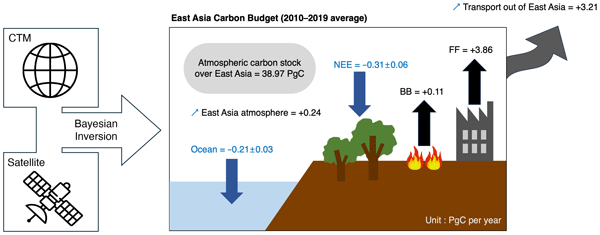
Given that East Asia has the highest CO2 emissions in the world, understanding the region’s carbon uptake is essential for planning mitigation strategies. We estimated natural carbon sinks in East Asia from 2010 to 2019 using satellite observations and a chemical transport model within a Bayesian inversion framework. Natural sinks offset 13.6 % of fossil fuel emissions, indicating that emissions exceed the region's carbon uptake capacity and highlighting the need for stronger mitigation efforts.
Dong-Geon Lee, Eun Young Kwon, Jonghun Kam, and Jong-Seong Kug
Earth Syst. Dynam., 16, 2101–2111, https://doi.org/10.5194/esd-16-2101-2025, https://doi.org/10.5194/esd-16-2101-2025, 2025
Short summary
Short summary
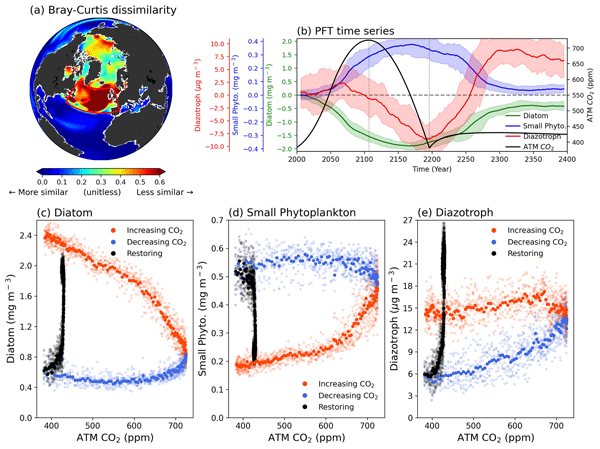
Phytoplankton communities in the Sub-Polar North Atlantic shift towards smaller species under greenhouse warming, with limited recovery even under CO2 removal. This shift results from reduced surface nutrient availability caused by the weakened Atlantic Meridional Overturning Circulation (AMOC), which recovers slowly. Nutrient depletion disrupts trophic dynamics, decreasing diatoms and increasing smaller phytoplankton, leading to a significant reduction in the ocean's carbon export capacity.
Dong-Geon Lee, Ji-Hoon Oh, Jonghun Kam, and Jong-Seong Kug
Biogeosciences, 22, 3165–3180, https://doi.org/10.5194/bg-22-3165-2025, https://doi.org/10.5194/bg-22-3165-2025, 2025
Short summary
Short summary
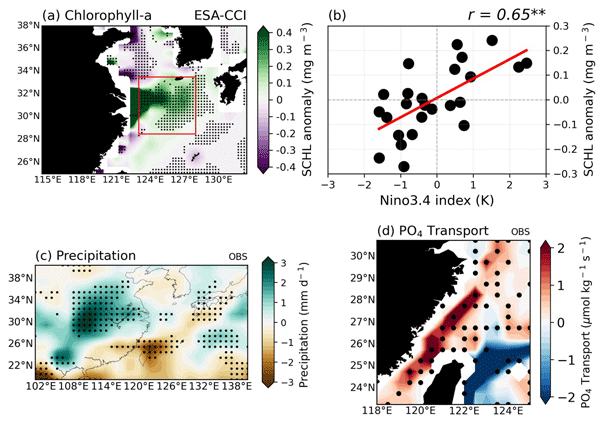
This study investigates the mechanisms driving anomalous phytoplankton blooms in the East China Sea (ECS) during El Niño decaying summers. The findings highlight three key mechanisms: increased river runoff, nutrient transport through the Taiwan Strait, and wind-driven upwelling, all linked to the western North Pacific anticyclone (WNPAC).
Ingo Richter, Ping Chang, Ping-Gin Chiu, Gokhan Danabasoglu, Takeshi Doi, Dietmar Dommenget, Guillaume Gastineau, Zoe E. Gillett, Aixue Hu, Takahito Kataoka, Noel S. Keenlyside, Fred Kucharski, Yuko M. Okumura, Wonsun Park, Malte F. Stuecker, Andréa S. Taschetto, Chunzai Wang, Stephen G. Yeager, and Sang-Wook Yeh
Geosci. Model Dev., 18, 2587–2608, https://doi.org/10.5194/gmd-18-2587-2025, https://doi.org/10.5194/gmd-18-2587-2025, 2025
Short summary
Short summary
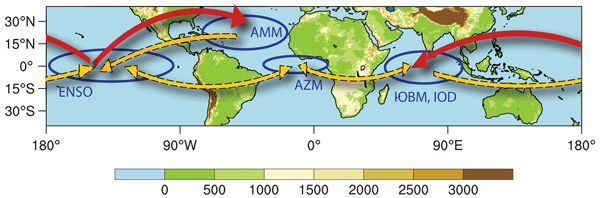
Tropical ocean basins influence each other through multiple pathways and mechanisms, referred to here as tropical basin interaction (TBI). Many researchers have examined TBI using comprehensive climate models but have obtained conflicting results. This may be partly due to differences in experiment protocols and partly due to systematic model errors. The Tropical Basin Interaction Model Intercomparison Project (TBIMIP) aims to address this problem by designing a set of TBI experiments that will be performed by multiple models.
Seungmok Paik, Seung-Ki Min, Seok-Woo Son, Soon-Il An, Jong-Seong Kug, and Sang-Wook Yeh
Atmos. Chem. Phys. Discuss., https://doi.org/10.5194/acp-2022-187, https://doi.org/10.5194/acp-2022-187, 2022
Revised manuscript not accepted
Short summary
Short summary
This paper investigates Earth’s surface climate response to volcanic eruptions at different latitudes. By analyzing last millennium ensemble simulations of a coupled climate model, we have identified physical processes associated with the diverse impacts of volcanic eruption latitudes, focusing on the tropical ocean surface warming and the stratospheric polar vortex intensification. Our results provide important global implications for atmospheric responses to future volcanic aerosols.
Cited articles
Asaadi, A. and Arora, V. K.: Implementation of nitrogen cycle in the CLASSIC land model, Biogeosciences, 18, 669–706, https://doi.org/10.5194/bg-18-669-2021, 2021.
Baldocchi, D., Ryu, Y., and Keenan, T.: Terrestrial carbon cycle variability, F1000Research, 5, https://doi.org/10.12688/f1000research.8962.1, 2016.
Beer, C., Lucht, W., Gerten, D., Thonicke, K., and Schmullius, C.: Effects of soil freezing and thawing on vegetation carbon density in Siberia: A modeling analysis with the Lund‐Potsdam‐Jena Dynamic Global Vegetation Model (LPJ‐DGVM), Glob. Biogeochem. Cycle, 21, https://doi.org/10.1029/2006GB002760, 2007.
Bi, W., He, W., Zhou, Y., Ju, W., Liu, Y., Liu, Y., Zhang, X., Wei, X., and Cheng, N.: A global 0.05 dataset for gross primary production of sunlit and shaded vegetation canopies from 1992 to 2020, Sci. Data, 9, 213, https://doi.org/10.1038/s41597-022-01309-2, 2022.
Burton, C., Betts, R., Cardoso, M., Feldpausch, T. R., Harper, A., Jones, C. D., Kelley, D. I., Robertson, E., and Wiltshire, A.: Representation of fire, land-use change and vegetation dynamics in the Joint UK Land Environment Simulator vn4.9 (JULES), Geosci. Model Dev., 12, 179–193, https://doi.org/10.5194/gmd-12-179-2019, 2019.
Canadell, J. G., Le Quéré, C., Raupach, M. R., Field, C. B., Buitenhuis, E. T., Ciais, P., Conway, T. J., Gillett, N. P., Houghton, R., and Marland, G.: Contributions to accelerating atmospheric CO2 growth from economic activity, carbon intensity, and efficiency of natural sinks, P. Natl. Acad. Sci. USA, 104, 18866–18870, https://doi.org/10.1073/pnas.0702737104, 2007.
Decharme, B., Delire, C., Minvielle, M., Colin, J., Vergnes, J. P., Alias, A., Saint‐Martin, D., Séférian, R., Sénési, S., and Voldoire, A.: Recent changes in the ISBA‐CTRIP land surface system for use in the CNRM‐CM6 climate model and in global off‐line hydrological applications, J. Adv. Model. Earth Sy., 11, 1207–1252, https://doi.org/10.1029/2018MS001545, 2019.
Friedl, M. and Sulla-Menashe, D.: MODIS/Terra+Aqua Land Cover Type Yearly L3 Global 500m SIN Grid V061, NASA Land Processes Distributed Active Archive Center [data set], https://doi.org/10.5067/MODIS/MCD12Q1.061, 2022.
Fu, C.: Potential impacts of human-induced land cover change on East Asia monsoon, Glob. Planet. Change, 37, 219–229, https://doi.org/10.1016/S0921-8181(02)00207-2, 2003.
Global Carbon Project: Supplemental data of Global Carbon Budget 2024 (Version 1.0) (v1.0), Global Carbon Project [data set], https://doi.org/10.18160/gcp-2024, 2024.
Gramfort, A.: LOWESS: Locally weighted regression, GitHub [code], https://gist.github.com/agramfort/850437, last access: 14 September 2026.
Han, M.-Y., Zhang, Y., and Peng, J.: How the enhanced East Asian summer monsoon regulates total gross primary production in eastern China, Adv. Clim. Chang. Res., 15, 244–252, https://doi.org/10.1016/j.accre.2024.04.001, 2024.
He, S., Li, J., Wang, J., and Liu, F.: Evaluation and analysis of upscaling of different land use/land cover products (FORM-GLC30, GLC_FCS30, CCI_LC, MCD12Q1 and CNLUCC): A case study in China, Geocarto Int., 37, 17340–17360, https://doi.org/10.1080/10106049.2022.2127926, 2022a.
He, Y., Oh, J., Lee, E., and Kim, Y.: Land cover and land use mapping of the east Asian summer monsoon region from 1982 to 2015, Land, 11, 391, https://doi.org/10.3390/land11030391, 2022b.
Ito, A.: Disequilibrium of terrestrial ecosystem CO2 budget caused by disturbance-induced emissions and non-CO2 carbon export flows: a global model assessment, Earth Syst. Dynam., 10, 685–709, https://doi.org/10.5194/esd-10-685-2019, 2019.
Jianping, L. and Qingcun, Z.: A new monsoon index and the geographical distribution of the global monsoons, Adv. Atmos. Sci., 20, 299–302, https://doi.org/10.1007/s00376-003-0016-5, 2003.
Kalaji, H. M., Jajoo, A., Oukarroum, A., Brestic, M., Zivcak, M., Samborska, I. A., Cetner, M. D., Łukasik, I., Goltsev, V., and Ladle, R. J.: The use of chlorophyll fluorescence kinetics analysis to study the performance of photosynthetic machinery in plants, in: Emerging technologies and management of crop stress tolerance, edited by: Ahmad, P. and Rasool, S., Elsevier., 347–384, https://doi.org/10.1016/B978-0-12-800875-1.00015-6, 2014.
Keeling, C. D., Bacastow, R. B., Bainbridge, A. E., Ekdahl Jr, C. A., Guenther, P. R., Waterman, L. S., and Chin, J. F.: Atmospheric carbon dioxide variations at Mauna Loa observatory, Hawaii, Tellus, 28, 538–551, https://doi.org/10.3402/tellusa.v28i6.11322, 1976.
Kim, J. and Park, S. K.: Uncertainties in calculating precipitation climatology in East Asia, Hydrol. Earth Syst. Sci., 20, 651–658, https://doi.org/10.5194/hess-20-651-2016, 2016.
Krinner, G., Viovy, N., de Noblet‐Ducoudré, N., Ogée, J., Polcher, J., Friedlingstein, P., Ciais, P., Sitch, S., and Prentice, I. C.: A dynamic global vegetation model for studies of the coupled atmosphere‐biosphere system, Glob. Biogeochem. Cycle, 19, https://doi.org/10.1029/2003GB002199, 2005.
Lan, X., Tans, P., and Thoning, K. W.: Trends in globally-averaged CO2 determined from NOAA Global Monitoring Laboratory measurements (v2025-09), NOAA Global Monitoring Laboratory measurements [data set], https://doi.org/10.15138/9N0H-ZH07, 2025.
Landry, J.-S., Price, D. T., Ramankutty, N., Parrott, L., and Matthews, H. D.: Implementation of a Marauding Insect Module (MIM, version 1.0) in the Integrated BIosphere Simulator (IBIS, version 2.6b4) dynamic vegetation–land surface model, Geosci. Model Dev., 9, 1243–1261, https://doi.org/10.5194/gmd-9-1243-2016, 2016.
Lawrence, D. M., Fisher, R. A., Koven, C. D., Oleson, K. W., Swenson, S. C., Bonan, G., Collier, N., Ghimire, B., Van Kampenhout, L., and Kennedy, D.: The Community Land Model version 5: Description of new features, benchmarking, and impact of forcing uncertainty, J. Adv. Model. Earth Sy., 11, 4245–4287, https://doi.org/10.1029/2018MS001583, 2019.
Li, J. and Zeng, Q.: A unified monsoon index, Geophys. Res. Lett., 29, 115-111–115-114, https://doi.org/10.1029/2001GL013874, 2002.
Li, L., Wang, Y., Arora, V. K., Eamus, D., Shi, H., Li, J., Cheng, L., Cleverly, J., Hajima, T., and Ji, D.: Evaluating global land surface models in CMIP5: Analysis of ecosystem water-and light-use efficiencies and rainfall partitioning, J. Climate, 31, 2995–3008, https://doi.org/10.1175/JCLI-D-16-0177.1, 2018.
Li, N., Sippel, S., Linscheid, N., Rödenbeck, C., Winkler, A. J., Reichstein, M., Mahecha, M. D., and Bastos, A.: Enhanced global carbon cycle sensitivity to tropical temperature linked to internal climate variability, Sci. Adv., 10, eadl6155, https://doi.org/10.1126/sciadv.adl6155, 2024.
Lienert, S. and Joos, F.: A Bayesian ensemble data assimilation to constrain model parameters and land-use carbon emissions, Biogeosciences, 15, 2909–2930, https://doi.org/10.5194/bg-15-2909-2018, 2018.
Loveland, T. R. and Belward, A.: The IGBP-DIS global 1km land cover data set, DISCover: First results, Int. J. Remote Sens., 18, 3289–3295, https://doi.org/10.1080/014311697217099, 1997.
Ma, L., Hurtt, G., Ott, L., Sahajpal, R., Fisk, J., Lamb, R., Tang, H., Flanagan, S., Chini, L., Chatterjee, A., and Sullivan, J.: Global evaluation of the Ecosystem Demography model (ED v3.0), Geosci. Model Dev., 15, 1971–1994, https://doi.org/10.5194/gmd-15-1971-2022, 2022.
Madani, N., Parazoo, N. C., Kimball, J. S., Ballantyne, A. P., Reichle, R. H., Maneta, M., Saatchi, S., Palmer, P. I., Liu, Z., and Tagesson, T.: Recent amplified global gross primary productivity due to temperature increase is offset by reduced productivity due to water constraints, AGU Adv., 1, e2020AV000180, https://doi.org/10.1029/2020AV000180, 2020.
Na, Y.-S. and Yeh, S.-W.: Changes in vegetation-induced carbon sequestration in East Asia under global warming in CMIP6 Earth system models, Earth Syst. Environ., 1-16, https://doi.org/10.1007/s41748-025-00731-x, 2025.
Na, Y.-S. and Yeh, S.-W.: Na ecosystem-productivity-sensitivity: 2025, Zenodo [data set], https://doi.org/10.5281/zenodo.18307449, 2026.
Penuelas, J.: Decreasing efficiency and slowdown of the increase in terrestrial carbon-sink activity, One Earth, 6, 591–594, https://doi.org/10.1016/j.oneear.2023.05.013, 2023.
Ren, X., He, H., Zhang, L., and Yu, G.: Global radiation, photosynthetically active radiation, and the diffuse component dataset of China, 1981–2010, Earth Syst. Sci. Data, 10, 1217–1226, https://doi.org/10.5194/essd-10-1217-2018, 2018.
Rolinski, S., Müller, C., Heinke, J., Weindl, I., Biewald, A., Bodirsky, B. L., Bondeau, A., Boons-Prins, E. R., Bouwman, A. F., Leffelaar, P. A., te Roller, J. A., Schaphoff, S., and Thonicke, K.: Modeling vegetation and carbon dynamics of managed grasslands at the global scale with LPJmL 3.6, Geosci. Model Dev., 11, 429–451, https://doi.org/10.5194/gmd-11-429-2018, 2018.
Shin, M.-S., Yeh, S.-W., Lee, H.-J., and Park, C.-E.: Changes in the relationship between climate variables and vegetation carbon uptake in East Asia, Ecol. Inform., 91, 103375, https://doi.org/10.1016/j.ecoinf.2025.103375, 2025.
Sitch, S., O'sullivan, M., Robertson, E., Friedlingstein, P., Albergel, C., Anthoni, P., Arneth, A., Arora, V. K., Bastos, A., and Bastrikov, V.: Trends and drivers of terrestrial sources and sinks of carbon dioxide: An overview of the TRENDY project, Glob. Biogeochem. Cycle, 38, e2024GB008102, https://doi.org/10.1029/2024GB008102, 2024.
Tang, Q., Golaz, J.-C., Van Roekel, L. P., Taylor, M. A., Lin, W., Hillman, B. R., Ullrich, P. A., Bradley, A. M., Guba, O., Wolfe, J. D., Zhou, T., Zhang, K., Zheng, X., Zhang, Y., Zhang, M., Wu, M., Wang, H., Tao, C., Singh, B., Rhoades, A. M., Qin, Y., Li, H.-Y., Feng, Y., Zhang, Y., Zhang, C., Zender, C. S., Xie, S., Roesler, E. L., Roberts, A. F., Mametjanov, A., Maltrud, M. E., Keen, N. D., Jacob, R. L., Jablonowski, C., Hughes, O. K., Forsyth, R. M., Di Vittorio, A. V., Caldwell, P. M., Bisht, G., McCoy, R. B., Leung, L. R., and Bader, D. C.: The fully coupled regionally refined model of E3SM version 2: overview of the atmosphere, land, and river results, Geosci. Model Dev., 16, 3953–3995, https://doi.org/10.5194/gmd-16-3953-2023, 2023.
Ueyama, M., Iwata, H., Nagano, H., Kukuu, N., and Harazono, Y.: Anomalous wet summers and rising atmospheric CO2 concentrations increase the CO2 sink in a poorly drained forest on permafrost, P. Natl. Acad. Sci. USA, 121, e2414539121, https://doi.org/10.1073/pnas.2414539121, 2024.
Walker, A. P., Quaife, T., Van Bodegom, P. M., De Kauwe, M. G., Keenan, T. F., Joiner, J., Lomas, M. R., MacBean, N., Xu, C., and Yang, X.: The impact of alternative trait‐scaling hypotheses for the maximum photosynthetic carboxylation rate (Vcmax) on global gross primary production, New Phytol., 215, 1370–1386, https://doi.org/10.1111/nph.14623, 2017.
Wang, S., Zhang, Y., Ju, W., Chen, J. M., Ciais, P., Cescatti, A., Sardans, J., Janssens, I. A., Wu, M., and Berry, J. A.: Recent global decline of CO2 fertilization effects on vegetation photosynthesis, Science, 370, 1295–1300, https://doi.org/10.1126/science.abb7772, 2020.
Wang, Z., Peñuelas, J., Tagesson, T., Smith, W., Wu, M., He, W., Sitch, S., and Wang, S.: Evolution of Global Terrestrial Gross Primary Productivity Trend, Ecosyst. Health Sustain., 10, 0278, https://doi.org/10.34133/ehs.0278, 2024.
Yuan, Z., Jiang, Q., and Yin, J.: Impact of climate change and land use change on ecosystem net primary productivity in the Yangtze River and Yellow River Source Region, China, Watershed Ecol. Environ., 5, 125–133, https://doi.org/10.1016/j.wsee.2023.04.001, 2023.
Yun, H., Tang, J., D'Imperio, L., Wang, X., Qu, Y., Liu, L., Zhuang, Q., Zhang, W., Wu, Q., and Chen, A.: Warming and increased respiration have transformed an alpine steppe ecosystem on the Tibetan Plateau from a carbon dioxide sink into a source, J. Geophys. Res.-Biogeo., 127, e2021JG006406, https://doi.org/10.1029/2021JG006406, 2022.
Zhang, H. K. and Roy, D. P.: Using the 500 m MODIS land cover product to derive a consistent continental scale 30 m Landsat land cover classification, Remote Sens. Environ., 197, 15–34, https://doi.org/10.1016/j.rse.2017.05.024, 2017.
Zhang, X., Chen, Y., Zhang, Q., Xia, Z., Hao, H., and Xia, Q.: Potential evapotranspiration determines changes in the carbon sequestration capacity of forest and grass ecosystems in Xinjiang, Northwest China, Glob. Ecol. Conserv., 48, e02737, https://doi.org/10.1016/j.gecco.2023.e02737, 2023.
Short summary
Terrestrial ecosystems in East Asia play a significant role in carbon dioxide uptake, but their response remains uncertain. We demonstrate that ecosystem productivity sensitivity to carbon dioxide has decreased since the late 1990s. This reduction is mainly driven by soil moisture sensitivity in non-monsoon region and decreased photosynthetically active radiation in monsoon region, emphasizing the need to consider regional climate and vegetation differences when predicting future carbon cycles.
Terrestrial ecosystems in East Asia play a significant role in carbon dioxide uptake, but their...
Altmetrics
Final-revised paper
Preprint