Articles | Volume 17, issue 4
https://doi.org/10.5194/esd-17-1081-2026
© Author(s) 2026. This work is distributed under
the Creative Commons Attribution 4.0 License.
https://doi.org/10.5194/esd-17-1081-2026
© Author(s) 2026. This work is distributed under
the Creative Commons Attribution 4.0 License.
Catalogue of strong nonlinear surprises in ocean, sea-ice, and atmospheric variables in CMIP6

Joran R. Angevaare
CORRESPONDING AUTHOR
Royal Netherlands Meteorological Institute (KNMI), de Bilt, the Netherlands
Sybren S. Drijfhout
Royal Netherlands Meteorological Institute (KNMI), de Bilt, the Netherlands
Institute for Marine and Atmospheric Research, Utrecht University, Princetonplein 5, 3584 CC Utrecht, the Netherlands
Ocean and Earth Science, National Oceanography Centre Southampton, University of Southampton, Southampton, SO14 3ZH, UK
Related authors
No articles found.
Didier Swingedouw, Laura Jackson, Aixue Hu, Anastasia Romanou, Nicole C. Laureanti, Wilbert Weijer, Sina Loriani, Bette Otto-Bliesner, Ayako Abe-Ouchi, Lucas Almeida, Alessio Bellucci, Reyk Börner, Gokhan Danabasoglu, Donovan P. Dennis, Marion Devilliers, Sybren Drijfhout, Jonathan Donges, Friederike Fröb, Thomas L. Frölicher, Guillaume Gastineau, Heiko Goelzer, Chuncheng Guo, Urs Hofmann, Anna Höse, Colin Jones, Torben Koenigk, Ann Kristin Klose, Valerio Lembo, Jose Licon-Salaiz, Ken Mankoff, Virna Meccia, Irina Melnikova, Oliver Mehling, Laurie Menviel, Juliette Mignot, Jon I. Robson, Gavin A. Schmidt, Robin Smith, Yuchen Sun, Irene Trombini, Matteo Willeit, Richard Wood, Fanghua Wu, Lin Zhaohui, and Ricarda Winkelmann
EGUsphere, https://doi.org/10.5194/egusphere-2026-1698, https://doi.org/10.5194/egusphere-2026-1698, 2026
Short summary
Short summary
This study presents a plan for climate model experiments to better understand how changes in freshwater in the North Atlantic affect major ocean currents. We designed coordinated simulations to test their response to warming, added freshwater, and possible recovery after weakening. Comparing results across models and past climate evidence helps improve confidence in projections and assess risks of large ocean circulation changes.
Erwin Lambert, Dewi Le Bars, Eveline van der Linden, André Jüling, and Sybren Drijfhout
Earth Syst. Dynam., 16, 1303–1323, https://doi.org/10.5194/esd-16-1303-2025, https://doi.org/10.5194/esd-16-1303-2025, 2025
Short summary
Short summary
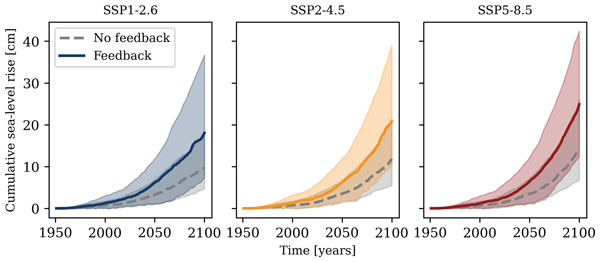
Ocean warming around Antarctica leads to ice melting and sea-level rise. The meltwater that flows into the surrounding ocean can lead to enhanced warming of the seawater, thereby again increasing melting and sea-level rise. This process, however, is not currently included in climate models. Through a simple mathematical approach, we find that this process can lead to more melting and greater sea-level rise, possibly increasing the Antarctic contribution to 21st century sea-level rise by 80 %.
Dewi Le Bars, Iris Keizer, and Sybren Drijfhout
Ocean Sci., 21, 1303–1314, https://doi.org/10.5194/os-21-1303-2025, https://doi.org/10.5194/os-21-1303-2025, 2025
Short summary
Short summary
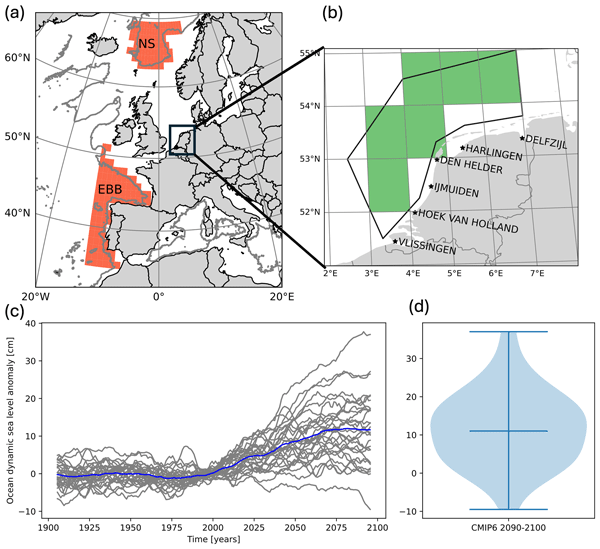
While preparing a new set of sea level scenarios for the Netherlands, we found out that many climate models overestimate the changes in ocean circulation for the last 30 years. To quantify this effect, we defined three methods that rely on diverse and independent observations: tide gauges, satellite altimetry, temperature and salinity in the ocean, land ice melt, etc. Based on these observations, we define a few methods to select models and discuss their advantages and disadvantages.
Iris Keizer, Dewi Le Bars, Cees de Valk, André Jüling, Roderik van de Wal, and Sybren Drijfhout
Ocean Sci., 19, 991–1007, https://doi.org/10.5194/os-19-991-2023, https://doi.org/10.5194/os-19-991-2023, 2023
Short summary
Short summary
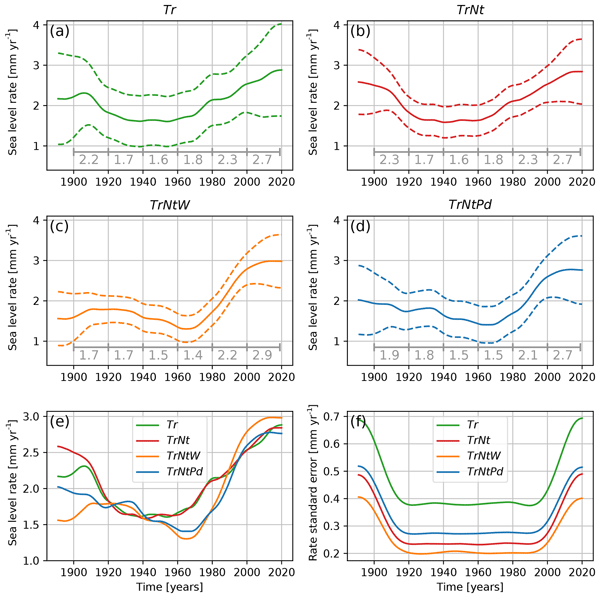
Using tide gauge observations, we show that the acceleration of sea-level rise (SLR) along the coast of the Netherlands started in the 1960s but was masked by wind field and nodal-tide variations. This finding aligns with global SLR observations and expectations based on a physical understanding of SLR related to global warming.
Eveline C. van der Linden, Dewi Le Bars, Erwin Lambert, and Sybren Drijfhout
The Cryosphere, 17, 79–103, https://doi.org/10.5194/tc-17-79-2023, https://doi.org/10.5194/tc-17-79-2023, 2023
Short summary
Short summary
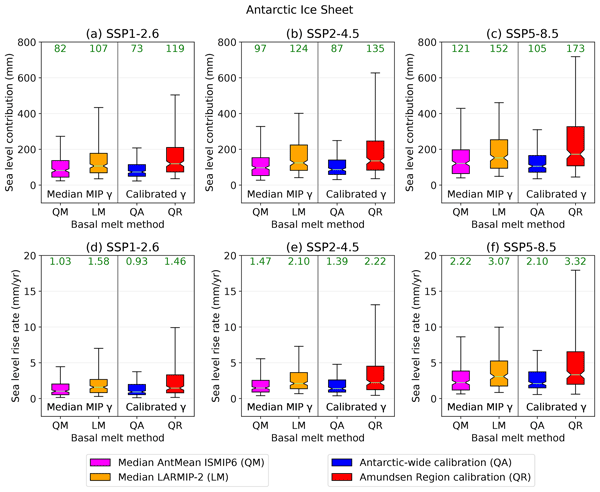
The Antarctic ice sheet (AIS) is the largest uncertainty in future sea level estimates. The AIS mainly loses mass through ice discharge, the transfer of land ice into the ocean. Ice discharge is triggered by warming ocean water (basal melt). New future estimates of AIS sea level contributions are presented in which basal melt is constrained with ice discharge observations. Despite the different methodology, the resulting projections are in line with previous multimodel assessments.
Cited articles
Abbot, D. S., Huber, M., Bousquet, G., and Walker, C. C.: High-CO2 cloud radiative forcing feedback over both land and ocean in a global climate model, Geophys. Res. Lett., 36, https://doi.org/10.1029/2008GL036703, 2009. a
Angevaare, J. R.: JoranAngevaare/optim_esm_tools: v4.0.0, Zenodo [code], https://doi.org/10.5281/zenodo.15275185, 2025a. a, b, c, d
Armstrong McKay, D. I., Staal, A., Abrams, J. F., Winkelmann, R., Sakschewski, B., Loriani, S., Fetzer, I., Cornell, S. E., Rockström, J., and Lenton, T. M.: Exceeding 1.5 C global warming could trigger multiple climate tipping points, Science, 377, eabn7950, https://doi.org/10.1126/science.abn7950, 2022. a, b, c, d, e, f, g, h, i
Bathiany, S., Hidding, J., and Scheffer, M.: Edge detection reveals abrupt and extreme climate events, J. Climate, 33, 6399–6421, https://doi.org/10.1175/JCLI-D-19-0449.1, 2020. a
Boers, N.: Observation-based early-warning signals for a collapse of the Atlantic Meridional Overturning Circulation, Nat. Clim. Change, 11, 680–688, https://doi.org/10.1038/s41558-021-01097-4, 2021. a
Bracegirdle, T. J., Shuckburgh, E., Sallee, J.-B., Wang, Z., Meijers, A. J., Bruneau, N., Phillips, T., and Wilcox, L. J.: Assessment of surface winds over the Atlantic, Indian, and Pacific Ocean sectors of the Southern Ocean in CMIP5 models: Historical bias, forcing response, and state dependence, J. Geophys. Res.-Atmos., 118, 547–562, https://doi.org/10.1002/jgrd.50153, 2013. a, b
Campello, R. J. G. B., Moulavi, D., and Sander, J.: Density-Based Clustering Based on Hierarchical Density Estimates, in: Advances in Knowledge Discovery and Data Mining, edited by: Pei, J., Tseng, V. S., Cao, L., Motoda, H., and Xu, G., 160–172, Springer Berlin Heidelberg, Berlin, Heidelberg, ISBN 978-3-642-37456-2, https://doi.org/10.1007/978-3-642-37456-2_14, 2013. a, b
Canny, J.: A computational approach to edge detection, IEEE T. Pattern Anal., 6, 679–698, https://doi.org/10.1109/TPAMI.1986.4767851, 1986. a
Davy, R. and Griewank, P.: Arctic amplification has already peaked, Environ. Res. Lett., 18, 084003, https://doi.org/10.1088/1748-9326/ace273, 2023. a
De Lavergne, C., Palter, J. B., Galbraith, E. D., Bernardello, R., and Marinov, I.: Cessation of deep convection in the open Southern Ocean under anthropogenic climate change, Nat. Clim. Change, 4, 278–282, https://doi.org/10.1038/nclimate2132, 2014. a
Ditlevsen, P. and Ditlevsen, S.: Warning of a forthcoming collapse of the Atlantic meridional overturning circulation, Nat. Commun., 14, 1–12, https://doi.org/10.1038/s41467-023-39810-w, 2023. a
Drews, A., Greatbatch, R. J., Ding, H., Latif, M., and Park, W.: The use of a flow field correction technique for alleviating the North Atlantic cold bias with application to the Kiel Climate Model, Ocean Dynam., 65, 1079–1093, https://doi.org/10.1007/s10236-015-0853-7, 2015. a
Drijfhout, S., Bathiany, S., Beaulieu, C., Brovkin, V., Claussen, M., Huntingford, C., Scheffer, M., Sgubin, G., and Swingedouw, D.: Catalogue of abrupt shifts in Intergovernmental Panel on Climate Change climate models, P. Natl. Acad. Sci. USA, 112, E5777–E5786, https://doi.org/10.1073/pnas.1511451112, 2015. a, b, c, d, e, f, g, h, i, j, k, l, m, n, o, p, q, r, s, t, u, v, w, x, y
Drijfhout, S., Angevaare, J. R., Mecking, J., van Westen, R. M., and Rahmstorf, S.: Shutdown of northern Atlantic overturning after 2100 following deep mixing collapse in CMIP6 projections, Environ. Res. Lett., 20, 094062, https://doi.org/10.1088/1748-9326/adfa3b, 2025. a, b, c, d, e, f, g, h, i, j, k, l, m
Drijfhout, S. S., Bull, C. Y., Hewitt, H., Holland, P. R., Jenkins, A., Mathiot, P., and Garabato, A. N.: An Amundsen Sea source of decadal temperature changes on the Antarctic continental shelf, Ocean Dynam., 74, 37–52, https://doi.org/10.1007/s10236-023-01587-3, 2024. a
Feldl, N., Po-Chedley, S., Singh, H. K., Hay, S., and Kushner, P. J.: Sea ice and atmospheric circulation shape the high-latitude lapse rate feedback, NPJ Climate and Atmospheric Science, 3, 41, https://doi.org/10.1038/s41612-020-00146-7, 2020. a
Fox-Kemper, B., Hewitt, H. T., Xiao, C., Adalgeirsdóttir, G., Drijfhout, S. S., Edwards, T. L., Golledge, N. R., Hemer, M., Kopp, R. E., Krinner, G., Mix, A., Notz, D., Nowicki, S., Nurhati, I., Ruiz, L., Sallée, J.-B., Slangen, A., and Yu, Y.: Ocean, cryosphere, and sea level change, in: Climate Change 2021: The Physical Science Basis. Contribution of Working Group I to the Sixth Assessment Report of the Intergovernmental Panel on Climate Change, Cambridge University Press, 1211–1361, https://doi.org/10.1017/9781009157896.011, 2021. a, b
Geen, R., Bordoni, S., Battisti, D. S., and Hui, K.: Monsoons, ITCZs, and the Concept of the Global Monsoon, Rev. Geophys., 58, e2020RG000700, https://doi.org/10.1029/2020RG000700, 2020. a
Gómez-Valdivia, F., Holland, P. R., Siahaan, A., Dutrieux, P., and Young, E.: Projected West Antarctic ocean warming caused by an expansion of the Ross Gyre, Geophys. Res. Lett., 50, e2023GL102978, https://doi.org/10.1029/2023GL102978, 2023. a
Hankel, C. and Tziperman, E.: The role of atmospheric feedbacks in abrupt winter Arctic sea ice loss in future warming scenarios, J. Climate, 34, 4435–4447, https://doi.org/10.1175/JCLI-D-20-0558.1, 2021. a
Hankel, C. and Tziperman, E.: Assessing the Robustness of Arctic Sea Ice Bi-Stability in the Presence of Atmospheric Feedbacks, J. Geophys. Res.-Atmos., 128, e2023JD039337, https://doi.org/10.1029/2023JD039337, 2023. a
Hartigan, J. A. and Hartigan, P. M.: The dip test of unimodality, Ann. Stat., 13, 70–84, https://doi.org/10.1214/aos/1176346577, 1985. a, b
Heuzé, C.: Antarctic Bottom Water and North Atlantic Deep Water in CMIP6 models, Ocean Sci., 17, 59–90, https://doi.org/10.5194/os-17-59-2021, 2021. a
Holland, P. R., Bracegirdle, T. J., Dutrieux, P., Jenkins, A., and Steig, E. J.: West Antarctic ice loss influenced by internal climate variability and anthropogenic forcing, Nat. Geosci., 12, 718–724, https://doi.org/10.1038/s41561-019-0420-9, 2019. a, b, c
Hwang, Y.-T. and Frierson, D. M.: Link between the double-Intertropical Convergence Zone problem and cloud biases over the Southern Ocean, P. Natl. Acad. Sci. USA, 110, 4935–4940, https://doi.org/10.1073/pnas.1213302110, 2013. a
Jesse, F., Le Bars, D., and Drijfhout, S.: Processes explaining increased ocean dynamic sea level in the North Sea in CMIP6, Environ. Res. Lett., 19, 044060, https://doi.org/10.1088/1748-9326/ad33d4, 2024. a
Kay, J. E., Holland, M. M., Bitz, C. M., Blanchard-Wrigglesworth, E., Gettelman, A., Conley, A., and Bailey, D.: The influence of local feedbacks and northward heat transport on the equilibrium Arctic climate response to increased greenhouse gas forcing, J. Climate, 25, 5433–5450, https://doi.org/10.1175/JCLI-D-11-00622.1, 2012. a
Kopp, R. E., Gilmore, E. A., Shwom, R. L., Adams, H., Adler, C., Oppenheimer, M., Patwardhan, A., Russill, C., Schmidt, D. N., and York, R.: `Tipping points' confuse and can distract from urgent climate action, Nat. Clim. Change, 15, 29–36, https://doi.org/10.1038/s41558-024-02196-8, 2025. a, b
Kuhlbrodt, T., Titz, S., Feudel, U., and Rahmstorf, S.: A simple model of seasonal open ocean convection: Part II: Labrador Sea stability and stochastic forcing, Ocean Dynam., 52, 36–49, https://doi.org/10.1007/s10236-001-8175-3, 2001. a
Lee, J.-Y., Marotzke, J., Bala, G., Cao, L., Corti, S., Dunne, J., Engelbrecht, F., Fischer, E., Fyfe, J., Jones, C., Maycock, A., Mutemi, J., Niaye, O., Panickal, S., Zhou, T., and Christensen, H.: Future global climate: scenario-based projections and near-term information, IPCC Assessment Reports, Cambridge University Press, 553–672, https://doi.org/10.1017/9781009157896.006, 2021. a
Lenderink, G. and Haarsma, R. J.: Modeling Convective Transitions in the Presence of Sea lce, J. Phys. Oceanogr., 26, 1448–1467, https://doi.org/10.1175/1520-0485(1996)026<1448:MCTITP>2.0.CO;2, 1996. a
Lenton, T. M., Held, H., Kriegler, E., Hall, J. W., Lucht, W., Rahmstorf, S., and Schellnhuber, H. J.: Tipping elements in the Earth's climate system, P. Natl. Acad. Sci. USA, 105, 1786–1793, https://doi.org/10.1073/pnas.0705414105, 2008. a
Loriani, S., Aksenov, Y., Armstrong McKay, D. I., Bala, G., Born, A., Chiessi, C. M., Dijkstra, H. A., Donges, J. F., Drijfhout, S., England, M. H., Fedorov, A. V., Jackson, L. C., Kornhuber, K., Messori, G., Pausata, F. S. R., Rynders, S., Sallée, J.-B., Sinha, B., Sherwood, S. C., Swingedouw, D., and Tharammal, T.: Tipping points in ocean and atmosphere circulations, Earth Syst. Dynam., 16, 1611–1653, https://doi.org/10.5194/esd-16-1611-2025, 2025. a, b, c, d
Mchedlishvili, A., Spreen, G., Melsheimer, C., and Huntemann, M.: Weddell Sea polynya analysis using SMOS–SMAP apparent sea ice thickness retrieval, The Cryosphere, 16, 471–487, https://doi.org/10.5194/tc-16-471-2022, 2022. a, b
McInnes, L. and Healy, J.: Accelerated hierarchical density based clustering, in: 2017 IEEE international conference on data mining workshops (ICDMW), IEEE, 33–42, https://doi.org/10.1109/ICDMW.2017.12, 2017. a
Mecking, J. V. and Drijfhout, S. S.: The decrease in ocean heat transport in response to global warming, Nat. Clim. Change, 13, 1229–1236, https://doi.org/10.1038/s41558-023-01829-8, 2023. a, b
Menary, M. B., Robson, J., Allan, R. P., Booth, B. B. B., Cassou, C., Gastineau, G., Gregory, J., Hodson, D., Jones, C., Mignot, J., Ringer, M., Sutton, R., Wilcox, L., and Zhang, R.: Aerosol-Forced AMOC Changes in CMIP6 Historical Simulations, Geophys. Res. Lett., 47, e2020GL088166, https://doi.org/10.1029/2020GL088166, e2020GL088166 2020GL088166, 2020. a
Meredith, M., Sommerkorn, M., Cassotta, S., Derksen, C., Ekaykin, A., Hollowed, A., Kofinas, G., Mackintosh, A., Muelbert, M., Melbourne-Thomas, J., Ottersen, G., Pritchard, H., and Schuur, E.: Chapter 3: Polar Regions, in: The Ocean and Cryosphere in a Changing Climate, edited by: Anisimov, O., Flato, G., and Xiao, C., Intergovernmental Panel on Climate Change, 3-1–3-173, https://doi.org/10.1017/9781009157964.005, 2019. a
Moreno-Chamarro, E., Caron, L.-P., Loosveldt Tomas, S., Vegas-Regidor, J., Gutjahr, O., Moine, M.-P., Putrasahan, D., Roberts, C. D., Roberts, M. J., Senan, R., Terray, L., Tourigny, E., and Vidale, P. L.: Impact of increased resolution on long-standing biases in HighResMIP-PRIMAVERA climate models, Geosci. Model Dev., 15, 269–289, https://doi.org/10.5194/gmd-15-269-2022, 2022. a, b
Morioka, Y., Manabe, S., Zhang, L., Delworth, T. L., Cooke, W., Nonaka, M., and Behera, S. K.: Antarctic sea ice multidecadal variability triggered by Southern Annular Mode and deep convection, Communications Earth & Environment, 5, 633, https://doi.org/10.1038/s43247-024-01783-z, 2024. a
Munday, D. R., Johnson, H. L., and Marshall, D. P.: Eddy saturation of equilibrated circumpolar currents, J. Phys. Oceanogr., 43, 507–532, https://doi.org/10.1175/JPO-D-12-095.1, 2013. a
Naughten, K. A., Holland, P. R., Dutrieux, P., Kimura, S., Bett, D. T., and Jenkins, A.: Simulated twentieth-century ocean warming in the Amundsen Sea, West Antarctica, Geophys. Res. Lett., 49, e2021GL094566, https://doi.org/10.1029/2021GL094566, 2022. a, b
Notz, D. and SIMIP Community: Arctic Sea Ice in CMIP6, Geophys. Res. Lett., 47, e2019GL086749, https://doi.org/10.1029/2019GL086749, 2020. a
O'Neill, B. C., Tebaldi, C., van Vuuren, D. P., Eyring, V., Friedlingstein, P., Hurtt, G., Knutti, R., Kriegler, E., Lamarque, J.-F., Lowe, J., Meehl, G. A., Moss, R., Riahi, K., and Sanderson, B. M.: The Scenario Model Intercomparison Project (ScenarioMIP) for CMIP6, Geosci. Model Dev., 9, 3461–3482, https://doi.org/10.5194/gmd-9-3461-2016, 2016. a
Portmann, V., Swingedouw, D., Khattab, O., and Chavent, M.: Observational constraints project a ∼ 50 % AMOC weakening by the end of this century, Science Advances, 12, eadx4298, https://doi.org/10.1126/sciadv.adx4298, 2026. a, b
Rheinlænder, J. W., Smedsrud, L. H., and Nisanciouglu, K. H.: Internal ocean dynamics control the long-term evolution of Weddell Sea Polynya activity, Frontiers in Climate, 3, 718016, https://doi.org/10.3389/fclim.2021.718016, 2021. a, b
Robson, J., Menary, M. B., Sutton, R. T., Mecking, J., Gregory, J. M., Jones, C., Sinha, B., Stevens, D. P., and Wilcox, L. J.: The Role of Anthropogenic Aerosol Forcing in the 1850–1985 Strengthening of the AMOC in CMIP6 Historical Simulations, J. Climate, 35, 6843–6863, https://doi.org/10.1175/JCLI-D-22-0124.1, 2022. a
Romanou, A., Rind, D., Jonas, J., Miller, R., Kelley, M., Russell, G., Orbe, C., Nazarenko, L., Latto, R., and Schmidt, G. A.: Stochastic Bifurcation of the North Atlantic Circulation under a Midrange Future Climate Scenario with the NASA-GISS ModelE, J. Climate, 36, 6141–6161, https://doi.org/10.1175/JCLI-D-22-0536.1, 2023. a
Rose, B. E. and Marshall, J.: Ocean heat transport, sea ice, and multiple climate states: Insights from energy balance models, J. Atmos. Sci., 66, 2828–2843, https://doi.org/10.1175/2009jas3039.1, 2009. a
Schulzweida, U.: CDO User Guide, Zenodo, https://doi.org/10.5281/zenodo.10020800, 2023. a
Sgubin, G., Swingedouw, D., Drijfhout, S., Mary, Y., and Bennabi, A.: Abrupt cooling over the North Atlantic in modern climate models, Nat. Commun., 8, 14375, https://doi.org/10.1038/ncomms14375, 2017. a, b
Stewart, A. L., Neumann, N. K., and Solodoch, A.: “Eddy” Saturation of the Antarctic Circumpolar Current by Standing Waves, J. Phys. Oceanogr., 53, 1161–1181, https://doi.org/10.1175/JPO-D-22-0154.1, 2023. a
Taylor, K. E., Stouffer, R. J., and Meehl, G. A.: An overview of CMIP5 and the experiment design, B. Am. Meteorol. Soc., 93, 485–498, https://doi.org/10.1175/BAMS-D-11-00094.1, 2012. a
Terpstra, S., Falkena, S. K. J., Bastiaansen, R., Bathiany, S., Dijkstra, H. A., and von der Heydt, A. S.: Assessment of Abrupt Shifts in CMIP6 Models Using Edge Detection, AGU Advances, 6, e2025AV001698, https://doi.org/10.1029/2025AV001698, 2025. a, b, c
Thompson, A. F., Stewart, A. L., Spence, P., and Heywood, K. J.: The Antarctic Slope Current in a changing climate, Rev. Geophys., 56, 741–770, https://doi.org/10.1029/2018RG000624, 2018. a
Tian, B. and Dong, X.: The Double-ITCZ Bias in CMIP3, CMIP5, and CMIP6 Models Based on Annual Mean Precipitation, Geophys. Res. Lett., 47, e2020GL087232, https://doi.org/10.1029/2020GL087232, 2020. a
Våge, K., Papritz, L., Håvik, L., Spall, M., and Moore, G.: Ocean convection linked to the recent ice edge retreat along east Greenland, Nat. Commun., 9, 1287, https://doi.org/10.1038/s41467-018-03468-6, 2018. a
van Westen, R. M., Vanderborght, E. Y., Kliphuis, M., and Dijkstra, H. A.: Substantial Risk of 21st Century AMOC Tipping even under Moderate Climate Change, arXiv [preprint], https://doi.org/10.48550/arXiv.2407.19909, 2024. a
Wunderling, N., von der Heydt, A. S., Aksenov, Y., Barker, S., Bastiaansen, R., Brovkin, V., Brunetti, M., Couplet, V., Kleinen, T., Lear, C. H., Lohmann, J., Roman-Cuesta, R. M., Sinet, S., Swingedouw, D., Winkelmann, R., Anand, P., Barichivich, J., Bathiany, S., Baudena, M., Bruun, J. T., Chiessi, C. M., Coxall, H. K., Docquier, D., Donges, J. F., Falkena, S. K. J., Klose, A. K., Obura, D., Rocha, J., Rynders, S., Steinert, N. J., and Willeit, M.: Climate tipping point interactions and cascades: a review, Earth Syst. Dynam., 15, 41–74, https://doi.org/10.5194/esd-15-41-2024, 2024. a
Zelinka, M. D., Myers, T. A., McCoy, D. T., Po-Chedley, S., Caldwell, P. M., Ceppi, P., Klein, S. A., and Taylor, K. E.: Causes of higher climate sensitivity in CMIP6 models, Geophys. Res. Lett., 47, e2019GL085782, https://doi.org/10.1029/2019GL085782, 2020. a, b
Zhang, G. J., Song, X., and Wang, Y.: The double ITCZ syndrome in GCMs: A coupled feedback problem among convection, clouds, atmospheric and ocean circulations, Atmos. Res., 229, 255–268, https://doi.org/10.1016/j.atmosres.2019.06.023, 2019. a
Editorial statement
This paper provides important insights on possible abrupt shifts and state transitions under future climate change. The comprehensive catalogue presented in the paper spans changes in multiple components of the Earth system. These can have major impacts on both the climate system and other dependent systems, from ecosystems to society and the economy. The paper also makes the case for the possibility of Strong Nonlinear Surprises happening earlier than previously anticipated.
This paper provides important insights on possible abrupt shifts and state transitions under...
Short summary
We present a first catalogue of abrupt changes/state transitions in ocean, sea-ice, and atmospheric variables in future Coupled Model Intercomparison Project Phase 6 climate scenarios. We find many models that show Arctic sea-ice disappearance, North Atlantic winter mixed-layer collapse and/or subsequent transition of the Atlantic Meridional Overturning Circulation to a weak state. We find more abrupt changes/state transitions than in previous work at lower global warming levels.
We present a first catalogue of abrupt changes/state transitions in ocean, sea-ice, and...
Altmetrics
Final-revised paper
Preprint