
Articles | Volume 17, issue 4
https://doi.org/10.5194/esd-17-987-2026
© Author(s) 2026. This work is distributed under
the Creative Commons Attribution 4.0 License.
the Creative Commons Attribution 4.0 License.
https://doi.org/10.5194/esd-17-987-2026
© Author(s) 2026. This work is distributed under
the Creative Commons Attribution 4.0 License.
the Creative Commons Attribution 4.0 License.
Research article
| 
13 Jul 2026
Research article |
| 13 Jul 2026
| 13 Jul 2026
Amplification of ENSO-driven vegetation variability at decadal and longer timescales
Nora L. S. Fahrenbach
CORRESPONDING AUTHOR

Institute for Atmospheric and Climate Science, ETH Zurich, Zurich, Switzerland
Robert C. J. Wills
Institute for Atmospheric and Climate Science, ETH Zurich, Zurich, Switzerland
Related authors
Simon P. Heselschwerdt, Abhinav Dengri, Nora L. S. Fahrenbach, and Peter Greve
EGUsphere, https://doi.org/10.5194/egusphere-2026-513, https://doi.org/10.5194/egusphere-2026-513, 2026
Short summary
Short summary
Land-use and land-cover change (LULCC) can alter how precipitation is divided between river flow and water used by plants. To understand the water impacts of future LULCC, we analyse four Earth system models under a sustainable LULCC pathway. Conservation often increases plant water use, strongest in tropical dry seasons. Yet, additional rainfall reduces losses in river water in some places. Differences among models mean regional water outcomes remain uncertain for land and water planning.
Nora L. S. Fahrenbach, Robert C. J. Wills, and Steven J. De Hertog
Weather Clim. Dynam., 6, 1461–1477, https://doi.org/10.5194/wcd-6-1461-2025, https://doi.org/10.5194/wcd-6-1461-2025, 2025
Short summary
Short summary
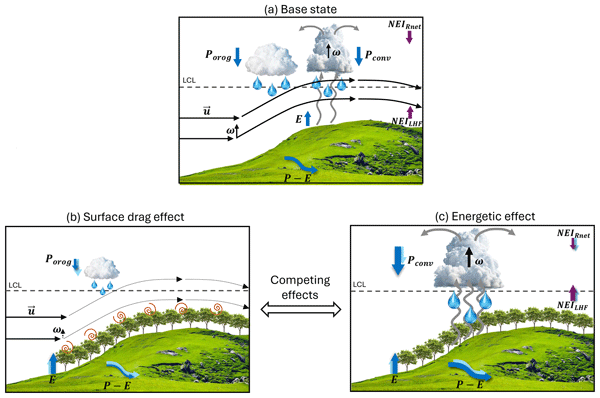
Afforestation is a key strategy for climate change mitigation, yet the impacts on tropical hydroclimate remain uncertain. We find that potential future afforestation would increase evaporation and precipitation in the tropics, especially over Africa. However, it would reduce net precipitation (precipitation minus evaporation), which determines water availability. This happens because trees slow near-surface winds, while their influence on the energy budget would otherwise strengthen convection.
Kalle Nordling, Nora L. S. Fahrenbach, and Bjørn H. Samset
Atmos. Chem. Phys., 25, 1659–1684, https://doi.org/10.5194/acp-25-1659-2025, https://doi.org/10.5194/acp-25-1659-2025, 2025
Short summary
Short summary
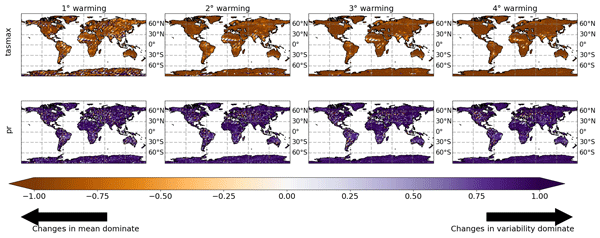
People experience daily weather, not changes in monthly averages. We investigate the likelihood of events, which occurred once every 10 years in the pre-industrial era. We analyze how summertime precipitation and daily maximum temperature events evolve. Our focus is on understanding the role of day-to-day variability in the change in the number of extreme weather days. We find that in most regions, a change in variability is the primary driver for change in summertime extreme precipitation.
Simon P. Heselschwerdt, Abhinav Dengri, Nora L. S. Fahrenbach, and Peter Greve
EGUsphere, https://doi.org/10.5194/egusphere-2026-513, https://doi.org/10.5194/egusphere-2026-513, 2026
Short summary
Short summary
Land-use and land-cover change (LULCC) can alter how precipitation is divided between river flow and water used by plants. To understand the water impacts of future LULCC, we analyse four Earth system models under a sustainable LULCC pathway. Conservation often increases plant water use, strongest in tropical dry seasons. Yet, additional rainfall reduces losses in river water in some places. Differences among models mean regional water outcomes remain uncertain for land and water planning.
Anurag Dipankar, Mauro Bianco, Mona Bukenberger, Till Ehrengruber, Nicoletta Farabullini, Oliver Fuhrer, Abishek Gopal, Daniel Hupp, Andreas Jocksch, Samuel Kellerhals, Clarissa A. Kroll, Xavier Lapillonne, Matthieu Leclair, Magdalena Luz, Christoph Müller, Chia Rui Ong, Carlos Osuna, Praveen Pothapakula, Andreas Prein, Matthias Röthlin, William Sawyer, Christoph Schär, Sebastian Schemm, Giacomo Serafini, Hannes Vogt, Ben Weber, Robert C. Jnglin Wills, Nicolas Gruber, and Thomas C. Schulthess
Geosci. Model Dev., 19, 713–729, https://doi.org/10.5194/gmd-19-713-2026, https://doi.org/10.5194/gmd-19-713-2026, 2026
Short summary
Short summary
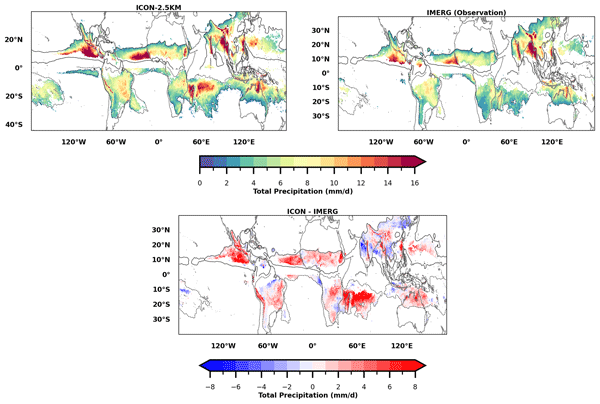
Climate models are becoming more detailed and accurate by simulating weather at scales of just a few kilometers. Simulating at km-scale is computationally demanding requiring powerful supercomputers and efficient code. This work presents a refactored dynamical core of a state-of-the-art climate model using a Python-based approach. The refactored code has passed through a sequence of verification and validation demonstrating its usability in performing km-scale global simulations.
Clarissa A. Kroll, Robert C. Jnglin Wills, Luis Kornblueh, Ulrike Niemeier, and Andrea Schneidereit
Atmos. Chem. Phys., 25, 16915–16943, https://doi.org/10.5194/acp-25-16915-2025, https://doi.org/10.5194/acp-25-16915-2025, 2025
Short summary
Short summary
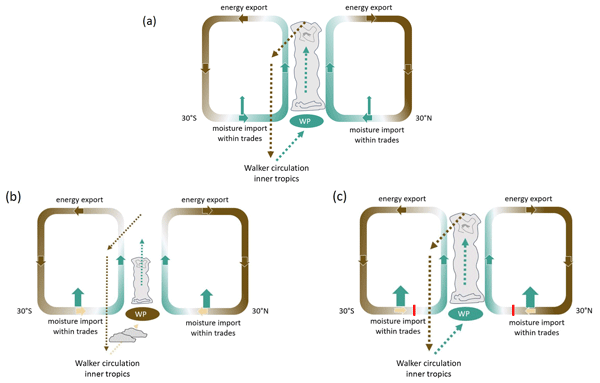
The double Inter-Tropical Convergence Zone is a prominent precipitation bias in climate models. We demonstrate its persistence from a resolution of 160 km up to 5 km. Its root cause lies in biased moisture transport from the subtropics to the inner tropics reducing convection and weakening tropical circulation. Increasing the surface wind speed addresses the bias, but deteriorates the global circulation. This highlights the importance of resolution hierarchies and parametrization development.
Nora L. S. Fahrenbach, Robert C. J. Wills, and Steven J. De Hertog
Weather Clim. Dynam., 6, 1461–1477, https://doi.org/10.5194/wcd-6-1461-2025, https://doi.org/10.5194/wcd-6-1461-2025, 2025
Short summary
Short summary
Afforestation is a key strategy for climate change mitigation, yet the impacts on tropical hydroclimate remain uncertain. We find that potential future afforestation would increase evaporation and precipitation in the tropics, especially over Africa. However, it would reduce net precipitation (precipitation minus evaporation), which determines water availability. This happens because trees slow near-surface winds, while their influence on the energy budget would otherwise strengthen convection.
Nicola Maher, Adam S. Phillips, Clara Deser, Robert C. Jnglin Wills, Flavio Lehner, John Fasullo, Julie M. Caron, Lukas Brunner, Urs Beyerle, and Jemma Jeffree
Geosci. Model Dev., 18, 6341–6365, https://doi.org/10.5194/gmd-18-6341-2025, https://doi.org/10.5194/gmd-18-6341-2025, 2025
Short summary
Short summary
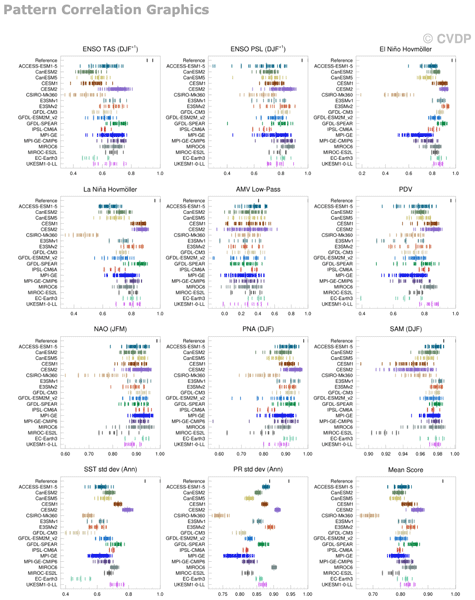
We present the new Multi-Model Large Ensemble Archive (MMLEAv2) and introduce the newly updated Climate Variability Diagnostics Package version 6 (CVDPv6), which is designed specifically for use with large ensembles. For highly variable quantities, we demonstrate that a model might perform evaluation poorly or favourably compared to the single realisation of the world that the observations represent, highlighting the need for large ensembles for model evaluation.
Kalle Nordling, Nora L. S. Fahrenbach, and Bjørn H. Samset
Atmos. Chem. Phys., 25, 1659–1684, https://doi.org/10.5194/acp-25-1659-2025, https://doi.org/10.5194/acp-25-1659-2025, 2025
Short summary
Short summary
People experience daily weather, not changes in monthly averages. We investigate the likelihood of events, which occurred once every 10 years in the pre-industrial era. We analyze how summertime precipitation and daily maximum temperature events evolve. Our focus is on understanding the role of day-to-day variability in the change in the number of extreme weather days. We find that in most regions, a change in variability is the primary driver for change in summertime extreme precipitation.
Tapio Schneider, L. Ruby Leung, and Robert C. J. Wills
Atmos. Chem. Phys., 24, 7041–7062, https://doi.org/10.5194/acp-24-7041-2024, https://doi.org/10.5194/acp-24-7041-2024, 2024
Short summary
Short summary
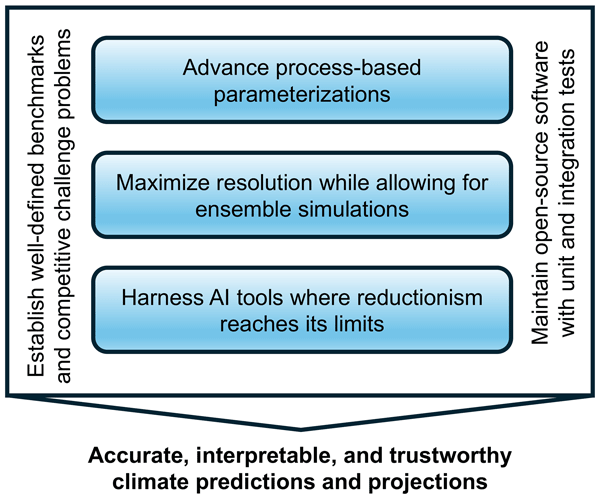
Climate models are crucial for predicting climate change in detail. This paper proposes a balanced approach to improving their accuracy by combining traditional process-based methods with modern artificial intelligence (AI) techniques while maximizing the resolution to allow for ensemble simulations. The authors propose using AI to learn from both observational and simulated data while incorporating existing physical knowledge to reduce data demands and improve climate prediction reliability.
David B. Bonan, Jakob Dörr, Robert C. J. Wills, Andrew F. Thompson, and Marius Årthun
The Cryosphere, 18, 2141–2159, https://doi.org/10.5194/tc-18-2141-2024, https://doi.org/10.5194/tc-18-2141-2024, 2024
Short summary
Short summary
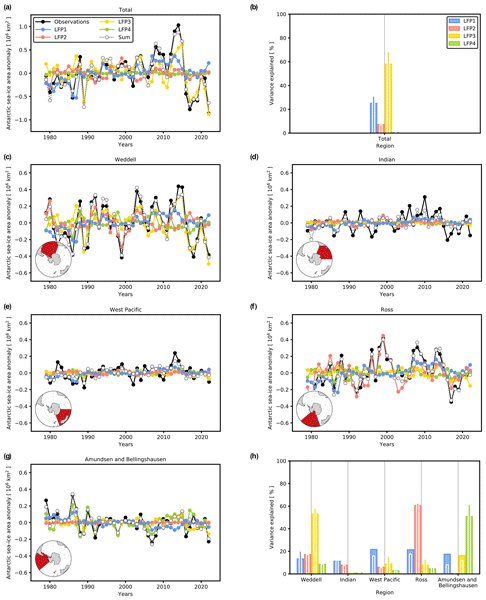
Antarctic sea ice has exhibited variability over satellite records, including a period of gradual expansion and a period of sudden decline. We use a novel statistical method to identify sources of variability in observed Antarctic sea ice changes. We find that the gradual increase in sea ice is likely related to large-scale temperature trends, and periods of abrupt sea ice decline are related to specific flavors of equatorial tropical variability known as the El Niño–Southern Oscillation.
Jakob Simon Dörr, David B. Bonan, Marius Årthun, Lea Svendsen, and Robert C. J. Wills
The Cryosphere, 17, 4133–4153, https://doi.org/10.5194/tc-17-4133-2023, https://doi.org/10.5194/tc-17-4133-2023, 2023
Short summary
Short summary
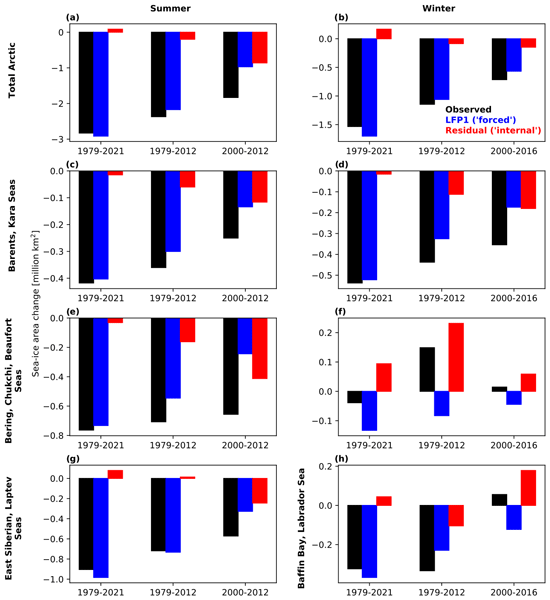
The Arctic sea-ice cover is retreating due to climate change, but this retreat is influenced by natural (internal) variability in the climate system. We use a new statistical method to investigate how much internal variability has affected trends in the summer and winter Arctic sea-ice cover using observations since 1979. Our results suggest that the impact of internal variability on sea-ice retreat might be lower than what climate models have estimated.
Nicola Maher, Robert C. Jnglin Wills, Pedro DiNezio, Jeremy Klavans, Sebastian Milinski, Sara C. Sanchez, Samantha Stevenson, Malte F. Stuecker, and Xian Wu
Earth Syst. Dynam., 14, 413–431, https://doi.org/10.5194/esd-14-413-2023, https://doi.org/10.5194/esd-14-413-2023, 2023
Short summary
Short summary
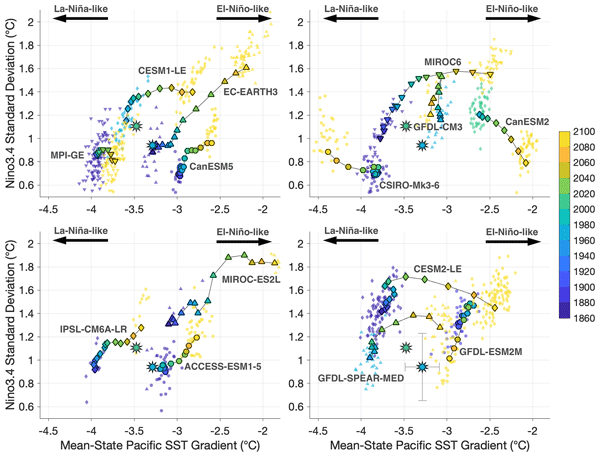
Understanding whether the El Niño–Southern Oscillation (ENSO) is likely to change in the future is important due to its widespread impacts. By using large ensembles, we can robustly isolate the time-evolving response of ENSO variability in 14 climate models. We find that ENSO variability evolves in a nonlinear fashion in many models and that there are large differences between models. These nonlinear changes imply that ENSO impacts may vary dramatically throughout the 21st century.
Cited articles
Akinsanola, A. A., Wenhaji, C. N., Barimalala, R., Monerie, P. a., Dixon, R. D., Tamoffo, A. T., Adeniyi, M. O., Ongoma, V., Diallo, I., Gudoshava, M., Wainwright, C. M., James, R., Silverio, K. C., Faye, A., Nangombe, S. S., Pokam, M. W., Vondou, D. A., Hart, N. C. G., Pinto, I., Kilavi, M., Hagos, S., Rajagopal, E. N., Kolli, R. K., and Joseph, S.: Modeling of precipitation over Africa: Progress, challenges, and prospects, Adv. Atmos. Sci., 43, 59–86, https://doi.org/10.1007/s00376-024-4187-6, 2026. a
Alessandri, A. and Navarra, A.: On the coupling between vegetation and rainfall inter-annual anomalies: Possible contributions to seasonal rainfall predictability over land areas, Geophys. Res. Lett., 35, https://doi.org/10.1029/2007GL032415, 2008. a, b
Alessandri, A., Catalano, F., De Felice, M., Van den Hurk, B., Doblas Reyes, F., Boussetta, S., Balsamo, G., and Miller, P. A.: Multi-scale enhancement of climate prediction over land by increasing the model sensitivity to vegetation variability in EC-Earth, Clim. Dynam., 49, 1215–1237, https://doi.org/10.1007/s00382-016-3372-4, 2017. a
Baron, R. M. and Kenny, D. A.: The moderator mediator variable distinction in social psychological-research – Conceptual, strategic, and statistical considerations, J. Pers. Soc. Psychol., 51, 1173–1182, https://doi.org/10.1037/0022-3514.51.6.1173, 1986. a
Bellucci, A., Haarsma, R., Bellouin, N., Booth, B., Cagnazzo, C., van den Hurk, B., Keenlyside, N., Koenigk, T., Massonnet, F., Materia, S., and Weiss, M.: Advancements in decadal climate predictability: The role of nonoceanic drivers, Rev. Geophys., 53, 165–202, https://doi.org/10.1002/2014RG000473, 2015. a
Bonan, G. B.: Forests and climate change: Forcings, feedbacks, and the climate benefits of forests, Science, 320, 1444–1449, https://doi.org/10.1126/science.1155121, 2008. a
Boucher, O., Servonnat, J., Albright, A. L., Aumont, O., Balkanski, Y., Bastrikov, V., Bekki, S., Bonnet, R., Bony, S., Bopp, L., Braconnot, P., Brockmann, P., Cadule, P., Caubel, A., Cheruy, F., Codron, F., Cozic, A., Cugnet, D., D'Andrea, F., Davini, P., de Lavergne, C., Denvil, S., Deshayes, J., Devilliers, M., Ducharne, A., Dufresne, J.-L., Dupont, E., Ethe, C., Fairhead, L., Falletti, L., Flavoni, S., Foujols, M.-A., Gardoll, S., Gastineau, G., Ghattas, J., Grandpeix, J.-Y., Guenet, B., Guez, L. E., Guilyardi, E., Guimberteau, M., Hauglustaine, D., Hourdin, F., Idelkadi, A., Joussaume, S., Kageyama, M., Khodri, M., Krinner, G., Lebas, N., Levavasseur, G., Levy, C., Li, L., Lott, F., Lurton, T., Luyssaert, S., Madec, G., Madeleine, J.-B., Maignan, F., Marchand, M., Marti, O., Mellul, L., Meurdesoif, Y., Mignot, J., Musat, I., Ottle, C., Peylin, P., Planton, Y., Polcher, J., Rio, C., Rochetin, N., Rousset, C., Sepulchre, P., Sima, A., Swingedouw, D., Thieblemont, R., Traore, A. K., Vancoppenolle, M., Vial, J., Vialard, J., Viovy, N., and Vuichard, N.: Presentation and Evaluation of the IPSL-CM6A-LR Climate Model, J. Adv. Model. Earth Syst., 12, https://doi.org/10.1029/2019MS002010, 2020. a
Brunner, L., Hauser, M., Lorenz, R., and Beyerle, U.: The ETH Zurich CMIP6 next generation archive: technical documentation, ETH Zurich, Institute for Atmospheric and Climate Science, Zenodo, https://doi.org/10.5281/zenodo.3734128, 2020. a
Buermann, W., Wang, Y., Dong, J., Zhou, L., Zeng, X., Dickinson, R., Potter, C., and Myneni, R.: Analysis of a multiyear global vegetation leaf area index data set, J. Geophys. Res.-Atmos., 107, https://doi.org/10.1029/2001JD000975, 2002. a, b
Carter, G. C.: Coherence and time-delay estimation, Proc. IEEE, 75, 236–255, https://doi.org/10.1109/PROC.1987.13723, 1987. a
Catalano, F., Alessandri, A., De Felice, M., Zhu, Z., and Myneni, R. B.: Observationally based analysis of land-atmosphere coupling, Earth Syst. Dynam., 7, 251–266, https://doi.org/10.5194/esd-7-251-2016, 2016. a, b, c
Clark, D. B., Mercado, L. M., Sitch, S., Jones, C. D., Gedney, N., Best, M. J., Pryor, M., Rooney, G. G., Essery, R. L. H., Blyth, E., Boucher, O., Harding, R. J., Huntingford, C., and Cox, P. M.: The Joint UK Land Environment Simulator (JULES), model description – Part 2: Carbon fluxes and vegetation dynamics, Geosci. Model Dev., 4, 701–722, https://doi.org/10.5194/gmd-4-701-2011, 2011. a
Danabasoglu, G., Lamarque, J. F., Bacmeister, J., Bailey, D. A., DuVivier, A. K., Edwards, J., Emmons, L. K., Fasullo, J., Garcia, R., Gettelman, A., Hannay, C., Holland, M. M., Large, W. G., Lauritzen, P. H., Lawrence, D. M., Lenaerts, J. T. M., Lindsay, K., Lipscomb, W. H., Mills, M. J., Neale, R., Oleson, K. W., Otto-Bliesner, B., Phillips, A. S., Sacks, W., Tilmes, S., Van Kampenhout, L., Vertenstein, M., Bertini, A., Dennis, J., Deser, C., Fischer, C., Fox-Kemper, B., Kay, J. E., Kinnison, D., Kushner, P. J., Larson, V. E., Long, M. C., Mickelson, S., Moore, J. K., Nienhouse, E., Polvani, L., Rasch, P. J., and Strand, W. G.: The Community Earth System Model Version 2 (CESM2), J. Adv. Model. Earth Syst., 12, https://doi.org/10.1029/2019MS001916, 2020. a
Delire, C., de Noblet-Ducoudre, N., Sima, A., and Gouirand, I.: Vegetation Dynamics Enhancing Long-Term Climate Variability Confirmed by Two Models, J. Climate, 24, 2238–2257, https://doi.org/10.1175/2010JCLI3664.1, 2011. a
Deser, C., Alexander, M. A., Xie, S.-P., and Phillips, A. S.: Sea Surface Temperature Variability: Patterns and Mechanisms, Annu. Rev. Mar. Sci., 2, 115–143, https://doi.org/10.1146/annurev-marine-120408-151453, 2010. a
Dodson-Robinson, S. E. and Haley, C.: Multitaper Magnitude-Squared Coherence for Time Series With Missing Data: Understanding Oscillatory Processes Traced by Multiple Observables, Earth Space Sci., 12, https://doi.org/10.1029/2025EA004256, 2025. a
Dong, B., Sutton, R., and Scaife, A.: Multidecadal modulation of El Nino-Southern Oscillation (ENSO) variance by Atlantic Ocean sea surface temperatures, Geophys. Res. Lett., 33, https://doi.org/10.1029/2006GL025766, 2006. a
Doscher, R., Acosta, M., Alessandri, A., Anthoni, P., Arsouze, T., Bergman, T., Bernardello, R., Boussetta, S., Caron, L.-P., Carver, G., Castrillo, M., Catalano, F., Cvijanovic, I., Davini, P., Dekker, E., Doblas-Reyes, F. J., Docquier, D., Echevarria, P., Fladrich, U., Fuentes-Franco, R., Groger, M., Hardenberg, V, J., Hieronymus, J., Karami, M. P., Keskinen, J.-P., Koenigk, T., Makkonen, R., Massonnet, F., Menegoz, M., Miller, P. A., Moreno-Chamarro, E., Nieradzik, L., van Noije, T., Nolan, P., O'Donnell, D., Ollinaho, P., van den Oord, G., Ortega, P., Tinto Prims, O., Ramos, A., Reerink, T., Rousset, C., Ruprich-Robert, Y., Le Sager, P., Schmith, T., Schrodner, R., Serva, F., Sicardi, V., Madsen, M. S., Smith, B., Tian, T., Tourigny, E., Uotila, P., Vancoppenolle, M., Wang, S., Warlind, D., Willen, U., Wyser, K., Yang, S., Yepes-Arbos, X., and Zhang, Q.: The EC-Earth3 Earth System Model for the Coupled Model Intercomparison Project 6, Geosci. Model Dev., 15, 2973–3020, https://doi.org/10.5194/gmd-15-2973-2022, 2022. a
Dunne, J. P., Horowitz, L. W., Adcroft, A. J., Ginoux, P., Held, I. M., John, J. G., Krasting, J. P., Malyshev, S., Naik, V., Paulot, F., Shevliakova, E., Stock, C. A., Zadeh, N., Balaji, V., Blanton, C., Dunne, K. A., Dupuis, C., Durachta, J., Dussin, R., Gauthier, P. P. G., Griffies, S. M., Guo, H., Hallberg, R. W., Harrison, M., He, J., Hurlin, W., McHugh, C., Menzel, R., Milly, P. C. D., Nikonov, S., Paynter, D. J., Ploshay, J., Radhakrishnan, A., Rand, K., Reichl, B. G., Robinson, T., Schwarzkopf, D. M., Sentman, L. T., Underwood, S., Vahlenkamp, H., Winton, M., Wittenberg, A. T., Wyman, B., Zeng, Y., and Zhao, M.: The GFDL Earth System Model Version 4.1 (GFDL-ESM 4.1): Overall Coupled Model Description and Simulation Characteristics, J. Adv. Model. Earth Syst., 12, https://doi.org/10.1029/2019MS002015, 2020. a
Ebisuzaki, W.: A method to estimate the statistical significance of a correlation when the data are serially correlated, J. Climate, 10, 2147–2153, https://doi.org/10.1175/1520-0442(1997)010<2147:AMTETS>2.0.CO;2, 1997. a
Eyring, V., Bony, S., Meehl, G. A., Senior, C. A., Stevens, B., Stouffer, R. J., and Taylor, K. E.: Overview of the Coupled Model Intercomparison Project Phase 6 (CMIP6) experimental design and organization, Geosci. Model Dev., 9, 1937–1958, https://doi.org/10.5194/gmd-9-1937-2016, 2016. a, b
Fahrenbach, N. L. S. and Wills, R. C. J.: Auxiliary code for Fahrenbach and Wills 2026 – “Amplification of ENSO-driven vegetation variability at decadal and longer timescales”, in: Earth System Dynamics, Zenodo [code], https://doi.org/10.5281/zenodo.17950444, 2025 a
Frankenberg, C., Yin, Y., Byrne, B., He, L., and Gentine, P.: Comment on “Recent global decline of CO2 fertilization effects on vegetation photosynthesis”, Science, 373, https://doi.org/10.1126/science.abg2947, 2021. a
Friedlingstein, P., O'Sullivan, M., Jones, M. W., Andrew, R. M., Hauck, J., Landschutzer, P., Le Quere, C., Li, H., Luijkx, I. T., Olsen, A., Peters, G. P., Peters, W., Pongratz, J., Schwingshackl, C., Sitch, S., Canadell, J. G., Ciais, P., Jackson, R. B., Alin, S. R., Arneth, A., Arora, V., Bates, N. R., Becker, M., Bellouin, N., Berghoff, C. F., Bittig, H. C., Bopp, L., Cadule, P., Campbell, K., Chamberlain, M. A., Chandra, N., Chevallier, F., Chini, L. P., Colligan, T., Decayeux, J., Djeutchouang, L. M., Dou, X., Rojas, C. D., Enyo, K., Evans, W., Fay, A. R., Feely, R. A., Ford, D. J., Foster, A., Gasser, T., Gehlen, M., Gkritzalis, T., Grassi, G., Gregor, L., Gruber, N., Gurses, O., Harris, I., Hefner, M., Heinke, J., Hurtt, G. C., Iida, Y., Ilyina, T., Jacobson, A. R., Jain, A. K., Jarnikova, T., Jersild, A., Jiang, F., Jin, Z., Kato, E., Keeling, R. F., Goldewijk, K. K., Knauer, J., Korsbakken, J. I., Lan, X., Lauvset, S. K., Lefevre, N., Liu, Z., Liu, J., Ma, L., Maksyutov, S., Marland, G., Mayot, N., McGuire, P. C., Metzl, N., Monacci, N. M., Morgan, E. J., Nakaoka, S.-I., Neill, C., Niwa, Y., Nuetzel, T., Olivier, L., Ono, T., Palmer, P. I., Pierrot, D., Qin, Z., Resplandy, L., Roobaert, A., Rosan, T. M., Roedenbeck, C., Schwinger, J., Smallman, T. L., Smith, S. M., Sospedra-Alfonso, R., Steinhoff, T., Sun, Q., Sutton, A. J., Seferian, R., Takao, S., Tatebe, H., Tian, H., Tilbrook, B., Torres, O., Tourigny, E., Tsujino, H., Tubiello, F., van der Werf, G., Wanninkhof, R., Wang, X., Yang, D., Yang, X., Yu, Z., Yuan, W., Yue, X., Zaehle, S., Zeng, N., and Zeng, J.: Global Carbon Budget 2024, Earth Syst. Sci. Data, 17, 965–1039, https://doi.org/10.5194/essd-17-965-2025, 2025. a
Ghil, M., Allen, M. R., Dettinger, M. D. , Ide, K. , Kondrashov, D., Mann, M. E., Robertson, A. W., Saunders, A., Tian, Y. , Varadi, F., and Yiou, P.: Advanced spectral methods for climatic time series, Rev. Geophys., 40, 1003, https://doi.org/10.1029/2000RG000092, 2002. a, b
Gibbons, S. J., Ringdal, F., and KvErna, T.: Detection and characterization of seismic phases using continuous spectral estimation on incoherent and partially coherent arrays, Geophys. J. Int., 172, 405–421, https://doi.org/10.1111/j.1365-246X.2007.03650.x, 2008. a
Hajima, T., Watanabe, M., Yamamoto, A., Tatebe, H., Noguchi, M. A., Abe, M., Ohgaito, R., Ito, A., Yamazaki, D., Okajima, H., Ito, A., Takata, K., Ogochi, K., Watanabe, S., and Kawamiya, M.: Development of the MIROC-ES2L Earth System Model and the evaluation of biogeochemical processes and feedbacks, Geosci. Model Dev., 13, 2197–2244, https://doi.org/10.5194/gmd-13-2197-2020, 2020. a
He, Q., Lu, H., and Yang, K.: Soil Moisture Memory of Land Surface Models Utilized in Major Reanalyses Differ Significantly From SMAP Observation, Earths Future, 11, https://doi.org/10.1029/2022EF003215, 2023. a
Kolstad, E. W.: Deficient ocean–atmosphere feedbacks constrain seasonal NAO prediction, Weather Clim. Dynam., 7, 507–522, https://doi.org/10.5194/wcd-7-507-2026, 2026. a, b
Kolstad, E. W. and O'Reilly, C. H.: Causal oceanic feedbacks onto the winter NAO, Clim. Dynam., 62, 4223–4236, https://doi.org/10.1007/s00382-024-07128-y, 2024. a, b, c
Lawrence, D. M., Fisher, R. A., Koven, C. D., Oleson, K. W., Swenson, S. C., Bonan, G., Collier, N., Ghimire, B., van Kampenhout, L., Kennedy, D., Kluzek, E., Lawrence, P. J., Li, F., Li, H., Lombardozzi, D., Riley, W. J., Sacks, W. J., Shi, M., Vertenstein, M., Wieder, W. R., Xu, C., Ali, A. A., Badger, A. M., Bisht, G., van den Broeke, M., Brunke, M. A., Burns, S. P., Buzan, J., Clark, M., Craig, A., Dahlin, K., Drewniak, B., Fisher, J. B., Flanner, M., Fox, A. M., Gentine, P., Hoffman, F., Keppel-Aleks, G., Knox, R., Kumar, S., Lenaerts, J., Leung, L. R., Lipscomb, W. H., Lu, Y., Pandey, A., Pelletier, J. D., Perket, J., Randerson, J. T., Ricciuto, D. M., Sanderson, B. M., Slater, A., Subin, Z. M., Tang, J., Thomas, R. Q., Martin, M. V., and Zeng, X.: The Community Land Model Version 5: Description of New Features, Benchmarking, and Impact of Forcing Uncertainty, J. Adv. Model. Earth Syst., 11, 4245–4287, https://doi.org/10.1029/2018MS001583, 2019. a, b
Le, T.: Increased impact of the El Niño-Southern Oscillation on global vegetation under future warming environment, Sci. Rep., 13, https://doi.org/10.1038/s41598-023-41590-8, 2023. a, b
Levine, A. F. Z., McPhaden, M. J., and Frierson, D. M. W.: The impact of the AMO on multidecadal ENSO variability, Geophys. Res. Lett., 44, 3877–3886, https://doi.org/10.1002/2017GL072524, 2017. a
Li, J. and Xiao, Z.: Evaluation of the version 5.0 global land surface satellite (GLASS) leaf area index product derived from MODIS data, Int. J. Remote Sens., 41, 9140–9160, https://doi.org/10.1080/01431161.2020.1797222, 2020. a
Liang, S., Cheng, J., Jia, K., Jiang, B., Liu, Q., Xiao, Z., Yao, Y., Yuan, W., Zhang, X., Zhao, X., and Zhou, J.: The Global Land Surface Satellite (GLASS) Product Suite, B. Am. Meteorol. Soc., 102, E323–E337, https://doi.org/10.1175/BAMS-D-18-0341.1, 2021. a, b
Liang, S., Chen, X., Chen, Y., Cheng, J., Jia, K., Jiang, B., B., L., Liu, Q., Ma, H., Song, L., Tang, B., Xu, J., Yao, Y., Yuan, W., Zhang, X., Zhang, Y., Zhao, X., and Zhou, J.: Updates on Global LAnd Surface Satellite (GLASS) products suite, National Remote. Sens. Bull., 27, 831–856, https://doi.org/10.11834/jrs.20232462 (data set, last access: 29 November 25), 2023. a, b
Linscheid, N., Estupinan-Suarez, L. M., Brenning, A., Caryalhais, N., Cremer, F., Gans, F., Rammig, A., Reichstein, M., Sierra, C. A., and Mahecha, M. D.: Towards a global understanding of vegetation-climate dynamics at multiple timescales, Biogeoschiences, 17, 945–962, https://doi.org/10.5194/bg-17-945-2020, 2020. a, b
Lovato, T., Peano, D., Butenschon, M., Materia, S., Iovino, D., Scoccimarro, E., Fogli, P. G., Cherchi, A., Bellucci, A., Gualdi, S., Masina, S., and Navarra, A.: CMIP6 Simulations With the CMCC Earth System Model (CMCC-ESM2), J. Adv. Model. Earth Syst., 14, https://doi.org/10.1029/2021MS002814, 2022. a
MacKinnon, D. P., Krull, J. L., and Lockwood, C. M.: Equivalence of the mediation, confounding and suppression effect, Prev. Sci., 1, 173–181, https://doi.org/10.1023/A:1026595011371, 2000. a, b, c
Makhtar, S. N., Senik, M. H., Stevenson, C. W., Mason, R., and Halliday, D. M.: Improved functional connectivity network estimation for brain networks using multivariate partial coherence, J. Neural Eng., 17, https://doi.org/10.1088/1741-2552/ab7a50, 2020. a
Mantua, N. J., Hare, S. R., Zhang, Y., Wallace, J. M., and Francis, R. C.: A Pacific interdecadal climate oscillation with impacts on salmon production, Bull. Am. Meteorol. Soc., 78, 1069–1080, 1997. a
Mauritsen, T., Bader, J., Becker, T., Behrens, J., Bittner, M., Brokopf, R., Brovkin, V., Claussen, M., Crueger, T., Esch, M., Fast, I., Fiedler, S., Flaeschner, D., Gayler, V., Giorgetta, M., Goll, D. S., Haak, H., Hagemann, S., Hedemann, C., Hohenegger, C., Ilyina, T., Jahns, T., Jimenez-de-la Cuesta, D., Jungclaus, J., Kleinen, T., Kloster, S., Kracher, D., Kinne, S., Kleberg, D., Lasslop, G., Kornblueh, L., Marotzke, J., Matei, D., Meraner, K., Mikolajewicz, U., Modali, K., Moebis, B., Muellner, W. A., Nabel, J. E. M. S., Nam, C. C. W., Notz, D., Nyawira, S.-S., Paulsen, H., Peters, K., Pincus, R., Pohlmann, H., Pongratz, J., Popp, M., Raddatz, T. J., Rast, S., Redler, R., Reick, C. H., Rohrschneider, T., Schemann, V., Schmidt, H., Schnur, R., Schulzweida, U., Six, K. D., Stein, L., Stemmler, I., Stevens, B., von Storch, J.-S., Tian, F., Voigt, A., Vrese, P., Wieners, K.-H., Wilkenskjeld, S., Winkler, A., and Roeckner, E.: Developments in the MPI-M Earth System Model version 1.2 (MPI-ESM1.2) and Its Response to Increasing CO2, J. Adv. Model. Earth Syst., 11, 998–1038, https://doi.org/10.1029/2018MS001400, 2019. a
McGraw, M. C. and Barnes, E. A.: Memory Matters: A Case for Granger Causality in Climate Variability Studies, J. Climate, 31, 3289–3300, https://doi.org/10.1175/JCLI-D-17-0334.1, 2018. a
McPhaden, M. J., Zebiak, S. E., and Glantz, M. H.: ENSO as an integrating concept in Earth science, Science, 314, 1740–1745, https://doi.org/10.1126/science.1132588, 2006. a
Medkour, T., Walden, A. T., and Burgess, A.: Graphical modelling for brain connectivity via partial coherence, J. Neurosci. Methods, 180, 374–383, https://doi.org/10.1016/j.jneumeth.2009.04.003, 2009. a
Nemani, R., Keeling, C., Hashimoto, H., Jolly, W., Piper, S., Tucker, C., Myneni, R., and Running, S.: Climate-driven increases in global terrestrial net primary production from 1982 to 1999, Science, 300, 1560–1563, https://doi.org/10.1126/science.1082750, 2003. a
Newman, M., Alexander, M. A., Ault, T. R., Cobb, K. M., Deser, C., Di Lorenzo, E., Mantua, N. J., Miller, A. J., Minobe, S., Nakamura, H., Schneider, N., Vimont, D. J., Phillips, A. S., Scott, J. D., and Smith, C. A.: The Pacific Decadal Oscillation, Revisited, J. Climate, 29, 4399–4427, https://doi.org/10.1175/JCLI-D-15-0508.1, 2016. a, b, c
Percival, D. B. and Walden, A. T.: Spectral analysis for physical applications, Cambridge University Press, https://doi.org/10.1017/CBO9780511622762, 1993. a
Qiao, L., Zuo, Z., and Xiao, D.: Evaluation of Soil Moisture in CMIP6 Simulations, J. Climate, 35, 779–800, https://doi.org/10.1175/JCLI-D-20-0827.1, 2022. a
Rahmati, M., Amelung, W., Brogi, C., Dari, J., Flammini, A., Bogena, H., Brocca, L., Chen, H., Groh, J., Koster, R. D., Mccoll, K. A., Montzka, C., Moradi, S., Rahi, A., Sharghi S., F., and Vereecken, H.: Soil Moisture Memory: State-Of-The-Art and the Way Forward, Rev. Geophys., 62, https://doi.org/10.1029/2023RG000828, 2024. a
Rayner, N. A., Parker, D. E., Horton, E. B., Folland, C. K., Alexander, L. V., Rowell, D. P., Kent, E. C., and Kaplan, A.: Global analyses of sea surface temperature, sea ice, and night marine air temperature since the late nineteenth century, J. Geophys. Res.-Atmos., 108, https://doi.org/10.1029/2002JD002670, [data set, last assessed: 29.11.25], 2003. a, b
Reick, C. H., Raddatz, T., Brovkin, V., and Gayler, V.: Representation of natural and anthropogenic land cover change in MPI-ESM, J. Adv. Model. Earth Syst., 5, 459–482, https://doi.org/10.1002/jame.20022, 2013. a
Roe, G.: Feedbacks, timescales, and seeing red, Annu. Rev. Earth Planet. Sci., 37, 93–115, https://doi.org/10.1146/annurev.earth.061008.134734, 2009. a
Rosenberg, J. R., Amjad, A. M., Breeze, P., Brillinger, D. R., and Halliday, D. M.: The Fourier approach to the identification of functional coupling between neuronal spike trains, Prog. Biophsy. Mol Bio., 53, 1–31, https://doi.org/10.1016/0079-6107(89)90004-7, 1989. a, b, c
Seddon, A. W. R., Macias-Fauria, M., Long, P. R., Benz, D., and Willis, K. J.: Sensitivity of global terrestrial ecosystems to climate variability, Nature, 531, 229–232, https://doi.org/10.1038/nature16986, 2016. a
Seland, O., Bentsen, M., Olivie, D., Toniazzo, T., Gjermundsen, A., Graff, L. S., Debernard, J. B., Gupta, A. K., He, Y.-C., Kirkevag, A., Schwinger, J., Tjiputra, J., Aas, K. S., Bethke, I., Fan, Y., Griesfeller, J., Grini, A., Guo, C., Ilicak, M., Karset, I. H. H., Landgren, O., Liakka, J., Moseid, K. O., Nummelin, A., Spensberger, C., Tang, H., Zhang, Z., Heinze, C., Iversen, T., and Schulz, M.: Overview of the Norwegian Earth System Model (NorESM2) and key climate response of CMIP6 DECK, historical, and scenario simulations, Geosci. Model Dev., 13, 6165–6200, https://doi.org/10.5194/gmd-13-6165-2020, 2020. a
Sellar, A. A., Jones, C. G., Mulcahy, J. P., Tang, Y., Yool, A., Wiltshire, A., O'Connor, F. M., Stringer, M., Hill, R., Palmieri, J., Woodward, S., de Mora, L., Kuhlbrodt, T., Rumbold, S. T., Kelley, I, D., Ellis, R., Johnson, C. E., Walton, J., Abraham, N. L., Andrews, M. B., Andrews, T., Archibald, A. T., Berthou, S., Burke, E., Blockley, E., Carslaw, K., Dalvi, M., Edwards, J., Folberth, G. A., Gedney, N., Griffiths, P. T., Harper, A. B., Hendry, M. A., Hewitt, A. J., Johnson, B., Jones, A., Jones, C. D., Keeble, J., Liddicoat, S., Morgenstern, O., Parker, R. J., Predoi, V., Robertson, E., Siahaan, A., Smith, R. S., Swaminathan, R., Woodhouse, M. T., Zeng, G., and Zerroukat, M.: UKESM1: Description and Evaluation of the UK Earth System Model, J. Adv. Model. Earth Syst., 11, 4513–4558, https://doi.org/10.1029/2019MS001739, 2019. a
Seneviratne, S. I., Koster, R. D., Guo, Z., Dirmeyer, P. A., Kowalczyk, E., Lawrence, D., Liu, P., Lu, C.-H., Mocko, D., Oleson, K. W., and Verseghy, D.: Soil moisture memory in AGCM simulations: Analysis of global land-atmosphere coupling experiment (GLACE) data, J. Hydrometeorol., 7, 1090–1112, https://doi.org/10.1175/JHM533.1, 2006. a
Seneviratne, S. I., Corti, T., Davin, E. L., Hirschi, M., Jaeger, E. B., Lehner, I., Orlowsky, B., and Teuling, A. J.: Investigating soil moisture-climate interactions in a changing climate: A review, Earth-Sci. Rev., 99, 125–161, https://doi.org/10.1016/j.earscirev.2010.02.004, 2010. a, b
Sun, F. and Yu, J.-Y.: A 10-15-Yr Modulation Cycle of ENSO Intensity, J. Climate, 22, 1718–1735, https://doi.org/10.1175/2008JCLI2285.1, 2009. a
Sun, F., Miller, L., and D'Esposito, M.: Measuring interregional functional connectivity using coherence and partial coherence analyses of fMRI data, Neuroimage, 21, 647–658, https://doi.org/10.1016/j.neuroimage.2003.09.056, 2004. a
Swart, N. C., Cole, J. N. S., Kharin, V. V., Lazare, M., Scinocca, J. F., Gillett, N. P., Anstey, J., Arora, V., Christian, J. R., Hanna, S., Jiao, Y., Lee, W. G., Majaess, F., Saenko, O. A., Seiler, C., Seinen, C., Shao, A., Sigmond, M., Solheim, L., von Salzen, K., Yang, D., and Winter, B.: The Canadian Earth System Model version 5 (CanESM5.0.3), Geosci. Model Dev., 12, 4823–4873, https://doi.org/10.5194/gmd-12-4823-2019, 2019. a
Thomson, D. J.: Spectrum estimation and harmonic analysis, Proc. IEEE, 70, 1055–1096, 1982. a
Thornton, P. K., Ericksen, P. J., Herrero, M., and Challinor, A. J.: Climate variability and vulnerability to climate change: a review, Global Change Biol., 20, 3313–3328, https://doi.org/10.1111/gcb.12581, 2014. a
Timmermann, A., An, S.-I., Kug, J.-S., Jin, F.-F., Cai, W., Capotondi, A., Cobb, K. M., Lengaigne, M., McPhaden, M. J., Stuecker, M. F., Stein, K., Wittenberg, A. T., Yun, K.-S., Bayr, T., Chen, H.-C., Chikamoto, Y., Dewitte, B., Dommenget, D., Grothe, P., Guilyardi, E., Ham, Y.-G., Hayashi, M., Ineson, S., Kang, D., Kim, S., Kim, W., Lee, J.-Y., Li, T., Luo, J.-J., McGregor, S., Planton, Y., Power, S., Rashid, H., Ren, H.-L., Santoso, A., Takahashi, K., Todd, A., Wang, G., Wang, G., Xie, R., Yang, W.-H., Yeh, S.-W., Yoon, J., Zeller, E., and Zhang, X.: El Nino-Southern Oscillation complexity, Nature, 559, 535–545, https://doi.org/10.1038/s41586-018-0252-6, 2018. a
Tung, K.-K., Chen, X., Zhou, J., and Li, K.-F.: Interdecadal variability in pan-Pacific and global SST, revisited, Clim. Dyn., 52, 2145–2157, https://doi.org/10.1007/s00382-018-4240-1, 2019. a
Wang, G. and Eltahir, E.: Role of vegetation dynamics in enhancing the low-frequency variability of the Sahel rainfall, Water Resour. Res., 36, 1013–1021, https://doi.org/10.1029/1999WR900361, 2000. a
Wang, G., Sun, S., and Mei, R.: Vegetation dynamics contributes to the multi-decadal variability of precipitation in the Amazon region, Geophys. Res. Lett., 38, https://doi.org/10.1029/2011GL049017, 2011. a
Wang, W., Ciais, P., Nemani, R. R., Canadell, J. G., Piao, S., Sitch, S., White, M. A., Hashimoto, H., Milesi, C., and Myneni, R. B.: Variations in atmospheric CO2 growth rates coupled with tropical temperature, P. Natl. Acad. Sci. USA, 110, 13061–13066, https://doi.org/10.1073/pnas.1219683110, 2013. a, b
Weiss, M., van den Hurk, B., Haarsma, R., and Hazeleger, W.: Impact of vegetation variability on potential predictability and skill of EC-Earth simulations, Clim. Dynam., 39, 2733–2746, https://doi.org/10.1007/s00382-012-1572-0, 2012. a
Weiss, M., Miller, P. A., van den Hurk, B. J. J. M., van Noije, T., Stefanescu, S., Haarsma, R., van Ulft, L. H., Hazeleger, W., Le Sager, P., Smith, B., and Schurgers, G.: Contribution of Dynamic Vegetation Phenology to Decadal Climate Predictability, J. Climate, 27, 8563–8577, https://doi.org/10.1175/JCLI-D-13-00684.1, 2014. a
Welch, P.: The use of fast Fourier transform for the estimation of power spectra: A method based on time averaging over short, modified periodograms, IEEE Trans Audio Electroacoust., 15, 70–73, 2003. a
White, R. E.: Signal and noise estimation from seismic-reflection data using spectral coherence methods, Proc. IEEE, 72, 1340–1356, https://doi.org/10.1109/PROC.1984.13022, 1984. a
Wills, R. C. J., Schneider, T., Wallace, J. M., Battisti, D. S., and Hartmann, D. L.: Disentangling global warming, multidecadal variability, and El Niño in Pacific temperatures, Geophys. Res. Lett., 45, 2487–2496, 2018. a
Wills, R. C. J., Battisti, D. S., Proistosescu, C., Thompson, L., Hartmann, D. L., and Armour, K. C.: Ocean Circulation Signatures of North Pacific Decadal Variability, Geophys. Res. Lett., 46, 1690–1701, https://doi.org/10.1029/2018GL080716, 2019. a, b, c
Wittenberg, A. T.: Are historical records sufficient to constrain ENSO simulations?, Geophys. Res. Lett., 36, https://doi.org/10.1029/2009GL038710, 2009. a
Wolf, K., Jakel, E., Ehrlich, A., Schafer, M., Feilhauer, H., Huth, A., and Wendisch, M.: Biases in estimated vegetation indices from observations under cloudy conditions, Biogeosciences, 22, 7797–7817, https://doi.org/10.5194/bg-22-7797-2025, 2025. a
Woodward, F. I., Lomas, M. R., and Quaife, T.: Global responses of terrestrial productivity to contemporary climatic oscillations, Philos T. R. Soc. B., 363, 2779–2785, https://doi.org/10.1098/rstb.2008.0017, 2008. a, b
Wu, D., Zhao, X., Liang, S., Zhou, T., Huang, K., Tang, B., and Zhao, W.: Time-lag effects of global vegetation responses to climate change, Global Change Biol., 21, 3520–3531, https://doi.org/10.1111/gcb.12945, 2015. a, b
Wu, M., Jiang, F., Scholze, M., Chen, D., Ju, W., Wang, S., Kaminski, T., Lu, Z., Vossbeck, M., and Zheng, M.: Regional Responses of Vegetation Productivity to the Two Phases of ENSO, Geophys. Res. Lett., 51, https://doi.org/10.1029/2024GL108176, 2024. a
Zhang, R., Sutton, R., Danabasoglu, G., Kwon, Y.-O., Marsh, R., Yeager, S. G., Amrhein, D. E., and Little, C. M.: A review of the role of the Atlantic Meridional Overturning Circulation in Atlantic Multidecadal Variability and associated climate impacts, Rev. Geophys., 57, 316–375, https://doi.org/10.1029/2019RG000644, 2019. a
Zhang, X., Wang, Y.-P., Peng, S., Rayner, P. J., Ciais, P., Silver, J. D., Piao, S., Zhu, Z., Lu, X., and Zheng, X.: Dominant regions and drivers of the variability of the global land carbon sink across timescales, Global Change Biol., 24, 3954–3968, https://doi.org/10.1111/gcb.14275, 2018. a, b, c, d, e, f, g
Zhang, Y., Wallace, J., and Battisti, D.: ENSO-like interdecadal variability: 1900–93, J. Climate, 10, 1004–1020, https://doi.org/10.1175/1520-0442(1997)010<1004:ELIV>2.0.CO;2, 1997. a, b, c, d
Zhao, L., Dai, A., and Dong, B.: Changes in global vegetation activity and its driving factors during 1982–2013, Agr. Forest Meteorol., 249, 198–209, https://doi.org/10.1016/j.agrformet.2017.11.013, 2018. a
Zhou, W., Li, C., Zhang, H., Stringer, L. C., Wang, J., Deng, Z., and Wang, Z.: ENSO amplifies global vegetation resilience variability in a changing climate, Nat. Commun., 17, https://doi.org/10.1038/s41467-025-66987-z, 2025. a
Ziehn, T., Chamberlain, M. A., Law, R. M., Lenton, A., Bodman, R. W., Dix, M., Stevens, L., Wang, Y.-P., and Srbinovsky, J.: The Australian Earth System Model: ACCESS-ESM1.5, J. South. Hemisphere Earth Syst. Sci., 70, 193–214, https://doi.org/10.1071/ES19035, 2020. a
Short summary
The El Niño-Southern Oscillation (ENSO) drives short-term global plant changes, but its influence on decadal changes is not fully known. Using global climate models, we found that plants show pronounced ENSO-driven changes on decadal and longer timescales. Slow plant responses are influenced by soil water content and plant dynamics but only have a weak effect on the plant’s net carbon uptake. Our work shows that vegetation memory could be an important source of decadal climate predictability.
The El Niño-Southern Oscillation (ENSO) drives short-term global plant changes, but its...


Altmetrics
Final-revised paper
Preprint