
Articles | Volume 17, issue 3
https://doi.org/10.5194/esd-17-877-2026
© Author(s) 2026. This work is distributed under
the Creative Commons Attribution 4.0 License.
the Creative Commons Attribution 4.0 License.
https://doi.org/10.5194/esd-17-877-2026
© Author(s) 2026. This work is distributed under
the Creative Commons Attribution 4.0 License.
the Creative Commons Attribution 4.0 License.
Research article
| Highlight paper
| 
29 Jun 2026
Research article | Highlight paper |
| 29 Jun 2026
| 29 Jun 2026
Climate models with moderate climate sensitivity best simulate the magnitude of Earth's energy imbalance
Kyriaki Bimpiri
CORRESPONDING AUTHOR

Department of Meteorology, Stockholm University, Stockholm, Sweden
Bolin Centre for Climate Research, Stockholm University, Stockholm, Sweden
Thomas Hocking
Department of Meteorology, Stockholm University, Stockholm, Sweden
Bolin Centre for Climate Research, Stockholm University, Stockholm, Sweden
Thorsten Mauritsen
Department of Meteorology, Stockholm University, Stockholm, Sweden
Bolin Centre for Climate Research, Stockholm University, Stockholm, Sweden
Related authors
No articles found.
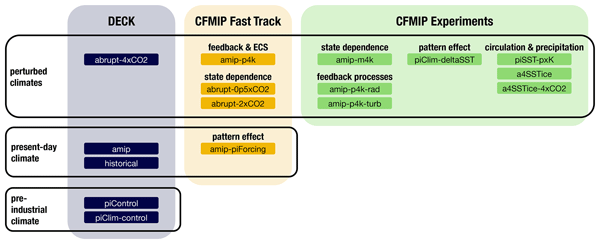
Paulo Ceppi, Alejandro Bodas-Salcedo, Mark D. Zelinka, Timothy Andrews, Florent Brient, Robin Chadwick, An-Zhuo Dai, Jonathan M. Gregory, Yen-Ting Hwang, Sarah M. Kang, Jennifer E. Kay, Thorsten Mauritsen, Tomoo Ogura, George Tselioudis, Masahiro Watanabe, Mark J. Webb, and Allison A. Wing
Geosci. Model Dev., 19, 8693–8708, https://doi.org/10.5194/gmd-19-8693-2026, https://doi.org/10.5194/gmd-19-8693-2026, 2026
Short summary
Short summary
Clouds constitute a key uncertainty for climate change projections. The Cloud Feedback Model Intercomparison Project (CFMIP) aims to address this challenge by evaluating and understanding clouds and their impacts on atmospheric circulation, precipitation, and climate sensitivity. The present paper describes the CFMIP experiment protocol for the Coupled Model Intercomparison Project phase 7 (CMIP7), and discusses the accompanying science questions and opportunities for progress.
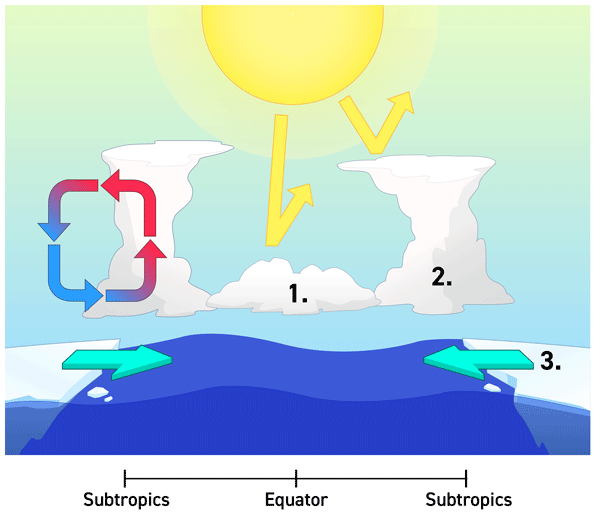
Martin Renoult, Navjit Sagoo, Johannes Hörner, and Thorsten Mauritsen
Earth Syst. Dynam., 17, 303–318, https://doi.org/10.5194/esd-17-303-2026, https://doi.org/10.5194/esd-17-303-2026, 2026
Short summary
Short summary
Geological evidence indicate persistent tropical sea-ice cover in the deep past, often called Snowball Earth. Using a climate model, we show here that clouds substantially cool down the tropics and facilitate the advance of sea-ice into lower latitudes. We identify a critical threshold temperature close to 0 °C from where cooling down the Earth is accelerated. This value can be used as a constraint on Earth's sensitivity to CO2, as recent cold paleoclimates never entered Snowball Earth.
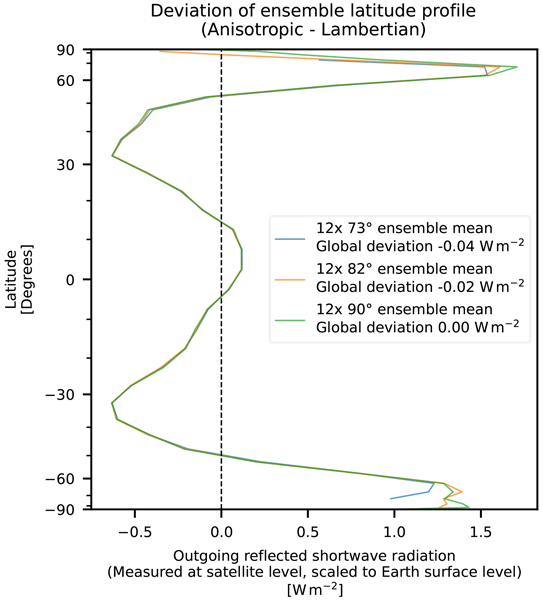
Thomas Hocking, Linda Megner, Maria Hakuba, and Thorsten Mauritsen
Atmos. Meas. Tech., 19, 1643–1674, https://doi.org/10.5194/amt-19-1643-2026, https://doi.org/10.5194/amt-19-1643-2026, 2026
Short summary
Short summary
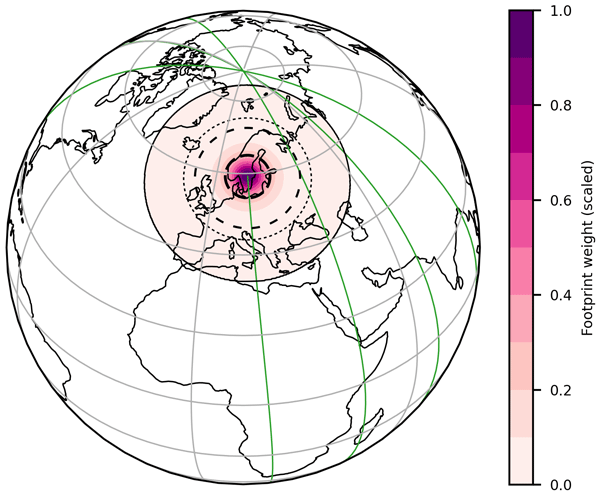
The imbalance between the energy the Earth absorbs from the Sun and emits back to space gives rise to climate change, but measuring the small imbalance is challenging. The Earth surface reflects sunlight more in some directions than in others, as with e.g. ocean sunglint. We simulate satellites to investigate how this uneven reflection impacts estimates of the imbalance. We identify orbits that cover all directions well, so that the impact is small.
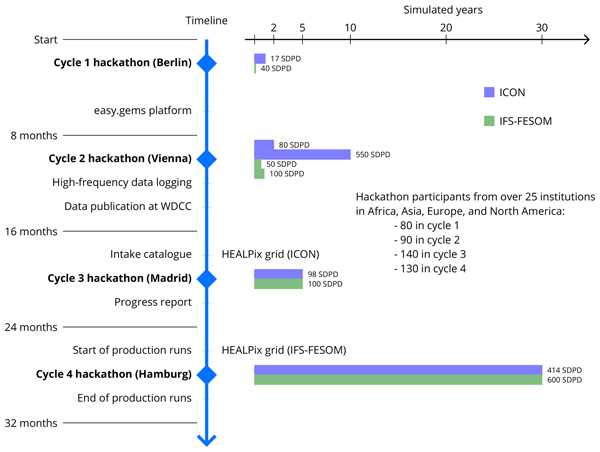
Hans Segura, Xabier Pedruzo-Bagazgoitia, Philipp Weiss, Sebastian K. Müller, Thomas Rackow, Junhong Lee, Edgar Dolores-Tesillos, Imme Benedict, Matthias Aengenheyster, Razvan Aguridan, Gabriele Arduini, Alexander J. Baker, Jiawei Bao, Swantje Bastin, Eulàlia Baulenas, Tobias Becker, Sebastian Beyer, Hendryk Bockelmann, Nils Brüggemann, Lukas Brunner, Suvarchal K. Cheedela, Sushant Das, Jasper Denissen, Ian Dragaud, Piotr Dziekan, Madeleine Ekblom, Jan Frederik Engels, Monika Esch, Richard Forbes, Claudia Frauen, Lilli Freischem, Diego García-Maroto, Philipp Geier, Paul Gierz, Álvaro González-Cervera, Katherine Grayson, Matthew Griffith, Oliver Gutjahr, Helmuth Haak, Ioan Hadade, Kerstin Haslehner, Shabeh ul Hasson, Jan Hegewald, Lukas Kluft, Aleksei Koldunov, Nikolay Koldunov, Tobias Kölling, Shunya Koseki, Sergey Kosukhin, Josh Kousal, Peter Kuma, Arjun U. Kumar, Rumeng Li, Nicolas Maury, Maximilian Meindl, Sebastian Milinski, Kristian Mogensen, Bimochan Niraula, Jakub Nowak, Divya Sri Praturi, Ulrike Proske, Dian Putrasahan, René Redler, David Santuy, Domokos Sármány, Reiner Schnur, Patrick Scholz, Dmitry Sidorenko, Dorian Spät, Birgit Sützl, Daisuke Takasuka, Adrian Tompkins, Alejandro Uribe, Mirco Valentini, Menno Veerman, Aiko Voigt, Sarah Warnau, Fabian Wachsmann, Marta Wacławczyk, Nils Wedi, Karl-Hermann Wieners, Jonathan Wille, Marius Winkler, Yuting Wu, Florian Ziemen, Janos Zimmermann, Frida A.-M. Bender, Dragana Bojovic, Sandrine Bony, Simona Bordoni, Patrice Brehmer, Marcus Dengler, Emanuel Dutra, Saliou Faye, Erich Fischer, Chiel van Heerwaarden, Cathy Hohenegger, Heikki Järvinen, Markus Jochum, Thomas Jung, Johann H. Jungclaus, Noel S. Keenlyside, Daniel Klocke, Heike Konow, Martina Klose, Szymon Malinowski, Olivia Martius, Thorsten Mauritsen, Juan Pedro Mellado, Theresa Mieslinger, Elsa Mohino, Hanna Pawłowska, Karsten Peters-von Gehlen, Abdoulaye Sarré, Pajam Sobhani, Philip Stier, Lauri Tuppi, Pier Luigi Vidale, Irina Sandu, and Bjorn Stevens
Geosci. Model Dev., 18, 7735–7761, https://doi.org/10.5194/gmd-18-7735-2025, https://doi.org/10.5194/gmd-18-7735-2025, 2025
Short summary
Short summary
The Next Generation of Earth Modeling Systems project (nextGEMS) developed two Earth system models that use horizontal grid spacing of 10 km and finer, giving more fidelity to the representation of local phenomena, globally. In its fourth cycle, nextGEMS simulated the Earth System climate over the 2020–2049 period under the SSP3-7.0 scenario. Here, we provide an overview of nextGEMS, insights into the model development, and the realism of multi-decadal, kilometer-scale simulations.
Thomas Hocking, Thorsten Mauritsen, and Linda Megner
Atmos. Meas. Tech., 17, 7077–7095, https://doi.org/10.5194/amt-17-7077-2024, https://doi.org/10.5194/amt-17-7077-2024, 2024
Short summary
Short summary
The imbalance between the energy the Earth absorbs from the Sun and the energy the Earth emits back into space gives rise to climate change, but measuring the small imbalance is challenging. We simulate satellites in various orbits to investigate how well they sample the imbalance and find that the best option is to combine at least two satellites that see complementary parts of the Earth and cover the daily and annual cycles. This information is useful when planning future satellite missions.
Alejandro Uribe, Frida A.-M. Bender, and Thorsten Mauritsen
Atmos. Chem. Phys., 24, 13371–13384, https://doi.org/10.5194/acp-24-13371-2024, https://doi.org/10.5194/acp-24-13371-2024, 2024
Short summary
Short summary
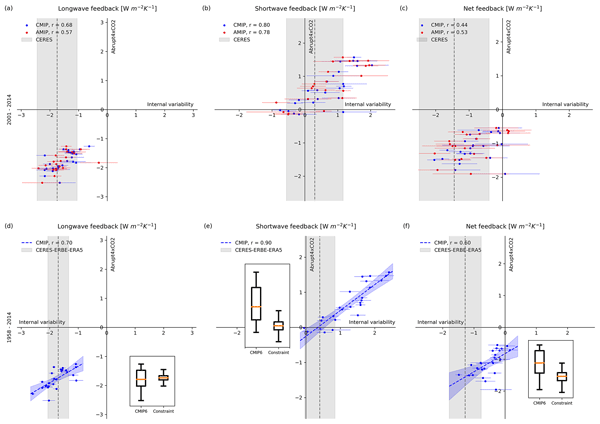
Our study explores climate feedbacks, vital for understanding global warming. It links them to shifts in Earth's energy balance at the atmosphere's top due to natural temperature variations. It takes roughly 50 years to establish this connection. Combined satellite observations and reanalysis suggest that Earth cools more than expected under carbon dioxide influence. However, continuous satellite data until at least the mid-2030s are crucial for refining our understanding of climate feedbacks.
Andrea Mosso, Thomas Hocking, and Thorsten Mauritsen
Atmos. Chem. Phys., 24, 12793–12806, https://doi.org/10.5194/acp-24-12793-2024, https://doi.org/10.5194/acp-24-12793-2024, 2024
Short summary
Short summary
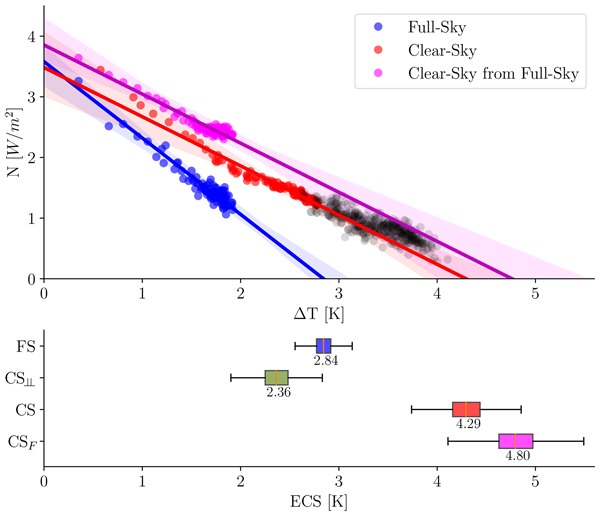
Clouds play a crucial role in the Earth's energy balance, as they can either warm up or cool down the area they cover depending on their height and depth. They are expected to alter their behaviour under climate change, affecting the warming generated by greenhouse gases. This paper proposes a new method to estimate their overall effect on this warming by simulating a climate where clouds are transparent. Results show that with the model used, clouds have a stabilising effect on climate.
Antoine Hermant, Linnea Huusko, and Thorsten Mauritsen
Atmos. Chem. Phys., 24, 10707–10715, https://doi.org/10.5194/acp-24-10707-2024, https://doi.org/10.5194/acp-24-10707-2024, 2024
Short summary
Short summary
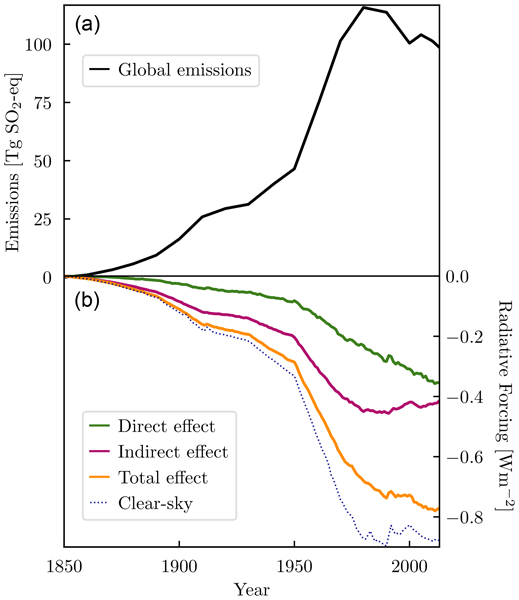
Aerosol particles, from natural and human sources, have a cooling effect on the climate, partially offsetting global warming. They do this through direct (sunlight reflection) and indirect (cloud property alteration) mechanisms. Using a global climate model, we found that, despite declining emissions, the direct effect of human aerosols has increased while the indirect effect has decreased, which is attributed to the shift in emissions from North America and Europe to Southeast Asia.
James D. Annan, Julia C. Hargreaves, Thorsten Mauritsen, Erin McClymont, and Sze Ling Ho
Clim. Past, 20, 1989–1999, https://doi.org/10.5194/cp-20-1989-2024, https://doi.org/10.5194/cp-20-1989-2024, 2024
Short summary
Short summary
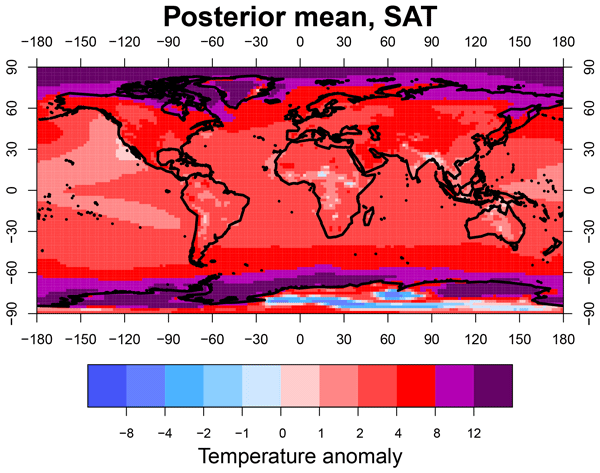
We have created a new global surface temperature reconstruction of the climate of the mid-Pliocene Warm Period, representing the period roughly 3.2 million years before the present day. We estimate that the globally averaged mean temperature was around 3.9 °C warmer than it was in pre-industrial times, but there is significant uncertainty in this value.
Raphael Grodofzig, Martin Renoult, and Thorsten Mauritsen
Earth Syst. Dynam., 15, 913–927, https://doi.org/10.5194/esd-15-913-2024, https://doi.org/10.5194/esd-15-913-2024, 2024
Short summary
Short summary
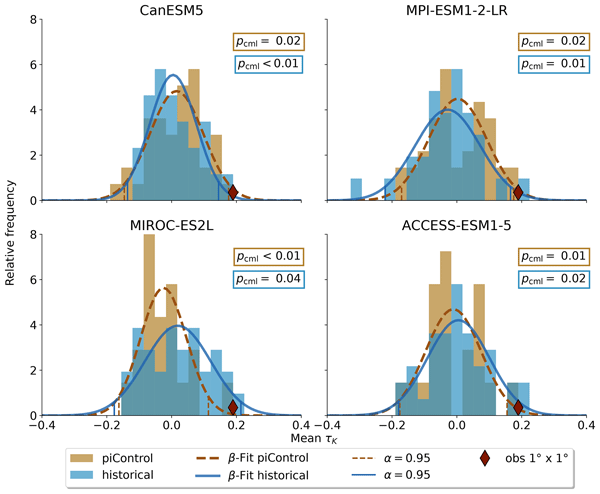
We investigate whether the Amazon rainforest has lost substantial resilience since 1990. This assertion is based on trends in the observational record of vegetation density. We calculate the same metrics in a large number of climate model simulations and find that several models behave indistinguishably from the observations, suggesting that the observed trend could be caused by internal variability and that the cause of the ongoing rapid loss of Amazon rainforest is not mainly global warming.
Clare Marie Flynn, Linnea Huusko, Angshuman Modak, and Thorsten Mauritsen
Atmos. Chem. Phys., 23, 15121–15133, https://doi.org/10.5194/acp-23-15121-2023, https://doi.org/10.5194/acp-23-15121-2023, 2023
Short summary
Short summary
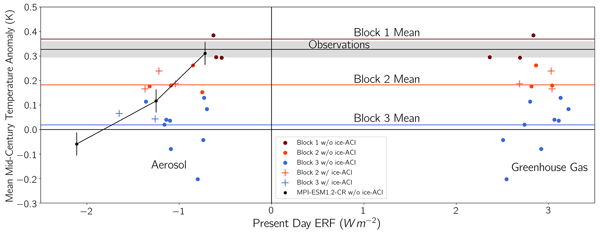
The latest-generation climate models show surprisingly cold mid-20th century global-mean temperatures, often despite exhibiting more realistic late 20th/early 21st century temperatures. A too-strong aerosol forcing in many models was thought to the be primary cause of these too-cold mid-century temperatures, but this was found to only be a partial explanation. This also partly undermines the hope to construct a strong relationship between the mid-century temperatures and aerosol forcing.
Sushant Das, Frida Bender, and Thorsten Mauritsen
EGUsphere, https://doi.org/10.5194/egusphere-2023-1605, https://doi.org/10.5194/egusphere-2023-1605, 2023
Preprint archived
Short summary
Short summary
Quantifying global and Indian precipitation responses to anthropogenic aerosol and CO2 forcings using multiple models is needed for reducing climate uncertainty. The response to global warming from CO2 increases precipitation both globally and over India, whereas the cooling response to sulfate aerosol leads to a reduction in precipitation in both cases. An opposite response to black carbon is noted i.e., a global decrease but an increase of precipitation over India implying changes in dynamics.
Angshuman Modak and Thorsten Mauritsen
Atmos. Chem. Phys., 23, 7535–7549, https://doi.org/10.5194/acp-23-7535-2023, https://doi.org/10.5194/acp-23-7535-2023, 2023
Short summary
Short summary
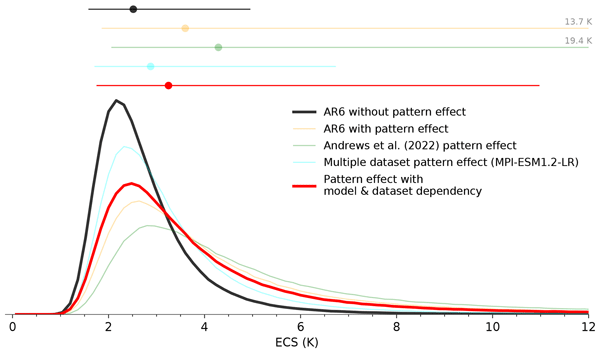
We provide an improved estimate of equilibrium climate sensitivity (ECS) constrained based on the instrumental temperature record including the corrections for the pattern effect. The improved estimate factors in the uncertainty caused by the underlying sea-surface temperature datasets used in the estimates of pattern effect. This together with the inter-model spread lifts the corresponding IPCC AR6 estimate to 3.2 K [1.8 to 11.0], which is lower and better constrained than in past studies.
Martin Renoult, Navjit Sagoo, Jiang Zhu, and Thorsten Mauritsen
Clim. Past, 19, 323–356, https://doi.org/10.5194/cp-19-323-2023, https://doi.org/10.5194/cp-19-323-2023, 2023
Short summary
Short summary
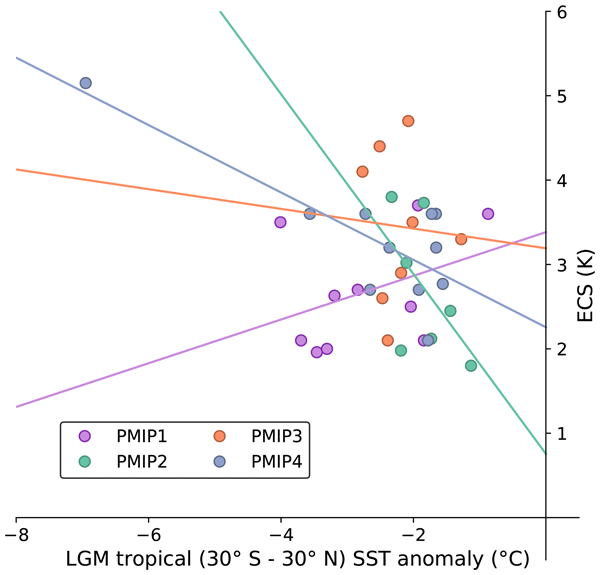
The relationship between the Last Glacial Maximum and the sensitivity of climate models to a doubling of CO2 can be used to estimate the true sensitivity of the Earth. However, this relationship has varied in successive model generations. In this study, we assess multiple processes at the Last Glacial Maximum which weaken this relationship. For example, how models respond to the presence of ice sheets is a large contributor of uncertainty.
Cathy Hohenegger, Peter Korn, Leonidas Linardakis, René Redler, Reiner Schnur, Panagiotis Adamidis, Jiawei Bao, Swantje Bastin, Milad Behravesh, Martin Bergemann, Joachim Biercamp, Hendryk Bockelmann, Renate Brokopf, Nils Brüggemann, Lucas Casaroli, Fatemeh Chegini, George Datseris, Monika Esch, Geet George, Marco Giorgetta, Oliver Gutjahr, Helmuth Haak, Moritz Hanke, Tatiana Ilyina, Thomas Jahns, Johann Jungclaus, Marcel Kern, Daniel Klocke, Lukas Kluft, Tobias Kölling, Luis Kornblueh, Sergey Kosukhin, Clarissa Kroll, Junhong Lee, Thorsten Mauritsen, Carolin Mehlmann, Theresa Mieslinger, Ann Kristin Naumann, Laura Paccini, Angel Peinado, Divya Sri Praturi, Dian Putrasahan, Sebastian Rast, Thomas Riddick, Niklas Roeber, Hauke Schmidt, Uwe Schulzweida, Florian Schütte, Hans Segura, Radomyra Shevchenko, Vikram Singh, Mia Specht, Claudia Christine Stephan, Jin-Song von Storch, Raphaela Vogel, Christian Wengel, Marius Winkler, Florian Ziemen, Jochem Marotzke, and Bjorn Stevens
Geosci. Model Dev., 16, 779–811, https://doi.org/10.5194/gmd-16-779-2023, https://doi.org/10.5194/gmd-16-779-2023, 2023
Short summary
Short summary
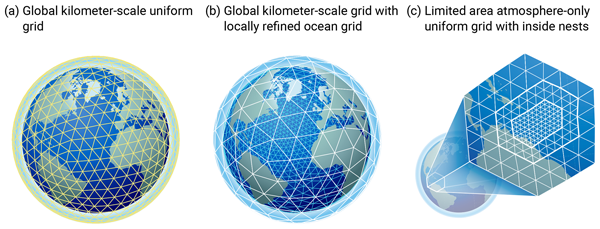
Models of the Earth system used to understand climate and predict its change typically employ a grid spacing of about 100 km. Yet, many atmospheric and oceanic processes occur on much smaller scales. In this study, we present a new model configuration designed for the simulation of the components of the Earth system and their interactions at kilometer and smaller scales, allowing an explicit representation of the main drivers of the flow of energy and matter by solving the underlying equations.
James D. Annan, Julia C. Hargreaves, and Thorsten Mauritsen
Clim. Past, 18, 1883–1896, https://doi.org/10.5194/cp-18-1883-2022, https://doi.org/10.5194/cp-18-1883-2022, 2022
Short summary
Short summary
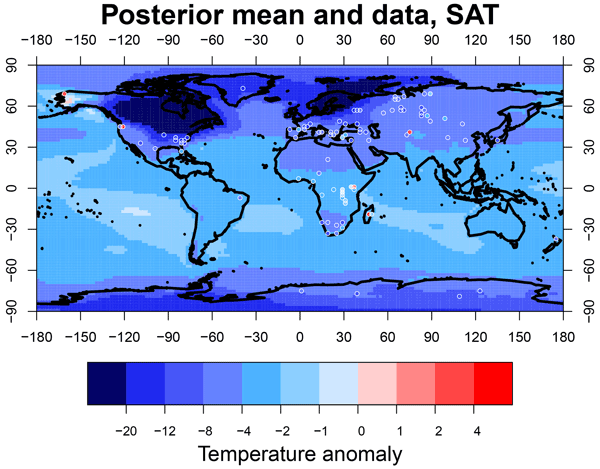
We have created a new global surface temperature reconstruction of the climate of the Last Glacial Maximum, representing the period 19–23 000 years before the present day. We find that the globally averaged mean temperature was roughly 4.5 °C colder than it was in pre-industrial times, albeit there is significant uncertainty on this value.
Cited articles
Armour, K. C., Bitz, C. M., and Roe, G. H.: Time-Varying Climate Sensitivity from Regional Feedbacks, J. Climate, 26, 4518 – 4534, https://doi.org/10.1175/JCLI-D-12-00544.1, 2013. a
Arrhenius, S.: XXXI. On the influence of carbonic acid in the air upon the temperature of the ground, The London, Edinburgh, and Dublin Philosophical Magazine and Journal of Science, 41, 237–276, https://doi.org/10.1080/14786449608620846, 1896. a
Bellouin, N., Quaas, J., Gryspeerdt, E., Kinne, S., Stier, P., Watson-Parris, D., Boucher, O., Carslaw, K. S., Christensen, M., Daniau, A.-L., Dufresne, J.-L., Feingold, G., Fiedler, S., Forster, P., Gettelman, A., Haywood, J. M., Lohmann, U., Malavelle, F., Mauritsen, T., McCoy, D. T., Myhre, G., Mülmenstädt, J., Neubauer, D., Possner, A., Rugenstein, M., Sato, Y., Schulz, M., Schwartz, S. E., Sourdeval, O., Storelvmo, T., Toll, V., Winker, D., and Stevens, B.: Bounding Global Aerosol Radiative Forcing of Climate Change, Rev. Geophys., 58, e2019RG000660, https://doi.org/10.1029/2019RG000660, 2020. a
Bimpiri, K.: Scripts for analysing climate model output data for the magnitude and trend of the Earth’s energy imbalance, Bolin Centre Code Repository, https://doi.org/10.57669/bimpiri-2026-eei-magnitude-trend-1.0.0, 2026. a
Eyring, V., Bony, S., Meehl, G. A., Senior, C. A., Stevens, B., Stouffer, R. J., and Taylor, K. E.: Overview of the Coupled Model Intercomparison Project Phase 6 (CMIP6) experimental design and organization, Geosci. Model Dev., 9, 1937–1958, https://doi.org/10.5194/gmd-9-1937-2016, 2016. a
Forster, P., Storelvmo, T., Armour, K., Collins, W., Dufresne, J.-L., Frame, D., Lunt, D., Mauritsen, T., Palmer, M., Watanabe, M., Wild, M., and Zhang, H.: The Earth’s Energy Budget, Climate Feedbacks, and Climate Sensitivity, 943–1054, Cambridge University Press, Cambridge, United Kingdom and New York, NY, USA, https://doi.org/10.1017/9781009157896.009, 2021. a, b
Forster, P. M., Smith, C., Walsh, T., Lamb, W. F., Lamboll, R., Cassou, C., Hauser, M., Hausfather, Z., Lee, J.-Y., Palmer, M. D., von Schuckmann, K., Slangen, A. B. A., Szopa, S., Trewin, B., Yun, J., Gillett, N. P., Jenkins, S., Matthews, H. D., Raghavan, K., Ribes, A., Rogelj, J., Rosen, D., Zhang, X., Allen, M., Aleluia Reis, L., Andrew, R. M., Betts, R. A., Borger, A., Broersma, J. A., Burgess, S. N., Cheng, L., Friedlingstein, P., Domingues, C. M., Gambarini, M., Gasser, T., Gütschow, J., Ishii, M., Kadow, C., Kennedy, J., Killick, R. E., Krummel, P. B., Liné, A., Monselesan, D. P., Morice, C., Mühle, J., Naik, V., Peters, G. P., Pirani, A., Pongratz, J., Minx, J. C., Rigby, M., Rohde, R., Savita, A., Seneviratne, S. I., Thorne, P., Wells, C., Western, L. M., van der Werf, G. R., Wijffels, S. E., Masson-Delmotte, V., and Zhai, P.: Indicators of Global Climate Change 2024: annual update of key indicators of the state of the climate system and human influence, Earth Syst. Sci. Data, 17, 2641–2680, https://doi.org/10.5194/essd-17-2641-2025, 2025. a
Fourier, J. B. J.: Théorie analytique de la chaleur, Firmin Didot, Paris, 1822. a
Geoffroy, O., Saint-Martin, D., Bellon, G., Voldoire, A., Olivié, D. J. L., and Tytéca, S.: Transient Climate Response in a Two-Layer Energy-Balance Model. Part II: Representation of the Efficacy of Deep-Ocean Heat Uptake and Validation for CMIP5 AOGCMs, J. Climate, 26, 1859 – 1876, https://doi.org/10.1175/JCLI-D-12-00196.1, 2013. a
Gregory, J. M., Ingram, W. J., Palmer, M. A., Jones, G. S., Stott, P. A., Thorpe, R. B., Lowe, J. A., Johns, T. C., and Williams, K. D.: A new method for diagnosing radiative forcing and climate sensitivity, Geophys. Res. Lett., 31, https://doi.org/10.1029/2003GL018747, 2004. a
Hansen, J., Russell, G., Lacis, A., Fung, I., Rind, D., and Stone, P.: Climate response times: Dependence on climate sensitivity and ocean mixing, Science, 229, 857–859, https://doi.org/10.1126/science.229.4716.857, 1985. a
Hansen, J., Sato, M., Kharecha, P., and von Schuckmann, K.: Earth's energy imbalance and implications, Atmos. Chem. Phys., 11, 13421–13449, https://doi.org/10.5194/acp-11-13421-2011, 2011. a
Hedemann, C., Mauritsen, T., Jungclaus, J., and Marotzke, J.: The subtle origins of surface-warming hiatuses, Nat. Clim. Change, 7, 336–339, https://doi.org/10.1038/nclimate3274, 2017. a
Hodnebrog, O., Myhre, G., Jouan, C., Andrews, T., Forster, P., Jia, H., Loeb, N., Olivié, D., Paynter, D., Quaas, J., Raghuraman, S. P., and Schulz, M.: Recent reductions in aerosol emissions have increased Earth’s energy imbalance, Commun. Earth Environ., 5, https://doi.org/10.1038/s43247-024-01324-8, 2024. a, b, c, d, e
Houghton, J., Ding, Y., Griggs, D., Noguer, M., van der Linden, P., Dai, X., Maskell, M., and Johnson, C.: Climate Change 2001: The Scientific Basis, Contribution of Working Group I to the Third Assessment Report of the Intergovernmental Panel on Climate Change (IPCC), Vol. 881., p. 881, 2001. a
Liu, C. and Allan, R.: Reconstructions of the radiation fluxes at the top of atmosphere and net surface energy flux: DEEP-C Version 5.0, University of Reading Research Data Archive [data set], https://doi.org/10.17864/1947.000347, 2022. a, b
Liu, C., Allan, R. P., Mayer, M., Hyder, P., Desbruyères, D., Cheng, L., Xu, J., Xu, F., and Zhang, Y.: Variability in the global energy budget and transports 1985–2017, Clim. Dynam., 55, 3381–3396, https://doi.org/10.1007/s00382-020-05451-8, 2020. a
Loeb, N., Ham, S.-H., Allan, R., Thorsen, T., Meyssignac, B., Kato, S., Johnson, G., and Lyman, J.: Observational Assessment of Changes in Earth’s Energy Imbalance Since 2000, Surv. Geophys., 45, 1757–1783, https://doi.org/10.1007/s10712-024-09838-8, 2024. a
Loeb, N. G., Doelling, D. R., Wang, H., Su, W., Nguyen, C., Corbett, J. G., Liang, L., Mitrescu, C., Rose, F. G., and Kato, S.: Clouds and the Earth’s Radiant Energy System (CERES) Energy Balanced and Filled (EBAF) Top-of-Atmosphere (TOA) Edition-4.0 Data Product, J. Clim., 31, 895–918, https://doi.org/10.1175/JCLI-D-17-0208.1, 2018. a
Manabe, S. and Strickler, R. F.: Thermal Equilibrium of the Atmosphere with a Convective Adjustment, J. Atmos. Sci., 21, 361–385, https://doi.org/10.1175/1520-0469(1964)021<0361:TEOTAW>2.0.CO;2, 1964. a
Mauritsen, T., Stevens, B., Roeckner, E., Crueger, T., Esch, M., Giorgetta, M., Haak, H., Jungclaus, J., Klocke, D., Matei, D., Mikolajewicz, U., Notz, D., Pincus, R., Schmidt, H., and Tomassini, L.: Tuning the climate of a global model, J. Adv. Model. Ea. Syst., 4, https://doi.org/10.1029/2012MS000154, 2012. a
Mauritsen, T., Tsushima, Y., Meyssignac, B., Loeb, N. G., Hakuba, M., Pilewskie, P., Cole, J., Suzuki, K., Ackerman, T. P., Allan, R. P., Andrews, T., Bender, F. A.-M., Bloch-Johnson, J., Bodas-Salcedo, A., Brookshaw, A., Ceppi, P., Clerbaux, N., Dessler, A. E., Donohoe, A., Dufresne, J.-L., Eyring, V., Findell, K. L., Gettelman, A., Gristey, J. J., Hawkins, E., Heimbach, P., Hewitt, H. T., Jeevanjee, N., Jones, C., Kang, S. M., Kato, S., Kay, J. E., Klein, S. A., Knutti, R., Kramer, R., Lee, J.-Y., McCoy, D. T., Medeiros, B., Megner, L., Modak, A., Ogura, T., Palmer, M. D., Paynter, D., Quaas, J., Ramanathan, V., Ringer, M., von Schuckmann, K., Sherwood, S., Stevens, B., Tan, I., Tselioudis, G., Sutton, R., Voigt, A., Watanabe, M., Webb, M. J., Wild, M., and Zelinka, M. D.: Earth's Energy Imbalance More Than Doubled in Recent Decades, AGU Advances, 6, e2024AV001636, https://doi.org/10.1029/2024AV001636, 2025. a, b
Morice, C. P., Kennedy, J. J., Rayner, N. A., Winn, J. P., Hogan, E., Killick, R. E., Dunn, R. J. H., Osborn, T. J., Jones, P. D., and Simpson, I. R.: An Updated Assessment of Near-Surface Temperature Change From 1850: The HadCRUT5 Data Set, J. Geophys. Res.-Atmos., 126, e2019JD032361, https://doi.org/10.1029/2019JD032361, 2021. a
NASA, Langley Research Center: CERES_EBAF_Ed4.2 and Ed4.2.1 Data Quality Summary Version 5, https://ceres.larc.nasa.gov/documents/DQ_summaries/CERES_EBAF_Ed4.2_DQS.pdf (last access: 26 March 2026), 2025. a
NASA/LARC/SD/ASDC: CERES Energy Balanced and Filled (EBAF) TOA and Surface Monthly means data in netCDF Edition 4.2, Atmospheric Science Data Center (ASDC), https://doi.org/10.5067/TERRA-AQUA-NOAA20/CERES/EBAF_L3B004.2, 2023. a
Olonscheck, D. and Rugenstein, M.: Coupled Climate Models Systematically Underestimate Radiation Response to Surface Warming, Geophys. Res. Lett., 51, e2023GL106909, https://doi.org/10.1029/2023GL106909, 2024. a
O'Neill, B. C., Tebaldi, C., van Vuuren, D. P., Eyring, V., Friedlingstein, P., Hurtt, G., Knutti, R., Kriegler, E., Lamarque, J.-F., Lowe, J., Meehl, G. A., Moss, R., Riahi, K., and Sanderson, B. M.: The Scenario Model Intercomparison Project (ScenarioMIP) for CMIP6, Geosci. Model Dev., 9, 3461–3482, https://doi.org/10.5194/gmd-9-3461-2016, 2016. a
Park, C. and Soden, B. J.: Negligible contribution from aerosols to recent trends in Earth’s energy imbalance, Sci. Adv., 11, eadv9429, https://doi.org/10.1126/sciadv.adv9429, 2025. a
Quaas, J., Jia, H., Smith, C., Albright, A. L., Aas, W., Bellouin, N., Boucher, O., Doutriaux-Boucher, M., Forster, P. M., Grosvenor, D., Jenkins, S., Klimont, Z., Loeb, N. G., Ma, X., Naik, V., Paulot, F., Stier, P., Wild, M., Myhre, G., and Schulz, M.: Robust evidence for reversal of the trend in aerosol effective climate forcing, Atmos. Chem. Phys., 22, 12221–12239, https://doi.org/10.5194/acp-22-12221-2022, 2022. a
Rohrschneider, T., Stevens, B., and Mauritsen, T.: On simple representations of the climate response to external radiative forcing, Clim. Dynam., 53, 3131–3145, https://doi.org/10.1007/s00382-019-04686-4, 2019. a
Schmidt, G. A., Andrews, T., Bauer, S. E., Durack, P. J., Loeb, N. G., Ramaswamy, V., Arnold, N. P., Bosilovich, M. G., Cole, J., Horowitz, L. W., Johnson, G. C., Lyman, J. M., Medeiros, B., Michibata, T., Olonscheck, D., Paynter, D., Raghuraman, S. P., Schulz, M., Takasuka, D., Tallapragada, V., Taylor, P. C., and Ziehn, T.: CERESMIP: a climate modeling protocol to investigate recent trends in the Earth's Energy Imbalance, Front. Clim., 5, https://doi.org/10.3389/fclim.2023.1202161, 2023. a
Smith, C., Hall, B., Dentener, F., Ahn, J., Collins, W., Jones, C., Meinshausen, M., Dlugokencky, E., Keeling, R., Krummel, P., Mühle, J., Nicholls, Z., and Simpson, I.: IPCC Working Group 1 (WG1) Sixth Assessment Report (AR6) Annex III Extended Data (v1.0), Zenodo [data set], https://doi.org/10.5281/zenodo.5705391, 2021. a
von Schuckmann, K., Palmer, M. D., Trenberth, K. E., Cazenave, A., Chambers, D., Champollion, N., Hansen, J., Josey, S. A., Loeb, N., Mathieu, P. P., Meyssignac, B., and Wild, M.: An imperative to monitor Earth's energy imbalance, Nat. Clim. Change, 6, 138–144, https://doi.org/10.1038/nclimate2876, 2016. a
von Schuckmann, K., Minière, A., Gues, F., Cuesta-Valero, F. J., Kirchengast, G., Adusumilli, S., Straneo, F., Ablain, M., Allan, R. P., Barker, P. M., Beltrami, H., Blazquez, A., Boyer, T., Cheng, L., Church, J., Desbruyeres, D., Dolman, H., Domingues, C. M., García-García, A., Giglio, D., Gilson, J. E., Gorfer, M., Haimberger, L., Hakuba, M. Z., Hendricks, S., Hosoda, S., Johnson, G. C., Killick, R., King, B., Kolodziejczyk, N., Korosov, A., Krinner, G., Kuusela, M., Landerer, F. W., Langer, M., Lavergne, T., Lawrence, I., Li, Y., Lyman, J., Marti, F., Marzeion, B., Mayer, M., MacDougall, A. H., McDougall, T., Monselesan, D. P., Nitzbon, J., Otosaka, I., Peng, J., Purkey, S., Roemmich, D., Sato, K., Sato, K., Savita, A., Schweiger, A., Shepherd, A., Seneviratne, S. I., Simons, L., Slater, D. A., Slater, T., Steiner, A. K., Suga, T., Szekely, T., Thiery, W., Timmermans, M.-L., Vanderkelen, I., Wjiffels, S. E., Wu, T., and Zemp, M.: Heat stored in the Earth system 1960–2020: where does the energy go?, Earth Syst. Sci. Data, 15, 1675–1709, https://doi.org/10.5194/essd-15-1675-2023, 2023. a, b
Winton, M., Takahashi, K., and Held, I. M.: Importance of Ocean Heat Uptake Efficacy to Transient Climate Change, J. Clim., 23, 2333–2344, https://doi.org/10.1175/2009JCLI3139.1, 2010. a
Zhou, C., Zelinka, M., and Klein, S.: Impact of decadal cloud variations on the Earth’s energy budget, Nat. Geosci., 9, https://doi.org/10.1038/ngeo2828, 2016. a
Editorial statement
The authors identify a close relationship between the Earth's energy imbalance and equilibrium climate sensitivity, enabling to constrain the sensitivity based on the observed energy imbalance magnitude. Their results indicate that models with moderate equilibrium climate sensitivity agree best with the observed energy imbalance.
The authors identify a close relationship between the Earth's energy imbalance and equilibrium...
Short summary
Observations show an increasing imbalance between how much energy the Earth absorbs from the Sun and emits back to space, leading to climate change. We evaluate how well climate models simulate both the magnitude and trend of the imbalance. We find that models capture the magnitude but underestimate the trend, which is not related to how models handle volcanic aerosols when switching to future scenarios. The models that best simulate the magnitude are the ones with moderate climate sensitivity.
Observations show an increasing imbalance between how much energy the Earth absorbs from the Sun...


Altmetrics
Final-revised paper
Preprint