Articles | Volume 17, issue 3
https://doi.org/10.5194/esd-17-687-2026
© Author(s) 2026. This work is distributed under
the Creative Commons Attribution 4.0 License.
https://doi.org/10.5194/esd-17-687-2026
© Author(s) 2026. This work is distributed under
the Creative Commons Attribution 4.0 License.
Interactive physical data cubes: A novel perspective for exploring Earth system dynamics
Maximilian Söchting
CORRESPONDING AUTHOR
Institute for Earth System Science and Remote Sensing, Leipzig University, Leipzig, Germany
Miguel D. Mahecha
Institute for Earth System Science and Remote Sensing, Leipzig University, Leipzig, Germany
ScaDS.AI (Center for Scalable Data Analytics and Artificial Intelligence), Dresden/Leipzig, Germany
Helmholtz-Centre for Environmental Research, UFZ, Leipzig, Germany
German Centre for Integrative Biodiversity Research (iDiv), Halle-Jena-Leipzig, Leipzig, Germany
Related authors
No articles found.
Tobias Braun, Sara M. Vallejo-Bernal, Norbert Marwan, Juergen Kurths, Johannes Quaas, Albert Díaz-Guilera, Luis Gimeno, and Miguel D. Mahecha
EGUsphere, https://doi.org/10.21203/rs.3.rs-7482510/v2, https://doi.org/10.21203/rs.3.rs-7482510/v2, 2026
Short summary
Short summary
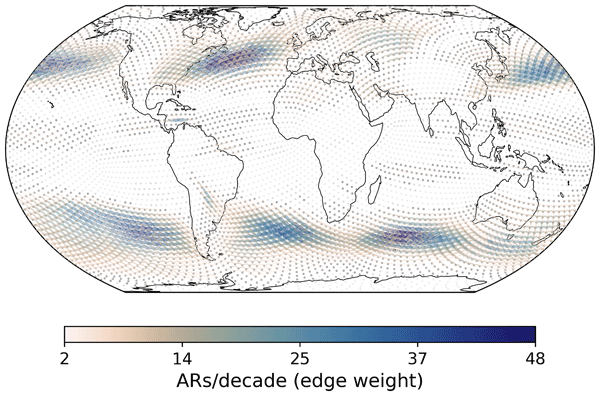
Atmospheric rivers (ARs) move vast amounts of water through the atmosphere and often cause weather extremes, yet they are usually studied as regional events. Using 84 years of mapped AR trajectories, we reveal the global "roadmap" of ARs, a transport network of high-activity hubs, sparse atmospheric highways & hierarchical basins. Our approach shows how water vapor is systematically channelled through an atmospheric transport network, offering new ways to study changes in the global water cycle.
Na Li, Sebastian Sippel, Nora Linscheid, Miguel D. Mahecha, Markus Reichstein, and Ana Bastos
Biogeosciences, 23, 767–792, https://doi.org/10.5194/bg-23-767-2026, https://doi.org/10.5194/bg-23-767-2026, 2026
Short summary
Short summary
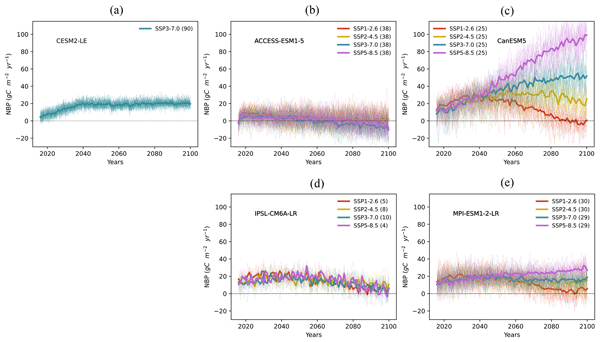
We study when anthropogenic signal becomes detectable in the global land carbon sink, which has risen since the 1950s due to CO₂ fertilization and mid- to high-latitude warming. The signal emerges earlier at the global than at regional scales. Future scenarios (2016–2100) take longer to detect than the historical period (1851–2014) because the signal is weaker relative to larger natural variability. Removing circulation-induced variability with dynamical adjustment shortens the detection time.
Mélanie Weynants, Chaonan Ji, Nora Linscheid, Ulrich Weber, Miguel D. Mahecha, and Fabian Gans
Earth Syst. Sci. Data, 17, 6621–6645, https://doi.org/10.5194/essd-17-6621-2025, https://doi.org/10.5194/essd-17-6621-2025, 2025
Short summary
Short summary
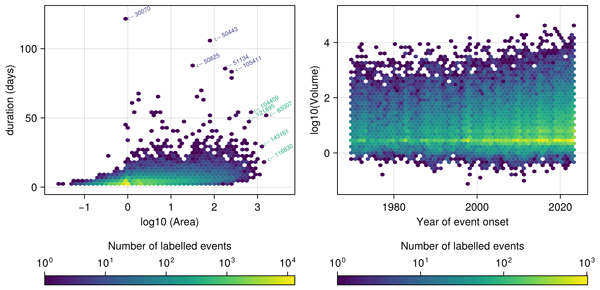
The impacts of climate extremes such as heatwaves and droughts can be made worse when they happen at the same time. Dheed is a global database of dry and hot compound extreme events from 1950 to 2023. It can be combined with other data to study the impacts of those events on terrestrial ecosystems, specific species or human societies. Dheed's analysis confirms that extremely dry and hot days have become more common on all continents in recent decades, especially in Europe and Africa.
Francesco Martinuzzi, Miguel D. Mahecha, Gustau Camps-Valls, David Montero, Tristan Williams, and Karin Mora
Nonlin. Processes Geophys., 31, 535–557, https://doi.org/10.5194/npg-31-535-2024, https://doi.org/10.5194/npg-31-535-2024, 2024
Short summary
Short summary
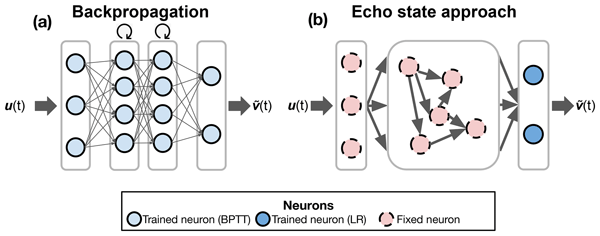
We investigated how machine learning can forecast extreme vegetation responses to weather. Examining four models, no single one stood out as the best, though "echo state networks" showed minor advantages. Our results indicate that while these tools are able to generally model vegetation states, they face challenges under extreme conditions. This underlines the potential of artificial intelligence in ecosystem modeling, also pinpointing areas that need further research.
Anca Anghelea, Ewelina Dobrowolska, Gunnar Brandt, Martin Reinhardt, Miguel Mahecha, Tejas Morbagal Harish, and Stephan Meissl
Int. Arch. Photogramm. Remote Sens. Spatial Inf. Sci., XLVIII-4-2024, 13–18, https://doi.org/10.5194/isprs-archives-XLVIII-4-2024-13-2024, https://doi.org/10.5194/isprs-archives-XLVIII-4-2024-13-2024, 2024
Miguel D. Mahecha, Guido Kraemer, and Fabio Crameri
Earth Syst. Dynam., 15, 1153–1159, https://doi.org/10.5194/esd-15-1153-2024, https://doi.org/10.5194/esd-15-1153-2024, 2024
Short summary
Short summary
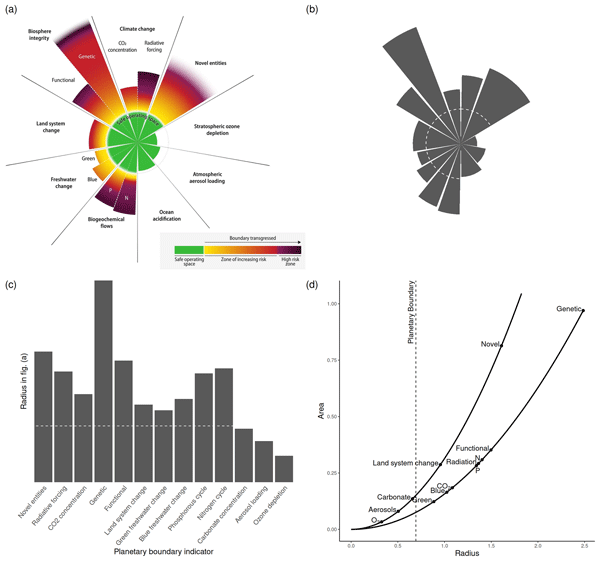
Our paper examines the visual representation of the planetary boundary concept, which helps convey Earth's capacity to sustain human life. We identify three issues: exaggerated impact sizes, confusing color patterns, and inaccessibility for colour-vision deficiency. These flaws can lead to overstating risks. We suggest improving these visual elements for more accurate and accessible information for decision-makers.
Francesco Martinuzzi, Miguel D. Mahecha, David Montero, Lazaro Alonso, and Karin Mora
Int. Arch. Photogramm. Remote Sens. Spatial Inf. Sci., XLVIII-4-W12-2024, 89–95, https://doi.org/10.5194/isprs-archives-XLVIII-4-W12-2024-89-2024, https://doi.org/10.5194/isprs-archives-XLVIII-4-W12-2024-89-2024, 2024
David Montero, Miguel D. Mahecha, César Aybar, Clemens Mosig, and Sebastian Wieneke
Int. Arch. Photogramm. Remote Sens. Spatial Inf. Sci., XLVIII-4-W12-2024, 105–112, https://doi.org/10.5194/isprs-archives-XLVIII-4-W12-2024-105-2024, https://doi.org/10.5194/isprs-archives-XLVIII-4-W12-2024-105-2024, 2024
Jan Sodoge, Christian Kuhlicke, Miguel D. Mahecha, and Mariana Madruga de Brito
Nat. Hazards Earth Syst. Sci., 24, 1757–1777, https://doi.org/10.5194/nhess-24-1757-2024, https://doi.org/10.5194/nhess-24-1757-2024, 2024
Short summary
Short summary
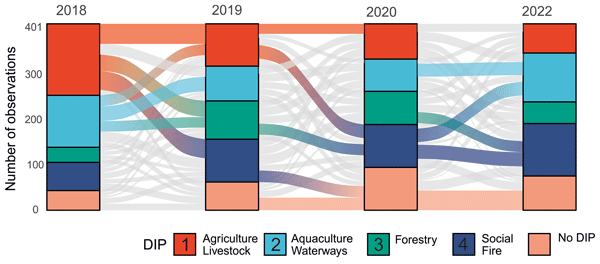
We delved into the socio-economic impacts of the 2018–2022 drought in Germany. We derived a dataset covering the impacts of droughts in Germany between 2000 and 2022 on sectors such as agriculture and forestry based on newspaper articles. Notably, our study illustrated that the longer drought had a wider reach and more varied effects. We show that dealing with longer droughts requires different plans compared to shorter ones, and it is crucial to be ready for the challenges they bring.
Na Li, Sebastian Sippel, Alexander J. Winkler, Miguel D. Mahecha, Markus Reichstein, and Ana Bastos
Earth Syst. Dynam., 13, 1505–1533, https://doi.org/10.5194/esd-13-1505-2022, https://doi.org/10.5194/esd-13-1505-2022, 2022
Short summary
Short summary
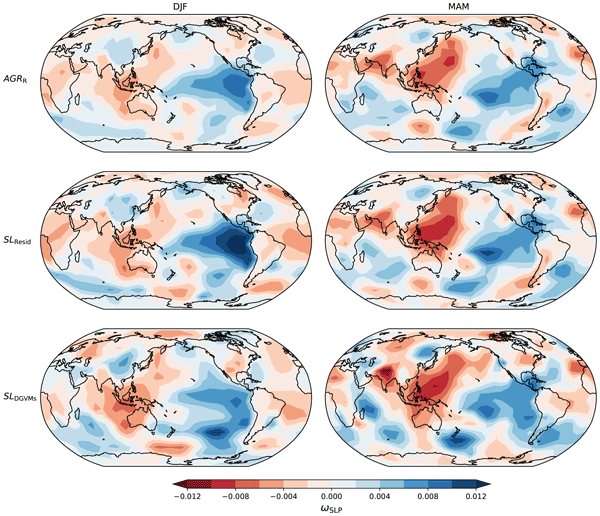
Quantifying the imprint of large-scale atmospheric circulation dynamics and associated carbon cycle responses is key to improving our understanding of carbon cycle dynamics. Using a statistical model that relies on spatiotemporal sea level pressure as a proxy for large-scale atmospheric circulation, we quantify the fraction of interannual variability in atmospheric CO2 growth rate and the land CO2 sink that are driven by atmospheric circulation variability.
D. Montero, C. Aybar, M. D. Mahecha, and S. Wieneke
Int. Arch. Photogramm. Remote Sens. Spatial Inf. Sci., XLVIII-4-W1-2022, 301–306, https://doi.org/10.5194/isprs-archives-XLVIII-4-W1-2022-301-2022, https://doi.org/10.5194/isprs-archives-XLVIII-4-W1-2022-301-2022, 2022
J. Pacheco-Labrador, U. Weber, X. Ma, M. D. Mahecha, N. Carvalhais, C. Wirth, A. Huth, F. J. Bohn, G. Kraemer, U. Heiden, FunDivEUROPE members, and M. Migliavacca
Int. Arch. Photogramm. Remote Sens. Spatial Inf. Sci., XLVI-1-W1-2021, 49–55, https://doi.org/10.5194/isprs-archives-XLVI-1-W1-2021-49-2022, https://doi.org/10.5194/isprs-archives-XLVI-1-W1-2021-49-2022, 2022
Cited articles
Bauer, P., Dueben, P. D., Hoefler, T., Quintino, T., Schulthess, T. C., and Wedi, N. P.: The digital revolution of Earth-system science, Nat. Comput. Sci., 1, 104–113, https://doi.org/10.1038/s43588-021-00023-0, 2021. a
Camps-Valls, G., Campos-Taberner, M., Moreno-Martínez, Á., Walther, S., Duveiller, G., Cescatti, A., Mahecha, M. D., Muñoz-Marí, J., García-Haro, F. J., Guanter, L., Jung, M., Gamon, J. A., Reichstein, M., and Running, S. W.: A unified vegetation index for quantifying the terrestrial biosphere, Sci. Adv., 7, eabc7447, https://doi.org/10.1126/sciadv.abc7447, 2021. a
Copernicus Atmosphere Monitoring Service: CAMS global reanalysis (EAC4), Copernicus Atmosphere Monitoring Service (CAMS) Atmosphere Data Store [data set], https://doi.org/10.24381/d58bbf47, 2020. a
Cervenec, J., Fox, J., Peggau, K., Wilson, A. B., Li, B., Hu, D., Chang, R., Wong, J., and Bossley, C.: Interactive data visualizations of Earth’s atmosphere: Effects on student engagement and perceived learning, J. Geosci. Educat., 70, 517–529, https://doi.org/10.1080/10899995.2022.2038963, 2022. a
Giuliani, G., Masó, J., Mazzetti, P., Nativi, S., and Zabala, A.: Paving the way to increased interoperability of earth observations data cubes, Data, 4, 113, https://doi.org/10.3390/data4030113, 2019. a
Griffith, J., Lord, J.-M., Catchen, M. D., Arce-Plata, M. I., Blanchet, F. G., Chandramohan, M., Diaz-Corzo, M. C., Gravel, D., Gutiérrez, C., Helfenstein, I. S., Hoban, S., Kass, J. M., Laikre, L., Larocque, G., Leigh, D. M., Leung, B., Mastretta-Yanes, A., Millette, K. L., Berbeo, M. A. M., Nguyen, D., Norman, K. E., Olaya-Rodríguez, M. H., Pahls, S., Pereira, K., Peres-Neto, P. R., Poisot, T., Pollock, L. J., Rey-Velasco, J. C., Rincon-Parra, V. J., Roeoesli, C., Rousseu, F., Sánchez-Clavijo, L. M., Schuman, M. C., Selmoni, O., da Silva, J. M., Suarez-Valencia, E., Surasinghe, T. D., Turak, E., Urbina, L. F., Valentin, S., Wightman, N., Zuloaga, J., Londoño, M. C., and Gonzalez, A.: BON in a Box: An Open and Collaborative Platform for Biodiversity Monitoring, Indicator Calculation, and Reporting, BioScience, 76, 345–358, https://doi.org/10.1093/biosci/biaf189, 2026. a
Hersbach, H., Bell, B., Berrisford, P., Hirahara, S., Horányi, A., Muñoz-Sabater, J., Nicolas, J., Peubey, C., Radu, R., Schepers, D., Simmons, A., Soci, C., Abdalla, S., Abellan, X., Balsamo, G., Bechtold, P., Biavati, G., Bidlot, J., Bonavita, M., De Chiara, G., Dahlgren, P., Dee, D., Diamantakis, M., Dragani, R., Flemming, J., Forbes, R., Fuentes, M., Geer, A., Haimberger, L., Healy, S., Hogan, R. J., Hólm, E., Janisková, M., Keeley, S., Laloyaux, P., Lopez, P., Lupu, C., Radnoti, G., de Rosnay, P., Rozum, I., Vamborg, F., Villaume, S., and Thépaut, J.-N.: The ERA5 global reanalysis, Q. J. Roy. Meteorol. Soc., 146, 1999–2049, https://doi.org/10.1002/qj.3803, 2020. a, b
Hovmöller, E.: The Trough-and-Ridge diagram, Tellus, 1, 62–66, https://doi.org/10.1111/j.2153-3490.1949.tb01260.x, 1949. a
Inness, A., Ades, M., Agustí-Panareda, A., Barré, J., Benedictow, A., Blechschmidt, A.-M., Dominguez, J. J., Engelen, R., Eskes, H., Flemming, J., Huijnen, V., Jones, L., Kipling, Z., Massart, S., Parrington, M., Peuch, V.-H., Razinger, M., Remy, S., Schulz, M., and Suttie, M.: The CAMS reanalysis of atmospheric composition, Atmos. Chem. Phys., 19, 3515–3556, https://doi.org/10.5194/acp-19-3515-2019, 2019. a
Jansen, Y., Dragicevic, P., Isenberg, P., Alexander, J., Karnik, A., Kildal, J., Subramanian, S., and Hornbæk, K.: Opportunities and Challenges for Data Physicalization, in: Proceedings of the 33rd Annual ACM Conference on Human Factors in Computing Systems, CHI '15, 3227–3236, Association for Computing Machinery, New York, NY, USA, ISBN 9781450331456, https://doi.org/10.1145/2702123.2702180, 2015. a, b
Jofre, A., Szigeti, S., and Diamond, S.: Materializing data: Notes on collaboration and tangible interfaces with excerpts and additions, DAT Journal, 1, 2–14, https://doi.org/10.29147/2526-1789.DAT.2016v1i2p2-14, 2016. a
Jung, M., Koirala, S., Weber, U., Ichii, K., Gans, F., Camps-Valls, G., Papale, D., Schwalm, C., Tramontana, G., and Reichstein, M.: The FLUXCOM ensemble of global land-atmosphere energy fluxes, Sci. Data, 6, 74, https://doi.org/10.1038/s41597-019-0076-8, 2019. a
Mahecha, M. D., Gans, F., Brandt, G., Christiansen, R., Cornell, S. E., Fomferra, N., Kraemer, G., Peters, J., Bodesheim, P., Camps-Valls, G., Donges, J. F., Dorigo, W., Estupinan-Suarez, L. M., Gutierrez-Velez, V. H., Gutwin, M., Jung, M., Londoño, M. C., Miralles, D. G., Papastefanou, P., and Reichstein, M.: Earth System Data Cubes Unravel Global Multivariate Dynamics, Earth Syst. Dynam., 11, 201–234, https://doi.org/10.5194/esd-11-201-2020, 2020. a, b, c, d
Miralles, D. G., Holmes, T. R. H., De Jeu, R. A. M., Gash, J. H., Meesters, A. G. C. A., and Dolman, A. J.: Global land-surface evaporation estimated from satellite-based observations, Hydrol. Earth Syst. Sci., 15, 453–469, https://doi.org/10.5194/hess-15-453-2011, 2011. a
Montero, D., Kraemer, G., Anghelea, A., Aybar, C., Brandt, G., Camps-Valls, G., Cremer, F., Flik, I., Gans, F., Habershon, S., Ji, C., Kattenborn, T., Martínez-Ferrer, L., Martinuzzi, F., Reinhardt, M., Söchting, M., Teber, K., and Mahecha, M. D.: Earth System Data Cubes: Avenues for advancing Earth system research, Environ. Data Sci., 3, e27, https://doi.org/10.1017/eds.2024.22, 2025. a
Nativi, S., Mazzetti, P., and Craglia, M.: A view-based model of data-cube to support big earth data systems interoperability, Big Earth Data, 1, 75–99, 2017. a
Robertson, G., Fernandez, R., Fisher, D., Lee, B., and Stasko, J.: Effectiveness of Animation in Trend Visualization, IEEE T. Vis. Comput. Gr., 14, 1325–1332, https://doi.org/10.1109/TVCG.2008.125, 2008. a
Söchting, M.: msoechting/lexcube: v2.0.1 (v2.0.1), Zenodo [code], https://doi.org/10.5281/zenodo.20304813, 2026. a
Söchting, M. and Mahecha, M. D.: Interactive physical data cubes: A novel perspective for exploring Earth system dynamics, TIB AV Portal [video], https://doi.org/10.5446/73082, 2026. a
Söchting, M., Scheuermann, G., Montero, D., and Mahecha, M. D.: Interactive Earth system data cube visualization in Jupyter notebooks, Big Earth Data, 1–15, https://doi.org/10.1080/20964471.2025.2471646, 2025. a, b
Sudmanns, M., Tiede, D., Lang, S., Bergstedt, H., Trost, G., Augustin, H., Baraldi, A., and Blaschke, T.: Big Earth data: disruptive changes in Earth observation data management and analysis?, Int. J. Digit. Earth, 13, 832–850, https://doi.org/10.1080/17538947.2019.1585976, 2020. a
Ustin, S. L. and Middleton, E. M.: Current and near-term advances in Earth observation for ecological applications, Ecol. Process., 10, https://doi.org/10.1186/s13717-020-00255-4, 2021. a
Vance, T. C., Huang, T., and Butler, K. A.: Big data in Earth science: Emerging practice and promise, Science, 383, https://doi.org/10.1126/science.adh9607, 2024. a
Ware, C. (Ed.): Information Visualization (Third Edition), Interactive Technologies, Morgan Kaufmann, Boston, 3rd Edn., ISBN 978-0-12-381464-7, https://doi.org/10.1016/C2009-0-62432-6, 2013. a
Short summary
As the amount of data collected by satellites and generated by climate models to monitor Earth's climate and environment continues to expand in size and complexity, it becomes increasingly difficult for non-experts to explore these type of data sets. We present an interactive physical exhibit in the shape of a cube that enables anyone to explore these large environmental data sets across space, time, and variables, independent of their technical knowledge, through direct physical interaction.
As the amount of data collected by satellites and generated by climate models to monitor...
Altmetrics
Final-revised paper
Preprint