
Articles | Volume 17, issue 1
https://doi.org/10.5194/esd-17-57-2026
© Author(s) 2026. This work is distributed under
the Creative Commons Attribution 4.0 License.
the Creative Commons Attribution 4.0 License.
https://doi.org/10.5194/esd-17-57-2026
© Author(s) 2026. This work is distributed under
the Creative Commons Attribution 4.0 License.
the Creative Commons Attribution 4.0 License.
Research article
| 
13 Jan 2026
Research article |
| 13 Jan 2026
| 13 Jan 2026
Limited global effect of climate-Greenland ice sheet coupling in NorESM2 under a high-emission scenario
Konstanze Haubner
CORRESPONDING AUTHOR

Department of Earth Science, University of Bergen, Bjerknes Centre for Climate Research, Bergen, Norway
Heiko Goelzer
NORCE Research, Bjerknes Centre for Climate Research, Bergen, Norway
Andreas Born
Department of Earth Science, University of Bergen, Bjerknes Centre for Climate Research, Bergen, Norway
Related authors
Heiko Goelzer, Petra M. Langebroek, Andreas Born, Stefan Hofer, Konstanze Haubner, Michele Petrini, Gunter Leguy, William H. Lipscomb, and Katherine Thayer-Calder
Geosci. Model Dev., 18, 7853–7867, https://doi.org/10.5194/gmd-18-7853-2025, https://doi.org/10.5194/gmd-18-7853-2025, 2025
Short summary
Short summary
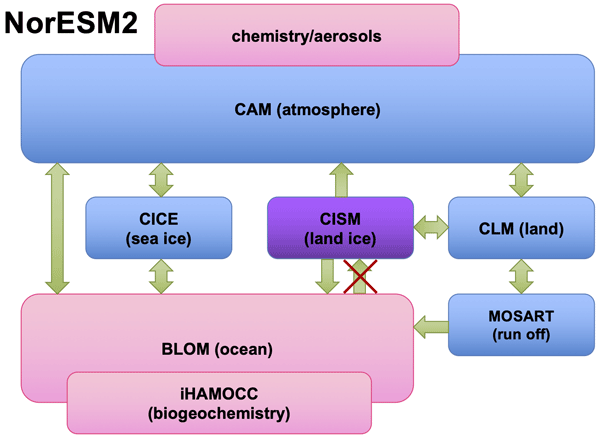
On the backdrop of observed accelerating ice sheet mass loss over the last few decades, there is growing interest in the role of ice sheet changes in global climate projections. In this regard, we have coupled an Earth system model with an ice sheet model and have produced an initial set of climate projections including an interactive coupling with a dynamic Greenland ice sheet.
Florian Sauerland, Pierre-Vincent Huot, Sylvain Marchi, Thierry Fichefet, Hugues Goosse, Konstanze Haubner, François Klein, François Massonnet, Bianca Mezzina, Eduardo Moreno-Chamarro, Pablo Ortega, Frank Pattyn, Charles Pelletier, Deborah Verfaillie, Lars Zipf, and Nicole van Lipzig
EGUsphere, https://doi.org/10.5194/egusphere-2025-2889, https://doi.org/10.5194/egusphere-2025-2889, 2025
Short summary
Short summary
We simulated the Antarctic climate from 1985 to 2014. Our model is driven using the ERA-5 reanalysis for one simulation and the EC-Earth global climate model for three others. Most of the simulated trends, such as sea ice extent and precipitation over land, have opposite signs for the two drivers, but agree between the three EC-Earth driven simulations. We conclude that these opposing trends must be due to the different drivers, and that the climate over land is less predictable than over sea.

Charles Pelletier, Thierry Fichefet, Hugues Goosse, Konstanze Haubner, Samuel Helsen, Pierre-Vincent Huot, Christoph Kittel, François Klein, Sébastien Le clec'h, Nicole P. M. van Lipzig, Sylvain Marchi, François Massonnet, Pierre Mathiot, Ehsan Moravveji, Eduardo Moreno-Chamarro, Pablo Ortega, Frank Pattyn, Niels Souverijns, Guillian Van Achter, Sam Vanden Broucke, Alexander Vanhulle, Deborah Verfaillie, and Lars Zipf
Geosci. Model Dev., 15, 553–594, https://doi.org/10.5194/gmd-15-553-2022, https://doi.org/10.5194/gmd-15-553-2022, 2022
Short summary
Short summary
We present PARASO, a circumpolar model for simulating the Antarctic climate. PARASO features five distinct models, each covering different Earth system subcomponents (ice sheet, atmosphere, land, sea ice, ocean). In this technical article, we describe how this tool has been developed, with a focus on the
coupling interfacesrepresenting the feedbacks between the distinct models used for contribution. PARASO is stable and ready to use but is still characterized by significant biases.
Ina Nagler, Helene Asbjørnsen, and Andreas Born
EGUsphere, https://doi.org/10.5194/egusphere-2026-2588, https://doi.org/10.5194/egusphere-2026-2588, 2026
Short summary
Short summary
This study explores the physical mechanisms behind large multidecadal North Atlantic circulation shifts, which remain poorly understood under forcing from human activity. We use 100 simulations of a single climate model to identify the common physical processes of these shifts. The results reveal three types of strong circulation changes. Weakening shifts after 1985 show a transition toward a regime where human-induced warming and reduced heat loss dominate these dynamics.
Sjur Barndon, Robert Law, Andreas Born, Thomas Chudley, and Stefanie Brechtelsbauer
The Cryosphere, 20, 2757–2772, https://doi.org/10.5194/tc-20-2757-2026, https://doi.org/10.5194/tc-20-2757-2026, 2026
Short summary
Short summary
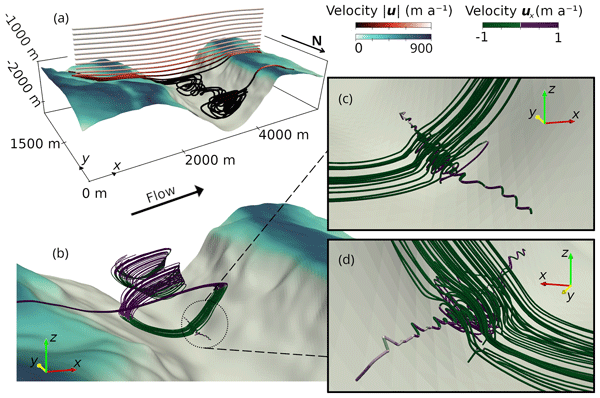
By simulating a section of the Scandinavian Ice Sheet over a deep fjord, we aim to understand the behaviour of ice sheets over rough landscapes. For perpendicular flow, we find reduced speed within the fjord and reverse flow at its base. Comparing real and smoothed topography shows that low-resolution models fail to capture these effects. Our findings have implications for Greenland ice sheet models, as commonly used bedrock resolutions likely overlook the influence of similar rough landscapes.
Didier Swingedouw, Laura Jackson, Aixue Hu, Anastasia Romanou, Nicole C. Laureanti, Wilbert Weijer, Sina Loriani, Bette Otto-Bliesner, Ayako Abe-Ouchi, Lucas Almeida, Alessio Bellucci, Reyk Börner, Gokhan Danabasoglu, Donovan P. Dennis, Marion Devilliers, Sybren Drijfhout, Jonathan Donges, Friederike Fröb, Thomas L. Frölicher, Guillaume Gastineau, Heiko Goelzer, Chuncheng Guo, Urs Hofmann, Anna Höse, Colin Jones, Torben Koenigk, Ann Kristin Klose, Valerio Lembo, Jose Licon-Salaiz, Ken Mankoff, Virna Meccia, Irina Melnikova, Oliver Mehling, Laurie Menviel, Juliette Mignot, Jon I. Robson, Gavin A. Schmidt, Robin Smith, Yuchen Sun, Irene Trombini, Matteo Willeit, Richard Wood, Fanghua Wu, Lin Zhaohui, and Ricarda Winkelmann
EGUsphere, https://doi.org/10.5194/egusphere-2026-1698, https://doi.org/10.5194/egusphere-2026-1698, 2026
Short summary
Short summary
This study presents a plan for climate model experiments to better understand how changes in freshwater in the North Atlantic affect major ocean currents. We designed coordinated simulations to test their response to warming, added freshwater, and possible recovery after weakening. Comparing results across models and past climate evidence helps improve confidence in projections and assess risks of large ocean circulation changes.
Rebekka Frøystad and Andreas Born
EGUsphere, https://doi.org/10.5194/egusphere-2026-1090, https://doi.org/10.5194/egusphere-2026-1090, 2026
Short summary
Short summary
Projections of future glacier change remain highly uncertain because different climate models produce a wide range of outcomes. In this study, we examine how this range influences projections for a Norwegian ice cap. We introduce a new downscaling approach that represents coarse climate models by high-resolution data. Our results show that the ice cap’s future is strongly influenced by emission scenario and we highlight the importance of accounting for uncertainty in climate impact studies.
Benjamin Heurgue, Charles Amory, Christoph Kittel, Fredrik Boberg, Gaël Durand, Vincent Favier, Xavier Fettweis, Quentin Glaude, Heiko Goelzer, Nicolaj Hansen, Nicolas C. Jourdain, Ruth Mottram, Martin Olesen, Willem Jan Van de Berg, Michiel R. Van den Broeke, and René R. Wijngaard
EGUsphere, https://doi.org/10.5194/egusphere-2026-624, https://doi.org/10.5194/egusphere-2026-624, 2026
Short summary
Short summary
We studied how the Antarctic ice sheet surface mass balance may change by 2100 using three high-resolution climate models forced by the same future climate scenario. While the models agree for present-day conditions, they project very different futures, especially over floating ice shelves. These differences mainly come from how melting, refreezing, and temperature are represented. Our results show that future sea level projections strongly depend on how well models simulate today’s climate.

Robert Law, Andreas Born, Philipp Voigt, Joseph A. MacGregor, and Claire Marie Guimond
The Cryosphere, 20, 1071–1086, https://doi.org/10.5194/tc-20-1071-2026, https://doi.org/10.5194/tc-20-1071-2026, 2026
Short summary
Short summary
Convection has been previously, yet contentiously, suggested for ice sheets, but never before comprehensively explored using numerical models. We use mantle dynamics code to test the hypothesis that convection gives rise to enigmatic plume-like features observed in radio-stratigraphy observations of the Greenland Ice Sheet. Our results provide very good agreement with field observations, but could imply that ice in northern Greenland is significantly softer than commonly thought.

Heiko Goelzer, Constantijn J. Berends, Fredrik Boberg, Gael Durand, Tamsin L. Edwards, Xavier Fettweis, Fabien Gillet-Chaulet, Quentin Glaude, Philippe Huybrechts, Sébastien Le clec'h, Ruth Mottram, Brice Noël, Martin Olesen, Charlotte Rahlves, Jeremy Rohmer, Michiel van den Broeke, and Roderik S. W. van de Wal
The Cryosphere, 19, 6887–6906, https://doi.org/10.5194/tc-19-6887-2025, https://doi.org/10.5194/tc-19-6887-2025, 2025
Short summary
Short summary
We present an ensemble of ice sheet model projections for the Greenland ice sheet. The focus is on providing projections that improve our understanding of the range future sea-level rise and the inherent uncertainties over the next 100 to 300 years. Compared to earlier work we more fully account for some of the uncertainties in sea-level projections. We include a wider range of climate model output, more climate change scenarios and we extend projections schematically up to year 2300.
Charlotte Rahlves, Heiko Goelzer, Andreas Born, and Petra M. Langebroek
The Cryosphere, 19, 6403–6419, https://doi.org/10.5194/tc-19-6403-2025, https://doi.org/10.5194/tc-19-6403-2025, 2025
Short summary
Short summary
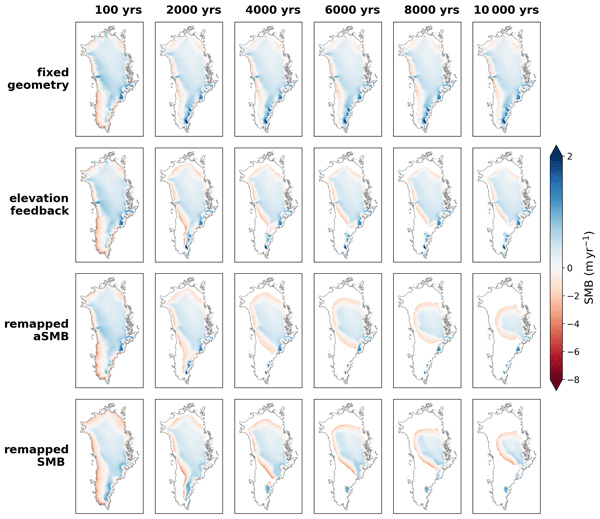
We present a method to better simulate how Greenland’s ice sheet may change over thousands of years in response to climate change. Using a stand-alone ice sheet model, we adjust snowfall and melting patterns based on changes in the ice sheet’s shape. This approach avoids complex coupled models and enables faster testing of many future scenarios to understand the long-term stability of Greenland’s ice.
Jeremy Rohmer, Heiko Goelzer, Tamsin L. Edwards, Goneri Le Cozannet, and Gael Durand
The Cryosphere, 19, 6421–6444, https://doi.org/10.5194/tc-19-6421-2025, https://doi.org/10.5194/tc-19-6421-2025, 2025
Short summary
Short summary
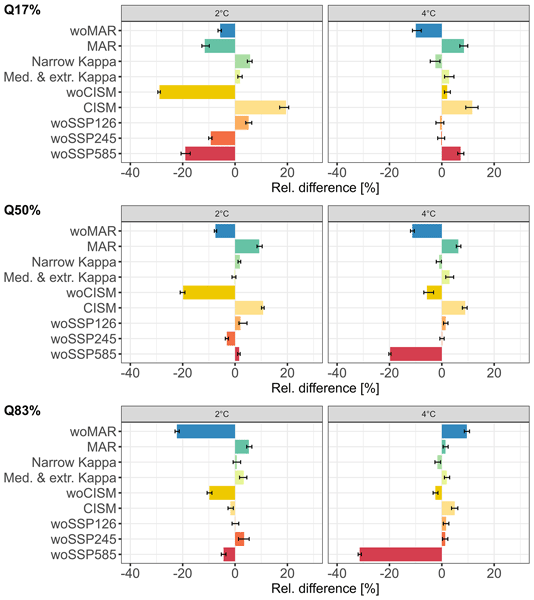
Developing robust protocols to design multi-model ensembles is of primary importance for the uncertainty quantification of sea level projections. Here, we set up a series of computer experiments to reflect design decisions for the prediction of future sea level contribution of the Greenland ice sheet in 2100. We show the importance of including the most extreme climate scenario and the implications of using a single type of numerical model for ice sheets or regional climate.
Heiko Goelzer, Petra M. Langebroek, Andreas Born, Stefan Hofer, Konstanze Haubner, Michele Petrini, Gunter Leguy, William H. Lipscomb, and Katherine Thayer-Calder
Geosci. Model Dev., 18, 7853–7867, https://doi.org/10.5194/gmd-18-7853-2025, https://doi.org/10.5194/gmd-18-7853-2025, 2025
Short summary
Short summary
On the backdrop of observed accelerating ice sheet mass loss over the last few decades, there is growing interest in the role of ice sheet changes in global climate projections. In this regard, we have coupled an Earth system model with an ice sheet model and have produced an initial set of climate projections including an interactive coupling with a dynamic Greenland ice sheet.
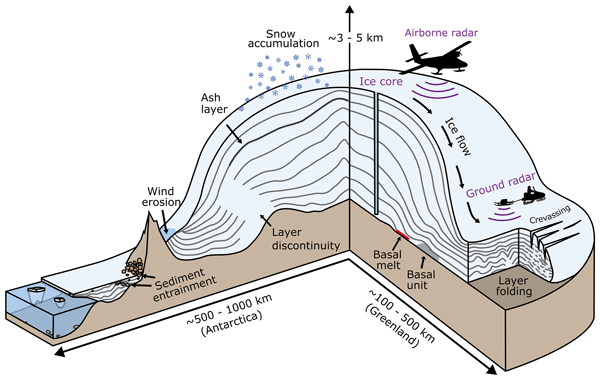
Robert G. Bingham, Julien A. Bodart, Marie G. P. Cavitte, Ailsa Chung, Rebecca J. Sanderson, Johannes C. R. Sutter, Olaf Eisen, Nanna B. Karlsson, Joseph A. MacGregor, Neil Ross, Duncan A. Young, David W. Ashmore, Andreas Born, Winnie Chu, Xiangbin Cui, Reinhard Drews, Steven Franke, Vikram Goel, John W. Goodge, A. Clara J. Henry, Antoine Hermant, Benjamin H. Hills, Nicholas Holschuh, Michelle R. Koutnik, Gwendolyn J.-M. C. Leysinger Vieli, Emma J. MacKie, Elisa Mantelli, Carlos Martín, Felix S. L. Ng, Falk M. Oraschewski, Felipe Napoleoni, Frédéric Parrenin, Sergey V. Popov, Therese Rieckh, Rebecca Schlegel, Dustin M. Schroeder, Martin J. Siegert, Xueyuan Tang, Thomas O. Teisberg, Kate Winter, Shuai Yan, Harry Davis, Christine F. Dow, Tyler J. Fudge, Tom A. Jordan, Bernd Kulessa, Kenichi Matsuoka, Clara J. Nyqvist, Maryam Rahnemoonfar, Matthew R. Siegfried, Shivangini Singh, Vjeran Višnjević, Rodrigo Zamora, and Alexandra Zuhr
The Cryosphere, 19, 4611–4655, https://doi.org/10.5194/tc-19-4611-2025, https://doi.org/10.5194/tc-19-4611-2025, 2025
Short summary
Short summary
The ice sheets covering Antarctica have built up over millenia through successive snowfall events which become buried and preserved as internal surfaces of equal age detectable with ice-penetrating radar. This paper describes an international initiative working together on these archival data to build a comprehensive 3-D picture of how old the ice is everywhere across Antarctica and how this is being used to reconstruct past and to predict future ice and climate behaviour.
Johanna Beckmann, Ronja Reese, Felicity S. McCormack, Sue Cook, Lawrence Bird, Dawid Gwyther, Daniel Richards, Matthias Scheiter, Yu Wang, Hélène Seroussi, Ayako Abe‐Ouchi, Torsten Albrecht, Jorge Alvarez‐Solas, Xylar S. Asay‐Davis, Jean‐Baptiste Barre, Constantijn J. Berends, Jorge Bernales, Javier Blasco, Justine Caillet, David M. Chandler, Violaine Coulon, Richard Cullather, Christophe Dumas, Benjamin K. Galton‐Fenzi, Julius Garbe, Fabien Gillet‐Chaulet, Rupert Gladstone, Heiko Goelzer, Nicholas R. Golledge, Ralf Greve, G. Hilmar Gudmundsson, Holly Kyeore Han, Trevor R. Hillebrand, Matthew J. Hoffman, Philippe Huybrechts, Nicolas C. Jourdain, Ann Kristin Klose, Petra M. Langebroek, Gunter R. Leguy, William H. Lipscomb, Daniel P. Lowry, Pierre Mathiot, Marisa Montoya, Mathieu Morlighem, Sophie Nowicki, Frank Pattyn, Antony J. Payne, Tyler Pelle, Aurélien Quiquet, Alexander Robinson, Leopekka Saraste, Erika G. Simon, Sainan Sun, Jake P. Twarog, Luke D. Trusel, Benoit Urruty, Jonas Van Breedam, Roderik S. W. van de Wal, Chen Zhao, and Thomas Zwinger
EGUsphere, https://doi.org/10.5194/egusphere-2025-4069, https://doi.org/10.5194/egusphere-2025-4069, 2025
Short summary
Short summary
Antarctica holds enough ice to raise sea levels by many meters, but its future is uncertain. Warm ocean water melts ice shelves from below, letting inland ice flow faster into the sea. By 2300, Antarctica could add 0.6–4.4 m to sea levels. Our study identifies two key factors—how strongly shelves melt and how the ice responds. These explain much of the range, and refining them in models may improve future predictions.
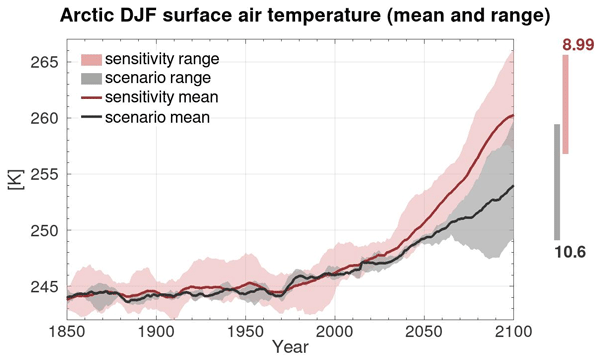
Lise Seland Graff, Jerry Tjiputra, Ada Gjermundsen, Andreas Born, Jens Boldingh Debernard, Heiko Goelzer, Yan-Chun He, Petra Margaretha Langebroek, Aleksi Nummelin, Dirk Olivié, Øyvind Seland, Trude Storelvmo, Mats Bentsen, Chuncheng Guo, Andrea Rosendahl, Dandan Tao, Thomas Toniazzo, Camille Li, Stephen Outten, and Michael Schulz
Earth Syst. Dynam., 16, 1671–1698, https://doi.org/10.5194/esd-16-1671-2025, https://doi.org/10.5194/esd-16-1671-2025, 2025
Short summary
Short summary
The magnitude of future Arctic amplification is highly uncertain. Using the Norwegian Earth System Model, we explore the effect of improving the representation of clouds, ocean eddies, the Greenland ice sheet, sea ice, and ozone on the projected Arctic winter warming in a coordinated experiment set. These improvements all lead to enhanced projected Arctic warming, with the largest changes found in the sea ice retreat regions and the largest uncertainty found on the Atlantic side.
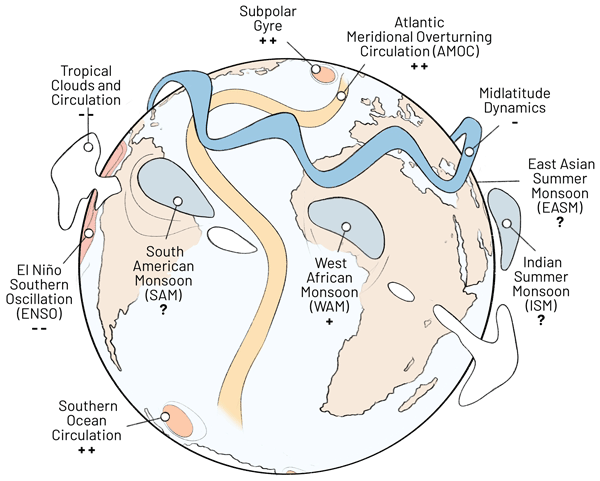
Sina Loriani, Yevgeny Aksenov, David I. Armstrong McKay, Govindasamy Bala, Andreas Born, Cristiano Mazur Chiessi, Henk A. Dijkstra, Jonathan F. Donges, Sybren Drijfhout, Matthew H. England, Alexey V. Fedorov, Laura C. Jackson, Kai Kornhuber, Gabriele Messori, Francesco S. R. Pausata, Stefanie Rynders, Jean-Baptiste Sallée, Bablu Sinha, Steven C. Sherwood, Didier Swingedouw, and Thejna Tharammal
Earth Syst. Dynam., 16, 1611–1653, https://doi.org/10.5194/esd-16-1611-2025, https://doi.org/10.5194/esd-16-1611-2025, 2025
Short summary
Short summary
In this work, we draw on palaeo-records, observations, and modelling studies to review tipping points in the ocean overturning circulations, monsoon systems, and global atmospheric circulations. We find indications for tipping in the ocean overturning circulations and the West African monsoon, with potentially severe impacts on the Earth system and humans. Tipping in the other considered systems is regarded as conceivable but is currently not sufficiently supported by evidence.
Florian Sauerland, Pierre-Vincent Huot, Sylvain Marchi, Thierry Fichefet, Hugues Goosse, Konstanze Haubner, François Klein, François Massonnet, Bianca Mezzina, Eduardo Moreno-Chamarro, Pablo Ortega, Frank Pattyn, Charles Pelletier, Deborah Verfaillie, Lars Zipf, and Nicole van Lipzig
EGUsphere, https://doi.org/10.5194/egusphere-2025-2889, https://doi.org/10.5194/egusphere-2025-2889, 2025
Short summary
Short summary
We simulated the Antarctic climate from 1985 to 2014. Our model is driven using the ERA-5 reanalysis for one simulation and the EC-Earth global climate model for three others. Most of the simulated trends, such as sea ice extent and precipitation over land, have opposite signs for the two drivers, but agree between the three EC-Earth driven simulations. We conclude that these opposing trends must be due to the different drivers, and that the climate over land is less predictable than over sea.
Ricarda Winkelmann, Donovan P. Dennis, Jonathan F. Donges, Sina Loriani, Ann Kristin Klose, Jesse F. Abrams, Jorge Alvarez-Solas, Torsten Albrecht, David Armstrong McKay, Sebastian Bathiany, Javier Blasco Navarro, Victor Brovkin, Eleanor Burke, Gokhan Danabasoglu, Reik V. Donner, Markus Drüke, Goran Georgievski, Heiko Goelzer, Anna B. Harper, Gabriele Hegerl, Marina Hirota, Aixue Hu, Laura C. Jackson, Colin Jones, Hyungjun Kim, Torben Koenigk, Peter Lawrence, Timothy M. Lenton, Hannah Liddy, José Licón-Saláiz, Maxence Menthon, Marisa Montoya, Jan Nitzbon, Sophie Nowicki, Bette Otto-Bliesner, Francesco Pausata, Stefan Rahmstorf, Karoline Ramin, Alexander Robinson, Johan Rockström, Anastasia Romanou, Boris Sakschewski, Christina Schädel, Steven Sherwood, Robin S. Smith, Norman J. Steinert, Didier Swingedouw, Matteo Willeit, Wilbert Weijer, Richard Wood, Klaus Wyser, and Shuting Yang
EGUsphere, https://doi.org/10.5194/egusphere-2025-1899, https://doi.org/10.5194/egusphere-2025-1899, 2025
Short summary
Short summary
The Tipping Points Modelling Intercomparison Project (TIPMIP) is an international collaborative effort to systematically assess tipping point risks in the Earth system using state-of-the-art coupled and stand-alone domain models. TIPMIP will provide a first global atlas of potential tipping dynamics, respective critical thresholds and key uncertainties, generating an important building block towards a comprehensive scientific basis for policy- and decision-making.
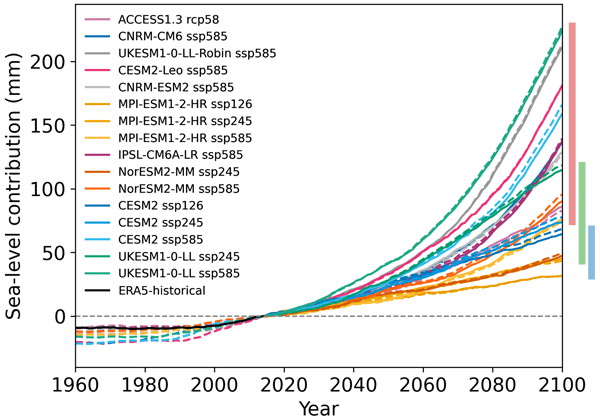
Charlotte Rahlves, Heiko Goelzer, Andreas Born, and Petra M. Langebroek
The Cryosphere, 19, 1205–1220, https://doi.org/10.5194/tc-19-1205-2025, https://doi.org/10.5194/tc-19-1205-2025, 2025
Short summary
Short summary
Mass loss from the Greenland ice sheet significantly contributes to rising sea levels, threatening coastal communities globally. To improve future sea-level projections, we simulated ice sheet behavior until 2100, initializing the model with observed geometry and using various climate models. Predictions indicate a sea-level rise of 32 to 228 mm by 2100, with climate model uncertainty being the main source of variability in projections.
Michele Petrini, Meike D. W. Scherrenberg, Laura Muntjewerf, Miren Vizcaino, Raymond Sellevold, Gunter R. Leguy, William H. Lipscomb, and Heiko Goelzer
The Cryosphere, 19, 63–81, https://doi.org/10.5194/tc-19-63-2025, https://doi.org/10.5194/tc-19-63-2025, 2025
Short summary
Short summary
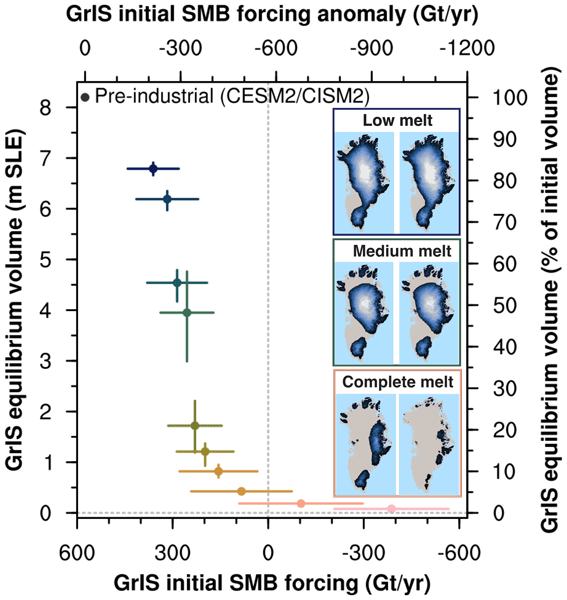
Anthropogenic warming is causing accelerated Greenland ice sheet melt. Here, we use a computer model to understand how prolonged warming and ice melt could threaten ice sheet stability. We find a threshold beyond which Greenland will lose more than 80 % of its ice over several thousand years, due to the interaction of surface and solid-Earth processes. Nearly complete Greenland ice sheet melt occurs when the ice margin disconnects from a region of high elevation in western Greenland.
Thi-Khanh-Dieu Hoang, Aurélien Quiquet, Christophe Dumas, Andreas Born, and Didier M. Roche
Clim. Past, 21, 27–51, https://doi.org/10.5194/cp-21-27-2025, https://doi.org/10.5194/cp-21-27-2025, 2025
Short summary
Short summary
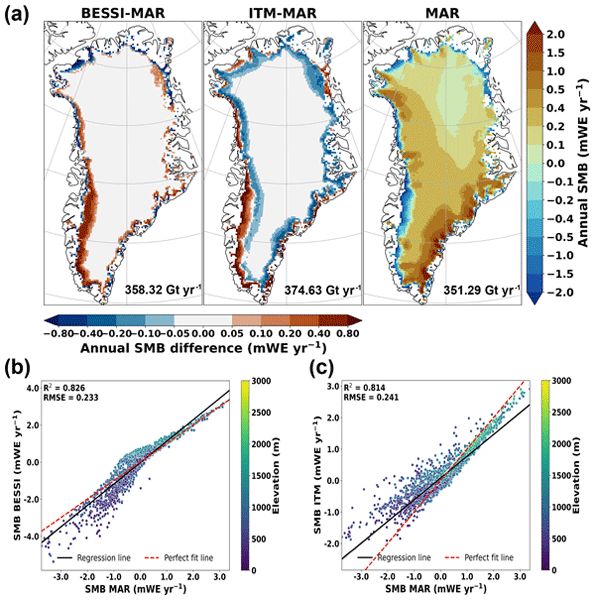
To improve the simulation of surface mass balance (SMB) that influences the advance–retreat of ice sheets, we run a snow model, the BErgen Snow SImulator (BESSI), with transient climate forcing obtained from an Earth system model, iLOVECLIM, over Greenland and Antarctica during the Last Interglacial (LIG; 130–116 ka). Compared to the simple existing SMB scheme of iLOVECLIM, BESSI gives more details about SMB processes with higher physics constraints while maintaining a low computational cost.
Eliot Jager, Fabien Gillet-Chaulet, Nicolas Champollion, Romain Millan, Heiko Goelzer, and Jérémie Mouginot
The Cryosphere, 18, 5519–5550, https://doi.org/10.5194/tc-18-5519-2024, https://doi.org/10.5194/tc-18-5519-2024, 2024
Short summary
Short summary
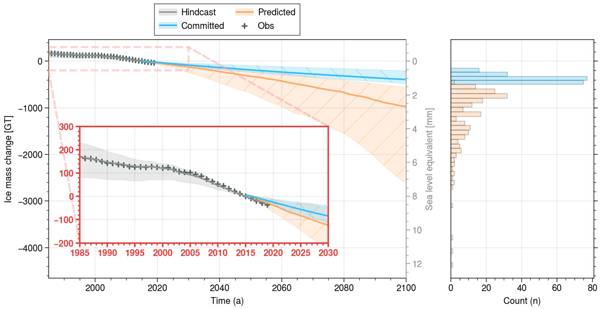
Inspired by a previous intercomparison framework, our study better constrains uncertainties in glacier evolution using an innovative method to validate Bayesian calibration. Upernavik Isstrøm, one of Greenland's largest glaciers, has lost significant mass since 1985. By integrating observational data, climate models, human emissions, and internal model parameters, we project its evolution until 2100. We show that future human emissions are the main source of uncertainty in 2100, making up half.
Tobias Zolles and Andreas Born
The Cryosphere, 18, 4831–4844, https://doi.org/10.5194/tc-18-4831-2024, https://doi.org/10.5194/tc-18-4831-2024, 2024
Short summary
Short summary
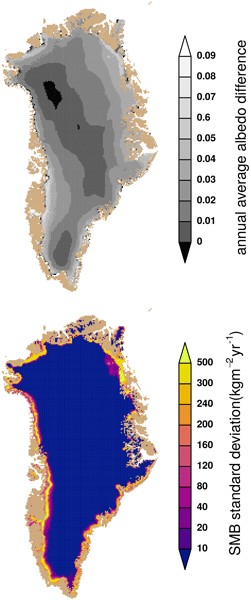
The Greenland ice sheet largely depends on the climate state. The uncertainties associated with the year-to-year variability have only a marginal impact on our simulated surface mass budget; this increases our confidence in projections and reconstructions. Basing the simulations on proxies, e.g., temperature, results in overestimates of the surface mass balance, as climatologies lead to small amounts of snowfall every day. This can be reduced by including sub-monthly precipitation variability.
Therese Rieckh, Andreas Born, Alexander Robinson, Robert Law, and Gerrit Gülle
Geosci. Model Dev., 17, 6987–7000, https://doi.org/10.5194/gmd-17-6987-2024, https://doi.org/10.5194/gmd-17-6987-2024, 2024
Short summary
Short summary
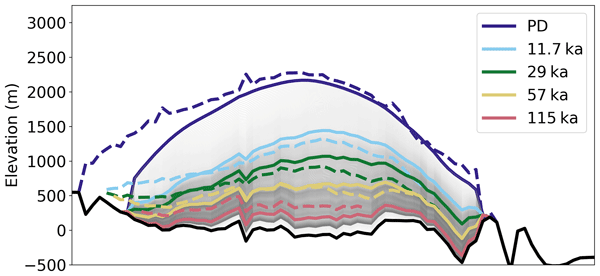
We present the open-source model ELSA, which simulates the internal age structure of large ice sheets. It creates layers of snow accumulation at fixed times during the simulation, which are used to model the internal stratification of the ice sheet. Together with reconstructed isochrones from radiostratigraphy data, ELSA can be used to assess ice sheet models and to improve their parameterization. ELSA can be used coupled to an ice sheet model or forced with its output.
Gustav Jungdal-Olesen, Jane Lund Andersen, Andreas Born, and Vivi Kathrine Pedersen
The Cryosphere, 18, 1517–1532, https://doi.org/10.5194/tc-18-1517-2024, https://doi.org/10.5194/tc-18-1517-2024, 2024
Short summary
Short summary
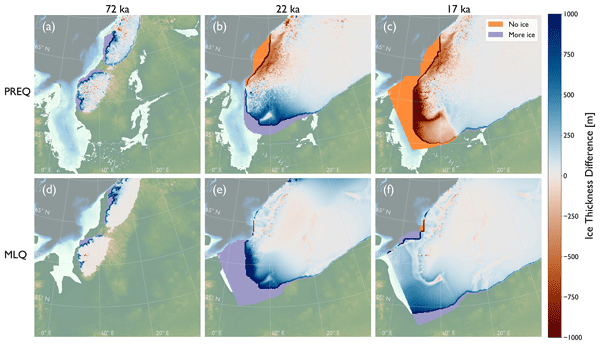
We explore how the shape of the land and underwater features in Scandinavia affected the former Scandinavian ice sheet over time. Using a computer model, we simulate how the ice sheet evolved during different stages of landscape development. We discovered that early glaciations were limited in size by underwater landforms, but as these changed, the ice sheet expanded more rapidly. Our findings highlight the importance of considering landscape changes when studying ice-sheet history.
Hélène Seroussi, Vincent Verjans, Sophie Nowicki, Antony J. Payne, Heiko Goelzer, William H. Lipscomb, Ayako Abe-Ouchi, Cécile Agosta, Torsten Albrecht, Xylar Asay-Davis, Alice Barthel, Reinhard Calov, Richard Cullather, Christophe Dumas, Benjamin K. Galton-Fenzi, Rupert Gladstone, Nicholas R. Golledge, Jonathan M. Gregory, Ralf Greve, Tore Hattermann, Matthew J. Hoffman, Angelika Humbert, Philippe Huybrechts, Nicolas C. Jourdain, Thomas Kleiner, Eric Larour, Gunter R. Leguy, Daniel P. Lowry, Chistopher M. Little, Mathieu Morlighem, Frank Pattyn, Tyler Pelle, Stephen F. Price, Aurélien Quiquet, Ronja Reese, Nicole-Jeanne Schlegel, Andrew Shepherd, Erika Simon, Robin S. Smith, Fiammetta Straneo, Sainan Sun, Luke D. Trusel, Jonas Van Breedam, Peter Van Katwyk, Roderik S. W. van de Wal, Ricarda Winkelmann, Chen Zhao, Tong Zhang, and Thomas Zwinger
The Cryosphere, 17, 5197–5217, https://doi.org/10.5194/tc-17-5197-2023, https://doi.org/10.5194/tc-17-5197-2023, 2023
Short summary
Short summary
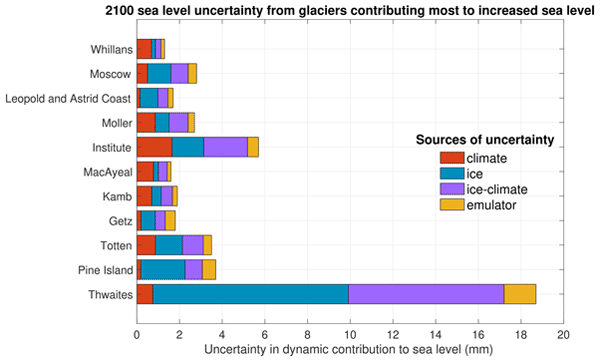
Mass loss from Antarctica is a key contributor to sea level rise over the 21st century, and the associated uncertainty dominates sea level projections. We highlight here the Antarctic glaciers showing the largest changes and quantify the main sources of uncertainty in their future evolution using an ensemble of ice flow models. We show that on top of Pine Island and Thwaites glaciers, Totten and Moscow University glaciers show rapid changes and a strong sensitivity to warmer ocean conditions.
Bjørg Risebrobakken, Mari F. Jensen, Helene R. Langehaug, Tor Eldevik, Anne Britt Sandø, Camille Li, Andreas Born, Erin Louise McClymont, Ulrich Salzmann, and Stijn De Schepper
Clim. Past, 19, 1101–1123, https://doi.org/10.5194/cp-19-1101-2023, https://doi.org/10.5194/cp-19-1101-2023, 2023
Short summary
Short summary
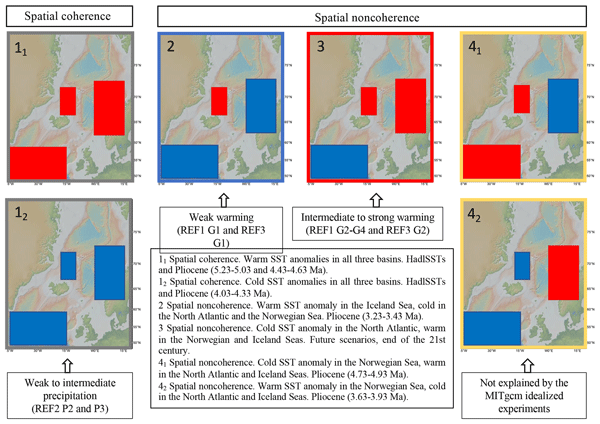
In the observational period, spatially coherent sea surface temperatures characterize the northern North Atlantic at multidecadal timescales. We show that spatially non-coherent temperature patterns are seen both in further projections and a past warm climate period with a CO2 level comparable to the future low-emission scenario. Buoyancy forcing is shown to be important for northern North Atlantic temperature patterns.
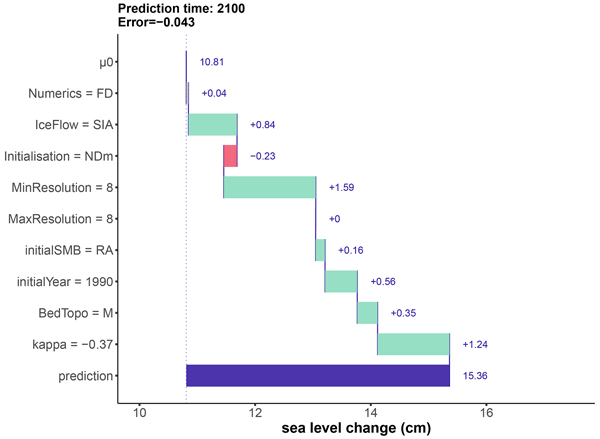
Jeremy Rohmer, Remi Thieblemont, Goneri Le Cozannet, Heiko Goelzer, and Gael Durand
The Cryosphere, 16, 4637–4657, https://doi.org/10.5194/tc-16-4637-2022, https://doi.org/10.5194/tc-16-4637-2022, 2022
Short summary
Short summary
To improve the interpretability of process-based projections of the sea-level contribution from land ice components, we apply the machine-learning-based
SHapley Additive exPlanationsapproach to a subset of a multi-model ensemble study for the Greenland ice sheet. This allows us to quantify the influence of particular modelling decisions (related to numerical implementation, initial conditions, or parametrisation of ice-sheet processes) directly in terms of sea-level change contribution.
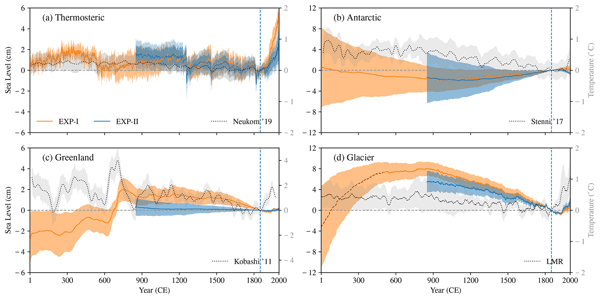
Nidheesh Gangadharan, Hugues Goosse, David Parkes, Heiko Goelzer, Fabien Maussion, and Ben Marzeion
Earth Syst. Dynam., 13, 1417–1435, https://doi.org/10.5194/esd-13-1417-2022, https://doi.org/10.5194/esd-13-1417-2022, 2022
Short summary
Short summary
We describe the contributions of ocean thermal expansion and land-ice melting (ice sheets and glaciers) to global-mean sea-level (GMSL) changes in the Common Era. The mass contributions are the major sources of GMSL changes in the pre-industrial Common Era and glaciers are the largest contributor. The paper also describes the current state of climate modelling, uncertainties and knowledge gaps along with the potential implications of the past variabilities in the contemporary sea-level rise.
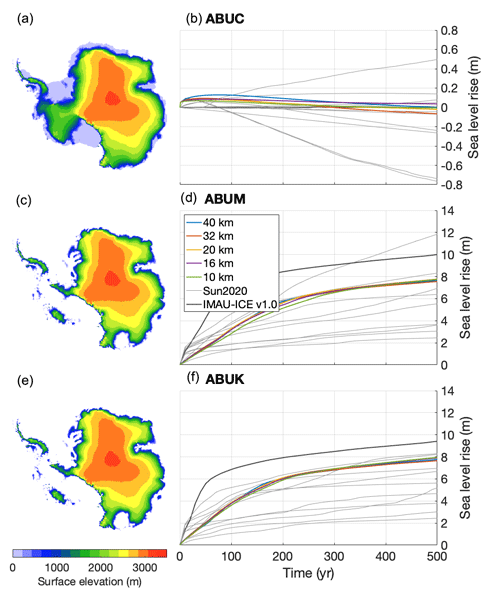
Constantijn J. Berends, Heiko Goelzer, Thomas J. Reerink, Lennert B. Stap, and Roderik S. W. van de Wal
Geosci. Model Dev., 15, 5667–5688, https://doi.org/10.5194/gmd-15-5667-2022, https://doi.org/10.5194/gmd-15-5667-2022, 2022
Short summary
Short summary
The rate at which marine ice sheets such as the West Antarctic ice sheet will retreat in a warming climate and ocean is still uncertain. Numerical ice-sheet models, which solve the physical equations that describe the way glaciers and ice sheets deform and flow, have been substantially improved in recent years. Here we present the results of several years of work on IMAU-ICE, an ice-sheet model of intermediate complexity, which can be used to study ice sheets of both the past and the future.
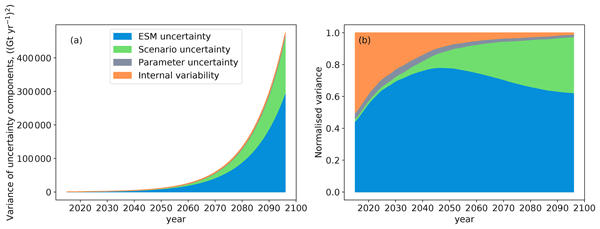
Katharina M. Holube, Tobias Zolles, and Andreas Born
The Cryosphere, 16, 315–331, https://doi.org/10.5194/tc-16-315-2022, https://doi.org/10.5194/tc-16-315-2022, 2022
Short summary
Short summary
We simulated the surface mass balance of the Greenland Ice Sheet in the 21st century by forcing a snow model with the output of many Earth system models and four greenhouse gas emission scenarios. We quantify the contribution to uncertainty in surface mass balance of these two factors and the choice of parameters of the snow model. The results show that the differences between Earth system models are the main source of uncertainty. This effect is localised mostly near the equilibrium line.
Charles Pelletier, Thierry Fichefet, Hugues Goosse, Konstanze Haubner, Samuel Helsen, Pierre-Vincent Huot, Christoph Kittel, François Klein, Sébastien Le clec'h, Nicole P. M. van Lipzig, Sylvain Marchi, François Massonnet, Pierre Mathiot, Ehsan Moravveji, Eduardo Moreno-Chamarro, Pablo Ortega, Frank Pattyn, Niels Souverijns, Guillian Van Achter, Sam Vanden Broucke, Alexander Vanhulle, Deborah Verfaillie, and Lars Zipf
Geosci. Model Dev., 15, 553–594, https://doi.org/10.5194/gmd-15-553-2022, https://doi.org/10.5194/gmd-15-553-2022, 2022
Short summary
Short summary
We present PARASO, a circumpolar model for simulating the Antarctic climate. PARASO features five distinct models, each covering different Earth system subcomponents (ice sheet, atmosphere, land, sea ice, ocean). In this technical article, we describe how this tool has been developed, with a focus on the
coupling interfacesrepresenting the feedbacks between the distinct models used for contribution. PARASO is stable and ready to use but is still characterized by significant biases.
Cited articles
Ackermann, L., Danek, C., Gierz, P., and Lohmann, G.: AMOC Recovery in a multicentennial scenario using a coupled atmosphere-ocean-ice sheet model, Geophysical Research Letters, 47, e2019GL086810, https://doi.org/10.1029/2019GL086810, 2020. a
Amaral, T., Bartholomaus, T. C., and Enderlin, E. M.: Evaluation of Iceberg Calving Models Against Observations From Greenland Outlet Glaciers, Journal of Geophysical Research: Earth Surface, 125, https://doi.org/10.1029/2019JF005444, 2020. a
Aschwanden, A., Fahnestock, M. A., Truffer, M., Brinkerhoff, D. J., Hock, R., Khroulev, C., Mottram, R., and Khan, S. A.: Contribution of the Greenland Ice Sheet to sea level over the next millennium, Science Advances, 5, eaav9396, https://doi.org/10.1126/sciadv.aav9396, 2019. a
Baker, J. A., Bell, M. J., Jackson, L. C., Renshaw, R., Vallis, G. K., Watson, A. J., and Wood, R. A.: Overturning Pathways Control AMOC Weakening in CMIP6 Models, Geophysical Research Letters, 50, https://doi.org/10.1029/2023GL103381, 2023. a
Beckmann, J. and Winkelmann, R.: Effects of extreme melt events on ice flow and sea level rise of the Greenland Ice Sheet, The Cryosphere, 17, 3083–3099, https://doi.org/10.5194/tc-17-3083-2023, 2023. a
Benn, D. I., Cowton, T., Todd, J., and Luckman, A.: Glacier calving in Greenland, Current Climate Change Reports, 3, 282–290, https://doi.org/10.1007/s40641-017-0070-1, 2017. a
Bentsen, M., Bethke, I., Debernard, J. B., Iversen, T., Kirkevåg, A., Seland, Ø., Drange, H., Roelandt, C., Seierstad, I. A., Hoose, C., and Kristjánsson, J. E.: The Norwegian Earth System Model, NorESM1-M – Part 1: Description and basic evaluation of the physical climate, Geosci. Model Dev., 6, 687–720, https://doi.org/10.5194/gmd-6-687-2013, 2013. a
Bentsen, M., Oliviè, D. J. L., Seland, Ø., Toniazzo, T., Gjermundsen, A., Graff, L. S., Debernard, J. B., Gupta, A. K., He, Y., Kirkevag, A., Schwinger, J., Tjiputra, J., Aas, K. S., Bethke, I., Fan, Y., Griesfeller, J., Grini, A., Guo, C., Ilicak, M., Karset, I. H. H., Landgren, O. A., Liakka, J., Moseid, K. O., Nummelin, A., Spensberger, C., Tang, H., Zhang, Z., Heinze, C., Iversen, T., and Schulz, M.: NCC NorESM2-MM model output prepared for CMIP6 CMIP historical, WCRP [data set], https://doi.org/10.22033/ESGF/CMIP6.8040, 2019a. a
Bentsen, M., Oliviè, D. J. L., Seland, Ø., Toniazzo, T., Gjermundsen, A., Graff, L. S., Debernard, J. B., Gupta, A. K., He, Y., Kirkevag, A., Schwinger, J., Tjiputra, J., Aas, K. S., Bethke, I., Fan, Y., Griesfeller, J., Grini, A., Guo, C., Ilicak, M., Karset, I. H. H., Landgren, O. A., Liakka, J., Moseid, K. O., Nummelin, A., Spensberger, C., Tang, H., Zhang, Z., Heinze, C., Iversen, T., and Schulz, M.: NCC NorESM2-MM model output prepared for CMIP6 ScenarioMIP ssp585, WCRP [data set], https://doi.org/10.22033/ESGF/CMIP6.8321, 2019b. a
Bevis, M., Harig, C., Khan, S. A., Brown, A., Simons, F. J., Willis, M., Fettweis, X., Van Den Broeke, M. R., Madsen, F. B., Kendrick, E., and Caccamise, D. J.: Accelerating changes in ice mass within Greenland, and the ice sheet's sensitivity to atmospheric forcing, Proceedings of the National Academy of Sciences, 116, 1934–1939, https://doi.org/10.1073/pnas.1806562116, 2019. a
Bogenschutz, P. A., Gettelman, A., Hannay, C., Larson, V. E., Neale, R. B., Craig, C., and Chen, C.-C.: The path to CAM6: coupled simulations with CAM5.4 and CAM5.5, Geosci. Model Dev., 11, 235–255, https://doi.org/10.5194/gmd-11-235-2018, 2018. a
Born, A. and Stocker, T. F.: Two Stable Equilibria of the Atlantic Subpolar Gyre, Journal of Physical Oceanography, 44, 246–264, https://doi.org/10.1175/JPO-D-13-073.1, 2014. a
Bunce, C., Nienow, P., Sole, A., Cowton, T., and Davison, B.: Influence of glacier runoff and near-terminus subglacial hydrology on frontal ablation at a large Greenlandic tidewater glacier, Journal of Glaciology, 67, 343–352, https://doi.org/10.1017/jog.2020.109, 2021. a
Caesar, L., Rahmstorf, S., Robinson, A., Feulner, G., and Saba, V.: Observed fingerprint of a weakening Atlantic Ocean overturning circulation, Nature, 556, 191–196, https://doi.org/10.1038/s41586-018-0006-5, 2018. a
Choi, Y., Morlighem, M., Wood, M., and Bondzio, J. H.: Comparison of four calving laws to model Greenland outlet glaciers, The Cryosphere, 12, 3735–3746, https://doi.org/10.5194/tc-12-3735-2018, 2018. a
Cook, S. J., Christoffersen, P., Todd, J., Slater, D., and Chauché, N.: Coupled modelling of subglacial hydrology and calving-front melting at Store Glacier, West Greenland, The Cryosphere, 14, 905–924, https://doi.org/10.5194/tc-14-905-2020, 2020. a
Danabasoglu, G., Lamarque, J.-F., Bacmeister, J., Bailey, D. A., DuVivier, A. K., Edwards, J., Emmons, L. K., Fasullo, J., Garcia, R., Gettelman, A., Hannay, C., Holland, M. M., Large, W. G., Lauritzen, P. H., Lawrence, D. M., Lenaerts, J. T. M., Lindsay, K., Lipscomb, W. H., Mills, M. J., Neale, R., Oleson, K. W., Otto-Bliesner, B., Phillips, A. S., Sacks, W., Tilmes, S., van Kampenhout, L., Vertenstein, M., Bertini, A., Dennis, J., Deser, C., Fischer, C., Fox-Kemper, B., Kay, J. E., Kinnison, D., Kushner, P. J., Larson, V. E., Long, M. C., Mickelson, S., Moore, J. K., Nienhouse, E., Polvani, L., Rasch, P. J., and Strand, W. G.: The Community Earth System Model Version 2 (CESM2), Journal of Advances in Modeling Earth Systems, 12, https://doi.org/10.1029/2019MS001916, 2020. a
Davis, P. E., Nicholls, K. W., Holland, D. M., Schmidt, B. E., Washam, P., Riverman, K. L., Arthern, R. J., Vaňková, I., Eayrs, C., Smith, J. A., and Anker, P. G.: Suppressed basal melting in the eastern Thwaites Glacier grounding zone, Nature, 614, 479–485, 2023. a
Drijfhout, S., Van Oldenborgh, G. J., and Cimatoribus, A.: Is a decline of AMOC causing the warming hole above the North Atlantic in observed and modeled warming patterns?, Journal of Climate, 25, 8373–8379, https://doi.org/10.1175/JCLI-D-12-00490.1, 2012. a
Edwards, T. L., Nowicki, S., Marzeion, B., Hock, R., Goelzer, H., Seroussi, H., Jourdain, N. C., Slater, D. A., Turner, F. E., Smith, C. J., McKenna, C. M., Simon, E., Abe-Ouchi, A., Gregory, J. M., Larour, E., Lipscomb, W. H., Payne, A. J., Shepherd, A., Agosta, C., Alexander, P., Albrecht, T., Anderson, B., Asay-Davis, X., Aschwanden, A., Barthel, A., Bliss, A., Calov, R., Chambers, C., Champollion, N., Choi, Y., Cullather, R., Cuzzone, J., Dumas, C., Felikson, D., Fettweis, X., Fujita, K., Galton-Fenzi, B. K., Gladstone, R., Golledge, N. R., Greve, R., Hattermann, T., Hoffman, M. J., Humbert, A., Huss, M., Huybrechts, P., Immerzeel, W., Kleiner, T., Kraaijenbrink, P., Le Clec'h, S., Lee, V., Leguy, G. R., Little, C. M., Lowry, D. P., Malles, J.-H., Martin, D. F., Maussion, F., Morlighem, M., O’Neill, J. F., Nias, I., Pattyn, F., Pelle, T., Price, S. F., Quiquet, A., Radic, V., Reese, R., Rounce, D. R., Rückamp, M., Sakai, A., Shafer, C., Schlegel, N.-J., Shannon, S., Smith, R. S., Straneo, F., Sun, S., Tarasov, L., Trusel, L. D., Van Breedam, J., van de Wal, R., van den Broeke, M., Winkelmann, R., Zekollari, H., Zhao, C., Zhang, T., and Zwinger, T.: Projected land ice contributions to twenty-first-century sea level rise, Nature, 593, 74–82, https://doi.org/10.1038/s41586-021-03302-y, 2021. a
Eyring, V., Bony, S., Meehl, G. A., Senior, C. A., Stevens, B., Stouffer, R. J., and Taylor, K. E.: Overview of the Coupled Model Intercomparison Project Phase 6 (CMIP6) experimental design and organization, Geosci. Model Dev., 9, 1937–1958, https://doi.org/10.5194/gmd-9-1937-2016, 2016. a
Fettweis, X., Hofer, S., Krebs-Kanzow, U., Amory, C., Aoki, T., Berends, C. J., Born, A., Box, J. E., Delhasse, A., Fujita, K., Gierz, P., Goelzer, H., Hanna, E., Hashimoto, A., Huybrechts, P., Kapsch, M.-L., King, M. D., Kittel, C., Lang, C., Langen, P. L., Lenaerts, J. T. M., Liston, G. E., Lohmann, G., Mernild, S. H., Mikolajewicz, U., Modali, K., Mottram, R. H., Niwano, M., Noël, B., Ryan, J. C., Smith, A., Streffing, J., Tedesco, M., van de Berg, W. J., van den Broeke, M., van de Wal, R. S. W., van Kampenhout, L., Wilton, D., Wouters, B., Ziemen, F., and Zolles, T.: GrSMBMIP: intercomparison of the modelled 1980–2012 surface mass balance over the Greenland Ice Sheet, The Cryosphere, 14, 3935–3958, https://doi.org/10.5194/tc-14-3935-2020, 2020. a
Fyke, J., Eby, M., Mackintosh, A., and Weaver, A.: Impact of climate sensitivity and polar amplification on projections of Greenland Ice Sheet loss, Climate dynamics, 43, 2249–2260, https://doi.org/10.1007/s00382-014-2050-7, 2014. a, b
Gjermundsen, A., Nummelin, A., Olivié, D., Bentsen, M., Seland, Ø., and Schulz, M.: Shutdown of Southern Ocean convection controls long-term greenhouse gas-induced warming, Nature Geoscience, 14, 724–731, https://doi.org/10.1038/s41561-021-00825-x, 2021. a, b
Gjermundsen, A., Seland Graff, L., Schulz, M., Torsvik, T., annlew, DirkOlivie, Kirkevåg, A., He, Y., ChunchengGuo, Goelzer, H., Løvset, T., Bentsen, M., Moseid, K. O., Hulten, M. van, Schwinger, J., Cai, L., Tjiputra, Jerry, Tang, Hui, Lieungh, E., Griesfeller, J., Debernard, J. B., Chiu, P.-G., Nummelin, A., Gliß, J., and offread1: hgoelzer/NorESM-HGfork: noresm_ism_betzy_mask, Zenodo [code], https://doi.org/10.5281/zenodo.11199967, 2024. a
Goelzer, H.: noresm_ism_betzy_mask, NorESM2 code used for coupled NorESM-CISM experiments, Zenodo [code], https://doi.org/10.5281/zenodo.11200059, 2024a. a
Goelzer, H.: NSSP585frc2G_f09_tn14_gl4_SMB1_celo, NIRD RDA [data set], https://doi.org/10.11582/2024.00079, 2024b. a
Goelzer, H.: NHISTfrc2G_f09_tn14_gl4_SMB1_celo, NIRD RDA [data set], https://doi.org/10.11582/2024.00080, 2024c. a
Goelzer, H.: NSSP585frc2extG_f09_tn14_gl4_SMB1_celo, NIRD RDA [data set], https://doi.org/10.11582/2024.00081, 2024d. a
Goelzer, H.: N1850frc2G_f09_tn14_gl4_SMB1_celo, NIRD RDA [data set], https://doi.org/10.11582/2024.00082, 2024e. a
Goelzer, H., Huybrechts, P., Loutre, M.-F., Goosse, H., Fichefet, T., and Mouchet, A.: Impact of Greenland and Antarctic ice sheet interactions on climate sensitivity, Climate dynamics, 37, 1005–1018, https://doi.org/10.1007/s00382-010-0885-0, 2011. a, b
Goelzer, H., Nowicki, S., Edwards, T., Beckley, M., Abe-Ouchi, A., Aschwanden, A., Calov, R., Gagliardini, O., Gillet-Chaulet, F., Golledge, N. R., Gregory, J., Greve, R., Humbert, A., Huybrechts, P., Kennedy, J. H., Larour, E., Lipscomb, W. H., Le clec'h, S., Lee, V., Morlighem, M., Pattyn, F., Payne, A. J., Rodehacke, C., Rückamp, M., Saito, F., Schlegel, N., Seroussi, H., Shepherd, A., Sun, S., van de Wal, R., and Ziemen, F. A.: Design and results of the ice sheet model initialisation experiments initMIP-Greenland: an ISMIP6 intercomparison, The Cryosphere, 12, 1433–1460, https://doi.org/10.5194/tc-12-1433-2018, 2018. a
Goelzer, H., Nowicki, S., Payne, A., Larour, E., Seroussi, H., Lipscomb, W. H., Gregory, J., Abe-Ouchi, A., Shepherd, A., Simon, E., Agosta, C., Alexander, P., Aschwanden, A., Barthel, A., Calov, R., Chambers, C., Choi, Y., Cuzzone, J., Dumas, C., Edwards, T., Felikson, D., Fettweis, X., Golledge, N. R., Greve, R., Humbert, A., Huybrechts, P., Le clec'h, S., Lee, V., Leguy, G., Little, C., Lowry, D. P., Morlighem, M., Nias, I., Quiquet, A., Rückamp, M., Schlegel, N.-J., Slater, D. A., Smith, R. S., Straneo, F., Tarasov, L., van de Wal, R., and van den Broeke, M.: The future sea-level contribution of the Greenland ice sheet: a multi-model ensemble study of ISMIP6, The Cryosphere, 14, 3071–3096, https://doi.org/10.5194/tc-14-3071-2020, 2020. a, b
Goldberg, D. N.: A variationally derived, depth-integrated approximation to a higher-order glaciological flow model, Journal of Glaciology, 57, 157–170, https://doi.org/10.3189/002214311795306763, 2011. a
Haubner, K., Box, J. E., Schlegel, N. J., Larour, E. Y., Morlighem, M., Solgaard, A. M., Kjeldsen, K. K., Larsen, S. H., Rignot, E., Dupont, T. K., and Kjær, K. H.: Simulating ice thickness and velocity evolution of Upernavik Isstrøm 1849–2012 by forcing prescribed terminus positions in ISSM, The Cryosphere, 12, 1511–1522, https://doi.org/10.5194/tc-12-1511-2018, 2018. a
Hofer, S., Lang, C., Amory, C., Kittel, C., Delhasse, A., Tedstone, A., and Fettweis, X.: Greater Greenland Ice Sheet contribution to global sea level rise in CMIP6, Nature communications, 11, 6289, https://doi.org/10.1038/s41467-020-20011-8, 2020. a
Holube, K. M., Zolles, T., and Born, A.: Sources of uncertainty in Greenland surface mass balance in the 21st century, The Cryosphere, 16, 315–331, https://doi.org/10.5194/tc-16-315-2022, 2022. a
Hunke, E. C., Lipscomb, W. H., Turner, A. K., Jeffery, N., and Elliot, S.: CICE: the Los Alamos Sea Ice Model, Documentation and User's Manual Version 5.1, Los Alamos National Laboratory, USA, LA-CC-06-012, http://www.ccpo.odu.edu/~klinck/Reprints/PDF/cicedoc2015.pdf (last access: 10 December 2025), 2015. a
Khan, S. A., Aschwanden, A., Bjørk, A. A., Wahr, J., Kjeldsen, K. K., and Kjaer, K. H.: Greenland ice sheet mass balance: a review, Reports on Progress in Physics, 78, 046801, https://doi.org/10.1088/0034-4885/78/4/046801, 2015. a
Kirkevåg, A., Grini, A., Olivié, D., Seland, Ø., Alterskjær, K., Hummel, M., Karset, I. H. H., Lewinschal, A., Liu, X., Makkonen, R., Bethke, I., Griesfeller, J., Schulz, M., and Iversen, T.: A production-tagged aerosol module for Earth system models, OsloAero5.3 – extensions and updates for CAM5.3-Oslo, Geosci. Model Dev., 11, 3945–3982, https://doi.org/10.5194/gmd-11-3945-2018, 2018. a
Lawrence, D. M., Fisher, R. A., Koven, C. D., Oleson, K. W., Swenson, S. C., Bonan, G., Collier, N., Ghimire, B., van Kampenhout, L., Kennedy, D., Kluzek, E., Lawrence, P. J., Li, F., Li, H., Lombardozzi, D., Riley, W. J., Sacks, W. J., Shi, M., Vertenstein, M., Wieder, W. R., Xu, C., Ali, A. A., Badger, A. M., Bisht, G., van den Broeke, M., Brunke, M. A., Burns, S. P., Buzan, J., Clark, M., Craig, A., Dahlin, K., Drewniak, B., Fisher, J. B., Flanner, M., Fox, A. M., Gentine, P., Hoffman, F., Keppel-Aleks, G., Knox, R., Kumar, S., Lenaerts, J., Leung, L. R., Lipscomb, W. H., Lu, Y., Pandey, A., Pelletier, J. D., Perket, J., Randerson, J. T., Ricciuto, D. M., Sanderson, B. M., Slater, A., Subin, Z. M., Tang, J., Thomas, R. Q., Val Martin, M., and Zeng, X.: The Community Land Model Version 5: Description of New Features, Benchmarking, and Impact of Forcing Uncertainty, Journal of Advances in Modeling Earth Systems, 11, 4245–4287, https://doi.org/10.1029/2018MS001583, 2019. a
Le clec'h, S., Charbit, S., Quiquet, A., Fettweis, X., Dumas, C., Kageyama, M., Wyard, C., and Ritz, C.: Assessment of the Greenland ice sheet–atmosphere feedbacks for the next century with a regional atmospheric model coupled to an ice sheet model, The Cryosphere, 13, 373–395, https://doi.org/10.5194/tc-13-373-2019, 2019. a, b
Li, D., DeConto, R. M., Pollard, D., and Hu, Y.: Competing climate feedbacks of ice sheet freshwater discharge in a warming world, Nature Communications, 15, 5178, https://doi.org/10.1038/s41467-024-49604-3, 2024. a
Li, H., Wigmosta, M. S., Wu, H., Huang, M., Ke, Y., Coleman, A. M., and Leung, L. R.: A physically based runoff routing model for land surface and earth system models, Journal of Hydrometeorology, 14, 808–828, https://doi.org/10.1175/JHM-D-12-015.1, 2013. a
Lipscomb, W. H., Fyke, J. G., Vizcaíno, M., Sacks, W. J., Wolfe, J., Vertenstein, M., Craig, A., Kluzek, E., and Lawrence, D. M.: Implementation and Initial Evaluation of the Glimmer Community Ice Sheet Model in the Community Earth System Model, Journal of Climate, 26, 7352–7371, https://doi.org/10.1175/JCLI-D-12-00557.1, 2013. a, b
Lipscomb, W. H., Price, S. F., Hoffman, M. J., Leguy, G. R., Bennett, A. R., Bradley, S. L., Evans, K. J., Fyke, J. G., Kennedy, J. H., Perego, M., Ranken, D. M., Sacks, W. J., Salinger, A. G., Vargo, L. J., and Worley, P. H.: Description and evaluation of the Community Ice Sheet Model (CISM) v2.1, Geosci. Model Dev., 12, 387–424, https://doi.org/10.5194/gmd-12-387-2019, 2019. a, b, c
Lofverstrom, M., Fyke, J. G., Thayer-Calder, K., Muntjewerf, L., Vizcaino, M., Sacks, W. J., Lipscomb, W. H., Otto-Bliesner, B. L., and Bradley, S. L.: An efficient ice sheet/Earth system model spin-up procedure for CESM2-CISM2: Description, evaluation, and broader applicability, Journal of Advances in Modeling Earth Systems, 12, https://doi.org/10.1029/2019MS001984, 2020. a, b
Machguth, H., Thomsen, H. H., Weidick, A., Abermann, J., Ahlström, A. P., Andersen, M. L., Andersen, S. B., Björk, A. A., Box, J. E., Braithwaite, R. J., Bøggild, C. E., Citterio, M., Clement, P., Colgan, W., Fausto, R. S., Gleie, K., Hasholt, B., Hynek, B., Knudsen, N. T., Larsen, S. H., Mernild, S., Oerlemans, J., Oerter, H., Olesen, O. B., Smeets, C. J. P. P., Steffen, K., Stober, M., Sugiyama, S., van As, D., van den Broeke, M. R., and van de Wal, R. S.: Greenland surface mass-balance observations from the ice-sheet ablation area and local glaciers, Journal of Glaciology, 62, 861–887, https://doi.org/10.1017/jog.2016.75, 2016. a
Madsen, M., Yang, S., Aðalgeirsdóttir, G., Svendsen, S., Rodehacke, C., and Ringgaard, I.: The role of an interactive Greenland ice sheet in the coupled climate-ice sheet model EC-Earth-PISM, Climate Dynamics, 59, 1189–1211, https://doi.org/10.1007/s00382-022-06184-6, 2022. a, b
McMillan, M., Leeson, A., Shepherd, A., Briggs, K., Armitage, T. W. K., Hogg, A., Kuipers Munneke, P., van den Broeke, M., Noël, B., van de Berg, W. J., Ligtenberg, S., Horwath, M., Groh, A., Muir, A., and Gilbert, L.: A high-resolution record of Greenland mass balance, Geophysical Research Letters, 43, 7002–7010, https://doi.org/10.1002/2016GL069666, 2016. a
Mouginot, J., Rignot, E., Bjørk, A. A., Van den Broeke, M., Millan, R., Morlighem, M., Noël, B., Scheuchl, B., and Wood, M.: Forty-six years of Greenland Ice Sheet mass balance from 1972 to 2018, Proceedings of the National Academy of Sciences, 116, 9239–9244, https://doi.org/10.1073/pnas.1904242116, 2019. a
Muntjewerf, L., Petrini, M., Vizcaino, M., Ernani da Silva, C., Sellevold, R., Scherrenberg, M. D. W., Thayer-Calder, K., Bradley, S. L., Lenaerts, J. T. M., Lipscomb, W. H., and Lofverstrom, M.: Greenland Ice Sheet Contribution to 21st Century Sea Level Rise as Simulated by the Coupled CESM2.1-CISM2.1, Geophysical Research Letters, 47, https://doi.org/10.1029/2019GL086836, 2020a. a, b, c, d
Muntjewerf, L., Sellevold, R., Vizcaino, M., Ernani da Silva, C., Petrini, M., Thayer-Calder, K., Scherrenberg, M. D. W., Bradley, S. L., Katsman, C. A., Fyke, J., Lipscomb, W. H., Lofverstrom, M., and Sacks, W. J.: Accelerated Greenland Ice Sheet Mass Loss Under High Greenhouse Gas Forcing as Simulated by the Coupled CESM2.1-CISM2.1, Journal of Advances in Modeling Earth Systems, 12, https://doi.org/10.1029/2019MS002031, 2020b. a, b, c, d, e, f, g, h
Muntjewerf, L., Sacks, W. J., Lofverstrom, M., Fyke, J., Lipscomb, W. H., Ernani da Silva, C., Vizcaino, M., Thayer-Calder, K., Lenaerts, J. T., and Sellevold, R.: Description and Demonstration of the Coupled Community Earth System Model v2–Community Ice Sheet Model v2 (CESM2-CISM2), Journal of Advances in Modeling Earth Systems, 13, https://doi.org/10.1029/2020MS002356, 2021. a, b, c
O'Neill, B. C., Tebaldi, C., van Vuuren, D. P., Eyring, V., Friedlingstein, P., Hurtt, G., Knutti, R., Kriegler, E., Lamarque, J.-F., Lowe, J., Meehl, G. A., Moss, R., Riahi, K., and Sanderson, B. M.: The Scenario Model Intercomparison Project (ScenarioMIP) for CMIP6, Geosci. Model Dev., 9, 3461–3482, https://doi.org/10.5194/gmd-9-3461-2016, 2016. a, b
Oppenheimer, M., Glavovic, B., Hinkel, J., Van de Wal, R., Magnan, A. K., Abd-Elgawad, A., Cai, R., Cifuentes-Jara, M., Deconto, R. M., Ghosh, T., Hay, J., Isla, F., Marzeion, B., Meyssignac, B., and Sebesvari, Z.: Sea Level Rise and Implications for Low-Lying Islands, Coasts and Communities, Chap. 4, Cambridge University Press, https://doi.org/10.1017/9781009157964.006, 2019. a
Pelle, T., Morlighem, M., Nakayama, Y., and Seroussi, H.: Widespread Grounding Line Retreat of Totten Glacier, East Antarctica, Over the 21st Century, Geophysical Research Letters, 48, https://doi.org/10.1029/2021GL093213, 2021. a
Rahlves, C., Goelzer, H., Born, A., and Langebroek, P. M.: Historically consistent mass loss projections of the Greenland ice sheet, The Cryosphere, 19, 1205–1220, https://doi.org/10.5194/tc-19-1205-2025, 2025. a, b
Ryan, J., Smith, L., Van As, D., Cooley, S., Cooper, M., Pitcher, L., and Hubbard, A.: Greenland Ice Sheet surface melt amplified by snowline migration and bare ice exposure, Science Advances, 5, https://doi.org/10.1126/sciadv.aav3738, 2019. a
Seland, Ø., Bentsen, M., Olivié, D., Toniazzo, T., Gjermundsen, A., Graff, L. S., Debernard, J. B., Gupta, A. K., He, Y.-C., Kirkevåg, A., Schwinger, J., Tjiputra, J., Aas, K. S., Bethke, I., Fan, Y., Griesfeller, J., Grini, A., Guo, C., Ilicak, M., Karset, I. H. H., Landgren, O., Liakka, J., Moseid, K. O., Nummelin, A., Spensberger, C., Tang, H., Zhang, Z., Heinze, C., Iversen, T., and Schulz, M.: Overview of the Norwegian Earth System Model (NorESM2) and key climate response of CMIP6 DECK, historical, and scenario simulations, Geosci. Model Dev., 13, 6165–6200, https://doi.org/10.5194/gmd-13-6165-2020, 2020. a, b, c, d, e, f
Sellevold, R. and Vizcaíno, M.: Global warming threshold and mechanisms for accelerated Greenland ice sheet surface mass loss, Journal of Advances in Modeling Earth Systems, 12, e2019MS002029, https://doi.org/10.1029/2019MS002029, 2020. a
Sellevold, R., van Kampenhout, L., Lenaerts, J. T. M., Noël, B., Lipscomb, W. H., and Vizcaino, M.: Surface mass balance downscaling through elevation classes in an Earth system model: application to the Greenland ice sheet, The Cryosphere, 13, 3193–3208, https://doi.org/10.5194/tc-13-3193-2019, 2019. a, b
Siahaan, A., Smith, R. S., Holland, P. R., Jenkins, A., Gregory, J. M., Lee, V., Mathiot, P., Payne, A. J., Ridley, J. K., and Jones, C. G.: The Antarctic contribution to 21st-century sea-level rise predicted by the UK Earth System Model with an interactive ice sheet, The Cryosphere, 16, 4053–4086, https://doi.org/10.5194/tc-16-4053-2022, 2022. a, b
Slater, D. A., Nienow, P., Goldberg, D., Cowton, T., and Sole, A.: A model for tidewater glacier undercutting by submarine melting, Geophysical Research Letters, 44, 2360–2368, https://doi.org/10.1002/2016GL072374, 2017. a
Slater, D. A., Straneo, F., Felikson, D., Little, C. M., Goelzer, H., Fettweis, X., and Holte, J.: Estimating Greenland tidewater glacier retreat driven by submarine melting, The Cryosphere, 13, 2489–2509, https://doi.org/10.5194/tc-13-2489-2019, 2019. a
Slater, D. A., Benn, D., Cowton, T., Bassis, J., and Todd, J.: Calving multiplier effect controlled by melt undercut geometry, Journal of Geophysical Research: Earth Surface, 126, e2021JF006191, https://doi.org/10.1029/2021JF006191, 2021. a
Smith, R. S., Mathiot, P., Siahaan, A., Lee, V., Cornford, S. L., Gregory, J. M., Payne, A. J., Jenkins, A., Holland, P. R., Ridley, J. K., and Jones, C. G.: Coupling the UK Earth System Model to dynamic models of the Greenland and Antarctic ice sheets, Journal of Advances in Modeling Earth Systems, 13, https://doi.org/10.1029/2021MS002520, 2021. a, b, c
Sommers, A. N., Otto-Bliesner, B. L., Lipscomb, W. H., Lofverstrom, M., Shafer, S. L., Bartlein, P. J., Brady, E. C., Kluzek, E., Leguy, G., Thayer-Calder, K., and Tomas, R. A.: Retreat and Regrowth of the Greenland Ice Sheet During the Last Interglacial as Simulated by the CESM2-CISM2 Coupled Climate–Ice Sheet Model, Paleoceanography and Paleoclimatology, 36, https://doi.org/10.1029/2021PA004272, 2021. a
Schmidt, B. E., Washam, P., Davis, P. E., Nicholls, K. W., Holland, D. M., Lawrence, J. D., Riverman, K. L., Smith, J. A., Spears, A., Dichek, D. J. G., and Mullen, A. D.: Heterogeneous melting near the Thwaites Glacier grounding line, Nature, 614, 471–478, 2023. a
Straneo, F. and Heimbach, P.: North Atlantic warming and the retreat of Greenland's outlet glaciers, Nature, 504, 36–43, https://doi.org/10.1038/nature12854, 2013. a
Swingedouw, D., Bily, A., Esquerdo, C., Borchert, L. F., Sgubin, G., Mignot, J., and Menary, M.: On the risk of abrupt changes in the North Atlantic subpolar gyre in CMIP6 models, Annals of the New York Academy of Sciences, 1504, 187–201, https://doi.org/10.1111/nyas.14659, 2021. a
The IMBIE Team: Mass balance of the Greenland Ice Sheet from 1992 to 2018, Nature, 579, 233–239, https://doi.org/10.1038/s41586-019-1855-2, 2020. a, b
Tjiputra, J. F., Schwinger, J., Bentsen, M., Morée, A. L., Gao, S., Bethke, I., Heinze, C., Goris, N., Gupta, A., He, Y.-C., Olivié, D., Seland, Ø., and Schulz, M.: Ocean biogeochemistry in the Norwegian Earth System Model version 2 (NorESM2), Geosci. Model Dev., 13, 2393–2431, https://doi.org/10.5194/gmd-13-2393-2020, 2020. a
van Kampenhout, L., Rhoades, A. M., Herrington, A. R., Zarzycki, C. M., Lenaerts, J. T. M., Sacks, W. J., and van den Broeke, M. R.: Regional grid refinement in an Earth system model: impacts on the simulated Greenland surface mass balance, The Cryosphere, 13, 1547–1564, https://doi.org/10.5194/tc-13-1547-2019, 2019. a, b
Vizcaino, M., Mikolajewicz, U., Ziemen, F., Rodehacke, C. B., Greve, R., and van den Broeke, M. R.: Coupled simulations of Greenland Ice Sheet and climate change up to A. D. 2300, Geophysical Research Letters, 42, 3927–3935, https://doi.org/10.1002/2014GL061142, 2015. a, b
Weijer, W., Cheng, W., Garuba, O. A., Hu, A., and Nadiga, B.: CMIP6 models predict significant 21st century decline of the Atlantic meridional overturning circulation, Geophysical Research Letters, 47, https://doi.org/10.1029/2019GL086075, 2020. a
Wood, M., Rignot, E., Fenty, I., An, L., Bjørk, A., van den Broeke, M., Cai, C., Kane, E., Menemenlis, D., Millan, R., and Morlighem, M.: Ocean forcing drives glacier retreat in Greenland, Science Advances, 7, eaba7282, https://doi.org/10.1126/sciadv.aba7282, 2021. a
Xie, A., Zhu, J., Kang, S., Qin, X., Xu, B., and Wang, Y.: Polar amplification comparison among Earth's three poles under different socioeconomic scenarios from CMIP6 surface air temperature, Scientific Reports, 12, 16548, https://doi.org/10.1038/s41598-022-21060-3, 2022. a
Zeitz, M., Reese, R., Beckmann, J., Krebs-Kanzow, U., and Winkelmann, R.: Impact of the melt–albedo feedback on the future evolution of the Greenland Ice Sheet with PISM-dEBM-simple, The Cryosphere, 15, 5739–5764, https://doi.org/10.5194/tc-15-5739-2021, 2021. a, b
Zhao, C., Gladstone, R., Galton-Fenzi, B. K., Gwyther, D., and Hattermann, T.: Evaluation of an emergent feature of sub-shelf melt oscillations from an idealized coupled ice sheet–ocean model using FISOC (v1.1) – ROMSIceShelf (v1.0) – Elmer/Ice (v9.0), Geosci. Model Dev., 15, 5421–5439, https://doi.org/10.5194/gmd-15-5421-2022, 2022. a
Short summary
We add a new dynamic component – an ice sheet model simulating the Greenland ice sheet – to an Earth system model that already captures the global climate evolution including ocean, atmosphere, land and sea ice. Under a strong warming scenario, the global warming of 10°C over 250 years is dominating the climate evolution. Changes from the ice-climate interaction are mainly local yet impacting the evolution of the Greenland ice sheet. Hence, ice-climate feedbacks should be considered beyond 2100.
We add a new dynamic component – an ice sheet model simulating the Greenland ice sheet – to an...


Altmetrics
Final-revised paper
Preprint