Articles | Volume 17, issue 2
https://doi.org/10.5194/esd-17-319-2026
© Author(s) 2026. This work is distributed under
the Creative Commons Attribution 4.0 License.
https://doi.org/10.5194/esd-17-319-2026
© Author(s) 2026. This work is distributed under
the Creative Commons Attribution 4.0 License.
Energetics of monsoons and deserts: role of surface albedo vs water vapor feedback
Chetankumar Jalihal
CORRESPONDING AUTHOR
Max Planck Institute for Meteorology, Hamburg, Germany
Department of Climate Change, Indian Institute of Technology Hyderabad, Kandi, 502285, Telangana, India
Uwe Mikolajewicz
Max Planck Institute for Meteorology, Hamburg, Germany
Related authors
Francesco S. R. Pausata, Gabriele Messori, Jayoung Yun, Chetankumar A. Jalihal, Massimo A. Bollasina, and Thomas M. Marchitto
Clim. Past, 17, 1243–1271, https://doi.org/10.5194/cp-17-1243-2021, https://doi.org/10.5194/cp-17-1243-2021, 2021
Short summary
Short summary
Far-afield changes in vegetation such as those that occurred over the Sahara during the middle Holocene and the consequent changes in dust emissions can affect the intensity of the South Asian Monsoon (SAM) rainfall and the lengthening of the monsoon season. This remote influence is mediated by anomalies in Indian Ocean sea surface temperatures and may have shaped the evolution of the SAM during the termination of the African Humid Period.
Malena Andernach, Marie-Luise Kapsch, and Uwe Mikolajewicz
The Cryosphere, 20, 1047–1069, https://doi.org/10.5194/tc-20-1047-2026, https://doi.org/10.5194/tc-20-1047-2026, 2026
Short summary
Short summary
Using a fully-coupled climate-ice sheet model, we find that the Greenland Ice Sheet has at least four steady states under pre-industrial CO2 concentrations, which are stabilized by several climate-ice sheet feedbacks. We also show that interactions with the Antarctic Ice Sheet impact the timing of some state transitions. The multistability implies that once a certain volume threshold is passed, the mass loss of the Greenland Ice Sheet would be irreversible under subsequently reduced CO2 levels.
Takashi Obase, Laurie Menviel, Ayako Abe-Ouchi, Tristan Vadsaria, Ruza Ivanovic, Brooke Snoll, Sam Sherriff-Tadano, Paul J. Valdes, Lauren Gregoire, Marie-Luise Kapsch, Uwe Mikolajewicz, Nathaelle Bouttes, Didier Roche, Fanny Lhardy, Chengfei He, Bette Otto-Bliesner, Zhengyu Liu, and Wing-Le Chan
Clim. Past, 21, 1443–1463, https://doi.org/10.5194/cp-21-1443-2025, https://doi.org/10.5194/cp-21-1443-2025, 2025
Short summary
Short summary
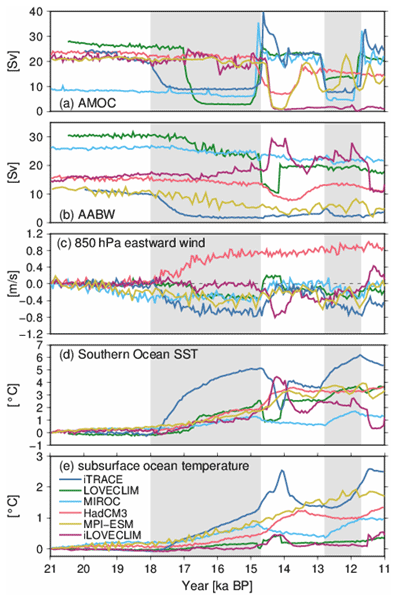
This study analyses transient simulations of the last deglaciation performed by six climate models to understand the processes driving high-southern-latitude temperature changes. We find that atmospheric CO2 and AMOC (Atlantic Meridional Overturning Circulation) changes are the primary drivers of the warming and cooling during the middle stage of the deglaciation. The analysis highlights the model's sensitivity of CO2 and AMOC to meltwater and the meltwater history of temperature changes at high southern latitudes.
Uwe Mikolajewicz, Marie-Luise Kapsch, Clemens Schannwell, Katharina D. Six, Florian A. Ziemen, Meike Bagge, Jean-Philippe Baudouin, Olga Erokhina, Veronika Gayler, Volker Klemann, Virna L. Meccia, Anne Mouchet, and Thomas Riddick
Clim. Past, 21, 719–751, https://doi.org/10.5194/cp-21-719-2025, https://doi.org/10.5194/cp-21-719-2025, 2025
Short summary
Short summary
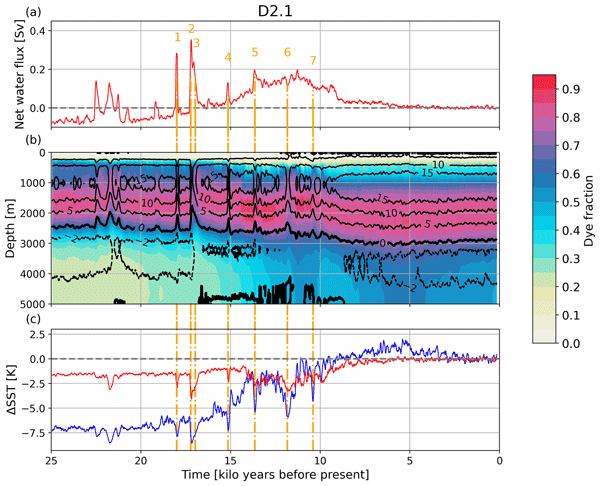
A fully coupled atmosphere–ocean–ice-sheet–solid-earth model was applied to simulate the time from the Last Glacial Maximum (about 25 000 years before the present) to the pre-industrial period. The model simulations are compared to observational estimates. During this climate transition, the model simulates several abrupt changes in the North Atlantic region, which are initiated by different processes. The underlying mechanisms are analysed and described.
Malena Andernach, Marie-Luise Kapsch, and Uwe Mikolajewicz
Earth Syst. Dynam., 16, 451–474, https://doi.org/10.5194/esd-16-451-2025, https://doi.org/10.5194/esd-16-451-2025, 2025
Short summary
Short summary
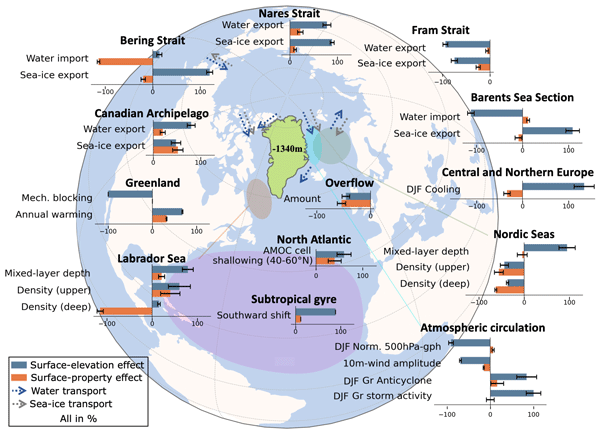
Using a comprehensive set of simulations with the Max Planck Institute for Meteorology Earth System Model, we disentangle and quantify the impacts of a disintegrated Greenland Ice Sheet (GrIS) on the global climate, including the deep ocean. We find most of the climate response is driven by Greenland’s lower elevation and enhanced by changed surface properties, although regional differences exist. Despite the confinement of most responses to the Arctic, the GrIS also influences remote climates.
Elisa Ziegler, Nils Weitzel, Jean-Philippe Baudouin, Marie-Luise Kapsch, Uwe Mikolajewicz, Lauren Gregoire, Ruza Ivanovic, Paul J. Valdes, Christian Wirths, and Kira Rehfeld
Clim. Past, 21, 627–659, https://doi.org/10.5194/cp-21-627-2025, https://doi.org/10.5194/cp-21-627-2025, 2025
Short summary
Short summary
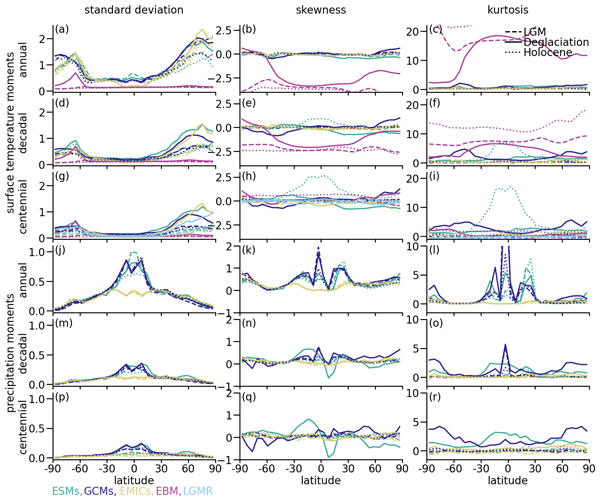
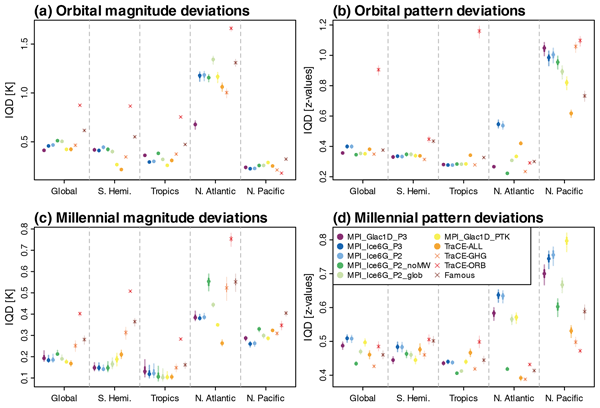
During the Last Deglaciation, global surface temperature rose by about 4–7 °C over several millennia. We show that changes in year-to-year up to century-to-century fluctuations of temperature and precipitation during the Deglaciation were mostly larger than during either the preceding or succeeding more stable periods in 15 climate model simulations. The analysis demonstrates how ice sheets, meltwater, and volcanism influence simulated variability to inform future simulation protocols.
Katharina D. Six, Uwe Mikolajewicz, and Gerhard Schmiedl
Clim. Past, 20, 1785–1816, https://doi.org/10.5194/cp-20-1785-2024, https://doi.org/10.5194/cp-20-1785-2024, 2024
Short summary
Short summary
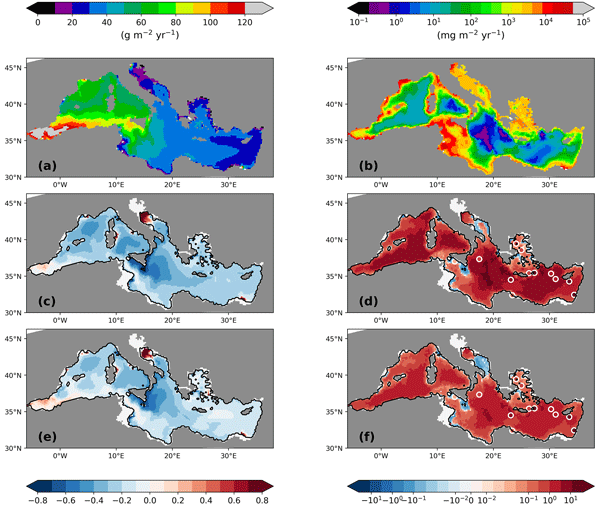
We use a physical and biogeochemical ocean model of the Mediterranean Sea to obtain a picture of the Last Glacial Maximum. The shallowing of the Strait of Gibraltar leads to a shallower pycnocline and more efficient nutrient export. Consistent with the sediment data, an increase in organic matter deposition is simulated, although this is based on lower biological production. This unexpected but plausible result resolves the apparent contradiction between planktonic and benthic proxy data.
Nils Weitzel, Heather Andres, Jean-Philippe Baudouin, Marie-Luise Kapsch, Uwe Mikolajewicz, Lukas Jonkers, Oliver Bothe, Elisa Ziegler, Thomas Kleinen, André Paul, and Kira Rehfeld
Clim. Past, 20, 865–890, https://doi.org/10.5194/cp-20-865-2024, https://doi.org/10.5194/cp-20-865-2024, 2024
Short summary
Short summary
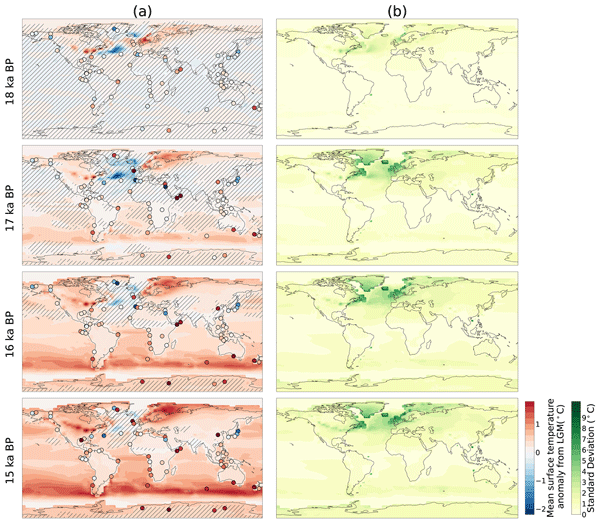
The ability of climate models to faithfully reproduce past warming episodes is a valuable test considering potentially large future warming. We develop a new method to compare simulations of the last deglaciation with temperature reconstructions. We find that reconstructions differ more between regions than simulations, potentially due to deficiencies in the simulation design, models, or reconstructions. Our work is a promising step towards benchmarking simulations of past climate transitions.
Brooke Snoll, Ruza Ivanovic, Lauren Gregoire, Sam Sherriff-Tadano, Laurie Menviel, Takashi Obase, Ayako Abe-Ouchi, Nathaelle Bouttes, Chengfei He, Feng He, Marie Kapsch, Uwe Mikolajewicz, Juan Muglia, and Paul Valdes
Clim. Past, 20, 789–815, https://doi.org/10.5194/cp-20-789-2024, https://doi.org/10.5194/cp-20-789-2024, 2024
Short summary
Short summary
Geological records show rapid climate change throughout the recent deglaciation. The drivers of these changes are still misunderstood but are often attributed to shifts in the Atlantic Ocean circulation from meltwater input. A cumulative effort to understand these processes prompted numerous simulations of this period. We use these to explain the chain of events and our collective ability to simulate them. The results demonstrate the importance of the meltwater amount used in the simulation.
Clemens Schannwell, Uwe Mikolajewicz, Florian Ziemen, and Marie-Luise Kapsch
Clim. Past, 19, 179–198, https://doi.org/10.5194/cp-19-179-2023, https://doi.org/10.5194/cp-19-179-2023, 2023
Short summary
Short summary
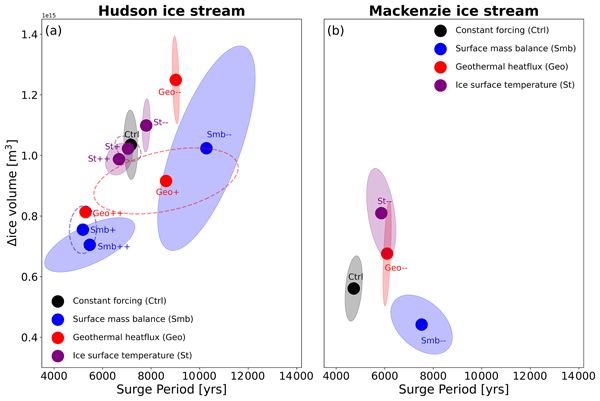
Heinrich-type ice-sheet surges are recurring events over the course of the last glacial cycle during which large numbers of icebergs are discharged from the Laurentide ice sheet into the ocean. These events alter the evolution of the global climate. Here, we use model simulations of the Laurentide ice sheet to identify and quantify the importance of various climate and ice-sheet parameters for the simulated surge cycle.
Katharina Dorothea Six and Uwe Mikolajewicz
Biogeosciences Discuss., https://doi.org/10.5194/bg-2022-27, https://doi.org/10.5194/bg-2022-27, 2022
Preprint withdrawn
Short summary
Short summary
We developed a global ocean biogeochemical model with a zoom on the Benguela upwelling system. We show that the high spatial resolution is necessary to capture long-term trends of oxygen of the recent past. The regional anthropogenic carbon uptake over the last century is lower than compared to a coarser resolution ocean model as used in Earth system models. This suggests that, at least for some regions, the changes projected by these Earth system models are associated with high uncertainty.
Francesco S. R. Pausata, Gabriele Messori, Jayoung Yun, Chetankumar A. Jalihal, Massimo A. Bollasina, and Thomas M. Marchitto
Clim. Past, 17, 1243–1271, https://doi.org/10.5194/cp-17-1243-2021, https://doi.org/10.5194/cp-17-1243-2021, 2021
Short summary
Short summary
Far-afield changes in vegetation such as those that occurred over the Sahara during the middle Holocene and the consequent changes in dust emissions can affect the intensity of the South Asian Monsoon (SAM) rainfall and the lengthening of the monsoon season. This remote influence is mediated by anomalies in Indian Ocean sea surface temperatures and may have shaped the evolution of the SAM during the termination of the African Humid Period.
Masa Kageyama, Sandy P. Harrison, Marie-L. Kapsch, Marcus Lofverstrom, Juan M. Lora, Uwe Mikolajewicz, Sam Sherriff-Tadano, Tristan Vadsaria, Ayako Abe-Ouchi, Nathaelle Bouttes, Deepak Chandan, Lauren J. Gregoire, Ruza F. Ivanovic, Kenji Izumi, Allegra N. LeGrande, Fanny Lhardy, Gerrit Lohmann, Polina A. Morozova, Rumi Ohgaito, André Paul, W. Richard Peltier, Christopher J. Poulsen, Aurélien Quiquet, Didier M. Roche, Xiaoxu Shi, Jessica E. Tierney, Paul J. Valdes, Evgeny Volodin, and Jiang Zhu
Clim. Past, 17, 1065–1089, https://doi.org/10.5194/cp-17-1065-2021, https://doi.org/10.5194/cp-17-1065-2021, 2021
Short summary
Short summary
The Last Glacial Maximum (LGM; ~21 000 years ago) is a major focus for evaluating how well climate models simulate climate changes as large as those expected in the future. Here, we compare the latest climate model (CMIP6-PMIP4) to the previous one (CMIP5-PMIP3) and to reconstructions. Large-scale climate features (e.g. land–sea contrast, polar amplification) are well captured by all models, while regional changes (e.g. winter extratropical cooling, precipitations) are still poorly represented.
Cited articles
Alamirew, N. K., Todd, M. C., Ryder, C. L., Marsham, J. H., and Wang, Y.: The early summertime Saharan heat low: sensitivity of the radiation budget and atmospheric heating to water vapour and dust aerosol, Atmos. Chem. Phys., 18, 1241–1262, https://doi.org/10.5194/acp-18-1241-2018, 2018. a
Biasutti, M., Voigt, A., Boos, W. R., Braconnot, P., Hargreaves, J. C., Harrison, S. P., Kang, S. M., Mapes, B. E., Scheff, J., Schumacher, C., Sobel, A. H., and Xie, S.-P.: Global energetics and local physics as drivers of past, present and future monsoons, Nat. Geosci., 11, 392–400, https://doi.org/10.1038/s41561-018-0137-1, 2018. a, b
Bonan, G. B.: Forests and climate change: forcings, feedbacks, and the climate benefits of forests, Science, 320, 1444–1449, https://doi.org/10.1126/science.1155121, 2008. a
Box, M. A.: Radiative perturbation theory: a review, Environ. Modell. & Softw., 17, 95–106, https://doi.org/10.1016/S1364-8152(01)00056-1, 2002. a
Chakraborty, A. and Agrawal, S.: Role of west Asian surface pressure in summer monsoon onset over central India, Environ. Res. Lett., 12, 074002, https://doi.org/10.1088/1748-9326/aa76ca, 2017. a
Cherchi, A., Annamalai, H., Masina, S., and Navarra, A.: South Asian summer monsoon and the eastern Mediterranean climate: The monsoon–desert mechanism in CMIP5 simulations, J. Climate, 27, 6877–6903, https://doi.org/10.1175/JCLI-D-13-00530.1, 2014. a, b
Chou, C. and Neelin, J. D.: Mechanisms limiting the northward extent of the northern summer monsoons over North America, Asia, and Africa, J. Climate, 16, 406–425, https://doi.org/10.1175/1520-0442(2003)016<0406:MLTNEO>2.0.CO;2, 2003. a
Dewitte, S. and Clerbaux, N.: Measurement of the Earth radiation budget at the top of the atmosphere – A review, Remote Sensing, 9, 1143, https://doi.org/10.3390/rs9111143, 2017. a
Gadgil, S.: The monsoon system: Land–sea breeze or the ITCZ?, J. Earth Syst. Sci., 127, 5, https://doi.org/10.1007/s12040-017-0916-x, 2018. a
Hadley, G.: VI. Concerning the cause of the general trade-winds, Philos. T. R. Soc. Lond., 39, 58–62, https://doi.org/10.1098/rstl.1735.0014, 1735. a
Halley, E.: An historical account of the trade winds, and monsoons, observable in the seas between and near the Tropicks, with an attempt to assign the physical cause of the said winds, Philos. T. R. Soc. Lond., 16, 153–168, https://doi.org/10.1098/rstl.1686.0026, 1753. a
Hersbach, H., Bell, B., Berrisford, P., Hirahara, S., Horányi, A., Muñoz-Sabater, J., Nicolas, J., Peubey, C., Radu, R., Schepers, D., Simmons, A., Soci, C., Abdalla, S., Abellan, X., Balsamo, G., Bechtold, P., Biavati, G., Bidlot, J., Bonavita, M., De Chiara, G., Dahlgren, P., Dee, D., Diamantakis, M., Dragani, R., Flemming, J., Forbes, R., Fuentes, M., Geer, A., Haimberger, L., Healy, S., Hogan, R. J., Hólm, E., Janisková, M., Keeley, S., Laloyaux, P., Lopez, P., Lupu, C., Radnoti, G., de Rosnay, P., Rozum, I., Vamborg, F., Villaume, S., and Thépaut, J.-N.: The ERA5 global reanalysis, Q. J. Roy. Meteor. Soc., 146, 1999–2049, https://doi.org/10.1002/qj.3803, 2020. a
Hersbach, H., Bell, B., Berrisford, P., Biavati, G., Horányi, A., Muñoz Sabater, J., Nicolas, J., Peubey, C., Radu, R., Rozum, I., Schepers, D., Simmons, A., Soci, C., Dee, D., and Thépaut, J.-N.: ERA5 hourly data on single levels from 1940 to present, Copernicus Climate Change Service (C3S) Climate Data Store (CDS) [data set], https://doi.org/10.24381/cds.adbb2d47, 2023. a
Hill, S. A.: Theories for Past and Future Monsoon Rainfall Changes, Current Climate Change Reports, 5, 160–171, https://doi.org/10.1007/s40641-019-00137-8, 2019. a, b, c
Ilyina, T., Six, K. D., Segschneider, J., Maier-Reimer, E., Li, H., and Núñez-Riboni, I.: Global ocean biogeochemistry model HAMOCC: Model architecture and performance as component of the MPI-Earth system model in different CMIP5 experimental realizations, J. Adv. Model. Earth Sy., 5, 287–315, https://doi.org/10.1029/2012MS000178, 2013. a
Inoue, K., Biasutti, M., and Fridlind, A. M.: Evidence that horizontal moisture advection regulates the ubiquitous amplification of rainfall variability over tropical oceans, J. Atmos. Sci., 78, 529–547, https://doi.org/10.1175/JAS-D-20-0201.1, 2021. a
Jalihal, C., Bosmans, J. H. C., Srinivasan, J., and Chakraborty, A.: The response of tropical precipitation to Earth's precession: the role of energy fluxes and vertical stability, Clim. Past, 15, 449–462, https://doi.org/10.5194/cp-15-449-2019, 2019a. a, b, c, d
Jalihal, C., Srinivasan, J., and Chakraborty, A.: Modulation of the Indian monsoon by water vapor and cloud feedback over the past 22,000 years, Nat. Commun., https://doi.org/10.1038/s41467-019-13754-6, 2019b. a
Jalihal, C., Srinivasan, J., and Chakraborty, A.: Different precipitation response over land and ocean to orbital and greenhouse gas forcing, Scientific Reports, 10, 11891, https://doi.org/10.1038/s41598-020-68346-y, 2020. a
Jungclaus, J. H., Fischer, N., Haak, H., Lohmann, K., Marotzke, J., Matei, D., Mikolajewicz, U., Notz, D., and von Storch, J.-S.: Characteristics of the ocean simulations in the Max Planck Institute Ocean Model (MPIOM) the ocean component of the MPI-Earth system model, J. Adv. Model. Earth Sy., 5, 422–446, https://doi.org/10.1002/jame.20023, 2013. a
Knorr, W. and Schnitzler, K.-G.: Enhanced albedo feedback in North Africa from possible combined vegetation and soil-formation processes, Clim. Dynam., 26, 55–63, https://doi.org/10.1007/s00382-005-0073-9, 2006. a
Lau, K.-M. and Li, M.-T.: The monsoon of East Asia and its global associations – A survey, B. Am. Meteorol. Soc., 65, 114–125, https://doi.org/10.1175/1520-0477(1984)065<0114:TMOEAA>2.0.CO;2, 1984. a
Mauritsen, T., Bader, J., Becker, T., Behrens, J., Bittner, M., Brokopf, R., Brovkin, V., Claussen, M., Crueger, T., Esch, M., Fast, I., Fiedler, S., Fläschner, D., Gayler, V., Giorgetta, M., Goll, D. S., Haak, H., Hagemann, S., Hedemann, C., Hohenegger, C., Ilyina, T., Jahns, T., Jimenéz-de-la Cuesta, D., Jungclaus, J., Kleinen, T., Kloster, S., Kracher, D., Kinne, S., Kleberg, D., Lasslop, G., Kornblueh, L., Marotzke, J., Matei, D., Meraner, K., Mikolajewicz, U., Modali, K., Möbis, B., Müller, W. A., Nabel, J. E. M. S., Nam, C. C. W., Notz, D., Nyawira, S.-S., Paulsen, H., Peters, K., Pincus, R., Pohlmann, H., Pongratz, J., Popp, M., Raddatz, T. J., Rast, S., Redler, R., Reick, C. H., Rohrschneider, T., Schemann, V., Schmidt, H., Schnur, R., Schulzweida, U., Six, K. D., Stein, L., Stemmler, I., Stevens, B., von Storch, J.-S., Tian, F., Voigt, A., Vrese, P., Wieners, K.-H., Wilkenskjeld, S., Winkler, A., and Roeckner, E.: Developments in the MPI-M Earth System Model version 1.2 (MPI-ESM1.2) and its response to increasing CO2, J. Adv. Model. Earth Sy., 11, 998–1038, https://doi.org/10.1029/2018MS001400, 2019. a
Meehl, G. A.: Effect of tropical topography on global climate, Annu. Rev. of Earth Pl. Sc., 20, 85–112, https://doi.org/10.1146/annurev.ea.20.050192.000505, 1992. a
Mikolajewicz, U.: The climate of a retrograde rotating earth (data), DOKU at DKRZ [data set], https://hdl.handle.net/21.14106/04bf956d056fbfa57592cfe0ad9a1b8a81ab2ccc (last access: 4 April 2026), 2018. a
Mikolajewicz, U., Ziemen, F., Cioni, G., Claussen, M., Fraedrich, K., Heidkamp, M., Hohenegger, C., Jimenez de la Cuesta, D., Kapsch, M.-L., Lemburg, A., Mauritsen, T., Meraner, K., Röber, N., Schmidt, H., Six, K. D., Stemmler, I., Tamarin-Brodsky, T., Winkler, A., Zhu, X., and Stevens, B.: The climate of a retrograde rotating Earth, Earth Syst. Dynam., 9, 1191–1215, https://doi.org/10.5194/esd-9-1191-2018, 2018. a, b, c
Neelin, J. D. and Held, I. M.: Modeling tropical convergence based on the moist static energy budget, Mon. Weather Rev., 115, 3–12, https://doi.org/10.1175/1520-0493(1987)115<0003:MTCBOT>2.0.CO;2, 1987. a, b, c, d
Notz, D., Haumann, F. A., Haak, H., Jungclaus, J. H., and Marotzke, J.: Arctic sea-ice evolution as modeled by Max Planck Institute for Meteorology's Earth system model, J. Adv. Model. Earth Sy., 5, 173–194, https://doi.org/10.1002/jame.20016, 2013. a
Parker, D. J., Willetts, P., Birch, C., Turner, A. G., Marsham, J. H., Taylor, C. M., Kolusu, S., and Martin, G. M.: The interaction of moist convection and mid-level dry air in the advance of the onset of the Indian monsoon, Q. J. Roy. Meteor. Soc., 142, 2256–2272, https://doi.org/10.1002/qj.2815, 2016. a
Paulsen, H., Ilyina, T., Six, K. D., and Stemmler, I.: Incorporating a prognostic representation of marine nitrogen fixers into the global ocean biogeochemical model HAMOCC, J. Adv. Model. Earth Sy., 9, 438–464, https://doi.org/10.1002/2016MS000737, 2017. a
Pausata, F. S. R., Messori, G., Yun, J., Jalihal, C. A., Bollasina, M. A., and Marchitto, T. M.: The remote response of the South Asian Monsoon to reduced dust emissions and Sahara greening during the middle Holocene, Clim. Past, 17, 1243–1271, https://doi.org/10.5194/cp-17-1243-2021, 2021. a, b
Rai, D. and Raveh-Rubin, S.: Enhancement of Indian summer monsoon rainfall by cross-equatorial dry intrusions, npj Climate and Atmospheric Science, 6, 43, https://doi.org/10.1038/s41612-023-00374-7, 2023. a
Ramesh, N. and Boos, W. R.: The unexpected oceanic peak in energy input to the atmosphere and its consequences for monsoon rainfall, Geophys. Res. Lett., 49, e2022GL099283, https://doi.org/10.1029/2022GL099283, 2022. a
Raymond, D. J., Sessions, S. L., Sobel, A. H., and Fuchs, Ž.: The mechanics of gross moist stability, J. Adv. Model. Earth Sy., 1, https://doi.org/10.3894/JAMES.2009.1.9, 2009. a
Reick, C. H., Raddatz, T., Brovkin, V., and Gayler, V.: Representation of natural and anthropogenic land cover change in MPI-ESM, J. Adv. Model. Earth Sy., 5, 459–482, https://doi.org/10.1002/jame.20022, 2013. a
Rodwell, M. J. and Hoskins, B. J.: Subtropical anticyclones and summer monsoons, J. Climate, 14, 3192–3211, https://doi.org/10.1175/1520-0442(2001)014<3192:SAASM>2.0.CO;2, 2001. a, b
Rose, B. E. J.: CLIMLAB: a Python toolkit for interactive, process-oriented climate modeling, J. Open Source Softw., 3, 659, https://doi.org/10.21105/joss.00659, 2018. a
Singh, R. and Sandeep, S.: Dynamics of dry air intrusion over India during summer monsoon breaks, Clim. Dynam., 59, 1649–1664, https://doi.org/10.1007/s00382-021-06060-9, 2022. a, b
Sooraj, K. P., Terray, P., Masson, S., and Crétat, J.: Modulations of the Indian summer monsoon by the hot subtropical deserts: insights from coupled sensitivity experiments, Clim. Dynam., 52, 4527–4555, https://doi.org/10.1007/s00382-018-4396-8, 2019. a
Sooraj, K. P., Terray, P., and Cherchi, A.: South Asian summer monsoon and subtropical deserts, in: Indian summer monsoon variability, Elsevier, 299–318, https://doi.org/10.1016/B978-0-12-822402-1.00015-6, 2021. a, b
Stevens, B., Giorgetta, M., Esch, M., Mauritsen, T., Crueger, T., Rast, S., Salzmann, M., Schmidt, H., Bader, J., Block, K., Brokopf, R., Fast, I., Kinne, S., Kornblueh, L., Lohmann, U., Pincus, R., Reichler, T., and Roeckner, E.: Atmospheric component of the MPI-M earth system model: ECHAM6, J. Adv. Model. Earth Sy., 5, 146–172, https://doi.org/10.1002/jame.20015, 2013. a
Trenberth, K. E. and Smith, L.: The three dimensional structure of the atmospheric energy budget: Methodology and evaluation, Clim. Dynam., 32, 1065–1079, https://doi.org/10.1007/s00382-008-0389-3, 2009. a
Tyrlis, E., Lelieveld, J., and Steil, B.: The summer circulation over the eastern Mediterranean and the Middle East: influence of the South Asian monsoon, Clim. Dynam., 40, 1103–1123, https://doi.org/10.1007/s00382-012-1528-4, 2013. a, b
Vinoj, V., Rasch, P. J., Wang, H., Yoon, J.-H., Ma, P.-L., Landu, K., and Singh, B.: Short-term modulation of Indian summer monsoon rainfall by West Asian dust, Nat. Geosci., 7, 308–313, https://doi.org/10.1038/ngeo2107, 2014. a, b
Zeng, N. and Neelin, J. D.: The role of vegetation–climate interaction and interannual variability in shaping the African savanna, J. Climate, 13, 2665–2670, https://doi.org/10.1175/1520-0442(2000)013<2665:TROVCI>2.0.CO;2, 2000. a
Zeng, N. and Yoon, J.: Expansion of the world's deserts due to vegetation-albedo feedback under global warming, Geophys. Res. Lett., 36, https://doi.org/10.1029/2009GL039699, 2009. a
Short summary
Differences in surface albedo and large-scale circulation are often considered to drive the contrasts between monsoons and deserts. However, using a radiation-circulation framework, we find that large-scale circulation serves primarily as a trigger for this contrast. It is the radiative feedbacks from water vapor and clouds, rather than surface albedo, that amplify the contrast between these climates.
Differences in surface albedo and large-scale circulation are often considered to drive the...
Altmetrics
Final-revised paper
Preprint