
Articles | Volume 17, issue 6
https://doi.org/10.5194/esd-17-1687-2026
© Author(s) 2026. This work is distributed under
the Creative Commons Attribution 4.0 License.
the Creative Commons Attribution 4.0 License.
https://doi.org/10.5194/esd-17-1687-2026
© Author(s) 2026. This work is distributed under
the Creative Commons Attribution 4.0 License.
the Creative Commons Attribution 4.0 License.
Research article
| 
19 Nov 2026
Research article |
| 19 Nov 2026
| 19 Nov 2026
Climate suitability of East Asian mangroves for nature-based solutions is limited by climate extremes
Ran Chen
School of Energy and Environment, City University of Hong Kong, Hong Kong, People's Republic of China
Center for Ocean Research in Hong Kong and Macao (CORE), The Hong Kong University of Science and Technology, Hong Kong, People's Republic of China

School of Energy and Environment, City University of Hong Kong, Hong Kong, People's Republic of China
Center for Ocean Research in Hong Kong and Macao (CORE), The Hong Kong University of Science and Technology, Hong Kong, People's Republic of China
Department of Civil and Environmental Engineering, Korea Advanced Institute of Science and Technology, Daejeon, Republic of Korea
School of Energy and Environment, City University of Hong Kong, Hong Kong, People's Republic of China
School of Earth and Environmental Sciences, Seoul National University, Seoul, Republic of Korea
Hyo-Jeong Kim
School of Energy and Environment, City University of Hong Kong, Hong Kong, People's Republic of China
Center for Ocean Research in Hong Kong and Macao (CORE), The Hong Kong University of Science and Technology, Hong Kong, People's Republic of China
Warm-Temperate and Subtropical Forest Research Center, National Institute of Forest Science, Jeju, Republic of Korea
Sujong Jeong
Department of Environmental Planning, Seoul National University, Seoul, Republic of Korea
Gabriela Schaepman-Strub
Department of Evolutionary Biology and Environmental Studies, University of Zurich, Zurich, Switzerland
Related authors
No articles found.
Munsu Park, Sujong Jeong, and Sojung Sim
EGUsphere, https://doi.org/10.5194/egusphere-2026-5709, https://doi.org/10.5194/egusphere-2026-5709, 2026
This preprint is open for discussion and under review for Atmospheric Measurement Techniques (AMT).
Short summary
Short summary
Cities increasingly use atmospheric carbon dioxide measurements to check their emission estimates, but results can depend strongly on how calculations are designed. Using Seoul in winter, we compared 18 combinations of starting emission maps, background levels, and measurement-error treatments. These choices changed estimated emissions by 26 to 52 percent and affected their total, timing, and location. Testing multiple approaches is therefore essential for reliable urban climate policy.
Hayoung Park, Sujong Jeong, Jaewon Joo, Dong Yeong Chang, Yu-Ri Lee, Hyuckjae Lee, Jueun Kim, Jaewon Shin, Jonghyuk Lee, Jaemin Hong, Jae Hyun Lim, Donghee Kim, Isamu Morino, Matthias M. Frey, Gwangju Moon, Hyojin Eom, Sumin Kim, Sunran Lee, Jungho Yu, and Kyucheol Shin
EGUsphere, https://doi.org/10.5194/egusphere-2026-3755, https://doi.org/10.5194/egusphere-2026-3755, 2026
Short summary
Short summary
This study analyzed greenhouse gas emissions from one of South Korea’s largest petrochemical complexes using ground, mobile, aircraft, and satellite measurements. The results revealed higher emissions, including methane leaks, than what was reported in existing inventory estimates. By integrating different types of observations, this study shows a more accurate way to measure industrial emissions and provides information that can support better emissions reporting and climate action.
Jeonghyeok Moon, Wonbae Jeon, Sujong Jeong, Yunsoo Choi, Hyun Cheol Kim, Soon-Young Park, Juseon Bak, Jung-Woo Yoo, Jaehyeong Park, Dongjin Kim, Hyeonsik Choe, Chae-Yeong Yang, and Min Heo
Atmos. Chem. Phys., 26, 10379–10398, https://doi.org/10.5194/acp-26-10379-2026, https://doi.org/10.5194/acp-26-10379-2026, 2026
Short summary
Short summary
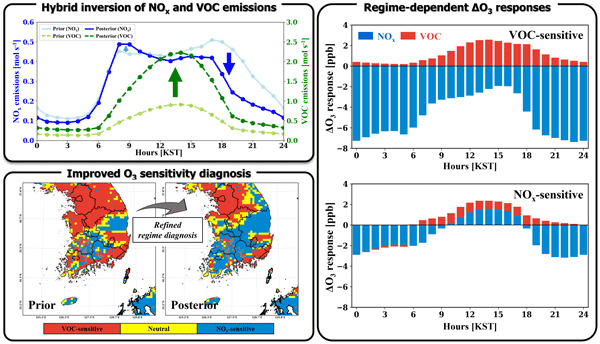
This study develops a hybrid inverse modeling framework to better estimate the spatiotemporal distributions of nitrogen oxides (NOx) and volatile organic compound (VOC) emissions over South Korea. The optimized emissions improve ozone simulations and clarify whether ozone formation is more sensitive to NOx or to VOC. By identifying when precursor emissions exert the strongest influence on ozone, this work provides time-resolved guidance for region-specific air quality strategies.
Donghee Kim, Sujong Jeong, Dong Yeong Chang, and Jaewon Joo
Atmos. Chem. Phys., 26, 7789–7802, https://doi.org/10.5194/acp-26-7789-2026, https://doi.org/10.5194/acp-26-7789-2026, 2026
Short summary
Short summary
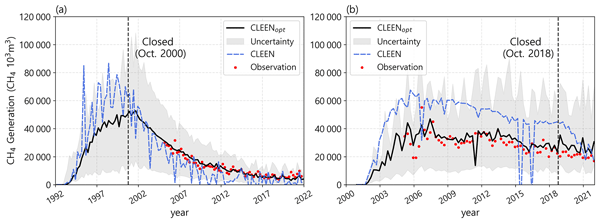
This study uses data and machine learning to better estimate methane emissions from a major landfill in South Korea. By considering local weather conditions like temperature and rain, the research improves how landfill methane is tracked over time. The results help us understand how climate affects emissions and provide tools that can be used worldwide to improve greenhouse gas monitoring and climate action planning.
Jaewon Joo, Sujong Jeong, Hyuckjae Lee, Yeonsoo Kim, Jaewon Shin, Donghee Kim, and Dong Yeong Chang
Atmos. Meas. Tech., 19, 3019–3030, https://doi.org/10.5194/amt-19-3019-2026, https://doi.org/10.5194/amt-19-3019-2026, 2026
Short summary
Short summary
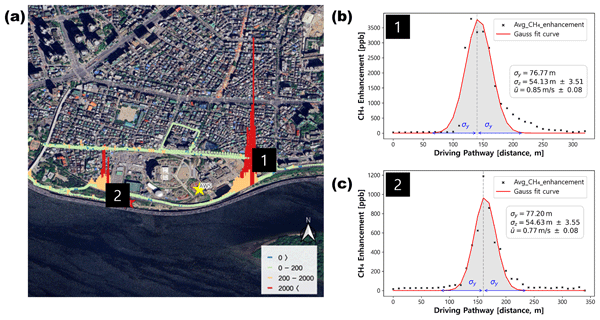
This research presents an assessment of fugitive methane emissions from a liquefied natural gas (LNG) power plant in Seoul, using a mobile greenhouse gas (GHG) measurement platform. Three key emission hotspots were identified, including continuous methane leaks and one stochastic super-emitter from the LNG power plant facilities. Our measurements revealed significant discrepancies compared to bottom-up inventories, which fail to capture these intermittent, high-emission events.
Isaline Businger, Rhonda Müller, Raleigh Grysko, Jacqueline Oehri, Jin-Soo Kim, and Gabriela Schaepman-Strub
EGUsphere, https://doi.org/10.22541/essoar.177100420.06303100/v1, https://doi.org/10.22541/essoar.177100420.06303100/v1, 2026
Short summary
Short summary
The Arctic is warming faster than the rest of the world, causing permafrost — frozen ground — to thaw and release gases that accelerate climate change. Because emissions are not falling quickly enough, ways to cool the planet by reflecting sunlight back to space are being explored. Using climate model experiments, we study how this could affect permafrost. We find it could slow overall loss later this century, but shift thaw patterns, reducing it in some regions while increasing it in others.
Anna Martin, Klaus Klingmüller, Benedikt Steil, Sergey Gromov, Yu-Ri Lee, Dong Yeong Chang, Nic Surawski, Jos Lelieveld, Sujong Jeong, and Andrea Pozzer
EGUsphere, https://doi.org/10.5194/egusphere-2026-371, https://doi.org/10.5194/egusphere-2026-371, 2026
Short summary
Short summary
We evaluate a new model simulating soil uptake of methane and hydrogen from the atmosphere. Coupled to an atmospheric chemistry and land surface model, it accounts for weather and soil conditions. Our results match observations, showing accurate removal depending on soil properties, temperature, moisture, and atmospheric conditions. This work improves the model’s ability to represent natural cycles of methane and hydrogen.
Sojung Sim and Sujong Jeong
Atmos. Chem. Phys., 25, 18509–18526, https://doi.org/10.5194/acp-25-18509-2025, https://doi.org/10.5194/acp-25-18509-2025, 2025
Short summary
Short summary
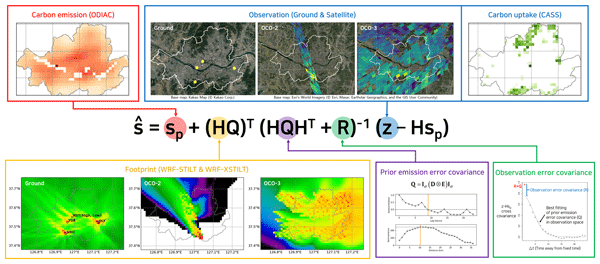
This study develops a high-resolution inverse modeling framework that combines ground-based and satellite CO2 observations to improve urban emission estimates in Seoul. By integrating atmospheric data and transport models, the research reduces uncertainties in CO2 emissions and reveals spatial and temporal patterns. The method offers a valuable tool for supporting climate policies and can be applied to other cities for better emission verification.
Ja-Yeon Moon, Jan Streffing, Sun-Seon Lee, Tido Semmler, Miguel Andrés-Martínez, Jiao Chen, Eun-Byeoul Cho, Jung-Eun Chu, Christian L. E. Franzke, Jan P. Gärtner, Rohit Ghosh, Jan Hegewald, Songyee Hong, Dae-Won Kim, Nikolay Koldunov, June-Yi Lee, Zihao Lin, Chao Liu, Svetlana N. Loza, Wonsun Park, Woncheol Roh, Dmitry V. Sein, Sahil Sharma, Dmitry Sidorenko, Jun-Hyeok Son, Malte F. Stuecker, Qiang Wang, Gyuseok Yi, Martina Zapponini, Thomas Jung, and Axel Timmermann
Earth Syst. Dynam., 16, 1103–1134, https://doi.org/10.5194/esd-16-1103-2025, https://doi.org/10.5194/esd-16-1103-2025, 2025
Short summary
Short summary
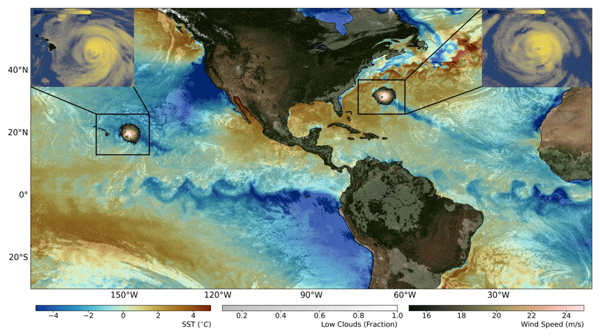
Based on a series of storm-resolving greenhouse warming simulations conducted with the AWI-CM3 model at 9 km global atmosphere and 4–25 km ocean resolution, we present new projections of regional climate change, modes of climate variability, and extreme events. The 10-year-long high-resolution simulations for the 2000s, 2030s, 2060s, and 2090s were initialized from a coarser-resolution transient run (31 km atmosphere) which follows the SSP5-8.5 greenhouse gas emission scenario from 1950–2100 CE.
Arjun Babu Nellikkattil, Danielle Lemmon, Travis Allen O'Brien, June-Yi Lee, and Jung-Eun Chu
Geosci. Model Dev., 17, 301–320, https://doi.org/10.5194/gmd-17-301-2024, https://doi.org/10.5194/gmd-17-301-2024, 2024
Short summary
Short summary
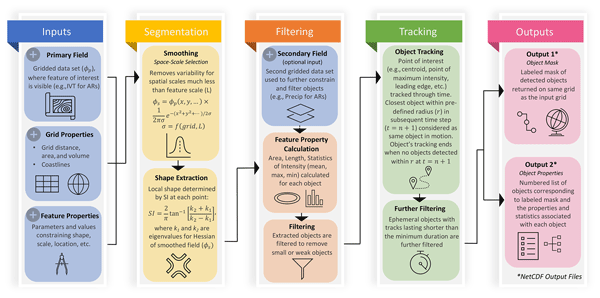
This study introduces a new computational framework called Scalable Feature Extraction and Tracking (SCAFET), designed to extract and track features in climate data. SCAFET stands out by using innovative shape-based metrics to identify features without relying on preconceived assumptions about the climate model or mean state. This approach allows more accurate comparisons between different models and scenarios.
Yoo-Geun Ham, Seon-Ho Nam, and Jin-Soo Kim
Earth Syst. Dynam. Discuss., https://doi.org/10.5194/esd-2023-26, https://doi.org/10.5194/esd-2023-26, 2023
Manuscript not accepted for further review
Short summary
Short summary
Fires are inflicting substantial ecological and socio-economic impacts on a global scale. For the real-time monitoring the risk of fire incidents at an early stage, we developed a fire intensity estimation method based on the well-monitored meteorological variables. We utilized feed-forward neural networks (FFNNs) which uses four meteorological variables to estimate a fire radiative power. The estimation accuracy of FFNNs revealed a marked increase compared to a previous method.
Brendan Byrne, David F. Baker, Sourish Basu, Michael Bertolacci, Kevin W. Bowman, Dustin Carroll, Abhishek Chatterjee, Frédéric Chevallier, Philippe Ciais, Noel Cressie, David Crisp, Sean Crowell, Feng Deng, Zhu Deng, Nicholas M. Deutscher, Manvendra K. Dubey, Sha Feng, Omaira E. García, David W. T. Griffith, Benedikt Herkommer, Lei Hu, Andrew R. Jacobson, Rajesh Janardanan, Sujong Jeong, Matthew S. Johnson, Dylan B. A. Jones, Rigel Kivi, Junjie Liu, Zhiqiang Liu, Shamil Maksyutov, John B. Miller, Scot M. Miller, Isamu Morino, Justus Notholt, Tomohiro Oda, Christopher W. O'Dell, Young-Suk Oh, Hirofumi Ohyama, Prabir K. Patra, Hélène Peiro, Christof Petri, Sajeev Philip, David F. Pollard, Benjamin Poulter, Marine Remaud, Andrew Schuh, Mahesh K. Sha, Kei Shiomi, Kimberly Strong, Colm Sweeney, Yao Té, Hanqin Tian, Voltaire A. Velazco, Mihalis Vrekoussis, Thorsten Warneke, John R. Worden, Debra Wunch, Yuanzhi Yao, Jeongmin Yun, Andrew Zammit-Mangion, and Ning Zeng
Earth Syst. Sci. Data, 15, 963–1004, https://doi.org/10.5194/essd-15-963-2023, https://doi.org/10.5194/essd-15-963-2023, 2023
Short summary
Short summary
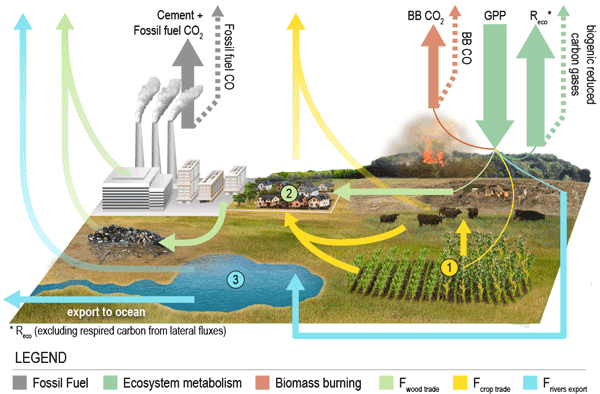
Changes in the carbon stocks of terrestrial ecosystems result in emissions and removals of CO2. These can be driven by anthropogenic activities (e.g., deforestation), natural processes (e.g., fires) or in response to rising CO2 (e.g., CO2 fertilization). This paper describes a dataset of CO2 emissions and removals derived from atmospheric CO2 observations. This pilot dataset informs current capabilities and future developments towards top-down monitoring and verification systems.
Carlos Alberti, Frank Hase, Matthias Frey, Darko Dubravica, Thomas Blumenstock, Angelika Dehn, Paolo Castracane, Gregor Surawicz, Roland Harig, Bianca C. Baier, Caroline Bès, Jianrong Bi, Hartmut Boesch, André Butz, Zhaonan Cai, Jia Chen, Sean M. Crowell, Nicholas M. Deutscher, Dragos Ene, Jonathan E. Franklin, Omaira García, David Griffith, Bruno Grouiez, Michel Grutter, Abdelhamid Hamdouni, Sander Houweling, Neil Humpage, Nicole Jacobs, Sujong Jeong, Lilian Joly, Nicholas B. Jones, Denis Jouglet, Rigel Kivi, Ralph Kleinschek, Morgan Lopez, Diogo J. Medeiros, Isamu Morino, Nasrin Mostafavipak, Astrid Müller, Hirofumi Ohyama, Paul I. Palmer, Mahesh Pathakoti, David F. Pollard, Uwe Raffalski, Michel Ramonet, Robbie Ramsay, Mahesh Kumar Sha, Kei Shiomi, William Simpson, Wolfgang Stremme, Youwen Sun, Hiroshi Tanimoto, Yao Té, Gizaw Mengistu Tsidu, Voltaire A. Velazco, Felix Vogel, Masataka Watanabe, Chong Wei, Debra Wunch, Marcia Yamasoe, Lu Zhang, and Johannes Orphal
Atmos. Meas. Tech., 15, 2433–2463, https://doi.org/10.5194/amt-15-2433-2022, https://doi.org/10.5194/amt-15-2433-2022, 2022
Short summary
Short summary
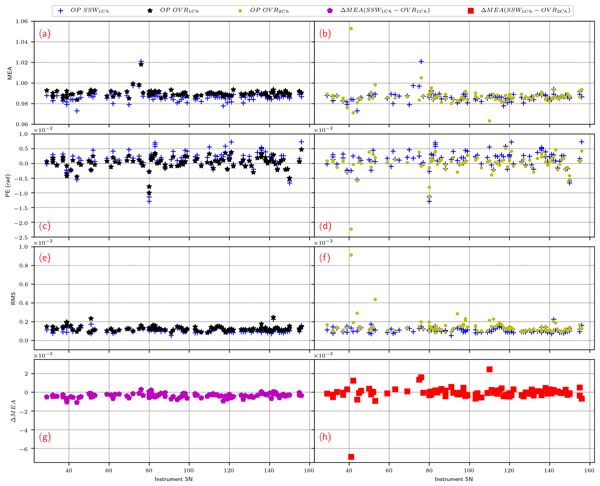
Space-borne greenhouse gas missions require ground-based validation networks capable of providing fiducial reference measurements. Here, considerable refinements of the calibration procedures for the COllaborative Carbon Column Observing Network (COCCON) are presented. Laboratory and solar side-by-side procedures for the characterization of the spectrometers have been refined and extended. Revised calibration factors for XCO2, XCO and XCH4 are provided, incorporating 47 new spectrometers.
Cited articles
Analuddin, K., Septiana, A., Sharma, S., and Hagihara, A.: Phenological Traits of Mangrove Kandelia obovata Grown in Manko Wetland, Okinawa Island, Japan, International Journal of Sustainable Tropical Agricultural Sciences, 2, 89–96, 2015.
Arkema, K. K., Delevaux, J. M. S., Silver, J. M., Winder, S. G., Schile-Beers, L. M., Bood, N., Crooks, S., Douthwaite, K., Durham, C., Hawthorne, P. L., Hickey, T., Mattis, C., Rosado, A., Ruckelshaus, M., von Unger, M., and Young, A.: Evidence-based target setting informs blue carbon strategies for nationally determined contributions, Nat. Ecol. Evol., 7, 1045–1059, https://doi.org/10.1038/s41559-023-02081-1, 2023.
Barbier, E. B., Hacker, S. D., Kennedy, C., Koch, E. W., Stier, A. C., and Silliman, B. R.: The value of estuarine and coastal ecosystem services, Ecol. Monogr., 81, 169–193, https://doi.org/10.1890/10-1510.1, 2011.
Bond, T. C., Doherty, S. J., Fahey, D. W., Forster, P. M., Berntsen, T., DeAngelo, B. J., Flanner, M. G., Ghan, S., Kärcher, B., Koch, D., Kinne, S., Kondo, Y., Quinn, P. K., Sarofim, M. C., Schultz, M. G., Schulz, M., Venkataraman, C., Zhang, H., Zhang, S., Bellouin, N., Guttikunda, S. K., Hopke, P. K., Jacobson, M. Z., Kaiser, J. W., Klimont, Z., Lohmann, U., Schwarz, J. P., Shindell, D., Storelvmo, T., Warren, S. G., and Zender, C. S.: Bounding the role of black carbon in the climate system: A scientific assessment, J. Geophys. Res.-Atmos., 118, 5380–5552, https://doi.org/10.1002/jgrd.50171, 2013.
Bunting, P., Rosenqvist, A., Hilarides, L., Lucas, R., Thomas, N., Tadono, T., Worthington, T., Spalding, M., Murray, N., and Rebelo, L.-M.: Global Mangrove Watch (1996–2020) Version 3.0 Dataset (3.0), Zenodo [data set], https://doi.org/10.5281/zenodo.6894273, 2022.
Chen, L., Wang, W., Li, Q. Q., Zhang, Y., Yang, S., Osland, M. J., Huang, J., and Peng, C.: Mangrove species' responses to winter air temperature extremes in China, Ecosphere, 8, e01865, https://doi.org/10.1002/ecs2.1865, 2017.
Didan, K.: MODIS/Terra Vegetation Indices 16-Day L3 Global 250m SIN Grid V061, NASA Land Processes Distributed Active Archive Center [data set], https://doi.org/10.5067/MODIS/MOD13Q1.061, 2021.
Ding, Y., Li, Z., and Peng, S.: Global analysis of time-lag and -accumulation effects of climate on vegetation growth, Int. J. Appl. Earth Obs., 92, 102179, https://doi.org/10.1016/j.jag.2020.102179, 2020.
Donato, D. C., Kauffman, J. B., Murdiyarso, D., Kurnianto, S., Stidham, M., and Kanninen, M.: Mangroves among the most carbon-rich forests in the tropics, Nat. Geosci., 4, 293–297, https://doi.org/10.1038/ngeo1123, 2011.
Duke, N., Ball, M., and Ellison, J.: Factors influencing biodiversity and distributional gradients in mangroves, Global Ecol. Biogeogr., 7, 27–47, https://doi.org/10.2307/2997695, 1998.
Duke, N. C., Meynecke, J.-O., Dittmann, S., Ellison, A. M., Anger, K., Berger, U., Cannicci, S., Diele, K., Ewel, K. C., Field, C. D., Koedam, N., Lee, S. Y., Marchand, C., Nordhaus, I., and Dahdouh-Guebas, F.: A World Without Mangroves?, Science, 317, 41–42, https://doi.org/10.1126/science.317.5834.41b, 2007.
Duke, N. C., Kovacs, J. M., Griffiths, A. D., Preece, L., Hill, D. J. E., Oosterzee, P. van, Mackenzie, J., Morning, H. S., and Burrows, D.: Large-scale dieback of mangroves in Australia's Gulf of Carpentaria: a severe ecosystem response, coincidental with an unusually extreme weather event, Mar. Freshwater Res., 68, 1816–1829, https://doi.org/10.1071/MF16322, 2017.
Friedl, M. and Sulla-Menashe, D.: MODIS/Terra+Aqua Land Cover Type Yearly L3 Global 500m SIN Grid V061, NASA Land Processes Distributed Active Archive Center [data set], https://doi.org/10.5067/MODIS/MCD12Q1.061, 2022.
Friess, D. A., Gatt, Y. M., Ahmad, R., Brown, B. M., Sidik, F., and Wodehouse, D.: Achieving ambitious mangrove restoration targets will need a transdisciplinary and evidence-informed approach, One Earth, 5, 456–460, https://doi.org/10.1016/j.oneear.2022.04.013, 2022a.
Friess, D. A., Adame, M. F., Adams, J. B., and Lovelock, C. E.: Mangrove forests under climate change in a 2 °C world, WIREs Climate Change, 13, e792, https://doi.org/10.1002/wcc.792, 2022b.
Gao, X., Leung, F., and Wang, W.: Assessing typhoon impacts on mangroves and post-typhoon recovery patterns to inform projects using mangroves as nature-based solutions, Global Ecology and Conservation, 61, e03667, https://doi.org/10.1016/j.gecco.2025.e03667, 2025.
Goldberg, L., Lagomasino, D., Thomas, N., and Fatoyinbo, T.: Global declines in human-driven mangrove loss, Glob. Change Biol., 26, 5844–5855, https://doi.org/10.1111/gcb.15275, 2020.
Gultom, J. E. I., Hasibuan, H. S., and Patria, M. P.: Local Communities Participation in Mangrove Management for Tsunami Disaster Mitigation at Palu City Coastal, IOP Conf. Ser.: Earth Environ. Sci., 940, 012084, https://doi.org/10.1088/1755-1315/940/1/012084, 2021.
Hersbach, H., Bell, B., Berrisford, P., Biavati, G., Horányi, A., Muñoz Sabater, J., Nicolas, J., Peubey, C., Radu, R., Rozum, I., Schepers, D., Simmons, A., Soci, C., Dee, D., and Thépaut, J.-N.: ERA5 monthly averaged data on single levels from 1940 to present, Copernicus Climate Change Service (C3S) Climate Data Store (CDS) [data set], https://doi.org/10.24381/cds.f17050d7, 2023.
Jia, M., Wang, Z., Zhang, Y., Mao, D., and Wang, C.: Monitoring loss and recovery of mangrove forests during 42 years: The achievements of mangrove conservation in China, Int. J. Appl. Earth Obs., 73, 535–545, https://doi.org/10.1016/j.jag.2018.07.025, 2018.
Jia, M., Wang, Z., Mao, D., Ren, C., Song, K., Zhao, C., Wang, C., Xiao, X., and Wang, Y.: Mapping global distribution of mangrove forests at 10-m resolution, Sci. Bull., 68, 1306–1316, https://doi.org/10.1016/j.scib.2023.05.004, 2023.
Kainuma, M., Baba, S., Oshiro, N., Kezuka, M., and Chan, H. T.: Current Status of Mangroves Worldwide, Global Environmental Research, 17, 147–154, 2013.
Khan, M. N. and Kabir, M.: Ecology of Kandelia obovata (S., L.) Yong: A Fast-Growing Mangrove in Okinawa, Japan, 287–301, https://doi.org/10.1007/978-4-431-56481-2_18, 2017.
Kim, H.-J., Kim, J.-S., An, S.-I., Shin, J., Oh, J.-H., and Kug, J.-S.: Pervasive fire danger continued under a negative emission scenario, Nat. Commun., 15, 10010, https://doi.org/10.1038/s41467-024-54339-2, 2024.
Krauss, K. W., Lovelock, C. E., McKee, K. L., López-Hoffman, L., Ewe, S. M. L., and Sousa, W. P.: Environmental drivers in mangrove establishment and early development: A review, Aquat. Bot., 89, 105–127, https://doi.org/10.1016/j.aquabot.2007.12.014, 2008.
Kuwae, T., Yoshida, G., Hori, M., Watanabe, K., Tanaya, T., Okada, T., Umezawa, Y., and Sasaki, J.: Nationwide estimate of the annual uptake of atmospheric carbon dioxide by shallow coastal ecosystems in Japan, Journal of JSCE, 11, https://doi.org/10.2208/journalofjsce.23-00139, 2023.
Lee, B. and Baral, H.: Prospects of Adaptability and Establishment of Mangroves to Achieve Carbon Capture Expansion in Korean Coastal Areas, EGU General Assembly 2023, Vienna, Austria, 24–28 Apr 2023, EGU23-11394, https://doi.org/10.5194/egusphere-egu23-11394, 2023.
Lee, C., Lee, J., Kim, C., Chu, Y., and Lee, B.: Prediction of Carbon Accumulation within Semi-Mangrove Ecosystems Using Remote Sensing and Artificial Intelligence Modeling in Jeju Island, South Korea, Ecology and Resilient Infrastructure, 10, 161–170, https://doi.org/10.17820/eri.2023.10.4.161, 2023.
Leo, K. L., Gillies, C. L., Fitzsimons, J. A., Hale, L. Z., and Beck, M. W.: Coastal habitat squeeze: A review of adaptation solutions for saltmarsh, mangrove and beach habitats, Ocean Coast. Manage., 175, 180–190, https://doi.org/10.1016/j.ocecoaman.2019.03.019, 2019.
Lewis, R. R., Brown, B. M., and Flynn, L. L.: Chapter 24 – Methods and Criteria for Successful Mangrove Forest Rehabilitation, in: Coastal Wetlands (Second Edition), edited by: Perillo, G. M. E., Wolanski, E., Cahoon, D. R., and Hopkinson, C. S., Elsevier, 863–887, https://doi.org/10.1016/B978-0-444-63893-9.00024-1, 2019.
Li, C., Wang, R., Cui, X., Wu, F., Yan, Y., Peng, Q., Qian, Z., and Xu, Y.: Responses of vegetation spring phenology to climatic factors in Xinjiang, China, Ecol. Indic., 124, 107286, https://doi.org/10.1016/j.ecolind.2020.107286, 2021.
Li, H., Jia, M., Zhang, R., Ren, Y., and Wen, X.: Incorporating the Plant Phenological Trajectory into Mangrove Species Mapping with Dense Time Series Sentinel-2 Imagery and the Google Earth Engine Platform, Remote Sensing, 11, 2479, https://doi.org/10.3390/rs11212479, 2019.
Liao, B., Zhen, D., and Zheng, S.: The present situation and prospect of mangrove afforestation in south China, Protection Forest Science and Technology, 4, 30–34, 1996.
Liu, H., Ren, H., Hui, D., Wang, W., Liao, B., and Cao, Q.: Carbon stocks and potential carbon storage in the mangrove forests of China, J. Environ. Manage., 133, 86–93, https://doi.org/10.1016/j.jenvman.2013.11.037, 2014.
Lovelock, C. E., Barbier, E., and Duarte, C. M.: Tackling the mangrove restoration challenge, PLOS Biology, 20, e3001836, https://doi.org/10.1371/journal.pbio.3001836, 2022.
Luo, S. and Chui, T. F. M.: Annual variations in regional mangrove cover in southern China and potential macro- climatic and hydrological indicators, Ecol. Indic., 110, 105927, https://doi.org/10.1016/j.ecolind.2019.105927, 2020.
Macreadie, P. I., Costa, M. D. P., Atwood, T. B., Friess, D. A., Kelleway, J. J., Kennedy, H., Lovelock, C. E., Serrano, O., and Duarte, C. M.: Blue carbon as a natural climate solution, Nat. Rev. Earth Environ., 2, 826–839, https://doi.org/10.1038/s43017-021-00224-1, 2021.
Meinshausen, M., Nicholls, Z. R. J., Lewis, J., Gidden, M. J., Vogel, E., Freund, M., Beyerle, U., Gessner, C., Nauels, A., Bauer, N., Canadell, J. G., Daniel, J. S., John, A., Krummel, P. B., Luderer, G., Meinshausen, N., Montzka, S. A., Rayner, P. J., Reimann, S., Smith, S. J., van den Berg, M., Velders, G. J. M., Vollmer, M. K., and Wang, R. H. J.: The shared socio-economic pathway (SSP) greenhouse gas concentrations and their extensions to 2500, Geosci. Model Dev., 13, 3571–3605, https://doi.org/10.5194/gmd-13-3571-2020, 2020.
Mercado, L. M., Bellouin, N., Sitch, S., Boucher, O., Huntingford, C., Wild, M., and Cox, P. M.: Impact of changes in diffuse radiation on the global land carbon sink, Nature, 458, 1014–1017, https://doi.org/10.1038/nature07949, 2009.
Mooney, C. Z. and Duval, R. D.: Bootstrapping: A Nonparametric Approach to Statistical Inference, SAGE Publications, Newbury Park, CA, USA, https://www.sagepub.com/shop/buy-a-book/bootstrapping-1-3980 (last access: 16 November 2026), 1993.
Nam, J., Yim, J., Park, J. Y., Kwon, B.-O., and Khim, J. S.: Determining the Likelihood of Mangrove Introduction to Korean Coastal Areas, J. Coastal Res., 116, https://doi.org/10.2112/JCR-SI116-066.1, 2024.
Nemani, R. R., Keeling, C. D., Hashimoto, H., Jolly, W. M., Piper, S. C., Tucker, C. J., Myneni, R. B., and Running, S. W.: Climate-Driven Increases in Global Terrestrial Net Primary Production from 1982 to 1999, Science, 300, 1560–1563, https://doi.org/10.1126/science.1082750, 2003.
Niu, J., Qin, W., Wang, L., Zhang, M., Wu, J., and Zhang, Y.: Climate change impact on photovoltaic power potential in China based on CMIP6 models, Sci. Total Environ., 858, 159776, https://doi.org/10.1016/j.scitotenv.2022.159776, 2023.
Osland, M. J., Feher, L. C., Griffith, K. T., Cavanaugh, K. C., Enwright, N. M., Day, R. H., Stagg, C. L., Krauss, K. W., Howard, R. J., Grace, J. B., and Rogers, K.: Climatic controls on the global distribution, abundance, and species richness of mangrove forests, Ecol. Monogr., 87, 341–359, https://doi.org/10.1002/ecm.1248, 2017.
Pastor-Guzman, J., Dash, J., and Atkinson, P. M.: Remote sensing of mangrove forest phenology and its environmental drivers, Remote Sens. Environ., 205, 71–84, https://doi.org/10.1016/j.rse.2017.11.009, 2018.
Peng, S., Chen, A., Xu, L., Cao, C., Fang, J., Myneni, R. B., Pinzon, J. E., Tucker, C. J., and Piao, S.: Recent change of vegetation growth trend in China, Environ. Res. Lett., 6, 044027, https://doi.org/10.1088/1748-9326/6/4/044027, 2011.
Poungparn, S., Komiyama, A., Umnouysin, S., Rodtassana, C., Sangtiean, T., Maknual, C., Pravinvongvuthi, T., Suchewaboripont, V., and Kato, S.: Ten-Year Estimation of Net Primary Productivity in a Mangrove Forest under a Tropical Monsoon Climate in Eastern Thailand: Significance of the Temperature Environment in the Dry Season, Forests, 11, 987, https://doi.org/10.3390/f11090987, 2020.
Primavera, J. H. and Esteban, J. M. A.: A review of mangrove rehabilitation in the Philippines: successes, failures and future prospects, Wetlands Ecol. Manage., 16, 345–358, https://doi.org/10.1007/s11273-008-9101-y, 2008.
Raw, J. L., Godbold, J. A., van Niekerk, L., and Adams, J. B.: Drivers of mangrove distribution at the high-energy, wave-dominated, southern African range limit, Estuarine, Coastal and Shelf Science, 226, 106296, https://doi.org/10.1016/j.ecss.2019.106296, 2019.
Raw, J. L., Van der Stocken, T., Carroll, D., Harris, L. R., Rajkaran, A., Van Niekerk, L., and Adams, J. B.: Dispersal and coastal geomorphology limit potential for mangrove range expansion under climate change, J. Ecol., 111, 139–155, https://doi.org/10.1111/1365-2745.14020, 2023.
Reef, R. and Lovelock, C. E.: Regulation of water balance in mangroves, Annals of Botany, 115, 385–395, https://doi.org/10.1093/aob/mcu174, 2015.
Sasmito, S. D., Basyuni, M., Kridalaksana, A., Saragi-Sasmito, M. F., Lovelock, C. E., and Murdiyarso, D.: Challenges and opportunities for achieving Sustainable Development Goals through restoration of Indonesia's mangroves, Nat. Ecol. Evol., 7, 62–70, https://doi.org/10.1038/s41559-022-01926-5, 2023.
Sharma, S., Kamruzzaman, Md., Rafiqul Hoque, A. T. M., and Hagihara, A.: Leaf phenological traits and leaf longevity of three mangrove species (Rhizophoraceae) on Okinawa Island, Japan, J. Oceanogr., 68, 831–840, https://doi.org/10.1007/s10872-012-0133-9, 2012.
Song, F., Mao, Y., Liu, S., Wu, L., Dong, L., Su, H., Wang, Y., Chtirkova, B., Wu, P., and Wild, M.: A long-term decline in downward surface solar radiation, Natl. Sci. Rev., 12, nwaf007, https://doi.org/10.1093/nsr/nwaf007, 2025.
Songsom, V., Koedsin, W., Ritchie, R. J., and Huete, A.: Mangrove Phenology and Environmental Drivers Derived from Remote Sensing in Southern Thailand, Remote Sensing, 11, 955, https://doi.org/10.3390/rs11080955, 2019.
Sulla-Menashe, D. and Friedl, M. A.: User Guide to Collection 6 MODIS Land Cover (MCD12Q1 and MCD12C1) Product, https://lpdaac.usgs.gov/documents/101/MCD12_User_Guide_V6.pdf (last access: 16 November 2026), 2018
Tran, T. V., Reef, R., and Zhu, X.: A Review of Spectral Indices for Mangrove Remote Sensing, Remote Sensing, 14, 4868, https://doi.org/10.3390/rs14194868, 2022.
Trugman, A. T. and Anderegg, L. D. L.: Source vs sink limitations on tree growth: from physiological mechanisms to evolutionary constraints and terrestrial carbon cycle implications, New Phytol., 245, 966–981, https://doi.org/10.1111/nph.20294, 2024.
Turnock, S. T., Allen, R. J., Andrews, M., Bauer, S. E., Deushi, M., Emmons, L., Good, P., Horowitz, L., John, J. G., Michou, M., Nabat, P., Naik, V., Neubauer, D., O'Connor, F. M., Olivié, D., Oshima, N., Schulz, M., Sellar, A., Shim, S., Takemura, T., Tilmes, S., Tsigaridis, K., Wu, T., and Zhang, J.: Historical and future changes in air pollutants from CMIP6 models, Atmos. Chem. Phys., 20, 14547–14579, https://doi.org/10.5194/acp-20-14547-2020, 2020.
Wang, P., Yang, Y., Xue, D., Ren, L., Tang, J., Leung, L. R., and Liao, H.: Aerosols overtake greenhouse gases causing a warmer climate and more weather extremes toward carbon neutrality, Nat. Commun., 14, 7257, https://doi.org/10.1038/s41467-023-42891-2, 2023.
Wang, Y., Dong, P., Hu, W., Chen, G., Zhang, D., Chen, B., and Lei, G.: Modeling the Climate Suitability of Northernmost Mangroves in China under Climate Change Scenarios, Forests, 13, 64, https://doi.org/10.3390/f13010064, 2022.
Wen, Y., Liu, X., Xin, Q., Wu, J., Xu, X., Pei, F., Li, X., Du, G., Cai, Y., Lin, K., Yang, J., and Wang, Y.: Cumulative Effects of Climatic Factors on Terrestrial Vegetation Growth, J. Geophys. Res.-Biogeo., 124, 789–806, https://doi.org/10.1029/2018JG004751, 2019.
Winkler, A. J., Myneni, R. B., and Brovkin, V.: Investigating the applicability of emergent constraints, Earth Syst. Dynam., 10, 501–523, https://doi.org/10.5194/esd-10-501-2019, 2019.
Wu, Y., Ricklefs, R. E., Huang, Z., Zan, Q., and Yu, S.: Winter temperature structures mangrove species distributions and assemblage composition in China, Global Ecol. Biogeogr., 27, 1492–1506, https://doi.org/10.1111/geb.12826, 2018.
Xu, X., Fu, D., Su, F., Lyne, V., Yu, H., Tang, J., Hong, X., and Wang, J.: Global distribution and decline of mangrove coastal protection extends far beyond area loss, Nat. Commun., 15, 10267, https://doi.org/10.1038/s41467-024-54349-0, 2024.
Zhang, L., Fu, T.-M., Hu, Z., Liu, H., Meng, Z., Ma, L., Dai, J., and Zhang, F.: Springtime mesoscale convective systems over South China: a historic radar image-based analysis of climatological features, interannual variability, and potential connections with surface aerosol, Environ. Res. Lett., 19, 024026, https://doi.org/10.1088/1748-9326/ad2024, 2024a.
Zhang, Z., Luo, X., Friess, D. A., Wang, S., Li, Y., and Li, Y.: Stronger increases but greater variability in global mangrove productivity compared to that of adjacent terrestrial forests, Nat. Ecol. Evol., 8, 239–250, https://doi.org/10.1038/s41559-023-02264-w, 2024b.
Zhao, C., Jia, M., Zhang, R., Wang, Z., Ren, C., Mao, D., and Wang, Y.: Mangrove species mapping in coastal China using synthesized Sentinel-2 high-separability images, Remote Sens. Environ., 307, 114151, https://doi.org/10.1016/j.rse.2024.114151, 2024.
Zheng, C., Tang, J., Chen, J., Liu, W., Qiu, J., Peng, X., and Ye, Y.: Mechanisms on inhibition of photosynthesis in Kandelia obovata due to extreme cold events under climate change, Ecological Processes, 5, 20, https://doi.org/10.1186/s13717-016-0064-2, 2016.
Zhou, H., Yue, X., Dai, H., Geng, G., Yuan, W., Chen, J., Shen, G., Zhang, T., Zhu, J., and Liao, H.: Recovery of ecosystem productivity in China due to the Clean Air Action plan, Nat. Geosci., 17, 1233–1239, https://doi.org/10.1038/s41561-024-01586-z, 2024.
Zhu, D., Hui, D., Huang, Z., Qiao, X., Tong, S., Wang, M., Yang, Q., and Yu, S.: Comparative impact of light and neighbor effect on the growth of introduced species Sonneratia apetala and native mangrove species in China: implications for restoration, Restor. Ecol., 30, e13522, https://doi.org/10.1111/rec.13522, 2022.
Zuzulova, V. and Vido, J.: Normalized difference vegetation index as a tool for the evaluation of agricultural drought in Slovakia, Ecocycles, 4, 83–87, https://doi.org/10.19040/ecocycles.v4i1.124, 2018.
Short summary
Mangroves store carbon and protect coasts. We used satellite images and climate models to assess how changing conditions affect mangroves in East Asia. Sunlight and winter temperatures were linked to leaf greenness, sometimes months later. Warming may make northern areas more suitable, but more frequent periods of low sunlight under high emissions could limit these benefits. Conservation and restoration planning should consider both temperature and sunlight, as well as local habitat conditions.
Mangroves store carbon and protect coasts. We used satellite images and climate models to assess...


Altmetrics
Final-revised paper
Preprint