
Articles | Volume 16, issue 6
https://doi.org/10.5194/esd-16-2201-2025
© Author(s) 2025. This work is distributed under
the Creative Commons Attribution 4.0 License.
the Creative Commons Attribution 4.0 License.
https://doi.org/10.5194/esd-16-2201-2025
© Author(s) 2025. This work is distributed under
the Creative Commons Attribution 4.0 License.
the Creative Commons Attribution 4.0 License.
Research article
| 
10 Dec 2025
Research article |
| 10 Dec 2025
| 10 Dec 2025
Joint evolution of irrigation, the water cycle and water resources under a strong climate change scenario from 1950 to 2100 in the IPSL-CM6
Pedro Felipe Arboleda-Obando
CORRESPONDING AUTHOR

Laboratoire METIS (UMR 7619, Sorbonne Université, CNRS, EPHE), Paris, France
Institut Pierre Simon Laplace (FR 636, Sorbonne Université, CNRS), Paris, France
Agnès Ducharne
Laboratoire METIS (UMR 7619, Sorbonne Université, CNRS, EPHE), Paris, France
Institut Pierre Simon Laplace (FR 636, Sorbonne Université, CNRS), Paris, France
Frédérique Cheruy
Institut Pierre Simon Laplace (FR 636, Sorbonne Université, CNRS), Paris, France
Laboratoire de Météorologie Dynamique-IPSL, CNRS/Sorbonne Université/École Normale Supérieure-PSL Université/École Polytechnique-Institut Polytechnique de Paris, Paris 75005, France
Josefine Ghattas
Institut Pierre Simon Laplace (FR 636, Sorbonne Université, CNRS), Paris, France
Related authors
Morgane Lalonde, Sophie Bastin, Ludovic Oudin, Pedro Felipe Arboleda-Obando, and Agnès Ducharne
Geosci. Model Dev., 19, 9463–9488, https://doi.org/10.5194/gmd-19-9463-2026, https://doi.org/10.5194/gmd-19-9463-2026, 2026
Short summary
Short summary
Some climate models still represent cities as if they were natural ground. For one of these models, we built a new way to represent cities. The update includes how reflective surfaces are, building height, stored heat, and how much ground is sealed. The novelty is to treat sealed ground not only at the surface, but also below it. Tested at twenty urban sites, the new version better represents exchanges of energy between the ground and the air, supporting more reliable urban climate studies.
Pedro Felipe Arboleda-Obando, Agnès Ducharne, Zun Yin, and Philippe Ciais
Geosci. Model Dev., 17, 2141–2164, https://doi.org/10.5194/gmd-17-2141-2024, https://doi.org/10.5194/gmd-17-2141-2024, 2024
Short summary
Short summary
We show a new irrigation scheme included in the ORCHIDEE land surface model. The new irrigation scheme restrains irrigation due to water shortage, includes water adduction, and represents environmental limits and facilities to access water, due to representing infrastructure in a simple way. Our results show that the new irrigation scheme helps simulate acceptable land surface conditions and fluxes in irrigated areas, even if there are difficulties due to shortcomings and limited information.
Morgane Lalonde, Sophie Bastin, Ludovic Oudin, Pedro Felipe Arboleda-Obando, and Agnès Ducharne
Geosci. Model Dev., 19, 9463–9488, https://doi.org/10.5194/gmd-19-9463-2026, https://doi.org/10.5194/gmd-19-9463-2026, 2026
Short summary
Short summary
Some climate models still represent cities as if they were natural ground. For one of these models, we built a new way to represent cities. The update includes how reflective surfaces are, building height, stored heat, and how much ground is sealed. The novelty is to treat sealed ground not only at the surface, but also below it. Tested at twenty urban sites, the new version better represents exchanges of energy between the ground and the air, supporting more reliable urban climate studies.
Pierre Tiengou, Agnès Ducharne, and Frédérique Cheruy
Earth Syst. Dynam., 17, 843–876, https://doi.org/10.5194/esd-17-843-2026, https://doi.org/10.5194/esd-17-843-2026, 2026
Short summary
Short summary
This study analyses simulations of regional climate over the Iberian Peninsula, with and without an explicit simulation of irrigation. It shows that the model matches observations much better with irrigation, particularly river discharge and evapotranspiration. The presence of simulated irrigation also makes the air cooler over irrigated areas and more humid over the whole Peninsula, leading to increases in rainfall, mostly located in the mountains that surround the highly irrigated Ebro Valley.
Gerhard Krinner, Aude Champouillon, Juliette Blanchet, and Frédérique Chéruy
Geosci. Model Dev., 19, 4961–4975, https://doi.org/10.5194/gmd-19-4961-2026, https://doi.org/10.5194/gmd-19-4961-2026, 2026
Short summary
Short summary
Although the scientific community has made much progress over the last decades, climate models still do not perfectly simulate the present climate. Therefore, the model outputs are usually corrected for these errors. This article presents a method to apply successive stages of repeated error correction that lead to a better simulation of the present climate than in previous studies, in which the same correction method had been applied only once.
Eric Sauquet, Guillaume Evin, Sonia Siauve, Ryma Aissat, Patrick Arnaud, Maud Bérel, Jérémie Bonneau, Flora Branger, Yvan Caballero, François Colléoni, Agnès Ducharne, Joël Gailhard, Florence Habets, Frédéric Hendrickx, Louis Héraut, Benoît Hingray, Peng Huang, Tristan Jaouen, Alexis Jeantet, Sandra Lanini, Matthieu Le Lay, Claire Magand, Louise Mimeau, Céline Monteil, Simon Munier, Charles Perrin, Olivier Robelin, Fabienne Rousset, Jean-Michel Soubeyroux, Laurent Strohmenger, Guillaume Thirel, Flore Tocquer, Yves Tramblay, Jean-Pierre Vergnes, and Jean-Philippe Vidal
Hydrol. Earth Syst. Sci., 30, 2277–2300, https://doi.org/10.5194/hess-30-2277-2026, https://doi.org/10.5194/hess-30-2277-2026, 2026
Short summary
Short summary
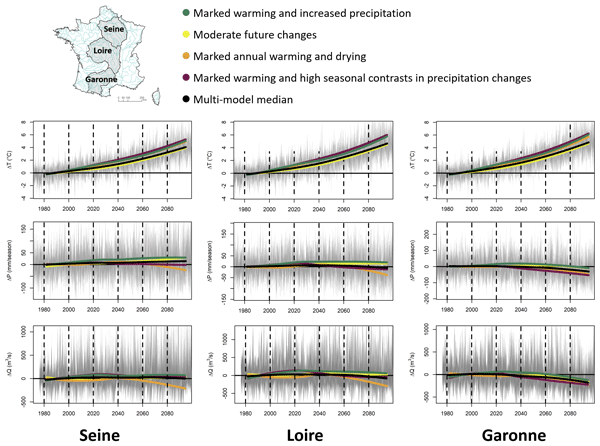
The Explore2 project has provided an unprecedented set of hydrological projections in terms of the number of hydrological models used and the spatial and temporal resolution. The results have been made available through various media. Under the high-emission scenario, the hydrological models mostly agree on the decrease in seasonal flows in the south of France, confirming its hotspot status, and on the decrease in summer flows throughout France, with the exception of the northern part of France.
Guillaume Evin, Benoit Hingray, Guillaume Thirel, Agnès Ducharne, Laurent Strohmenger, Lola Corre, Yves Tramblay, Jean-Philippe Vidal, Jérémie Bonneau, François Colleoni, Joël Gailhard, Florence Habets, Frédéric Hendrickx, Louis Héraut, Peng Huang, Matthieu Le Lay, Claire Magand, Paola Marson, Céline Monteil, Simon Munier, Alix Reverdy, Jean-Michel Soubeyroux, Yoann Robin, Jean-Pierre Vergnes, Mathieu Vrac, and Eric Sauquet
Hydrol. Earth Syst. Sci., 30, 1023–1051, https://doi.org/10.5194/hess-30-1023-2026, https://doi.org/10.5194/hess-30-1023-2026, 2026
Short summary
Short summary
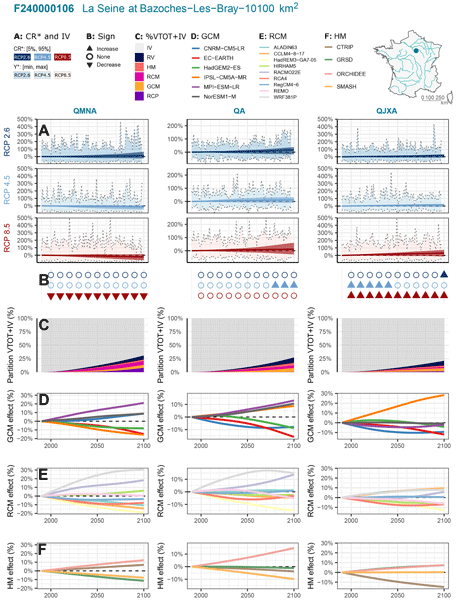
Explore2 provides hydrological projections for 1,735 French catchments. Using QUALYPSO (Quasi-Ergodic Analysis of Climate Projections Using Data Augmentation), this study assesses uncertainties, including internal variability. By the end of the century, low flows are projected to decline in southern France under high emissions, while other indicators remain uncertain. Emission scenarios and regional climate models are key uncertainty sources. Internal variability is often as large as climate-driven changes.
Elodie Salmon, Bertrand Guenet, and Agnès Ducharne
EGUsphere, https://doi.org/10.5194/egusphere-2025-3511, https://doi.org/10.5194/egusphere-2025-3511, 2025
Short summary
Short summary
Soil organic carbon stockage is a key process to mitigate climate change and is intertwined with soil temperature and moisture and of other secondary soil properties. This study shows the significance of secondary drivers in the relationship between soil moisture and microbial efficiency in soil organic carbon degradation. Using empirical relationships in a global ecosystem model enhanced significantly the heterogeneous spatial pattern of soil organic carbon stock and carbon dioxide fluxes.
Guillaume Marie, Jina Jeong, Hervé Jactel, Gunnar Petter, Maxime Cailleret, Matthew J. McGrath, Vladislav Bastrikov, Josefine Ghattas, Bertrand Guenet, Anne Sofie Lansø, Kim Naudts, Aude Valade, Chao Yue, and Sebastiaan Luyssaert
Geosci. Model Dev., 17, 8023–8047, https://doi.org/10.5194/gmd-17-8023-2024, https://doi.org/10.5194/gmd-17-8023-2024, 2024
Short summary
Short summary
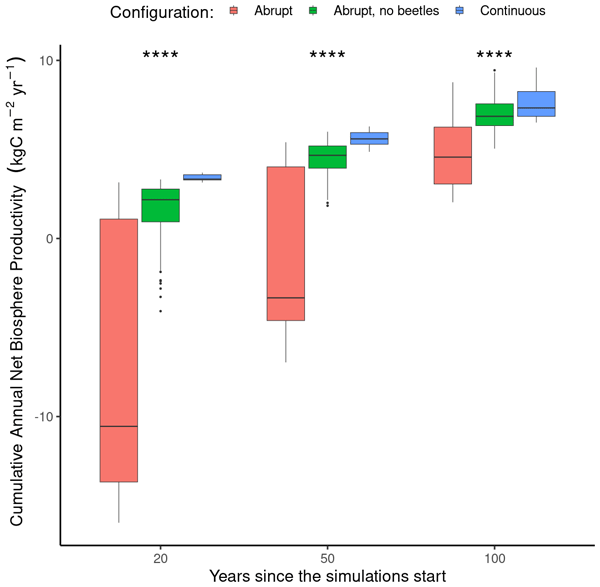
This research looks at how climate change influences forests, and particularly how altered wind and insect activities could make forests emit instead of absorb carbon. We have updated a land surface model called ORCHIDEE to better examine the effect of bark beetles on forest health. Our findings suggest that sudden events, such as insect outbreaks, can dramatically affect carbon storage, offering crucial insights into tackling climate change.
Peng Huang, Agnès Ducharne, Lucia Rinchiuso, Jan Polcher, Laure Baratgin, Vladislav Bastrikov, and Eric Sauquet
Hydrol. Earth Syst. Sci., 28, 4455–4476, https://doi.org/10.5194/hess-28-4455-2024, https://doi.org/10.5194/hess-28-4455-2024, 2024
Short summary
Short summary
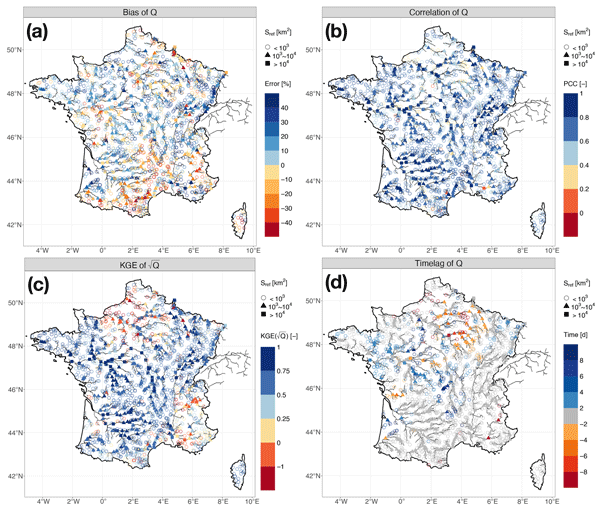
We conducted a high-resolution hydrological simulation from 1959 to 2020 across France. We used a simple trial-and-error calibration to reduce the biases of the simulated water budget compared to observations. The selected simulation satisfactorily reproduces water fluxes, including their spatial contrasts and temporal trends. This work offers a reliable historical overview of water resources and a robust configuration for climate change impact analysis at the nationwide scale of France.
Pedro Felipe Arboleda-Obando, Agnès Ducharne, Zun Yin, and Philippe Ciais
Geosci. Model Dev., 17, 2141–2164, https://doi.org/10.5194/gmd-17-2141-2024, https://doi.org/10.5194/gmd-17-2141-2024, 2024
Short summary
Short summary
We show a new irrigation scheme included in the ORCHIDEE land surface model. The new irrigation scheme restrains irrigation due to water shortage, includes water adduction, and represents environmental limits and facilities to access water, due to representing infrastructure in a simple way. Our results show that the new irrigation scheme helps simulate acceptable land surface conditions and fluxes in irrigated areas, even if there are difficulties due to shortcomings and limited information.
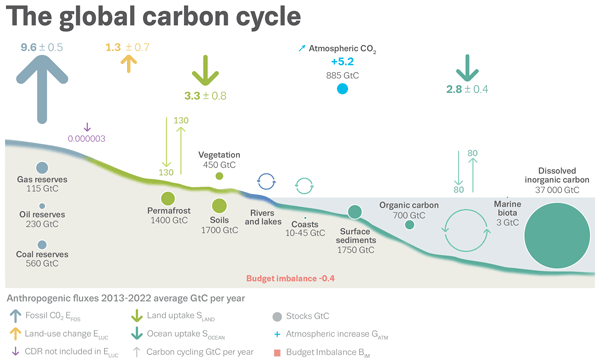
Pierre Friedlingstein, Michael O'Sullivan, Matthew W. Jones, Robbie M. Andrew, Dorothee C. E. Bakker, Judith Hauck, Peter Landschützer, Corinne Le Quéré, Ingrid T. Luijkx, Glen P. Peters, Wouter Peters, Julia Pongratz, Clemens Schwingshackl, Stephen Sitch, Josep G. Canadell, Philippe Ciais, Robert B. Jackson, Simone R. Alin, Peter Anthoni, Leticia Barbero, Nicholas R. Bates, Meike Becker, Nicolas Bellouin, Bertrand Decharme, Laurent Bopp, Ida Bagus Mandhara Brasika, Patricia Cadule, Matthew A. Chamberlain, Naveen Chandra, Thi-Tuyet-Trang Chau, Frédéric Chevallier, Louise P. Chini, Margot Cronin, Xinyu Dou, Kazutaka Enyo, Wiley Evans, Stefanie Falk, Richard A. Feely, Liang Feng, Daniel J. Ford, Thomas Gasser, Josefine Ghattas, Thanos Gkritzalis, Giacomo Grassi, Luke Gregor, Nicolas Gruber, Özgür Gürses, Ian Harris, Matthew Hefner, Jens Heinke, Richard A. Houghton, George C. Hurtt, Yosuke Iida, Tatiana Ilyina, Andrew R. Jacobson, Atul Jain, Tereza Jarníková, Annika Jersild, Fei Jiang, Zhe Jin, Fortunat Joos, Etsushi Kato, Ralph F. Keeling, Daniel Kennedy, Kees Klein Goldewijk, Jürgen Knauer, Jan Ivar Korsbakken, Arne Körtzinger, Xin Lan, Nathalie Lefèvre, Hongmei Li, Junjie Liu, Zhiqiang Liu, Lei Ma, Greg Marland, Nicolas Mayot, Patrick C. McGuire, Galen A. McKinley, Gesa Meyer, Eric J. Morgan, David R. Munro, Shin-Ichiro Nakaoka, Yosuke Niwa, Kevin M. O'Brien, Are Olsen, Abdirahman M. Omar, Tsuneo Ono, Melf Paulsen, Denis Pierrot, Katie Pocock, Benjamin Poulter, Carter M. Powis, Gregor Rehder, Laure Resplandy, Eddy Robertson, Christian Rödenbeck, Thais M. Rosan, Jörg Schwinger, Roland Séférian, T. Luke Smallman, Stephen M. Smith, Reinel Sospedra-Alfonso, Qing Sun, Adrienne J. Sutton, Colm Sweeney, Shintaro Takao, Pieter P. Tans, Hanqin Tian, Bronte Tilbrook, Hiroyuki Tsujino, Francesco Tubiello, Guido R. van der Werf, Erik van Ooijen, Rik Wanninkhof, Michio Watanabe, Cathy Wimart-Rousseau, Dongxu Yang, Xiaojuan Yang, Wenping Yuan, Xu Yue, Sönke Zaehle, Jiye Zeng, and Bo Zheng
Earth Syst. Sci. Data, 15, 5301–5369, https://doi.org/10.5194/essd-15-5301-2023, https://doi.org/10.5194/essd-15-5301-2023, 2023
Short summary
Short summary
The Global Carbon Budget 2023 describes the methodology, main results, and data sets used to quantify the anthropogenic emissions of carbon dioxide (CO2) and their partitioning among the atmosphere, land ecosystems, and the ocean over the historical period (1750–2023). These living datasets are updated every year to provide the highest transparency and traceability in the reporting of CO2, the key driver of climate change.
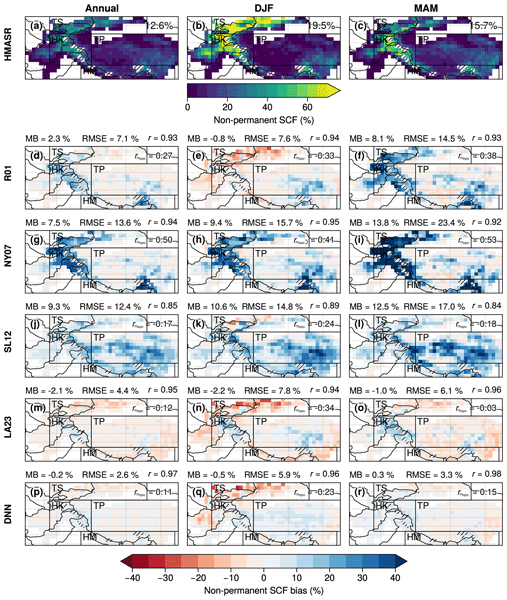
Mickaël Lalande, Martin Ménégoz, Gerhard Krinner, Catherine Ottlé, and Frédérique Cheruy
The Cryosphere, 17, 5095–5130, https://doi.org/10.5194/tc-17-5095-2023, https://doi.org/10.5194/tc-17-5095-2023, 2023
Short summary
Short summary
This study investigates the impact of topography on snow cover parameterizations using models and observations. Parameterizations without topography-based considerations overestimate snow cover. Incorporating topography reduces snow overestimation by 5–10 % in mountains, in turn reducing cold biases. However, some biases remain, requiring further calibration and more data. Assessing snow cover parameterizations is challenging due to limited and uncertain data in mountainous regions.
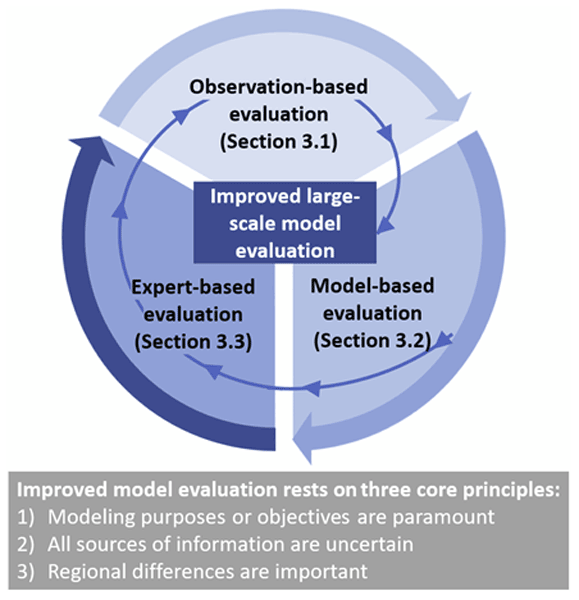
Tom Gleeson, Thorsten Wagener, Petra Döll, Samuel C. Zipper, Charles West, Yoshihide Wada, Richard Taylor, Bridget Scanlon, Rafael Rosolem, Shams Rahman, Nurudeen Oshinlaja, Reed Maxwell, Min-Hui Lo, Hyungjun Kim, Mary Hill, Andreas Hartmann, Graham Fogg, James S. Famiglietti, Agnès Ducharne, Inge de Graaf, Mark Cuthbert, Laura Condon, Etienne Bresciani, and Marc F. P. Bierkens
Geosci. Model Dev., 14, 7545–7571, https://doi.org/10.5194/gmd-14-7545-2021, https://doi.org/10.5194/gmd-14-7545-2021, 2021
Short summary
Short summary
Groundwater is increasingly being included in large-scale (continental to global) land surface and hydrologic simulations. However, it is challenging to evaluate these simulations because groundwater is
hiddenunderground and thus hard to measure. We suggest using multiple complementary strategies to assess the performance of a model (
model evaluation).
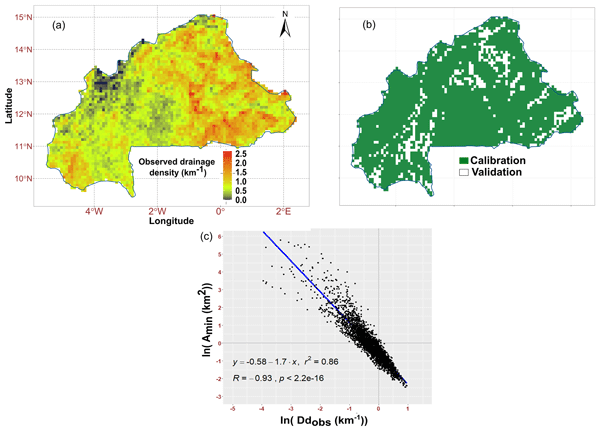
Axel P. Belemtougri, Agnès Ducharne, and Harouna Karambiri
Proc. IAHS, 384, 19–23, https://doi.org/10.5194/piahs-384-19-2021, https://doi.org/10.5194/piahs-384-19-2021, 2021
Cited articles
Al-Yaari, A., Ducharne, A., Cheruy, F., Crow, W. T., and Wigneron, J. P.: Satellite-based soil moisture provides missing link between summertime precipitation and surface temperature biases in CMIP5 simulations over conterminous United States, Sci. Rep., 9, 1–12, https://doi.org/10.1038/s41598-018-38309-5, 2019.
Al-Yaari, A., Ducharne, A., Thiery, W., Cheruy, F., and Lawrence, D.: The Role of Irrigation Expansion on Historical Climate Change: Insights From CMIP6, Earths Future, 10, 1–29, https://doi.org/10.1029/2022EF002859, 2022.
Arboleda Obando, P. F., Ducharne, A., Cheruy, F., Jost, A., Ghattas, J., Colin, J., and Nous, C.: Influence of Hillslope Flow on Hydroclimatic Evolution Under Climate Change, Earths Future, 10, 1–24, https://doi.org/10.1029/2021EF002613, 2022.
Arboleda-Obando, P. F., Ducharne, A., Yin, Z., and Ciais, P.: Validation of a new global irrigation scheme in the ORCHIDEE land surface model – Dataset, Zenodo [data set], https://doi.org/10.5281/zenodo.8014430, 2023.
Arboleda-Obando, P. F., Ducharne, A., Yin, Z., and Ciais, P.: Validation of a new global irrigation scheme in the land surface model ORCHIDEE v2.2, Geosci. Model Dev., 17, 2141–2164, https://doi.org/10.5194/gmd-17-2141-2024, 2024.
Arboleda-Obando, P. F., Ducharne, A., Cheruy, F., and Ghattas, J.: Joint evolution of irrigation, the water cycle and water resources under a strong climate change scenario from 1950 to 2100 in the IPSL-CM6 DATASET, Zenodo [data set], https://doi.org/10.5281/zenodo.17594643, 2025.
Beaumet, J., Krinner, G., Déqué, M., Haarsma, R., and Li, L.: Assessing bias corrections of oceanic surface conditions for atmospheric models, Geosci. Model Dev., 12, 321–342, https://doi.org/10.5194/gmd-12-321-2019, 2019.
Boucher, O., Servonnat, J., Albright, A. L., Aumont, O., Balkanski, Y., Bastrikov, V., Bekki, S., Bonnet, R., Bony, S., Bopp, L., Braconnot, P., Brockmann, P., Cadule, P., Caubel, A., Cheruy, F., Codron, F., Cozic, A., Cugnet, D., D'Andrea, F., Davini, P., Lavergne, C., Denvil, S., Deshayes, J., Devilliers, M., Ducharne, A., Dufresne, J., Dupont, E., Éthé, C., Fairhead, L., Falletti, L., Flavoni, S., Foujols, M., Gardoll, S., Gastineau, G., Ghattas, J., Grandpeix, J., Guenet, B., Guez, Lionel, E., Guilyardi, E., Guimberteau, M., Hauglustaine, D., Hourdin, F., Idelkadi, A., Joussaume, S., Kageyama, M., Khodri, M., Krinner, G., Lebas, N., Levavasseur, G., Lévy, C., Li, L., Lott, F., Lurton, T., Luyssaert, S., Madec, G., Madeleine, J., Maignan, F., Marchand, M., Marti, O., Mellul, L., Meurdesoif, Y., Mignot, J., Musat, I., Ottlé, C., Peylin, P., Planton, Y., Polcher, J., Rio, C., Rochetin, N., Rousset, C., Sepulchre, P., Sima, A., Swingedouw, D., Thiéblemont, R., Traore, A. K., Vancoppenolle, M., Vial, J., Vialard, J., Viovy, N., and Vuichard, N.: Presentation and Evaluation of the IPSL-CM6A-LR Climate Model, J. Adv. Model. Earth Syst., 12, 1–52, https://doi.org/10.1029/2019MS002010, 2020.
Busschaert, L., de Roos, S., Thiery, W., Raes, D., and De Lannoy, G. J. M.: Net irrigation requirement under different climate scenarios using AquaCrop over Europe, Hydrol. Earth Syst. Sci., 26, 3731–3752, https://doi.org/10.5194/hess-26-3731-2022, 2022.
Chen, M., Vernon, C. R., Graham, N. T., Hejazi, M., Huang, M., Cheng, Y., and Calvin, K.: Global land use for 2015–2100 at 0.05° resolution under diverse socioeconomic and climate scenarios, Sci. Data, 7, 320, https://doi.org/10.1038/s41597-020-00669-x, 2020.
Cheruy, F., Ducharne, A., Hourdin, F., Musat, I., Vignon, É., Gastineau, G., Bastrikov, V., Vuichard, N., Diallo, B., Dufresne, J., Ghattas, J., Grandpeix, J., Idelkadi, A., Mellul, L., Maignan, F., Ménégoz, M., Ottlé, C., Peylin, P., Servonnat, J., Wang, F., and Zhao, Y.: Improved Near-Surface Continental Climate in IPSL-CM6A-LR by Combined Evolutions of Atmospheric and Land Surface Physics, J. Adv. Model. Earth Syst., 12, https://doi.org/10.1029/2019MS002005, 2020.
Cook, B. I., Shukla, S. P., Puma, M. J., and Nazarenko, L. S.: Irrigation as an historical climate forcing, Clim. Dynam., 44, 1715–1730, https://doi.org/10.1007/s00382-014-2204-7, 2015.
Cook, B. I., McDermid, S. S., Puma, M. J., Williams, A. P., Seager, R., Kelley, M., Nazarenko, L., and Aleinov, I.: Divergent Regional Climate Consequences of Maintaining Current Irrigation Rates in the 21st Century, Journal of Geophysical Research-Atmospheres, 125, 1–22, https://doi.org/10.1029/2019JD031814, 2020.
de Rosnay, P., Polcher, J., Laval, K., and Sabre, M.: Integrated parameterization of irrigation in the land surface model ORCHIDEE. Validation over Indian Peninsula, Geophys. Res. Lett., 30, 1986, https://doi.org/10.1029/2003GL018024, 2003.
de Vrese, P. and Hagemann, S.: Uncertainties in modelling the climate impact of irrigation, Clim. Dynam., 51, 2023–2038, https://doi.org/10.1007/s00382-017-3996-z, 2018.
de Vrese, P., Hagemann, S., and Claussen, M.: Asian irrigation, African rain: Remote impacts of irrigation, Geophys. Res. Lett., 43, 3737–3745, https://doi.org/10.1002/2016GL068146, 2016a.
de Vrese, P., Schulz, J.-P., and Hagemann, S.: On the Representation of Heterogeneity in Land-Surface–Atmosphere Coupling, Boundary Layer Meteorol., 160, 157–183, https://doi.org/10.1007/s10546-016-0133-1, 2016b.
Döll, P., Hoffmann-Dobrev, H., Portmann, F. T., Siebert, S., Eicker, A., Rodell, M., Strassberg, G., and Scanlon, B. R.: Impact of water withdrawals from groundwater and surface water on continental water storage variations, J. Geodyn., 59–60, 143–156, https://doi.org/10.1016/j.jog.2011.05.001, 2012.
d'Orgeval, T., Polcher, J., and de Rosnay, P.: Sensitivity of the West African hydrological cycle in ORCHIDEE to infiltration processes, Hydrol. Earth Syst. Sci., 12, 1387–1401, https://doi.org/10.5194/hess-12-1387-2008, 2008.
Druel, A., Munier, S., Mucia, A., Albergel, C., and Calvet, J.-C.: Implementation of a new crop phenology and irrigation scheme in the ISBA land surface model using SURFEX_v8.1, Geosci. Model Dev., 15, 8453–8471, https://doi.org/10.5194/gmd-15-8453-2022, 2022.
Frenken, K. and Gillet, V.: Irrigation water requirement and water withdrawal by country, Food and Agriculture Organization, Rome, 265 pp., 2012.
Grafton, R. Q., Williams, J., and Jiang, Q.: Possible pathways and tensions in the food and water nexus, Earths Future, 5, 449–462, https://doi.org/10.1002/2016EF000506, 2017.
Graham, N. T., Hejazi, M. I., Chen, M., Davies, E. G. R., Edmonds, J. A., Kim, S. H., Turner, S. W. D., Li, X., Vernon, C. R., Calvin, K., Miralles-Wilhelm, F., Clarke, L., Kyle, P., Link, R., Patel, P., Snyder, A. C., and Wise, M. A.: Humans drive future water scarcity changes across all Shared Socioeconomic Pathways, Environmental Research Letters, 15, 014007, https://doi.org/10.1088/1748-9326/ab639b, 2020.
Guimberteau, M., Drapeau, G., Ronchail, J., Sultan, B., Polcher, J., Martinez, J.-M., Prigent, C., Guyot, J.-L., Cochonneau, G., Espinoza, J. C., Filizola, N., Fraizy, P., Lavado, W., De Oliveira, E., Pombosa, R., Noriega, L., and Vauchel, P.: Discharge simulation in the sub-basins of the Amazon using ORCHIDEE forced by new datasets, Hydrol. Earth Syst. Sci., 16, 911–935, https://doi.org/10.5194/hess-16-911-2012, 2012a.
Guimberteau, M., Laval, K., Perrier, A., and Polcher, J.: Global effect of irrigation and its impact on the onset of the Indian summer monsoon, Clim. Dynam., 39, 1329–1348, https://doi.org/10.1007/s00382-011-1252-5, 2012b.
Hanasaki, N., Fujimori, S., Yamamoto, T., Yoshikawa, S., Masaki, Y., Hijioka, Y., Kainuma, M., Kanamori, Y., Masui, T., Takahashi, K., and Kanae, S.: A global water scarcity assessment under Shared Socio-economic Pathways – Part 2: Water availability and scarcity, Hydrol. Earth Syst. Sci., 17, 2393–2413, https://doi.org/10.5194/hess-17-2393-2013, 2013.
Hourdin, F., Rio, C., Grandpeix, J. Y., Madeleine, J. B., Cheruy, F., Rochetin, N., Jam, A., Musat, I., Idelkadi, A., Fairhead, L., Foujols, M. A., Mellul, L., Traore, A. K., Dufresne, J. L., Boucher, O., Lefebvre, M. P., Millour, E., Vignon, E., Jouhaud, J., Diallo, F. B., Lott, F., Gastineau, G., Caubel, A., Meurdesoif, Y., and Ghattas, J.: LMDZ6A: The Atmospheric Component of the IPSL Climate Model With Improved and Better Tuned Physics, J. Adv. Model. Earth Syst., 12, 1–37, https://doi.org/10.1029/2019MS001892, 2020.
Hurtt, G. C., Chini, L., Sahajpal, R., Frolking, S., Bodirsky, B. L., Calvin, K., Doelman, J. C., Fisk, J., Fujimori, S., Klein Goldewijk, K., Hasegawa, T., Havlik, P., Heinimann, A., Humpenöder, F., Jungclaus, J., Kaplan, J. O., Kennedy, J., Krisztin, T., Lawrence, D., Lawrence, P., Ma, L., Mertz, O., Pongratz, J., Popp, A., Poulter, B., Riahi, K., Shevliakova, E., Stehfest, E., Thornton, P., Tubiello, F. N., van Vuuren, D. P., and Zhang, X.: Harmonization of global land use change and management for the period 850–2100 (LUH2) for CMIP6, Geosci. Model Dev., 13, 5425–5464, https://doi.org/10.5194/gmd-13-5425-2020, 2020.
IPCC: Climate Change 2021: The Physical Science Basis. Contribution of working group I to the Sixth Assessment Report of the Intergovernmental Panel on Climate Change, edited by: Masson-Delmotte, V., Zhai, P., Pirani, A., Connors, S. L., Péan, C., Berger, S., Caud, N., Chen, Y., Goldfarb, L., Gomis, M. I., Huang, M., Leitzell, K., Lonnoy, E., Matthews, J. B. R., Maycock, T. K., Waterfield, T., Yelekçi, O., Yu, R., and Zhou, B., Cambridge, UK and New York, USA, 2391 pp., https://doi.org/10.1017/9781009157896, 2021.
Khan, Z., Thompson, I., Vernon, C. R., Graham, N. T., Wild, T. B., and Chen, M.: Global monthly sectoral water use for 2010–2100 at 0.5° resolution across alternative futures, Sci. Data, 10, 201, https://doi.org/10.1038/s41597-023-02086-2, 2023.
King, J. C., Connolley, W. M., and Derbyshire, S. H.: Sensitivity of modelled Antarctic climate to surface and boundary-layer flux parametrizations, Quarterly Journal of the Royal Meteorological Society, 127, 779–794, https://doi.org/10.1002/qj.49712757304, 2001.
Koster, R. D., Sud, Y. C., Guo, Z., Dirmeyer, P. A., Bonan, G., Oleson, K. W., Chan, E., Verseghy, D., Cox, P., Davies, H., Kowalczyk, E., Gordon, C. T., Kanae, S., Lawrence, D., Liu, P., Mocko, D., Lu, C.-H., Mitchell, K., Malyshev, S., McAvaney, B., Oki, T., Yamada, T., Pitman, A., Taylor, C. M., Vasic, R., and Xue, Y.: GLACE: The Global Land–Atmosphere Coupling Experiment. Part I: Overview, J. Hydrometeorol., 7, 590–610, https://doi.org/10.1175/JHM510.1, 2006.
Krakauer, N. Y., Puma, M. J., Cook, B. I., Gentine, P., and Nazarenko, L.: Ocean–atmosphere interactions modulate irrigation's climate impacts, Earth Syst. Dynam., 7, 863–876, https://doi.org/10.5194/esd-7-863-2016, 2016.
Krinner, G., Viovy, N., de Noblet-Ducoudré, N., Ogée, J., Polcher, J., Friedlingstein, P., Ciais, P., Sitch, S., and Prentice, I. C.: A dynamic global vegetation model for studies of the coupled atmosphere-biosphere system, Global Biogeochem Cycles, 19, 1–33, https://doi.org/10.1029/2003GB002199, 2005.
Leng, G., Huang, M., Tang, Q., Sacks, W. J., Lei, H., and Leung, L. R.: Modeling the effects of irrigation on land surface fluxes and states over the conterminous United States: Sensitivity to input data and model parameters, Journal of Geophysical Research-Atmospheres, 118, 9789–9803, https://doi.org/10.1002/jgrd.50792, 2013.
Lepore, C., Abernathey, R., Henderson, N., Allen, J. T., and Tippett, M. K.: Future Global Convective Environments in CMIP6 Models, Earths Future, 9, 1–21, https://doi.org/10.1029/2021EF002277, 2021.
Lo, M.-H. and Famiglietti, J. S.: Irrigation in California's Central Valley strengthens the southwestern U. S. water cycle, Geophys. Res. Lett., 40, 301–306, https://doi.org/10.1002/grl.50108, 2013.
Louis, J. F., Tiedtke, M., and Geleyn, J. F.: A Short History of the Operational PBL - Parameterization at ECMWF, https://www.ecmwf.int/sites/default/files/elibrary/1982/10845-short-history-pbl-parameterization-ecmwf.pdf (last access: 28 November 2025), 1982.
Lunel, T., Boone, A. A., and Le Moigne, P.: Irrigation strongly influences near-surface conditions and induces breeze circulation: Observational and model-based evidence, Quarterly Journal of the Royal Meteorological Society, 150, 2798–2819, https://doi.org/10.1002/qj.4736, 2024.
McDermid, S., Nocco, M., Lawston-Parker, P., Keune, J., Pokhrel, Y., Jain, M., Jägermeyr, J., Brocca, L., Massari, C., Jones, A. D., Vahmani, P., Thiery, W., Yao, Y., Bell, A., Chen, L., Dorigo, W., Hanasaki, N., Jasechko, S., Lo, M.-H., Mahmood, R., Mishra, V., Mueller, N. D., Niyogi, D., Rabin, S. S., Sloat, L., Wada, Y., Zappa, L., Chen, F., Cook, B. I., Kim, H., Lombardozzi, D., Polcher, J., Ryu, D., Santanello, J., Satoh, Y., Seneviratne, S., Singh, D., and Yokohata, T.: Irrigation in the Earth system, Nat. Rev. Earth Environ., 4, 435–453, https://doi.org/10.1038/s43017-023-00438-5, 2023.
Mehta, P., Siebert, S., Kummu, M., Deng, Q., Ali, T., Marston, L., Xie, W., and Davis, K. F.: Half of twenty-first century global irrigation expansion has been in water-stressed regions, Nature Water, 2, 254–261, https://doi.org/10.1038/s44221-024-00206-9, 2024.
Ngo-Duc, T., Laval, K., Ramillien, G., Polcher, J., and Cazenave, A.: Validation of the land water storage simulated by Organising Carbon and Hydrology in Dynamic Ecosystems (ORCHIDEE) with Gravity Recovery and Climate Experiment (GRACE) data, Water Resour. Res., 43, https://doi.org/10.1029/2006WR004941, 2007.
Okada, M., Iizumi, T., Sakamoto, T., Kotoku, M., Sakurai, G., Hijioka, Y., and Nishimori, M.: Varying Benefits of Irrigation Expansion for Crop Production Under a Changing Climate and Competitive Water Use Among Crops, Earths Future, 6, 1207–1220, https://doi.org/10.1029/2017EF000763, 2018.
Oki, T., Nishimura, T., and Dirmeyer, P.: Assessment of Annual Runoff from Land Surface Models Using Total Runoff Integrating Pathways (TRIP), Journal of the Meteorological Society of Japan. Ser. II, 77, 235–255, https://doi.org/10.2151/jmsj1965.77.1B_235, 1999.
Petit, O., Kuper, M., López-Gunn, E., Rinaudo, J., Daoudi, A., and Lejars, C.: Can agricultural groundwater economies collapse? An inquiry into the pathways of four groundwater economies under threat, Hydrogeol. J., 25, 1549–1564, https://doi.org/10.1007/s10040-017-1567-3, 2017.
Pokhrel, Y., Hanasaki, N., Koirala, S., Cho, J., Yeh, P. J. F., Kim, H., Kanae, S., and Oki, T.: Incorporating Anthropogenic Water Regulation Modules into a Land Surface Model, J. Hydrometeorol., 13, 255–269, https://doi.org/10.1175/JHM-D-11-013.1, 2012.
Pokhrel, Y. N., Koirala, S., Yeh, P. J.-F., Hanasaki, N., Longuevergne, L., Kanae, S., and Oki, T.: Incorporation of groundwater pumping in a global Land Surface Model with the representation of human impacts, Water Resour. Res., 51, 78–96, https://doi.org/10.1002/2014WR015602, 2015.
Pokhrel, Y. N., Hanasaki, N., Wada, Y., and Kim, H.: Recent progresses in incorporating human land-water management into global land surface models toward their integration into Earth system models, Wiley Interdisciplinary Reviews: Water, 3, 548–574, https://doi.org/10.1002/wat2.1150, 2016.
Qiao, L., Zuo, Z., Zhang, R., Piao, S., Xiao, D., and Zhang, K.: Soil moisture–atmosphere coupling accelerates global warming, Nat. Commun., 14, 4908, https://doi.org/10.1038/s41467-023-40641-y, 2023.
Risi, C., Noone, D., Frankenberg, C., and Worden, J.: Role of continental recycling in intraseasonal variations of continental moisture as deduced from model simulations and water vapor isotopic measurements, Water Resour. Res., 49, 4136–4156, https://doi.org/10.1002/wrcr.20312, 2013.
Sadourny, R. and Laval, K.: January and July performance of the LMD general circulation model, in: New Perspectives in Climate Modelling, edited by: Berger, A. and Nicolis, C., Elsevier, Amsterdam, 173–197, 1984.
Schwarzwald, K. and Lenssen, N.: The importance of internal climate variability in climate impact projections, Proceedings of the National Academy of Sciences, 119, https://doi.org/10.1073/pnas.2208095119, 2022.
Seneviratne, S. I., Wilhelm, M., Stanelle, T., Van Den Hurk, B., Hagemann, S., Berg, A., Cheruy, F., Higgins, M. E., Meier, A., Brovkin, V., Claussen, M., Ducharne, A., Dufresne, J. L., Findell, K. L., Ghattas, J., Lawrence, D. M., Malyshev, S., Rummukainen, M., and Smith, B.: Impact of soil moisture-climate feedbacks on CMIP5 projections: First results from the GLACE-CMIP5 experiment, Geophys. Res. Lett., 40, 5212–5217, https://doi.org/10.1002/grl.50956, 2013.
Siebert, S. and Döll, P.: Quantifying blue and green virtual water contents in global crop production as well as potential production losses without irrigation, J. Hydrol. (Amst), 384, 198–217, https://doi.org/10.1016/j.jhydrol.2009.07.031, 2010.
Siebert, S., Burke, J., Faures, J. M., Frenken, K., Hoogeveen, J., Döll, P., and Portmann, F. T.: Groundwater use for irrigation – a global inventory, Hydrol. Earth Syst. Sci., 14, 1863–1880, https://doi.org/10.5194/hess-14-1863-2010, 2010.
Siebert, S., Kummu, M., Porkka, M., Döll, P., Ramankutty, N., and Scanlon, B. R.: A global data set of the extent of irrigated land from 1900 to 2005, Hydrol. Earth Syst. Sci., 19, 1521–1545, https://doi.org/10.5194/hess-19-1521-2015, 2015.
Tafasca, S., Ducharne, A., and Valentin, C.: Weak sensitivity of the terrestrial water budget to global soil texture maps in the ORCHIDEE land surface model, Hydrol. Earth Syst. Sci., 24, 3753–3774, https://doi.org/10.5194/hess-24-3753-2020, 2020.
Taranu, S. I., Lawrence, D. M., Wada, Y., Tang, T., Kluzek, E., Rabin, S., Yao, Y., De Hertog, S. J., Vanderkelen, I., and Thiery, W.: Bridging the gap: a new module for human water use in the Community Earth System Model version 2.2.1, Geosci. Model Dev., 17, 7365–7399, https://doi.org/10.5194/gmd-17-7365-2024, 2024.
Taylor, R. G., Scanlon, B., Döll, P., Rodell, M., van Beek, R., Wada, Y., Longuevergne, L., Leblanc, M., Famiglietti, J. S., Edmunds, M., Konikow, L., Green, T. R., Chen, J., Taniguchi, M., Bierkens, M. F. P., MacDonald, A., Fan, Y., Maxwell, R. M., Yechieli, Y., Gurdak, J. J., Allen, D. M., Shamsudduha, M., Hiscock, K., Yeh, P. J. F., Holman, I., and Treidel, H.: Ground water and climate change, Nat. Clim. Chang., 3, 322–329, https://doi.org/10.1038/nclimate1744, 2013.
Tebaldi, C., Debeire, K., Eyring, V., Fischer, E., Fyfe, J., Friedlingstein, P., Knutti, R., Lowe, J., O'Neill, B., Sanderson, B., van Vuuren, D., Riahi, K., Meinshausen, M., Nicholls, Z., Tokarska, K. B., Hurtt, G., Kriegler, E., Lamarque, J.-F., Meehl, G., Moss, R., Bauer, S. E., Boucher, O., Brovkin, V., Byun, Y.-H., Dix, M., Gualdi, S., Guo, H., John, J. G., Kharin, S., Kim, Y., Koshiro, T., Ma, L., Olivié, D., Panickal, S., Qiao, F., Rong, X., Rosenbloom, N., Schupfner, M., Séférian, R., Sellar, A., Semmler, T., Shi, X., Song, Z., Steger, C., Stouffer, R., Swart, N., Tachiiri, K., Tang, Q., Tatebe, H., Voldoire, A., Volodin, E., Wyser, K., Xin, X., Yang, S., Yu, Y., and Ziehn, T.: Climate model projections from the Scenario Model Intercomparison Project (ScenarioMIP) of CMIP6, Earth Syst. Dynam., 12, 253–293, https://doi.org/10.5194/esd-12-253-2021, 2021.
Thiery, W., Visser, A. J., Fischer, E. M., Hauser, M., Hirsch, A. L., Lawrence, D. M., Lejeune, Q., Davin, E. L., and Seneviratne, S. I.: Warming of hot extremes alleviated by expanding irrigation, Nat. Commun., 11, 1–7, https://doi.org/10.1038/s41467-019-14075-4, 2020.
Vicente-Serrano, S. M., Peña-Gallardo, M., Hannaford, J., Murphy, C., Lorenzo-Lacruz, J., Dominguez-Castro, F., López-Moreno, J. I., Beguería, S., Noguera, I., Harrigan, S., and Vidal, J.-P.: Climate, Irrigation, and Land Cover Change Explain Streamflow Trends in Countries Bordering the Northeast Atlantic, Geophys. Res. Lett., 46, 10821–10833, https://doi.org/10.1029/2019GL084084, 2019.
Vignon, E., Hourdin, F., Genthon, C., Gallée, H., Bazile, E., Lefebvre, M., Madeleine, J., and Van de Wiel, B. J. H.: Antarctic boundary layer parametrization in a general circulation model: 1-D simulations facing summer observations at Dome C, Journal of Geophysical Research-Atmospheres, 122, 6818–6843, https://doi.org/10.1002/2017JD026802, 2017.
Vörösmarty, C. J., Fekete, B. M., Meybeck, M., and Lammers, R. B.: Global system of rivers: Its role in organizing continental land mass and defining land-to-ocean linkages, Global Biogeochem Cycles, 14, 599–621, https://doi.org/10.1029/1999GB900092, 2000.
Wada, Y., Wisser, D., Eisner, S., Flörke, M., Gerten, D., Haddeland, I., Hanasaki, N., Masaki, Y., Portmann, F. T., Stacke, T., Tessler, Z., and Schewe, J.: Multimodel projections and uncertainties of irrigation water demand under climate change, Geophys. Res. Lett., 40, 4626–4632, https://doi.org/10.1002/grl.50686, 2013.
Wang, F., Ducharne, A., Cheruy, F., Lo, M. H. and Grandpeix, J. Y.: Impact of a shallow groundwater table on the global water cycle in the IPSL land–atmosphere coupled model, Clim. Dynam., 50, 3505–3522, https://doi.org/10.1007/s00382-017-3820-9, 2018.
Wei, J., Dirmeyer, P. A., Wisser, D., Bosilovich, M. G., and Mocko, D. M.: Where does the irrigation water go? An estimate of the contribution of irrigation to precipitation using MERRA, J. Hydrometeorol., 14, 275–289, https://doi.org/10.1175/JHM-D-12-079.1, 2013.
Wild, M.: The global energy balance as represented in CMIP6 climate models, Clim. Dynam., 55, 553–577, https://doi.org/10.1007/s00382-020-05282-7, 2020.
Yao, Y., Vanderkelen, I., Lombardozzi, D., Swenson, S., Lawrence, D., Jägermeyr, J., Grant, L., and Thiery, W.: Implementation and Evaluation of Irrigation Techniques in the Community Land Model, J. Adv. Model. Earth Syst., 14, 1–27, https://doi.org/10.1029/2022MS003074, 2022.
Yao, Y., Ducharne, A., Cook, B. I., Hertog, S. J. De, Aas, K. S., Arboleda-Obando, P. F., Buzan, J., Colin, J., Costantini, M., Decharme, B., Lawrence, D. M., Peter5Lawrence, Leung, L. R., Lo, M.-H., Narayanappa, D., Wieder, W., Wu, R.-J., Zhou, T., Jägermeyr, J., McDermid, S., Pokhrel, Y., Elling, M., Hanasaki, N., Muñoz, P., Nazarenko, L., Otta, K., Satoh, Y., Yokohata, T., Jin, L., Wang, X., Mishra, V., Ghosh, S., and Thiery, W.: Impacts of irrigation expansion on moist-heat stress: first results from IRRMIP, PREPRINT (Version 1), Research Square, https://doi.org/10.21203/rs.3.rs-4835411/v1, 2024.
Yin, Z., Wang, X. H., Ottlé, C., Zhou, F., Guimberteau, M., Polcher, J., Peng, S. S., Piao, S. L., Li, L., Bo, Y., Chen, X. L., Zhou, X. D., Kim, H., and Ciais, P.: Improvement of the Irrigation Scheme in the ORCHIDEE Land Surface Model and Impacts of Irrigation on Regional Water Budgets Over China, J. Adv. Model. Earth Syst., 12, 1–20, https://doi.org/10.1029/2019MS001770, 2020.
Zhou, S., Williams, A. P., Lintner, B. R., Berg, A. M., Zhang, Y., Keenan, T. F., Cook, B. I., Hagemann, S., Seneviratne, S. I., and Gentine, P.: Soil moisture–atmosphere feedbacks mitigate declining water availability in drylands, Nat. Clim. Chang., 11, 38–44, https://doi.org/10.1038/s41558-020-00945-z, 2021.
Zobler, L.: A world soil hydrology file for global climate modeling, Technical Memorandum 87802, National Aeronautics and Space Administration, 1986.
Short summary
The evolution of irrigation under climate change is analyzed between 1950 and 2100. Results indicate that the influence of irrigation on evapotranspiration in irrigated areas increases in the future (compared to an historical period). Also, the effect of irrigation on water resources is also higher in the future than in the historical period. Finally, we identify areas where future hydroclimate conditions can limit irrigation, or areas where irrigation can increase tensions around water use.
The evolution of irrigation under climate change is analyzed between 1950 and 2100. Results...


Altmetrics
Final-revised paper
Preprint